



Abstract
Since the onset of the COVID-19 pandemic, there has been a significant emphasis on finding solutions to continue academic research in light of closed borders. The inability to travel has prompted academic researchers to reconsider their approaches to fieldwork, with a particular focus on utilizing modern technology effectively to conduct accurate ethnographic research even while working remotely. This has entailed navigating the vast expanse of the internet carefully and acquiring additional tools in the field of ethnography. The primary concerns surrounding conducting remote fieldwork and ensuring the proper selection of data can be summarized by exploring strategies to overcome the challenges imposed by restrictions, as well as leveraging modern technology to study distant cultures without compromising comprehension. Taking into consideration my research on the Japanese experimental noise music scene and the necessity to collect information about the response and activities of these artists at the brink of the pandemic, I challenged my need to collect data by practising through the internet and modern technologies new ways to undertake ethnographic research through distance. In this sense, social networks demonstrated how modern ethnographic methods can be effectively applied to conduct functional social media ethnography, mitigating the challenges brought about by physical distance constraints. Specifically for my research, Reddit’s feature of organizing communities into subtopics named “subreddits” provides me with the possibility to keep in touch with reliable users and information by selecting specific subreddits related to Japan and music topics (e.g. “r/japaneseunderground”, “r/noisemusic”). Along with the existing literature and the constant online research for news related to my project, social media ethnography played a functional role not only in collecting relevant data but also in providing me with more clarity about how to further move my fieldwork once I can travel to Japan. By emphasizing the potential of social media as a valuable avenue to enhance research strategies in times of crisis, this paper aims to consider how online fieldwork created to overcome the impossibility of fieldwork travel can result in a profitable social media ethnography not only to collect data by distance but also to gain appropriate preparation for following in-person fieldwork by relying on our primary findings. By retracing step by step my research project on Japanese noise music, I will explain how undertaking online research provided me with further ideas to achieve more findings and add clarities to my research intent once I had to switch to offline fieldwork.
Introduction
Following the closure of borders in 2020 due to the COVID-19 pandemic, researchers recognized the necessity of adopting innovative research methods and tools to continue their projects effectively. With the inability to conduct on-site fieldwork abroad, the primary challenge involved devising strategies to gather data while mitigating the risk that “social desirability bias may become an issue when research involves collecting data” (Grimm, 2010) without physically entering the target country. While online data collection cannot fully substitute for in-person fieldwork in projects requiring direct engagement with people and ongoing events, these approaches can also be imparted as valuable skills for researchers anticipating the eventual reopening of borders. This ensures that the gathered sources can be utilized to plan a well-informed research trip aligned with the available information.
While it might have been challenging in the past, advancements in technology now offer the opportunity to gather both qualitative and quantitative data to comprehensively explore human behavior from multiple perspectives (Cohen et al., 2000, p. 254). By leveraging new tools and methods, researchers can achieve a more detailed and well-rounded understanding of a situation, as advocated by Altrichter et al. (2008, p. 147). Triangulation methods, involving the use of multiple research methods or data sources, contribute to enhancing the understanding of phenomena, validating interpretations, and testing data validity through the convergence of evidence from diverse sources (Carter et al., 2014; Hanson-DeFusco, 2023; Moon, 2019). Employing such an approach assists researchers in identifying samples that accurately represent variations in the dimensions of theoretical interest in case studies, aligning with the recommendations of Seawright and Gerring (2008). This method ensures the completion of research without distorting the comprehension of a specific topic, particularly when dealing with distant and diverse cultures.
Among the novel tools accessible for ethnographic investigations, social media plays a significant role due to its capacity to facilitate connections among individuals and establish a vast repository that researchers can tap into for essential data. This is achieved through both online exploration and direct engagement with users. With the substantial increase in usage for interpersonal connections and community engagement since Facebook’s public debut in 2006, 1 coupled with the evolving functionalities over time, social media emerges as a crucial tool for seamlessly transitioning from on-site research to remote fieldwork. In challenging circumstances, it can aid researchers in discovering “alternative methods that used remote approaches … by engaging with digital technologies” (Watson & Lupton, 2022). The adaptability of social media makes it a pivotal resource applicable to various forms of academic research.
Starting my doctoral program in 2020, I devised a research agenda focused on exploring the societal implications of Japanese noise music, incorporating the influence of the COVID-19 pandemic. Although an immediate relocation to Japan was unfeasible, I coordinated comprehensive remote fieldwork by integrating both qualitative and quantitative methodologies. To ensure a thorough investigation and nuanced responses to my research inquiries, I carefully selected social media platforms, mindful of the vast array available. By strategically choosing platforms that facilitated contact with specific users and communities, I sought to sift through data systematically for my research project, steering clear of potential data overload. Notably, Reddit emerged as the platform that proved most effective in enabling me to gather pertinent data and engage with relevant communities, safeguarding against the risk of data disarray resulting from a lack of organizational structure (Hesse-Biber & Johnson, 2015). Following a subsequent evolution of my research project, the collected data functioned then to broaden my research intent by touching also other matters more focused on the link between noise and culture.
Drawing on my expertise and understanding of the research subject and the operational aspects of social media, this paper aims to be a follow-up to another article about my online fieldwork 2 by showcasing the practical implementation of contemporary ethnographic methods for conducting effective studies via social media platforms to then relying on the collected findings to properly structuring a forthcoming research trip. Through the utilization of social networks, this methodology can address the challenges posed by geographical distances and generate meaningful insights into social dynamics, such as the reinforcement of community ties during challenging periods like the pandemic. Beginning with an insightful introduction to the evolution of social media, I will elucidate how platforms like Reddit can be utilized to gather data through interactions with diverse communities. Additionally, I will illustrate how, by utilizing existing data and literature, social media played a crucial role in my ethnographic research for a specialized project. Through the analysis of user responses, I will exemplify how in times of crisis social media serves as a valuable avenue for research strategies that are intended to be followed by an in-person data collection.
The Evolvement of Social Media and Its Incorporation Into Ethnographic Research
In the view of Guido Lang and Raquel Benbunan-Fich, social media can be described as “web applications that process, store, and retrieve user-generated content” (Lang & Benbunan-Fich, 2010, p. 16), leading to the public availability of such content on the internet. While the emergence of platforms like GeoCities, Classmates.com, and SixDegrees.com in the mid-1990s is considered the inception of social media (Ngak, 2011), it is the transition to Web 2.0 that transformed online services from simple communication channels to interactive platforms facilitating networked social interaction (Dijck, 2013). This evolution allowed real-time interaction among users. In the early 2000s, platforms such as Friendster and Myspace gained popularity, laying the groundwork for social networking sites aimed at establishing connections based on shared interests, activities, backgrounds, or real-life relationships (Obar & Wildman, 2015). Subsequently, influential online platforms like Facebook, YouTube, and Twitter further solidified the integration of social networks into everyday life (Hemmendinger, 2023). The widespread use of smartphones has further fueled the growth of social media (Sterling, 2016). As of January 2023, the global number of social media users is estimated to be 4.76 billion, constituting 59.4% of the world’s population (DataReportal, 2023).
The development of social media has resulted in their categorization into at least 13 distinct types based on functionality (Aichner & Jacob, 2015). These encompass a variety of platforms, including social network sites like Facebook and Instagram, microblogs such as Twitter, later rebranded as X (Ivanova, 2023), and Tumblr, and video-sharing platforms like YouTube and Vimeo. Additionally, there are social question-and-answer websites like Quora and Stack Exchange. Despite the internet enabling the widespread use of social media across different locations, it is important to highlight how the proliferation of platforms has led to the creation of ones specifically tailored for particular user groups, communities, and geographic locations. For instance, in the context of Japan, there is the Japanese language video-sharing platform Niconico, formerly Nico Nico Douga (Masuda, 2012), which has gained popularity among the otaku community for its focus on anime, computer games, J-pop music, and even original net animations (ONA) or web anime (Nagata, 2011). Similarly, the Japanese version of the Q&A platform Yahoo! Answers, known as Yahoo! Chiebukuro, remains active despite the closure of the original service in 2021 (Statt & Peters, 2021), indicating the sustained popularity of Yahoo! in Japan. 3
Due to technological progress and the extensive utilization of social media, it is inevitable to observe an increasing incorporation of these platforms within academic environments. This integration seeks to update ethnographic research by embracing novel approaches that specifically exploit the potential of social media channels: Social media practices and technologies are often part of how ethnographic research participants navigate their wider social, material and technological worlds, and are equally part of ethnographic practice. This creates the need to consider how emergent forms of social media-driven ethnographic practice might be understood theoretically and methodologically. (Postill & Pink, 2012, p. 123)
The exploration of integrating social media functionalities into ethnographic research has spurred the creation of diverse approaches tailored for remote academic investigation. Hine (2000), a trailblazer in recognizing the transformative potential of new communication technologies for research methods, introduced the term “virtual ethnography.” This concept can now be applied to scrutinize the interactions of individuals virtually connected to specific events, such as live streams on platforms like YouTube or Twitch. On a parallel note, Kozinets (1998) pioneered this domain by coining the term “digital ethnography” or “netnography”, emphasizing the online involvement of communities and their social dynamics. Addressing the impact of social media, Postill & Pink (2012) introduced the term “social media ethnography”, advocating for the incorporation of digital socialities in the analysis of online communities. Their focus lies more on the shared social actions that bind communities rather than the online communities themselves. Pink (2009) argues that ethnographic places are not constrained by physical boundaries but are rather a convergence of interconnected elements. This perspective offers a framework for understanding how social media ethnographers establish traceable ethnographic places on the web, exploring the relationships between online and offline processes.
While digital ethnography cannot serve as a substitute for on-site field experiences, scholars emphasize its potential as a valuable asset for ethnographers already familiar with their field sites (Postill, 2016). This application is notably evident in Japanese Studies and Area Studies, where digital approaches complement existing knowledge gained from living, studying, and researching in Japan (Vainio & Pendleton, 2023). However, there is merit in exploring whether digital ethnography or remote fieldwork could function as a preparatory tool for those embarking on fieldwork for the first time. Past research, particularly involving doctoral students, indicates that many PhD candidates often felt unprepared for fieldwork, encountering challenges that could impact the quality and quantity of their data and results (Ballamingie & Johnson, 2014; Giles et al., 2020; Nelson et al., 2017). In alignment with the principles of the patchwork approach (Günel et al., 2020), digital tools and methodologies can provide temporally diverse and extended points of access to data and individuals, helping researchers navigate the disruptions caused by the pandemic and maximize opportunities during uncertain times (Ross, 2023).
Research Project: Analysis of Cultural Engagement in Japanese Noise Music
After confirming the utility of new technologies and methodologies in various research projects, it became apparent that the realm of performing arts is well-suited for extensive data collection due to the adaptability of modern technologies. Motivated by my involvement in performing arts and a keen interest in experimental music, I initiated a research endeavor focused on Japanese noise music. This avant-garde genre, originating from the experimental exploits of Group Ongaku in the 1960s, incorporates noise within the musical context, challenging traditional distinctions between musical and non-musical sounds (Priest, 2013, p. 132). This performing style emerged in response to the dominance of American and Euro-American music, blending influences from Futurism, Surrealism, Dada esthetics, and the Kabuki and
To explore the significance of Japanese noise music in the context of societal challenges, I examine various timeframes aligned with specific crisis periods, such as the economic downturn in the 1990s, the Fukushima tsunami and the subsequent Daiichi Nuclear Power Plant accident in 2011, and the COVID-19 pandemic in the 2020s while doing an overview to underline both the evolution of noise music genre in Japan and how it relates with the Japanese society. Regarding the initial two timeframes, I draw upon established data and literature extensively covering the contributions and implications of Japanese noise artists. Notably, David Novak’s ethnographic research on the Japanese noise subculture adopts a political lens, characterizing noise as a form of personal resistance against technological dehumanization. Novak highlights its connection to global concerns about post-human subjectivities, emphasizing that “the creative destruction of noise always cycles back to the critical status of human consciousness within a technological system” (Novak, 2013, p. 196). A transnational perspective, as outlined by Atkins, underscores how noise “has no clear point of geographic origin but can exist only in circulation” (Atkins, 2015, p. 143), emphasizing the continuous generation of cultural content through the circulation process, creating new spaces for performances. In the contemporary timeframe, logistical challenges emerged due to the ongoing situation, preventing physical travel to Japan. To overcome this obstacle, I conducted remote fieldwork, relying on news websites to gather relevant information for my research project. Additionally, virtual interviews with musicians, scholars, and relevant individuals were conducted, with social media playing a pivotal role in supporting my ethnographic research during this period.
While there was initially limited information available on the societal implications of Japanese noise artists amid the COVID-19 pandemic, I have effectively structured my research by incorporating essential data. In response to the challenges posed by the pandemic, Japanese noise musician Akita Masami, known as Merzbow, and the experimental rock band Boris, which incorporates elements of noise music in its performances (Camp, 2014), collaborated to release the album 2R0I2P0 on December 11, 2020. Titled in a rearranged phrase representing “2020 rest in peace”, this album was released in a “year [that] served as a period of trial for everyone globally. This work stands as a memorial to the requiem of the past era, marking the commencement of a new world” (Relapse Records, 2020). Considering this as a work where “Japanese historical and spiritual elements intersect with contemporary industrial society, guiding individuals toward a rediscovery of purity” (Proietti, 2022, p. 121), I ensured the proper framing of my ethnographic research. This approach guarantees that the gathered data is pertinent and valuable to align with the envisioned objectives of my research.
Exploring Reddit Through a Social Media Ethnographic Lens: Groundwork, Outcomes, and Inspirations
Acknowledging the benefits of utilizing social media for data collection in addressing travel restriction challenges, the primary concern revolved around selecting appropriate platforms for conducting ethnographic research to connect with individuals who assemble “around a topic of common interest … to exchange information, to obtain answers to personal questions or problems, to improve [one’s] understanding of a subject” (Henri & Pudelko, 2003, p. 478). Although any online platform facilitates interaction with people, conducting a research project focused on a niche topic like Japanese noise music necessitated more structure. This ensured effective communication with individuals familiar with the theme, leading to a preference for the organized subcategories of Reddit over other platforms like Twitter, where data could be sourced by searching specific individuals (e.g. artists, insiders) and tracking posts with hashtags (e.g. “japanoise”). Additionally, encountering a setback in the inability to use the prominent question-and-answer platform Yahoo! Chiebukuro from abroad due to the requirement of a Japanese phone number, efforts extended to exploring related Facebook groups and pages. Information was sought in both English and Japanese on platforms such as Quora, as well as Japanese question-and-answer websites like 2channel, 5channel, Hatelabo, and Oshiete! goo. Unfortunately, these attempts proved unsatisfactory, as there was a lack of engagement from the targeted users for the research. Moreover, the absence of a stringent structure hindered members from concentrating their interactions on exchanging information about specific topics, akin to a virtual community (Baym, 2000).
Motivated by the desire to gather information from interconnected communities, my choice for structuring the social media ethnography primarily centered on the versatile platform Reddit. Serving as both a social news aggregator and an internet forum, Reddit employs a bulletin board system where users can engage in discussions by commenting on posts and fostering ongoing conversations (Widman, 2022). The user-generated areas of interest, known as “subreddits”, function as online communities covering a spectrum of subjects from broad topics like “r/worldnews”, “r/science”, and “r/gaming” to more specialized ones (Renfro, 2016). As of July 2018, there were approximately 138,000 active subreddits among a total of 1.2 million (Marotti, 2018). Furthermore, Reddit boasted around 430 million monthly users in 2019, highlighting its global reach (Kastrenakes, 2020). Recognizing the significance of these statistics and the platform’s expansive user base, I identified Reddit as an effective online space for connecting with communities pertinent to my research project and conducting remote fieldwork by collecting relevant data.
Before engaging with online communities, I took steps to appropriately organize my data collection. I prepared a message that I shared on various subreddits, outlining the purpose of my research project and detailing the data I had gathered so far. Given my primary focus on incorporating the ongoing COVID-19 pandemic into my study, my primary inquiry centered on identifying Japanese noise artists who have explored or are presently exploring the pandemic through their music, releases, and performances. Reddit served as a valuable platform for gathering data on works and news that were previously unknown to me. Leveraging these communities not only helped refine my research methodology but also saved time by avoiding exhaustive searches for specific artists. Furthermore, I sought information about related events that would take place in person or virtually. The example of Boris and Merzbow’s album 2R0I2P0 played a pivotal role in guiding me and the communities to effectively address my inquiry.
After completing the primary post, I created an account using a username generated at random (“u/Dapper-Ordinary5555”) to maintain anonymity. Subsequently, I conducted a thorough exploration to identify active subreddits relevant to my research project. To broaden the scope of my ethnographic research, I opted to include generic subreddits that cover various sub-topics within a general theme, on-topic subreddits directly linked to my research, and other subreddits with topics bearing similarities to my research. In total, the research encompassed 17 subreddits, including one designated as “(JP)” tailored for Japanese-speaking users. The list of these subreddits is provided below:
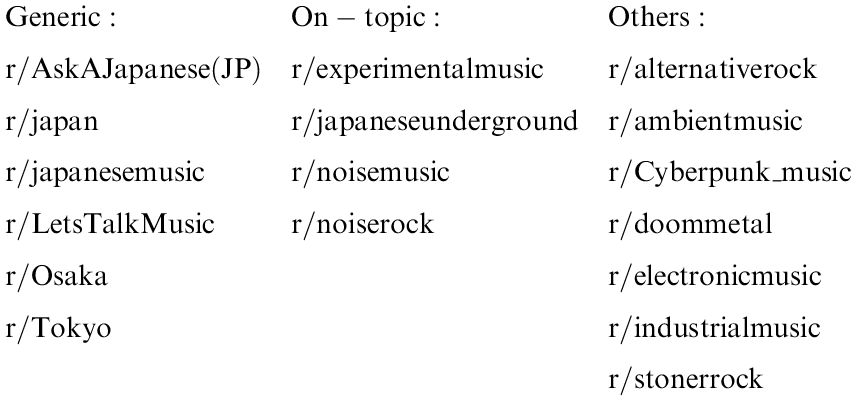
Conducted within the timeframe of January to March 2022, this ethnographic investigation was carried out on Reddit. The subreddits identified as “on-topic” emerged as particularly rich sources for acquiring data pertinent to my research endeavor. This observation is consistent with my anticipation that communities closely aligned with the research focus would present a greater likelihood of yielding valuable information. To underscore the dependability of the amassed data, I will spotlight the outcomes and comments that provided the most insightful perspectives, underlining the efficacy of employing ethnographic research methodologies on social media platforms.
In the general subreddit “r/AskAJapanese”, which is mostly run by Japanese people, I received the following comment from the user “u/Pale_Yogurtcloset_10”: To be honest, the noise music genre isn’t particularly popular in Japan, so it’s hard to find that kind of information. Also, in the context of a pandemic, the activities of musicians are a rather sensitive topic. It’s a matter of life and death for people involved in the music industry and musicians because it’s not easy to hold concerts, but it’s easy to get frustrated from people when the number of infections and deaths doesn’t stop. For example, “FUJI ROCK FESTIVAL '21” was held amid strong criticism, but people who took the situation seriously, such as Ōtomo Yoshihide, declined to appear. On the other hand, the musicians who performed were strongly criticized, and their attitudes to viruses and vaccines were also noted. It looks like people’s impressions of musicians have deteriorated quite a bit in part because of all this turmoil. In recent years, it has been said that concerts are a source of income for musicians. However, music venues, etc. are also in a very difficult situation in terms of infection control. In this situation, musicians are quite restricted in their activities, so it is quite difficult to think about the future. However, since the style of listening to music on the Internet and online distribution of concerts is also spreading, there is a possibility that the discovery of music that is not well known until now will spread. The key to music culture is how musicians overcome this situation and what kind of message they send out.
7
The extensive commentary significantly aided me by presenting diverse insights concerning my research subject. It covered aspects such as the unconventional character of Japanese noise music, the audience’s perspective on musicians persisting with in-person performances amid the pandemic, including the notable response from noise musician Ōtomo Yoshihide. The commentary also addressed the potential for noise musicians to connect with new audiences through the proliferation of online concerts, highlighting the challenges posed by restrictions on live venues.
Concerning live-streamed concerts, I engaged in a discussion with the user “u/bksbeat” on the subreddit “r/experimentalmusic” regarding an online performance by the experimental musician also associated with noise Haino Keiji. According to the user, Haino had conducted a live stream of a concert early in the COVID-19 period, and he shared a link to the Instagram post from Club Goodman, a music venue in Chiyoda, Tokyo. The user mentioned that Club Goodman streamed the event on YouTube, with the entire audience participating online. Club Goodman’s approach serves as a notable example of how live venues navigated the challenges posed by the pandemic. The venue adapted by organizing events that catered to both in-person and virtual attendance, ensuring accessibility for audiences even in the post-pandemic live performance landscape. Initially grappling with concerns about survival and potential closure (Natalie.mu, 2020), the venue implemented various strategies, including the sharing of brief event clips on Instagram. These clips served to promote events, such as the one featuring Haino and encouraged viewers to watch the full performances on the venue’s YouTube channel. These initiatives played a crucial role in sustaining the venue beyond the most critical phase of the pandemic, highlighting the significant contribution of video-sharing platforms in fostering engagement through live-streamed events, particularly in the realm of musical performances.
Another pertinent aspect concerning the social involvement of noise musicians amid the pandemic was shared by the user “u/Monsieurantipyrine” on the subreddit “r/noisemusic”. The user highlighted a fundraising effort organized mainly by noise and Onkyō artists to support the survival of Ochiai Soup, a small venue situated in Shinjuku, Tokyo, renowned for hosting live events featuring primarily experimental music artists. In a departure from conventional crowdfunding methods on the internet (Calic, 2018, p. 112), the club opted for a unique approach to generate funds and sustain its operations. Rather than conducting a standard crowdfunding campaign, Ochiai Soup provided fans and regular attendees with an exclusive opportunity to contribute by releasing special content through the independent and alternative music-sharing platform, Bandcamp. The collection included more than 50 releases from both local and international experimental acts, featuring notable Japanese noise artists such as Mikawa Toshiji from noise bands Hijōkaidan and Incapacitants. These releases adopted a name-your-price model, enabling fans to determine the amount they wished to pay (Japan Vibe, 2021). The Ochiai Soup case, dedicated to supporting indie artists, reflects a broader trend in the Japanese independent scene, as demonstrated by another Tokyo live club and music store specializing in noise and experimental music, Ftarri, which had been independently selling albums for years before the pandemic. Thus, the preservation of the underground subculture also relied on leveraging the name and reputation of Bandcamp to reinforce its independent identity, positioning these venues as establishments with strong ties to the underground audience. The commercial success linked directly to supporting independent music scenes is achieved by cultivating close social bonds between artists and their audiences through a flexible pricing policy for releases. Additionally, the platform aligns with initiatives specifically designed to assist artists during the pandemic. Notably, in 2020, Bandcamp initiated a significant effort wherein they waived their revenue share and directed all sales proceeds to artists for 24 hr on March 20 (Aswad, 2020), a practice later repeated in subsequent months (Galil, 2020). This initiative, known as “Bandcamp Fridays” (Diamond, 2020), persisted into the following year, resulting in over $40 million generated for musicians (Turman, 2020).
To comprehend the reliance of cultural hubs on these forms of support, it is crucial to explore the concept of a community’s essence by acknowledging factors such as membership, influence, reinforcement, and shared emotional connection (McMillan & Chavis, 1986, p. 16). These elements constitute fundamental aspects in shaping subcultures formed by individuals marginalized by societal norms, establishing an identity that is often portrayed as an independent entity operating beyond broader social, political, and economic contexts (Hebdige, 1979, p. 76). Consequently, the evolution of the Internet ensures that this sense of belonging aligns with the potential for financing entrepreneurial endeavors, particularly in the realms of artistic and creative projects (Agrawal et al., 2015). This dynamic creates avenues through which online platforms enable cultural venues to thrive by maintaining connections with their audience, who can actively participate in diverse campaigns and events aimed at fundraising.
Even subreddits dedicated to distinct yet analogous subjects, such as “r/stonerrock”, 8 contribute significantly to my exploration of social media dynamics. According to insights shared by the user “u/analog_memories”, Boris also released NO! (2020) and W (2022) during the pandemic by explicitly discussing their creative influences in various interviews. This information extends beyond the album 2R0I2P0, illustrating how it is not an isolated occurrence but rather a component of the broader social involvement of Japanese noise musicians during the challenges posed by the pandemic.
In addition to public discussions, Reddit offers the option of engaging in private conversations with other users through private messages. Notably, following the posting of my message online, an individual (whose username remains untraceable due to the deletion of their account at the time of my report) reached out to me privately. This user drew my attention to netlabels, a category of record labels that disseminate music on the internet via digital audio formats such as MP3, FLAC, and WAV. These labels typically emphasize free online distribution, often utilizing licenses like Creative Commons that encourage artists to retain copyright while permitting free sharing (Hyde, 2005). Specifically, the user directed me to the netlabels collection on the Internet Archive, which encompasses Japanese noise artists. This resource provided me with an existing online platform through which artists can continue distributing their music, potentially addressing the gap created by the enforced physical separation from the audience. It is noteworthy that this platform incorporates a forum primarily utilized for sharing additional music and related information.
As an additional point, it is worth concluding the enumeration of outcomes by incorporating insights shared on the “r/japaneseunderground” subreddit. This online community centers around independent and unconventional music from Japan. “u/AnnoyinKnight”, a user within this community, highlighted that beyond the mainstream, subcultures such as breakcore, a forceful form of electronic dance music that may incorporate components of noise, heavy metal, and industrial music (Earp, 2019) remained vibrant during the state of emergency, with ongoing events organized by artists and venues. This valuable input serves as a foundation for extracting more information through comparisons with analogous subcultures.
Once collecting these findings about part of my research project, my thought was how to properly undertake my future in-person fieldwork to broadly cover the cultural link in Japanese noise music while expanding the intertwining of it during the pandemic’s crisis. Hosted as a visiting research fellow by the Department of Musicology and Theatre Studies of Osaka University from November 2022 to September 2023, I aimed to track further work and related events in venues focused on noise and experimental music, including Tokyo’s Club Goodman and Osaka’s Namba Bears, along with keeping in touch with artists and related insiders for possible interviews or informal discussions.
Delving from previous findings and the network built also by relying on them, I was able to find in Japan other works related to cultural support during the COVID-19 pandemic, which were both individual artist’s releases like Kusafuka Kimihide’s Pandemix Coronalis (2022), released under the alias K2, or collaborative projects such as the 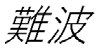 Bears Omnibus (Namba Bears Omnibus, 2020), showcasing musicians such as Fushitsusha, Masonna, Acid Mothers Temple & The Melting Paraiso UFO, and others who performed at Osaka’s Namba Bears to assist the venue during the challenging times of the COVID-19 pandemic. Moreover, in an interview with the noise musician Endō Kazumoto, I found out about other places like Nagoya, Niigata, and Ōita in which Japanese noise musicians are particularly active, with their music collected in the album Capturing The Wind (2023) featuring also Endō himself.
Conclusions
Based on my personal experiences in undertaking ethnographic research utilizing Reddit features and insights garnered from sustained engagement with online communities, I can illustrate my social media ethnography as proof of how technological advancements can enhance research endeavors that involve data collection when direct travel to the target country is unfeasible. It also presents an opportunity to shape upcoming research travel in alignment with the findings. Thus, I contend that the challenges posed by the COVID-19 pandemic should be viewed not merely as an unfortunate hindrance to researchers and scholars undertaking physical fieldwork but also as a chance to reconfigure academic research through the utilization of modern technologies. These technologies will continue to evolve, offering additional tools and methods applicable to various research domains, particularly when studying dynamic situations such as the ongoing impact of COVID-19.
Delving deeper into social media ethnography, online platforms have illustrated the potential to bridge the gap with individuals virtually. In the case of Reddit, they also enable more effective navigation of essential information and communities through structured organization. This proves to be a valuable opportunity to enhance research strategies and ideas applicable to physical fieldwork. While the focus of a research project may be on a specific locality, engaging with non-localized communities online can facilitate the sharing of reliable information, supported by sources and contacts. This interaction aids in comprehending specific localized communities, and the integration of diverse data provides a comprehensive understanding of how digital social dynamics manifest in specific contexts, influencing the development of physical or real-life social connections.
Footnotes
Declaration of conflicting interests
The author declared no potential conflicts of interest with respect to the research, authorship, and/or publication of this article.
Funding
The research project is funded by SOAS Japan Research Centre, Great Britain Sasakawa Foundation, and British Association for Japanese Studies (BAJS).
