




Abstract
This study develops a computational methodology to assess the performance of a flat plate solar collector system for dairy pasteurization, integrating computational intelligence methods. A heat exchanger tank captures thermal energy from the collectors, with an auxiliary heater compensating for any unmet thermal demand. The analysis considers four climate types—temperate, arid, dry, and tropical—along with four auxiliary fuel options: diesel, fuel oil, natural gas, and LP gas. Design variables include solar field area, heat exchanger tank volume, fuel type, and climate conditions. A dataset is generated by varying these parameters, incorporating governing equations for solar technology, industrial thermal requirements, and regional climate data. This dataset trains a surrogate artificial intelligence (AI) model based on artificial neural networks, where input neurons represent the design variables, and output neurons correspond to economic-environmental indicators: net present value, total life cycle cost, and carbon dioxide emission reduction. To identify optimal system configurations, multi-objective optimization is performed using three different algorithms: particle swarm optimization, genetic algorithms, and the whale optimization algorithm. These algorithms generate Pareto diagrams that facilitate the analysis of trade-offs among the performance indicators. Results indicate economic and environmental feasibility across all climate regions when using diesel as auxiliary fuel, with Jalisco's temperate climate being the most suitable for implementation. This methodology offers a flexible framework for evaluating the feasibility of solar technologies in industrial processes, supporting sustainable energy integration.
This is a visual representation of the abstract.
Keywords
A solar collector field provides heat for dairy pasteurization, modeled using artificial neural networks.
Multi-objective optimization is conducted using particle swarm, genetic, and whale optimization algorithms.
Different climatic conditions commonly found in Latin America are analyzed.
This methodology can be adapted to assess the economic and environmental feasibility of various industrial processes.
Introduction
Industries worldwide are currently seeking ways to maintain production levels demanded by society while minimizing the environmental impact of their manufacturing processes. Given the high heat requirements in these processes, converting solar energy to thermal energy offers an attractive solution to address this critical challenge.
The technologies enabling this energy transformation significantly reduce the environmental impact of industrial processes. Among the most commonly used are Flat plate solar collectors (FPC), parabolic solar collectors, and linear Fresnel collectors. However, since economic factors are crucial for the industrial sector, these technologies cannot fully replace traditional methods of generating thermal energy. This is because solar-powered industrial equipment is still in development, making it more expensive compared to conventional fossil fuel-based systems. As a result, implementing hybrid systems in industries is essential. These systems can help reduce greenhouse gas emissions while remaining economically and energetically viable. Flat plate collectors are the most cost-effective solar energy technology on the market (Zaboli et al., 2023), reaching the temperatures required by certain industries worldwide, such as the pasteurization process in the dairy industry (Rashed et al., 2021; Rosales-Pérez et al., 2024).
Economic studies on solar energy systems used in industrial processes help estimate the minimum cost required to meet demand, considering both solar technologies and non-renewable alternative sources (Dhirawani et al., 2022). In terms of environmental impact, these studies clearly demonstrate the potential to reduce carbon use and greenhouse gas emissions, such as when solar heat is used in the paper and textile industries. The economic impact of using solar heat for industrial processes (SHIP) in these industries has been analyzed using indicators like the unit cost of usable thermal energy, discounted payback period, Net Present Value (NPV), and internal rate of return on investment (Mohammadi et al., 2021).
To implement this technology, access to solar resources for energy conversion is essential. Mexico benefits from abundant solar radiation, with an average solar insolation of 6 kWh/m² per day throughout much of the country. Additionally, Mexico has the largest number of thermal power plants dedicated to providing solar heat for various industrial processes (Hernandez-Escobedo et al., 2022). Therefore, there is an urgent need to conduct studies on industries that already use this technology, as well as those planning to adopt it, either in Mexico or any other country with suitable solar resources. These analyses should include environmental-economic indicators such as NPV, Total Life Cycle Cost (TLCC), and Amount of Carbon Mitigated (ACM), which help identify the optimal technological configuration for the SHIP system, offering the greatest economic, energy, and environmental benefits.
Since industrial processes that require heat often operate continuously, conducting the studies mentioned earlier in a practical setting is not feasible—just a few minutes of downtime can result in significant financial losses. Therefore, developing theoretical or surrogate models to describe the processes associated with SHIP systems is essential for this type of analysis. Computational tools, particularly those based on artificial intelligence (AI), have been developed in recent years to make accurate predictions of energy systems with a very small margin of error. These tools enable the study and forecasting of the thermal and energy performance of plants that provide SHIP, saving time and allowing for the projection of the long-term energy, economic, and environmental benefits of these systems (Antuña-Yudego et al., 2023).
AI-based tools can estimate the amount of energy delivered by a solar energy harvesting system, using numerical data previously gathered from the study site. Recent advancements in computational tools have improved the ability to model the thermal and energy parameters of solar collector fields supplying SHIP, producing results that closely match those from commercial software (Sharifi and Eskandari, 2023). AI has become a crucial tool for analyzing exergy parameters in thermodynamic systems. By applying AI techniques, it is possible to predict the thermal and energy behavior of complex systems with greater accuracy and efficiency, including exergy losses, energy demands, and overall system optimization. This use of AI also aids in calculating exergoeconomic costs and supports decision-making to improve system performance, even without extensive domain expertise (Bian et al., 2022).
Recent studies have highlighted the effectiveness of artificial neural networks (ANN) in various renewable energy and environmental applications. One study developed an IoT-based environmental monitoring system that used ANN to predict air pollutants such as
While AI tools like ANN have proven effective in modeling renewable energy systems, optimizing these systems is often key to achieving the best outcomes. In many cases, modeling serves as an intermediate step that supports the optimization process, where design parameters must be carefully considered. One such tool, the Pareto diagram, helps visualize the space of optimal solutions in a two-dimensional format. It has been successfully used to identify optimal areas for maximizing exergy efficiency while minimizing both total cost and environmental impact in cogeneration systems. For instance, the Pareto method was applied to optimize site selection for wind energy installations, reducing costs and improving strategic decisions for wind power development (Derse and Yılmaz, 2022).
Despite the growing use of AI-based methods for energy system modeling, there remains a clear research gap in integrating AI with multi-objective optimization for the design of SHIP in the dairy sector, particularly in developing countries such as Mexico. Most previous studies have focused on single-objective optimization or limited techno-economic evaluations, without fully leveraging the predictive capabilities of ANN for optimization purposes (Guo et al., 2021; Ukaegbu et al., 2023). In addition, limited attention has been given to the combined analysis of multiple climatic regions and fuel types in SHIP systems using AI-based surrogate models (Thirunavukkarasu et al., 2023; Ukoba et al., 2024). By addressing this gap, the present study provides a comprehensive computational framework that demonstrates the significant impact of AI in enhancing the accuracy, speed, and reliability of solar system performance evaluations. The integration of ANN-based surrogate modeling with advanced optimization algorithms allows for the identification of optimal configurations that maximize economic and environmental benefits while minimizing costs, thus supporting the sustainable implementation of SHIP systems in the dairy industry.
Building on the points discussed, this work proposes a computational methodology for the sustainable integration of photo-thermal technology into industrial processes within the dairy sector. Using a multi-objective optimization approach, the goal is to enhance the design and operation of SHIP systems. This study includes an economic-environmental analysis of integrating a SHIP system based on flat solar collectors in Mexico's dairy industry, utilizing optimization tools and multi-objective decision-making techniques.
In this context, this study applies three multi-objective optimization algorithms—genetic algorithm (GA), particle swarm optimization (PSO), and whale optimization algorithm (WOA)—to identify optimal system configurations that maximize carbon mitigation and NPV, while minimizing TLCC. The integration of these optimization tools enables a robust evaluation of trade-offs between economic and environmental objectives, allowing for the generation of Pareto diagrams that support decision-making in the design of SHIP systems.
Methodology
Case of study: solar heat for the dairy industry in Mexico
In Mexico, the food processing sector is one of the largest consumers of industrial heat. Within this sector, the dairy industry accounts for 10% of the gross domestic product, placing Mexico as the world's 8th largest dairy producer. Additionally, milk production in Mexico is concentrated across four distinct climate regions: arid, dry, temperate, and tropical.
The industrial process under study is milk pasteurization in the dairy industry, which requires thermal energy between 80–90 °C to effectively treat the dairy product (Ramkumar et al., 2022). The plant operates from 9:00 to 17:00, seven days a week, to maximize solar radiation use. During this operating schedule, the pasteurization process has a constant thermal demand of 125 kWth, equivalent to a daily energy requirement of 1000 kWth (May Tzuc et al., 2020). This results in an annual thermal energy consumption of 365 MWh, as illustrated in Figure 1.
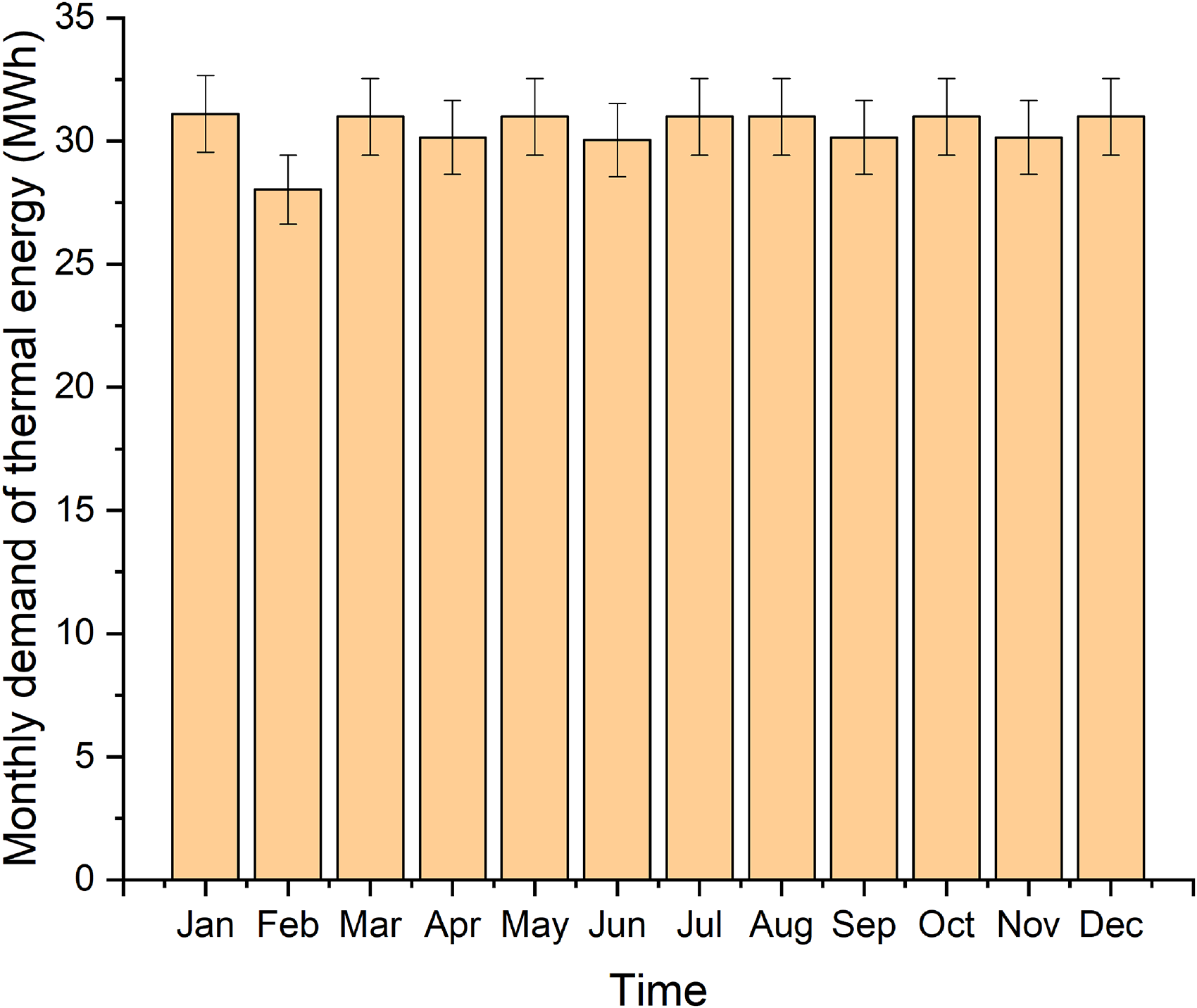
Thermal energy monthly demand of the dairy pasteurization process.
The proposed solar heat generation system consists of an array of flat-plate solar collectors integrated with the industrial process described above. Figure 2 presents the schematic layout of the SHIP system based on flat-plate solar collectors. The configuration comprises two primary hydraulic loops. The first loop, known as the Solar Thermal Circuit (STC), circulates water through the collectors and is activated when solar irradiance surpasses 600 W/m². It is deactivated when irradiance drops below 400 W/m², ensuring efficient energy capture and system protection. The second loop, the Thermal Load Circuit (TLC), supplies thermal energy to the dairy process. An auxiliary heater is triggered when the inlet temperature to the industrial process does not meet the required setpoint, thereby guaranteeing thermal stability for industrial operations.

Schematic diagram of the SHIP system using flat plate solar collectors.
The system includes key components such as:
Flat-plate solar collectors, which harness solar energy to heat water in the STC. HTST tank (High-Temperature Short-Time) for thermal storage and regulation. Heat exchangers and circulation pumps (WP) to transfer and maintain flow in both loops. Temperature (T) and flow (F) sensors for real-time monitoring and control. A mixing valve (MV) that regulates temperature at the storage tank inlet. An auxiliary boiler, which supplies backup thermal energy to the process when solar energy is insufficient.
The operational characteristics of the dairy industrial process are shown in Table 1. Design parameters, such as mass flow rate of the solar field and outlet temperature, are taken into account. It is important to note that these conditions are maintained during an 8-h workday, where a continuous heat demand is required.
Technical and operational characteristics of the SHIP system (May Tzuc et al., 2020).

The SHIP system operation was modeled considering typical instrumentation used in industrial solar heating systems. Two control loops were incorporated to ensure accurate system behavior. The first control loop regulates the STC, activating the water circulation pump when the incident solar radiation on the flat plate collectors reaches or exceeds 600 W/m², and stopping it when radiation falls below 400 W/m². The second control loop controls the TLC, activating the auxiliary heating system when the inlet temperature of the industrial process drops below the required setpoint. It also regulates a three-way mixing valve to maintain the process temperature within the desired range, ensuring stable operation (May Tzuc et al., 2020).
The system is equipped with temperature sensors (Pt100 Class A) with an operating range of −50 °C to 250 °C and an accuracy of ±0.15 °C, installed at strategic points such as the collector field, storage tank, and industrial process inlet and outlet. Flow meters are ultrasonic-type, with an accuracy of ±1% of the measured flow, enabling precise control of mass flow rates in both hydraulic loops. The mixing valve and water pumps were selected to match the design flow rates and pressure losses of the SHIP system, ensuring proper operation under industrial conditions (May Tzuc et al., 2020).
Additionally, a numerical experimentation process was conducted to generate the necessary database for the training of the AI model. This database simulates the thermal and energy performance of the SHIP system under various combinations of climatic conditions, fuel types, and design parameters, using validated thermodynamic models to ensure consistency and reliability in the predictive analysis.
To verify the accuracy of the mathematical model used to generate the database for training the ANN, a validation process was carried out by comparing the model's predictions with experimental data previously collected under similar operating conditions. This experimental data, obtained from prior research on SHIP systems with FPC (May Tzuc et al., 2020), includes temperature profiles, flow rates, and energy delivery measurements recorded during steady-state operation. The governing equations and thermal models used in this study were adjusted to replicate these experimental conditions, ensuring consistent boundary conditions and input parameters. The validation results showed an absolute percentage deviation below 5% for key performance variables, such as thermal energy delivered and outlet temperatures, confirming the model's reliability for simulating the SHIP system's behavior across different scenarios. This verification step strengthens the credibility of the dataset employed to train the ANN-based surrogate model.
The solar thermal field (STF) provides part of the heat required by the industry. To store any excess energy and meet demand during periods of intermittent solar radiation, a centralized horizontal thermal storage tank (HTST) is used. The tank is made of stainless steel 304-2B on the inside and 304-BA on the outside. It features two heat exchangers: one (HX1) transfers energy from the STF to the industrial process, while the other (HX2) delivers this energy to the process, ensuring no direct contact between the two circuits. The main thermal losses in this component are due to the material properties of the hot water tank (
If the energy generated from solar radiation is insufficient to meet the thermal demand of the industrial process, a conventional heating system powered by fossil fuels is used. This conventional heat source also helps reduce the initial investment costs of the project. The energy losses associated with the conventional heater are due to its efficiency (
Since the proposed SHIP system takes into account the solar resource of the region where it is implemented, analyzing different climatic locations is crucial for evaluating the performance of both economic and environmental indicators. The locations selected represent the four main climates in the country: Coahuila for the arid climate, Monterrey for the dry climate, Jalisco for the temperate climate, and Mérida for the tropical climate (Figure 3). The meteorological variables of interest, which were obtained for each climate, include direct solar radiation, ambient temperature, and wind speed. These data were sourced from the climate database of the SAM software, using 15-min intervals.

Location of the four representative climates selected nationwide.
To ensure the suitability of the 15-min interval used for the climatic data, it is important to note that the SHIP system analyzed in this study operates under steady-state conditions, with a constant thermal demand during the 8-h working period. The simulation focuses on the long-term thermal performance of the system rather than on transient thermal responses. As such, the selected time interval provides adequate temporal resolution to capture the key variations in solar irradiance and ambient temperature throughout the day, without significantly affecting the accuracy of the energy balance calculations. This level of temporal aggregation is consistent with similar studies focusing on energy performance evaluations under quasi-steady conditions (Faisal and Saraei, 2025; Islam et al., 2023).
The climatic data for each selected location were obtained with a 15-min resolution, which is sufficiently detailed to capture the main daily variations in solar irradiance and ambient temperature. Although this data varies with time, the SHIP system was modeled under steady-state conditions, given its constant thermal demand and stable operation during the 8-h workday. Moreover, the thermal inertia of key components—such as the storage tank, the heat exchanger, and the solar field—dampens short-term fluctuations, making the steady-state approximation suitable for analyzing the system's overall thermal performance (Aleksiejuk-Gawron and Chochowski, 2020; Wang et al., 2022).
To complement the characterization of the selected climate zones, Figure 4 shows the monthly average of solar energy availability for each location. The data were obtained from the NASA POWER Data Access Viewer, using historical records from 2004 to 2024. These values represent the total solar energy received on a horizontal surface, considering both direct and diffuse components. The results are expressed in kilowatt-hours per square meter per day (kWh/m²/day) and provide a clear depiction of the seasonal variability of the solar resource throughout the year, which is a key factor for assessing the feasibility of the SHIP system.
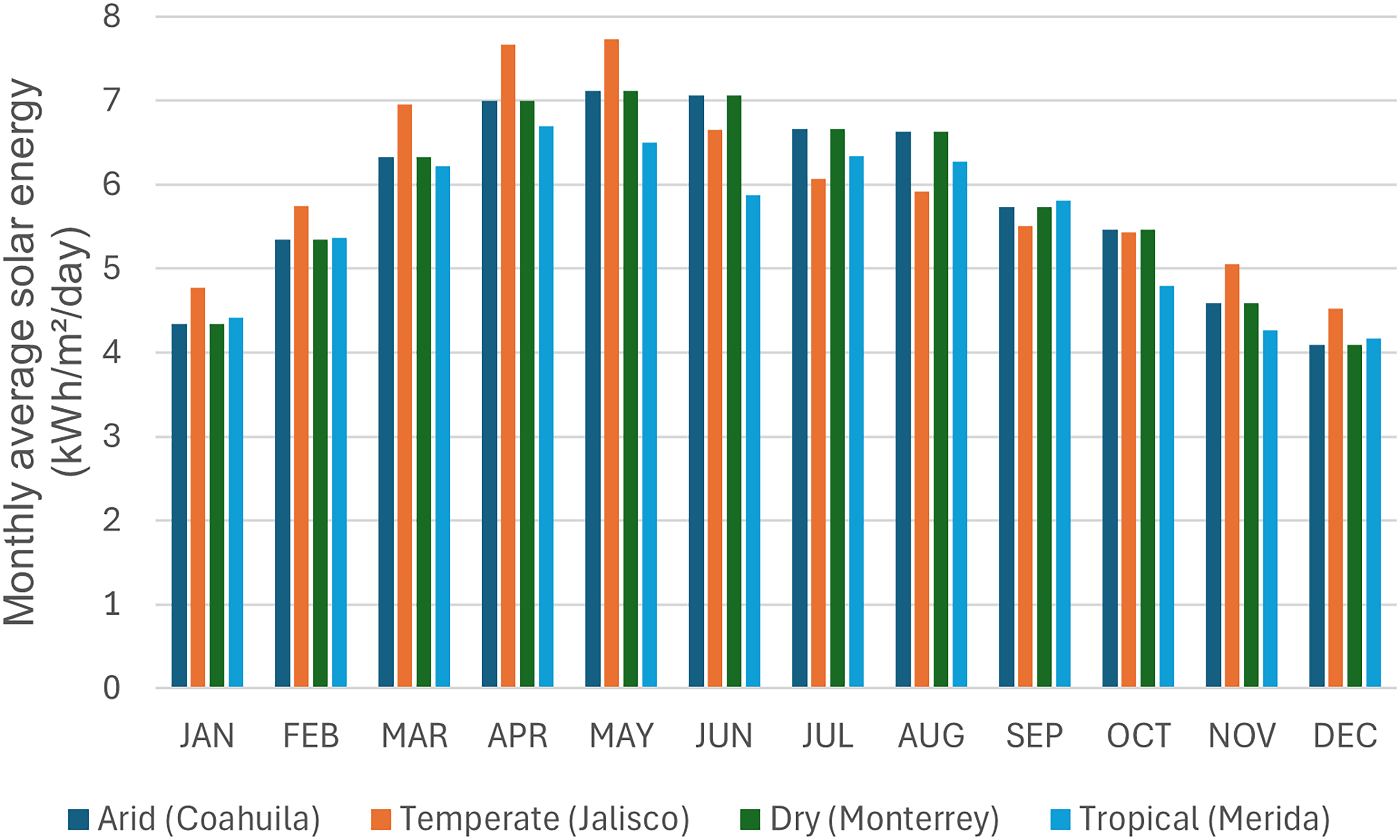
Monthly average solar energy availability for the four selected climate zones, based on NASA POWER Data Access Viewer (2004–2024).
Governing equations of the flat plate solar collector
Flat plate solar collectors (FPC) are made up of a multi-layered structure, with each layer serving a specific and essential function. Figure 5 shows a cross-sectional view of the components that make up the solar collector. The first layer is a glass cover that protects the entire structure while allowing sunlight to pass through. The second layer consists of an air gap, which acts as an insulator to reduce heat losses from the absorbed energy to the surrounding environment. Below the absorbent layer is a pipe through which the working fluid circulates, with its temperature being adjusted by the energy absorbed from the previous layers. A support cover is placed beneath the pipe, and finally, thermal insulation is added as an additional measure to minimize energy losses.
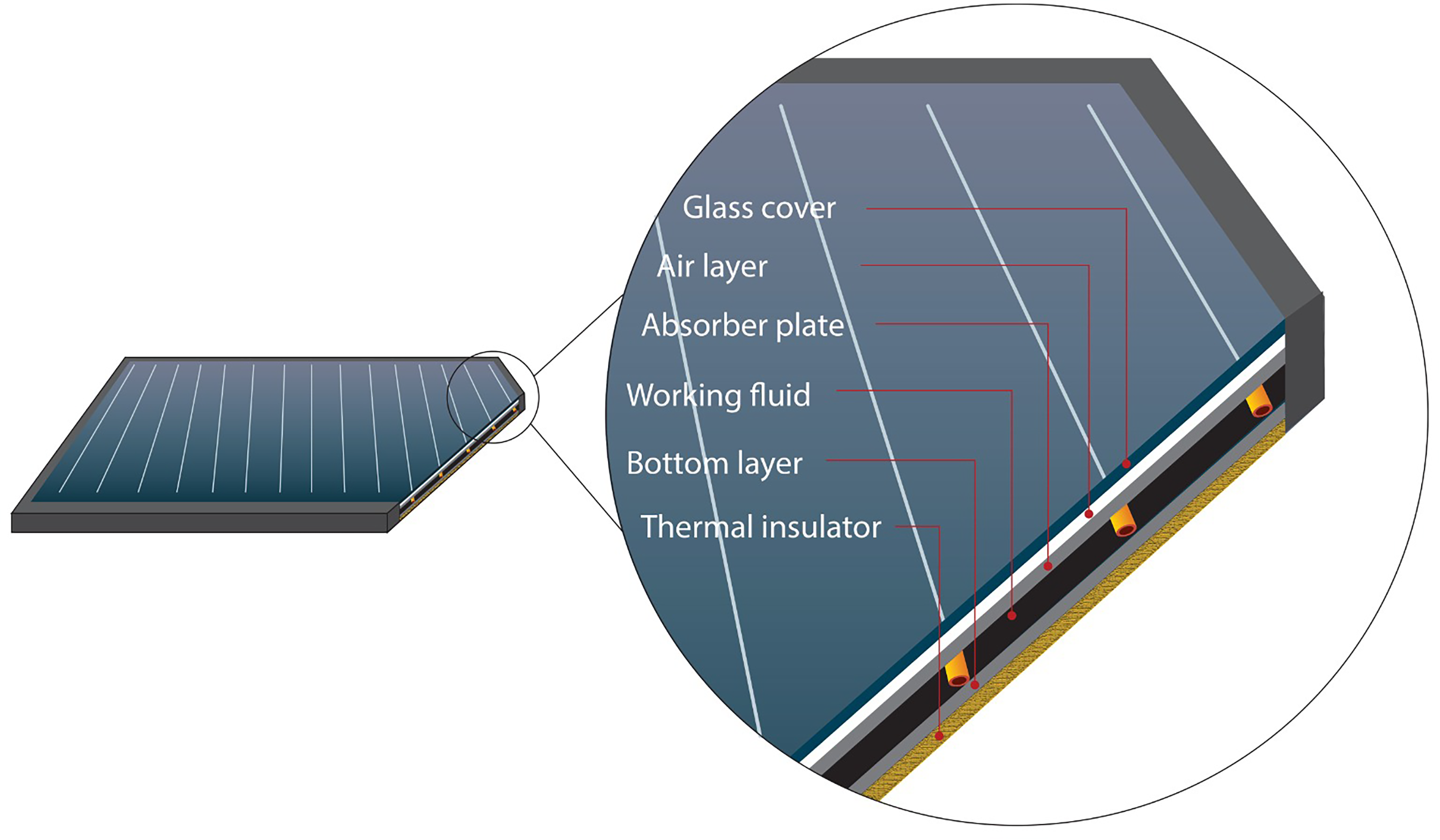
Main components of the flat solar collector considered for the energy analysis.
To analyze the thermal and energy behavior of the collector, an energy balance must be conducted across all the layers previously described. The equation required to perform this energy balance is given by (Minakova and Zaitsev, 2022):
Where dE/dt represents the change in internal energy over time, while
Glass cover
Analyzing the energy balance for the glass cover (Cetina-Quiñones et al., 2023):
Substituting these values into equation (1) and considering steady-state conditions, the energy balance for the first layer is expressed as:
Absorber plate
An analogous analysis for the absorber plate shows that:
Therefore, the energy balance for the absorber plate is given by: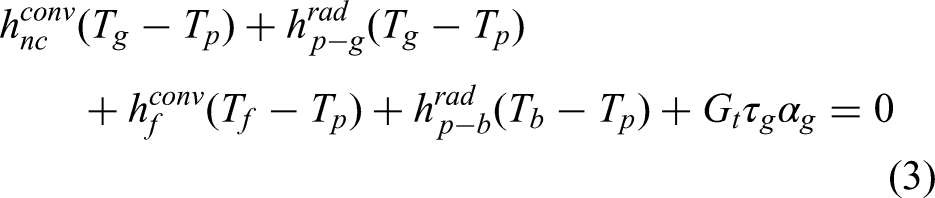
Working fluid
For the layer containing the working fluid, it is necessary to account for the mass flow along the pipes through which it circulates. The change in the energy of the working fluid is related to the thermal balances previously conducted, as shown in:
Where 
The elements for the energy balance equation in this case are:
With the previous equations, the energy balance for the working fluid is obtained:
Bottom cover
Finally, the bottom cover releases heat through convection to the working fluid and by radiation to the absorber plate. Additionally, heat is lost to the environment due to transfer from the lower surface of the collector. Therefore:
The energy balance for this layer is given by equation:
The system of equations that governs the performance of the flat plate solar collector is represented by (Cetina-Quiñones et al., 2021):
In real-world applications, several factors can reduce the efficiency of FPC over time. To account for these effects, the thermal parameters used in the energy balance equations—such as the glass transmissivity
Energy analysis of the SHIP system
Integrating solar technology into an industrial process requires several key components, including a solar collector field, thermal storage medium, hydraulic circuit, recirculation elements, an auxiliary heater, and a monitoring and control system. Additional parameters to consider include the amount of thermal energy the SHIP system must provide, the temperature at which the heat transfer fluid interacts within the heat exchanger, and the intended use of the heated fluid, whether for hot water production or steam generation (Cetina-Quiñones et al., 2024a). The placement of the auxiliary heater in the SHIP system depends on the thermal range achievable by the solar technology. If the auxiliary heater is set in parallel, the solar technology must be scaled to fully meet the industrial process's thermal demand. Conversely, when configured in series, the auxiliary heater can raise the temperature of the fluid from the solar technology as needed to satisfy thermal requirements (Ghabour and Korzenszky, 2021). Based on this analysis, a SHIP system with an auxiliary heater in series is the most advantageous setup when using FPC, as it allows further heating of the fluid if required. Figure 6 illustrates the thermal analysis of the SHIP system, considering the heat exchanger as the control volume.
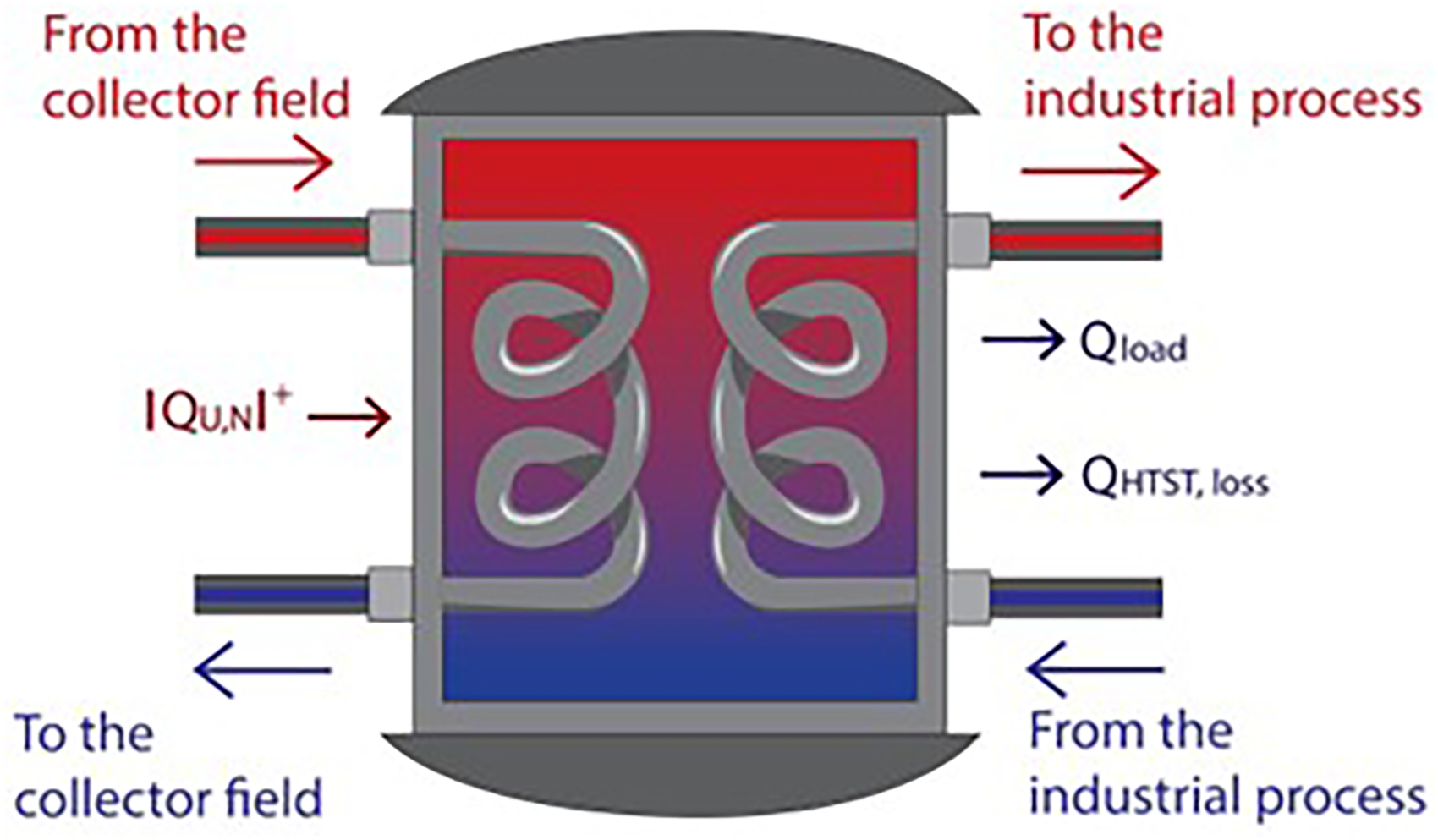
Energy balance of the control volume associated with the SHIP system.
It is worth noting that, although thermal energy storage (TES) systems are commonly applied in SHIP configurations to manage intermittent solar energy, this study employs a different approach. Instead of a conventional TES, a heat exchanger configuration (as shown in Figure 6) is used to directly transfer the thermal energy from the solar field to the industrial process. This setup allows for continuous heat delivery during the plant's operational hours without the need for dedicated storage units, while also simplifying system operation and control.
Energy conservation within the control volume is represented by the following equation (Sreenath et al., 2023):
Here, 
Here, 


It is important to highlight that this study focuses exclusively on an energy-based analysis of the SHIP system, addressing only thermal performance and energy balances. Exergy analysis, which considers the quality of energy and the irreversibilities occurring throughout the system, including key aspects such as entropy generation and dead availability, was not included within the scope of this research.
Economic-environmental indicators
After deriving the equations governing the thermal and energy behavior of the SHIP system, it is essential to consider indicators that evaluate the economic and environmental performance of applying the collector field in the dairy industry.
Economic feasibility indicator: net present value
The NPV is a key metric for assessing the project's economic viability and guiding investment decisions. For this study, the NPV is defined as the difference between the initial investment and the cumulative cash flows generated over the project's useful lifetime.



Economic feasibility indicator: total life cycle cost
The second indicator of economic viability is the TLCC, which complements the NPV. This metric accounts for all cash outflows required to ensure the proper operation of the project throughout its lifetime (Cetina-Quiñones et al., 2024b). Equation (19) outlines the formula used for its calculation:

The costs associated with implementing the SHIP system using FPC are detailed in Table 2.
Economic parameters for the solar heating system implemented in the Mexican market.

Environmental characteristics of the fuels used in the backup heating system.

As shown in Table 3 above, the cost of the auxiliary heater is included in TLCC analysis. This accounts for the annual fuel expenses required to supply the thermal energy not covered by the solar collectors, considering the specific fuel prices detailed for each scenario.
Environmental feasibility indicator: amount of carbon mitigated
One of the key advantages of implementing solar technology to provide SHIP is the reduction of atmospheric pollutants, particularly carbon dioxide. The ACM indicator is used to quantify this reduction in emissions, following the calculation provided by the Mexican Institute of Ecology and Climate Change, as shown in (May Tzuc et al., 2020):
Advanced computing techniques
One of the most widely used tools in AI today is ANN, which simulate complex phenomena through interconnected computational structures, much like neurons in the human brain. However, creating models capable of representing these phenomena is not sufficient; it is also essential to identify the parameters within these systems that can be optimized to achieve the desired outcomes (Haykin, 1999).
Artificial neural network
Surrogate models derived from various AI techniques emulate the behavior of complex systems, reducing computational demands while maintaining a reliable representation of the original model (Haykin, 1999). In the case of the SHIP system, the number of thermal, energetic, economic, and environmental parameters involved makes the model computationally intensive, requiring extensive code and subprograms that complicate analysis of the system's main cycle.
To address this complexity, a parametric study was conducted by varying the design parameters of the SHIP system under steady-state conditions. The parameters included the solar field area, thermal storage tank volume, auxiliary heater fuel type, and climatic condition. This systematic variation resulted in a dataset comprising 22,464 steady-state simulations, covering a wide range of possible system configurations. The resulting dataset was then used for the training, testing, and validation of the ANN surrogate model.
The ANN's input variables include climate type (CL), the fuel used for the auxiliary heating system (FL), the volume of the thermal storage tank (VOL), and the area of the solar field (ADS). The output parameters correspond to economic and environmental indicators: ACM, NPV, and TLCC. Table 4 presents the input and output parameters, along with their maximum, minimum, and nominal values and respective units.
Parameters used to evaluate the economic and environmental viability of the SHIP system (Cetina-Quiñones et al., 2024a).
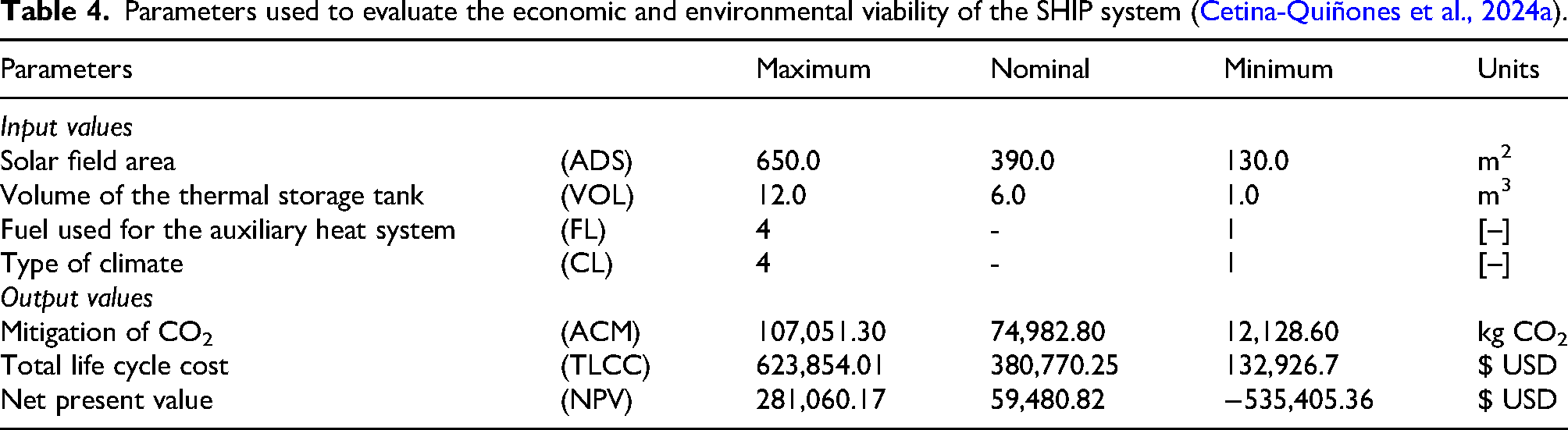
For FL, the coding used is: 1 for diesel, 2 for fuel oil, 3 for LP gas, and 4 for natural gas. For CL, the coding is: 1 for arid, 2 for temperate, 3 for tropical, and 4 for dry climates.
Since the activation function used in the neurons of the hidden layer is sigmoidal, it is necessary to preprocess the data by adjusting the input values to fall between 0.1 and 0.9 using the following equation (Mohd Yusof et al., 2022):



Multi-objective optimization algorithms
Optimization problems have always posed challenges across various scientific fields (Monteiro and Reynoso-Meza, 2023). Based on the number of objective functions (OF) involved, these problems can be categorized as single-objective or multi-objective optimization, with the latter being more commonly observed in nature. Problems requiring the optimization of multiple objectives can be addressed using the following equations (Le Digabel and Wild, 2024):
Equation (26) is conditioned by:


In the equations above, represents the number of OF to be optimized, and N denotes the dimensionality of the solution space, which is constrained by the minimum and maximum values defined in Equation (2.26). The goal of solving a multi-objective optimization problem is to identify the set of solutions X that minimize or maximize, as applicable, the functions defined in Y. The algorithms employed in this study to solve Equation (2.26) include the GA, PSO, and WOA.
Genetic algorithm (GA)
Genetic algorithms (GAs) are among the most widely used tools in AI, as they model optimization processes on the principles of evolution within a population (Goldberg, 1989). The fundamental concepts underlying any GA include evolution, natural selection among chromosomes, and the reproduction of the fittest individuals. The general procedure followed by all GAs adheres to the same principles: the process begins with a population of individuals, where each represents a potential solution to the problem. During execution, crossover operations are performed between the fittest individuals, producing offspring, and occasionally introducing mutations. This new generation undergoes repeated cycles of crossover and mutation until the individuals meet the convergence criteria of the problem (Wu et al., 2023).
The procedure followed by GAs is outlined in Figure 7. Key components shared by all GAs include the population, as well as the selection, crossover, and mutation processes. Within the population, size and diversity are critical factors: diversity reflects the genetic variation among individuals, while larger populations expand the solution search space but increase computation time.

Steps in the general cycle of genetic algorithms.
For the selection process, common methods include roulette, elitist selection, and tournament selection. In the roulette method, each individual is assigned a probability based on their fitness, with those having higher probabilities being more likely to be selected. Elitist selection involves copying the top-performing individuals directly into the next generation, while allowing the remaining individuals to undergo another selection process. In tournament selection, individuals are chosen randomly, and those with the highest fitness are selected to reproduce, with their offspring replacing the least fit individuals.
Crossover can be either destructive or non-destructive. Destructive crossover introduces offspring into the new population even if they are less fit than their parents, whereas non-destructive crossover allows offspring to survive only if they outperform their parents. Lastly, mutation adds diversity to the population and fosters the creation of new individuals. Without mutation, the algorithm would be limited to combining genes from the initial population, potentially hindering its ability to explore new solutions.
Particle swarm optimization (PSO)
The PSO algorithm is the oldest of the so-called swarm intelligence algorithms. It was originally inspired by the social behaviors of birds and fish. Initially designed to solve problems with solutions represented as points in a multidimensional continuous search space, the algorithm has since been modified to handle irregular or transient solutions for non-differentiable problems (Clerc, 2006).
Figure 8 illustrates the fundamental behavior of individuals in a PSO algorithm. At the initial iteration, candidate solutions (particles) are randomly distributed across the search space. Each particle evaluates its position based on a fitness function and adjusts its velocity and direction according to both its own best-known position and the global best found by the swarm. Over successive iterations, this cooperative mechanism drives the particles to converge toward the optimal solution. This collective learning behavior enables PSO to efficiently explore and exploit the solution space (Menos-Aikateriniadis et al., 2022). A detailed explanation of such a process is provided below.

Behavior of individuals in a particle swarm optimization algorithm.
Before initiating the optimization process, it is essential to define the OF and specify all algorithm parameters, such as the learning coefficients 
A velocity vector
Once
Whale optimization algorithm (WOA)
This algorithm is based on the hunting behavior of whales, which search for plankton near the ocean surface. In this case, the individuals of the population are represented by whales distributed across the search space, which analogously represents the ocean. The search process is divided into two main stages (Mirjalili and Lewis, 2016).
First, the whales, or population individuals, search near the surface of the sea to locate the area where they are most likely to find food, or in this case, the optimal solution to the problem (Figure 9(a)). Once this region is identified, the second stage involves diving beneath the plankton and then spiraling upward in a contraction movement, converging at a point that represents the optimal solution to the problem (Figure 9(b)). As with most optimization algorithms inspired by animal behavior, the primary objective is to minimize the distance between the individuals in the population and the optimal solution (Mahmoud et al., 2023).
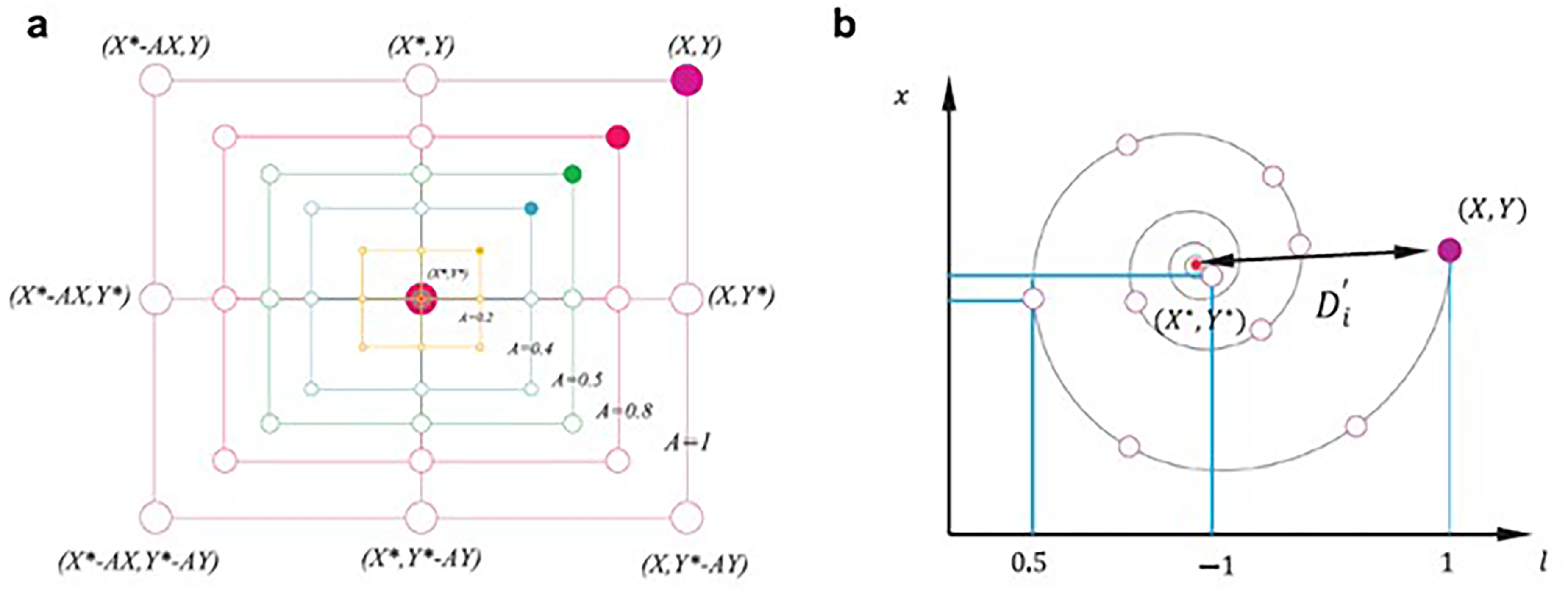
Schematic illustration of the two stages of the whale optimization algorithm: a) Surface search and b) Contraction spiral movement (Mirjalili and Lewis, 2016).
The first stage is governed by linear relationships between individuals, ensuring that each one covers the entire search space in the most efficient way possible. The second stage follows circular motion equations during the ascent to the surface. The algorithm begins with a population of n whales, representing the individuals of the population, and defines the distance to the optimal solution as a performance metric. As the search process commences, the parameters described in the equations are updated for each individual using the following equations (Mirjalili and Lewis, 2016):



The algorithm uses p as a random number between 0 and 1, and l as a value between −1 and 1. If p < 0.5 and |A|<1, the search agent's position is updated using equation (32). However, if |A| ≥ 1, a search agent is selected at random, and its position is updated using equation (34). For the case where p ≥ 0.5, the search agent's position is updated using the following equation (35):


Once all the positions of the search agents have been updated, the algorithm corrects any agents that have moved outside the search space, calculates the performance parameter for each agent, and updates the position of the prey if it has improved compared to the previous iteration.
Results and discussion
Surrogate model
Various neural network architectures were tested using the database obtained from the SHIP system to identify the AI model that best describes the system. The configuration of the artificial neural network with the best performance included 4 design parameters in the input layer, 50 neurons in a single hidden layer, and 3 indicators as neurons in the output layer (Figure 10).

ANN architecture illustrating all the procedures carried out in the SHIP system.
To assess the relationship between the ANN and the SHIP system results obtained through numerical experimentation, the network's statistical parameters are calculated based on the number of neurons in the hidden layer (Table 5), along with the regression graphs for the different stages of ANN training (Figure 10). Table 5 shows that with 50 neurons in the hidden layer, all economic-environmental indicators have a coefficient of determination (R²) greater than 0.9999, an RMSE of 8.2468 × 10⁻⁴, and an MAPE of less than 0.2000. In Figure 11, the reliability of the model for training, testing, and validation exceeds R2 = 0.9999. These results are crucial for the ANN used in this work, as it serves as a surrogate model for an industrial heat demand process. Given the strict production targets and compliance standards required by dairy companies, any miscalculation could result in significant financial consequences.
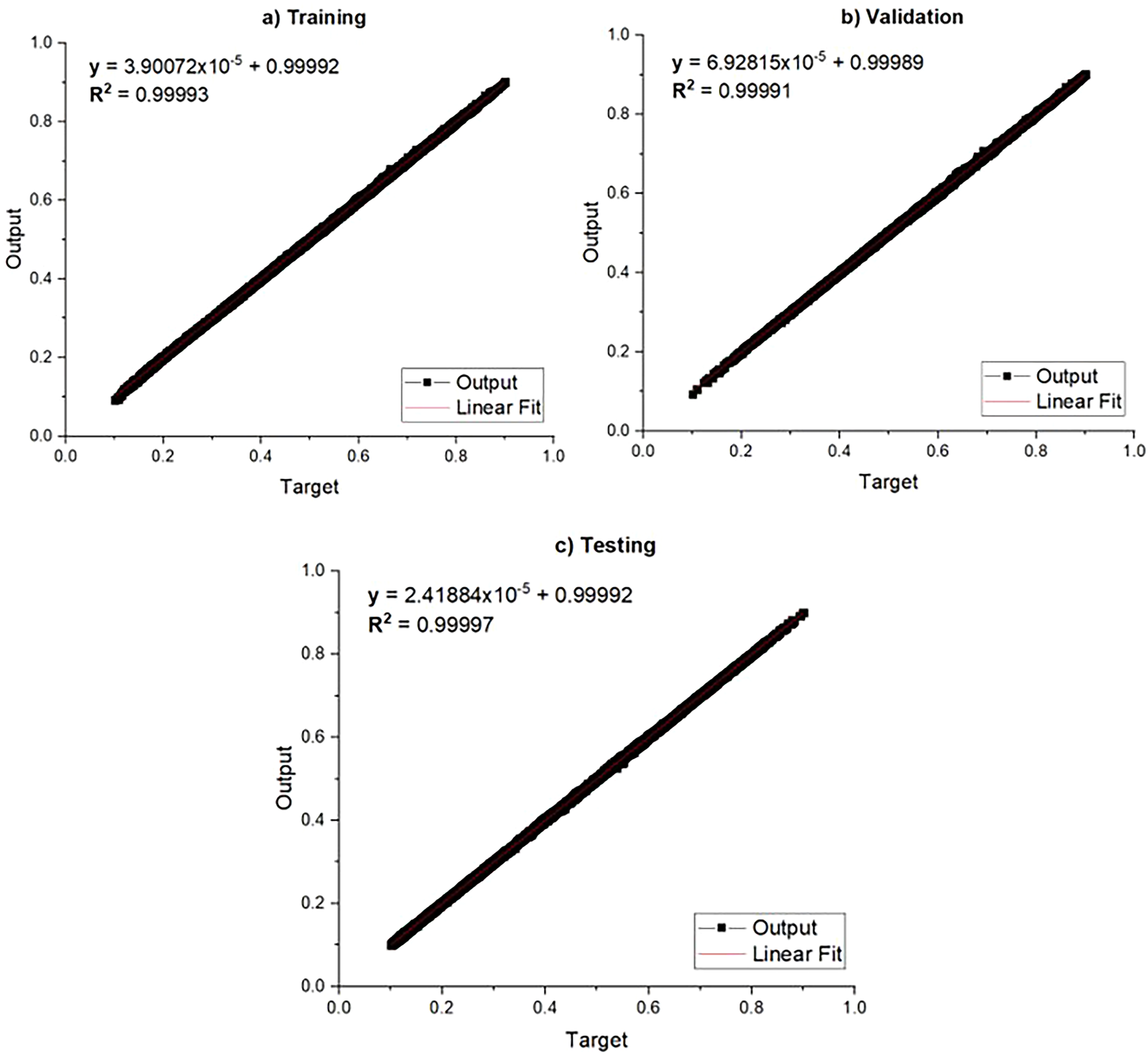
Regression plots for the training (a), validation (b) and testing (c) of the ANN.
Statistical results obtained by changing the number of neurons in the hidden layer.

The ANN-based surrogate model showed high predictive accuracy for the three output indicators: NPV, TLCC, and ACM. As shown in Table 5 and Figure 11, the model achieved a coefficient of determination (R²) above 0.9999 for all outputs, along with low RMSE and MAPE values. These results indicate that the ANN is capable of reliably approximating the complex relationships between the design parameters—solar field area, thermal storage tank volume, CL, and auxiliary heater fuel—and the economic-environmental performance indicators of the SHIP system.
This level of accuracy is particularly relevant because the surrogate model is used as the foundation for the subsequent multi-objective optimization process. By providing consistent predictions of the system's performance, the ANN model allows the optimization algorithms to operate on a computationally efficient yet representative approximation of the system behavior. This ensures that the optimal solutions identified in the optimization stage are based on a sufficiently accurate representation of the SHIP system.
Multi-objective optimization problem
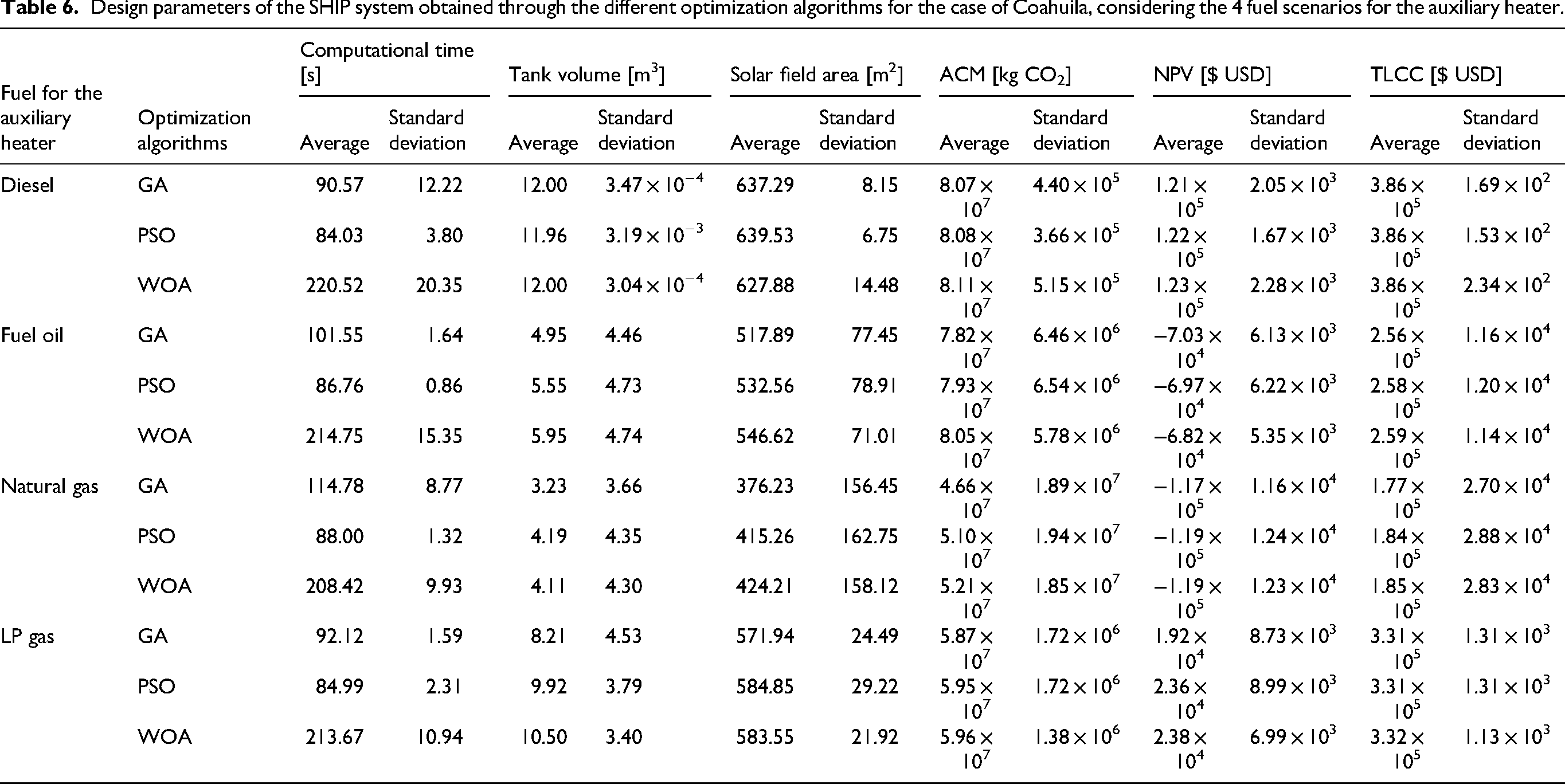
Once the surrogate model is obtained using the ANN, various multiobjective optimization algorithms are applied to determine the design parameters that maximize ACM and NPV, while minimizing TLCC. Tables 6 to 9 present the design parameters, along with the optimized economic and environmental indicators. These algorithms are applied across the four climatic regions, considering the four fuel scenarios used by the auxiliary heater. The PSO algorithm converges the fastest, while the WOA has the longest computation times but yields smaller standard deviations in most cases. The GA serves as an intermediate option for obtaining the optimized parameters.
Design parameters of the SHIP system obtained through the different optimization algorithms for the case of Coahuila, considering the 4 fuel scenarios for the auxiliary heater.
Design parameters of the SHIP system obtained through the different optimization algorithms for the case of Jalisco, considering the 4 fuel scenarios for the auxiliary heater.

Design parameters of the SHIP system obtained through the different optimization algorithms for the case of Merida, considering the 4 fuel scenarios for the auxiliary heater.

Design parameters of the SHIP system obtained through the different optimization algorithms for the case of Monterrey, considering the 4 fuel scenarios for the auxiliary heater.

Finally, Figures 12 to 15 display the Pareto diagrams obtained for all possible combinations of climatic conditions and fuel scenarios for the auxiliary heater, using different optimization algorithms. While identifying these regions of optimal solutions, there are specific cases, such as the diesel fuel scenario in Mérida (Figure 14), where no algorithm was able to identify a well-defined optimal solution zone under the given conditions. In this case, the optimization process converged to isolated solutions instead of continuous Pareto fronts, due to the minimal economic and environmental variation among the feasible configurations. As a result, the diagrams display only scattered points without a clear trend.
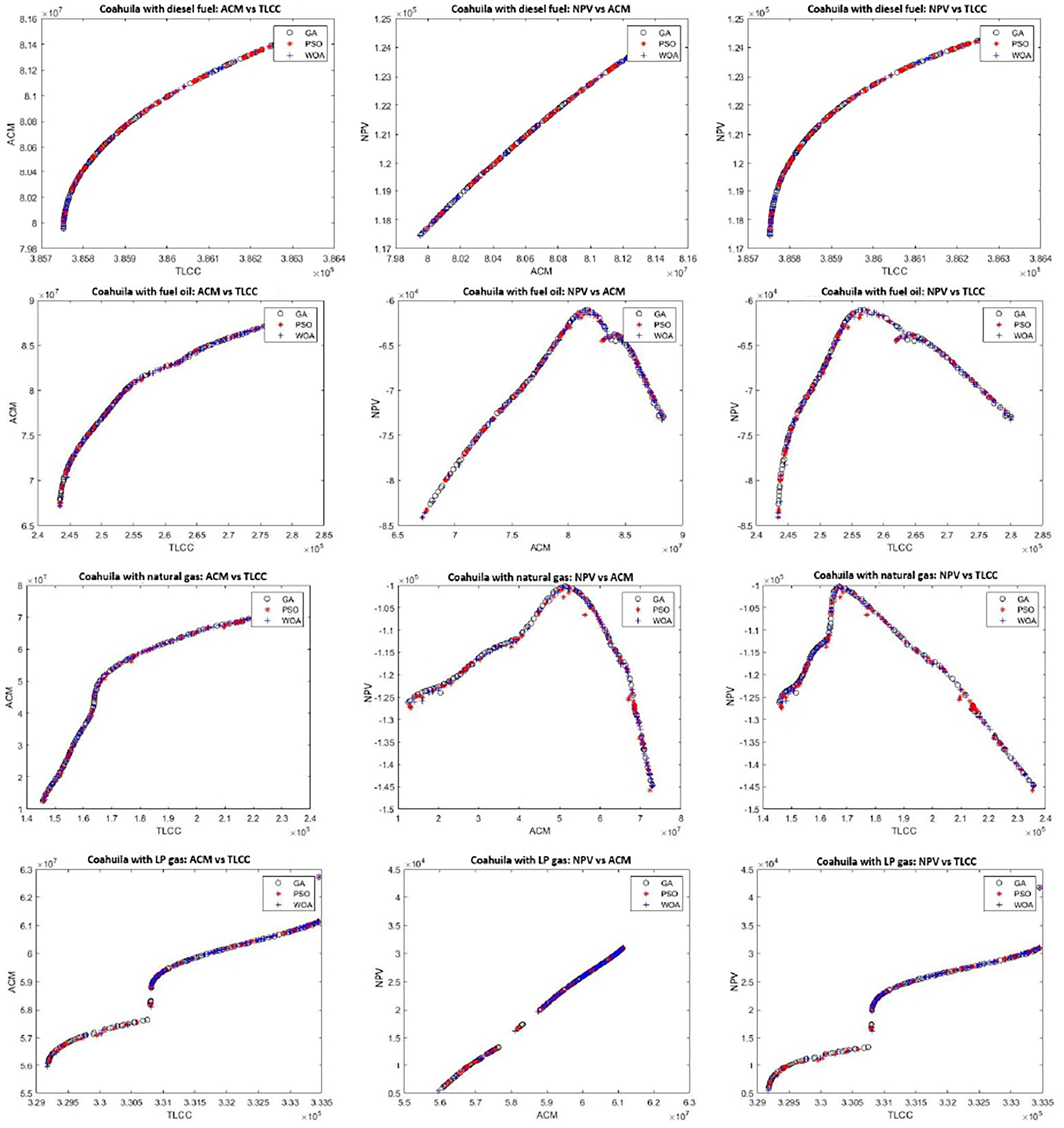
Pareto diagrams obtained through the different optimization algorithms, considering the 4 fuels of the auxiliary heater for the climate of Coahuila.
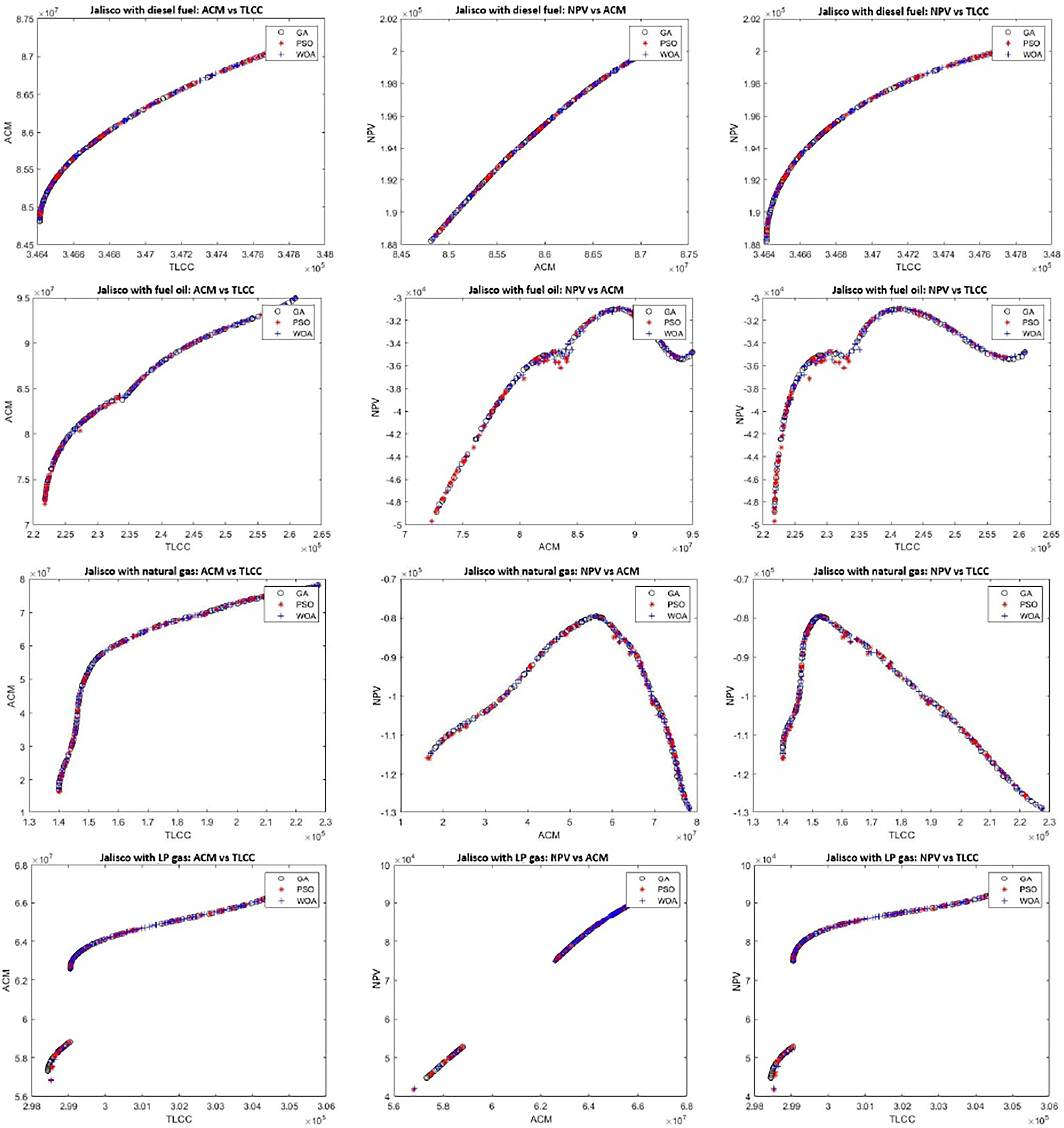
Pareto diagrams obtained through the different optimization algorithms, considering the 4 fuels of the auxiliary heater for the climate of Jalisco.
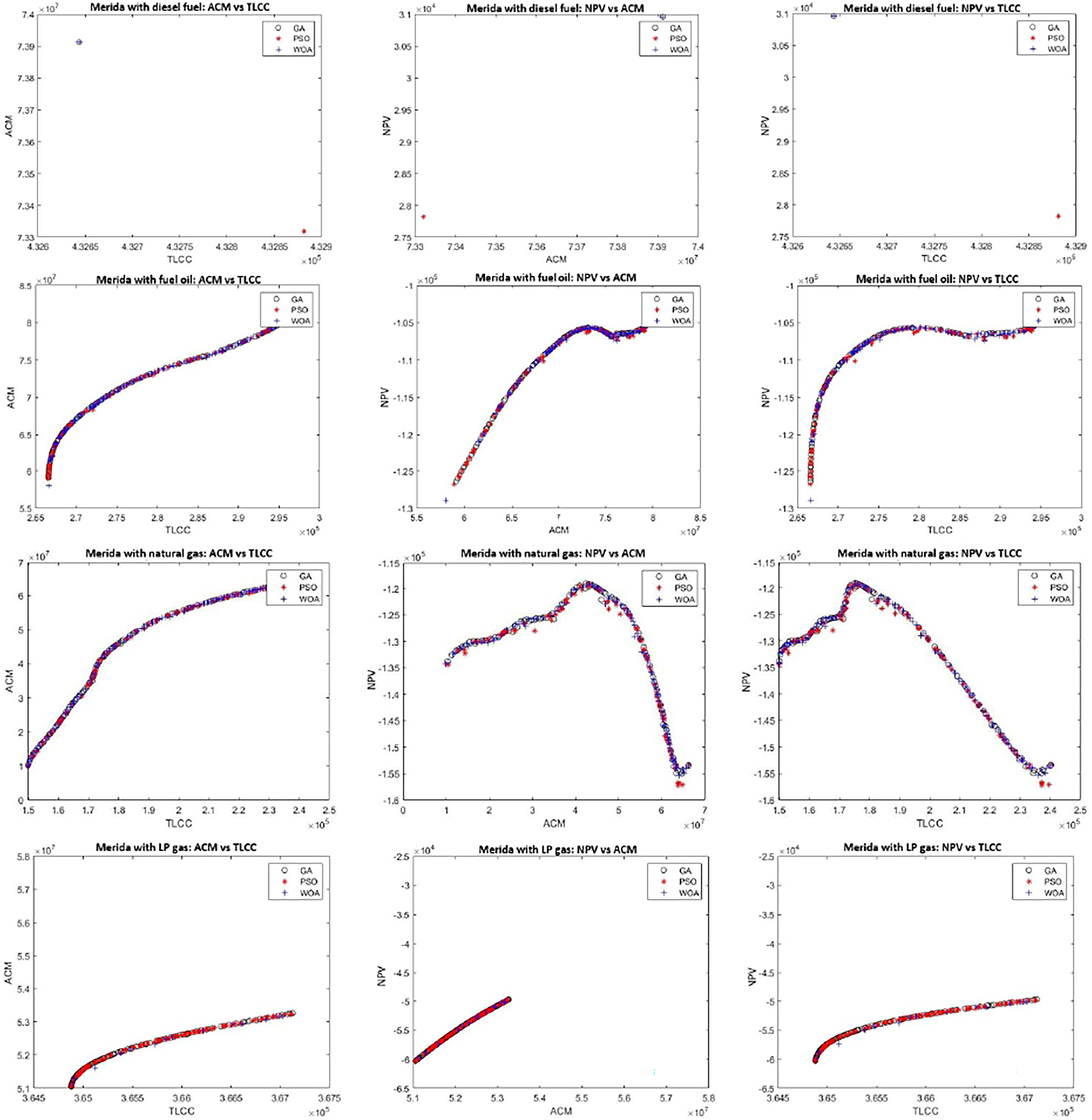
Pareto diagrams obtained through the different optimization algorithms, considering the 4 fuels of the auxiliary heater for the climate of Merida.

Pareto diagrams obtained through the different optimization algorithms, considering the 4 fuels of the auxiliary heater for the climate of Monterrey.
Additionally, there are discontinuities observed when using LP gas in Coahuila, Jalisco, and Monterrey. When using natural gas as fuel, a well-defined region of solutions is observed across all four climatic locations. It is important to note that the following Pareto diagrams correspond to the optimization process results. These diagrams display the solutions obtained by applying the three multi-objective optimization algorithms (GA, PSO, and WOA) to the already trained ANN-based surrogate model.
Conclusions
In this study, a computational methodology based on AI techniques was implemented to model and optimize the economic-environmental parameters resulting from the use of FPC to meet the thermal demand of the pasteurization process in the dairy industry. Using the equations that govern the thermal and energy behavior of FPC, and considering the operating characteristics of the industrial process, the values for the VPN, TLCC, and ACM indicators were obtained for this SHIP system. An auxiliary heater, connected in series, provided heat to the process when the energy from the solar collector field was insufficient. The fuels considered for the heater's operation were diesel, fuel oil, natural gas, and LP gas.
Additionally, the results related to the solar heat delivered by the flat plate collectors were obtained based on climatic data from four regions of the country, each with distinct climates: arid (Coahuila), temperate (Jalisco), tropical (Mérida), and dry (Monterrey). Using the area occupied by the solar collector field, the VOL, the climatic region, and the auxiliary heater fuel as design parameters, a database was created with 22,464 results obtained from numerical experimentation.
A surrogate model was then developed using ANN, with the four design parameters as input variables and the three economic-environmental indicators as output variables. From the results presented in Table 3, it can be seen that the artificial neural network with 50 neurons in the hidden layer exhibits the appropriate statistical parameters to represent the integration of the SHIP system with the flat plate collectors, with a MAPE = 0.1919, RMSE =
The predictive performance of the artificial neural network model was a key element in this study. By accurately representing the relationships between the design parameters and the economic-environmental indicators, the surrogate model enabled a computationally efficient optimization process. The high accuracy achieved by the ANN ensured that the optimization algorithms operated on a reliable approximation of the system, allowing for the identification of feasible solutions that are consistent with the behavior of the SHIP system under the analyzed scenarios.
The PSO, whale optimization, and GAs were applied to the surrogate model to generate the Pareto diagrams for the three output variables. The values shown in Tables 6 to 9 indicate that all four climatic regions yield positive results when diesel is used as the auxiliary heater fuel; in Coahuila and Jalisco, LP gas is also a viable option. Due to negative NPVs, fuel oil and natural gas are not economically viable for any of the climatic regions. Among the four climates studied, the temperate climate yielded the best economic-environmental indicators, followed by arid, tropical, and dry climates.
Previous studies with parabolic cylinder collectors (Ghabour and Korzenszky, 2021) were unable to find any favorable scenarios for the implementation of this technology in the tropical climate, considering all four types of auxiliary heater fuels. Therefore, it is important to highlight the economic-environmental feasibility of FPC compared to parabolic trough collectors for use in the dairy industry, specifically in the tropical climate of Mérida, Yucatán. Finally, the Pareto diagrams in Figures 12 to 15 confirm that the three optimization algorithms produced nearly identical sets of optimal solutions for each climatic region and fuel type studied.
Footnotes
ORCID iDs

Author contributions
Funding
The authors disclosed receipt of the following financial support for the research, authorship, and/or publication of this article: The author V. Cardoso-Fernández is grateful for the financial support from Consejo Nacional de Humanidades, Ciencias y Tecnologías (CONAHCYT) to pursue a postgraduate degree in Universidad Autónoma de Yucatán, under the following quantitative details CVU: 1006703, scholarship number: 808252.
Declaration of conflicting interests
The authors declared no potential conflicts of interest with respect to the research, authorship, and/or publication of this article.
Data availability Statement
The data that support the findings of this study are available from the corresponding author upon reasonable request.