




Abstract
Mathematics serves as an indispensable cornerstone of our lives, facilitating understanding and enabling countless possibilities. The foundational mathematics skills cultivated during early childhood education play a crucial role in shaping a child’s academic journey and future success. The fundamental principle of foundational mathematics skills, basic mathematical facts, serve as the foundation stone upon which more complex concepts are built. These facts constitute basic numerical combinations underpinning mathematical operations, but when we examine the findings of various reports closely, we see that many Indian students struggle with foundational mathematics. A notable contributing factor to this lies in the inadequacy of primary mathematics teachers’ proficiency in these essential concepts. This study examined the proficiency of primary mathematics teachers in basic addition facts and what instructional approaches they use to teach addition to the students. The alarming results showed that a large majority of them lacked clarity of proficiency in this fundamental area. Amidst advancements in creative teaching strategies, it is crucial for educators to stay updated. However, the results indicate that some teachers do utilize manipulatives, interactive play and experiential techniques in their teaching approaches but most of them still rely on traditional methods like using the blackboard and fingers.
Keywords
Introduction
In today’s world, having strong mathematical skills is essential. Life is full with mathematics, which promotes overall personal growth. Mathematics significantly influences students’ education by enhancing their mathematical knowledge and contributing to their moral development (Hodaňová & Nocar, 2016). Moreover, mathematics constitutes the fundamental framework underpinning advancements in science and technology, as elucidated by Zeidmane and Rubina (2017). Mathematics is an integral part of the majority of educational frameworks, aiming to equip all individuals with fundamental mathematical skills and comprehension (van Oers, 2013). By laying down a solid foundation in basic mathematical concepts, educators pave the way for children to excel not only in elementary school but also in more advanced levels of education and beyond. From preschool through elementary school, each lesson is carefully crafted to instill fundamental skills that serve as building blocks for later mathematical proficiency and broader life skills development. Although crucial for long-term academic success, many students face challenges in acquiring foundational mathematics during the foundational stage of learning. This deficiency can significantly hinder their progress as they advance to higher classes. Addressing and strengthening these fundamental mathematical abilities is paramount to ensure students are adequately prepared for the challenges they will encounter in more advanced levels of education. The mathematical skills acquired from kindergarten through eighth grade serve as the bedrock for all subsequent higher-level mathematics courses. Proficiency in elementary and middle school mathematics significantly enhances students’ readiness for success in algebra and beyond (Wriston, 2015). In mathematics, a strong foundation in conceptual understanding and practical application is essential. It is imperative to achieve a comprehensive understanding of mathematical applications before embarking on the study of algebra (Brown & Quinn, 2007).
Several reports on Indian students’ mathematical proficiency have indicated that Indian students lack basic mathematical skill, including solving basic mathematical operations. There are several contributing factors to the challenge of low foundational mathematical skills among students. These include inadequate teaching and learning environments, limited instructional approaches, negative perceptions of mathematics among students and parents, insufficient access to educational materials and unfavorable teacher–student interactions (Michael, 2013).
The disconnect of students with basic mathematical skills can be attributed to various factors, with the central issue lying in the lack of proficiency in teachers which affects their achievement. The importance of teachers in the education sector cannot be emphasized enough. Previous studies have indicated that many teachers lack proficiency in mathematics, particularly in areas such as ratio and logical reasoning. However, it would be beneficial to assess their proficiency in fundamental mathematical skills, specifically the four basic operations. This study addresses that gap by exploring the proficiency of primary mathematics teachers in the most essential mathematical skill of knowing and understanding “addition facts.” The previous researchers clearly highlight several deficiencies in teachers’ capabilities that impact students understanding of mathematical skills. Unqualified teachers are often associated with employing ineffective teaching methods that fail to stimulate student interest in mathematics (Obikwere, 2008). The insufficient number of qualified teachers, lack of instructional materials, and inadequate use of teaching aids contribute to poor performance (Suleiman & Hammed, 2019). The lack of effective teaching methods and insufficient engagement with students negatively affect their learning, as some teachers simplify material without fostering true understanding, especially for weaker students. The current study seeks to explore whether the root cause of students’ weak mathematical abilities lie in the proficiency of their primary mathematics teachers. Specifically, this research focuses on assessing the competence of primary mathematics teachers in handling addition facts, aiming to shed light on their role in fostering students’ mathematical development while also examining the diverse approaches they employ to teach addition to their students. The introduction is organized into several subsections, providing a clear and in-depth explanation of key terms used in the current study. These terms include basic mathematical facts, automaticity of basic mathematical facts, addition facts, and their teaching sequence. Each concept is thoroughly explained to ensure a comprehensive understanding of their significance within the study’s context.
Basic mathematical facts
According to Spear-Swerling (2006), basic mathematical facts are the solutions to the basic addition, subtraction, multiplication, and division problems that are employed in base 10 calculations every day. These basic facts are frequently referred to as “basic number combinations” in contemporary literature (National Council of Teachers of Mathematics [NCTM], 2014). Some programs classify facts with single-digit addends (0–9) as basic facts; however, adding 10 as an addend place a strong focus on students using ways to learn fundamental facts (Connell & SanGiovanni, 2011). Basic mathematical facts develop the number sense in children, which enables a greater understanding of how numbers relate to one another. For instance, it is important that the child understands that 3 + 6 = 9 and that 9 − 6 = 3.
The concepts will be substantially simpler, and students will be better prepared to solve them more rapidly, if they have learned the mathematics facts. Mathematics facts serve as the foundation for more complex mathematical ideas. Despite its significance, it is disheartening to observe the rate of deterioration in children’s understanding of basic mathematics facts. National Education Policy (2020) places a major emphasis on the development of Fundamental Literacy and Numeracy (FLN) skills in all students by Class III. The emphasis assigned to FLN is further explained by the policy’s reiteration that “The remainder of the Policy will become meaningful for our pupils only if this most fundamental learning criterion (i.e., reading, writing, and arithmetic at the foundational level) is first attained.” The development of mathematical facts in elementary school has been identified by the National Council of Teachers of Mathematics as a focal point in grades 1 through 4 due to the significance of fact acquisition (Curriculum Focal Points for Prekindergarten through Grade 8 Mathematics: A Quest for Coherence, National Council of Teachers of Mathematics, 2006). Researchers, including Garnett (1992), have meticulously documented the sequence of procedures children use to arrive at answers to mathematical facts. These facts progress through three distinct phases: -
Developing procedural knowledge to solve mathematical facts. Implementing strategies for remembering these facts. For example: 8 + 9 = 17. This can be strategized as 8 + 8 + 1 = 17 Automaticity-Declarative knowledge
Phase I: Developing procedural knowledge to solve mathematical facts
The basis for learning facts is a sense of numbers, a knowledge of how numbers relate to one another, and an operational understanding. At the initial stage of number development, children face many real-world challenges requiring combining, separating, part/whole connections, equal groupings, and comparing sets. The foundation for developing the meaning of numbers and fundamental operations is provided by all of these experiences.
Phase II: Implementing strategies for remembering these facts
Phases I and II are by far the most important when trying to learn basic mathematical facts. In phase two, the student looks for effective methods to solve simple number combinations. Students get the capacity to view numbers and operations in a variety of comparable ways as a result of doing this. The foundation for techniques that aid children in remembering fundamental facts is provided by number connections (Van De Walle, 2007).
Phase III: Automaticity-Declarative knowledge
The capacity to complete a basic numerical computation in 3 s or fewer (without using time-consuming techniques like counting) is typically used as a measure of one’s ability to quickly retain mathematical facts. Phase III only aims to improve a student’s ability to recall information quickly. This entails: quickening the pace at which the learner chooses and uses a problem-solving method; and practicing in a very structured and planned manner with the goal of committing information to memory.
The acquisition of fundamental knowledge needs to be a part of the mathematical curriculum rather than a prerequisite. There is no justification for excluding a child from genuine mathematical experiences simply because they have not yet mastered all basic facts (Van de Walle, 2007). The stages approach helps students learn, comprehend, and be able to apply their understanding of number combinations in various contexts over time (Principles to Actions, NCTM, 2014).
Automaticity of basic mathematical facts
The relationship between knowledge of basic mathematical facts and automaticity is integral to students’ mathematical proficiency. Merely understanding these facts is insufficient; students must develop automaticity—the ability to recall facts quickly and accurately. For students to grasp the concept of automaticity, it is essential that teachers not only understand its significance but also know how to effectively convey it to their students. This includes achieving both speed and precision when addressing related questions. Automaticity is the ability of a pupil to quickly and accurately complete a simple operation (such as addition, subtraction, multiplication, or division), typically with numbers ranging from 0 to 12 (Cressy & Ezbicki, 2008). Automaticity in mathematics enables students to respond swiftly to mathematics problems either through memorization or by employing efficient calculation strategies. This is crucial because it allows students to dedicate cognitive resources to more complex problem-solving tasks and higher-order thinking skills. Research by Hawkins et al. (2017) underscores that students’ overall mathematics performance suffers when they do not attain automaticity in basic mathematics facts. This deficiency hampers their ability to develop automatic responses or efficient strategies, leading to slower problem-solving and increased errors. Consequently, it diminishes their confidence in handling advanced mathematical concepts and may reduce their engagement with the subject.
Basic addition facts
The current study examines the proficiency of mathematics teachers specifically in addition facts, one of the four fundamental mathematical operations, alongside subtraction, multiplication, and division.
Before students can effectively master addition, it is crucial for teachers to have a thorough understanding of the fundamental concepts and facts related to it. Addition, defined as the joining of two or more sets, has been governed by mathematical rules since ancient times to solve problems efficiently. As noted by Ashcraft (1994) and Cumming and Elkins (1999), automaticity in addition facts refers to either the quick recall of solutions or the unconscious processing of these facts. The National Mathematics Advisory Panel (2008) emphasizes the importance of students developing automatic recall of addition and related subtraction facts to prepare them for more advanced mathematical concepts, like solving multistep algebraic equations. Teachers must be aware that there are 121 addition facts students need to master and that by the end of third grade, students are expected to be proficient in addition and subtraction with whole numbers, as recommended by the National Mathematics Advisory Panel (2008). This understanding equips teachers to better guide students through these foundational skills.
Teaching sequence of addition facts
Mathematicians have employed rules that apply to number operations to help solve addition problems from the beginning of time. Connell and SanGiovanni (2011) researched on mastering basic mathematical facts and gave the teaching sequence of addition facts. The basic mathematical facts aligned up with Issacs and Carroll’s potential instructional sequence of relationships for addition and subtraction facts which was listed in 1999 like 0 and 1 facts, doubles and complements of 10. The teaching sequence for addition facts are as follows: -
Children begin by exploring +1/+2 facts, building on their prior counting experiences, and learning the relationship between addition and subtraction through −1/−2 facts. After practicing these, they are introduced to +0 facts, which, though conceptually simpler, are discussed once a solid understanding of addition is developed. Next, +10 facts are introduced to enhance automatic recall, which becomes crucial when simplifying facts close to 10. The sequence continues with doubles, where students practice doubling numbers for fluency. Mastery of making ten follows, laying the foundation for learning other addition facts, such as using 8 + 2 = 10 to calculate 8 + 4. At this stage, students have grasped 83 out of the 121 addition facts. Using tens and doubles strategies, students begin solving more complex facts by recognizing patterns like doubles plus 1 (e.g., 8 + 9 = 8 + 8 + 1). Mastery of addition facts is achieved by connecting new facts to previously learned strategies, promoting flexibility in problem-solving and a deeper understanding of numbers.
The brief justification for the order in which the facts are delivered as shown below
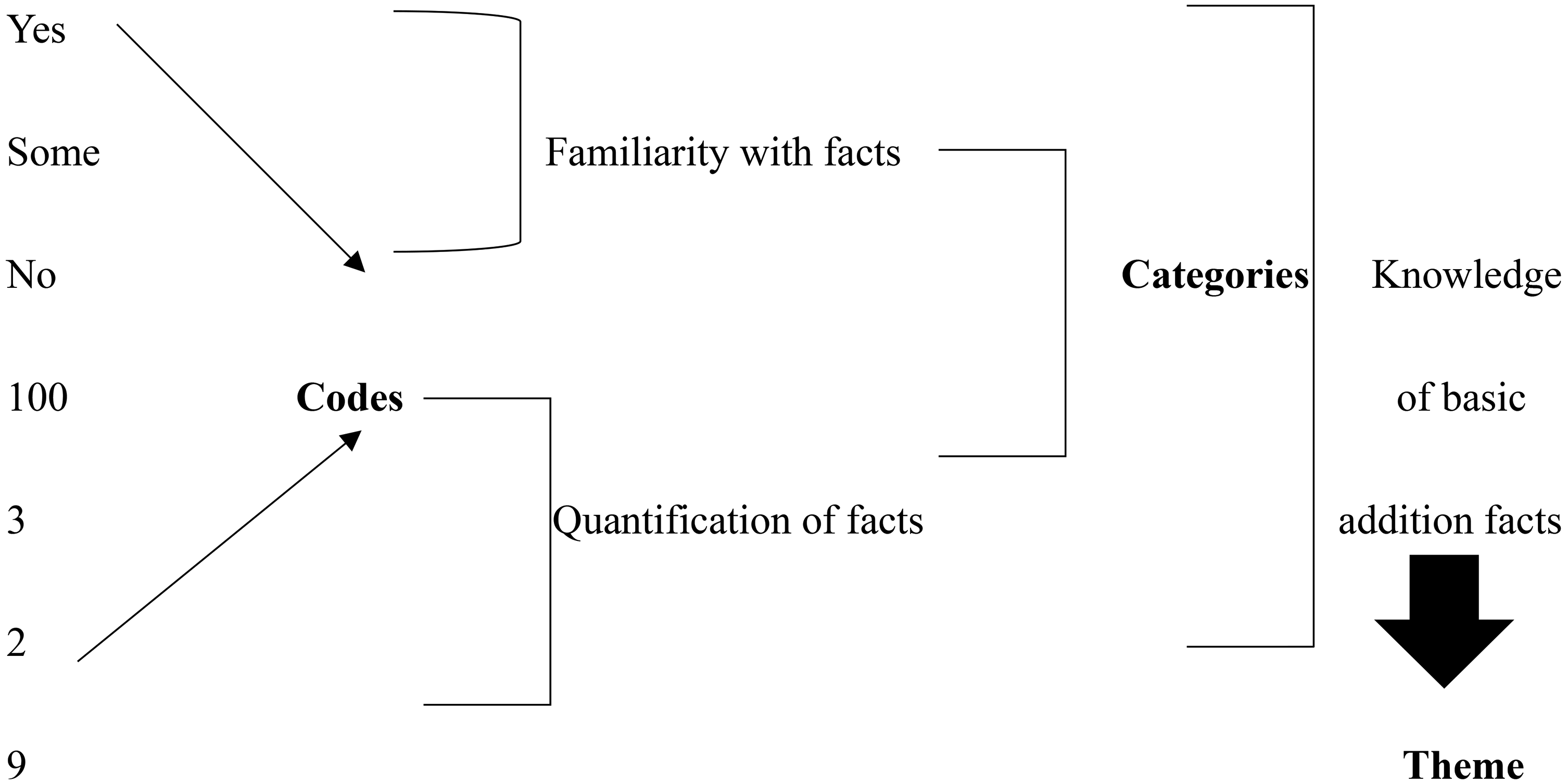
Thematic analysis.
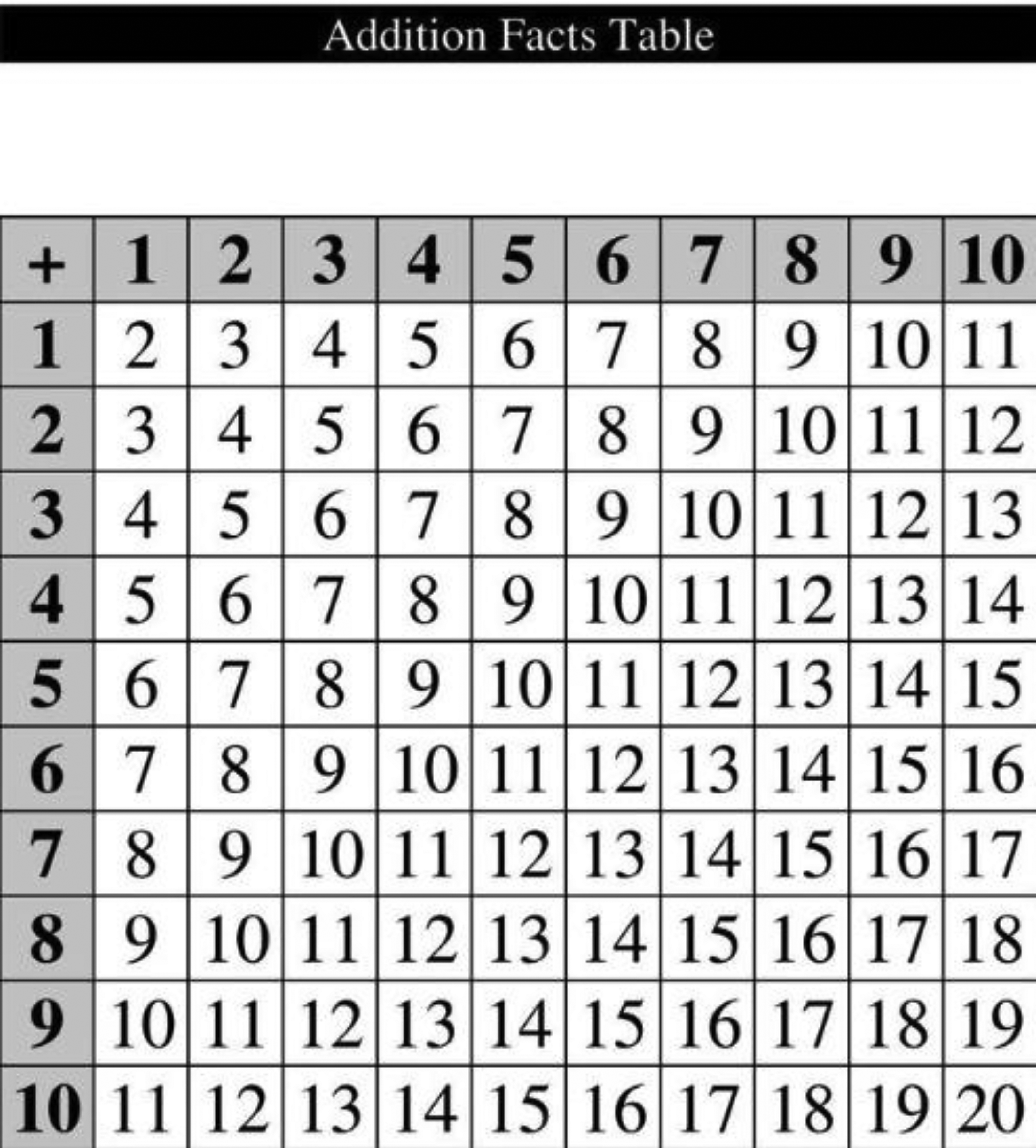
Source- Dreisbach, 2013. (https://in.pinterest.com/pin/225320787579476862/).
Inadequate proficiency in foundational mathematical skills among students is often traced back to gaps in teachers’ understanding of key mathematical concepts. Studies on deficiencies in basic mathematical abilities, such as addition and subtraction, highlight the critical role of teachers in developing these skills. When teachers themselves lack a deep understanding of essential mathematical facts and the concept of automaticity, it hinders their ability to effectively guide students toward mastery. This deficiency in teacher knowledge can result in students struggling with basic operations, leading to long-term challenges in more advanced areas like algebra and multistep problem-solving.
A student’s mathematical knowledge is grounded in a basic understanding of numbers and arithmetic operations, collectively known as “Foundational Numeracy” skills, which should be acquired by class 5. Research indicates that students who struggle with these skills at the end of kindergarten and class 1 are likely to continue performing poorly in mathematics through class 4 (Duncan et al., 2007). If these foundational numeracy skills are not mastered by class 5, students often fall behind, resulting in significant learning gaps. Proficiency in foundational numeracy is also an indicator of potential mathematics learning disabilities (Mazzocco & Thompson, 2005). Ensuring that students attain these foundational skills in the early years provides them with equal opportunities to succeed academically, facilitating the acquisition of new skills more easily (Jordan et al., 2009). Several studies and reports, including the Quality Education Study 2011 (QES) by Wipro Ltd and Educational Initiatives and the Benchmarking for oral reading fluency with reading comprehension and numeracy 2022 study by the Union Ministry of Education and National Council of Educational Research and Technology (NCERT) as quoted by Wadhawan, 2022 in the newspaper The Times of India, highlight significant challenges in mathematics education in India. The study, conducted jointly by the Union Ministry of Education and NCERT from March 23–26, reported by Barman in The Indian Express. reveal below-average math proficiency among students, with 37% showing limited numeracy skills and 11% lacking basic mathematics knowledge. The Sustainable Development Goal four (SDG 4) report from UNESCO in 2022 as quoted by Benu (2022) in the newspaper The Hindu further confirms these challenges, indicating that only 12.3% of lower secondary school pupils possess fundamental mathematics skills. Additionally, the These reports lead to the conclusion that India’s student population is experiencing a serious crisis in basic numeracy abilities. The worrisome percentage of students who struggle with basic mathematics concepts is highlighted by the conclusions of a number of studies, including those conducted by the Union Ministry of Education, NCERT, UNESCO, and ASER. Despite increasing enrolment rates, the consistently poor performance levels in several areas point to structural problems in the educational system. To solve these issues, immediate reforms are required, with a particular emphasis on offering thorough support and efficient instruction in core subjects like mathematics from an early age. In the absence of timely interventions and enhancements, the country runs the risk of sustaining a cycle of insufficient skill development and impeded academic advancement among its young people.
Review of related literature
In the field of education, teachers—especially in disciplines like mathematics—have a significant impact on the academic paths that pupils take. It is essential to comprehend how teachers influence students’ basic mathematics abilities in order to address issues with learning outcomes. It is crucial to understand, nonetheless, that instructors can be one of numerous elements causing pupils to lack fundamental mathematical abilities. Students’ mathematical weaknesses may be caused by teachers’ inconsistent or ineffective use of teaching methods. This can involve using strange mathematical terminology or symbols, which could make it difficult for students to understand and make their problems worse (Iwuanyanwu, 2021). A lot of teachers of primary school mathematics place too much emphasis on solving problems and not enough emphasis on learning fundamental concepts. As a result, students could learn how to solve problems without being proficient in fundamental in basic mathematical facts (Krudwig, 2003). This lack of fluency can hinder students’ mathematical proficiency and create obstacles when solving more advanced problems.
Numerous studies and experts have highlighted teachers as a significant factor contributing to the deficiency in students’ foundational mathematical skills. The literature review addresses three main themes: studies indicating that teachers are responsible for students’ low foundational mathematical skills, research highlighting the crucial role of teachers in enhancing mathematical proficiency among students and teacher training in India
Teachers responsible for student's low foundational mathematical skills.
Perso & Australian Association of Mathematics Teachers (2006) in the study, “Issues Concerning the Teaching and Learning of Mathematics and Numeracy in Australian Schools,” identified several factors contributing to students’ lack of mathematical skills, primarily linked to teachers’ practices and school leadership. He noted that reliance on textbooks and a rigid, curriculum-focused approach, influenced by parental and administrative pressures, often results in superficial learning and student disengagement. Teachers’ resistance to integrating modern technologies and adapting methods to meet individual student needs further hinders effective learning. Additionally, school leaders may prioritize traditional methods over innovative pedagogies, emphasizing the need for educational reforms that foster inclusive and adaptive teaching practices in mathematics education. The NCERT report, Benchmarking for Oral Reading Fluency with Reading Comprehension and Numeracy 2022, reveals significant numeracy deficiencies among Class III students in India, with 11% lacking basic mathematical skills. States such as Assam, Chhattisgarh, Delhi, Goa, and Gujarat show poor performance in math and reading. Anup Kumar Rajput from NCERT attributes these challenges to a weak understanding of foundational concepts and ineffective teaching methods, advocating for a more deliberate approach to instruction. Sudha Acharya of NPSC calls for a transition from content-based to outcome-based learning to enhance critical thinking and problem-solving skills, especially in government schools in tier 3 and tier 4 cities, where teacher training is often inadequate. The focus on rote memorization over comprehension hinders innovation, highlighting the need for innovative teaching methods and robust teacher training in modern pedagogies. In rural government schools, where teachers may have only a Class XII qualification and are responsible for teaching multiple subjects, the focus on exams and grades undermines conceptual understanding, hindering effective mastery of mathematics. Efforts to improve learning outcomes should involve active engagement from teachers, utilization of diverse teaching tools, and demonstration of the real-life relevance of mathematical concepts (Baliya Head & Rani Thappa Scholar, 2022). Basson and Kriek (2012) identified struggles among teachers in South African township and rural schools with basic mathematical conversions and applying contextual knowledge, potentially affecting their ability to assess textbook calculations accurately. These findings underscore the importance of addressing teacher proficiency, promoting conceptual understanding, and improving teacher qualifications to enhance mathematics education. Mukuka et al. (2023) in their study Teacher efforts towards the development of students’ mathematical reasoning skills indicated a lack of proficiency among teachers in fostering mathematical reasoning skills. While more than 53% of the teachers believed they were making significant efforts to develop students’ mathematical reasoning, observations revealed that some were not as supportive as they believed and missed opportunities during instruction to enhance these skills. This discrepancy highlights the need for better professional development to equip teachers with effective strategies for fostering mathematical reasoning. The Centre of Excellence in Teacher Education (CETE) at the Tata Institute of Social Sciences (TISS) released a report titled “Right Teacher for Every Child: State of Teachers, Teaching, and Teacher Education Report 2023” as quoted by Times of India Education (TOI Education). The report focuses on the availability and deployment of teachers, based on research conducted across eight states in India. It highlights that 35 to 41 percent of mathematics teachers in both government and private schools did not have mathematics as a subject at the undergraduate level, yet were teaching it. More than half of the teachers in primary classes (Class 1–5) lacked adequate subject-specific qualifications and thirty percent of the teachers are teaching the subject in which they don't hold any expertise. In the studys quoted by Press Trust of India (PTI) in The Economic Times, 1,357 teachers participated in the TIPS (Teacher Impact Programmes) - Math Subject Knowledge - Level 1 assessment, which evaluates both their subject and pedagogical knowledge while providing detailed reports to the participants and their school principals. Among the participants, 80 percent were from India, 18 percent from the UAE, and 1 percent each from Oman and Saudi Arabia. The findings revealed that 75 percent of teachers struggled to answer at least 50 percent of the questions correctly, while only 25 percent were able to answer a mere 25 percent of the questions accurately. The teachers struggle with fundamental concepts such as ratio, proportional reasoning, algebraic reasoning, estimation, and logical reasoning. The study, conducted over two years, assessed more than 1,300 teachers instructing students in classes 3 to 6 across 152 schools in India, the UAE, Oman, and Saudi Arabia, highlighting significant gaps in teachers’ understanding of essential mathematical concepts.
Teachers’ role in enhancing mathematical proficiency in students.
Ball et al., (2005) in their study “Knowing Mathematics for Teaching” mentioned the relation between teachers’ knowledge and students’ success. The quality of mathematics teaching is fundamentally linked to teachers’ mastery of the subject, which is a well-acknowledged fact. However, it is concerning that many U.S. teachers lack a solid understanding and skill in mathematics. This issue stems from the fact that most teachers are products of the very educational system that is under scrutiny for improvement. Their mathematical education, much like that of their peers, has often been inconsistent and insufficient. Research over the past 15 years consistently highlights the inadequacy of mathematical knowledge among many teachers. What’s often overlooked in these studies, though, is that the mathematical proficiency of most American adults is similarly deficient, if not worse. Our educational system fails to meet reasonable standards of mathematical proficiency for the majority of students, who then become the next generation of adults, including some who become teachers. This creates a significant challenge to our efforts to improve mathematics education. Lunt (2011) in her study “The effects of teachers’ understanding of addition and subtraction word problems on student understanding” highlights the importance of teachers’ mathematical knowledge in designing and maintaining high levels of cognitive demand in classroom tasks, which directly impacts students’ learning. Teachers who have a deep understanding of mathematics are better able to create tasks that engage students in meaningful problem-solving, rather than relying on rote memorization or simple procedures. They focus on tasks that encourage students to make connections between different mathematical concepts, such as representing problems through equations, diagrams, and models. Teachers scaffold students’ thinking through strategic questioning and provide tools, like checklists, to help students monitor their own progress. By maintaining high cognitive demand, students develop a deeper understanding of mathematical concepts, engage in nonalgorithmic thinking, and solve problems in creative and flexible ways. This approach leads to improved student outcomes, as they gain a more profound grasp of mathematical operations and relationships. In their 2016 study, Causes of Poor Performance in Mathematics from Teachers, Parents, and Students’ Perspective, Tahir and Ali identified several shortcomings in teachers’ approaches to teaching mathematics. Teachers often fail to foster a positive attitude toward the subject, leading to fear and disinterest among students. Their ineffective teaching methods hinder conceptual understanding, and a lack of active engagement prevents students from acquiring essential mathematical skills. Many teachers lack the necessary competence, resulting in lessons that are neither practical nor engaging, which contributes to negative attitudes and low performance. Additionally, ineffective use of audiovisual aids and failure to create a supportive learning environment increase student frustration and boredom. Lastly, teachers often overlook the psychological needs of students, further hampering their learning experience. Schoen et al. (2019) in their study “Teacher beliefs about mathematics teaching and learning: identifying and clarifying three constructs,” the concept of basic fact recall is explored as one of the key constructs influencing teacher beliefs and instructional practices in mathematics education. The article discusses how some teachers prioritize basic fact recall—the ability for students to quickly and accurately recall fundamental arithmetic facts (e.g., addition, subtraction, multiplication)—as a foundation for more complex problem-solving skills. Teachers who adhere to this belief often see mastery of basic facts as essential for reducing cognitive load during more complex tasks, like solving word problems. They believe that without strong fact recall, students struggle to focus on higher-order thinking required in mathematical problem-solving. This perspective emphasizes that developing automaticity with basic facts is a prerequisite for deeper understanding of mathematical concepts and procedures. The development of early mathematical skills in young children is closely linked to the qualities of their teachers. However, there is limited understanding of how variations in teachers’ awareness of teaching different mathematical concepts to 3- to 7-year-olds affect instruction. Factors such as teachers’ knowledge of mathematical skills, participation in relevant professional development, age, work experience, and the age group of the children may influence the frequency of teaching various early mathematical skills (Parviainen et al., 2023). Additionally, teachers’ perspectives on mathematics and effective pedagogical practices are associated with successful instruction of early mathematical concepts (MacDonald & Murphy, 2019). Key aspects of pedagogical awareness, including subject mastery and confidence in delivering content, significantly impact mathematics education (Alsina et al., 2021).
Teacher training in India.
Amiruddin (2023)
in his study “Issues and Challenges in Teacher Education in India: An Analytical Study” emphasizes the critical need for reform in India's teacher education system to enhance the quality of educators. It highlights the direct link between skilled teachers and the overall quality of education, stressing that effective teaching is essential for the nation’s cultural, social, and economic development. The study calls for comprehensive reform of the teacher-education curriculum to foster critical thinking, problem-solving, and professionalism among teachers. It also advocates for a thorough evaluation and reorganization of teacher education institutions to meet the evolving demands of society and ensure excellence in teaching across all levels.
Jena (2024)
in his study “Teacher Education in India: Challenges and Suggestions” identifies key problems in teacher education, including the inadequate development of essential skills and the need for stronger foundations in both content and pedagogical knowledge. Teachers often lack the ability to design effective lessons, and there is insufficient emphasis on child psychology and cultivating a positive teaching attitude, both of which are critical for building confidence in educators. Although numerous policies and commissions have made recommendations to improve teacher education, ongoing challenges persist, and these issues must be addressed to ensure the quality of teacher education programs in India.
Research questions
Mastering basic mathematical facts is crucial for students, serving as foundational pillars in their mathematical understanding. Addition and subtraction concepts are introduced early on and should be fully comprehended by subsequent levels. Teachers in junior classes play pivotal roles, being relied upon for guidance throughout students’ learning journeys. A teacher’s depth of knowledge is essential, as any shortcomings in this area can impede student progress. This study delves into primary school teachers’ understanding of basic addition facts and their instructional approaches in teaching addition to students. The research questions of the present study are-
Major question.
How well- versed are the primary school teachers with the basic addition facts?
Minor questions.
What instructional methods do primary school teachers employ to teach students the concept of addition?
To what extent strategies help students in understanding addition?
How much time is dedicated to teaching addition concepts?
What is automaticity according to teachers and its significance in mathematics?
Delimitations.
The teachers teaching in ICSE English medium schools located in North India were taken under in the sample.
The study shall be delimited only to addition facts out of the four basic mathematical operations.
Methodology
Research design
This descriptive research seeks to delve into the depths of primary school teachers’ comprehension of basic addition facts and their utilization of different instructional approaches in teaching addition to students through qualitative primary data. The study focused on primary mathematics teachers from different I.C.S.E schools across North India as the population. Purposive sampling was employed to select a sample of 35 primary school teachers for the study. Budiyono (2018) characterizes purposive sampling as a method where research subjects are intentionally chosen based on specific criteria determined by the researcher. The intentional selection of primary school teachers from the I.C.S.E system provided a focused study context, deepening comprehension of relevant challenges and strategies. Utilizing personal networks expedited data gathering, fostering trust through collaboration with acquaintances in schools across North India. All 15 teachers, selected from two distinct geographical areas, were specifically chosen for their expertise in teaching mathematics to primary classes. The majority of these teachers held postgraduate degrees in mathematics, ensuring a strong foundational knowledge of the subject, which was essential for the study.
This method, aligned with Cresswell & Plano Clark’s principles (2011), prioritized experienced individuals for insights grounded in classroom practice. Emphasis on participant availability and willingness, as per Bernard (2002) and Spradley (1979), encouraged engagement, enriching data with diverse perspectives.
Participants characteristics
Demographic details
1. Age
The majority of participants were teachers aged between 30 and 40 years, accounting for 16 individuals. Twelve teachers fell within the 40- to 50-year age range, while four were in the 20 to 30-year group. The smallest representation was from the 50 to 60-year age group, with only three participants.
2. Gender distribution
Out of the 35 teachers involved in the study, 30 were female, and 5 were male, reflecting the predominance of women in the teaching profession within this sample.
3. Academic qualifications
A significant portion of the teachers (18) had completed a Bachelor of Education (B.Ed.), while most were also postgraduates, holding Master's degrees in fields such as science and the arts.
4. Years of teaching experience
The majority of teachers (18) had between 1 to 10 years of teaching experience. Ten teachers had between 10 to 20 years of experience, while the smallest group, comprising 7 teachers, had between 20 and 30 years of experience.
5. Geographic location
The participating teachers were drawn from a distinct geographical region: Dehradun district in Uttarakhand and Mussoorie, a town in Dehradun. The teachers in this study were selected from five different ICSE (Indian Certificate of Secondary Education) English-medium schools—three in Dehradun and two in Mussoorie. A total of seven teachers from each school were invited to participate, based on the researchers’ access and ability to approach them. This approach ensured a diverse representation of educational environments across the two distinct areas within the same region providing a broader understanding of the teachers’ perspectives across distinct geographical areas and cultural settings.
Tool used
A questionnaire comprising 15 open-ended questions was utilized to gain insights into the primary mathematics teachers’ understanding of basic addition facts and their instructional approaches when teaching addition to students. The primary teachers were individually contacted and courteously asked to participate in a questionnaire designed to gather insightful data. This questionnaire covered a range of pertinent topics including
Validity and reliability of the tool
Validity of the tool
Validity in qualitative research refers to the extent to which the researcher accurately observes and represents the phenomenon being studied, minimizing bias. Internal validity specifically addresses whether the interpretations of the research findings reflect the truth.
In this study, the questionnaire developed by the researchers was presented to ten expert primary classroom teachers to enhance internal validity. Based on their feedback, the form was refined to improve the clarity and precision of the questions. To further promote a natural and open dialogue, participants were briefed on the purpose and significance of the research prior to letting them fill the questionnaire, creating a conducive environment for honest responses. In the findings section, participants’ responses were directly quoted to preserve the authenticity of the data.
To enhance external validity, peer debriefing was employed in this study. Peer debriefing is a collaborative process in qualitative research where researchers present their findings, interpretations, and methodologies to peers for review. These peers, often experienced individuals such as supervisors, domain experts, or seasoned colleagues, offer constructive feedback to improve the study’s rigor and credibility. In this study, two colleagues of the researchers were involved as peer debriefers. The research findings were discussed with them to identify and address potential biases and assumptions, thereby ensuring that the study was conducted in an unbiased manner and establishing greater credibility.
To enhance the internal reliability, which refers to the consistency of the research, the questionnaire data were independently coded by two different researchers. The codes and categories were then compared and refined to ensure alignment. Following this process, the revised coding framework was presented to an expert in mathematics education for further validation based on their feedback.
For external reliability, which relates to the replicability of the research, the data and results were thoroughly discussed in the findings section. The consistency of the findings and results was carefully reviewed by the researchers, and a consensus was reached to ensure that the analysis and interpretation of the data were aligned with the research questions. This collaborative process aimed to guarantee consistency between the coding and the categories, reinforcing the reliability of the study's conclusions.
Data analysis
To gain deeper insights from the data, qualitative analysis approach was applied. In this study, the primary focus of data analysis was to examine the responses provided by primary mathematics teachers in the open-ended questionnaire administered by the researcher. The data obtained through questionnaire were transcribed. Transcribed interviews were subjected to thematic analysis in order to be processed more deeply and to discover unnoticed concepts and themes. Thematic analysis provided an illuminative and exploratory framework for this study (Guest et al., 2012). Thematic analysis is a qualitative data analysis method that involves identifying, analysing, and reporting patterns (themes) within a dataset. These themes are then interpreted to uncover deeper meanings (Xu & Zammit, 2020). The process often focuses on understanding the significance of keywords and phrases used by participants, allowing researchers to capture underlying patterns in their responses and draw meaningful conclusions. In the process of thematic analysis, the data collected from respondents were systematically divided into three levels: codes, categories, and themes. The codes were directly derived from the participants’ responses. For example, when asked, “How many addition facts do you know?” respondents provided varied answers such as “10,” “many,” “several,” “40,” and “so-so.” These responses were then used as codes, offering an initial understanding of the data. By aggregating these codes, broader categories emerged, such as “familiarity with facts” and “quantification of facts,” which grouped the codes based on common characteristics. Finally, a theme was developed, representing the broad rationale for organizing the data into codes and categories. The theme captures the primary question or focus of the analysis, while the categories reflect sub-questions, and the codes provide the specific answers, helping to portray a clear hierarchy of the data’s meaning. The highlighted red words are the codes for the thematic analysis. The hierarchy of the analysis is shown below.

Word Cloud was also used to represent the responses for the question C by the respondent in the visual form. Descriptive summaries were also employed to analyze several of the replies from the teachers. Descriptive summaries seek to offer a thorough and detailed account of events, providing a clear and comprehensive summary of the phenomena being examined. Questions C to E were analyzed using descriptive summaries, with the respondents’ answers presented exactly as given, without modification. The data analysis presented numerous opportunities for examination. The responses from the teachers have been analyzed using thematic analysis and descriptive summaries.
Findings
How well- versed are the primary mathematics teachers with the basic addition facts?
Are you familiar with basic addition facts? If so, how many facts are you aware of?
Asking teachers about their understanding of basic addition facts uncovers numerous conclusions. Finding out how well teachers comprehend basic addition facts leads to a number of conclusions. The maximal teachers frequently affirm that they are conversant with fundamental addition facts by saying “Yes.” Second, the teachers indicated how many addition facts they knew by giving a range of numerical answers. including more ambiguous answers like “some” in addition to more precise numbers like “2,” “9,” or “100.” Thirdly, it is difficult to quantify knowledge when responses like “Some” or partial statements like “Yes, number of them” show doubt or approximation. Fourth, when asked, two teachers admitted that they had no idea what basic addition facts were. The level of specificity in the responses varies as well; many don't provide enough information regarding the total amount of known facts. Finally, incomplete answers, such as “Yes, three,” or replies with ellipses (“Yes…”), suggest hesitancy or difficulty in providing a precise answer. It is evident from the responses that many teachers are unaware of the facts, indicating a potential gap in foundational mathematical knowledge. These findings clearly show the importance of professional development and support to enhance teachers’ mathematical knowledge and confidence in teaching foundational concepts. Approximately 34.6% of teachers claimed proficiency but were unable to specify how much they actually knew, indicating a perceived rather than demonstrable understanding. This highlights the need for clearer self-assessment and objective measures to ensure genuine proficiency among educators.
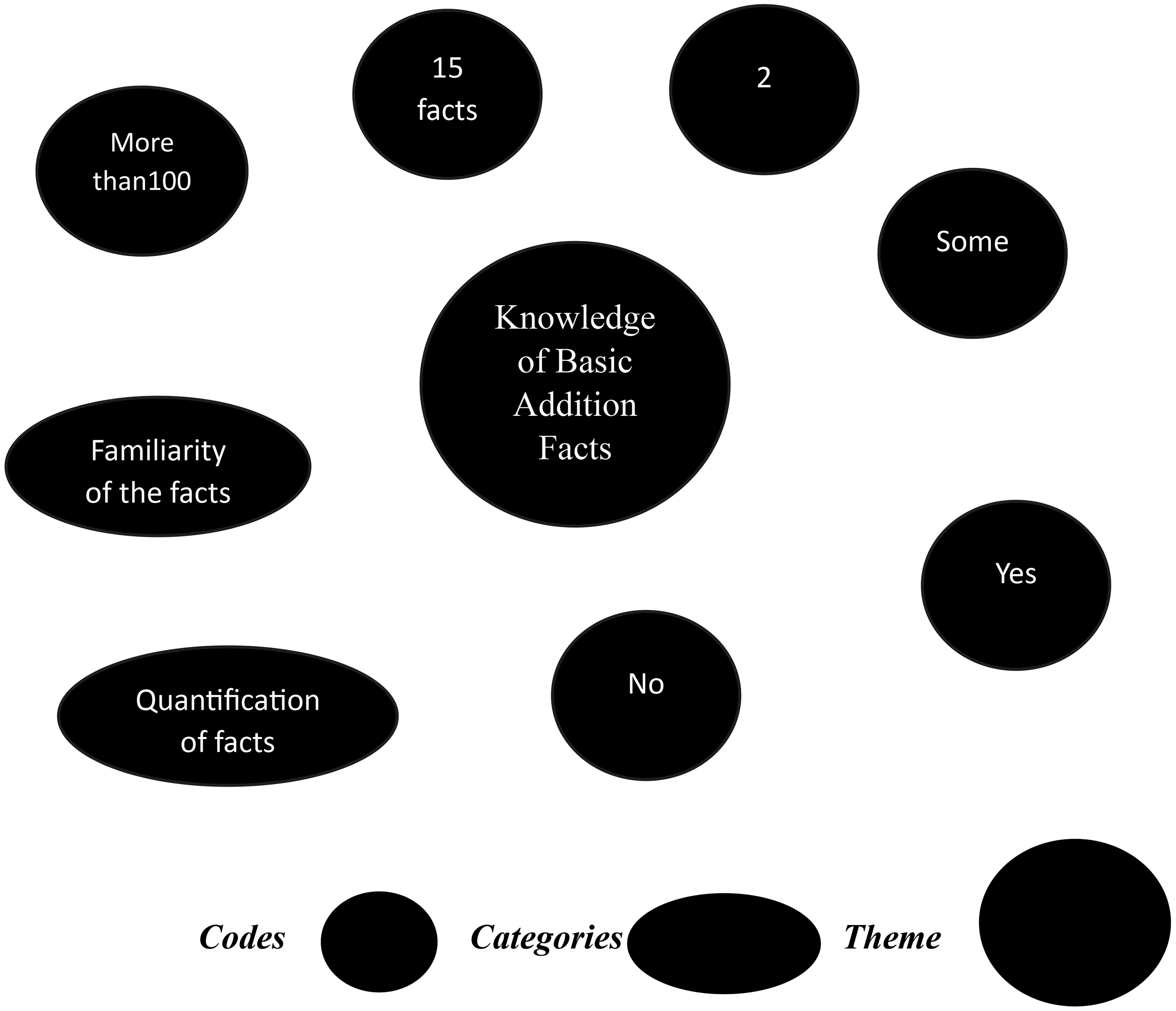
Thematic analysis word bubble.
An analysis of teachers’ responses regarding teaching second-graders the concept of addition reveals a wide range of factors to consider. While some teachers specify set timeframes, such as 30 min, 40 min, or even daily sessions of 45 min to an hour for a week, others describe more flexible timelines, like “more than 15 days for one topic” or “two weeks.” Responses vary from mentioning the number of classes or sessions to expressing time in weeks. Some teachers highlight the importance of adapting to student needs, indicating that the duration of teaching depends on individual student progress. This analysis highlights the diverse strategies employed by teachers, influenced by teaching methods, curriculum demands, and student learning dynamics.
What methods of instruction do you apply to teach addition to grade second students?
Word Cloud, a qualitative data analysis technique visually represents the frequency of methods of instructions employed to teach addition to second-grade students utilized by educators. Strategies include explicit instruction, incorporating verbal and written methods, and providing examples with live demonstrations. Some teachers utilize playful methods such as quizzes, counting games, and hands-on activities to engage students. Additionally, techniques like using fingers, simple method and mental arithmetic are emphasized for facilitating understanding. Demonstrations, practical applications, and interactive activities like chalk and board exercises are also prevalent. While explicit instruction and practice through practical examples are commonly cited, methods like the stick method and partial sum methods indicate diverse instructional practices tailored to students’ needs. One of the teachers responded “four digit simple and carry over thousand hundred tens ones as an answer for the question.” Another teacher replied “I solve on the board. Sometimes use practical applications.” One of the teachers normally responded “normal like all teacher uses.” Another teacher said she uses countable manipulatives and Montessori method to teach addition to the students. Overall, the word cloud showcases a range of instructional strategies aimed at promoting comprehension and engagement in teaching addition to second-grade students (Figure 3).
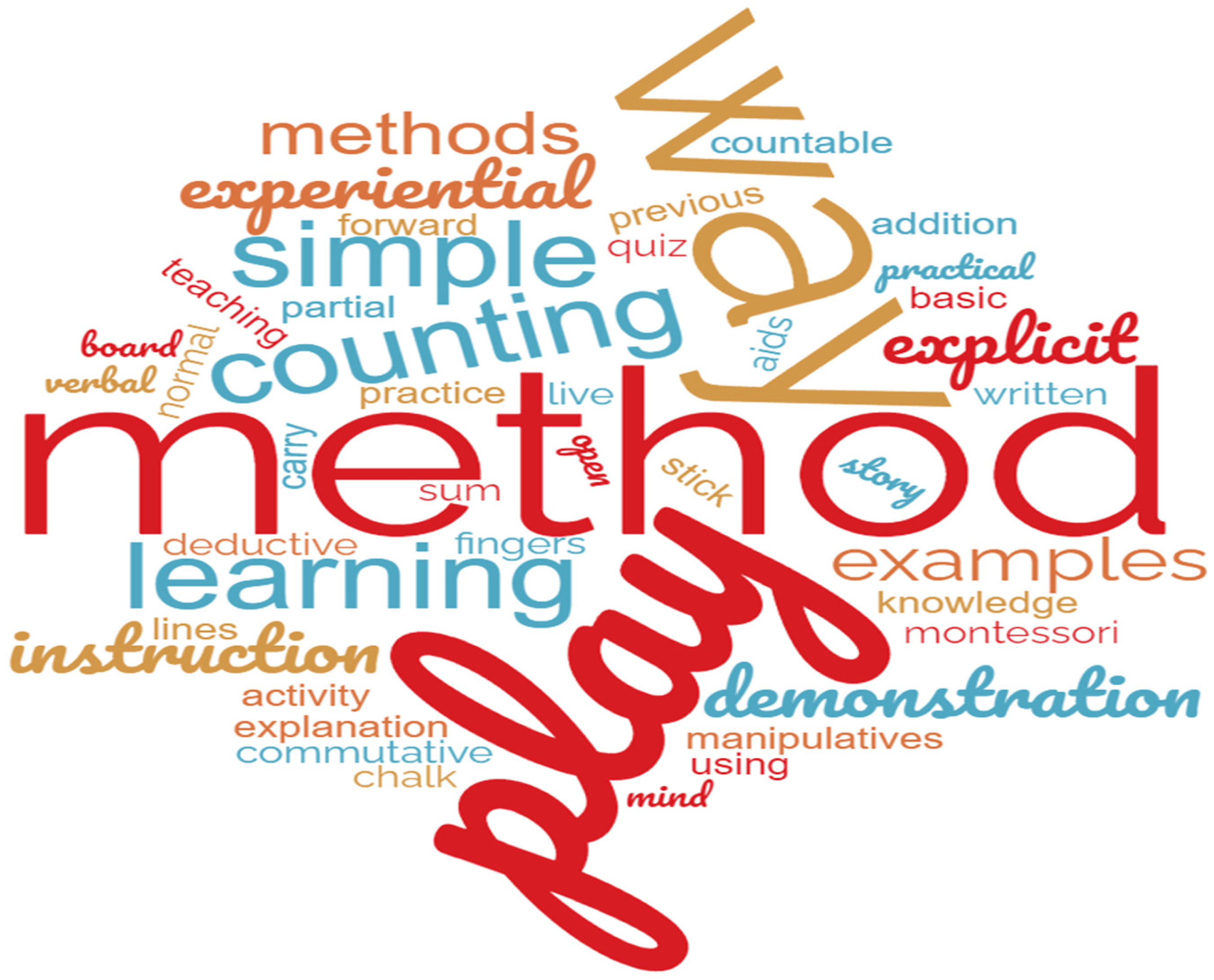
Word cloud.
A descriptive summary of responses regarding the extent to which strategies aid students in understanding addition demonstrates a consensus among teachers on the positive impact of employing various approaches. Teachers emphasize the effectiveness of visual strategies, forward counting, and regular practice in enhancing students’ comprehension of addition. Many respondents affirm that these strategies not only facilitate better understanding but also contribute significantly to students’ daily lives and problem-solving skills. Expressions such as “helps them a lot,” “to a great extent,” and “100%” reflect a high level of confidence in the efficacy of these methods. Additionally, phrases like “above average” and “great extent” further underscore the perceived benefits. One of the teachers responded “Yes, students may learn addition through various strategies such as activity-based methods, learning by doing, experiencing addition in day-to-day life activities.” Another teacher responded “Strategies significantly enhance students understanding by providing visual and conceptual frameworks for grasping addition concepts.” One of the teachers feel most of the time it works. Another teacher responded “Forward counting, counting on fingers, regular practice of addition helps students to a great extent.” The other responses from the teachers were as follows- It helps for deeper understanding of addition, using different method verify their knowlege and build confidence. Strategies plays a vital role in understanding the concept of addition That’s sets the base for higher education To a great extent if they're fully involved
Overall, the analysis highlights the unanimous belief among educators in the substantial role that strategic approaches play in promoting students’ understanding of addition.
What does automaticity mean in your opinion and its significance in mathematics?
Teachers’ responses collectively illustrate a comprehensive understanding of automaticity as an effortless and instinctive proficiency in performing mathematical tasks, particularly mental arithmetic. This proficiency is achieved through consistent practice, allowing for quick and accurate responses without conscious effort. The significance of automaticity in mathematics is widely recognized, with teachers acknowledging its role in improving problem-solving speed and accuracy, enhancing daily life skills, and fostering a deeper enjoyment and engagement with mathematics. The combined analysis highlights that automaticity is not only essential for mastering basic arithmetic but also crucial for excelling in more advanced mathematical concepts, thus contributing significantly to overall academic success and the practical application of mathematics in everyday life.
Discussion
Poor learning levels in schools are the biggest concern of the Indian education system, with inadequate learning outcomes worsened by the ongoing learning crisis. Improving these outcomes hinges critically on the role of teachers. However, a significant challenge lies in the shortage of adequately qualified and trained teachers in the country's public education system (Kundu, 2023). In today’s educational landscape, the role of teachers in mathematics education is more critical than ever. The present study connects with the literature review in several significant ways. Both highlight substantial gaps in teacher proficiency regarding fundamental mathematical concepts, emphasizing that inadequate understanding negatively impacts student learning outcomes. The literature, including the NCERT report, points out that poor foundational skills among students can often be traced back to ineffective teaching methods and insufficient teacher training. This is mirrored in the present study’s findings, where primary mathematics teachers exhibited a lack of awareness about basic addition facts, which hampers their ability to effectively teach these concepts. Moreover, both the literature and the present study underscore the reliance on traditional instructional methods, such as rote memorization and the "chalk and talk" approach, which can lead to disengagement and superficial learning. The influence of teachers’ attitudes towards mathematics on student anxiety and performance, a concern echoed in the present study, which reveals that while teachers recognize the importance of mathematical knowledge, many fail to implement effective strategies in the classroom. This emphasizes the urgent need for ongoing professional development to equip teachers with innovative teaching methods and a deeper understanding of mathematical concepts. Ultimately, both the literature review and the present study advocate for a systemic shift in educational practices, calling for enhanced teacher training and support to improve student outcomes in mathematics.
The education system, particularly in India, heavily relies on the capabilities and subject expertise of teachers. While the knowledge and proficiency of educators are rightly prioritized, the system often overlooks the need for continuous professional development. If teachers are not regularly updated with new, innovative teaching methodologies, the effectiveness of their instruction diminishes, limiting the potential impact on student learning. In the context of teaching addition, it is crucial for students to not only learn basic arithmetic facts but also to develop automaticity—enabling them to solve problems both accurately and swiftly. Understanding and developing addition skills is facilitated by familiarity with addition facts, but for students to learn these, teachers must have a thorough understanding themselves. However, findings indicate a concerning gap in many teachers’ familiarity with addition facts and modern strategies for teaching addition facts. As a result, the expectation that students will master these skills using and innovative ways becomes unrealistic. This gap in teachers’ knowledge underscores the importance of ongoing teacher training and support. Without equipping educators with the latest tools and strategies, we cannot expect students to excel in foundational mathematical concepts. Therefore, a systemic shift is necessary, one that emphasizes both the acquisition of subject knowledge and the continual development of teaching practices, ensuring that educators are fully prepared to help students succeed in a rapidly evolving educational landscape.
The present study revealed that many primary teachers lack awareness of these facts, with several unable to provide answers when questioned about their knowledge. This gap highlights the urgent need for teachers to be well-versed in basic mathematical concepts to effectively impart this essential knowledge to their students. In the present study, while all teachers acknowledged being familiar with basic addition facts, their responses regarding the specific number of facts they know were unclear. Many provided only partial lists, and no definitive answer emerged. This suggests a potential gap between teachers’ awareness of the term and their in-depth knowledge of the facts themselves. Furthermore, the prevalence of vague responses highlights a possible need for more comprehensive understanding of basic addition facts. Traditional instructional methods, such as chalkboard and finger counting, remain prevalent among educators, with only a minority utilizing manipulatives and practical examples. The findings underscore the necessity for teachers to update their instructional strategies. Despite this, there is widespread recognition among teachers regarding the importance of factual knowledge in mathematics education. Teaching durations for addition vary, with some allocating specific time frames while others prioritize continued instruction until student comprehension is achieved. Although teachers’ understanding of automaticity appears somewhat limited, there is unanimous support for its significance in enhancing students’ computational abilities within mathematics education. When asked about the time allocated for students to grasp the concept of addition, teachers provided varied responses. Some addressed the timeframe in minutes or hours, while others referred to the number of days. A few mentioned that they would give students as much time as needed until they fully understood the concept. The primary objective of this question was to gauge the importance teachers place on this topic.
All the teachers agreed that various strategies are beneficial for helping students understand addition. Despite this, it was concerning to find that some teachers still relied on traditional methods rather than utilizing these effective strategies. Even though they recognize the benefits of these strategies, not implementing them is unwise. The school administration should take an active role in enhancing teachers’ knowledge of new and effective teaching strategies. It is crucial to prioritize efforts to ensure that teachers are well-versed in addition concepts and up-to-date instructional techniques. Enhancing teacher proficiency through continuous professional development is essential. Professional development programs should focus on deepening teachers’ understanding of mathematical concepts and equipping them with diverse and effective instructional strategies. Ultimately, enhancing the proficiency and support of mathematics teachers is a key factor in improving the quality of education and ensuring that all students have the opportunity to succeed. Enhancing teacher proficiency through continuous professional development is essential. Cognitive activation strategies, which involve engaging students in meaningful classroom discussions, encouraging them to articulate and justify their solutions, and exploring multiple problem-solving approaches, have been shown to significantly improve student outcomes. By incorporating these strategies, teachers can create a more dynamic and interactive learning environment that stimulates students’ interest and curiosity in mathematics (Baumert et al., 2009).
Implications of the study
The present study reveals a significant gap in primary teachers’ knowledge of basic addition facts, as many struggled to provide specific details when questioned. The findings of this research study have several important implications for the field of education, particularly in the teaching of mathematics at the primary level. Firstly, there is a clear need for enhanced teacher training and continuous professional development programs. These initiatives should focus on deepening teachers’ understanding of fundamental concepts like addition facts and equipping them with effective instructional strategies. Secondly, curriculum development must prioritize mastery of foundational topics before advancing to more complex concepts, integrating practical examples and manipulatives to enhance learning experiences.
In terms of instructional strategies, updating traditional methods with modern approaches that engage students effectively is crucial. Teachers should also be equipped to provide individualized support to students struggling with basic mathematics skills. From a policy perspective, increased investment in teacher education and resource allocation is necessary to ensure all educators are proficient in teaching fundamental mathematics. Implementing early intervention programs and continuous support for students falling behind in basic math skills is essential to prevent further learning gaps. Lastly, fostering a positive attitude towards mathematics among teachers and students alike through professional development and parental involvement can enhance overall educational outcomes. By addressing these implications, stakeholders can work towards improving the quality of primary mathematics education, ensuring students build a strong foundation for future academic success.
Educational recommendations
By implementing these educational recommendations, schools can significantly improve the quality of mathematics education. Professional development ensures that teachers are well-equipped with the necessary skills and knowledge to teach effectively. Updated resources and collaborative learning environments foster innovation and support among educators. Allocating sufficient teaching time and focusing on automaticity will help students build a strong foundation in basic addition facts, ultimately enhancing their overall mathematical proficiency. These comprehensive strategies aim to create a more engaging, effective, and supportive learning environment for both teachers and students.
Conclusion
Various studies have shown that many Indian students lack these fundamental skills, and one contributing factor is the proficiency of their primary mathematics teachers. By the time students finish elementary school, they're supposed to have a solid grip on basic mathematical facts. These are like the foundation for more advanced mathematics stuff. Actually, studies say it is not just enough to know these facts, students should have automaticity of them- ability to remember them super quickly and accurately without even thinking much about it (Baroody et al., 2009). Basic mathematical skills, including mastering basic math facts, are crucial for students’ academic success. studies have shown that many students lack these fundamental skills, and one contributing factor is the proficiency of their primary mathematics teachers. The current research indicates that a considerable portion of teachers lack a strong grasp of basic addition facts and struggle to teach them effectively. Many still rely on traditional teaching approaches, which might not be as effective.
Some teachers are not fully acquainted with the concept of automaticity, which is crucially linked to mastering basic mathematical facts, it becomes imperative for students to cultivate automatic recall of these fundamental facts to progress to more advanced concepts seamlessly. It is crucial for teachers to upgrade their skills and teaching methods to better cater to their students’ learning requirements. To improve teachers’ proficiency in teaching basic addition facts, strategies include continuous professional development, investment in updated teaching resources, fostering collaborative learning environments, allocating sufficient teaching time, and providing targeted training on automaticity to enhance students’ understanding and computational skills.
Footnotes
Acknowledgements
The authors would like to extend their deepest gratitude to all the teachers who participated in this research. Their time, experiences, and insights have been invaluable, significantly enriching the study and the broader field of educational research. The contributions have made a lasting impact, and for that, the authors are sincerely grateful.
Contributorship
The study was a collaborative endeavor with significant contributions from both authors. Ankita Nanda and Prof. Rekha Rani both played pivotal roles in shaping and conducting the research on elementary teachers. Ankita Nanda was instrumental during the initial stages, including designing the questionnaire for teachers, selecting the sample, overseeing material preparation, data collection, and analysis. Prof. Rekha Rani made substantial contributions by providing expert guidance and refining the manuscript through in-depth revisions, significantly enhancing its clarity, coherence, and overall quality. At every stage of the research, her insights and suggestions ensured the paper's continuous improvement. Both authors collaborated in a rigorous review and editing process, utilizing their combined expertise to refine and prepare the manuscript for submission and publication.
Declaration of conflicting interests
The authors declared no potential conflicts of interest with respect to the research, authorship, and/or publication of this article.
Funding
The authors received no financial support for the research, authorship, and/or publication of this article.
Informed consent
Informed consent was obtained from all subjects involved in the study.
