




Abstract
This study concerns an intervention incorporating the KNOWS strategy (K—Know, N—Need to know, O—Organize, W—Work, and S—Solution), a mnemonic problem-solving tool to improve students’ performance in ratio word problems. Quantitative data through pre- and post-tests were collected from 42 Year 9 students in one of the secondary schools in Brunei Darussalam. Results from a paired-sampled t-test show that the students scored higher in the post-test compared to the pre-test, confirming the effectiveness of the KNOWS intervention in improving students’ performance in ratio word problems. Despite the improvement in students’ performance, this study highlights some misconceptions and common mistakes of students when solving ratio word problems before and after the KNOWS intervention. It also suggests alternative ways of using the KNOWS strategy as an instructional option to improve students’ performance in ratio word problems.
Introduction
One of the difficult mathematical problems that most students encounter is word problems. What normally accounts for this difficulty is that word problems require students to undergo complex comprehension processes and use self-regulatory strategies to solve such problems (Seifi et al., 2012; Verschaffel et al., 2020). Due to this barrier, students often resort to several approaches to solve word problems. For example, they depend on their teachers to translate each sentence into mathematical notations (Chong et al., 2017; Jan & Rodrigues, 2012) or use the keyword technique, which also increases their struggles when employing the right strategy and concepts and establishing accurate solutions (Heater et al., 2013; Powell et al., 2022).
It has been well documented that students have difficulties in solving ratio word problems, especially when comparing two or more items of a similar kind (Andini & Jupri, 2017; Çalisici, 2018; Diba & Prabawanto, 2019; Lamon, 2020; Şen & Güler, 2017). The conclusion from these studies is that the difficulties emanate from how ratios are taught (mainly through unit ratios and cross-multiplication), which results in limited understanding among students.
For example, Şen and Güler (2017) reported that sixth-grade students preferred to solve ratio problems using unit ratios, cross-multiplication, and equivalent fractions. Diba and Prabawanto (2019) concluded that students often made errors, as they were told by teachers to memorize procedures with minimal conceptual understanding when answering ratio problems. According to Andini and Jupri (2017), students confused ratio with proportion due to their lack of understanding. A ratio helps compare two quantities of the same unit to determine how bigger or smaller is one number than the other. It is expressed in the form
Considering the difficulties students face when solving word problems, a paucity of studies (e.g., Brack, 2020) has recommended a potential mnemonic problem-solving strategy that fosters deep knowledge and skills in solving word problems. This study examines the effectiveness of the KNOWS strategy (K—Know, N—Need to know, O—Organize, W—Work, and S—Solution) as a mnemonic approach in improving students’ performance in ratio word problems. The following research question guided the study: How does the KNOWS strategy improve students’ performance in ratio word problems?
Theoretical framework
Cognitivism helps understand how students’ performance can be improved through self-regulated and motivational teaching approaches. It exemplifies how learning occurs through internal mental information processing, which can contribute to comprehension and retention (Tasheva & Bogdanov, 2018). It encompasses how humans perceive, think, remember, learn, resolve issues, and direct their attention to one stimulus over another (Bandura, 2012; Clark, 2018; Eysenck & Brysbaert, 2018). Proponents of cognitivism argue that learning occurs based on existing knowledge and prior experiences (i.e., schema), which is a distinctive organizational structure that students may use to understand new information (Brod et al., 2013; Clark, 2018).
A fundamental goal of cognitivism is to impart knowledge to learners by empowering them to use their cognitive abilities to encode information (Michela, 2020). One common concept of instructional design connected with cognitivism is that knowledge is assimilated more effectively if processed and presented in manageable components (Sweller et al., 2019). KNOWS, as a problem-solving strategy, has the potential to improve students’ understanding by exercising their cognitive abilities to process and make meaning of ratio word problems and to integrate and apply their knowledge to new contexts. This can lead to improved and retained learning involving ratios.
Rosenshine (2012) argued that when a lesson is relevant and successfully linked to something the students already know, new information is more likely to be stored in their long-term memory, which is one of the advantages of using KNOWS as an instructional option. This is because students are engaged in teaching and learning experiences, which challenge them to use their understanding to make meaning of a problem and develop appropriate ways of arriving at a solution to the problem.
Cognitivism improves students’ self-regulation skills through which students integrate their cognitive capacities into task-related academic skills (Hadwin & Oshige, 2011). Students are actively engaged in the learning process, demonstrating initiative, tenacity, and adaptive skills in learning, either independently or through socialization (Gregory & Kaufeldt, 2015). Given that most students lack the skills on how to conceptualize, organize their thoughts, and devise a plan to solve ratio word problems (Acosta-Tello, 2010; Fuchs et al., 2008; Khoo et al., 2016), cognitivism provides a framework that helps understand how the KNOWS strategy could be an effective way for students to link their prior knowledge to create new understanding that can result in authentic learning experiences.
Related work
Students’ perceptions of mathematical problem solving
Charles (2011) argued that a word problem in mathematics is a realistic word description of a puzzle comprising one or multiple operations, known and unknown numerical values, and irrelevant information. He added that word problems might require that the final answers are presented in numbers or short statements.
Research has emphasized the relevance of word problems (Acosta-Tello, 2010; McCarthy, 2010). For example, McCarthy (2010) argued that word problems promote students’ understanding since they demand students to think critically and apply their knowledge. Acosta-Tello (2010) corroborated that word problems in mathematics sharpen students’ abilities and help them evaluate their expertise in integrating mathematical concepts and procedures in various contexts.
However, solving mathematical word problems is one of the challenges most primary and secondary school students face (Acosta-Tello, 2010; Khoo et al., 2016). The key challenges are deficiency in attention, inability to develop solution patterns, weak linguistic skills, and concept generation (Fuchs et al., 2008). These problems are aggravated in a country where English is not the primary language and where students lack English proficiency skills. For example, in Brunei Darussalam (hereinafter Brunei), the English language is the medium of instruction for mathematics in primary, secondary, and tertiary institutions. Most students struggle to comprehend word problems since English is not their first language, which makes them lose interest in solving word problems. Khalid and Tengah (2007) argued that as word problems are articulated in the English language, it could be a determinant that adds to students’ incompetency in solving mathematical word problems. Contrarily, Pungut and Shahrill (2014) concluded that using English in word problems does not impact students’ competency in solving such problems.
A plethora of studies have also established that students’ perceptions and experiences of mathematical word problems influence their ability to solve such problems (Estonanto, 2017; Heater et al., 2013; Legg & Locker, 2009; Said & Tengah, 2021). For example, Legg and Locker (2009) argued that most students are afraid to solve word problems due to mathematical anxiety and their lack of conceptual understanding. According to Estonanto (2017), some potential reasons for anxiety are the inability to grasp mathematical concepts, inadequate motivation, stern educators, flunked examinations, overwhelming mathematics syllabus, weak numerical skills, and inadequate teaching and learning materials. Some students may suffer anxiety as they try to decipher every sentence in the word problems. Others may struggle to use their cognitive skills to establish links between different parts of the problem. Heater et al. (2013) stressed that these difficulties could lead to students losing the determination to examine the problems further. Said and Tengah (2021) also claimed that students who are literate in mathematical procedures but cannot manipulate mathematical concepts might be unable to solve word problems.
The research led by Heater et al. (2013) found that mathematics word problems are often perceived adversely and evaded by most students due to their problem-solving complexity. This agrees with the research by Wiley and Jarosz (2012) arguing that problem solving demands more sophisticated thinking that depends on several significant steps. Many students experience impediments when working on word problems because they must go through multiple steps before arriving at one accurate solution (Pongsakdi et al., 2020), which makes many students surrender or presume an answer with little effort (Alter, 2012). Additionally, Tambychik and Meerah (2010) reported that solving mathematical word problems demands multiple skills, including cognitive and conceptual understanding. This makes it inescapable for students to make errors in tackling word problems.
Situating these perceptions and challenges in the context of Brunei, the “keyword strategy” is commonly used by teachers when solving word problems; however, this strategy often leads to transformation errors (Pungut & Shahrill, 2014; Said & Tengah, 2021). For example, Said and Tengah (2021) asserted that solely recognizing the keywords would lead to error and misinterpretation when students disregard the meaning, connection, and context. Pungut and Shahrill (2014) maintained that solving word problems is about exploring the context and making conjectures. It is expected that students who browse the sentences in word problems to search for keywords and operations are more likely to have limited cognitive processes in solving the problems.
Moreover, a weak understanding of mathematical concepts and an ineffective planning strategy could lead to unsatisfactory student achievement in solving mathematical word problems (Abdul Gani et al., 2019; Greeno & Collins, 2008; Kani & Shahrill, 2015). According to Abdul Gani et al. (2019), insufficient awareness of executing a proper technique leads to fruitless effort in solving word problems. Nevertheless, Greeno and Collins (2008) argued that implementing specific guidance and a reliable approach to tackling word problems can foster students’ problem-solving skills.
Solving word problems using mnemonics and visual representations
A mnemonic can be anything that is intended to aid the memory. It usually involves a series of letters, a sentence, a word, or a short poem that helps to remember the pattern of letters, numbers, or an idea. Heater et al. (2013) stated that a mnemonic is a learning technique that helps students retain and retrieve learning concepts for better understanding. Given its extensive use in reading, mathematics, and science, the relevance of mnemonics has been well documented. Mocko et al. (2017) argued that mnemonics help students recapture knowledge, alleviate tension, and improve critical thinking skills.
Odeyemi and Akinsola (2015) contended that mnemonics help students retain basic mathematics concepts and quickly retrieve critical information, which improves their academic achievement. This is due to the visual and acoustic cues associated with mnemonics. They argued that visual cues are images teachers produce to help students connect prior and current knowledge in their memory, while acrostic cues are words in which the initial letter represents the first letter of the message students must memorize. An example of an acrostic cue is the order of arithmetic operations, which can be remembered as Please Excuse My Dear Aunt Sally (Parentheses, Exponent, Multiply, Divide, Add, and Subtract) (Lee et al., 2013).
The literature highlights how mnemonics support students in remembering information, concepts, and steps to execute tasks systematically, which enhance their problem-solving skills (Freeman-Green et al., 2015; Karabulut et al., 2021; Short, 2014; Tibbitt, 2016). For example, Karabulut et al. (2021) investigated the effects of using the READER mnemonic on three 10-year-old students with learning difficulties (LDs). The mnemonic READER stands for Read the problem, Examine the questions, Abandon irrelevant information, Determine the operation using diagrams, Enter numbers, and Record answer. The study revealed that participants exposed to the READER strategy improved their performance in word problems. After 5 weeks of the intervention, the students could use the strategy to solve various word problems that involved addition and subtraction.
Tibbitt (2016) compared the effectiveness of Solve It! and CUBES mnemonics to six fourth-grade LD students. A fundamental component of Solve It! is teaching students how to paraphrase situations and construct schematic representations. The Solve It! strategy breaks the problem-solving task into seven stages. The stages comprised understanding the problem, rewording, envisioning a representation, speculating, guessing, calculating the solution, and reviewing. After each step, students learn to utilize self-questioning (Say, Ask, and Check). As for CUBES, C suggests circling the essential numbers, U indicates underlining the question, B signifies boxing the action word, E means eliminating the unnecessary information, and S implies solving the problem and checking the answer. It was found that participants improved their problem-solving skills after using each strategy. However, the Solve It! strategy resulted in a more considerable improvement than the CUBES mnemonic.
Freeman-Green et al. (2015) used mnemonics to understand Year 6 students’ problem-solving skills. They used the SOLVE mnemonic (Study the problem, Organize the facts, Line up a plan, Verify your plan with action, and Evaluate your answer) to solve algebra word problems. Tests on various mathematical topics were administered to students to see if the SOLVE mnemonic strategy could be applied to the different concepts. The study concluded that students who learned the mnemonic improved their problem-solving efficiency. The students became more confident in solving word problems. The strategy supported students in working through steps and utilizing reasoning skills to regulate their thinking and solve word problems.
The PIES strategy is a mnemonic that helps students solve word problems in four ways (Heater et al., 2013; Short, 2014). The steps are drawing a Picture, distinguishing important Information and inserting them next to the picture, recognizing the accurate Equation, and Solving the equation. PIES uses a cognitive approach to support students in remembering the steps to solve problems and constructing a visual representation (Heater et al., 2013; Short, 2014). It provides a list of equations students must choose rather than a schematic diagram into which students must insert the information provided in the problem. Short (2014) adopted the PIES mnemonic in mathematics lessons involving 725 Years 6–8 students who were from special and economically disadvantaged homes. During lesson intervention, students were awarded marks at every stage of the procedure, which motivated them to solve the problems and proceed using the strategy even when their final solutions were wrong. As a strategy for improving problem-solving skills, the PIES mnemonic blends evidence-based practices from cognitive (Krawec et al., 2013) and incremental reinforcement (Alter, 2012).
KNOWS as a mnemonic strategy facilitates students’ understanding of word problems. It relates to the four levels of problem solving proposed by Polya (1945): understanding the problem, designing a plan, performing the plan, and reexamining the solution. These four problem-solving principles align with the KNOWS strategy (see Table 1). In the first letter, K, students are prompted to scan and write known information in the problems; N urges the students to reassess the context and write down the goal of the problem; O is where students visualize the problems by drawing accurate diagrams; W reminds students to devise a plan to solve the problem; and S hints students to verify the final solution.
The KNOWS strategy.
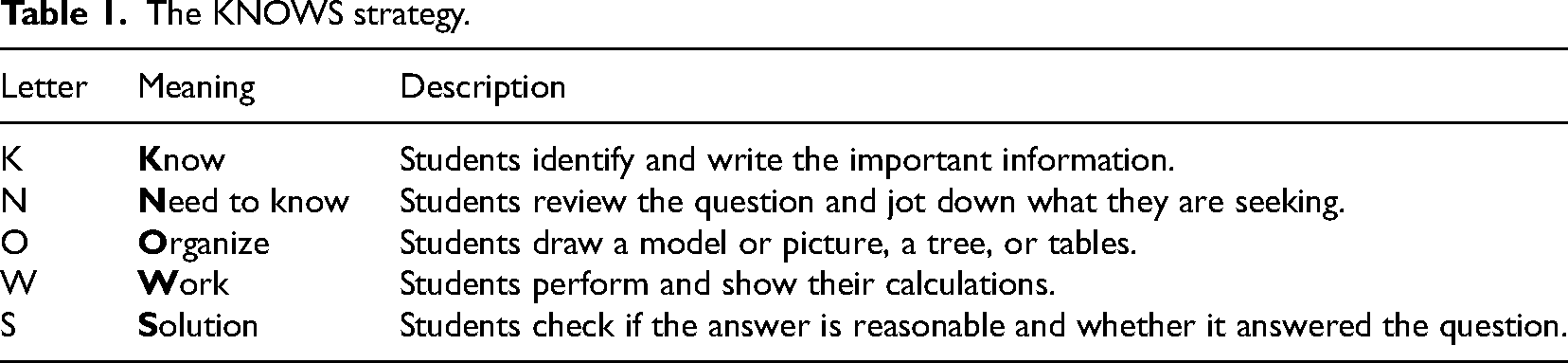
The KNOWS strategy.
The KNOWS strategy also integrates the concept of a graphic organizer, also known as the KNOWS organizer (see Table 2). The few research studies (e.g., Abdullah & Abbas, 2022; Sai et al., 2018; Zollman, 2009) that included a graphic organizer in problem solving revealed that it promoted mathematical thinking and enabled students to recognize the link between facts and previously acquired concepts. Incorporating the KNOWS organizer allows the teacher to determine which aspects the students lack.
The KNOWS organizer.
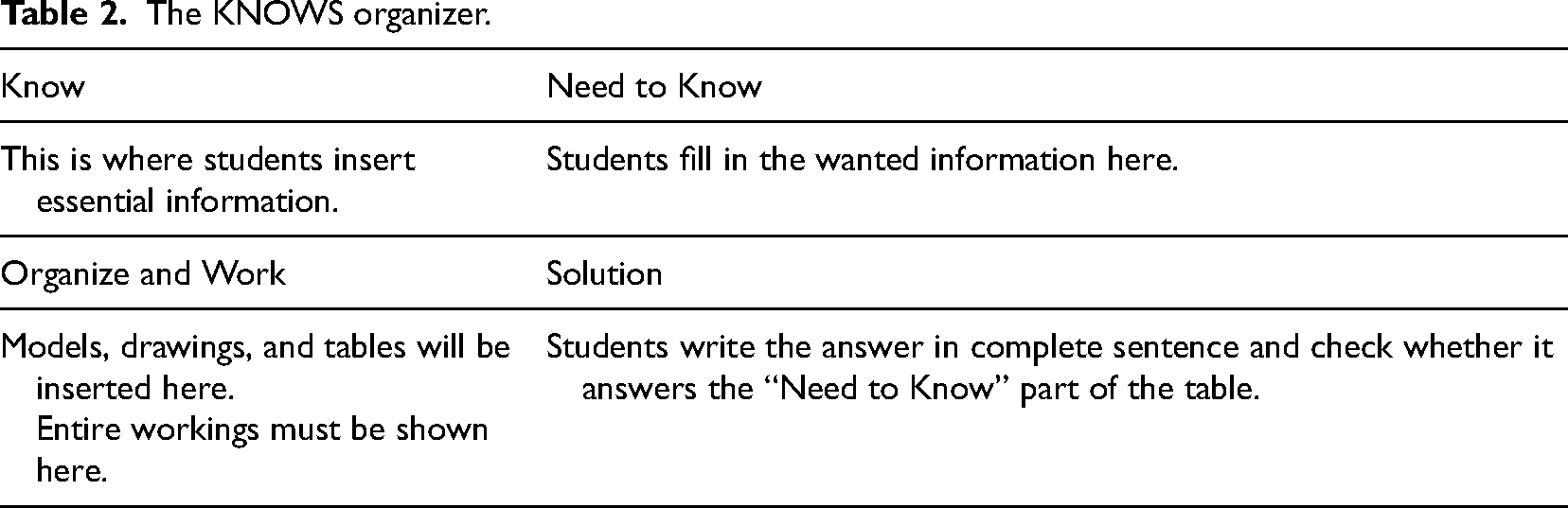
Incorporating visual representations into instructional techniques improves students’ learning in word problems. According to Rosli et al. (2020), visual representations can improve students’ understanding and establish links when solving mathematical word problems. Similarly, Belenky and Schalk (2014) argued that diagrams and models are examples of concrete representations frequently used to improve students’ understanding of mathematical concepts and refine problem-solving skills. The research by van Garderen and Scheuermann (2015) concluded that one of the most effective ways to train creative problem solvers is to teach and encourage students to express the situation using suitable schematic diagrams. In this sense, number lines, strip diagrams, and bar models are examples of schematic diagrams often employed to express mathematical word problems.
Using bar model representations or consolidated diagrams improves the performance of students. A bar model is a pictorial representation of a problem by using boxes or bars to represent the unknown and known quantities. The literature (e.g., Abdul Gani et al., 2019; Said & Tengah, 2021) highlights that secondary school students successfully applied the bar model to answer word problems in different mathematics topics. For example, Ding (2018) argued that using bar models to solve word problems in various mathematics topics contributed to higher student achievement in China and Singapore. Woodward et al. (2012) expounded that students who use visual representations before determining operations and writing equations are more likely to be effective in resolving word problems. This result supports van Garderen and Scheuermann’s (2015) recommendation on solving word problems. They stressed that when teaching students how to use diagrams to solve word problems including that of ratios, an accurate description of the visual representation should be emphasized. They recommended that the visual representation needs to explicitly depict the elements of the word problem and their relationship to one another. They remarked that students should understand that a diagram is a tool that can assist them in reasoning their way through a word problem and arriving at a suitable solution. When guiding students in constructing diagrams, explicit instruction is the most efficient instructional strategy, as it helps visualize concepts through modeling and practice (National Mathematics Advisory Panel, 2008; van Garderen & Scheuermann, 2015).
The literature highlights the relevance of mnemonics in problem solving and how certain mnemonic strategies (READER, Solve It!, CUBES, SOLVE, and PIES) have been used to improve students’ problem-solving skills, predominantly in algebra. These mnemonic strategies involve a series of letters that do not only improve procedural retention of mathematical problems. They also improve students’ knowledge of solving the problem and the mathematical concept in question. Research has shown that mnemonics facilitate efficient encoding, as they help associate information with knowledge that is already stored in long-term memory (e.g., Atkinson, 1975; Gibson, 2009). The various procedures involved in mnemonic strategies require students not only to remember the procedures but also to undergo a cognitive process to understand the problem, explore the necessary information about that problem, use the visual representations, and apply the procedures before arriving at the solution to the problem. The completion of these procedures is the conduit for effective problem-solving skills and a better understanding of the learning content. The literature also highlights how students with LDs benefit from mnemonic interventions and how visual representations are useful when dealing with word problems. However, little is known about the effectiveness of mnemonic strategies such as KNOWS in improving students’ problem-solving skills in ratios. The present study fills this research gap.
Research context and design
This study was conducted in one of the government secondary schools in the Brunei-Muara district, focusing on two Year 9 classes. The students registered for mathematics from the 5-year secondary-level program of the General Certificate Examination Ordinary Level (GCE “O” Level). The 42 participants (23 male and 19 female) were conveniently sampled. They were made up of normal-achieving and mixed-ability students. Their ages ranged from 14 to 16 years. All students had learned ratios before the intervention.
A quasi-experimental design through the one-group pre-test–post-test approach was used to evaluate students’ academic performance in ratio word problems before and after a KNOWS strategy intervention that involved the same students in an intact class (Creswell, 2014; Shadish et al., 2002). A pre-test under examination conditions was launched before the lesson intervention. Teacher guidance and revision sessions were not provided prior to the pre-test. Subsequently, the first author who was the class teacher executed the lesson intervention to guide the students to solve word problems in ratios using the KNOWS strategy. After the lesson intervention, the students sat for the post-test.
Permission to conduct the study was acquired from appropriate authorities including education faculties and ministries in Brunei, school principals, parents or guardians, and students. Data have been kept confidential, and the identity of participants has been kept anonymous.
Research instruments
The pre-test was used to determine prior knowledge and problem-solving skills involving ratios. It provided baseline scores that were used to determine students’ performance before the lesson intervention. The scores were also used to determine the approaches students employed and helped identify the misconceptions and errors they committed when attempting the word problems. The pre-test was explained to the students before they took the post-test. The post-test was compared with the pre-test to examine the outcome of the KNOWS intervention. The post-test was also used to detect misconceptions and errors produced by the students when employing the KNOWS strategy.
The pre- and post-tests involved similar questions (see Appendix 2). However, the nouns and numbers inserted in the questions were altered to reduce the effect of memorization. The questions for both tests were modified from the SPN21 Mathematics Year 8 textbook (Tay, 2013) and previous GCE “O” Level papers from 2015 to 2020. There were 10 increasingly challenging word problems on ratios, and one mark was assigned to each question, making a total of 10 marks for each test. The 10-item tests consisted of forming the ratio of two quantities in the correct order, calculating the missing values with a known ratio, calculating the total value, and evaluating the difference in value. The use of calculators was allowed to reduce the possibility of incorrect steps due to computational errors. Students were permitted 1 h to complete each test.
To improve the content validity of the test, experts in mathematics and experienced teachers validated both tests. A pilot test was also conducted on a different Year 9 class of the same school to check the reliability of both tests. The Kuder–Richardson Formula 20 (Kuder & Richardson, 1937) was used to judge the reliability of both tests, yielding a satisfactory reliability of .75 (Pallant, 2010).
Lesson intervention
After the pre-test, the teacher proceeded with a 2-h lesson intervention focusing on prior knowledge retrieval, strategy discussion, modeling, memorization, assisted practice, collaborative activity, and independent practice. The intervention involved three lessons. Students were given a 5–10-min break between each of the three lessons for them to discuss what they learned from each lesson. During the lesson intervention, a projector was incorporated to communicate the instructions, objectives, and facts more effectively.
The first part of the lesson, which lasted 25 min, was implemented to activate prior knowledge. For example, students were questioned on their understanding of ratios, how to add and subtract ratios, and how to visualize a given ratio. Worksheets on these ratio concepts and bar models were provided to reinforce the concepts.
The second part of the lesson lasted 40 min. Each student was given an information sheet that contained the KNOWS strategy (see Table 1). The teacher explained the meaning of KNOWS and displayed the KNOWS organizer (see Table 2). Students were informed about the benefits and when and where to use the strategy. Then, the teacher modeled the strategy by explicitly disclosing the KNOWS strategy's mechanics and demonstrating it in word problems (see Appendix 1).
For example, students were given several word problem questions that involved forming the ratio of two quantities in the correct order, calculating the missing values with a known ratio, calculating the total value, and evaluating the difference in value. In each question, students were guided to identify and write the key information that could help them understand and answer the problem. They proceeded to review the questions and wrote the concepts in the problem. They then drew a diagram to represent the problem and performed calculations. At the final stage, they were guided to judge their responses to confirm if they answered the questions accurately.
Throughout the lesson, there was a memorization stage that was done in pairs. Students were instructed to recite and explain the action for each letter in the KNOWS strategy in the correct order. One student assessed whether the other student recited it correctly and then swapped their roles. Next, the students proceeded to solve ratio problems. Each student was provided with an empty KNOWS organizer for each problem. They used the blank organizer to insert and arrange the KNOWS letter orderly and implemented the actions under each letter. Assisted practices were adopted in the same lesson. The teacher applied scaffolded questioning to improve students’ understanding of the problems if they were stuck or incorrect answers were observed.
In the third part of the lesson, which lasted 55 min, a collaborative activity was implemented. Students discussed the problems in an assigned mixed-ability group (four to five members per group). Each group was given a blank KNOWS organizer on an A3 paper for each problem. Each member was assigned a unique role (leader, writer, or negotiator) to ensure there was no freeloader. The students were randomly selected using ice cream sticks to elaborate on their work to the class. Errors and misconceptions that emerged during the discussion were scrutinized and rectified immediately. An independent practice was devised to permit the students to use the strategy individually. Written feedback without a mark was presented separately after the teacher collected their work. The feedback highlighted the strengths of the work and recommendations for improvement.
The intervention was student-centered, systematic, collaborative, and activity based. The students were guided to use their cognitive abilities to explore the important information about the word problems that were given. Representing their ideas in diagrams helped to translate their abstract thinking into reality. Memorizing the steps that were involved in KNOWS also helped them to remember and apply its processes.
Data collection and analysis
Data were based on the numerical scores from the pre- and post-tests. Scores from the two tests were initially coded into Microsoft Excel before being transporting to RStudio for further analysis. A paired-sample t-test was performed to investigate the significant mean difference in the pre- and post-tests. This statistical tool was considered appropriate because both tests were conducted and analyzed on the same group of students (Coman et al., 2013). The tests were approximately normally distributed with the pre-test (p = .91 > .05) and post-test (p = .71 > .05) (Fisher & Marshall, 2009). For the sake of interpretation, Cohen's (1988) recommendation was used to judge the effect size of the intervention. These are small = 0.2, medium = 0.5, and large = 0.8. Statistical significance was determined at the 5% alpha level.
Results and discussion
In this section, a paired-sample t-test was performed to investigate the effectiveness of the KNOWS intervention. Since we were also concerned about how the students answered the pre- and post-tests to identify their common errors and misconceptions, the correct and incorrect responses for samples of the pre- and post-tests were analyzed before discussing the results. Table 3 provides a summary of the analysis of a paired-sampled t-test on the mean difference between the pre- and post-test scores.
Paired-sample t-test between pre- and post-test scores.
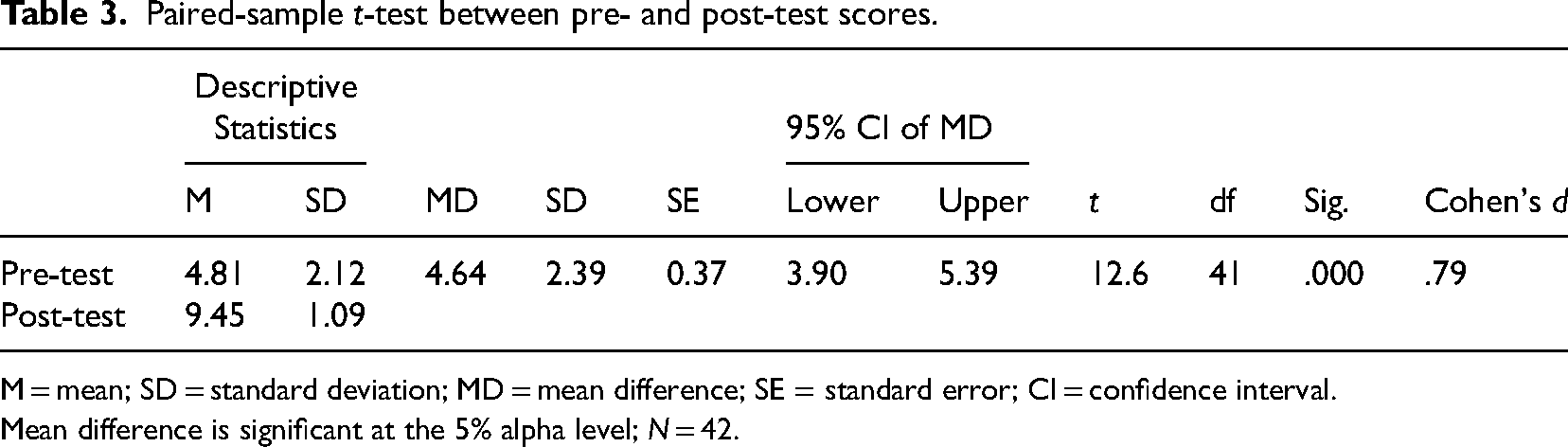
Paired-sample t-test between pre- and post-test scores.
M = mean; SD = standard deviation; MD = mean difference; SE = standard error; CI = confidence interval.
Mean difference is significant at the 5% alpha level; N = 42.
There is a statistically significant mean difference between the pre- and post-tests (see Table 3). Students scored lower in the pre-test (M = 4.81, SD = 2.12) compared to the post-test (M = 9.45, SD = 1.09) with t(41) = 12.6, p < .001, with a mean difference of 4.64. The results suggest that the performance of students in ratio word problems improved significantly after the KNOWS intervention. Further results in Table 3 show that about 79% of students’ performance is attributed to the KNOWS intervention (see Cohen's d = .79). The correct responses of the pre- and post-tests are illustrated in the following figures and tables.
Figure 1 shows that approximately 55% (n = 23) scored below 5 marks, while 45% (n = 19) scored 5 marks or more. This suggests that the students performed low in the pre-test. The number of correct responses is presented in Figure 2.
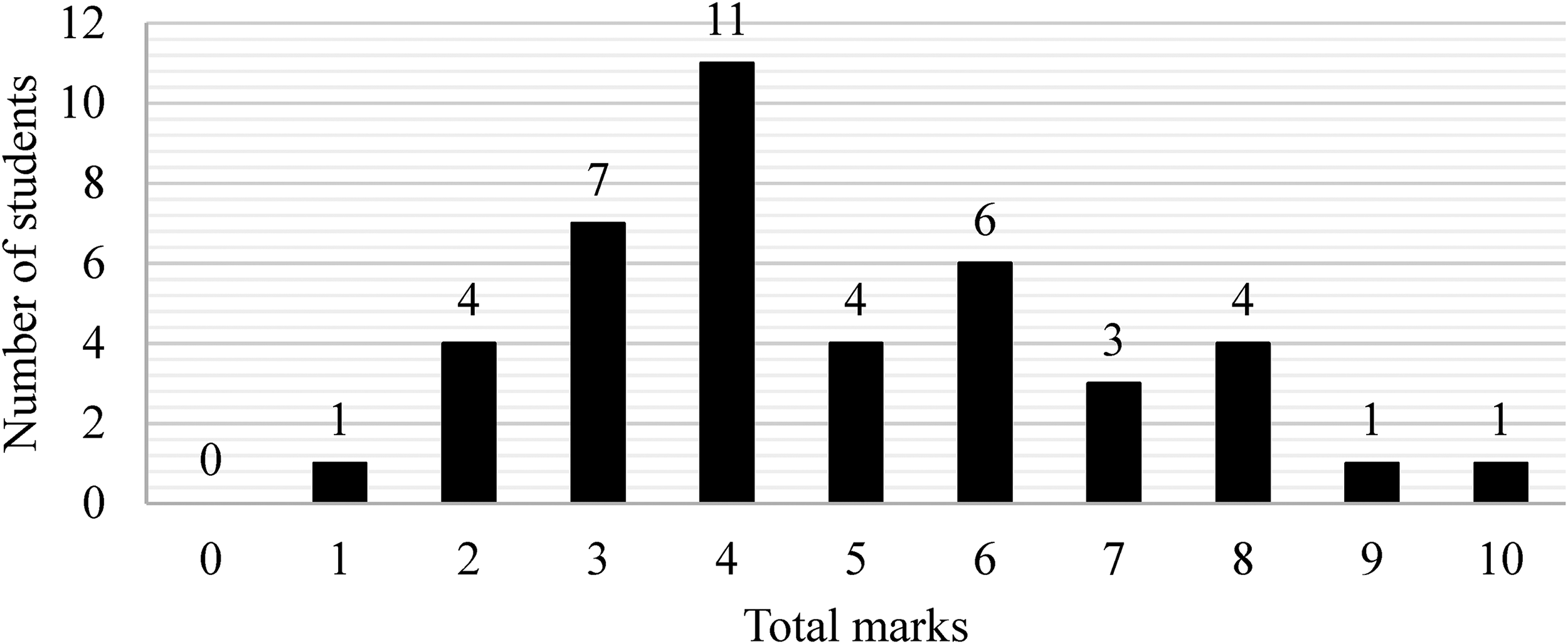
Bar graph showing the overall marks in the pre-test; N = 42.
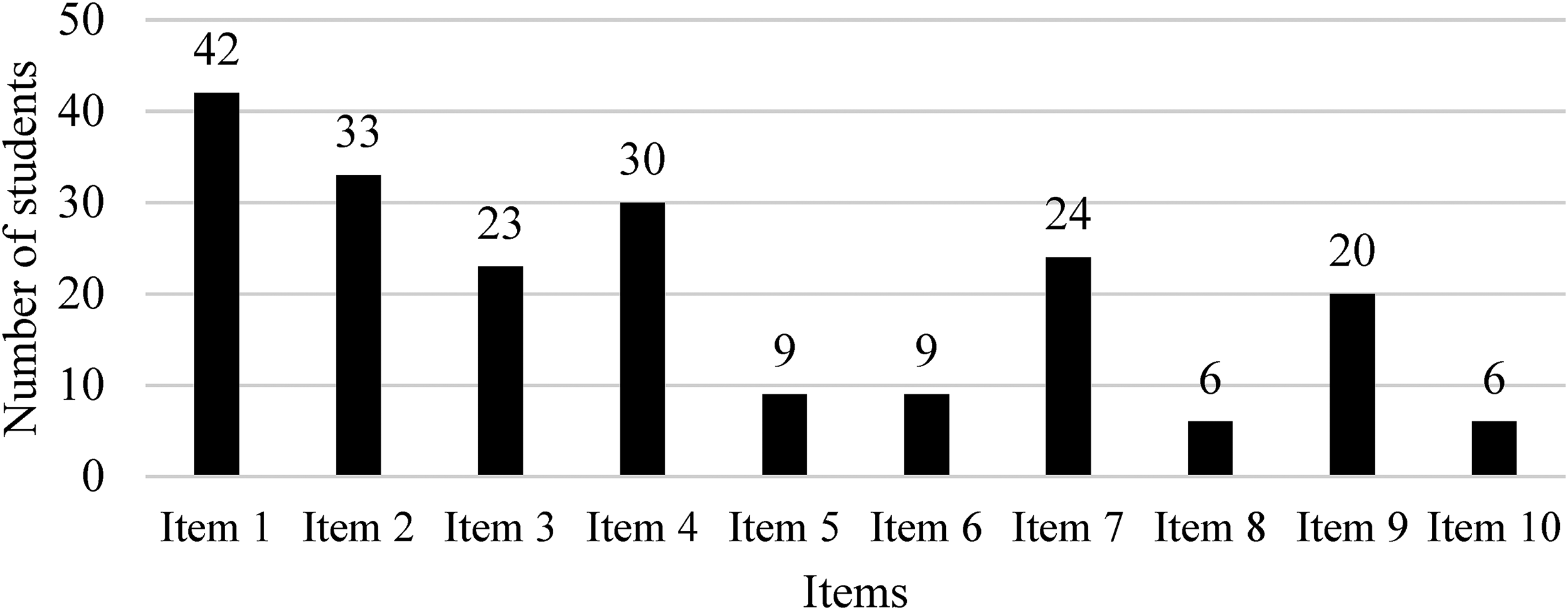
The number of correct responses for each item in the pre-test; N = 42.
As shown in Figure 2, the pre-test was progressively difficult for the students. Item 1 was the easiest and item 10 the most difficult. This indicates that the students could accurately form a two-term ratio since item 1 focused on this domain of ratios (see Appendix 2). Items 8 and 10 have the least number of correct responses. About 85% of the students could not solve items 5 and 8. Both items used the word “more” to indicate the difference in value. However, item 5 was less tricky than item 8, as item 8 includes the words “much more” (see Appendix 2). Item 6 emphasized the word “less” to indicate the difference in value (see Appendix 2). This indicates that most of the students struggled with ratio word problems that involved comparative statements. They struggled to transform the problem description into a qualitative mental representation of the underlying circumstance. Item 10 challenged students to calculate the missing amount with a known three-term ratio and a known total quantity of two things (see Appendix 2).
To analyze the errors and misconceptions of students more closely, the answer scripts of students for the pre-test were classified into four categories (see Table 4). The frequency of each response in each category was recorded and converted to percentages. Each incorrect answer is entitled to one type of error.
Percentage of students’ responses in the pre-test based on errors.
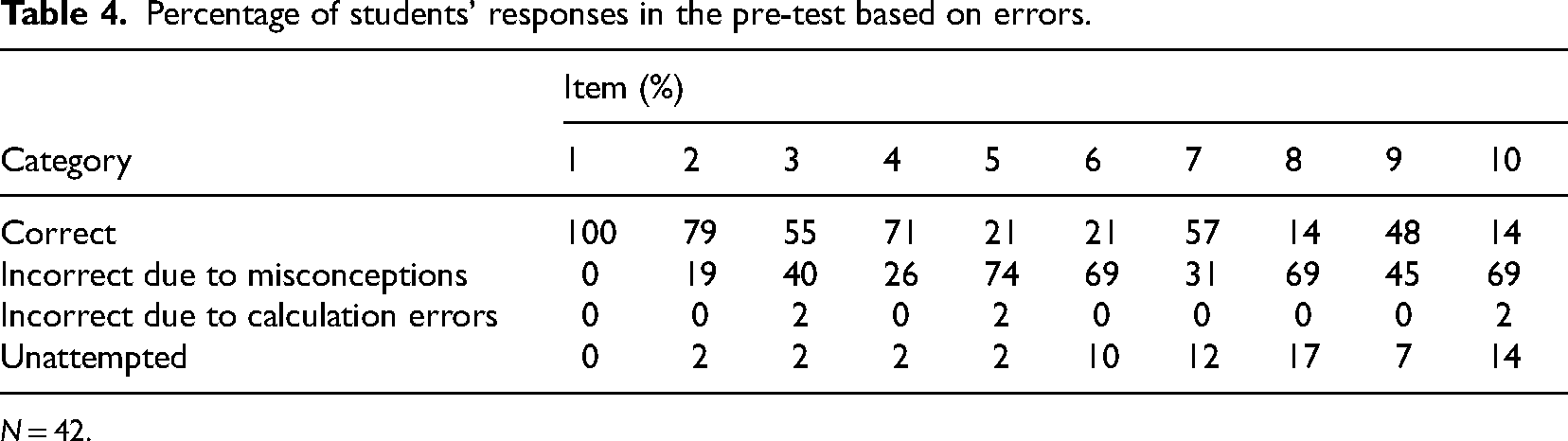
N = 42.
Except for item 1, all the other items had at least 2% of the students who did not respond (see Table 4). There was an increase in the percentage of unattempted responses from item 6 onward. Item 8 has the highest rate of students who produced no response. Few students committed calculation errors (n = 2%) in the pre-test. Computational errors accounted for a minor proportion of the overall error. According to Table 4, the highest cause of incorrect responses was misconceptions. The common misconception comprised an incorrect procedure, misinterpretation, and inadequate understanding of the problem.
Item 5 has the highest number of incorrect answers due to misconceptions, followed by items 6, 8, and 10. Students struggled with word problems involving comparative words such as “more,” “less,” and “much more,” which were the focus of items 5, 6, and 8, respectively. This shows that the students had inadequate linguistic skills, which is apparent when most of them could not answer item 8 but answered item 9, although both items were similar. However, item 9 was more straightforward (see Appendix 2). Students also struggled with item 10 (the most challenging question), which featured a three-term ratio. Samples of incorrect responses based on the bar model, equivalent ratio, and cross-multiplication are presented in Figures 3 to 5.
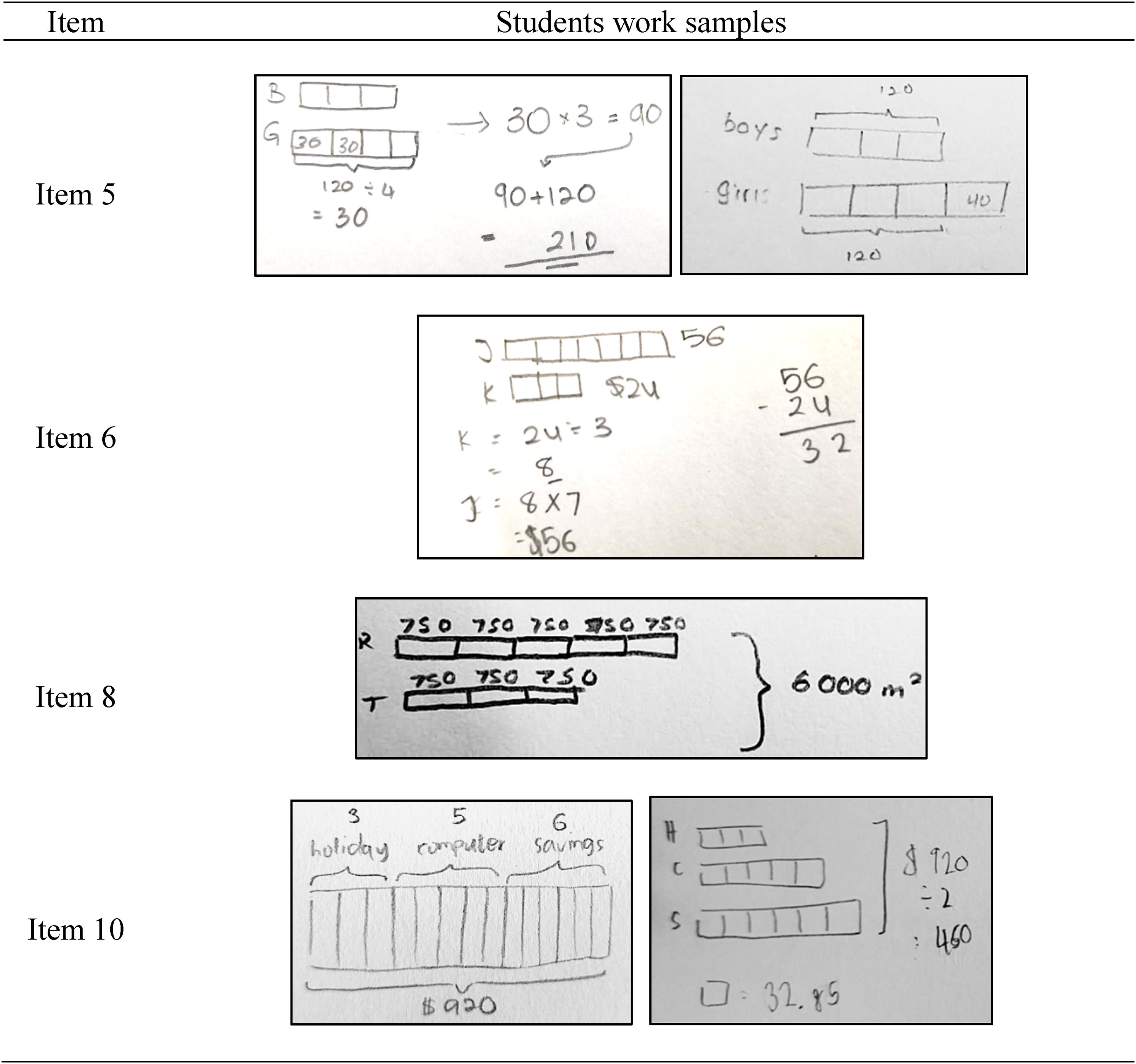
Samples of incorrect responses from four students in the pre-test based on the bar model.
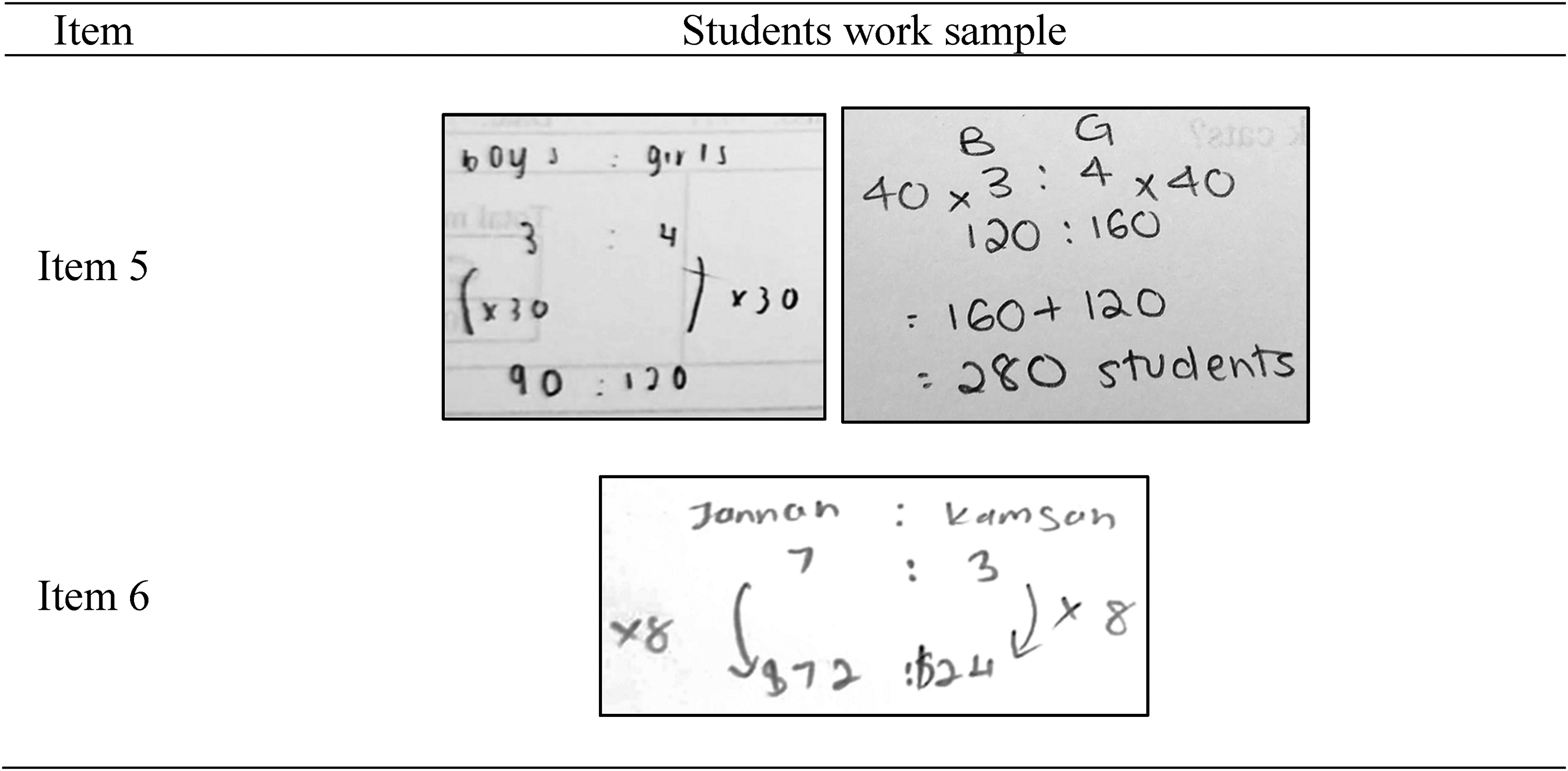
Samples of incorrect responses from two students in the pre-test involving equivalent ratios.
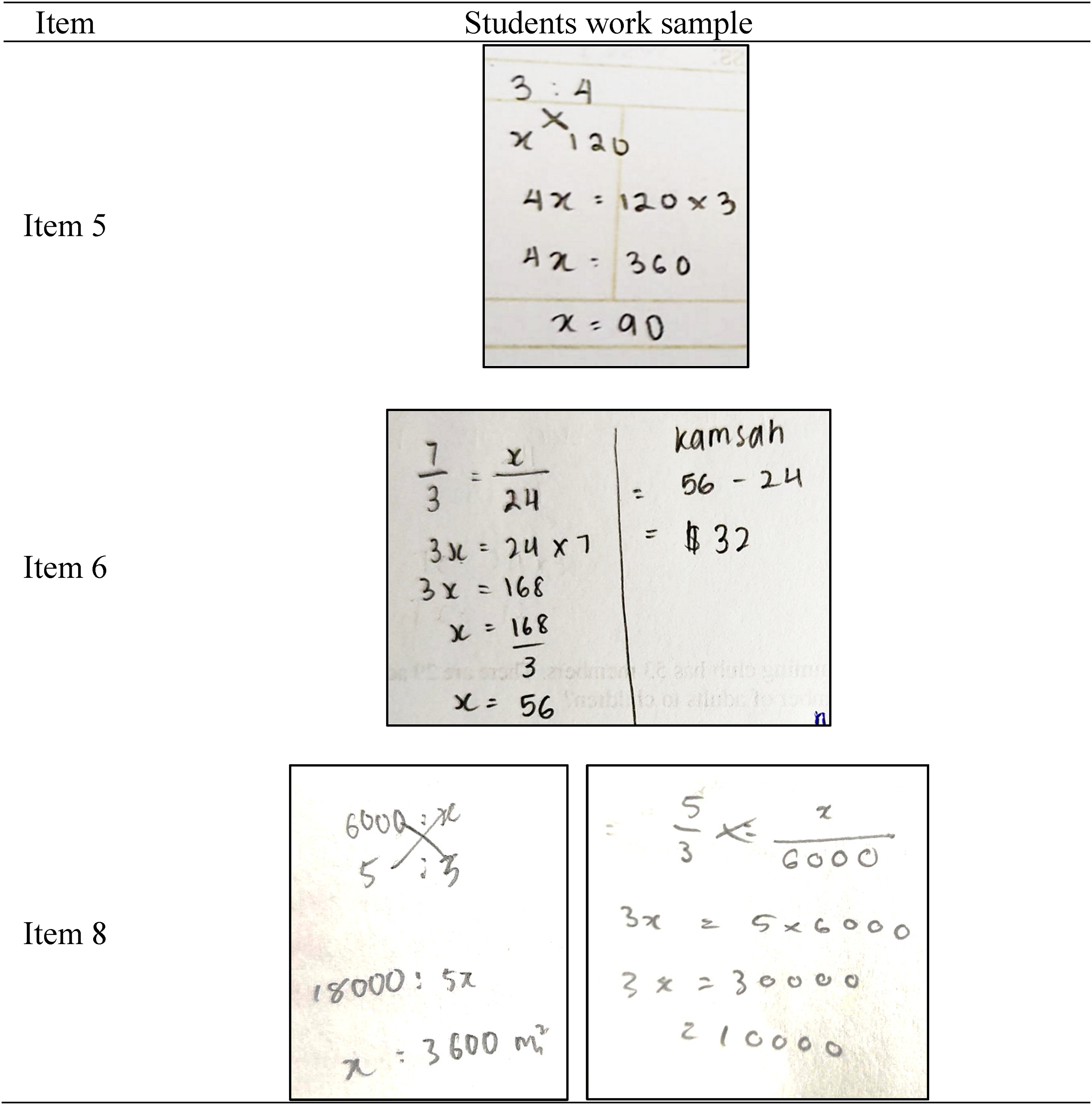
Samples of incorrect responses from three students in the pre-test involving cross-multiplication.
Students drew the bar model based on the ratio given but incorrectly inserted the quantity into the model (see Figure 3). This demonstrates that they misinterpreted the question, which resulted in inaccurate bar models.
Figure 4 reveals the misapplication of the equivalent ratios for items 5 and 6. The students generated equivalent ratios and multiplied the given ratio by the same value to match the given quantity. They frequently employed equivalent ratios when attempting items 3–9.
Figure 5 depicts another widely used but inappropriate approach to solving ratio word problems. The students equated the value given to one of the objects. Subsequently, they generated equivalent ratios or fractions, cross-multiplied, and solved the equation by division to calculate the unknown. Their misconception of item 10 (the most difficult item) is presented in Figure 6.
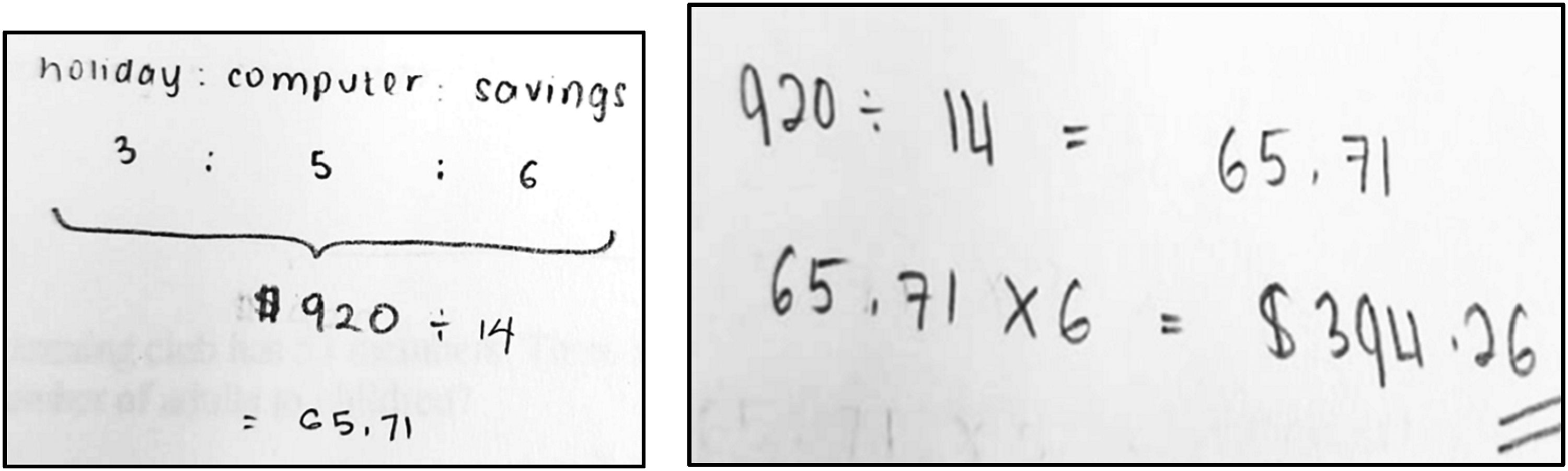
Samples of two students’ incorrect responses in the pre-test for item 10.
For item 10, incorrect responses were mainly detected due to misinterpretation of the problems. Most students believed that $920 represented the total amount for all three objects when it should only be for the first two objects (see Appendix 2), suggesting that most of them had difficulties interpreting the word problems accurately. They also used the keyword strategy in the pre-test, such as underlining the important information and circling the numbers without sufficient understanding of the problems. This suggests that they had an inadequate conceptual understanding of ratios. Others were perplexed about how to solve the word problems successfully.
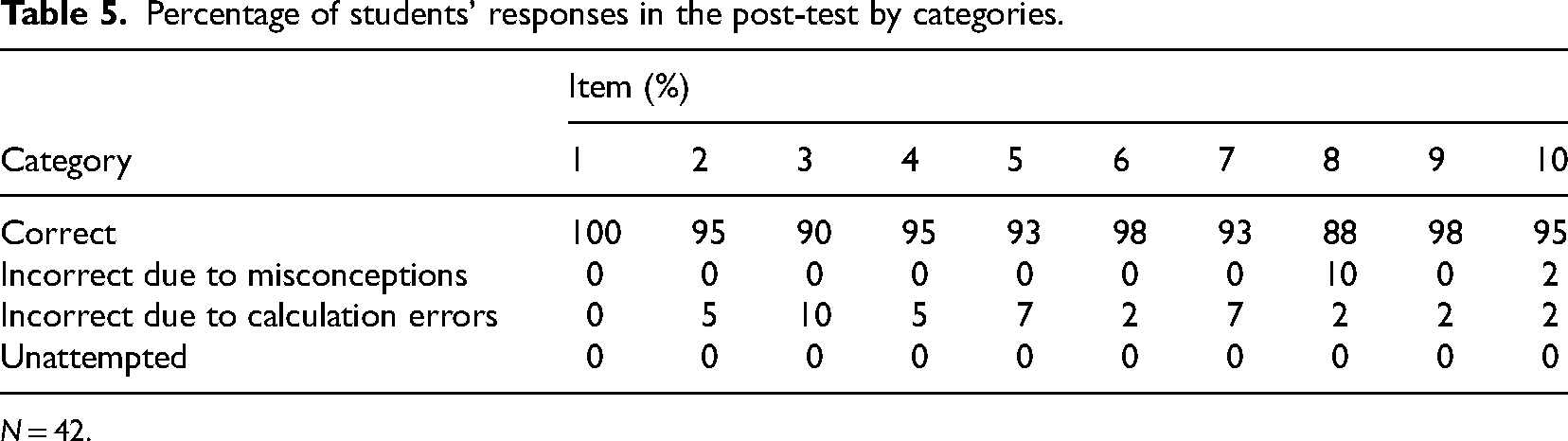
Figure 7 illustrates the correct responses of the post-test scores, showing more correct responses than incorrect responses for each item. At least 37 students could solve all the problems accurately in the post-test. Item 8 had the lowest number of correct answers. It required students to consider the words “much more” and relate them to the context to determine the difference in value between two objects (see Appendix 2). Errors made by students were observed, and the summary is presented in Table 5.
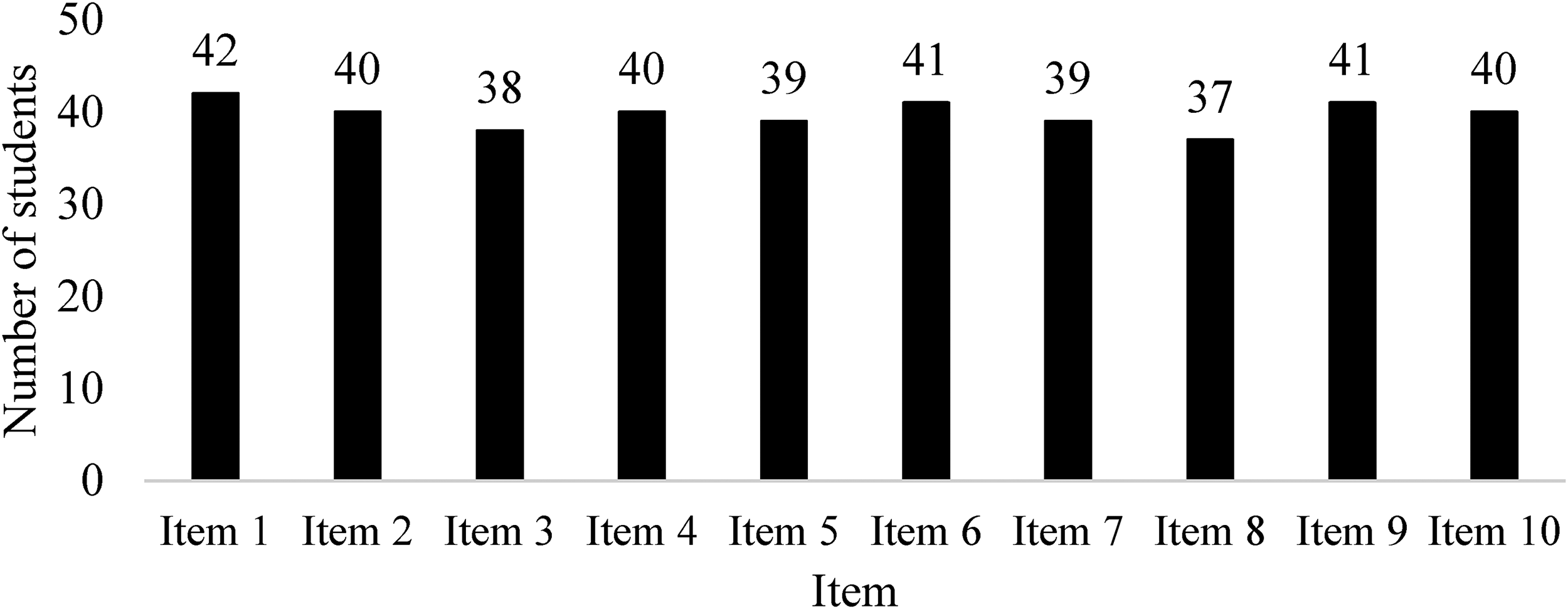
The number of correct responses for each item in the post-test; N = 42.
Percentage of students’ responses in the post-test by categories.
N = 42.
Table 5 shows that at least 88% of the students obtained correct answers in the post-test. Most of the incorrect answers were due to carelessness and miscalculation. Based on students’ answer scripts, they generally did not reexamine their entire work, an essential step in the KNOWS strategy. They did not include an alternative procedure to validate their answers. There were a few misconceptions observed in items 8 and 10. Unlike the pre-test, no unattempted questions were discovered in the post-test, which indicates that all students were motivated to solve all the problems. Figure 8 presents the common misconceptions and errors most of the students committed in the post-test.
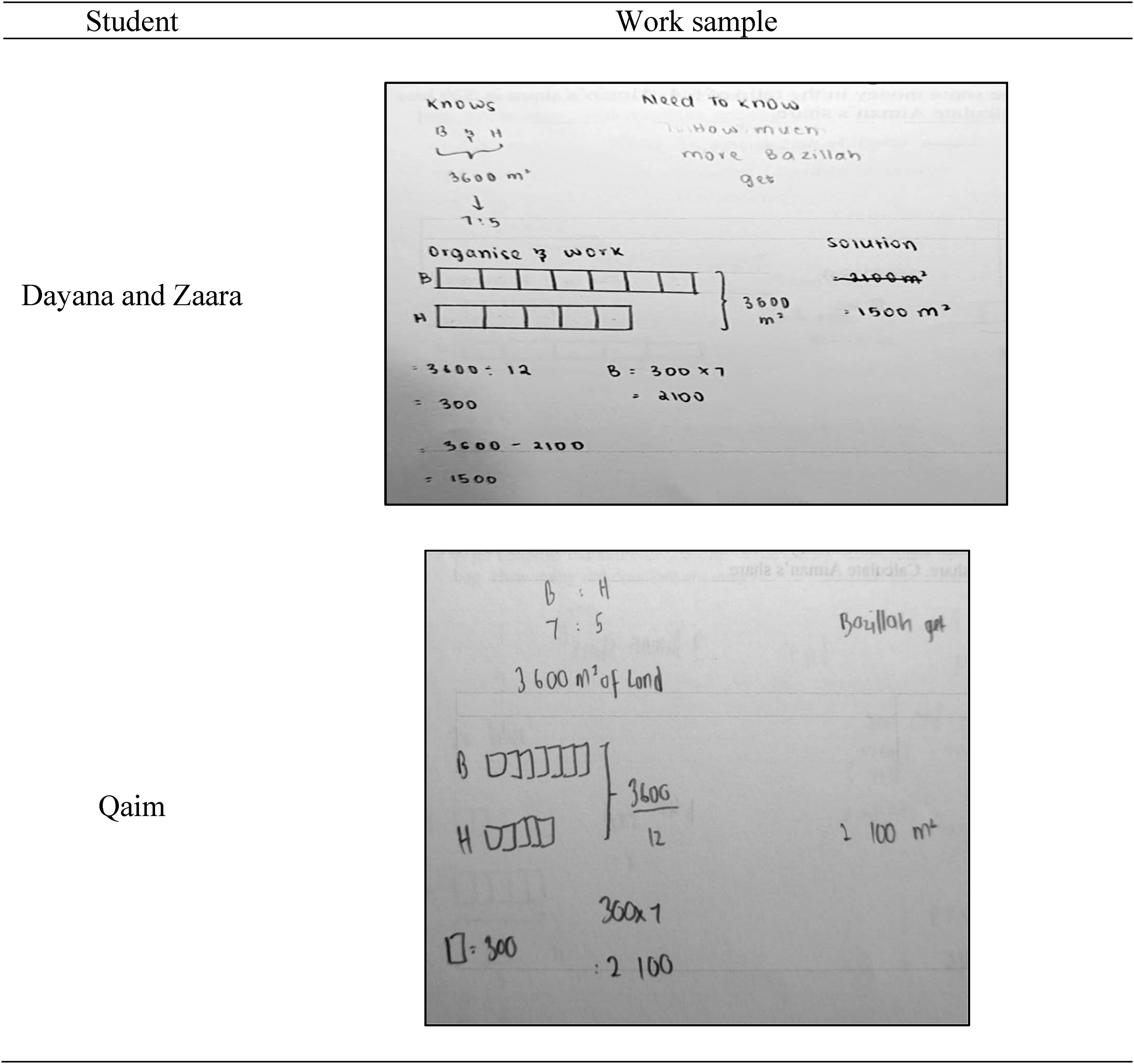
Samples of three students’ incorrect responses to item 8 in the post-test.
Dayana and Zaara drew and labeled the bar model accurately (see Figure 8). However, they did not indicate what was missing in the bar model, which led to errors. The question was looking for the extra land Bazillah received (see Appendix 2). However, they calculated the total quantity of Hanna's land size instead. Qaim misinterpreted the questions as he wrote “Bazillah gets” instead of “how much more Bazillah gets,” which led to incorrect calculations and solutions. It is also evident from their answer scripts that they did not validate their work, which could have contributed to their incorrect responses. Samples of students’ responses due to miscalculations in the post-test are shown in Figure 9.
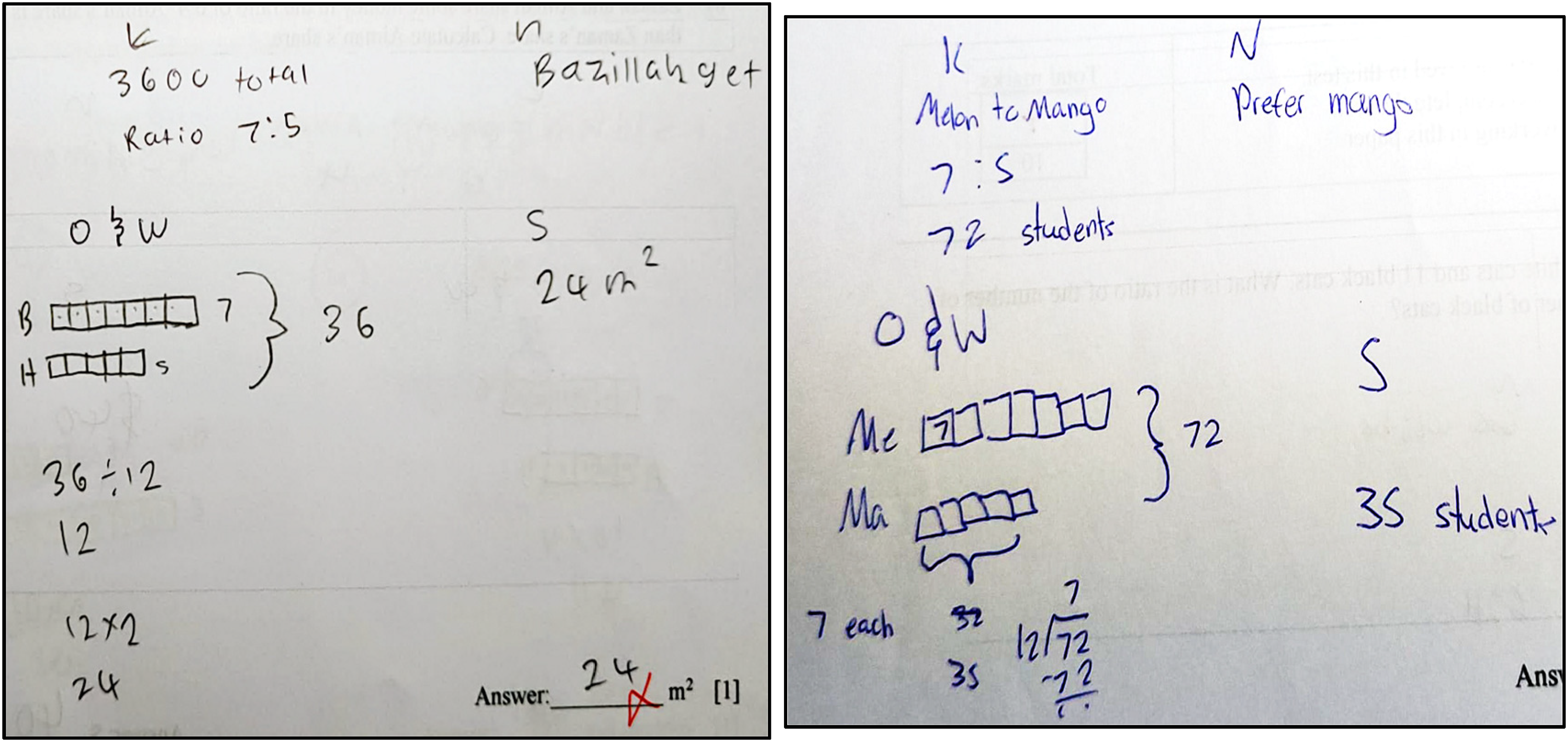
Samples of two students’ responses due to miscalculations in the post-test.
The students recalled the KNOWS strategy and performed all required actions successfully except for the “solution” aspect (see Figure 9). This could be seen when they performed calculation errors under the “Organize and Work” section. The “solution” reminds students to assess their work, which they failed to demonstrate. Based on their answer scripts, they did not display different or additional methods to authenticate their answers. Figure 10 compares students’ pre- and post-test scores.
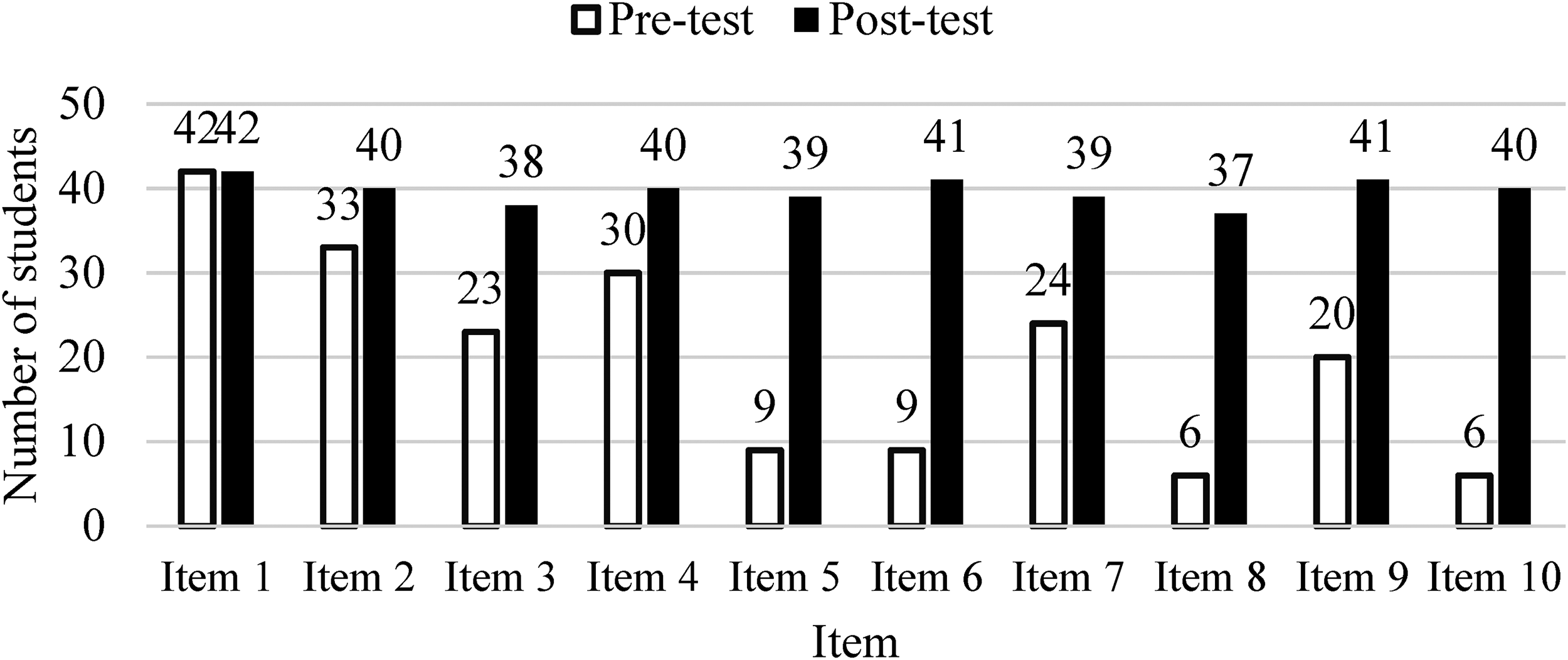
Number of correct responses to each item for the pre- and post-tests; N = 42.
From Figure 10, most students improved their pre- and post-test scores for items 2–10. At least 88% of the students could solve all the problems correctly in the post-test. This finding demonstrates a significant improvement in the number of correct responses for each item after exposing the students to the KNOWS strategy. Item 2 showed the smallest increase in correct responses in the pre- to post-tests. Items 1 and 2 required students to do the same thing, but item 2 required the students to calculate the quantity of one object from the total value as an extra step before forming the two-term ratio (see Appendix 2). This means that the KNOWS strategy has little impact in helping students develop a two-term ratio from two known quantities in a word problem.
Compared to the pre-test, items 5 and 6 had increased correct responses in the post-test by at least 30 students. Item 8, which had one of the lowest numbers of accurate answers in the pre-test, had the lowest number of correct answers in the post-test. Among all the items, item 10 had the highest increase in correct responses with 34 students (see Figure 10). Figures 11 to 13 illustrate the strengths and weaknesses of students in the pre- and post-tests.
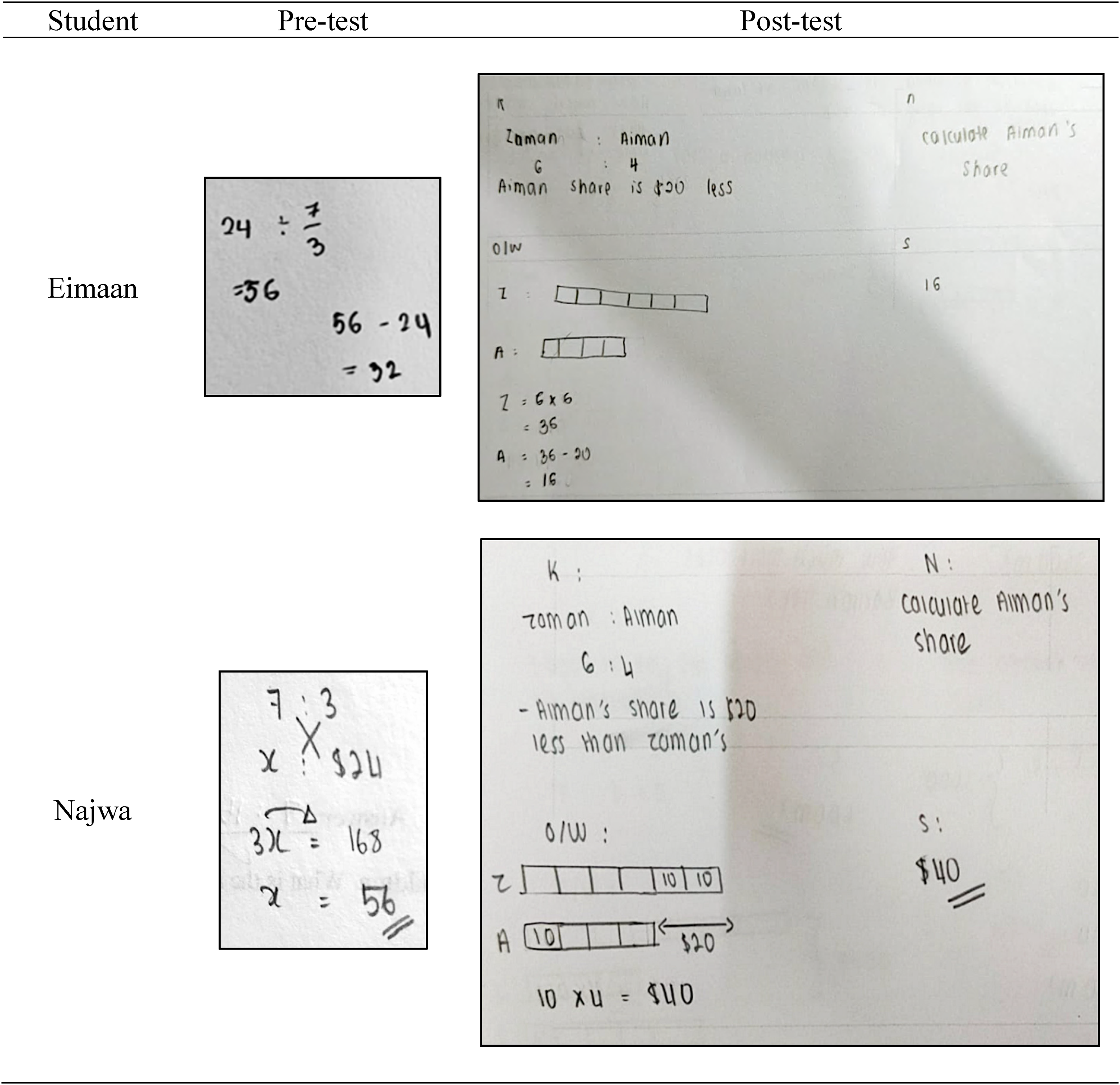
Sample of two students’ responses to item 6 in the pre- and post-tests.
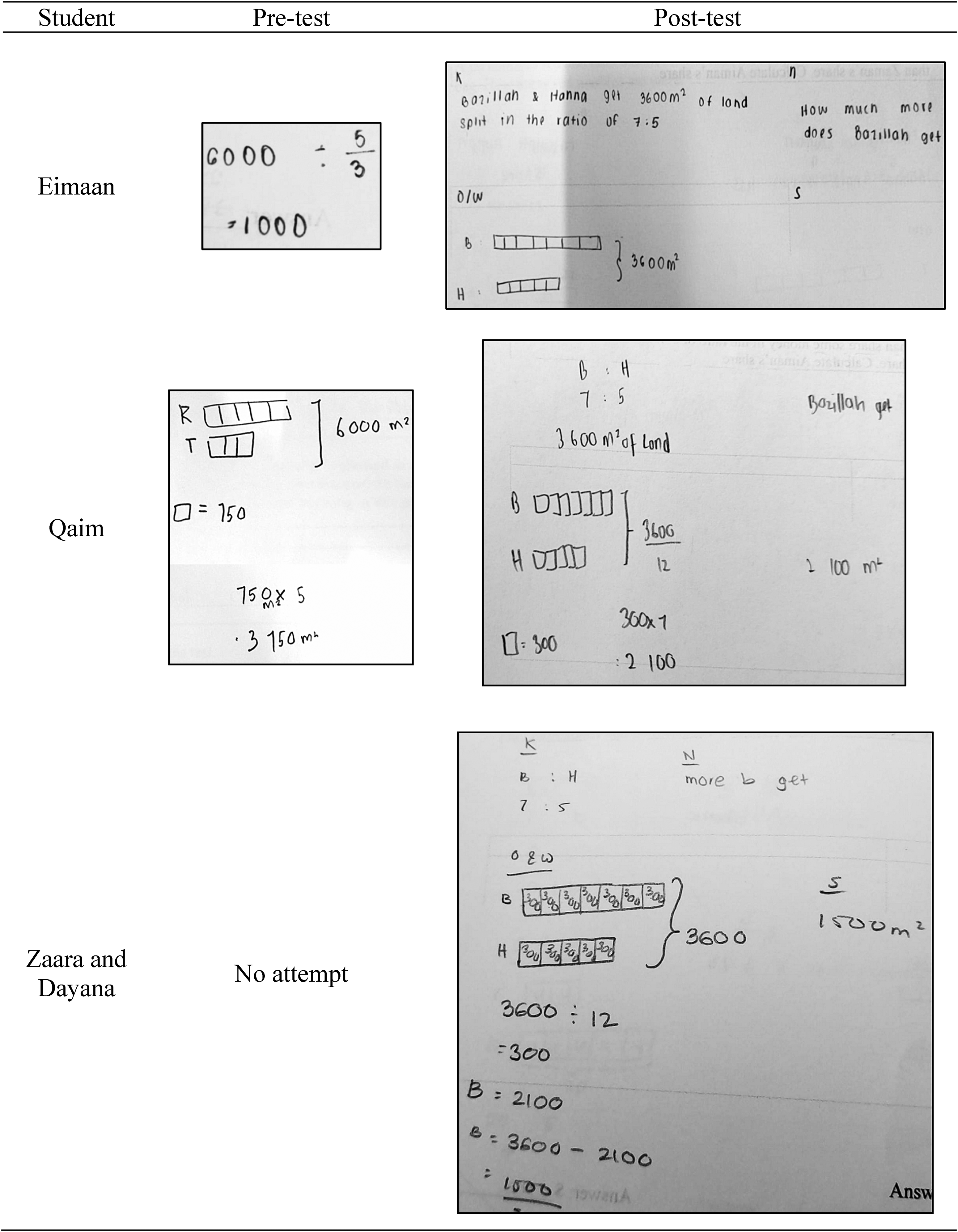
Sample of four students’ incorrect responses to item 8 in the pre- and post-tests.
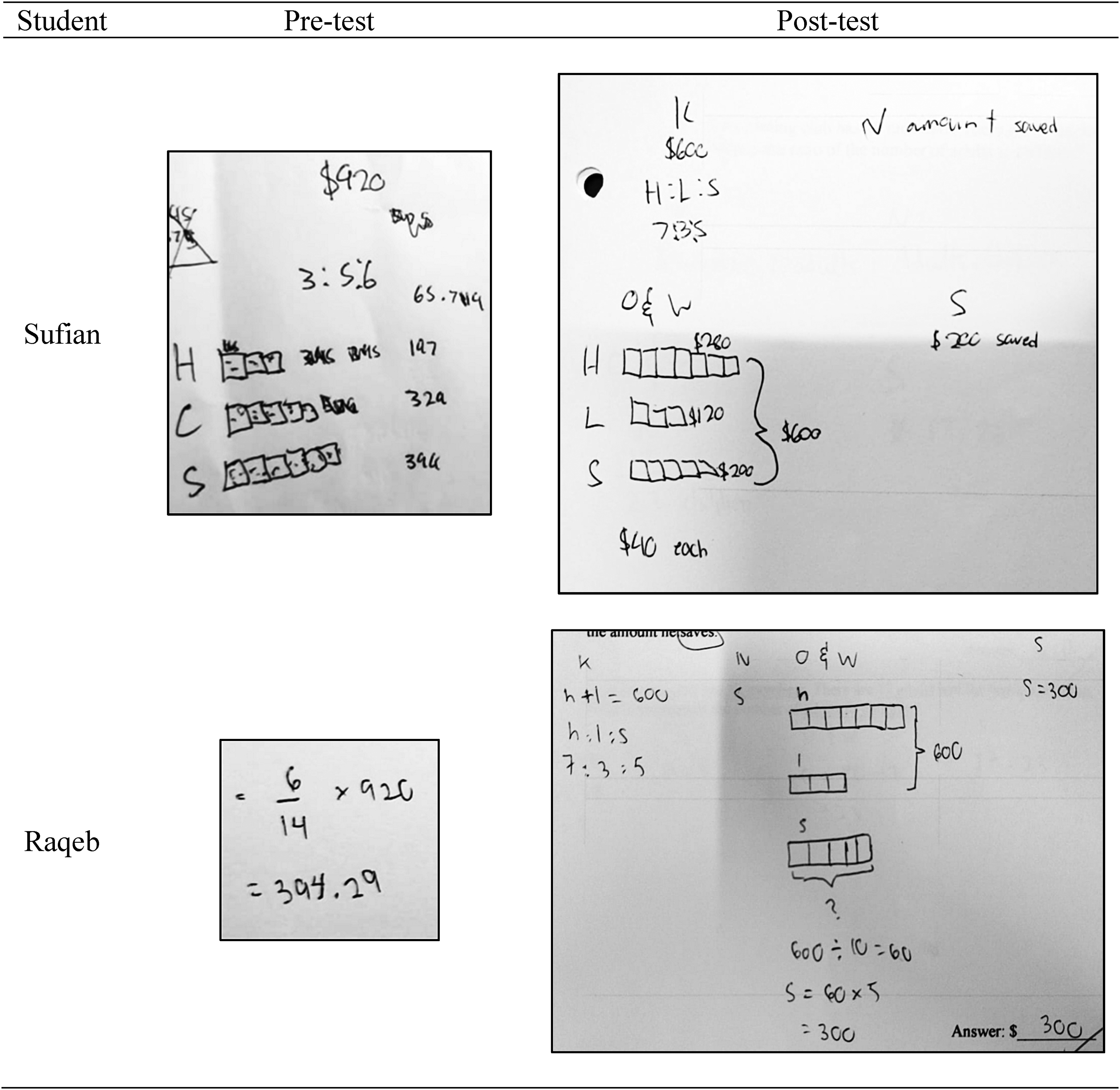
Sample of two students’ responses to item 10 in the pre- and post-tests.
From Figure 11, Eimaan and Najwa improved their approach to solving word problems for item 6 in the post-test compared to the pre-test. In the pre-test, she converted the ratio into a fraction and used the quantity given to divide it with the fraction. In the post-test, she dissected the problems into sections but struggled with the “Organize and Work” aspect. She drew the bar model but failed to insert the essential information and denoted the missing part using a question mark. Najwa applied equivalent ratios and cross-multiplication in the pre-test. After learning the KNOWS strategy, she accurately differentiated the information given and adopted the bar model. This enhanced her ability to tackle the ratio word problems.
From Figure 12, Qaim, Zaara, Eimaan, and Dayana had incorrect responses to item 8 in both tests. However, Eimaan could not denote the missing part in the bar model and performed any calculations. She could not summarize the problems but copied the exact text from the question without understanding (see under K and N). Although Eimaan produced an incomplete work, she used the KNOWS strategy. Qaim misinterpreted item 8 in both tests. He calculated the quantity of one object instead of calculating the difference between two objects. In the post-test, he did not write the words “much more” or rephrase the question correctly (see under N). This led to an error in indicating the missing part in the bar model. Two students, Zaara and Dayana, did not attempt the question in the pre-test but showed working in the post-test. They subtracted the total values with the value and failed to validate their computations and answers (see Figure 12).
Sufian had the same misconception in both tests (see Figure 13). He believed that the quantity given represents all three objects when it should represent only the first two objects. This means that he misinterpreted the problem. He forgot to write that $600 is only for house bills and the laptop (see under “K” in the post-test). This led to inaccurate labeling of the bar model. Raqeb believed that $920 represented the three objects in the pre-test and applied fractions to calculate the missing value, which resulted in an incorrect response. After the lesson intervention, he deciphered the situation using the KNOWS strategy and accurately constructed the bar model to calculate the unknown.
The analysis of the pre- and post-tests indicates that students’ errors and misconceptions when solving word problems were minimized after the KNOWS intervention. In the pre-test, it can be observed that most students struggled with comparative statements due to inadequate linguistic skills and misconceptions. They were less likely to filter and represent information on bar models, use correct procedures, and interpret the problems, which led them to avoid many of the items in the test. The intervention improved students’ understanding of how to solve the post-test, which motivated them to solve all items. Unlike the pre-test, most of the errors and misconceptions in the post-test were minimized. For example, the KNOWS strategy enabled them to explore the relevant information and represent problems more clearly on bar models. They were more likely to understand and solve comparative and equivalent ratio word problems. The major errors the students made in the post-test were due to carelessness, miscalculation, and failure to validate their solutions.
Overall, the results of the present study show that implementing the KNOWS strategy can improve problem solving and performance in ratio word problems, as the literature suggests (Freeman-Green et al., 2015; Karabulut et al., 2021; Short, 2014; Tibbitt, 2016). Most correct responses were based on the KNOWS strategy, as shown in the post-test scores. Students become more elaborate in their explanation and mathematical thinking, as evident in their answer scripts in the post-test. Their answer scripts were more organized than the pre-test, which made their calculation steps more logical. They shifted from using keywords and formulas to examining the problem entirely. Before the lesson intervention, most students were uncertain about the approach they could use to solve a word problem. However, during the post-test, the KNOWS strategy helped direct the students to the appropriate approaches to tackle the ratio problems.
The students successfully resolved the ratio word problems. For example, they broke down complex information into simple and essential information. They elucidated the missing information and drew and used bar models accurately. They also performed the necessary calculations based on the bar models and moderately reviewed their answers.
In the post-test, more students adopted visual representations such as the bar model in the problem-solving process. This justifies that, as one of the mnemonic strategies, the KNOWS strategy is more likely to improve performance in solving complex ratio word problems through diagrammatic representations (Freeman-Green et al., 2015; Karabulut et al., 2021; Short, 2014; Tibbitt, 2016). Applying the strategy helps students analyze, form mental images, make meaning, and represent the problem diagrammatically through bar models. This helps students analyze the problems more efficiently and creatively (Abdul Gani et al., 2019; Ding, 2018; Said & Tengah, 2021; Belenky & Schalk, 2014; van Garderen & Scheuermann, 2015; Woodward et al., 2012).
Moreover, the KNOWS strategy encourages student-centered learning. Students were determined and motivated to collaborate to complete ratio word problems. This result aligns with that of Freeman-Green et al. (2015) who argued that students tend to enjoy using mnemonics as they become proficient in solving word problems. Additionally, the students were found to be confident and developed positive attitudes. They relaxed and thought about the problems before arriving at the correct answers. This attitude contrasts with what was observed in the pre-test, as many students exhibited a minimal interest in solving the problems. The literature suggests that students are often anxious when solving word problems due to their lack of understanding and weak numerical skills (Estonanto, 2017; Heater et al., 2013; Legg & Locker, 2009; Said & Tengah, 2021). Per our observation, the KNOWS strategy can potentially help minimize these problems as they derive answers by exercising their cognitive abilities based on given procedures through group work and planned instructions on ratios.
Despite the effectiveness of the KNOWS strategy, there were some misconceptions concerning how students interpreted ratio word problems, calculation errors, inaccurate labeling, validating issues, and failure to solve two-term ratios. This suggests that students’ difficulty in interpreting word problems continues to be a problem after mnemonic interventions such as the KNOWS strategy (see Andini & Jupri, 2017; Şen & Güler, 2017). A few students misunderstood the problems and rephrased them inaccurately, which led to faulty construction of their bar models. Boonen et al. (2013) argued that most students are unfamiliar with words such as “less” and “more,” which also contributes to misinterpretation of word problems.
From the answer scripts in the post-test, most students forgot to reevaluate their work. Some students were pleased with a correct answer, so they forgot to cross-check their final answers. Prabawanto (2019) asserted that validating a solution before work submission is rare among students. Students often acquire the teacher's approval instead of independently looking for mathematically approved ways to ensure their answers are accurate. Thus, double-checking their work and incorporating multiple approaches to verifying their answers are critical to minimizing misconceptions or errors, something which most of the students in this study did not prioritize.
This study investigated the effectiveness of the KNOWS mnemonic strategy in improving Year 9 students’ performance in ratio word problems. The paired-sampled t-test results revealed a statistically significant mean difference between the pre- and post-test scores. This suggests that students’ performance improved after the KNOWS intervention, justifying its effectiveness. It allows students to exercise their cognitive abilities, process ratio word problems, and use pictorial representations to understand word problems as the cognitive theory suggests (Bandura, 2012; Clark, 2018; Eysenck & Brysbaert, 2018). This contributes to improving students’ understanding and performance as they develop deep knowledge and skills to solve ratio word problems (Brack, 2020). This supports the hypothesis that the KNOWS strategy can be a useful mnemonic tool that can improve students’ performance in ratio word problems when effectively used.
Several factors were considered that could have contributed to the effectiveness of the intervention. For example, the intervention was student-centered, systematic, collaborative, and activity based. The students were guided to use their cognitive abilities, which helped them explore relevant information about the problems they solved. They were also given clues, which directed their ideas and solutions to the problems. They were also guided to represent their ideas practically to help translate cognitive information and ideas into reality, as well as validate their final answers to problems. Finally, they were asked to recall the procedures involved in the KNOWS strategy, which improved their familiarity with the procedures and application in solving word problems. These factors should be considered when implementing the KNOWS strategy as an instructional option in ratio word problems.
The following limitations were associated with this study. First, a small sample size was used to assess the effectiveness of the KNOWS intervention. This could not be controlled because the sample involved an intact class that was available for the study. Second, the results are limited to Year 9 students in one of the schools in Brunei. This was the appropriate grade level for teaching ratio word problems. There should have been a control group, which could have appropriately measured the change in students’ performance. This could not be done because of the nature of the group that was used for the intervention.
Despite the limitations, the improvement in performance by comparing pre- and post-tests on the same students, as well as the effect size of the intervention, justifies the potential effectiveness of the KNOWS strategy in improving students’ performance in ratio word problems. This study potentially fills the research gap, especially in the Southeast Asian context. It is one of the few studies that focused on the effectiveness of the KNOWS strategy in improving students’ performance in ratio word problems. It provides alternative ways in which the teaching and learning of ratio word problems can be implemented to improve students’ understanding and performance. Results of this study also show how students’ problem-solving skills can be improved when solving ratio word problems and how their cognitive abilities could be used to process word problems to provide accurate solutions. It is recommended that a similar study is conducted using other mathematical concepts and in other teaching and learning contexts using larger samples and mixed-methods approaches. Future studies should consider the use of a control group to provide a more robust justification for the effectiveness of the KNOWS strategy. Exploring students’ and teachers’ perceptions of the use and effectiveness of the KNOWS strategy is a recommended research area.
Footnotes
Contributorship
Afiqah Bari’ah Emran initiated and conducted the study and wrote the first draft of the manuscript. Masitah Shahrill supervised and guided the study, provided important ideas for the research, and revised the drafts of the manuscript. Daniel Asamoah assisted in the discussions, provided additional literature, and contributed to further edits to the manuscript. All authors read and approved the final manuscript.
Declaration of Conflicting Interests
The author(s) declared no potential conflicts of interest with respect to the research, authorship, and/or publication of this article.
Funding
The author(s) received no financial support for the research, authorship, and/or publication of this article.
