




Abstract
We presented a design-based study within the context of a four-session Scratch programming activity among 23 fourth-grade students in Hong Kong. Inspired by the computational thinking (CT) strategies and the 5E instructional model, we investigated students’ mathematical learning of fractions in a Scratch (block-based programming) environment. Students developed CT concepts, practices, and perspectives by building a “fraction magic calculator” in groups. This study analyzed the lesson design, students’ drawings, interviews, and work expressing their mathematical understanding of fractions in Scratch applications. The learning tasks were designed to support the students’ fraction learning and utilized computational abstractions in the form of variables, functions, and iterations to formulate mathematical models in a programming context. Students’ artifacts and feedback showed they were interested in learning fractions in a programming learning context, contributing to exercising and improving their fraction concepts and CT. Ultimately, we emphasized the benefits of CT integrated into mathematics education, promoting students’ understanding of fraction concepts, a set of CT abilities (concepts, practices, perspectives), and learning motivation. Moreover, we suggested a set of non-cognitive skills (e.g., socializing, expressing) to enrich the CT perspectives in the framework and show the importance of developing coding communities to co-create digital artifacts among learners. Overall, we highlighted that mathematics teachers should apply and create learning tasks that promote computational thinking to forge mathematical ideas and thinking.
Introduction
With the development of information communication technology, technology-enhance learning in mathematics education has become increasingly widely supported by educational researchers. It used to be popularly implemented in higher education and secondary schools, but now educators have paid great attention to primary education (Tikva & Tambouris, 2021). Primary education aims to learn about the world and prepare for subsequent studies and future working life (Fagerlund et al., 2021). In terms of primary education, computational thinking (CT) skills play an increasingly important role in students’ development, facilitating students’ problem-solving skills and promoting their understanding of the meaning of the whole world (Fagerlund et al., 2021). Researchers nowadays prefer integrating technological applications into mathematics curricula to facilitate CT education in primary education (e.g., Rodríguez-Martínez et al., 2020; Rich et al., 2020). Their results showed that CT has appropriate cooperation with mathematics curricula, which is beneficial to promoting CT in primary education.
With technological advancements, many computing educational tools are designed with a low floor (the ability to create simple rules and/or programs using block-based programming), but also with high ceilings (the ability for students to express their ideas in the CT environment) (Bers, 2018; Resnick & Silverman, 2005). One popular pedagogical tool is Scratch, a block-based programming environment that encourages young learners to learn programming concepts and develop computational and mathematical thinking skills (Resnick et al., 2009). For example, Liu et al. (2022) concluded that Scratch could improve students’ learning motivation and CT performance by integrating a programming language tool into proper curricula. They recommended that teachers could use Scratch in student learning to motivate their learning efficiency and long-term interest. Another study by Rodríguez-Martínez et al. (2020) indicated that Scratch could be used to develop students’ computational and mathematical thinking. In the study, a two-phase instructional design was applied: the programming phase linked to the instruction in Scratch that focused on the acquisition of basic computational thinking concepts, and the mathematical phase completely oriented towards the completion of mathematical tasks (e.g., sequencing, greatest common divisor) (Rodríguez-Martínez et al., 2020). All these examples demonstrate that students could learn mathematical concepts and CT during the block-based learning environment, and CT could have an important role in mathematics education.
Moreover, more and more educators have paid attention to using student-centered instruction rather than the traditional teaching approach (e.g., teacher-centered instruction). Among current popular instructional models, the 5E instructional model has been widely used in STEM subjects, such as science and mathematics (Bybee, 2019). It has five stages: engagement, exploration, explanation, elaboration, and evaluation. This model is used to design activities related to the teaching content based on the function of each stage. It provides a good chance for students to exercise their motivation, attitudes, academic achievement, creativity, and critical thinking skills (Ranjan & Padmanabhan, 2018). Therefore, this study adopts the 5E model as an instructional design framework to develop mathematics classrooms with Scratch programming activities.
To promote CT learning in primary education, this study presents a case study of a Scratch game design activity in fraction lessons based on the 5E model among 23 fourth-grade students in Hong Kong. This study aims to investigate how students learn fractions and what CT skills they learn in the Scratch programming learning environment. In order to achieve the research purpose, we raise the following research questions:
How did the students learn fraction concepts in the CT activities? What computational thinking did the students demonstrate through the CT activities?
Literature review
Computational thinking
Computational thinking is a problem-solving method that involves expressing problems and solutions in ways that a computer could execute. It was first raised by Papert's (1980) book Mindstorms: Children, Computers, and Powerful Ideas, presenting students at their young ages could learn procedural thinking, programming, and mathematical thinking skills (Grover & Pea, 2013). After Papert's book was published over two decades, Wing (2006) suggested that CT represents a universally applicable attitude and skill set for everyone, not just computer scientists. CT would be an essential component for students’ competence in the 21st century (Repenning, 2012; Rodríguez-Martínez et al., 2020). As Wing's CT and Papert's CT are different but related, most studies may have misinterpreted them (Lodi & Martini, 2021). Wing's CT refers to core computer science concepts which can be seen as a problem-solving process using CT skills to generate solutions for addressing computational problems through operating computer instructions (Lodi & Martini, 2021). In contrast, Papert's CT refers to learning programming concepts that can facilitate learners’ thinking skills, such as sequencing and presentation (Lodi & Martini, 2021).
To combine Wing's and Papert's CT ideas, Brennan and Resnick (2012) further added the non-cognitive perspectives that facilitate students developing communication, collaboration, and problem-solving skills (see Table 1). The framework can be categorized into three dimensions: (1) CT concepts: the seven computational concepts used frequently in Scratch, such as sequences, loops, events, parallelism, conditionals, operators, and data. These concepts can be used in various programming languages. (2) CT practices: a set of practices that students need to apply during the programming context such as reusing, remixing, and abstracting. (3) CT perspectives: how students connect to different digital and programming media and interpret themselves and around them through expressing, connecting, and questioning.
Three dimensions of Brennan and Resnick's (2012) framework.
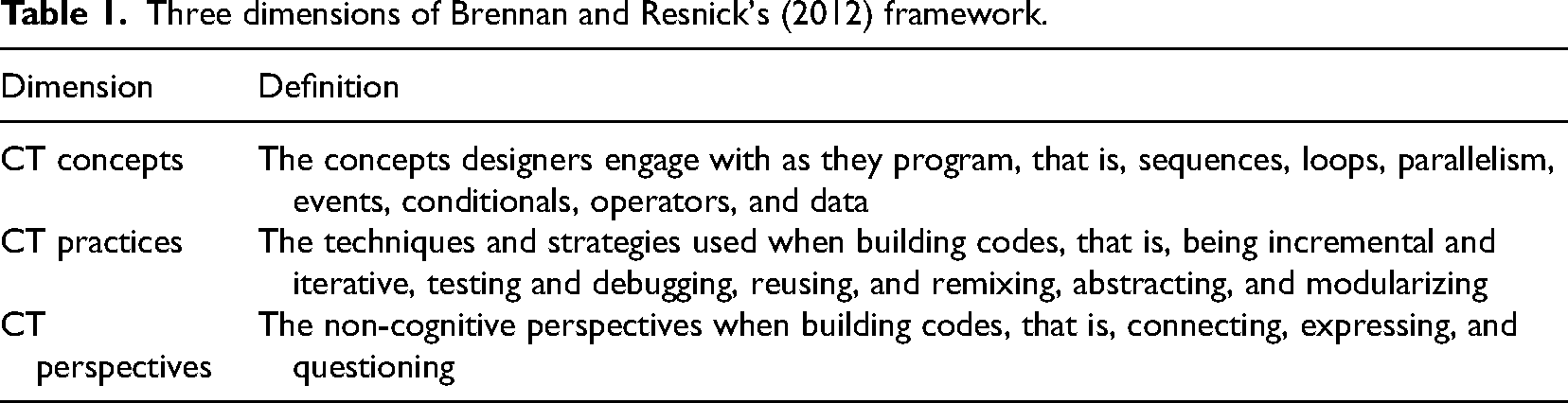
Three dimensions of Brennan and Resnick's (2012) framework.
Descriptions of the 5E instructional model (Bybee, 2009).
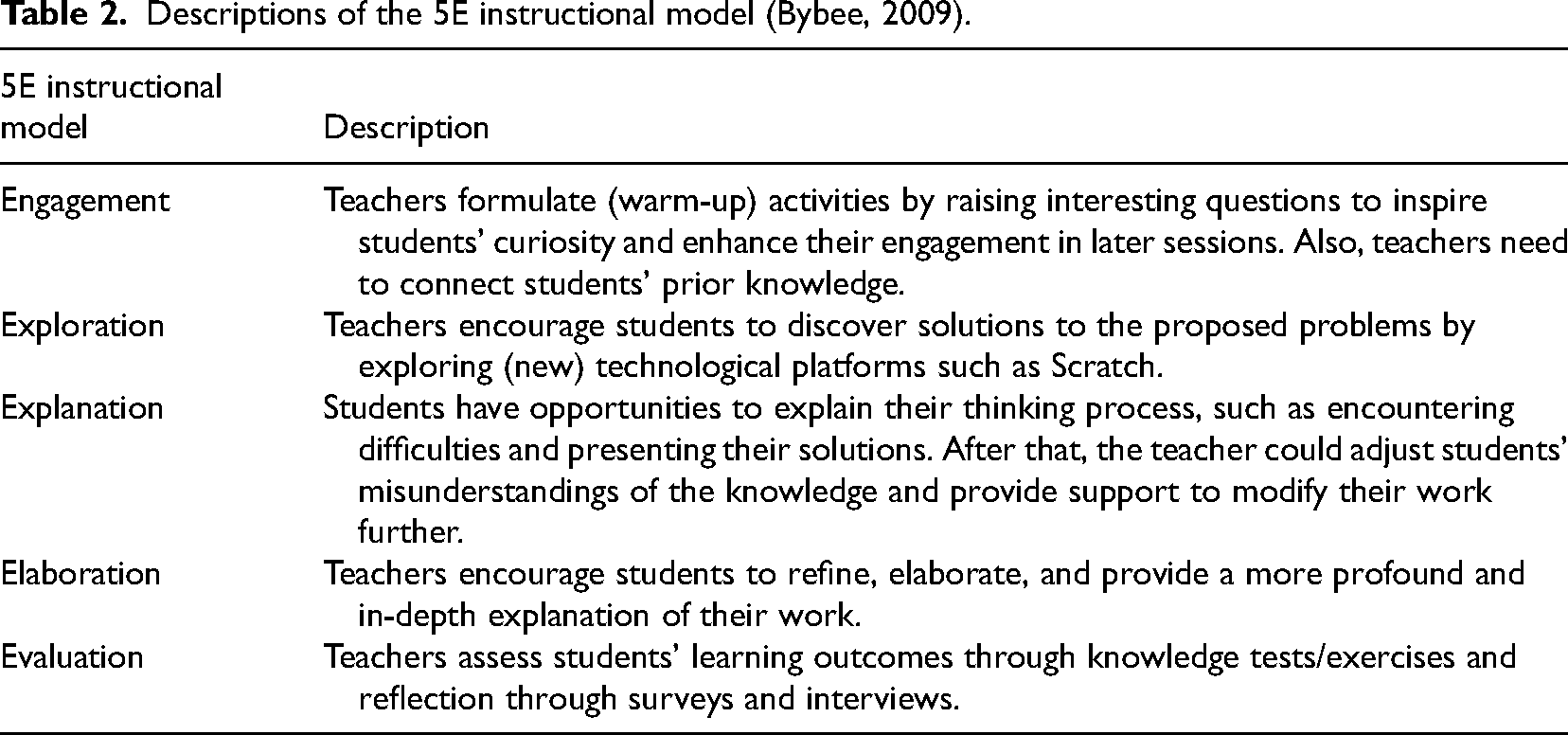
In K-12 education, many studies have examined the benefits of teaching CT at a young age (e.g., Chen et al., 2017; Seow et al., 2019). For example, Chen et al. (2017) stated that learning CT could enhance elementary students’ learning ability for abstracting, reasoning, and solving problems related to many aspects of learning in their daily lives. International Society for Technology in Education (ISTE) (2015) further reported that CT not only enhances primary students’ problem-solving ability by using a computer and other digital devices (e.g., robotics kits and sensors) but also stimulates their creativity and critical thinking during the hands-on making process. All these studies showed the importance of CT as a 21st-century technological skill for problem-solving, creativity, and critical thinking for young learners.
Students feel it is difficult to understand this concept, especially when they need to add or subtract with different denominators in their fourth or fifth grades (Fauzi & Suryadi, 2020). To help primary students address the difficulties of learning fractions, Watanabe (2002) promoted four solutions to express fractions in the classroom visually, that is, (1) tools for representing fractions, (2) methods of representing fractions, (3) fraction notations, and (4) fraction language. The detailed descriptions are demonstrated in the following. Tools for representing fractions mean that fraction models have been frequently used in primary mathematical textbooks, such as the linear, area, and discrete models. Most specific daily materials could be used for various types of fraction models. For example, teachers usually use ropes to model fractions, providing a vivid example of how fractions are demonstrated in our daily lives. Methods of representing fractions mean the expression methods of fraction models, including the part-whole and comparison methods. The part-whole method is the fractional part embedded in the whole, while the comparison method is constructed separately by the whole and fractional parts. Fraction notations mean the symbol of fractions. This concept is abstract for students to understand. For example, ½ is a fraction symbol, meaning half of one. Fraction language means the components of fractions, including the numerator (the counting number) and denominator (the ordinal number). The numerator represents “how many,” whereas the denominator represents what is being counted. The above representations provide an integration framework for understanding fraction concepts in different expression forms. It is beneficial for researchers to analyze fraction concepts in mathematics research. Therefore, we will use this framework to analyze students’ mathematical thinking concepts in this study.
Scratch programming activities integrated with the 5E instructional model
In traditional classrooms, research indicates that students may not be interested in mathematics, which requires lots of understanding of abstract concepts and drilling in the calculations, which seems unrelated to our real life (e.g., Omotayo & Adeleke, 2017; Thorpe, 2018). To address this problem, teachers consider incorporating project-based or problem-solving strategies to encourage students to transfer these abstract concepts to solve authentic problems. It could enhance students’ mathematical abilities and promote higher-order thinking by applying concepts to create or evaluate their solutions (Doleck et al., 2017). To facilitate collaborative project/problem-based learning, there are a number of instructional models to develop engaging and explorative learning environments. One famous model that encourages problem-solving and mathematics achievement is the 5E instructional model (Bybee, 2009), which has been widely mentioned in recent studies (Leung, 2019; Ms et al., 2017; Tezer & Cumhur, 2017) (see Table 2). It focuses on the active learning process that encourages students to know how to achieve their knowledge, evaluate it, and apply it to address authentic scenarios and problems (Bybee, 2019; Ms et al., 2017).
The 5E model can be popular because it can provide active opportunities for students to practice their problem-solving and practice skills, facilitating students’ learning motivation and academic performance (e.g., Ranjan & Padmanabhan, 2018; Omotayo & Adeleke, 2017). For example, Ranjan and Padmanabhan (2018) adopted the 5E model to construct 70 students’ mathematical knowledge at the upper primary level. The results showed that this model could effectively enhance students’ mathematics academic achievement compared to traditional teaching instruction. For another example, Omotayo and Adeleke (2017) implemented the 5E instructional model in the secondary mathematics classroom, significantly enhancing students’ mathematics learning outcomes. They recommended that teachers use this constructivist instructional approach to help students develop their understanding. Generally, this model is appropriate to expand students’ horizons and help them scaffold new knowledge by providing inquiry-based learning activities that cooperate with the subjects’ learning content. Therefore, this study adopts the 5E instructional model to design mathematical lessons, which provides learner-centered learning environments for students to learn fraction concepts via inquiry-based learning activities.
Besides the instructional design model, instructional tools used in the teaching process are also important for teaching effectiveness. In recent decades, more programming tools (e.g., Scratch, App Inventor) have been developed to provide students with learning experiences to develop computational and mathematical thinking through visual languages by snapping blocks together, each block representing a procedure call. Among those platforms, Scratch is one of the most popular programming tools widely used in K-12 mathematics and computer lessons (Zhang & Nouri, 2019). Prior studies have examined the use of Scratch in developing students’ computational and mathematical thinking to prove its suitability in K-12 education (e.g., Calder, 2010; Calao et al., 2015; Rodríguez-Martínez et al., 2020). For example, Rodríguez-Martínez et al. (2020) indicated a similar finding that sixth-grade students could use basic computational thinking concepts (e.g., sequences, iterations, conditionals, and events-handling) to solve mathematical word problems involving the least common multiple and the greatest common divisor. The above statements demonstrate that Scratch as a visual coding environment can scaffold primary students to find a new expression of mathematical concepts and facilitate students to visualize and apply abstract mathematical and CT concepts.
Based on the above discussion, the 5E model is beneficial to use as an instructional design to develop mathematics classrooms. Moreover, Scratch contributes to scaffolding students’ learning of mathematical concepts when used as a technological implementation tool. To strengthen primary students’ fraction learning, this study develops a series of programming activities using Scratch for students to create their fraction magic calculators. For this study, the framework shown in Figure 1—is applied to fraction concepts using programming languages on Scratch via the 5E learning process.
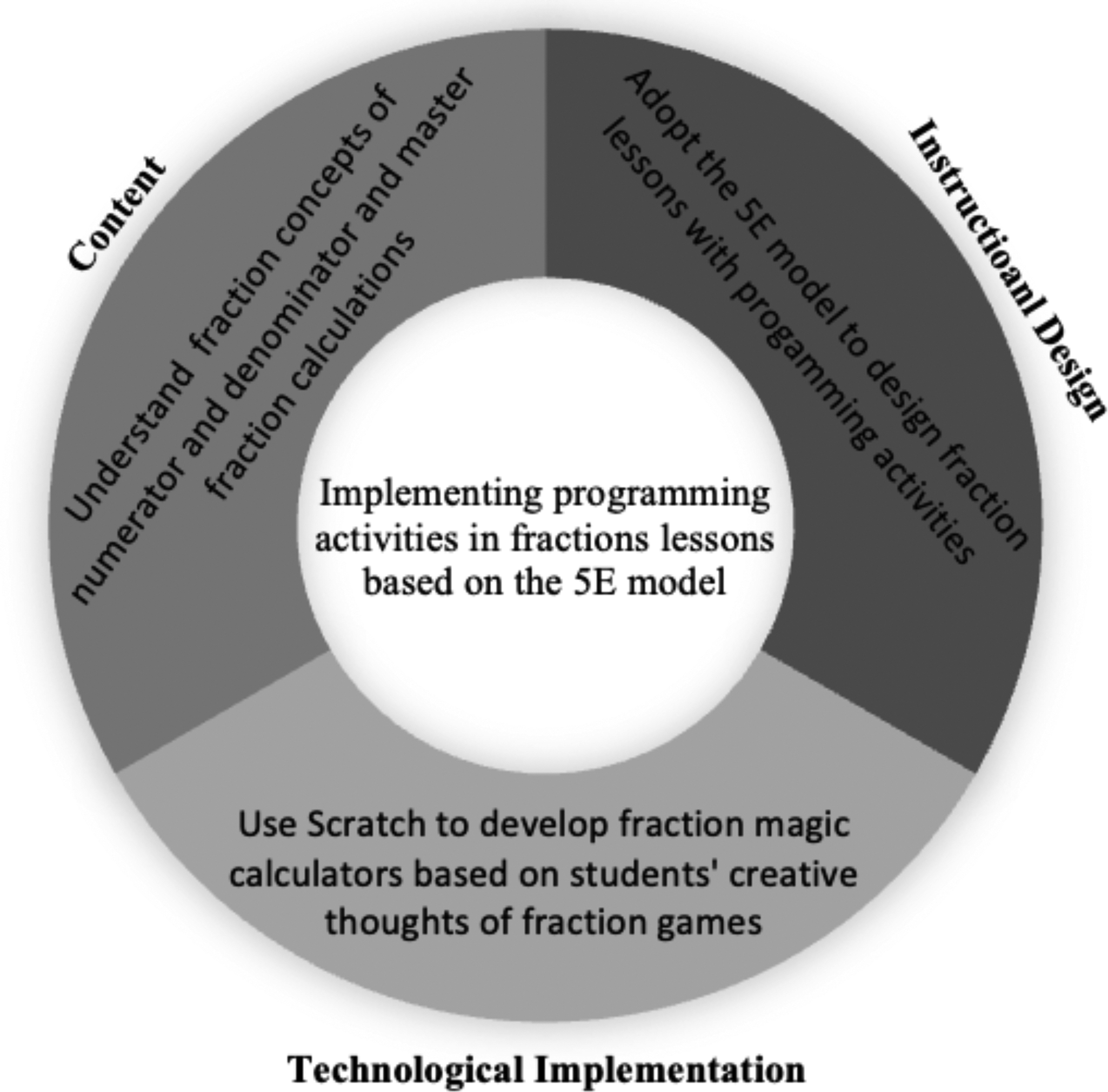
Framework for developing programming learning environments in mathematics education.
To examine how students scaffold their fraction concepts and computational thinking in a programming environment, the two-month Scratch activities took place among 23 fourth-grade students (one class) at a primary school in Hong Kong. This study adopted design-based research (Bakker & Van Eerde, 2015) to implement CT-based mathematics classrooms. The detailed steps of design-based research are presented in the following.
Before the lessons, the instructional designers met with other members and teacher assistants to ensure the lesson design aligned with the students' learning needs and the school's curriculum regarding fractions. During the learning process, the mathematics teacher first led students to review the fractions using various representations, ensuring students had a correct understanding of the fraction concepts. Then, the teacher recapped fraction addition and subtraction using different mathematical contexts. After that, students were asked to develop a fraction magic calculator based on their knowledge of fraction calculation and block-based programming language. Fraction concepts included adding and subtracting fractions with the same denominator and fractions with different denominators. Programming language comprises sequences, iterations/loops, conditionals, and events. During the artifact design, fraction concepts and programming language would be inter-transform to express students’ creation of their magic calculators with interesting fraction calculation games. Students would exercise their fraction and computational thinking throughout the learning process. The teaching plan was designed based on the 5E model, including engagement, exploration, explanation, elaboration, and evaluation. The detailed descriptions of the teaching plan are demonstrated in Table 3.
Teaching plans of this study.
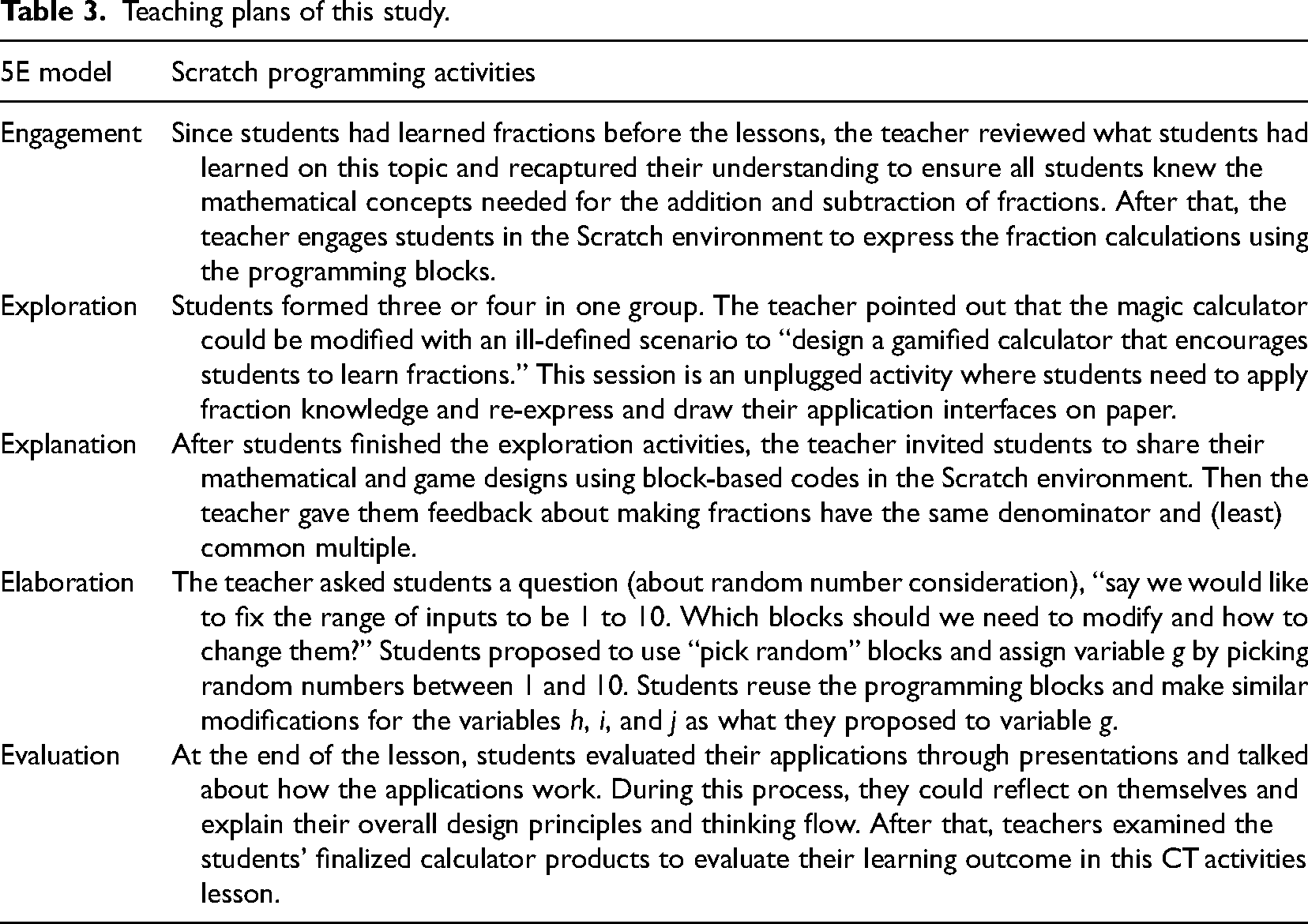
Teaching plans of this study.
Importantly, this study used inquiry-based learning (IBL) to scaffold the mathematical knowledge of fraction calculation and block-based programming language in CT-based mathematics lessons. IBL is a pedagogical strategy that entails handling real-world, ill-defined, or difficult issues (Anderson, 2002). Particularly in mathematical environments, where many problems have open-ended limitations, such issues are similar to those in real life (Simon, 1973). The IBL approach that uses real-world situations provides students the chance to discuss and change parameters, identify and defend their choices while incorporating changes into their methodology. Students are, therefore, likely to come up with various methods and answers, which can promote deeper discussions of the more complicated responses and more involvement with the problems themselves. During the design activity of magic calculation, students volunteered to ask questions to their teachers and classmates, discuss their ideas and comments on others’ thoughts or products, and remain or adjust their products based on their deeper consideration. This is beneficial for developing students’ self-regulation, collaboration, and communication skills (Fielding-Wells et al., 2017).
Researchers were responsible for the educational materials, and the teacher was responsible for the teaching. The teacher and teacher assistants helped with videotaping and interviewing students. Eleven drawings were collected by the teacher. Finally, the teacher interviewed seven groups to understand their works and be familiar with their thoughts on these drawings, which helped students better interpret the fraction concept and Scratch language learned in this class. In total, all seven student groups were recorded by the teacher.
For the answers to RQ1, the researchers classified the learning contents of fractions in the teaching experiment into four categories based on a framework of fraction representations, including tools for representing fractions, methods of representing fractions, fraction notations, and fraction language (Wantanabe, 2002). For example, the teachers presented the fractions using the part-whole method, which visualized the numerators and denominators in circle or length models. This kind of representation was classified into methods of representing fractions. The coding scheme is summarized in Table 4.
Coding scheme of fraction representations.
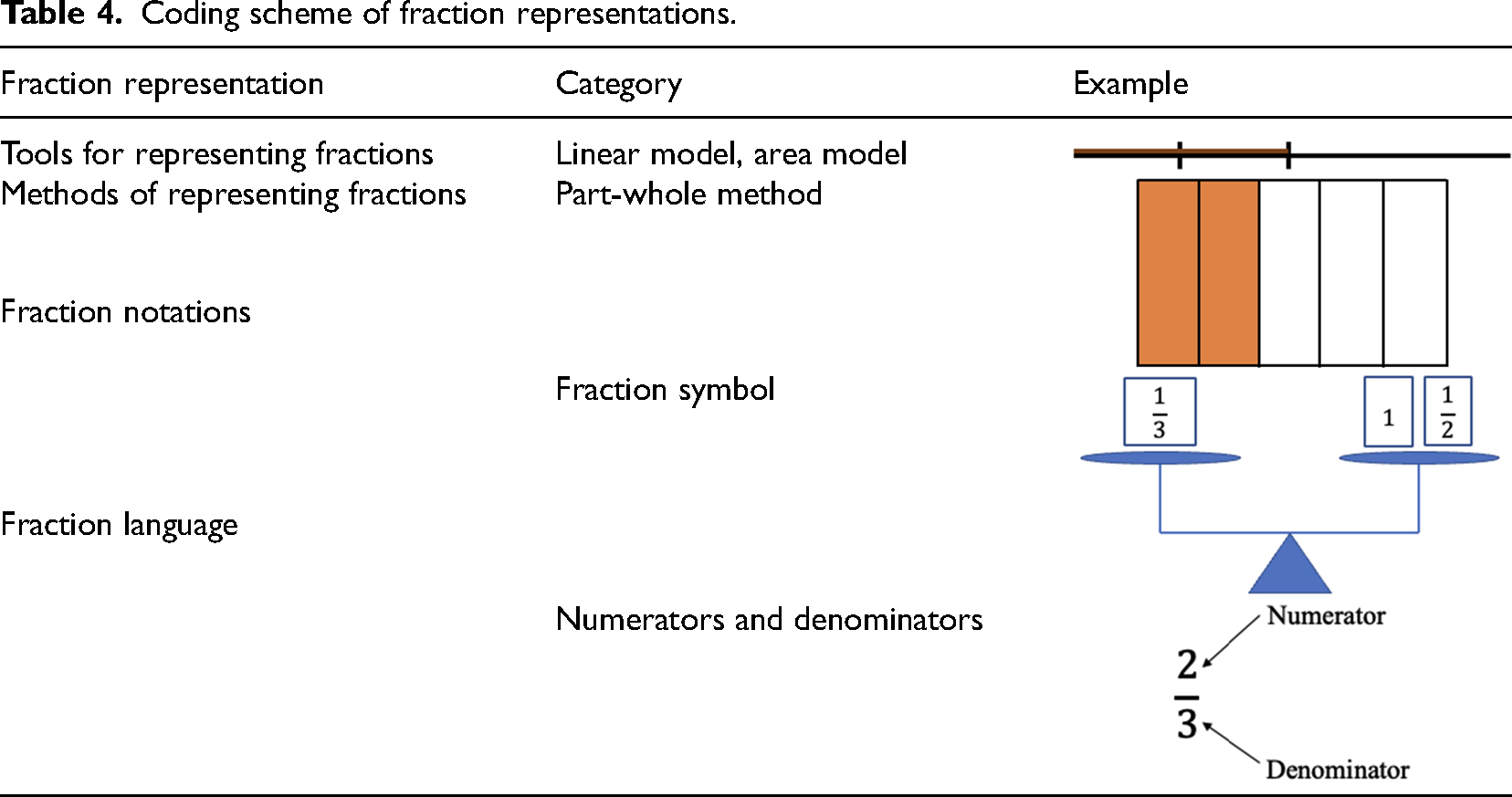
For the answers to RQ2, the researchers implemented Brennan and Resnick's CT framework to categorize the programming language used in students’ works (see Table 5). We screen-captured students’ work and recorded their presentations and interactions. Eleven screen-captures and seven videos were collected for the seven groups of students. During the data analysis, the two researchers chose seven (30%) of the artifacts at random and coded them together to ensure that both of them understood the coding scheme. The two researchers then coded each of the rest of the artifacts, and further verified the consistency of the codes. Finally, the researchers held a meeting to discuss the inconsistent codes until the two coders confirmed that all the codes were consistent.
Coding scheme of the CT concepts and practices and perspectives (Shute et al., 2017).
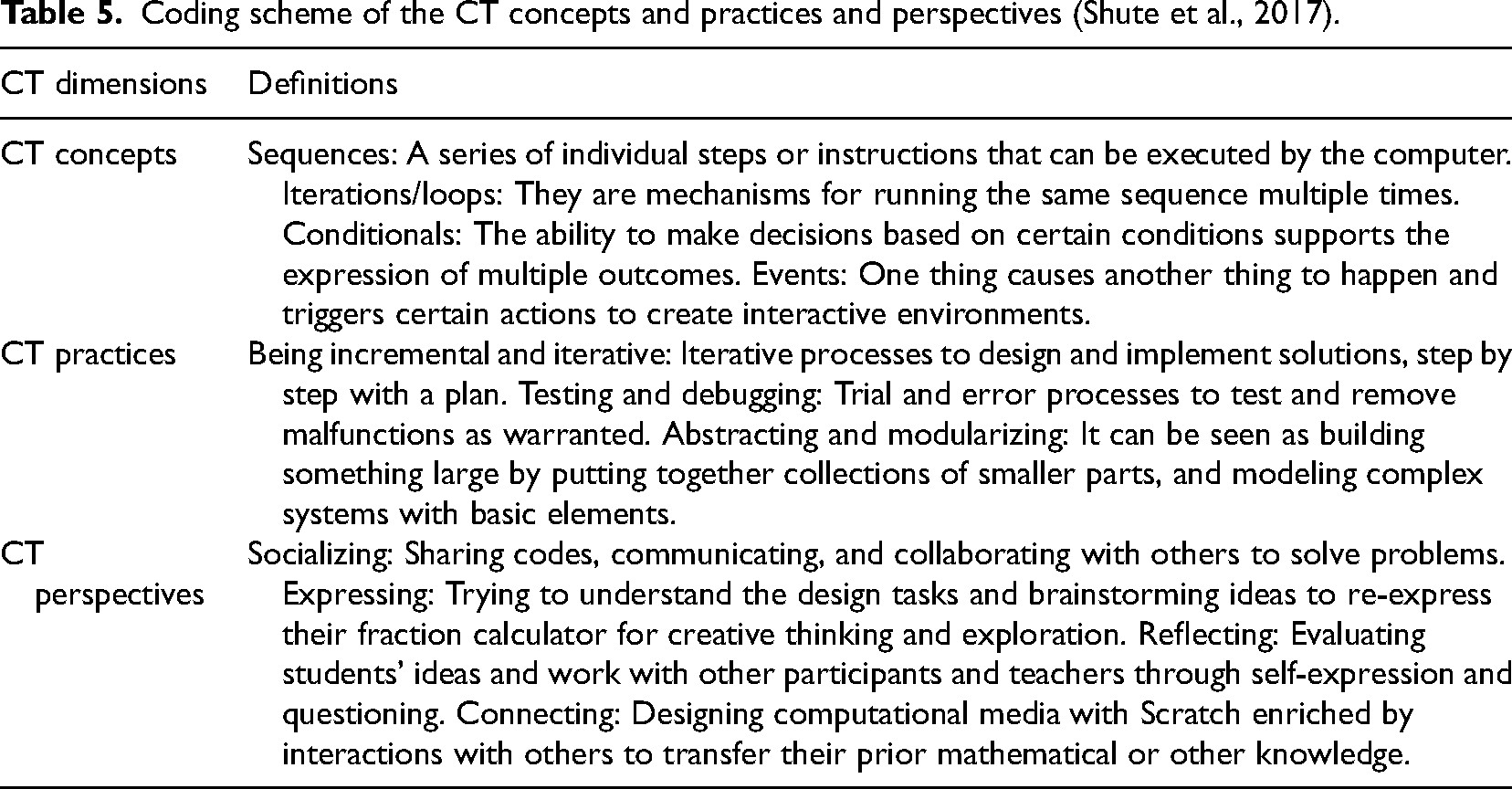
Coding examples of Scratch and student's drawing are shown in Figure 2. Several gaming components are mentioned in this screen-capture, such as restricted time, text box, and tokens. Students transferred their ideas of the restricted time to Scratch using a set of blocks, such as “when… click,” and “repeat…” We coded these blocks into CT concepts (e.g., event, loop) based on the coding scheme in Table 5.
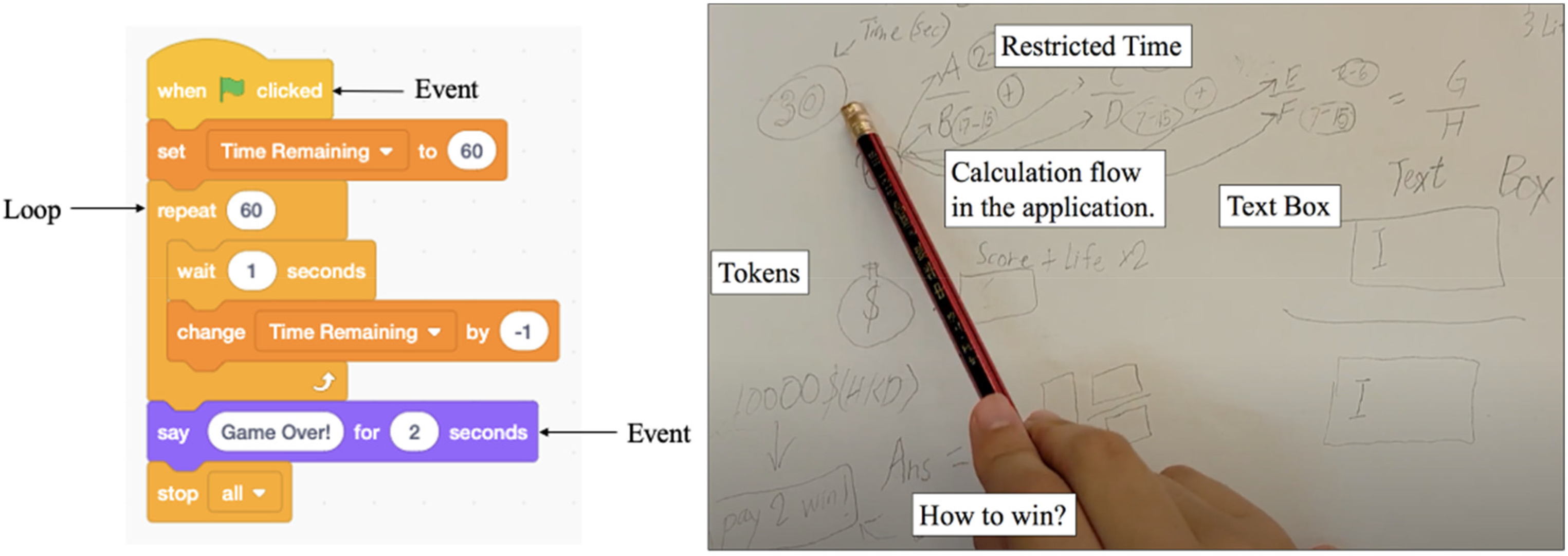
Coding examples of Scratch and a student's drawing.
How did the students learn fraction concepts in the CT activities? (RQ1)
The teacher helped students review prior knowledge of fractions at the beginning of the lessons. The forms of students learning fraction concepts were categorized into four types of fraction representations. The researchers coded the learning materials based on the coding scheme (see Table 4). The details learning process is demonstrated below.
To help students learn fractions quickly and interestingly, the researchers and the teacher designed a series of fraction exercises to recap and strengthen their fraction knowledge. Examples of fraction representations are listed in the following: (1) Tools for representing fractions—the teacher showed several linear and area models for students to recognize and answer the value of fractions; (2) Methods of representing fractions—students were questioned about how the fractions were represented in a part-whole model, which required students to fill in the color into particle fractions; (3) Fraction notations—the teacher required students to fill numbers into the figure to represent targeted fractions; (4) Fraction language—the students were asked to write down the numerators and denominators of fractions based on the testing items. One example of fraction representation is shown below in Figure 3. Students were asked to complete fraction practices at the beginning of the lesson. For example, students answered a fraction in the blank based on the colorful circle, which tests students’ understanding of the basic fraction concepts. In contrast, they need to fill in the colors into the area blocks based on the fixed fraction and then answer the result after completing the fraction addition. The area model and part-whole methods were used in these two cases in their fraction representations.
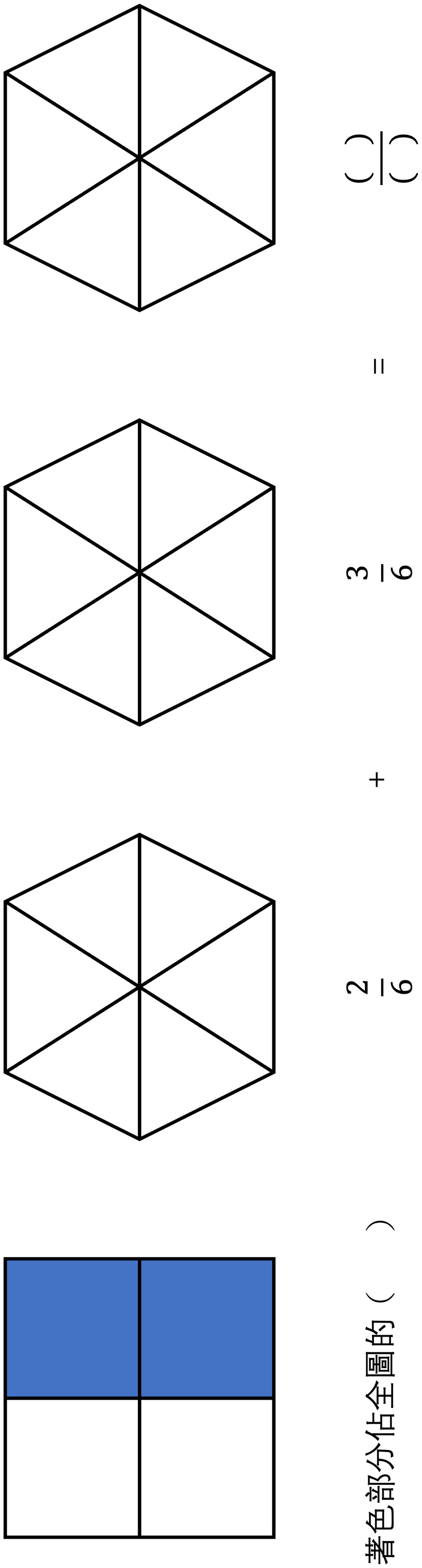
An example of fraction representations in learning materials.
After completing fraction practices, students adopted fraction representations in their magic calculation design. They presented the fraction calculation games by setting the addition of two fractions with the same denominators (see Figure 4).
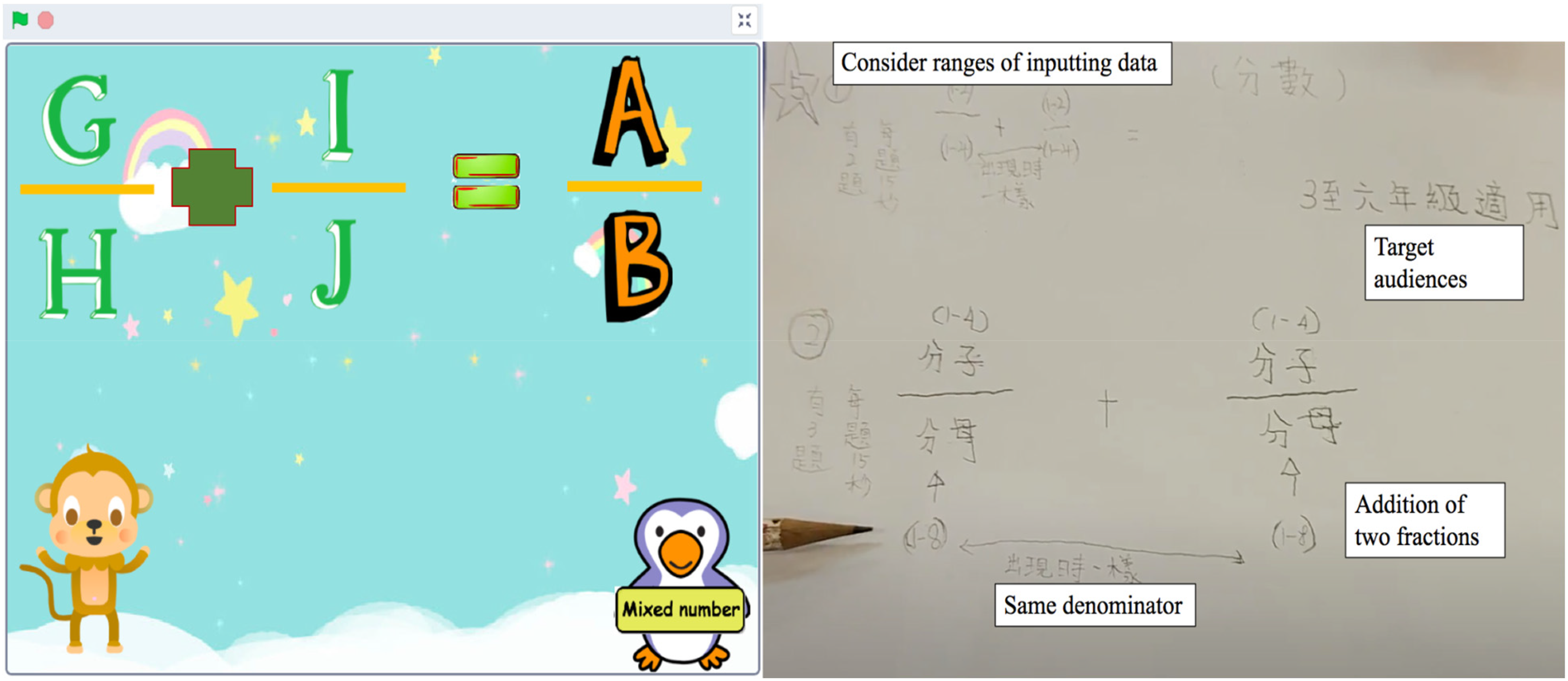
An example of fraction representations in students’ works.
Although the teacher used four fraction representations to help students learn fractions visually, different levels of learning effectiveness appeared among the students. On the one hand, some students preferred complex practices in which the teacher presented fraction symbols or mathematical contexts to write down the numerators and denominators of fractions. On the other hand, other students were interested in accessible practices in which they were asked to present fractions using the linear and area models and part-whole methods. This kind of exercise is easy and allows students to draw and account for the numbers of the numerators and denominators separately. Generally, students improved their fraction concepts after completing a series of fraction practices. Examples of conversations between students and the teacher are shown below. Teacher: How do you think the fraction practices?
Student A: Some are easy for me to complete, whereas others are difficult to understand.
Teacher: Can you give me some examples?
Student A: For example, filling colors in a length model is easy to complete, but writing down the numerator and denominator of fractions based on the colorful model is difficult.
Teacher: Do you think the fraction practices help you learn fraction concepts?
Student A: Yes. Although there are some difficult fraction practices, they improved my understanding of the fraction concepts after completing the lessons.
CT concept
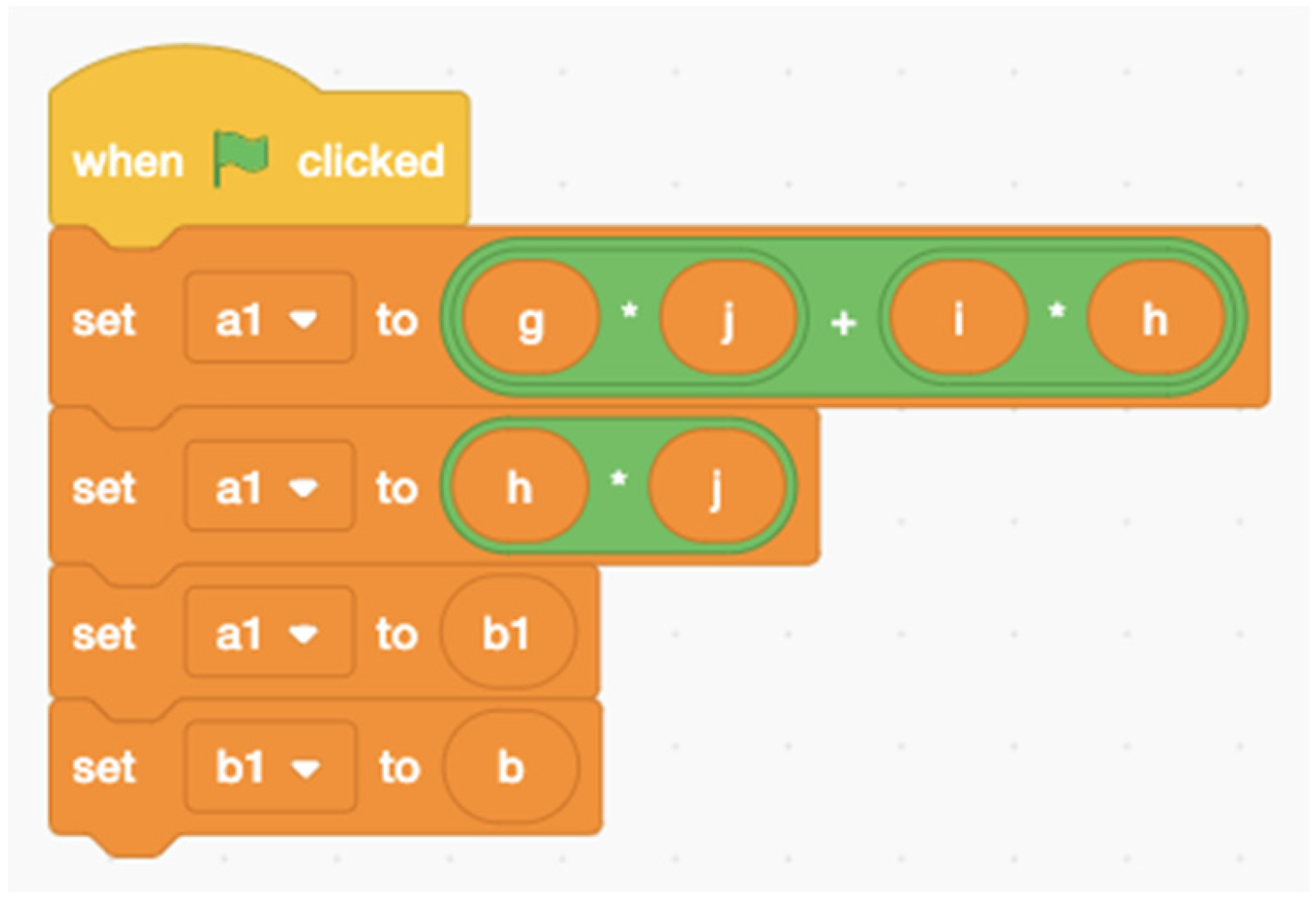
Examples of sequences in Scratch.
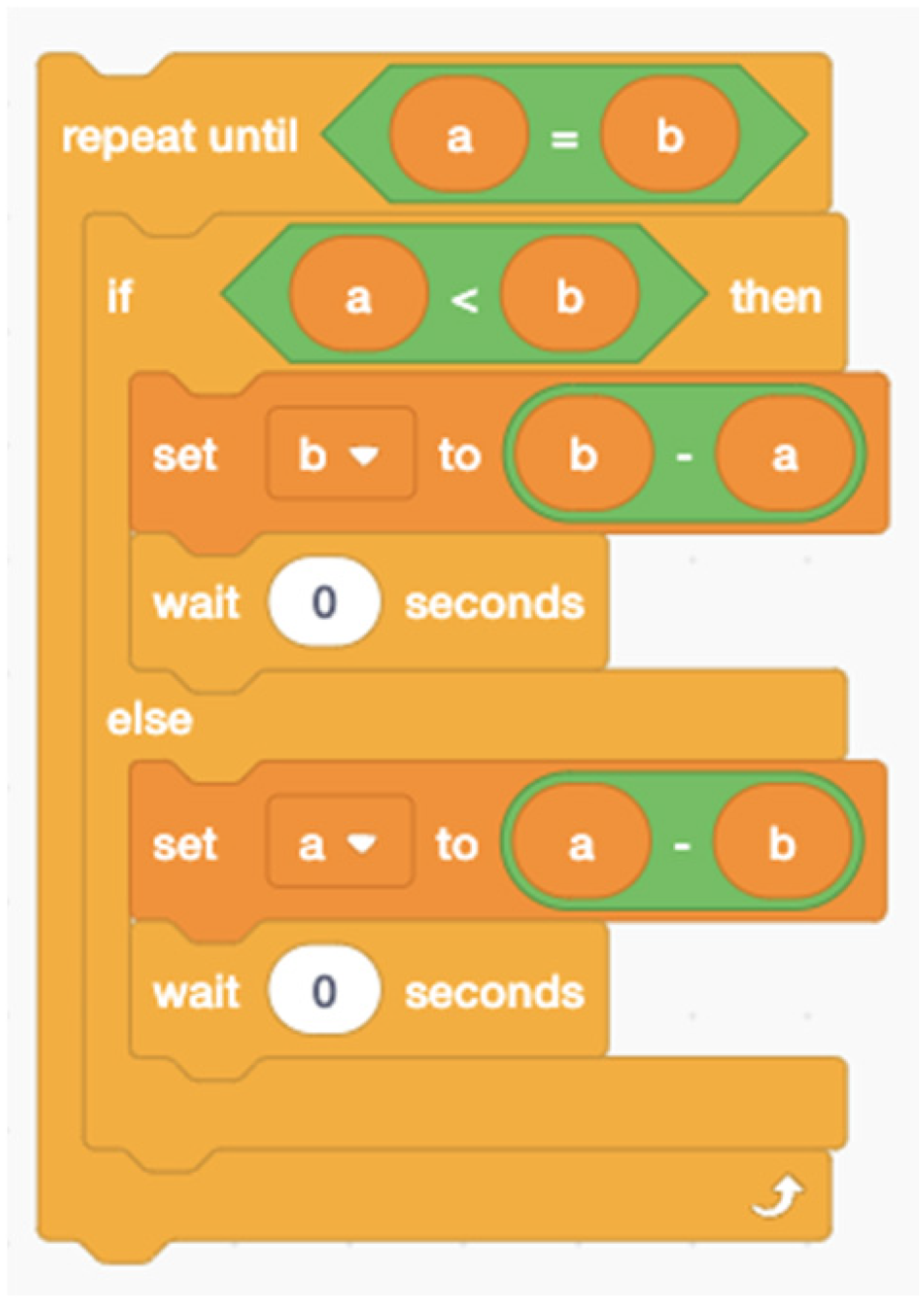
Examples of iterations/loops and conditionals in Scratch.
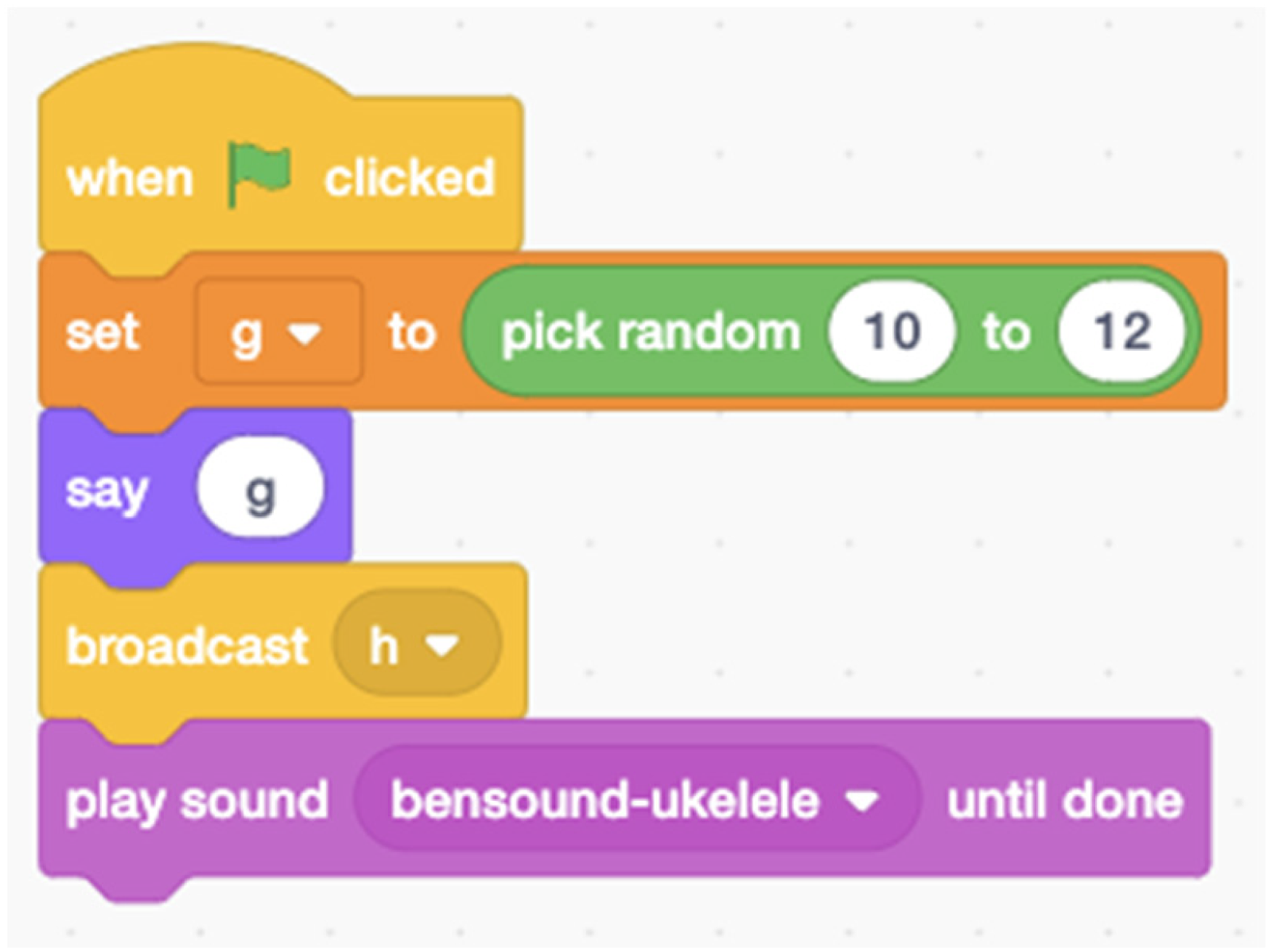
Examples of events in Scratch.
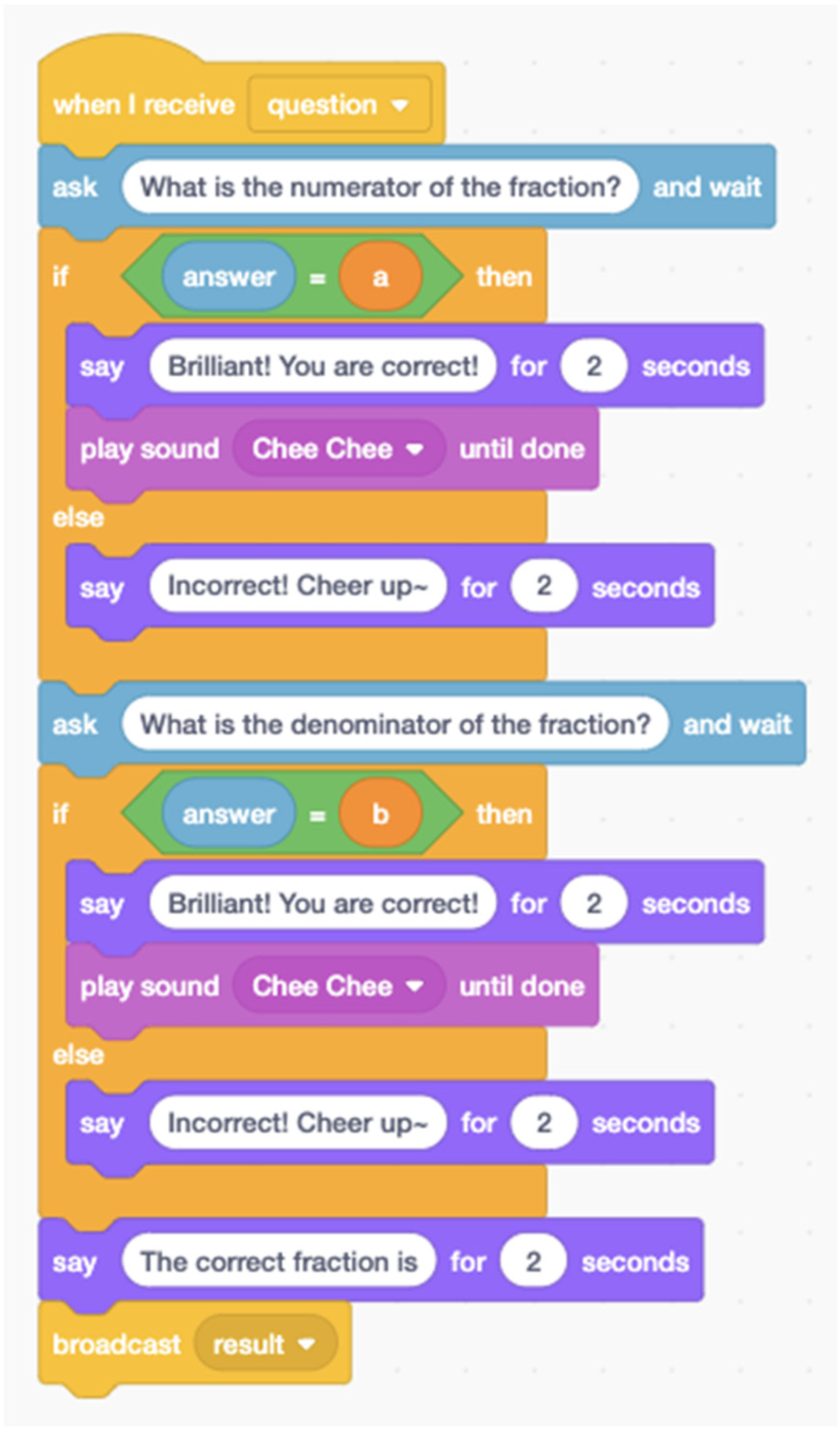
Example of abstracting and modularizing in Scratch.
Computational thinking perspectives examine how students’ understandings of themselves and their relationships with others in the technological world by expressing, connecting, and questioning during the programming activities. Since the focus of this research was to understand the student's learning process (in terms of CT perspectives) and how they interact in the Scratch environment, their behaviors were analyzed and classified into four genres: socializing, expressing, reflecting, and connecting. The researchers coded the learning materials based on the coding scheme (Table 5). Socializing reflected that students communicated with classmates or group members to discuss their designs of fraction magic calculators. The students expressed their thoughts on designed ideas and gaming elements through the Scratch programming activities. After that, students reflected on their designs with the teacher to evaluate their magic calculators. Finally, the learning activities allowed students to strengthen their connection with others through exploring fraction knowledge during the Scratch activities. Examples of conversations between students and the teacher are demonstrated below. Teacher: How do you think the relationship between you and other classmates/group members after you participated in the Scratch programming activities?
Student B: I think we are getting closer to each other. Especially when we discussed the design ideas of fraction magic calculators, the learning process was too exciting and interesting for us.
Teacher: Have you evaluated your work with group members in these activities?
Student B: Sure. I discussed ideas with others and presented our thoughts on the design of magic calculations in groups. I sought assistance from my teacher when I had no ideas.
Furthermore, all seven groups believe that drilling mathematics could be boring. Scratch provides digital affordances that offer different gamified elements such as quizzes, points, chances, and leveling in their applications (see Table 6). It makes students consider learning fractions through their designed fraction calculators is interesting. The descriptive data indicate that quizzes and points were the most commonly gamified elements that students used in their application design. We can see that students not only focus on how to do fraction addition and subtraction through block-based programs, they also re-express the fraction calculations in an interactive and interesting way. It is encouraging that students could consider human design factors (e.g., enhancing motivation and user experience) and user needs through gamification when designing their games and applications (Szalma, 2014).
Distribution of gamified components that students used in their drawing contents.

Distribution of gamified components that students used in their drawing contents.
Here are examples of how two groups of students express how their gamified tasks are implemented in the Scratch environment: student C said, “we have 30 seconds for students to do the calculations. If the students answer the questions incorrectly or slower than the restricted time, their lives will be deducted. There are three hearts. We can reduce the marks when answering incorrectly or slowly. In the interface, we also need other components such as text boxes and strings to indicate win or loss (see Figure 8).” Another Student D expressed, “we have three different levels. Level one helps students to do revision. We leave a blank for students to input the numbers. The bracket places are for computers to assign numbers randomly. Level two is for practicing, and level three is for quizzes (see Figure 9).” Students further used Scratch to create the fraction magic calculator. As shown in Figure 9, the code demonstrated that once students achieve the target score of 80 in level 2, they can reach level 3. This implementation illustrates how students transferred their ideas into a block-based programming environment.
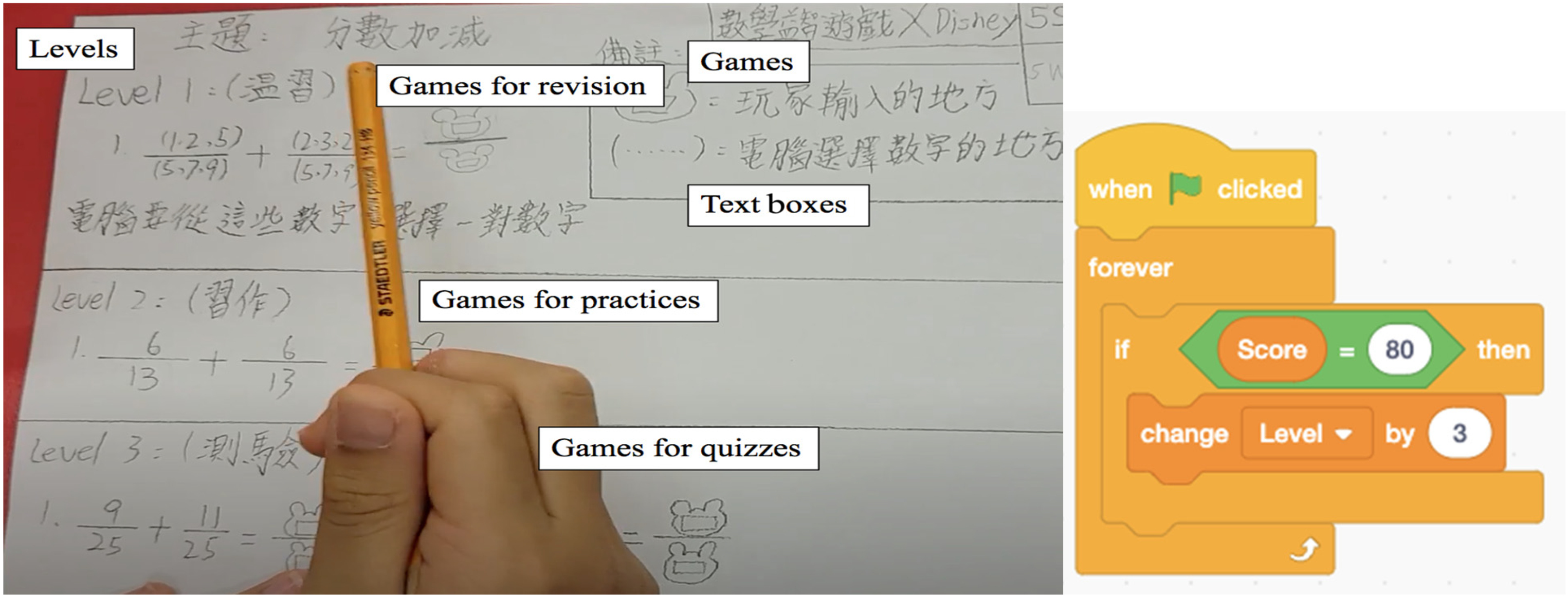
Students’ drawings and related Scratch coding.
Benefits of CT integrated into mathematics education
Our study found that students performed positive feedback towards the CT activities integrated with fraction lessons regarding understanding fraction concepts and the benefits of a set of CT abilities (concepts, practices, and perspectives). This finding is aligned with other studies in the current literature. For example, Strickland et al. (2021) implemented CT education in primary mathematics classrooms, which adopted Scratch to teach students a series of CT concepts (e.g., sequence, repetition, and conditionals) based on fraction learning contents. The results reported that students better understood fraction knowledge and programming language applications after attending the experiment course. The above findings point out that such CT-integrated mathematics classrooms are beneficial for students to foster mathematical concepts in a block-based programming environment.
Another finding is that students are motivated to learn fractions during the CT activities. This instructional design provides a problem-solving learning environment for students to address questions by themselves under a specific topic—fractions. It provides an example for teachers to address primary students’ learning anxiety toward fraction learning. As Fauzi and Suryadi (2020) mentioned, students feel it is difficult to understand this concept especially when they need to add or subtract with different denominators in their fourth or fifth grades. To address these problems, teachers need to apply different interventions to practice, apply and master the mathematical concepts (Hansen, Jordan & Rodrigues, 2017). Furthermore, Ho et al. (2021) highlighted mathematics teachers should apply and create learning tasks that promote computational thinking to forge mathematical ideas and enhance mathematics learning. Based on our findings, implementing a CT programming environment integrated into mathematics lessons can potentially enhance students’ learning motivation and interest in mathematics learning.
Last but not least, we found that students engaged in mathematical modeling and thinking processes to model their proposed fraction questions by designing the Scratch applications in a CT-based environment to interwoven mathematical and computer science concepts. This is consistent with the purpose why Logo was invented several decades ago. Students draw numerical patterns and geometric shapes to interweave the two concepts. With digital affordances, students nowadays can use block-based programming in Scratch to express their ideas which lay a solid foundation for young students’ school readiness to present computational and mathematical thinking concepts.
Social skills in a mathematical and CT environment
Our study provided students with a Scratch programming environment to re-express mathematical concepts through drawing interfaces and writing blocks with classmates. Throughout the learning process, students shared their mathematical ideas and programming blocks. Students could create and brainstorm together to model their fraction concepts in a CT environment. This involves much communication, creativity, and collaboration skills so as to propose solutions and solve problems (Gretter & Yadav, 2016). Students connect their prior knowledge and discover computational media in Scratch that is enriched by interactions with other learners. After the project, students could evaluate their work with other participants and teachers through presentation, self-expression, and questioning. Through socializing, students could reflect and assess their performance themselves and with other classmates. This aligned with Brennan and Resnick's CT framework (2012), which involves expressing (perception of computation as a way of expression and creation), connecting (perception of computation as a way of interacting and working with others), and questioning (raising questions and using technology to solve real-life problems. We further emphasized the importance of communicating, socializing, reflecting, and collaborative learning toward CT education. Although Brennan and Resnick (2012) did not explicitly use these terms, they touched on the importance of collaboration, group learning, and communication. Another systematic review conducted by Tikva and Tambouris (2021) found some similar strategies based on students’ collaboration that involve their active interaction, including teamwork and pair programming in a coding community.
Research limitations and recommendations for future research
This study has some limitations. Firstly, it has a limited sample size and a short experimental period of two months in four sessions, which may not sufficiently allow students to exercise fraction concepts and CT during the operation of Scratch. Students may need more time to express their thoughts by getting familiar with the programming language, as the new computational skills are new for them to use in the mathematics classroom. Therefore, future research can consider increasing the sample size and extending the experimental period in order to let students have a deeper understanding of computational and mathematical thinking. Secondly, it only uses qualitative methods to analyze students’ work, interactions, and behaviors to examine their computational thinking and mathematics learning. However, it still needs some quantitative data to triangulate and present a holistic picture of students’ learning outcomes, which contributes to identifying students’ learning difficulties and problems in fraction knowledge. Therefore, future research can combine qualitative and quantitative methods to analyze the results in order to provide multiple points of view for stakeholders. Thirdly, it lacks assessing the validity of the 5E instructional model adopted in this study. Particularly, it utilizes the 5E instructional model to teach the course in order to raise students’ curiosity and motivate their engagement. However, it did not conduct an assessment of the effectiveness of the teaching strategies, which can be reflected by students’ motivation, interests, and attitudes. Therefore, future research should evaluate the effectiveness of the teaching strategies so that it can provide some suggestions for improving the 5E instructional model.
Footnotes
Contributorship
Xiaoxuan Fang designed and facilitated this research, analyzed the data and wrote the first draft of the manuscript; Davy Tsz Kit Ng facilitated data analysis and revised the manuscript; and Wing Tung Tam completed the instruction work in this research and collected data; Manwai Yuen built connections with the experimental school and proofread the manuscript. All authors read and approved the final manuscript.
Declaration of Conflicting Interests
The author(s) declared no potential conflicts of interest with respect to the research, authorship, and/or publication of this article.
Ethical standards
All procedures performed in studies involving human participants were in accordance with the ethical standards of the institutional and/or national research committee and with the 1964 Helsinki Declaration and its later amendments or comparable ethical standards. Informed consent was obtained from all individual participants included in the study.
Funding
The author(s) received no financial support for the research, authorship, and/or publication of this article.
Informed consent
Informed consent was obtained from all individual participants included in the study.
