



Abstract
Canada’s growing immigration rates have contributed to Calgary’s increasingly diverse population. Over one-third of Calgary’s residents are immigrants, many of whom are youth. These newcomer youth encounter a well-documented range of systemic and social barriers that impede their educational success and overall well-being, such as limited English proficiency, discrimination, and inadequate institutional support. However, considerations of current solutions to these barriers, particularly relationship dynamics between community-based organizations and schools, remain understudied for newcomer youth. Thus, an examination of the intersection between educational issues and broader supports is warranted. Using a community-based research framework, this study examines the educational challenges and supports for newcomer youth in Calgary in partnership with two local community organizations. Semi-structured interviews were conducted with 20 participants (12 stakeholders and 8 newcomer youth) and analyzed using a hybrid thematic analysis. Four key themes were generated: (1) Language and Culture as Sites of Exclusion; (2) Austerity in the Classroom; (3) Community-Based Organizations as “The Bridge”; and (4) Solutions Moving Forward. Findings offer a multidimensional understanding of the structural and interpersonal barriers newcomer youth face, highlighting the importance of cross-sector collaboration in building trauma-informed and culturally responsive supports for their educational and settlement trajectories.
Introduction
Newcomers account for approximately one-quarter of Canada’s population, making the country one of the most ethnically diverse in the world (Government of Canada, 2022). Within this broader context, Calgary has experienced a significant increase in immigration, with newcomers accounting for 33.3% of the population, surpassing the national average of 23% (Statistics Canada, 2021). To situate Calgary, it is a bustling metropolitan city located in the western sphere of the prairie regions of Canada, in close proximity to the Rocky Mountains (McGillivray, 2010). It is the fourth-largest metropolitan city in Canada, with over 1.8 million inhabitants, and is a major destination for many newcomers due to economic opportunities, quality of life, and family social networks (Derwing and Krahn, 2008; Statistics Canada, 2026).
Notably, 17.5% of those who have immigrated to Calgary arrived between the ages of 15 and 24 years (Statistics Canada, 2021). This prominent group of younger newcomers contributes meaningfully to the Canadian economy, thereby encompassing an important population of interest (Nichols et al., 2019; Statistics Canada, 2021). While many of these younger newcomers migrate to Canada as dependents of incoming workers (i.e., the economic class of immigrants), some are forcibly displaced due to persecution and violence in other parts of the world. In fact, Canada welcomed nearly 100,000 refugees between January 2015 and March 2018, 43% of whom were under 18 years old (Wilkinson, 2018). As noted in Canada’s 2026–2028 Immigration Levels Plan (Immigration, Refugees and Citizenship Canada, 2025), the country remains committed to offering protection and safety to refugee populations.
However, newcomer youth often face a range of intersecting barriers upon arrival. These barriers include limited English language proficiency, unfamiliarity with the school system and norms, disrupted or limited prior education, lack of parental engagement, gaps in school-based support systems, discrimination, and challenges navigating peer relationships (Access Alliance, 2010; Riley and Ungerleider, 2008). Without sufficient support, these barriers can result in poor educational outcomes, impaired well-being, and reduced long-term opportunities for settlement and integration into Canadian society.
While a great deal of scholarship has historically used the word “newcomer” to describe individuals who have been in the country for five or less years, there is no consensus on the term (Smith et al., 2023; Walsh et al., 2016). Thus, this study utilizes “newcomer” as an umbrella term encompassing individuals born outside of Canada, which includes, but is not limited to, immigrants and refugees. This study aims to assess the educational challenges and supports for newcomer youth in Calgary. While “youth” has various definitions in the literature (Kaufmann, 2021), this study focuses on youth as those in junior high and high school, a group which involves adolescents aged 12–18, a developmental stage characterized by identity formation (Li et al., 2017). Further, previous research has shown that newcomer youth of these ages may begin juggling more life and school responsibilities, on the top of adjusting to their new environment (Rodriguez, 2023; Shakya et al., 2012). Thus, focusing on this specific group of newcomer youth is imperative, as their experiences can further shape their later lives.
This paper presents the results of a community-based research project, carried out in partnership with two local organizations. Through interviews with various stakeholders and newcomer youth in junior high and high school in Calgary, Alberta, Canada, the study examines the educational barriers and supports shaping the experiences of newcomer youth.
Sociopolitical and educational context
Alberta’s provincial government has been governed by the United Conservative Party (UCP) for the last 6 years (Massé, 2025). Since education is a provincial and territorial responsibility rather than a federal one, Alberta’s education system continues to be shaped by dominant conservative ideologies under the UCP, which emphasizes privatization and increased support for charter and private schools (Ganshorn, 2024). Without a federal ministry of education and a unified national education system, the structure, delivery, and evaluation of education at all levels are managed by separate ministers of education in each province and territory (Cheng and Yan, 2018). Therefore, these provincial decisions have contributed to rising tensions, particularly between the Alberta government and Alberta Teachers’ Association (ATA), which have been persistently protesting against deteriorating classroom conditions, insufficient wages, and inadequate resources. In early 2025, 95% of Alberta teachers voted in favor of strike action in response to these ongoing challenges (Johnson, 2025). In October of this same year, over fifty-one thousand teachers across Albertan school boards walked off their job in what was one of the largest labour actions in history (Said, 2025). This led to a catastrophic pause of education for over 3 weeks, stopped only through invoking a controversial legal clause preventing teachers from legal retaliation (French, 2025; Zhao, 2026).
Public schools have experienced significant budget cuts, contributing to chronic underfunding, reflected in the downward trends in per-student spending on education (Fletcher, 2025). Additionally, Alberta has one of the lowest education expenditures per-student in the country at $14,785 per student, significantly below the national average of $17,130 and only marginally higher than the next two lowest per-student spending provinces (Statistics Canada, 2026; Fletcher, 2025). This funding gap has generated significant concern among educators and policymakers. In one report from the ATA’s president, Jason Schilling, notes, “despite having the richest economy in the country, Alberta has the poorest education system” (Ferguson, 2024, para. 15).
Deteriorating classroom conditions have become the norm in Alberta public schools, with funding failing to keep up with population growth and infrastructure demands. For instance, despite expecting 15,000 new students between 2024 and 2026, the Calgary Board of Education (CBE) had only approved the construction of one new school in 2024 (Ferguson, 2024). This overcrowding has intensified pressure on staff and facilities. In 2019, the government ceased public reports on classroom sizes, with the last report indicating that 90% of school divisions exceeded recommended numbers of students (Alberta Teachers’ Association, 2024). Now, classrooms often have 35 to 40 students, with some schools even repurposing other spaces into classrooms (Franklin, 2025).
Literature review
Education remains a key factor that attracts many families worldwide to Canada (Shields and Lujan, 2018). For newcomers, schools offer valuable skills for future economic participation and serve as key sites for integration by teaching cultural norms, facilitating interactions with the Canadian-born community, and providing settlement services to help address their complex needs (Cohen, 2016; Shields and Lujan, 2018). Despite this central role in the integration process, Canada’s education system includes deeply embedded exclusionary practices that affect and further complicate immigrants’ social, psychological, and economic outcomes (Henry and Tator, 2010; Selimos and Daniel, 2017). These systemic barriers are multifaceted, emerging in curricula and peer-to-peer discrimination. In fact, many commonly reported newcomer experiences in Canadian schools—such as a lack of belonging, racism and discrimination, and stress from orienting oneself to unfamiliar school practices and norms (Guo and Guo, 2016; Selimos and Daniel, 2017)—are driven by these barriers. If not adequately addressed, these overarching barriers can increasingly restrict newcomer youth’s education and employment choices (Nichols et al., 2019). The following sections review a brief snapshot of prevalent barriers newcomer youth face in the education system, followed by current knowledge on school- and community-based interventions.
Prevalent barriers in the education system
First, it should be noted that limited proficiency in English is a serious obstacle for newcomer youth, which can hinder their academic success and affect their integration into society for many years. Language acquisition is crucial to integration, as it is a “basic step [that enables newcomers] to participate in the life of the host culture, further their education, get a job, obtain health care and other social services, and apply for citizenship” (Li, 2013). Newcomer youth in Canada rely on the school system to acquire English, and English predicts one’s social and economic success (Dearing et al., 2016; Shields and Lujan, 2018). However, it takes many years to learn English. In Li's (2013) review of immigrants’ language acquisition, newcomers in Canada and the US can take 3–5 years on average to develop oral proficiency in English, with academic proficiency taking another 4–7 years to acquire. This poses a serious obstacle for newcomer youth, as their limited proficiency in English can hinder their successful integration into society for many years.
Newcomer youth also face various forms of discrimination that can manifest in overt and subtle ways, including stereotyping, exclusion, and microaggressions (Kalchos et al., 2022; Souto-Manning, 2021). Such discrimination can occur in everyday interactions with teachers, who may hold deficit-based assumptions about their students (DeNicolo et al., 2017; Rossiter et al., 2015), and with peers who may engage in bullying or cultural shaming (Rodriguez, 2023; Rossiter et al., 2015). Research has consistently linked discrimination to heightened risks of mental health challenges, including anxiety, depression, and diminished self-esteem (Nazish and Salami, 2021; Patel et al., 2023). These experiences can create a broader climate of marginalization within the school environment, which can hinder academic performance, disengage youth from school activities, and, in some cases, lead to higher dropout rates (Nazish and Salami, 2021; Rossiter et al., 2015).
Classroom curricula and instruction constitute other barriers that newcomer youth disproportionately face in the classroom. Previous studies highlight the lack of diversity in school staff and curricula, as well as their subsequent effects on perpetuating racism, discrimination, and alienation within the school community and beyond (Cui, 2019; Kaufmann, 2021; Ngo, 2012; Nichols et al., 2019). Teachers work closely with their students and have a significant influence on their educational experiences and outcomes (Oxman-Martinez et al., 2012). For instance, a meta-analysis by Civitillo et al. (2024) demonstrated that perceived racial and ethnic discrimination from teachers was linked with lower well-being, higher substance use, and lower academic performance. Cultural differences can also influence the student-teacher relationship; some newcomer youth may come from African, Asian, or Hispanic cultures where non-direct eye contact is commonly used when communicating to elders and authority figures (Usman, 2012; Zhi-peng, 2014). While newcomer youth demonstrate respect by averting their gaze, teachers in Western contexts may view this as disrespectful and inattentive (Usman, 2012). Failing to adequately address the needs of newcomer youth can exacerbate systemic barriers, leaving schools unprepared to support their learning and development.
School-based psychosocial support
Schools are often the first institutional point of contact for newcomer youth, making them key for academic and psychosocial interventions (Patel et al., 2023; Selimos and Daniel, 2017; Tyrer and Fazel, 2014). As defined by Kalchos et al. (2022), school-based psychosocial support services (S-BPSS) include a range of programs that facilitate students’ integration into the school environment. Among these, the English as an Additional Language (EAL) program is the primary initiative supporting newcomer students through providing language instruction, academic support, and intercultural education (Volante et al., 2021). Creative arts-based interventions, including drama and music, have also helped newcomer youth express themselves and regulate emotions during the acculturation process (Herati and Meyer, 2023; Tyrer and Fazel, 2014). Other structured programs, such as mentoring and counseling, are similarly designed to foster cultural literacy, social integration, and the development of social capital (Gonzalez et al., 2014; Ijadi-Maghsoodi et al., 2024; Khackikian, 2019). These interventions are impactful in helping students navigate unfamiliar educational environments, build supportive relationships, and develop confidence and engagement in school life (Gonzalez et al., 2014). When delivered in sustained ways, such supports are associated with improved academic outcomes, greater school belonging, and more successful long-term adjustment (Herati and Meyer, 2023).
While S-BPSS intend to address and ameliorate the barriers mentioned above, limitations persist. The lack of familiarity with the service landscape (Kaufmann, 2021), absence of culturally relevant services, and underrepresentation of diverse service providers all impact newcomer youth’s access to adequate support (Cheyne-Hazineh, 2020). Due to the lack of credits received from EAL and other remedial classes, these supports may delay the youth’s graduation without their initial awareness (Li and Que, 2020). Furthermore, previous research highlights the segregative nature of EAL classes and structures that involve multiple divisions of school programs (i.e., streaming), as they disadvantage and stigmatize minoritized youth while limiting interactions with those from dominant populations (Chiu et al., 2017; Kaufmann, 2021). Thus, community-based educational spaces have emerged to address these gaps (Baldridge et al., 2017).
Community-based interventions
Community-based organizations (CBOs) are particularly well-positioned to offer empowering and accessible supports for newcomer youth. These include programs focused on advocacy, parenting, and trauma-informed care that work to address systemic inequities outside traditional clinical or educational settings (Lee et al., 2021; Rusch et al., 2021). CBOs offer support in local community centers, after-school spaces, and cultural hubs, making them more approachable and responsive to the lived realities of newcomer families (Guo and Guo, 2016; Symons and Ponzio, 2019).
Outcomes of CBO programs are wide-ranging. Sport-based and recreational programs foster inclusion, language development, peer connection, and cultural navigation through participatory and empowering approaches (Lundkvist et al., 2020; Makarova and Herzog, 2014; Robinson et al., 2019). Arts- and drama-based initiatives in community contexts also create space for youth to process trauma, build self-esteem, and cultivate resilience, supporting integration through emotional and relational healing (McLeod et al., 2017).
Alternative models, such as the community-school framework, center structural change and prioritize collaboration across systems to support mental health and adjustment (Ijadi-Maghsoodi et al., 2024). Similarly, researchers have called for multisectoral partnerships between schools, clinics, and CBOs to ensure interventions are culturally grounded and systemically integrated (Herati and Meyer, 2023). These collaborations can promote academic persistence by affirming students’ cultural and linguistic identities while connecting them to institutional resources (Harris and Kiyama, 2015). Evidence also suggests that models are most successful when informed by community knowledge and grounded in flexible, student-responsive practices (Bajaj and Suresh, 2018; Beehler et al., 2012). While ineffective models are often siloed and oversimplified, effective models recognize the complexities of newcomer youth’s experiences by acknowledging the interplay of strong family relationships, established community supports, and inclusive school environments in fostering resilience and well-being (Bryan et al., 2020; Herati and Meyer, 2023).
Approach
Our study was informed by a community-based research (CBR) approach, which contends the need for community involvement and participation in the research process (Brown and Stalker, 2021). This approach seeks to address existing social disparities by drawing knowledge from the community in a non-extractive manner, facilitating impactful and sustainable change. CBR prompted us to collaborate with two non-profit organizations primarily working with newcomer youth, which involved ongoing and active consultation to ensure community perspectives remained central to the study. These partnerships guided many aspects of the research design, including recruitment, research question development, and analysis (Collins et al., 2018; Janzen and Ochocka, 2020).
Methods
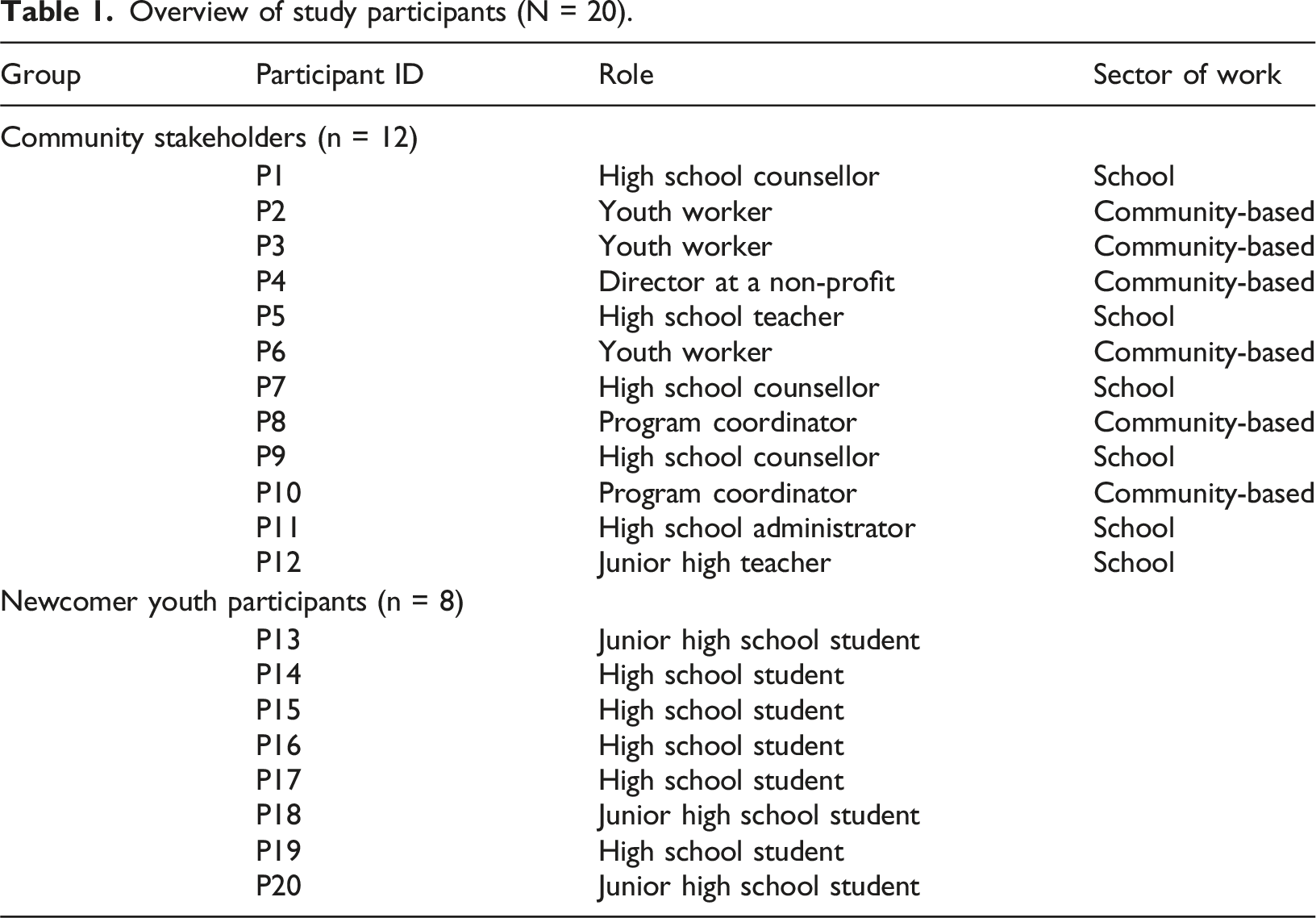
This study received ethics approval from the University of Calgary's Conjoint Faculties Research Ethics Board REB24-1724. A qualitative design was used to explore the educational barriers that newcomer youth face and the current supports available. Participants were recruited using purposive sampling to ensure those with relevant experiences in the education system were represented (Campbell et al., 2020). A total of 20 semi-structured in-depth interviews were conducted, comprising 12 with adult stakeholders, many of whom were newcomers themselves, and work closely with newcomer youth and 8 interviews with newcomer youth themselves. Guided by CBR principles, interview guides were developed based on the literature and subsequently refined in collaboration with community partners. Youth were asked questions such as “What advice would you give to teachers or principals to help students like you feel more welcome and supported?” and service providers were asked questions like “From your perspective, how effective are current educational services and programs for newcomer youth?” Interviews were conducted in-person or virtually in English and lasted around 45–90 minutes.
Participants and recruitment
Overview of study participants (N = 20).
Data analysis
Each interview was transcribed and imported into NVivo 14, qualitative analysis software. A hybrid thematic approach was employed to analyze the transcripts, following the steps outlined by Fereday and Muir-Cochrane (2006). Variations of hybrid thematic approaches have been increasingly implemented in qualitative research (Swain, 2018; Xu and Zammit, 2020). Our study drew on the data-driven and reflective nature of reflexive thematic analysis (RTA) (Braun and Clarke, 2006), and the structured, theory-driven process of other methods (e.g., applied thematic analysis) (Guest et al., 2012). This approach enables us to generate findings that authentically represent participant perspectives while drawing on established knowledge for deeper interpretation and ready application towards practice and policy (Fereday and Muir-Cochrane, 2006). This process involves developing a set of codes grounded in the literature, testing their implementation among various coders, adding inductive codes to reiterate and refine the codebook, and engaging in reflexivity to challenge researcher assumptions and further enrich the themes. The coding process was iterative, with emerging themes constantly reviewed and refined through dialogue and reflection. Two coders independently coded each transcript to establish intercoder reliability (O’Connor and Joffre, 2020). The team then met collectively to discuss their individual coding processes, after which the team lead resolved any remaining discrepancies informed by the team discussion. Each coder created a coding memo to practice reflexivity throughout the coding process. These memos prompted coders to reflect on the transcripts and consider how their identities and experiences might shape the codes and themes they generated (Birks et al., 2008).
Findings
The study unveils four key themes: (1) Language and culture as sites of exclusion; (2) Austerity in the classroom; (3) CBOs as “the bridge”; (4) Solutions moving forward.
Language and culture as sites of exclusion
Participants identified a pervasive cultural and linguistic disconnect between newcomer students and the Canadian school system, which often led to exclusion and marginalization. The dominant schooling structures rooted in Western, individualistic norms were repeatedly critiqued for their failure to recognize or affirm newcomer youth’s collectivist values, lived experiences, and cultural communication styles.
Generally, participants shared challenges associated with language proficiency as one youth shared: I dunno. English is still not my best subject at school, like ELA. That's yeah, I don't know. It's always been my weakest subject (P14).
Similarly, P15 stated: English was like a big, like like I couldn't, I could not really speak English, so it was like a big challenge for me.
Many participants emphasized that the school system was not built with newcomer students in mind and instead reinforces assimilationist expectations. As P2 explained, I find that a lot of our youth come from collectivist cultures. And the school system is very Westernized.
This misalignment often left students feeling invisible within school spaces. P2 noted, Even just the way [the system] was built historically was not in the best interest of children and youth… it has elements of assimilation.
Other participants echoed this concern, reflecting on how dominant pedagogical approaches fail to make room for diverse ways of knowing and being. A community program coordinator makes a sharp critique at the education system, positing the power dynamics that are reinforced within conventional education: I think this comes from Western paternalism. We view these people…we view them as inferior, we view that, oh, we just need to provide them tutoring so we have the answers for them (P10).
In parallel, a high school administrator candidly stated, “We have to admit that the way we teach is culturally biased. It’s a Western point of view, right,” and illustrated how curricular content compounds this exclusion: If we were just to go with standard curriculum, Shakespeare, you know, you're going to lose a lot of kids because the cultural references aren't there for them. They read it and they don't get it, right? (P11)
Youth workers also described how cultural differences shape peer dynamics and the silencing of identity. P6 noted: “They’re more scared to share their culture because they don’t think that it’s cool,” adding that Canadian-born students often “have their own group,” further reinforcing social boundaries and limiting opportunities for cross-cultural connection.
Beyond curriculum and classroom dynamics, participants spoke to deeper systemic issues around cultural miscommunication and disciplinary expectations. P7 shared, The kid came here and he doesn't know at all how to follow the rules... He doesn't know the social norms…cues, so they miss all those schooling things. And then they come to Canada's new environment and that is the big problem that they are facing.
These mismatches in social norms often resulted in unjust discipline. For example, P2 described cultural differences around eye contact: My parents were always like, “Don’t make eye contact for longer than this,” where like I’ve seen teachers get up in their face and it’s like, “Why aren’t you making eye contact with me?”... and then the kid is now punished for not making eye contact.
Language barriers surfaced as one of the most persistent obstacles across participants’ narratives. Students arriving with interrupted or limited formal education, often due to crisis or conflict in their countries of origin, faced steep barriers to participation and success. P1 reflected on a youth from Afghanistan: She came here as a 17-year-old. She had five months of formal education... how does she go from learning the language and then completing a high school diploma?
Even when students understood subject content, the embedded language demands of schoolwork posed significant challenges. As one teacher noted, Within a math setting... they understand the math that is associated with it, but they’re just having trouble, especially with word problems and understanding the English that’s tied to it (P12).
This linguistic exclusion extended beyond academics to social interactions and relationships. P15 explained, Sometimes it’s hard to explain what you’re feeling or what you’re going through… If you can’t relate to them, it’s really hard to connect to people… English is a big barrier still for some kids.
P2 similarly emphasized the scope of this challenge: I think language is huge. It’s hard to do anything when you don’t understand anything.
These narratives underscore that language and culture are barriers to academic achievement and meaningful inclusion and belonging. The dominant structures of schooling often assume a universal student experience while disregarding the diverse realities that newcomer youth bring. This cultural erasure, coupled with linguistic exclusion, reproduces systemic inequities and undermines the potential for schools to be truly inclusive spaces.
Austerity in the classroom
Participants highlighted how growing enrollment and lack of staff have significantly compromised schools’ abilities to support newcomer students, particularly those who require specialized assistance such as EAL or individualized instruction. These structural constraints, driven by funding cuts and increasing demand, created overwhelmed classrooms and underequipped educators.
One common concern was budget cuts, particularly with staff shortages and the limited number of schools in Calgary. This leads to schools exceeding maximum capacity. These constraints reflected the failure of educational policy to address migration dynamics: We don't have a lot of resource[s]. Schools are struggling especially at this time where we have a huge influx of students coming to the system (P9).
P1 echoed the same concerns: There's just no space… there's not much space for them [the students] in the system.
Others noted that students with vastly different levels of language proficiency were grouped together due to funding constraints: You have students who are speaking fully fluent English… with students who don’t, who have very limited English. And so they’re not able to move up (P2).
Ramifications of these budget cuts trickled into school staff, having to work within a system overburdened by the number of students. Participants described the overwhelming pressures educators face due to the mismatched supply and demand, particularly in EAL. Educators reported feeling underpaid, overworked, and inadequately supported in meeting the complex classroom demands. One school teacher reflected on the systemic nature of the issue: We had such a huge influx and so schools are overwhelmed, teachers are overwhelmed, and that puts pressure on all the systems (P5).
This strain was especially acute for teachers working with EAL students, who were expected to go beyond standard instruction without adequate classroom preparation: Usually teachers are pretty burnt out… with a class [of newcomer students] you have to do all the work that you do in a regular class. On top of that, you have to focus on how you can improve your teachings to these students. So it's work on top of work (P12).
Participants emphasized that large class sizes and limited institutional support further hindered educators’ ability to effectively meet student needs: Teachers are not given the tools to succeed. The classrooms are too big… schools don’t even have the ability to be effective (P8).
Large classroom sizes were seen to directly affect the quality of the learning environment, particularly for students requiring additional support. As one youth worker explained: It can be so much more difficult for them to be in a classroom… even with our groups, we have so many kids. And if there’s a lot of behaviors happening… it’s very disruptive (P3).
These narratives reflect the pervasive pattern of systemic underfunding that triggers resource constraints across Alberta’s public education system. These funding constraints have a rippling effect, confining staff in a system stretched beyond its limits while overlooking the language needs of newcomer youth. Rather than redistributing resources to ensure inclusive and supportive environments, current policies reinforce existing inequities that fail to meet newcomer youth’s needs.
CBOs as “the bridge”
Participants emphasized the vital role that CBOs play in supporting newcomer youth, particularly in navigating systemic barriers that schools alone are often unable to address. During a time of austerity and the emerging needs of newcomer youth, participants emphasized the importance of CBOs. These programs were frequently described as crucial bridges linking students, schools, and services while ensuring wraparound support and a sense of community. Several participants named specific organizations that filled critical service gaps, particularly in areas related to recreation, food insecurity, mental health, and settlement. P2 reflected on a collaboration between four immigrant-serving non-profit organizations in Calgary, stating it was created because “they noticed a lot of youth… were falling through the cracks… specifically in regards to mental health barriers and making that connection between school services.” These organizations identified structural gaps and responded proactively, embedding supports that schools were either unequipped or under-resourced to provide.
Programs and services aimed at addressing varied settlement needs were also highlighted as vital. P1 shared their involvement in supporting youth whose ability to finish school was hindered by both social and settlement barriers: I’m helping high school students, immigrant youth overcome barriers… involving their social needs and their settlement needs.
In addition to direct service provision, CBOs were seen as strong collaborators in meeting various youth’s needs, especially when proximity allowed for more seamless partnerships: It’s so much easier to collaborate when we are close together… we make referrals to each other, we keep each other in the loop about what’s going on in the students’ lives (P1).
This kind of coordination, sharing information, aligning services, and responding to students holistically emerged as a best practice for building sustainable support networks.
Other programs, as identified by P10 and P8, emphasized capacity building and empowerment, which participants felt were often overlooked within formal school settings. P10 described their program as: The purpose of the program is to develop the powers of expression and young people to think about community building and service (P10).
This perspective highlights a focus on fostering youth voice and civic engagement, which are dimensions of development not always prioritized in schools. Similarly, P8 emphasized community transformation through collective approaches: We’re trying to learn about the transformation of a community through spiritual and intellectual education and community coming together to solve its own [issues]… using a specific framework to solve its own ailings, its own deal of its own wants (P8).
This reflection illustrates how some CBOs frame their work as part of broader efforts toward long-term capacity building, moving beyond service provision to envision structural and cultural change.
The youth themselves recognized the impact of such programs on their school experience. One student recalled a program they believed was called “The Bridge,” describing how it “foster[s] that sense of community within immigrants and schools” (P16).
The participant’s recognition of belonging and community connection was a testament to the role these initiatives play in enhancing newcomer youth’s educational environments.
P20 echoed similar positive sentiments, pointing to the comprehensiveness of such supports: The support is amazing. I can walk in here [service provider’s office in the school] and can see a therapist, see a settlement worker.
Across these narratives, CBOs were not framed as supplementary, but essential. They step in where schools and systems fall short, especially in supporting mental health, cultural inclusion, and meeting material needs. The presence of such programs was widely viewed as critical infrastructure for newcomer youth to thrive. Beyond this, CBOs also advocated for long-term visions of community development, particularly in empowering newcomer youth to be agents of such change.
Solutions moving forward
Participants envisioned more sustainable and transformative responses to the challenges faced by newcomer students, emphasizing that meaningful change required both institutional investment and deeper community engagement. Calls for training in cultural humility and trauma-informed practice frequently surfaced as essential tools for fostering inclusion. As P3 reflected, learning to better understand students’ diverse backgrounds would have a significant impact, though such initiatives often remained out of reach without adequate funding: I think there's just so many different things that would help and even the trauma-informed thing I was talking about, that's even quite expensive. So things like that where we might have to save up for that or really try and get a grant for that or something. But I do think learning more about different cultures would be great to have.
P1 echoed this perspective, underscoring the urgent need to strengthen the capacity of both service providers and school staff: I think building the capacity of service providers and school staff in terms of equity, diversity and inclusion, like cultural intelligence or cultural humility, whatever term, that's a must for sure. And trauma-informed training.
Beyond individual training, several participants highlighted the structural nature of the challenges, pointing to the need for ongoing professional development and institutional flexibility to meet diverse learning needs. As P9 observed, schools must take a more intentional role in responding to the realities faced by newcomer youth: Schools need to do a better job understanding the needs of these diverse learners… There are systemic issues, but there are many things we can do collaboratively with stakeholders.
Collaboration, in fact, emerged as a central theme throughout participants’ narratives. While schools were viewed as key sites of change, participants also saw potential in building stronger networks across CBOs, service providers, and policymakers. For example, P6 recalled an initiative aimed at creating a centralized hub where leaders from newcomer-serving organizations could coordinate programs and reduce duplication: There was talk of a hub… where all the heads [of organizations] would meet and look at what programs overlap… so they can tailor their core focus.
Although this model remained largely aspirational due to leadership disconnect and limited follow-through, there were signs of progress. Federal funders had already begun mandating streamlined services, and some participants envisioned a future where collaboration would become the norm. P10 emphasized the importance of shared values and direction in achieving this goal: That collaboration can happen when there is a unity of vision, when all stakeholders have a sense of direction and are aligned in their standards and values.
Despite these challenges, participants expressed cautious optimism. As P6 noted, “in the next few months, few years, there’ll be less overlap and more collaboration.” Similarly, P7 envisioned a future where planning was intentionally inclusive: If we collaborate together and plan programs… more inclusive for all immigration status, for all financial levels of families, I think that would be more efficient and more helpful for the newcomer students.
Alongside collaboration, participants consistently pointed to funding as a critical determinant of newcomer youth success. As P11 pointed out, “let’s fund it [the public education system] and take it seriously.” Likewise, P1 stressed the need for sustained investment in “therapists, after-school programs, and service providers within school,” noting that without adequate resources, many initiatives remained unsustainable. While CBOs were seen as vital, participants repeatedly argued that schools must remain central in supporting newcomer youth due to their relative stability. As P2 explained: That’s why I really place the onus on schools… because with community agencies, specifically non-profits, there’s no guarantee we’ll be there in the next school year or the next month.
Participants highlight the interdependence of schools and CBOs in shaping equitable newcomer youth education. Participants called for sustained funding, increased collaboration, and professional development opportunities to meet the evolving needs of newcomer youth.
Discussion
Our findings reveal a breadth of systemic issues affecting the education of newcomer youth in Calgary, Canada. Newcomer youth are confronted with a strained education system, one in which staff are pushed to their limits while classrooms are overfilled. These issues are exacerbated by persistent cultural and language barriers, resulting in ostracization. However, CBOs have emerged to help address these challenges, with these organizations supporting newcomer youth in both formal school environments and in the community. Finally, participants offered practical solutions in service provision, educational policy, and professional development.
The cuts to the education system signal a trend of austerity enacted by various Conservative governments across Canada (Bocking, 2022; Fraser, 2024). Participants highlight budget cuts within the education system, putting further strain on schools to deal with increasing numbers of students with limited staff. These narratives parallel previous studies examining the impact of neoliberalism on education, where funding cuts result in fewer school staff, increased class sizes, and shifts towards privatization (Bocking, 2022; Fraser, 2024; Riveros, 2023). Given limited staff support, teachers are faced with tending to a growing student body while being unequipped and overworked. Participants also emphasize that EAL students, most of whom are newcomer youth, have additional needs that teachers are often not trained to address. Aligned with Li and Que (2024), Damaschke-Deitrick et al. (2023), and Kiramba and Trainin (2025), these studies report a lack of diversity training for teachers, particularly newcomers and multilingual speakers. Further, neoliberal policies in education have a large impact on newcomer youth, particularly those in EAL. In the United States, these policies have led to the elimination of essential language programs (Collins, 2015; Martinez, 2016). However, the impact of neoliberalism on newcomer students, particularly in the form of austerity, is minimally explored in the Canadian context (see Majhanovich, 2008; Tuters and Portelli, 2017).
Cultural barriers pose a notable challenge that newcomer youth face, as Canada’s education system is grounded in ideas that center on whiteness, eroding diverse experiences (Carroll, 2014). The lack of multicultural education is a common issue faced by newcomer students (Fruja Amthor and Roxas, 2016; Guo-Brennan and Guo-Brennan, 2021; Makarova and Birman, 2016), characterized by underrepresentation in the teaching staff and classroom materials (Ngo, 2012). This phenomenon was reflected in the high school administrator, positing, “We have to admit that the way we teach is culturally biased. It’s a Western point of view, right?” Language was another persistent barrier, as supported by previous scholarship (Dearing et al., 2016; Shields and Lujan, 2018). From academic challenges to social exclusion, linguistic disconnection for many newcomer youth shaped every aspect of school life. Participant 12 stated that language created obstacles even in subjects like math: “They understand the math… but they’re just having trouble, especially with word problems and understanding English.” These findings reveal that schools operate under the assumption of a universal student experience, overlooking the distinct language needs of newcomer youth (Fruja Amthor and Roxas, 2016). While EAL classes exist and are mentioned by school staff as a formal form of language support, the number of students per classroom exceeds the capacity of teachers.
Stakeholders within the study represented various capacities in working with newcomer youth. While we categorize our stakeholders as providing school- or community-based support, these lines can be easily blurred since non-profit organizations may provide services and programming within schools (Zaidi et al., 2024). What this study offers to the existing literature is a close examination of the interplay between community-based organizations in addressing educational gaps for newcomer youth in the Canadian context. As Dearing et al. (2016) suggest, schools are unable to address these varied and complex needs because student supports outside of instruction are limited in scope and lack cultural responsiveness. The findings of the study align with Baldridge et al. (2017) in elucidating the role of CBOs in “complement[ing] and supplement[ing] student learning or growth” (p. 384). Similarly, Symons and Ponzio (2019) argue that CBOs can provide culturally tailored programming to address educational gaps in newcomer youth. These spaces are vital in fostering academic development, tutoring, and support as well as cultivating social and emotional growth (Baldridge et al., 2017; Gonzalez and Ruiz-Casares, 2024). In addition to addressing these pitfalls of the educational system, CBOs offer transformative pedagogical approaches that may benefit educational institutions. As P10 described, their program sought to develop the “powers of expression” of newcomer youth and “to think about community building and service.” Likewise, P8 spoke about their program, which sought to “learn about the transformation of a community through spiritual and intellectual education.” These findings align with the growing evidence on the benefits of service-based learning (Filges et al., 2022; Scott and Graham, 2015) and, more broadly, on how civic participation can be empowering for newcomer youth (Cureton, 2024; Van Ngo, 2009). CBOs were vital in addressing the everyday material needs of newcomer youth, from providing food to mental health support. This transformative approach aligns with Bajaj et al. (2017)’s concept of socio-politically relevant pedagogy, arguing that educators should consider students’ and families’ material conditions to ensure that the holistic needs of newcomer youth are addressed. Evidently, CBOs are leading in innovative pedagogical approaches in programming, offering vital insights for schools to adopt and consider.
Moreover, our findings showcase neoliberal politics in action: the corrosion of an education system while exacerbating existing inequities that newcomer youth experience. Our study demonstrates the interconnectedness between the adverse experiences of newcomer youth and the broader structural inequities that perpetuate harm. Our findings align with studies suggesting that CBOs can reduce inequalities, especially during times of political hostility and crises (Baldridge et al., 2017; Rodriguez, 2023). The rise of non-profits showcases the pattern of governments in decentralizing essential services and functions, shifting the responsibility of serving and meeting the needs of the most marginalized in society to non-profits (Cohen, 2025; Sampson et al., 2019). While this study reveals that CBOs were an essential service, we also recognize the calls of Baldridge et al. (2017) and Lardier et al. (2020) in positing that community-based programming and services are not exempt from reproducing hegemonic structures and ideologies. They are equally subject to the volatility of neoliberal politics and must not be essentialized or touted as a panacea for a fragile educational system.
Implications
This study underscores the need for systemic, structural, and pedagogical reforms to better support newcomer youth in educational settings. Central to this is the integration of cultural humility and trauma-informed care into school practices. Participants emphasized that educators and staff must be equipped to support the mental health and socioemotional needs of newcomer students, particularly in contexts of disrupted migration, loss, and displacement (Haynes et al., 2025; Morrison, 2022; Patel et al., 2023).
Educator preparation must also be reimagined. While multicultural training can help build cultural competence, it alone is insufficient to teach diverse classrooms. Teacher education must incorporate critical frameworks such as anti-racism (Nichols et al., 2019) that prompt reflexive engagement with race, privilege, and power (Carroll, 2014; Masson et al., 2022). Educators must be prepared not only to understand cultural difference but also to actively challenge injustice and embed equity across their pedagogical approaches (Gorski and Parekh, 2020).
Curricular reform is equally vital. Participants called for curricula that reflects and affirms the cultural identities and lived experiences of newcomer students, rather than one that positions them as outsiders. Co-creating curriculum with newcomer youth and their communities can ensure greater relevance, representation, and belonging (Ngo, 2012; Schlein and Chan, 2013; Sleeter, 2015). Embedding cultural diversity allows students to value both their own cultural heritage and those of their peers (Joshee et al., 2016; Ngo, 2012), ultimately fostering empowerment and inclusion (Fruja Amthor and Roxas, 2016).
At the policy level, participants and scholars alike emphasize the need for redistributive justice to confront enduring inequalities. Chronic underfunding of education systems, particularly in newcomer-heavy schools, must be addressed through stable, long-term investments that extend beyond provincial responsibility (Guo and Hébert, 2014; Harris and Kiyama, 2015). These efforts must also grapple with the legacy of neoliberal reforms that exacerbate marginalization among racialized and newcomer youth (Baldridge et al., 2017).
A wraparound, holistic model of education emerged as a promising approach in this study, one that situates learning within the broader socio-economic-political determinants that shape students’ lives, including socioeconomic status, immigration status, mental and physical health, and racialization (Bajaj and Suresh, 2018; Cheyne-Hazineh, 2020; Tyrer and Fazel, 2014). Academic success cannot be separated from these realities, and efforts to support youth must involve collaboration between families, schools, CBOs, and policymakers (Dearing et al., 2016; Matharu et al., 2025).
Finally, this study reinforces the need to reject assimilationist approaches in education. Schools must recognize newcomer youth as agentic cultural actors, actively creating new forms of identity, belonging, and meaning (Oh and Cooc, 2011; Zaidi et al., 2024). Supporting newcomer youth requires listening to and centering youth voices, not only in classrooms but also in decision-making processes across educational systems.
Limitations and future directions
This study is not without its limitations. First, interviews were solely conducted in English, which constrains our sample of newcomer youth to those of higher English proficiency. A few youth struggled to describe some of their thoughts in English, which impacted the insights gained. Future research would benefit from hiring interpreters to gain richer, contextualized insights from newcomer youth, as this was not feasible for this study. Additionally, this study was only able to procure interviews with 8 newcomer youth themselves, with 12 of the participants being adult stakeholders within the community. Future studies should aim to engage in a more participatory approache with higher degrees of engagement and accessibility from younger newcomer populations.
Conclusion
This study explored the educational experiences of newcomer youth in Calgary and identified significant gaps in inclusion and participation. The education system’s individualistic, Western orientation often creates pressures to assimilate, while chronic underfunding, staff shortages, and growing class sizes limit the availability of tailored supports and English as an Additional Language (EAL) programming. These challenges are further compounded by the Alberta government’s insufficient response to increasing newcomer enrollment. Community-based programs emerged as vital in addressing these gaps, offering support with health and well-being, cultural navigation, and fostering a sense of belonging. Meaningful collaboration between schools, families, governments, and communities is urgently needed to ensure newcomer youth are thriving.
Footnotes
Acknowledgments
This research would not have been possible without the generous support and collaboration of our community partners, whose insights and dedication to newcomer research youth were invaluable throughout the project. We extend our deepest gratitude to the newcomer youth and stakeholders who shared their time, experiences, and perspectives with us. Their contributions form the heart of this study. Thank you to Dr. Darren Hedley for your initial review and feedback on this paper. We also thank the reviewers' comments for strengthening this paper.

Ethical consideration
This study was approved by the University of Calgary Conjoint Faculties Research Ethics Board REB24-1724.
Consent to participate
All participants provided informed consent prior to participating in this study. Written consent and assent forms were signed by participants or their legal guardians, and verbal consent was obtained prior to the interviews.
Funding
The authors received no financial support for the research, authorship, and/or publication of this article.
Declaration of conflicting interests
The authors declared no potential conflicts of interest with respect to the research, authorship, and/or publication of this article.
Data Availability Statement
The data cannot be shared openly to protect study participant privacy. Any further queries should be addressed to the author directly.