



Abstract
Introduction
When women are underrepresented in leadership positions including higher education, it limits their ability to shape decision-making and influence organizational culture. Without strong representation in key leadership roles, especially transformative positions, it’s difficult to create the systemic changes needed to promote gender equity across all levels. Transformational leaders are those who inspire and drive innovation – are crucial for changing workplace dynamics. If women remain concentrated in non-executive or support roles, their potential for creating real, lasting change diminishes. Increasing female representation in executive and transformative leadership roles is essential to challenging traditional structures and fostering more inclusive environments. To drive change, organizations need to prioritize not just hiring women but also empowering them in leadership pathways, supporting their development, and holding themselves accountable to equity and diversity goals. Workforce Diversity in Higher Education (Oishi, 2017) highlighted several key challenges faced by Asian academics in international universities, including (1) their notable underrepresentation in senior positions, despite Asians being the majority of international students since the 1980s; (2) a widening gender gap among Asian-born academics between 2005 and 2015, even as the gap narrowed for other group women in higher education leadership roles, that is, Black women and others; and (3) a significant portion (67.9%) of Asian women reported being impacted by their immigrant background in the workplace, a higher percentage compared to their Asian male counterparts (52.7%). Diversity and inclusion have become essential elements of today’s organizational environments, highlighting the importance of embracing differences and promoting equity. In the Higher Education sector, where a diverse workforce and customer base are intrinsic, the successful implementation of Equity, Diversity, and Inclusion (EDI) policies is crucial. Leadership within Higher Education is a key factor in determining the effectiveness of these initiatives. Leadership is critical in shaping organizational culture, influencing employee behaviours, and guiding strategic decisions. As the Higher Education sector faces the need to create inclusive environments, it is vital to understand the specific role leadership plays in the development and execution of EDI policies. This systematic review and meta-analysis aim to provide a thorough synthesis of existing evidence, offering insights to inform both research and practice in the Higher Education sector. By identifying trends, gaps, and best practices, this study seeks to offer valuable guidance to leaders, policymakers, and researchers in fostering more inclusive and equitable environments in Higher Education. To ensure methodological rigour and transparency, this study followed the Preferred Reporting Items for Systematic Reviews and Meta-Analyses (PRISMA) guidelines (Moher et al., 2009). Through this research, the author attempts to contribute meaningfully to the ongoing conversation on leadership, EDI policies, and their collective impact on organizational success within the ever-evolving Higher Education sector (Aveyard and Sharp, 2017; Moher et al., 2009; Morley, 2013; O’Connor, 2020; Thomas and Harden, 2008).
Literature review
Higher education, with its diverse student body and workforce, acknowledges the importance of cultivating inclusive environments. Equity, Diversity, and Inclusion (EDI) have become central to institutional strategies, reflecting the sector’s commitment to embracing differences and fostering equity. In recent years, equality (or equity), diversity, and inclusion (EDI) have become increasingly prominent in the agendas of UK higher education institutions (HEIs). Initiatives like the Athena Swan Charter and the Race Equality Charter (REC) have been developed to recognize efforts by HEIs to evaluate their workforces and student bodies, address identified inequalities, and promote sustainable cultural and structural change (AdvanceHE, 2022a, 2022b). While these charters have helped raise awareness of inequalities in higher education, it is evident that deeper cultural transformation is still needed. Additionally, EDI initiatives are often spearheaded by small groups of individuals within HEIs – those who are most passionate about or directly affected by these issues. As a result, many people working or studying in UK HEIs have little to no direct involvement in EDI activities. The Equality Pledges (EP) scheme was introduced to encourage broader participation in fostering positive cultural change. In recent years, initiatives such as Athena SWAN, designed to advance women in science, technology, engineering, and mathematics, along with the Leadership Foundation’s female-only Aurora and Leadership Matters programmes, have been introduced to increase the number of women in leadership pipelines and better prepare them for senior roles. However, despite the growing number of female academic managers and their efforts to ‘lean in’, they still face the challenge of navigating the recruitment and selection process to secure top positions. This process remains a crucial factor in shaping the demographic composition of a university’s executive management team, making it essential for universities to conduct it both fairly and effectively. Nonetheless, evidence suggests that recent changes to recruitment practices in some universities are negatively impacting the appointment of women to leadership roles.
For Higher Education management, effective EDI leadership involves recognizing and addressing institutional biases and barriers. This commitment ensures that decisions made at all levels of the institution are fair and inclusive, leading to enhanced decision-making, increased innovation, and improved overall organizational effectiveness. HEIs have frequently faced criticism for their inability to reflect the diversity present in the wider society, which has led to the privileging of certain groups while marginalizing others. The disparity between the ideals of inclusivity and the reality of inequality highlights a significant research gap that this study aims to explore. While existing research has underscored the importance of EDI in organizational settings, there is a need for a focused examination of how EDI principles align with leadership practices within higher education institutions. This research intends to fill the existing knowledge gap by conducting a bibliometric analysis and reviewing pertinent literature. It aims to offer valuable insights into the unique contributions of EDI leadership in enhancing the educational experiences of college students, effectively managing higher education institutions, and creating inclusive and equitable learning environments.
Equity, Diversity, and Inclusion (EDI) serve as a fundamental triad for fostering an environment rooted in justice, innovation, and collaborative synergy within any institution. Equity ensures that opportunities are distributed fairly by systematically addressing barriers that marginalize specific groups, thereby enabling organizations to tap into the full range of individual potential. The concept of diversity further enhances this potential by emphasizing the value of various distinguishing factors, including but not limited to race, ethnicity, gender, and socio-economic status. This inherent diversity of perspectives leads to more dynamic problem-solving and improved decision-making. Inclusion acts as the cohesive element that brings together these varied individuals into a unified community, where everyone feels valued, acknowledged, and engaged. This sense of community fosters mutual respect and collaboration within the organization. Therefore, the integration of Equity, Diversity, and Inclusion establishes a robust foundation for any successful organization, driving creativity, innovation, and effective functioning.
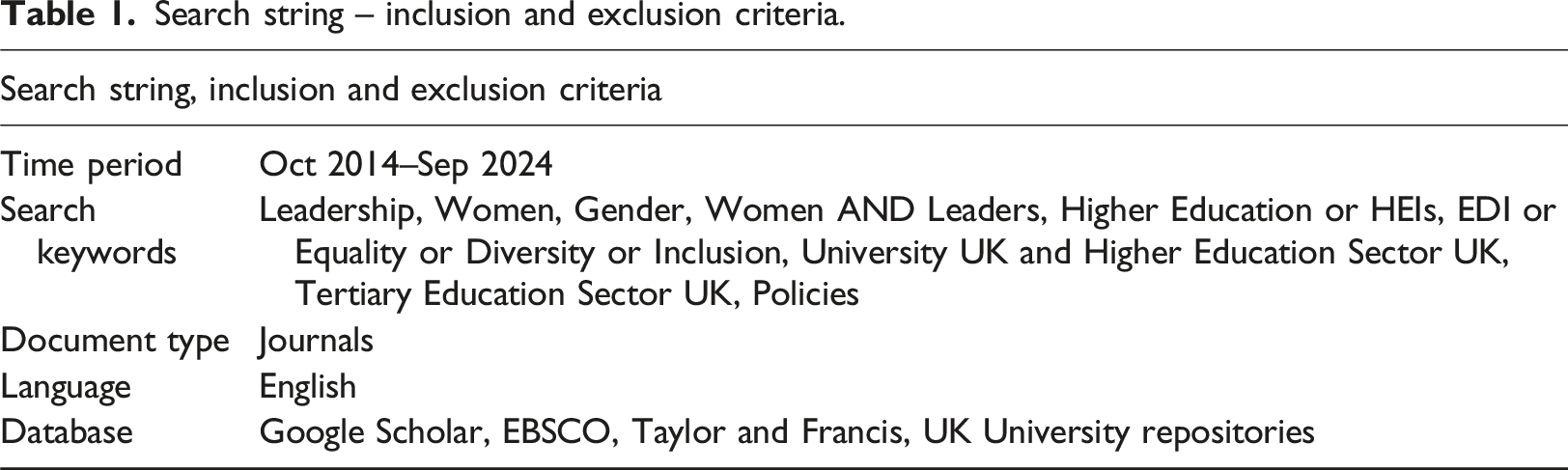
In recent years, many universities and colleges have implemented policies and initiatives aimed at promoting EDI, such as increasing the representation of underrepresented groups in leadership roles, developing a more diverse curriculum, and fostering a more inclusive campus culture. By prioritizing EDI, these institutions not only contribute to the creation of more diverse and inclusive communities but also prepare their students to become informed and engaged citizens in a rapidly evolving world. The literature indicates that EDI plays a critical role in leadership within higher education institutions (HEIs). By encouraging leadership positions that embrace EDI principles, creating inclusive campus environments, acknowledging the significance of intersectionality, and actively engaging in EDI promotion, institutional leaders can contribute to the development of a more equitable and inclusive society. Despite the growing body of research focused on the role of EDI in higher education leadership, several limitations remain, including insufficient systemic and institutional-level interventions, limited evaluation of existing initiatives, and a lack of attention to international perspectives. Bibliometric analysis can help address these shortcomings by identifying patterns and trends in the literature, revealing research gaps, and highlighting areas that warrant further exploration. This approach ultimately aims to enhance the overall understanding of EDI in higher education leadership (Figure 1, Tables 1–3). PRISMA flow diagram indicating reviewed literature for meta-synthesis. Search string – inclusion and exclusion criteria. SLR using PRISMA synthesized literature. Meta-synthesis using 56 articles.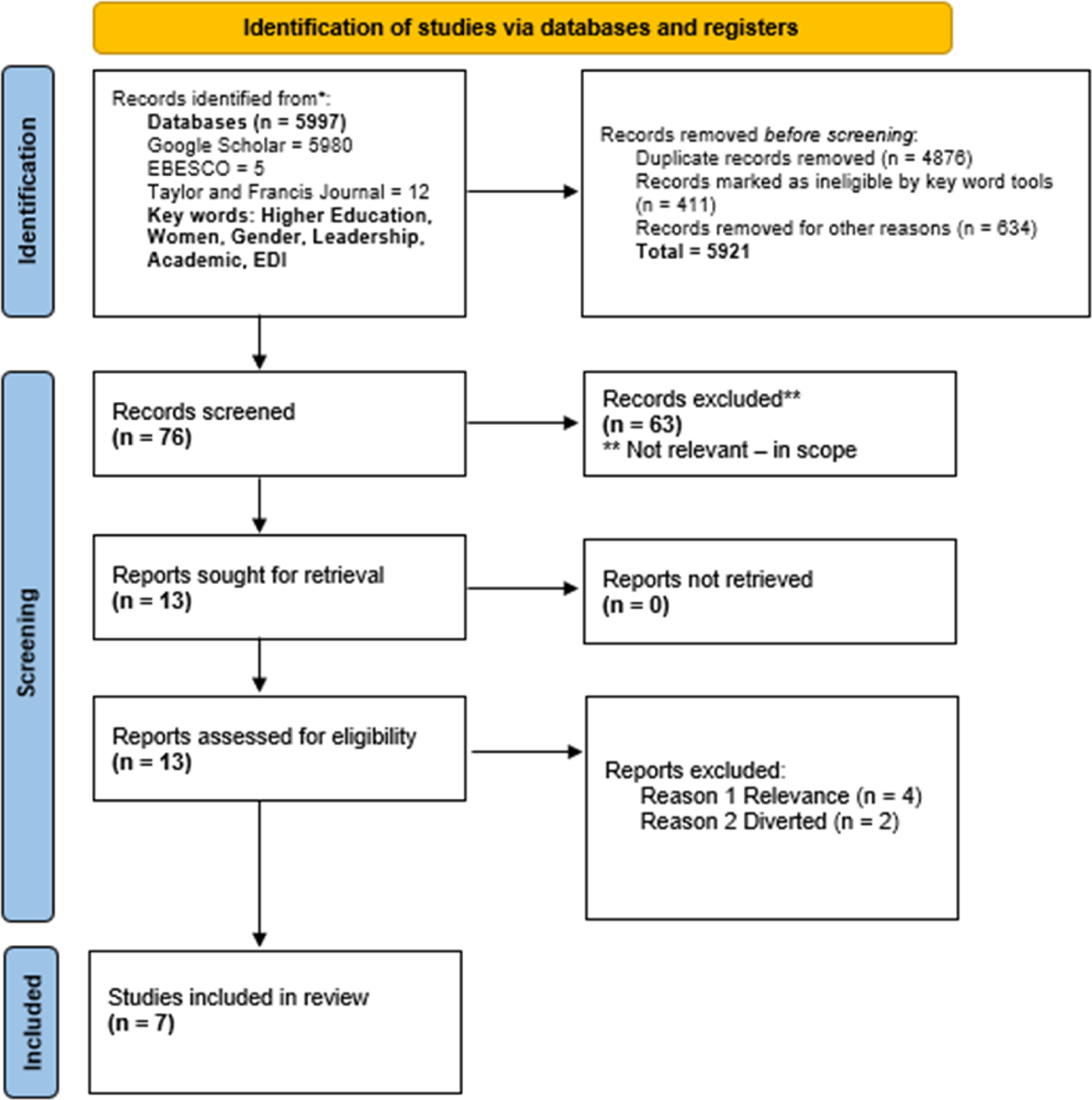
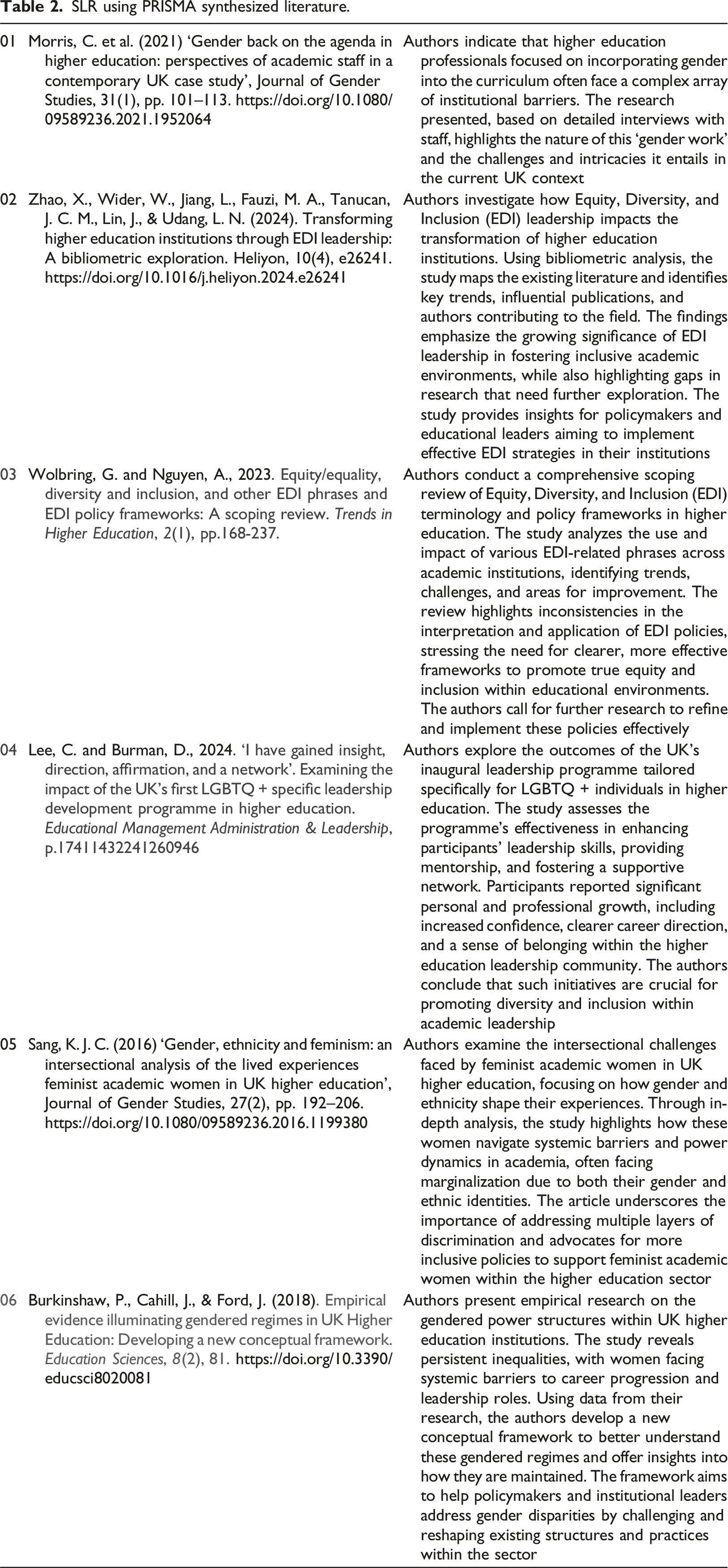

The wider review of literature highlights the complex institutional barriers faced by staff attempting to incorporate gender into the curriculum. Their study emphasizes the challenges inherent in ‘gender work’, suggesting that deeper structural changes are required in higher education to support these efforts. Similarly, Glasgow and Sang (2016) explores the intersectional experiences of feminist academic women, illustrating how gender and ethnicity interact to marginalize them within UK academia. This intersectionality underscores the need for more inclusive policies to address multiple layers of discrimination. Other studies focus on leadership and the impact of EDI initiatives. Zhao et al. (2024) conduct a bibliometric analysis of EDI leadership and highlight its critical role in transforming higher education institutions. They also identify gaps in research that need further exploration. Wolbring and Nguyen (2023) provide a scoping review of EDI-related terminologies and policy frameworks, noting inconsistencies and calling for clearer and more effective EDI policies to foster genuine inclusion. The role of specific leadership programmes is also examined, such as Lee and Burman (2024), who evaluate the UK’s first LGBTQ+ leadership development programme. The programme significantly improved participants’ leadership capabilities, sense of belonging, and career direction, suggesting the importance of such initiatives in promoting diversity within academic leadership. Finally, Burkinshaw et al. (2018) investigate the gendered power structures in UK higher education, offering a new conceptual framework to address and dismantle these systemic inequalities. Collectively, these studies emphasize the need for more refined and inclusive approaches to EDI, calling for policy changes and leadership initiatives to create more equitable academic environments (Figure 2). Theoretical Framework based on the findings.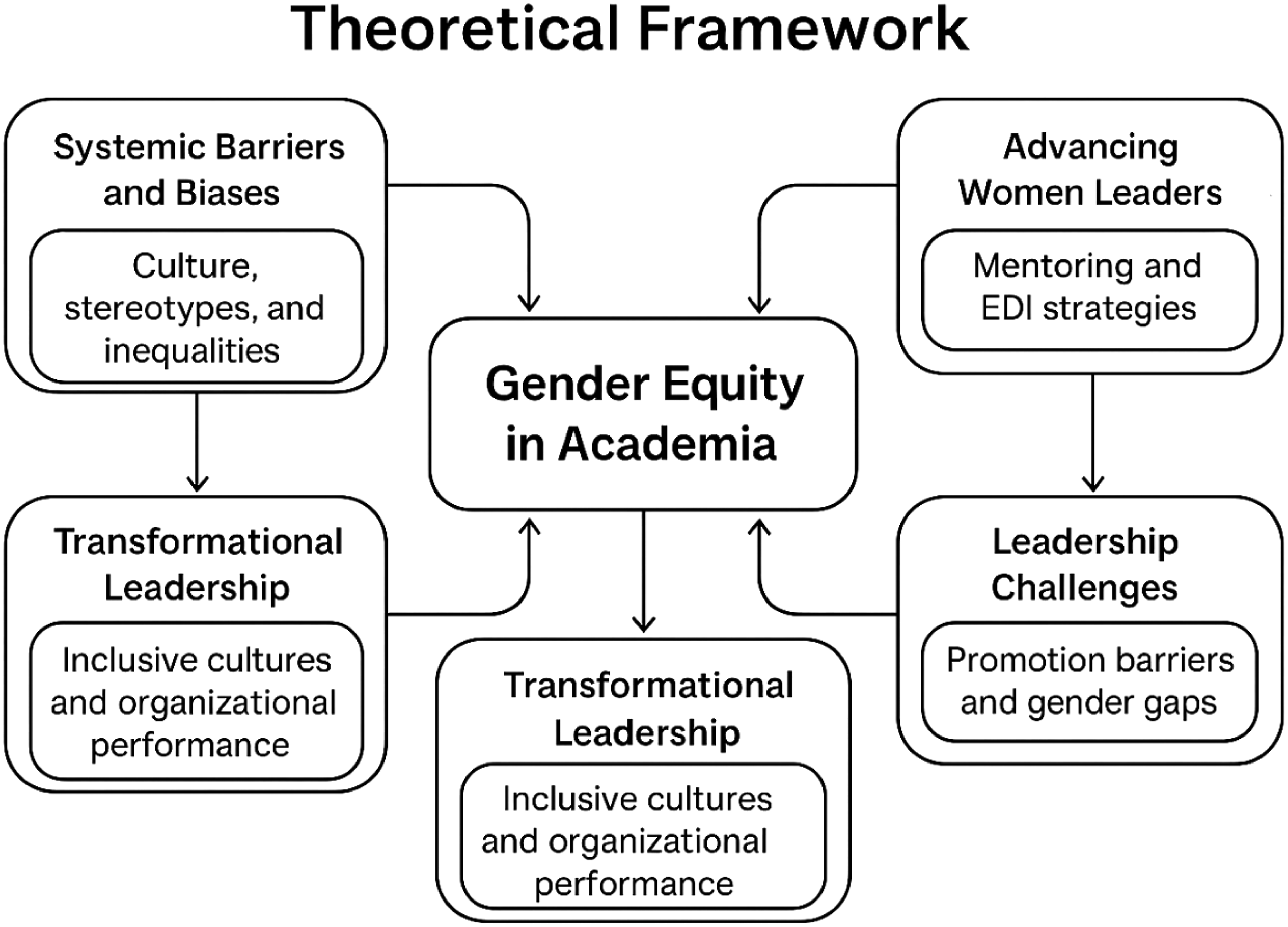
Persistent inequalities in UK higher education institutions
Despite ongoing efforts by individuals and organizations, significant inequalities persist within UK HEIs. Gender continues to influence career progression and pay in academia, with women underrepresented in senior leadership positions. Although the gender distribution of academic staff across all levels is relatively balanced (46% female, 52% male), the proportion of women in higher academic ranks remains low, with only 29% of professors being female in 2020–2021. This pattern extends beyond the UK, as women made up only about a quarter of professors in the EU in 2019. In contrast to the underrepresentation of women in senior academic roles, 57% of UK higher education students were female in 2020–2021.
Several barriers may contribute to the lower representation of women in top academic positions. A key factor is that women apply for promotions less frequently than men, partly due to lower confidence in their eligibility and a greater likelihood of working part-time. Women also tend to have higher teaching loads, face unconscious bias (Brown and Ralph, 2020), and are often disadvantaged by the structure of the university system itself. Developing and implementing equality, diversity, and inclusion (EDI) policies poses a significant challenge for higher education institutions both nationally and internationally. However, universities possess a unique capacity to advance knowledge and foster learning, positioning them well to support effective EDI initiatives. Pat O’Connor has adeptly illustrated the advantages of integrating experiential learning practices in higher education leadership with feminist scholarship (O’Connor, 2020). The intersection of policy, practice, research, and education is often fraught with complexities and can lead to discomfort. Much of the university research conducted on equality adopts a critical perspective, highlighting how dominant groups tend to structure organizations and relationships in ways that favour their own interests. This critical lens is vital, as it prompts necessary discussions about systemic inequalities and challenges the status quo, ultimately driving the evolution of more inclusive practices within higher education institutions. By fostering collaboration between research and practice, we can better understand the nuances of EDI and develop comprehensive strategies that not only address existing inequalities but also promote a culture of inclusivity and equity across the academic landscape.
Leadership styles and EDI implementation
Leadership plays a critical role in shaping organizational culture and decision-making, which directly impacts the effectiveness of EDI policies. Studies suggest that leadership styles, such as transformational, transactional, and laissez-faire, have different impacts on the adoption and success of EDI initiatives.
Transformational leaders inspire and motivate staff, creating inclusive cultures that value diversity. In contrast, transactional leaders may emphasize compliance, which could limit the development of authentic inclusivity. Laissez-faire leadership, characterized by a hands-off approach, may lead to a lack of commitment and direction in advancing EDI efforts.
Leadership commitment to diversity is essential for aligning EDI policies with institutional values, promoting a culture of inclusion. Researchers argue that leadership dedication is crucial for turning diversity goals into meaningful actions and policies that reflect true inclusivity.
Institutions with strong leadership support for diversity are more likely to implement comprehensive EDI policies addressing recruitment, promotion, and retention. Conversely, when leadership lacks commitment, institutions may struggle to bridge the gap between stated diversity goals and actual practices, hindering progress.
Employee satisfaction and performance
Leadership’s influence on staff satisfaction and performance, in the context of EDI policies, is crucial for institutional success. Transformational leadership has been linked to higher staff satisfaction, engagement, and commitment (Bass and Riggio, 2006). When leaders are seen as champions of diversity, staff members are more likely to feel satisfied with their work environment, fostering a positive climate.
Additionally, positive leadership behaviours can boost performance. A diverse and inclusive academic workplace, driven by strong leadership, can improve teamwork, creativity, and innovation, which enhances the institution’s overall success.
Although existing research provides valuable insights into the relationships between leadership, EDI policies, and outcomes in higher education, there are gaps. Limited studies have explored the nuanced effects of different leadership styles on EDI initiatives. Furthermore, few have examined how contextual factors like institutional size, cultural diversity, and geographic location affect these dynamics.
The role of leadership in shaping EDI policies and initiatives within higher education is complex. Transformational leadership appears to be a key driver in creating inclusive environments and promoting diversity. However, further investigation is needed to fully understand the interplay between leadership styles, organizational commitment, and their effects on staff satisfaction and performance.
This literature review provides a foundation for our systematic review and meta-analysis, which aims to contribute to the evolving conversation on leadership and EDI in higher education. By synthesizing existing research, we aim to offer practical insights for institutional leaders, policymakers, and scholars in the field.
Women in leadership positions play a crucial role in advancing equality, diversity, and inclusion (EDI) within higher education institutions. Their unique perspectives and experiences can significantly influence how policies are developed and implemented, helping to ensure that efforts to address inequalities are both meaningful and effective. Here are several ways in which women leaders can impact EDI initiatives:
Role modelling and representation
Women leaders serve as role models for both staff and students, demonstrating that women can occupy positions of power and influence within academia. Their presence in leadership roles can inspire other women to aspire to similar positions and advocate for their own career advancement. Representation matters, and when women see others like themselves in leadership roles, it can enhance their confidence and ambition, ultimately contributing to a more diverse leadership pipeline.
Challenging traditional norms
Women leaders can challenge traditional norms and practices that perpetuate gender and racial inequalities. They can advocate for policies that promote equity, diversity, and inclusion while questioning established practices that may favour dominant groups. By pushing back against the status quo, women in leadership can facilitate a cultural shift within their institutions, encouraging a more inclusive environment that values diverse perspectives.
Inclusive decision-making
Women leaders often bring a collaborative and inclusive approach to decision-making. This leadership style emphasizes consultation, participation, and the incorporation of diverse viewpoints, which can lead to more equitable policies and practices. By fostering an inclusive decision-making process, women leaders can ensure that the needs and concerns of marginalized groups are considered, helping to create a culture where everyone feels valued and heard.
Prioritizing EDI initiatives
Women leaders are often more attuned to issues of inequality and may prioritize EDI initiatives within their institutions. They can advocate for the allocation of resources to support EDI programmes, including training, mentorship, and outreach efforts aimed at underrepresented groups. By placing EDI at the forefront of institutional priorities, women leaders can help ensure that these initiatives receive the attention and support they need to succeed.
Building alliances and networks
Women leaders can leverage their positions to build alliances and networks that promote EDI across their institutions and beyond. By collaborating with other leaders, faculty, and community organizations, they can create a unified front to address systemic inequalities. These alliances can amplify efforts to advocate for policy changes and raise awareness of EDI issues, fostering a more comprehensive and sustained approach to inclusivity.
Data-driven approaches
Women leaders can emphasize the importance of using data to inform EDI initiatives. By advocating for the collection and analysis of data related to gender and racial disparities within their institutions, they can help identify areas for improvement and measure progress over time. Data-driven decision-making allows institutions to adopt targeted strategies that effectively address the specific needs of diverse populations.
Creating supportive policies
Women in leadership positions are often more likely to recognize the challenges faced by women and other marginalized groups within academia. They can advocate for policies that support work–life balance, such as flexible working arrangements and parental leave, which can help retain female talent in academia. By creating supportive policies that address systemic barriers, women leaders can contribute to a more equitable academic environment.
Facilitating cultural change
Women leaders can be powerful agents of cultural change within their institutions. By promoting values of equity, diversity, and inclusion, they can help shift the institutional culture to one that prioritizes inclusivity. This cultural change is essential for creating an environment where all individuals feel empowered to contribute and succeed, ultimately fostering a more innovative and dynamic academic community.
The impact of women in leadership positions on EDI initiatives in higher education cannot be overstated. Their leadership can challenge existing norms, promote inclusive practices, and advocate for systemic change. By embracing their roles as change agents, women leaders can help create academic institutions that not only reflect the diversity of the communities they serve but also cultivate an environment where every individual can thrive. This transformative approach is essential for dismantling the structural barriers that perpetuate inequality and for ensuring a more equitable future in higher education.
Methodology
The systematic review adhered to the Preferred Reporting Items for Systematic Reviews and Meta-Analyses (PRISMA) guidelines, ensuring transparency, rigour, and reproducibility throughout the review process (Moher et al., 2009). PRISMA provided a structured framework for conducting and reporting the review and meta-analysis, guiding the identification, screening, eligibility, and inclusion of studies for the final synthesis.
A comprehensive search strategy was developed to locate relevant studies from electronic databases such as Google Scholar, EBSCO, Taylor and Francis, Scopus. Search terms included variations of women, leadership, equity, diversity, and inclusion, and higher education. The search was conducted up to 2023 to ensure the inclusion of the most recent and pertinent literature. Studies were selected if they explored the relationship between leadership styles and the development, implementation, or impact of EDI policies and initiatives in the hospitality industry. Various research designs, including qualitative, quantitative, and mixed-methods studies, were considered. Articles not written in English, duplicates, and studies with insufficient information were excluded. The author independently reviewed and conducted the initial screening based on titles and abstracts, followed by a full-text review of potentially eligible studies. Any disagreements were resolved through discussion, with a third reviewer consulted when necessary. Final study selection was based on relevance to the research question and adherence to the inclusion criteria.
Data extraction was carried out independently by the author using a standardized form, capturing key details such as study characteristics (e.g., author, publication year, and design), participant demographics, leadership styles assessed, EDI policies and initiatives, and relevant outcomes. This systematic approach aimed to gather essential information for subsequent analysis.
The quality of the included studies was evaluated PRISMA Technique and rigorous reading to critically review the publications. The author independently reviewed and assessed each study for methodological rigour, internal validity, and potential biases.
Evidence was synthesized through a narrative summary of findings and a meta-analysis where appropriate. The narrative synthesis highlighted key themes and patterns across studies, while the meta-analysis used statistical methods to quantitatively analyze and combine relevant data from selected studies.
Subgroup analyses were performed to examine differences in leadership styles, EDI policies, and outcomes. Sensitivity analyses were also conducted to evaluate the impact of study quality on the overall results, aiming to strengthen the robustness and generalizability of the findings.
As the review and meta-analysis involved existing literature, ethical approval was not required. However, ethical considerations, such as ensuring the confidentiality and anonymity of study participants, were maintained in the reporting and interpretation of findings.
Finding and discussion
In recent years, there has been an increasing acknowledgment of the significance of equity, diversity, and inclusion (EDI) within the realm of leadership in Higher Education Institutions (HEIs). EDI leadership plays a crucial role in shaping the educational experience of college students and the management of these institutions by promoting a culture that values individuals for their unique attributes and capabilities. This type of leadership ensures that policies and practices are established to offer equal opportunities to all students, regardless of their backgrounds. As a result, a diverse intellectual community is cultivated, allowing students to learn from various perspectives, thereby enriching their educational journey, encouraging critical thinking, and preparing them for a globalized world.
Positive impact of transformational leadership in higher education
Our review highlights the significant positive impact of transformational leadership within the higher education sector, particularly when it comes to the development and implementation of Equity, Diversity, and Inclusion (EDI) policies. Transformational leaders, especially women in leadership roles, have shown a remarkable ability to inspire and motivate staff, creating inclusive institutional cultures that value diversity. These leaders align EDI initiatives with the core values of their institutions, fostering environments where equity, diversity, and inclusion are actively promoted rather than seen as compliance measures. Women transformational leaders often go beyond conventional managerial duties by engaging staff in a collective vision that emphasizes EDI principles. This approach makes diversity and inclusion a central part of the institution’s culture, promoting lasting change. Under such leadership, higher education institutions are not only more likely to implement strong EDI policies but also to demonstrate a sustained commitment to building diverse, equitable academic environments.
Variability in the impact of transactional and laissez-faire leadership
Our analysis reveals that transactional and laissez-faire leadership styles have a more variable impact on EDI efforts in higher education. Transactional leadership, which focuses on compliance and performance-based rewards, can sometimes help meet specific diversity goals. These leaders often create structured environments with clear expectations, which can support diversity initiatives. However, transactional leadership may not fully engage staff with the deeper cultural shift needed for long-term change in diversity and inclusion efforts. On the other hand, laissez-faire leadership, which involves a more hands-off approach, has shown mixed results. In some cases, this style can hinder the progress of EDI initiatives due to a lack of direction and commitment. However, in certain academic contexts, it may allow for grassroots diversity efforts to emerge, giving staff more autonomy to develop inclusion strategies. Overall, the effectiveness of these leadership styles depends on the specific institutional culture and the leadership’s dedication to EDI goals.
Leadership commitment as a driving force
The commitment of women leaders to diversity and inclusion plays a crucial role in shaping EDI policies within higher education. Leaders who demonstrate a strong, ongoing dedication to promoting diversity are more likely to drive the development and implementation of effective EDI initiatives that go beyond surface-level compliance. This commitment is often reflected in concrete actions such as inclusive hiring practices, the promotion of underrepresented groups, and the strategic allocation of resources to support diversity initiatives. Women leaders who are deeply committed to EDI create environments where diversity becomes a shared value throughout the institution. Their leadership sets the tone for sustained progress, helping to break down barriers and fostering an academic culture that values the contributions of all members of the institution.
Positive associations with employee satisfaction and performance
Leadership that actively supports EDI efforts has a direct and positive impact on employee satisfaction and performance within the higher education sector. Staff who view their leaders as advocates for diversity are more likely to report higher levels of job satisfaction, engagement, and a sense of belonging. Inclusive leadership fosters a culture of psychological safety, allowing individuals to express their diverse perspectives without fear of judgment or exclusion. In addition, this inclusive environment leads to improved collaboration, creativity, and problem-solving, all of which enhance overall institutional performance. Women leaders who promote diversity and inclusion create supportive workplaces where staff feel valued and motivated, ultimately contributing to the success and growth of the institution.
The underrepresentation of women in senior academic management remains an ongoing issue despite various gender equality initiatives. A key factor in this imbalance is the idea of ‘missing agency’, which refers to the perceived lack of self-confidence, ambition, or proactive career management among women, leading to fewer female candidates for top positions. While academia emphasizes individual responsibility for career advancement, this narrative often overlooks structural inequalities, such as gender bias and institutional barriers, that disproportionately affect women’s progression. Women’s reluctance to pursue senior roles is often framed as a personal deficiency, but it is also linked to a lack of encouragement, systemic biases, and the institutional culture that favours traditionally masculine traits like assertiveness and self-promotion. Without adequate mentorship, external validation, and policies that accommodate work–life balance, women may feel ambivalent or resistant towards leadership positions, viewing them as incompatible with their academic values or personal lives. Addressing these challenges requires institutions to recognize and dismantle structural barriers, foster inclusive leadership styles, and provide mentorship and sponsorship programmes to support women’s career advancement.
Women’s missing agency in academic careers
Despite concerted efforts by academia to promote gender equality, women are still underrepresented in senior management positions. A key concept to explain this persistent imbalance is the ‘lack of agency’. The term refers to the perceived lack of self-confidence, ambition, or proactive career management of women in academia, which can lead to fewer female applicants for senior management positions. While academic cultures often emphasize individual agency and personal responsibility for career advancement, this approach often ignores the structural barriers and gender biases that affect career advancement.
The individualistic nature of an academic career
The structure of an academic career places a heavy burden on individual agency. Academics should be self-driven and manage all aspects of their careers – from research and publication to networking and receiving grants. This emphasis on self-reliance is seen as a sign of professional competence. As noted by Coate et al. (2015), the focus on personal responsibility reinforces the idea that professional success depends entirely on individual effort and initiative. The widespread belief is that those who work hard and take charge of their careers will inevitably succeed. However, this narrative often masks systemic inequalities that disproportionately affect women’s career trajectories.
In an environment where self-management and individual agency are highly valued, women who do not advance to senior management positions are often perceived as lacking the necessary motivation or ambition. This perception creates a misconception that the underrepresentation of women in leadership roles stems from personal failures rather than institutional deficiencies. As a result, the burden of career stagnation falls squarely on the shoulders of women, while institutional and systemic barriers remain unresolved.
Lack of agency and structural impairments
The concept of ‘lack of agency’ often manifests itself in the perception that women in academia lack self-confidence or ambition. Many women may feel that they do not have the qualifications or experience required to apply for senior management positions. This self-doubt is further amplified by academic culture, which tends to associate leadership potential with self-promotion and self-confidence – qualities that may be at odds with the way some women choose to present themselves.
However, it is an oversimplification to attribute women’s reluctance to senior positions solely to a lack of self-confidence. The underrepresentation of women in leadership is also affected by structural barriers, including gender bias, discriminatory practices, and a lack of support networks. Research by Chesterman et al. (2005) found that many senior female academics were hesitant to apply for managerial positions without explicit encouragement from their peers or superiors. This hesitation is not just a reflection of self-doubt, but is also associated with a broader ambivalence, if not resistance, towards senior management positions. Expecting women to navigate their careers without external support, while ignoring the systemic barriers they face, only perpetuates their belief in a lack of agency.
In many cases, women’s reluctance to take on senior management positions can be attributed to the institutional culture of academia. Traditionally, senior management roles have been defined by traits such as assertiveness, competition, and self-promotion, all of which are often associated with male leadership styles. Women who don’t embody these characteristics, or who prefer a more collaborative and inclusive approach to leadership, may feel like they don’t fit into the senior manager’s model. This mismatch between individual leadership styles and institutional expectations often discourages women from seeking leadership positions – not because they lack ambition, but because they feel that these roles are incompatible with their values.
The role of encouragement and recognition
One of the key factors in determining whether a woman applies for a senior management position is the presence or absence of external recognition. Chesterman et al. (2005) highlight that many women are hesitant to pursue these roles unless they are explicitly encouraged or endorsed by a colleague or supervisor. While this reliance on external recognition is not unique to women in academia, it is more pronounced in settings where women are underrepresented and leadership roles are traditionally dominated by men.
The lack of self-confidence of some female academics often reflects the broader institutional and cultural biases they have encountered throughout their careers. Women may internalize social messages that they are not suitable for leadership roles, especially if they do not receive the same level of encouragement and guidance as their male counterparts. This dynamic creates a self-reinforcing cycle: women are less likely to apply for leadership positions due to a lack of confidence, and their absence from these positions reinforces the perception that they are not suitable for leadership. The expectation that women should seek external recognition before considering leadership roles reveals deeper issues in academic culture. While men are often socialized as confident and assertive in their pursuit of career advancement, women are more likely to tend to be cooperative and self-deprecating. This difference in socialization leads to differences between men and women in how leadership opportunities are obtained. Men may be more inclined to assert their qualifications and actively seek leadership roles, while women may wait for others to recognize their potential.
Contradictions and resistance to senior management roles
Another important factor contributing to the underrepresentation of women in senior management is the ambivalence, if not outright resistance, of many women to these roles. Chesterman et al. (2005) observed that senior female academics were often hesitant to apply for managerial positions, not only because of self-confidence issues, but also because of a lack of desire for the role itself. This reluctance is often rooted in the perception that senior management positions are too time-consuming, stressful, and at odds with the values that initially attracted women to academia.
For many female academics, the idea of taking on senior management roles may seem unappealing, especially when those positions are perceived to require a vastly different set of academic interests. Women who are passionate about teaching and research may resist taking on leadership positions that are primarily administrative or bureaucratic in nature. This reluctance is further exacerbated by the perception that senior management positions are not designed to meet the needs of work–life balance, a challenge that disproportionately affects women.
The impact of institutional culture on women’s agency
Institutional culture plays a crucial role in shaping women’s perceptions of leadership and their willingness to pursue senior management positions. In an academic environment that emphasizes traditional hierarchical leadership models, women may feel intimidated to seek leadership positions. Conversely, institutions that promote inclusive, collaborative, and flexible leadership models are likely to be more successful in encouraging women to take up senior management positions.
The way in which female agency is perceived and evaluated is also influenced by institutional culture. In an environment where leadership is associated with self-confidence and competitiveness, women who adopt a more collaborative leadership style may be seen as lacking the ambition or drive needed to succeed in a management position. This misalignment between individual leadership styles and institutional expectations can lead to the perception that women are less suitable for leadership roles, even if they have the necessary skills and qualifications.
Strategies to address the absence of agents
Addressing the problem of agency absence requires a multifaceted approach that addresses both personal and structural barriers. Institutions must take proactive steps to create a more supportive and inclusive environment for women, recognizing and valuing different leadership styles, while providing women with the necessary resources to take on senior management roles.
In this regard, mentoring and sponsorship programmes are essential. Women need mentors who can guide them through the complexities of their careers, as well as sponsors who actively advocate for them in leadership positions. Mentorship helps women develop the skills and confidence they need to pursue senior positions, while sponsorship ensures they receive the visibility and support they need to succeed.
In addition, institutions must work to remove the structural barriers that lead to underrepresentation of women in senior management. This includes addressing gender bias in the recruitment and selection process, creating flexible work environments that support work–life balance, and promoting family-friendly policies.
The notion of a lack of agency in women’s academic careers highlights the tension between individual responsibility and structural inequalities. While women are often expected to manage their own career development independently, the institutional barriers they face make it challenging to fully assert their agency. By recognizing and addressing these structural challenges, organizations can create a more equitable environment that supports and encourages women to take on senior management roles. This will not only improve the gender balance in leadership but will also enrich the academic culture by fostering a diverse and inclusive leadership model.
Limitation
The study’s limitations include a potentially limited synthesis as the body of knowledge lacks substantial study on this topic. Diversity may not have been captured as the varied experiences of women across different institutions and contexts need to be reviewed. Its geographical focus on the UK may restrict the applicability of findings to other regions, while the reliance on qualitative interviews could introduce bias and reflect subjective experiences. The study primarily addresses gender without fully considering the intersectionality of other identities that influence women’s experiences in academia. The absence of quantitative data limits the generalizability of results.
Conclusion
This systematic review and meta-analysis provide a comprehensive understanding of the intricate relationship between leadership styles and the development, implementation, and impact of Equity, Diversity, and Inclusion (EDI) policies within higher education, particularly with a focus on women leadership. Drawing from a synthesis of diverse studies, several key insights emerge that shape our understanding of how leadership fosters inclusive academic environments. The review highlights the powerful influence of transformational leadership, especially by women in leadership roles, on the creation and execution of EDI policies. Transformational leaders, through their ability to inspire, motivate, and create shared visions, play a pivotal role in fostering inclusive cultures that resonate with the core values of higher education institutions. Women leaders who adopt this approach go beyond traditional administrative duties, engaging faculty, staff, and students in a collective mission that places EDI principles at the heart of institutional practices. The analysis also reveals variability in the impact of transactional and laissez-faire leadership styles on EDI initiatives. While transactional leadership, which focuses on compliance and reward-based mechanisms, may support certain aspects of EDI implementation, its effectiveness is highly dependent on the institutional context. Similarly, laissez-faire leadership, characterized by its hands-off approach, shows inconsistent results in promoting diversity and inclusion, further emphasizing the need for a thoughtful consideration of leadership styles in diverse academic settings. The study underscores the importance of leadership commitment, especially among women leaders, as a critical driving force behind institutional dedication to diversity. Institutions led by leaders with a strong, visible commitment to EDI are more likely to implement comprehensive and sustained diversity initiatives, translating this commitment into both rhetoric and actionable policies. The positive associations between effective leadership and favourable outcomes for staff and students reinforce the significance of leadership in cultivating inclusive academic cultures. Women leaders who advocate for diversity and inclusion contribute to higher levels of job satisfaction, engagement, and collaboration among faculty and staff, thereby enhancing creativity, teamwork, and overall institutional success.
This study enriches the conversation around leadership and EDI within higher education, offering practical insights for institutional leaders, policymakers, and scholars. Recognizing the vital role of leadership, particularly women in leadership positions, in shaping EDI policies is essential for institutions seeking to thrive in today’s evolving academic landscape. The findings encourage further exploration of contextual factors that influence leadership effectiveness and the development of targeted strategies to enhance diversity and inclusion within higher education. These studies emphasize the need for more refined and inclusive approaches to EDI, calling for policy changes and leadership initiatives to create more equitable academic environments. Inequality and the lack of inclusion of women in academic higher education (HE) leadership roles persist globally. While inclusivity at the top also applies to ethnicity and disability, this article focuses specifically on the issue of gender. It highlights the distinct need to examine the barriers that slow down and obstruct women from advancing in academia and gaining leadership positions. To address these challenges effectively, this study calls for the development of a charter aimed at promoting gender equity in academic leadership. This charter would serve as a framework for institutions to implement targeted strategies and commitments to enhance women’s representation and participation in leadership roles within higher education. To examine this underrepresentation, the study explored both the opportunities available to women and the barriers they face in advancing into leadership roles. Key barriers identified include societal perceptions of women in leadership within higher education and the influence of organizational cultures. This study holds importance for women aspiring to leadership roles and for those already in such positions who continue to face organizational biases and limited opportunities.
Footnotes
Declaration of conflicting interests
The author declared no potential conflicts of interest with respect to the research, authorship, and/or publication of this article.
Funding
The author received no financial support for the research, authorship, and/or publication of this article.
