



Abstract
The Scottish legal profession has a low representation of disabled solicitors. This study, based on interviews with disabled solicitors, reveals that many with non-visible disabilities avoid disclosing their conditions due to fear of discrimination. Obtaining reasonable adjustments, particularly those affecting work hours and performance targets, can be challenging. Instances of bullying, where colleagues view adjustments as privileges, lead to isolation and a lack of belonging. The profession must enhance accessibility and dismantle barriers. Tailored reasonable adjustments are essential, with solicitors central to the process to ensure appropriateness. Fostering a sense of belonging and community is crucial. The study highlights a negative culture towards disabled employees, stressing the need for an inclusive environment. Education and professional development on disability equality, provided by the Law Society of Scotland and employers, should be co-created by solicitors with lived experience. Proactive measures to support disabled solicitors will enhance diversity and inclusivity in the profession.
Introduction
The Scottish legal profession has a low number of disabled solicitors. This paper investigates whether employers are implementing the duty to make reasonable adjustments and if these adjustments effectively support and protect disabled solicitors from discrimination. Interviews with disabled solicitors reveal that many with non-visible disabilities avoid disclosing their conditions due to fear of career impact and stigma. Obtaining reasonable adjustments, especially for working hours, targets, and billable hours, is challenging. Instances of bullying related to reasonable adjustments lead to feelings of isolation and a lack of belonging. The paper concludes that the legal profession must foster an inclusive culture where solicitors’ needs are supported, and they feel a sense of belonging. It will frame the context of the Scottish legal profession, discuss the study’s methods, provide a literature review, discuss the findings, and conclude with implications for the future.
Framing the context
According to the most recent demographic data from the Law Society of Scotland (Law Society of Scotland, 2023). Only 5% of the legal profession comprises disabled solicitors, highlighting a notable underrepresentation of people with disabilities in the Scottish legal profession. A person is considered to have a disability if they have a physical or mental impairment that impacts their ability to perform everyday activities. The effects of the impairment must be substantial and long-term (Equality Act 2010, n.d: s.6 (1)(a)-(b)).
In Scotland, there are over 13,000 solicitors (Law Society of Scotland, 2025a). As of 31 October 2024, there are 1044 practice units in Scotland (Law Society of Scotland, 2025a). The overall demographics of the legal profession are below (Figure 1). Law society of Scotland’s diversity data 22/23.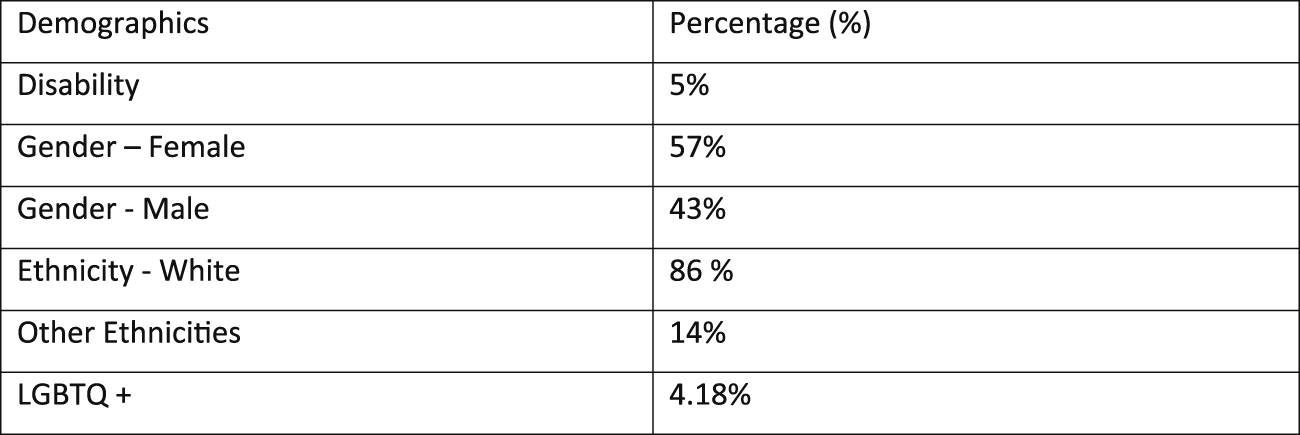
The data above was generated from the practising certificate renewal and is completed by 80% of the membership (Law Society of Scotland, 2023).
Routes to qualification as a solicitor in Scotland
The standard route to qualifying as a solicitor in Scotland is to have a qualifying law degree (LLB). The LLB with Honours takes 4 years to complete (Law Society of Scotland, 2025c). After graduating with a LLB degree, a law graduate must complete the postgraduate Diploma in Professional Legal Practice and then a traineeship with a law firm or a public sector or third sector organisation (Law Society of Scotland, 2025b; 2025d). The traineeship lasts 2 years, and after completion, an individual would become a fully qualified solicitor (Law Society of Scotland, 2025d).
Methods and Methodology
This study aimed to understand the reasonable adjustment duty under the Equality Act 2010 and its practical application, collecting data through qualitative interviews with disabled solicitors. The University of Dundee’s School of Social Sciences Research Ethics Committee granted ethical approval on 3 December 2019, and the interviews commenced in January 2020. Due to the COVID-19 pandemic, the interviews were conducted via Microsoft Teams.
The interviews were recorded and lasted 1 hour and were in-depth semi-structured interviews with solicitors and students. The semi-structured interviews allowed the interviewees to share their experiences of working and what it was like to be a disabled solicitor within the profession. The students were recruited for the study to analyse the transition from university to a role within the legal profession, which is out of the scope of this article. The semi-structured interviews enabled the interviewees to ‘share their story and provide an experiential narrative’ (Galletta, 2012) and allowed the researcher to ensure clarity and ask for further details.
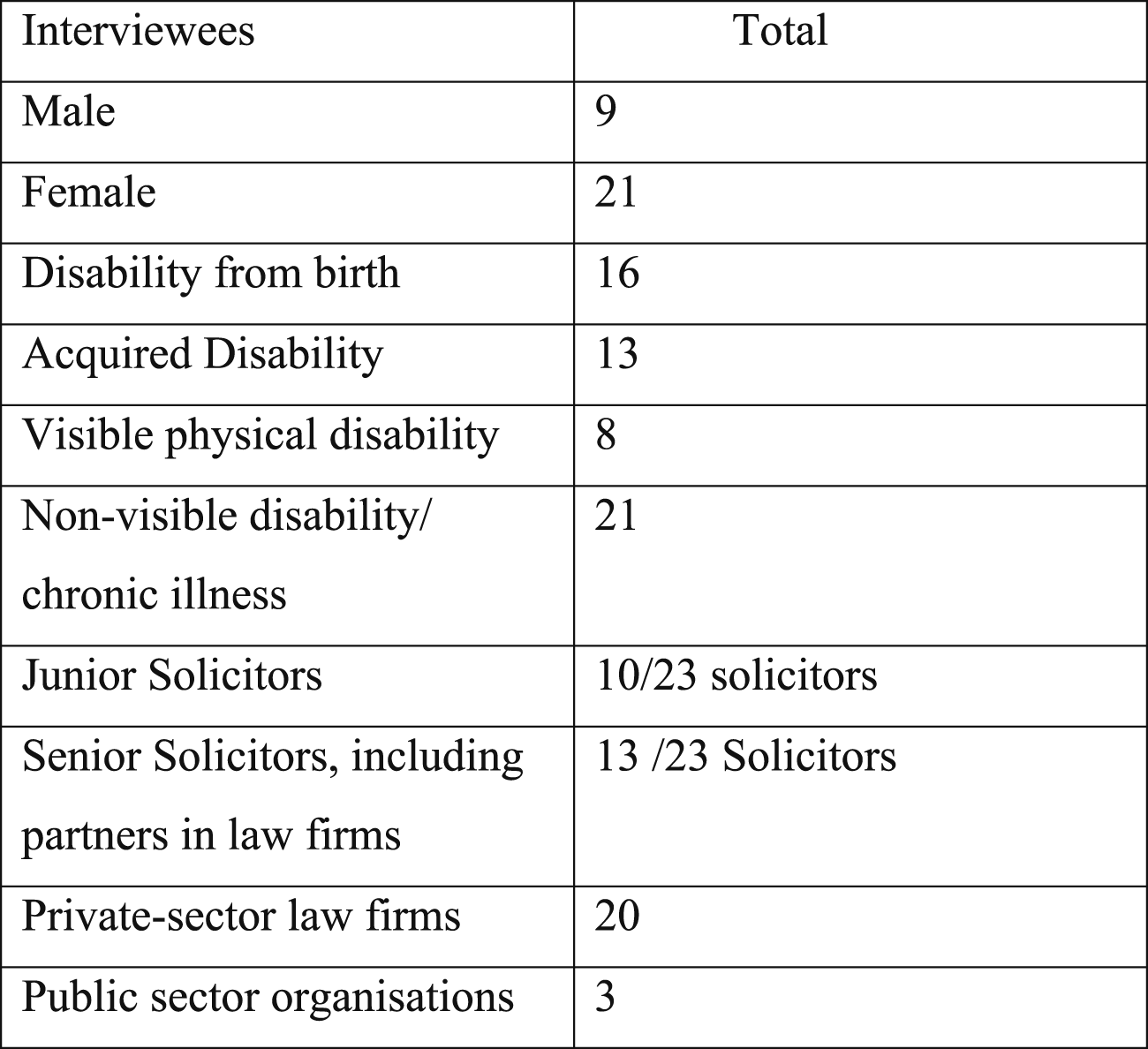
The table below shows who was interviewed and the total number of interviewees. Given the small population of disabled solicitors in Scotland and the small sample involved in the study, data protection laws do not permit the researcher to provide granular details about the protected characteristics of the interviewees and other demographic information, as this could lead to their identification. A study with a larger sample size would enable further investigation of these issues. Adhering to strict anonymity was a condition of the researcher’s ethical approval. Moreover, this is why the researcher adopted numerical labelling of the interviewees (Figures 2 and 3. Participant numbers and who was interviewed. Interviewee profile.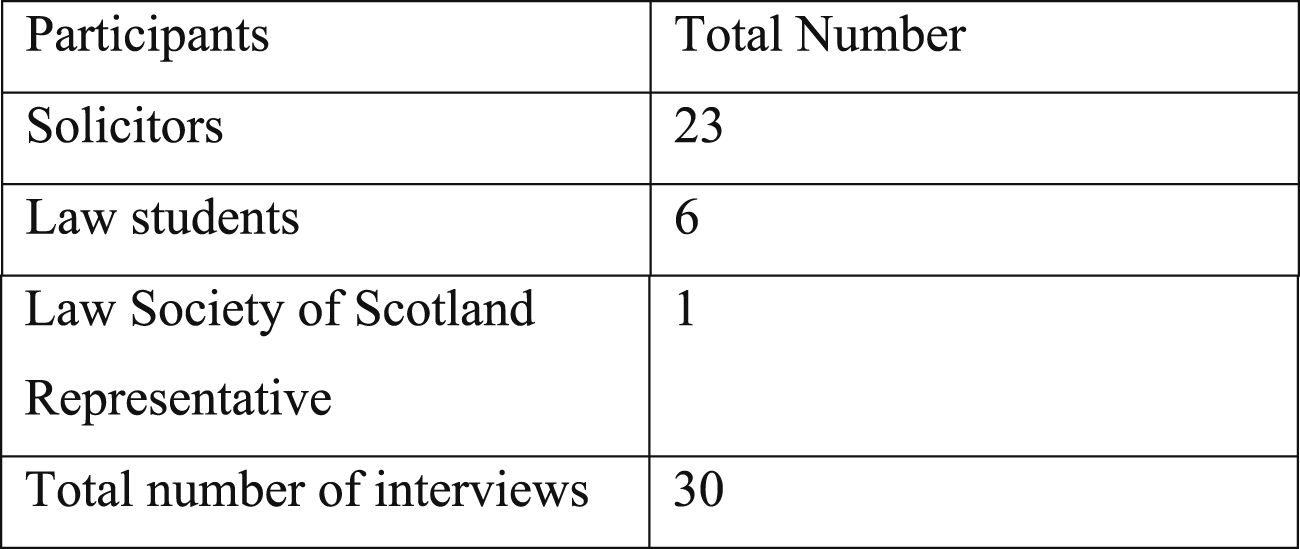
Law students were included in the study to explore the barriers they experience when transitioning from higher education to the legal workplace.
Data Analysis
The data was analysed using thematic analysis (Braun and Clarke, 2006) and using thematic coding in Nvivo.
Contribution to Knowledge
This study contributes to existing knowledge, as the analysis of the data reveals several factors that create barriers for disabled solicitors working in the Scottish Legal Profession. It was necessary to conduct this study because there was no research on the experience of disabled lawyers in the legal profession in Scotland. It is also essential to know if any barriers differed from those in the Legally Disabled study in England and Wales (Foster and Hirst, 2020, 2022). Although the researcher did not identify any unique barriers, the research substantiates previous findings from both the United Kingdom and internationally. This research adds to the wider context of the same systemic problems and structural ableism being experienced by disabled lawyers in other jurisdictions around the world. The researcher also contributes to the existing knowledge of implementing reasonable adjustments and the barriers experienced by disabled people in the workplace. The findings of this study offer valuable insights for employers seeking to enhance their support for disabled employees, both within the legal profession and across other sectors, by identifying actionable lessons that can inform inclusive workplace practices.
Literature Review
Requests for reasonable adjustments and negotiations with their employer
The Equality Act 2010 places a duty on employers to make reasonable adjustments to workplace policies, any physical features in a building that impede access or supply equipment or technology that would support a disabled person’s needs (Equality Act 2010, n.d: s.20, s.21).
Reasonable adjustments are a legal duty which reflects the Social Model of Disability (SMD). The SMD argues that disabled people encounter societal barriers which cause their disability, not their impairment (Oliver and Barnes, 2012: 175–176). These barriers can be physical, attitudinal, and environmental (Oliver and Barnes, 2012: 175–176). Good reasonable adjustments should remove the disadvantage created by these barriers (Equality Act 2010, n.d: s.20, s.21).
The employer has to know or ought to know about the employee’s disability (Equality Act 2010, n.d: sch 8 para 2 (1)(b)). Where there is a negative culture towards disability in the workplace, disabled employees, especially if they have a non-visible disability, might not disclose their disability (Foster and Hirst, 2022: 357–358; Santuzzi and Keating, 2020: 331–332). If they do not disclose, then they will not be entitled to reasonable adjustments, and this can cause the employee to struggle with their duties and concealment can cause stress, burnout, and low self-esteem (Santuzzi and Keating, 2020: 332–333).
Negotiations for reasonable adjustments can be challenging for a disabled employee, and securing effective adjustments depends on the employee’s manager being supportive (Foster, 2007: 78–79). It is also vital that the disabled person is asked about their needs and how they can be supported (Foster, 2007: 79–80). It has been described as a ‘lottery’ as to whether disabled people receive good, reasonable adjustment support from their employer (Foster, 2007: 79–80). It has been emphasised that organisations should move away from seeing disabled people as a ‘problem’ or as a ‘deficient employee’ and organisations should work with them to negotiate reasonable adjustments (Foster, 2007: 79). It is also clear that disabled professionals, such as accountants, find it hard to negotiate reasonable adjustments without it affecting their career progression, for example, adjusting long working hours (Duff and Ferguson, 2011). The accountancy firms saw adjustments as a problem rather than a supportive mechanism (Duff and Ferguson, 2011). Moreover, they used the client and business need to ‘legitimise discrimination’ (Duff and Ferguson, 2011). The marginalisation and underrepresentation of doctors is a systematic problem within the medical profession (Bulk et al., 2017; Shrewsbury, 2015: 91–93) and aligns with the barriers discussed in Foster’s research (Foster, 2007).
Barriers that disabled solicitors encounter in the legal profession
A leading study was conducted with disabled solicitors in England and Wales (Foster and Hirst, 2020). It was found through interviews with disabled solicitors that many disabled solicitors concealed their disability. This was due to the negative perceptions surrounding disability that existed within the legal profession. Disabled solicitors were frightened of the negative impact it could have on their careers because of ‘misplaced paternalism’ and discrimination. Misplaced paternalism is where non-disabled people who hold senior positions in the organisation underrate the abilities of a disabled solicitor and put in place reasonable adjustments that they think would be helpful, but have an adverse effect on a disabled solicitor’s career. These adjustments are not discussed with the disabled solicitor. Often, a disabled solicitor is not offered career opportunities because of misplaced paternalism. Misplaced paternalism reflects the medical model of disability, where disability is seen as something to be fixed and a ‘personal tragedy’ (Foster and Hirst, 2022: 455–456; Shakespeare, 2014: 85). The study also found that working practices in the legal profession presented a challenge and, in some cases, were a barrier to working in the legal profession (Foster and Hirst, 2020: 42–43). The main barriers were targets in the form of billable hours and the expectation from senior colleagues that solicitors will work long hours and out of office hours (Foster and Hirst, 2020: 42–53). Disabled solicitors were hesitant to request reasonable adjustments to their working hours or targets, as their line manager might perceive this as the solicitor failing to meet the role’s requirements and deny the request (Foster and Hirst, 2020: 48, 50). Again, misplaced paternalism plays its part here, and inappropriate reasonable adjustments may be implemented.
Another important issue discussed was the ill treatment and cases of bullying of disabled solicitors. The ill treatment and bullying were rarely concerning the solicitor’s disability but were due to ‘jealousy’ over the reasonable adjustments that the disabled solicitor was receiving (Foster and Hirst, 2020: 78–79). It has been noted that senior colleagues and peers perceive a disabled person as being ‘difficult’ when making these requests (Foster and Hirst, 2020: 78–79). This situation reflects the ableist assumptions made by a disabled solicitor’s colleagues. It is argued that colleagues found it difficult to understand that reasonable adjustments involve treating a disabled person more favourably to support their needs (Foster and Hirst, 2020: 78–79, 2022: 466). The reasonable adjustment is a legal duty unique to disability and not present among other protected characteristics (Lawson, 2011: 359–360). Employers and employees often do not understand that this mechanism is to support the disabled solicitor and to rectify the disadvantage they are experiencing. Bullying and ill treatment is one of the factors that lead to the low representation of disabled solicitors in the legal profession in England and Wales as disabled people retire or leave the profession (Foster and Hirst, 2020: 116, 2022: 468). Bullying and ill treatment often go unreported, and disabled employees do not feel they can commence grievance procedures due to fear of victimisation (Fevre et al., 2013; Foster and Hirst, 2020; Foster and Scott, 2015; Harpur, 2014).
There is limited international research on disabled solicitors and their experiences of working in the legal profession. However, research examining barriers experienced by 28 disabled lawyers in the legal workplace in Australia, the USA, and the UK found that disabled lawyers blamed their employers for discriminatory and ableist acts (Harpur, 2014: 1241). Examples of ableism in the workplace include not providing reasonable accommodations and inaccessible working environments (Harpur, 2014: 1214–1243). These acts of ableism remained unchallenged, as many of the participants feared that they would be victimised if they took legal action against their employer (Harpur, 2014: 1244–1245). Moreover, participants lacked the time and financial resources to take action against these frequent acts of ableism (Harpur, 2014: 1243). The author concluded that advancing the inclusion of disabled lawyers in the legal profession must go beyond securing reasonable accommodations and address the structural ableism entrenched in society (Harpur, 2014: 1245).
Experiential evidence reported to the Disabled Australian Lawyers Association (DALA) from practising disabled lawyers concurs with Harpur’s and Foster’s research relating to solicitors not being able to secure reasonable accommodations (Dalton et al., 2022). It is argued that there are structural cultural barriers and inequalities that must be addressed, as legal workplaces were not designed to take into account disabled people’s needs (Dalton et al., 2022). It is an important point that the article is called No More Hiding in Plain Sight and aligns with Foster and Hirst’s finding that disabled people are ‘unexpected’ in the legal profession. The authors argue that systemic barriers have led to low disclosure rates, culminating in the underrepresentation of lawyers with disabilities, and therefore, this group has been overlooked for decades (Dalton et al., 2022; Foster and Hirst, 2022: 456). In addition, to move forward, the legal profession must work with disabled lawyers to overcome these systemic barriers (Dalton et al., 2022). It can be concluded that there may be an inertia in the legal profession to combat structural ableism, as evidenced by Harpur’s research in 2014, despite progress having been made. There is also an interesting study conducted in the United States of America, focussing on whether disabled attorneys disclose their disability to their employers (Hyseni et al., 2022). The findings highlight that with non-visible disabilities, those who work for small firms are less likely to disclose their disability. Lawyers who make requests for accommodations are more likely to disclose to their employer and colleagues. Moreover, if there are lower ‘perceived prejudices’ and there are more colleagues with disabilities, this encourages higher disclosure rates (Hyseni et al., 2022: 173–176). This American study provides an in-depth analysis of the factors that influence disclosure, including intersections with other protected characteristics. It adds to the broader context of a myriad of problems that lead to systemic discrimination and ableism within the legal profession.
Findings: Disabled solicitors’ experiences of disclosing their disability
The main findings of this study are presented below. Whether a disabled solicitor gains a traineeship or an experienced disabled solicitor changes jobs, the first step to getting reasonable adjustments is disclosing their disability to their employer. Some interviewees had a positive experience of disclosure. Some interviewees did disclose their disability, and the employer’s reaction was negative towards their disability. Other interviewees were scared of the consequences of this disability disclosure and out of self-preservation concealed their non-visible disability.
Many of the interviewees did not disclose their disability for fear of a detrimental effect on their careers. Interviewees were asked whether they disclosed their disability to employers, and they stated that their disclosure depended on the law firm and how the firm perceived disabilities. Some firms did not put the correct reasonable adjustments in place. Interviewee four stated that their disability was not supported in interviews, and this left them feeling awkward. They would not feel ‘comfortable’ speaking ‘openly’ about their disability. Interviewee four felt that such a disclosure would not be ‘appreciated’ by some law firms they interviewed with.
Interviewee seven had a non-visible disability and was asked about disclosure. They decided to conceal their disability as they were ‘afraid of a bad reaction’ and were forced to disclose halfway through their traineeship due to the strain concealment was taking on their mental health. Unfortunately, the supervising partner responded badly to the disclosure and interviewee seven felt ‘judged’ and is now ‘wary’ about disclosing again.
Interviewee Eight stated that they disclosed their disability, and it was a positive experience in that they disclosed their disability under the disability confidence scheme. This government scheme guarantees an interview with an employer enrolled in the scheme for candidates with a disability who meet the minimum criteria for the role. They would ‘get into the room’ for an interview. Still, interviewee 8 stated that disclosure of their disability was a ‘catch-22’, and it is a delicate balance between ‘your disability working for you’ and ‘it working against you’.
Interviewee Ten did not want to disclose their disability because they had a bad experience in the past and would ‘struggle’ to disclose their condition to their employer in the future. Interviewee eight described disclosing a disability when a solicitor is at the start of their career because it makes you ‘vulnerable’ [to discrimination].
Interviewee twenty-one was diagnosed with cancer when they were a partner in a law firm, but stated that they would have found it ‘much harder’ to disclose their cancer diagnosis if they were a junior solicitor. They noted that junior solicitors are in a precarious position because they have not yet established a track record, and trainee solicitors have limited job security due to their two-year fixed-term contract. Trainee solicitors compete with their peers for permanent positions within their firms after their traineeship. This makes it harder to disclose and come up against the perception that ‘disability is a weakness’. This is demonstrated by the evidence given by interviewee seven, who stated that ‘lawyers are supposed to be superhuman’ and if ‘there is something wrong with you’ and you admit that you don’t ‘meet that superhuman profile’, then life is made very hard for solicitors who disclose their disability.
The interviewees have emphasised that where they had a non-visible disability, they did not want to disclose it to their employers. They were ‘scared’ that this would harm their career. These findings concur with the existing literature in England and Wales (Foster and Hirst, 2020: 37–38, 2022; Hyseni et al., 2022; Santuzzi and Keating, 2020: 331–332). This does cause a problem if the disabled solicitor needs support, because if the employer does not know about the solicitor’s disability, the employer is not under a duty to provide reasonable adjustments. It has been stated that (Santuzzi and Keating, 2020: 334–335) colleagues and managers have low awareness of disability and may hold ‘negative perceptions’ of disability.
To encourage disclosure, the current negative culture towards disability in the profession has to change. This shows that low disclosure rates are prevalent across Scotland, England, and Wales. This is concerning and conveys that there is a systemic issue with ableism and is rooted within the legal profession’s culture. The medical model’s perception of disability as an impairment that needs to be cured rather than a positive characteristic (Shakespeare, 2014: 85), persists with the profession and disabled solicitors feel that they need to conceal their disability due to thinking they will not have a successful career (Foster and Hirst, 2020, 2022: 455–456).
Findings: The experiences of disabled solicitors obtaining reasonable adjustments
Examining how effectively law firms implement the duty to make reasonable adjustments in practice is important. When an employee discloses a disability, the employer is obliged to make reasonable adjustments. Reasonable adjustments should support disabled people in work to reach their full potential. If the duty is not implemented correctly, it could lead to disabled solicitors struggling with their workload, targets, and other duties they are expected to carry out.
The interviewees in this study stated that the commercial culture of law firms in Scotland means that some disabled solicitors are unsupported, as the commercial culture was focused on ‘making loads of money’ rather than staff wellbeing. This could lead to disability discrimination claims under the breach of the duty to make reasonable adjustments in the Equality Act 2010.
Every interviewee was aware of the duty to make reasonable adjustments contained within the Equality Act 2010 because they were taught about it when they were undergraduates or chose to specialise in employment law in private practice. The interviews revealed that some disabled trainee solicitors possessed legal knowledge of their duty but were reluctant to request reasonable adjustments from their employer. Interviewee nine was a trainee solicitor and felt ‘nervous’ about asking for reasonable adjustments because of the ‘consequences’ for her career: I suppose it can be pretty competitive with targets, hours of work, and looking for jobs next year. It has always been, I’ll just get through the training contract, I’ll just get a job, and then hopefully, I’ll address what’s going on.
The interviewees were asked whether their employer complied with the duty upon disclosure of their disability. Interviewee one felt that they had been well supported and received all their reasonable adjustments from the firm when they started.
Interviewee twenty-six had a disability that fluctuated and, unfortunately, their condition deteriorated while working as a solicitor for the firm. Interviewee twenty-six asked if they could ‘vary their work pattern’. This was difficult for interviewee twenty-six because a solicitor could only have one flexible working request a year as set down in the firm’s policy. Requests beyond that had to be approved. This specific request was not approved, and interviewee twenty-six felt that her disability was not considered by their employer. Interviewee twenty-six knew this was a breach of the duty to make reasonable adjustments and that they had been discriminated against. They felt that many of the things their employer did were discriminatory, but they lacked the energy to lodge an employment tribunal claim. Still, interviewee twenty-six felt that her employer did not consider their needs and fluctuations in their condition and did not implement reasonable adjustments.
Interviewee twenty had to meet a target of 7 hours of chargeable work per day, and interviewee twenty did meet their targets, but stated that there was ‘extreme pressure to work late’, and they met their targets at the detriment of their health. During a performance review, interviewee twenty was asked, ‘if they would consider doing another job outside the legal profession’.
Interviewee seven was asked whether the firm had formalised reasonable adjustments. Interviewee Seven said no because they were ‘too afraid to stand up for themselves’ and asked their supervising partner for adjustments. Interviewee seven was junior and ‘wanted to be kept on’, but they ‘did not want to rock the boat’ and were ‘less inclined to ask for special measures’, especially regarding working hours and targets. Interviewee seven stated, ‘You must work two hundred per cent’, and the focus is on making money rather than a solicitor’s health.
When disabled solicitors requested reasonable adjustments to their targets, working patterns, or billable hours, employers were slow to act or failed to implement the adjustments. The findings also suggest that the more junior the solicitor is, the less likely they are to request these types of adjustments. This finding concurs with the wider literature, where the employer classed adjustments as unreasonable if they asked for any reasonable adjustments to working patterns, targets or billable hours (Foster and Hirst, 2020: 66–70).
The evidence from the study suggests that within the negotiations of reasonable adjustments, there is a power imbalance between senior and junior staff, whereby the senior member of management holds the keys to the adjustments and will not grant them (Foster, 2007: 75–76; Foster and Hirst, 2020: 66–68). This leaves the staff member without adequate support, or the senior colleague practices what Foster calls ‘misplaced paternalism’, whereby they decide what adjustment to implement without consultation with the disabled solicitor (Foster and Hirst, 2020: 12, 2022: 456).
Findings: Bullying of disabled solicitors due to the reasonable adjustment provision
The interviews suggested that reasonable adjustments are viewed by other colleagues as ‘privileges’ rather than the employer providing support to help a disabled person do their job free from ‘substantial disadvantage’. Some disabled solicitors experienced bullying because of the provision of reasonable adjustments. These experiences are essential to learn from because they feed into a culture of disability exclusion within law firms.
Disabled solicitors reported their experiences of bullying from colleagues because of the provision of reasonable adjustments. Interviewee six, who had a hearing impairment, disclosed her experience: …The majority of people were great about that. Still, one person …who didn’t do anything and just didn’t change behaviours… I was challenged because I felt that I wasn’t performing as well …in my work, but everything else was difficult to deal with. I felt so belittled and undermined by that and devalued treatment by a partner, who is part of the partnership, so I suppose it is the firm…
Interviewee six did not feel they could report the incident to human resources. The partnership protected the partner who did this, and a power imbalance emerged because the partner could have made interviewee six’s life more challenging if they had asked for action to be taken. The law, on paper, protects against harassment and victimisation; however, it was not practical here (Equality Act 2010, n.d: ss.20-21, ss.26–27).
To enforce the duty, the interviewee would have to report the behaviour and initiate employment tribunal proceedings if the firm did not resolve the issues. Interviewee six did not want to do this because they feared the consequences for their career and mental health.
Interviewee seven recalled an incident of bullying of another disabled colleague because of the provision of reasonable adjustments: There is a woman in my work who works condensed hours because she finds it too stressful to work five days in the office due to the office environment. So she works four days but just longer days, and…there’s a lot of picking on from other people, like jokes about her skiving, jokes about her, and how she only works part-time, even though she does like five days’ work in four…
The solicitor who experienced the bullying reported the incidents to human resources, and an email was sent to her colleagues stating that they were to treat people with respect. Still, nothing further was done, and the bullying continued. Reasonable adjustments are not privileges, and the Equality Act 2010 permits employers to treat a disabled employee ‘more favourably’ than non-disabled employees (Equality Act 2010, n.d: s.13 (3)). Reasonable adjustments are meant to avoid substantial disadvantages that the disabled person faces in the workplace. Interviewee seven reflected on her time as a trainee solicitor and how partners can instigate bullying because they were poorly treated as trainee solicitors themselves. Interviewee seven describes the profession as ‘old-fashioned’ because ‘the partner had it bad’ when they were training, so the partner treated her trainees badly because the trainees must do their time.’ Interviewee seven gave an example of a situation when a partner refused a hotel expenses request from a trainee when they had a court appearance 6 hours from home. The trainee suffered from fatigue due to their disability. Still, the partner responded that she had to get up early and drive to her court appearance as a trainee and expected her trainees to do the same, regardless of their needs. The partner stated that ‘no special measures’ would be given. Reasonable adjustments are not special measures, and the partner had breached the duty to make reasonable adjustments, but the trainee felt vulnerable and did not want to report the behaviour. This situation shows that many junior staff will not report bad treatment by their partners, and the duty to make reasonable adjustments is ineffective. Bullying often goes unreported due to the power partners hold over a trainee solicitor’s career, and many trainees do not want to ‘rock the boat’. The evidence shows that this treatment can lead to disability exclusion in law firms and adds to the fear of disclosing to an employer, as discussed above.
The study found incidents of bullying towards solicitors with a disability. A lot of the incidents were related to the fact that colleagues viewed ‘reasonable adjustments as privileges’. This is a small study, so the researcher must be careful not to make generalisations about the profession. However, the literature on disability and bullying in the workplace overall paints a concerning picture. The research states (Fevre et al., 2013: 301; Foster and Scott, 2015: 335–336) One of the reasons for bullying being directed at a person with a disability in the workplace is that they have asked for reasonable adjustments to ‘performance and attendance norms’. In the legal profession in England and Wales, it was found that disabled solicitors would ‘forfeit’ reasonable adjustments as they had experienced bullying in the workplace and wanted to avoid it in the future (Foster and Hirst, 2020: 16). It is stated (Foster and Hirst, 2020: 16) that ‘the profession has a long way to go to address poor behaviour’ and disabled solicitors need to be confident enough to report it (Foster and Hirst, 2020: 16).
Findings: Creating a sense of belonging within the Scottish legal profession
It is essential for furthering disability equality within the profession that disabled solicitors feel a sense of belonging. Not many solicitors in high-level roles are visibly disabled. These solicitors could have a non-visible disability but are not prepared to disclose that information because of the problems outlined in the previous section.
It was reported in the interviews that there is a lack of role models in the Scottish legal profession. Interviewee eight reflected on the number of disabled solicitors who had a visible disability: There is a complete lack of visible role models in many cases. The stats show that we have much lower representation than the general population in the legal profession.
In most interviews, the interviewees did not know any other disabled solicitors. This is why campaigns to address the lack of role models and lack of representation by the Law Society of Scotland are so important; they provide new entrants to the profession with role models they can look up to and foster a sense of belonging for disabled solicitors.
Interviewee seven stated that: I think the Scottish legal profession has a real problem with inclusion generally, and disability, I believe, is taken even less seriously. Well, many of us are not even getting into the profession in the first place, and other people are too fearful to be open about the fact that they’re disabled.
Interviewees felt that there was a lack of representation of people with disabilities, and many of the interviewees thought that the lack of visibility of disabled solicitors is off-putting to disabled law graduates who are applying for jobs within the profession. If people with disabilities are not seen and represented in roles across the legal profession, it is hard to inspire the next generation of disabled solicitors. Representation is also vital to foster a sense of belonging within the next generation of solicitors. The wider literature supports the interviewee’s experiences within the legal profession, and isolation and lack of representation of people with disabilities within the legal profession and in accountancy are recognised phenomena in both professions (Duff and Ferguson, 2011: 358; Foster and Hirst, 2020: 64,72). The marginalisation and underrepresentation of doctors is a systematic problem within the medical profession also (Bulk et al., 2017; Shrewsbury, 2015: 91–93). Creating a sense of belonging in the profession is vital. Research has defined (Waller, 2020: 2) a sense of belonging as ‘an innate need for interpersonal attachments and is a vital component … human need and motivation’. Furthermore, a sense of belonging at work is important because it can enhance ‘interpersonal relationships’ and build on ‘trust and openness’ as well as the ‘sense of value’ that the individual feels in the organisation and having ‘shared characteristics’ at work will have a positive impact on a person’s mental health, ‘self-efficacy’ and ‘sense of self’ (Waller, 2020: 6–15). If there is no sense of belonging, then an employee’s ‘performance and contribution’ to the organisation could be affected negatively (Waller, 2020: 15). It is argued (Waller, 2020: 15, 17–20) that the culture of the organisation that does not have a sense of belonging can stop a ‘person from speaking out’ or ‘feeling accepted at work’. This study has shown that disabled solicitors are isolated and the findings here and supporting literature show that a negative culture toward disability within law firms and the wider profession has impacted disabled solicitors not wanting to be role models and concealing their real identity (Foster and Hirst, 2020: 37–40; Waller, 2020: 17–20). Creating a sense of belonging requires organisational change. Law firms and other employers can create disability-related staff networks, run disability awareness (Foster and Scott, 2015: 335–336) campaigns and widen access to the profession by offering work placements for students with disabilities or mentoring for existing staff with disabilities. Moreover, an organisation must ensure that the voices of people with disabilities are heard within the organisation (Waller, 2020: 19–20).
Findings: Experiences of successful implementation of reasonable adjustments
Some disabled solicitors had good experiences with the discussions surrounding reasonable adjustments and their implementation. A phrase that recurred across the interviews was ‘I was very lucky’ when they had a positive experience of the process. This means the interviewees thought that implementing reasonable adjustments relied on their ‘luck’ rather than a legal duty they could enforce. Also, the interviewees said they were lucky that they had proactive line managers and colleagues who wanted to support them so that they could work as solicitors. The interviews conveyed that much depends on the attitude of the line managers toward disability as to whether the disabled solicitor gets reasonable adjustments.
In firms with a disability network, internal disability training, and proactive policies regarding supporting disabled people, managers would discuss the needs of disabled solicitors and ask them what they thought they needed to complete their work. The interviewees felt that their firm had a ‘positive culture’ towards disability, and they felt at the centre of the reasonable adjustment process. Where the interviewees had a complex health condition and disability, human resources would send a disabled solicitor for an occupational health assessment. One interviewee described their facilities manager as ‘on the ball’, and the manager adopted all the recommendations made by occupational health.
It is also important to highlight the good practice that was revealed in implementing reasonable adjustments. Solicitors felt ‘lucky’ when reasonable adjustment requests were accepted and implemented. They had heard from some colleagues at different firms that it was not easy to obtain the support they required. Where disabled solicitors worked at a firm where they had a staff disability network and disability champions, etc, and a positive culture towards disability, reasonable adjustments, and other support were implemented. It also depends on the manager implementing reasonable adjustments. If the manager understands the adjustments and puts the disabled person at the centre of the process, then the disabled solicitor receives the support required (Foster and Scott, 2015: 335–336). (Fevre et al., 2013; Foster, 2007; Foster and Hirst, 2020) The notion of luck has been previously explored in the literature, often conceptualised as a ‘lottery’, wherein the quality of a disabled employee’s experience of negotiating reasonable adjustment is largely contingent upon the nature of their relationship with managerial or human resources personnel (Fevre et al., 2013; Foster, 2007; Foster and Hirst, 2020).
Conclusions and implications for the future
The findings of this study reveal a range of organisational and cultural factors that inhibit the effective implementation of reasonable adjustments, thereby perpetuating discriminatory practices against disabled solicitors within the Scottish legal profession. Despite the statutory entitlement to reasonable adjustments, the data underscore that access to appropriate support remains inconsistent and, in some cases, dependent on interpersonal dynamics with managers or human resources personnel, raising concerns about equity and accountability.
Interviewees identified examples of good practice in the implementation of reasonable adjustments, particularly where a person-centred approach was adopted. Such approaches prioritise the lived experiences and expertise of disabled solicitors, recognising their capacity to articulate what forms of support are most effective and appropriate. This not only enhances the relevance of adjustments but also mitigates the risk of implementing unsuitable or tokenistic measures. To ensure compliance with legal obligations and promote inclusive workplace cultures, human resources professionals and line managers must engage proactively with disabled employees, listen to their perspectives, and tailor support accordingly. The findings suggest that embedding person-centred principles into organisational policy and practice is essential for advancing disability equality within the legal profession. The findings of this study underscore the urgent need for employers within the Scottish legal profession to cultivate inclusive and supportive environments that enable disabled solicitors to disclose their conditions without fear of stigma or reprisal. Disclosure is a critical step in accessing reasonable adjustments, yet many disabled solicitors remain reluctant to do so due to prevailing cultural and structural barriers.
To address these challenges, employers must implement comprehensive disability awareness training for supervisors, managers, and all staff. Such initiatives have the potential to shift negative attitudes, reduce discriminatory behaviours, and foster a more respectful and equitable workplace culture. In addition, organisations should adopt and rigorously enforce zero-tolerance policies on bullying, with human resources departments playing a central role in investigating complaints and ensuring accountability. While the Law Society of Scotland provides guidance and resources, concerns persist that such incidents often go unreported, particularly where power imbalances exist between junior and senior staff.
Creating psychologically safe spaces for reporting misconduct is essential. Employers must ensure that all employees, especially those in vulnerable positions, feel empowered to raise concerns without fear of retaliation. This is particularly important for disabled solicitors, who may face compounded barriers to disclosure and advocacy.
The study also reveals a pervasive negative culture surrounding disability within the legal profession. Interviewees described experiences of bullying and expressed hesitancy to request adjustments to billable hours or performance targets due to concerns about being perceived as incompetent in a commercially driven environment. This culture of silence and ableism must be dismantled. Employers, the Law Society of Scotland, and third sector organisations have a shared responsibility to promote cultural change by establishing peer support networks, fostering allyship, and cultivating a sense of belonging for disabled solicitors. Monitoring and evaluating progress in this area should be a priority for the Law Society of Scotland and advocacy groups.
Eliminating these barriers to a minimum, reducing their impact, would encourage greater participation of disabled individuals in the legal profession. Structural ableism cannot be ignored; meaningful engagement with disabled voices is essential to advancing equity and inclusion.
Future research should explore employers’ perspectives on disability equality and examine the specific strategies being employed to widen access to the legal profession for disabled individuals.
Footnotes
Acknowledgements
Professor Pamela Ferguson, Professor Thomas Giddens, Professor Colin Reid, Professor Alice Belcher and Dr Edward Hall, University of Dundee.
Declaration of conflicting interests
The author(s) declared no potential conflicts of interest with respect to the research, authorship, and/or publication of this article.
Funding
The author(s) received no financial support for the research, authorship, and/or publication of this article.
Ethical approval
Ethical approval was granted on 3 December 2019 by the University of Dundee’s School of Social Science Research Ethics Committee, and Interview participants gave written and oral consent.
