



Abstract
Research on interpreter training has pivoted around the equipment of trainees with skills and competences, whereas scant scholarly attention has been paid to the disciplinary knowledge of interpreting and its power in educational practice. This study defines the disciplinary knowledge of interpreting as a combination of both practical skills and meta-knowledge, with the latter entertaining epistemological power. Using the dimension of Semantics of the Legitimation Code Theory, this article focuses on how the meta-knowledge of interpreting is constructed and transferred among trainee interpreters to obtain epistemological power. The study first unravels how meta-knowledge of interpreting is expressed in training scenarios from a semantics perspective. This is followed by a case study on a memory training session of an undergraduate-level introductory interpreting course at a Conférence Internationale permanente d’Instituts Universitaires de Traducteurs et Interprètes (CIUTI) member institution in China. With discourse analysis as the main approach, teaching and learning discourse in various forms are examined to identify the semantic progression. Quantitative analysis is also performed where necessary to facilitate the discussions. The study’s findings show that the learners achieved cumulative learning through three stages of interactions with academic discourse premised on the intervention of the instructor. Implications for interpreter training as a social practice are also discussed.
Keywords
1. Introduction
Interpreting is a highly sophisticated skill set requiring long-term and deliberate training and practice. Preparing future interpreters for professional undertakings in real-life conferences through intensive and tailor-made training on various interpreting skills and competences has long been an ultimate goal in interpreter training (e.g., Kalina, 2000; Motta, 2016; Wang, 2015). To realise this essential goal, trainers and researchers have proposed multiple training and pedagogical methods, with social constructivist learner-centred approaches being the most preferred options (e.g., Braun et al., 2020; Chan, 2014; González-Davies & Enríquez-Raído, 2016; Kiraly, 2000).
Although skill and competence development are undeniably a central and perpetual pursuit in most training and pedagogical endeavours, knowledge building among trainees is equally important. This research holds that the disciplinary knowledge of interpreting encompasses both practical skills and meta-knowledge. On one hand, practical skills underline the utilitarian aspect of the interpreting discipline. For instance, the focus on skill acquisition underpins trainees’ ability to survive in the interpreting market. On the other hand, meta-knowledge of interpreting rests upon research insights from interpreting studies and neighbouring disciplines. Such knowledge is supposed to be passed on to students in training, most often in the form of sophisticated academic discourse. Although both aspects inform the development of interpreting competence, we in particular envision the latter as a significant element of nurturing the crucial ability of engaging with sophisticated discourse and “developing uncommon sense understandings of the world” upon which their education success “critically depends” (Martin, 2013, p. 23). Notoriously known for its high attrition rate, interpreting programmes see the change of career or further education choices for many of its pupils (Timarová et al., 2014). In other words, the majority of students seldom have the opportunity to use interpreting skills in real-life interpreting assignments. This is particularly true for translation and interpreting programmes at the undergraduate level, where the cohort of trainees for this research comes from. In this sense, meta-knowledge is invaluable in interpreter training as it is the very resource at students’ disposal to understand the inherent structure of knowledge and develop “lifelong learning” skills for their future study and practice. Meta-knowledge of interpreting is the most direct exposure to trainees who would like to become high-level learners in most training scenarios. Hence, dealing with meta-knowledge in sophisticated academic discourse is a critical dimension of interpreter training.
Our emphasis on meta-knowledge of interpreting resonates not only with a growing consensus across disciplines but also with the evolution of interpreter training in the recent decade. Knowledge building has been a shared aspiration for all educators in a myriad of disciplines. Pedagogical practices are expected to empower learners to expand their prior understandings to newer and wider contexts (Bransford & Schwartz, 1999). Moreover, it is undeniable that informed and enriched by interpreting practice and research, the definition of the disciplinary knowledge of interpreting has evolved from a mere experience-driven structure (Camilo, 2004; Kalina, 2000) to a more scientific combination of theories and professional experience (Sawyer, 2004; Setton, 2010). In this light, we need to ensure that interpreting trainees have access to and make constant interaction with the meta-knowledge of interpreting.
Another crucial dimension of interpreter training is power relations in the classroom. Interpreter trainers equipped with years of in-the-field research and professional experience are favoured. They are believed to be the reliable source of knowledge, so that trainees are highly dependent on them to develop their knowledge and skills. However, from a sociological point of view, knowledge is not pre-determined truth; the knowledge generated by governments, academics, or other groups are always linked to systems of power that only allow that knowledge to come to be (Foucault, 1980). In other words, knowledge is subject to change and regeneration based on governing rules of specific social groups. From this Foucaultian perspective, the specialised knowledge produced by interpreting researchers can be deemed as discourse with strong power. Epistemological power structure in conventional interpreting classrooms is more often than not imbalanced. That is, the instructor serves as knowledge disseminator and learners as passive knowledge recipients (Hartley et al., 2003; Pan & Yan, 2012; Wang, 2015). With disparate power relations, the disciplinary knowledge of interpreting is transferred in a top-down manner, mainly from the trainer to the trainees. Such inveterate educational landscape should not be unshakable. It can be altered by transferring the epistemological power to interpreting trainees through discourse activities. This process is not only beneficial to them for pragmatic purposes, for example, their own development of lifelong learning skills, but contributes to educational justice championed by many, if not most, educators.
To date, the two aforementioned dimensions have received scant scholarly attention, lending themselves to long-lost strands of enquiry in interpreter training research. To narrow the research gaps, the present study aimed to explore knowledge building and power transfer among trainee interpreters from a sociological perspective. Specifically, this study first defined the disciplinary knowledge of interpreting, especially its meta-knowledge component, from the lens of the Semantics dimension of Legitimation Code Theory (LCT) (Maton, 2013, 2014). Following this conceptualisation, this article presented a case study on one particular session of an undergraduate-level introductory interpreting course in a CIUTI (Conférence Internationale permanente dInstituts Universitaires de Traducteurs et Interprètes) member institution in South China to explore how knowledge was constructed among and transferred to a group of interpreting beginners. The teaching and learning discourse, as the focus of investigation, will be examined to unveil the semantic features and progression that contribute to this process. It is hoped that the findings of this study will elicit novel perspectives on the making and role of the meta-knowledge of interpreting and reconceptualise interpreter training as a process of epistemological power transfer.
2. Conceptual framework
2.1 LCT: Semantics
This study adopts as the theoretical underpinning the sociological framework of LCT, which looks into a plethora of social practices, including education and beyond, facilitating in-depth investigation of the development of powerful and cumulative knowledge in education (Maton, 2014). Rooted in the Bernsteinian idea of horizontal and hierarchical knowledge structures (Bernstein & Solomon, 1999), the dimension of Semantics of LCT measures practices in social fields in semantic structures, with meaning as referent relation. Two important notions are introduced in this dimension—semantic gravity (SG) and semantic density (SD)—as the organising principles of semantic structures.
SG refers to the dependence of meaning on its context, while SD indicates the condensation of meaning within socio-cultural practices (Maton, 2013). Constant changes of the strength of SG and SD being expressed over a certain timeline constitute a semantic profile, which provides a systematic understanding of what makes effective learning in classroom practice. To be specific, statements understandable and easily absorbed by novices are often characterised by concrete and context-dependent explanations of non-specialised knowledge (strong semantic gravity, SG+) expressed in simple and everyday language (weak semantic density, SD−). In contrast, experts are inclined to embrace and produce abstract and context-independent explanations of specialised knowledge (weak semantic gravity, SG−) wrapped in complex and condensed expressions (strong semantic density, SD+).
Figure 1 showcases a semantic profile describing changes in the strength of SG and SD (y-axis) across the timeline of learning (x-axis). A reduction from SG− and SD+ to SG+ and SD− indicates an “unpacking” process (i.e., to explain the knowledge with specific examples and simple language), seamlessly followed by a bounce from SG+ and SD− to SG− and SD+, which represents a “repacking” process (i.e., to link back to the abstract knowledge and complex expressions). A repeated pattern of unpacking and repacking constitutes contrasting semantic profiles, or semantic waves.
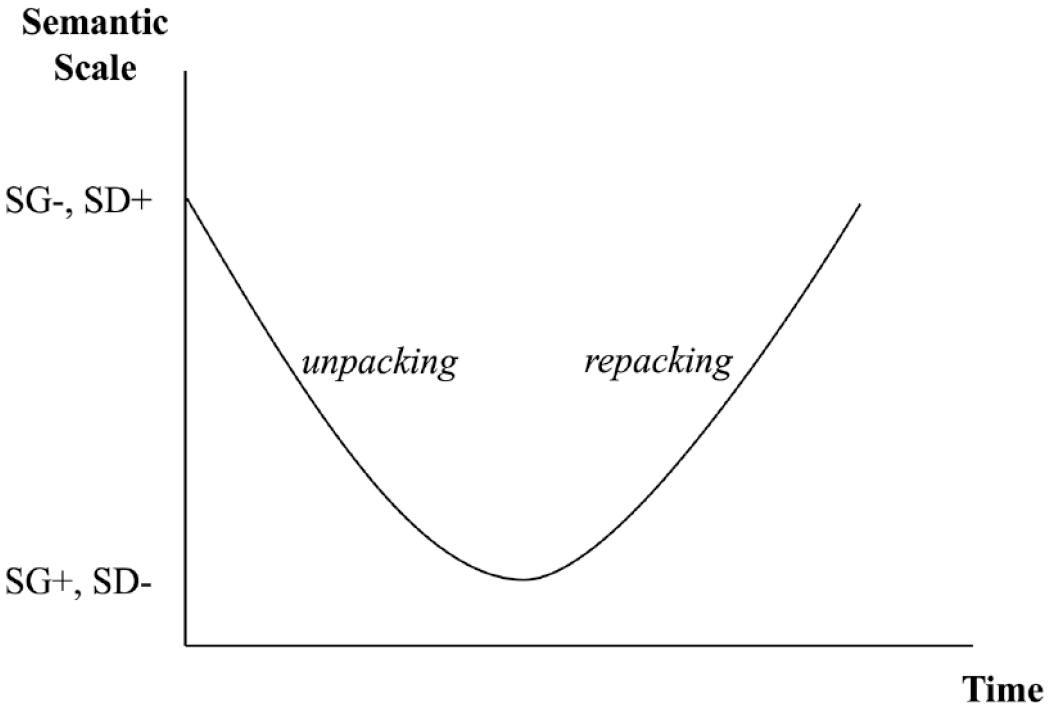
A Semantic Profile Showcasing a Semantic Wave.
Classroom practice must be designed to traverse a semantic gap between “high-stakes reading” and “high-stakes writing” (see Figure 2) (Maton, 2013, p. 13). In simple terms, it is expected that learners are able to negotiate the barrier between “being able to understand the educational knowledge” and “being able to produce discourse that reflect their mastery,” both of which exhibit SG− and SD+ than what is expressed in classroom discourse. In interpreting classroom, “high-stakes reading” comes from vertical discourse generated by interpreting research, while “high-stakes writing” falls on learners producing vertical discourse regarding the meta-knowledge of interpreting. Hence, classroom practice serves to create multiple semantic waves to bridge this semantic gap.
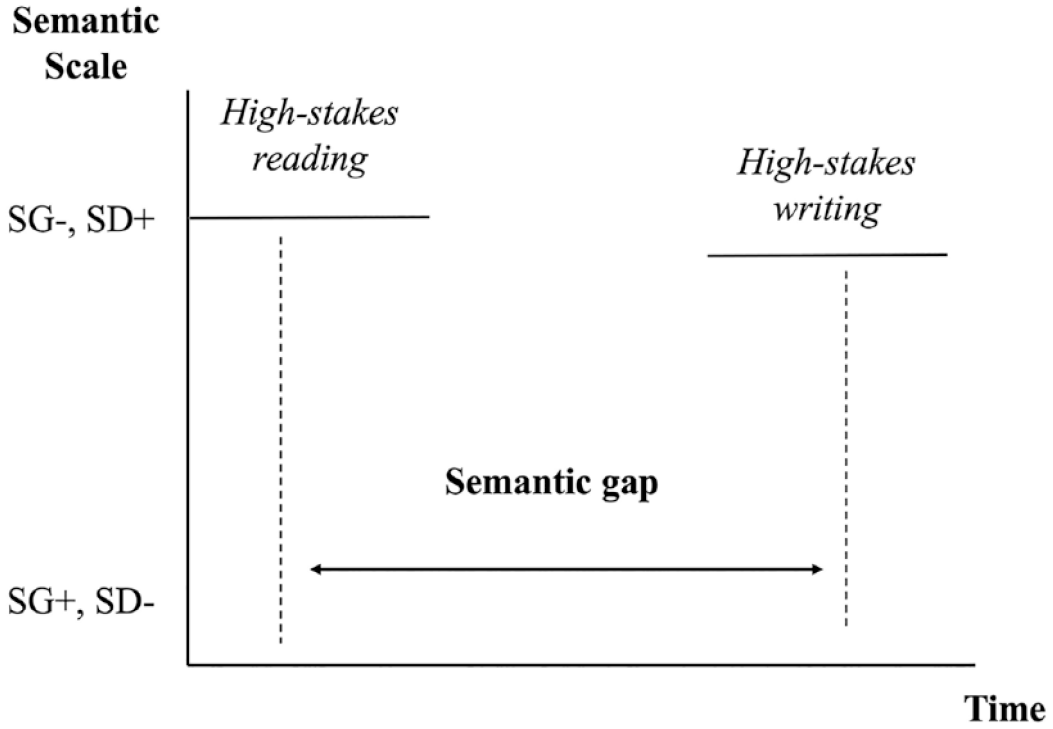
Semantic Gap in Classroom Practice.
Knowledge takes up many forms. From the perspectives of Systematic Functional Linguistics (SFL) and LCT, knowledge is embedded in meaning and can be represented linguistically through three practical concepts: power words, power grammar and power composition, or known as “power trio” (Martin, 2013, p. 23), which is linked to the manipulation and dissemination of knowledge. Power trio also contributes to the understanding of semantic depth of discourse in knowledge, rendering more detailed portrait of semantic waves.
Specifically, “power words” are manifested by the use of technical terms in great semantic density. “Power grammar” refers to knowledge construing power of grammatical metaphor, consolidating the SD of the terms involved. “Power composition” means the knowledge packaged in “rhetorical sandwich” textual structures that tell the readers regarding “what you are going to write, write it and what you have written” (Martin, 2013, pp. 31–32).
The use of power trio in analysing knowledge transfer across the entire instructional period holds water for two reasons. One is that knowledge production is closely connected to epistemological power, which can be manifested in the use of power-related linguistic resources in the discourse produced. The other reason is that linguistic representations can be easily detected, which will facilitate our qualitative discussions.
2.2 Disciplinary knowledge of interpreting: A semantics-informed perspective
Notwithstanding Interpreting Studies being an emerging strand of scholarly investigation, there has been no consensus on how to define interpreting as disciplinary knowledge. It was not until the early 1990s that the discipline of interpreting began to gain its (sub-)disciplinary identity, and has been “shaped by conceptual and methodological approaches from other, more established disciplines” (Pöchhacker, 2022, p. 53). Through decades of development, interpreter training paradigm has evolved from the apprenticeship approach that merely emphasises trainers’ professional experience to the most recent well-received synthetic approach involving both experience and research insights, represented by Setton and Dawrant (2016) (Pöchhacker, 2022). Following this trend, the disciplinary knowledge of interpreting can thus be seen as a combination of practical skills that underline the utilitarian aspect of interpreting, and meta-knowledge that synthesises research ideas in the field.
Nevertheless, the meta-knowledge of interpreting embraces greater complexity. As Interpreting Studies is interdisciplinary in nature fuelled by cognitive psychology, cognitive science, linguistics, social and cultural studies, etc., a common practice for interpreter trainers today is to integrate and recontextualise knowledge from different disciplines, so that practical skills can be better informed and taught accordingly. For example, the teaching of information processing brings together insights not only of cognitive psychology by elucidating different tasks in the interpreter’s mind but also of text linguistics by demonstrating how information should be structured in mind to facilitate the interpreter’s memory.
This interdisciplinary nature leads to the query as to how the meta-knowledge of interpreting is expressed and structured. One way to answer this question is to draw upon Bernstein’s (2000) dichotomies of “horizontal/vertical discourse” and “horizontal/hierarchical knowledge structure.” Horizontal discourse pertains to everyday knowledge expressed in a segmentally organised and context-dependent manner, while vertical discourse refers to specialised educational knowledge where meaning is systematically “related to other meanings” (Bernstein, 2000, pp. 157, 160). Disciplines infused with vertical discourse have a hierarchical knowledge structure where new knowledge is built upon previous one through integration and subsumption. As the meta-knowledge of interpreting is enriched by the enquiries of other disciplines, it lends itself a hierarchical knowledge structure (Ouyang et al., 2020). On top of it, the institutionalisation of interpreter training has standardised the expression of the meta-knowledge of interpreting, which is wrapped up in vertical academic discourse as a significant reservoir of received wisdom in the field (Martin et al., 2020).
Take memory mechanism in interpreting as an example. This strand of knowledge is enlightened by research on cognitive psychology, covering abstract concepts including “sensory memory,” “short-term memory,” “long-term memory,” “working memory,” etc. These concepts are less accessible to interpreting beginners who have the faintest idea of how a human being’s mind works. For one thing, these concepts are derived and borrowed from cognitive psychology research, lending itself a hierarchical knowledge structure which is not specifically embedded in a certain context (SG−). For another, as the collective wisdom of another discipline, these concepts often exist in the form of academic discourse that is expressed in a complex and condensed manner (SD+). This would probably impose additional cognitive effort on student interpreters to process the knowledge.
Hence, the meta-knowledge structured hierarchically and expressed in vertical academic discourse may not be the ideal source for education. Despite the dominance of such academic discourse on the dissemination of meta-knowledge, gaining access to it remains a huge challenge for learners due to epistemological power asymmetry between professionals and novices.
2.3 Cumulative knowledge-building in interpreting classroom
Dynamising the knowledge construction and power transfer process can be facilitated by the creation of semantic waves, mainly for two reasons. First, creating an environment for trainees to relate to, engage with and adapt to the meta-knowledge of interpreting is significant to access academic discourse stemming from interdisciplinary interpreting research. Creating semantic waves in class by leveraging non-academic discourse, i.e., concrete and contextualised knowledge (SG+, SD−), can enable trainees’ access to the abstract and decontextualised knowledge (SG−, SD+; Maton, 2013, 2020). Another reason is the semantic gap created by “high-stakes reading” and “high-stakes writing.” Semantic waves can help traverse the semantic gap. Trainers should undertake a series of effective unpacking and repacking efforts through classroom design and pedagogical activities. The analysis of semantic progression in our case study in the next section will elucidate these efforts.
Cumulative knowledge-building is achieved on the learner’s side by building on and adapting past knowledge to new contexts. Teaching the meta-knowledge of interpreting can benefit from reducing academic discourse to simplified, everyday language for trainees to better recap the ideas within, with which they can apply and adapt to their future knowledge building. In this sense, interpreting trainees may not necessarily be expert in practising interpreting skills at the end of the training, but are empowered to adapt and apply in higher-order activities that lay the foundation for new knowledge construction. This voice is also echoed in the field of education (e.g., the Revised Bloom’s Taxonomy, see Anderson & Krathwohl, 2001).
An example in point is the critical evaluation of a peer’s interpreting performance. Peer feedback is seen to be effective in developing learner’s metacognition (Moser-Mercer, 2008). In education research, metacognition refers to the process of understanding and regulating cognitive activities, with major components of metacognitive knowledge and metacognitive skills (Veenman et al., 2006). The former highlights the knowing of how a subject performs cognitive actions (“what”), while the latter accents the knowing of how to regulate those cognitive actions (“how”). In our case, learners may exhibit metacognition in their evaluative feedback comments on how a learner unfolds the interpreting process using the taught skills, as well as whether those skills are useful. This is also, from the LCT standpoint, in line with the repacking process, whereby the knowledge from the instructor will be recapped and even presumably (in)validated, showing the learners’ epistemological power. Generally, cumulative learning in interpreting classroom can be manifested not only in trainees’ reception but also their production of meta-knowledge, such as the extent to which they are able to perform metacognitive evaluation.
In summary, the conceptual framework of this research is epitomised in Figure 3.
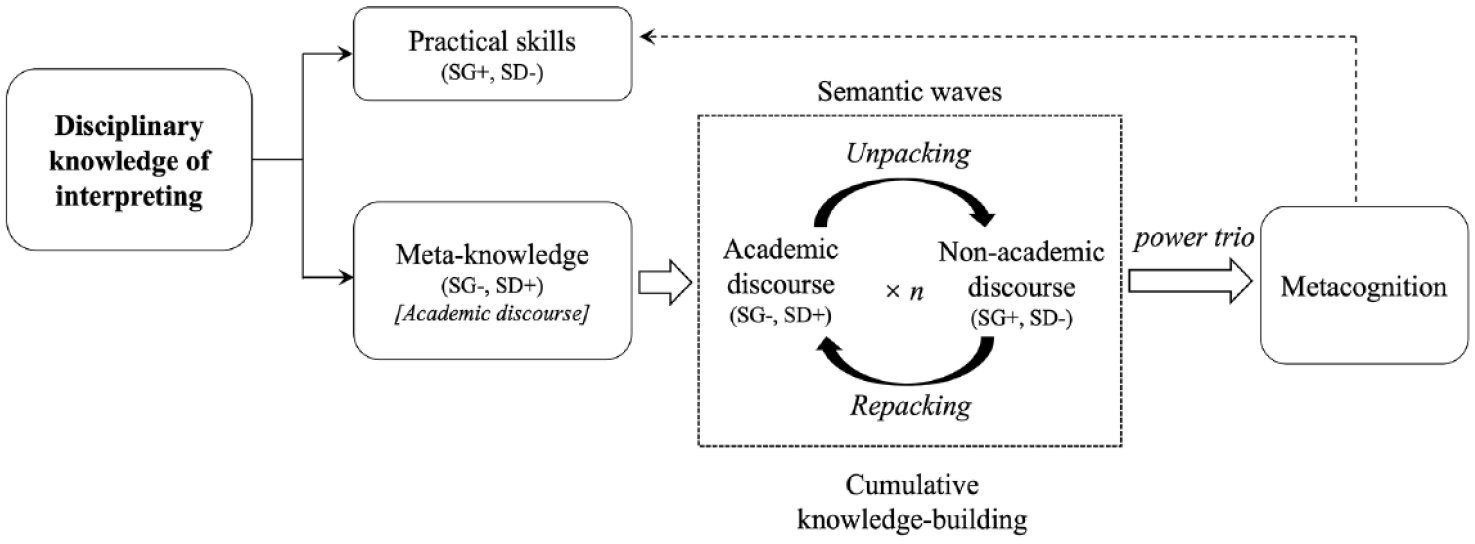
Conceptual Framework of the Study.
3. Case study
This study employed a specific training session of an undergraduate interpreting course at a CIUTI-approved university in South China to present a case study.
3.1 Overview
The course in question is titled “Interpreting Theory and Practice.” As an introductory course, it aims to introduce the overall picture of interpreting as a professional practice. The learners are expected, by the end of the course, to acquire basic knowledge of the activities and the profession of interpreting, understand the philosophy of interpreting training, and internalise the knowledge and skills of interpreting through intensive practice. The course is divided into eight key modules concerning theoretical and practical topics of interpreting: interpreting process, interpreting product, interpreting competence, listening, memory, note-taking, delivery, and strategy. Each module lasted one to three weeks.
The cohort of learners investigated in this study were 30 second-year undergraduate T&I students, whose L1 is Chinese and L2 English. The learners had no experience or prior training in interpreting. The instructor of the course has more than 10 years’ experience in interpreting teaching and research and is also an active practitioner of conference interpreting.
3.2 Class organisation
In contrast to the traditional mode, this course adopted a blended learning model of instruction where learners were enabled and empowered to mediate their learning experiences with the help of technology (Graham & Dziuban, 2008, p. 270). Supported by a small private online course (SPOC) platform affiliated to NetEase and Higher Education Press, 1 the entire course was able to document most of the teaching and learning behaviours with access to the data at the backstage. The class practice was structured to incorporate teaching and learning activities as encapsulated in Figure 4.
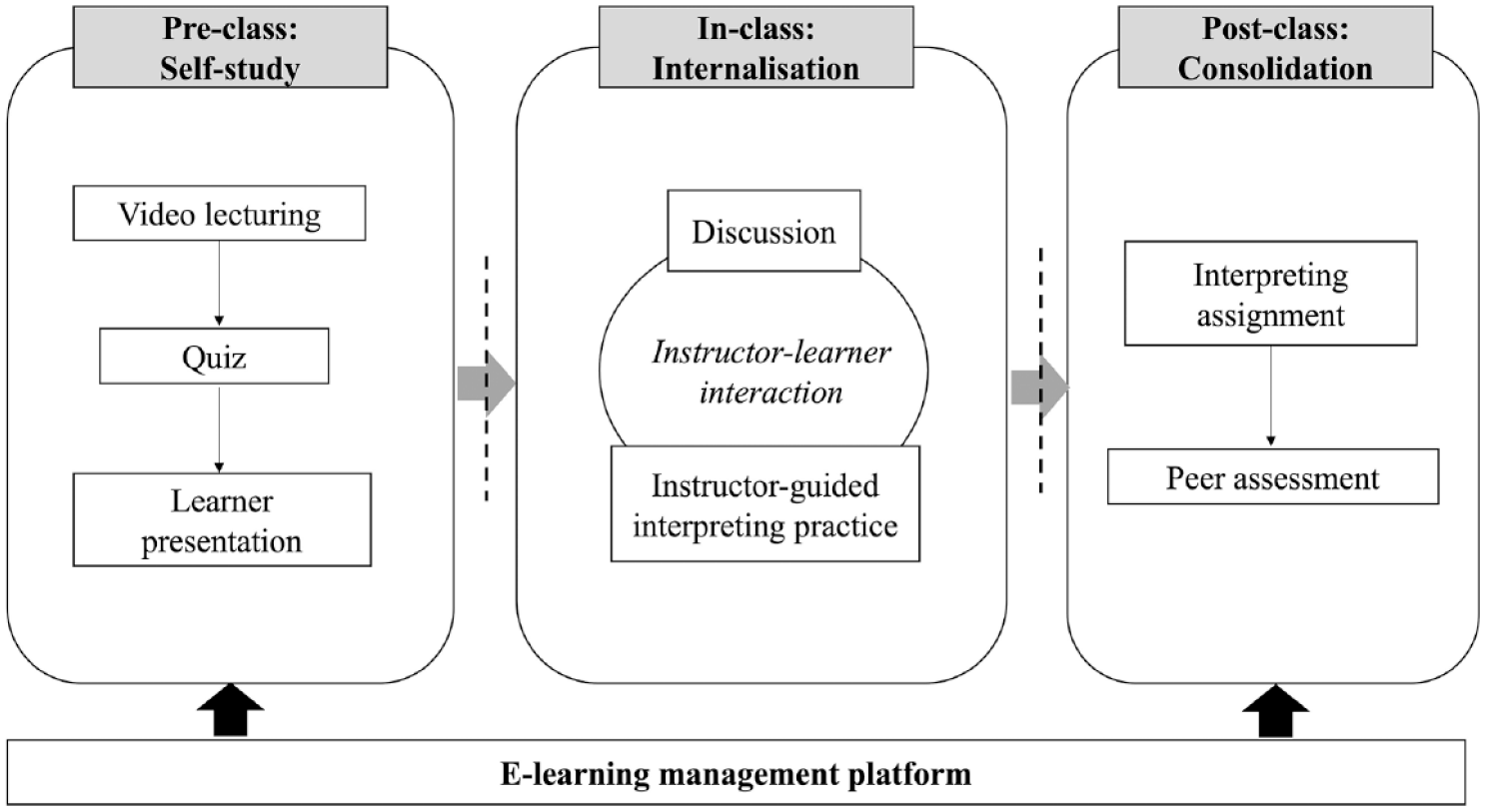
Blended-Learning Interpreter Training Practice.
Delivered online, the pre-class section required the learners to watch video lectures provided by the instructor and finish a quiz concerning the knowledge in those lectures. One group of learners then were invited to give a presentation based on the assigned topic related to the course contents via an online recorded video, whereas other learners watched it before moving on to the next section. The in-class section was carried out face-to-face, where the instructor first started an interactive discussion with thought-provoking questions pertaining to the learners’ presentation, followed by intensive interpreting practice. Online again, the post-class section was dedicated to learners’ consolidation, where the learners needed to complete a take-home interpreting exercise, which was subject to peer assessment via qualitative feedback.
3.3 Data collection
As discourse is the highlight in this study, five cohorts of discourse data were collected: (1) video lecture, (2) online quiz, (3) learner presentation, (4) instructor–learner discussion, and (5) learners’ peer feedback for the take-home exercise. All spoken texts (including multimodal texts) were transcribed with the assistance of online automatic speech recognition tools. Transcriptions were edited and proofread by the authors. The written texts were compiled intact, except the Chinese feedback comments translated into English literally. All texts were examined through discourse analysis. Quantitative analysis was also performed where necessary to facilitate the discussions.
4. Semantics in teaching/learning discourse activities
4.1 Video lecture
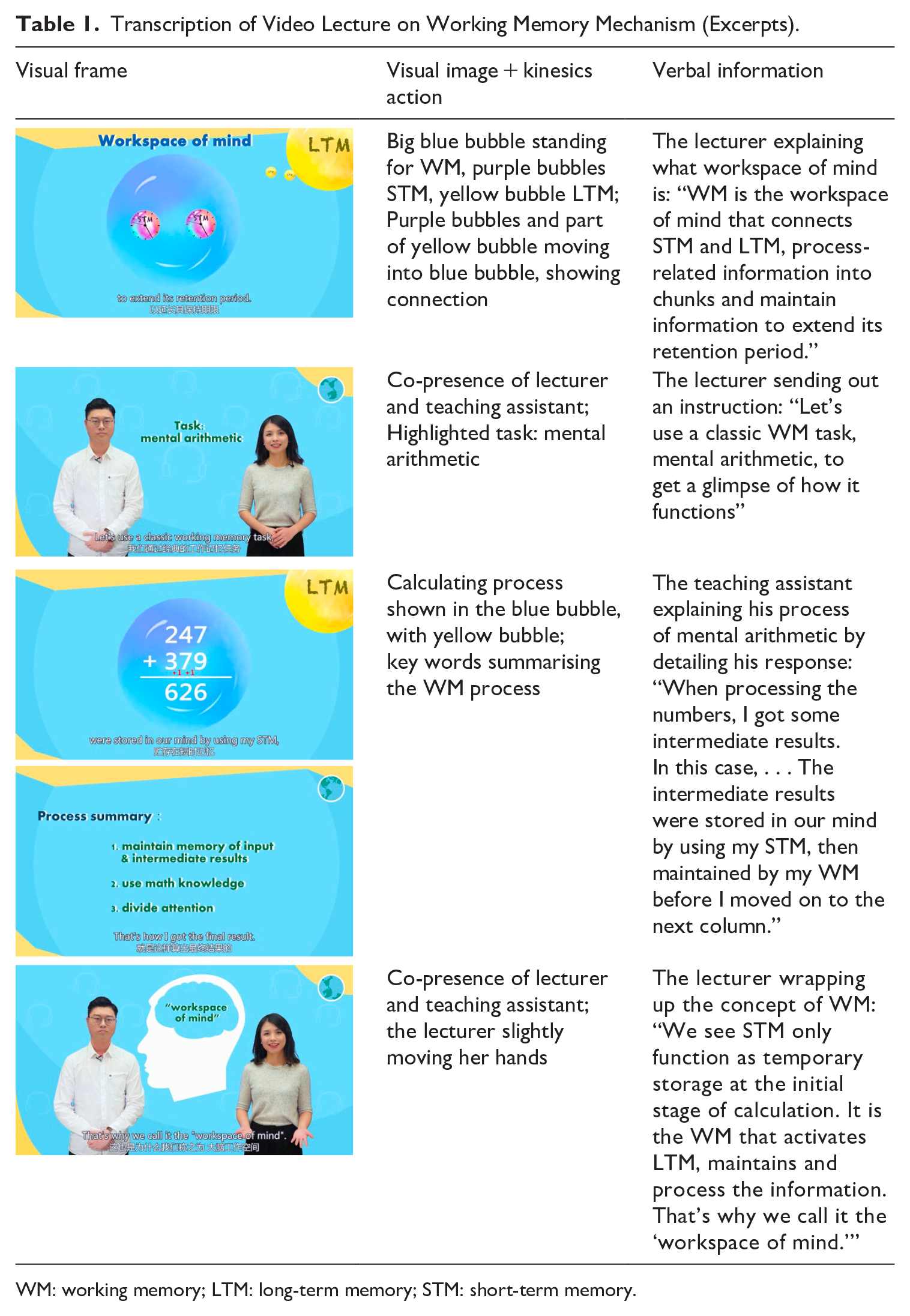
Various strengths of SG and SD coexist in the video lecture. This section will highlight one lecturing video on working memory mechanism so as to reveal how semantics progressed in the lecturing video to form a semantic wave by demonstrating two specific examples. It should be noted that visual modes like images and animations well supplement the verbal language in the lecturing video to explicate abstract concepts and knowledge, that is, to enhance SG and reduce SD. Multimodal presentations also serve as a distinct way to wrap up what has been said as a way of reducing SG and enhancing SD.
Example 1: Unpacking and repacking working memory mechanism in interpreting.
Example 1 (Table 1) demonstrates four major scenes of the video lecture: (1) defining the concept, (2) sending out instructions for learner engagement in a task, (3) explaining the task through demonstration, and (4) wrapping up the concept. As the concept of working memory bears more verticality in discourse (SG−, SD+), a way to unpack it is to provide general examples to make it “accessible” so that learners can relate to their existing experience or knowledge (SG+, SD−). When demonstrations are shown, multimodal presentations of information, including static and moving images, keywords and subtitles, makes the implicit more explicit to enhance learners’ understanding. For instance, the third scene in Example 1 shows a blue bubble in the middle (representing working memory) in which the mental mathematical procedures are explicated, making abstractions more concrete and accessible. Another case in point is the co-presence of the lecturer and the teaching assistant, whose dialogue interactions simulate classroom discourse that can more or less engage the learners, thereby help increasing SG and reducing SD. The same unpacking and repacking procedures were carried out in the subsequential elaborations on memory expansion skills of “chunking” and “visualisation.”
Transcription of Video Lecture on Working Memory Mechanism (Excerpts).
WM: working memory; LTM: long-term memory; STM: short-term memory.
4.2 Quiz
By the end of a series of unpacking and repacking process in the video lecture, the learners were supposed to be capable of accessing the academic discourse to a certain extent. In this training session, a small quiz was designed following the video lecture to test whether learners had grasped the main concepts, through which it was possible to evaluate how far they had accessed academic discourse. Moreover, as a significant tool in most e-learning practices, quizzes can provide instant feedback for learners, which enhances their sense of achievement and motivates them to learn more. In this sense, the questions in the quiz were formulated in academic discourse that featured SG− and SD+.
The quiz was composed of two parts. The first part contained five multiple choice questions, while the second part contained five true-or-false statements. Closely related to the key concepts in the video lecture, these 10 questions were formulated in decontextualised and condensed expressions.
Example 2: Sample questions in quiz.
• (Multiple choice question)
What is the rationale of the skill “chunking” as a way of memory expansion?
A. To cut information into pieces so that we can better remember.
B. To structure the speech in a logical way so that we can better remember.
C. To highlight the most important points in a speech so that we can better remember.
D. To bind information into meaningful units so that we can better remember.
• (True or false question)
Working memory is a dynamic mechanism in interpreting connecting short-term memory (STM) and long-term memory (LTM).
Example 2 presents one multiple choice question and one true-or-false question. It can be observed that these two questions pertain to the definitional issues of the key concepts “working memory” and “chunking” discussed in the video lecture. In terms of language use, these two questions were phrased and structured in a way that meaning was all packed within one single sentence, contributing to meaning decontextualisation and condensation (SG−, SD+). For instance, the concept of chunking was proposed in academic discourse as a semantic departure in the video lecture, and popped up again in academic discourse as a semantic closing in the quiz questions, with the only difference lying in the phrasing.
4.3 Learner presentation
Learner presentation was carried out after video lecturing and quiz and prior to offline class activities, as a way to allow learners to expand the scope of knowledge concerned beyond what had been instructed by the instructor.
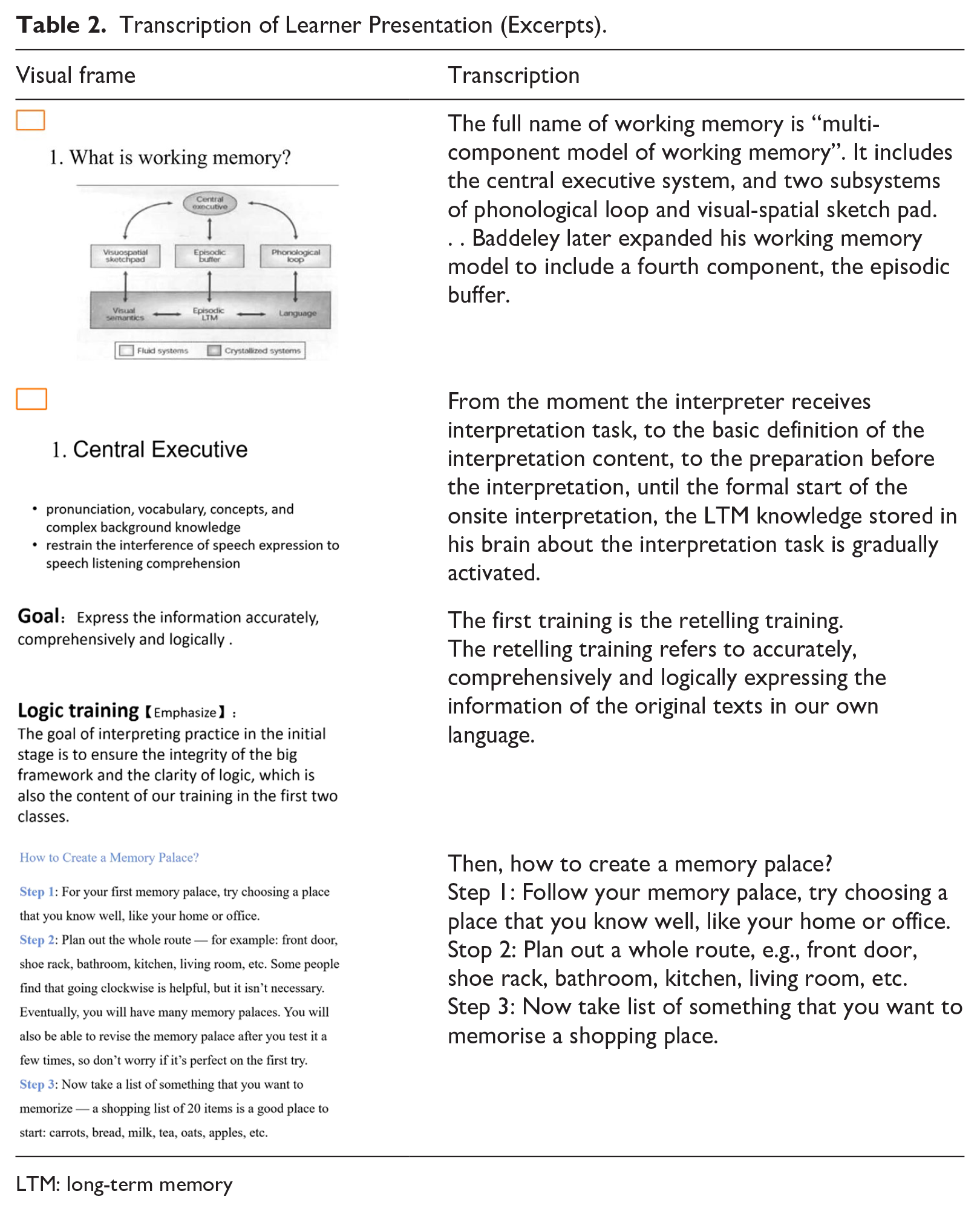
In this particular training session, a group of trainees were asked to present on “tips for memory training,” which should exclude the specific skills mentioned in the video lecture but could include the concepts and skills to the broader scope in relation to the interpreter’s memory. No other specific instructions were provided regarding what they are supposed to cover in the presentation, that is, the trainees were offered sufficient autonomy to make external connections with the knowledge they had acquired at this stage.
Example 3: Learner presentation discourse.
What is presented in Example 3 (Table 2) clearly illustrates that the learners were extending the concept of “working memory” beyond what had been instructed, highlighting the four main components—central executive system, phonological loop, visual-spatial sketch pad, and episodic buffer—all of which are complicated technical terms (SG−, SD+). In addition, they explained these concepts in the context of conference interpreting by relating to the components involved in interpreting process (e.g., concurrent listening and speaking in simultaneous interpreting), followed by specific training methods (e.g., description of retelling training) and steps of memory training (e.g., detailed steps of creating a memory palace) (SG−/+, SD+/−).
Transcription of Learner Presentation (Excerpts).
LTM: long-term memory
However, Scant evidence has been found in the learner discourse where they relate the training methods and steps to concrete examples and cases as a way of application (SG+, SD−).
4.4 Instructor–learner interaction
As the classroom time is partly dedicated to interactive discussions between the instructor and the learners, the instructor–learner interaction serves as a sum-up of all pre-class activities. The instructor raised questions regarding the contents in the video lecture and learner presentation, as a way of building interconnected knowledge.
Example 4: Instructor–learner dialogue (making decontextualised connections).
What are the names of four systems that constitute working memory?
Central executive system, phonological loop, visual-spatial sketchpad, episodic buffer. . .
Do these concepts remind you of any concept(s) in the SPOC?
Visual-spatial sketchpad reminds me of verbal memory and visual memory. That’s why we can use the skill of visualisation.
That makes sense. We can remember things verbally and visually. And the group just gave us a more scientific description. Good.
Example 5: Instructor–learner dialogue (making contextualised connections).
What is happening in this episodic buffer?
Actually, episodic buffer is . . . It serves as a link between STM and LTM. That’s why we call it a buffer.
Very nice. It links things, it coordinates between things, it retrieves things, it activates things. We do a lot of things here. But if you think about the example the videos use, which is the mental arithmetic, what is happening here?
Remember the numbers and then do the calculation . . .
Yes. Don’t assume you can do calculation by birth. That’s part of your LTM. And you also have to remember certain digits during calculation, like the carry, and to recall. That’s the place where all these happen.
What the instructor did in Example 4 was to remind and reconfirm the new concepts proposed by the learners. Although the instructor attempted to connect the new concepts to those in the video lecture, the discourse still operated at an SG− and SD+ level without much explanation or exemplifications. Example 5 shows a different picture as compared with Example 4 in terms of making interconnected knowledge. Setting out with the concept of “episodic buffer” (SG−, SD+), the instructor proposed a question linking the example analysis of “mental arithmetic” (SG+, SG−) in the video lecture to detail this new concept.
4.5 Peer feedback
At the final stage of instruction, feedback is used as an instructional tool to entice learners’ critical thinking in evaluating their peers’ learning performance, so as to help them identify the gap between current performance and learning goal (Topping, 2009). As mentioned, the learners were required to complete a take-home interpreting exercise and a peer feedback assignment. The material used was a 6-min English speech on eating sushi, 2 which was split into three 2-min segments by the instructor. The learners were first asked to consecutively interpret the speech into Chinese without taking notes, and then upload their recordings onto the e-learning platform. Upon submission, they needed to write no-less-than-50-words feedback on three peers’ works in either Chinese or English on an anonymous basis. No stringent requirements for peer assessment were attached, despite some general directions: they were recommended to structure their comments based on content (consistency with the source speech), delivery (linguistic features of the product), and use of memory skills (the skills used, to what extent the interpreter makes use of those skills, and the effectiveness/applicability of those skills). We can thus perceive that the learners were provided with autonomy in this peer assessment task.
Example 6: Peer feedback comments.
Feedback 1 The pace of production is not so good, though overall fluent. But it doesn’t sound like public speaking with your low voice. The contents are basically consistent with the source speech, but the structure is not very clear. There are lots of details covered, showing good use of the skills. Feedback 2 “There are four parts in a sushi meal.” The “four parts” was not described very clearly in detail, so the interpreter chose to omit the words not captured. Instead, (s)he mentioned words like “first,” “second,” and “third,” showing awareness of using chunking.
The discourse of peer feedback produced is situated in the context but goes beyond the context to some extent as it relates to the knowledge itself. In Example 6, the feedback comments are embedded in specific details of the interpreted speech (e.g., contents, fluency, and voice quality), and expressed in a straightforward manner, lending themselves SG+ and SD−.
Apart from this, there are also feedback comments pertaining to the mastery of particular skills. For instance, in Feedback 2 of Example 6, the evaluator operated his or her feedback at epistemic level by providing critical comments on how the interpreter used the skill of chunking to retell the speech. Thus, these comments show a slight downward SG and upward SD.
5. Cumulative learning
5.1 Learning outcome analysis
5.1.1 Quiz scores
The learners’ acquisition of SG− and SD+ knowledge was assessed through the quiz scores. The learners were allowed to complete the test twice at maximum. After the learners’ completion and submission, the e-learning platform would automatically compute the results and count the best attempt as the final score, which would then be recorded as part of formative assessment. Ten points were assigned to each question in the quiz, with a total score of 100. Thirty learners participated in this training session, and 29 produced valid data. Table 3 provides a description of their quiz scores in the pre-class learning stage.
Quiz Scores.
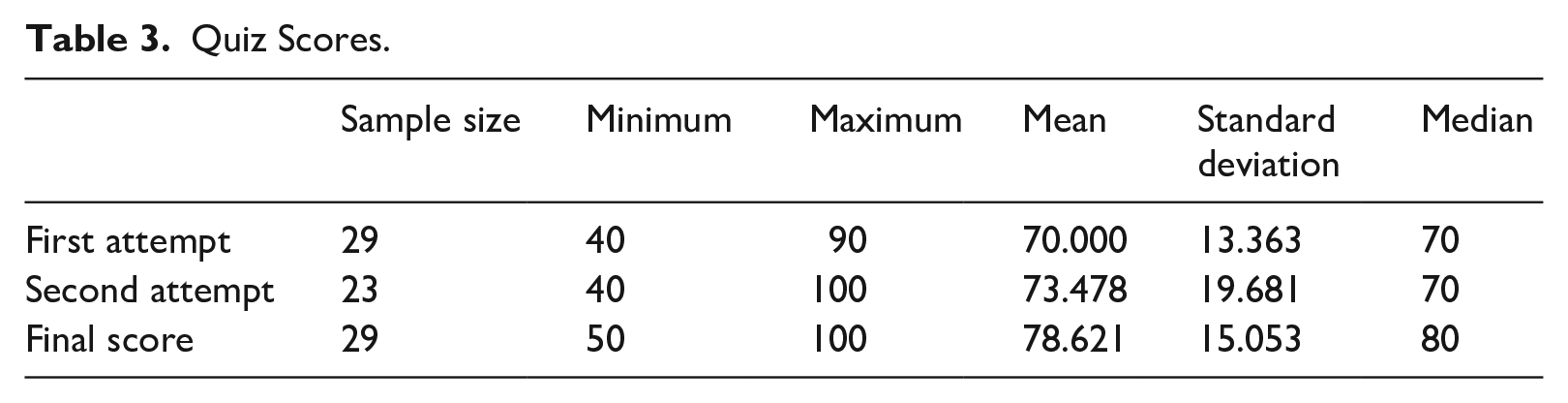
Judging from the final score, the 29 learners showed an above-average level (M = 78.6; MD = 80) of understanding and internalising the key concepts in the video lecture. It can also be observed that the first and second attempts exhibited not much difference in results (M1 = 70.0, M2 = 73.5; MD1 = 70, MD2 = 70). The statistics above can be interpreted that the learners generally performed satisfactorily in the quiz, and that the highly decontextualised and condensed knowledge in the quiz did not pose too much problem to the learners in understanding and internalisation.
5.1.2 Presentation evaluation
The learners’ presentation was evaluated in the instructor–learner interaction. Instead of quantifying their performance, the instructor proposed questions regarding the contents of the learners’ presentation, inviting more critical analysis of the knowledge produced. Examples 7 and 8 demonstrate a typical assessment of a knowledge branch proposed by the learners in their presentation.
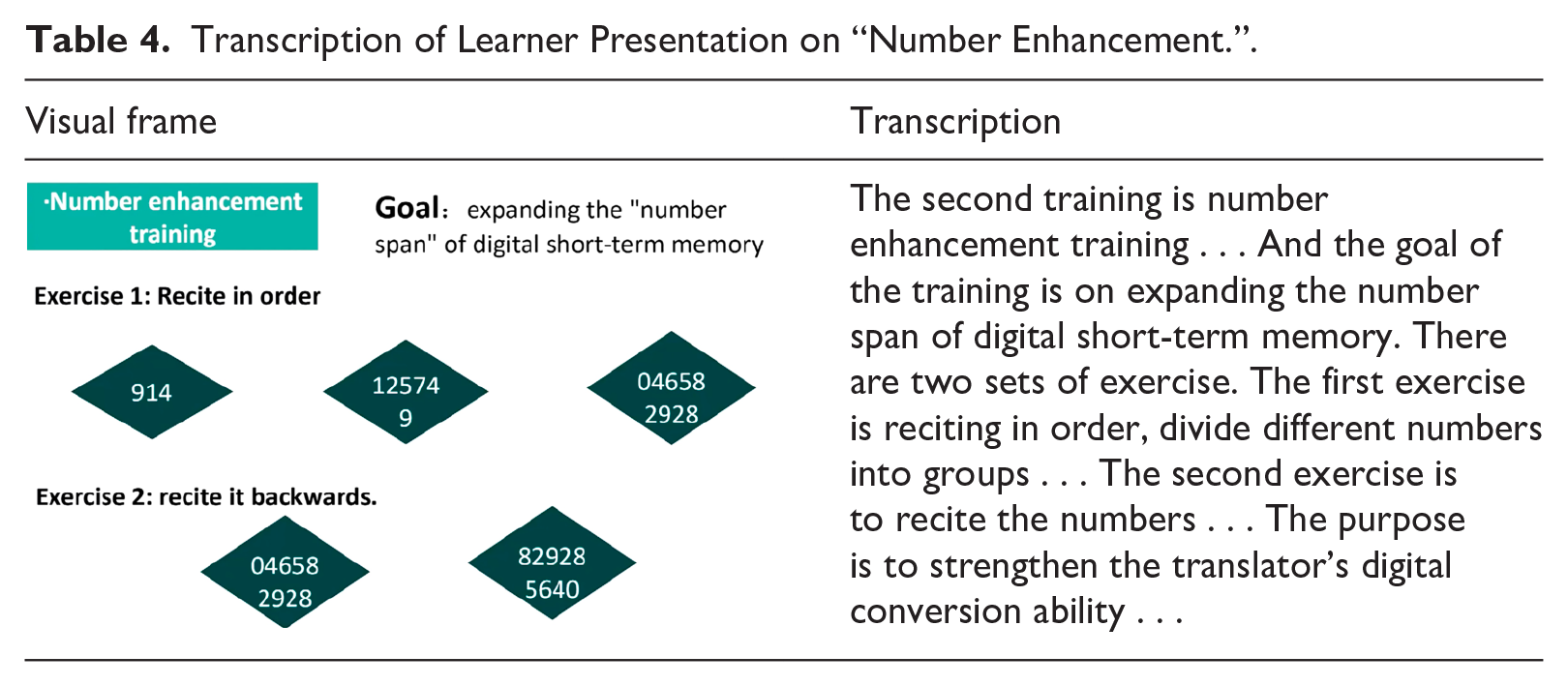
Example 7: Learner presentation discourse (number enhancement).
Example 8: Instructor–learner dialogue (making clarifications).
I do have a question relating to this part (number enhancement). It’s one of the methods you recommend for improving our what?
Expanding the “number span” of digital short-term memory.
“Span” is a good word, and the exercise itself is indeed related to memory training. For example, those who have had memory training can remember more than 60 digits. But why do you categorise it under LTM training?
. . .
I don’t think it’s about LTM. LTM is something rather straightforward. What is it?
You can keep something in mind for a very long time?
Yes. So, the number sets are new information. You won’t keep them in mind for very long. I think it’s more related to STM, isn’t it?
Aiming to offer practical skills for training interpreters’ long-term memory, the learners suggested “number enhancement” to “expand digital short-term memory.” (see Table 4) Having realised that there was a huge mismatch, the instructor questioned the learners in class, making them realise such fact, and meanwhile corrected the mistake by connecting what the instructor had discussed in the video lecture. Such instructor-intervening evaluation process underwent several rounds of questions and answers by constantly relating to concepts in both the video lecture and learner presentation.
Transcription of Learner Presentation on “Number Enhancement.”.
5.1.3 Peer feedback evaluation
Peer feedback was assessed both quantitatively and qualitatively, with the main goal to identify metacognition within. As each learner received three to six feedback comments from peers, we calculated the total quantity of comments, followed by a close examination of the contents. Each comment was assessed based on whether it exhibited the patterns of knowing how the task was performed (metacognitive knowledge) and of knowing how to critique the strategies used (metacognitive skills). The occurrence and percentage of different feedback types are shown in Table 5.
Occurrence and Percentage of Different Peer Feedback Types.
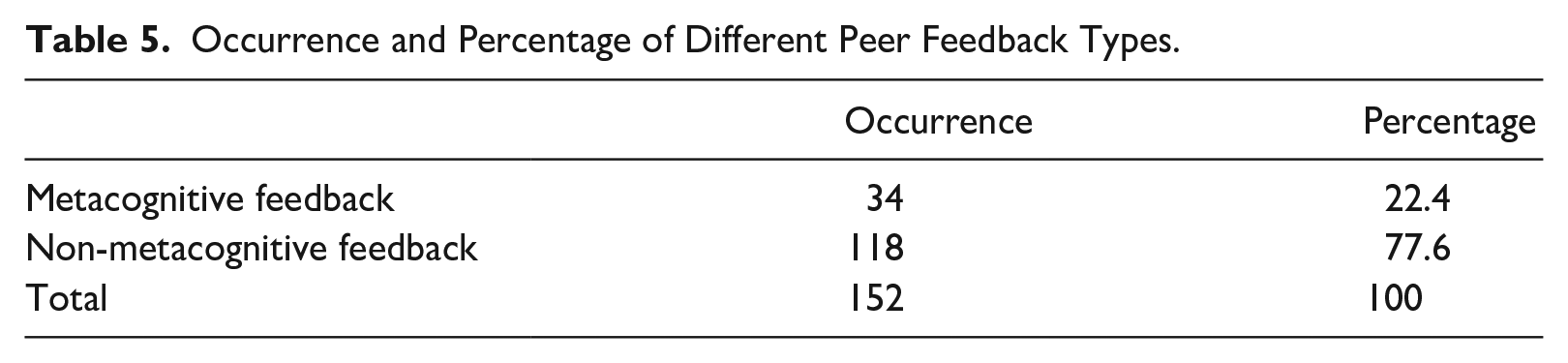
The statistics show that while most learners still rested their feedback upon the contextualised assignment itself, 22.4% of the feedback comments demonstrated metacognition. This suggests that a handful of learners were able to go beyond this contextualised assignment to operate their writing at epistemological level.
Example 6 above may contribute to a comprehensive understanding of the statistics. Feedback 1 attaches importance to the salient features of the performance, displayed in the expressions of personal liking and indication of inconsistent contents with the source speech. Feedback 2 shows an awareness of the skills applied in the performance, involving more metacognitive knowledge. Unfortunately, there was not a step forward towards giving even higher-order comments on the critical evaluation of the knowledge per se (e.g., the applicability of the skills learned, or other possible skills that can be implemented in the same task). That is, metacognitive skills were lacking in this feedback.
5.2 Epistemological power analysis
Epistemological power is analysed with the tool of “power trio.” Instances can be found in learners’ production of academic discourse, that is, the learners’ presentation. We hereby provide detailed discussions on the three practical concepts in learners’ discourse as compared with that in the instructor’s academic discourse.
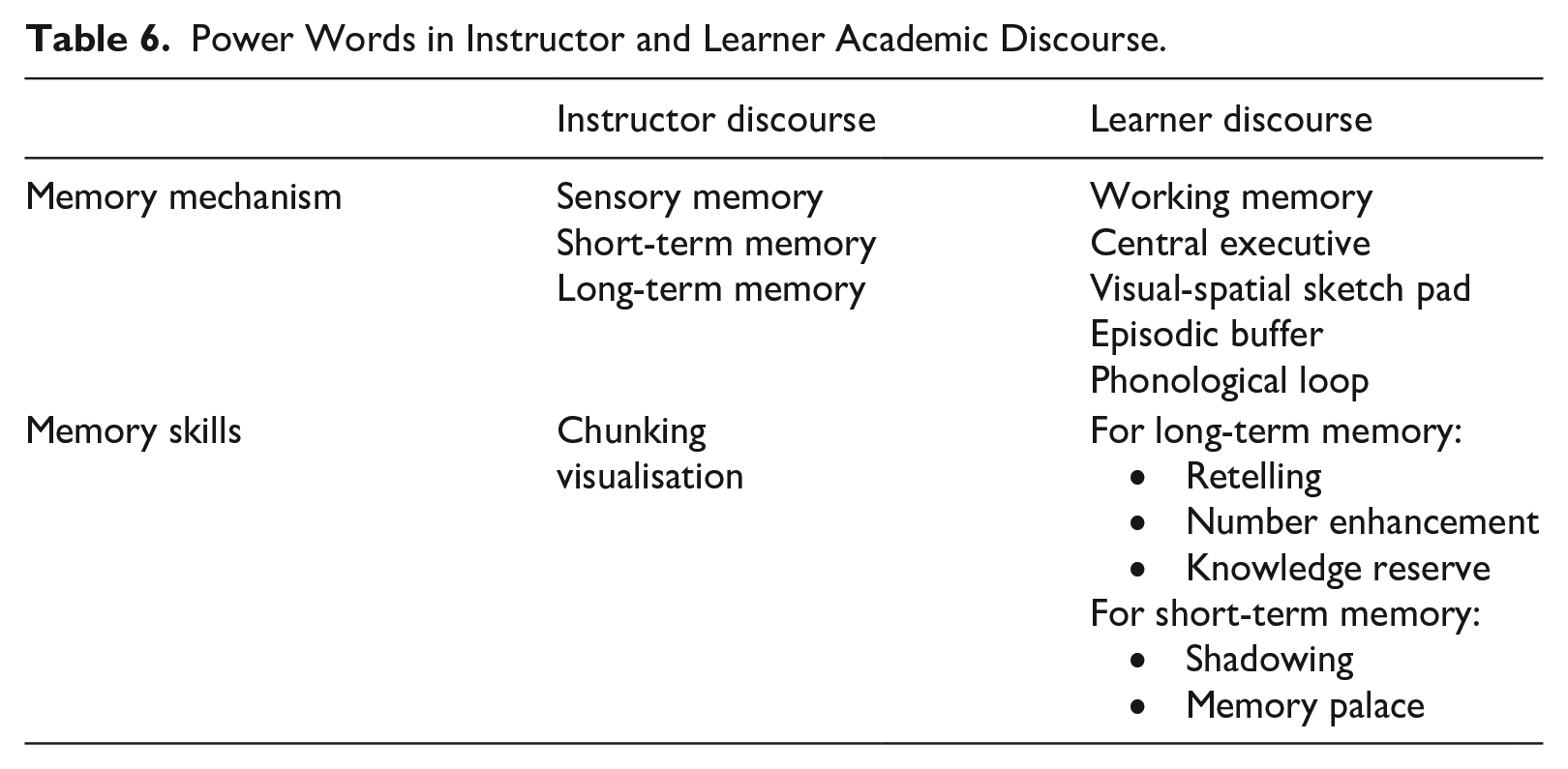
Power words in the instructor’s discourse were in relation to the memory mechanism of interpreters as well as particular skills to expand the limited memory capacity. In the learners’ discourse, in addition to mentioning “working memory,” the learners further provided relevant terms that further elucidate the working memory mechanism by referencing Baddeley’s (1994) model. Based on this theoretical discussion, specific memory training skills were then proposed (see Table 6).
Power Words in Instructor and Learner Academic Discourse.
In SFL, power grammar is composed of experiential metaphor (coding of a dynamic process as a static participant) and logical metaphor (using conjunctive relation connecting participants and circumstances). These two metaphors can be realised through such linguistic representations as nominalisation and verbalisation respectively (Martin, 2013). For example, experiential metaphor of the knowledge of “working memory” is realised by defining its process (e.g., Working memory is something), while logical metaphor by explaining how it works (e.g., In working memory, somebody does something). These two metaphors were also found in the learners’ academic discourse (see Table 7).
Power Grammar in Instructor and Learner Academic Discourse.
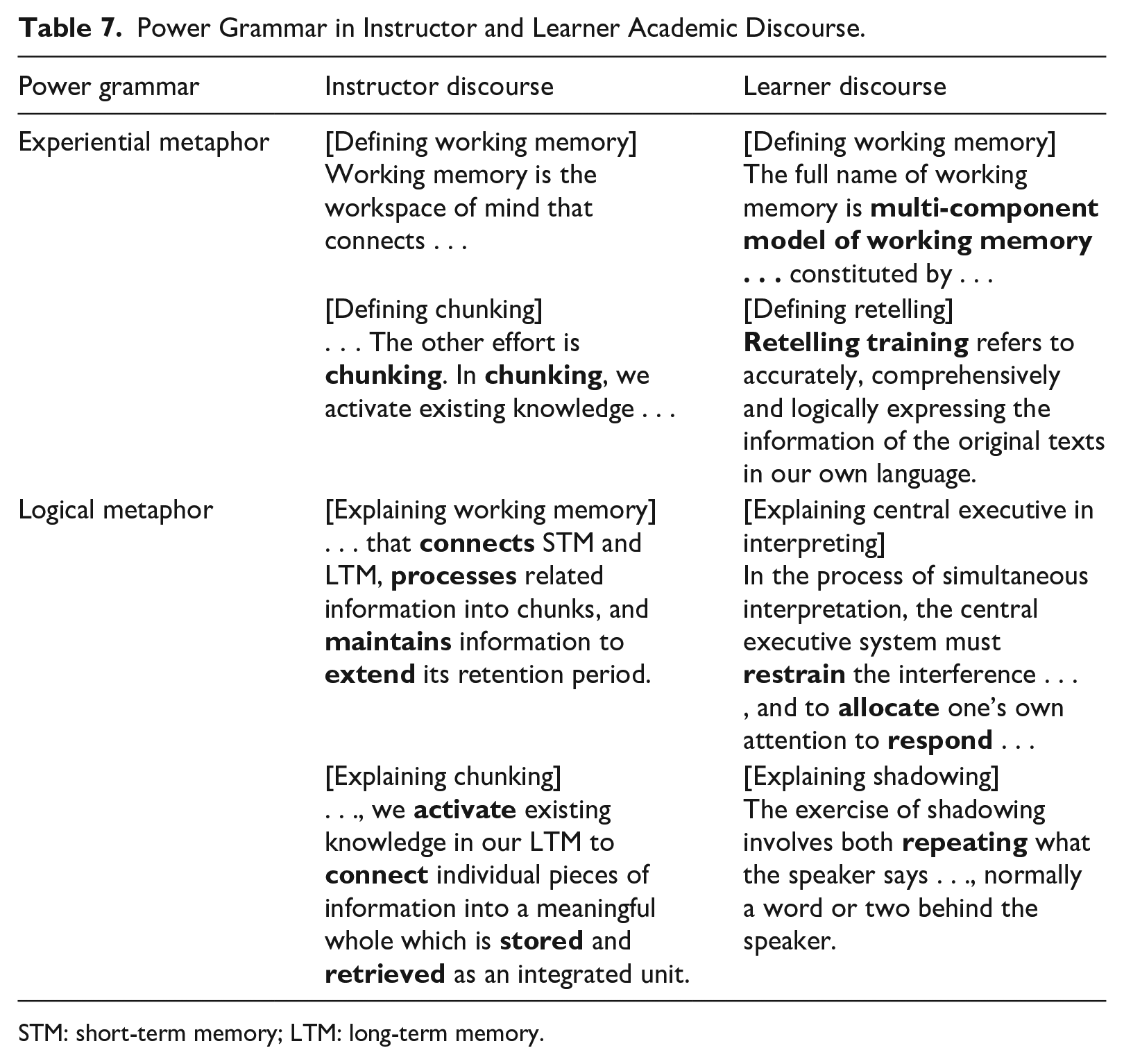
STM: short-term memory; LTM: long-term memory.
Power composition enjoys a solid interaction with power words and power grammar. The latter two are phased into predictable waves of information within textual structures, mainly represented by “hierarchy of periodicity” (Martin, 2013, p. 32). To put it simply, power words and power grammar enable the production of new knowledge, represented in hierarchically organised texts. The knowledge of “working memory” in the instructor and learner discourses is chained in the sequences showcased in Figures 5 and 6 respectively.

Knowledge Chain of Working Memory in Instructor Discourse.
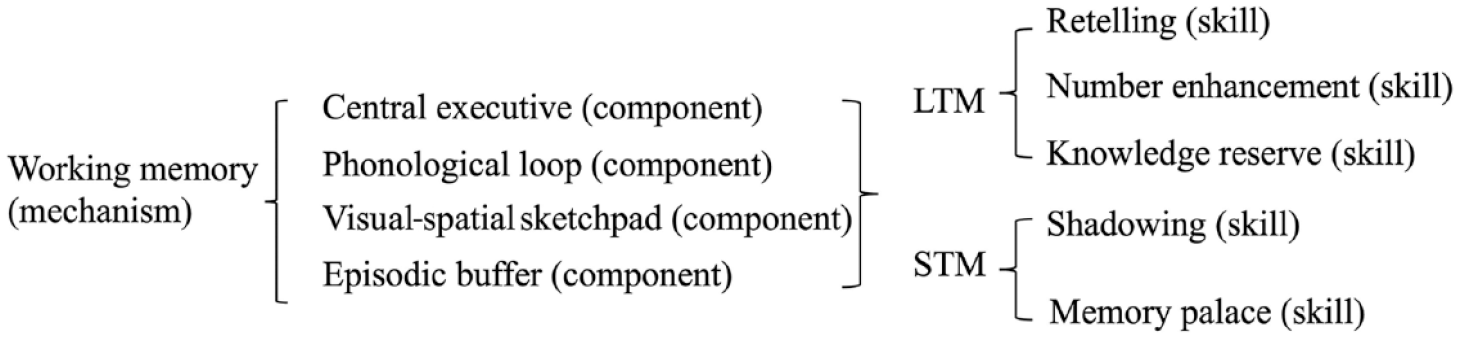
Knowledge Chain of Working Memory in Learner Discourse.
Each section of the chain generates knowledge structured in a coherent text, with a theme, descriptions and explanations, and a wrap-up. Specific compositions in instructor and learner discourse are shown in Figures 7 and 8.
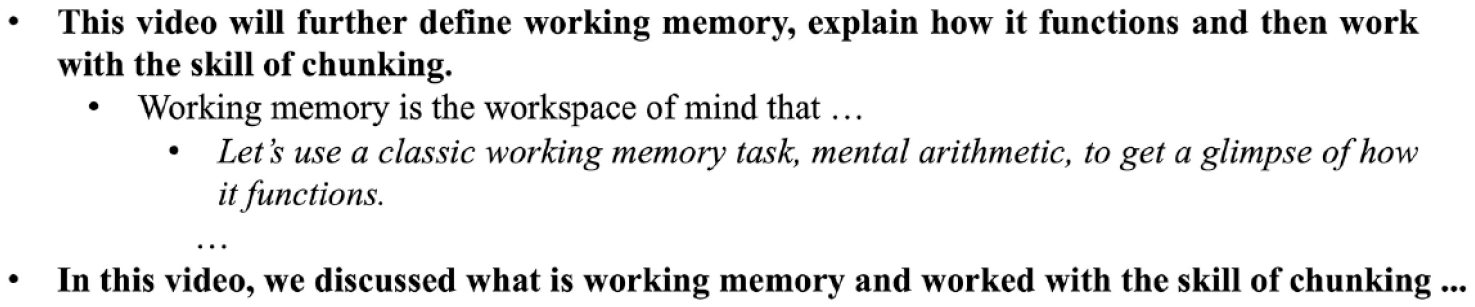
Power Composition in Instructor Discourse.
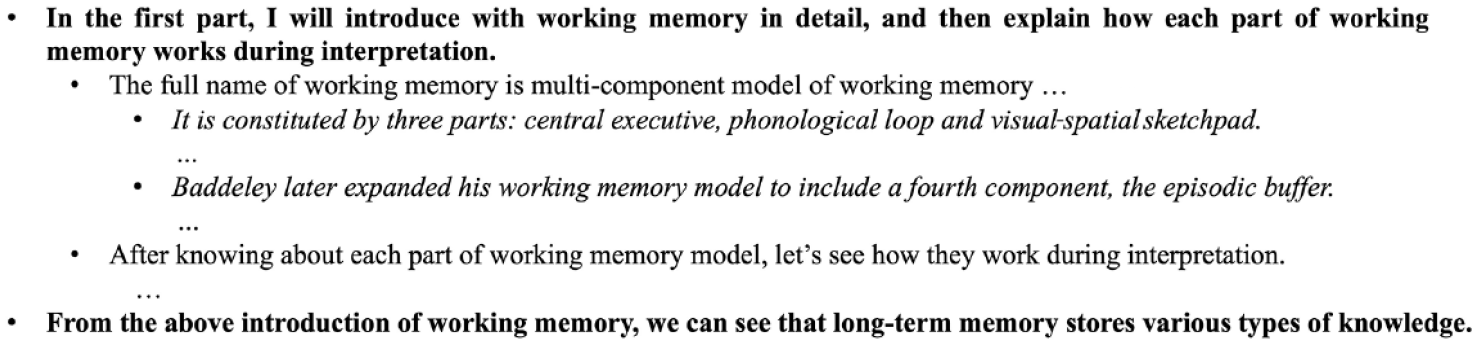
Power Composition in Learner Discourse.
From the analyses of the “power trio” above in learner discourse, we found that the learners were able to generate knowledge with power-related linguistic resources at lexical, syntactic/grammatical, and textual levels, suggesting that they were already epistemologically empowered. This can be reflected in the learners’ production of SD+ knowledge in relation to working memory that was not covered or evaluated in the instructor’s academic discourse. However, such empirical evidence also indicates that the learners were not completely epistemologically empowered as they produced less discourse featuring SG+ in presentation. Likewise, the chance to generate or evaluate knowledge in peer feedback task was not completely leveraged, as evidenced by the less production of SD+ and SG− comments concerning the critical judgement towards the knowledge.
5.3 Summary
In this section, we explore how semantics changed in different learning activities to enable knowledge building among these trainee interpreters, with representative semantic waves drawn to visualise this process.
Discourse was initiated by the instructor with the video lecture and the quiz to enable the learning process. As stated above, the video lecture discourse exhibited a variety of semantic shifts, with both “down and up escalators” (Maton, 2013). The quiz discourse as a wrap-up drove the semantics back to where the semantics had been. These pedagogical steps completed the enactment of a complete semantic wave (see Figure 9).
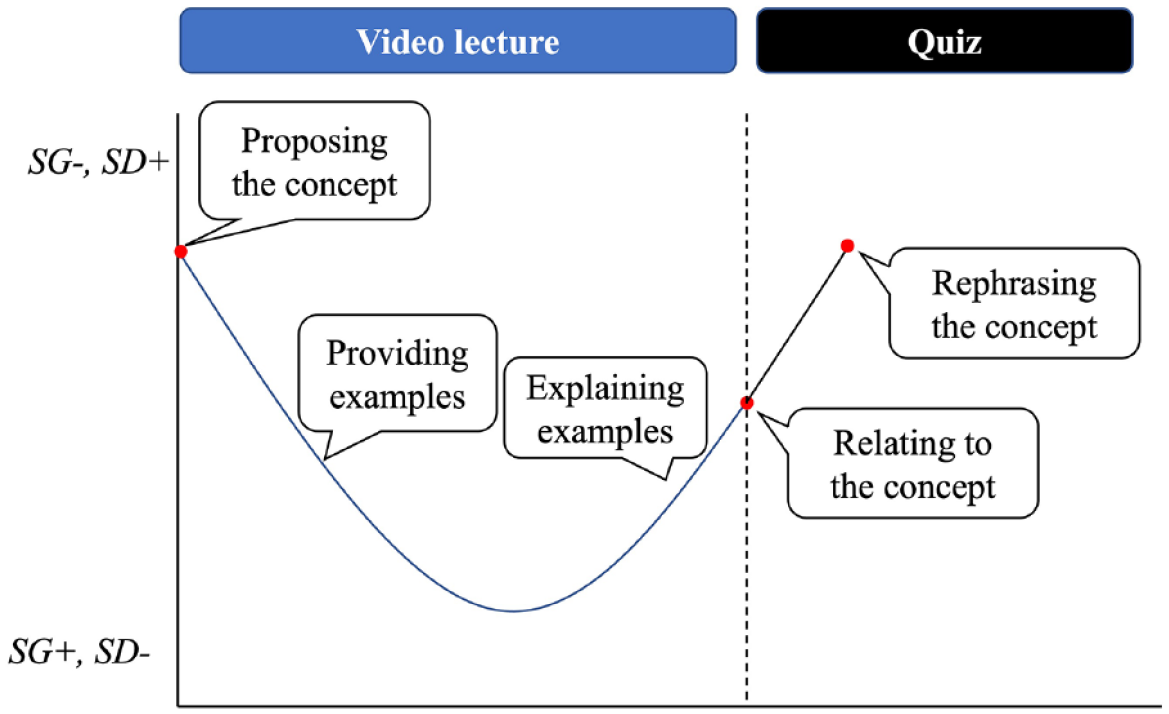
Semantic Wave of Instructor Discourse.
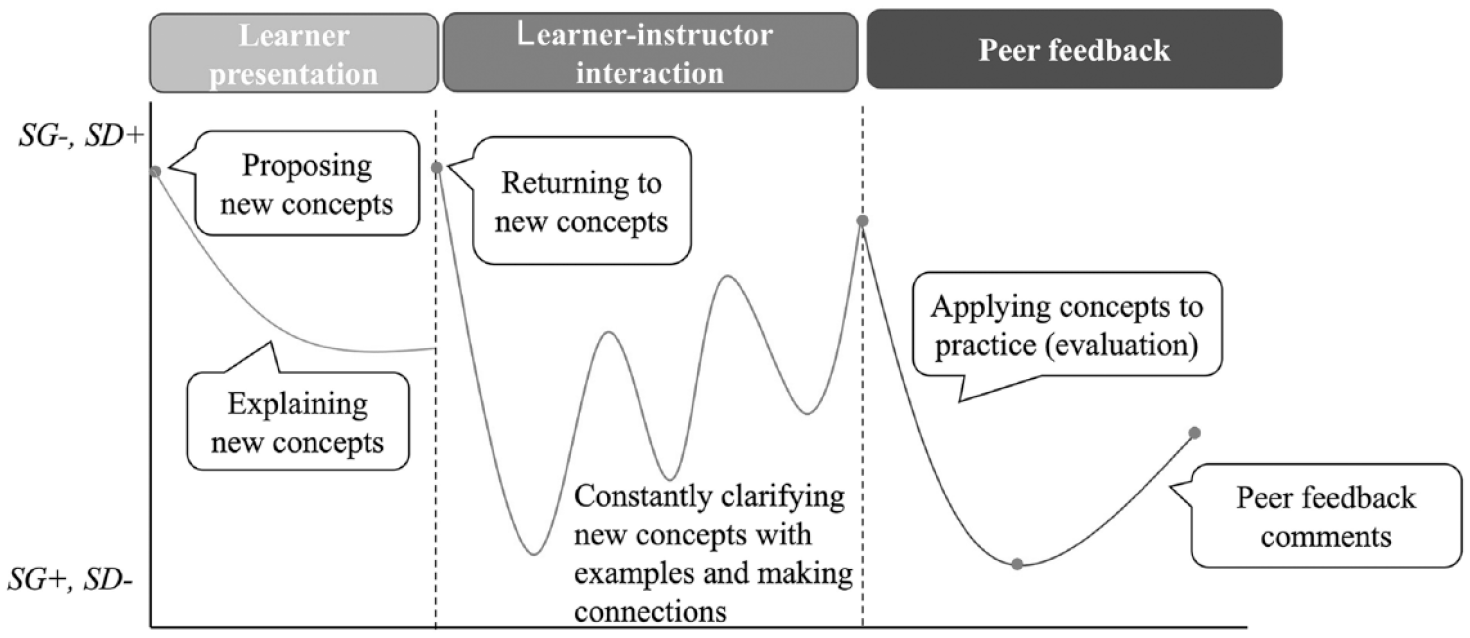
On the learners’ side, the discourse in pre-class learner presentation, in-class instructor–learner interaction and post-class peer feedback are taken into account. The presentation discourse generally showed a slight down escalator (SG−, SD+ → SG−/+, SD+/−). In the in-class interactive dialogue, the instructor further unpacked the academic discourse produced by the learners with very concrete examples (SG+, SD−) so as to enact a complete semantic wave. As a contextualised assignment, peer feedback exhibited SG+ and SD− in its discourse, with a slight semantic uptick. Figure 10 encapsulates the semantic progression from the learner’s side.
Semantic Waves of Learner Discourse.
As illustrated in the figures, cumulative learning among interpreting beginners can be summarised as three stages of interaction with academic discourse:
Digestion;
Production; and
Application and evaluation.
In the Digestion stage, the learners dealt mainly with the academic discourse provided by the instructor, who possessed strong epistemological power but delegated some to the learners via unpacking and repacking efforts. In the Production stage, the learners, having equipped with the delegated power, were able to produce their own knowledge in structured vertical academic discourse. But it was subject to modification with the intervention of the instructor, who was still epistemologically powerful. In the Application and Evaluation stage, using the cumulated power, the learners tried to unpack all academic discourse with concrete interpreting task. Repacking was also expected in the high-order activity of peer feedback.
6. Discussion
Using Semantics of the LCT as the theoretical framework, this study revisited interpreter training from the perspectives of knowledge building and epistemological power transfer among beginning interpreters. By looking into a case study on memory training session, we discussed the semantic features of the discourse in interpreting classroom and analysed how semantic changes enable cumulative learning and empower learners to generate knowledge. We generally expected that learners achieving cumulative learning may be able to produce discourse featuring SG− and SD+ in the tasks that entail knowledge presentation, that is, both pre-class learner presentation and peer feedback. Overall speaking, the empirical data from this study confirmed this expectation, as the students showed a good acquisition of SG− and SD+ knowledge in the quiz, as well as produced SG− and SD+ discourse in their presentation and in the peer feedback comments. However, more complicated patterns were also revealed in the data, particularly in the second and third stages of cumulative learning, where asymmetry with the normal pattern of a semantic wave was exhibited. According to Maton (2013), semantic waves could not be uniform among different problem situations in terms of semantic range (how high the waves should be), directional shifts (the up and down escalators), semantic entry and exit (where a semantic wave starts and ends), semantic flow (degree of connectedness between consecutive points in a semantic wave), and semantic threshold (the extent to which the content is accurate). The semantic waves in our case demonstrate complexity regarding these features, thereby allowing of more interpretation.
In stage 2, the learners’ academic discourse operated mainly at SG− and SD+ level throughout the period. For one thing, knowledge was mostly generated in the forms of new concepts and corresponding explanations. For another, no specific contexts were provided on which the knowledge was embedded. For instance, apart from putting forward “retelling” or “memory palace” and the steps of using them, they did not demonstrate how these purported memory skills were applied in specific LTM and STM training cases for interpreters (see Example 3). The situation was mitigated when the instructor returned to the semantic entry point and then made constant references to the examples in the video lecture during the interactive dialogue (see Example 5). This showcases that the semantic flow was interrupted and the learners failed to enact a sound semantic wave by themselves. Another surprising finding in this stage is that knowledge asymmetry between the learners and the instructor still exists, as evidenced by the example of “number enhancement” (see Example 7). In this example, though the related discourse exhibited a slight down escalator (SG−, SD+ → SG−/+, SD+/−), the knowledge itself was not solid, as reciting numbers may not help expand our LTM. We can thus assume that they did not enter the semantic threshold at this point. Only when the instructor intervened in the interactive discussion can such knowledge gap be bridged and threshold approached (see Example 8).
In stage 3, peer feedback mainly operated at SG+ and SD− level with a slight semantic uptick (SG+, SD− → SG−/+, SD+/−), concluding the semantic progression in this training session. What makes this finding interesting is that the semantics did not end up at SG− and SD+ level. Despite feedback dedicated to the analysis of the taught skills, not much was said about the applicability of these skills beyond the context of the interpreting exercise. This phenomenon, therefore, suggests that the learners still failed to uplift the semantic scale on their own at the semantic exit point.
Given the aforementioned discussions, we can conclude that the semantic gap in the classroom was bridged through the enactment of semantic waves. Our training helped the learners achieve “high-stakes reading” through a sound semantic wave. Their performance in the quiz testified to this point. However, “high-stakes writing” was not reached to the level as anticipated, which was reflected by the knowledge mismatch in the presentation and the difficulty to decontextualise knowledge from the contextualised peer feedback assignment. Achieving “high-stakes writing” is demanding as it requires abstraction and decontextualisation on the learners’ part, and they may seldom stand a chance without legitimate linguistic resources for manipulation (Maton, 2013). In this sense, “high-stakes writing” is less accessible to the learners and needs the instructor to scaffold the semantic progression.
The learners’ challenge in handling semantic progression by themselves and the knowledge asymmetry in the academic discourse can be attributed to the epistemological power. Even though we argue that the right to knowledge creation should not be centrally at the instructor’s discretion, the strengths of power held by different actors are still in disparity. Our discussions so far have focused on the semantic codes with special references to linguistic organisation of knowledge. Semantically, the learners obtained epistemological power by manipulating the linguistic resources prepared by the instructor, thereby contributing to the production of vertical discourse. But this process could not have been achieved without the instructor’s intervention with the semantic shifts, as elaborated in the analysis above. Moreover, without the instructor’s intervention, the knowledge created could have been misleading. It can hence be inferred that despite the partial delegation of epistemological power to the learners in linguistic forms, the instructor still enjoys more power in class, lending it to more scaffolding roles to help enact semantic shifts.
The findings shed new light on interpreter training as a social practice. Interpreter training can be deemed as a dynamic process of epistemological power delegation from the instructor to the learners. During this process, the instructor’s role as a scaffolder means more than what interpreter training traditions have acknowledged. Specifically, a power party himself/herself, the instructor endorses the learners’ legitimacy of knowledge acquisition and production. Empirical evidence in our case study backs up such claim. The instructor’s design of the quiz showed the intention of confirming the learners’ epistemological capital secured from the video lecture discourse, with which they were motivated to produce their own SG− and SD+ knowledge in the forms of power trio. This is not an easy task to fulfil as observed in our own teaching experience. What’s more, instead of being an error-checker or a ruthless judge, the instructor placed a priority on the learner discourse to lead the interactive discussion while seconding the instructor discourse, showing respect for the learners’ epistemological power. Such respect was also paid to them during the peer feedback assignment where no stringent requirements for comments were raised, though the insufficient scaffolds to enact SG− and SD+ knowledge in their feedback made the findings a bit surprising.
Essentially, our approach still followed the constructivist tradition championed in many interpreter training scenarios. Although previous works suggest a high reliance on learners’ autonomy, empowerment, and scaffolding (e.g., Kiraly, 2000), we offer the idea of linguistic resources as epistemological capital in the way to fulfil what constructivism stresses in interpreter training. The way to digest, produce, apply and evaluate the meta-knowledge with those resources creates a better ground for interpreting students’ future learning, given the harsh reality that not all of them choose to enter the market upon graduation. This is also what interpreter training can contribute aside from the emphasis on practical skills.
7. Conclusion
The findings of this study show that interpreting trainees, engaging in adapting meta-knowledge of interpreting in academic discourse, can achieve cumulative learning. However, this should be premised on the instructor’s scaffolding role in enacting semantic shifts. The study also demonstrates that the instructor–learner power disparity can be transformed into a more positive side. With empirical evidence, Maton’s (2013) claim is corroborated that not everyone enjoys the same capacity for adjusting semantics required for achievement. To the best our knowledge, this study is among the first to unravel interpreting as disciplinary knowledge and explore the role of its meta-knowledge component in educational practice from a sociological perspective. The making and role of meta-knowledge have elucidated how educational justice can be realised in interpreter training.
Obviously, a limitation of this study is that it examined the discourse in only one particular training session of a course, leading to a small dataset to draw interpretations from. It would be more interesting to investigate discourse from larger datasets ranging from all training sessions of an interpreting course to typical training sessions of different courses. Another possible limitation is that only the semantics was discussed. It is difficult to unveil the complexity of (meta-)knowledge other than the linguistic properties. Future study can thus continue this strand of enquiry with a closer collaboration with other organising principles of the LCT framework. For instance, the persisting instructor–learner power disparity can be better explained using the knowledge and knower codes of the dimension of specialisation (Maton, 2014). Moreover, this study fails to account for the possible approach or effect of scaffolding to make power transfer possible. Future avenues of research may also include this stratum.
Footnotes
Declaration of conflicting interests
The authors declared no potential conflicts of interest with respect to the research, authorship, and/or publication of this article.
Funding
The authors disclosed receipt of the following financial support for the research, authorship, and/or publication of this article: The work was supported by the Department of Education of Guangdong Province [2021 blended learning course project]; Guangdong University of Foreign Studies [grant number 21GWJSCX-05, (2021)64-28].

Notes
Biographies
Email:
Email: