



Abstract
Background:
Lytic phages are viruses that specifically infect and kill bacteria with high specificity. As such, phages have been proposed as natural antimicrobials in different settings, including antimicrobial food packaging applications.
Materials and Methods:
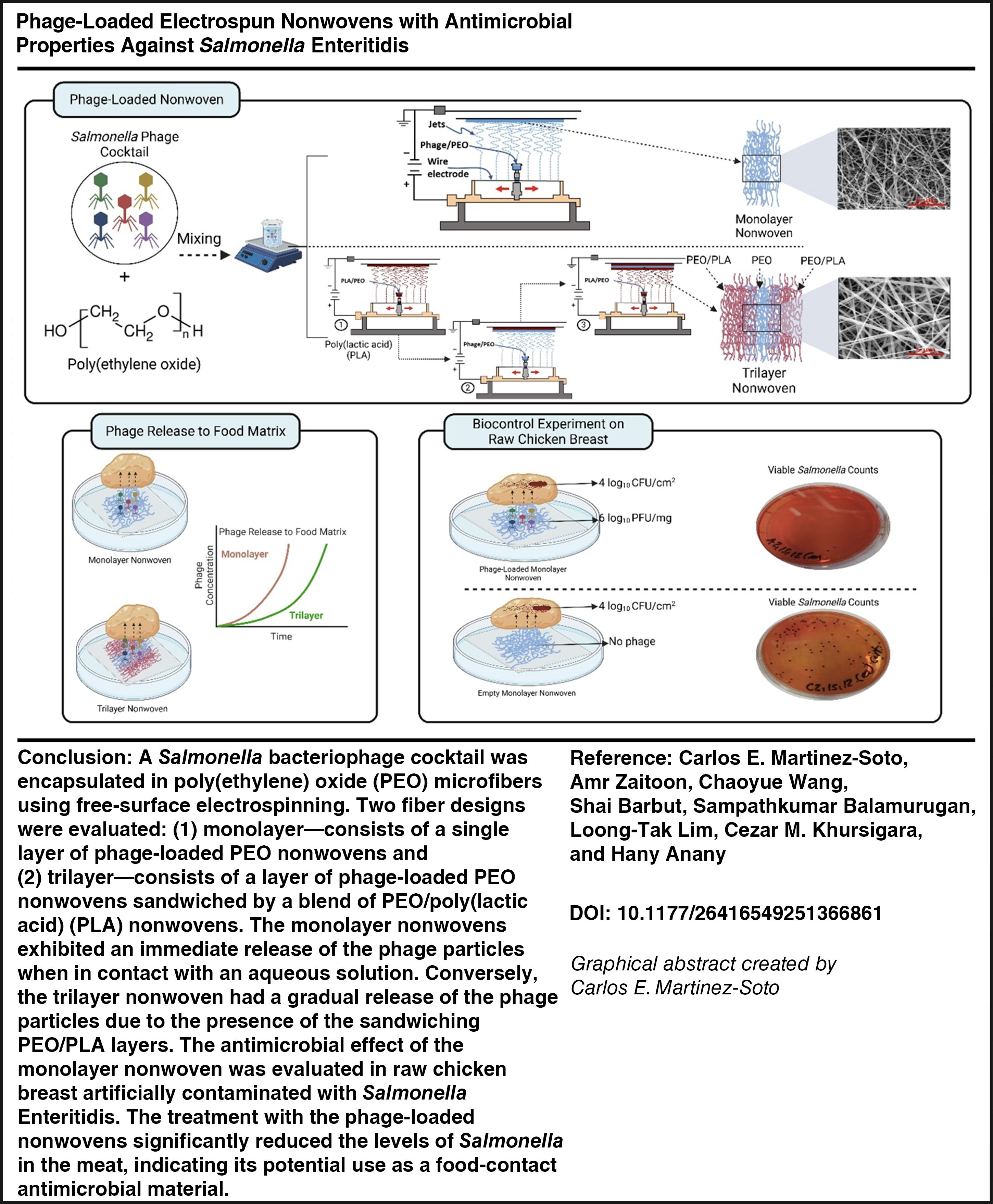
A Salmonella phage cocktail was encapsulated in poly(ethylene oxide) (PEO) nonwovens microfibers using free-surface electrospinning. The nonwovens were characterized by their morphology, phage release rate, shelf-life, antimicobial activity, and effect on phyisical meat properties.
Results:
The phage-loaded nonwoven contained 6–7 log10 PFU/mg and demonstrated efficient phage transfer to raw meats of >90%, reaching concentrations of up to 6 log10 PFU/cm2. This resulted in a reduction of Salmonella by 2 log10 CFU/cm2 after 24 h at 25°C and 15°C compared with the control. Treatment of chicken fillets with the phage-loaded PEO nonwoven did not cause changes on the physical properties of the meat.
Conclusions:
This study demonstrates that electrospinning is a feasible strategy to develop phage-loaded packaging materials to reduce the loads of Salmonella in poultry products.
Get full access to this article
View all access options for this article.