



Abstract
The increasing demand for sustainable materials has driven the development of hybrid composites to improve mechanical properties while reducing environmental impact. This study investigates the notch insensitivity and strain distribution behaviour of three hybrid composites: carbon fibre/recycled carbon fibre (CF/rCF), glass fibre/recycled carbon fibre (GF/rCF), and flax fibre/recycled carbon fibre (FF/rCF). Digital Image Correlation (DIC) analysis was employed to examine strain distribution and crack initiation across different loading conditions for both hybrid and non-hybrid composites. Results indicate that the CF/rCF and GF/rCF hybrids improved notch insensitivity and resistance to crack propagation compared to pure CF and GF composites, with rCF contributing to stress distribution and delaying crack initiation. Conversely, the FF/rCF hybrid displayed higher strain concentrations around notches than pure flax fibre, suggesting that hybridization with rCF may not provide the same benefits for natural fibres. These findings highlight the potential of hybrid composites for applications that require both durability, sustainability, and underscore the influence of fibre type on the effectiveness of hybridization. This research advances our understanding of the mechanical performance of sustainable hybrid composites and provides a foundation for the development of optimized materials for eco-friendly applications. These materials show promise for use in automotive, marine, and secondary aerospace structures where sustainable, damage-tolerant composites are needed.
Keywords
Introduction
Composite materials have revolutionized numerous industries, from aerospace to construction applications, and more importantly human life-saving, by offering a unique combination of lightweight properties, exceptional strength, and resistance to destructive environmental factors.1–4 Many advancements in production of innovative composites at material scales or in structural view, introduced composites with unique mechanical and physical features, forcing industries to re-design components using this material.5,6 In aerospace and automotive applications, normally the reinforcement component of fibre-reinforced polymer (FRP) composites, made from glass and carbon fibres, which dominated these applications due to their high specific strength, stiffness, and excellent fatigue resistance.7,8 However, the increasing concerns about the environmental impact of synthetic fibres have led researchers and industry players to explore more sustainable alternatives.9,10 While the benefits of FRP composites are clear,11,12 their production and end-of-life disposal raises serious environmental concerns. 13 For instance, the manufacturing process of carbon and glass fibres requires substantial energy, and their disposal is far from eco-friendly. The production of CFRP alone is an energy-intensive process that requires around 198-595 MJ/kg and the production of glass fibre emits around three times higher CO2 emission compared to natural fibre. 14 With the growing global emphasis on sustainability, industries are now seeking to minimize their environmental footprint. In the past decades, legislations from North American and European governments have been calling for greener manufacturing processes and materials that contribute to a circular economy rather than exacerbating waste problems. 15 Recent developments in bio-based materials such as starch-based bioplastics highlight the increasing demand for sustainable alternatives in packaging and structural applications. 16 Additionally, starting in 2015, some countries have implemented environmental legislation that requires companies to recycle at least 85% of the total end-of-life products and extract 10% of it as energy. All these mindset shifts have opened the door to the exploration of more sustainable alternatives.
One of the most promising approaches to improving sustainability in composite materials is the use of recycled carbon fibres (rCF). Unlike virgin carbon fibres which are produced through an energy-intensive process, recycled carbon fibres are recovered from waste, which reduces both the energy consumption and also the need for raw materials. 17 The recycling process of CF involves methods such as pyrolysis or mechanical reclamation in order to remove the matrix from the fibre. While rCF may not possess high mechanical strength as virgin carbon fibres due to the recycling process, it offers a valuable compromise between performance and sustainability. Although pyrolysis is one of the most commonly used methods for rCF recovery, it is an energy-intensive process. To maximize sustainability, alternative methods such as solvolysis and microwave-assisted pyrolysis are being explored to reduce energy consumption. Additionally, life cycle assessments (LCA) have shown that despite the high energy demand for recycling, the overall environmental footprint of rCF remains significantly lower than producing virgin CF.18–20
The introduction of rCF presents a major step toward reducing the environmental impact of high-performance composite. By utilizing fibres that would be discarded, recycling carbon fibre can help close the loop in the composite production system. Furthermore, the energy savings by using rCF are substantial. Recycling carbon fibre can decrease costs by 70% and energetic costs by almost 98%, which is equivalent to the annual electricity use of 175,000 houses.21,22 In this way, rCF offers a dual benefit, it reduces the ecological footprint of composite materials but still delivers mechanical properties suitable for many applications.
While the use of rCF holds great promise, it still has some challenges. Due to the recycling process, rCF has lower strength and stiffness compared to their virgin counterparts, which may limit their use in critical applications.23,24 The weakness of rCF has led researchers to explore ways in order to mitigate the performance gap between recycled and virgin fibres, with hybridization emerging as a particularly effective strategy. 25 Additionally, surface treatments such as electrochemical oxidation or re-sizing agents have been explored to restore fibre-matrix adhesion and improve mechanical properties.26,27 Moreover, the opportunity is now greater than ever, as nearly all major car manufacturers have begun incorporating bio-based composites. 28
Hybrid composites, which combine multiple types of fibres within a single material system, offer an elegant solution to the limitations of recycled carbon fibres. 25 By integrating rCF with other, stronger fibres such as glass, virgin carbon, or even natural fibres like flax, the composite’s properties can be tailored to meet specific performance requirements. This approach allows for a balance between the sustainability of rCF and the mechanical advantages of other fibres, yielding a material that is both eco-friendly and high-performing. The concept of hybridization of rCF is not new; it has been explored extensively in composite material research. However, the focus has traditionally been on improving properties such as stiffness, impact resistance, and damage tolerance. By strategically combining different fibres, engineers can create composites that leverage the best qualities of each material. Wilson et al. found that the tensile strength of rCF/flax fibre composite remains the same compared to rCF composite, while the tensile strength of rCF/vCF composite increased by 179% compared to rCF composite. 29 When intermingled rCF/vCF was combined with continuous glass fibre, Longana et al. discovered that a pseudo-ductile response was achieved. 30 Israr et al. also discovered pseudo-ductile response with hybridization of flax fibre. 31 Varying the ratios of rCF in the interwoven layer results in differences in the failure mechanism and characteristics of the stress-strain behaviour, such as the pseudo-yield point and pseudo-ductile strain, which may be useful to application that requires some warning instead of sudden material failure. 32
Many studies have been carried out to investigate the mechanical behaviours of rCF33–35 that highlight the capability of rCF to maintain good mechanical properties in composites and provide benefits in terms of weight reduction and sustainability, making them suitable for various applications. For instance, Patchen et al. investigated the mechanical properties of rCF concrete and found that the tensile, flexural, and compression strengths of rCF are comparable to those of steel fibre. Nevertheless, there has been less attention paid to how hybrid composites, especially those incorporating rCF, behave when subjected to stress concentrations like notches. This gap in the literature points to an important area of research that has significant implications for the future use of hybrid composites.
Notch insensitivity refers to the degree to which a material’s strength and durability are unaffected by the presence of a notch or other stress concentrator. In real-world applications, notches can be introduced by mechanical fasteners such as bolts, screws, or rivets. While these fasteners provide the necessary connection between parts, they often introduce stress concentrations around their attachment points.36–38 These stress concentrators disrupt the uniform distribution of stress within the material, creating localized areas of high-stress concentration that can lead to premature failure.39,40
For most non-hybrid composites, notch insensitivity is a well-studied phenomenon, as many composite structures are fastened using mechanical joints that introduce notches. However, for hybrid composites, especially those incorporating recycled fibres, the impact of notches has not been studied in depth, leaving a crucial knowledge gap in assessing their suitability for structural applications. Furthermore, composites are generally more sensitive to notches compared to most metals. 41 The relevance of notch insensitivity study is important to most industries such as automotive, marine, and aerospace which rely on composites that may be subject to stress concentrators. Understanding how rCF-based hybrid composites perform in the presence of notches is therefore vital for expanding their use into these sectors. As the demand for lightweight, high-strength materials grows, so too does the need to ensure that these materials can withstand the inevitable imperfections and stress concentrations they will encounter in service. 42
The integration of recycled carbon fibres into hybrid composite systems presents a unique opportunity to enhance their notch insensitivity. Hybrid composites, by their nature, combine the strengths of multiple fibres, which can help distribute stress more evenly around a notch and reduce the likelihood of catastrophic failure. In theory, this should make hybrid composites less sensitive to notches compared to single-fibre systems, particularly those made solely from rCF. However, this hypothesis has yet to be fully explored in the context of hybrid rCF composites. Furthermore, the notched behaviour of composites is affected by a lot of factors such as hole size, composite layup, and thickness which may affect the failure of the composites.41,43,44
To accurately assess the performance of hybrid composites, it is essential to use a testing method that can capture the behaviour of the material under loading. In this study, DIC method was employed as a cutting-edge tool to investigate the effects of open holes on composite materials. DIC is a non-contact optical measurement technique that allows the analysis of full-field deformation and strain fields of materials as they are subjected to tensile loading. DIC has been widely used in previous studies to measure the deformation of notched composite specimens.38,45–47 DIC allows non-contact measurement of strain evolution, making it crucial for assessing damage tolerance in aerospace and automotive components, where understanding failure mechanisms is vital for safety and performance.48–51 The aim of DIC in this research is to gain insights into the behaviour of notched rCF hybrid composites, particularly in terms of stress distribution and failure damage.
In summary, the growing interest in sustainability has led to the exploration of recycled carbon fibres as an eco-friendly alternative. While rCF offers clear environmental benefits, the mechanical properties may be too weak for critical applications. Hybrid composites on the other hand, which combine rCF with stronger fibres such as glass and carbon and also with natural fibre such as flax, present a promising solution. However, the notch insensitivity of these hybrid composites remains unexplored, leaving a crucial gap in our understanding of the material’s performance. This research seeks to address this gap by investigating the tensile behaviour of rCF hybrid composites under stress concentrations. The results of this research will contribute to the development of more sustainable and high-performance composite materials that meet the requirements of modern engineering applications.
Recycled carbon in hybrid composite
Materials
Three hybrid composite systems were prepared using recycled carbon fibre (rCF) combined with either glass fibre (GF), virgin carbon fibre (CF) or flax fibre (FF). Each hybrid composite consists of five layers, which is one layer of rCF sandwiched between four layers of other fibre (GF, CF, FF). The fibres were embedded in a thermoset polymer matrix. Specimens were manufactured according to ASTM D3039 standards for tensile testing. 52
The glass fibre used is unidirectional with an areal weight 200 gsm, the carbon fibre used is unidirectional with areal weight 200 gsm, the flax fibre is unidirectional with areal weight 180 gsm, the recycled carbon fibre used is non-woven IM56D with areal weight 89 gsm and the resin used is a biodegradable IB2 Epoxy Infusion Bio Resin. The test specimens were sprayed with matte white paint as the background followed by black speckles for use with the DIC system, as shown in Figure 1. Example of GF specimen with unnotched, 3.2 mm notch and 5.95 mm notch (from top).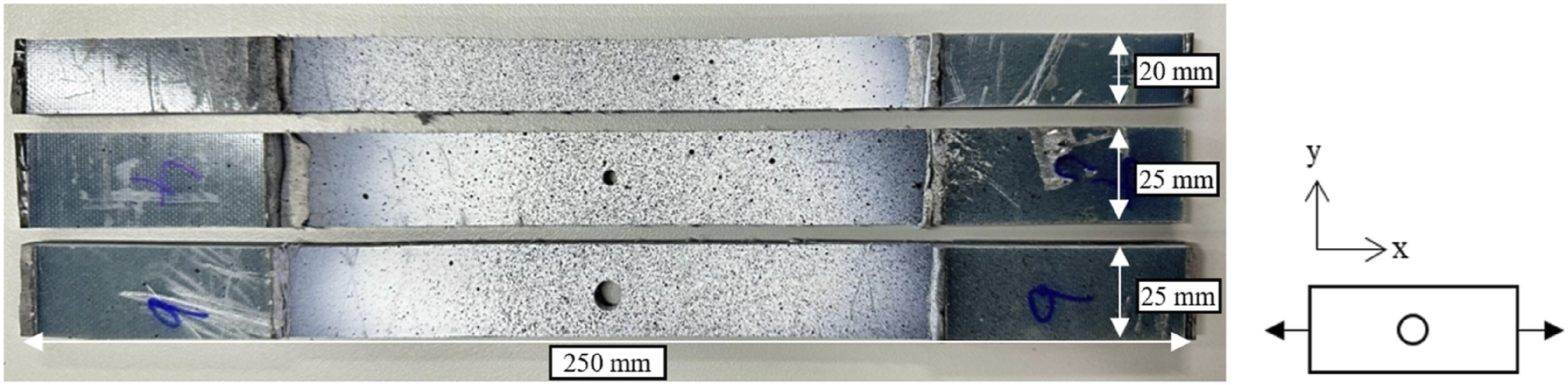
Two types of specimens were prepared for each hybrid configuration: unnotched and notched. The notched specimens were fabricated with circular holes of 3.2 mm and 5.95 mm diameters to create stress concentrators, simulating real-world damage scenarios such as fastener holes.
A unidirectional glass fibre, carbon fibre and flax fibre laminate and a hybrid of each composite laminate were fabricated using a vacuum infusion process as shown in the schematic diagram in Figure 2. A total of 12 test specimens for each material configuration were cut from the composite plate for four repetitions with each condition (unnotched, 3.2 mm notch size and 5.95 mm notch size), with dimensions following ASTM D3039
52
as shown in Table 1. Schematic diagram of the vacuum infusion process. Configurations of the test specimens.
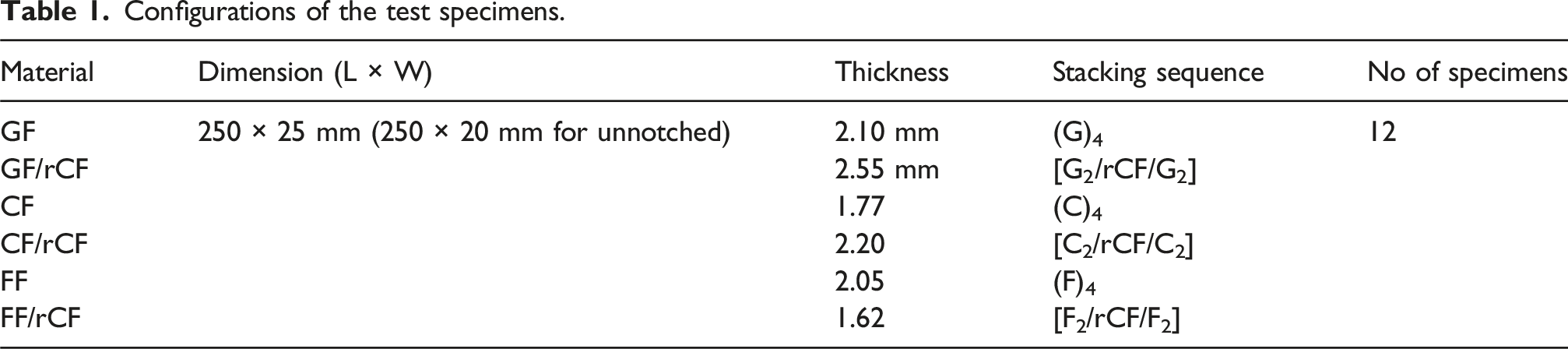
Specimens were prepared in both unnotched and notched configurations to assess the impact of stress concentrations on the mechanical performance of these materials. Notch sizes of 3.2 mm and 5.95 mm were used to create stress concentrators, allowing for a detailed comparison of the notch insensitivity and damage tolerance of the hybrid composites.
Experimental setup
The Stereo DIC system was setup as shown in Figure 3. The tensile test was conducted using Shimadzu AGX-50 kN testing machine, with a displacement rate of 1 mm/min and the DIC images were acquired at 2 Hz in order to capture strain distribution across the surface of the specimens during testing. Stereo DIC setup with sample specimen.
The stress of the specimen will be calculated by using equation (1). This nominal value is used to allow comparison between specimens. The DIC data was analyzed using correlation software provided by MatchID. Note that Digital Image Correlation (DIC) was employed exclusively to obtain surface strain and displacement fields. The data from DIC provide detailed insights into failure mechanisms, including strain localization and crack initiation. By comparing the strain fields across GF/rCF, CF/rCF, and FF/rCF hybrids, the study identified key differences in stress distribution patterns, correlating these findings with notch insensitivity factor (NIF), which was calculated using equation (2).

The NIF used in this study is defined as the ratio of net section failure stress to unnotched failure stress. A higher NIF indicates greater resistance to notch-induced failure, reflecting a material’s ability to maintain its mechanical performance in the presence of a notch.53,54 The experimental data were analyzed to assess the impact of different fibre combinations on NIF and strain distribution. Stress-strain curves were generated for each hybrid and non-hybrid, and failure stresses were recorded to calculate NIF. DIC strain fields were examined to identify regions of high strain concentration and to compare the failure behaviour between synthetic and natural fibre hybrids. The findings were summarized in terms of notch insensitivity behaviour.
Tensile behaviour of hybrid recycled carbon
Effect of outer layer ply number
To provide valuable insights into the mechanical behaviour of hybrid composites when varying the number of GF plies, Figure 4 was prepared to show a comparison of stress versus strain for the GF2/rCF/GF2 (Hybrid-4 Layer) and GF/rCF/GF (Hybrid-2 Layer) configurations. Stress-strain curves for Hybrid-4 Layer and Hybrid-2 Layer.
From the graph, it can be seen that the unnotched specimen for the hybrid configuration with four glass fibre layers consistently exhibits higher stress at all strain levels compared to the configuration with only two glass fibre layers. Specifically, the maximum stress achieved by the unnotched Hybrid-4 Layer is approximately 700 MPa, while the unnotched Hybrid-2 Layer only reaches around 480 MPa. This represents a 31.4% increase in maximum stress when two additional GF plies are added to the laminate. The increased glass fibre content improves the composite’s ability to resist external loads, thus providing higher strength and stiffness.
For the notched specimens, a similar trend is observed. The Hybrid-4 Layer hybrid with the 3.2 mm notch shows a higher failure stress at around 570 MPa compared to the Hybrid-2 Layer hybrid, which exhibits a stress of 350 MPa at a comparable strain level. This suggests a 39% reduction in failure stress for the Hybrid-2 Layer configuration when the ply count is halved. The reduction in failure-stress level can be attributed to the lower volume of reinforcing fibres, resulting in reduced load transfer and decreased notch insensitivity.
For the 5.95 mm notch, the gap in performance between the two configurations widens even further. The Hybrid-4 Layer hybrid still manages to achieve a relatively high-stress level at around 450 MPa, while the Hybrid-2 Layer hybrid fails much earlier, at 250 MPa, marking a 44.4% drop in failure stress. This demonstrates that increasing the glass fibre content significantly enhances the composite’s resistance to stress concentrations caused by larger notches.
In terms of stiffness, the slope of the initial linear region in the stress-strain curve indicates the elastic modulus. The Hybrid-4 Layer hybrid exhibits a steeper slope, suggesting a higher modulus of elasticity compared to the Hybrid-2 Layer hybrid. This is expected, as the additional GF layers provide increased stiffness. A higher modulus corresponds to better load-bearing capabilities under elastic deformation, contributing to the overall improved performance of the Hybrid-4 Layer.
Based on the superior performance of the Hybrid-4 Layer configuration, it is logical to maintain this five-layer system for further comparisons. To ensure a consistent basis for comparison, similar five-layer configurations have been applied to the carbon fibre and flax fibre hybrid systems, where each hybrid includes one layer of recycled carbon fibre sandwiched between four layers of the other material.
Hybridization of glass fibre with recycled carbon fibre
The stress-strain behaviour of the GF and GF/rCF hybrid composites reveals important insights into their mechanical performance. From the curves in Figure 5, it can be seen that GF composite reaches a higher peak stress, with a maximum value 1068.43 MPa. In contrast, the GF/rCF hybrid achieves a peak stress of 803.82 MPa. This marks a significant reduction in tensile strength of about 24.8% when recycled carbon fibre is introduced into the hybrid composite. Stress-strain curves for GF and GF/rCF.
This reduction was due to rCF typically have lower mechanical properties due to the degradation of their structure during the recycling process. Since the CF used in this study is unidirectional, the stress transfer along the loading direction is efficient compared to random fibre orientations. Previous studies have modelled how the fibre form, whether unidirectional or woven affects the mechanical performance and damage evolution in composite systems. 55 Pyrolysis or mechanical processes used to recycle carbon fibres can lead to a reduction in fibre length, and surface roughness, and sometimes create microvoids, all of which lower their ability to carry tensile loads. Additionally, since pyrolysis removes the sizing from the fibre surface, the adhesion between the rCF, matrix, and surrounding fibres is not optimized. The absence of sizing weakens the fibre-matrix interface, further contributing to the decrease in mechanical performance. 56 In contrast, the pure glass fibre composite benefits from the more consistent and intact structure of the fibres, resulting in higher strength.
Despite the reduced tensile strength in the hybrid, the GF/rCF composite shows a slight improvement in strain-to-failure. The hybrid’s slightly increased ductility, where it deforms more before failure, is likely due to the recycled carbon fibre’s ability to absorb more energy during elongation, which slows the crack initiation. This balance between strength and ductility might make the GF/rCF hybrid suitable for applications where a small reduction in peak strength is acceptable, but increased toughness and deformation before failure are advantageous.
The DIC images in Figure 6 illustrate distinct differences in failure mechanisms between the pure GF and GF/rCF hybrid composites. In the pure GF specimen, the failure is characterized by a brittle fracture with minimal visible deformation before catastrophic failure. The crack propagation is uniform and spreads rapidly across the specimen once initiated. This behaviour is typical of glass fibre composites due to their high stiffness and relatively low ductility. Failure captured by DIC for (a) GF, (b) GF/rCF.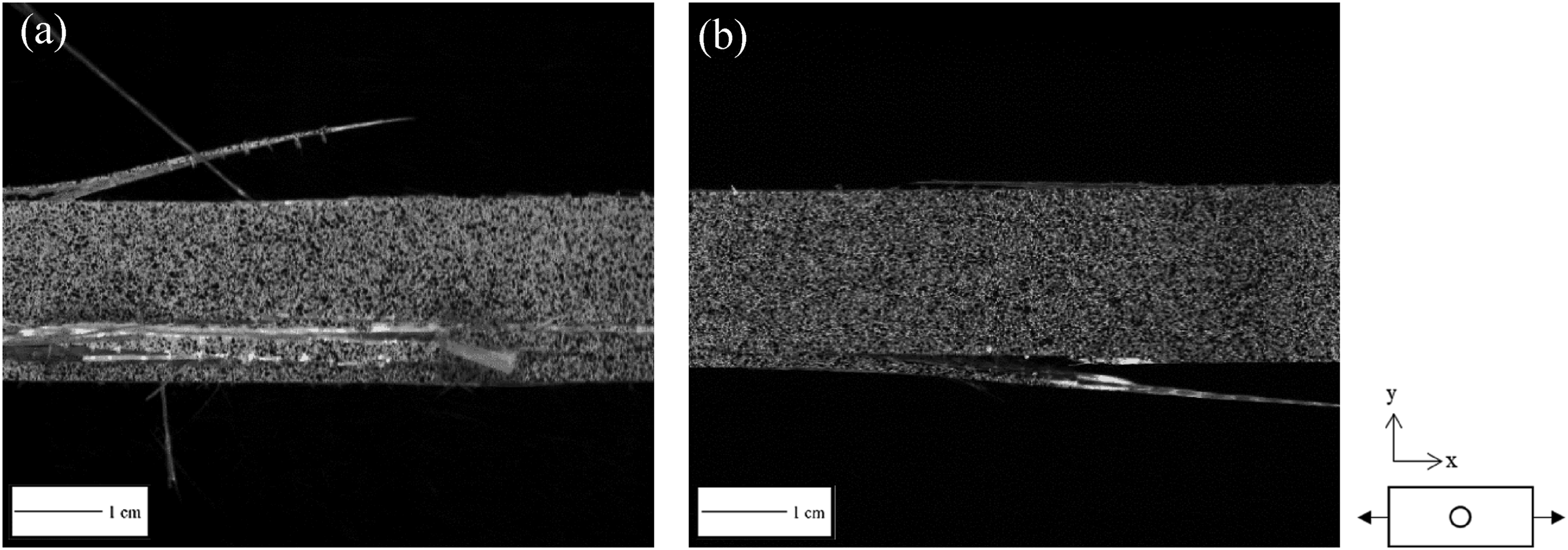
In contrast, the GF/rCF hybrid shows more localized strain concentrations. From the DIC images, cracks appear to initiate in specific regions rather than uniformly across the material. This suggests that the recycled carbon fibre acts as a toughening agent, absorbing some of the energy and slowing down crack propagation. In this case, the cracks do not spread as rapidly as in pure GF. The rCF likely redistributes the stress, preventing the material from failing as quickly as its pure GF counterpart. However, the more ductile behaviour observed in the hybrid composite means that failure occurs over a larger area rather than being confined to a brittle crack front.
Hybridization of carbon fibre with recycled carbon fibre
The stress-strain curves for CF and CF/rCF hybrids in Figure 7 indicate a performance reduction similar to the GF system, but the differences are less severe. However, the observed lower tensile strength in CF composites compared to GF may be attributed to differences in fibre volume fraction. CF composites in this study had slightly lower thickness (1.77 mm) compared to GF (2.10 mm), possibly indicating a lower fibre volume fraction, which could also contribute to the reduced peak stress. Stress-strain curves for CF and CF/rCF.
The pure CF composite achieves a peak tensile stress of 980.32 MPa, whereas the CF/rCF hybrid reaches around 875.04 MPa. This corresponds to a reduction of 10.7%, which is notably lower than the difference seen between GF and GF/rCF. This smaller drop in tensile strength suggests that the recycled carbon fibre is more compatible with carbon fibre than with glass fibre, likely due to their similar structural and chemical compositions.
The smaller reduction in tensile strength may be due to carbon fibres, unlike glass fibres, can maintain much of their stiffness and tensile strength after recycling because of the stronger interfacial mechanisms between the matrix and the fibre, which facilitate greater energy absorption during deformation. The recycled carbon fibre layer contributes to the composite’s overall strength, but still introduces some irregularities – such as fibre length variation and microvoids – that result in the slight reduction in peak stress.
Strain-to-failure remains slightly higher in the CF/rCF hybrid compared to the pure CF composite, following the trend seen in GF/rCF. The increased strain indicates that recycled carbon fibre imparts some level of toughness to the material, enhancing its ability to deform before final failure.
The DIC images in Figure 8 reveal the differences in failure progression between pure CF and the CF/rCF hybrid. In contrast to GF material, not much difference can be seen in DIC images of pure CF and CF/rCF hybrid which indicates that both materials have the same failure progression, which might be due to similar material characteristic. Failure captured by DIC for (a) CF, (b) CF/rCF.
Hybridization of flax fibre with recycled carbon fibre
The stress-strain curves for FF and FF/rCF hybrids in Figure 9 show that the hybridization of flax with recycled carbon fibre results in a relatively small reduction in tensile strength. Pure flax fibre reaches a peak stress of 222.89 MPa, while the FF/rCF hybrid reaches 207.5 MPa, representing a decrease of 6.7%. While this reduction is smaller than that observed in GF/rCF and CF/rCF, it highlights a unique interaction between natural flax fibres and recycled carbon fibre. Stress-strain curves for FF and FF/rCF.
The smaller drop in strength can be explained by the naturally ductile nature of flax fibres, which may compensate for the lower stiffness of recycled carbon fibres. Flax fibres exhibit elongation and fibre pull-out behaviours, which may interact favourably with the recycled carbon fibres, preventing a dramatic loss in tensile performance. However, the presence of recycled carbon fibres slightly reduces the toughness of the composite, leading to quicker failure than seen in pure flax fibres, which have greater inherent flexibility.
The DIC images in Figure 10 capture the differences in failure behaviour between FF and the FF/rCF hybrid. In the pure FF specimen, failure occurs in a more ductile manner, with visible deformation and fibre pull-out before final failure. In contrast, the FF/rCF hybrid exhibits a more brittle failure, with strain concentrated in localized areas. The presence of rCF reduces the ability of the FF to deform and absorb energy, resulting to a quicker crack propagation. This indicates that the rCF increases the brittleness of the hybrid system, limiting the ability of the composite to stretch and deform before breaking. While hybridizing flax fibres with recycled carbon fibre can enhance stiffness, it may also compromise the natural toughness of flax composites. Failure captured by DIC for (a) FF, (b) FF/rCF.
Open-holed tensile behaviour of hybrid recycled carbon
Glass fibre hybrid composite
The stress-strain curves for notched GF and GF/rCF specimens in Figure 11 shows the impact of notch on the tensile performance. For GF specimen, the 3.2 mm notched composite shows a peak stress of 807.26 MPa compared to 1068 MPa for the unnotched specimen, which is a reduction of 24.8%. This decrease is expected due to the stress concentration caused by the notch. However, the GF/rCF hybrid with a 3.2 mm notch shows a smaller reduction in peak stress, which was only 5%. The hybrid achieves a peak stress of 763 MPa, compared to 803 MPa for the unnotched hybrid. This smaller decrease indicates that the recycled carbon fibre improves the material’s resistance to stress concentrations by redistributing the stress more effectively around the notch. The hybrid composite was able to delay crack propagation, resulting in a smaller performance drop compared to pure GF. Stress-strain curves for notched GF and GF/rCF.
For the 5.95 mm notch, the pure GF specimen shows an even larger reduction in peak stress, falling to 870 MPa, a reduction of 18.5% compared to the unnotched case. Meanwhile, the GF/rCF hybrid shows a peak stress of 725 MPa, representing a reduction of only 9.7%. This further confirms the ability of the recycled carbon fibre to mitigate the impact of notches and improve the material’s notch insensitivity.
The DIC analysis of the GF/rCF hybrid composite in Figure 12 demonstrate a distinct strain distribution pattern that reflects the interaction between the high stiffness of the glass fibre and the added ductility provided by the recycled carbon fibre. At 60% maximum load, the GF specimen shows moderate strain around the notch. The hybrid GF/rCF composite shows lower strain concentration in the same area. This improved stress distribution indicates that the recycled carbon fibre enhances the overall ductility of the composite, allowing it to better manage the initial strain around the notch. DIC analysis of 3.2 mm notched specimen at 60%, 70%, 85% and 95% of maximum force (top, GF; bottom, GF/rCF).
When the maximum load reaches 70%, both GF and GF/rCF specimens experience an increase in strain near the notch. However, the GF/rCF hybrid composite shows a more gradual increase, indicates that the recycled carbon fibre delays the crack initiation by distributing the load. By 85% of maximum load, both specimens show evidence of crack formation, as indicated by areas where DIC is unable to capture strain data along the crack path. This limitation in strain capture reveals the areas where material failure is beginning to occur. However, at the 95% load level, the difference becomes apparent, the crack in the GF specimen is more pronounced, with a severe strain concentration signalling imminent failure. In comparison, the GF/rCF hybrid composite exhibits a less severe crack, suggesting that the recycled carbon fibre enhance the composite’s damage tolerance due to better stress distribution. This enhanced performance at high load levels indicates that GF/rCF hybrids may offer superior durability in applications where both high stiffness and resistance to cracking are required.
The DIC images in Figures 13 and 14 show the failure patterns for the 3.2 mm and 5.95 mm notched GF and GF/rCF specimens. In the 3.2 mm notched pure GF specimen, cracks initiate at the notch and propagate rapidly across the specimen, leading to sudden failure. The stress concentration around the notch accelerates the failure process, resulting in a brittle fracture. For the GF/rCF hybrid with a 3.2 mm notch, cracks still initiate at the notch, but the propagation seems more controlled. The recycled carbon fibre layer redistributes the strain around the notch, preventing the rapid crack growth seen in pure GF. Failure captured by DIC for 3.2 mm notch of (a) GF, (b) GF/rCF. Failure captured by DIC for 5.95 mm notch of (a) GF, (b) GF/rCF.

For the 5.95 mm notched specimens, the pure GF composite shows a similar failure pattern to the 3.2 mm notch, with cracks spreading quickly from the notch. In contrast, the GF/rCF hybrid again demonstrates improved damage tolerance, with cracks propagating more slowly and strain distributed more evenly around the notch. This confirms that the rCF layer enhances the GF ability to resist failure in the presence of stress concentrators.
Carbon fibre hybrid composite
The stress-strain curves for notched CF and CF/rCF specimens in Figure 15 illustrate how notches affect CF composites. For the pure CF composite with a 3.2 mm notch, the peak stress drops to 771 MPa, compared to 980 MPa for the unnotched specimen, a reduction of 21.3%. This significant decrease is expected due to the brittle nature of carbon fibre composites, which are highly sensitive to stress concentrations. The CF/rCF hybrid, however, shows a smaller reduction in peak stress. The 3.2 mm notched hybrid reaches a peak stress of 859 MPa, compared to 875 MPa for the unnotched hybrid, a reduction of only 1.8%, indicating that the rCF significantly improves the composite’s ability to resist stress concentrations, same as GF system. Stress-strain curves for notched CF and CF/rCF.
For the 5.95 mm notched CF specimen, the peak stress falls to 681 MPa, representing a reduction of 30.5%. In the CF/rCF hybrid, the peak stress drops to 698 MPa, a reduction of 20.2% compared to the unnotched case. Both 3.2 mm notched and 5.95 mm notched results further highlight the advantage of hybridization with recycled carbon fibre, which enhances the material’s resistance to notch-induced failure.
The DIC images for CF composite and CF/rCF hybrid composite in Figure 16 reveal distinct strain patterns that evolve as the load increases. At 60% of maximum load, both CF and CF/rCF specimens display early signs of strain concentration around the notch area, indicating the initial stage of stress buildup. However, as the load rises to 70% of the maximum, a marked difference emerges between the two specimens. The strain distribution of CF composite decreases near the notch due to the initiation of an early crack, which causes localized stress to decrease near the crack, leading to a reduction in strain readings. On the other hand, the CF/rCF hybrid composite maintains a more consistent strain distribution. DIC analysis of 3.2 mm notched specimen at 60%, 70%, 85% and 95% of maximum force (top, CF; bottom, CF/rCF).
At 85% maximum load, the differences in strain distribution becomes more obvious. The CF specimen shows visible crack around the notch, resulting to inability of DIC to capture strain readings in the affected regions. This crack continues to grow as the load reaches 95%, compromising the structural integrity of the CF composite. Conversely, the CF/rCF hybrid composite shows a more even strain distribution, with no visible crack up until the maximum load of 95%. This resilience suggests that the recycled carbon fibre plays a significant role in increasing the crack resistance and damage tolerance of the hybrid material, especially in area affected by high-stress concentration. The delayed crack initiation in CF/rCF is due to the recycled carbon fibre’s ability to distribute the energy, contributing to a more durable and notch-insensitive material.
The DIC images in Figures 17 and 18 show the differences of failure behaviour between notched CF and CF/rCF specimens. In the 3.2 mm and 5.95 mm notched pure CF specimen, cracks initiate at the notch and propagate rapidly, resulting to a brittle fracture. The high-stress concentration at the notch accelerates crack growth, leading to sudden failure. In both notched CF/rCF hybrid, the cracks still initiate at the notch, but their propagation is slower. The recycled carbon fibre layer helps redistribute the strain around the notch, preventing rapid crack growth and improving the material’s notch insensitivity. Failure captured by DIC for 3.2 mm notch of (a) CF, (b) CF/rCF. Failure captured by DIC for 5.95 mm notch of (a) CF, (b) CF/rCF.

Flax fibre hybrid composite
The stress-strain curves for notched FF and FF/rCF hybrids in Figure 19 reveal that the addition of recycled carbon fibre slightly reduces the composite’s resistance to stress concentrations. The 3.2 mm notched pure flax specimen shows a peak stress of 177 MPa, compared to 223 MPa for the unnotched case, a reduction of 20.6%. The FF/rCF hybrid, however, shows a larger reduction, with a peak stress of 155 MPa compared to 208 MPa for the unnotched hybrid, a reduction of 25.5%. Stress-strain curves for notched FF and FF/rCF.
For the 5.95 mm notch, the pure flax specimen shows a peak stress of 159 MPa, representing a reduction of 28.7%. The FF/rCF hybrid exhibits a peak stress of 144 MPa, a larger reduction of 30.7%. These results suggest that the hybridization of flax with recycled carbon fibre slightly reduces the material’s insensitivity to stress concentrations, likely due to the brittle nature of recycled carbon fibre, which limits the composite’s ability to deform and absorb energy before failure.
The DIC analysis for the FF/rCF hybrid in Figure 20 provides valuable insights into the mechanical behaviour of natural fibres within a hybrid composite structure. At the 60% load level, the FF specimen displays less severe strain around the notch compared to the FF/rCF hybrid composite, indicating that the pure flax fibre may initially distribute stress more effectively. This trend continues as the load increases to 70%, 85%, and 95%, with the FF specimen consistently showing a less severe strain distribution than the hybrid FF/rCF. This unexpected result suggests that, in the case of flax fibre, the addition of recycled carbon fibre may slightly reduce the material’s natural ability to spread strain evenly across the surface. DIC analysis of 3.2 mm notched specimen at 60%, 70%, 85% and 95% of maximum force (top, FF; bottom, FF/rCF).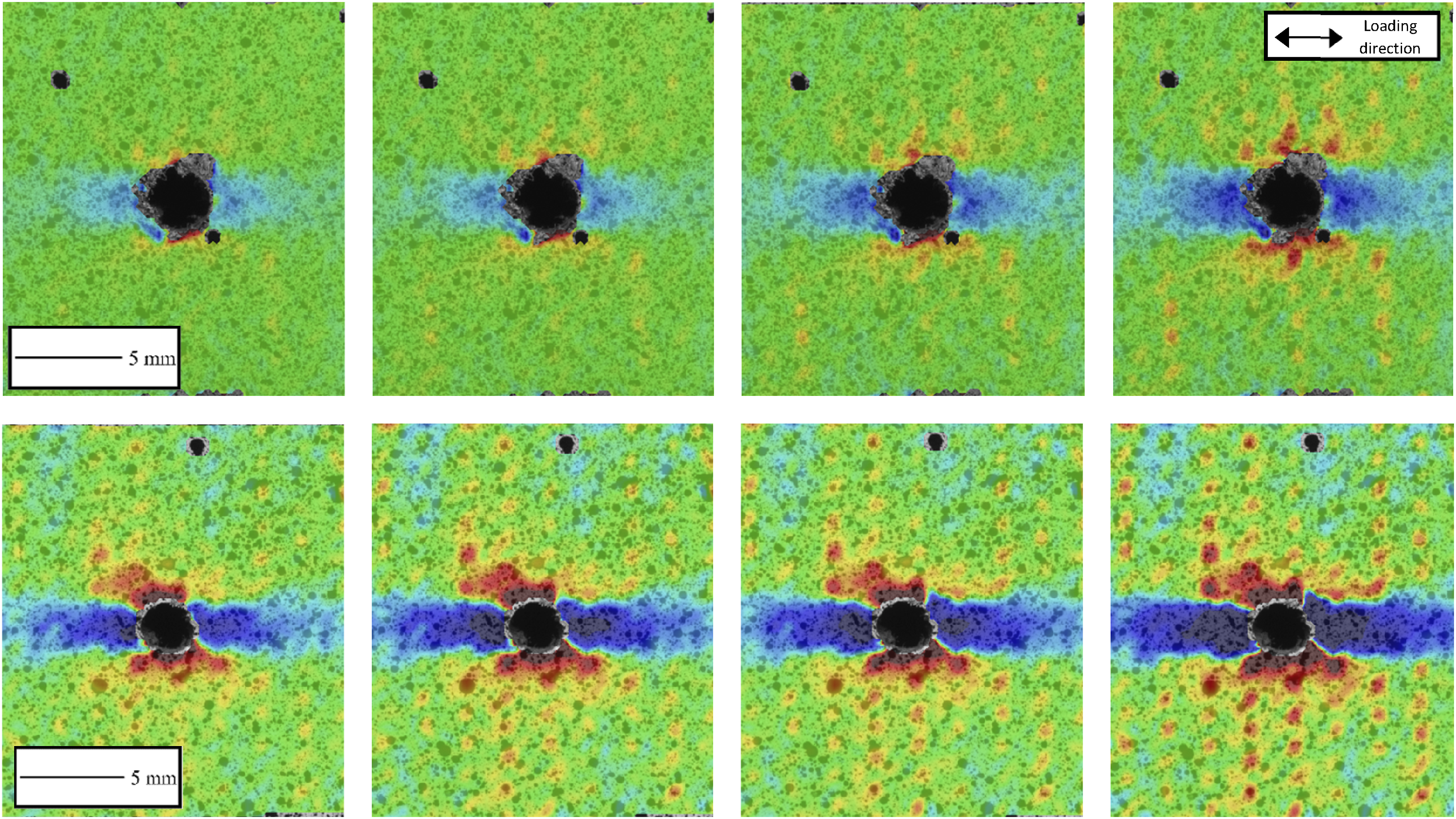
One possible explanation for this behaviour is that the recycled carbon fibre layer, while adding stiffness, may introduce localized stiffness mismatches in a naturally more ductile flax fibre matrix, leading to increased strain concentration around the notch in the FF/rCF hybrid composite. As the load approaches 95%, the FF specimen still maintains a broader strain distribution without clear signs of crack initiation, indicating that flax fibre on its own may offer a degree of notch insensitivity. In contrast, the FF/rCF specimen demonstrates more localized strain, suggesting that the hybridization of flax with recycled carbon fibre might reduce the flax fibre’s inherent ability to resist concentrated stress. This finding implies that, unlike the synthetic fibres, the natural flax fibre may not benefit as much from hybridization with recycled carbon fibre in terms of notch insensitivity.
The DIC images in Figures 21 and 22 highlight the failure patterns for notched FF and FF/rCF specimens. In the 3.2 mm notched specimen, both system failure is characterized by significant deformation and fibre pull-out, indicating a ductile failure mode, suggesting that both FF and FF/rCF can absorb significant energy through elongation. Failure captured by DIC for 3.2 mm notch of (a) FF, (b) FF/rCF. Failure captured by DIC for 5.95 mm notch of (a) FF, (b) FF/rCF.
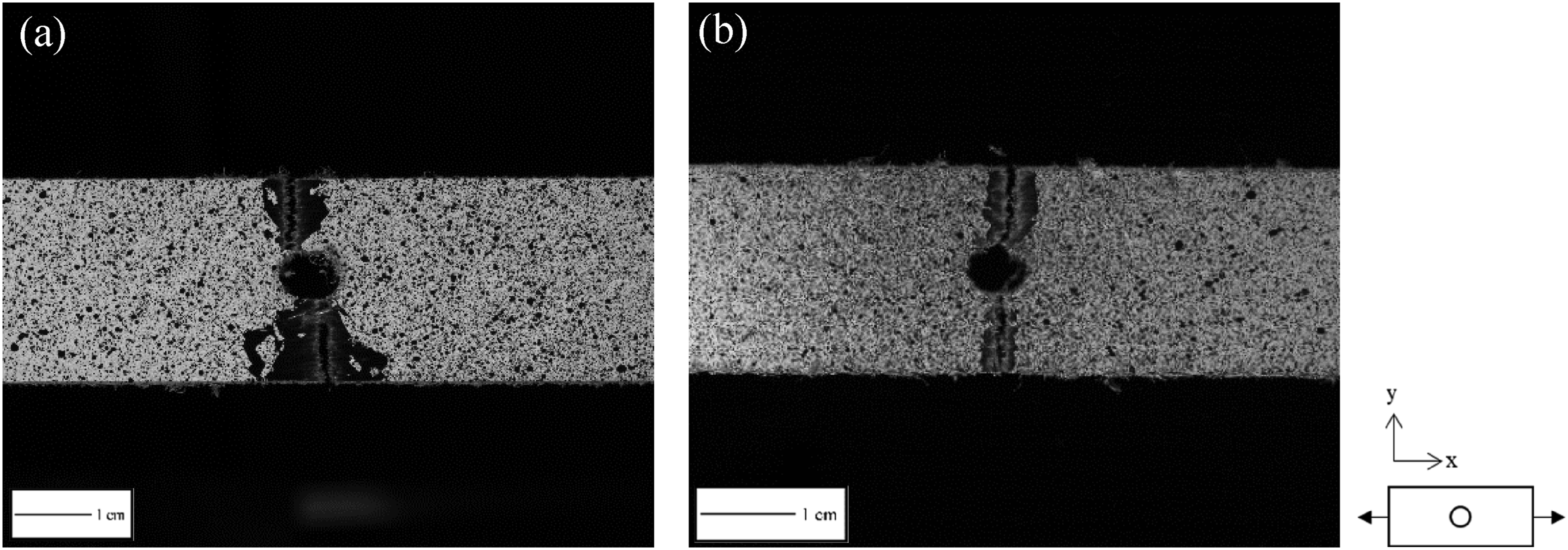
The same failure pattern can be seen on 5.95 mm notched specimen for both FF and FF/rCF. This indicates that the failure difference of FF with and without rCF is not significance and cannot be distinguished from the image captured by DIC.
Modulus of toughness
Modulus of toughness of tested specimens.

For unnotched specimens, pure GF exhibits the highest modulus of toughness at 14.534 MPa, showcasing the high energy absorption capabilities of glass fibre composites. The high modulus of toughness makes GF composites desirable for structural applications that require both high strength and the high ability to absorb energy before failure. Interestingly, the hybrid GF/rCF composite shows only 0.58% reduction in modulus of toughness compared to pure GF, from 14.534 MPa to 14.450 MPa. This slight reduction suggests that hybridizing GF with rCF does not affect its ability to absorb energy. The slight decrease might be due to damages on recycled fibres such as surface defects or micro voids that slightly lower their toughness.
In contrast, the CF-based materials show higher difference between pure CF and the hybrid CF/rCF composite. The pure CF composite has a modulus of toughness of 6.009 MPa, which is significantly lower than GF, reflecting the lower toughness of carbon fibre composites. However, the CF/rCF hybrid has a modulus of toughness of 7.552 MPa, 25.7% higher compared to pure CF. This notable improvement suggests that rCF contributes to the overall toughness of the hybrid composite. The additional toughness likely results from the ability of the recycled carbon fibres to delay crack propagation and allowing the material to absorb more energy before fracture.
The flax fibre-based composites, however, shows a different result compared to hybrid carbon and hybrid glass composites. Pure FF has a modulus of toughness of 2.475 MPa, reflecting the inherently lower mechanical properties of natural fibres compared to synthetic fibres such as GF and CF. When rCF is introduced in the FF/rCF hybrid, the modulus of toughness decreases to 1.872 MPa, a reduction of 24.4%. This significant drop suggests that hybridizing flax with recycled carbon fibre reduces the composite’s ability to absorb energy before failure, likely because the recycled carbon fibres introduce a brittle component into the naturally more ductile flax properties. The presence of recycled carbon fibre reduces the strain-to-failure and increases the brittleness of the hybrid, preventing it from deforming as much as pure flax before cracking.
When notches are introduced into the specimens, the modulus of toughness decreases significantly across all materials, as expected. Notches create stress concentrations that accelerate failure, thereby reducing the material’s capacity to absorb energy. For the 3.2 mm notched specimens, pure GF exhibits a modulus of toughness of 9.776 MPa, while the GF/rCF hybrid shows 10.340 MPa, which is 5.8% improvement. The increase in toughness suggests that the presence of recycled carbon fibre enhances the hybrid’s ability to resist stress concentration and delay failure, making it more suitable for applications where defects or stress concentrators, such as holes or cuts are expected.
In the case of carbon fibre composites, the 3.2 mm notched CF specimen shows a modulus of toughness of 3.384 MPa, while the CF/rCF hybrid has 29.9% higher toughness modulus, which is 4.395 MPa. This large increase further highlights the benefits of recycled carbon fibre in enhancing the toughness of carbon-based hybrids, particularly under conditions where stress concentrations are present. In this case, the recycled carbon fibres likely act as crack stoppers, reducing the speed of crack propagation and allowing the material to absorb more energy before fracture.
For flax-based composites, the 3.2 mm notched pure flax specimen shows a modulus of toughness of 1.219 MPa, whereas the FF/rCF hybrid reduced 30.1% of the modulus down to 0.852 MPa. This decrease indicates that the introduction of recycled carbon fibre compromises the natural toughness of flax composites, making them more prone to brittle failure when notches are present. This result suggests that hybridizing with recycled carbon fibre may not always be beneficial.
The 5.95 mm notched specimens follow a similar trend, with the modulus of toughness decreasing further as the notch size increases. For GF, the modulus of toughness drops to 7.971 MPa for the pure composite and 7.908 MPa for the GF/rCF hybrid, a minimal decrease of 0.79%. This indicates that even under more severe stress concentrations, recycled carbon fibre does not significantly reduce the energy absorption capacity of glass fibre composites. However, for CF, the hybrid shows a 16.6% improvement in toughness compared to pure CF under 5.95 mm notched. In contrast, flax fibre composites exhibit a pronounced reduction in toughness with increasing notch size. The modulus of toughness for pure flax drops to 0.893 MPa, while the FF/rCF hybrid falls to 0.651 MPa, a reduction of 27.1%. This further reinforces the idea that recycled carbon fibre does not synergize well with flax in terms of toughness, particularly when stress concentrations are introduced.
Notch insentivitiy factor
Summary of the test results for the unnotched and notched specimens.

For the GF composite, the NIF for the 3.2 mm notched and 5.95 mm notched specimen is 0.87 and 0.81, indicating a 13% and 19% strength reduction in the presence of the notch, respectively. The larger notch increases the stress concentration, leading to a more pronounced drop in performance. In contrast, the GF/rCF hybrid shows much higher NIF values, particularly for both notches, where the NIF is 0.95 and 0.90 for 3.2 mm notched and 5.95 mm notched specimen, indicating only 5% and 10% reduction in strength. While the larger notch still leads to a performance drop, the hybrid’s NIF remains higher than that of pure GF, confirming the beneficial effect of recycled carbon fibre in enhancing the hybrid’s ability to reduce notch-induced failure.
For the CF composite, the NIF for the 3.2 mm notched specimen is 0.79, indicating a 21% reduction in strength due to the notch. Carbon fibre composites are known for their brittleness and sensitivity to stress concentrations, and this result aligns with expectations. For the 5.95 mm notched specimen, the NIF further drops to 0.70, a 30% reduction in strength. The significant drop suggests that pure CF composite is highly notch-sensitive. However, the CF/rCF hybrid shows a remarkable improvement in notch insensitivity. The NIF for the 3.2 mm notched hybrid is 0.98, which is only 2% reduction in strength compared to the unnotched specimen. This minimal reduction suggests that the rCF significantly improves the material’s ability to resist notch-induced failure. The NIF for the 5.95 mm notched specimen is 0.80, representing 20% reduction in strength, which is still a notable improvement over pure CF composite. These results suggest that recycled carbon fibre enhance the toughness and damage tolerance of CF composites with the presence of stress concentrators.
For the FF composite, the NIF for the 3.2 mm notched specimen is 0.80, indicating a 20% reduction in strength due to the notch. Flax fibres, while more ductile than synthetic fibres, still exhibit low insensitivity to notches, as stress concentrations can reduce their ability to deform and absorb energy. For the 5.95 mm notched specimen, the NIF drops to 0.71, representing a 29% reduction in strength. The larger notch leads to greater stress concentration, reducing the material’s capacity to resist failure. The FF/rCF hybrid, however, shows even lower NIF values, with the 3.2 mm notched specimen exhibiting a NIF of 0.74, representing a 26% reduction in strength compared to the unnotched specimen. For the 5.95 mm notched specimen, the NIF drops further to 0.69, indicating a 31% reduction in strength. These results support the earlier finding that hybridizing flax fibre with recycled carbon fibre does not improve its notch insensitivity. In fact, the recycled carbon fibre appears to increase the material’s brittleness, making it more prone to notch-induced failure.
Figure 17 visually illustrates the differences in NIF between hybrid and non-hybrid composites for both notch sizes. It is clear from the graph that the GF/rCF and CF/rCF hybrids consistently outperform their non-hybrid counterparts in terms of notch insensitivity. The hybrids show higher NIF values across both notch sizes, indicating that recycled carbon fibre enhances the materials’ ability to maintain their strength in the presence of stress concentrators. In contrast, the FF/rCF hybrid shows lower NIF values compared to pure flax, reinforcing the idea that recycled carbon fibre may not be as beneficial when combined with natural fibres like flax (Figure 23). Notch insensitivity factor of the open-hole specimens.
Concluding remarks
This research examined the mechanical behaviour of hybrid composites of rCF combined with GF, CF and FF undergoing tensile testing. The findings indicate that the hybridization of rCF with different fibre provides a promising path toward sustainable and high-performance materials. DIC analysis reveals that GF/rCF and CF/rCF hybrids have a more evenly distributed strain fields and delayed crack initiation compared to their pure composite counterpart. The DIC analysis for FF and FF/rCF hybrid however, shows that the hybrid counterpart has more uneven strain distribution compared to pure FF, which indicates that FF has better stress distribution.
The NIF analysis further confirmed that the hybrid composites can effectively reduce stress concentration effects for GF/rCF and CF/rCF hybrids with both displayed superior resistance to stress concentration around notches compared to pure GF and CF. This suggests that combining rCF with synthetic fibres results in a composite that is capable of distributing stress more efficient. In contrast, FF/rCF shows the opposite trend, the inclusion of rCF decrease the material’s notch insensitivity. These results have significant implications for the use of recycled carbon fibre hybrids in structural applications, especially in industries like aerospace, marine and automotive where both sustainability and performance are crucial. The ability of GF/rCF and CF/rCF hybrids to manage stress concentration makes them promising candidates for components subjected to mechanical fastening or other potential damage points.
Future research should focus on optimizing fibre-matrix compatibility in rCF hybrids and exploring other natural fibre reinforcements to enhance interfacial bonding. Additionally, studying the long-term durability of these hybrids under fatigue loading and real-life conditions will provide more understanding of their practicality to be used in the industries. In conclusion, hybrid composites incorporating recycled carbon fibre show strong potential as sustainable, efficient materials that maintain structural integrity under stress concentration. This research advances our understanding of how hybrid configurations impact stress concentration behaviour and opens new avenues for engineering recyclable, high-performance composites tailored for real-world applications.
Footnotes
Acknowledgements
The authors highly acknowledge the financial support from the Ministry of Higher Education, Malaysia under Fundamental Research Grant Scheme, FRGS/1/2022/TK10/UTM/02/27 (R.J130000.7851.5F517). Also, the authors appreciate the support of Chair of Composite Materials and Technical Mechanics, Faculty of Mechanical Engineering, Universität der Bundeswehr München (UniBW) through the project ‘Development of Concept and Materials for a Space-adapted Hydrogen Tank for Efficient Integration in Aircraft’, under the guidance of German Aerospace Center (DLR), which is financed by the ‘Bundesministeriums für Wirtschaft und Klimaschutz’ - registration number 20E2204C. The financial support by Universität der Bundeswehr München for Open Access publication is also acknowledged.

Funding
The authors disclosed receipt of the following financial support for the research, authorship, and/or publication of this article: The authors highly acknowledge the financial support from the Ministry of Higher Education Malaysia under Fundamental Research Grant Scheme, FRGS/1/2022/TK10/UTM/02/27 (R.J130000.7851.5F517). Also, the authors appreciate the support of Chair of Composite Materials and Technical Mechanics, Faculty of Mechanical Engineering, Universität der Bundeswehr München (UniBW) through the project ‘Development of Concept and Materials for a Space-adapted Hydrogen Tank for Efficient Integration in Aircraft’, under the guidance of German Aerospace Center (DLR), which is financed by the ‘Bundesministeriums für Wirtschaft und Klimaschutz’ - registration number 20E2204C.
Declaration of conflicting interests
The authors declared no potential conflicts of interest with respect to the research, authorship, and/or publication of this article.