



Abstract
This study uses functionally graded material (FGM) consisting of aluminum (Al) and iron (Fe) produced by powder metallurgy method with different microstructures. Al and Fe powders are prepared, mixed at different ratios for each step, and compressed by the hot pressing method to obtain FGM. The four layer FGM composite was fabricated by employing powder metallurgy method. The layers were stacked with a surface of Al and Fe 80–20 wt% on top (1st layer) with succeeding layers of Al and Fe at (60–40 wt% (2nd layer), 40–60 wt% (3rd layer), and 20–80 wt% (4th layer)). The distributions at interfaces between the stages are characterized by X-ray diffraction (XRD) and scanning electron microscopy (SEM), and energy-dispersive X-ray spectroscopy (EDS). Obtained data indicate that Al and Fe are homogeneously distributed in the structure in all grades. Increasing the Fe ratio in the layers creates porosity in the Al phase. A Scherrer–Warren equation calculates grain sizes and the lattice parameters in XRD analyses. Vickers indentation is used to determine the hardness of the stages and interstages of the FGM. It is shown that the microstructural and mechanical properties of FGM composites increase by increasing Fe material composition. The results of 4th grade (20% Al + 80% Fe) composite showed improved interface layer microstructure and a maximum hardness of 105.75 HV for grades and 97 HV for interfaces of the FGM composite.
Keywords
Introduction
The aluminum market has grown significantly in recent decades. Aluminum alloys are popular due to their lightweight nature, excellent intrinsic durability, and corrosion resistance. 1 These qualities have allowed the car industry to replace heavy steel components with aluminum ones, reducing cost, structural weight, and CO2 emissions. Aluminum alloys have good qualities that allow the manufacturing of homogenous components with outstanding performance, but some applications may require graded structures. 2 Functionally graded materials (FGMs) have varying compositions or microstructures. These FGM layered materials are widely used in engineering applications. 3 The materials forming the layers exhibit different properties under various thermal stresses or mechanical loads. Due to the difference in properties, some physical and chemical problems are encountered. Functionally graded materials have emerged to solve these problems recently. Functionally graded materials are obtained by gradually distributing materials with different physical and chemical properties in layers. Engineering materials exhibit different properties in different regions. For example, low surface abrasion resistance or low thermal conductivity and high inner layers' toughness provide superior technological advantages.4,5 The changes in the composition endow materials with specific features such as damage and crack propagation or blocking by improving the compatibility of phases such as metal and ceramics. 6 Owing to these features, FGMs are widely used in thermal barriers for space, armor, cutting tools, and biomedical applications. 5 In the thermal environment, some parametric studies on the effect of temperature-dependent properties, material distribution, temperature fields, and temperature rise are investigated to study the acoustic response characteristics of FGM plates. 7
Functionally graded materials are produced by different methods, such as plasma thermal spray, chemical vapor deposition, and powder metallurgy.5,8–10 In powder metallurgy, different powder compositions are used in the mold to obtain compositions with different microstructures in steps, creating a gradual progression with boundaries at the interfaces. 11 The powder metallurgy method is widely used for easy production of FGM, and the composition can be completely controlled.12–14 However, bending and distortion due to uneven shrinkage during sintering can cause cracks in the FGMs.8,9
Aluminum (Al)-based FGMs have been shown to have superior mechanical performance, wear resistance, and microstructural control compared to traditional aluminium matrix composites (AMCs). Aabid et al. 15 use an experimental approach to investigate the dry sliding wear behavior of aluminum-based hybrid metal matrix composites (MMCs). It uses data computing and experiment design to optimize composites' wear behavior. Results show that B4C particles increase MMC wear resistance compared to other materials. Another study 16 shows that SiC addition improves wear resistance, hardness, and coefficient of friction of composite materials. Shaikh et al. 17 demonstrate that adding RHA improves the hardness and wear behavior of reinforced aluminum composites fabricated using powder metallurgy.
Rajasekhar et al. 18 utilized powder metallurgy to create two-layered Al-Cu FGMs. The powder mixture of Cu (5, 10, and 15 wt%) was hot pressed at 400 MPa, layer by layer, for 3 h at 550°C. Then, FGM attributes were compared to homogeneous Non-FGM samples. The 10% Cu FGM had better interface microstructure, microhardness, and relative density than the 5 and 15 wt % Cu FGMs. Siva et al. 19 utilized powder metallurgy to manufacture stepwise Al and SiC composite FGMs with graded layers. The layers were made of the following compositions of Al and SiC: layer 1 (90–10 wt%) and layer 2 (85–15 wt%), respectively. They found high interfacial contact between layers and even particle distribution in the bulk device. Hence, changing layer hardness creates functionally graded materials in powder metallurgy. It was shown that microcracks and interfacial bonding increase FGM's mechanical properties. Another study showed that 15% of reinforcing layers had more homogeneous SiC dispersion. 20 The four-layered FGM with 15 wt% SiC showed maximum hardness at 71 HV and 61 kJ/m2 impact strength. The results were attributed to no crack development, dislocation migration, or particle load bearing. It is shown that ceramic and metallic elements strengthened Al-based FGM. Vijaya et al. 21 produced the five-layered functionally graded metal-ceramic composite. SiC grew Al/SiC crystallites, whereas 10% SiC FGM exhibited a maximum 148.5 Hv hardness.
The literature study found numerous researchers used multiple aluminum grades to make functionally graded materials. However, the influence of graded layers and Wt% of Fe has yet to be examined on Al/Fe FGM microstructure and mechanical characteristics. Incorporating Fe as a FGM into Al can help overcome some of the material's limitations. Due to Fe and its intermetallic compounds, adding a Fe FGM can strengthen and harden the composite material. Moreover, when used as a transition layer, the graded material may reduce thermal stresses and increase compatibility between dissimilar components.
The present investigation studied the microstructural and mechanical properties of four functionally graded powder metallurgy materials with varied layers and reinforcing weight percentages. In this study, FGM with a surface of Al and Fe (80–20, 60–40, 40–60, 20–80 wt%) is produced by hot pressing. The interfacial state between the grades of functionally graded material consisting of Al and Fe and the powder distribution in grades are microstructurally examined by scanning electron microscopy (SEM) - energy-dispersive X-ray spectroscopy (EDS) and X-ray diffraction (XRD).
Materials and method
In producing functional grade materials, Al powders (99.9% pure and <150 microns) and Fe powders (99.9% pure and <100 microns) of Höganas ABC 100.30 were used. Powders were mixed in 80% Al + 20% Fe for grade 1, 60% Al + 40% Fe for 2nd grade, 40% Al + 60% Fe for 3rd grade, and 20% Al + 80% Fe for 4th grade. These mixed powders were stacked layer by layer in the mold and then cold pressed under a pressure of 30 MPa. Subsequently, these compacted powders were heated in a mold at 500°C, then hot pressed under 250 MPa. Samples of 60 × 60 × 40 mm dimensions were obtained after hot pressing (Figure 1). The obtained samples were characterized by SEM, EDX, and XRD analysis, and the hardness values between layers were determined. Sample layers obtained after hot pressing.
X-ray diffraction spectra were obtained on a Bruker D8 Advance with Ni-filtered Cu Kα (λ = 1.5418 Å) radiation in the range of 2θ = 30–90° at room temperature at a scan speed of 3°/min and a speed increment of 0.02°. The grain size and lattice parameters were determined from XRD measurements using Scherrer–Warren equation and EVA (14.0.0.0 PDF MainEx Library version 9.0.133 Bruker) program, respectively.
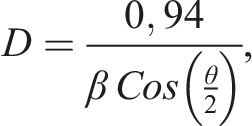
The average grain sizes of sample zones were calculated from XRD patterns using Scherrer–Warren equation22,23:
Results and discussions
Microstructural study
Scanning electron microscopy and EDS analyses of the 4th stage of FGM are shown in Figure 2(a). The SEM images in Figure 2(b) show Al gray phase and the Fe phase as a white phase. Results depict that both Al and Fe are homogeneously distributed in the structure. Similarly, EDS analysis data suggest that Fe is dominant (98.48%) in the white phase while Al is 98.83% in the gray phase, confirming their uniform distribution throughout the structure. (a) SEM image and (b) EDS analysis of Al and Fe containing FGMs at the 4th stage.
Scanning electron microscopy images of Fe and Al-containing grades at different ratios are given in Figure 3. The pictures show that Al and Fe in the structure show a homogeneous distribution at the 4th stage. Results reveal that Al and Fe are homogeneously distributed in the structure at every stage. The ratios of the white and gray regions vary accordingly depending on the Al and Fe ratios in the grades. Therefore, the Al and Fe ratio is changed harmoniously from the 1st stage to the 4th stage. SEM images of FGM layers containing Fe and Al at different ratios.
Figure 4 reveals that the status of the Al and Fe phases of the 4th layer is given, suggesting that both Al and Fe phases enter into each other. Increasing the Fe ratio in the layers generated porosity in the Al phase. However, the increase in the Al ratio decreases the porosity. Since Fe's hardness is higher than Al, Fe's compressibility is higher than Al's when the proportion of Fe in the structure is high, and Al remains in the Fe phases. In this case, the Al compressibility between the Fe phases decreases while porosity increases in the Al phases. One reason for the increase in porosity is the compressibility of the mixture, with an increase in the ratio of hard phase at low compressibility in the mixture.
24
SEM images of the layers.
Figure 5 shows SEM images of the interface state between layers. There is a compatible interface with the temperature and pressure used in the hot pressing process. Different microstructures have formed at the interface between the layers, having boundaries and following each other. In the 4th layer, an interface is formed as a line since the Fe ratio is high. Fe is harder than Al; therefore, the Fe powders move more easily through the structure and the increasing Al ratio due to the pressure and temperature effect. Thus, in the interfacial images in Figures 5b and 5(c), one of Al and Fe enters another. In addition, since the grain size of Fe powders used in FGM production is smaller than Al powders, Fe addition increases the Fe diffusion in grades because Fe is harder. SEM images of Fe and Al-containing interfaces with different ratios (a) 3rd and 4th layer (b) 3rd and 2nd layer c) 2nd and 1st layer.
XRD Analysis
X-ray diffraction patterns of sample zones (A-B-C-D) are shown in Figure 6. XRD patterns show single (sample A), multi phases (samples B-C-D), and some impurities within the technique's resolution. All diffraction peaks are indexed using the EVA program with the International Centre for Diffraction Data (ICDD) maintaining a diffraction pattern database. In Figure 6, Sample A, the single phase defines Al (040,787 ICDD) peaks of (111), (200), (220), (311), and (222) of cubic structure. Sample B, C, and D exhibit multiple phases and also overlap Al and Fe (006-0696 ICDD) and some impurities of Al5Fe2 (047-1435 ICDD) and AlFe3 (045-1203 ICDD). The presence of intermetallics compounds Al5Fe2 and AlFe3 resulted in increase in hardness of the composite. Similarly, Sree et al.
25
observed brittle intermetallic compound Al3Mg2 in Al–SiC FGM composite. Al and Fe overlapped peaks ( XRD peaks of sample zones (A-B-C-D). Al grain size of different zones.

The Al grain size of the zones increases (6353 nm) with an increased (8529 nm) Fe volume fraction, as seen in Table 1. Al-Fe grain size is jointly calculated with the same method: decreases (6505 nm) with a decrease in (5937) Al volume fraction. Therefore, the increase in Fe increases the grain size, calculated for Al. The grain size decreases due to the growth in calculated Fe-Al peak FWHM values.
Hardness testing
Figure 7 indicates the hardness of layers and interfaces containing Fe and Al at different ratios. The average value of hardness was calculated at interfaces and for all specimen grades composties. It was shown that the hardness of FGM increases with an increase in percentage value of Fe. The mimimum average value of 63.7 HV at interfaces and 34.37 HV for grades was reported for the FGM where Al content was 80%, where Fe content was only 20%. Then the Fe content was added at different content such 40, 60, and 80 wt %. The maximum hardness of 97 HV was observed at interface whereas for grades 105.75 HV was reported at 80% Fe content. Therefore, in Fe/Al graded functional material, the increasing Fe ratio increases the hardness of the layers. The hardness of the layers (a) and interfaces (b) containing Fe and Al at different ratios.
Kim et al. 26 studied the microstructural properties of Al 6063/Al-3 vol% and Carbon nanotube (CNT)/Al3003 FGMs. The ultra-fine grains had high Vickers hardness and ductility, affecting the mechanical properties of the FGMs. Strengthening mechanisms, such as the load transfer effect and grain refinement, improved the properties. In our work, the grain size reduced to 5.937 nm show the improved hardness of the composite material. Madan et al. 27 fabricated a three-layer functionally graded disk with varying metal-ceramic compositions. Microstructural investigation confirms uniform reinforcement particle distribution, with an average increase in hardness values. In this case, as shown in Figure 2, the uniform distribution of particles minimizes the effects of localized defects and promotes improved load sharing among grains, ensuring evenly load distribution throughout the material. Hence, a uniform distribution creates a more homogenous microstructure, which optimizes mechanical durability by increasing hardness.
In this work, the increase in hardness of the composite material when mixing Fe to Al can be attributed to several factors. Fe and Al can react to generate intermetallic compounds like FeAl3 and FeAl2, respectively. 28 The evidence of intermetallics compounds Al5Fe2 and AlFe3 depicted in Figure 6 may have contributed in the improved mechanical properties of the composite. Many intermetallic compounds are harder than their component metals. When these complex intermetallic phases are present in a material, it can increase hardness. Also, solid solution strengthening can cause lattice deformation and dislocation movement, increasing hardness due to the atomic size difference between Fe and Al. 29 Moreover, the composite's heterogeneous Fe and Al components reinforces dispersion. 30 Hard iron particles in the aluminum matrix result in slow dislocation migration and increase hardness.
It can be seen that Fe FGMs improve the performance of the composite material. Fe FGMs will improve fusion, welding, and adhesive bonding by easing the transition between Fe and Al. It may increase mechanical strength, fracture durability, and fatigue resistance for high-performance applications.
Conclusions
Al/Fe FGM is successfully synthesized by the powder metallurgy method. The composition ratios of Al and Fe are optimized, and different characterization techniques test their microstructure and morphology. Results reveal that FGM with a surface of 80% Fe and 20% Al exhibit the best mechanical and microstuctural properties. The microstructure analysis of as-synthesized FGM indicates that Al and Fe are homogeneously distributed in the structure in all grades. Increasing the Fe ratio in the layers creates porosity in the Al phase. Therefore, the increasing Fe ratio in the structure improves the hardness of the layers. Al grain size of zones increases with increased Fe volume fraction. These results suggest that Al/Fe FGM can be synthesized by the powder metallurgy method. Their properties can be tuned by adjusting different parameters, including Al/Fe ratio, temperature, and pressure, and the synthesized FGMs can be applied in various applications.
Footnotes
Acknowledgments
The authors thank the Deanship of Scientific Research of University for their technical support.
Declaration of conflicting interests
The author(s) declared no potential conflicts of interest with respect to the research, authorship, and/or publication of this article.
Funding
The author(s) received no financial support for the research, authorship, and/or publication of this article.
