



Abstract
In this paper, we explore how coastal communities, often portrayed through narratives of risk, socioeconomic decline and displacement, might instead be represented in ways that foreground local identity, resilience and everyday lived experience. Drawing on a community-focused exhibition held in the village of Borth, West Wales, we examine how residents experience, remember and adapt to life on the shifting shoreline. Situated at the frontline of climate change and sea level rise, Borth has frequently been framed by the media and policymakers as a place of vulnerability. Yet interviews and community contributions to the exhibition revealed more complex local perspectives, shaped by a strong sense of identity rooted in Borth’s maritime past, personal connections to the power of the sea, and creative expression at the shoreline. The collaboratively developed exhibition – featuring photographs, objects and local stories – served both as a record of coastal life and as a space for discussion and reflection. By highlighting their long-standing relationships with the sea, residents sought to challenge a sole focus on problem-related narratives, instead emphasising the diversity, complexity and richness of coastal experience. We argue for the value of community-centred, arts-informed approaches in coastal research and adaptation planning, showing how they can promote dialogue, affirm local knowledge, and better support communities navigating environmental change.
Introduction
In the UK, coastal communities are frequently portrayed as places existing on the edge, economically, socially and environmentally. 1 Positioned on the “frontline” of climate change and sea level rise, they are often framed by policymakers, media and researchers in terms of vulnerability, risk and inevitable decline, with future scenarios dominated by population displacement and retreat. 2 However, while these issues are of genuine concern in many places, such narratives do not always reflect how coastal residents view themselves. Many such residents feel alienated by externally-imposed portrayals that emphasise tragedy over resilience and abandonment over a willingness to “stay with the trouble” that shoreline living often brings. 3 There is an urgent need to foreground alternative voices that offer more complex, grounded and locally meaningful perspectives on how life is made liveable at the coast in the context of wider social, economic and environmental change. This is necessary in terms of day-to-day living and when coping with environmental shocks and stresses, such as storm surges and extreme high tides.
In this paper we respond to these issues by critically reflecting on a community-focused exhibition that we organised in Borth, a coastal village in West Wales, in 2024. We define a community-focused or participatory exhibition as a display shaped by and for local people, highlighting their stories, perspectives and knowledge to reflect shared experiences and concerns. The approach is most commonly associated with museums, whereby staff involve community members “in different stages of exhibition development, such as narration and idea generation, object selection, exhibition space and overall concepts and approaches”. 4 Co-curated exhibition techniques have also been adopted by academic researchers to “collaborate with artists or curators to make-work, carry out research, develop exhibitions or practice various different creative techniques”. 5 In these ways, academics have experimented with community involvement in archival and historical projects, initiatives that are characteristically difficult to ground in local agendas. 6
There is also a long tradition of exhibitions drawing inspiration from the dynamism of the land-sea interface. 7 Examples are initiatives seeking to raise public awareness of coastal issues and involve coastal communities in the production of exhibits, thereby increasing local ownership of project outcomes. 8 For instance, Blandy and Congdon described an initiative that worked with a fisher community on the shores of Lake Erie, north-west Ohio, USA, “to explore potential aesthetic qualities of a range of functional objects” associated with “a local folk aesthetic”. 9 Van Borek developed an exhibition in a coastal region of British Columbia, Canada, that drew on interactive community mapping and storytelling techniques to promote the nonmarket values of ecosystem services. 10 And Arnall and Kothari produced a participatory exhibition in the Maldivian capital Malé that displayed islanders’ photographs to raise awareness of coastal change. 11
While there are ongoing concerns about the representativeness or longevity of participatory initiatives, exhibition-based projects offer several advantages in terms of process and outcome. First, they move away from the “supposedly objective, rational criteria through which place is identified. . .towards the more evanescent but no less powerful qualities through which place is experienced”. 12 Community-focused exhibitions, therefore, frequently prioritise issues such as identity and belonging, emotional and sensory connection to place, and creativity and expression. 13 Second, exhibition-based projects have the potential to build local resilience, especially those that facilitate creative practice. 14 This is because they invite more nuanced, inclusive understandings of how communities perceive and respond to environmental change, foregrounding lived experience, cultural meaning, and everyday practices rather than solely technical evaluations of vulnerability or adaptation.
A community-focused approach was particularly well suited to Borth, where strong place attachment, deep-rooted local knowledge, and a long history of adapting to coastal change offered valuable insights into ways of living with environmental shocks and stresses. Like many other coastal communities in the UK, Borth originated in fishing and the maritime industries before transforming into a tourist resort in the late nineteenth century following arrival of the railway. Today, Borth’s economy is highly seasonal, its population of around 1500 permanent residents doubling during the summer months, mostly due to the presence of second homes and caravan parks. The village is vulnerable to flooding, both from the sea and the River Leri (Afon Leri) that runs behind it, notwithstanding recent investments in modern sea defences. Recent press coverage has highlighted the threats to Borth resulting from sea level rise, which, while raising legitimate concerns, has tended to overshadow local priorities, causing frustration among residents. 15
Titled “Life on the Edge: Celebrating Borth and the Sea”, the exhibition that forms the focus of this paper showcased how residents relate to the sea both physically and emotionally, highlighting how the village not only survives but also thrives in everyday life as well as during extreme storm and tidal events. The overall picture that emerged was of a determination to stay, to find ways of making life liveable on the edge, and to draw on memory, experience and creativity to build resilience. Yet, the exhibition also revealed a paradox that speaks more broadly to the situation of many UK coastal towns and villages. In earlier times, Borth households were highly exposed, but their homes and day-to-day practices reflected resilience that was rooted in daily necessity. Today, modern sea defences in Borth have improved safety, but the modification of seaward properties – for example, replacing raised thresholds and slate floors with level access and fitted interiors – has made the community increasingly dependent on engineered protection, and thus more vulnerable should such defences fail. This tension between safety and fragility, past knowledge and present vulnerability, runs through the material presented in the exhibition and will be examined in more depth in the paper’s later sections.
This paper is structured as follows. In the next section, we describe Borth in greater detail before explaining how the community-focused display was created. We then turn to what the exhibition revealed, focusing on: (1) how heritage and history ground people in their environment; (2) the personal and generational ties that create a shared cultural memory in an affectively and sensorially inhabited setting; and (3) how storytelling and art serve as both acts of resilience and means of shaping narratives of adaptation. All figures discussed in this section were shown in the exhibition, with contributor permission obtained where required to include them here. The paper concludes by discussing what the exhibition revealed and the broader benefits of adopting a participatory approach.
Borth and the Community-Focused Exhibition
Morfa Borth, commonly referred to as simply “Borth”, is a long, thin settlement that runs north-south along a shingle spit or bank (Figure 1). To the west lies Cardigan Bay and the Irish Sea, and to the east Cors Fochno, a lowland raised bog that was partly drained for agricultural use from the eighteenth century onwards. Behind Borth, the Afon Leri, which was canalised during the Victorian era for navigation purposes, cuts a straight line through Cors Fochno, providing access to the Dyfi Estuary to the north. In addition to Morfa Borth, Upper Borth is situated to the south of the spit and alongside the old road leading to the nearby coastal town of Aberystwyth about six miles away.
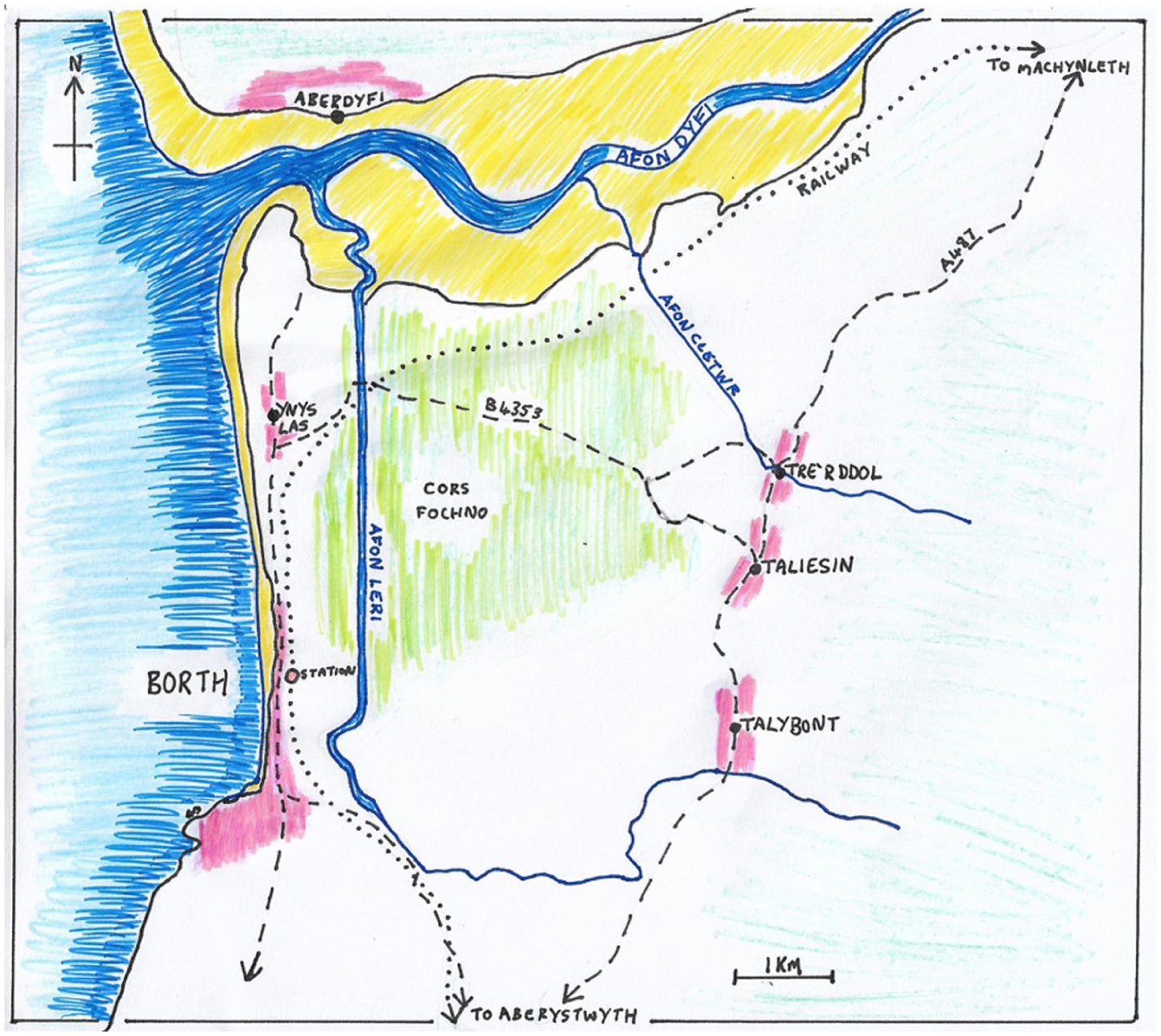
Map of Borth.
In the main part of the village, Borth’s homes are arranged along both sides of a central high street. Most of the landward houses are inhabited by permanent residents but nearly all the hundred or so seaward houses are second homes. There have been second homes in Borth for decades as they often run in families. However, in recent years, many second homes and summer holiday lets have been purchased by wealthy families from England as the popularity of coastal living has increased. This has created, in the words of Gallent, a “hierarchy of dwelling” in Borth, exacerbating the shortage of affordable housing and long-term rental properties. 16 Some second homeowners are closely connected to the village and make a strong contribution to village life. Many second homes, however, are empty for much of the year.
Despite these challenges, Borth has an active social and creative scene with festivals, communal projects, and art and music venues. There are numerous village organisations and social groups, from the village hall, sports field and community gardens to choirs, church groups and the RNLI (Royal National Lifeboat Institution). Annual highlights include Borth Carnival, the longest running event of its kind in West Wales, alongside newer traditions such as a scarecrow competition incorporated into the weekend-long Borth Fest arts festival. Two former chapels now serve as cultural venues: the Star of the Sea for live music and Libanus as an independent cinema.
Borth’s attractions contrast with the environmental risks that the village faces. Lying barely a metre above the high-tide line, Borth is threatened by seawater flooding due to storm surges and freshwater flooding from breaches of the Afon Leri, both exacerbated by climate change. These risks mean that Borth has had to adapt to its sometimes-hostile environment. The most visible adaptation measures are the large rock groynes positioned at regular intervals along the beach, the latest instalment in a long-term succession of sea defence schemes going back to the 1800s. In addition to flooding, Borth’s official Emergency Plan describes how the village is vulnerable to power cuts, peat fires in the bog, and snow. As this paper will show, adaptations to these hazards are not just based on physical interventions like groynes but are also present in the attitudes, mentalities and creative energies of Borth’s residents.
Exhibition organisation took place during five visits to Borth undertaken from November 2023 to November 2024. Our first visit was to meet community leaders and learn more about village life. A larger meeting followed in February 2024 for representatives of community groups to discuss the exhibition idea. Our third visit in June involved interviews and collecting exhibits with residents. Following an autumn visit to pursue remaining leads, our final trip in November 2024 centred on the launch of the exhibition.
In total, we conducted sixteen interviews, supported by numerous informal discussions and observations of coastal living made during time spent in the village. To reach different demographic groups, we circulated invitations to a discussion using social media and local mailing lists, as well as via posters and postcards displayed in shops and venues. Using snowball sampling, the interviews rapidly gained momentum, with participants identifying other local contacts and news spreading by word-of-mouth across the community. 17
During interviews, we invited participants to share memories and experiences relating to the sea and to identify an object, photograph or image that represented their recollections. Although the concept of the exhibition was predetermined as a project output, its content and themes were shaped by the variety of individual contributions received. At the start of each discussion, information about ethics and data protection was shared with participants, and informed, written permission was obtained to include people’s stories and pictures. Secondary material about the village was also collected, including local literature, reference books, photographs, historic postcards and community documents.
The final exhibition brought together twenty-two exhibits, each contributed by a different member of the community: fourteen photos and postcards (from the late nineteenth century to the present day), six creative works (including a play script, print, painting, craftwork, outdoor artwork, and sculpture), and two historical objects (a station clock and a pole borer). These were displayed with personal narratives explaining the significance to the contributor and to the village.
The exhibits were first arranged in an online exhibition unveiled in October 2024, then physically replicated at a launch event the following month in Borth Community Hall. The event was free to attend and open to the whole village, with a café area offering tea and biscuits, and an evening programme of speeches, discussions, and a film screening. About 120 people attended, including the local Member of Parliament. Attendees provided feedback on reflection cards and a notice board, and two follow-up interviews were conducted with those who left contact details and permission to be contacted.
Throughout this process, we aimed to maximise community awareness of the project’s aims and our role in it. A question we often heard was, “Why Borth?”, sometimes accompanied by concerns about the project’s underlying agenda. Such reactions reflect a broader wariness of external initiatives that arrive with little consultation or long-term engagement. We therefore sought to embed the project within the community as closely as possible. We secured the support of the Borth Community Council, the local elected body that represents Borth residents, and recruited a research assistant from within the village. We also established a base in Borth Community Hall during fieldwork. Grounding the project in this manner reduced the risk of the exhibition being dismissed as yet another externally imposed intervention and sparked curiosity locally about the work being undertaken.
The Power of Community Narratives
This section presents the empirical material, exploring the three key themes that emerged from the community-focused exhibition: (1) a strong sense of identity rooted in Borth’s maritime past; (2) personal connections to the power of the sea, which often begin in childhood; and (3) creativity, art and expression concerning the ever-changing shoreline. Each theme is examined in turn, with sub-sections beginning with a brief overview of the relevant theory before moving into the data.
Taking Pride in Maritime Heritage
The onset of the Anthropocene has raised questions about the changing nature of shoreline heritage 18 and the challenges involved in the indefinite preservation of coastal history. 19 While these discussions tend to focus on the loss of physical sites, 20 heritage should also be understood in intangible terms, including people’s memories of weather extremes, shared stories of resilience, and everyday attachments to the sea. 21 This living heritage is central to community social identity, or the shared sense of belonging and collective self-understanding that develops through common experiences, values and place-based attachments. And, as Barnett and colleagues explained, it is also central to how communities respond to climate risks, including in coastal regions. 22
In Borth, the exhibition revealed numerous ways in which collective identity cultivated through local heritage connects people to place and facilitates resilience. One of the most important exhibits in this regard was the Master Mariners photograph shown in Figure 2, a defining image of the exhibition. In the UK, until the early twentieth century, shipping was a dominant mode of transporting goods, before the expansion of the road network. During this period, the Welsh coast played a key role in supplying raw materials to international markets and bringing back goods from Europe. Borth residents explained that their village produced some 300 Master Mariners during this time, most of whom worked out of the nearby port of Aberdyfi. Despite growing up in poverty and speaking only Welsh, Borth sailors circumnavigated the world.
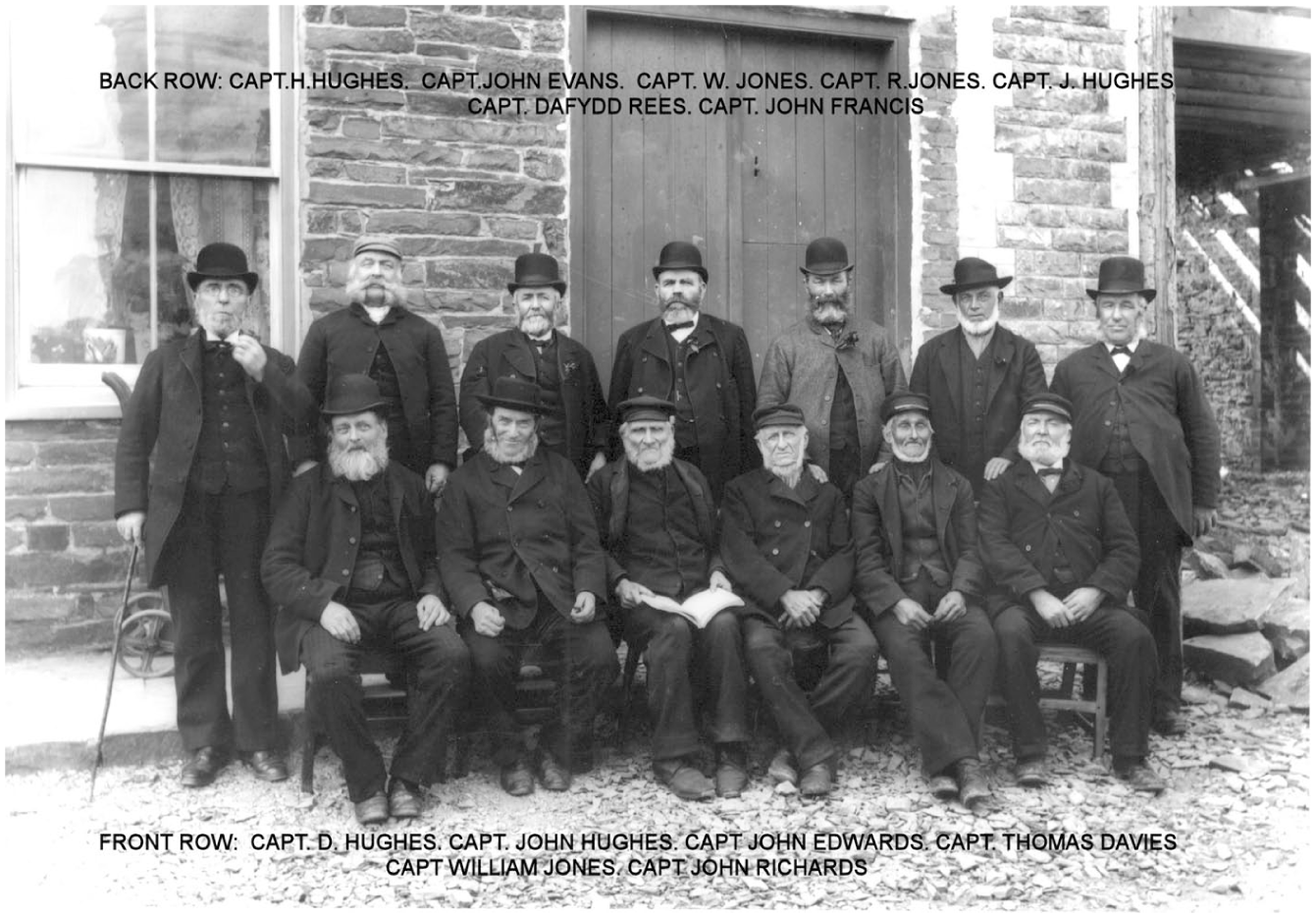
Historic photograph of Borth’s Master Mariners, c.1900.
Today, many of Borth’s Victorian-era homes are named after ships and the places that they visited, a testament to pride in maritime traditions. These houses are described in detail by Beryl Lewis (unpublished) in “Houses of Borth” (Tai’r Borth), which contains more than 350 histories of individual buildings, illustrated with photographs, maps and documents.
Despite this rich historical background, villagers are concerned that Borth’s Master Mariners are mostly unrecognised outside the village. As one resident commented, “Nobody believed that all the mariners come from Borth because we haven’t got our own harbour. . . But here they designed their own boat where the centre mast can come down and where fishermen can store their nets”. Residents are keen that Master Mariners, as part of the village’s identity, are central to how Borth’s history is told. The exhibition became a space to celebrate these maritime figures and help reclaim their rightful place in the coastal story of Wales.
Borth’s development into an established seafaring village during the nineteenth century contrasts with its humble origins as a small, subsistence fishing community. Historically, from September to January each year, herring gathered in shoals off the West Wales coast, providing an essential source of nutrition and income for local populations (Ceredigion Museum display, 9 July 2024). Although lacking a harbour, archival documents record that herring fishing off Borth Beach dates to the mid-1500s, when temporary shelters were constructed on the shingle bank. These would have been simple structures, many fashioned from locally available materials such as driftwood, salvaged wood from boats, and stones collected off the beach.
By the 1700s, families had started building more permanent cottage-style constructions along the shoreline. These later homes, although better constructed, were still exposed to high tides and storm surges. This situation was summed up by Morgan when he wrote: The settlement [of Borth] was two rows of whitewashed wattle tenements, with earthen floors and thatched roofs. . . In these tenements, precariously poised between ancient bog and ancient sea, poised on a barrier of sand and pebbles which the pounding surf had raised, it was always either a fast or feast, oftenest the former.
23
The mid-1800s marked the peak of the herring industry in West Wales and, by the early 1900s, the industry was in decline as fish stocks dwindled. By the 1930s, subsistence fishing at Borth had ceased. Today, fishing is limited to a small number of seasonal beach net licences, along with a few individuals who still spend hours casting rod and line from the shore.
Villagers were keen that Borth’s maritime heritage was represented in the exhibition through the themes of hardship, vulnerability and survival. It was, according to one local historian, “insanity” to build houses on the spit but, at the time, many people would have had little choice. Poverty meant that, as one resident commented, “The presence of herring, or the lack of it, was what allowed them to live or die basically”. Tenant farming, the main source of livelihood at the time, was poorly paid, laborious and unreliable. Population growth lowered the availability of agricultural jobs and going out to sea, while risky, was lucrative.
In the exhibition, the sea’s dangers were symbolised by the Brain y Borth (“Crows of Borth”), widows of herring fishermen who had perished at sea. Dressed in black and known for their fierce independence, they earned a living collecting cockles or cutting peat from the bog to sell in Aberystwyth. The Brain y Borth are central figures in the opening scenes of “Borth Begins” (Figure 3), a promenade theatre piece written by residents. The play dramatises important periods in Borth’s history including the herring trade, its seafaring past, and the arrival of the railway and tourism. It was performed in four locations, beginning on the beach slipway, with the cast and audience moving together between them. Overall, Borth Begins attracted huge interest, with more than 70 people involved in its debut performance in 2019 and drawing over 350 spectators. Figure 3 shows the annotated script used in the play’s first performance and displayed at the exhibition to represent the widespread interest in Borth’s origins and the desire to keep local stories alive.
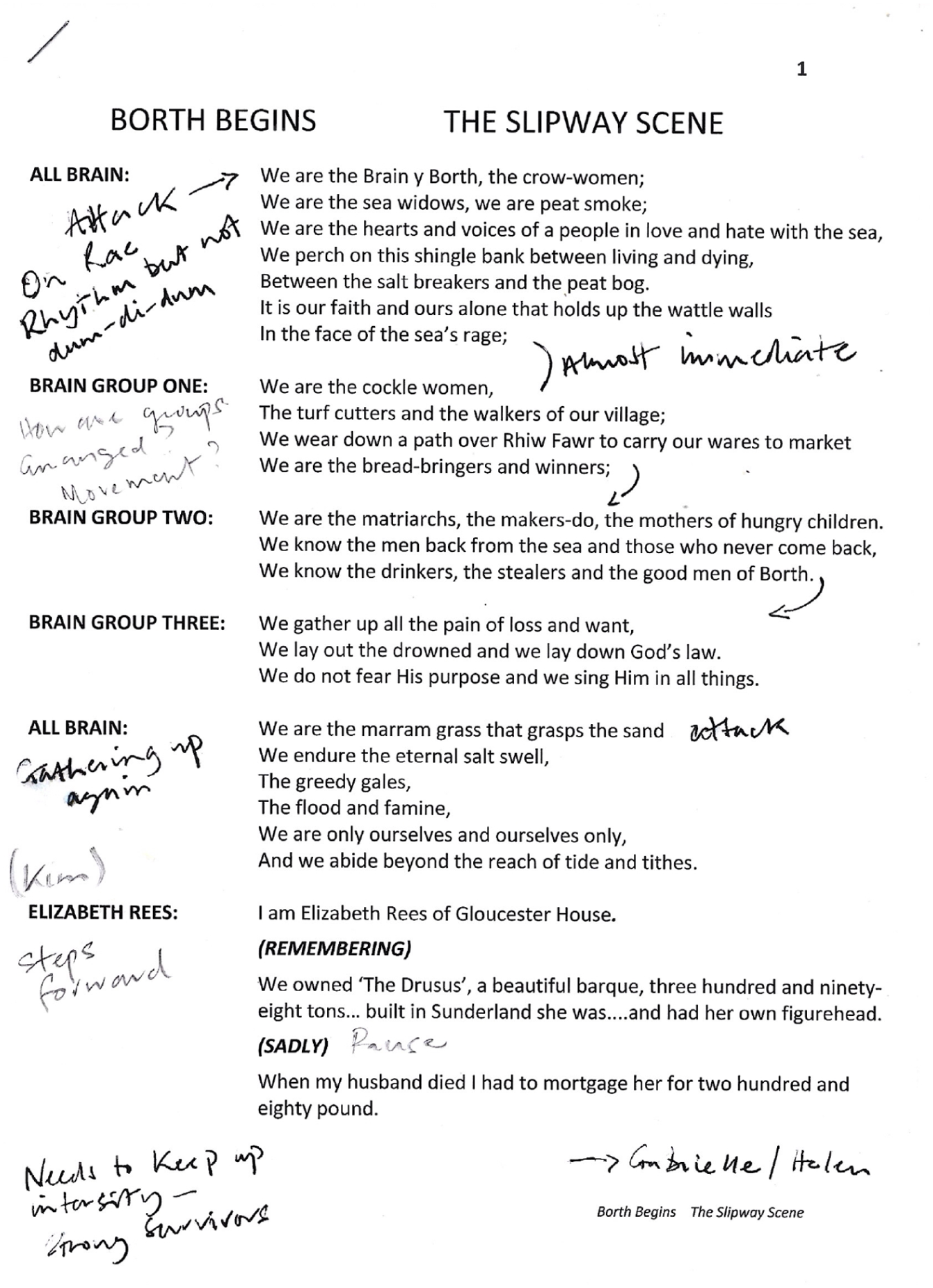
Script from page one of the theatre piece Borth Begins.
By the mid-nineteenth century, shipping, once a major factor in the economic development of UK coastal towns and villages, was in decline due to the expansion of the country’s rail network. In Borth, the railway’s arrival in 1863 was initially met with resistance as local mariners feared for their jobs. Yet even as maritime trade dwindled, Borth’s new train station brought in thousands of wealthy holidaymakers every year, resulting in the further expansion of the village’s built environment. These changes were symbolised in the exhibition by the inclusion of a photograph of the station clock (Figure 4), which was installed in the 1870s. A crucial part of the station’s operation, the clock – which keeps good time to this day – was wound up once a week by the Station Master.
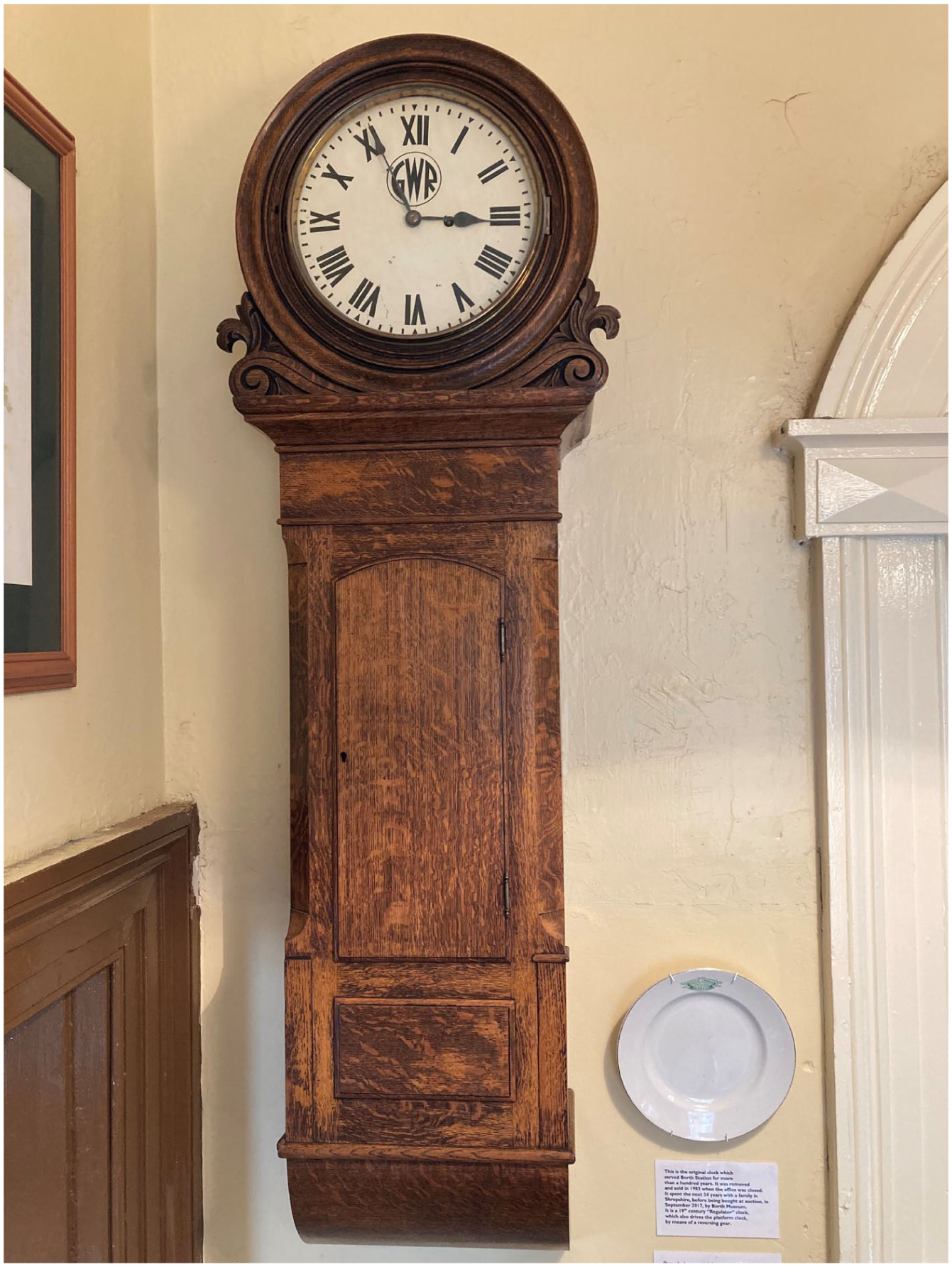
Station clock at Borth Railway Museum.
Crucially, the impact of the station on Borth was not one-way: while the railway brought visitors into the village, it also created opportunities for local people to venture out. The station thus allowed villagers to travel to other places for the first time, continuing the economic and social transformation of the village. This shows that exploration by Borth people continued even after the decline of shipping, sustaining local mobility, aspiration and change.
Personal Connections to the Power of the Sea
In Borth, consideration of the everyday – the routine, often taken-for-granted ways in which people organise their lives 24 – is crucial for understanding residents’ connections to the sea, as its power and unpredictability are “accommodated by, and incorporated into, the spatial and temporal dimensions of people’s daily practices”. 25 Although major hazard events in the village are infrequent, the social practices of remembering them are inscribed into day-to-day living. Consideration of social memory is important because, as de Vries has argued, “How temporal reference points are constructed and captured in memory-networks” significantly influence a community’s vulnerability to natural hazards. 26 Memories of multisensory lived experiences, incorporating sight, sound, emotion and physical sensation, are especially powerful in this regard. 27 Such memories are not just markers of the past; they also orient households towards the future, modifications to homes and properties acting as anticipatory practices, carrying forwards recollections of what happened into a material preparedness for what might come.
These dynamics were reflected in the exhibition, where residents expressed a strong desire to capture their everyday emotional and sensory bonds with the sea. As one resident commented, “People who live in Borth really do engage with the environment. They really do go into the sea, they work around the sea, everyone here has some activity related to the sea”. These connections are not limited to the shoreline but extend to the fabric and material culture of the village itself, the sea leaving physical and symbolic traces – rust, stones, seaweed, decay and ongoing repairs – that collectively shape Borth’s look and feel. Such effects are often embraced rather than lamented, reflecting the spirit and character of the place. The village’s weathered aesthetic is especially important as houses must be constantly repainted due to the corrosive effect of the salty sea air. Another resident pointed out: “You see the front of our house, right? It looks like we’ve never painted the house. But we must have painted it three times since we moved in. You’re just fighting against the wind and the salt all the time”. Rust, in particular, coats anything metal exposed to the elements. “Rust is what makes Borth the way it is”, a third resident commented. “It is seen as a quirk of the village”.
When shaping the exhibition’s content, residents placed particular importance on including memories of major storms. In the 1950s and 1960s Borth’s sea defences were modernised as the county council took responsibility for coastal protection that had, up until that point, been a homeowners’ obligation. Previously, the sea regularly washed through people’s homes, sometimes carrying furniture into the bog. This is represented in Figure 5, which formed another central image in the exhibition. It contrasts with the photograph of the Master Mariners shown in Figure 2, which symbolises the village’s knowledge and command of the sea. During our second community meeting outlined above, one resident read aloud an archival news report that described the impacts of one of these storms: The night of October 28th 1927 will be indelibly impressed on the memory of the inhabitants of Borth. Owing to the terrific gale which swept over the place, resulting in most serious and heartbreaking losses to the village. . . The sea defence works were demolished. The greater proportion of the protective bank between the beach and the road was swept away and the sea poured into the houses, smashing windows, doors, walls and furniture.
Despite improvements to Borth’s sea defences in the 1970s, the village remained vulnerable to storm surges combined with high tides. A further contribution related to the severe 1976 storm, when, on the night of 2 January, gales of 100 mph struck the British Isles, resulting in extensive damage to homes and buildings across the country, including in Borth. One resident recalled how, on that night, he was in the attic of his father’s seaward house: I looked out of the west-facing dormer window to see a huge wave heading towards the garage and the row of houses. I crouched and hid below the level of the windowsill as the wave arrived. There was an almighty crash and grinding noises as the wave struck.
The storm damaged many homes along Borth’s seafront. Lewis reported that, the following day, “The driver of a mail train from Aberystwyth at 4pm said he’d been over a lot of wreckage at Borth, and all the electricity lines were down”.
28
The Leri Garage, a working business at the time, “was devastated by the storm as the sea entered the building throwing stones which crushed and nearly buried a Hillman Imp [a small car]”. Figure 6 is an exhibition photograph of a Borth holiday home called Ty Haf that was also badly damaged. The resident photographer recalled: The sea had broken through the back of the house and created a ramp of shingle running from west to east through the downstairs of the house. The force of it had bulldozed through everything in its way, shunting everything into the front bay window.
Before Borth’s present-day sea defence scheme was installed in the early 2010s, residents recall how storm waves breaking against the beach would frequently collapse over people’s homes, flinging stones against walls and roofs and over into the high street on the other side. For some, this was an awe-inspiring experience. One resident recalled how, as a child, she used to sneak outside during storms so she could watch the waves breaking on the beach, even though it was forbidden by her parents. For other residents, the giant waves were frightening, especially at night. Another resident remembered how, “On a really bad storm, when I used to go to bed, everything on the bedside table would rattle and it would just be banging the whole night”. She recollected that when her daughter slept on the seaward side of the house: I used to have to take her from her bedroom because I was so worried about these slamming waves breaking on the side of the house. . . I’d put her in my bed because I was just really worried that the sea stones would come through the window.
During that period, living in a seaward house was especially disconcerting as many of the second homes were empty during winter. The same resident went on to comment: Along that line of houses, when I first bought my house, there was at least ten houses in either direction not lived in. So actually it was a really isolating experience in the winter because you had, you know, the sea slamming.
Faced with these dangers, Borth people have a long history of pragmatic adaptation to coastal hazards. The village’s Victorian houses, which residents describe as “very resilient”, were purpose-built or modified to withstand storms, with side-facing doors and small seaward windows that could be quickly shuttered in a storm. Many such houses were built from rounded stones gathered off the beach. Whereas modern homes can crack under the force of the sea, walls constructed from beach pebbles are more resilient and less likely to develop faults. During major storms, villagers frequently opened their back and front doors to allow seawater to wash through. Consequently, homes were never carpeted but had raised stone floors with drains set in them to minimise damage and facilitate quicker drying.
By co-creating the exhibition, Borth residents conveyed how, until the mid-twentieth century, locals had accepted nature’s force, responding with resilience rather than resistance. Today, the evolution of sea defences at Borth means that residents perceive this adaptive culture to be eroding, particularly among second homeowners less attuned to the environment. The addition of patio doors, conservatories and glass balconies to the seaward side of many second homes has increased vulnerability to beach stones caught up in storms and high tides. The raised stone floors and protective shutters have gone, and people no longer store sandbags and storm boards, the sheets of wood placed in gaps between houses to stop seawater coming through onto the street the other side. As one resident recalled, I suppose some houses have changed ownership and people have become complacent. . . They want to sit in the beautiful glass conservatories and look at the sea. . . But they forget that the sea, you know, in the past has gone up and over the houses or through the houses.
Overall, there is, according to residents, less acceptance of nature in Borth as people’s connections with the village’s history fade. While modern engineering has brought greater protection at the shoreline, it has also prevented adaptation to the sea in the same intimate ways. This shift has reduced local resilience, with concerns that people now “fight nature” rather than live with it.
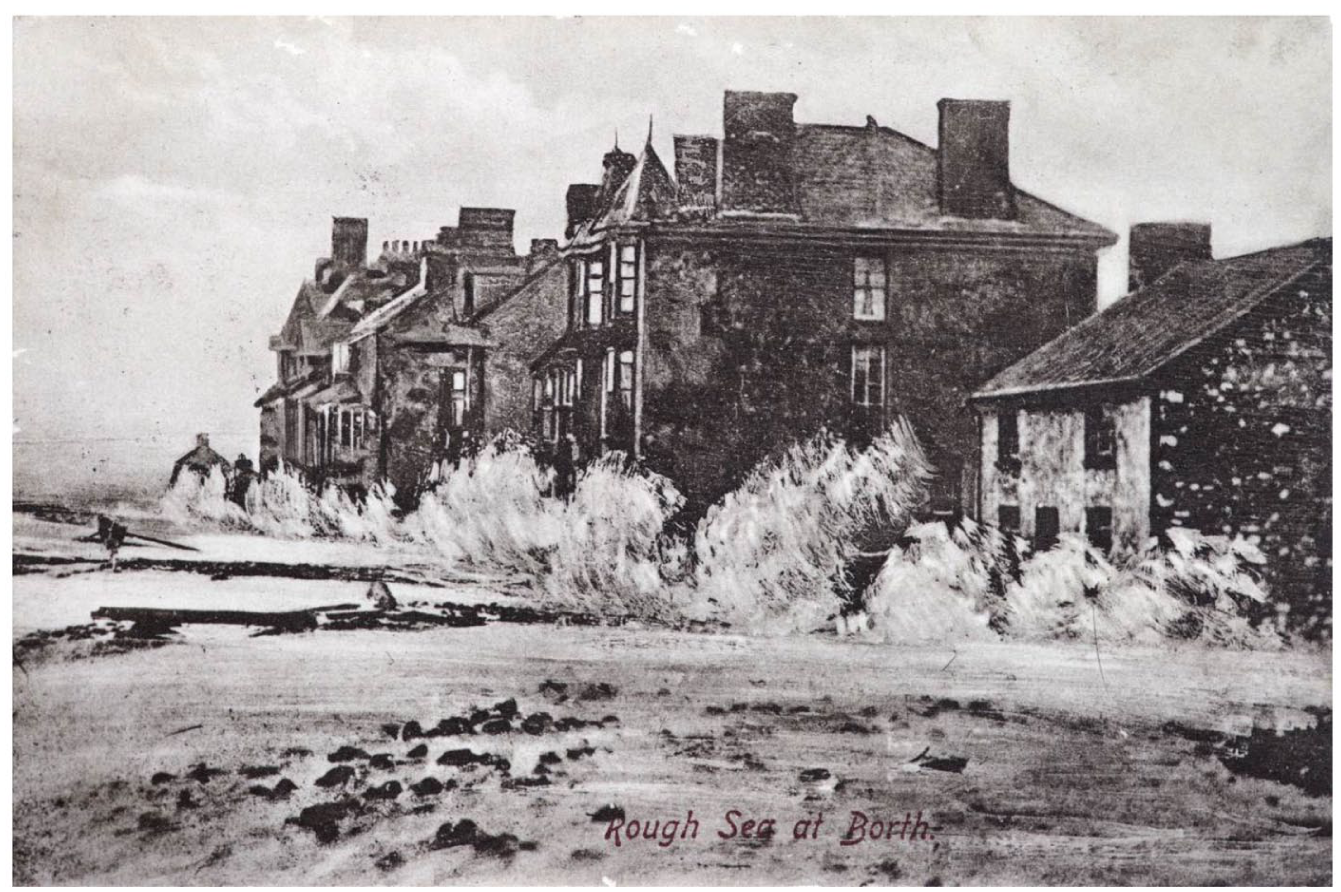
Historic postcard titled “Rough Sea at Borth”, 1912.
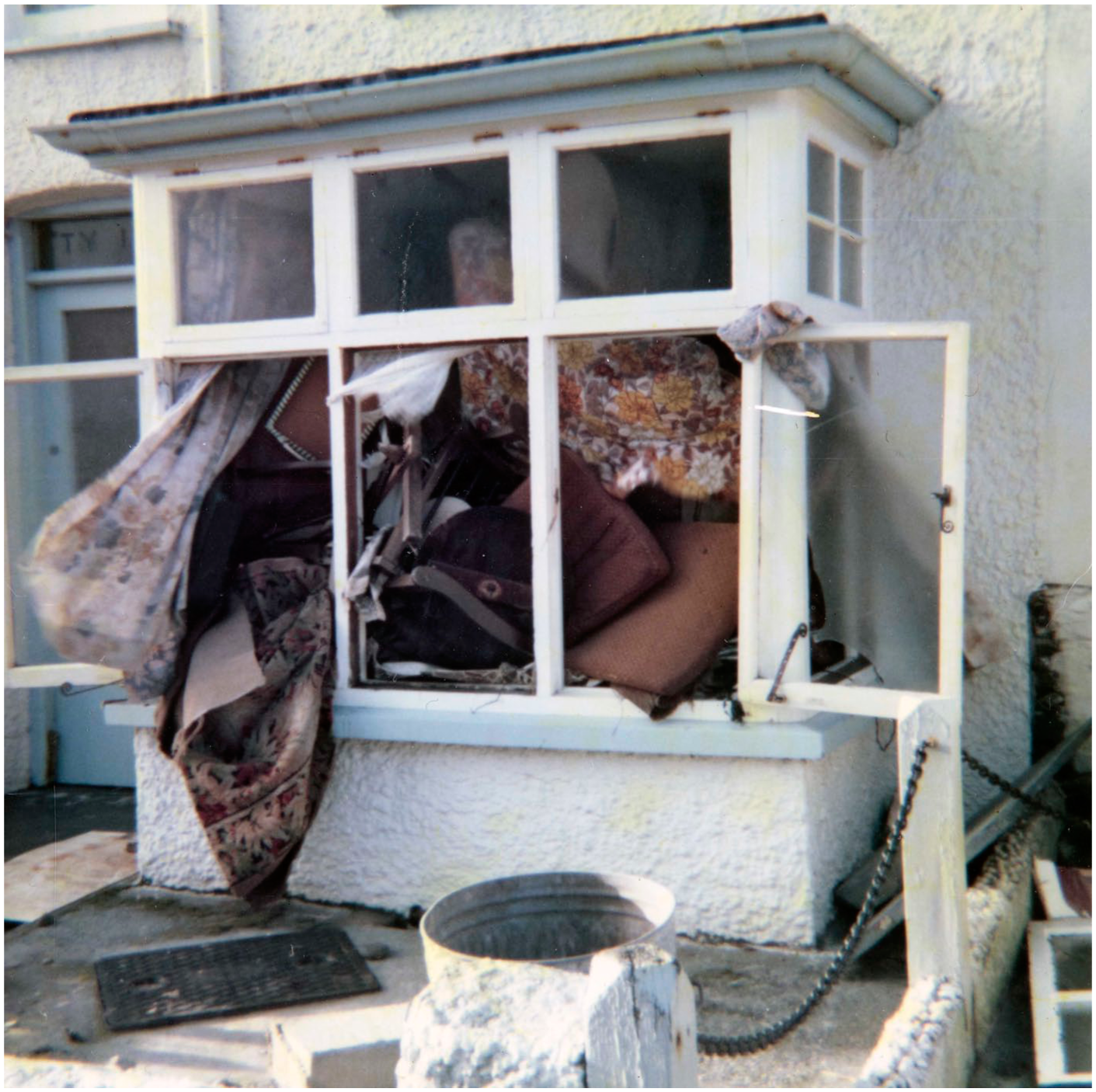
Storm damage to Ty Haf, January 1976.
Creativity and Artistic Expression at the Shoreline
Art potentially plays a wide variety of roles in mediating people’s relationship with the sea and shoreline. According to Ward, visual artists are frequently instrumental in shaping and sustaining the cultural identities of coastal towns and villages, contributing to how local character and sense of place are produced and reinforced. 29 Art can raise awareness of coastal change, 30 reinforce people’s emotional connections to the coastline, 31 and draw attention to local causes. 32 While not downplaying the challenges that many coastal communities face, this work frequently attempts to shift dominant “doom and gloom” narratives towards positive stories of local populations remaining in place. 33 In this sense, creative expression is a way of building emotional and cultural resilience in the face of uncertainty, in addition to the material alteration of landscapes, homes and properties resulting from the sea’s power.
These wider patterns are also visible in Borth, which has long attracted creatives, a trend that extends back to the 1970s when large numbers of people came to mid-Wales, driven by “back to the land” counter-culture, economic factors, and the natural beauty of the coastline.
34
The pictures and items selected for the exhibition reflect the coast’s inspirational power, drawing artists, writers and storytellers to its unpredictability and drama. To illustrate, Borth Beach was painted in 2007 by a local artist before the new rock-based sea defences were installed (Figure 7). He lived in the village during the early to mid-1970s in one of the seaward houses, before leaving for college and a career teaching art and design in Manchester, England. The artist recounted how his earlier time in Borth was a formative period of his life. He said: Storms battered the houses, waves broke over the rooftops, and snow could be seen on the mountains on clearer days during the winter. As the seasons changed Borth became a very different place, long walks, even longer views and many activities on the beach in the sunshine. The experience of ‘living on the edge’ never left me and over the years my paintings brought me closer to this remarkable place that eventually called me back again.
Another local artist described how he had taken inspiration from the old wooden groynes on Borth Beach: “I really liked the way they’ve been worn and there was, you know, things growing on them. . . The textures, the shadows. . . They added to the character of Borth”. These former structures contrast with the present-day rock groynes, which are less distinctive but are nonetheless becoming more characterful with age: “I mean the aesthetics of the rocks. . . OK, they’re getting more settled into the beach where they’ve got, you know, things growing on them, like greenery”.

Borth Beach.
As well as art, Borth’s sea and shoreline have inspired a local tradition of storytelling. One local author discussed a collection of short stories he had written, inspired by his strong relationship with the sea: “I mean, [the sea] is probably the reason, you know, why I live here. . . Obviously living next to the sea is really important”. Sea fog, which can suddenly appear on Borth Beach, is of particular interest, providing the dramatic backdrop to a story featuring a young girl who gets lost. The author went on to say: When I read it, it always pleases me because it describes the effect of the fog coming, right. And, you know, you can be here, and it can be really, really bright. And all of the tourists are out on the beach and enjoying themselves and everything. And then this sea fog will gradually appear and then it will move in across the beach. And it’s very, very cold. It’s freezing and it smothers everything.
Storytelling also features in the form of community social events when villagers gather to tell each other tales. The sea and coastline regularly feature in these, including, as one storyteller explained, “The edgy, salty grittiness of Borth, the pervasiveness of rust, and the effects that living so close to the sea has on people, right back to the Victorian craze for the bathing, salt, water, swimming”.
Beyond artistic representations, the exhibition revealed how residents engage creatively with the coastline in more tangible ways. Some residents have spent their entire lives beachcombing, discovering items from the mundane, such as firewood and pebbles, to the unusual, like messages sealed in bottles. One local artist, for example, is fascinated by heart-shaped beach stones, displaying them on her back garden wall as public art (Figure 8). The artist explained that she is drawn to the heart form because “it is a very positive image. . . The heart shape is very present in nature in leaves and is a common form for pebbles on Borth Beach. Once you get your eye in you see them everywhere”. Another artist became interested in seaweed when he realised that it can be made into paper. He explained: “The idea is to engage with the printmakers West Wales club, which is about 50 people, to think about, ‘How do we look after the sea?’ We want to use the sea as inspiration”. Together, these examples demonstrate that Borth Beach is not an ordinary place, but a space that is intimately known by those who live alongside and regularly explore it.
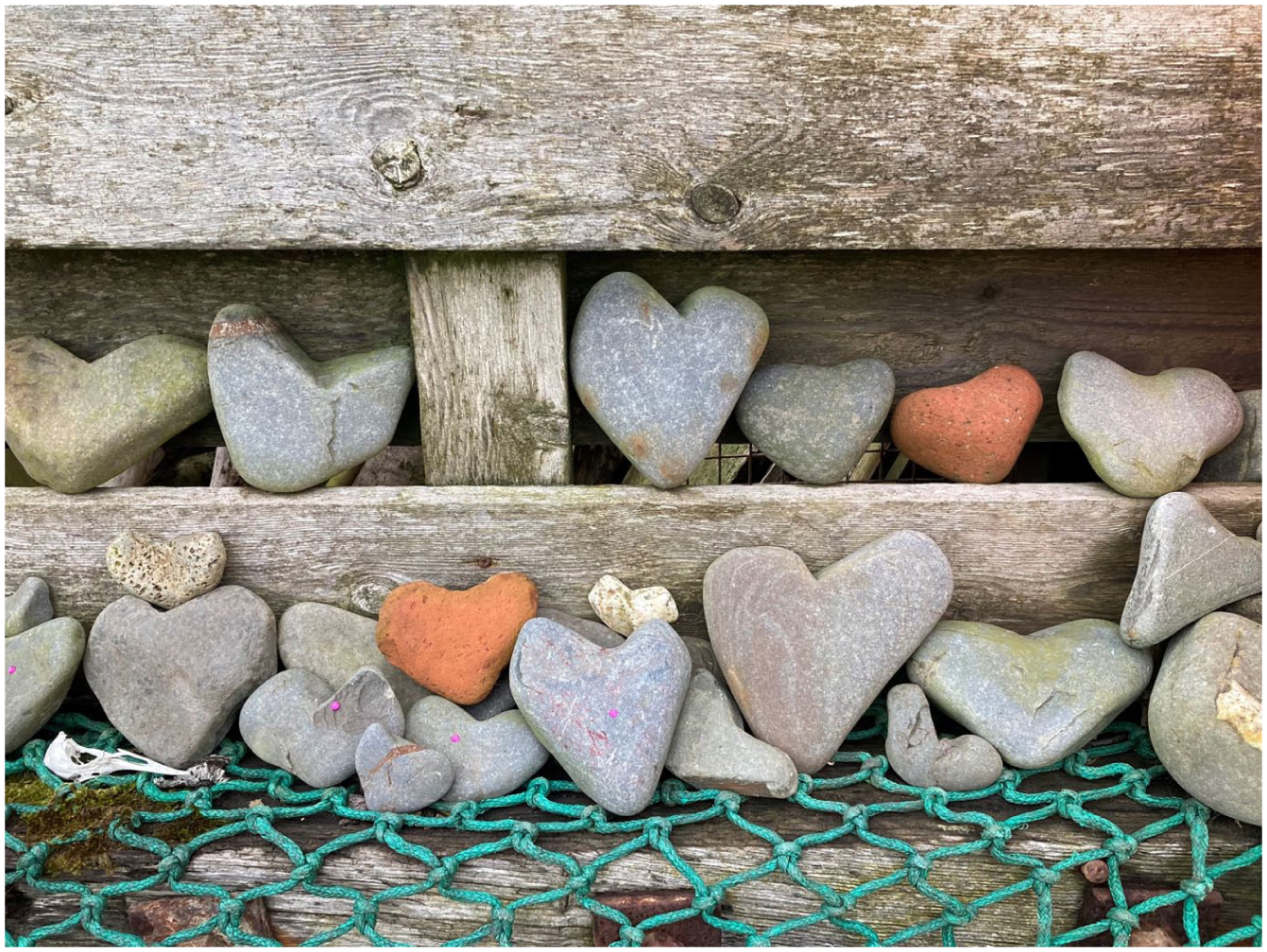
Heart stones from Borth Beach.
More widely, local history, maritime heritage, and even past storm events continue to shape creative practices today, creating a rich interplay between memory, environment and artistic expression. Traditional maritime ropework (Figure 9) is a craft closely linked to the sea. Another Borth artist described how she has long been fascinated by knots, which are a nod to the seafaring history of her family. She said: Knots and salt run deep in my soul. I was never taught to tie these knots, I can just do them, as if there is some kind of genetic memory in my fingers. I started tying by copying the knots and mats that were around the house I grew up in. . . Today, I tie many of my mats with rope salvaged from the beach, recycling washed-up ghost gear from the fishing industry into traditional designs of thrum mats.
This blending of traditional skills with modern materials is a common approach taken by creatives in Borth. In another artwork, Two Minutes to Midnight (Figure 10), a Borth sculptor focused on the need to act over climate change, his work combining wood foraged off Borth Beach with a clock and solar panel. Commenting on his contribution to the exhibition, the sculptor described how its design originated from “a single piece of driftwood that caught my eye on the beach opposite my home after a storm. Its shape influenced and led to the sculpture’s creation”.
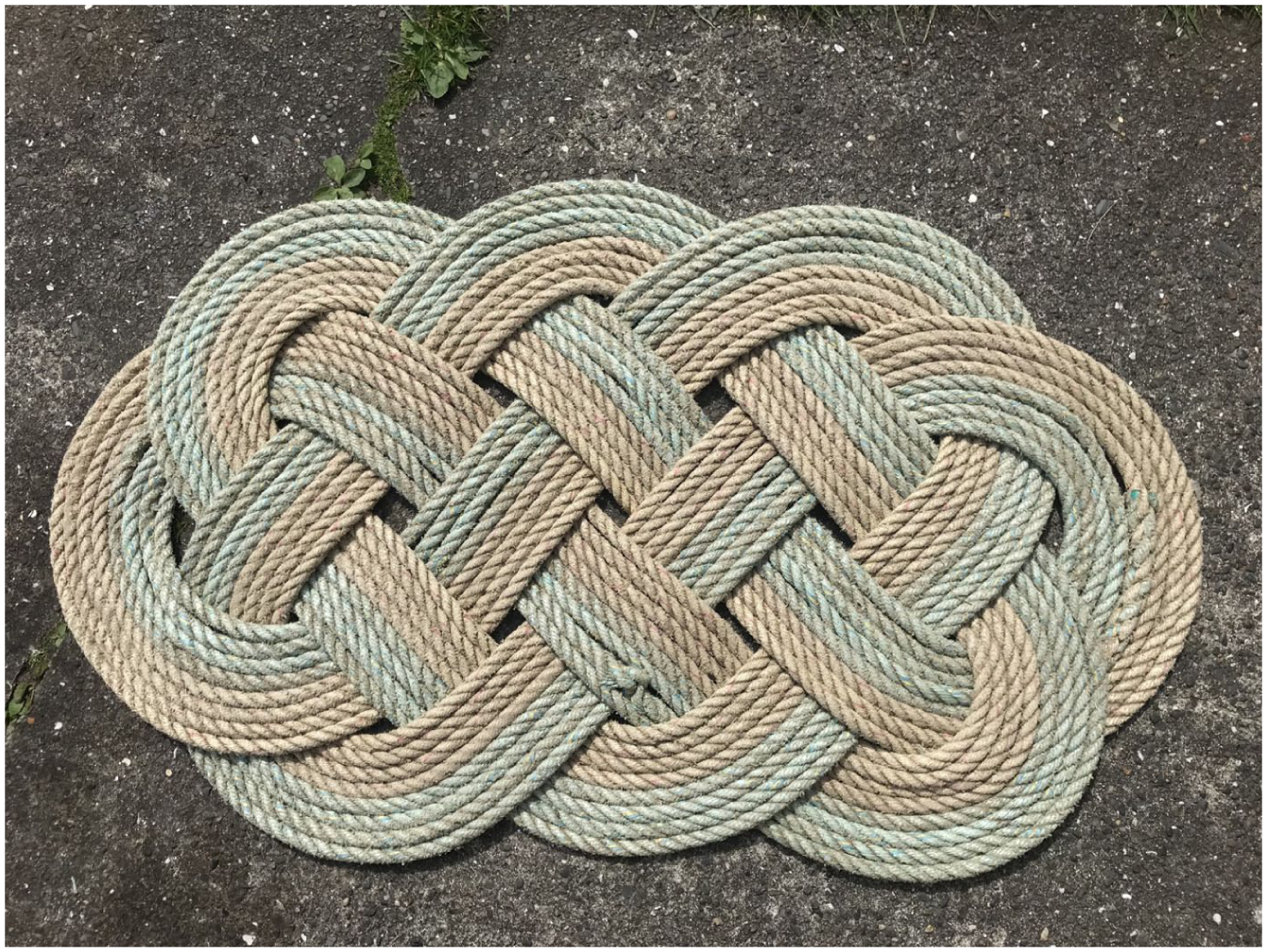
Ropework.
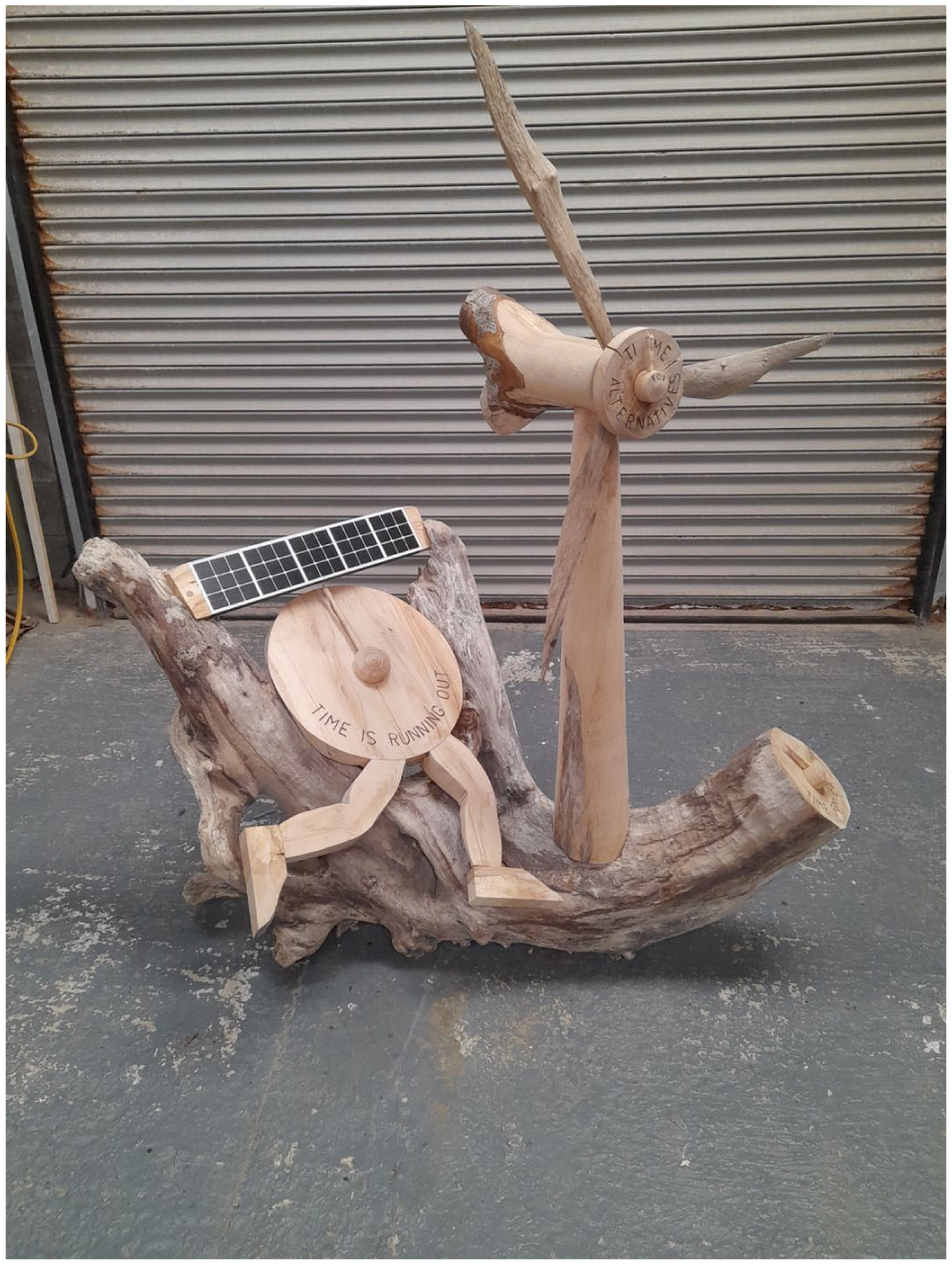
Two minutes to midnight.
Overall, these examples show that Borth’s art, storytelling and craftworks are not just expressions of creativity but also ways of processing and adapting to coastal change, forging emotional and cultural resilience in the face of uncertainty. Memories, skills and traditions are passed down through families, reflecting the sea as both awe-inspiring and ever-present, something to be respected, feared and loved.
Conclusion
The phrase used in the title of this paper, “One foot in the sea”, captures the ongoing tension between safety and vulnerability that Borth residents experience on an everyday basis, a situation likely replicated within numerous coastal towns and villages across the UK. This highlights the importance of providing adequate maintenance of Borth’s sea defences into the future. It is, however, just one part of the wider, more complex story of Borth. Indeed, as demonstrated by the exhibition, Borth is not just a village “beside the sea” but also a place that is deeply connected to it: the sea has made Borth what it is today as much as the village has influenced and shaped its coastline. In Borth, life on the edge means not only responding to the hazards presented by tides, waves and winds, but also finding joy and inspiration in the natural world, whatever the accompanying risks. People are drawn to and remain in Borth because of its strong maritime identity, personal feelings of connection to the power of the sea, and the creative stimulus of the village’s dynamic shoreline. While recognising the seriousness of climate change, the stories that emerged from the exhibition provide an important counterpoint to global scientific narratives that predominantly frame coastal communities in terms of risk, retreat and displacement. 35
These insights carry important implications for coastal policy and planning. Too often, adaptation frameworks focus narrowly on engineering interventions or technocratic assessments of vulnerability, overlooking the cultural knowledge and everyday practices that underpin community resilience. 36 Borth’s experience shows that while modern sea defences reduce immediate risk, they can also erode embodied forms of resilience if not complemented by policies that sustain cultural memory, local knowledge and community agency. For coastal managers and decision-makers, this suggests the need to view adaptation not simply as the maintenance of infrastructure, but as the nurturing of social and cultural capacities that enable communities to live with environmental change. Approaches that support creative practice and locally grounded heritage initiatives might therefore be as important as physical investments in defences, helping ensure that adaptation strategies are both effective and meaningful to those most affected.
More broadly, the themes generated by the exhibition highlight the “ongoingness” of Borth, revealing the village as a place-in-the-making rather than a finished product. 37 Throughout its long history, since it was a tiny hamlet exposed on a shingle bank, Borth has undergone transformation. It is a place of comings and goings – the herring fishers, the Master Mariners, the railway passengers, the holidaymakers, the sea defences and the storms have all come and gone, each leaving an impact and shaping what comes next both physically and mentally. The exhibition amplifies these insights by showing the emotional, cultural, imaginative and attitudinal resources that people utilise in Borth, in addition to physical adaptation measures. The participatory display illustrates how stories, memories, creative practices and everyday acts of care contribute to making Borth liveable in the face of environmental uncertainty, sustaining a sense of place while remaining open to change. 38
In addition to the exhibition output, there was value in the process of developing a community-focused display that drew on local memories and stories as a kind of “living archive”. 39 Inviting contributions from residents provided a low-pressure environment in which villagers’ perspectives on Borth’s past, present and future challenges could be discussed. The objects and photographs also provided useful prompts for stimulating and focusing conversation. 40 Moreover, the in-person exhibition launch event ensured that data collection centred on giving back to the community rather than being an extractive process purely for academic output. The event also allowed us, as researchers and co-curators, to better understand how the themes generated by the interviews were being received by villagers and provided an additional opportunity to collect people’s perspectives and thoughts on coastal change. 41 Finally, the contributions meant that community members had a deeper personal connection to the project than would have been achieved with interviews alone. In these ways, the exhibition did not simply reflect the life of the village; it became part of it, a shared space where memory, identity and imagination could meet.
Footnotes
Acknowledgements
We are very grateful to the people of Borth who gave their time to speak to us and who contributed photographs and objects to the exhibition. We would especially like to thank Hugh Hughes and the Borth Community Council. Special mentions also go to Borth Station Museum and Borth Arts. In Reading, Stéphanie Mitchell and Sascha Valme provided advice and support throughout the project. Many thanks also to Domonique Davies for research management support.

Ethical Considerations
The School of Agriculture, Policy and Development’s Ethics Review Committee at the University of Reading approved the interviews and exhibition (approval: D0003) on 17th June 2024.
Consent to Participate
Respondents gave informed verbal consent for interviews and written consent to include photographs, objects and artworks in the online exhibition and exhibition launch event.
Consent for Publication
Informed written consent to include respondents’ photographs and reproduction of artworks in this paper was obtained.
Funding
The authors disclosed receipt of the following financial support for the research, authorship, and/or publication of this article: This work was supported through an Arts and Humanities Research Council (AHRC) Impact Accelerator Account administered by the University of Reading. No grant number was provided.
Declaration of Conflicting Interests
The authors declared no potential conflicts of interest with respect to the research, authorship, and/or publication of this article.