



Abstract
Coastal zones have become particularly endangered in the Anthropocene. The Mexican Caribbean faces severe change through the massive arrival of sargassum algae. Since 2011, it has begun arriving in vast amounts in the Caribbean; with its arrival beginning on Mexican shores in 2015. The algae bring about several threats to the coastal ecosystem, namely, beach degradation, the release of hydrogen sulfite, and it hinders underwater plants from photosynthesis. In addition, it challenges notions of “beach paradise” as it covers the white sand, colours the water brown, stinks, and threatens the tourism sector. Based on ethnographic fieldwork carried out since 2019, I demonstrate how the arrival of sargassum transforms coastal relations on site. On the one hand, the coast and its integrity have received more attention since the algae have begun appearing. On the other hand, attention for the coast is decreasing mainly due to a reorientation of tourists further inland. Coastal villages that do not live from tourism remain vastly overlooked in addressing the problem, while touristified areas invest in algae removal. The coastal transformations analysed here allow for the argument that tourism must be understood as enabling both environmental problems and environmental protection, thereby demonstrating the multiple and ambivalent effects of coastal tourism in the Anthropocene.
Introduction: From tourist to algae paradise
What draws millions of tourists to the Mexican Caribbean every year? The weather, the food, and the Mayan temples—certainly all these facets. It is, above all, however, its beaches, the aquamarine water, and the endless sunshine which make the area a hotspot. Tourists flock to the white stretches of sand; some sunbathe while others splash in the water; beach sellers advertise Tamales, mangoes, and dream catchers; and fish tacos galore are offered in crowded beach bars. One might say that it sounds like the perfect holiday. Imaginaries like these have long been considered “normal” in the area.
That image has changed with the arrival of sargassum algae in atypical amounts beginning about a decade ago (Figure 1). Researchers from within the natural sciences assume that these specific algae reproduce quickly in the Atlantic Ocean due to an input of nutrients in the water, changes in currents, and warming ocean temperatures, viewing sargassum arrivals to be the new normal.
1
While natural scientists are predominantly concerned with the ecological impact of the algae, headlines now read: “Seaweed invasion threatens tourism in Mexico’s beaches as problem worsens. Hotel occupancy rates have dropped as concerns grow that the seaweed is threatening key industry in the Mayan Riviera,” referring to the summer of 2019 which was known as the “summer of seaweed.” The tourism sector accounts for 80% of the area’s annual economic performance,
2
and algae arrival significantly impacts the tourism sector along the Yucatán peninsula. Beach of Puerto Morelos in February 2022, with sargassum covering vast swathes of the beach. Photo credit: Laura McAdam-Otto.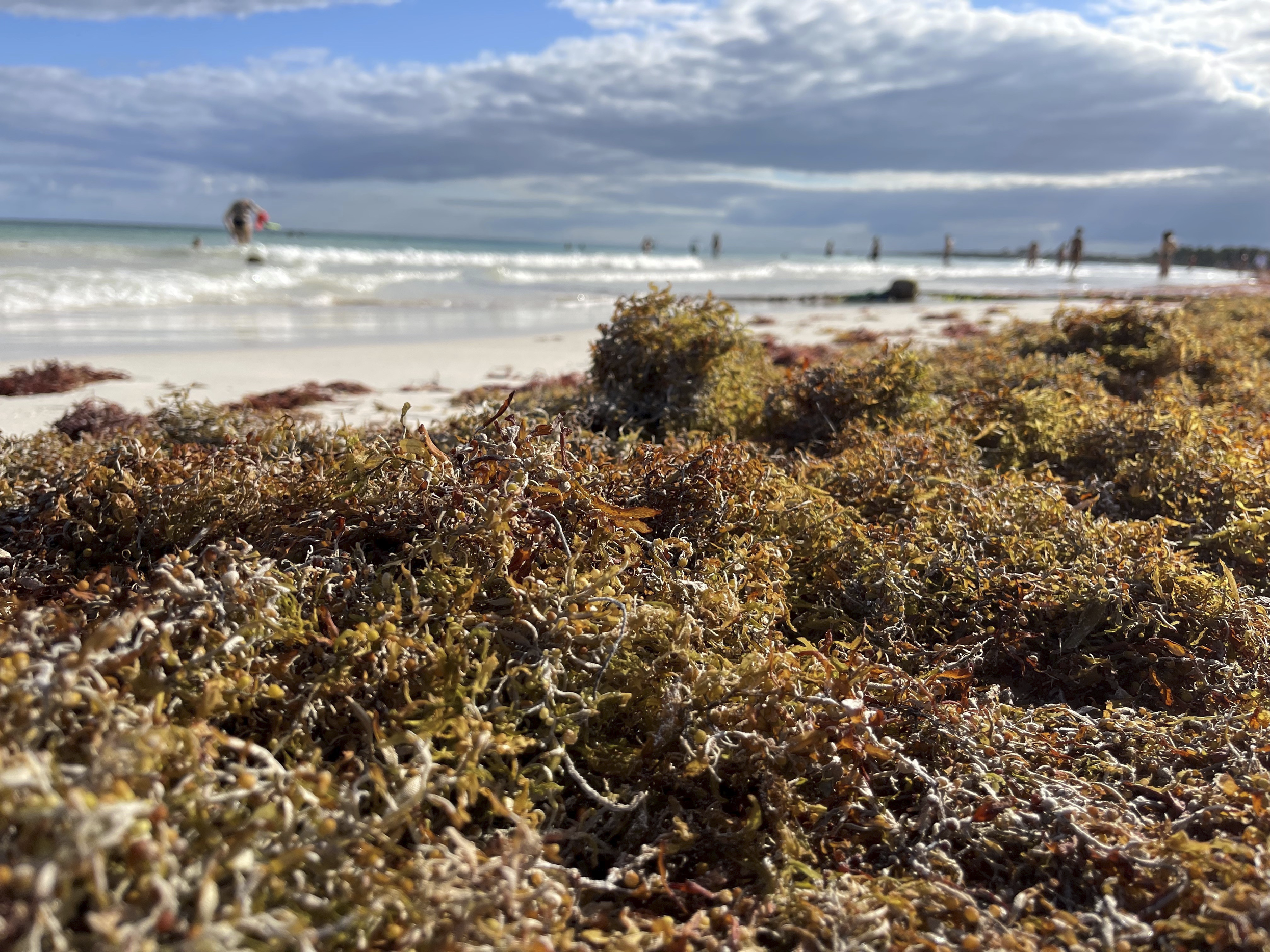
Sargassum is a seasonal phenomenon and occurs mostly between March and October, even if the trend recently has been toward longer “sargassum seasons.” On days when the algae pile up, work crews clean up the beach, raking the rotting algae together, which are then transported away by tractors and trucks. Some tourists play in a somewhat disgusted fashion with the algae in the water; others complain about the dirty beach; others leave and head to the hotel pool in frustration. The successfully created tourist paradise of the Mexican Caribbean and its world-famous stretch of sand—the Riviera Maya (Figure 2)—which has been stabilised and sold for decades,
3
are at stake in light of sargassum. Riviera Maya stretches from Cancún to the Sian Ka’an nature reserve and covers almost 200 km of coast. To its south is the Costa Maya, which stretches all the way to Belize. The Great Maya Reef covers this entire coastline and also extends to the coast of Belize and Honduras. Map derived from: OpenStreetMap.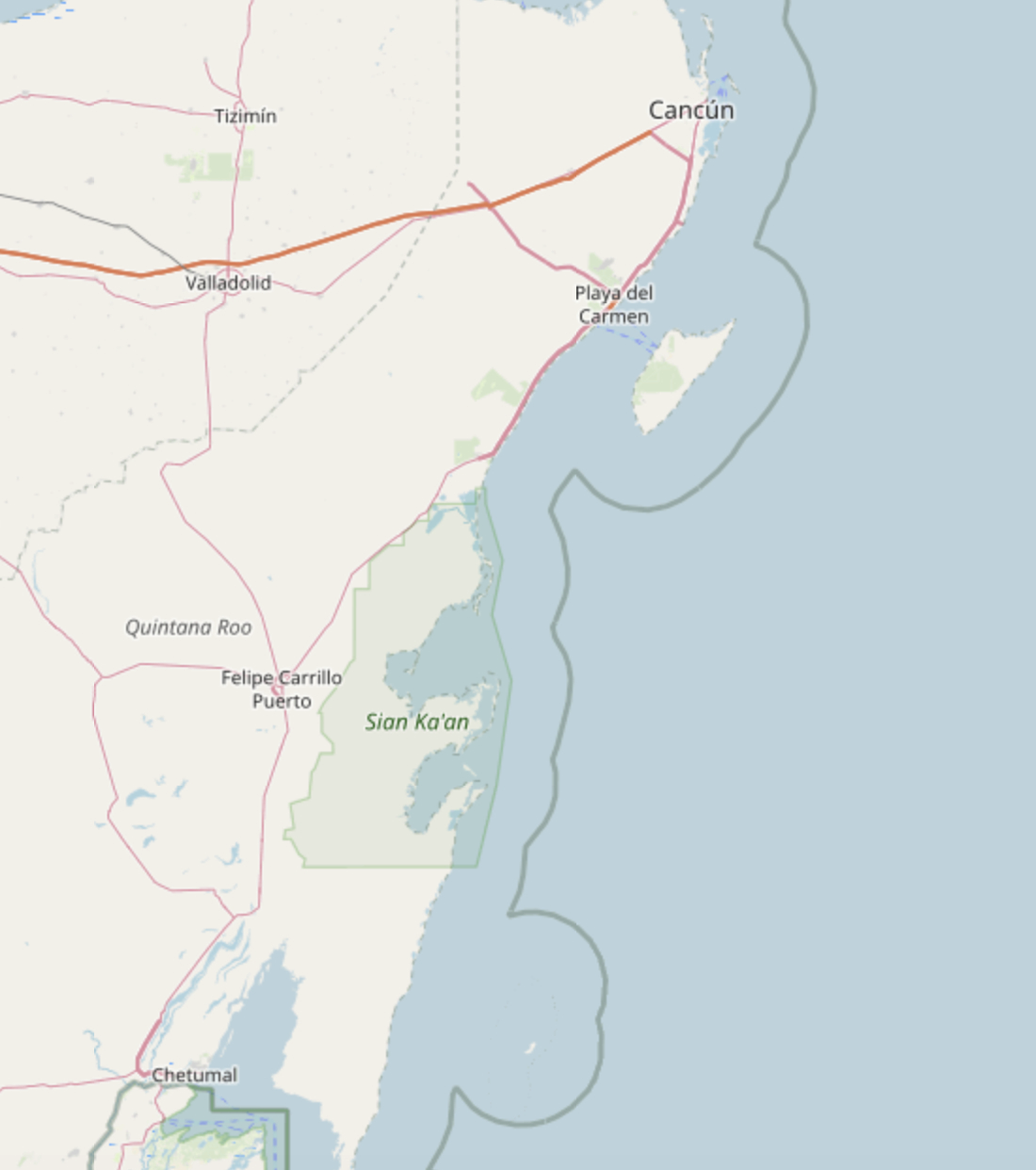
The anthropogenic environmental change that drives atypical sargassum accumulations threatens tourism, impacts fishermen and villagers, re-shapes spatial relations, and leads to a situation in which the coast in its manifold representations is de-stabilised and transformed in various ways. Some of these changes caused by sargassum are largely visible, while others remain somewhat invisible. These various changes make up the focus of this article, which is interested in the following questions: How does sargassum interact with tourists? How do different species, such as corals, respond to algae arrival? Who suffers from its presence? How are coastal relations transformed on site?
To answer these questions, I, first, provide the reader with an overview of the development of the Mexican Caribbean, focusing on how it was transformed from fishing villages into tourist hotspots. I situate my ethnographic, multi-species 4 research within this setting and embed my perspective not only within naturescultures debates5,6 but also within the literature on global tourism.7,8,9,10,11,12,13 Second, the article offers empirical insights into and analysis of my empirical material.
Three examples from fieldwork demonstrate coastal transformations on site. The first example engages with the degradation of the Great Maya Reef, which stretches all along the Mexican Caribbean, in light of sargassum arrival. The example shows how coast and reef integrity are increasingly considered to be two sides of the same coin, that is, coast and reef are viewed and practiced as evermore entangled, enabling biologists and environmentalists to put environmental issues on the agenda of the tourism industry. I demonstrate here that, counterintuitively to placing the blame on tourism, mass tourism and its stabilisation can be used strategically to generate attention for environmental protection. This logic does not weave itself into practices around sustainable travel per se, but it demonstrates that tourism must be understood as multiple, ambivalent, and entangled with heterogeneous actors and their respective interests. The second example illustrates how the restoration of a healthy coastline and an intact reef is increasingly becoming a tourist commodity, and how “algae-free beaches” have become a distinctive feature in the travel industry. While this part critically discusses the measures that have been developed to clean up algae, it also highlights the inherent contradictions between environmental damage and economic gain and how these are mobilised through the arrival of a new species on shore. While examples one and two emphasise the increased attention which is paid to the coast and its conditions in light of sargassum, example three takes a look at disentangled coastal relations. On the one hand, the article illustrates how tourist mobility is directed more often toward inland destinations. On the other hand, it shows that coastal villages without tourism remain vastly overlooked when it comes to addressing the algae issue.
In the third section of the paper, I argue that the coast of the Mexican Caribbean simultaneously receives increased and decreased attention in light of anthropogenic environmental change. Tourism, thus, must be understood as evoking both environmental problems and environmental protection. Meanwhile, the arrival of sargassum contributes to the entrenchment of commodifying “nature,” of continuing to emphasise tourist appeal, and of bringing about disparate coastal experiences and realities. At an empirical level, the article offers unique insights into a phenomenon that has not yet been studied ethnographically, thereby addressing an empirical lacuna in the field of anthropogenic environmental change. At an analytical level, it contributes to a better understanding of transforming coastal relations in the context of mass tourism, with tourists increasingly consuming and producing the Anthropocene. 14
The Mexican Caribbean, algae arrival, and fieldwork: An ethnographic account of studying naturescultures in a tourist hotspot
As early as the 1970s, the Mexican government selected Cancún to become the country’s first planned-out tourism resort area, with the Caribbean being viewed as a “great product.”15,16 In line with this diagnosis, the past decades were marked by the commodification of natural resources. The area’s white beaches, crystal-clear water, and the reefs offshore were increasingly understood as having to be managed and planned.
17
This has led to natureculture relations18,19 which are characterized by exploitative practices, by economically making use of nature as well as by selling “nature” to tourists. Cancún, and other former pueblos—villages—have been transformed into a “tourist paradise,” with approximately 13 million people visiting the region every year. Smaller villages have also attracted growing numbers of tourists and turned into commodified “paradises.”20,21 Among them are Puerto Morelos, Akumal, and Tulum, located farther south in the federal state of Quintana Roo. Tourist beds have increased by 80,000 between 1975 and 2010 (Figure 3).
22
Today, the area represents the hyper-commodification of nature and culture par excellence.23,24,25 Source: Data derived from López,
26
visualized by the author. Note: Numbers in 2020 dropped due to COVID.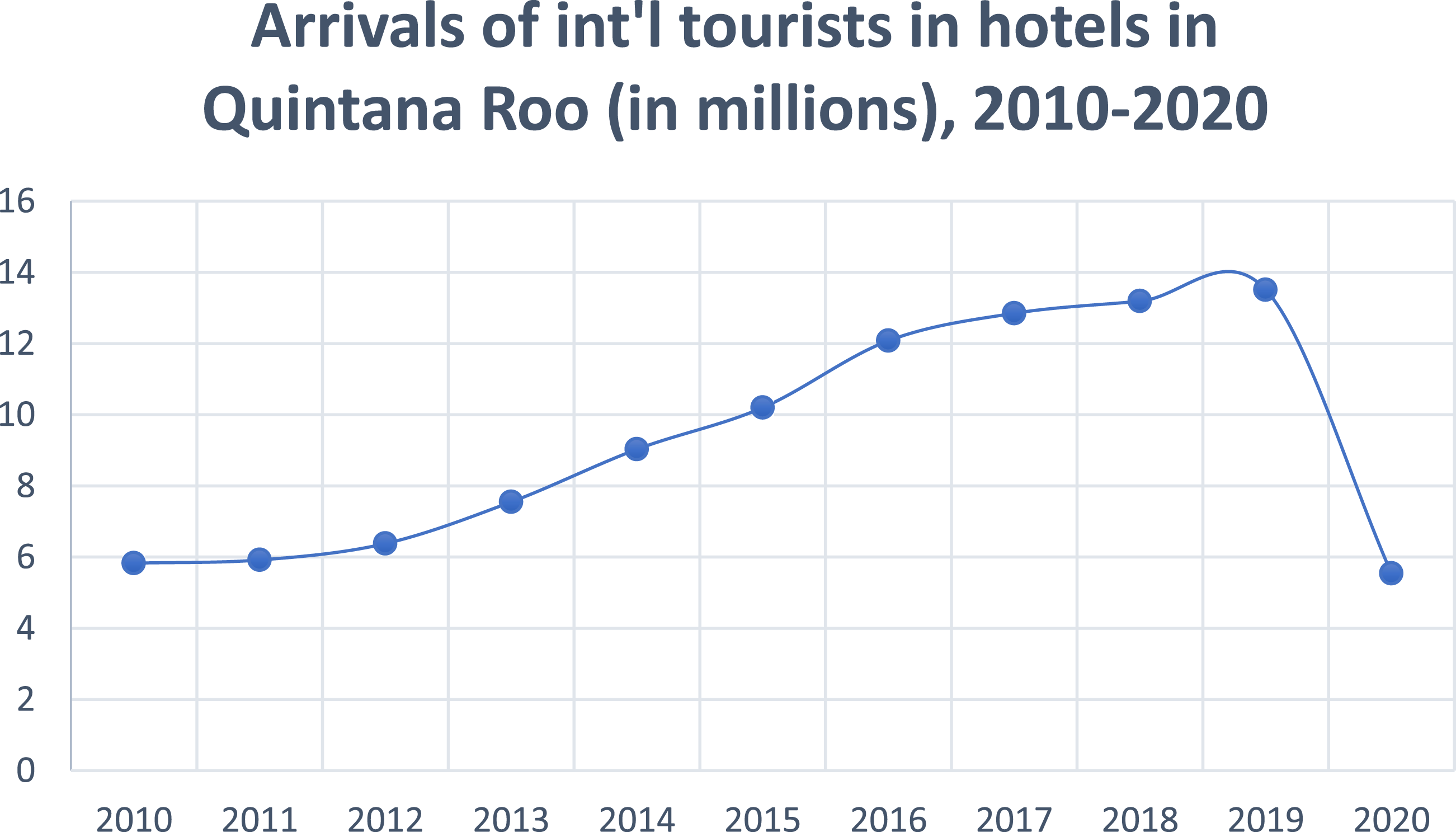
It is within this setting that sargassum began arriving in atypical amounts in 2011 in the Caribbean, affecting beaches in Mexico with increased landings since 2015. Tourists and the travel industry predominantly understand sargassum as a troublemaker and a holiday nuisance. When sargassum interacts with tourists, it can make them feel nauseous with its smell overriding the oceanic breeze, it can contribute to less aesthetic holiday photos, and I observed it getting stuck in tourists’ hair while swimming in the water. But, what is sargassum beyond being a troublemaker? What else does it do? Like other algae, sargassum is neither plant nor animal, but it belongs to the kingdom of Chromista. Sargassum cannot be viewed as entirely harmful or bad, as it also serves a function. When it interacts with other species in the ocean, such as fish or turtles, it offers food, a breeding ground, shade, and a place to hide from predators. It also has the ability to clean the ocean from pollutants and absorbs heavy metals and other contaminants, thereby contributing to ocean health. Strong currents usually keep the algae away from shore, but warming ocean temperatures have led to less strong currents which make sargassum’s arrival on shore increasingly likely. The algae can double its biomass within 11 days, it can move up to 15 m per second, and warm and nutrient-rich waters provide hospitable conditions for its reproduction (Figure 4). Sargassum is a golden-brownish looking algae; when it decomposes and rots on shore, it assumes a dark-brown colour. Photo credit: Laura McAdam-Otto.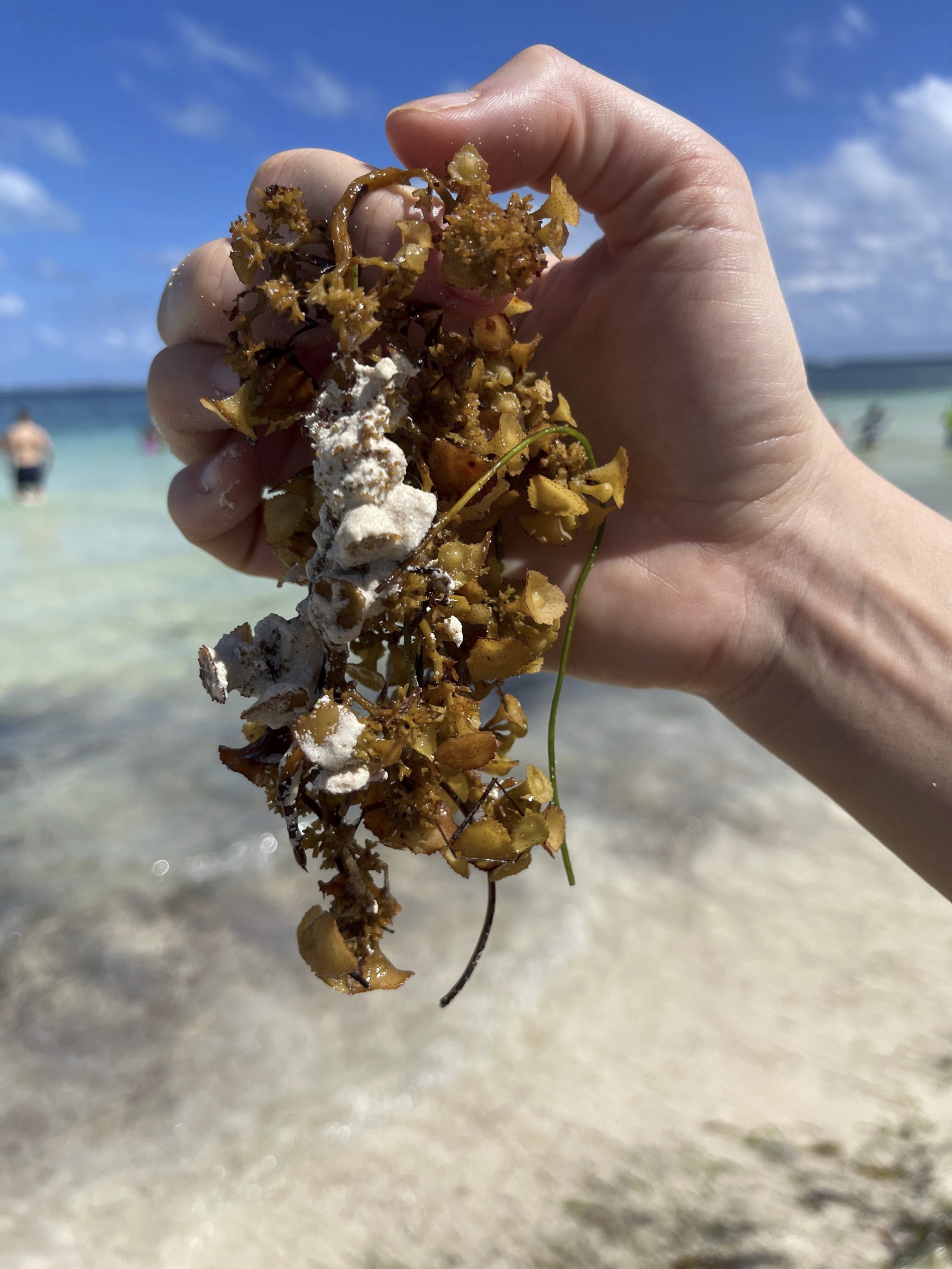
The atypical reproduction of sargassum is the result of anthropogenic environmental change, owing to as human activities such as deforestation along the Amazon; the increased use of fertilisers which drives more nutrients into the ocean; and the use of fossil fuels which contributes to rising ocean temperatures, thereby creating ideal conditions for sargassum growth. During fieldwork, I learned about sargassum and its agencies primarily through marine biologists, snorkeling instructors, and environmental activists. I was able to observe sargassum’s interaction with other non-human species, too: Snorkeling trips revealed how difficult it was for seagrass and other plants to obtain sunlight when covered by sargassum, or how turtles failed to reach the surface to breathe because sargassum was in their way. On shore, I observed that flies and other insects were attracted to sargassum, and baby turtles got stuck in rotting algae as they tried to reach the ocean. In short, on land and in shallow waters, sargassum poses many ecological challenges and causes severe problems.
As an anthropologist, I decided to follow the algae in its multiple entanglements. 27 Fieldwork began in February 2019, and my initial research trip was followed by revisits in 2020 and 2022. During the pandemic, I made use of online communication tools. Throughout my fieldwork, I became both an observer and a participant: I cleaned beaches, snorkeled, swam, walked around sargassum dumping sites, worked in scientific laboratories, and talked with both tourists and beach clean-up crews about their sargassum experiences. I was invited to sargassum conferences aimed at developing more integrated management plans and workshops which fostered exchange among different citizens, scientists, politicians, and entrepreneurs, where I gained insights into the operations of governmental organisations responsible for the safety and cleanliness of beaches. I learned that no integrated sargassum management plan exists and, as my interlocutors mentioned, that the rules and views change with every election. CONAPESCA, the national fisheries’ commission, for example, gives permits to companies who wish to collect sargassum at sea (“Permisos de Fomento de Pesca”), and thus view the algae as a marine resource. SEMAR, the Mexican navy, on the other hand, collects sargassum at sea, and predominantly treats sargassum as a residue which is dumped at disposal sites on land. I also learned that materials which are removed from beaches during cleaning must be treated carefully before they can be returned. It implies that removal and cleaning are difficult and costly and contributes to beach erosion, as it is not only sargassum—but also sand—which is removed in the process of cleaning beaches. The “Lineamientos Técnicos y de Gestión para la Atención de la Contingencia ocasionada por sargazo en el Caribe Mexicano y el Golfo de México” are non-compulsory guidelines which offer suggestions on how to harvest, contain, remove, and treat sargassum. 28
I conducted 26 interviews with different actors 29 who are involved with sargassum, among them marine biologists, policy advisors, governmental representatives, villagers, fishermen, NGO coordinators, environmentalists and volunteers, hoteliers, hotel association representatives, entrepreneurs, tourists as well as bloggers and local tour guides. Among the most relevant and repeatedly mentioned topics in the interviews were responsibility for sargassum, the future of the Mexican Caribbean, fear of a collapsing tourism sector, and frustration in dealing with the “new normal” of the famous coastal zone. My empirical material is supplemented by reports, newspaper articles, scientific publications from the natural sciences, and other documents, such as round table papers, leaflets, and white papers. This approach is especially fruitful as it allows for the studying of processes in the making, while being sensitive to local practices and global discourses. Welz 30 argues that close attention to local particularities remains important for two reasons: first, “situatedness” of any kind of practice and narrative becomes apparent in such research designs. Second, with regard to environmental conflicts in which universal explanations are often adopted, challenged, developed further, or infiltrated, ethnographic approaches help to better understand how naturescultures relations emerge within specific circumstances.
Similarly, anthropogenic environmental change is not simply a matter of and for the natural sciences, but it is an important everyday phenomenon that can be empirically studied in specific contexts. By bringing together these different actors, materials, and perspectives and by following algae, I assume an understanding of human–environment relationships which has long been conceptualised in anthropology as “entangled.”31,32 A shared understanding here is that environments are profoundly shaped by humans and vice versa, and thus “socionatural,” with Hastrup 33 declaring “nature matters to society [...] and [...] societies matter to nature.” 34 “Nature” and “culture” are no longer seen as two separate entities but are rather “naturecultures.”35,36,37 Against this backdrop, coastal zones like the Mexican Caribbean are not simply natural phenomena, but the result of the practices and actions of, among others, sand, water, wind, trees, minerals, fish, turtles, algae, as well as humans. Instead of trying to isolate environment and society as separate analytical blocks, or to conceptualise their relationships in linear ways, the focus lies on their enmeshment and complex entanglements in the Anthropocene (e.g., Descola & Palsson; 38 Whatmore; 39 Kohn; 40 Gesing; 41 Boyer & Howe; and 42 Welz 43 ).
In line with these literature studies and arguments and echoing insights provided by new materialists,44,45 the understanding of the Anthropocene proposed here neither solely views the geological epoch as consisting of humanity having “become a planetary force of its own” 46 nor as a new grand narrative pretending to tell “the full story” of our contemporary world. 47 Instead, we must acknowledge that not everyone is living in the same Anthropocene and that we consequently need concrete analyses of specific lived Anthropocene realities.
Tourism, beach damage, and renaturation in the Mexican Caribbean
This conceptual frame leads me to return to my fieldwork in Mexico, where algae, humans, and non-human species co-constitute the current reality of the Mexican Caribbean, which they experience in manifold ways. The examples which follow highlight how sargassum interacts with the local reef, show how the re-creation of an intact coast must be viewed in terms of commodifying the coast, how tourists’ mobilities connect the coast with destinations further inland, and how coastal villages remain vastly overlooked when it comes to addressing sargassum.
Understanding corals: Diseases, algae, and tourism
As a layperson, one cannot see the Great Maya Reef offshore from the sandy and palm-fringed coast, and one hardly realises that the algae not only affect the beauty and health of the beaches but also the reef. Reef damage was indeed a central topic during field research. While tourists were primarily concerned with the “beach issue” and their “ruined holidays” when they talked to me, it was marine biologists, activists, diving instructors, entrepreneurs, and hotel operators who repeatedly emphasised the reef and its damage in conversation with me. They were concerned with the health of the Great Mayan Reef, officially known as the Mesoamerican Barrier Reef System, which stretches over 1000 km along the Caribbean coasts of Mexico, Belize, and Honduras.
The “Healthy Reefs for Healthy People” initiative states in its 2020 report on the Great Maya Reef that the corals, and the reef along the Caribbean coast, face two big threats. One is the stony coral tissue loss disease, which is corals’ most lethal disease. The second risk relates to high levels of macroalgae, namely, sargassum, which lead to poor reef conditions. This leaves only 1% of the Great Maya Reef in very good and 8% in good condition, 34% in fair, 40% in poor, and 17% in critical conditions.
Eva Hendrikson, who has lived in Puerto Morelos, a beach town in Quintana Roo, for many years and who researches coastal integrity as a marine biologist, explained that reef damage in the area is not a new phenomenon. Yet, the arrival of sargassum has increased and accelerated the problem. It became clear in conversation with her that a higher input of nutrients has changed the water quality. She repeatedly told me that the water is less transparent compared to previous years. To prove her point, she showed me photos from the past which I compared with the water’s current colour. She explained to me that nutrients have the capacity to change colours, altering the water quality. This degrading water quality affects corals and reefs, as her research shows: It is suspected that the mortality which we experienced in the reef in previous year – fifty percent of all live corals died – has to do with a disease. It’s called the white (…) sindrome blanco, the white syndrome. They suspect that the reef was weakened because of this degraded water quality. So the corals are a lot more susceptible to diseases spreading fast. That’s why a lot of live coral on the reef also died.
48
It also became clear during conversation that the exact impact of sargassum on the reef could not yet be measured and determined, as it is a relatively new phenomenon and further research is needed, Eva explained: “The direct relationship [of reef damage] with sargassum, we can’t establish. It’s just correlation.” What is clear, however, is that sargassum introduces new species to the area and that the always floating algae cover the ocean’s surface, leading to circumstances under which photosynthesis below the surface has become more difficult for plants. Some are already extinct according to experts’ estimates: “We now have an accumulation of organic material in the sediments which this reef lagoon never had experienced before, which is changing the whole biochemical cycle. We have always had seagrass […], but they are not anymore.” 49 Sargassum not only introduces new nutrients and species into sensitive environments, but with its ability to reproduce quickly and to kill other plants, it also contributes to their extinction. In doing so, sargassum changes long established communities, creates a habitat suitable for itself, and contributes to the creation of a new ecosystem on site.
Juan Pérez, who runs an NGO and an education centre in a resort town along the coast, emphasized that humans need other non-humans to stop sargassum from arriving in near shore waters or on the coast, and he explained that corals play a crucial role: “El arrecife coralino, the stony coral, is responsible to stop sargassum.” He is also trained as a marine biologist and argued that sargassum accounts for 60% of reef loss, which poses a problem, because at the same time the coral reefs have the responsibility to stop algae from arriving on shore. Here, reef and sargassum interact, and the algae change the reef fundamentally. In addition, a team of researchers has concluded that an increased inundation of sargassum further decreases water quality, thereby contributing to coral coverage decline. 50 Corals cannot fulfil their “task” to stop sargassum from arriving on shore; instead, the algae further contribute to diminishing its most natural barrier.
And while a damaged reef, sick corals, and the loss of species are first and foremost an environmental problem in the perspectives of marine biologists, it became clear in conversation with Eva that there is a lot more to the story. The spread and arrival of sargassum is a complex problem people now must deal with as the reducing reef quality will affect the coast and thus the area’s famous beaches. “When the reef and the seagrass between the beach and the reef are both gone, the beach is becoming smaller and smaller. And here it is beach tourism,” Eva said. She formulated pointedly: “This is all about the beaches.” In her understanding, snorkeling trips and diving experiences provide jobs for a few people, but what really is the economic driver of the region are its beaches.
Hoteliers and beach restaurant owners have realised that an intact reef helps to keep the beaches clean. A clean beach is what they wish to offer their guests. By now, sargassum arrivals are at times so massive that removing them by hand or with machines is insufficient. Diego, who is part of a beach clean-up team working for a hotel in Tulum, displayed his frustration with raking the algae together in conversation with me in 2020: “I do it all day long. The beach is clean, but the next day, it looks the same again. Over night, it all comes back. And we clean again. That goes on and on, and no end is in sight.” During fieldwork, I joined a beach clean-up team and learned that workers increasingly realize that humans alone cannot handle sargassum. It is these circumstances which, as Eva argued, made people more aware of the importance of a healthy reef: “Of course [...] they [hoteliers] still say: ‘I am concerned about my own beach’. But people in the tourist industry now say: ‘We should protect the ecosystem’, which is a new message. It’s something I never have heard before when they just said: ‘Well you say the ecosystem is degrading and that we are putting too many nutrients in […] but show me something is wrong’. Then I would say: ‘Well, the water is not that clear anymore’ or ‘Well, there are less fish’. Then they say: ‘Well, the tourists don’t care’. […]. So I could talk endlessly about the ecosystem and its damages, but they just didn’t care because their beaches were still there. But now they noticed that they need the ecosystem for their beaches, so that’s a different mindset now. […] They really wouldn’t care what happened to the reef or to the seagrass meadow just outside even their little beach, but now they do.”
51
Eva has tried for many years to convince hoteliers and other actors from within the tourism industry to invest more in environmental protection. While she was able to see the changes that occurred over the past years, for example, the changes in water colour, she had a hard time convincing others about the severity of these transformations. Sargassum, however, is so visible that one can hardly ignore the problem. It is both the interaction among sargassum and tourists and the interaction among algae and other non-humans, such as sea grass, corals, or reefs that raise attention. Stakeholders in the region are still hopeful that a healthy “nature” will help them keep sargassum at bay, which could ultimately lead to tourism continuing to be the dominant force it has been to date.
“Playas sin Sargazo”: From barriers to adopted corals
The changed mindset Eva mentioned has already led to concrete action often based on the belief or hope that humans can control algae. One group of actors which is directly affected by sargassum is hoteliers. Hotels have begun investing in barriers in the open water in the hope of preventing sargassum from arriving on shore. These investments are quite costly and can only be realised by larger hotel groups, whereas smaller, private-run accommodations are threatened to go out of business as they are more likely to experience a drop in occupancy, as Sandra Beltram, who works for the rating agency Moody’s, estimates. 52 Hotels now advertise “Sargassum-free beaches” (“playas sin Sargazo”), which was not a distinguishing feature a decade ago. Back then, both privately owned and global chains were able to offer white, clean beaches. Beyond differences in resources and access to measures, hoteliers are united in their frustration and disappointment with the government, as they believe that state authorities do not invest enough in protecting beaches. Both during fieldwork and also in the media, hoteliers complain about the lack of support. Samuel, an American who operated several hotels in Tulum, told me in an online interview that due to the reluctance of local and national governments to address the sargassum issue, he no longer believes investment in the area is sustainable for his business. As a consequence, he decided to sell his properties. Others complain about how promised support is never realised, as is the case in Playa del Carmen where Pablo, who works for a hotel, stated that the promised barrier has never been installed. 53
Eva, who is in close contact with hoteliers, adds that the arrival of sargassum opens a window of opportunity to foster more sustainable ways of tourism as the expectations of when an investment pays off have changed, too. This is interesting because, as Nina, who has worked as a tour guide in the area for many years has also reported,
54
investment along the coast has usually been about making a quick buck in the area. Eva elaborated: I think some of them are also really contemplating extending the time for return on investment. For example, before the return on investment was five to ten years, that was before they tried to manage because they were exploiting the ecosystem. Now they realise, well, maybe we should consider the return on investment not to be five to ten years but maybe ten to twenty years. And try to not exploit the system that much. […] It hasn’t really changed to coordinate an action plan. But it’s a start.
And while interventions such as barriers help to keep the beaches clean to a certain degree, they are nevertheless much less efficient than an intact reef, as Camila López, Eva’s colleague, argued and reflected in an interview in the spring of 2020: The experiences the hotels have show that they are more successful in keeping the beach clean when there is a reef nearby. Here we have the coral reefs, so it’s here for the barriers to work. They haven’t been successful in other places where they don’t have a reef because the currents and the waves break the barriers installed by humans; but the natural barrier, namely an intact reef, helps to keep sargassum out.
55
Camila points to the need to consider the interactions and relationships among non-human actors if one wishes to understand how beaches can be kept clean. Eva argued in a similar fashion: “The reef is needed for the protection against Sargasso. Because the reef is a barrier against wave action, so a damaged reef is a flat reef. And so no corals in flat reefs and the more waves come over the reef. And that affects the beach, where Sargasso can arrive more easily.”
56
Individual stakeholders are beginning to realise that interventions they have taken so far will not be enough in the long run to keep sargassum at bay. Beach cleaning and the installation of barriers were less successful than people had hoped (Figure 5). Beaches are either cleaned with heavy machinery (see in the image above) or by workers with rakes. All measures also contribute to beach damage, most prominently by sand that is removed in the clean-up process. Photo credit: Laura McAdam-Otto.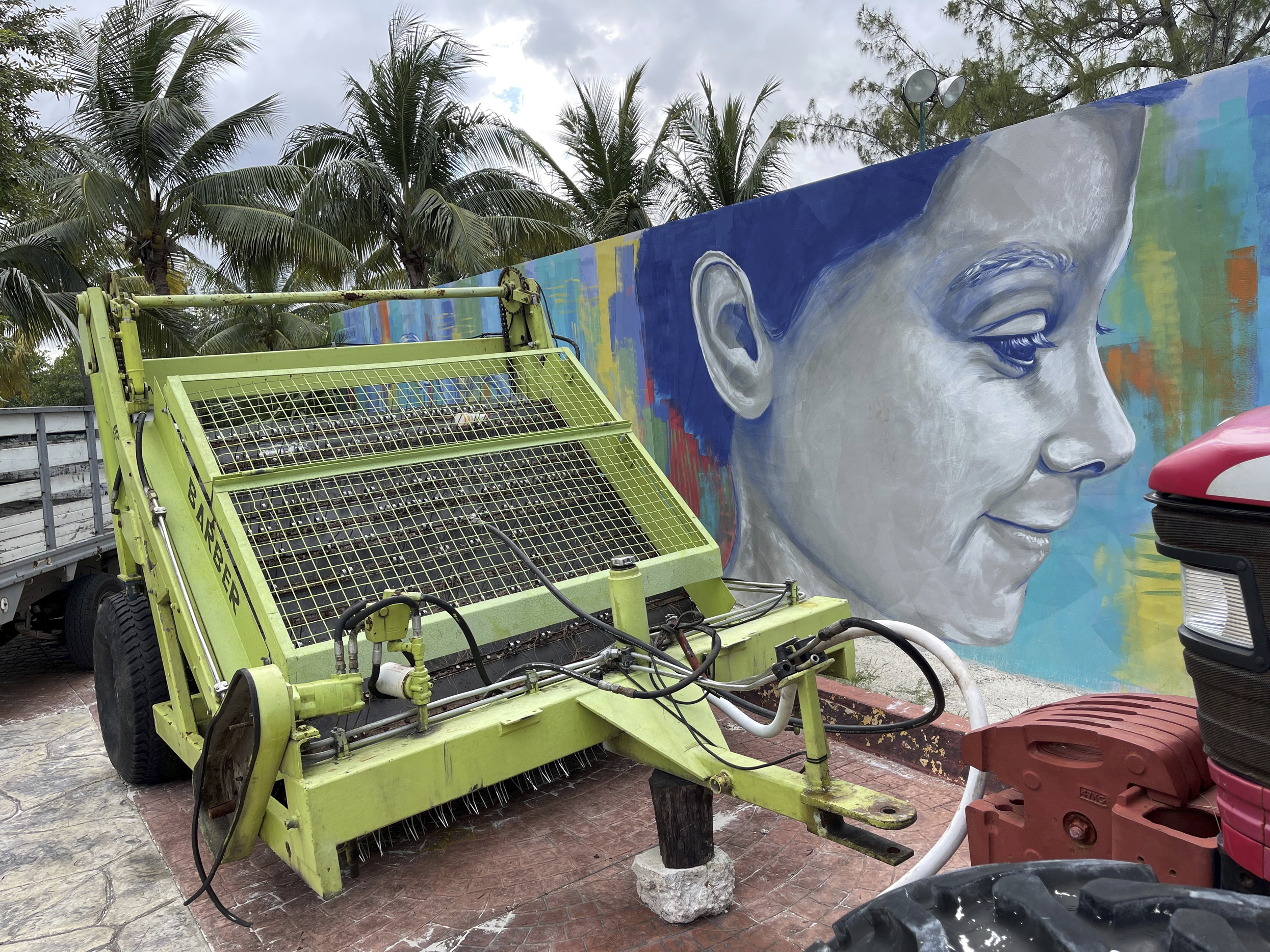
The projection that algae will continue to arrive in future years is widespread among natural scientists. 57 It implies the necessity of finding more sustainable solutions to keeping the beaches clean. One strategy is (re)creating as intact a reef as possible. Following this idea, the Fairmont Mayakoba, a tranquil luxury resort which self-advertises as being “set on the world’s second largest coral reef,” close to Playa del Carmen became the first hotel to join forces with Oceanus, a non-profit organisation active in Mexico. Not only does the hotel invest in revitalising the reef in front of the hotel, but it also allows Oceanus to educate their guests on the importance of coral and reef protection. It is, yet again, turned into a commodified experience as tourists can join Oceanus team members to plant corals in the open ocean, and one can adopt a coral for 20 US Dollars. 58 In an interview with a manager of Mayakoba in the spring of 2022, I learned that while it is a rather small project, it brings about a lot of joy among tourists: “They like the feeling that they planted their own coral in the Riviera Maya when they go home,” Mariana Ramos explained. However, these initiatives are costly and complex, and it is questionable whether such projects are scalable in other destinations which do not cater to luxury tourism.
The distinction between commodified and non-commodified nature
It is not the first time that corals have become commodified goods in the history of the Mexican Caribbean coast. While there is now an emphasis on “saving” nature, as the example above illustrates, tourist trips by local operators to snorkel around the corals were a commonplace when the reefs were in a better shape. These tours often also contributed to reef destruction through tourist practices, such as stepping on corals to take a picture with an underwater camera or by breaking-off corals as souvenirs; such practices were typically tolerated to keep guests happy. The account of Emanuel, who has worked for many years as a snorkeling guide in Akumal, a resort bay between Playa del Carmen and Tulum, is revealing. He took me snorkeling in the spring of 2020. I was curious about learning what tourists find so attractive about Akumal. The area’s main attraction is giant sea turtles who live close to the shore. We encountered numerous while under water. What I did not see, however, were colourful corals and beautiful fish—something I had hoped for. Instead, the reef was in parts greyish-black, in other parts white, and fish were largely absent. In short, the underwater world was not as lively as I had imagined it to be. Back on land, Emanuel and I talked about my impressions and his experiences. While he emphasised that he observes that the reef is dying more rapidly because of sargassum and the stony coral disease, he also said that tourists have for decades ignored the rules of how to treat corals and reefs. For many years, he told me, he and other diving and snorkeling instructors tried to convince politicians to take the reef into sight for two reasons: First, to protect the coast for everyone who lives nearby so that future generations can live a sustainable and safe life; and second, to save their business, as tourists would no longer come if the reef were completely dead. Emanuel reflected that his and his colleagues’ pleas to protect the local environment largely went unheard.
It is all the more significant that tourists now pay money to adopt a coral in the course of renaturation programs. Travelers can protect the same reef which suffered—and still suffers—from tourists’ practices. The advertised “saving nature” meshes with the logics of commodification dominant along the coast and shows what is done to maintain a space once commodified for tourism which is now challenged and questioned.
59
In past decades, the reef was sold as worth visiting and beautiful; nowadays it is marketed as “damaged by nature” and thus worth protecting by human means. Emmanuel’s fear, however, is that with increasing sargassum arrivals, beach tourism will decline significantly, and activities like snorkeling or glass-bottom boat tours in particular might come to a halt. While the beaches are cleaned and great efforts are made to prepare stretches of sand so that tourists can sunbathe, no one cleans up the water. There, sargassum floats along, making entry into the ocean very unpleasant for travelers, as was experienced by Anna, a student who traveled to various countries in South and Central America. She reported during an interview
60
about her disappointment with the beaches and the water quality in Mexico. “I always had this image of Mexico, that we would see really white sandy beaches there. I rather had the expectation that it would be a bit more fancy, and a bit more inauthentic, but just really cool beaches. But then it was completely different than I thought. So we were in Playa del Carmen [...] and I know that we really tried to go to the beach and I remember that we were totally surprised. Because there was so much of this algae. I remember that I thought at the time, ok, we are just very unlucky that it arrives exactly today, or this week, or the month we were there. And we also did not know how to deal with it. So we still tried to swim through it somehow because we thought, ok, somewhere behind it’s better but it was not pleasant, and in the end we spent one, two days at, at the sea. And we then made new plans and went to Chichén Itzá and visited these cenotes [underground pools], and were in the city of Valladolid.”
Anna was not the only tourist I spoke to who started avoiding the coast and instead visited other places located inland and thus free of algae. On the one hand, these tourist practices of reorientation increasingly link the coast with inland sites and may also provide a new source of income for cenote proprietors or for people living in Valladolid and other towns. Tourist attention to the coast, on the other hand, is declining.
While the coast is more connected to the inland through these practices, differences in attention to coast, algae, and reef can also be observed in the north–south relations. Addressing the sargassum phenomenon differs among the villages and towns located along the Caribbean coast of Mexico. As the means to control sargassum are costly, poorer villages where tourism is scarce or entirely absent often do not have the same possibilities to address the issue, even though they are no less affected by algae arrival, as Juan
61
said: In the south, it also arrives, the problem is that nobody sees it there, and in these areas the accumulations of Sargasso are enormous. But nobody sees them. Nobody picks them up. You even pass by this road and you feel the smell. Of decomposing Sargasso when it is the Sargasso season because nobody goes there. The villagers alone cannot do anything about it. They drown in the algae.
A north–south divide emerges here. In the north, where tourism is the main economic driver, politicians, hoteliers, and other stakeholders of the tourism industry have realised “how it impacts their beach, and they of course are really concerned about the influence tourists have in contributing to and generating bad press,” as Eva stated.
62
Both the drop in tourist numbers and bad press in international media put pressure on these stakeholders, but it also means that areas in the south are mostly left alone with sargassum arrivals: “It remains rotting on the beach. It’s affecting the systems and people are just waiting until a northern wind or storm just takes it out again and that’s it. Meanwhile whole villages I think they must have a horrible smell all throughout the village of, for example, Xcalak, I have been told by the people there that it is terrible, people get ill, [...] they think they have to shut themselves up, there is nothing else they can do because it’s too much – they can’t deal with it. It’s too much and nobody really cares so that’s completely different.”
63
During fieldwork in the fishing village of Mahahual in the spring of 2022, not far from the border to Belize, I learned that villagers feel left alone with the issue. They do not possess designated dumping sites for sargassum which has been removed from the beach, and they have to let it rot along their sidewalks (Figure 6). Photo displays dumped sargassum along a sidewalk in a village close to Belize. Besides sargassum, I also found plastic, trash, furniture, and bottles disposed here. Photo credit: Laura McAdam-Otto.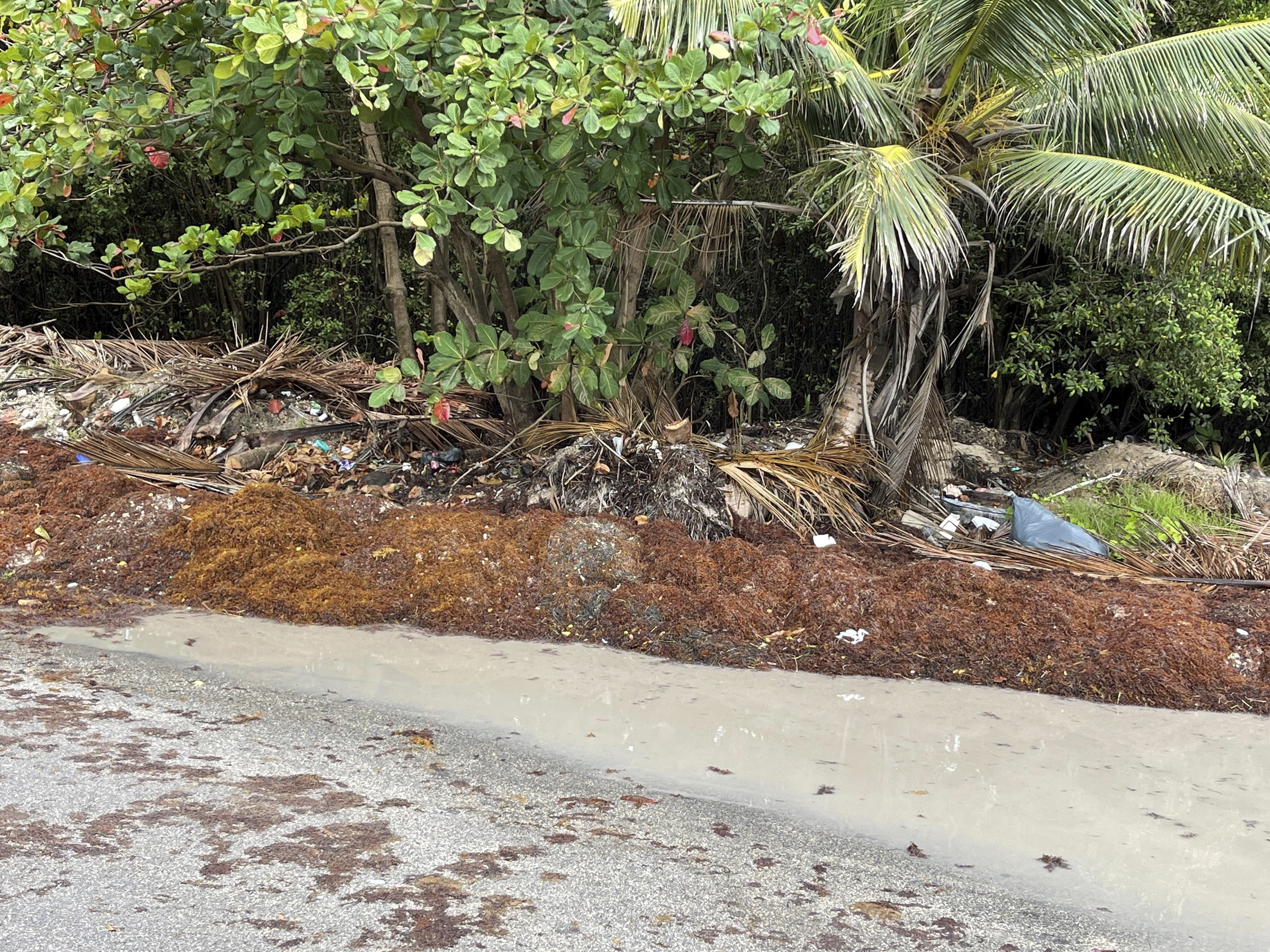
Most of the people who removed sargassum from the beaches did not receive payment for collecting the algae, but they cleaned the beaches after their shifts in hotels and restaurants in hope of higher tips from tourists the following day. The question of economic security is acute for these people, but health issues were also prominent in the conversations: they note that skin irritations and respiratory problems are increasing, and they report nausea from the rotting algae. Field research revealed that it is primarily a tourist tax that makes state-funded beach cleaning possible. This tax is much lower in Mahahual and the villages of the south than those of northern parts of the coast. In addition, places like Cancún receive much more media attention, which makes it all the more important to clean-up these places. If and how much attention is paid to reef and beach integrity in light of sargassum arrival thus depends on the degree of commodification certain localities have already experienced. In parallel, it is apparent that new commodified places are being created, such as in the towns and villages further inland, whereas areas not previously developed for tourism along the coast are witnessing decreased attention. They do not generate attractive locations for tourists, nor are they areas in which environmental protection is particularly pronounced.
Discussion of findings: The becoming of tourism and environmental protection in the Anthropocene
The arrival of sargassum along the Mexican Caribbean transforms coastal relations in multiple ways. It challenges the “beach paradise” which has long been taken for granted. The empirical material in this article demonstrates that coastal transformations are situated and contextualised, at least by humans, against the fact that the world-famous beaches are the most important economic goods of the area, and that commercial interests of the tourism sector have increasingly become sensitive to the damage of the reef.
That being said, it is not about all beaches—as quoted in the title of this article – but about commodified beaches. The protection of the coastline which is used for tourism takes precedence over the environmental protection of the entire coast. In this context, tensions arise. On the one hand, attention for the reefs and coastal protection is increasing. That the algae are present in massive amounts has altered how actors think about the Great Maya Reef, what significance is attributed to it, and it increasingly leads to the reef being understood as an essential component for—and of—coastal health: after all, a healthy coast is a beautiful coast. The dynamic is accompanied by a second type of transformation, namely, the dis-entanglement of coasts. It also harbours potential challenges for the future, however. If tourist travel increasingly moves further inland, where sargassum does not play a role, will it accelerate negligence in terms of environmental protection along the coast? Among my interlocutors, I sensed that several were fearful that the coast could become no-man’s-land in the future. They emphasised that they hoped that tourists would keep returning despite the existing environmental challenges. This article, thus, demonstrates that it is too short-sighted to discuss tourism solely as an environmental problem. Counterintuitively, environmental protection and tourism are entangled in the Mexican Caribbean. Such situated becoming generates unexpected alliances and connections on site and illustrates how tourism acts as an impetus for environmental protection in the Anthropocene.
Accounts of marine scientists and snorkeling and diving instructors show that they have, for a long time, tried to raise awareness of reef and coastal damage. It is only now, since the beaches are also being damaged and are viewed by increasing numbers of tourists as unworthy of visiting, that reefs have received more attention. Fieldwork illustrates that massive sargassum arrival was “needed” to transform coastal relations in a way that provides both scientists and activists with windows of opportunity to advocate for their goals and allows them to issue stern ecological warnings. While their pleas largely went unheard in the past, they are now taken more seriously than those to previous years. Natural scientists and environmentalists make use of sargassum arrival to place the reef and its protection at the fore. Thus, the reefs and their protection are increasingly viewed to be an integral component of beautiful, paradisiacal beaches. In these relations, the coast and the reef are understood as relational and intertwined. That investments are being made in reef protection is mostly because the tourism sector is in danger; it is not based on reef or environmental protection as an end in itself.
The dynamic reflects the long-established logic of commodification along the Mexican Caribbean. Anthropogenic environmental change and reef damage lead to a situation in which environmental protection becomes a commodified good. Environmental protection is, as my research shows, only an adjunct to maintain international mass tourism; environmental protection measures are turned into economic commodities. Tourism-dependent stakeholders are trying to find new ways to generate new economic value from the damage the area is suffering from, for example, by allowing tourists to adopt corals or by offering to participate in renaturation, thereby continuing the logic of commodifying “nature” which has shaped the Riviera Maya since the 1970s.
Coastal tourism simultaneously connects the inland with the coast, thereby incorporating villages and sites further inland increasingly into the commodified space of the Yucatán peninsula. 64 Coastal dis-entanglements and their transformation depend on tourist practices. In previous years, when the beach paradise was still “intact,” water activities were an integral part of beach activities and thus played a crucial role in coastal relations. It was, as research participants reported, relatively easy to convince beach visitors to take a snorkeling trip, a dive, or a glass-bottom boat ride to see marine wildlife when they flocked to the beaches. When the water is full of algae, when the corals lose their colour, and the reefs are damaged, however, tourists—through their expectations and practices—contribute to the emergence of new coastal relations, as the open water is considered worth visiting less and less. Instead, the beach is connected less to the open water, but rather with the inland, where tourists can zip-line in the jungle, swim in Mayan underwater pools, or visit traditional villages. Here, the coast receives much less attention compared to previous years. Research shows that the absence of tourists or comparatively low tourist numbers means that attention for coastal and reef conservation is difficult to sustain. It fosters a north–south divide of the area, and the protection of the coastline used for tourism takes precedence over non-touristified coastal zones.
Coastal relations depend on whether the coastal part in question has been turned into a commodified good. Areas of coastline which have less direct interaction with tourism receive much less attention, and villagers are left alone to find a way to deal with the algae. Consequently, they suffer even more from the environmental impact of sargassum. For villagers, the reef is not lost as a tourist product, but rather their own safety, livelihood, and food resources are massively threatened as a damaged reef is more susceptible to destruction by hurricanes and heavy wave action.
The narrative of changing costal relations presented here is not solely about significant tensions in tourism development and environmental protection through sargassum arrival, which predominantly concerns humans, but it is also a story about non-human ocean and coastal inhabitants. Reefs are attacked by algae and viewed by humans to be in need of help. Simultaneously, seagrass meadows die and turtles face difficulties reproducing. Sargassum is meanwhile constantly expanding its habitat, benefitting from warming oceans, nutrient input, and less strong currents. It is all indicative of the multiple realities of transformed coastal relations, of the acknowledgment that we do not all live (in) the same Anthropocene: Tourists are less content with their travels. Locals are afraid of losing their homes and their livelihoods. Actors from within the tourism industry fear economic decline. Turtles fight to survive, as do corals. Hurricanes can reach coasts more easily. Currents lose their power. And sargassum is, as Eva reported to me, simply happy.
Concluding remarks
This article has highlighted an important empirical phenomenon: algae in the Mexican Caribbean. To date, algae have not played an important role in the multi-species literature. While the damage it causes is severe, its entanglement with other species has not yet attracted much attention from within the social sciences. Through the tensions inherent within the manifold transformations of coastal relations along the Mexican Caribbean, I have shown that the arriving algae mobilise different actors, connect them, shape new alliances, and are entangled with various other actors, thereby contributing to the “coastal turn” 65 in the humanities and the social sciences.
As an ethnographer, I take seriously the importance of situatedness and embeddedness. The article nevertheless hints at dynamics beyond the Mexican case,66,67,68 as the material exemplifies broader developments in the Anthropocene69,70,71 and illustrates how coastal naturescultures are challenged, de-stabilized, and transformed in multiple ways. It is thus reflective of larger dynamics of environmental change in coastal areas around the globe,72,73 in which the enmeshment of locals, tourists, natural scientists, entrepreneurs, and non-human actors co-constitute 74 new coastal realities. I do not wish to suggest a direct comparability between different yet similar phenomena; rather, I am convinced that ethnographic studies help to develop an epistemic lens which allows for an improved understanding of these complex and often ambivalent and counterintuitive dynamics. Its potential consists of demonstrating how species declared to be out of place create unforeseen entanglements, bring people together, and shape new interests and alliances. In short, these approaches reveal how different species co-constitute coastal realities and coastal futures.
Footnotes
Acknowledgments
I thank all my interlocutors for their hospitality, their time, their insights, and knowledge shared with me. Thanks to my colleagues at Goethe University, who provided valuable feedback and comments on earlier versions of this article. I am grateful for the suggestions provided by the two anonymous reviewers, which certainly helped improve my contribution. My work is funded by the Deutsche Forschungsgemeinschaft (DFG/German Research Foundation) under grant number 461841531.
Funding
The author(s) disclosed receipt of the following financial support for the research, authorship, and/or publication of this article: Project “Making Algae (In)Visible“ funded by the German Research Foundation (DFG).