



Abstract
This study explores how digital media plays a role in creating a sense of authenticity in museum exhibitions. Cultural-historical museums deal with artifacts, memories, and events from past eras. It is the curator’s task to create reliable connections to history by organizing resources to present credible narratives and bring the past to life. Digital technologies like virtual reality and immersive projections may offer new rhetorical tools to foster a sense of connection to history. Although earlier research has centered on notions of aura and authenticity (e.g., Benjamin, 2008; Aravantis and Zuanni, 2021; Bolter et al., 2021; Latour and Lowe, 2011), our study contributes to this literature by approaching these ideas through the framework of social semiotics. It does so by examining how authenticity is constructed digitally and rhetorically through the use of semiotic resources like color, contextualization, light, and depth (Kress and van Leeuwen, 2021). These resources act as validity markers, indicating the represented level of authenticity. The study is part of a larger research project on the effects of digitization on exhibitions and visitor engagement, conducted in collaboration with staff from five museums in Sweden. Data includes photographs and video recordings of museum exhibits containing digital applications and transcripts from workshops with museum staff.
Introduction
As part of the inherent logic of their knowledge domain, cultural-historical museums engage with aspects of historical pasts; the artifacts, memories, and events of bygone eras. While artifacts and other physically tangible traces may be available in different forms and are possible to present to audiences, intangible or sensitive cultural heritage is more difficult to display. Thus, the work of curators and exhibition designers within this type of setting involves creating trustworthy links to history. Their task is to rhetorically organize the exhibition resources to develop a valid narrative of the past. Exhibition design involves not only representing some kind of meaning about the past but also giving form to that meaning and thereby bringing the past “to life”. The rhetoric of a museum exhibition is about how that meaning is communicated, in a specific environment and to a specific audience (Kress et al., 2001).
Bringing history to life and creating credible interpretations can be done in several ways. Digital technology – including virtual reality, augmented reality, and artificial intelligence – can potentially offer museums new rhetorical tools for this purpose (cf. Diamantopoulou et al., 2024). In previous research on digital technologies in museum exhibitions, Benjamin’s (1935/2008) concepts of aura and authenticity have been employed to discuss the affordances of digital tools for reproducing and representing the materiality of an object, establishing a relationship with the past and with the public (Arvanitis and Zuanni, 2021; Bolter et al., 2021). According to Benjamin, a philosopher and art critic, original artworks have an aura related to their unique history and authenticity. He argued that “even the most perfect reproduction of a work of art is lacking in one element: Its presence in time and space, its unique existence at the place where it happens to be.” (p. 214). Benjamin argued that technical reproductions would diminish or destroy art’s aura because these technologies enable infinite reproduction (cf. Bolter et al., 2021). Reproductions do not carry the same aura as the original artwork, as they lack a direct connection to its historical and physical origins. However, Latour and Lowe stated that the aura of an artwork might migrate to a reproduction if the quality is good enough. Authenticity above all depends on the link being created between the present world and the object’s original world (Latour and Lowe, 2011).
To converse with dominant discourses in the study of digital technologies in museums, and at the same time shed new light on the discussion of authenticity, we analyze how producers rhetorically establish a link in the communication between the museum, the “content” and the visitor. While previous studies on digital technologies in museums have focused on the concepts of aura and authenticity (e.g., Arvanitis and Zuanni, 2021; Bolter et al., 2021; Latour and Lowe, 2011) we will contribute to the body of research by examining these constructs through the lens of social semiotics. Authenticity has been addressed within discourse studies in the context of mediated communication (van Leeuwen 2001), but not concerning museum exhibitions. A social semiotic perspective will allow us to elaborate on authenticity and investigate how authenticity is constructed rhetorically. Kress and van Leeuwen’s concept of validity (previously named modality) helps us assess the claims being made, and more specifically, the degree of ‘truthfulness' claimed in the presentation of the past (Kress and van Leeuwen, 2021). The presentation, and the semiotic resources in that presentation, indicate either an increase or a decrease in ‘how authentic’ something should be perceived. Semiotic resources such as color, contextualization, light, depth, etc., can be used as visual validity markers, as they indicate the level of authenticity. While writing and speech also may play an important role in claims of authenticity in an exhibition, we focus on the visual communication enabled by digital technology.
This paper explores the role of digital technologies in producing a sense of authenticity in the context of cultural history museum exhibitions. The study investigates how authenticity is constructed multimodally, through a multimodal design informed by rhetoric and realized through digital media and semiotic resources (Kress and van Leeuwen, 2021). These resources act as validity markers, indicating the represented level of authenticity. They provide us with tools to systematically analyze the role of the digital in the construction of authenticity. We assume that digital resources are part of multimodal ensembles and that they contribute specific meaning to communication. The study is part of a larger research project on the effects of digitization on exhibitions and visitor engagement, conducted in collaboration with staff from five museums in Sweden. Data includes photographs and video recordings of 18 digital multimodal ensembles – museum exhibits containing digital applications – and transcripts from workshops with museum staff. The primary aim of this article is to introduce an approach to analyzing how authenticity is constructed in museum exhibitions where digital resources are employed. To do so, the article analyzes six of the digital multimodal ensembles from the larger study.
Authenticity and validity
In his 1935 essay, Benjamin argued that mechanical reproduction destroys ‘the aura’ of a work of art (Benjamin, 1935/2008). This is because the reproduction does not have the same connection to time and place as the authentic artwork. However, more recent research has criticized Benjamin’s theory, suggesting that digital reproductions may indeed have or inherit auras. Latour and Lowe argued that the aura of an artwork might migrate to a reproduction if the quality of the reproduction is sufficiently high. They claim that authenticity above all depends on the link that is being created between the present world and the object’s original world (Latour and Lowe, 2011). Others (Jeffrey, 2015; Kenderdine and Yip, 2018) have also argued that digital objects, such as digital visualizations of real-world heritage sites or monuments, can manifest an auratic quality if a connection between the viewer and the stories and traditions of the object’s cultural trajectory is established. Jeffrey et al. (2015) also claim that digital replicas can acquire aura, they are things in themselves, ‘with their affordances’. However, conventions have informed the value and meaning of digital objects, and they are often judged from the standpoint of the ‘‘superior’’ physical counterpart. Part of the problem, according to Whitcomb (2007), is that multimedia in the exhibition context is understood as a tool for interpretation and rarely as a material expression in its own right.
It is important to note that both aura and authenticity are subjective experiences. Several case studies provide insights into how museums implement digital media and how these implementations affect perceptions of authenticity. For example, in the project “Virtual Mummy” at the British Museum (2004-2006), CT scans were used to digitally reconstruct an Egyptian mummy. Visitor feedback indicated that the virtual exploration was perceived as authentic, allowing detailed and interactive engagement that was impossible with the physical artifact alone (Chittenden, 2009). A related issue is thus about what gives a memorable experience, without necessarily being ‘real’ or authentic. Something can be displayed engagingly, even if the object itself is not genuine. The design can also provide an experience that is stronger than the original. The opposite may also be the case, in that an authentic work of art can be perceived as disappointing. For example, seeing the Mona Lisa at the Louvre can be disappointing because the context might feel underwhelming, due to size expectations. What is actually ‘true’ and what is strongly experienced are thus two different things.
The present study is set within a social semiotic theory of communication. That means the paper will focus on meaning-making and representation, rather than on experience, perception, or evaluation. A focus on meaning-making also makes design a crucial element in multimodal composition (Kress, 2017). The shaping process and the orchestration of different semiotic resources are always done based on the designer’s understanding of certain contexts and purposes. Introducing the concept of rhetoric reminds us to have a critical perspective in the analysis of design. Design is the process of shaping a product or resource, while rhetoric captures how the shaping is always being done based on assumptions, purposes, and aims. Kress clarifies that “Design is the rhetor’s means to achieve the materialization of meanings in accordance with her or his wishes; in relation to her or his conception of the audience; and of the requirements of the message to be ‘packed’.” (Kress, 2017: p. 51). In this way, concepts such as ‘reproduction’ or ‘copy’ (as discussed by Benjamin) are not relevant within a social semiotic perspective. According to Kress, sign-making is always a creative act, where the sign maker makes choices and assembles semiotic resources in specific and new ways, based on both purpose and interest. The concept of validity helps us to assess what claims to authenticity are made through a given representation. The two words, authenticity and validity, are potentially two different names of the same notion, one shifting the attention to experience/perception, whereas the other to representation. However, the epistemological anchoring of the notions of authenticity and validity is different.
In their seminal work on visual design, Kress and van Leeuwen (2021), used the notion of modality to discuss the reliability and credibility of visual messages. The term ‘modality’ comes from linguistics and the work of Halliday, and refers to the truth value of statements about the world (cf. Halliday, 1985). Kress and van Leeuwen contributed to extending the concept of modality to include visual communication. They explain that “[…] speech and writing, as well as images, diagrams and other visual representations, both have resources for expressing ‘as how credible’ a representation is to be taken. These resources are realized through different affordances, even though they are based on the same principles. Hence, they appear to be offering different kinds of truth. It is not a matter of different means expressing the ‘same thing’; the means themselves offer different meaning potentials.” (Kress and van Leeuwen, 2021: p. 154). While linguistic truth is based on probability and uses verbal modality markers such as may, will, and must, visual truth is based on the idea of realism, which can be assessed by a viewer based on what can be seen. In their 3rd edition of Reading Images, modality as a concept is replaced by the concept of validity (Kress and van Leeuwen, 2021). They argue that visual truth is construed differently than linguistic truth and that validity has the advantage that it encompasses “a wider” range of truths (Kress and van Leeuwen, 2021: p. 154). In their work, the analysis concerns images ranging from photographs and films to paintings and textbook illustrations. They note how digital technology not only makes it possible to change images but also makes it possible to generate new ones (Kress and van Leeuwen, 2021: p.175). Three-dimensional forms of visual communication, such as sculptures and toys, are discussed by Kress and van Leeuwen in relation to the concept of validity, and there is also research on modality concerning the built environment (Ravelli and McMurtrie, 2016). In addition, there is also research on artifacts showing how authenticity relates to origins (Archer and Björkvall, 2018; Dlaske, 2015; Westberg, 2021). This paper adds to this discussion by extending the discussion of visual validity to include also museum exhibitions.
We have only found one study that uses Kress and van Leeuwen’s conceptual framework on validity to examine aspects of digital technology in museums. Hellwig (2024) analyses the movement styles of flythroughs in museums. Museum flythroughs are described as “complex digital multimodal ensembles that use elevated camera angles, 3D animation, AI imagery, and drone footage to ‘fly’ the viewer over and through a museum or exhibition” (Hellwig, 2024, p. 1). Hellwig discusses how this technology creates a non-naturalistic experience of navigating space, contrasting sharply with the embodied feel of digital walkthroughs and typical museum visits. The flythroughs are not meant to represent history, but rather the exhibition space. Although there is often a relationship between a flythrough of a museum and an actual museum, this is not always the case. Sometimes, flythroughs offer a tour that has no equivalent in reality. Using the system of visual validity, Hellwig argues that, rather than being considered unreal, the flythroughs are to be considered as reflecting the ‘truth of the imagination’, to be interpreted through the lens of the fantasy coding orientation (Hellwig, 2024). Hellwig’s study differs from ours in that the flythroughs do not claim to establish links with the past. It is precisely that aspect, the rhetorical construction of authenticity, that we investigate in our study. We use the notion of validity to analyze the construction of authenticity.
Kress and van Leeuwen (2021) introduce eight validity markers and discuss how these may be used in visual communication (p. 156). The validity markers make meaning on clines and are used to construct four coding orientations which represent what is credible or ‘true’ to certain groups of people in certain contexts. Color may be used as a marker of naturalistic validity in terms of three scales: color saturation (full color to black and white), color differentiation (maximally diversified to monochrome), and color modulation (fully modulated color to unmodulated color). A fourth validity marker is contextualization, with a scale running from the absence of background to a fully detailed background. A fifth validity marker is the representation of detail, from maximum abstraction to maximum representation of detail. A sixth validity marker is depth, with a scale running from the absence of depth to a maximally deep perspective. Illumination is a seventh validity marker, where a scale runs from the fullest representation of light and shade to its absence. A final validity marker is brightness, with a scale running from a maximum number of different degrees of lightness and darkness to just black and white.
How validity markers are used depends on what Kress and van Leeuwen (drawing on Bernstein) calls “coding orientation”, which are sets of abstract principles “which inform how texts are produced by specific social groups in specific institutional contexts” (Kress and van Leeuwen, 2021: p. 164). The coding orientation may be understood as the overall principles of the entire exhibition. However, depending on the audience’s background and education, they may or may not perceive, or “read” the exhibition in the intended way. Naturalistic coding is based on perception and relies on the correspondence between the object of representation and how it would be viewed by the naked eye. An abstract coding orientation is instead based on conceptual criteria, relating to abstract ideas or essential qualities of a phenomenon. Technological, or scientific, coding orientation is based on “a pragmatic criterion, namely the usefulness of visual representations as ‘blueprints’. Whenever colour, for example, is not useful for the scientific or technological purpose of the image, it has, in this context, low validity.” (Kress and van Leeuwen, 2021: p. 164) Based on sensation, the sensory coding orientation has to do with evoking feelings in the audience. (Kress and van Leeuwen, 2021: p. 164)
Another fundamental concept in a multimodal social semiotic analysis, also one that deals with validity, is the concept of affordance. Modes and media 1 have different possibilities and constraints in terms of how they can be used in communication (Kress, 2009). Affordances also manifest the unique relationship between an agent and its surroundings under specific contextual circumstances (Lindstrand, 2021). How a semiotic mode works and can be used in communication and representation depends on the specific logic that guides how it operates. Different modes position us differently concerning the aspects of the world we set out to represent: we need to make various choices depending on the mode we are working with. These choices are restricted by the possibilities and limitations of the mode or media in question.
For the visitor to experience something as genuine, the gap between the visitor and the original object or event needs to be reduced. To make the relationship between the visitor and the represented more direct, and to give the impression that it is the real object that meets the visitor, rhetorical work needs to be done. In our study, we approach this “reduction of the gap” in terms of rhetoric (Bezemer and Kress, 2016). The curatorial team needs to make many decisions, for example, what modes and media to use, and what audience to design for. Different modes work differently and therefore lend themselves to us in different ways when used in communication and representation, what Bezemer and Kress (2016) refer to as epistemological commitments. As a result, they lend themselves differently rhetorically and demand different types of decisions in signmaking processes.
Study design
The present study is part of a larger research project on the effects of digitization on the exhibition medium and visitors’ meaning-making. 2 It is a collaborative project with staff at five museums that belong to the same government agency. The process started with an inventory of digital resources in the exhibitions, together with representatives from the museum management. 18 digital multimodal ensembles were chosen for analysis. Subsequently, these 18 digital multimodal ensembles were explored in a series of workshops with museum staff. The group of staff consisted of people involved in exhibition design, such as designers, producers, curators, and educators. The workshops focused on the possibilities and constraints of digital resources in the exhibitions; that is, their affordances. We explored how digital technology contributes to the overall rhetorical work of the exhibition. All workshops, two at each museum, were video recorded. The researchers also took pictures and notes during the workshops. In this article, we analyze six digital multimodal ensembles from the following exhibitions: Travelling Man and The Assignment at the Museum of Wrecks, Swedish Naval Defense during 500 Years at the Naval Museum, and Vasa up close at the Vasa Museum.
Digital resources are often not stand-alone resources in an exhibition but are part of multimodal ensembles (Kress, 2009). These ensembles might consist of digital resources that have been arranged as elements together with other types of resources such as artifacts, museum labels, and images. It is our starting point that we need to approach the elements that make up the rhetoric of the exhibition as parts of multimodal ensembles. Therefore, the context becomes an important part of the framing and of the multimodal ensemble. While digital resources play important roles both in terms of what and how various aspects of a certain topic are presented to the audience and in terms of the various tools and processes employed back stage in the production and steering of the exhibitions, our focus here is on those aspects of the digital that can be perceived by the visitor.
Apart from approaching (digital) representations in the museum settings as the result of multimodal ensembles where different modes and media contribute in different ways, we also use multimodal ensembles as a way of framing our object of analysis, in terms of what resources the visitor (potentially) encounters when approaching a specific part of an exhibition. We need to approach the components that make up the exhibition’s rhetoric as parts of a multimodal ensemble, switching between part and whole, in order to grasp how meaning is constructed in the interplay between modes. As Kress et al. conclude: […] a serious look at the multiplicity of modes which are always and simultaneously in use shows conclusively that meaning resides in all of them and that each contributes to the overall meaning of the multimodal ensemble in quite specific ways. […] meaning is made in all modes separately, and at the same time, […] meaning is an effect of all the modes acting jointly.” (Kress et al., 2001: p. 1)
Documentation from the workshops was used as the starting point for the analysis, which was done by both researchers. This is an exploratory study where we try a selection of analytical concepts on parts of our material. The analysis can be described as abductive (Tavory and Timmermans, 2014), as we use the central notions of affordance and epistemological commitments (Bezemer and Kress, 2016) in relation to validity. We use the validity markers color saturation, color differentiation, color modulation, contextualization, detail, depth, illumination, and brightness as analytical tools to explore the role of the digital in producing a sense of authenticity in exhibitions. In joint discussions and iterative processes, we have conducted explorative analyses applying the different validity markers in relation to parts of our material. In the article, we have selected examples that we believe add to the understanding of how visual validity works in technology-rich museum exhibitions. The conversations have helped us to make a selection of the digital resources to focus on. The conversations help to draw our attention to certain aspects that we want to analyze more closely, since staff with different competencies read the exhibition from different coding orientations, for example, assessing if it is aesthetically pleasing, scientifically sound, or technically elegant. The selected examples complement each other in that we include a breadth of resources. These highlight slightly different types of digital resources (virtual reality, immersive projections, animations, etc.) used in different ways, for different purposes. Together, they provide different entry points to understanding how authenticity is represented.
Making the inaccessible accessible: The rhetorical work of exhibition design
Making available lost objects and forgotten processes
In the following sections, we present our analysis and do so in two steps. The first part introduces our examples and some basic characteristics and affordances of the digital. The analysis at this stage focuses on rhetorical functions of digital resources that have to do with providing further contextualization and discursive embedding to the exhibition design. The second part deepens the analysis further by focusing on how authenticity is produced by means of validity markers. Our analyses in this second part are guided by Kress and van Leeuwen’s (2021) notion of coding orientations. However, our ambition is to show the potential of using Kress and van Leeuwen’s framework in analysing museum exhibitions, and focus is therefore directed towards illustrative examples from the larger body of material from our project. Thus, we don’t claim to present a full systematic analysis where all validity markers and coding orientations are applied to each of the examples we present.
An exhibition, not least in a cultural history museum, is largely about portraying and bringing to life the inaccessible. In representing the past, authentic objects often have a special status. We assume that they become central resources for the visitor, in terms of creating links to history. Digital technology is often used together with these objects to provide “context”. This may involve explaining processes (e.g., hauling in an anchor), functions (e.g., how a capstan works), or sequences of events (e.g., in what order different actions were performed when rescuing the crew from a sunken submarine). Digital technology may also be used to create reconstructions/representations of artifacts that are too sensitive to be displayed or that have been lost. The Museum of Wrecks, a marine archaeological museum in Stockholm, can be seen as an illustrative example of how digital technology is used to reconstruct artifacts. Since most of the archaeological finds, such as shipwrecks, remain underwater, the museum relies on digital resources to bring its story alive. In the exhibition about the ship (wreck), Travelling Man, only one original artifact – a copper coin – is displayed. Instead, digital media is used to project reconstructions of the artifacts that were found on board during the archaeological investigation. The artifacts have been digitally reconstructed in the shape of three-dimensional pepper’s ghost holograms and placed inside display cases, just as if these objects were authentic (Figure 1). Projected artifact in a display case at The Museum of Wrecks.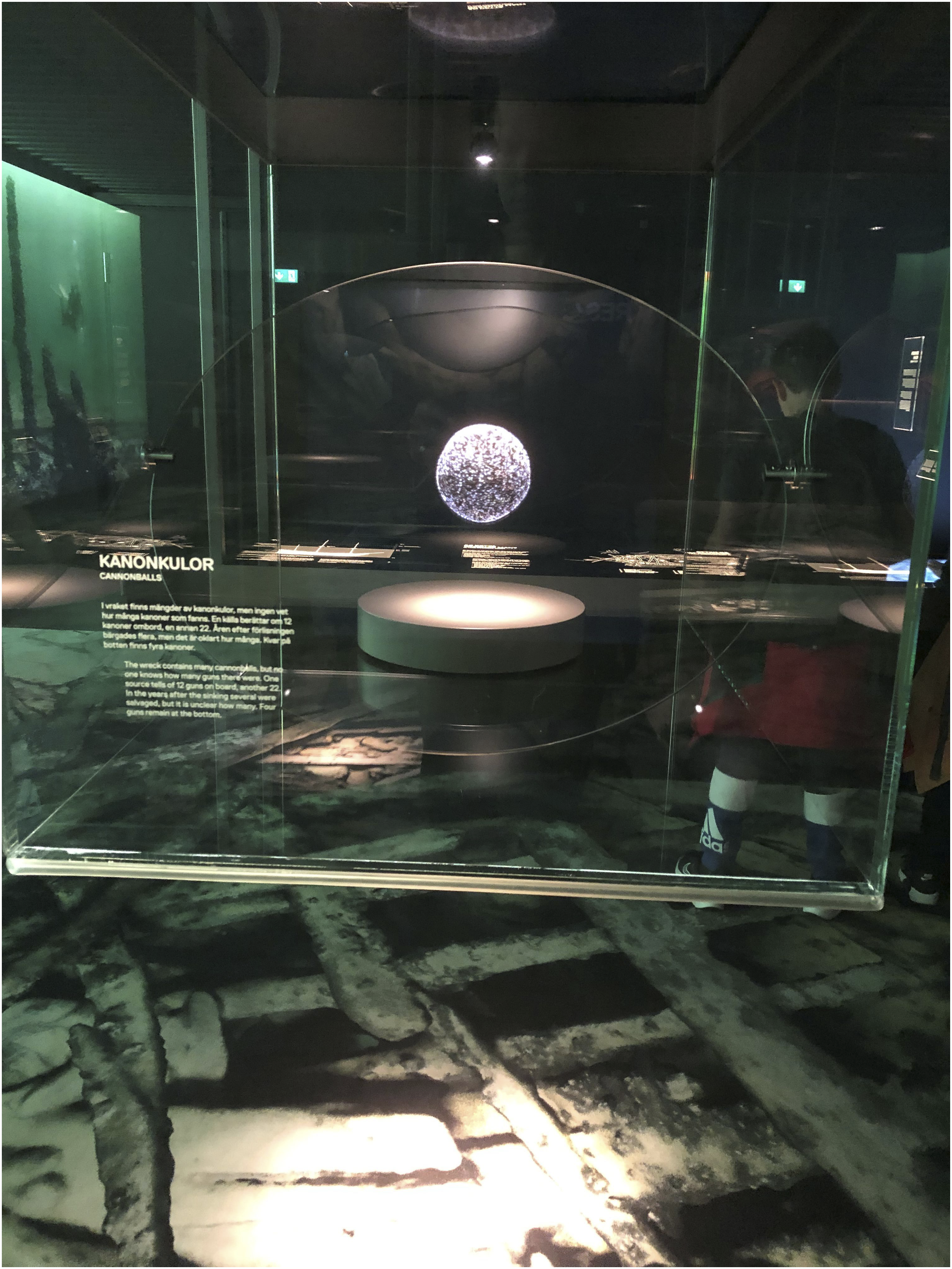
When it comes to making processes and functions related to the topics in focus of the exhibitions available to the audience, the exhibition Vasa Up Close at the Vasa Museum is a good example. Here, digital technology is used to illustrate details and to show how the Vasa ship functioned as a sailing ship and a warship. Digital technology illustrates the function of different objects. One example is a capstan, which is explained through a digital animation in blue, red, and yellow, showing the process of how the anchor was hoisted up and down. The capstan on the ship made it possible to hoist anchors, sails, or other very heavy objects. Up to 24 sailors helped to drive around the capstan (Figure 2). Digital illustration of details and functions of the Vasa Ship.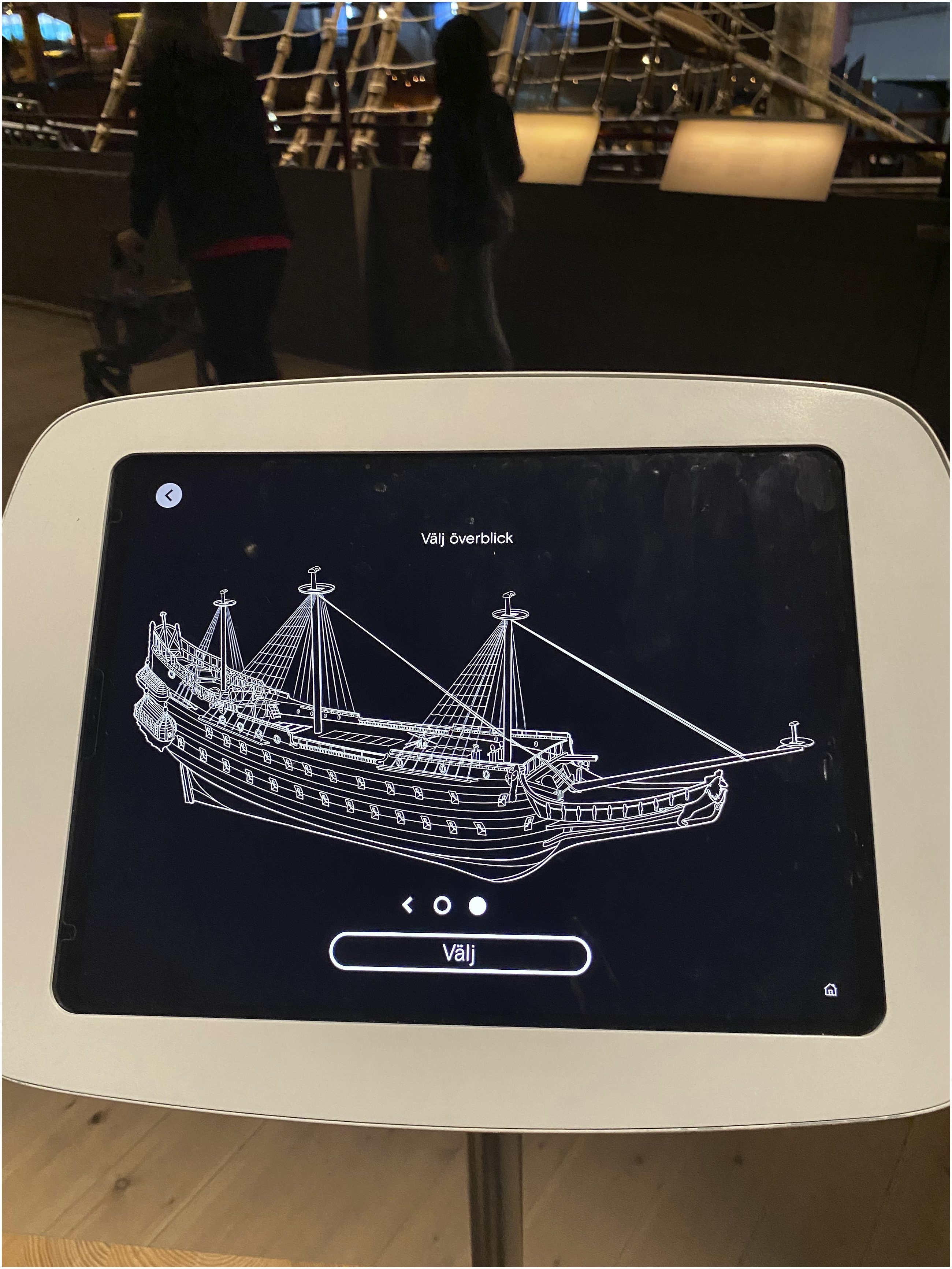
Digital technology not only makes artifacts and processes available; we suggest it makes them available in a specific form, through a specific (simulated) materiality which adds discursive layers to the representations. According to our analyses, these discourses may, for example, be aesthetic/poetic, technological, or scientific. An aesthetic discourse can be seen at the Museum of Wrecks, where projected objects are placed in display cases. The visitors may, for example, encounter, observe, and experience a three-dimensional spinning, shimmering white, glowing canon ball (Figure 1). The cannonball could have been represented differently of course, as an “ordinary” black iron cannonball without the white shimmer, but the shimmering light adds an aesthetic quality to the presentation, while simultaneously providing a semiotic function as it serves to increase salience. A technological discourse, drawing on what Kress and van Leeuwen (2021) refer to as a ‘technological coding orientation’, is visible in the exhibition ‘Vasa Up Close’, which focuses on how the ship was sailed and how it was intended to be used in combat (Figure 2). It is the function and technical details of the Vasa ship that are explained, like the capstan that was used to hoist heavy objects. In this way, visitors may make connections and understand how things were made or how they function. The same applies to the sculptures represented digitally; written information accompanying the digital visual representations emphasizes the symbolic meaning of the sculptures and how they were used in a form of propaganda on the warship.
3
Another alternative could have been to emphasize the aesthetic qualities of the sculptures on the ship, but instead, it is the functions that are highlighted. The scientific discourse appears in an exhibition called ‘The Assignment’ at the Museum of Wrecks. Here, digital resources are used to explain how maritime archaeologists use different search tools to discover shipwrecks, such as a side scan sonar or a multibeam (Figure 3). A video brings us underwater and technology allows us to zoom in and focus on three different details, showing how complementary technologies can be of use in the work of a maritime archaeologist. To summarize: the specific form (e.g., a shimmering white cannonball or the function of the capstan) and the discursive layers may be seen as part of how validity is construed. There is a claim of authenticity, where the form signals: ”This is what it looked like and this is how it happened”. Digital technologies contribute to representing virtual objects as archeological objects and animated processes as possible courses of events. Different search tools used in maritime archaeological work.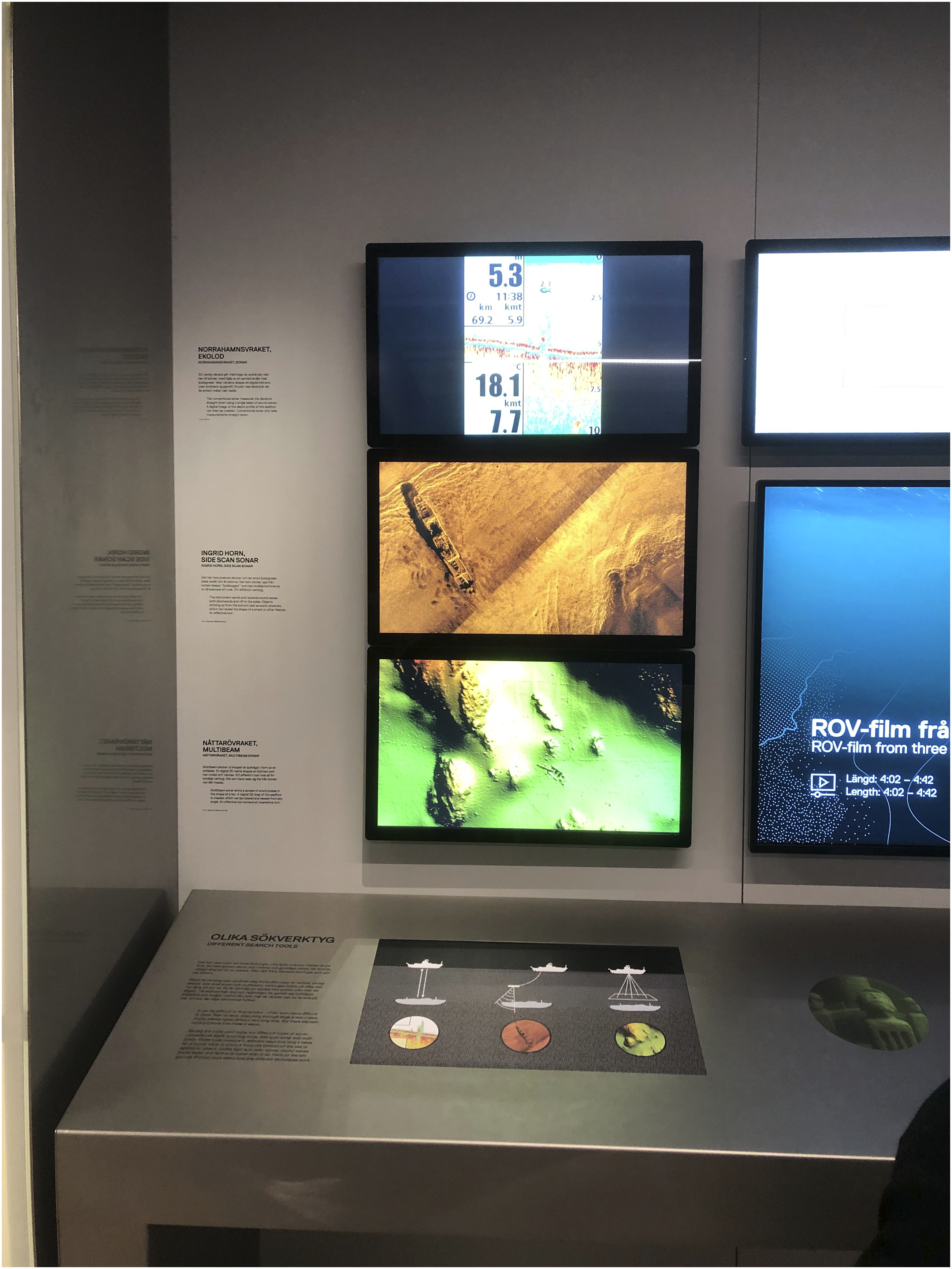
Authenticating representations
We have looked at some basic characteristics of the digital and how it may contribute to the rhetoric of the exhibition. We now wish to go further, in an exploration of the affordances of digital technology in terms of producing a sense of authenticity. Below, we will examine how different validity markers function rhetorically in some of the digital exhibition resources. Here we provide examples of how different semiotic resources serve as validity markers in relation to certain coding orientations.
As previously explained, the use of validity markers depends on the coding orientation (naturalistic, abstract, sensory, technological), which are sets of abstract principles that can be used by exhibition designers in their communication with the audience (Kress and van Leeuwen, 2021). In the case of ‘Travelling Man’ at the Museum of Wrecks (Figure 4), it is likely that visitors will read the exhibition from a naturalistic point of view. According to Kress and van Leeuwen (2021), the naturalistic coding orientation is based on perception. The closer a representation is to how we are used to seeing things, the more valid we experience it to be. In the exhibition, life-size photographs line the walls. These have been taken from inside the shipwreck. A carpet on the floor reproduces the appearance of the wreck in full scale. The carpet is a 1 to 1 scale photo of the back half of the wreck. In the context of these examples, we note that size/scale, apart from the eight validity markers identified by Kress and van Leeuwen (2021), is an important resource in relation to validity in museum exhibitions. The green color seen throughout the photographs and mat mimics the green light used in underwater cameras, which is likely to appear to the visitor as naturalistic. These resources contribute to representing the world below the surface from the point of view of a diving maritime archaeologist. In this sense, the exhibition space appears as more or less authentic or “real” which, again, is connected to a naturalistic coding orientation. However, the visitor might react to other aspects such as the white brightness and the spinning movement of projected artifacts, the holograms which have been placed in display cases. So, the exhibition might at the same time even appear as being “more than real”, which suggests a sensory coding orientation (cf. Kress and van Leeuwen, 2021). The sensory coding orientation, in Kress and van Leeuwen’s (2021) account, is based on sensation and is commonly used in contexts that seek to invoke feelings. Apart from being presented with factual representations regarding the wreck and its contextual circumstances, the various projections, sounds, and light design in the exhibition space also offer a more aesthetic sensation to the visitor. The exhibition Travelling Man at the Museum of Wrecks.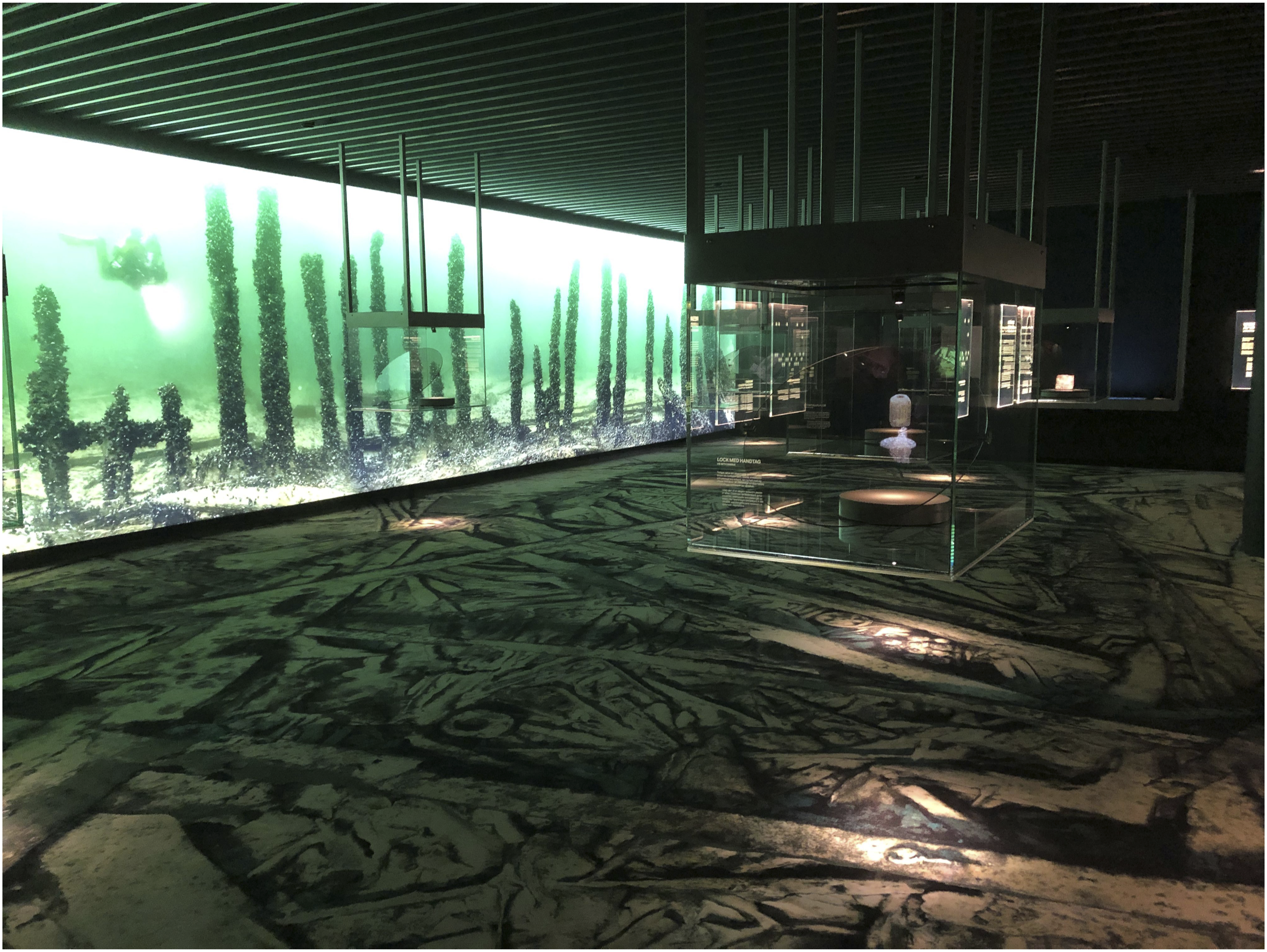
Color may be used as a validity marker in digital museum resources, by allowing elaborations along the scales of saturation (full color to black and white), differentiation (maximally diversified to monochrome), and modulation (fully modulated color to unmodulated color). We suggest that digital resources are part of multimodal ensembles and that the digital resources contribute with specific meaning to the overall rhetoric of the exhibition. Our first example of this appears in the exhibition ‘Swedish Naval Defense during 500 Years’ at the Naval Museum (Figure 5) in Karlskrona. The exhibition is built around life-size videos of people from the history of the Swedish Navy from 1522 to our day; for instance, an officer and a ship’s boy. These figures are in sharp focus, with saturated and varied colors (i.e., differentiated: a diversified range of colours), and appear as “real”. In the case of ‘Travelling Man’ at the Museum of Wrecks (Figure 4), the resources have low color saturation with black, white, grey, and green colors. It has a monochrome color differentiation and uses a low degree of modulated colors. The low color saturation contributes to reducing naturalism and validity. Projections of artifacts in display cases are all white “holograms”, which contrasts with the other resources. This has the effect that the digitally projected objects are considered to be “more than real”. Kress and van Leeuwen (2021) also point out that holograms are usually regarded in this way by most people. The assessment of validity can thus be qualified when we take into account the three validity markers relating to color. The digital technology in ‘Travelling Man’ may be considered to add to a perception of the exhibition as being “real”, or perhaps even “more than real”. This occurs when values on the different scales are exaggerated (Kress and van Leeuwen, 2021: p. 155). Video projections of historical figures.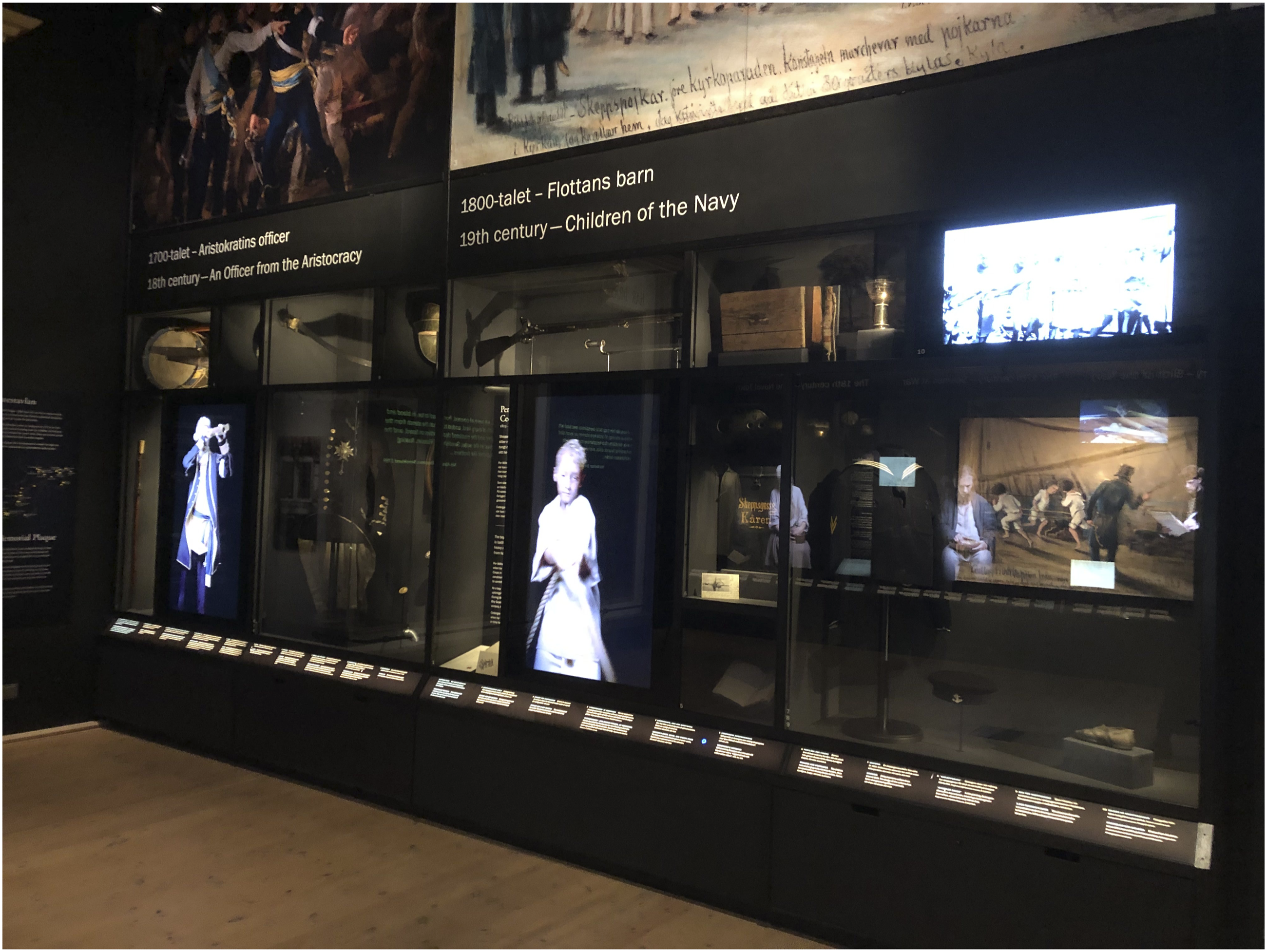
Contextualization is another validity marker of relevance here, presented in a scale from absence of context to fully detailed context (Kress and van Leeuwen, 2021: p 156). While the concept in Kress and van Leeuwen’s work refers to degrees of information in a picture, we expand this notion in relation to museum exhibitions and include all forms of information that are added by the resources in a multimodal ensemble (e.g., a display). In the case of The Museum of Wrecks, the visitor is gradually presented with more and more contextual information about the ship (wreck). As visitors enter the main exhibition space (Figure 4), they walk on a carpet depicting the wreck’s appearance. They may perceive that a full-scale floor plan has been used to produce the carpet. The carpet is surrounded by photos taken inside the shipwreck, and objects from the ship are projected into glass cases, displayed in the exact locations where they were originally found on the ship. As visitors approach the display cases with projected three-dimensional objects, they will notice more details and be able to read the panels with information about the ship and the specific artifacts. Thus, the placement of the projected objects in relation to the representation of the body of the ship in the design of the mat contributes to a sense of authenticity in accordance with the naturalistic coding orientation. The augmentation of contextual information results in increased validity. Several layers of contextualization are superimposed on the visitor.
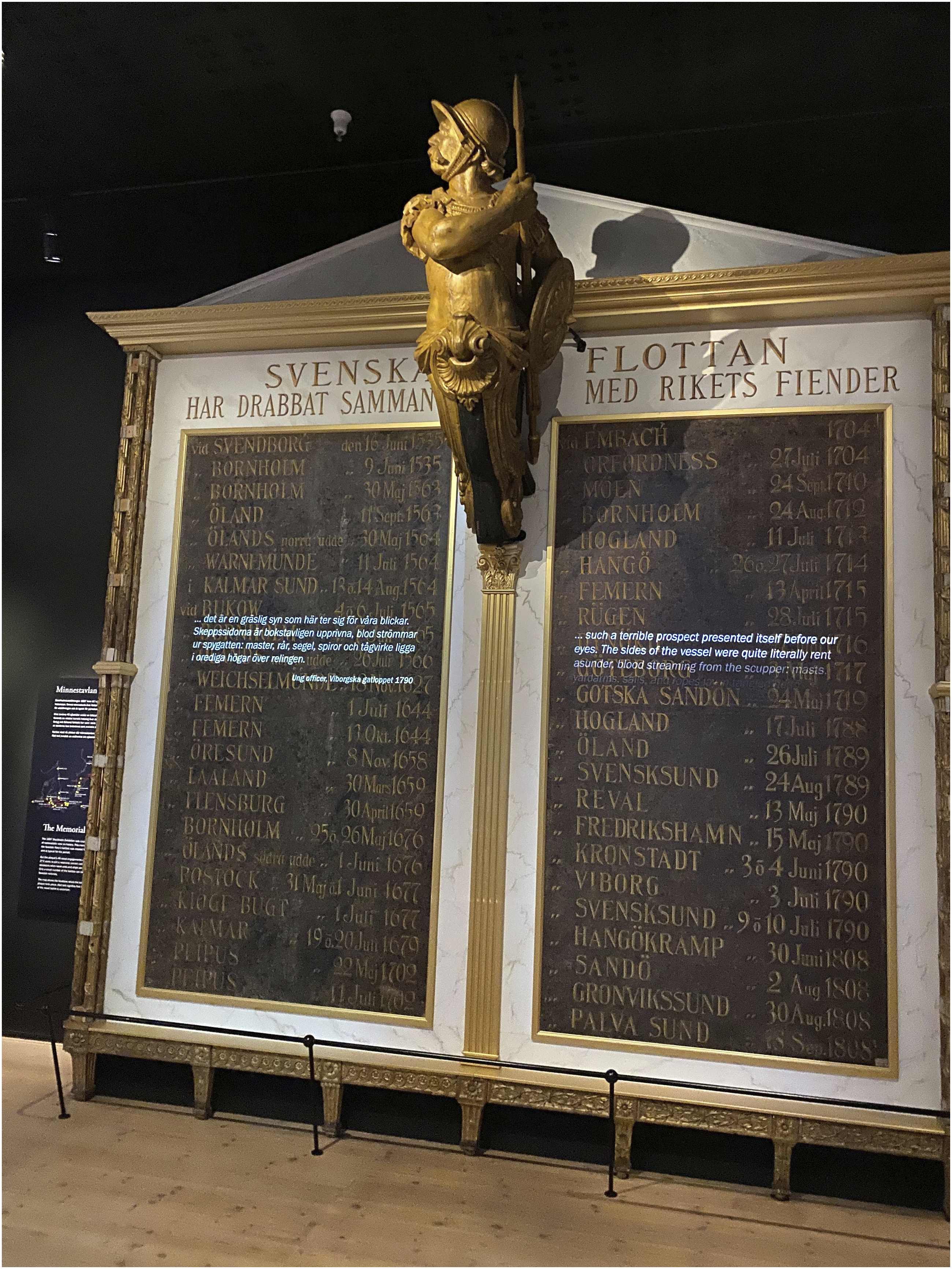
Another affordance for creating authenticity is the possibility of the digital to shift shape and thereby provide more context. As you get closer to the holograms at the Museum of Wrecks, the digitally projected objects will shift into a video of an archeologist diver who approaches the ship and the artifact “in situ” in the shipwreck. The holograms (for instance, a cannonball) transform seamlessly into videos, letting us ”become” a diver approaching the represented objects in their ”natural” environment (Figure 6). This specifies and frames visitors’ interpretations. Apart from a shift in subjective positions, this also implies added information in terms of contextualization. In this sense, cohesion is created as these different forms of experiences and aspects of the ship are linked together. Another example of contextualization can be found at the Naval Museum, where an original commemorative plaque presents places and dates of Swedish battles at sea. It is gradually altered through the use of digital technology, as animated writing and testimonies from battles at sea are projected over the given information (Figure 7). This constructs a more personal account of the experiences of war. Empathy may set the grounds for visitors to feel a connection to historical events, which thereby increases the degree of validity and authenticity. We interpret this as being in the domain of the sensory coding orientation, which is about invoking feelings in the audience (Kress and van Leeuwen, 2021: p. 164). Video from the perspective of a diving maritime archaeologist. Commemorative plaque at the Naval Museum.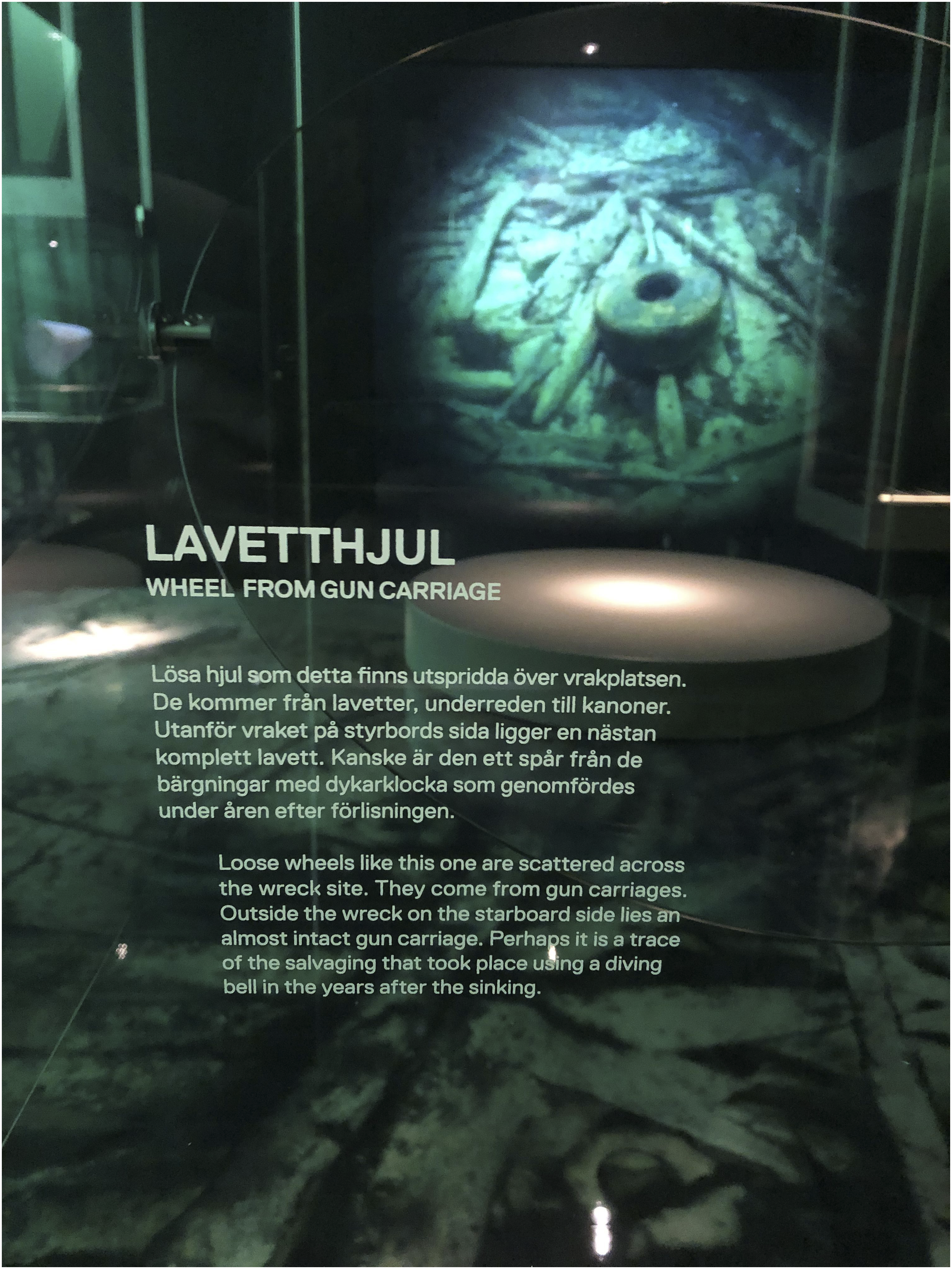
Another way to build validity involves directing the visitor’s gaze to details. Detail and specificity are used as validity markers in the case of the Vasa ship, where digital technology is used to emphasize its many details. An animation on the wall shows the details of the Vasa ship, like a drawing, where the visitor can follow how the motif emerges. The digital projection helps the visitor select and focus on certain details. The digital also illuminates the dark concrete, making the details salient (Figure 8). There are also several digital tablets, that direct attention to details through animation, color, and additional information (Figure 2). When shifting focus from the whole ship to its details, visitors may notice aspects that might not otherwise be visible to the untrained eye. The digital applications offer more details for visitors to engage with and establish a relationship with, which can provide a wider ground for experiences of authenticity. Providing more details to engage with and/or focus one’s attention on makes the entire ship appear more “real” and relatable. It creates a larger possible surface (or more opportunities) to establish a relationship that can be the basis for a sense of authenticity. Wall animation at the Vasa Museum.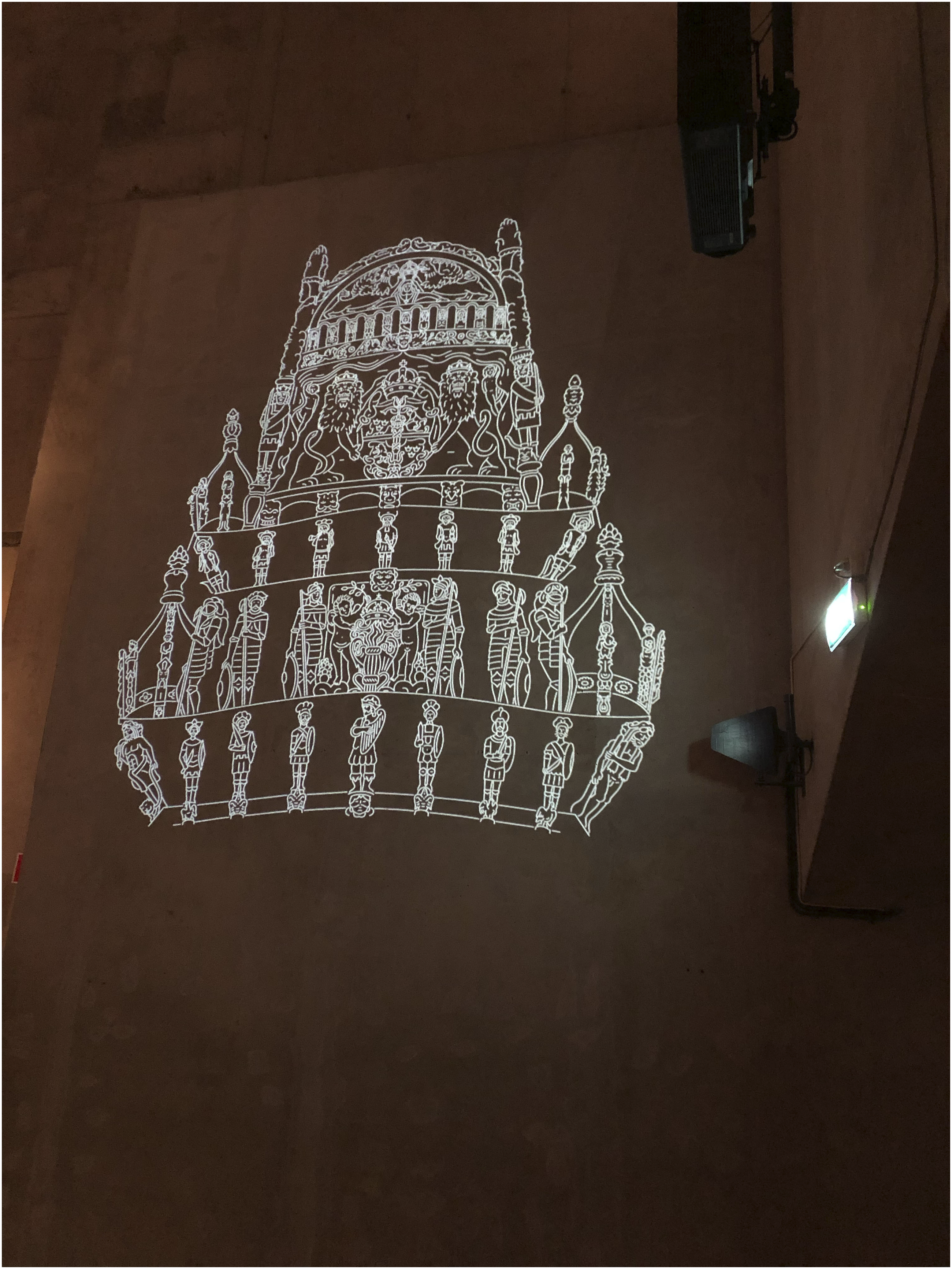
Depth is also used as a validity marker, which may be seen in the exhibition ‘Travelling Man’, where three-dimensional objects are projected on display cases. From this particular perspective, it makes the objects appear as “real” (Figure 1). Another example is the use of VR in the exhibition ‘The Assignment’, where you get to dive into the ocean to be able to explore the shipwreck more or less like a marine archeologist. Another example, which instead reduces the sense of depth, is at the Naval Museum and the exhibition ‘Swedish Naval Defense during 500 Years’. Here, the use of moving images with videos of people from the history of the Swedish Navy contributes to a sense of authenticity, but at the same time authenticity is reduced as these people are represented in front of a dark background without depth. In this way, the visitor may interpret these people as representations of individuals, rather than “real” people (Figure 5).
The validity marker illumination is used actively in the digital resources. In the case of the represented individuals on screens at the Naval Museum, we suggest that the dark background contributes to reducing validity according to the naturalistic coding orientation. The absence of illumination means that there is no shadow at all in these videos, which, again, means that the visitor is likely to interpret the individuals as fictional rather than historical characters (Figure 5). Finally, brightness is also used as a validity marker in digital museum resources. In ‘Travelling Man’ at the Museum of Wrecks, there is maximum brightness in the case of the projected objects in display cases (Figure 1). The white shimmering light contrasts with the black and green colors in the rest of the exhibition space. It makes the objects appear as “more than real”. The scale is exaggerated so that the visitor understands that the projected object is a representation of an object, rather than “the real deal”. By doing so, a shift in coding orientation is suggested, from naturalistic to sensory coding orientation. By means of digital media, the audience is invited to experience more aesthetically oriented dimensions of what is on display.
Conclusion and discussion
We can conclude that digital technology is central to the rhetorical work of exhibition design. More specifically, digital technology plays an important role in producing a sense of authenticity in the context of cultural history museum exhibitions. In the present study, we saw examples of digital technology being used to create reconstructions of artifacts that are either too sensitive to be displayed or that have been lost. We claim that authenticity in cultural history museum exhibitions depends on the link that is being created between the past and the present, and we have demonstrated how this is done in the examples we have presented. The digitally reproduced artifacts are part of multimodal ensembles that include other resources that might add information and context about the past, which can increase the sense of authenticity. However, the realization of authenticity is complex, no matter what medium or mode is being analysed. Using a social semiotic theory of communication and the concept of validity (Kress and van Leuween, 2021) has made it possible to make a more detailed analysis through the focus on semiotic resources. The exhibition design, and the semiotic resources in that design, indicate either an increase or a decrease in ‘how authentic’ something is suggested to be according to a certain coding orientation.
Our contribution to the field is primarily theoretical as we are expanding the notion of validity markers to include analyses of digital multimodal ensembles. An analysis may start with a reflection on what the digital “does” in relation to authentic objects and other resources. Is digital technology used to create reconstructions of artifacts that are too sensitive to be displayed, or that have been lost? How does the digital provide “context”, how does it explain processes, functions, or sequences of events? Through which form (e.g., a shimmering white cannonball or the function of the capstan), and in which discourse (e.g., aesthetic, technological, or scientific) is this realized? In the next step, we may look at the coding orientation (naturalistic, technological, sensory or abstract), which tells us something about how the exhibition is meant to be “read”. Then, we may continue to an analysis of validity markers; looking at color modulation, color saturation, color differentiation, contextualization, detail, depth, Illumination, and brightness.
Digital resources are used in specific ways to bring history to life, as we have shown in this article. How this is done has an impact on what people are able to understand about what is represented. Digital technologies like virtual reality and digital animations may offer new rhetorical tools to foster a sense of connection to history. We have examined some of these in our paper. However, it is beyond the scope of the paper to make a systematic inventory of different kinds of digital technologies and how they are used. Much broader continuing research is needed to be able to draw any generalizable conclusions about how different digital technologies construct validity. It is also important to stress that digital resources are always part of multimodal ensembles, so we cannot only focus on the digital if we wish to learn more about how validity is constructed in museum exhibitions.
Our contribution in this article is an expansion of Kress and van Leeuwen’s (2021) conceptual framework. While the concept of validity markers in Kress and van Leeuwen’s work refers to how elaborations along various scales inform the represented authenticity in an image, we expand this notion in relation to digital multimodal ensembles, exemplified with museum exhibitions and all forms of information that are added by the resources in play in such contexts. Expanding the conceptual framework has implied a reconfiguration of the original concepts in relation to other semiotic resources than still images. In this work, we discovered that other modes operate with different sets of validity markers. In the examples we have analyzed in this article, we conclude that size/scale is an additional validity marker when it comes to exhibition design: we suggest that life-size representations signal a higher degree of validity from a naturalistic coding orientation and are presented as more authentic than smaller or larger reproductions. In sum, we believe that the approach suggested in this article has the potential to shift scholarship and museum practice. We have expanded the use of validity markers from text and image to also include museum exhibitions and similar three-dimensional designs. As a contribution to museum practice, we have suggested a set of concepts concerning the construction of authenticity that might be valuable for professionals in their work to evaluate and design exhibitions.
Footnotes
Declaration of conflicting interests
Author Fredrik Lindstrand is a member of the Editorial Advisory Board of Multimodality & Society. The author did not take part in the peer review or decision-making process for this submission and has no further conflicts to declare.
Funding
The authors disclosed receipt of the following financial support for the research, authorship, and/or publication of this article: The project is supported by the Swedish Heritage Board and runs between 2023-2025, grant no. RAA-2022-2393.
Correction (January 2026):
Author disclosure statements have been updated.
