



Abstract
In the last few decades, the Ruhr Area in Germany has undergone a structural transformation that changed the landscapes of its towns and cities. Nowadays, the remnants of heavy industry are integral parts of urban semiotics articulating the cities’ industrial “soul” and heritage. In this paper, we illustrate how an analysis of residual industrial structures opens up ways of thinking about reinvented spaces that anchor cultural memory, regional identity and nostalgia. Our analytical focus is the Winding Tower of Shaft 12, preserved at Zollverein UNESCO World Heritage Site in Essen – a landmark called the “Eiffel Tower of the Ruhr Area”. Our semiotic landscape study is inspired by the framework of multimodality. We trace the industrial Tower resemiotized and remediated into visuals and material artefacts (e.g. art, logos, objects). We show how the Tower emerges as post-industrial capital which carries on the reinvention ideas and ideals that fabricate the area’s symbolic economy, allowing people to continue consuming its authenticity. Ultimately, we demonstrate how this specific example of resemiotized industrial structures has a key multimodal role in the construction and consumption of the city (image).
Keywords
Introduction: Fabricating strukturwandel
Essen – the centre of the metropolitan Ruhr Area situated in the western German region North Rhine-Westphalia – is often cited as the German frontrunner city when it comes to the structural transition from a fossil fuel intensive industry towards speciously clean production systems and service-based economies (Berkenbosch et al., 2022). Once the largest traditional mining hub in Europe, the industrial heart of Germany and home to more than 500.000 miners at its heyday, the Ruhr Area (and with it Essen) entered a long-lasting crisis in 1958, closing its last active colliery, the Prosper-Haniel mine in Bottrop, in 2018 1 . While the detrimental consequences of mining continue to be felt long after the demise of the coal-based industries, the city’s industrial past, it appears, is essentially pulled and embedded into public discourse “under the illusion of distinction” (Thurlow and Jaworski, 2006). Indeed, the city’s remnants of heavy industry play a key part in the maintenance of local distinctiveness and identity formation processes, with repurposed and remediated iconography indexing the consumption-driven post-industrial strategy of the Ruhr Area.
In this paper, we explore how processes of regeneration, public consumption and the representation of heritage play out in the city of Essen by focusing on one iconic image of the mining heritage. More specifically, our analytical focus is the Winding Tower (Förderturm) of Shaft 12 preserved at Zollverein Coal Mine Industrial Complex in Essen – a UNESCO World Heritage site and a landmark called the “Eiffel Tower of the Ruhr Area” 2 . Our semiotic landscape study traces the industrial Tower resemiotized and embedding itself ubiquitously into the everyday landscapes of consumption and heritage. Following Iedema (2001: 41), resemiotization is the process by which “meaning making shifts from context to context, from practice to practice, or from one stage of a practice to the next”. Following Bauman and Briggs’s (1990) seminal work on recontextualization, we acknowledge it is more than a “transformation of something from one discourse / text-in-context…to another” (Linell, 1998: 154) – recontextualization is “an act of control” (Bauman and Briggs, 1990: 76) since it is shaped by “the political economy of texts” (ibid, 4). As Eriksson (2015: 26-27) notes, recontextualization typically “involves making choices about how to represent the practice in question [as] different semiotic resources will be used for different purposes”. Our aim is to demonstrate how the Tower, having had a profound effect on the environment, the local economy and the socio-demographic fabric during the industrial period, continues to act as a nostalgic index, amply interjected in public space during ongoing Strukturwandel (structural change), which refers to “profound changes in the economic and social fabric” (Lutz, 2019: 35) (translation ours).
This paper is organised as follows. In the next section, we set the scene of the post-industrial Ruhr Area as we briefly introduce Essen’s urban transformation in relation to the area’s economic and socio-ecological challenges. Drawing on a multimodal social semiotic approach (Kress and Van Leeuwen, 2001), we trace how the Winding Tower of Shaft 12 is resemiotized into visual and material artefacts (e.g. art, logos, objects, clothing) and we address the ongoing processes of remediation (Erll, 2011). In doing so, we specifically focus on the material “citation” (see Smith et al., 2023) of the Tower as an industrial icon which has a key multimodal role in the construction and consumption of the city (image).
Phasing out heavy industry, preserving Ruhr’s identity
The Ruhr Area, located in North Rhine-Westphalia in the northwest of Germany, is one “of the biggest and most important urban agglomerations in Europe” (Kretschmann, 2013), a densely populated and highly diverse metropolitan region encompassing 53 cities occupying 2435 km2 with more than 5 Mio inhabitants. Deriving its name from the river Ruhr, an important waterway that transverses the area and has served as a transport conduit for centuries, the region witnessed a remarkable transformation in the 19th century, transitioning from a predominantly agrarian economy (forestry, agriculture, fishing, cattle farming) to a large centre of industrialization (Wolterring, 2009).
One crucial geological fact that propelled industrialization (especially coal mining and heavy industries) was the abundance of natural resources, particularly coal and iron ore, in the Ruhr Area. Within only a few decades, the area transitioned from a primarily rural landscape with small towns dotting the Ruhr valley and only few iron and steel works to an industrial hotspot. This shift has had profound effects on the region’s socio-economic landscape. Deep mining began around 1800, facilitated by the arrival of steam engines, which revolutionised mining and manufacturing processes. As Keil and Wetterau (2013: 12) point out, this new technology can be “regarded as a breakthrough in the Ruhr becoming a coal and steel region”, permitting coal mining in much greater depth and facilitating coke production, which was needed by the emerging steel and iron companies (Harris, 1946). The result of this new technology was a massive upswing of coal production and an upsurge in the number of collieries – by 1872 there were over 200 collieries in the Ruhr Area (see Figure 1). In our study, we focus especially on the occurrence of one colliery, which reigns supreme in the cultural consciousness: the Zollverein Coal Mine, the largest colliery in Europe and a UNESCO world heritage site since 2001. Founded in 1848 in the city of Essen, the mine quickly became the centrepiece of Germany’s industrial core and remains dominant in the (memory) landscape of the country. The Winding Tower of Shaft 12 preserved at Zollverein Coal Mine Industrial Complex (see Figure 1) is one of if not THE most important landmarks of the area. Collieries in the Ruhr Area in 1872 and an early picture of the Zollverein from the early 1900s. Source: https://www.zechenkarte.de/wiki/index.php?title=Spezial%3ASuche+mittels+Attribut&property=Teufe+Jahr&value=1872.with.permission, Peter Dodenhoff.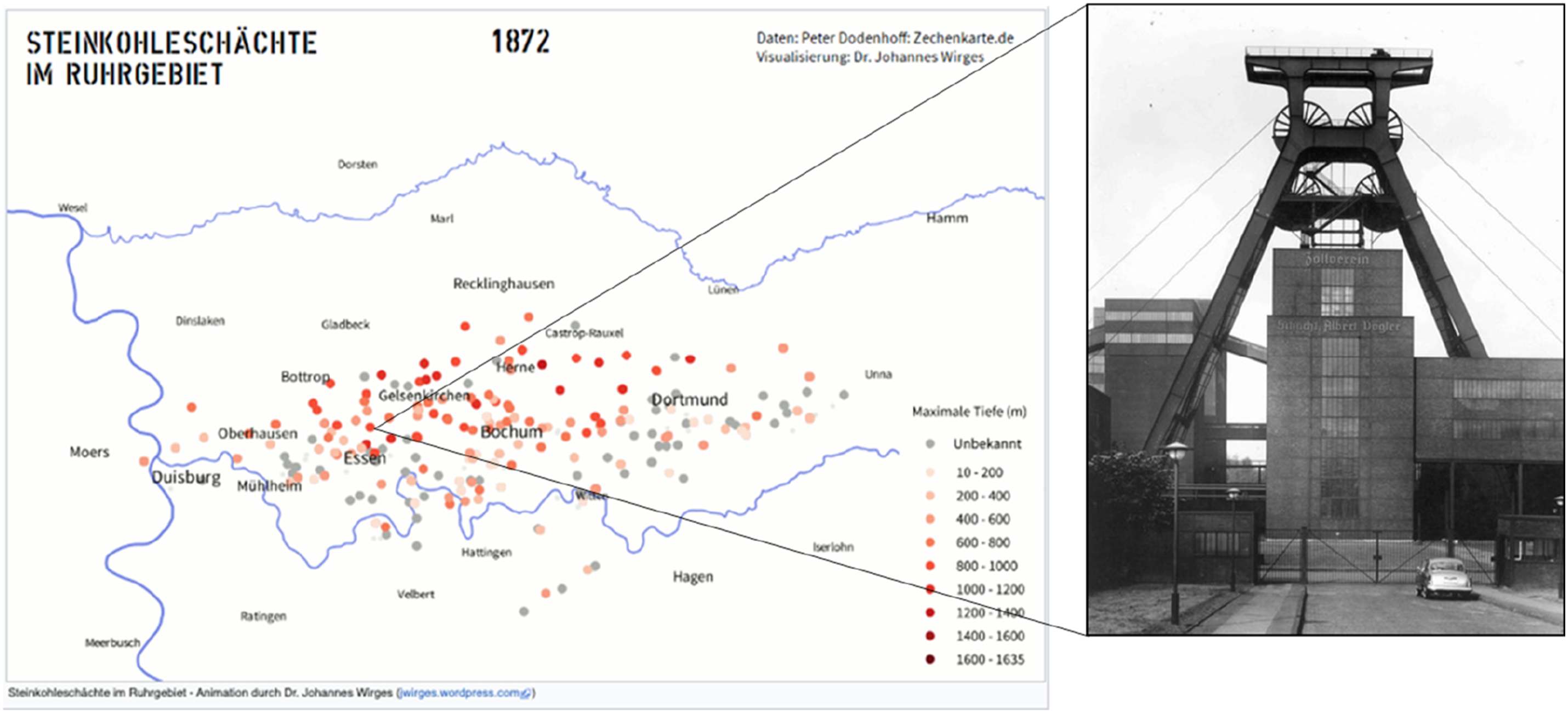
International competition paired with high production costs resulted in a crisis of the coal and steel sector in the second half of the twentieth century. The industries that had defined the Ruhr Area’s economic backbone gradually disappeared, causing large-scale unemployment, divestiture and ultimately social and economic deprivation (Brüggemeier, 1994; Raines, 2011). To be sure, detrimental consequences of mining and its associated industries were felt long after the less-expensive non-renewable energies entered the global market (e.g. air pollution was not effectively reduced until the 1990s as Brüggemeier 1994 reports). Until this day, the Ruhr Area retains some of the highest rates of multiple deprivation of Western Germany (Michalski et al., 2022) since “the large-scale loss of employment in the mining sector has still not been compensated …. On the way towards a service economy, many new jobs were created…. However, for the large majority of the population the wages for these jobs were far below what could be earned underground because the wage level in hard coal mining was higher than average compared to other sectors” (Dahlbeck et al., 2021:14). Also, the “northern Ruhr area … [continues to] be characterised by [much] high[er] levels of (long-term) unemployment and lower economic power” than the rest of Western Germany (ibid, more below).
In terms of social memory, coal (mines) -- not just in the Ruhr Area -- have a profound impact on people: they encapsulate community history and hold a central role in local identification processes (Chamberlain, 2014). In the region we studied, as elsewhere in mining communities, coal is revered, creating wealth and wellbeing, a sense of community and a place to call home (Kideckel, 2018). As Alfrey and Putnam (1992: 56) observe, the industrial heritage of the area continues to be deeply woven into the post-industrial spatial fabric, arguing that “the resources of the recent industrial past can play a leading role in a process of regeneration”. So it should not strike us as surprising that, in response to the decay of the Ruhr Area’s traditional identity centred around the heavy industry, and as a narrative historical “anchor” 3 , historians and artists, residents and associations started to lobby for the recognition of industrial sites as monuments of the Ruhr Area’s industrial past (Berger et al., 2017; Eiringhaus, 2020). Several local initiatives successfully prevented demolition of former industrial spaces (Berkenbosch et al., 2022) and already in 1986, “two years after [the] … closure [of the Zollverein mine] … the first guided tours were organised by former miners who wanted to present their unique workplace to the world” (Berkenbosch, 2022: 335). At the same time, as pointed out by Berger et al., 2017, the socio-economic upheaval brought about by d eindustrialization threatens the industrial narrative (see also Gruehn 2017). Indeed, already in the 1970s, political awareness of new markets and jobs to be created in response to environmental protection actions (Taylor, 2015) pushed for a transition towards an environmentally sustainable future, not only as provision of high-quality clean spaces for all citizens, but also as a strategy for attracting tourists and improving the image of the region (Zimmermann and Lee, 2021).
Following Brown and Spiegel’s (2019: 151) observation of “the complex entanglements of coal within a wider political economy and the symbolic effects it produces in particular places”, we focus on the Zollverein coal mine, a prime example of the recruitment of Essen’s industrial heritage for the commodification of heritage. Zollverein holds an iconic position in the heritage industry of the Ruhr Area. It is famously revered as “the most beautiful colliery in the world”
4
(translation ours, See Figure 2) and its Winding Tower of Shaft 12 is proudly called the “Eiffel Tower of the Ruhr Area” (Kretschmann, 2013). Built as a representational construction, already in 1929, architects billed it as “a symbol of work, a monument to the city that every citizen should show to strangers with at least as much pride”
5
(translation ours). As is evident by the official internet presentation of the Zeche Zollverein, the Winding Tower continues to be artified, and, as Shapiro and Heinich (2012) point out, “[at the] nexus of action and discourse” – a form of manipulation, engagement and distortion of an object’s prime function using the media and, in particular, photography as an instrument of meaning-making. The result of this process is that something as ordinary as a winding tower is transformed, elevated and recognised as something special. Indeed, aesthetic appreciation of the mine was present from its inception, since the Tower was regarded as a “technical and aesthetical masterpiece of modernism … a cathedral of industrial culture”
6
(translation ours). The use of the tower as a seemingly timeless symbol was further solidified when it achieved world heritage status as a unique ensemble of mining architecture in 1986 and was awarded UNESCO world heritage status in 2001. In 2002, the famous architect Rem Koolhaas, in conjunction with the Rotterdam Office for Metropolitan Architecture (OMA), developed a master plan for the transformation of the site into a vibrant cultural and business location. In this process, the building was famously restored by the British architect Norman Foster and given an iconic, bright orange staircase. Official Zollverein webpage: https://www.zollverein.de/. These images are reproduced under fair dealing/use for the purposes of scholarly comment and criticism.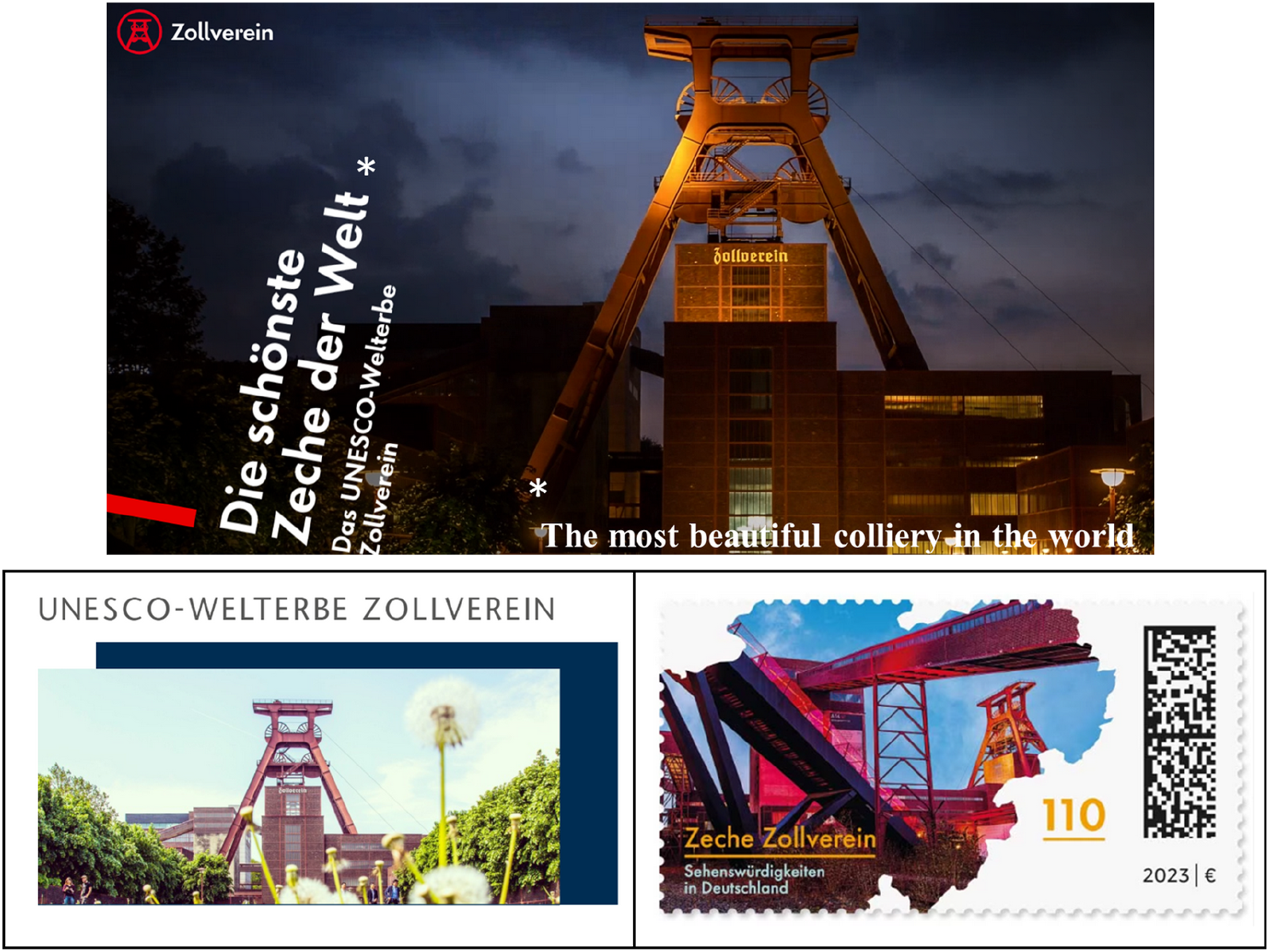
Today, the Zollverein area hosts the Red Dot Design Museum, “the world’s largest exhibition of contemporary design” 7 (translation ours) and a mining museum forming “the central anchor point of the newly created Route of Industrial Heritage” 8 (translation ours, see also below). It is thus not surprising that throughout the process of industrialisation and transformation, the mines and the Tower remained powerful symbols of an identity rooted in the heavy industry that characterises the region. At the same time, we see a process of fetishisation (Kideckel, 2018) as Essen’s contemporary narratives rest on the significance of coal mining in the Ruhr Area, producing a valuation that operates not unlike the commodity fetishism described in Bejamins’ Arcades project (2002 [1927-40]): The Winding Tower is a gigantic monument to the industrial, Ruhr way of life, where miners represent the prototype of the working classes, the people involved in the heavy industry, the peons who kept the motor turning (as fictionalised in Emile Zola’s 1885 novel Germinal). But they obviously also represent a key role in most manufacturing processes – and this means that mines are at the same time global and very local symbols which fabricate (post)industrial heritage.
Multimodal heritagescapes
Linguistic and semiotic landscape research has shown an intense interest in the past, the historical narrative, and the spatial dimension of memory and heritage (e.g. Pavlenko, 2009; Woldemaram, 2016; Kosatica, 2022). Early studies typically prioritised the written language and showed that the linguistic landscape does a considerable amount of work in the construction of heritage. Coupland and Garrett (2010: 31), for example, analyse the linguistic landscape in Patagonia and observe textual and discursive strategies implicated in the production of Welsh heritage value. Applying a multimodal social-semiotic approach to understand how three-dimensional objects communicate, Abousnnouga and Machin (2013: 201) examine war monuments which are “bound up with ideas of nation and heritage”, especially through lexical choices, which place monuments “into the realm of cultural heritage, a romanticized and reified ethnic past”. In the Special Issue Memory and Memorialization published in the Linguistic Landscape journal, we note Train’s (2016: 223) paper that looks into “the multilayered historicity, intertextuality and materiality that commit to public memory linguistic, political, and educational discourses […] designed to make the past present for the future in public space”. Building on such critical engagements with the past and memory, Blackwood and Macalister (2019) edited volume Multilingual Memories: Monuments, Museums and the Linguistic Landscape examines commemorative spaces created by linguistic and non-linguistic elements, “in, on and around” diverse public places.
More recently, scholars have started to explicitly orient to the multimodal nature of heritage. Kosatica (2024b: 383) analysed the contemporary war heritage in Bosnia-Herzegovina realised in war tours advertisements, souvenirs and museum exhibitions, considering several semiotic modes (e.g. textual content, visuals, emplacement). This allows her to show that tourism in the capital of Sarajevo “generally ‘relies’ on multimodal war heritage, with public signs contributing to collective war memory creation, perseverance and legitimation”. The interconnectedness of language, (public) space, and other modalities is also prevalent in Skrede and Andersen’s (2022) semiotic analysis of Peterson’s elephant 9 (signboard and sculpture) in the city of Moss, Norway. The authors meticulously demonstrate how industrial heritage relies on and is publicly displayed via wide-ranging forms of representation of the past and thus part of prominently multimodal contexts. Such contributions argue – and we agree – that semiosis in the public spaces is “part of our heritage”, supporting Gorter’s (2006: 88) earlier observation that “to study the linguistic landscape is also to study cultural heritage.”
Industrial heritage, although directly implicated in the production and consumption of (renewed) urban space (Lefebvre, 1991), is rarely visible in the literature on linguistic/semiotic landscapes and multimodal perspectives (excepting Skrede and Andersen, 2022; Kim and Ahn, 2023). Sociolinguists foreground the commodification of industrial heritage commonly turned into a “tourism product” (Heller et al., 2014) generally through written and spoken accounts (e.g. Coupland and Coupland, 2014). However, post-industrial landscapes beg a closer look at the multimodal construction of heritage because they “leave behind a vacuum which is semiotic, spatial and social”, illuminating the interplay among “memory and renewal, preservation and change” (Bangstad, 2014: 93-95) as well as nostalgia and value. We thus notice their hybrid nature and follow Garden’s (2006: 394) notion of heritagescapes as “a means of interpreting and analysing heritage sites as unique social spaces that offer an experience of the past.” Certainly, Appadurai’s (2001: 5) concept of -scapes, within which the “flow” of “ideas and ideologies, people and goods, images and messages, technologies and techniques” emerges, is particularly useful in opening up a multimodal approach to the practices of representation/meaning negotiations and staging authenticity in places which have undergone momentous restructuring. Thus, our analysis is organised around the key concepts of multimodality and remediation. Multimodality in this paper is understood as an analytic turn defining “the combinations of expressive resources explicitly and systematically” (Bateman et al., 2017: 15) and “the multi-semiotic complexity of a construct or a practice” (Iedema, 2001: 40). The notion of remediation, on the other hand, offers us to understand how constructs and practices are continuously represented in different media, creating opportunities for transformation (Thurlow, 2021) and are therefore “given a new lease of cultural life” (Erll and Rigney, 2009: 8) through a series of meaning revisions.
Data and methods
To illustrate how the revalued Winding Tower prevails in Essen’s landscapes, we analyse different kinds of public signs photographed during fieldwork carried out in Essen from April to August 2023, in which key areas of the city of Essen were strategically scoured for mining related signs. We do so by documenting primarily visual, material and design elements of the Winding Tower. This process resulted in a corpus of almost 700 signs of industrial heritage of which 317 contain a Winding Tower in various modalities: graffiti, traffic signs, stickers, commercial commodities (e.g. food packaging, tea towels, magnets, postcards), artwork in offices, restaurants and shops, etc. We focused on both outside and inside signs since more recent findings suggest that interior signs are particularly useful for the investigation of the landscapes of consumption and memory (see Androutsopoulos and Chowchong, 2021 on restaurant signage and Kosatica, 2019 on museum exhibits and label scripts).
Drawing on the methods and analytical tools from sociolinguistics and applied linguistics, we follow the tradition of semiotic landscape research in exploring the meaning-making potential, complexity and richness of semiotic components such as written texts, visuals, objects, material, location, and people (see Jaworski and Thurlow, 2010; Shohamy, 2015). Our data were coded for a variety of factors, including the basic type of sign (e.g. art, decoration, installation, poster), the emitter, the emplacement, material, design and colours of the sign, whether there was an inscription and if yes, whether the commodified regiolect called “Ruhrdeutsch” 10 was being used. We ask what cultural and symbolic values are being activated, intentionally or otherwise, for whom, and how, through which particular indexical displays of language and symbols, in what particular contexts, and in what particular semiotic relationships. This has led us to “(a) document the different semiotic resources or design tactics used, (b) explain their communicative functions and/or cultural origins, and (c) address the political/ideological ramifications of their collective and sedimented deployment” (Aiello et al., 2023: 3). Coding was done by two research assistants independently and all cases where coding decisions diverged were discussed by the research team.
Analysis: The tower as icon
In this section, we present the results of our analysis by following four lines of resemiotization and remediation practices: 1) Authorized Heritage Discourse; 2) Longstanding semiotic traditions; 3) Materialities; and 4) Class authenticity.
Authorized Heritage Discourse
As a first analytical step, we explore the ways in which the Winding Tower takes on the character of Authorised Heritage Discourse (AHD) – “a professional discourse that privileges expert values and knowledge about the past and its material manifestations and dominates and regulates professional heritage practices” (Smith, 2006: 4). In simple words, Smith’s AHD frames heritage as something to be conserved and produces hegemonized, simplified narratives for mass consumption. This is assuredly the case for most if not all WEIRD societies, whose “capitalist core […] makes a certain commodification of memory and heritage inevitable” (Rojek and Urry, 1997: 4). However, some scholars note problems with Smith’s AHD, specifically its “rigid” conceptualization, restriction “to an expert view” (Hølleland and Skrede, 2018) and definite authenticity fabrication (Andersson & Frihammar, 2022). In line with such criticism, we demonstrate how heritage is accomplished in/through different settings, styles and modalities, by both experts and non-experts, reconfiguring it for various but clearly interconnected purposes.
Waterton and Watson (2015) write that an authorized version of the past, taking the shape of heritage attractions staged purposefully for visitors, distinctly evinces the relationship of heritage and the tourism industry. By this token, we start with topical instances of the commodified heritage token – the Winding Tower – regaining its value under Ruhr’s new and transformational green agenda. Despite maintaining a low brand score along with other cities in North Rhine Westphalia (Brandmeyer Markenberatung, 2020), Essen still favours the synthesis of its industrial roots and creative economies as the foundation of city branding (see Berger et al., 2017). Berkenbosch et al. (2022: 336-337) similarly point out tactical marketing strategies, which compare “the industrial past and the post-industrial present [of the Ruhr Area], separated by deindustrialization… [This includes the] juxtaposing of the industrial past and the ‘green’ present”. “Where once there was the smoke of chimney stacks, today it’s a very different programme: industry and nature” (Duisburg-Nord information flyer, cited in Berkenbosch et al., 2022: 337). We similarly recognize capitalist formations of the Tower that patently rest on Strukturwandel: the iconic representation of the Winding Tower literally carrying what is billed as “the crown jewel” of industrial nature illustrated with tree spikes (3a); peaking behind and ostensibly in harmony with vegetation remediating post-mining “nature” replica (3b); or being superimposed onto a crystal clear pool (3c) spectacularizing post-mining rehabilitation and realizing tourism tropes of distinction, exclusivity and class formations (see Thurlow, 2021 on the infinity pool) (Figure 3). Typical Winding Tower signs in Essen.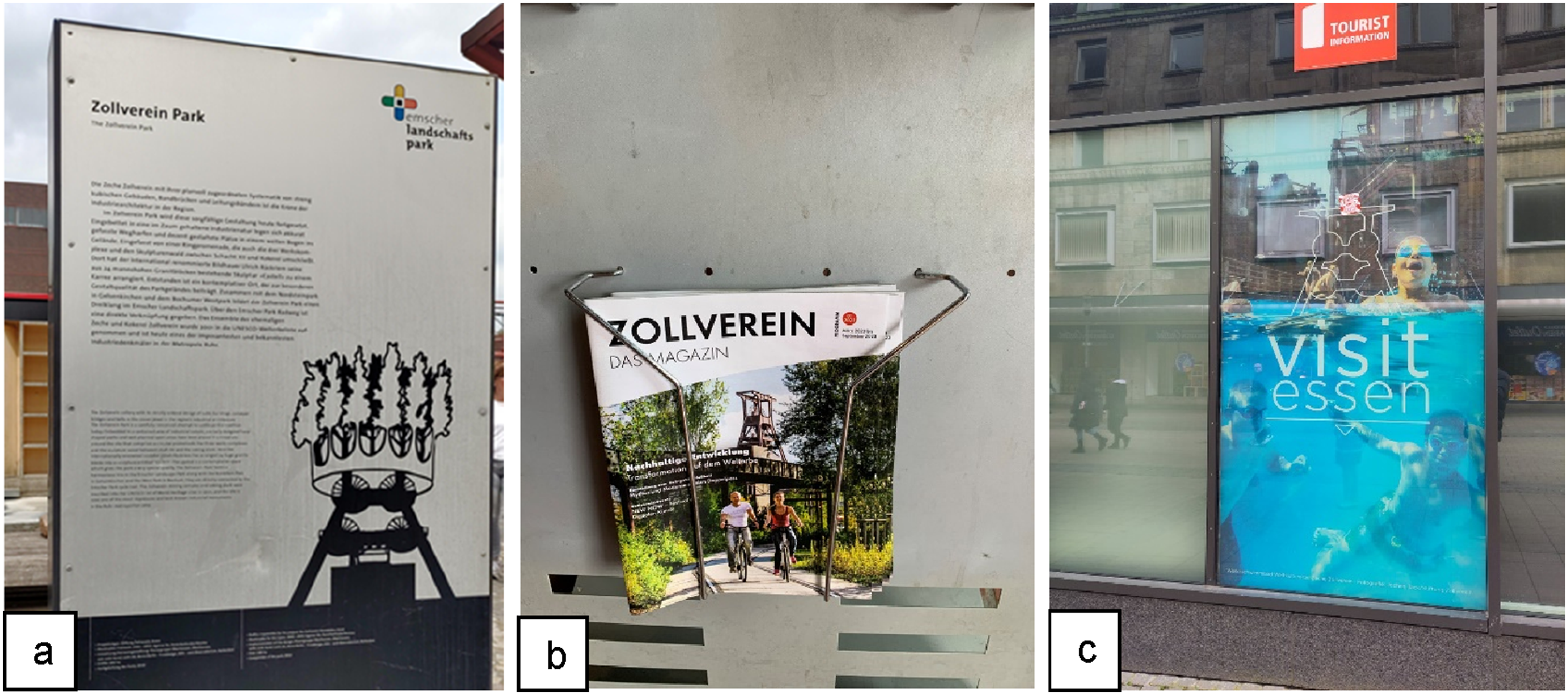
Such examples show how the legacy and associated meanings of mining infrastructure change, yet in a quite contradictory way. Here, the Winding Tower as the central structure in one of the most dangerous and polluting jobs in the world 11 , shifts to a picturesque index of nature restoration and urban reinvention in an industry creating a monumental environmental footprint (a.k.a. tourism). The Tower is substantially associated with “nature” and intertwined with the Green Capital’s grand narrative on urban reinvention (Kosatica, 2024a) as a critical tone vis-à-vis environmental impacts associated with coal mining is completely absent. What the above examples do is transform the polluted and the destructive into the aesthetically appreciated, the inspirational and the impressive. Stibral and Faktorová (2020: 151) write that industrial heritage can be perceived as “a part of dark tourism” casting moral reflections, but the semiotic choices around the Winding Tower shelter its economic potential while obscuring the ruinous realities, such as deaths and health hazards among mine workers, loss of wildlife habitats, or suffering ecosystems that could elicit emotional reactions of anger, shame, guilt, sadness or disgust (see Dresler, 2023).
And surely, “profound” Strukturwandel appears just about everywhere we look. Yet, the local identity entrenched in vital industries based on polluting materials formerly pushing Germany’s economy (i.e. coal and steel) also hinges on the ceaseless narrative of “lost” industry (also see Berger and Golombek, 2020), a collective semantic memory of the restorative type (Boym, 2001). As it has been indicated by research on heritage narratives (e.g. Egberts and Hundstad 2019; Liu, 2022), especially for institutionally complex regions – such as the Ruhr Area – establishing a regional identity narrative allows building a coherent memoryscape in the area and legitimises unified policy responses. Indeed, since 1999, Zollverein has been one of the focal anchor points of – and provides the icon for – the “route of industrial heritage” (Route der Industriekultur) – a 400-km circuit that makes the region’s industrial heritage accessible to tourists (Figure 4). Route of Industrial Culture, Zollverein marked with an arrow. Source: https://www.route-industriekultur.ruhr/die-route-industriekultur/.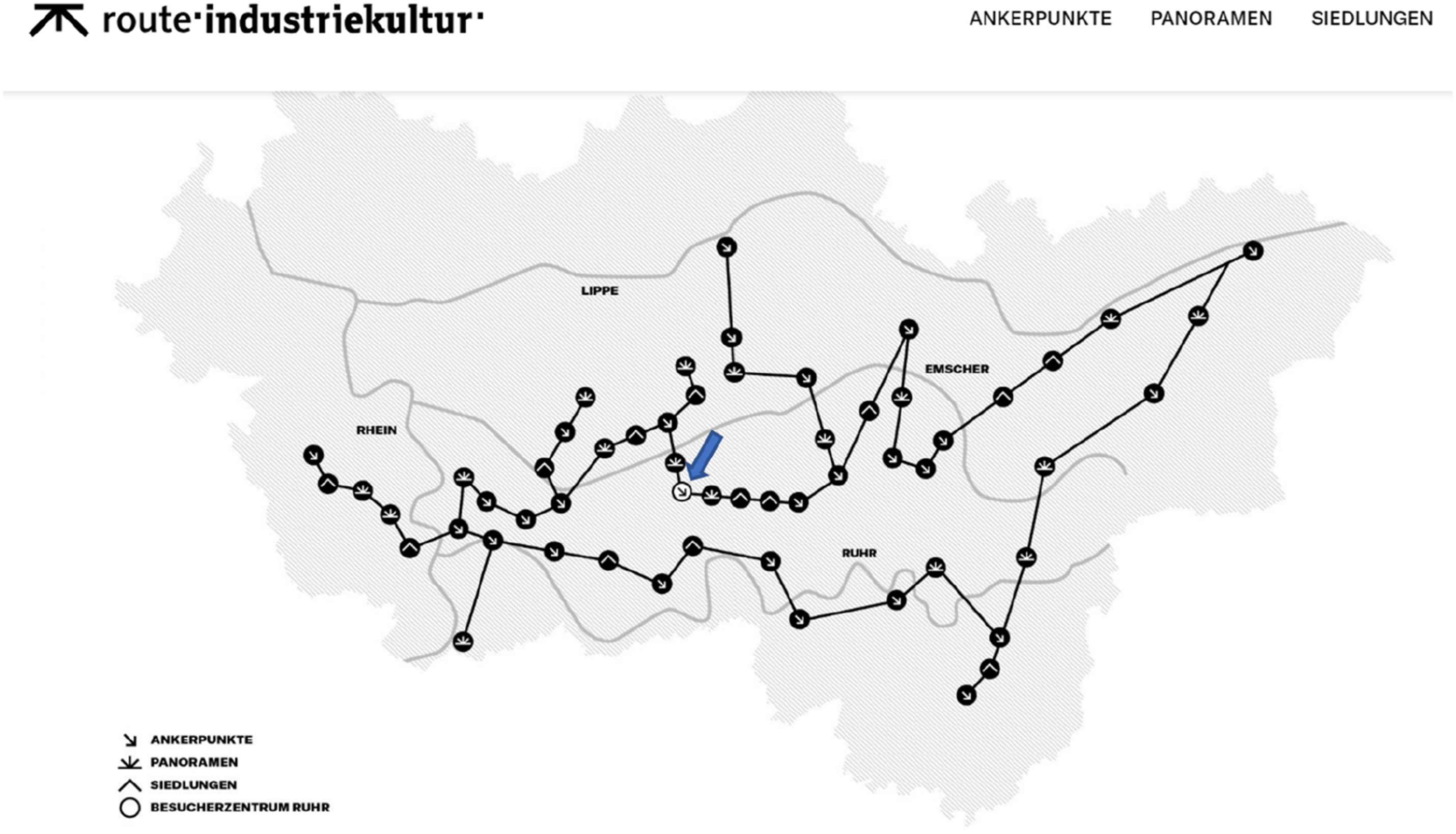
Thus, we see how AHDs are being produced along “pressing social, economic, and ecological issues of our time” (Harrison, 2015). At the same time, an analysis of AHDs as narratives can provide insights into the ways in which cultural identity is hegemonically constructed, interpreted, and valued, but they also determine how its concrete forms are conserved, managed and used (Ashworth and Graham, 2005). Notably, as we can see in Figure 5, the Winding Tower is ubiquitous in everyday signs aimed at locals that provide insights into ordinary patterns of its use and conservation. Tourist information center at the main train station in Essen; signs in Stoppenberg and Katernberg.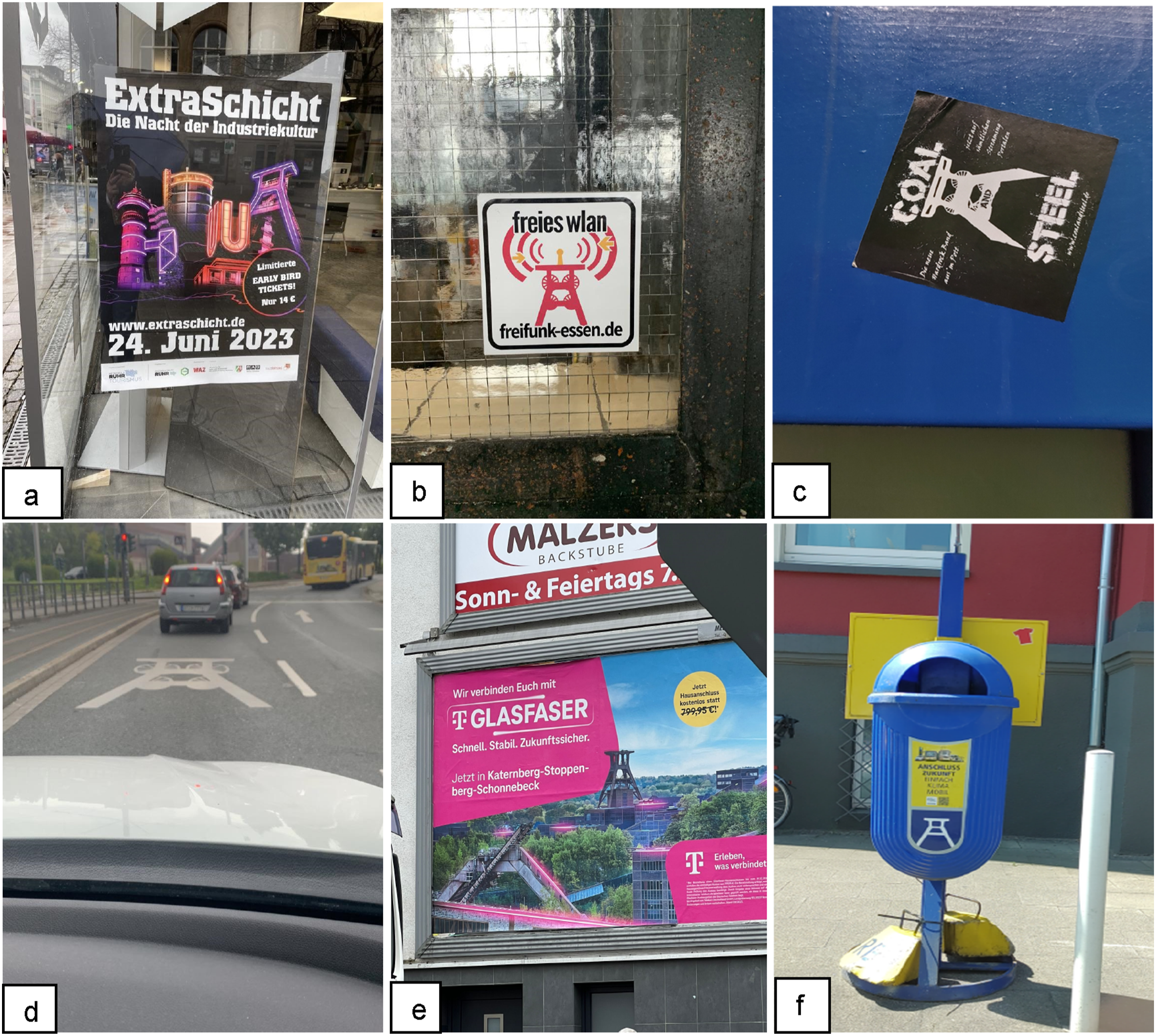
And while it often is rendered in the traditional colours of post-industrial sites (rusty red, black/grey and white, to which we turn below), we also find design creativity and, sometimes ludic, reimagining of the Tower, retaining its iconic shape (uniquely identifiable with its “Doppelstrebengerüst”/double-braced framework) while relying on a wealth of styles and materials. The iterative re-imaging of the Tower renders it as a seemingly timeless, consistent narrative that hinges on an iconic signifier that defines the region and at the same time mobilizes regional identities (Paasi, 2011). Descriptive statistics underscore this observation – compared to other signs aimed at tourists, the Winding Tower is significantly more often used in signs that capture regular citizen engagement with heritage as well middle class sensibilities (e.g. when choosing a logo for a private company): 56% of all signs brandishing the Winding Tower index a sense of belonging whereas only 37% occur on explicitly tourist signage. Yet, consistency of productions is not the only factor contributing to a sense of endurance; the Tower’s typical and “less than real” representation seems to “evoke something romantic, eternal, or timeless” (Skrede and Andersen, 2022: 1152 after Kress and Van Leeuwen, 1996). Indeed, the winding tower silhouette is a fixed graphic representation of all sign types (Figure 5(a)–(f)), and its photographic rendering frequently appears on brochures, book covers, posters, etc. In this sense, the AHD that recruit the Winding Tower foster a sense of timelessness of the mining heritage, legitimizing and naturalizing its existence while relying on hegemonised and simplified narratives. Note also that the gnomic connection between the coalmining past and the everyday present is supported by the fact that the design of the Winding Tower signs tends to be predominantly contemporary (37%) or traditional (35%) but not historicising, thus linking the present with the industrial past.
Berger and Golombek (2020) contend that this industrial past is quintessential to the entire Ruhr identity and self-image constructions on a larger scale that transcends geographical (and often socio-demographic) divides. Our research supports this claim since we find that the image of the Winding Tower is intimately connected to the entire city (but see a more differentiated discussion below). This can be seen in Figure 6(a), which shows the Tower situated at the tourist information centre close to the main train station - the gateway to Essen and many of the smaller towns in the Ruhr Area which connect via Essen. Smaller Essen city districts, such as north-west Stoppenberg and Katernberg (Figure 6(b) and (c)), adopt the Tower as well. Signs aimed at tourists.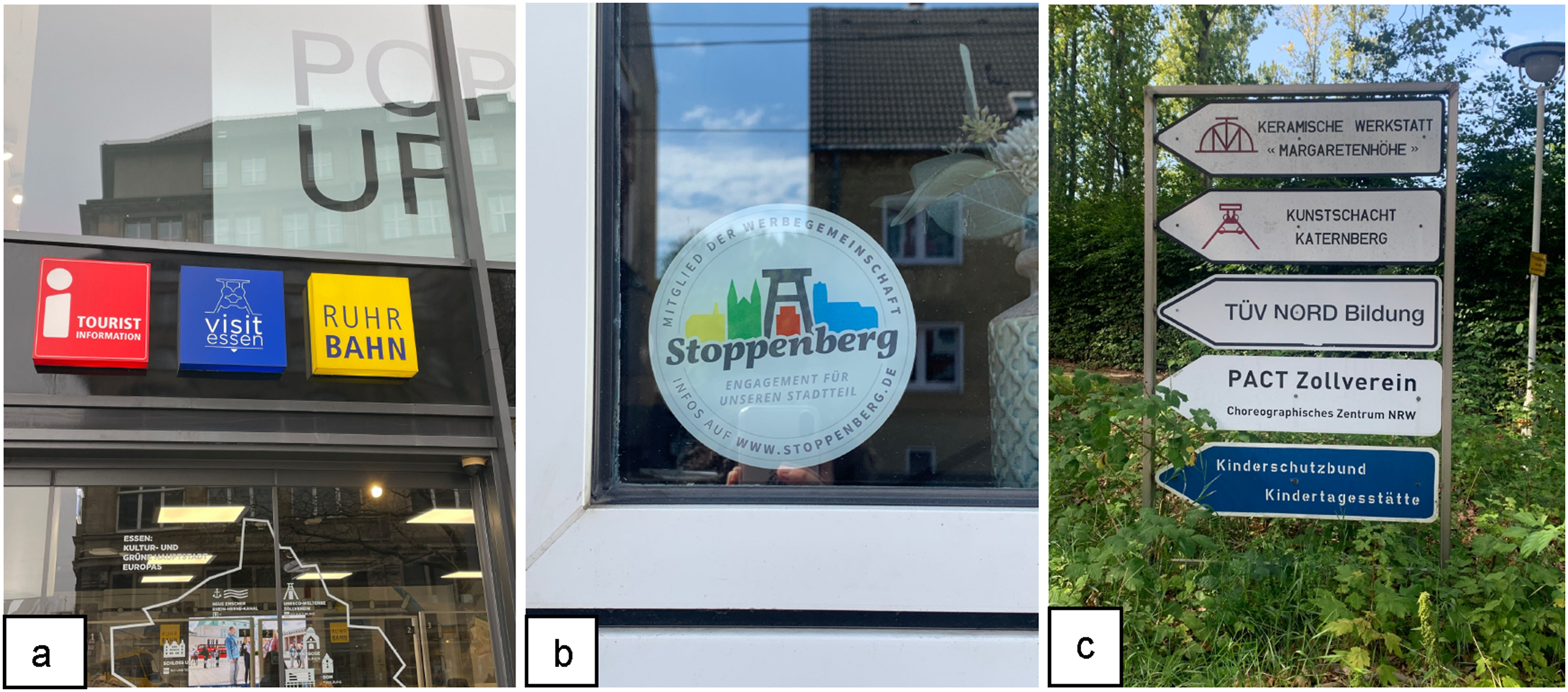
In their social semiotic reading of urban heritage, Skrede and Andersen (2022: 1152) highlight a sign’s background as a relevant semiotic choice that accomplishes representations “which evoke a sense of general industrial structures”. In our data, we notice heavily decontextualized backgrounds (like in Figure 5 and elsewhere): visual-material details that accompany the Winding Tower of Shaft 12 in the real world, such as the Sonnenrad ferris wheel, the Werksschwimmbad pool (Figure 6c), the Rem Koolhaas escalator, or other architectural elements at the site, are all absent. In the words of Thurlow and Jaworski (2013), the Tower is visibly–invisibly staged. We thus argue that the Zollverein Winding Tower is recruited to stand iconically for all colliery towers and, as such, the regional economic tradition steeped in heavy industry. It plays a key role in the AHDs of the region by rallying everyone behind a common, seemingly unproblematic heritage. This is particularly relevant, since, as (Paasi, 2011) has shown, selecting and maintaining narratives and symbols that define an area can mobilize regional identities.
Types of signs: From decorative to authoritative
The Winding Tower is amply employed in transgressive and decorative street art (see Pennycook, 2010; Scollon and Scollon 2003). In particular, we find it accentuated in murals in the Essen streetscape (see Figure 7). Typically investigated as public instruments of political commentary (e.g. Rollston, 2011), murals are “the tangible fabric of the past” (Frost and Laing, 2017) and thus unique “heritage artifacts” (Carden, 2017). Murals distributed across various districts in Essen.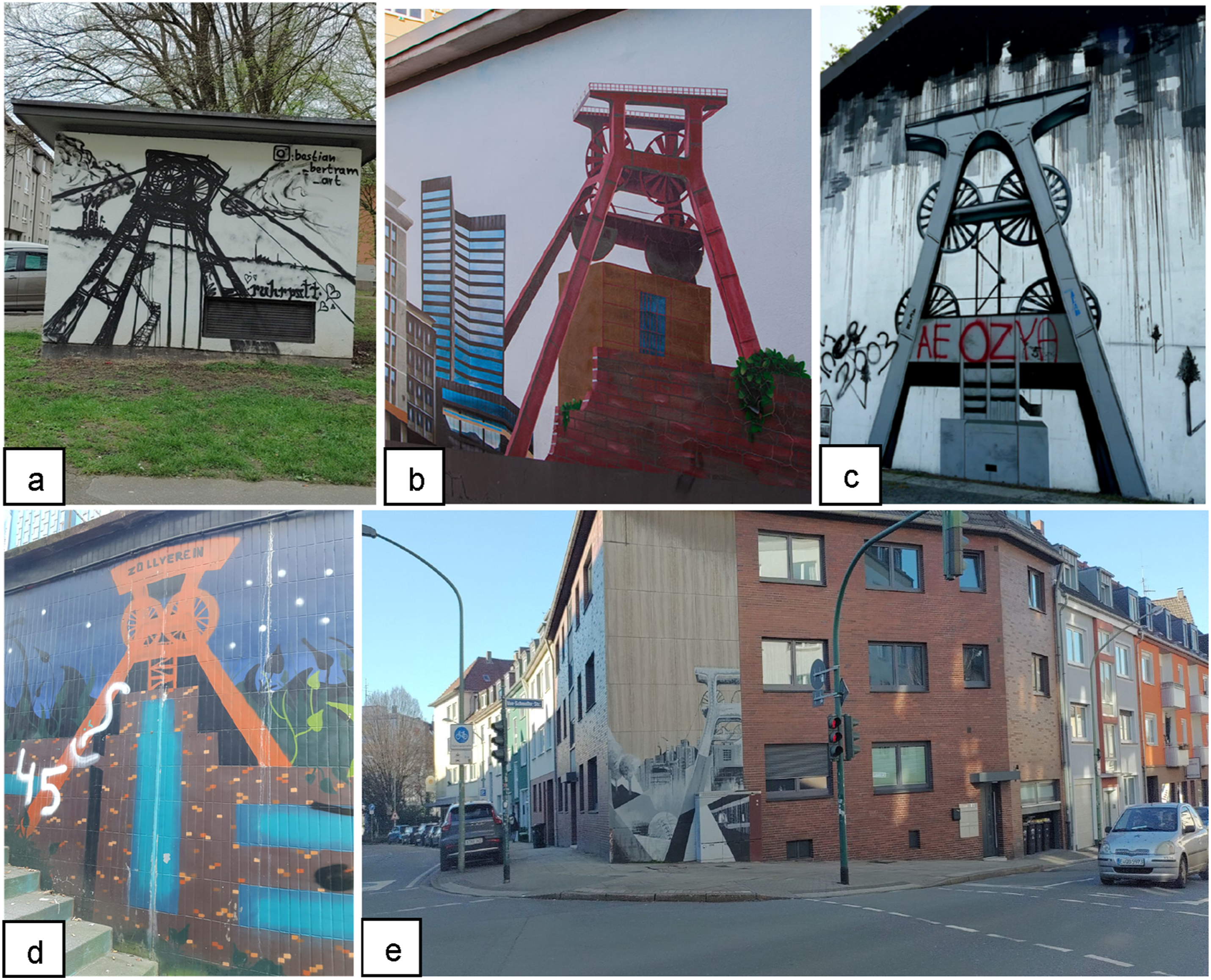
In our case, rusty red, black and gray murals “repackage” the Winding Tower for various but clearly interconnected purposes: (a) the public reflection of Essen’s identity; (b) participation and inclusivity
12
in affirming the Tower’s iconic status; and (c) “a nostalgic view to a better past” to both locals and visitors who “link contemporary times to historic identities of communities” (Skinner and Jolliffe, 2017: 13). At the same time, we find the Winding Tower represented in ample authoritative discourses. As can be seen in Figure 8, it is recruited by a number of institutions which benefit from an embedding into the local heritagescape. Winding Tower used by local institutions.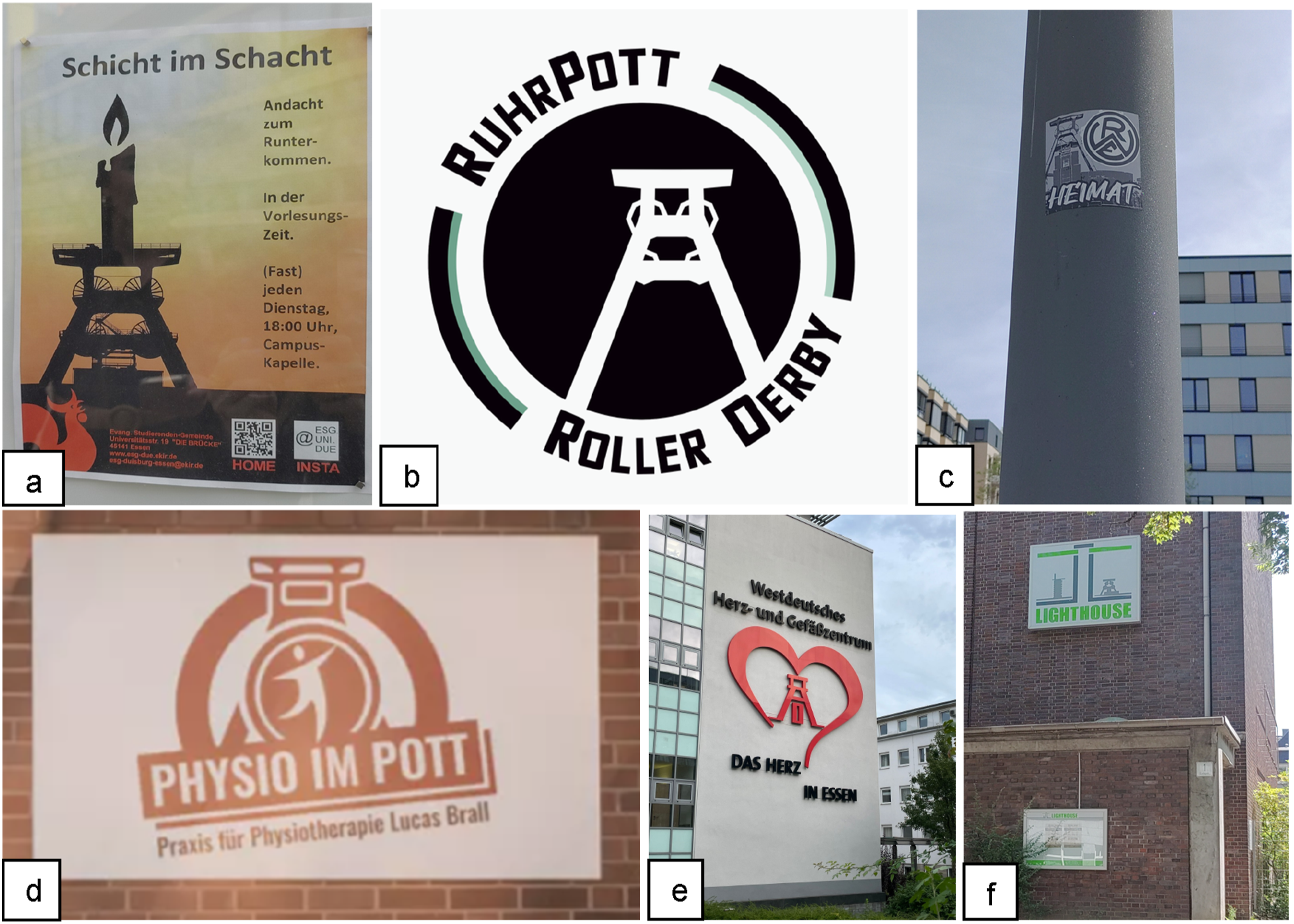
The university of Duisburg-Essen campus community of the protestant church uses the iconography of the Tower together with a slogan “[jetzt ist aber] Schicht im Schacht”, originally a mining expression/phrase for “end of shift”, but which has since been adopted into the regiolect Ruhrdeutsch as meaning “it’s time to call it a day” (8a). The Roller derby team of the Ruhr Area includes the Tower in their logo (8b) – which they use in stickers just like Rot-Weiss (RW) Essen, a German association football club (8c). We find it in the official representation of a physiotherapy practice (8d), a hospital (8e), and a church (8f). Even the local police force has a Winding Tower in their stationary suggesting the “officialization” of heritage (Bourdieu, 1997) and securing the authority of the Tower itself (Figure 9). We thus see authoritative, top-down voices availing themselves of the Tower as an ubiquitous symbol of AHD. Police stationary header.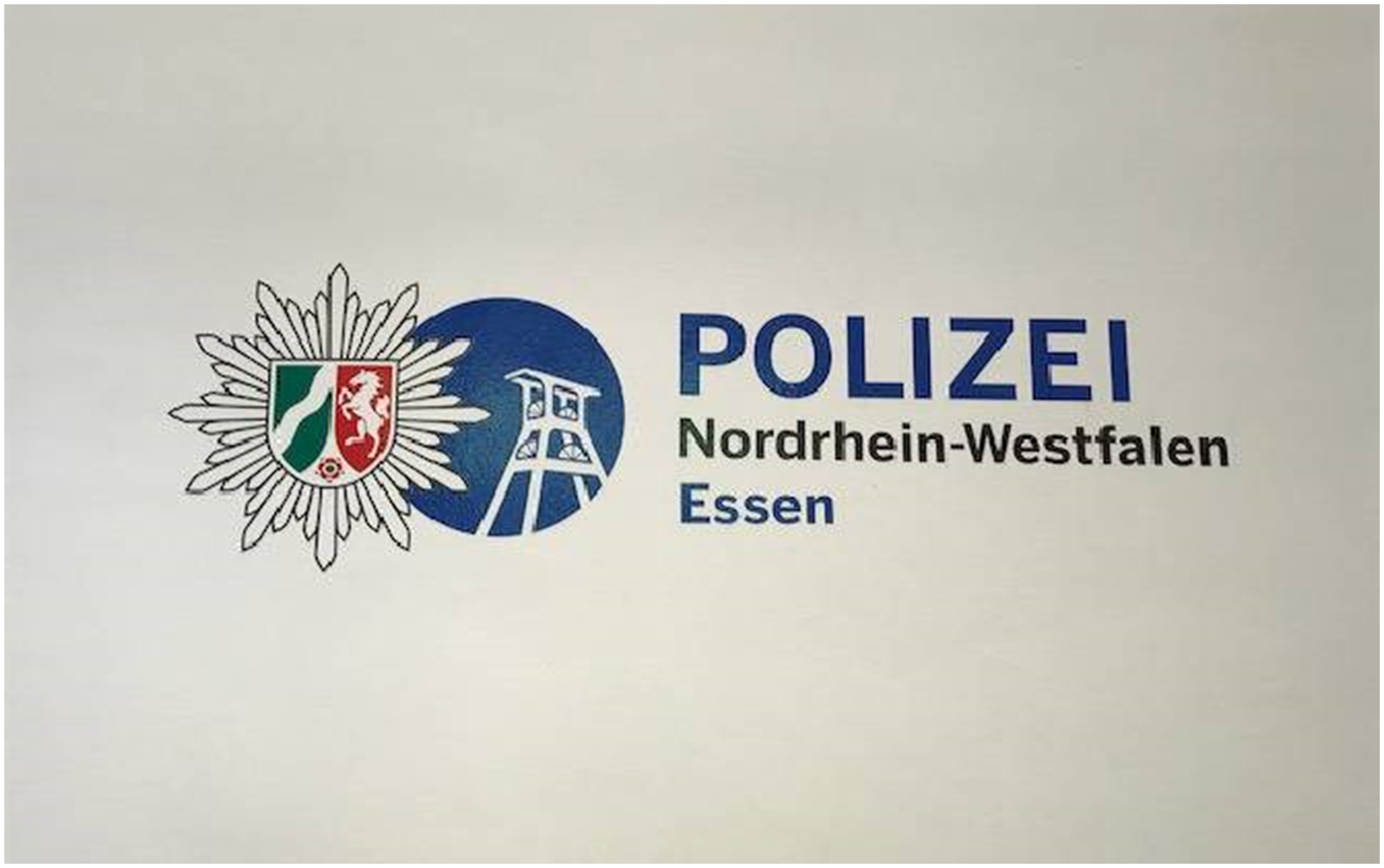
Furthermore, our data support the contention that material-visual instances of memory tokens provide information about the nature of local economies: Essen has long billed itself as a retail trade centre, a rail junction, and a service centre – the business associated with the sale of goods and experiences and services to consumers. As can be seen in Figure 10, the Winding Tower plays a key role in the marketing strategy of all types of consumer goods, from bakery products to mobile Bratwurst-stands via the logos of restaurants and cafes (Figure 10(a) and (b)). Local emplacement practices are widely distributed across space, within the Limbecker Platz, a 70,000 square meters inner-city shopping mall saturated with the Tower (language) objects, advertisements, photographs, art, etc.; but also across the local branches of national chain stores: dm-drogerie markt, Germany’s Germany largest drugstore chain by revenue showcasing a large black and white historicising image of the Tower (Figure 10(c)); Aldi, a multilocal chain of supermarkets brandishing a skyline of Essen with the highly conspicuous Winding Tower (Figure 10(d)); Rewe, a multi-locality giant showcasing a massive Winding Tower in its entryway (Figure 10(e)), as well as a poster of Marktkauf, another supermarket chain, relying on a Tower in poster advertising the opening of a new store (Figure 10(f)). Local emplacement practices.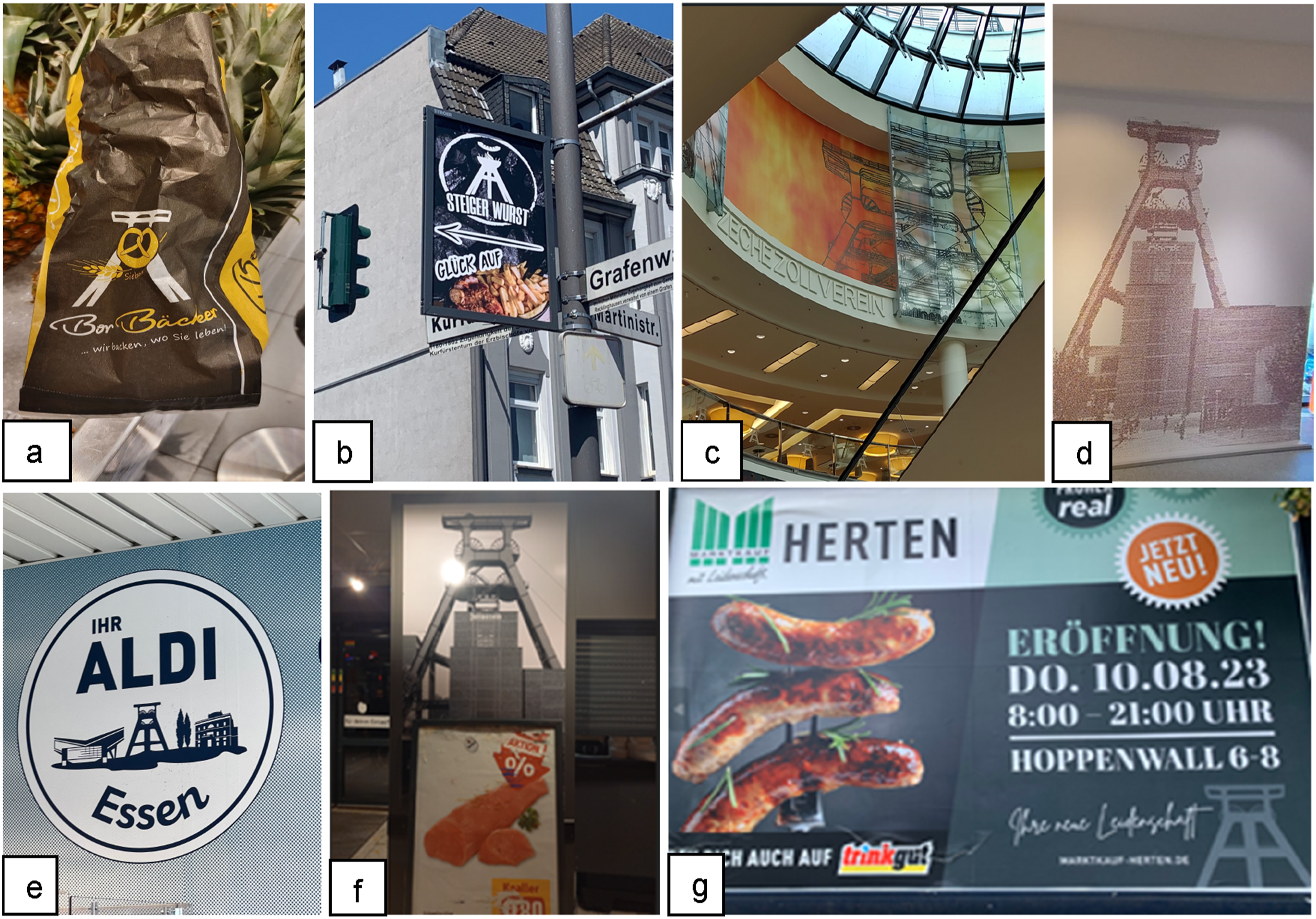
Numerous independent businesses have appropriated the localising function of the Winding Tower. In Figure 11(a)–(e), we find a childcare institution (which plays on the two meanings of the verb “fördern”, denoting both ‘to support’/foster” and ‘to extract coal’), a mobile care service, a transportation service, a pharmacy as well as the local train system – the Ruhrbahn (the local transport company) using it on its recruitment posters. Independent businesses using the Winding Tower.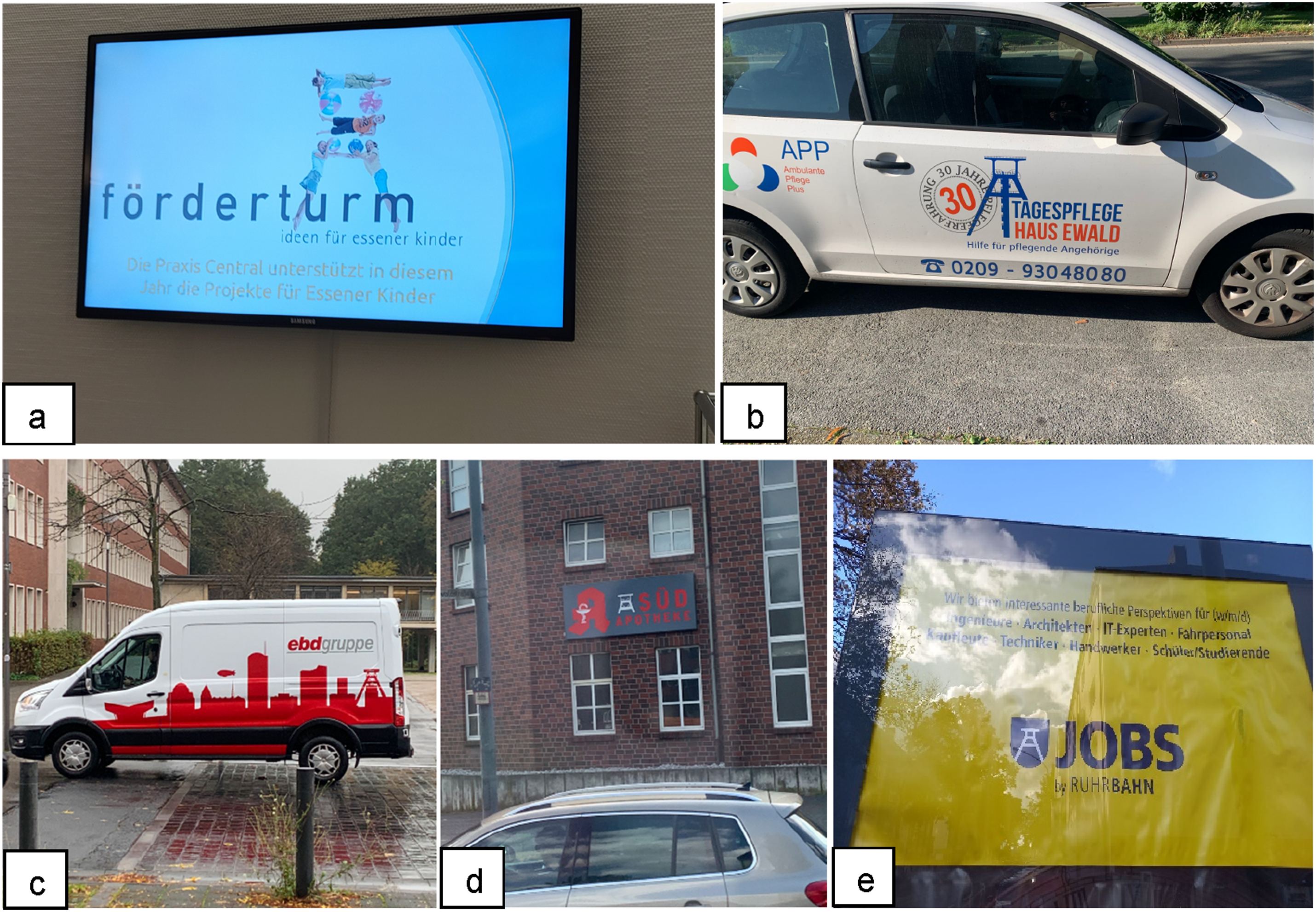
Longstanding semiotic tradition
We now briefly direct our attention to the multimodal mining register as another notable observation from our data. Following Thyssen and Priem (2013: 743), we recognize “jointly constituting assemblies of representation” in the multimodal appearance of the Winding Tower. Heritage itself, as Skrede and Andersen (2022: 4) demonstrate, is “not only about objects; it is also about visual, textual, and other forms of representation”. While the Tower is widely recruited for a variety of purposes which include official, transgressive as well as commercial messages, we see the development of a complex indexical field which relies on longstanding chromatic associations of mining. Rusty red indexes the construction material prevalent at industrial sites in two ways: brick but also the remainders of industrial heritage, which continue to brandish oxidised iron structures. Black for the coalface, the product and the grime of the heavy industry. And white for the fresh miners’ shirts, which were typically hoisted to the ceiling by chains in the changing rooms called “Waschkauen” (see Figure 12). Waschkaue. Source: https://de.m.wikipedia.org/wiki/Datei:Ramsbeck_Waschkaue.JPG.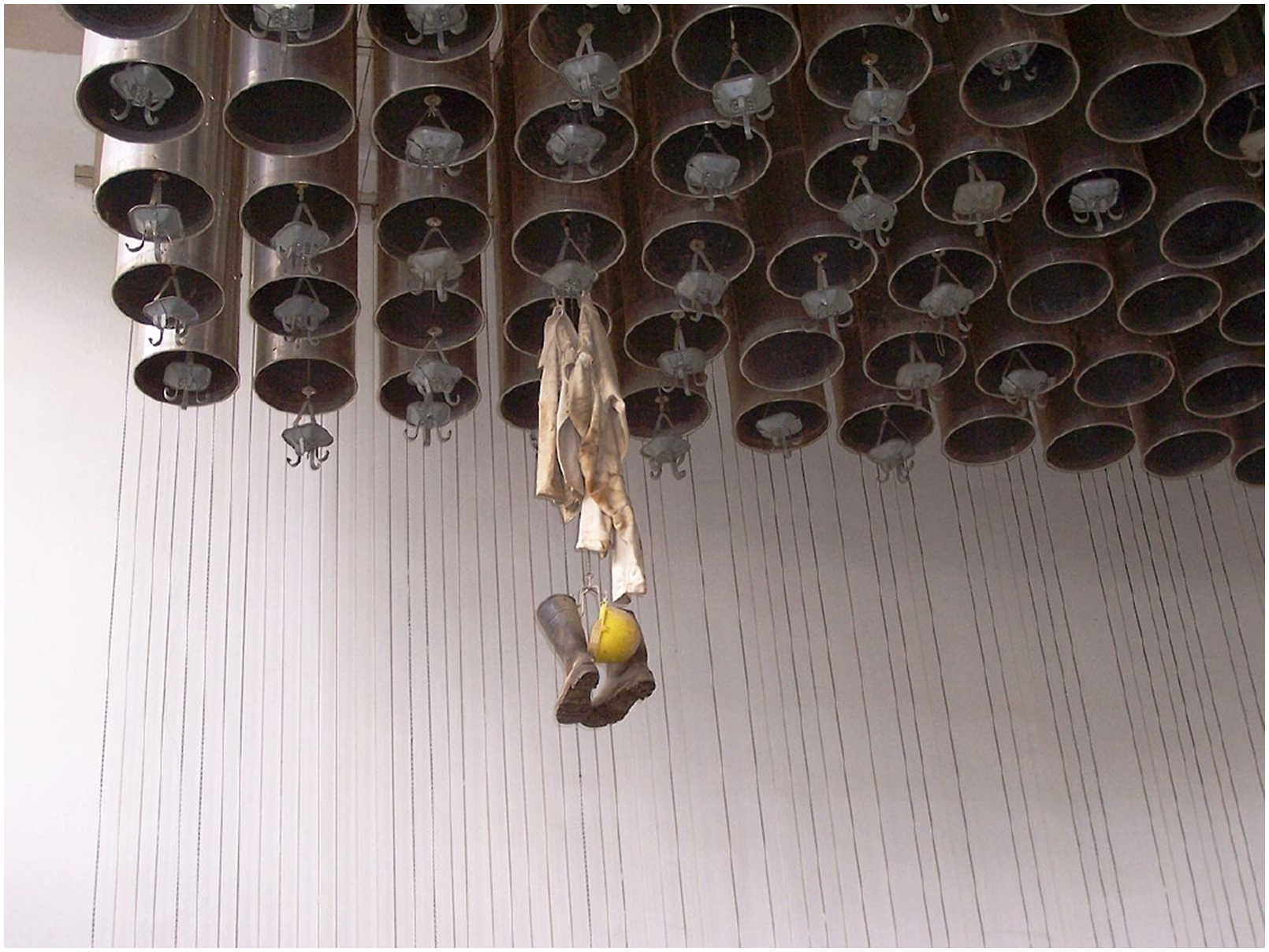

Note also that the iconised representations of the Tower as an architectural industrial remnant often go hand in hand with stylized and commodified instances of features of the regiolect Ruhrdeutsch. Ubiquitous in our data is the typical miners’ greeting “Glück auf
13
”/“Wish you luck”, which can often be seen next to the Winding Tower. “Glück auf!” is a phrase deeply embedded in the cultural identity of the Ruhr Area, symbolizing the region’s mining history and the camaraderie of its people. The use of “Glück auf!” is strikingly frequent in the context of gastronomy (see Figure 13a-c). Incorporating the phrase into gastronomy design and related signs helps establish a strong local character and connects culinary experiences to the regional heritage. It also appeals to emotions as it conveys a warm and welcoming message to the customers. Together with the Tower it thus helps to create a thematic ambiance that not only reflects the industrial heritage associated with mining but also the down-to-earth and hearty mentality of the people living in the Ruhr Area (see Ziegler and Angenendt, 2024). In the notepad in 13f, we see “mach fettich”, with /r/-deletion and /g/-spirantisation; in standard German it would be “mach fertig” and graphologically thus written with <r> and <g>
14
. As the examples in Figure 8b + d above show, the symbol of the winding tower also often co-occurs with the regiolectal expression “(Ruhr-)Pott”/“Ruhr Area” (“Physio im Pott”, “Ruhrpott Roller Derby”), mutually indexing emotional attachment to the region (see Ziegler and Angenendt, 2024). Regiolect Ruhrdeutsch examples.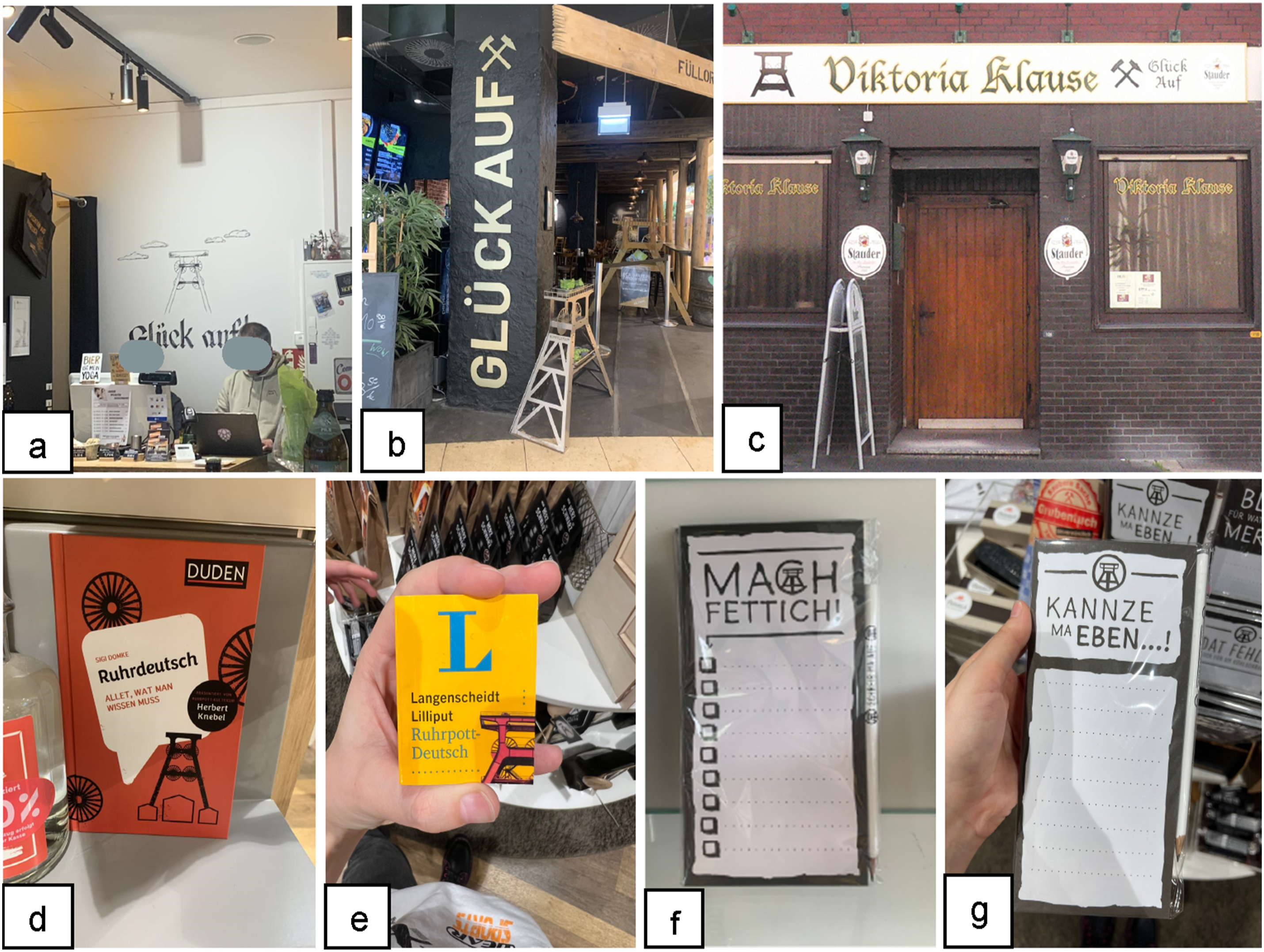
Here, we are reminded of the classic definition of linguistic landscapes by Landry and Bourhis (1997: 23) as these examples highlight the relevance of “the visibility and salience of languages on public […] signs”. Indeed, in post-mining heritagescapes, language (as a mode), and especially “language directly related to coalmining industry” (Power, 2008: 174), are strategically employed.
Materialities
Whereas previous work has explored the narrative reinterpretation of the Ruhr Area heritage in marketing brochures (Berkenbosch et al., 2022) and cultural landscapes (Eiringhaus, 2020), we explore the heritage discourse involving industrial structures in public space (the Winding Tower specifically) and the remediation of “memory matter into different media” (Erll, 2011: 141). In our data, the Tower is amply remediated into visual and material artefacts (e.g. art, logos, objects, clothing). This is nowhere as visible as in the area of souvenirs (Figure 14). Practical and food (-related) souvenirs.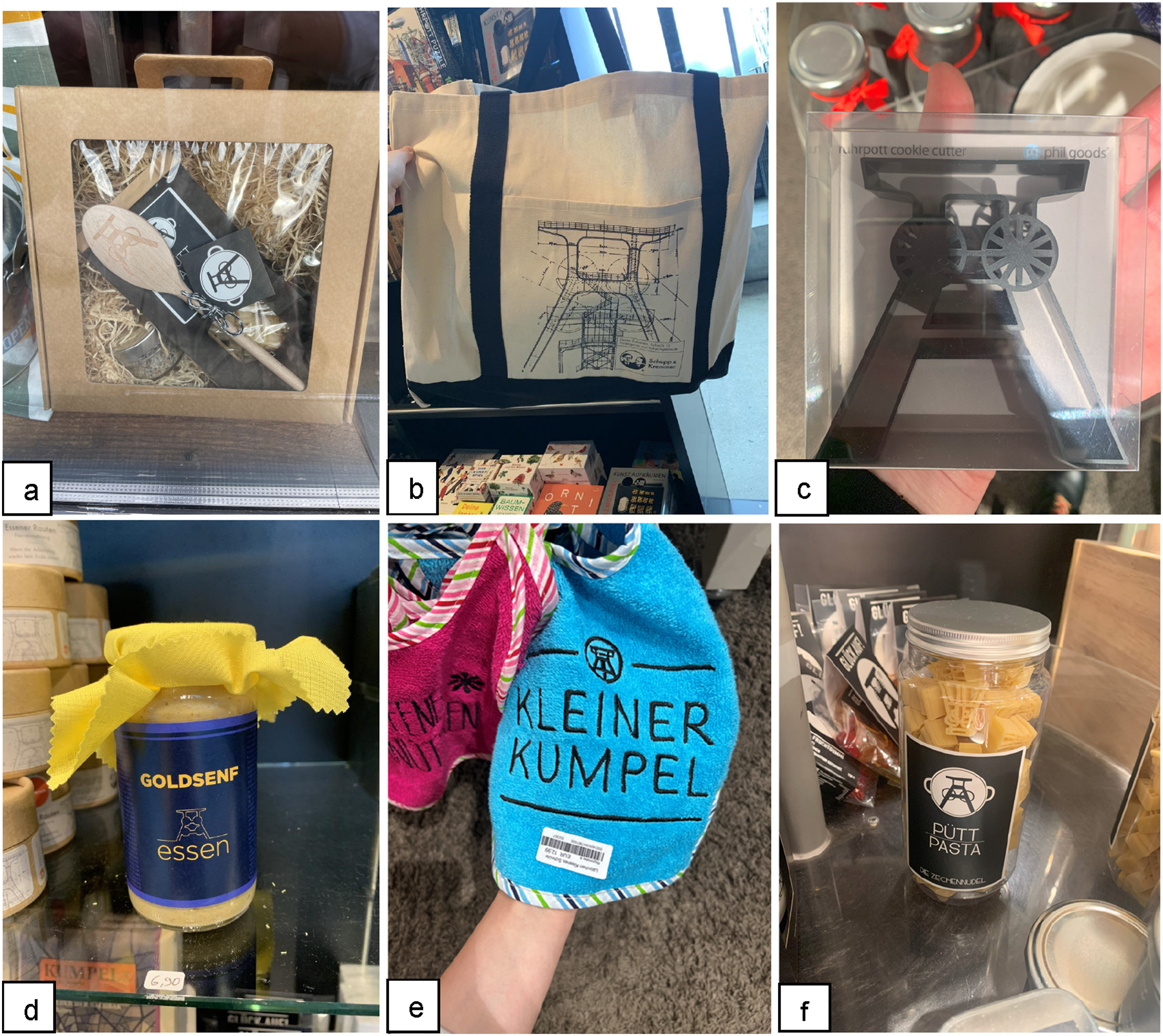
Commonly defined as “the material counterpart of travels, events, relationships and memories of all kinds” (Hitchkock and Teague 2000: xii), souvenirs provide a memorial link with a time and place. As such, souvenirs are not just specific objects per se, but are material items with a relationship to someone or something else, usually in the past. That is to say, they “have a memorial meaning or, from the manufacturer’s or seller’s point of view, are intended to function by having that kind of meaning for the acquirer or purchaser” (Graburn, 2000 foreword). There are many motivations for the purchase of souvenirs, including the role of souvenirs as gifts (Kim and Littrell, 2001), identity/class symbols (Gordon, 1986), and reminders of the local heritage and associated social history (Swanson, 2004). As such, while they are available for tourists, the souvenirs tend to be practical mementos for the endogenous populations, locally relevant tokens of times past. Notably, such memento tokens appeal to the local market – they are bought, exhibited and gifted within the local system (see e.g. the cookie cutter, mustard, and Pott Pasta in Figure 14). 15
As Figures 15 and 16 show, the local-private consumption of the Tower is ubiquitous across the city. Taking on a number of material forms, the Tower is often positioned somewhere between the private and the public. Examples of fleeting towers people wear on their clothes and accessories, like on a baseball cap in Figure 15a, capture the embodied and ephemeral element of the Tower and affirm its iconic status. Our examples are consistent with Jaworski and Lou’s (2020: 24, 2) interpretation of wearable texts as “most minimal acts of performing identities” in the city’s semiotic landscape which “assume a close relationship to their human wearers” and potentially build tight communities on the move. People “wearing” the winding tower. Winding Tower in front/backyards and on a car.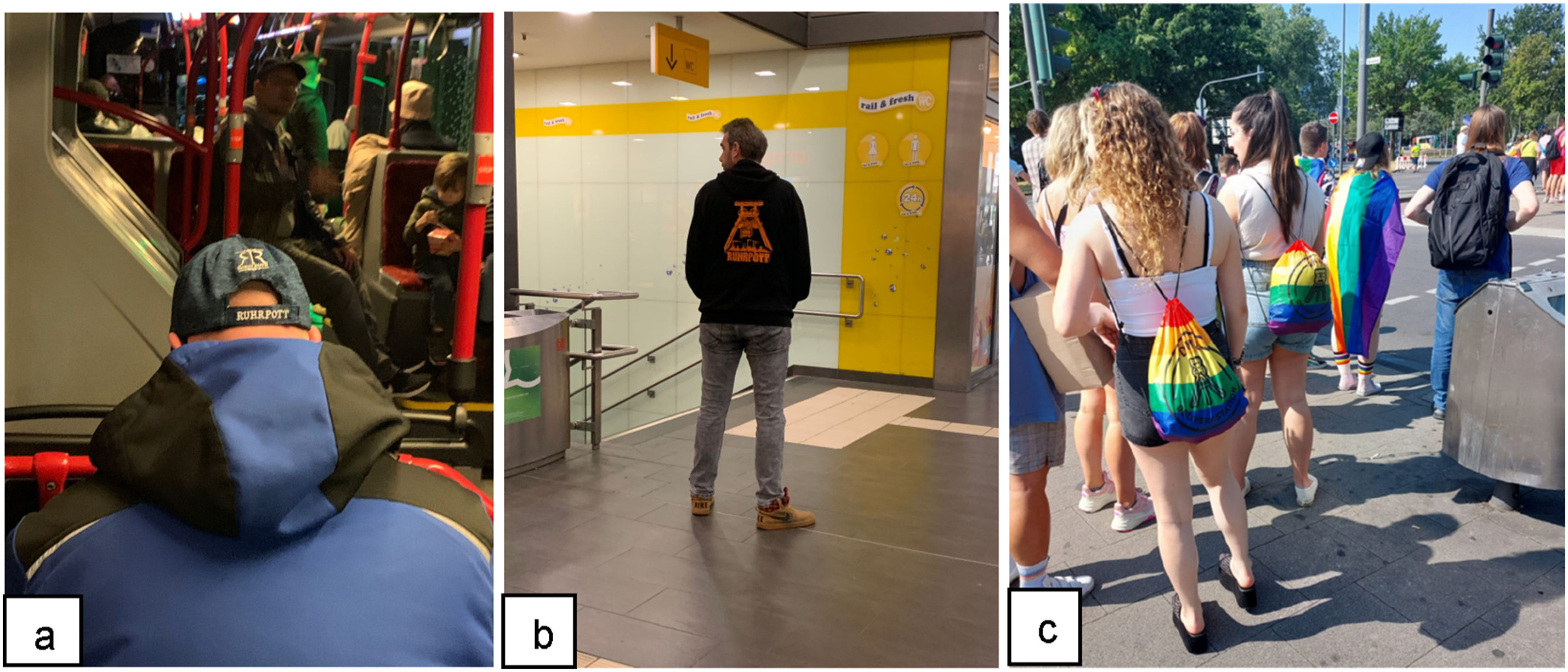
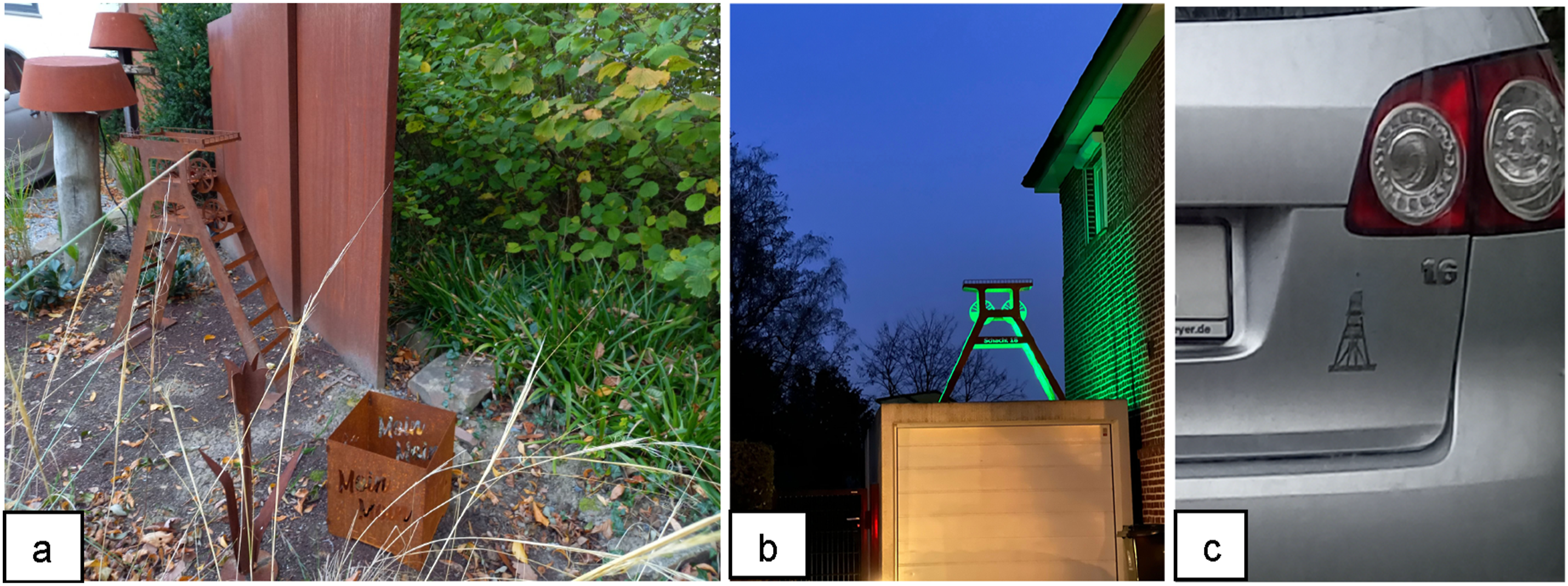
The Tower circulates in creative ways in the local population, especially in consumers’ more intimate settings. Examples in Figure 16 do not manifest the consumer culture in the same sense as souvenirs. Rather, people embrace the cosmopolitan values and the established symbolic economy (ies) denoted by the Tower in a somewhat playful but nevertheless heritage affirming and possibly cheaper way. To borrow from Haldrup and Bærenholdt (2015: 62), these privatized winding towers work as “devices for routing/rooting a sense of cosmopolitan ‘lay geography’”; and we know from Urry (1994) that identity is formed precisely through consumption and play. Ultimately, custom-made tower decorations in people’s gardens/front yards and on their cars reflect the commitment to celebrate the Tower and the industry which was historically important for the region.
Class authenticity
Crucially, the Winding Tower is involved in more obvious placemaking activities, activities that tie in complex ways to class and privilege. Gillette (2022: 27) points out (and our data supports this claim) that “heritage in post-industrial settings always has class implications […] we can foreground this characteristic by theorizing post-industrial heritage as a material and ideological process of gentrification that encloses new class constellations in the neoliberal city”. Indeed, while Linkon and Russo (2002) have argued that industrial heritage is predominantly the heritage of the working-class, it is often the cultural elite that selects, interprets and alters heritage sites (Berger, 2019; Fontaine, 2018; Wray, 2011). In the Ruhr area, class divisions have stringent geographical implications. As can be seen in Figure 17, the A40 motorway divides the cities of the Ruhr Area, with the manual workers in the heavy industry living in the north and the more affluent and educated population in the south. Map displaying the rate of workers (in %) in the Ruhr area in 1970. The darker blue the area, the more working class households are situated in this area. Source: https://news.rub.de/wissenschaft/2017-10-04-bildung-armes-viertel-schlechte-chancen, reproduced with permission.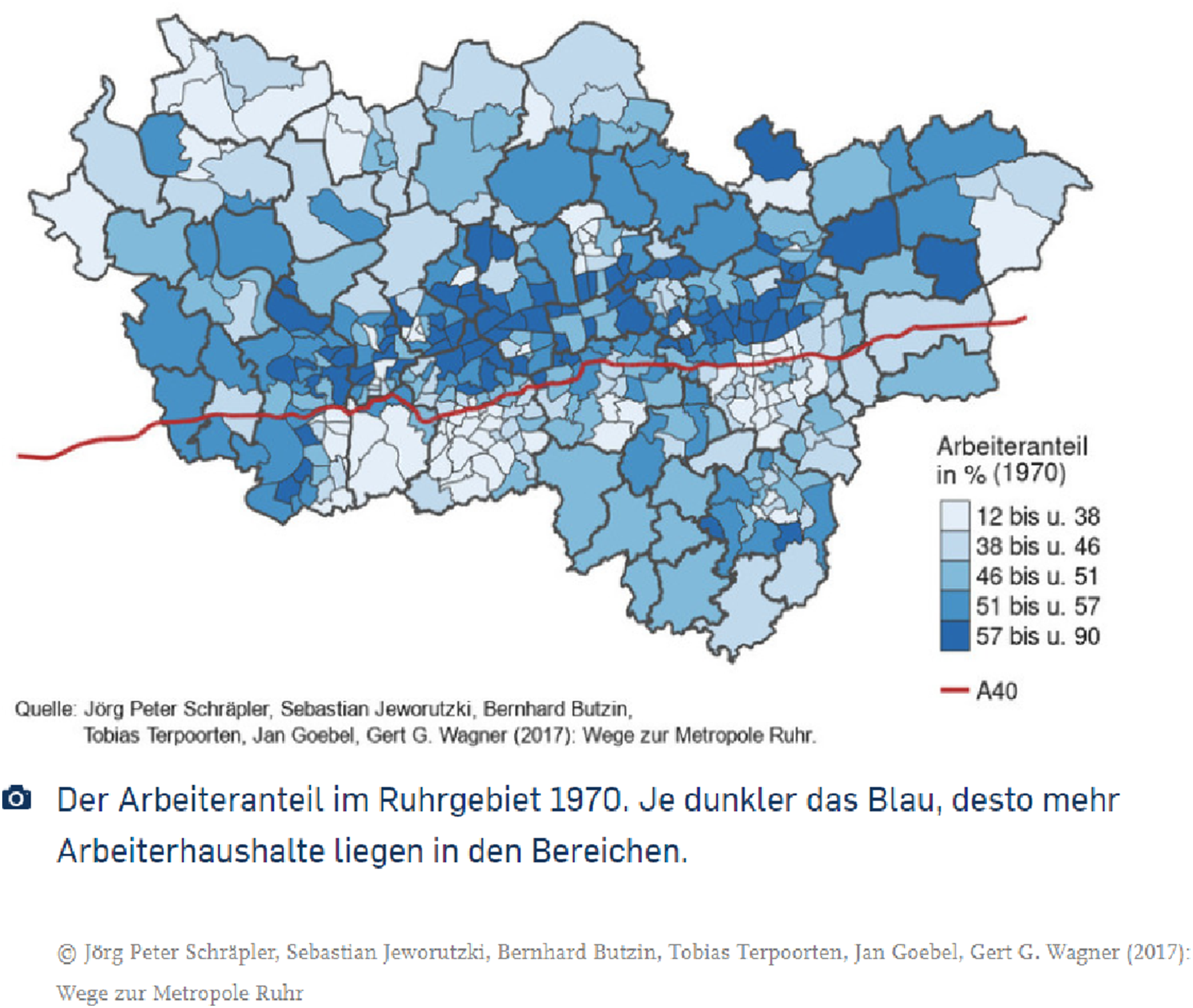
To put it bluntly: historically, the miners used to live north of the A40 motorway (i.e. in areas close to the lion’s share of collieries) whereas the owners of these collieries lived in the south.
The social divisions separating northern versus southern areas in the Ruhr Area remain highly pertinent and identification processes continue to connect with this “social equator” (see Ziegler et al., 2020: 184-185). As (Danielzyk et al., 2016) claim, people hardly ever identify with the Ruhr Area as a whole (feeling principally emotionally associated with either the southern or the northern part). This contention is supported by our finding that the emplacement of commodified instances of the gritty Ruhr heritage is clearly delineated by this social equator. The highest proportion of intentionally unrefined memorability tied to the post-industrial heritage is situated in the south of the motorway A40. Indeed, along with expensive merchandise and bijou commodities sold in local shops in the south of the city (e.g. Figure 14), we find an abundance of instances of gritty murals of the Tower (e.g. Figure 7), and personal artefacts made from these same raw materials that are indexical of the tangible remnants of heavy industry (e.g. Figure 16). The rusty front garden decoration in is typical for the artisanal and often unrefined aesthetic that characterise many Tower artefacts (unbleached cardboard, unprocessed jute, raw metals etc.), creating an ostensible link with the traditional craftsmanship that defined the local economy, and the grime of industrial mining (as we argued above). The natural and understated materials out of which these symbolic mementoes of time past are crafted allow people in the south to display a “representation of the original … a kind of mimetic authenticity of representation” (Oakes and Minca, 2008: 285). Their organic quality, together with their expensive price tags, make them a prime indicator for a bijouified green and sustainable lifestyle that performs local authenticity in capitalist (post)modenity, a type of “staged authenticity” in MacCannell's (1979) words. We thus see the promotion of a certain type of heritage discourse from the perspective of a socio-economic upper-class, where post-industrial nostalgia is exercised semiotically in rarified spaces of consumption (see Miles, 2010) that are inaccessible to the very people who were once involved in running these industries. Chhabra et al. (2003: 714) argue that such “staging (of heritage commodities) involves displacement of cultural production from one place to another and modi;cation to ;t new conditions of time and place”. Along these lines, we take this prevalence of the bijouified version of the Winding Tower in the south of the A40 motorway in Essen to be indicative as well as constitutive of a social divide where the original artefacts connected to the heavy industry remain accessible to everyone (as they continue to dot the landscape in many, predominantly northern, communities, see Figure 18), while the remediation and resemiotization of these heritage tokens into bijou commodities is reserved for the select few in the south, far away from the industrial centres. In this way, commodified “industrial heritage … reflect outsiders’ views on the manufacturing industry, possibly resulting in a lost sense of ownership by people who previously identified [in some way] with the industry” (Berkenbosch et al., 2022: 330).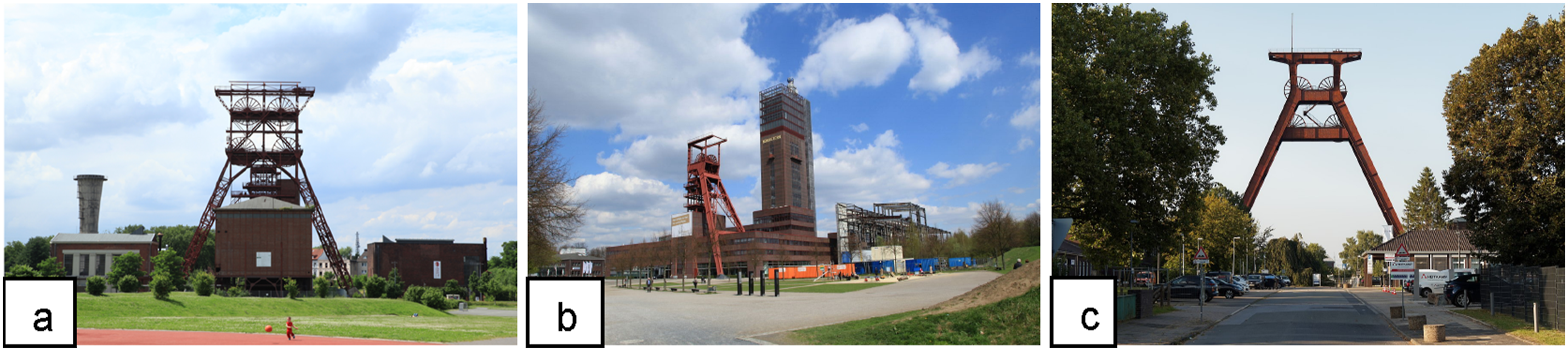
Concluding remarks
In this paper, we present the different ways in which the Winding Tower is recruited to perform identity practices tied to memory tokens of the industrial heritage. Our results support Berkenbosch et al. (2022: 329) claim that “heritage narratives are used to underpin socio-economic revitalization strategies”. We have found that AHDs centering around the Winding Tower follow the widespread turn to place-based development (Ray, 1998) and allow tapping into the growing demand for postmodern consumption of culture (Kohn, 2010; Oakes and Minka, 2008). There were times when a coal mine site and its pit head towers were considered useless scrap iron, rubbish and torn down. We must not become illiterates of memory. Johannes Rau
19
The words of the former president of Germany echo Haldrup and Bærenhold’s (2015) reference to heritage as “a repository for the cultural memory of societies”. However, we are also reminded of Roland Barthes’ (1979: 5) Eiffel Tower and Other Mythologies as he argues that “useless monument [s]” are “pure signifier [s]”, replete with meaning and thus always “something other and something much more than” what they are (in a practical sense). We find Barthes’ (1970: 77) demystification of the Eiffel Tower a useful remark not simply because Zollverein’s Winding Tower borrows the famous name, but because it suggests how iconic status is established once structures “belong to everyone, to each of our imaginations”, and “everyone has the right to reproduce” them.
In the paper, we showed that the Winding Tower is represented in/through different settings, styles and modalities, by different agents. Furthermore, diverse mechanisms for its reproduction “repackage” the Tower for various but clearly interconnected purposes. To borrow Barthes’ phrase once again, the Tower is so much more than remembering the past. It is very much agentic in nature and predominantly “conveyed as a positive symbol” (Bole et al., 2022), incorporating the industrial past into the everyday production and performance of local identity. By the same token, it does not appear necessarily in tourism spaces/places, but works as a “palimpsest or a layer” of class-based texts (Strom, 2014), ensuring participation and inclusivity in affirming its iconic status. Thus, the Eiffel Tower of the Ruhr area emerges as post-industrial capital which carries on the reinvention ideas and ideals that fabricate the area’s symbolic economy (Zukin, 1995), allowing people to continue consuming its authenticity. As an iconic example of residual industrial structures (Williams, 1980) which open up ways of thinking about reinvented spaces that anchor cultural memory, regional identity and nostalgia (Rigney, 2005), it has a key multimodal role in the construction and consumption of the city (image).
Footnotes
Acknowledgements
We are grateful to the Profilschwerpunkt – Change in Contemporary Societies (University of Duisburg-Essen) for giving us a grant that allowed us to hire student assistants to collect and code data and to organise the Round Table “Mapping transformations in/of urban settings”. We would like to thank the participants of this workshop, Malgorzata Fabiszak, Seraphim Alvandies, Anders Björkvall, Robert Blackwood and Steania Tufi for their many comments and suggestions. All remaining errors are entirely our own. Finally, we thank Anders Björkvall for his generous patience.
Declaration of conflicting interests
The author(s) declared no potential conflicts of interest with respect to the research, authorship, and/or publication of this article.
Funding
The author(s) disclosed receipt of the following financial support for the research, authorship, and/or publication of this article: This work was supported by the Profilschwerpunkt-Change in Contemporary Societies (University of Duisburg-Essen).