




Abstract
Increasing demands on museums for visitor insights, theoretical shifts in the learning sciences, the embeddedness of multimodal media in museums and society, and advancements in data visualisation tools and web-based applications are all clear calls for innovating visitor research in museums. In this article, I describe how concepts from multimodal and sociocultural research help shift the analytical lens for understanding and studying connections between visitor behaviours, social interactions and engagement in exhibitions. The following question is explored: In which ways can multimodal theory and the learning sciences inform the design and use of new visitor research tools and methods that are relevant for museum practice? A case study from a university-museum research partnership illustrates how multimodal and sociocultural perspectives from the humanities and learning sciences, respectively, merged in the development of a new tool to enhance and innovate visitor research within museums.
Keywords
Introduction to visitor research traditions
During the past thirty years, a large body of interdisciplinary research has scrutinised the impacts of societal, and not least, technological developments on museum practices, exhibition designs, and visitor experiences. Since 1989, when ‘new museology’ emerged as a critical discipline, the pace of new topics and interdisciplinary insights in museum studies has accelerated, with museums re-imagined (Witcomb, 2003) and re-invented (Anderson, 2004), the museum experience re-visited (Falk and Dierking, 2013), and museum research re-thought (Pringle, 2019). However, while acknowledging important research contributions, Merriman (2020) warns of an increasing gap between academic and professional practices: ‘there is a danger that museum studies becomes a self-referential academic discipline, with an audience of fellow museologists but no impact on museums themselves’ (p. 175). In the Nordic countries, some museum curators are voicing such dissatisfaction, pointing to a lack of relevance in museum studies for their own research needs and practices (Bjerregaard, 2020; Engen and Christensen-Scheel, 2022). As a result, the need for ‘exhibition-making practices’ as research within the museum is argued (Bjerregaard, 2020; Engen and Christensen-Scheel, 2022). These sentiments highlight challenges in conducting academic research that is recognised as relevant for practice, particularly when university-museum research partnerships are involved (Freeth and Caniglia, 2020; Pierroux et al., 2021a).
This article addresses these concerns by drawing upon a case study from a partnership between the Department of Education, University of Oslo and the National Museum in Norway in different research and innovation projects over the past fifteen years. The paper explores how university researchers’ interests and museum curators’ practices merged in the development of a new tool called SEEZ, which supports visitor research within museums, as part of their ‘exhibition-making practices’. The development of SEEZ involved drawing on long-standing methods in the field of visitor studies, while incorporating a shift toward multimodal and sociocultural perspectives from the humanities and learning sciences, respectively.
In keeping with the theme for this special issue, the following question is explored in this paper: In which ways can multimodal theory and the learning sciences inform the design and use of new visitor research tools and methods that are relevant for museum practice? To address this question, I specifically consider how sociocultural perspectives from the learning sciences and concepts from multimodal theory productively intertwine as principles for the design of SEEZ. The article concludes with a return to the discussion of ‘exhibition-making practices’ as research within the museum.
The development of visitor studies
There is a long line of investigation into cultural norms established for visitors’ behaviours and physical movements in museum spaces (Bennett, 1995; Foucault, 1970), or what Rees Leahy, 2012 calls the historical cultivation of behavioural norms for ‘museum bodies’.
Rees Leahy describes visitors as having been enculturated to enact the ‘exhibitionary script’ (2016: 49) of visiting museums and viewing works of art, i.e. walking along walls at a pace in keeping with the choreographed movement of the exhibition design as well as the rhythm of other visitors’ paces, stopping at each artwork to gaze contemplatively. Since the late 1800s, enacting these behaviours aligns with the normative criteria for what Benjamin Ives Gilman, Secretary of the Boston Museum of Fine Arts, called ‘good seeing’: patterns of attention and focused looking that are valued for both fostering learning and ‘aligning with curatorial intentions’ for visitors’ engagement with an exhibition (Rees Leahy, 2012: 61). A similar viewpoint that spans behaviourist and multimodal perspectives, then, is the idea that visitors’ behaviours – whether stopping and gazing at artworks or interacting with digital technologies – are embodied, in the sense of being embedded in a specific social and cultural practice.
Premised on these norms of ‘good seeing’ and the study of lone adult visitors, methods for tracking and timing (TandT) studies of visitors’ behaviours in museums were further developed in the 1920s and 30s by behaviourist psychologists Edward S Robinson and Arthur W Melton. Although their research interests were anchored in behavioural psychology theories of ‘attention’, there was also a strong orientation to museum practice in their concerns with identifying the effects of different exhibition design factors, for example, on visitor fatigue (Bitgood, 2016; Rees Leahy, 2012). More recent studies have linked a sustained pattern of frequent stopping with decreased attention and interest and the complex problem of museum fatigue, emphasising the need for varied, multimodal experiences and breaks (Bitgood, 2016). Notably, the TandT protocols for methodological observations of visitor behaviours are still valued and widely practised by mainly researchers and consultants in the field of visitor studies today (Bitgood, 2016; Yalowitz and Bronnenkant, 2009). Serrell (2020) explains: ‘unobtrusive observations of visitors as they move around an exhibition, interacting with each other and with the exhibit elements, give important information about what visitors pay attention to, especially how much time they spend in an exhibition and with what parts of the exhibition they become engaged’ (my italics, p. 1). Often, observational data is supplemented with exit interviews or questionnaires. However, the extent to which TandT methods are used within museums, as part of research linked to their own exhibition-making practices, has not to the best of my knowledge been documented.
Although outside the scope of this paper to review, studies of cognition, behaviour and psychological factors remain important to visitor research (Sobel and Lipson, 2016; Xu et al., 2023), particularly with advancements in eye-tracking (Garbutt et al., 2020; Reitstätter et al., 2020) and future phases of innovation in museum technologies (Lu et al., 2023). However, from the late 1990s and onward, sociocultural theories of learning have also oriented analytical attention to how technologies and other semiotic resources are ‘used in social practices within activities and how they interact’ (Ivarsson et al., 2009: 205).
Multimodality and sociocultural perspectives in the learning sciences
In contrast to the focus on attention in visitor studies, multimodal research, as a theory of representation and communication, contributes to understandings of ‘alternative modes of engagement with the exhibits’ (Christidou and Diamantopoulou, 2016: 12). A multimodal orientation foregrounds the communicative role that other visitors, devices, texts and semiotic modes play in visitor engagement (Christidou and Pierroux, 2019; Jewitt Cand Price, 2019): ‘Analysis attends to the uses of different modes in everyday interactions between people and/or people and artefacts (an object, a programme, a device) as a way to understand communicative meaning making’ (my italics, Jewitt and Leder Mackley, 2019: 94). This understanding, then, overlaps in interesting ways with sociocultural perspectives in the learning sciences and museum reserach in the 1990s and early 2000s. Rekindled interest in the educational role of museums (Hooper-Greenhill, 1994) spurred new approaches to studies of visitors interacting in exhibitions, leading to greater awareness of how families and friends used museums as social spaces for informal, or ‘free-choice’ learning (Ellenbogen, 2002; Falk and Dierking, 2000; Leinhardt and Crowley, 1998; Leinhardt and Crowley, 1998). Informed by theoretical developments in the learning sciences during this period, ‘museum learning’ research (Falk and Dierking, 1992; Hein, 1998) was deeply influenced by constructivist and sociocultural perspectives (see Pierroux et al., 2021a). Both constructivist and sociocultural perspectives emphasise the contextual and situated nature of learning and how learning builds on previous knowledge. Moreover, sociocultural perspectives are particularly concerned with how language, social practices and other semiotic resources mediate human development, through social interaction and activity (Vygotsky, 1978; Wertsch, 2007). As Vygotskian scholar James Wertsch (2007: 178) explains: ‘Instead of acting in a direct, unmediated way in the social and physical world, our contact with the world is indirect or mediated by signs’. The concept of mediation is foundational to sociocultural theories of learning, and was intended by Vygotsky as a means to transcend stimulus-response models of learning underlying behaviourist theory in the 1920s and 30s (Daniels, 2005; Vygotsky, 1978).
In my view, it is here that multimodality perspectives in the humanities may be seen to intertwine with sociocultural approaches in the learning sciences. In the former, semiotic modes, as material, social and cultural resources, are conceptualised and studied as meaning potential (Halliday, 1978; Van Leeuwen, 2015). In the latter, simply put, sociocultural research in the learning sciences is concerned with meaning making, and with how semiotic modes, as social signs, function as mediational means in meaning making processes (Vygotsky, 1978; Wertsch, 1991, 2007). Applied to the field of visitor studies, sociocultural and multimodal perspectives may be seen as engaged in a dialectical discourse with behaviourist approaches and psychological research, to potentially develop a more relevant framework for exhibition-making research within museums.
Multimodality in art museums
Collection catalogues, books, labels, and wall texts have persevered as the traditional text-image grammar of visual design for interpretive resources in art museums since their emergence in the late nineteenth century (Pavement, 2019; Pierroux and Qvale, 2019; Ravelli, 1996). However, as Pavement (2019) describes, museum practitioners have always been interested in the potential of new modalities, experimenting early on with audio recording and playback technology and working with collaborators to produce recordings as interpretive resources for galleries. A century later, in the mid-1990s, ‘multimodality’ (Kress and Van Leeuwen, 1996) emerged as a useful concept for exploring the (still) rapidly increasing use of technology designed to enhance museum visitor experiences, including smart technologies, mobile communication, virtual communities, computer displays, and social media (Lu et al., 2023; Ravelli and Heberle, 2016). Building on a social semiotic theory of representation and communication in humanities disciplines (Christidou and Diamantopoulou, 2016), multimodality was a marker for the distinctive and dynamic semiotic modes of expression made possible through digitization and media technologies (Farr et al., 2012; Kress and Van Leeuwen, 1996, 2001).
A perhaps unexpected impact of digital media was the intrusion of previously unacceptable forms of visitor interactions and behaviours in museum spaces, particularly in art museums (Pierroux and Qvale, 2019). Moving beyond cultural norms of looking, reading, walking, quietly talking, and listening to audio guides in gallery spaces, acceptable behaviours today may also include taking pictures and posing with art for selfies on smartphones; scanning and interacting with exhibits through screens on walls, tables, and mobile devices; and whole-body manoeuvring of interactive exhibits and immersive virtual environments. Multimodal perspectives proved a useful lens to analyse changes in the different modalities of digital interpretive resources in museums (e.g., from mainly perception-based content to gesture-based and interactive content) (Pierroux and Ludvigsen, 2013), but also to conceptualise visitors’ interactions with digital technologies as multisensory, ‘embodied experiences’ (Farr et al., 2012: 14). In the following sections, I shift focus to explore how these concepts from multimodal and sociocultural theory have been applied in the design of a new visitor research tool.
Designing a tool: Translating research into practice and vice versa
The background for the design of this tool is a series of research and innovation projects in Norway that involved a partnership between the Department of Education, University of Oslo, and the National Museum of Art, Architecture and Design in Oslo, Norway over a period of fifteen years (and still ongoing). 1 All of the projects have been anchored in collaborative, design-based approaches used in education research (Barab and Squire, 2004; McKenney and Reeves, 2018). Design and development services were provided by the university lab, which produced working prototypes for iterative cycles of testing, and analysis. In brief, the design-based approach used in these projects invited museum practitioners to first identify and analyse ‘problems’ in their existing practices; for example, how to develop digital exhibition materials that can engage the elusive ‘young people’ target group (15–19 years old). This became then the shared ‘problem’, which in an early project was explored through the design and implementation of new digital resources and prototypes in the galleries. Based on empirical studies of visitor use, these prototypes were then possibly refined and re-implemented. The university researchers developed a contiguous line of inquiry for studies of museum learning as part of this process.
An important aspect of design-based research methods is what Engeström and Sannino (2010) call ‘transformative interventions’ and ‘expansive learning’ in the sense of boundary crossing and network building in an organisation. In this particular project partnership, the implementation of digital resources in gallery settings intervened in the museum’s existing practices. Through the iterative cycles of the intervention, contradictions and strengths in the museum organisation were made apparent as the staff grappled with how – and the more principled question of whether – existing practices should be transformed to implement new digital resources in their traditional art gallery settings (Pierroux and Qvale, 2019).
Interestingly, the development of a digital visitor research tool was not planned as an intervention. Rather, it developed from a small contribution made by the researchers to an existing study that the museum partners were working on in 2009, namely, evaluating the impact of introducing slightly longer texts (1–2 paragraphs) alongside selected works of art in a gallery of Edvard Munch’s works (Pierroux and Steier, 2016). To assist in the evaluation, visitors’ observations were planned and carried out by both the curators and researchers using a simple paper-based instrument we developed based on TandT methods (Figure 1(a)). Observations were conducted for two weeks and were then summarised as findings using simple visualisations in a PowerPoint (Figure 1(b)). We observed that visitors ‘stopped’ and looked longer at artworks with the longer texts, and that they did indeed read the texts; these findings were not surprising to the curators. However, the variation in visitors’ movement patterns, their demographics, and the predominance of small groups over individual visitors were new and relevant data for the museum. Moreover, having ‘direct evidence’ (Renner, 2013) to support the curators’ hypotheses (visitors will stop and take time to read longer texts) contributed to some small but long-term changes in the museum’s practice. Methodologically, the partnership contributed to changes in the museum’s exhibition-making practices, with our partners reporting that observations, testing, and evaluations have become more discussed and purposefully integrated into design processes. Initial study using paper-based instrument (a) and simple T and T representation (b).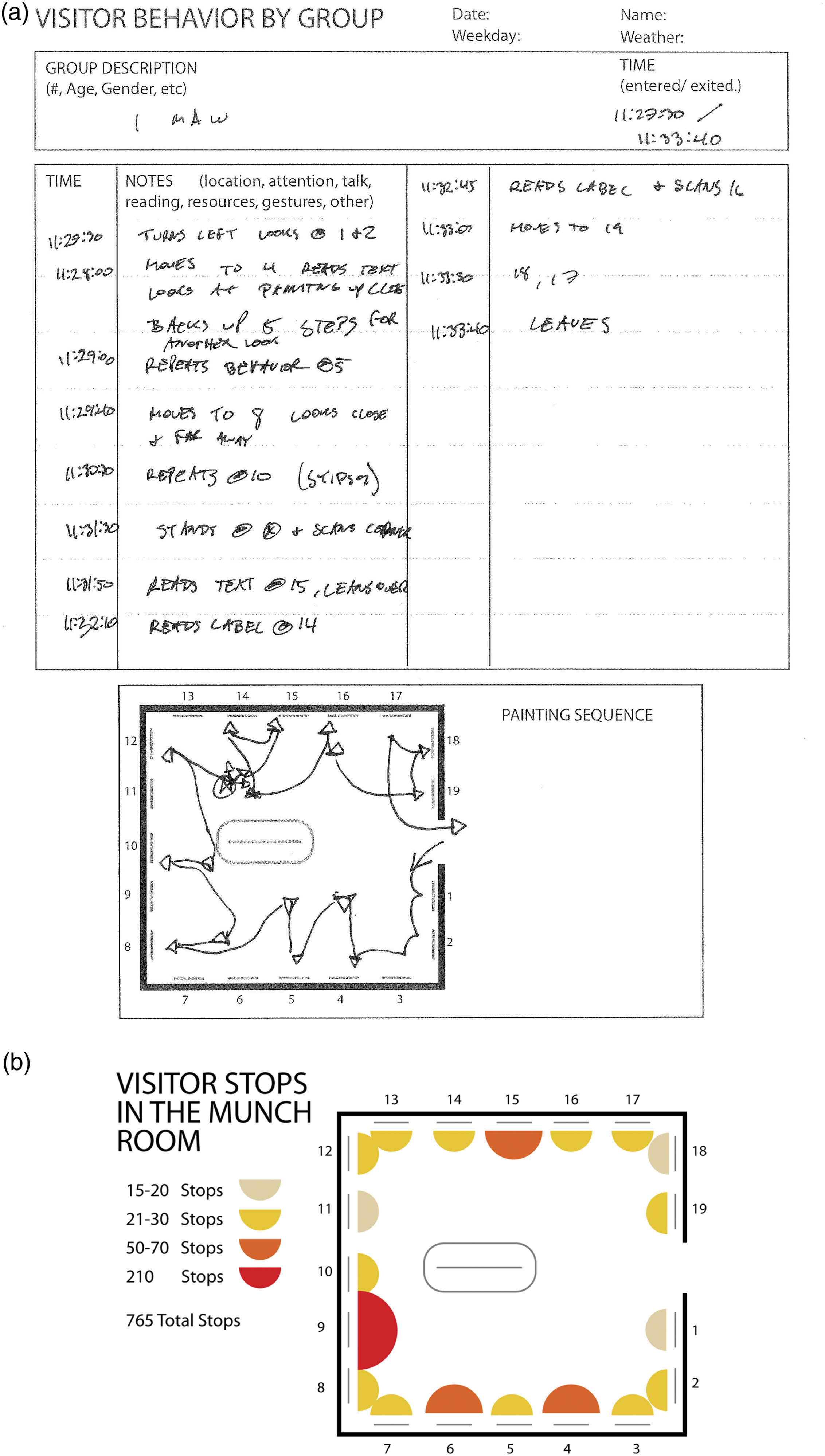
In 2010, based on insights from this small study, the researchers took the initiative to develop a functional prototype of a digital tool to conduct observations and questionnaires, engaging the museum partner in a new collaboration for several years (2012–2014). Our design collaboration on this first working prototype (Figure 2(b)) has been previously described (Pierroux and Steier, 2016), analysing the partners’ different perspectives on the design process and the ways in which they viewed ‘value creation’ from their respective fields of practice (i.e. university researchers, university lab programmers, museum curators of education). For a period, subsequent funding and research projects allowed for continued experimentation and refinement of this tool, most notably the development of a multimodal ‘Social Meaning Mapping’ function that recorded and played back in real-time visitor pairs’ maps and verbal reflections (Figure 2(a)) on their exhibition experiences (Christidou, 2020a, 2020b). This version of the prototype was never fully implemented due to a myriad of events, including changes in museum leadership, the COVID-19 pandemic, EU data protection regulations, and the closing of the museum for 2 ½ years during the construction of a new flagship museum building, which opened in mid-2022. (a), (b) Studies in Belvedere Museum, with Social Meaning Mapping tool (a, left) and observation tool (b, right). Photo: Armin Plankensteiner, University of Vienna, Department of Art History.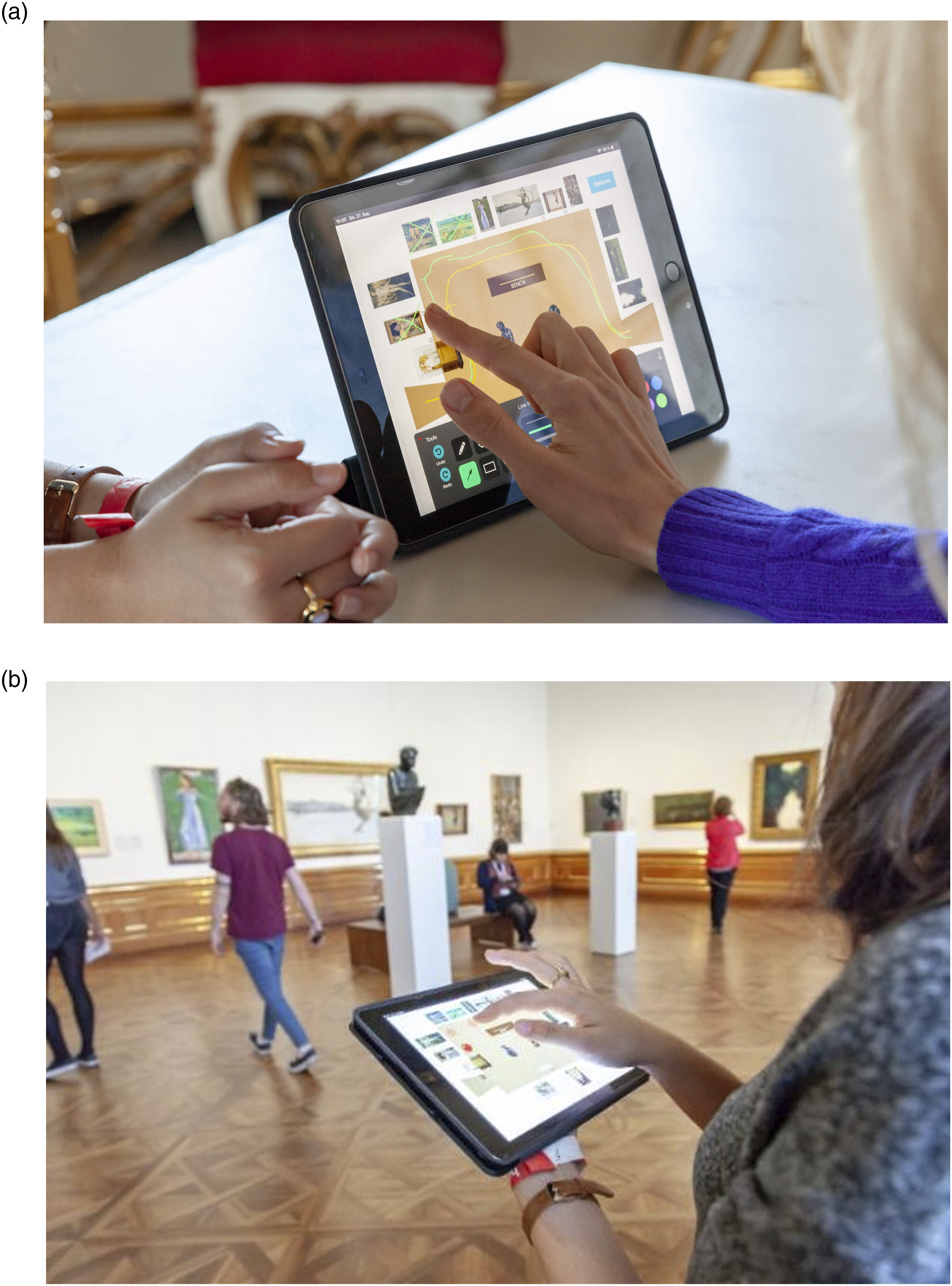
In 2022–24, through a modest sum of university ‘innovation’ funding, a new high-fidelity prototype called SEEZ was developed, tested, and is currently being used at the National Museum for a period of six months as part of a collaborative evaluation process. At the start of the development process, three workshops were held with curators, educators, project managers, communication directors, and ‘research and insight advisors’ at local, national, and international museums. The workshops focused on understanding the sector’s needs and interests in a visitor research tool, and evaluating the extent to which functions in the original tool might meet those needs. Input and feedback from these workshops were important to the design in terms of which functions should be prioritised, and also served to confirm that most of the design concepts and functions of the original tool were still considered relevant for museum practice.
Applying multimodal and sociocultural perspectives in the design of a visitor research tool
The design of SEEZ features and functions that are used to collect, visualise and analyse observational data are informed by multimodal and sociocultural concepts and methods. First, at a high level, the interaction design for collecting observational data is primarily based on touch, tapping a floor plan prepared by the museum for the specific purposes of the study: tapping to select avatars for the visitors when they enter the room, and then tapping again to log their interactions. Since the social context is central in meaning making processes, the tool is designed to track interactions of visitors in groups of up to four persons at a time. Second, still at a high level, visualisations of the collected data have interactive elements (clickable graphs, hover-over details, and adjustable parameters) and visual encodings (colour, shape, size, and spatial positioning) that represent different dimensions and relationships in the data.
Then, as an analytical tool, SEEZ is designed to represent observational data as dimensions of engagement, which is understood in a general rather than prescriptive sense. To further explore how multimodal and sociocultural perspectives are applied in the design of SEEZ, three dimensions of visitor engagement are discussed below: interactions, dwell time, and movement.
Interactions
In visitor studies, the behaviour of ‘stopping’ is a key indicator of attention (Bitgood, 2016; Serrell, 2020; Yalowitz and Bronnenkant, 2009), and a high frequency of stopping at regular intervals has historically been the ideal type of visitor engagement intended by curators in an exhibition (Rees Leahy, 2012; Serrell, 2020). However, museum learning research shows that visitors interact in many different ways when they stop, which established observational protocols do not capture. These interactions might include pointing across the room, talking with a friend, taking pictures, calling someone over, reading wall texts, touching screens, and sending tweets. What visitors do when they stop in an exhibition—their interactions with authentic artefacts and artworks, companions, and interpretive materials—is not trivial to their meaning making process. From a sociocultural perspective, meaning making is mediated – through the modalities of language and body but also through cultural artefacts with physical and semiotic properties (Ivarsson et al., 2009). Therefore, the primary aim of the design of SEEZ is to enhance curators’ and museum professionals’ insights into visitors’ mediated interactions in ways that are relevant to their own research and exhibition-making practices.
When planning a study in the portal, SEEZ requires curators to first formulate an aim for their inquiry and to reflect on their intentions for and knowledge about visitors’ interactions. Curators describe these interactions by editing a list of potential ‘actions’ and a list of potential ‘resources’, or mediational means. These lists define the scope of potential interactions that will be observed during the study. Then, in the gallery, the museum researcher will use a computer or tablet to access the study’s floor plan, which is the representation used to log observations. Clicking or tapping on an entry marked on the floor plan will log visitors entering the gallery, alone or in groups, as avatars that represent age and gender (Figure 3(a) and (b)). Based on experience with the initial prototype, logging observations of more than four visitors in a group is too demanding for the museum researchers. Then, to log visitors’ interactions, the museum researcher will tap or click on the floor plan to log where a specific visitor(s) has stopped. A pop-up list will appear to select an action, a resource, and click start (Figure 3(c)). It is possible to add or remove other visitors to an ongoing interaction. The avatar on the floor plan now has a blinking circle to indicate that the visitor(s) is interacting (Figure 3(d)), and one more tap will conclude the interaction. In this design, then, ‘stop’ behaviour is conceptualized, tracked and analysed as more than an indication of attention, as a psychological construct. Instead, ‘stop’ data includes visitor demographics, a description of different modes of interaction, including social interactions with other visitors, the location of the interactions, and the amount of time spent interacting. (a), (b) Logging a group of three visitors when they enter the gallery. (c), (d) Logging the interaction ‘read’ (action) and ‘wall text’ (resource) at visitor stop.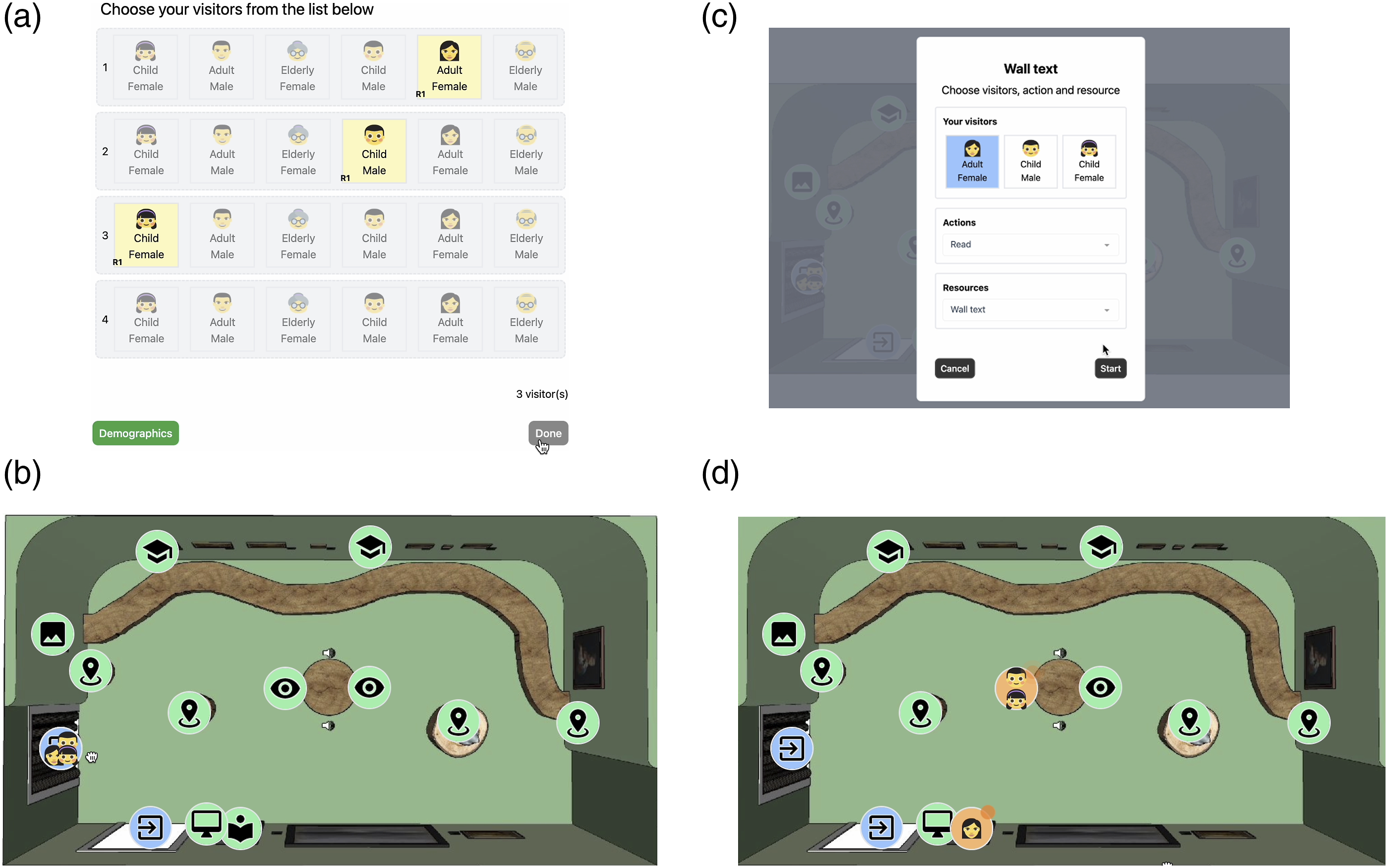
To analyse the logged interactions in a study, museum researchers will filter and visualise data in multiple combinations of age, gender, group size, target group and type of resource. Filtering interactions by ‘type of resource’ is an example of how multimodal perspectives have been applied in the design of the visualisation, to understand which resources visitors most frequently interacted with in the exhibition, such as screens, wall texts, interactive installations, videos and labels. For example, in a study conducted in an architecture exhibition that had many digital works and multimodal installations, we see that ‘looking at drawings on paper’ was by far the most frequent interaction (Figure 4). Unfiltered visualisation of all exhibition interactions, 335 observed visitors.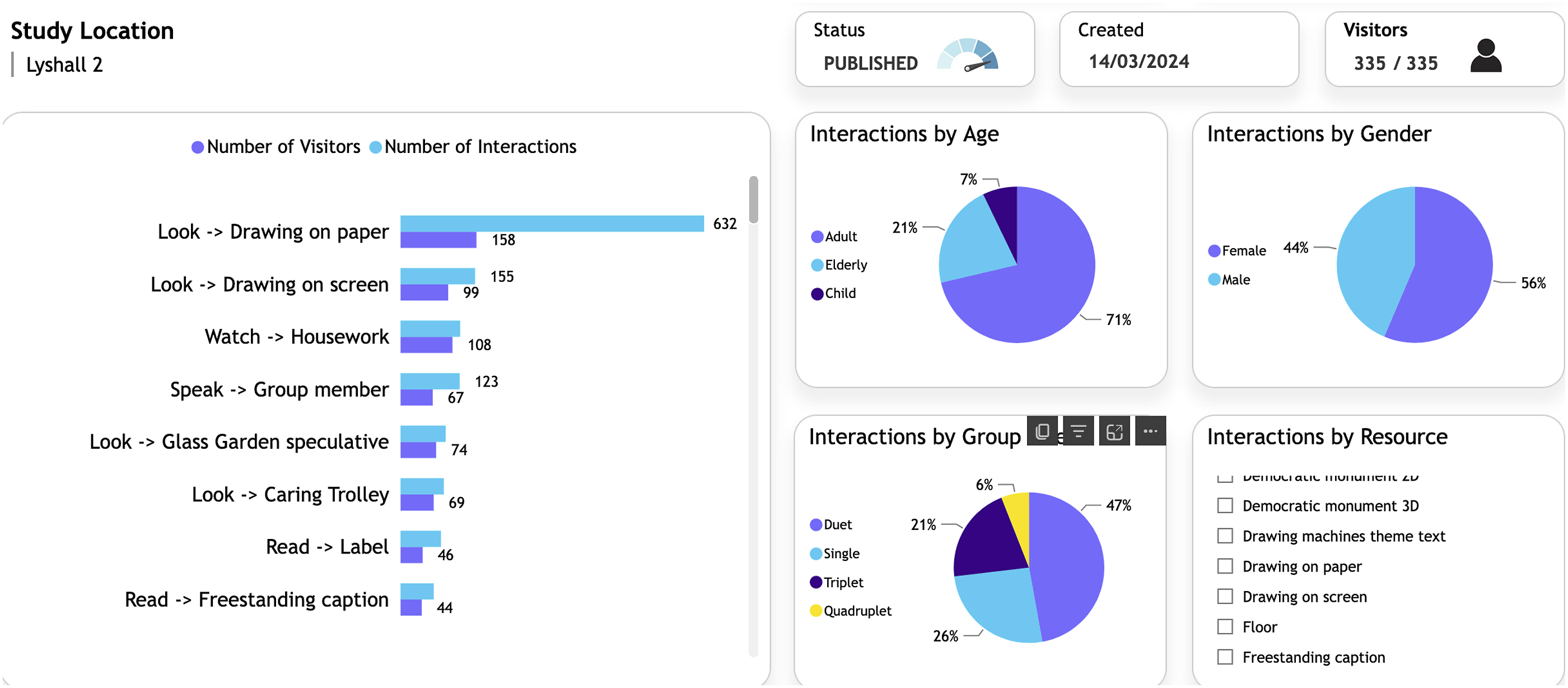
Moreover, we see that the most frequent interaction ‘looking at drawings on paper’ was most characteristic of visitors in pairs. Filtering interactions by ‘drawings on paper’ (Figure 5), we also see in the pie charts that most of these visitor pairs were adults and that there were more females than males. Based on feedback from the curators during the development of SEEZ, it is also possible to filter this interaction to see if these visitors were part of the target group (not shown) and to see which interactions most typically preceded and followed looking at works on paper (not shown). Together, these features invite curators to be explicit about how they envision and plan for visitors’ interactions when exhibition-making (meaning potential), and to use direct evidence to analyse how and whether their rationales and intentions about visitors’ interactions were realised. Importantly, the methodological and analytical approach in SEEZ is not prescriptive; the comprehensive dataset visualises the context and wide array of semiotic modes that mediate visitor engagement in an exhibition. The central focus on visitors’ embodied interactions, as these are mediated by semiotic resources, is directly informed by the intertwining of multimodal and sociocultural perspectives, thus providing insight into the complex behaviour of ‘stopping’ in an exhibition. View of visitor demographics and group size for interactions filtered by resource ‘drawings on paper’.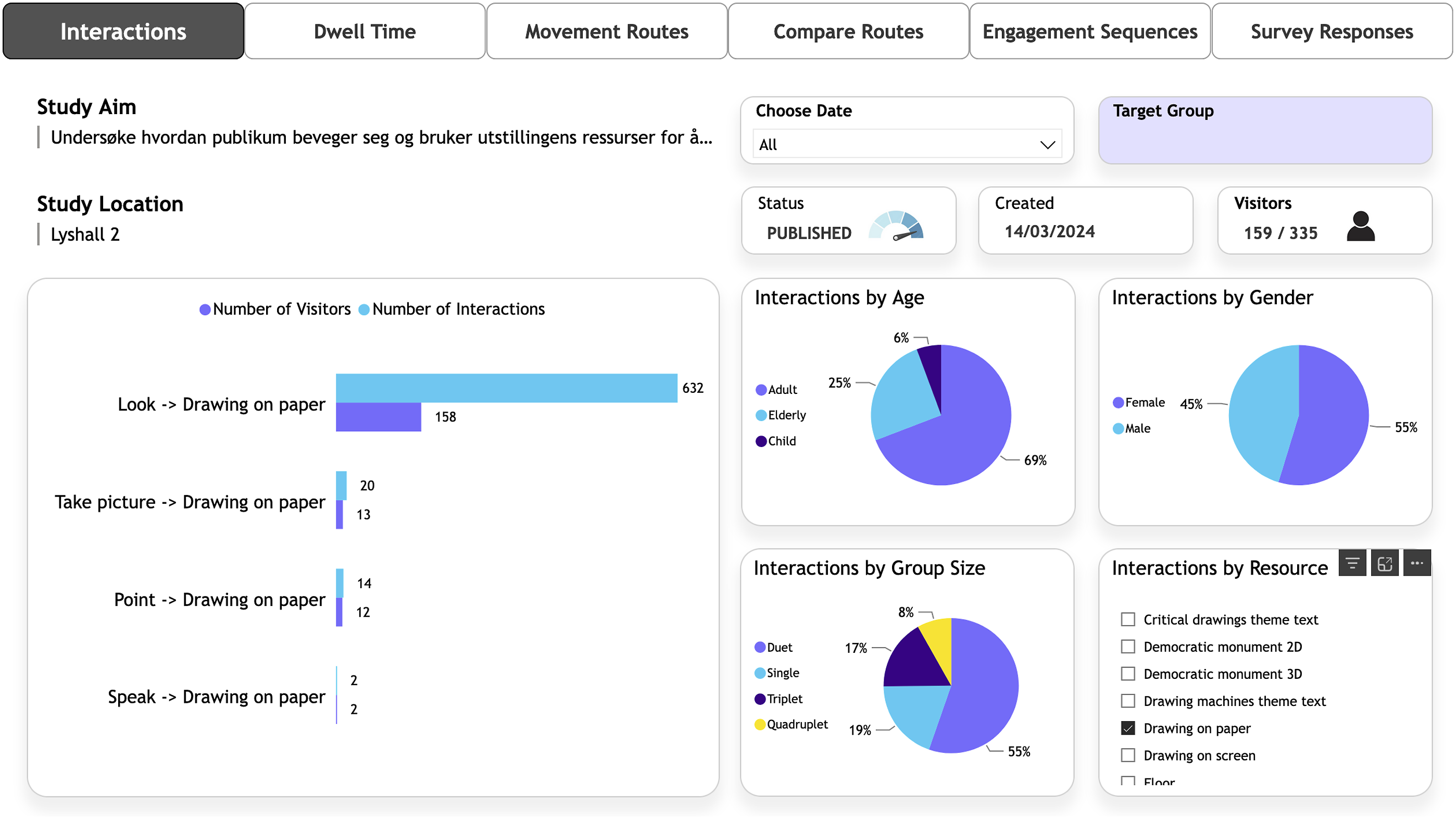
Dwell time
Another dimension conventionally linked with attention and ‘where learning might be taking place’ (Serrell, 1997: 111) is the amount of time a visitor spends on a display, an activity, an entire exhibition, a gallery, or an entire museum. ‘Dwell time’ is a term that is used by and defined differently in several professions. In visitor studies, dwell time is often used as a measure of how long a person remains in an exhibition or a set of locations: for example, to determine a Sweep Rate Index (SRI), ‘the exhibition’s square footage is divided by the average total time spent in the exhibition for a sample of casual visitors’ (Serrell, 2020: 5).
In SEEZ, time in an exhibition is linked to interactions, with dwell times (in seconds) shown for logged activities. In addition to the frequency of different types of interactions described above, then, these representations provide insight into time as an aspect of different semiotic modes of interaction. Moreover, in SEEZ, the average time spent in a gallery or exhibition overall is presented by group size rather than based on the time spent by single visitors. In the study of the architecture exhibition mentioned above, the average dwell time in the exhibition varied significantly between single visitors and the different group sizes (Figure 6). A consistent focus in the design of the tool on understanding how groups interact and spend time is based on studies that show the important role of social interactions with family, companions, and friends in learning and interpretation in museum settings (Falk and Dierking, 2013; Packer and Ballantyne, 2005; Pierroux et al., 2021b; Wollentz et al., 2022). Moreover, there are principled theoretical reasons for focusing on groups; within the sociocultural framework that informed the design of SEEZ, social interaction cannot be ‘factored out’ of analyses, and a group’s interactions often comprise the unit of analysis (Ivarsson et al., 2009). An unfiltered visualisation of all dwell time observations collected in a study.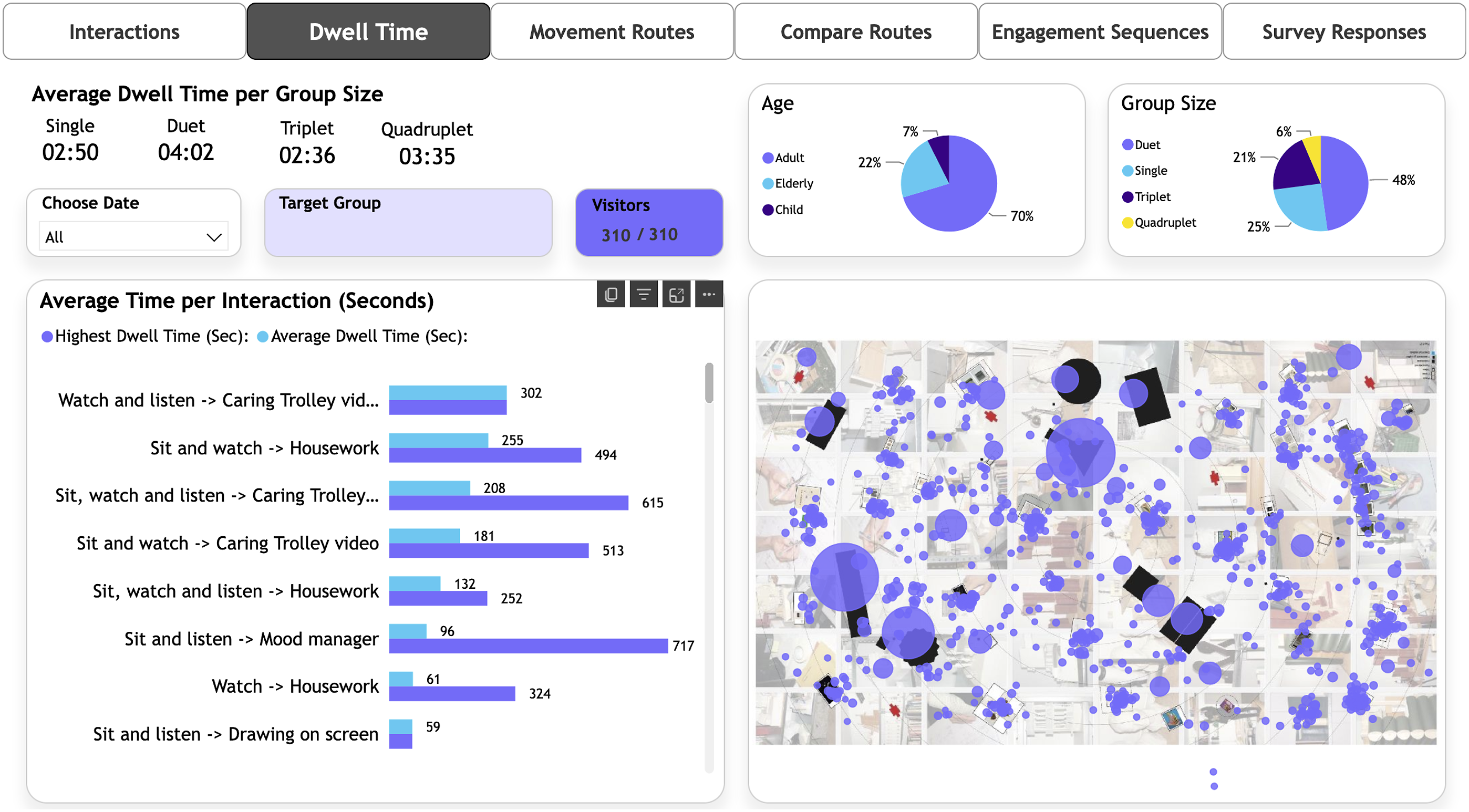
Information about differences in how groups spend their time in exhibitions is interesting for museums when designing exhibitions. The design of SEEZ enables the visualisation of differences between where groups of two, three and four spend time Figure 7 (a) and (b), and which types of exhibits and resources are most engaging for different group sizes. In sum, in the dynamic features of the data representations in SEEZ’s design, we see the application of multimodal and sociocultural perspectives in the foregrounding of how visitors spend time interacting with each other and the semiotic resources in an exhibition. Thus, museums have insights into visitor engagement that are detailed, descriptive and qualitative in nature, enabling interpretations and comparisons of visitors’ dwell time by interaction, age, gender, group size, target group and type of resource. Dwell time filtered by duets (left) and triplets (right).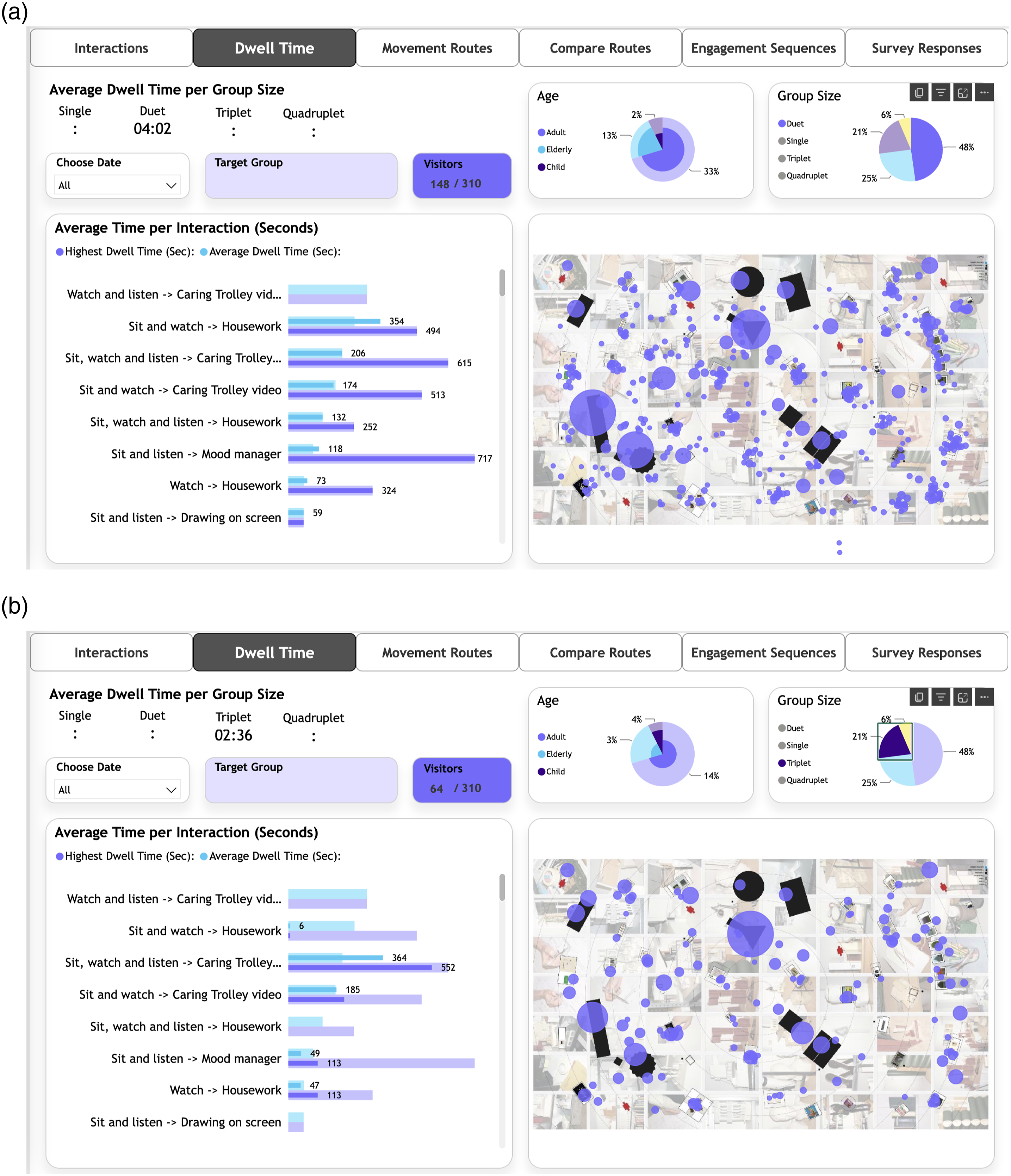
Movement routes
Visitors’ movement paths can be valuable information for museums, for example, when planning circulation paths for exhibitions with multiple entrances, designing for visibility, locating texts, and organising the placement of works and displays (Bitgood, 2016). However, as a recent study has shown, connections between movement patterns and visitor engagement are not as obvious as they may seem (McMurtrie, 2022). Multimodal and sociocultural research on meaning making have shown how visitors’ movement patterns are embodied and embedded in the physical and social context of a museum visit, as well as by personal interests (Christidou, 2020a; Christidou and Diamantopoulou, 2016). In visitor studies, similar conclusions have been made using methods from psychology to identify the multitude of variables that influence visitors’ paths through a museum (Bitgood, 2006: 2016). In a recent systematic review of well-known methods and tools used in studies of visitors’ movement patterns, McMurtrie (2022) concludes that – despite increased access to advanced tracking tools – there is a need for ‘various complementary methodologies to observe, record, visualise and interpret visitors’ movement options’ (p. 93).
The need for complementary methods has been addressed in the design of SEEZ, which has a questionnaire tool that may be used alone or in conjunction with studies using observation methods. Questionnaires provide museums with valuable information about individual visitors and their exhibition experiences that observations cannot capture, such as whether visitors recognised curatorial topics and themes, whether the interpretative materials were relevant to a target group, and whether visitor expectations and experiences aligned with curatorial intentions (Serrell, 2020). In SEEZ, observation data are not automatically correlated with individuals’ questionnaire responses, although it is possible to link them. The approach is guided by research ethics and European Union privacy regulations and makes sense for museums, ensuring that no personal data is collected.
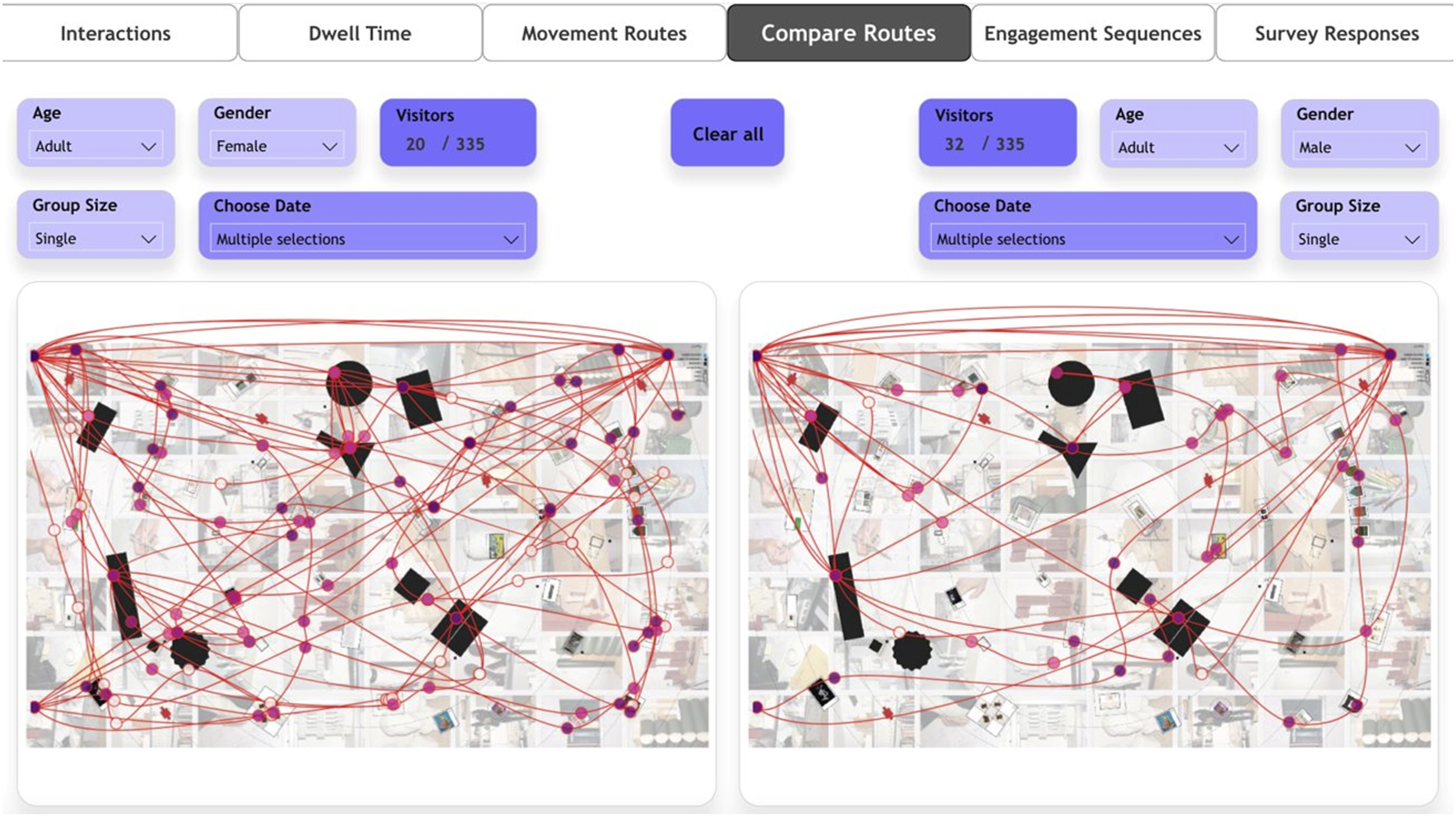
SEEZ produces straightforward visualisations of visitors’ movement routes. A visitor’s path is represented by a simple line generated by the software, following the sequence of logged interactions on a floor plan. In a small study with few visitors, it is feasible to display all movement routes simultaneously, with each visitor’s movements distinguishable by different coloured nodes (Figure 8). However, in studies with many visitors, displaying all movement routes at once becomes too dense to discern patterns. To manage this, filters are applied to simplify analysis. For example, by filtering observational data according to short time windows (by minutes or hours) on a specific date, it is possible to scroll through the timeline to follow visitors’ movement routes from entry to exit. This multimodality of this scrolling feature allows for dynamic playbacks of individuals, groups, and group members’ individual routes and stops, which can be filtered by age, gender, group size, and target group. A compilation of movements of 4 individual visitors, observed on different dates and times.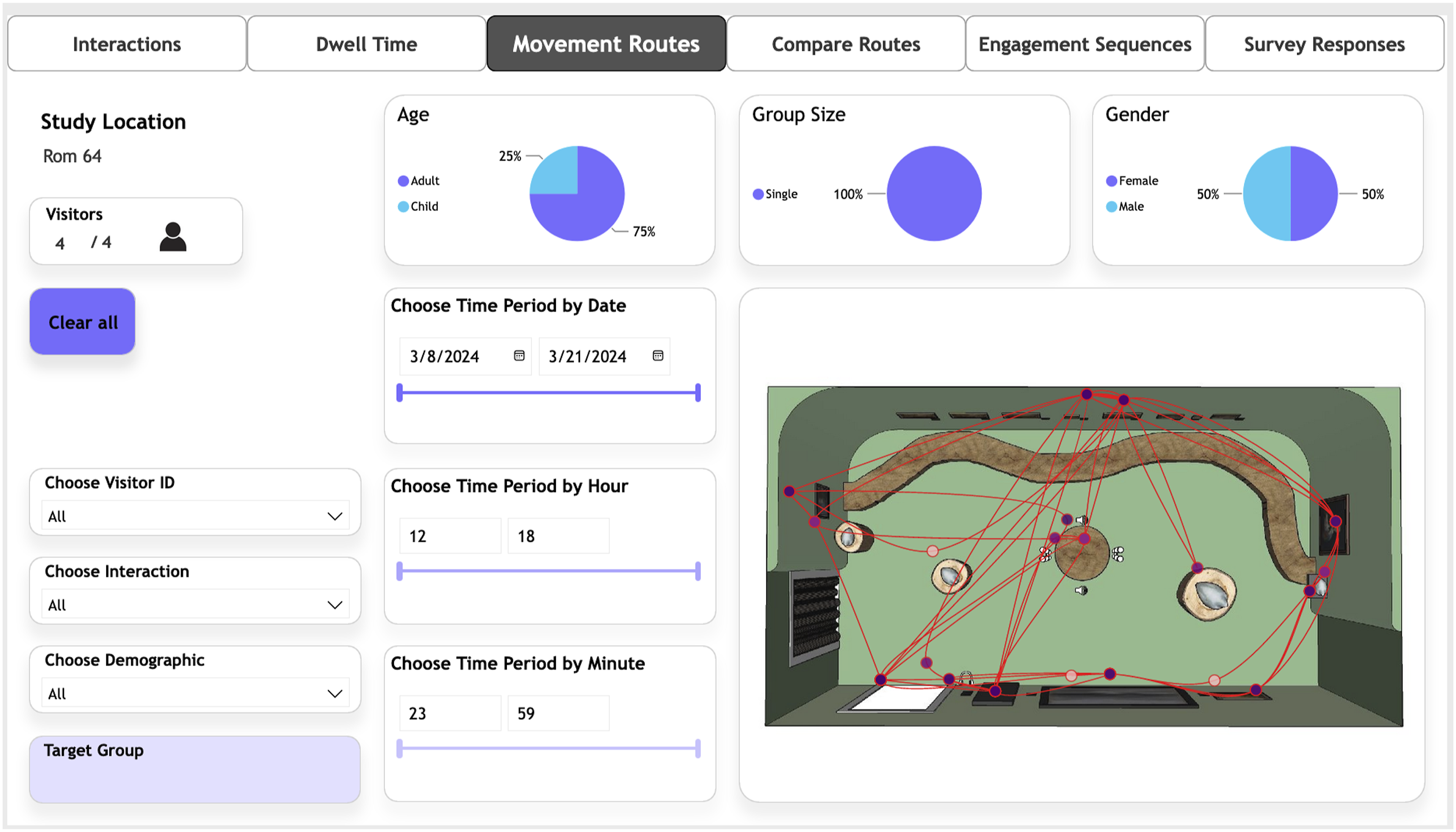
As a first approach to deal with the complexity of interpreting visitor movements from sociocultural and multimodal perspectives, comparison of interaction patterns was introduced as an analytic and visual strategy in the design of visualisations. By showing visualisations of movement routes side by side, it is possible to use the filters to study differences between, for example, patterns of interactions among target group and non-target group visitors (Figure 9) or between single male and single female visitors (Figure 10). However, in keeping with McMurtrie’s (2022) conclusion, we found that complementary data plays an essential role in interpreting visitors' movements. For example, movement routes made more sense and were more useful to the curators when they were ‘matched’ to visitors whose questionnaire responses showed different levels of specialised knowledge or engagement in the exhibition content. Filtering data to compare movement routes of visitors from target group (left) and random selection (right). Filtering data to compare movement routes of female visitors (left) and male visitors (right).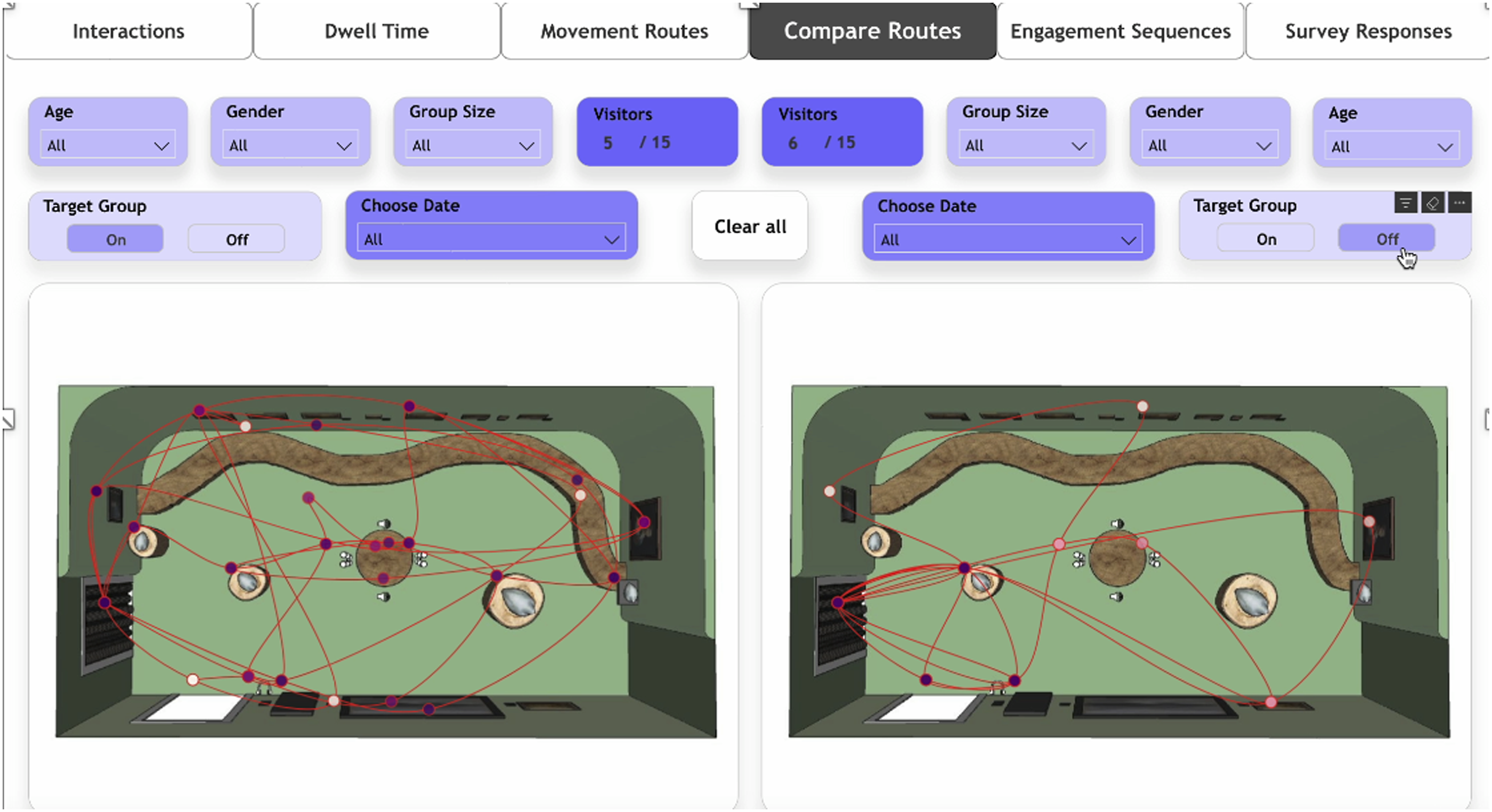
Innovating visitor research within museums: concepts, tools and practices
This study first discussed the emergence of multimodal and sociocultural perspectives in museum research against the backdrop of rapid developments in technologies designed to enhance visitors’ experiences (Lu et al., 2023). Together, these perspectives form a framework for understanding and studying visitors’ embodied and mediated engagement in exhibitions, with a focus on interactions, time and movement as key dimensions. As with other methods that have become common or ‘institutionalised’ through use over long periods of time (e.g., intelligence tests, medical diagnostics), the observation methods in SEEZ may seem similar to those used in visitor studies in their core function of tracking and timing visitors. Therefore, an aim of this paper has been to illustrate how a visitor research framework that draws on multimodal and sociocultural perspectives and concepts extends long-standing approaches in visitor studies that study the physical and psychological factors influencing people’s attention and engagement in museums (Bitgood, 2016; Serrell, 2020). The case study of SEEZ was used to exemplify how concepts from a multimodal and sociocultural theoretical framework, when applied in the design of new visitor research methods and tools, reorient TandT studies toward a more contextual analytical framework. It is important to note that the systematic observations facilitated by SEEZ are not claimed to be sufficient for conducting research on learning in museums; nor is learning research the aim of museums. Instead, it is proposed that by incorporating social and cultural contexts in both observation methods and data representations – how visitor groups interact with semiotic resources and other visitors in an exhibition – museums can achieve more comprehensive and relevant insights into visitor engagement.
SEEZ was primarily designed for use within museums as an integrated part of their exhibition-making research and internal visitor insight studies, rather than as a tool for university researchers. Therefore, as this ongoing university-museum collaboration makes clear, visitor research tools must aim to strike a balance between, on the one hand, complex visualisations afforded by digital tools and, on the other hand, the museum’s practices, needs and types of expertise. While the technological solutions for SEEZ may not be considered leading-edge outside of the museum sector, the relevance of the research-based features and functions in SEEZ are immediately apparent to curators as well as visitor insight advisors in museums. Incorporating new research toos into existing practices – exhibition-making, insight studies, evaluation reports – may thus seem less daunting to museums.
There is now clear acknowledgment across several departments in the National Museum of the need to conduct systematic research ‘in-house’ to gain insight into visitors’ engagement with their exhibitions, and a series of studies is planned using the research tool that the museum had a role in developing. Innovating research methods and integrating a new tool in museum practices is nonetheless what Engeström and Sannino (2010) call a ‘transformative intervention’, entailing expansive learning in an organisation. As this case aims to illustrate, university-museum partnerships are one means of scaffolding transformative change in an institution or a sector. Through collaboration on the design, evaluation, and implementation of a research tool that provides visitor insights relevant to museum practice, departmental boundaries are being crossed and new ‘expert’ networks are being developed within and outside of the museum. Ultimately, such efforts may contribute to ‘exhibition-making as research’ aims in the museum sector.
Footnotes
Acknowledgements
The author thanks Anne Qvale and Dimitra Christidou, National Museum; Richard Nesnass, University of Oslo; Rolf Steier, Oslo Metropolitan University; and Boris Lemaire, EKFA, for their respective expertise and support in the development of SEEZ. A special thank you to Vera Rudi, University of Oxford for key contributions to SEEZ data visualizations and project management.
Declaration of conflicting interests
The author(s) declared no potential conflicts of interest with respect to the research, authorship, and/or publication of this article.
Funding
The author(s) disclosed receipt of the following financial support for the research, authorship, and/or publication of this article: Funding for SEEZ has been received from the SPARK Social Innovation program and the Faculty of Educational Sciences at University of Oslo.
