




Abstract
This article explores the realm of touch across the sensibilities of dance and the everyday, re-visiting The Touch Diaries project, which took place in 2015, and current project The Lockdown Diaries, a collaboration with Studio Wayne McGregor and InTouch in the time of Covid-19.
My work is informed by the notion of a sense of touch as a deeply subjective human phenomenological experience, and the reciprocal and relational forces that it brings between bodies and environments. As a dance artist I am curious about and engage with the ways in which the “touching bodies” of the everyday and pedestrian spaces of mainstream culture are influenced by complex conventions that operate across a wide range of social circumstances, situated within different political and cultural frameworks. In the spaces and communities of dancing bodies, the vernacular for touch is distinct. Dancers use somatic and improvisation practices as an attentional tuning into the body which activates “under-examined somatic (bodily) senses,” which are “imperative in understanding the manifold senses of touch and their integration” (Paterson, 2007: 3): moving in response to these interoceptive sensations, and “presencing” the body beyond its skin boundaries, as a relational force with and as the human and nonhuman environment, the realm of touch is expanded. In these tuning processes, dancers (myself included) work with eyes closed or blindfolded practices, to locate and sense the body in the absence of dominant visual information. This enables us to access the shifting interior environment of the body, and to respond to the world around us, as a “felt” experience. When our eyes are opened again or the blindfold taken off and visual information brought back into play, “seeing” becomes a synesthetic process, integrated with, not dominating, the other senses. Opened to a broader spectrum of sensing, seeing is infused with tactility and, reciprocally, touching a way of seeing the world.
The Touch Diaries project
Supported by Arts Council England, community dance project The Touch Diaries (TTD) (2015) explored touch in the everyday lives of its participants, gathering material (Figure 1) from over 100 people aged between 9 and 90 who participated in the project over an 8-month process, through workshops and a week-long diary study.
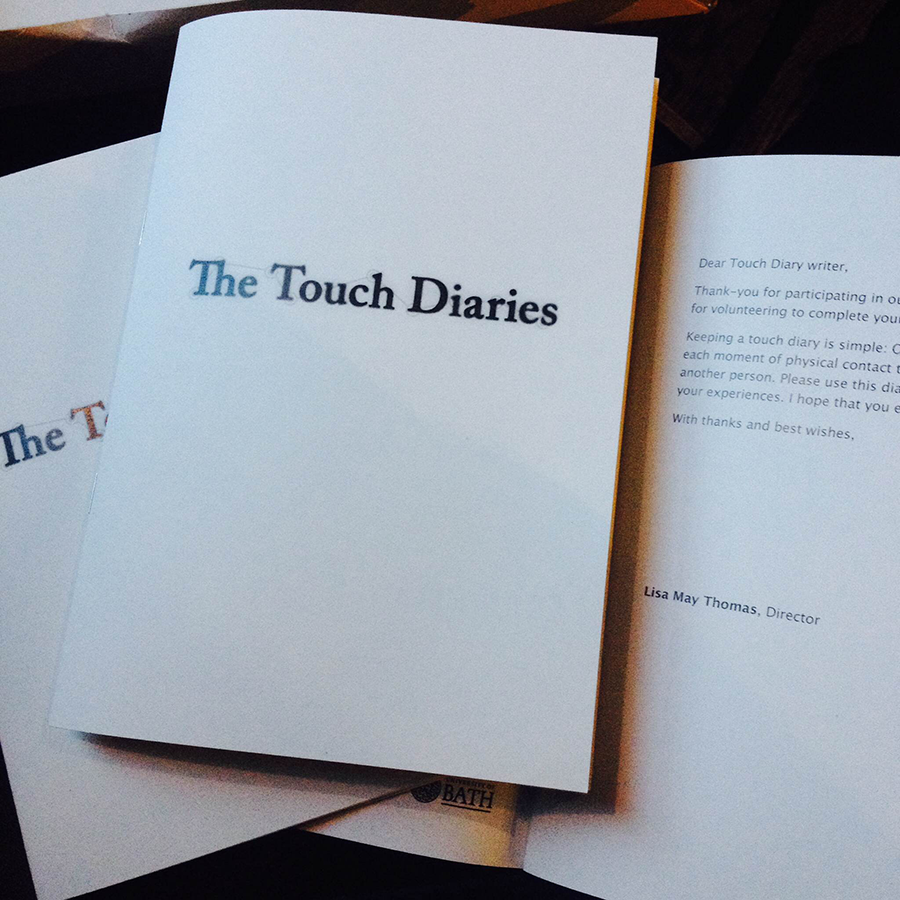
Image of the Touch Diary format used by participants to collect materials.
An absence of touch
It is interesting that, even prior to Covid-19, quarantine regimes and Lockdowns, the central theme that emerged in TTD was the sense of an absence of touch in the lives of the participants, and in the lives of their families and the communities around them. Through practices of remembering, recalling and imagining ‘absent’ or ‘lost’ touch, the participants found and explored a sense of “presence” of touch and sensations of tactility. Participants experiences of touch, written about in the diaries and explored in the workshops, encompassed touch which moved beyond a physical skin-to-skin or surface-to-surface contact, operating in an expanded way in the spaces beyond the body—as a tactile experience of connection. TTD project culminated in the presentation of a video-dance work https://vimeo.com/400244973 and live gallery performance event, which drew from the material gathered with the workshop and diary participants, which centered on the theme of absence and explored the relationship between touch and place. One of the improvisation scores Absence of Touch (AOT), performed by the dancers in the film, explored this co-existence of absence and presence, the relationship between the absence of touch and a felt sensing in the spaces between bodies (Figures 2 and 3).
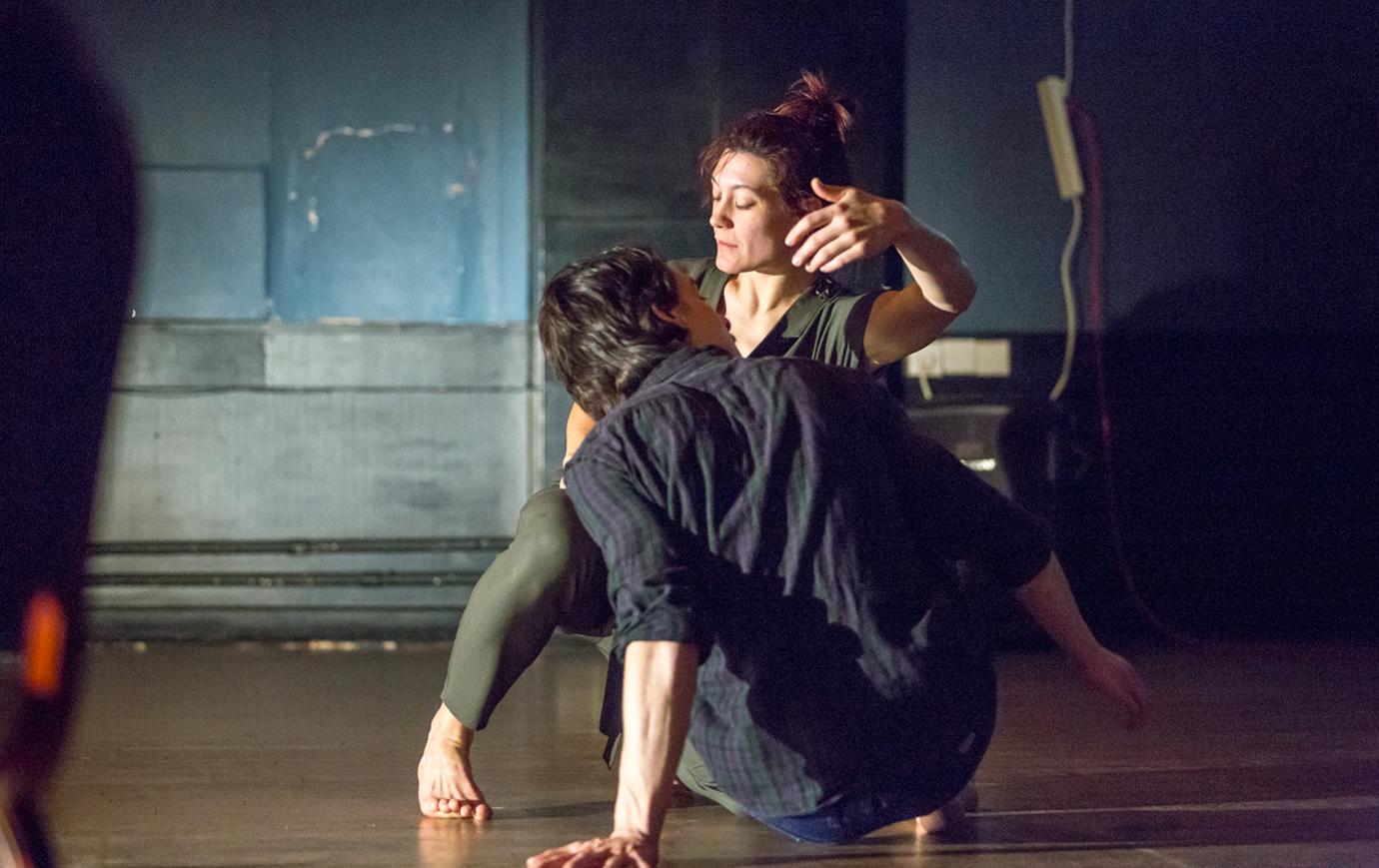
Dancers Anne-Gaëlle Thiriot and Will Dickie performing “AOT” score (2015).
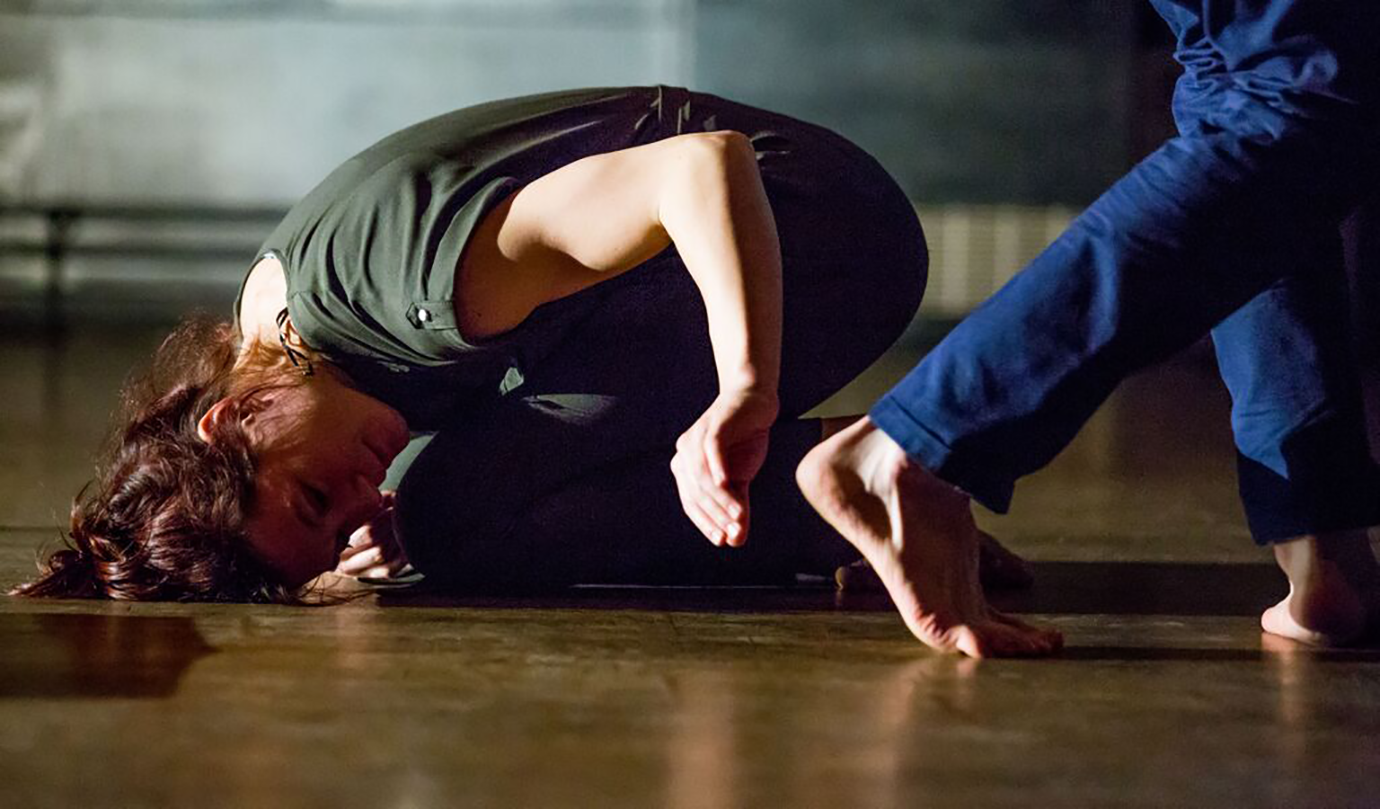
Dancers Anne-Gaëlle Thiriot and Will Dickie performing “AOT” score (2015).
Digitally mediated touch
An increasing use of pervasive and mobile technologies as mediators for our relationships with each other and our environments has escalated in the time of Covid-19, modes of human interaction forced into mediation by and through technology. In the pre-Covid-19 TTD workshops, participants discussions repeatedly centered on the relationship between their experiences of an absence of touch and the development of technologies. One of the audience members for TTD event commented on his own experience of touch, which was prompted by the film and performance event. I was thinking quite hard about touch in my life, and what my touch diary would look like had I been keeping one. I realised the only experiences of touch that I could recall in the past week were handshakes at the start of meetings. This felt a little isolating—perhaps more so as I live alone. And definitely more so as I was at the time going through a break-up of a long-distance relationship whilst I was in the UK and she in Budapest—with thoughts of the absence of the option of even a hug goodbye. I said a little isolating—I actually felt very alone. (audience member, TTD, 2015)
The Lockdown Touch Diaries (TLTD)
In 2020, in the time of the first UK lockdown for Covid-19, a time of regulated and restricted touch, I wanted to re-visit the TTD project and its themes. Specifically, the ways in which the participants had responded to what had been, for them, an absence of touch in their lives and in the lives of those around them through the reconfiguring of this absence in practices of re-connecting with the touch as an expanded sensibility—through their own imaginings, and in the spaces beyond the body. This new project collaboration aims to foster interdisciplinary conversation and artistic speculation that promotes understanding of people’s sensorial experiences of the Covid-19 Lockdown, through an exploration of touch in an “expanded” realm. This realm encompasses a broad palate of touch-sensing and of “tactile relations” sensed between human and nonhuman bodies and their environments, which understands that touching is always “in relation”—there is always a giving and a receiving, a touching and a touched. In the uncertain and unsettling social moment of Covid-19, there is value in provoking public conversation and creating opportunities to share, explore and reflect on our experiences of lockdown.
The project investigates the current experiences of lockdown and the ways in which the body experiences the sensations of touch at this time, with in mind the following questions: – What touch-strategies are being adopted at this time to support the absence of physical contact? – What role does technology play in our touching, feeling, sensing relations with one another? – How might the “embodiment of the now” inform future modes of embodiment?
I wonder, might we, when it is time to touch and to come close again, find ourselves tightly held, and need routes by which to unravel. TLTD seeks to understand what role a dancer can play in responding to these questions, and what dancerly practices and tools can support a re-connecting and re-imagining into the body, and an outwardly opening toward the continually present reciprocity of human and nonhuman relations. One intention of the project is to offer people resources with which to map and navigate their own aural, tactile, embodied routes through their affective experiences of and emergence from Lockdown.
Diarists materials
I invited dancers and artists and a small group of academic collaborators that were isolating, some on their own and others with partners and families, and who I considered would attune to these expanded sensibilities for touching, to partake in a diary study in lockdown over the course of a week. The invitation was open, both in terms of the format and methods used to capture materials and in its encouragement to those involved to engage in a sensorial capacity with their bodies, the relational surroundings of home, the local outdoors, social-distanced moments of exchange with others and the use of digital technologies.
The invitation
The diarist’s materials were shared and collaboratively explored (e.g. Figures 4 and 5)
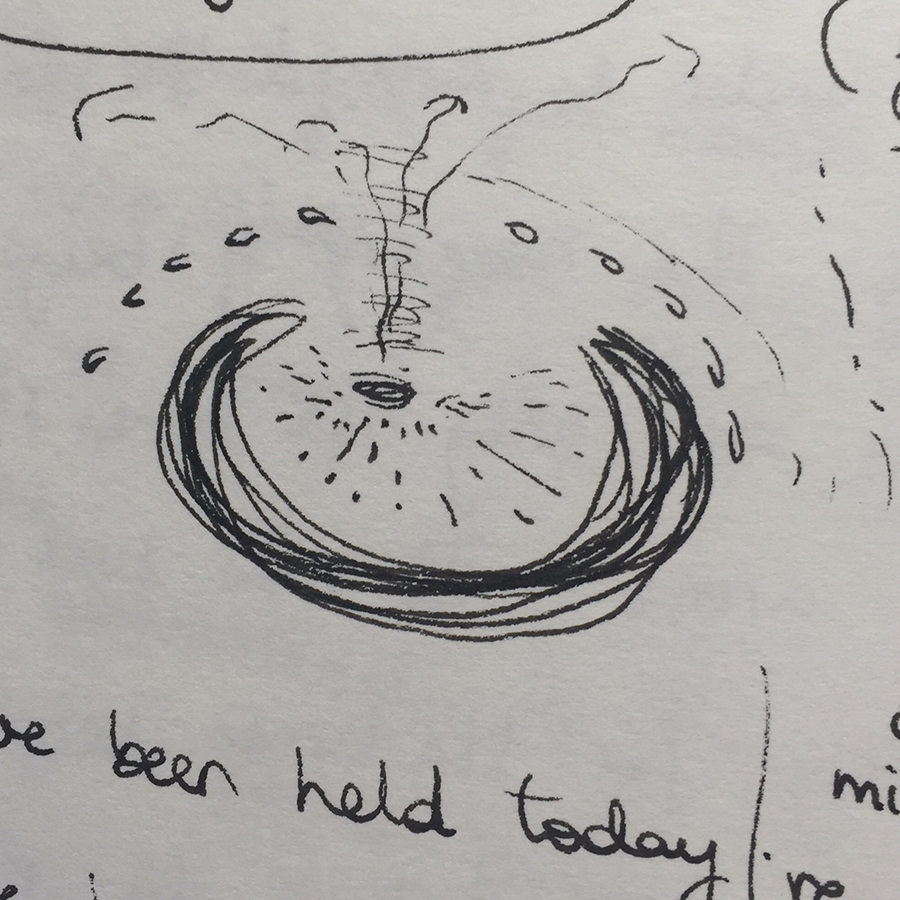
Diary “mapping” material by Anne-Gaëlle Thiriot (2020).
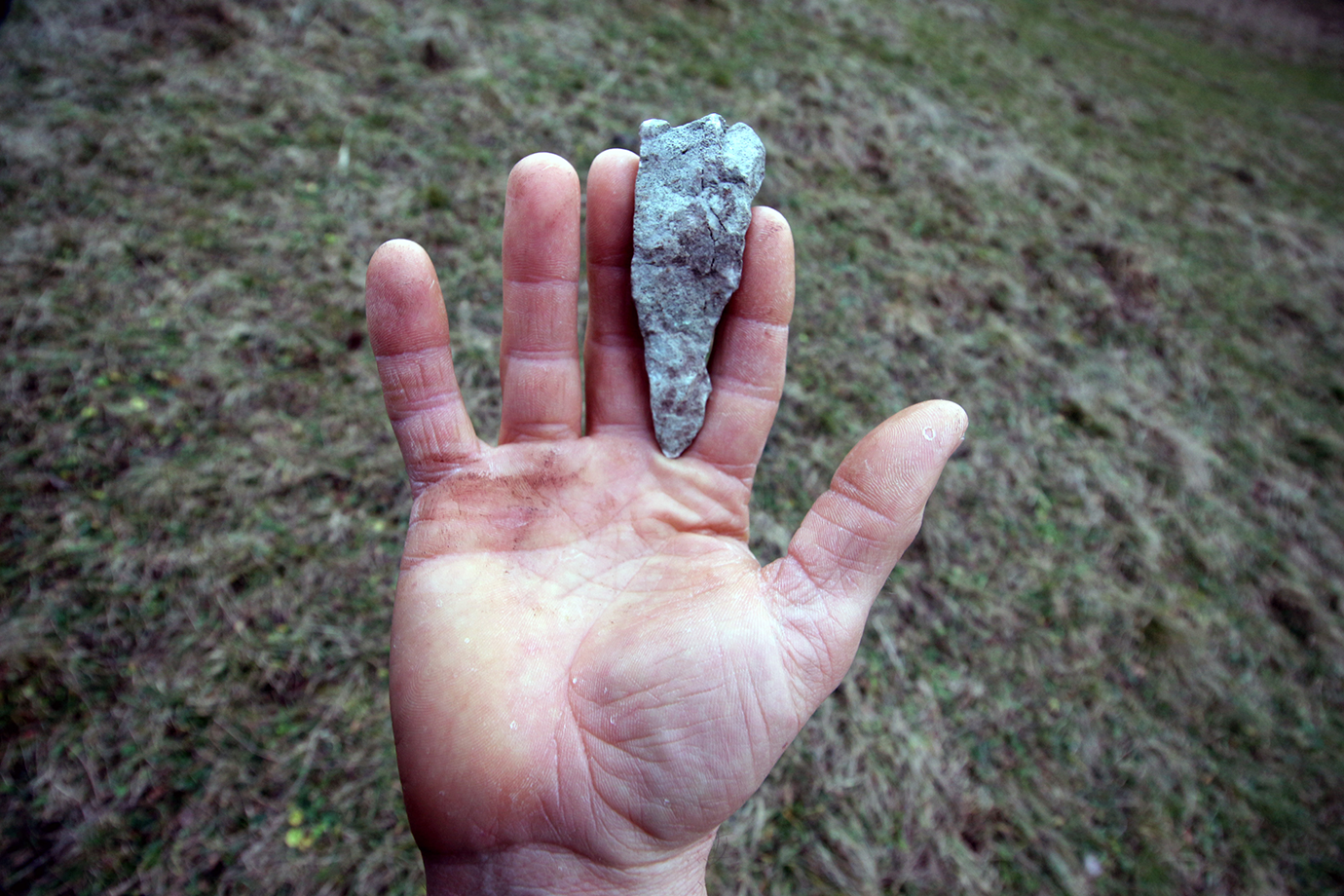
Image by Minou Pollero (2020).
Touch zones
I collected and collated the responses, organising the materials into four “touch zones,” which held resonance for me and the diarists, and was a way through which to consider how the material might be sequenced as a journey. – Internal touch: attending to the sense of touch or a “felt” or somatic sensing within the (interior) body; – Touching body: attending to the direct touch of the body, to the ground/environment, to another body or object, sensing skin-surface contact and exchanges of weight in the moments of exchange; – Proximal felt body: attending to the sense of a felt connection through the space with another body (or bodies), and the relational and affective shifts that come with different proximities and orientations; – Environmental (non-direct) touch: attending to the way in which the environment touches us indirectly, the way in which the environment holds and contains the body within.
Speculative routes through lockdown
Situating the LDTD project within the global Covid-19 experience enables this work to contribute an emergent artistic conversation and imaginative speculations on touch and sound in relation to immersive technologies, the senses, multimodality and society.
The four “touch zones” provided a grounding for exploring the diary materials in a creative process with three project dancers—Will Dickie, Anne-Gaëlle Thiriot, and Verena Schneider (also, the dancers for the previous TTD project) and creative sound technologist, Alison Bown. I invited the dancers to draw from the material and from their own experiences to cultivate video, audio or written pieces or maps and movement scores for each of the “touch zones.” I began to sequence this material, starting from the interior body and working “outwardly” to the exterior environment, and to map a participant journey through touch. We realized there were many “ruptures,” moments of breaking through from one touching zone into another, such as; the piercing of skin, the felt sense of eye or skin contact within the body, the shifting touch between a physical touch of the phone and the movement of touch through, mediated by the phone. These “ruptures” revealed the porosity and complexity of touch and offered potential openings or crossings between the zones. We considered the participant—who they might be, where they might be and with whom, whether and where they might move with the sequence, what bodies or objects or environments would be available for their touch, and where the journey might take them.
The participatory experience of the project is audio-centered, and opens up an investigation into the relationship between touch and sound through movement. Binaural technology offers us a way in which to share, move and interact in an environment with another person through sound, and we plan to use this technology to explore ways in which sound can invite a resonance of touch—of an environment and between bodies (that are located remotely to one another) within it. Sound provides ways to connect bodies away from the “image,” dropping visual identities sound can offer a gateway into a more personal and intimate exchange. My intention is to enable the participant to create for themselves, a “felt” experience of the different touch zones through an audio-led experience. An encounter of a shared environment between dancer and participant revealed through sound and through their “interaction” with one another, which resonates in properties of touch and tactility, such as the weight, feel, texture, physicality, and movement qualities of thate environment, and the objects and characters within it.
Reflecting on the physicality of shared practice and imagination
Through the creative process of this project, amid the restrictions of Covid-19, I have missed the physicality of a shared practice between bodies in the studio, and I have found myself dreaming of this lost sensibility. Moving forwards, I will seek to engage in embodied ways with and without the mediation of technology, inviting movement practices to be done “alone and together”—perhaps not mediated by technology, but instead bringing in our imaginations to summon the physicality of a felt sensing of the “other.” My dreams have been immensely and abstractedly visual—I have been seeing images of the texture and movement from within the diaries, leaving me with the question: what is the place of visuality in a project focused on the relationship between touch and sound? For Laura Marks, “the eyes themselves function like organs of touch” (Marks, The Skin of the Film, 2000: 162), and through practices of attending to the expansion of the possibilities and potentials of the senses, there can be a restoring of “a flow between the haptic and the optical that our culture is currently lacking” (Marks, Touch, 2002: xiii). Depriving the visual sense is a method used in dance-somatic practices so as to tune into and tune up a non-visually dominant perception, and to support a somatic, felt, interoceptive sensing, which can then be accessed once sight is resumed. These processes re-enliven the senses in their active participation in perception, “[w]hen we enhance our visual sense with its synaesthetic potentials, sight combines with the tactile properties of our felt embodiment” (Little, 2016: 97). David Abram talks about this as a process, of “recuperation of the incarnate, sensorial dimension of experience,” and, in the reciprocity of touching, there comes a “recuperation of the living landscape in which we are corporeally embedded” (Abram, 1997: 65). I continue to dedicate my practice to this necessary recuperation of our living world, and toward increasing the embodied and empathetic exchanges of and between the human and nonhuman bodies that constitute it.
Footnotes
Declaration of Conflicting Interests
The author(s) declared no potential conflicts of interest with respect to the research, authorship, and/or publication of this article.
Funding
The author(s) received no financial support for the research, authorship, and/or publication of this article.