



Abstract
Objective:
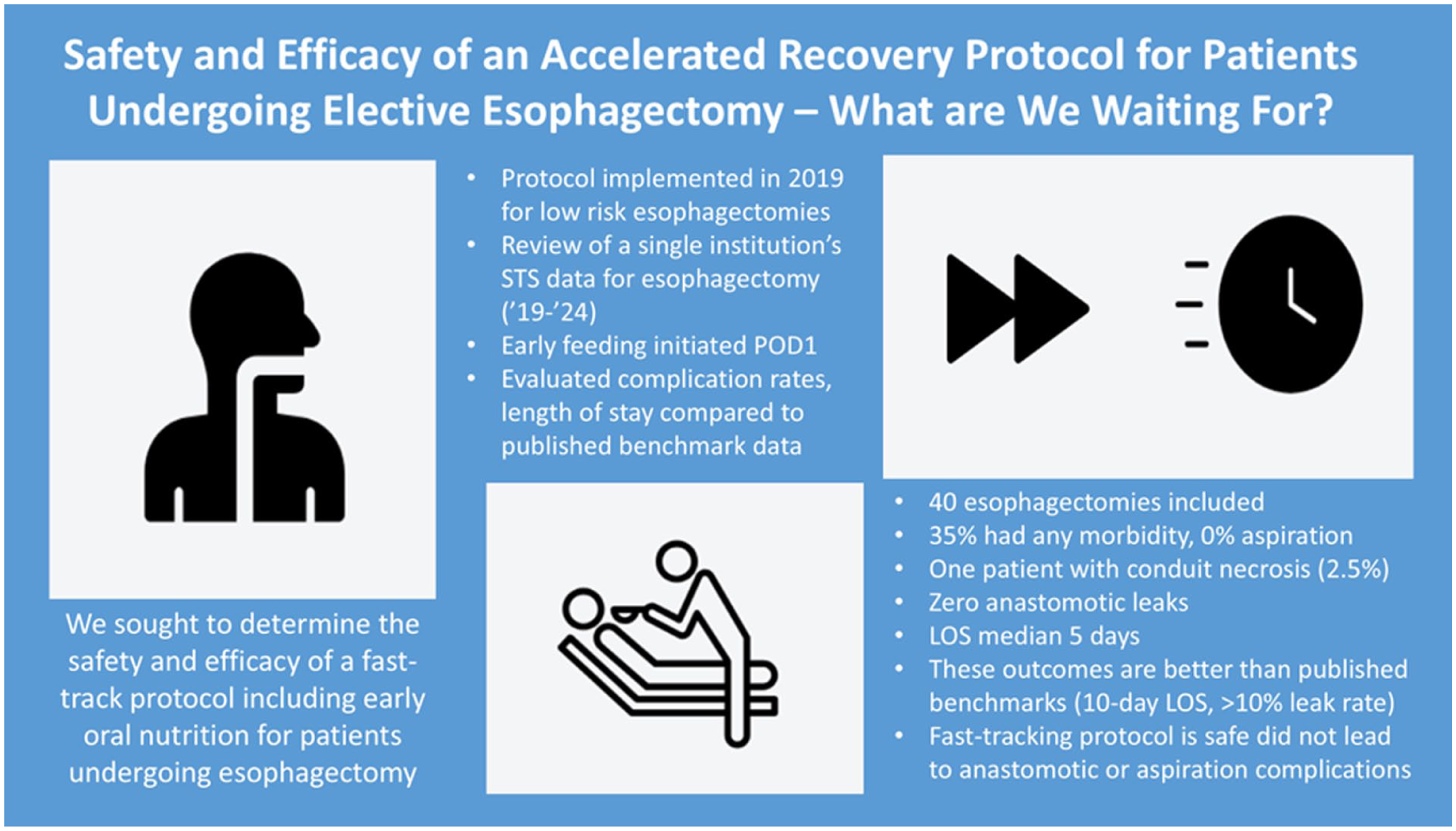
There is little evidence that delaying oral intake and hospital discharge leads to fewer complications after esophagectomy. The purpose of this study was to determine the safety and efficacy of a fast-track protocol for patients at low risk of perioperative complications undergoing oncologic esophagectomy.
Methods:
This is a retrospective review of patients undergoing oncologic esophagectomy at one hospital between February 2019 and December 2024. Patients were fast-tracked if: (1) a gastric conduit was used, (2) resection was part of first course oncologic therapy (tri-modality or as sole modality), and (3) patients were able to maintain weight preoperatively with oral nutrition alone. The patient demographics, comorbidities, and postoperative outcomes are reported and compared to published data.
Results:
Forty of 43 esophagectomies were included. Most patients were male (90.0%), white (82.5%), and received neoadjuvant chemoradiation (82.5%). Oral intake was initiated on post-operative day (POD) 1 (70%) or 2 (30%). Fourteen patients (35.0%) had at least one 30-day complication, but there were no aspiration events, issues with conduit distention or mortalities. One patient (2.5%) had gastric conduit necrosis requiring resection and surgical revision. There were no anastomotic leaks. Only two patients (5.0%) were readmitted before first outpatient follow-up, and thus, readmission was possibly avoidable with a longer inpatient stay. Length of hospital stay (LOS) averaged 5 days.
Conclusions:
Early feeding after esophagectomy did not increase complication rates for low-risk patients. Fast-tracking perioperative care for low-risk patients did not result in conduit or anastomotic complications and significantly reduced postoperative LOS.
Get full access to this article
View all access options for this article.