




Abstract
Background/aim:
Obesity is a significant medical condition with substantial medical and financial burdens. Many patients eligible for metabolic and bariatric surgery (MBS) may never undergo weight loss surgery. Emerging techniques in the bariatric endoscopy (BaE) field, serve to bridge some of these patients meeting criteria for MBS. However, training in BaE is available at only a limited number of bariatric centers nationwide. A survey was conducted among current gastroenterology (GI) trainees to evaluate their existing BaE education, gauge their interest in formal BaE training, and determine the perceived necessity for specialized BaE education.
Methods:
A 14-question survey was developed and offered in a web-based fashion to GI trainees among various fellowship programs nationally. Survey responses included location of training program, current year of training, BaE interest, and need for BaE training.
Results:
A total of 122 respondents completed the survey. Males comprised 73% of respondents. General GI fellows were 93% and advanced endoscopy trainees were 7% of respondents. Obesity was seen as a significant issue by 91% of trainees and 80% felt BaE should be included in their didactic education. Only 7% felt they were adequately trained in BaE.
Conclusion:
Current GI trainees consider obesity an important disease and are interested in learning about BaE during training. Fellow interest exists in pursuing advanced training in BaE but a majority feel their current education is inadequate and are uncomfortable discussing BaE with patients. This demonstrates a need for structured didactics and rotations for trainees regarding endoscopic obesity management.
This is a visual representation of the abstract.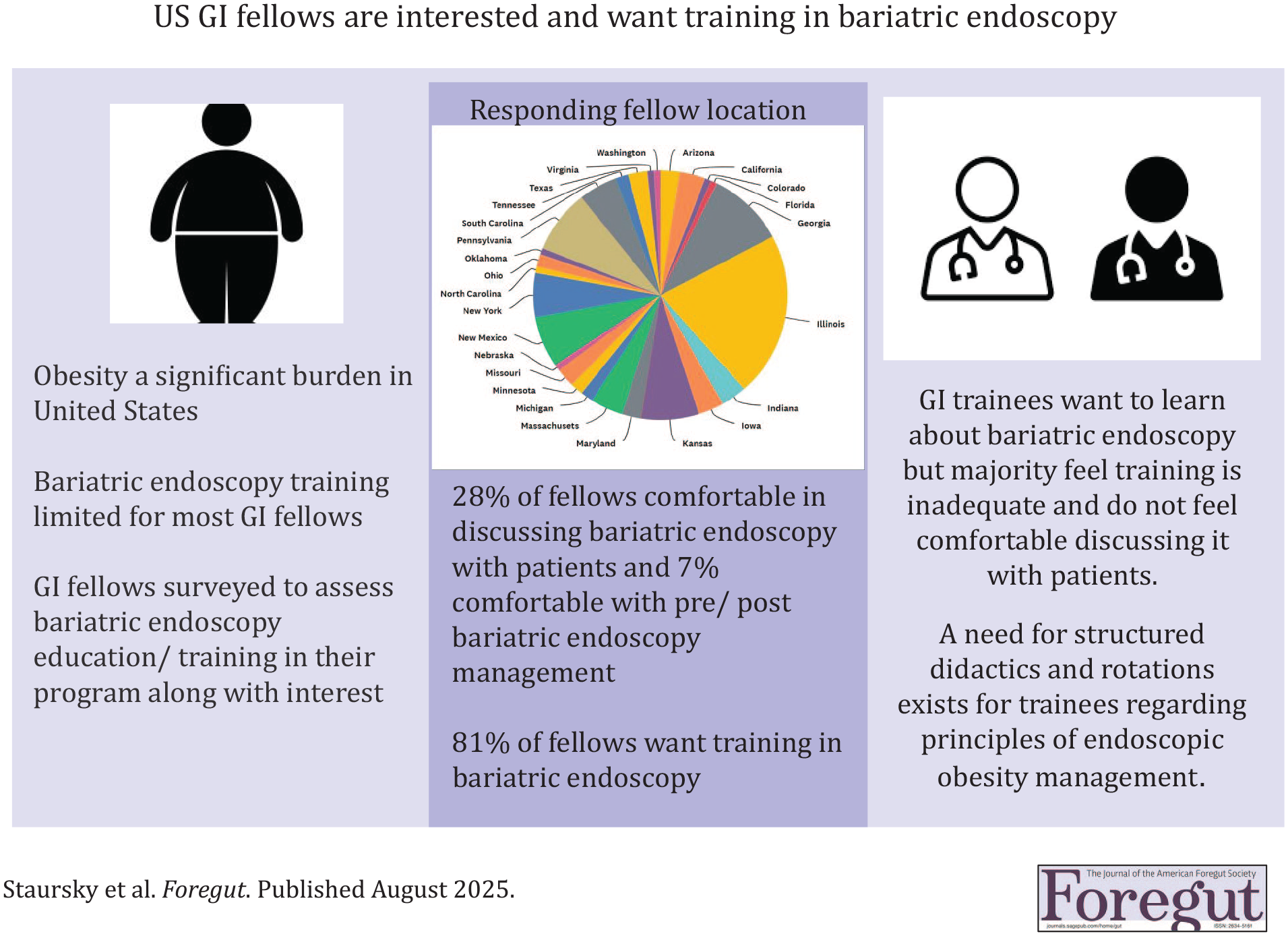
Get full access to this article
View all access options for this article.
References
Supplementary Material
Please find the following supplemental material available below.
For Open Access articles published under a Creative Commons License, all supplemental material carries the same license as the article it is associated with.
For non-Open Access articles published, all supplemental material carries a non-exclusive license, and permission requests for re-use of supplemental material or any part of supplemental material shall be sent directly to the copyright owner as specified in the copyright notice associated with the article.
