



Abstract
Coordinated police-social service responses involving embedded social workers are a key strategy for addressing recidivist family violence. Through an anonymous mixed-methods online survey, this study examined 18 high-risk victim-survivors’ perceptions of a police-social services response in Australia. Most victim-survivors reported that the embedded social workers helped to connect them and/or their family to a range of relevant support services, and the coordinated response helped to reduce family violence in their lives. From victim-survivors’ perspectives, the most helpful aspects of the coordinated response involved safety planning, emotional support, and tailored advocacy. Their suggestions for improvement centred on two themes: help not handcuffs, and consistent communication. Allied with prior studies involving victim-survivors’ perspectives, there is mounting evidence that specialist social workers are an effective addition to police units responding to family violence.
Introduction
Family violence (also known as domestic violence and abuse) is a significant problem across the globe. Each year, millions of women worldwide experience physical, psychological, and/or sexual violence from intimate partners and family members (WHO, 2021), and in 2022, almost 50,000 women and girls were killed by intimate partners or other family members (UNODC & UN Women, 2023). Research also indicates that family violence is often a repeated crime, with perpetrators having high rates of recidivism (Hulme et al., 2019; Millsteed & Coghlan, 2016; Morgan et al., 2018). In Victoria, Australia, for example, police data indicated that recidivist family violence has increased over time and that repeat perpetrators accounted for almost 75% of all recorded incidents of family violence between 2006 and 2015 (n = 470,464: Millsteed, 2016). Recidivist family violence has therefore become a key focus for prevention and response efforts (Morgan et al., 2018).
One increasingly popular strategy for addressing recidivist family violence is the adoption of coordinated multi-agency responses (sometimes known as second-responder programs), whereby different agencies such as police and social services work together to proactively engage families and address key drivers of family violence to prevent future offending (Breckenridge et al., 2016). While coordinated models can be structured differently, they commonly involve the co-location of police and social services (e.g., multidisciplinary centres) or the embedding of specialist family violence workers within a police unit (Exum et al., 2014; Hamilton et al., 2023; Rodgers et al., 2024). In the latter model, police are typically responsible for crisis responses and criminal justice intervention (e.g., arrests, intervention orders), while family violence social workers often provide psychoeducation, emotional support, and social supports for both victim-survivors and perpetrators. This support often involves safety planning and referrals to relevant services (e.g., drug and alcohol services, mental health support) and is determined on a case-by-case basis (Hamilton et al., 2023; Rodgers et al., 2024).
Evaluations of coordinated police-social service responses
To date, quantitative evaluations of coordinated police-social service responses to family violence have yielded mixed results (Breckenridge et al., 2016; Davis et al., 2021; Petersen et al., 2022). In Western contexts, such as the United States, several quasi-experimental studies have found lower rates of family violence recidivism following a police-social services response compared to a control group (Casey et al., 2007; Exum et al., 2014; Friday et al., 2006; Mizrachi, 2019). For example, Exum and colleagues (2014) found that perpetrators processed through a specialised police-social services unit were approximately 50% less likely to have a repeat offence compared to perpetrators engaged by a standard police unit over an 18-to-30-month period (n = 891). Conversely, several experimental and quasi-experimental studies have found increases in the rates of domestic violence recidivism following police-social service intervention (Davis & Taylor, 1997; Davis et al., 2010; Hovell et al., 2006; Stover et al., 2009). For instance, Hovell and colleagues (2006) found a higher rate of domestic violence recidivism among households who received intervention from a police-social services team compared to a control group over a 14-to-19-month period (n = 825). In the United Kingdom, an evaluation of a joint police-social services response found no notable changes in repeat domestic violence over a 12-month period, however, there was some evidence to suggest that the severity of future incidents was lower for those receiving intervention (n = 510) compared to the control group (n = 505: Koppensteiner et al., 2019).
In Australia, we have also seen mixed results regarding the efficacy of coordinated police-social service responses to recidivist family violence. In Victoria, an evaluation of a joint police-social services response found an 85% reduction in family violence recidivism (measured by police callouts) over the 2015–2017 pilot period (Harris et al., 2017). A follow-up evaluation examined whether perpetrators used violence against others outside of the pilot catchment zones (Hamilton et al., 2023). It found 51% of perpetrators had no further police callouts to family violence recorded in Victoria up to three years post intervention. The remainder had reoffended against other family members and/or against the original affected family member in an area outside of the pilot catchment zone, however, their average number of police callouts was still lower than before the police-social services involvement (Hamilton et al., 2023).
A persistent limitation of quantitative evaluations is that they cannot definitively conclude whether increases or decreases in family violence callouts are a positive finding. Researchers discuss that increases in police callouts might reflect a greater confidence in victim-survivors to report family violence but also express concern that the police-social services intervention itself might exacerbate perpetrator's use of violence (Hovell et al., 2006; Petersen et al., 2022). In their quasi-experimental evaluation of a police-social services response, Hovell and colleagues (2006, p. 150) state, “it is not possible to determine if the observed rates are because of a true increase in domestic violence as a consequence of the intervention, to increased reporting, or to some combination of the two.” Such conclusions emphasise the importance of qualitative evaluations, which focus on how and why certain results are occurring. They also highlight the need to examine victim-survivors’ perspectives of police-social service responses and whether such intervention genuinely reduces family violence in their lives.
To date, many of the qualitative evaluations of police-social services responses to family violence have focused on police and practitioner perspectives (Davies et al., 2023, 2024; Hamilton et al., 2021; Rodgers et al., 2022a, 2024). For example, interviews with seven police members and seven community service providers indicated positive perceptions of a police-social services model in Victoria (Hamilton et al., 2021). The professional stakeholders valued the role of an embedded social worker in the police unit and perceived that the coordinated model was working effectively to integrate services, engage victim-survivors, manage high-risk perpetrators, and reduce family violence recidivism. Similarly, in Queensland, interviews (n = 6) and a survey of 19 police officers found support for a coordinated police-social services response to family violence (Rodgers et al., 2024). Police viewed that an embedded social worker improved communication and information-sharing between services and helped to provide a more trauma-informed response for victim-survivor clients.
Some studies have provided insights into victim-survivors’ views of coordinated police-social services responses to family violence. Researchers in Cardiff, Wales, interviewed nine victim-survivors to explore their perceptions of a coordinated response to high-risk cases of domestic violence, which involved police, social services and victim's advocates who met fortnightly to discuss cases, engage in risk assessment, and plan referrals to relevant services (Robinson & Tregidga, 2007). The victim-survivor participants were generally satisfied with the coordinated police-social services approach and viewed that it was helpful in promoting information-sharing between agencies, identifying key support-needs, and ensuring agencies had a more consistent and holistic understanding of the offending. Some highlighted, however, that there needed to be more communication from agencies to update victim-survivors on important issues like the release of the perpetrator from prison (Robinson & Tregidga, 2007).
One study in Queensland (Australia) examined 18 victim-survivors’ experiences of a joint police-social services response to family violence (Rodgers et al., 2022b). Most victim-survivor clients felt heard, understood and valued by the embedded social worker, and reported that they felt more comfortable speaking to police following their appointment with the social worker. Qualitative responses indicated that victim-survivors appreciated the support from the embedded social worker, but some were still sceptical of police officers and their ability to respond to family violence effectively (Rodgers et al., 2022b). In the United Kingdom (UK), a survey of 214 victim-survivors found that receiving intervention from a police-social services team was associated with higher rates of stress one month after a police callout (Koppensteiner et al., 2019). Victim-survivors receiving intervention, however, also reported higher satisfaction with police, a greater willingness to report future incidents of domestic violence, and improved family life and quality of life overall compared to a control group (Koppensteiner et al., 2019).
Gathering victim-survivors’ perspectives of coordinated responses to family violence can be challenging, however, researchers agree that such perspectives are vital to include in evaluations. In the UK, Davies and colleagues (2023) set out to collect victim-survivors’ perspectives of a coordinated multi-agency response to domestic violence but unfortunately received no responses to their survey. They suggested that a lack of time likely contributed to this outcome. Nevertheless, they acknowledged that understanding victim-survivors’ levels of satisfaction with an intervention is “hugely significant when attempting to measure success in evaluations” (p. 161). Likewise, Johnson and Stylianou (2022) highlight that while obtaining victim-survivors’ perceptions is likely to be more time consuming and costly, it should be prioritised to ensure that interventions are genuinely effective in reducing family violence and tailored towards victim-survivors’ needs.
The current coordinated response and study
This study sought to examine victim-survivors’ perceptions of a police-social services response to recidivist family violence in Victoria, Australia. At the time of the evaluation, the coordinated response model was active in four police stations across three regions in Victoria (two metropolitan and one regional). It involved two specialist family violence social workers embedded within each of the police station's family violence investigation units: one who focused on supporting victim-survivor clients and one who focused on supporting perpetrators. As described above, the model is designed for police to deliver criminal justice intervention (e.g., arrests, intervention orders), while the embedded social workers may provide education on family violence, emotional support, safety planning, and referrals to relevant external services (e.g., counselling, drug and alcohol services). The response model focuses on recidivist households where there has been repeated and high-risk incidents of family violence (e.g., three or more in the past 12-month period) or where families have complex needs that require a more intensive response than traditional policing responses can provide (e.g., drug addiction or family member has an acquired brain injury).
The model has undergone previous evaluations focusing on police callout data and practitioner perspectives (Harris et al., 2017; Hamilton et al., 2021), however, key questions remained about victim-survivors’ perspectives of the model and their experiences of family violence following the police-social services response. Therefore, this study involved an online survey of victim-survivors who had contact with the police social-services response. It focused on the following research questions: (i) what are victim-survivors’ perceptions of the coordinated police-social services response? and (ii) is the coordinated model helping to connect families with relevant services and genuinely reduce violence in their lives? An online survey was deemed to be an appropriate method as it could provide anonymity to participants and therefore promote authentic responses that were not affected by social desirability biases. Online surveys also offer an accessible way of involving hard-to-reach populations in research (Braun et al., 2021). Building on the handful of studies that draw on victim-survivors’ views (Koppensteiner et al., 2019; Robinson & Tregidga, 2007; Rodgers et al., 2022b), our study examines not only victim-survivors’ perceptions of a coordinated police-social services response but also its impact on their lived experience of family violence.
Method
Procedure
Prior to commencing, the study was formally approved by RMIT University's Human Research Ethics Committee. Victim-survivors were invited to complete an anonymous online survey if they were at least 18 years old and above; identified as a victim-survivor of family violence; and had contact with the coordinated police-social services response in Victoria. A digital flyer with a link to the survey details was circulated by practitioners from the partnering social work organisation (i.e., the organisation that embedded social workers within the police unit and provided social services to clients). Practitioners sent the flyer to past victim-survivor clients of the police-social services response via e-mail. A random subset of past clients were contacted about the survey, either upon case closure or if their case had closed at some point within the prior 12 months. As multiple practitioners sent out flyers to past clients (without keeping a systematic record of invitations), we were unable to calculate an exact response rate. However, from conversations with the organisation, we estimate the survey was circulated to no more than 60 past clients (of approximately 160 victim-survivor clients serviced in total), meaning the response rate would be at least 30% (18/60: a figure similar to other survey studies with victim-survivors of family violence: e.g., 21% response rate in Koppensteiner et al., 2019; 20% in Rodgers et al., 2022b).
Survey
The survey was administered through a secure online platform (Qualtrics) and took participants approximately 10 min to complete. The survey first asked participants to confirm they were aged at least 18 years or over, and that they voluntarily agreed to proceed with the survey. The survey questions were designed by the research team (authors), with input from the partnering social work organisation. Survey questions first focused on demographic variables such as age, gender-identity, and cultural background. They then asked questions about the types of interventions provided by the coordinated police-social services response, before moving to 5-point Likert scales that measured victim-survivors’ views on the response, and whether the coordinated police-social services response impacted their feelings of safety and/or helped to reduce family violence in their lives. The survey also involved several open-ended questions where participants could elaborate on what parts of the coordinated response they found helpful or unhelpful.
Victim-survivor safety was prioritised throughout the survey design (e.g., content warnings, options to skip questions, details of support services throughout the survey). From the outset of the survey, participants were reminded that they could pause, take a break, or stop the survey at any time. Identifying details were not recorded in the survey, however, on the completion of the survey, participants were able to e-mail the lead researcher to receive a $50 digital voucher to thank them for their time and insights. Surveys were open to be completed over a 9-month period, from December 2023 to August 2024.
Participants
There were initially 20 survey responses received; however, two responses were more than 75% incomplete and were therefore removed from the dataset. The final sample comprised 18 complete survey responses from victim-survivor participants. All survey participants identified as women, with ages ranging from 21 to 60 (M = 33). Most participants described their cultural background or ethnicity as non-Indigenous Australian (n = 16), while two identified as Other European (excluding Anglo-European). All participants were either Australian citizens (n = 14) or permanent residents (n = 4).
The survey sample of victim-survivors reflects characteristics of the overall profile of victim-survivor clients serviced by the coordinated police-social services response. The partnering social work organisation also provided us with a deidentified spreadsheet of demographic data on the last 100 victim-survivor clients who had received contact from the coordinated police-social services response between 2023 and 2024. They were largely women (97%), non-Indigenous Australians (92%), with an average age of 35. These comparable demographics speak to the representativeness of the survey data. This spreadsheet of data is not included in the ensuing analysis; we mention it here only to make comment on the representativeness of the survey sample.
Analysis
The quantitative survey responses were compiled and analysed descriptively using the IBM SPSS program. Responses to the open-ended questions were analysed using conventional content analysis (Hsieh & Shannon, 2005). The lead author familiarised themselves with the responses on Qualtrics, then inductively and manually coded responses in a Microsoft Word document, using a colour coding scheme. A research assistant also read over the responses to ensure the codes comprehensively captured the connections and patterns in the data. This qualitative descriptive approach allowed us to stay close to the data and present victim-survivors’ perceptions in their own words.
Results
Quantitative findings
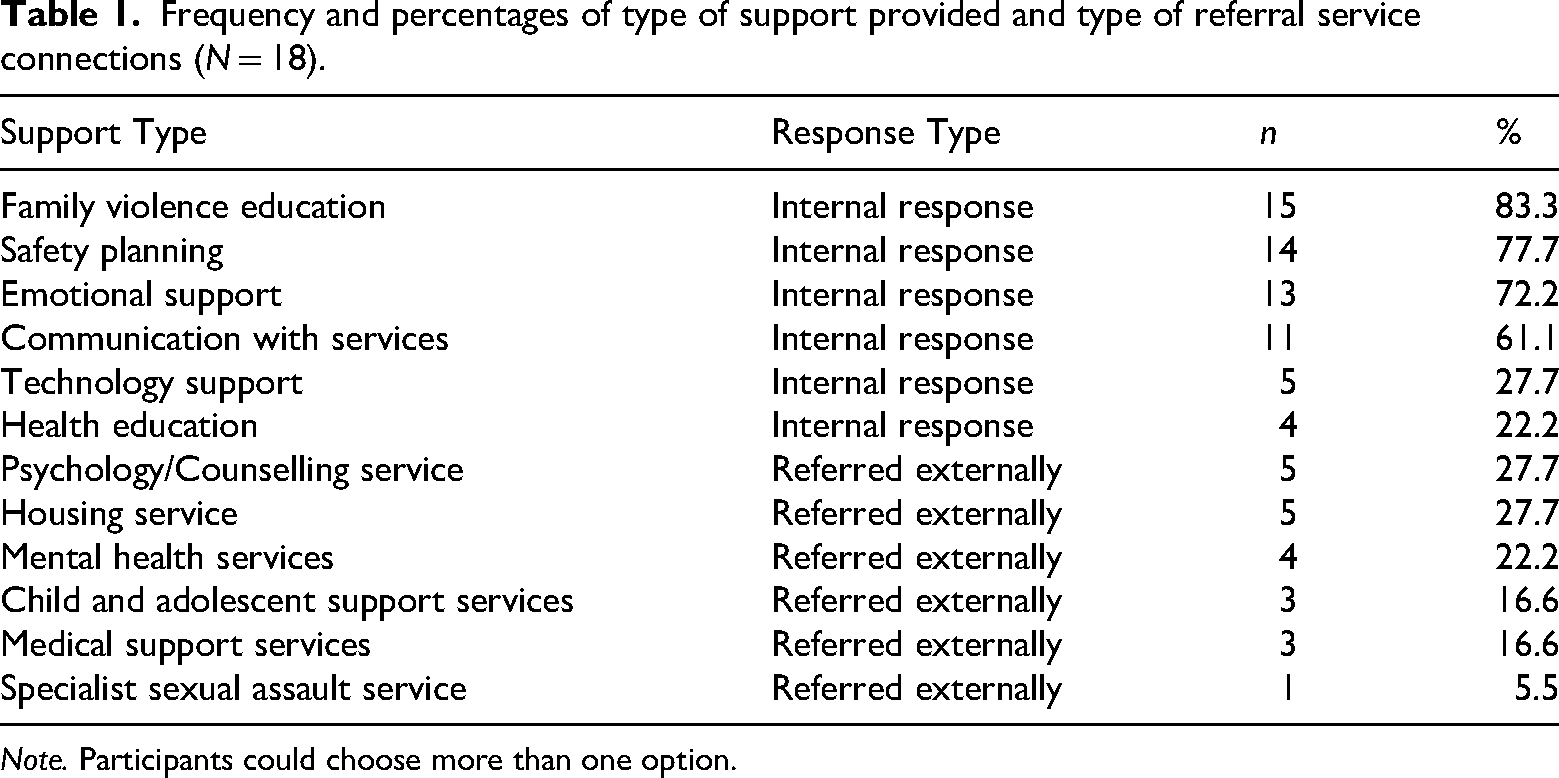
Victim-survivor participants identified that the coordinated police-social services response supported them directly with their needs (internal response) and/or supported them by referring them to other relevant services (referred externally). Most victim-survivor participants reported that the coordinated police-social services response supported them directly through providing family violence education (n = 15), safety planning (n = 14), and providing emotional support (n = 13). About 78% of participants (n = 14) reported that the coordinated response helped to connect them and/or their family with relevant services. Victim-survivor participants were mostly connected to counselling (n = 5), housing (n = 5), and mental health (n = 4) services. See Table 1 for an overview of the types of referrals and internal supports provided.
Frequency and percentages of type of support provided and type of referral service connections (N = 18).
Note. Participants could choose more than one option.
Almost three-quarters of victim-survivor participants (72%: n = 13) also reported that their case involved criminal justice interventions as part of the coordinated response. Most cases involved an intervention order (n = 11), followed by an arrest (n = 7), family violence safety notice (n = 4), incarceration (n = 3), and/or exclusion order (n = 2). Participants were able to select more than one criminal justice intervention. In Victoria, an intervention order generally refers to a court order with certain conditions placed on a perpetrator to help protect a victim-survivor from threats or acts of violence. A family violence safety notice is a temporary police-issued notice that provides immediate conditions on a perpetrator until a court can consider a formal intervention order. An exclusion order is a legal order that directs an individual to leave or stay away from a specific residence or place. Breaching the conditions of the above orders can result in criminal charges (Family Violence Protection Act, 2008).
Victim-survivor perceptions of the coordinated model and its impact
Victim-survivor survey participants reflected on their experiences of family violence following the coordinated police-social services response. The majority of victim-survivor participants (78%: n = 14) reported that the coordinated police-social services response helped to reduce family violence in their life. No victim-survivor participants reported that family violence became worse following intervention. Most participants selected that family violence had reduced a lot (n = 4), a moderate amount (n = 8), or a little (n = 3), while three selected that there were no changes in their experience of family violence following intervention. A total of 15 participants reported a reduction in family violence following intervention, which is slightly higher than the 14 reported above. It appears that one participant selected “no” to the yes/no question about whether the coordinated response helped to reduce family violence, and then “a little” to how much the coordinated response helped to reduce family violence. This might indicate that a yes response felt too absolute, while the second Likert-scale question was able to capture the more nuanced response and experience.
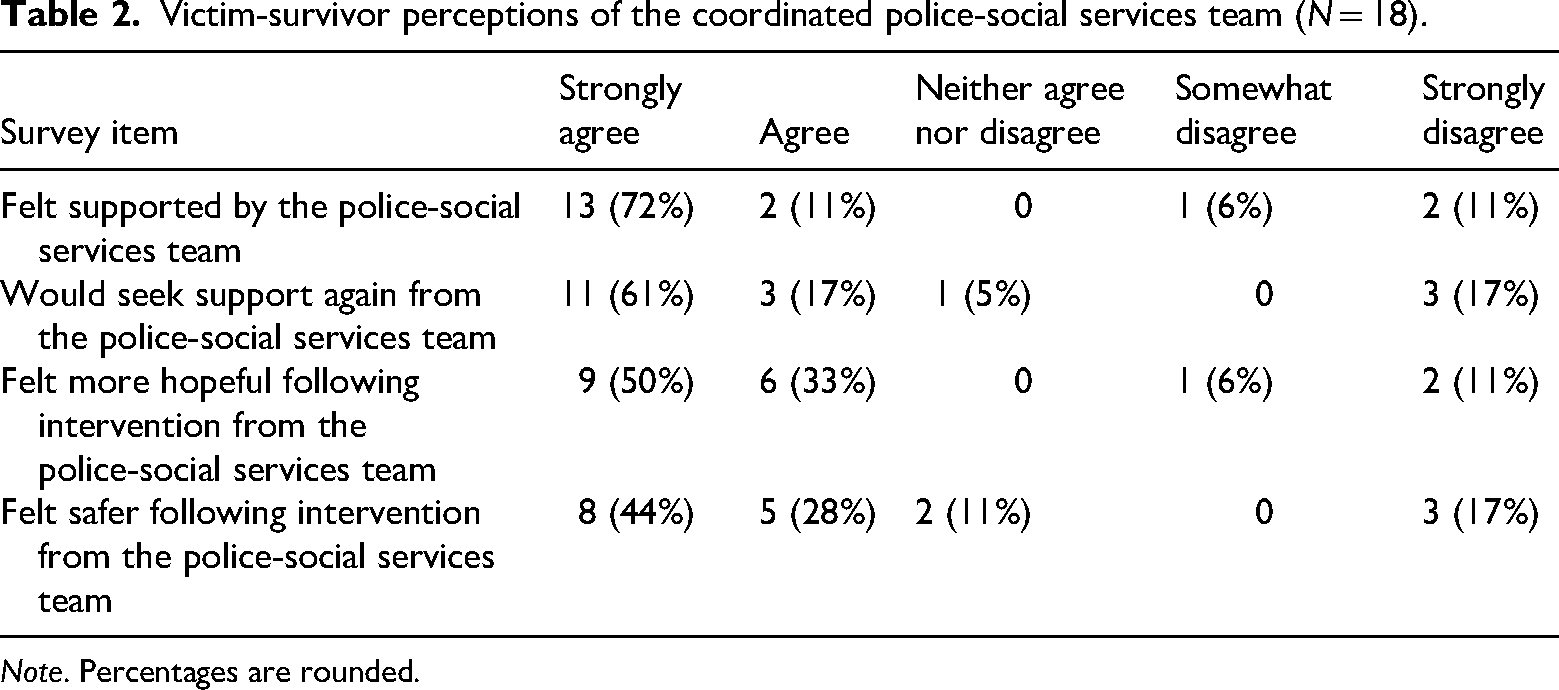
Most of the victim-survivor participants had a positive perception of the coordinated police-social services team. Table 2 presents victim-survivors’ survey responses in numbers and percentages.
Victim-survivor perceptions of the coordinated police-social services team (N = 18).
Note. Percentages are rounded.
Qualitative findings
Victim-survivor participants were asked why they thought the coordinated response was helpful or unhelpful in reducing family violence. They were also asked what they perceived to be the most helpful aspects of the coordinated police-social services response, and whether there was anything the coordinated team could have done better. Participants’ responses fell into five categories, organised under two overarching headings: (i) helpful aspects of the coordinated response: enhanced safety and protection; emotional support; tailored advocacy; and (ii) suggestions for improvement: help not handcuffs; and consistent communication.
Helpful aspects of the coordinated response
Enhanced safety and protection
Victim-survivor participants commonly raised “safety planning” as the most helpful part of the coordinated police-social services response, and a key reason why they thought family violence had reduced. Safety planning involved the embedded family violence workers empowering victim-survivors with knowledge and key steps on how to stay safe, or as one participant wrote, “they gave me the skills to be able to look after myself.” Safety planning had a focus on both physical and psychological safety. It also involved the embedded family violence worker organising extra security measures in victim-survivors’ homes, and/or helping victim-survivors to move into independent and secure housing in a confidential manner. For example, two victim-survivor participants wrote: “they stopped my ex from finding me” and “safety planning has made me feel safer and changes to my property will make me feel safer.”
“You’re not alone”: Emotional support
Victim-survivor participants frequently said that the emotional support was the most helpful aspect of the coordinated police-social services response. Victim-survivors are often isolated by family violence and have to navigate systems by themselves (Hegarty et al., 2022). They appreciated that the embedded family violence workers would regularly check in on them and could be a source of support if they needed to contact someone. They valued the reassurance and in-person visits from the embedded workers and described feeling “supported” and “less alone.” One participant said that the most helpful part was the embedded family violence worker, “being there for someone when they need.” Another victim-survivor participant emphasised the non-judgmental emotional support provided by the embedded family violence worker: “[It] helped me a lot to have support during pregnancy and attending appointments and to have support around that, someone to talk to that didn’t feel like you were going to get in trouble or get anyone else in trouble.”
Tailored advocacy
Victim-survivors’ responses also centred around the individualised support and advocacy they received from the embedded family violence workers. Participants appreciated having someone in their corner who could help navigate services, or as one participant expressed, “taking the load off talking with services on your behalf.” Some noted that the most helpful aspects of the coordinated response were being connected with relevant services (e.g., mental health services), and having support for both victim-survivors and their ex-partners who had used violence. Victim-survivors who had a positive experience of the coordinated response felt like their individual needs were prioritised, and that the family violence workers were working alongside police to get the best outcome for them. Participants commended the dedicated efforts of the family violence worker and felt that they were doing “everything they could” to support victim-survivors and their families. One victim-survivor participant wrote, “I’m truly grateful for all the help and guidance received; without their help, I really believe I would be dead.”
Suggestions for improvement
Help not handcuffs
Three victim-survivor participants reported that they did not feel supported by the coordinated police-social services response. They strongly disagreed that they felt safer following intervention and reported no changes in experiences of family violence following intervention. When reflecting on what could have been done better, one participant emphasised that there needs to be more support for couples that want to stay together and work on their relationship issues. Victim-survivor participants were dissatisfied when the intervention primarily involved a carceral criminal justice response (e.g., arrest and prison), with less focus on social support services. They felt that perpetrators would simply ignore intervention orders and that incarceration would not be effective in enacting long-term behaviour change. For example, one victim-survivor participant commented, “he was placed in prison which doesn’t help work on anything; all actions to change behaviour were taken into my own hands.”
For one participant, the incarceration of the perpetrator meant that the main source of income for the family was impacted, which resulted in financial hardship and stress for the victim-survivor. They felt that more could have been done to ensure the coordinated response did not contribute to financial difficulties for the family. Some responses also indicated that victim-survivors valued intervention that was victim-centred and involved them in decision-making. For example, one victim-survivor survey participant commented, “work with the families, not against them.”
Consistent communication
Victim-survivor participants also suggested that communication was a key area that the coordinated response could improve further. Some of the victim-survivors felt that the family violence workers had been disorganised, and that communication with victim-survivors had been lacking. For example, one participant commented, “I felt there were too many days without any communication.” Another participant said there was inadequate communication between family violence workers and police members, and that there could have been better internal communication between the family violence workers and the social work organisation that they worked for. Overall, to enhance the “coordinated” element of the police-social services response, victim-survivors wanted clearer and more consistent communication to ensure that every stakeholder was on the same page, and so that they stayed informed and updated on matters that were integral to keeping them safe.
Discussion
This survey study provides vital insights into victim-survivors’ perspectives and experiences of coordinated police-social service responses to recidivist family violence. Quantitative evaluations using police callout data struggle to conclude whether family violence genuinely reduces in people's lives following coordinated responses (Davis et al., 2021; Petersen et al., 2022). The majority of victim-survivors in our study reported feeling safer following the coordinated police-social services response, and that family violence had reduced in their lives. From victim-survivors’ perspectives, key reasons for reductions in family violence included safety planning with the embedded social worker, practical help to live independently (away from the perpetrator), emotional support that helped to build victims’ sense of agency, and tailored advocacy that connected both victim-survivors and perpetrators with key services (e.g., counselling).
These findings align with Robinson and Tregidga's (2007) study with victim-survivors in Wales, which found reduced experiences of family violence 12 months after a multiagency response involving police and social services. Victim-survivors reported that the coordinated response provided both emotional support and practical assistance (e.g., changing locks on house) which helped them to feel safer and more empowered to leave the abusive relationship. Our findings are also consistent with other survey studies with victim-survivors, which have found positive perceptions of coordinated police-social service responses in cases of recidivist family violence (Koppensteiner et al., 2019; Rodgers et al., 2022b). Victim-survivors in our study and Rodgers et al. (2022b) similarly valued the role of the embedded social worker and the support they provided as part of the coordinated response. Research with professional stakeholders also indicates they are supportive of an embedded social worker within a police unit (Hamilton et al., 2021; Rodgers et al., 2022b), suggesting there is a consensus between police, social workers, and victim-survivors on this approach to recidivist family violence.
Some researchers have theorised that police-social services responses could exacerbate perpetrators’ use of violence (Hovell et al., 2006; Petersen et al., 2022). Our study does not lend support to this hypothesis, as zero participants in our sample said that family violence became worse following intervention. Likewise, none of the nine victim-survivors interviewed in Robinson and Tregidga's (2007) study reported any negative effects as a result of being part of the coordinated multiagency response. Nevertheless, three victim-survivors in our study reported no changes to experiences of family violence following intervention and they did not feel supported by the police-social services team. Some felt that the communication between police and social workers was lacking. Other research on co-responder programs has signalled that there can be difficulties in communication among police and embedded clinicians, largely due to differences in responsibilities, organisational cultures, and role specific jargon (Crichlow & Atkin-Punk, 2024; Notko et al., 2022). Heavy caseloads likely play a role in police and social workers’ abilities to communicate with clients in a timely manner, suggesting reduced workloads could enhance communication (Kirchmaier & Oparina, 2024; McFadden et al., 2015). Crichlow and Atkin-Punk (2024) also suggest that further interprofessional learning and collaborative training could be helpful in enhancing communication between police and embedded support workers.
Victim-survivor participants were also dissatisfied when the coordinated response primarily involved a carceral criminal justice response (e.g., arrest, prison, intervention order), with less focus on social support services and victim-survivor's preferences. Prior research has indicated that victim-survivors value the social-services element of coordinated responses, with some expressing a negative perception of the police response (Koppensteiner et al., 2019; Rodgers et al., 2022b). Criticism of a police-led response to family violence centres on concerns that it can further harm victim-survivors and marginalised communities through discriminatory policing practices, misidentification of victim-survivors as perpetrators, and police-perpetrated family violence (Malins & Caulfield, 2025). Previous research has also established that victim-survivors generally prefer and benefit from victim-centred services that prioritise their needs and involve them in decision-making (Centre for Innovative Justice, 2020). Some of the victim-survivor responses indicate a risk that coordinated police-social services responses can potentially slip back into traditional policing responses, with criminal justice interventions eclipsing the social supports for victim-survivors and perpetrators. Indeed, embedded workers have reported feeling subordinate to police, and like they have less autonomy to make impactful change with clients (Crichlow & Atkin-Punk, 2024; Haugstvedt & Tuastad, 2023). To date, countries across the world have trialled embedded clinicians and social workers within police departments (Breckenridge et al., 2016; Davis et al., 2021). We are not aware of any programs where a police officer has been embedded within a social work department. Perhaps it is time to trial this approach? In the meantime, coordinated police-social service responses could be maximised by ensuring that police responses do not trump social services, and by “working with families” to prioritise the preferences of victim-survivors.
Caveats
The findings should be interpreted with a number of strengths and limitations in mind. While the sample of victim-survivors was small (n = 18), the survey sample was generally representative of the clientele that is serviced by the coordinated police-social services response in Victoria, especially in terms of age, gender, and ethnicity. However, it is vital to acknowledge that the survey of victim-survivors only involved the perspectives of non-Indigenous Australians who were citizens or permanent residents. Future research should go to greater lengths to include the perspectives of Indigenous, refugee, and culturally and linguistically diverse victim-survivors in the evaluation of coordinated police-social service responses to family violence. Indeed, research indicates that there are significant barriers that prevent Indigenous and refugee victim-survivors of family violence from accessing social and legal support services in Australia, such as a lack of culturally competent service providers and translated resources (Langton et al., 2020; Robinson et al., 2025).
The online survey method may have also limited which victim-survivors could respond, as it assumes participants are literate, computer literate, capable of focusing, and have private and consistent access to the internet (Bethlehem, 2010). It is possible that some victim-survivors may not have felt safe enough to complete the survey, and therefore the data may not reflect experiences where family violence worsened. Moreover, the online survey likely resulted in briefer responses than what could be gathered in qualitative interviews. Here, a compromise needed to occur, as the online survey enabled victim-survivors to conveniently and anonymously provide feedback on their experience of the coordinated police-social services response. If feasible, future research comprising accessible surveys and interviews would be ideal to promote richer insights into victim-survivors’ experiences and perspectives.
Finally, our survey relied on victim-survivors’ perceptions of family violence following the coordinated response. It is possible that these might not align with actual experiences of violence (see also Robinson & Tregidga, 2007 for a discussion on this). Nevertheless, we maintain that perceived reductions of family violence and perceptions of increased safety among victim-survivors are meaningful findings. It is also possible that the evaluation period was not long enough to measure experiences of family violence following the coordinated response. Indeed, victim-survivors were invited to complete the survey upon case closure or if their case had closed at some point in the prior 12 months. The survey unfortunately did not ascertain how long each victim-survivor's case had been closed for. A longitudinal exploration with victim-survivors would be worthwhile. Other follow-up research has found that a coordinated police-social services response helped to reduce family violence re-victimisation one year (Robinson & Tregidga, 2007), two years (Exum et al., 2014), and up to three years following intervention (Hamilton et al., 2023).
Conclusion
This online survey study indicated that most victim-survivor participants (15 out of 18) had a positive perception of the coordinated police-social services response. The majority of victim-survivors reported that the embedded social workers helped to connect them and/or their family to a range of relevant services (e.g., mental health, housing, medical services), and that the coordinated police-social services response helped to reduce family violence in their lives. Allied with prior studies involving victim-survivors’ perspectives (Koppensteiner et al., 2019; Robinson & Tregidga, 2007; Rodgers et al., 2022b), there is mounting evidence that specialist social workers are an effective addition to police units responding to recidivist family violence. Such findings support the wider implementation and resourcing of embedded specialist social workers within police units responding to recidivist family violence.
The few victim-survivors who felt their needs were not met suggested there should be better communication from and among services, more support for couples who want to stay together, and a greater emphasis on victim-centred support services for families rather than primarily criminal justice responses. Executive management should focus on improving communication between services and victim-survivors, with attention to manageable caseloads and collaborative interprofessional training. Maximising the effectiveness of the coordinated response requires intentional structures that ensure an equitable balance of power between police and specialist social workers, in turn promoting social workers’ abilities to provide tailored advocacy and victim-centred support that is not quashed by criminal justice intervention. The findings emphasise that listening to victim-survivors and prioritising their support needs is crucial in coordinated responses. Continued consultation with victim-survivors in policy development and service design is needed to ensure responses are tailored, relevant, and effective in stopping family violence.
Footnotes
Acknowledgements
We express our deepest gratitude to the victim-survivor participants who generously offered their time and insights for this research. We would like to thank Dr. Dirkje Gerryts for their assistance in formatting the table and references for the article.

Ethical Considerations
The project was approved by RMIT University's Human Research Ethics Committee [2024-26691-24031).
Consent to Participate and Publish
All participants provided written informed consent prior to participating. Informed consent for publication was also provided by the participants.
Funding
The authors disclosed receipt of the following financial support for the research, authorship, and/or publication of this article: This work was supported by funding from an Australian social work organisation under project [PRJ00001875].
Declaration of Conflicting Interests
The authors declared no potential conflicts of interest with respect to the research, authorship, and/or publication of this article.
Data Availability Statement
The participants of this study did not give written consent for their data to be shared publicly, so due to the sensitive nature of the research supporting data is not available.