



Abstract
As increasing numbers of young people engage online there has been a concomitant rise in Online Child Exploitation (OCE) crime. When considering prevention approaches, the essential role of parents and carers (i.e., parental guardians) is often not prioritised. This study explored how three categories of moderators: perceptions (myth endorsement, perceived risk of victimisation), attitudes (sense of responsibility, confidence in protective ability), and emotions (level of concern), influenced the relationship between knowledge of OCE prevention strategies and their use. One hundred and eight four (N = 184) parental guardians of children aged between 11 and 17 years, recruited through social media platforms using a snowball sampling strategy, were surveyed via an online quantitative survey. Linear regression and moderation analyses revealed that knowledge of OCE prevention strategies had a significant, positive relationship with online protective behaviour use. Moderators of myth endorsement, personal responsibility and concern had significant direct relationships with behaviour use, but victimisation risk and confidence did not. No moderation effects were found. Based on the study findings, it was concluded that beyond increasing knowledge, additional elements should be added to education curriculum targeting parental guardians. These include debunking myths about OCE, fostering stronger concern, reinforcing a personal sense of responsibility for children's online safety and reducing reliance on third parties or solutions. This more comprehensive approach to prevention education will mobilise parental guardians in protecting their children when online.
Introduction
Online Child Exploitation (OCE) occurs when individuals use technology and/or the internet to facilitate the sexual abuse of a person under 18 years of age (Eggins et al., 2021; Hillman et al., 2014). This includes producing, distributing, viewing/streaming, hosting, or possessing child sexual abuse material, as well as sexual exploitation through grooming (Krone & Smith, 2017; Westlake, 2020). It is difficult to estimate the prevalence of OCE on a global scale, given the various methodological issues that make measurement difficult (see Quayle, 2020a). However, the consensus is that as increasing numbers of young people access the internet, there is a concomitant rise in OCE offending (Eggins et al., 2021; Henshaw et al., 2020).
In Australia, a survey with Australian youth aged between 12 and 17 years found that over a 6-month period, 44% of teens had encountered a negative online experience, including being sent inappropriate content (N = 627; Office of the eSafety Commissioner [eSafety], 2021). The Child Protection Triage Unit within the Australian Centre to Counter Child Exploitation (ACCCE) (2023) recently reported receipt of more than 40,232 OCE reports in a single year. In the 2022–2023 financial year, the Australian Federal Police charged a total of 186 offenders accounting for 925 child exploitation-related offences (ACCCE, 2023).
Given the prevalence of OCE crime, the need to develop effective preventative approaches to reduce the online victimisation of children should remain a priority (Quayle, 2020a). Parental guardians play a critical role in shaping children's online environments. They are uniquely positioned to reduce exposure to OCE risk. Given this, improving parent engagement in online safety of children is widely acknowledged as a critical mechanism for preventing OCE (McKillop et al., 2021; Rudolph et al., 2017). However, current prevention efforts are seemingly falling short. In a report commissioned by ACCCE (2023), 51% of survey respondents including parents and carers, were unsure what actions they could take to enhance the safety of their children from OCE. Drawing from broader crime prevention and cybercrime research, it is concluded that having knowledge of prevention strategies does not necessarily translate into their use. This has been previously referred to as, the knowing-doing gap. This gap captures situations where individuals are aware of effective protection actions but fail to implement them in practice (Drew, 2020; Drew & Farrell, 2018).
The current study examines how prevention strategies of parents and carers (referred to hereafter as parental guardians) could be enhanced. Using the criminological theory of Routine Activities Approach (RAA), OCE knowledge and prevention behaviours of parental guardians, theoretically conceptualised for their guardianship role within RAA, is examined. Parental guardians are ideally positioned to play a critical role in disrupting interactions between offenders (OCE criminals) and potential victims (children). The current research is based on survey responses obtained from 186 parental guardians who care for at least one child aged between 11 and 17 years. The relationship between knowledge of OCE risks held by parental guardians and their use of crime prevention strategies to protect their children online is examined. Several key factors are hypothesised to moderate the relationship between knowing and doing. It is hypothesised that for parental guardians, the positive relationship between knowledge and online prevention behaviour use will be moderated by perceptions (myths and victimisation) (H1); attitudes (responsibility and confidence) (H2), and emotions (concern) (H3). Each of these factors are hypothesised to positively influence the strength of relationship between knowledge and use of online protective behaviours used.
Literature review
RAA, Crime prevention, and OCE
There has been some debate regarding the applicability of traditional criminological frameworks in digital environments (McGuire, 2018). Theories such as RAA were originally developed for crimes enacted in the physical world. RAA proposes that crimes result from the convergence in time and space of three key elements. These include: (1) motivated offender/s (any person/s that has criminal inclinations and ability to act when presented with situational opportunities), (2) suitable target/s, and (3) absence of capable guardians (any person or entity that have capability to prevent harm by protecting targets from physical, social, and/or physical harm) (Cohen & Felson, 1979; Felson & Cohen, 1980). When applying the principles of RAA in the context of the online environment, offenders, and victims meet in cyberspace rather than the physical world (Vakhitova, 2025).
RAA is one traditional criminological theory previously applied to online crime that established empirical validity (Cohen & Felson, 1979; Felson & Cohen, 1980; Leukfeldt & Yar, 2016; Marcum et al., 2010), RAA is used in the current study as the theoretical frame for better understanding OCE prevention. The benefit of the RAA is that it can be used to identify who is best positioned to engage in either crime disruption or prevention and what might be the most effective approach in targeting and reducing a target crime (Eck & Clarke, 2003).
One approach to effective crime prevention involves decreasing offender motivations and opportunities (Cohen & Felson, 1979). The criminal justice system plays a central role in this regard and is largely responsible for detection and punishment. Guardians in the criminal justice system, sometimes referred to as “passive” guardians, includes police, courts, and corrections and various government and nongovernment organisations (e.g., reporting hotlines) (Reynald, 2019). However, OCE crime often operates transnationally. Offenders have the advantage of anonymity afforded by the internet and a geographic disconnect between the legal jurisdiction in which their crimes are committed and their physical location. This results in significant challenges that impact the success of passive guardians in disrupting crime. Investigating and prosecuting online offenders is notoriously difficult (Cale et al., 2021; Holt et al., 2020; Leclerc et al., 2021). In addition, these guardians are often not positioned to directly intervene either before or during online activity or interactions. Their role primarily relies on education and support to enhance the capabilities of active guardians to prevent their own victimisation (McKillop et al., 2021; Reynald, 2019).
Active guardianship and victimisation prevention, achieved through decreasing target suitability and/or increasing the capabilities of guardians, are two crime prevention strategies drawn from RAA. These represent perhaps more viable, and potentially more effective approaches when focused on prevention in the context of OCE. Parental guardians are positioned to reduce the suitability of a target to an offender's approach, in this case, using online protective behaviours that make it more difficult for their children to interact with OCE offenders.
The current study seeks to better understand the factors that should be included in crime prevention education. This is undertaken with the specific aim of enhancing the guardianship role of parental guardians. It is assumed that parental guardians who engage in OCE crime prevention education will do so because this education will inevitably lead to the increased use online protective behaviours. Use of online protective behaviours is essential action required to deter and interrupt OCE offenders who might target children. However, to date, what might drive the translation of parental guardians’ knowledge into crime prevention behaviour use remains largely unexplored.
Parents and carers as guardians and OCE prevention
Understanding the characteristics of OCE victims and offenders has drawn research interest over the past few years (Paquette et al., 2025). Less focus had been directed at understanding how parental guardians can be capable guardians who are best positioned to interrupt potential OCE victim and offender interactions (Rudolph et al., 2017).
As OCE crimes typically occur in the home, research suggests that active guardians, including parental guardians and others, typically hold to some extent supervisory capacity over digital environments. The most “capable” of guardians are available, present, provide supervision, can detect or identify OCE, and have the capability and knowledge to intervene when required (McKillop et al., 2021; Reynald, 2010). Given this description, parental guardians, given their proximity to and/or relationship with potential victims, can be ideally placed in protecting children from online victimisation (McKillop et al., 2021; Wortley et al., 2019).
Current crime prevention approaches in the OCE context
Current OCE crime prevention approaches involve education programmes, podcasts, brochures/posters, counselling, software applications, hotlines, information websites, online reporting systems, and monitoring systems (ACCCE, 2020). “ThinkUKnow Australia” is a cyber safety programme that provides tools and resources intending to create a safer online environment for children and young people (ThinkUKnow Australia, 2022). The U.S. cyber safety programme “NetSmartz” is a programme that uses age-appropriate videos and activities designed to educate children aged between 5 and 17 on how to be safer online (NetSmartz, 2022). Canada has a campaign called “Don’t get Sextorted”. It aims to educate young people about sextortion as well as how to identify and respond safely (Canadian Centre for Child Protection (CCCP), 2022). Collectively these prevention programmes are focused on protecting children from OCE by directly educating them and providing resources that will improve their “self-guardianship” (see Vakhitova et al., 2022). The effectiveness of these programmes relies on increased awareness and capability of children to protect themselves from OCE.
While there has been significant investment in crime prevention education approaches aimed at reducing OCE through educating children, the prevalence of these crimes continues to increase (Eggins et al., 2021). As such, there is likely limit to their effectiveness.
Issues with current education initiatives to reduce OCE
A key issue with the reliance on educating children is that it overlooks the full scope of essential elements of crime prevention and crime control that we draw from our knowledge of the crime triangle and RAA. Specifically relevant to this study is guardianship and the pivotal role of parental guardians in protecting likely and vulnerable targets and interrupting interactions between victims and offenders (McKillop et al., 2021). Previous research supports the impact that parental guardianship can have in crime prevention. For example, children who have parental guardians who enact less guardianship behaviours have a higher probability of becoming a victim of online grooming (Livingstone & Mason, 2015).
A significant limitation however of many current crime prevention education programmes, including those that target capability uplift of children or their guardians, is a predominate focus on knowledge uplift. Research considering the effectiveness of online crime prevention education has questioned how impactful is increasing crime prevention knowledge alone when seeking to reduce victimisation (Drew, 2020; Drew & Farrell, 2018). Knowledge does not always translate into actual use of protective behaviours, that is, the knowing-doing gap, as discussed earlier. Drew’s (2020) research on the relationship between victimisation factors and self-protective crime prevention strategies revealed that certain attitudes (e.g., perceived prevalence and perceived harm of cybercrime) influence the use of prevention strategies by cybercrime victims. This research suggested that it is important to consider what factors might influence the knowing-doing gap and how understanding this can inform the development of more effective crime prevention education. Crime prevention programmes need to more carefully consider how, beyond knowledge, behavioural actions of active guardians in OCE crime prevention can be influenced and leveraged in protecting children when they are online.
A review of relevant literature and search for educational interventions that focus on educating parental guardians on how to better protect children online found few instances of standalone programmes for parents. More typically, guardian-focused OCE prevention education is embedded within broader online safety initiatives (Finkelhor et al., 2020; Russell et al., 2024). A systematic review, examining over four decades of parent-focused prevention programmes, were only able to identify 24 intervention evaluations that met their inclusion criteria (Rudolph et al., 2023). Although programmes may produce short-term improvements in proximal outcomes (e.g., intentions), it was concluded that the evidence base is limited in reference to changes that translate into sustained protective action or reduce victimisation. The available evidence is limited due to a lack of rigorously designed and methodologically sound evaluations that have been conducted.
Perceptions, attitudes, and myths
RAA provides a framework for identifying the role that guardians can play OCE prevention. It less explicitly considers the range of cognitive, attitudinal, and emotional factors that may enable or inhibit the translation of knowledge into protective guardianship behaviours (Reynald et al., 2018). As such, behavioural theories, such as the Theory of Planned Behaviour, provide insights into the importance of also understanding how and why individuals may or may not engage in guardianship (Ajzen, 1991; Burns & Roberts, 2013). Given the need to understand both the role and behaviours of guardians, three key categories of factors that might influence the relationship between knowing and doing are identified. These include perceptions (i.e., myths and victimisation), attitudes (i.e., responsibility and confidence), and emotions (i.e., concern).
When awareness and understanding of OCE is limited, superficial or even inaccurate, this hinders people's ability to respond effectively (ACCCE, 2020). Despite having general knowledge that OCE dangers exist, a lack of awareness of victimisation risk could also influence whether knowledge of prevention strategies are translated into actual use. If parental guardians believe, for example, that OCE offenders only target teenage girls (and they are a parental guardian of a boy), or do not think that their child is at risk because they only engage in age-appropriate online gaming, they may be less likely or motivated to translate their knowledge of online dangers into actions that protect their children online. Studying whether a more accurate understanding about OCE and whether knowledge about victimisation risk factors result in a stronger relationship between OCE knowledge and crime prevention behaviour use is important for guiding crime prevention education curriculum.
Broader attitudes of parental guardians towards OCE may influence the use of behavioural crime prevention strategies. Research on crime and guardianship more generally has concluded that perceived responsibility plays an important role in determining the capability of guardians in preventing victimisation (Felson, 1995; McKillop et al., 2021). The responsibility of guardians is related to both the physical and social distance between the guardian and the potential victim. In particular, “guardians are more likely to take responsibility for, and act in defen[c]e of, others who are familiar to them (compared to more socially distant others) and in close physical proximity to them (compared to potential victims who are physically distant)” (McKillop et al., 2021, p. 5). Further, confidence can be a limiting factor that influences parental guardian perception about their capabilities to effectively respond and prevent OCE crimes (ACCCE, 2020; Kuldas et al., 2024). If parental guardians are not confident that their actions are likely to be effective or “make a difference” they may be less likely to invest the effort required to use behavioural crime prevention strategies. Neither perceived responsibility or confidence have been examined in the context of parental guardians’ use of OCE protective strategies and have not been considered as potentially essential elements of OCE crime prevention education.
Emotion about OCE offenders targeting children is likely to be part of the motivation for parental guardians to both increase their knowledge and skills in protecting their children online. Alarmingly, given the numbers of children that are likely to encounter OCE offenders, only 40% of parents and carers were “really worried” that online child sexual exploitation could happen to their child. Research reported by the ACCCE (2020) highlights the potential importance of concern about OCE dangers for children. It may be that some parental guardians do not have sufficient levels of concern to mobilise them in translating OCE knowledge into crime prevention behaviours use. Understanding how level of concern influences the relationship between knowledge and behaviour use can provide important insights into how to better design curriculum and increase the effectiveness of OCE crime prevention education.
Aims of the current study
The current study seeks to inform policy and practice recommendations for improving OCE crime prevention education for parental guardians. The study seeks to provide insights into how to better leverage or improve the effectiveness of parental guardians in protecting their children online. To do this, we need an understanding of what specific factors might increase the likelihood that parental guardians, who may already hold broad knowledge about OCE crime prevention strategies, will engage in OCE crime prevention behaviours. Of the limited research examining parental guardianship and OCE crime, no studies have investigated factors that moderate the knowing-doing gap.
The current study tests three hypotheses all focused on parental guardians. It is hypothesised that a positive relationship between knowledge and online prevention behaviour use will be moderated by perceptions (myths and victimisation) (H1); attitudes (responsibility and confidence) (H2), and emotions (concern) (H3). Each of these factors are hypothesised to positively influence the strength of the relationship between knowledge and behaviour. By better understanding the knowing-doing gap we are positioned to more effectively influence behaviour change, promoting crime prevention behaviour use amongst parental guardians. Understanding how perceptions, attitudes, and emotions might influence the translation of knowledge into crime prevention behaviours it will allow us to draw important conclusions about what may be most effective in designing crime prevention programmes and other initiatives. The development of more effective prevention approaches has the potential to substantially reduce OCE prevalence and online victimisation of children.
Method
Sample and procedure
An online quantitative survey was constructed for the study. The survey included a comprehensive information sheet and consent form. It outlined the aims and purpose of the study and informed potential participants that all survey responses were anonymous and would be kept confidential. Prior to its distribution, it was pilot tested and feedback was obtained from academic experts in the field and a member of law enforcement who held relevant work experience. Study participants were recruited via various social media platforms (e.g., Facebook, Twitter, and LinkedIn). Those viewing the recruitment material were also encouraged to “share” the survey link, constituting a snowball sampling approach. The survey was hosted on the LimeSurvey software platform. The study was limited to participants who were parental guardians to at least on child aged between 11 and 17 years. Ethics approval for the research was obtained from the Griffith University Human Research Ethics Committee (GU 2022/478).
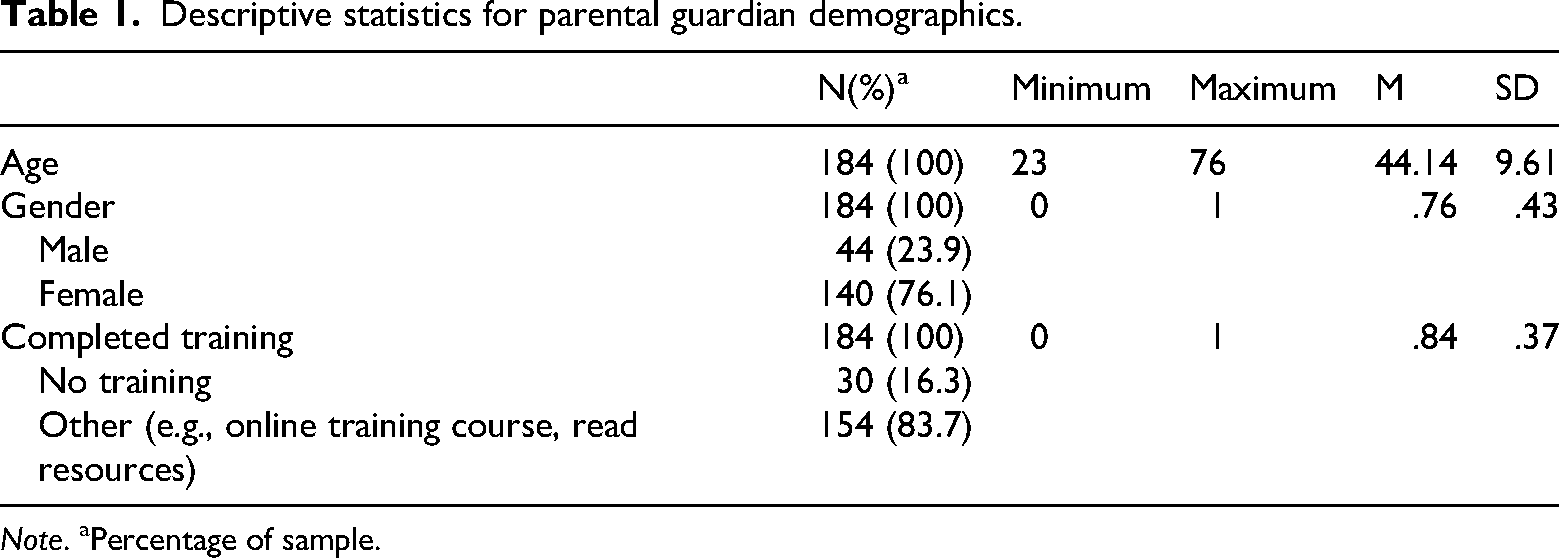
The total number of survey responses obtained was 186. Two survey responses were deleted due to missing data. The study included a total number of 184 usable surveys. Most parental guardians were female (76.1%; male parents/carers = 23.9%). The average age of the sample was 44 years old (SD = 9.61), with a minimum age of 23 and maximum age of 76. Most participants in this study (83.7%) had completed some form of online safety training. All parental guardians who completed the survey indicated that their child used at least one online application (e.g., chatrooms, messaging, social media, gaming, forums, or other applications) (see Table 1). Parental guardians who had more than one child between 11 to 17 years (the restricted age range for participation in the survey) were asked to complete the survey questions about their youngest child within this age range. The average age of children reported on by parental guardians participating in the survey was 13 years (SD = 1.92) and most children were female (59.8%). See Supplemental Table S1 for descriptive statistics of child demographics.
Descriptive statistics for parental guardian demographics.
Note. aPercentage of sample.
Measures
The survey developed for this research included questions drawn from existing measures and previous research. For this research, knowledge of prevention strategies was the primary independent variable, with the use of prevention strategies the dependent variable under study. Consistent with the operationalisation and measurement of knowledge and use of prevention strategies in prior crime prevention and cybercrime research, both variables were perception-based and self-report (Drew, 2020; Kennison et al., 2020; Martens et al., 2019). Five variables across three categories were included in the analysis as moderator variables. The moderator variables were perceptions (myth endorsement and perception of victimisation risk), attitudes (responsibility and confidence), and emotions (concern). Moderators were included to determine their influence on the relationship between knowledge and use of prevention strategies.
Knowledge of prevention strategies
To assess participant knowledge of OCE prevention strategies, an 11-item scale was developed based on a list of online safety strategies published by the ACCCE (2020). Participants were asked to indicate how much knowledge they held in respect to each of the online safety strategies listed. One example of an item used was, “I know about controls and filters that restrict what my child can access/do online” (see Supplemental materials for full list of items). All items were rated using a seven-point Likert scale (ranging from 1 for strongly disagree through to 7 for strongly agree) with a scale range of 11 to 77. Higher scores indicated greater knowledge of OCE prevention strategies (alpha = .92).
Use of prevention strategies
To measure parental guardian use of relevant crime prevention strategies, the same 11 items used in the knowledge scale were presented again to participants. Participants were asked to indicate how much they used or engaged in each of the online safety strategies listed. The 11 items were rated using an eight-point Likert-scale (a score of 1 indicated not necessary due to age and scores of 2 through to 8 ranged from never to always). The total scale scores ranged from 11 to 77 with higher scores indicating higher use of prevention strategies (alpha = .93).
Perceptions of OCE
Myth endorsement. An eight-item scale was developed to assess level of agreement with common OCE myths. Items were derived from the literature and based on common myths identified in the ACCCE (2020) report. An example of an item on this scale was, “Primary school children are more at risk from online predators than those in high school”. Participants rated each item using a seven-point Likert-scale, ranging from 1 indicating strong disagreement through to 7 indicating strong agreement. A total scale score of 8 to 56 was calculated and higher scores indicated greater endorsement of myths (alpha = 0.84).
Perception of victimisation risk. A five-item scale was used to measure victimisation risk perceptions. A list of the most commonly identified types of victimisation experienced by children online were collated based on a review of the empirical and practitioner (ACCCE, 2020; Clough, 2015; Quayle, 2020a, 2020b). Using a seven-point Likert scale (from 1 being not likely through to 7 being completely likely) parental guardians were asked to rate the likelihood that their child could be a victim of OCE crime. For example one question was, “How likely it was that their child would be coerced or blackmailed to create/share sexually explicit images and/or videos?”. Total scale scores ranged from 5 to 35, with higher scores representing a greater perception of the likelihood of victimisation (alpha = .75).
Attitudes towards OCE prevention
Responsibility. A one-item scale was used to measure parental guardian views about the responsibility they consider they have for protecting their children from OCE (ACCCE, 2020; Graves et al., 2014). The item was rated using a seven-point Likert scale, ranging from 1 being strongly disagree through to 7 being strongly agree, and a higher score indicated greater perceived responsibility for protecting children online.
Confidence. Parental guardian confidence regarding their ability to effectively respond to OCE threats was measured using a three-item scale. The items were rated with a seven-point Likert scale with response options ranging from not at all confident (rating of 1) through to completely confident (rating of 7). An example question was, “How confident are you that you have the knowledge to manage a situation where your child was approached by a stranger?” Scale scores ranged between 3 and 21 with a higher scale score indicating greater self-confidence of parental guardians in their ability to respond to OCE (alpha = .91).
Concern. A five-item measure of concern was used to measure the level of concern held by parental guardians in respect to OCE victimisation of their child. Concern is conceptualised as a pattern of repetitive worry and thoughts about uncertain harm in the future (Brands & Van Doorn, 2022). Using the same five items listed in the perception of victimisation risk scale, parental guardians were asked, “How worried you are that each of the following things might happen when your child is online?”. Each of the five items were rated using a seven-point Likert scale, with response options ranging from 1 representing never worried through to 7 representing always worried. A total scale score between 5 and 35 was calculated, with higher scores indicating greater concern (alpha = .92).
Results
All data assumptions for regression, including linearity, normal distribution and independence of error terms, homoscedasticity and multicollinearity, were met. See Supplemental Table S2 for a correlation table including all study variables.
Association between knowledge and use of OCE prevention strategies
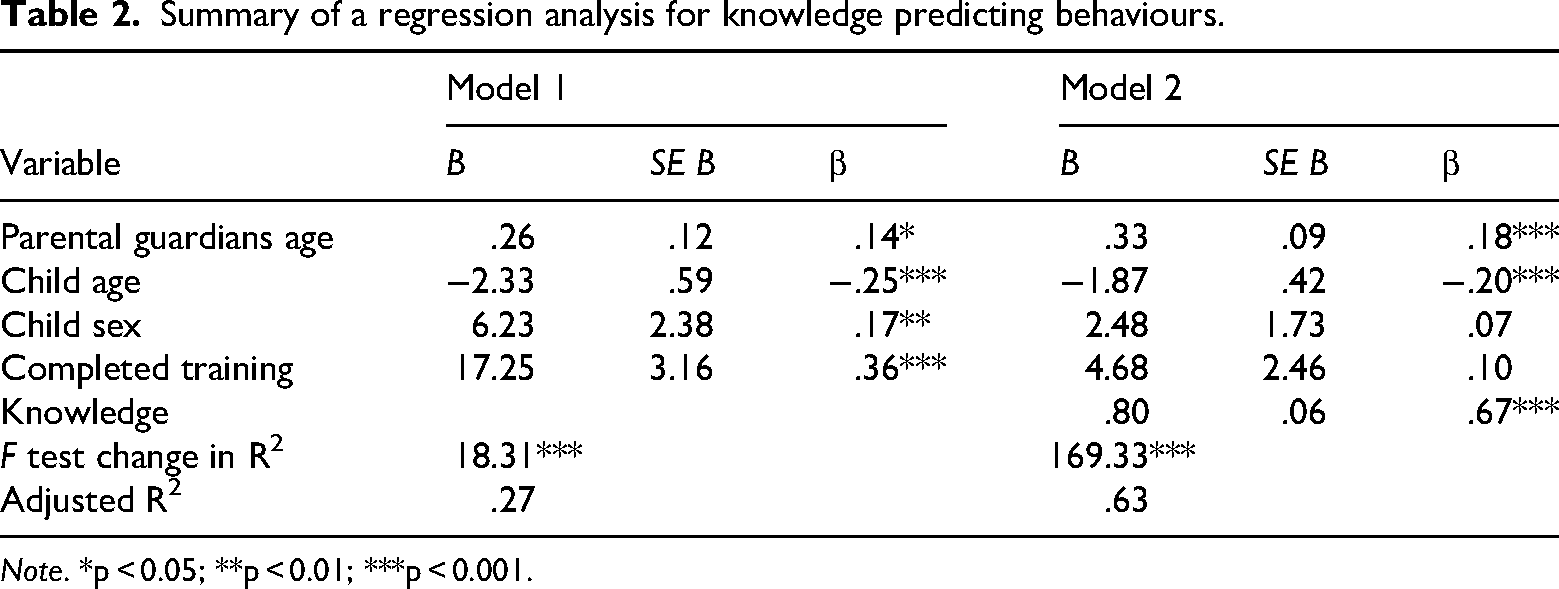
A linear regression was conducted to test the relationship between knowledge of OCE prevention strategies and use of protective behaviours (Table 2). Control variables including parental guardians age, age and gender of child, and if parental guardians had previously completed online safety training were entered at step 1. At step 2, inclusion of knowledge in the regression model resulted in a significant change in R2 (ΔR2 = .35, F(5, 178) = 62.29, p < .001). This finding indicates that greater knowledge of OCE prevention strategies is associated with greater use of protective behaviours.
Summary of a regression analysis for knowledge predicting behaviours.
Note. *p < 0.05; **p < 0.01; ***p < 0.001.
Moderation analysis
A series of moderated linear regression analyses were performed to test whether the relationship between knowledge and behaviour use is moderated by perceptions (myths and victimisation) (H1), attitudes (responsibility and confidence) (H2), and emotions (concern) (H3). Control variables, including parental guardian age, age and gender of child, and if parental guardians had previously completed online safety training, were included in each of the models tested.
Knowing-doing gap: Myth endorsement and perception of victimisation risk
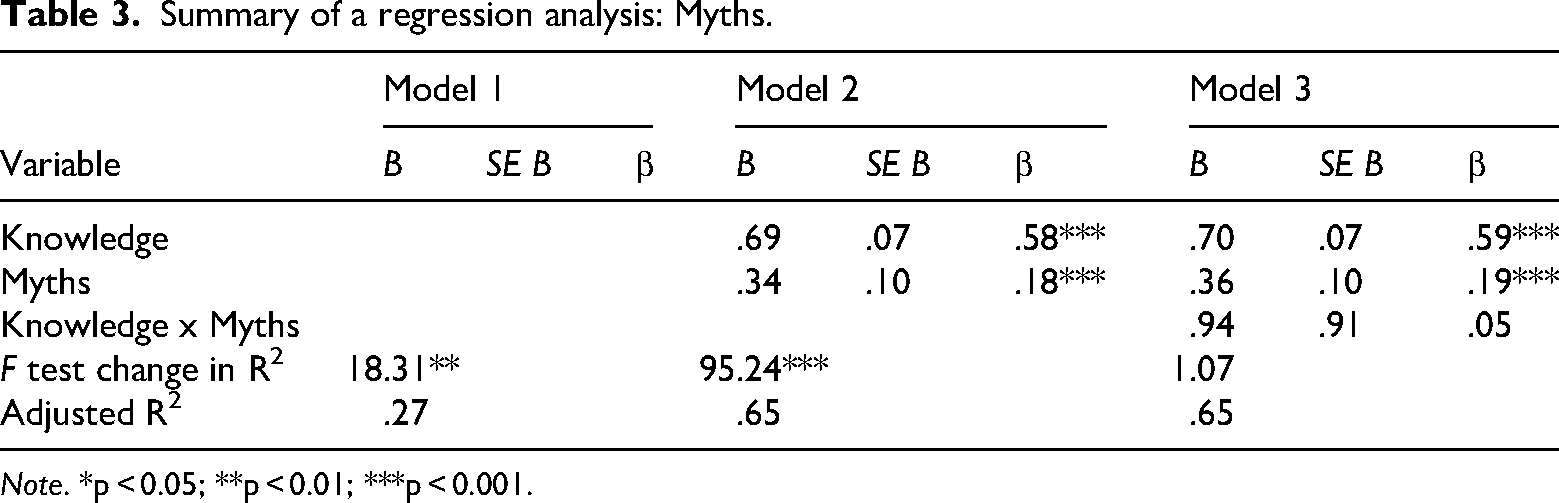
To test whether myth endorsement moderated the relationship between knowledge of OCE prevention strategies and their use by parental guardians (Table 3), control variables were entered at step 1 (see Supplemental Table S3 for regression statistics for control variables). They significantly contributed to the regression model (F(4, 179) = 18.31, p < .001) and explained 27% of the variance in strategy use (R2 = .27). At step 2, knowledge and myth endorsement variables were added to the regression model and produced a significant change to the R2 (ΔR2 = .37, F(6, 177) = 56.80, p < .001), both knowledge and myth endorsement had significant, direct relationships with behaviour use. The model explained 65% of the variance in behaviour use (R2 = .65). At step 3, the interaction term between knowledge and myths was added to the regression model. The addition of the interaction term resulted in a nonsignificant change to R2 (ΔR2 = .00, F(7, 176) = 48.86, p = .30). The results indicate that myth endorsement does not moderate the relationship between knowledge of prevention strategies and use of behavioural strategies.
Summary of a regression analysis: Myths.
Note. *p < 0.05; **p < 0.01; ***p < 0.001.
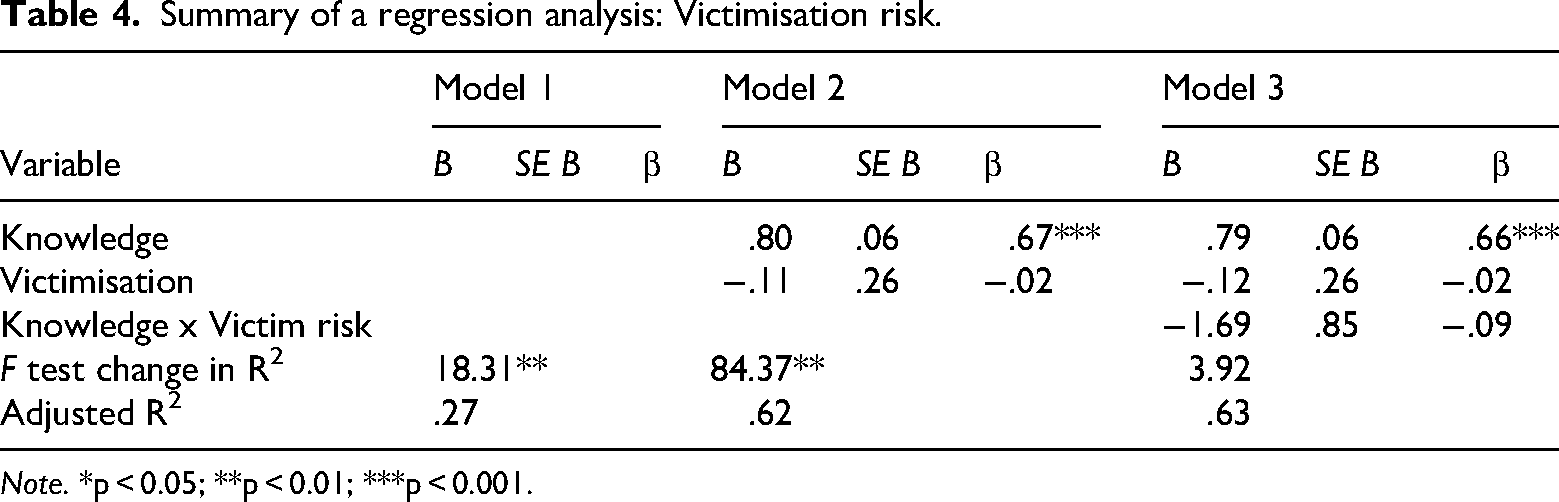
To test whether perception of victimisation risk influenced the relationship between knowledge of OCE prevention strategies and use of OCE prevention strategies (Table 4), control variables were entered at step 1. They significantly contributed to the regression model (F(4, 179) = 18.31, p < .001) (see Supplemental Table S4 for regression statistics for control variables). They explained 27% of the variance in behaviour use (R2 = .27). At step 2, knowledge and perception of victimisation risk were added to the model, a significant change to the R2 (ΔR2 = .35, F(6, 177) = 51.70, p < .001) was found. This model explained 62% of the variance in behaviour use (R2 = .62) with each variable having a significant, direct relationship with behaviour use. At step 3, the interaction term between knowledge and perception of victimisation risk was added. The addition of the interaction term resulted in a nonsignificant change to R2 (ΔR2 = .01, F(7, 176) = 45.60, p = .05). The results indicate that perception of victimisation risk does not moderate the relationship between knowledge of prevention strategies and use of behavioural strategies.
Summary of a regression analysis: Victimisation risk.
Note. *p < 0.05; **p < 0.01; ***p < 0.001.
Knowing-doing gap relationship: Responsibility and confidence
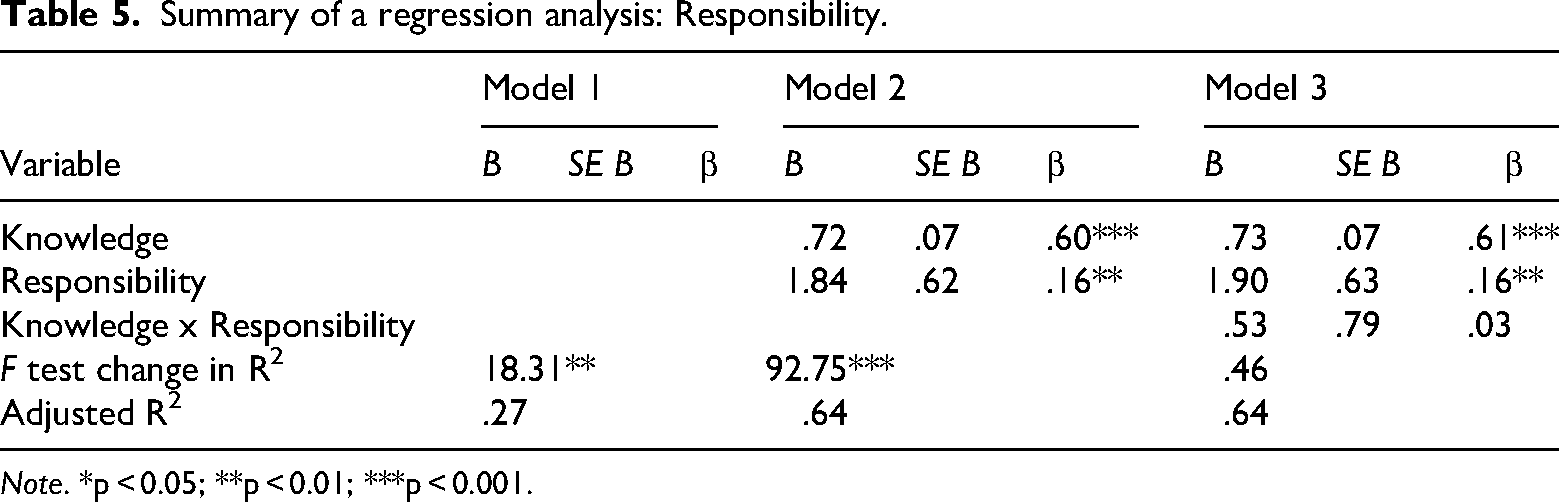
Moderation analysis was conducted to test if parental guardian perception about their responsibility to protect their children online influenced the relationship between knowledge of OCE prevention strategies and use of OCE prevention strategies (Table 5). The control variables (entered at step 1) significantly contributed to the regression model (F(4, 179) = 18.31, p < .001), and explained 27% of the variance in behaviour use (R2 = .27) (see Supplemental Table S5 for regression statistics for control variables). At step 2, knowledge and responsibility were added to the model, a significant change to the R2 (ΔR2 = .36, F(6, 177) = 55.64, p < .001) was found. Each of the two variables had a significant, direct relationship with behaviour use. The model explained 64% of the variance in behaviour use (R2 = .64). When the interaction term between knowledge and responsibility was added to the model at step 3, a nonsignificant change to the R2 (ΔR2 = .00, F(7, 176) = 47.61, p = .50) was found. The analysis indicated that responsibility does not moderate the relationship between knowledge of prevention strategies and behavioural strategies used by parental guardians.
Summary of a regression analysis: Responsibility.
Note. *p < 0.05; **p < 0.01; ***p < 0.001.
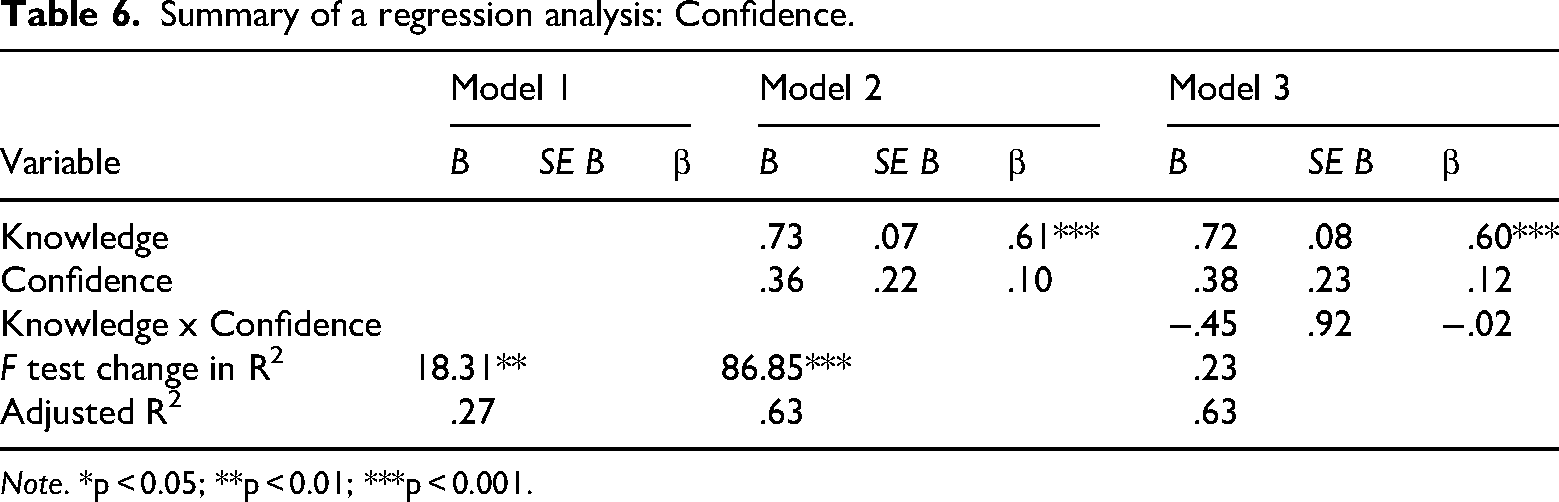
To examine whether parental guardian confidence in keeping children safe online moderated the relationship between knowledge and use of OCE prevention strategies (Table 6), control variables were entered at step 1. They significantly contributed to the regression model (F(4, 179) = 18.31, p < .001), and explained 27% of the variance in behaviour use (R2 = .27) (see Supplemental Table S6 for regression statistics for control variables). The addition of knowledge and confidence (at step 2) resulted in a significant change to the R2 (ΔR2 = .35, F(6, 177) = 52.86, p < .001) and explained 63% of the variance in behaviour use (R2 = .63). Both knowledge and confidence had significant, direct relationships with behaviour use. An interaction term between knowledge and confidence was included in the model at step 3, resulting in a nonsignificant change to the R2 (ΔR2 = .00, F(7, 176) = 45.15, p = .63). The results indicated that confidence does not moderate the relationship between knowledge of prevention strategies and behavioural strategies used by parental guardians.
Summary of a regression analysis: Confidence.
Note. *p < 0.05; **p < 0.01; ***p < 0.001.
The knowing-doing gap relationship: Concern
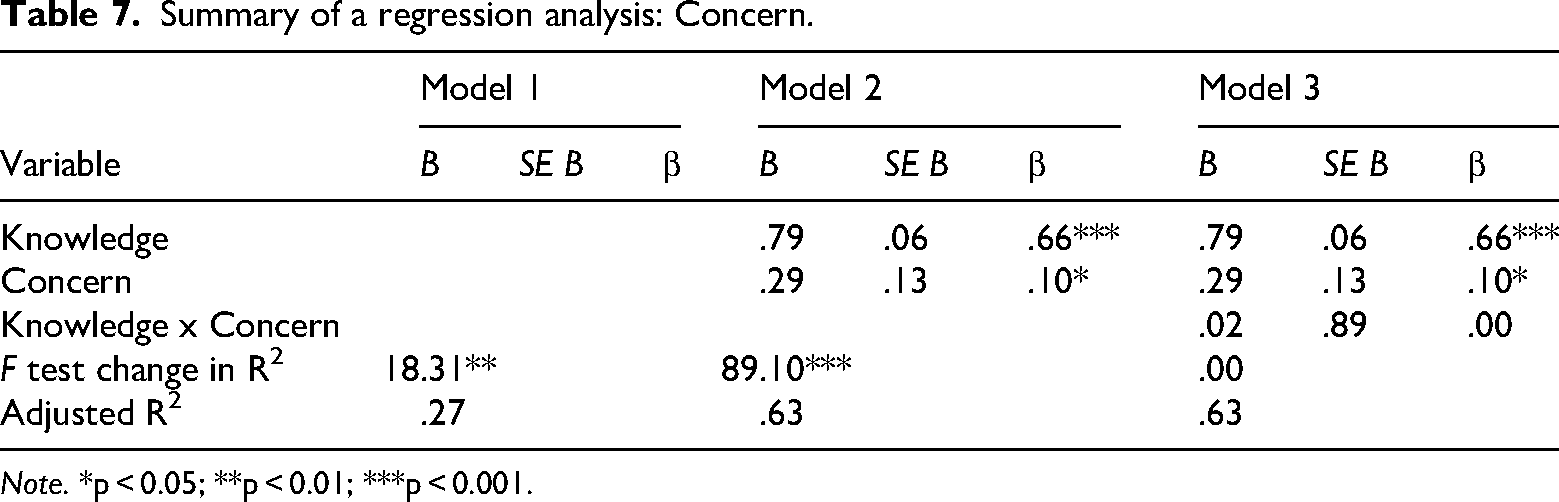
The final moderation analysis tested the moderation effect of parental guardians’ concern regarding OCE victimisation, on the relationship between knowledge of OCE prevention strategies and use of strategies (Table 7). At step 1, control variables were found to significantly contribute to the regression model (F(4, 179) = 18.31, p < .001), and explained 27% of the variance in behaviour use (R2 = .27) (see Supplemental Table S7 for regression statistics for control variables). Adding knowledge and concern at step 2 of the analysis, resulted in a significant change to the R2 (ΔR2 = .36, F(6, 177) = 53.92, p < .001) with each variable having a significant, direct relationship with behaviour use. The model explained 63% of the variance in behaviour use (R2 = .63). At step 3, an interaction term between knowledge and concern was added to the model and resulted in a nonsignificant change to the R2 (ΔR2 = .00, F(7, 176) = 45.96, p = .98). The results indicated that concern does not moderate the relationship between knowledge of prevention strategies and behavioural strategies used by parental guardians.
Summary of a regression analysis: Concern.
Note. *p < 0.05; **p < 0.01; ***p < 0.001.
Discussion
The prevalence of OCE continues to increase despite significant investment in prevention strategies. As such, this study aimed to better understand what are some potential reasons that limit the effectiveness of current OCE crime prevention approaches. First, is the dominant focus on improving OCE knowledge of children and young people, with less support provided to parental guardians who are positioned to prevent and interrupt victim and offender interactions (ACCCE, 2020). From previous research we know that parental guardians who are less involved in the guardianship of children in their care have a higher probability of victimisation (Livingstone & Mason, 2015). The current study was also guided by previous research that found knowledge of online crime prevention behaviours does not always translate into their use (Drew, 2020; Drew & Farrell, 2018). To increase parental guardian use of crime prevention strategies, we need to consider whether there were factors that influenced the knowing-doing gap. Drawing on the findings of this study we draw important policy and practice recommendations that can guide the development of more effective OCE crime prevention education for parental guardians.
Knowing-doing gap
To our knowledge, the current study is the first to empirically examine the knowing-doing gap in the context of OCE prevention and parental guardianship. While the concept has been applied in other cybercrime domains, such as fraud prevention (Drew & Farrell, 2018) and cybersecurity policy compliance in employment contexts (Gundu, 2019; Workman et al., 2008), its relevance to parental guardians in safeguarding children online has not been previously tested. As discussed, the knowing-doing gap refers to the failure of individuals who, despite being highly knowledgeable about crime prevention, do not translate this knowledge into practice and may not actually use effective crime prevention strategies (Drew & Farrell, 2018; Drew, 2020).
This study addressed the critical need to assess whether improving knowledge alone, as evidenced in popular OCE education programmes such as ThinkUKnow and NetSmartz programmes, leads to a behavioural change. The findings indicated that knowledge of prevention strategies do strongly and directly predict actual use of those strategies, and contrary to the hypotheses generated, perceptions, attitudes, and emotions of parental guardians did not strengthen this relationship. Therefore, it seems that a knowing-doing gap in the OCE context does not exist. However, the findings did suggest that some perceptions, attitudes, and emotions, along with knowledge, independently promote OCE crime prevention strategy use. From this research, we suggest that effective crime prevention education targeting parental guardians should include all these elements in their curriculum design.
Role of perceptions, attitudes, and emotions in use of OCE crime prevention strategies
As discussed, the current study examined how perceptions (myths and victimisation), attitudes (responsibility and confidence), and emotions (concern) are associated with the use of protective behaviours by parental guardians.
Perceptions
The findings of this research indicated that perceptions do not significantly influence whether knowledge translates into crime prevention behaviour use (H1). However, myths were found to play a meaningful, independent role in shaping parental engagement in OCE prevention. This finding supports the conclusion that a more accurate understanding of OCE will enhance the likelihood of an appropriate response (ACCCE, 2020), this case increased the use of crime prevention behavioural strategies.
No direct predictive relationship between perceived victimisation risk and behavioural strategy use was found (H1). To date, research on the relationship between perception of online victimisation and risk and use of crime prevention strategies has been mixed. Drew et al. (2018) found that those most at risk of cyber fraud victimisation are also most likely to underutilise online prevention strategies. This study suggests that in the context of OCE, risk perceptions may not be important when attempting to influence use of crime prevention behaviours.
The study provided some interesting insights into what perceptions are held by parental guardians about OCE. Parental guardians of girls and children who were younger were more likely to engage in protective behaviours, perhaps reflecting the assumption that younger children and girls are inherently more vulnerable. However, recent reports that male teenagers are increasingly being targeted in online sexual extortion involving threats to share intimate images (Australian Institute of Criminology, 2025). Some parental guardians’ perceptions about demographic risk factors and the likelihood of their child being targeted by OCE offenders is either inaccurate or outdated. The study also indicated that younger parental guardians were less likely to use protective behaviours. As such, both parent and child demographics may influence use of OCE crime prevention strategies. These patterns warrant further investigation, particularly from the perspective of better understanding how risk perception and demographic characteristics intersect to drive or inhibit prevention strategy use. Future research could also explore whether these factors act as moderators in more complex models.
Attitudes
While responsibility did not moderate the relationship between knowledge and crime prevention behaviour use, the more responsibility felt by parental guardians for keeping their child safe online, the more likely they were to engage in protective behaviours (H2). Feeling responsible increases the likelihood of taking action, but it does not influence how strongly knowledge of OCE crime prevention strategies will result in prevention strategy use. The direct relationship between responsibility and crime prevention behaviours is consistent with previous research that has identified perceived responsibility as a key component of guardianship (ACCCE, 2020).
It is important to consider that this study found that when parental guardians believed children's online safety was not their personal responsibility but was instead a third-party's obligation (e.g., their child/children, technology companies, law enforcement, or other regulatory bodies), they were less likely to implement prevention strategies themselves. Governments globally, including in Australia and the United Kingdom, are moving towards regulatory solutions such as mandatory age verification and age-restriction of social media and online spaces (eSafety Commissioner, 2024; Yar, 2020). Given the findings of this study, it is possible that these regulatory solutions may result in unintended consequences that increase risk, by reducing the likelihood that parental engagement will use strategies themselves to protect their children online. It may be that regulatory changes further exacerbate what seems to be an over-reliance by parental guardians on external actors and technological safeguards. From an educational perspective, it is important that crime prevention education of parental guardians reaffirms the crucial role of parental guardians as active guardians who have a responsibility and are likely to be one of the most effective methods for preventing OCE crime.
With regards to confidence, prior cybercrime research has typically found that a lack of confidence results in less use of cybercrime prevention strategies (Dong et al., 2021). More specifically, previous research has generally indicated that parents cite lack of confidence in implementing prevention strategies as a key reason for not engaging in more protective behaviours (ACCCE, 2020). Given this previous research, it is perhaps not surprising that the current study found that confidence was not significantly related to crime prevention strategy use. Further explaining these findings, it may also be as a result of the parental guardians who were surveyed holding relatively high levels of digital literacy and a large percentage (over 80%) had previously undertaken some type of online safety training.
Emotions
This study found that concern for their child's online safety reported by parental guardians did not significantly influence whether knowledge translated into crime prevention behaviour use (H3). However, it was found to be directly and significantly associated with the use of protective strategies. This aligns with previous cybercrime research reports that individuals who express lower concern about cybercrime victimisation are also less likely to use prevention measures (Arturs, 2018). It may be that parents and carers must first perceive safety risks to their children online and it is this concern that, in part, motivates them to use behavioural prevention strategies. Further research, particularly using longitudinal designs, would clarify whether concern acts as a stable predictor across time or rather shifts in response to specific events or education. Knowing more about how concern fluctuates and whether it leads to sustained behavioural engagement can inform the design and delivery of parental guardian education focused on OCE crime.
Implications for crime prevention education
The findings of this study have important implications for the development of effective OCE prevention programmes. More consideration should be given to the role of parental guardians as capable guardians and how to better support them in performing this function. This research indicated specific demographic groups (e.g., parents/carers of older children, parent/carers of male children, and younger parents) are least likely to implement prevention strategies to keep their children safe from OCE. Prevention programmes should consider tailoring interventions to more effectively reach and engage these groups, uplifting and strengthening their guardianship capabilities. This would ensure that those children who are most at risk are also most protected by parental guardians through the use of crime prevention strategies.
Our research provides guidance on curriculum development for OCE crime prevention education. While it was proposed that certain factors such as perceptions, attitudes, and emotions, might strengthen the relationship between knowledge and behaviour, none were found to moderate this relationship. Instead, each factor demonstrated a significant independent association with the use of protective strategies. While there was no evidence of the knowing-doing gap, this does suggest that prevention programmes should not rely solely on increasing knowledge but must also directly address the contribution of other factors in influencing behaviours. From a practical programme re-design perspective, reframing parental OCE prevention as a problem of guardianship activation rather than simply a case of knowledge deficit is likely to be important. This approach may drive greater behavioural changes in parental guardian cohorts, resulting in meaningful reductions in online victimisation.
Programme content should challenge common myths about OCE, reinforce parental guardians’ sense of responsibility for their children's online safety, and foster an appropriate level of concern that motivates crime prevention behaviours. Programmes that include these components, coupled with a focus on OCE crime prevention knowledge, are most likely to encourage crime prevention behaviours. However, to maximise the effectiveness of programmes, it is essential to consider how this content can be best delivered to promote translation of learning into sustained protective action. In practice, this may involve brief scenario-based activities that challenge common risk misconceptions, use of reflective exercises that explicitly link parental decision making to reductions in victimisation, and action or goal-setting tasks that encourage guardians to make a commitment to undertaking specific protective behaviours.
Limitations and future research
This study has made some important contributions to understanding the guardianship role enacted by parental guardians to better protect their children online, however several limitations should also be acknowledged. The sample was obtained using a nonprobability sampling approach, meaning the sample was not randomly selected and therefore there are limits to the generalisability of findings. Further, recruitment of parental guardians via online social media platforms could have introduced a sampling bias, resulting in study participants having higher levels of digital literacy compared to the broader population. The study was limited to a small number of factors, those identified as most likely to moderate the relationship between knowledge of prevention strategies and actual behaviour use. Other factors may either predict or moderate the relationships studied. Future research could more strongly incorporate theoretical constructs drawn from behavioural models such as the Theory of Planned Behaviour. For example, social and normative influences on knowledge translation (Ajzen, 1991). Using this more explicitly, alongside guardianship frameworks such as RAA, may provide greater insight into how and why parental guardians choose to engage or not in protective behaviours. It is acknowledged that the measures used in the current study were perception-based and self-report. This did not provide an objective assessment of knowledge and behaviours. While this is consistent with most prior crime prevention and cybercrime research, future research could use objective measures. Further, collecting more data from parental guardians relating to the frequency, intensity, content and quality of prevention education they have previously undertaken may be a useful covariate or moderator for inclusion in future research.
This study has contributed to growing evidence that suggests that a “one-size-fits-all” approach to increasing knowledge and behavioural use of crime prevention education strategies, particularly in the online context, is limited. While previous research identified a knowing-doing gap in crime prevention strategy knowledge and use for more general categories of fraud, this study of OCE crime did not. Future research should continue to explore if and when the knowing-doing gap in crime prevention strategy knowledge and use is relevant, studying specific types of online crimes. In future studies consideration should also be given to employing a longitudinal research design and involve evaluation of crime prevention education programmes. Education programmes incorporating pre- and post-testing could measure changes in crime prevention behaviour use, and more objectively determine if influencing factors such as perceptions, attitudes and concerns do in fact result in greater use of crime prevention strategies by parental guardians.
Conclusion
With increasing rates of OCE victimisation across the world, the development of more effective, evidence-based crime prevention approaches to protect children from OCE crime must continue to be a priority. This study extends on previous research by examining the role of parental guardians as capable guardians and the factors that influence their use of prevention strategies in safeguarding their children online. Although knowledge is an essential foundation of education programmes, this research highlights that awareness of myths, recognition of responsibility, and appropriate levels of concern, are also important independent drivers of crime prevention strategy use. Further, the study findings offer valuable insights into the design of OCE prevention education programmes aimed at strengthening parental guardianship. Key groups such as, younger parental guardians, those with older children, and parental guardians of boys, are likely to most benefit from more targeted support. By focusing on the role of guardianship in OCE prevention, this study contributes to highlighting the importance of educational support for parental guardians. Parental guardians, not just technologies or regulatory responses, must be at the core of preventing OCE crime and protecting children online.
Supplemental Material
sj-docx-1-anj-10.1177_26338076261424505 - Supplemental material for Translating crime prevention knowledge into protective behaviours: Mobilising parental guardians in protecting children online
Supplemental material, sj-docx-1-anj-10.1177_26338076261424505 for Translating crime prevention knowledge into protective behaviours: Mobilising parental guardians in protecting children online by Hailea Verdasco, Jacqueline M Drew and Andrew Childs in Journal of Criminology
Footnotes

Funding
The authors received no financial support for the research, authorship, and/or publication of this article.
Declaration of Conflicting Interests
The authors declared no potential conflicts of interest with respect to the research, authorship, and/or publication of this article.
Supplemental Material
Supplemental material for this article is available online.