




Abstract
This study fills existing knowledge gaps by examining the links between Child Protection System (CPS) notifications and Criminal Justice System (CJS) contacts into young adulthood, with consideration of both lifetime Mental Health (MH) system contacts and the characteristics of CPS contacts (including Out-Of-Home Care [OOHC]). We utilised state-wide longitudinal linked administrative data for all individuals registered as born in Queensland, Australia in 1990 (N = 45,153; 48.6% female). Data include all CPS notifications (including maltreatment types) and periods of OOHC (0–17 years, inclusive), all official offending contacts from age 10 to 24 years (police cautions, proven offences in court, detention/incarceration), and MH contacts between ages 4/5 to 23/24 years. Findings extend understanding of the complexity of CPS–CJS links. While many CPS-involved individuals remain free of CJS involvement, findings elucidate especially high-risk features of child maltreatment experiences, namely adolescent and persistent maltreatment, neglect, OOHC experienced ≥10 years of age, and comorbid CPS and MH contact. Though the CPS–CJS link was especially pronounced for youth offending, increased risk for adult-onset offending was also evident. Results support cross-sector holistic care for maltreated individuals, trauma-informed responses within detention and correctional practices, and increased intervention and support for adolescents in OOHC. These results provide a reminder that intervention should occur early in a problematic pathway, and not simply early in a life course.
For Anna - for bringing us together, for building something special, and for never forgetting the people behind the data.
Extensive evidence exists to conclude that childhood maltreatment and offending are linked (Baidawi et al., 2024; Font & Kennedy, 2022, Malvaso et al., 2018). However, effective prevention and intervention relies upon improved understanding of the nature of this link. Current research on the Child Protection System (CPS) and Criminal Justice System (CJS) nexus indicates that improved understanding likely relies upon the ability to prospectively and longitudinally consider a large array of variables to effectively capture the complexities and characteristics of both maltreatment and offending, as well as other associated factors such as mental illness, sex, and race (Baidawi et al., 2024; Font & Kennedy, 2022, Malvaso et al., 2018). Unfortunately, sufficiently representative and powered data are seldom available to explore these complexities and characteristics effectively and simultaneously (Mathews et al., 2023). This has hampered the establishment of a comprehensive evidence base for intervention. The current study offers the rare opportunity to explore CJS outcomes through to early adulthood in a large representative sample, with consideration of both lifetime Mental Health (MH) and CPS contacts, and their characteristics. In doing so, our study addresses key knowledge gaps and elucidates the high-risk features of CPS and MH system contacts associated with more serious/persistent CJS involvement in adolescence and early adulthood.
Our work is informed by Developmental and Life-course Criminology (DLC) perspectives that emphasise the importance of the developmental timing of adverse experiences for understanding how these experiences shape psychological and behavioural outcomes (Farrington, 2003). Also relevant is the seriousness and accumulation of exposure to these adverse experiences (Le Blanc & Loeber, 1998). Here, variations in exposure to adverse experiences (particularly in childhood) can help explain heterogeneity in the onset, persistence, and seriousness of offending. From this perspective, not only does the presence of childhood maltreatment matter, but also the timing, type, severity, accumulation and context of such maltreatment (Stewart et al., 2008). Furthermore, adverse events such as child maltreatment shape, and are shaped by, individuals’ psychological and social development (Elder, 1998). Their effects manifest differently at various life stages, intersecting with psychological factors (e.g., MH) and social context (e.g., familial and social connections, that may be impacted by Out-Of-Home Care [OOHC]).
Our approach in this study builds on several key works on the maltreatment-offending nexus. First, in their systematic review, Malvaso et al. (2018) discussed seven methodological criteria that can impact the quality of prospective, longitudinal studies of maltreatment and offending links. These criteria were: the inclusion of comparison groups (non-maltreated controls), the use of statistical controls (such as individual and social context factors, including mental illness), valid outcome measures (including those drawn from official data), sophisticated operationalisation of maltreatment (including dimensions such as timing, type, and severity of maltreatment), proper temporal order associations to allow causal inferences, including data relating to unsubstantiated maltreatment, and consideration of mediating and moderating factors. They highlighted inconsistencies in the methodological features across studies leading to variability in observed maltreatment and offending links. They urged researchers to use representative samples and address the criteria to ensure research designs meet the methodological rigour necessary to advance understanding of the maltreatment-offending nexus.
Font and Kennedy (2022) expressed similar concerns regarding the strength of the existing evidence base and ongoing challenges to research on maltreatment-offending links. They too underscored the importance of considering maltreatment dimensions and complexities, drawing particular attention to the critical need for research that allows focus on neglect, a form of maltreatment that is often overlooked but increasingly recognised as salient for offending (Font & Maguire-Jack, 2020; Thomsen et al., 2024). Furthermore, they highlighted the importance of considering (or controlling for) sex and race, given known variations in impacts, responses, and experiences (Broidy & Thompson, 2018; Matthews et al., 2022; Walsh et al., 2023). Importantly, they also emphasised the need to consider the impacts of CPS involvement itself on maltreatment-offending links, particularly variations in outcomes associated with OOHC, including its characteristics such as timing in a young person's life. While there is substantial evidence of high rates of CJS involvement and MH concerns among those who experience OOHC (Martin et al., 2021), far less research has explored the influence of OOHC with broader maltreated samples and with consideration of the role of maltreatment dimensions and MH issues. Population-based research that disentangles the impact of the timing, type, and chronicity of maltreatment, and the presence and timing of OOHC, on CJS involvement is required. So too is improved understanding of the role of MH along these pathways.
As with conceptualisations of maltreatment, research has also acknowledged the need for greater complexity in offending outcome variables. For example, the overreliance on youth offending as the primary criminal outcome variable of interest is concerning (Baidawi et al., 2024; Braga et al., 2018). Consideration of maltreatment and offending links should consider both youth and adult contact with the CJS, as this has important implications for improved understanding of the proximal and distal effects of maltreatment, and therefore prevention and intervention. Likewise, there are important gaps in understanding how maltreatment dimensions are differentially associated with varied levels and frequencies of CJS involvement, including, for example, arrests, convictions, and imprisonment (Mathews et al., 2023). However, there are likely to be important differences between those with more versus less serious/chronic offending patterns and associated CJS penalties, as well as those with an early- versus adult-onset of offending (Broidy & Thompson, 2018).
To address these important knowledge gaps and offer additional policy and practice guidance we use longitudinal, linked cross-sector administrative data for a Queensland birth cohort. This enables us to explore maltreatment dimensions including maltreatment types and their overlaps (emotional, physical, neglect, sexual, and multi-type), maltreatment timing (childhood-only, adolescence-only, and persistent), and OOHC and its timing (<10 years and 10+ years of age). We also examine youth and adult CJS contacts, and consider offending onset, chronicity, and detention/incarceration. Furthermore, we explore MH system contacts and incorporate sex and Aboriginal and/or Torres Strait Islander identity as control variables. This represents one of the most comprehensive examinations to date of the CPS-CJS nexus, addressing several of the knowledge gaps in the field, and showcasing the exceptional value of cross-sector linked longitudinal administrative data to advance this area of research. Together, this study strengthens understanding of the magnitude and specificity of the complex CPS–CJS link as well as the related influence of MH system contacts.
We address the following research questions:
What is the nature of the link between child maltreatment and CJS contacts across adolescence and adulthood? Do these links vary when accounting for the extent, nature, and type of CPS contact and MH system contact?
Method
Data source and sample
We utilised state-wide longitudinal linked administrative data from the Queensland Cross-sector Research Collaboration (QCRC) for all individuals registered as born in Queensland, Australia in 1990 (Stewart et al., 2015, 2021). Study data includes the following social and justice system contacts until age 23/24 1 years: (i) deaths (Registry of Births, Deaths, and Marriages); (ii) CPS notifications (Department of Families, Seniors, Disability Services and Child Safety); (iii) official offending contacts, including police diversions, court contacts, and detention/incarceration (derived from Queensland Police, Department of Youth Justice and Victim Support, Department of Justice, and Queensland Corrective Services); (iv) MH contacts, including both hospital admissions and community MH contacts (derived from Queensland Health). Individuals who died before age 24 were excluded (n = 269, of which 33% died before age 10). The final sample includes 45,153 individuals (48.6% female; 6.3% Aboriginal and/or Torres Strait Islander). This study was approved by all relevant Queensland Government data custodians and the Griffith University Human Research Ethics Committee (HREC 2010/479).
Measurements
CPS contacts
CPS notifications were measured as a binary variable based on whether individuals had ever/never been identified as the subject child of a Queensland CPS notification of harm and/or risk of harm (0–17 years, inclusive). This excludes child concern reports that do not meet departmental thresholds for notifications. We did not limit our measure to substantiations given evidence that doing so may underestimate maltreatment, resulting in “contamination bias”, from factors such as statutory thresholds for substantiations, evidentiary challenges or limited resources for investigations (Font & Kennedy, 2022).
Several child maltreatment dimensions were also derived from the timing and type of notifications: (i) Maltreatment type was measured using four separate binary variables reflecting whether individuals had ever/never received a CPS notification for each of the following maltreatment types: neglect, physical abuse, emotional abuse, and sexual abuse. 2 Individual notifications could include multiple maltreatment type flags. (ii) Multi-type maltreatment was measured as the total number of different maltreatment type flags each individual received, ranging from 1 to 4. (iii) Timing was operationalised according to individuals’ age at the time of their notification/s, coded as childhood-only (before 10 years only), adolescence-only (only ≥10 years, coinciding with the age of criminal responsibility in Queensland as well as the start of adolescence; World Health Organization, 2024), and persistent (both before and ≥10 years of age).
The presence and timing of OOHC was measured for individuals with CPS notifications who experienced at least one OOHC placement, excluding criminal justice placements. Individuals were coded as having never experienced OOHC, first experiencing OOHC before age 10, or first experiencing OOHC ≥10 years, again aligning with Queensland's age of criminal responsibility and adolescent development.
CJS contacts
CJS contacts captured all official offending contacts between ages 10 and 24 years, including formal youth police diversions, child and adult court contacts with proven offences, 3 and periods of youth detention and adult incarceration. The extent and nature of CJS contacts were captured via four variables: (i) Any CJS contact was a binary variable measuring whether individuals had ever/never experienced a police diversion or proven offence in court; (ii) Age of onset captured the developmental period for individuals’ first police diversion or proven offence, coded as no offending, youth-onset (before age 18) or adult-onset (≥18 years of age); (iii) Chronicity of offending was operationalised based on the number of offences from individuals’ police diversions or proven court contacts and, consistent with prior research, was coded as either no offences, less frequent offending (1–4 offences) or chronic offending (≥5 offences) (e.g., Zara & Farrington, 2015); (iv) Ever detained/incarcerated included whether individuals had ever/never experienced youth detention or adult incarceration (as a measure of serious offending). For simplicity, this variable was not disaggregated by age, however, 85.5% of individuals who experienced custody had at least one period of adult imprisonment. CJS contacts were not limited to those that occurred after CPS contacts, however, most CJS contacts occurred after the time of CPS notifications (91.4%; with a further 4.2% within the same year). Moreover, many of these individuals had multiple offences whereby CPS contact may have influenced the continuation of offending. Analyses conducted with and without these individuals did not change overall findings/patterns, therefore they were retained.
MH contacts
MH contacts were derived from both community MH service use contacts (between ages 10 to 23 years; derived from Queensland Health's Consumer Integrated MH Application dataset, with data available between September 2000 to December 2013) and hospital-admissions associated with MH diagnoses (from ages 4/5 to 23/24 years; derived from the Queensland Hospital Admitted Patient Data Collection that includes both public and private hospital admissions, with data available between July 1995 and June 2014). Individuals were coded as having ever/never experienced MH contacts if they had experienced either contact type by age 23/24 years.
Covariates
We utilised two covariates common in research on links between CPS and CJS contacts: sex and race/ethnicity (Malvaso et al., 2018). Sex was coded male/female according to the most frequently occurring sex across datasets for each individual. Aboriginal and/or Torres Strait Islander identity is the only race/ethnicity/cultural indicator available across QCRC datasets and is an important consideration in the Australian context due to the overrepresentation of Aboriginal and/or Torres Strait Islander peoples in the CPS, CJS and MH systems (Stewart et al., 2015). Consistent with prior research (Stewart et al., 2021), individuals were classified as Aboriginal and/or Torres Strait Islander (versus non-Indigenous) if they were ever identified as such in any of the QCRC datasets.
Analytic strategy
Data were analysed in SPSS version 29. First, descriptive statistics were conducted to explore the rate and nature of CPS notifications. Second, Chi-square tests were conducted to examine the bivariate association between CPS notifications and various levels of CJS involvement, and the relationship between different maltreatment dimensions and CJS contacts. Third, hierarchical logistic regressions were conducted to explore the relationship between CPS notifications and each CJS outcome, controlling for sex and Aboriginal and/or Torres Strait Islander identity in the first step, and adding MH contact in the second step. Subsequent hierarchical logistic regressions were conducted amongst only those individuals with CPS notifications, with “any CPS notifications” substituted with the range of maltreatment dimensions. Intercorrelations between variables were examined prior to multivariable analyses (see Supplemental Table S1).
Results
Rate and nature of CPS notifications
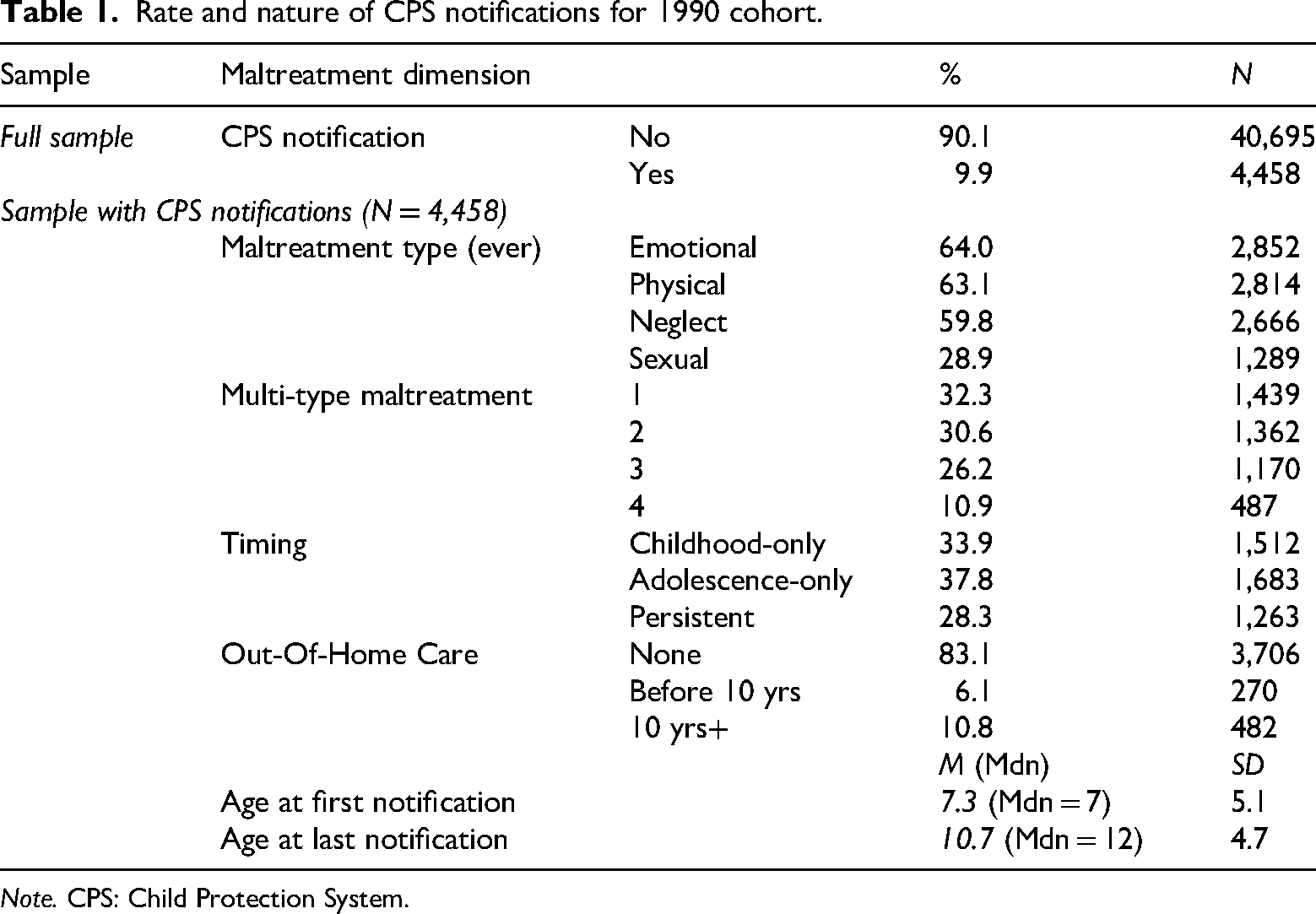
Nearly one in ten individuals experienced at least one CPS notification (Table 1); 62.2% had their first notification before age 10, with notifications continuing into adolescence for 45.5% of these childhood onset individuals. The first notification occurred in adolescence for 37.8% of individuals.
Rate and nature of CPS notifications for 1990 cohort.
Note. CPS: Child Protection System.
Emotional (64.0%) and physical (63.1%) abuse were the most common notified maltreatment types, followed by neglect (59.8%), with sexual abuse less common (28.9%). However, individual maltreatment types infrequently occurred in isolation. Only 9.2% of those with emotional abuse notifications had no other suspected maltreatment types. The same was true for only 13.5% with physical abuse, 19.9% with neglect, and 20.6% with sexual abuse notifications (Figure 1). Most individuals with notifications had multiple maltreatment types (67.7%), with over 10% having notifications for all four maltreatment types. One in six (16.9%) with CPS notifications experienced OOHC, which was more common among those with multi-type maltreatment and notifications spanning across developmental periods (Figure 2).
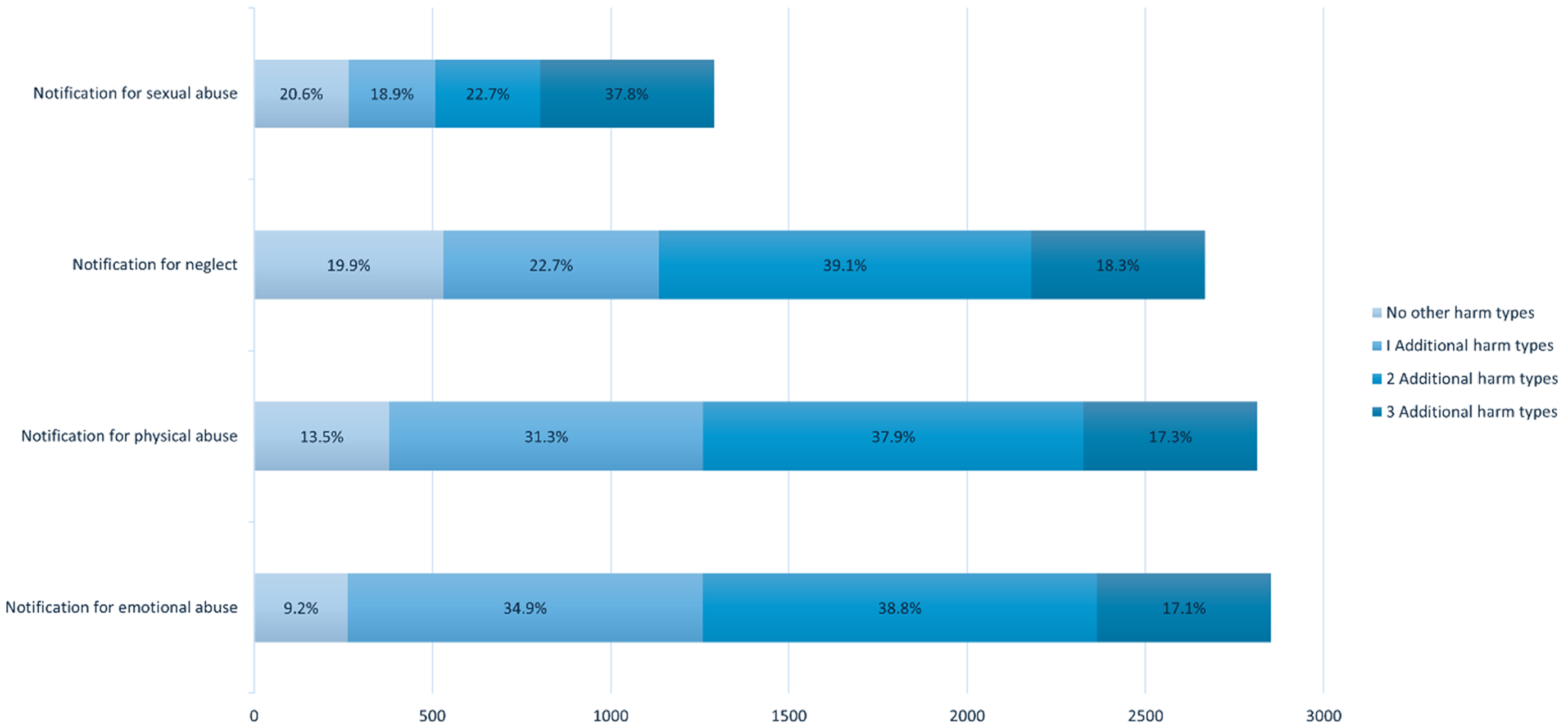
Proportion of individuals with multi-type maltreatment stratified by individual maltreatment types.
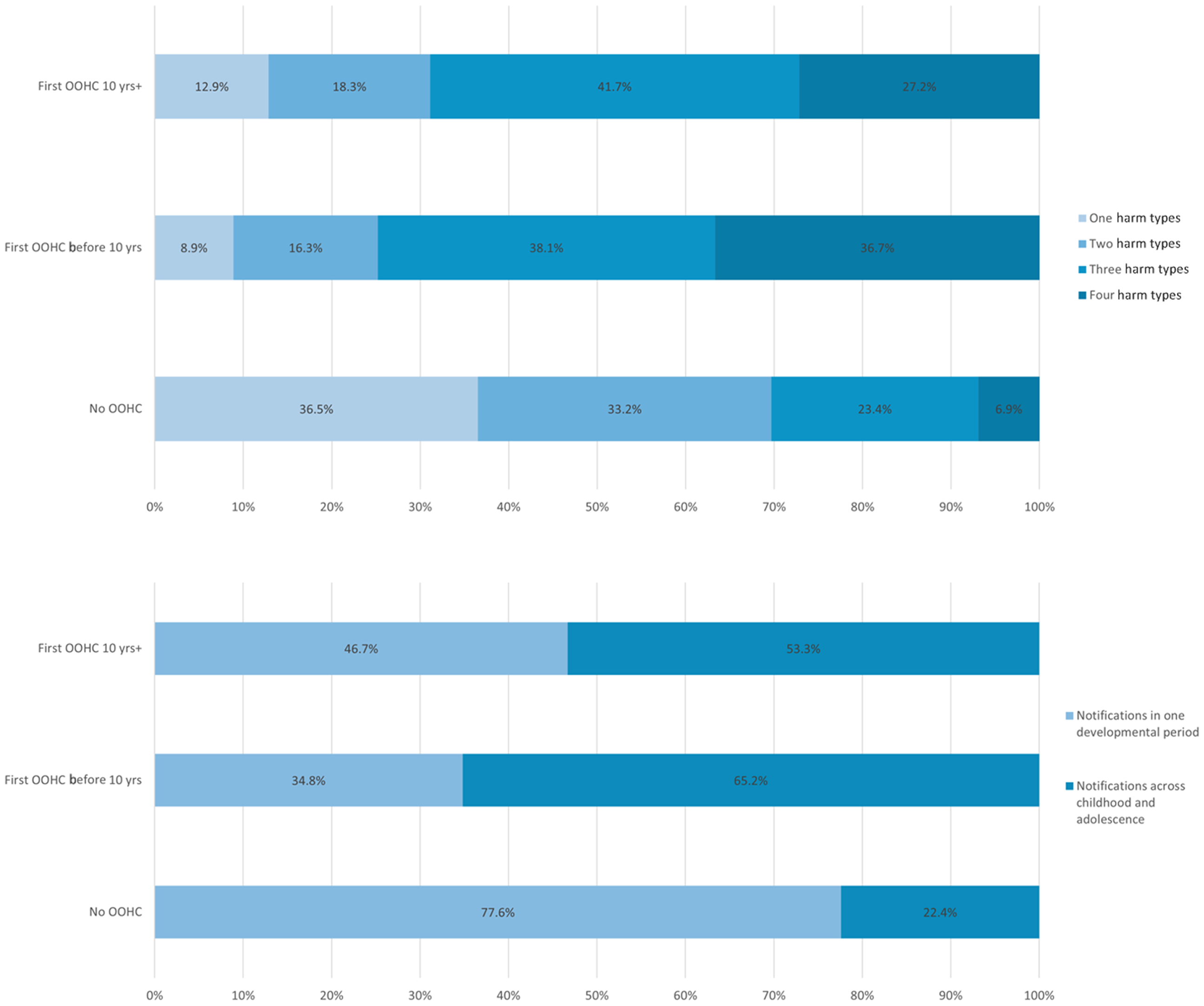
Proportion of multi-type maltreatment and timing of maltreatment stratified by OOHC.
Bivariate associations between CPS contact and CJS contact
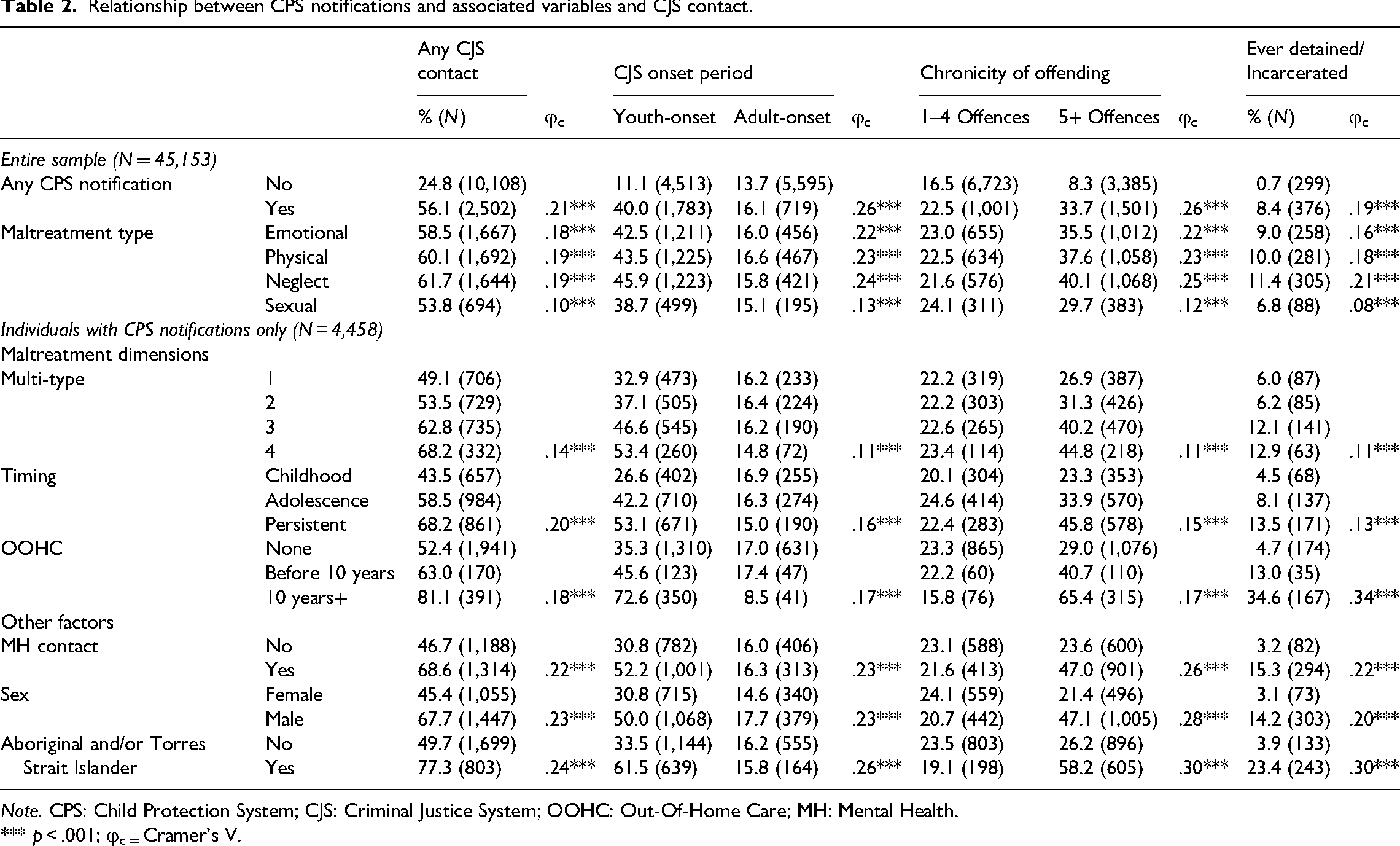
Individuals with CPS notifications had significantly higher rates of CJS contact than those without CPS notifications (Table 2). This was observed across all measures of offending, although the effect was stronger for youth-onset offending (compared to adult-onset) and chronic offending (compared to less frequent offending). While CJS contact commenced in adulthood for 55.4% of non-maltreated individuals, this was the case for only 28.7% of maltreated individuals (with 71.3% onsetting in adolescence). By age 23/24 years, 8.4% of individuals with CPS notifications had been detained/incarcerated, compared to 0.7% of those without CPS notifications.
Relationship between CPS notifications and associated variables and CJS contact.
Note. CPS: Child Protection System; CJS: Criminal Justice System; OOHC: Out-Of-Home Care; MH: Mental Health.
*** p < .001; φc = Cramer's V.
Individuals with CPS notifications exhibited higher rates and seriousness of offending than those without CPS notifications regardless of suspected maltreatment type, the number of suspected maltreatment types experienced, maltreatment timing, and the presence/absence of OOHC (Table 2). However, certain maltreatment experiences exacerbated these differences and were associated with even higher rates and seriousness of offending for some maltreated individuals. Specifically, individuals who experienced a greater number of maltreatment types exhibited higher rates of CJS contact and more youth-onset offending, chronic offending and detention/incarceration. Those suspected of experiencing all four maltreatment types had the worst offending outcomes, with 44.8% exhibiting chronic offending and 12.9% experiencing detention/incarceration.
Timing of maltreatment also mattered. Childhood-limited maltreatment was associated with less offending and less serious offending than adolescence-limited maltreatment, but maltreatment spanning both developmental periods resulted in the highest rates and seriousness of offending. Indeed, persistent maltreatment resulted in similar rates of chronic offending (45.8%) and detention/incarceration (13.5%) as 4-type multi-type maltreatment, but it was far more common in the sample. Although OOHC at any age resulted in more offending, and more serious offending, compared to no OOHC, OOHC commencing at ≥10 years of age was associated with the worst CJS outcomes, including 34.6% experiencing detention/incarceration.
Although the presence of each individual maltreatment type was associated with greater levels of offending, the effect was weaker for sexual abuse across all CJS outcomes (Table 2).
MH system contacts among maltreated individuals
MH contact was common among those with CPS notifications (43.0%), far exceeding MH contact rates among the remainder of the (non-maltreated) cohort (11.3%) (χ2 = 3277.5, df = 1, p < .001, Cramer's V [φc] = .27). For those with both CPS and MH contacts, offending outcomes were significantly worse. While 46.7% of individuals who had notifications, but no MH contact, had CJS contact, 68.6% of individuals with notifications and MH contact had CJS contact. Similar patterns were observed across all offending outcomes examined (Table 2).
Link between CPS and CJS contact, accounting for MH contact
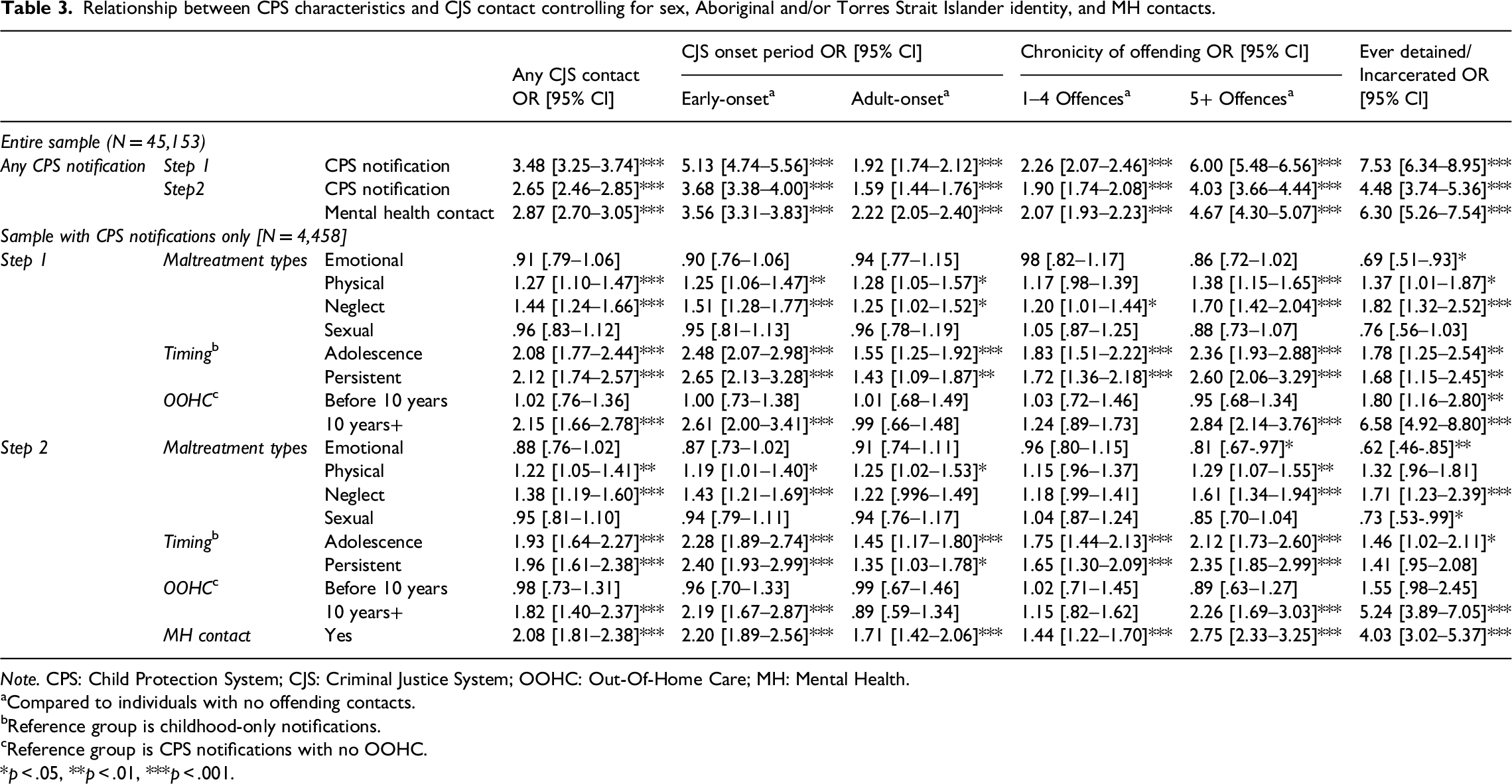
We conducted hierarchical logistic regressions to explore the association between CPS notifications and CJS contacts, first controlling for sex and Aboriginal and/or Torres Strait Islander identity only and subsequently accounting for MH contacts too (Table 3). For all CJS outcomes, effect sizes for CPS notifications decreased after MH contact was added to the models. However, individuals with CPS notifications still had significantly greater odds of every offending outcome, with Odds Ratios (ORs) increasing as did the seriousness of offending (2.7 for any CJS contact, 1.9 for less frequent offending, 4.0 for chronic offending, and 4.5 for detention/incarceration), and higher ORs for youth-onset (OR = 3.7) as opposed to adult-onset offending (OR = 1.6). MH was also strongly associated with offending, with ORs similarly increasing alongside the seriousness of CJS contact.
Relationship between CPS characteristics and CJS contact controlling for sex, Aboriginal and/or Torres Strait Islander identity, and MH contacts.
Note. CPS: Child Protection System; CJS: Criminal Justice System; OOHC: Out-Of-Home Care; MH: Mental Health.
Compared to individuals with no offending contacts.
Reference group is childhood-only notifications.
Reference group is CPS notifications with no OOHC.
*p < .05, **p < .01, ***p < .001.
Additional hierarchical logistic regressions were conducted amongst those individuals with CPS notifications to explore which maltreatment dimensions are most associated with CJS contacts. We first controlled for sex and Aboriginal and/or Torres Strait Islander identity and subsequently considered MH contacts in Step 2 (Table 3). Except for detention/incarceration, there were few differences between models with and without MH contact. Therefore, for simplicity, we focus on findings for Step 2 of the models.
Similar factors were significantly associated with “any CJS contact,” early-onset offending, and chronic offending. Specifically, neglect and physical abuse significantly increased the odds of these three CJS outcomes, as did CPS notifications that either commenced in adolescence or continued from childhood through to adolescence (compared to childhood-only notifications). Compared to those who did not experience OOHC, OOHC that commenced in adolescence was associated with a significant increase in all three CJS outcomes. However, after controlling for the other factors, OOHC commencing in childhood was not associated with an increase in CJS outcomes (compared to those with CPS notifications but no OOHC). MH contacts were significant across all three CJS outcomes.
For less frequent offending and adult-onset offending, OOHC was not significant. However, timing was again important. CPS notifications that either commenced in adolescence or continued from childhood through to adolescence (compared to childhood-only notifications) increased the odds of less frequent and adult-onset offending, as did MH contacts. Although neglect and physical abuse were significantly associated with adult-onset offending in Step 1, neglect was no longer significant once MH was added. For less frequent offending, neglect was the only significant maltreatment type in Step 1, but was no longer significant once MH was added.
For detention/incarceration, while timing and any OOHC were significant in Step 1, after the addition of MH, only OOHC and CPS notifications commencing in adolescence were significant. Neglect was associated with higher odds of detention/incarceration. However, after controlling for all the other factors, sexual and emotional abuse were associated with lower odds of detention/incarceration.
Multi-type maltreatment was omitted from the above models due to high intercorrelations with the individual maltreatment types. Separate analyses substituting individual maltreatment types with multi-type maltreatment are available in Supplemental Table S2. These analyses indicated that, while multi-type maltreatment was associated with any CJS contact, early-onset offending, and more chronic offending in the first step of these models, it was no longer significant once MH contact was added to the models.
Discussion
This study provided a rare opportunity to explore the links between CPS notifications and CJS outcomes into young adulthood, with consideration of both lifetime MH contacts as well as the characteristics of CPS contacts. One in 10 individuals experienced at least one CPS notification, reiterating prior arguments that this phenomenon is not rare (Font & Kennedy, 2022). Importantly, maltreatment was not deterministic, with many CPS-involved individuals remaining free of CJS involvement by early adulthood. Nonetheless, individuals with any CPS notifications had significantly more—and more serious—CJS contacts than those who never experienced CPS notifications, even after controlling for key demographics and MH contacts (2.65-fold increase in any CJS contact, four-fold increase in chronic offending and 4.5-fold increase in detention/incarceration). Indeed, 56% of those detained/incarcerated by age 23/24 had CPS notifications. Given nearly 90% of incarceration occurred in adulthood, findings emphasise the enduring effect on serious young adult offending. Consistent with prior research, our findings underscore the strong link between CPS notifications and youth-onset offending but also highlight a smaller yet significant increase in adult-onset offending that has rarely been examined (Baidawi et al., 2024). Clearly, those who experience CPS notifications are at increased risk of offending and likely require supports to mitigate such risks, including into adulthood. These findings indicate that maltreatment has proximal and distal links to offending, highlighting that both youth and adult justice system interventions should be trauma-informed and individually responsive.
Importantly, child maltreatment experiences are not uniform. Consistent with prior critiques of omnibus operationalisations (Font & Kennedy, 2022; Malvaso et al., 2018), our findings illuminate the importance of considering the (overlapping) dimensions of maltreatment in the CPS–CJS link. First, consistent with DLC frameworks, the timing of CPS notifications matters, reiterating the critical importance of the developmental context within which maltreatment occurs (Baidawi et al., 2024; Stewart et al., 2008). After controlling for all other variables, those with notifications in adolescence-only or spanning childhood through to adolescence had elevated rates of all forms of CJS contact compared to individuals with childhood-only notifications. Interestingly, effect sizes were similar across adolescence-only and persistent maltreatment. The mechanisms underlying these effects cannot be determined by our data, although we did find that these differences remained after accounting for MH as measured by community and/or hospital contacts (although after accounting for MH, adolescence but not persistent maltreatment was a significant risk factor for detention/incarceration).
While not unanimous, prior research does illustrate the potentially deleterious effects of maltreatment during adolescence (Baidawi et al., 2024; Herz et al., 2025; Stewart et al., 2008). Risk may be exacerbated in adolescence due to differences in behavioural “responses” to maltreatment during this period and/or differences in system responses to such behavioural issues. Alternatively, perhaps those with childhood-only notifications have an opportunity to “recover” from maltreatment prior to the developmental period within which delinquency typically onsets (as well as before the age of criminal responsibility) (Font & Kennedy, 2022). Additionally, interventions may be more successful for families/children in this younger age group (Hurren et al., 2017). Importantly, childhood-only maltreatment was still associated with elevated rates of all CJS contacts, only to a lesser extent. We require better understanding of the causal mechanisms underlying these developmental effects to inform developmentally appropriate interventions for those in contact with CPS to address their (potentially unique) criminogenic risks and needs. Moreover, efficacious interventions with families of children whose first notification appears in childhood is essential to reduce persistence of maltreatment into adolescence, and subsequent magnification of risk. Put simply, the impacts appear both proximal and distal, which has implications for future theoretically informed research and intervention. For First Nations families, there is a need for culturally safe, strength-based interventions and Aboriginal and/or Torres Strait Islander-led services (Lonne et al., 2021), including Aboriginal and Torres Strait Islander Community Controlled Organisation-led transitions from care services (Mendes et al., 2020; Walsh et al., 2023).
In a similar vein, timing of first OOHC was crucial. Although OOHC at any age was important at the bivariate level, after controlling for all other variables, OOHC commencing prior to age 10 was not associated with significantly more CJS contacts compared with those with notifications but no OOHC. In contrast, OOHC commencing ≥10 years of age was amongst the strongest factors for any CJS contact, early-onset and chronic offending, and detention/incarceration (though was not associated with less frequent or adult-onset offending). Findings highlight the significance of OOHC during adolescence for more serious/persistent offending. While we could not examine the underlying causal mechanisms, adolescence is marked by numerous biological, psychological, and social developmental changes that may heighten vulnerability to trauma (Backes & Bonnie, 2019). Consequently, there may be a need for greater supports for the transition and wellbeing of affected adolescents. Findings also illustrate the importance of considering the maltreatment experiences in analyses of OOHC, whereby OOHC itself may not elevate the risks of offending once these additional factors are considered. Whether there were also differences in the type, quality, and stability of OOHC placements that commenced before or after age 10 could not be examined but may contribute to these findings. Stark differences in outcomes have been reported elsewhere across placement types and characteristics (Eastman et al., 2025; Sacker et al., 2021) and so should be explored in future research. Furthermore, it is possible that OOHC during adolescence may, in some cases, result in behaviours that are developmentally normative or reflective of trauma responses being criminalised due to increased surveillance and/or lower thresholds for formal intervention (Paterson-Young et al., 2024). Consequently, CJS contact may reflect system amplification as well as antisocial behaviour.
Individual maltreatment types infrequently occurred in isolation. This lends weight to critiques of previous failures to consider multi-type maltreatment and the tendency to focus on specific types of abuse in isolation (e.g., Hurren et al., 2017). Furthermore, even though neglect has historically been overlooked in criminological research (Font & Kennedy, 2022), we find neglect to be the strongest predictor of CJS contact—and more serious CJS outcomes—of all four maltreatment types. Clearly, neglect deserves far more research attention, including in the context of its frequent co-occurrence with other maltreatment types. Echoing Font and Kennedy (2022), future criminological research should explore the theoretical underpinnings of these relationships, such as fractured attachments and weakened social controls and/or heightened opportunities for offending through reduced supervision and monitoring. With improved understanding of these theoretical links, we can better support families to reduce offending and improve wellbeing.
Multi-type maltreatment was significantly associated with any CJS contact as well as early-onset and chronic offending, however, it did not remain significant once MH contact was entered in multivariable models. Importantly, multi-type maltreatment was linked to greater CJS contact at the bivariate level and OOHC and persistent maltreatment typically occurred in the context of multi-type maltreatment. Furthermore, our findings and prior research (Papalia et al., 2022) highlight the link between multi-type maltreatment and MH problems. Consequently, our findings do not suggest that multi-type maltreatment is not important, but rather that it may not add unique variance over and above these other factors given the reality of the entanglement of these experiences (see also Hurren et al., 2017). Coupled with the abovementioned findings, our results point to the importance of preventing the accumulation of child maltreatment to improve outcomes and wellbeing.
Lastly, our findings emphasise the significance of MH in understanding the CPS–CJS link. Individuals with CPS notifications had far higher rates of MH contacts than those without CPS notifications. Moreover, those CPS-involved individuals with MH contacts had far more—and more serious—CJS contacts than CPS-involved individuals with no MH contacts, with a 2.2-fold increase in early-onset offending, a 2.8-fold increase in chronic offending, and a four-fold increase in detention/incarceration. Undoubtably, it should be a priority to assess and subsequently efficaciously address the MH needs of children who receive CPS notifications, regardless of substantiation (see Tzoumakis et al., 2024). Given the probable complexity of the risks and adversity experienced, this likely requires multifaceted supports and collaborative case management across CPS, MH, and education systems. Perhaps those individuals in the cohort who fared well were provided with the appropriate supports to minimise both offending as well as MH problems. The recent extension of OOHC beyond 18 years is one important step to better support the wellbeing of OOHC-involved young people (McDonald, 2025; Mendes et al., 2025). However, far more needs to be done to provide early, cross-sectoral, intensive, trauma-based therapeutic support to CPS-involved children and families who need it most (Segal, 2024).
Limitations
Our findings should be interpreted in the context of the following limitations. Not all child maltreatment and offending (and MH issues) result in official contacts with systems. Our data reflect a combination of behaviour, and system responses to such behaviour. We do not limit our analyses to substantiations, therefore, it is possible that some notifications are false positives, though research indicates elevated criminogenic risks and needs even among children whose notifications are not substantiated (Tzoumakis et al., 2024). Our data is also limited to notifications and OOHC officially recorded by Child Safety. Consequently, findings are influenced by the quality and scope of administrative data collection during this cohort's childhood and adolescent years. Future research should replicate findings using more recent cohorts. We did not have capacity to broadly explore gender differences here, however, we recognise there may be important gender differences in pathways to offending for maltreated boys and girls, although the nature of such moderation is still unclear (Baidawi et al., 2023; Broidy & Thompson, 2018). Contact with one system may make individuals more visible to other systems, thus increasing the likelihood of cross-sector contact (i.e., system amplification). Our data only capture Queensland contacts and cannot account for maltreatment or offending that occurred outside this jurisdiction. Moreover, there have been many and marked differences in Queensland child protection policy and practices over time that may have changed both the likelihood of children experiencing notifications and OOHC as well as the age at which they first experience notifications/OOHC (e.g., new child protection legislation and child protection inquiries resulting in significant changes to policy and practice; Tilbury, 2005). Finally, our data do not provide information that can elucidate the mechanisms underlying these associations, such as poverty and disadvantage, family relationships, parental MH and substance use, peer associations, school engagement, and educational attainment; known risk factors within the key theoretical frameworks. Future research should couple linked administrative data with longitudinal survey data to provide a more complete understanding of the theoretical processes (Malvaso, 2022). Lastly, though we incorporated Aboriginal and/or Torres Strait Islander identity as a control variable, we did not directly examine the CPS–CJS experiences of First Nations peoples specifically. This should be a focus of future research to guide the development and implementation of culturally appropriate early intervention and support services for First Nations people, who are overrepresented in the CPS, MH system, and CJS.
Conclusion
Effective prevention and intervention are reliant on improved understanding of the complexities of CPS–CJS links. This research illustrates these complexities, and assists in elucidating especially high-risk features, namely adolescent and persistent maltreatment, neglect, OOHC experienced ≥10 years of age, and comorbid CPS and MH contact. These results point to the urgent need for intensive and holistic family support to prevent recurrence of maltreatment and increase the success of reunification, cross-sector holistic care for maltreated individuals, trauma-informed responses within both detention and correctional practices, and increased intervention and support for adolescents in OOHC. Importantly, consistent with key DLC theoretical frameworks, our results provide a reminder that intervention should occur early in a problematic pathway, and not simply early in a life course, and take a family-systems approach. Though the CPS–CJS link was especially pronounced for youth offending, increased risk for adult-onset offending was also evident. Still, many CPS-involved individuals remained free of CJS involvement. Better understanding the strengths, resilience, and other protective factors experienced by these young people, as well as their families, may illuminate opportunities for improving wellbeing for CPS-involved individuals more broadly.
Supplemental Material
sj-docx-1-anj-10.1177_26338076251381647 - Supplemental material for Criminal justice system involvement across adolescence and early adulthood: Elucidating the high-risk features of child protection and mental health system contacts and characteristics
Supplemental material, sj-docx-1-anj-10.1177_26338076251381647 for Criminal justice system involvement across adolescence and early adulthood: Elucidating the high-risk features of child protection and mental health system contacts and characteristics by Carleen Thompson, Emily Hurren, James Ogilvie, Lisa Broidy, Diksha Sapkota, Troy Allard, Jaana Haaja, Belinda Crissman, Simon Little, April Chrzanowski and Susan Dennison in Journal of Criminology
Footnotes
Acknowledgements
This project was supported by the Queensland Government Statistician's Office; Department of Families, Seniors, Disability Services and Child Safety; Department of Youth Justice and Victim Support; Queensland Police Service; Queensland Department of Justice; Queensland Corrective Services; Queensland Registry of Births, Deaths, and Marriages; and Queensland Health. We sincerely thank the representatives from these departments for the considerable support that they provided for this project. The views expressed are not necessarily those of the departments or agencies, and any errors of omission or commission are the responsibility of the authors. The authors also gratefully acknowledge use of the services and facilities of the Griffith Criminology Institute's Social Analytics Lab at Griffith University.
ORCID iDs

Ethical considerations
Ethical approval was obtained from the Griffith University Human Research Ethics Committee (HREC 2010/479), and approval was granted by all relevant Queensland Government data custodians. The authors assert that all procedures contributing to this work comply with the ethical standards of the relevant national and institutional committees on human experimentation, and with the Helsinki Declaration of 1975, as revised in 2008.
Author contributions
Carleen Thompson: conceptualisation, data preparation, formal analysis, methodology, data visualisation, first draft of the abstract, method, results, and discussion, and project administration; Emily Hurren: conceptualisation, first draft of the introduction, validation, and writing—review and editing; James Ogilvie: conceptualisation, data preparation, validation, and writing—reviewing and editing; Lisa Broidy: writing—reviewing and editing; Diksha Sapkota: validation and writing—reviewing and editing; Troy Allard: funding acquisition, and writing—review and editing; Jaana Haaja: validation and writing—reviewing; Simon Little: writing—reviewing and editing; April Chrzanowski: writing—reviewing and editing; Susan Dennison: funding acquisition and writing—review and editing. All authors read and approved the final manuscript.
Funding
The authors disclosed receipt of the following financial support for the research, authorship, and/or publication of this article: This research uses data obtained from a project funded by Australian Research Council (Grant No. LP100200469). The funder had no role in study design, the collection, analysis and interpretation of data, the writing of the report or the decision to submit the article for publication.
Declaration of conflicting interests
The authors declared no potential conflicts of interest with respect to the research, authorship, and/or publication of this article.
Data availability statement
The data for the study are held in the Social Analytics Lab (SAL) at Griffith University and used with permission from the relevant data custodians. The linked administrative data used in this study is owned by the respective Queensland Government agencies and access is managed by the Queensland Government Statistician's Office and cannot be made available to third parties by the authors. The datasets analysed during the current study are not publicly available due to restrictions placed on the datasets by the data custodians but can be made available upon reasonable request and with permission of the relevant data custodians and the Queensland Government Statistician's Office. Any researcher interested in accessing the data can submit an application to the SAL management committee (socialanalyticslab@griffith.edu.au) with the relevant support and approvals.
Supplemental material
Supplemental material for this article is available online.
Notes
References
Supplementary Material
Please find the following supplemental material available below.
For Open Access articles published under a Creative Commons License, all supplemental material carries the same license as the article it is associated with.
For non-Open Access articles published, all supplemental material carries a non-exclusive license, and permission requests for re-use of supplemental material or any part of supplemental material shall be sent directly to the copyright owner as specified in the copyright notice associated with the article.
