




Abstract
The quality of cross-examination in child sexual abuse trials is critical to elicit accurate evidence. In a mixed model study, we examined perceptions of Australian practitioners (i.e., judges, prosecutors, defence lawyers, police officers, and witness support officers; N = 337) of child cross-examination and judicial intervention. Each participant rated two simulated cross-examination excerpts in a 2 (complainant age: child/adolescent) × 2 (questioning: appropriate/inappropriate) × 2 (judicial intervention: present/absent) design. Questioning of a younger child was perceived as significantly less fair to both the complainant and the defendant, diminished complainant credibility, and perceived judicial sensitivity. Complainant age effects interacted with approval of questioning on fairness to the complainant and with the presence of a judicial intervention on judicial sensitivity. Questioning approval effects interacted with a judicial intervention. Even when appropriate questions were asked, the judge's proactive intervention and consideration of the complainant were deemed necessary. The findings underscored the need for proactive judicial interventions to ameliorate the detrimental effect of inappropriate cross-examination, as well as further professional training and education on developmentally appropriate questioning and psychological vulnerability of child sexual abuse complainants.
Keywords
Background
The reality of sexual offending against children continues to evoke justice reforms. A recent meta-analysis estimated that as many as 24% of girls were sexually abused (Qu et al., 2022) while estimates for boys are typically lower, for example, 3%–17% (Barth et al., 2013). In Australia, higher prevalence rates were recorded: one in every three women reported sexual abuse (37.3%), one-third of whom reported abuse by a family member, while rates for men were 18.8% (Mathews et al., 2023). The prevalence increases considerably with the addition of online sexual abuse (Finkelhor et al., 2024).
Further, three-fifths of the cases reported to authorities do not proceed to prosecution, and of those that do, the conviction rate is lower than for other reported offences against persons (Cashmore et al., 2020). For instance, in New South Wales, the most populous Australian state, only 15% of all reported child sexual offences proceed to trial, with conviction rates of 7% for historical claims and 8% for contemporaneous claims (Gilbert, 2024). This extreme underperformance on justice indices has been called a “justice gap” (Cossins, 2020).
This justice gap is associated with concerns about the reliability of evidence elicited from child sexual abuse complainants, particularly during cross-examination (Eastwood et al., 2006; Nolan & Goodman-Delahunty, 2015; Powell et al., 2022). Observational and experimental studies have shown that aggressive cross-examination questions at times unfairly damage the reliability and credibility of child sexual abuse complainants (e.g., Pichler et al., 2021; Wylie et al., 2024). Systemic biases of this nature can result in miscarriages of justice (Andrews et al., 2015). The present study examined criminal justice professionals’ perceptions of the appropriateness of cross-examining child versus adolescent complainants of child sexual abuse with or without judicial intervention, with the aim to provide practical implications to cross-examiners of vulnerable witnesses.
Mismatch between cross-examination practices and children's development
Paradoxical tensions exist between the excesses of the adversarial justice process and the goals of cross-examination as an engine of truth. The adversarial process imposes a duty of zealous advocacy and authorises defence counsel to use leading questions on cross-examination to validate or invalidate crucial factual assertions by a complainant presented by the prosecution during the direct examination. Legal practitioners and academics have endorsed the view that defence lawyers’ obligations to their client can be met by developmentally appropriate and psychologically effective questioning that does not increase the risk of error in responses from a vulnerable and often the sole witness providing direct evidence of abuse (Righarts et al., 2015; Stolzenberg & Lyon, 2014). Others observed that the potential retraumatising and secondary abuse of complainants in the course of adversarial legal proceedings may leave criminal offences and the underlying trauma of child sexual abuse victims unaddressed (Eastwood, 2003; Hobbs et al., 2014). As a consequence, the health and welfare of the affected community and of society at large is underserved by the justice process (Goodman-Delahunty & Cowdery, 2023).
Practical and theoretical research has documented a series of specific concerns about the questioning manner and methods used with child complainants. Studies have shown that a child witnesses’ capacity to respond accurately and completely is impaired by: (a) complex language, that is, questions that are grammatically convoluted, or contain technical terms and legalese (Hanna et al., 2012; Zajac & Hayne, 2003); (b) repetition of the question, using intimidating or aggressive tone and manner (Brennan, 1995; Westcott & Page, 2002); (c) intimidating and coercive questioning (Zajac & Cannan, 2009; Zajac et al., 2012); and (d) leading and suggestive questioning on cross-examination (Garven et al., 1998; Powell & Barnett, 2015; Zajac et al., 2017). The psychological definition of a leading or suggestive question is one that contains information that was not previously generated by the child, increasing the risk of false responses (Brubacher et al., 2019).
Furthermore, a thematic analysis of transcribed Closed Circuit Television (CCTV) cross-examinations of child sexual abuse complainants and parallel interviews of lawyers on the use of typical cross-examination strategies confirmed that courtroom questioning practices breached both the Aotearoa New Zealand rules of professional conduct and the United Nations Convention on the Rights of the Child (Davies et al., 1997; Henderson, 2016). Similar concerns emerged following empirical analyses of transcripts of child sexual abuse trials conducted in the United States in Los Angeles courts: neither prosecutors nor defence counsel questioned child sexual abuse complainants in developmentally appropriate ways (Andrews et al., 2015). Chief among practical suggestions derived from the results was the principle that a lawyer's duty to the court should supersede their duty to their client. Accordingly, adversarial cross-examination tactics known to compromise the quality of the elicited evidence should be prohibited, as regulations and bench guidelines currently prescribe (Australian Institute of Judicial Administration Committee, 2020; Cossins, 2009; Hanna et al., 2012; Henderson, 2002, 2016). Furthermore, interventions by presiding judges may be necessary to override strategies motivated by the zealous advocacy of defence counsel at the expense of the reliability of the complainant's evidence (Cashmore & Trimboli, 2005; Cossins, 2006).
Decision-makers’ perceptions of children's credibility
With regards to complainant age, conviction rates are typically higher when sexual abuse complainants are younger, but complainant credibility has a curvilinear function (Goodman-Delahunty et al., 2017). Up to about 9 years of age, complainants are perceived as more credible, to have fewer ulterior motives for false allegations, and less capacity for sexual initiation than their adolescent counterparts. Notably, children younger than 9 years of age were generally perceived as more prone to memory errors and thus as less reliable witnesses (Antrobus et al., 2012; Gabora et al., 1993; Tabak & Klettke, 2014). Drawing on results of in-depth interviews of 130 child complainants and their parents who sought justice through the Australian criminal courts, Eastwood and Patton (2002) contended that the ineffectiveness of legislation and reforms in child sexual abuse cases could be overcome through “a concomitant shift in culture, attitudes and beliefs about sexual abuse and about children” (p. 6). The way child sexual abuse complainants are dealt with at every stage of legal proceedings, including cross-examination, affects the successful delivery of justice. In particular, Eastwood et al. (2006) emphasised that in this aspect of professional engagement, more than any other, law and justice practitioners have a greater professional duty and responsibility to be relevantly informed, accountable and sensitive to the rights and needs of children in extremis than community attitudes might otherwise dictate. (p. 4)
The present study
The present study extended the above cited line of enquiry by means of an experimental investigation of the perceptions of criminal justice practitioners of the cross-examination of child sexual abuse complainants. The study aimed to identify tangible implications for the improvement of institutional practice and the delivery of justice to vulnerable witnesses in the justice system. Three factors known to impact justice outcomes in cases of child sexual abuse (Voogt & Klettke, 2017; Voogt et al., 2019) were systematically manipulated in an online experiment, that is, the complainant's age (pre-pubertal 10-year-old child/16-year-old adolescent), cross-examination questioning strategies (developmentally appropriate/inappropriate), and a judicial intervention during the cross-examination to safeguard the quality of the evidence elicited from a vulnerable witness (present/absent). These effects were examined in a sample of five groups of criminal justice practitioners who work most closely with child sexual abuse complainants: trial judges, prosecutors, defence counsel, police officers, and witness assistance support staff. We expected the main effects and interactions of the three factors to yield tangible, practical implications on ways to elicit more reliable evidence from child sexual abuse complainants.
The hypotheses were as follows. We anticipated that practitioners would be more sensitive to inappropriate questioning of a young child than an adolescent complainant (hypothesis 1). Further, we hypothesised that practitioners would be more likely to approve judicial intervention during cross-examination of the young than the adolescent complainant (hypothesis 2). Hypothesis 3 predicted that practitioners were more likely to perceive the judge who intervened as biased towards the complainant, and more so for the adolescent complainant.
Method
Participants and procedure
Using a convenience sampling method, an online experiment was administered to five professional groups working in the criminal justice sector in the states of New South Wales (n = 128), Victoria (n = 81), and Western Australia (n = 83). A total of 60 trial judges, 61 prosecutors, 52 defence lawyers, 85 police officers, and 34 witness support officers participated in the study (N = 337, 54.5% women).
A priori power analysis for testing exploratory hypotheses in a mixed between-within analysis of variance indicated that to achieve 80% power to detect a medium-sized effect (f = 0.25 and f2 = 0.15; Cohen, 1992) with a p = .05 as a criterion for statistical significance, an average of 30 participants was recommended in each experimental condition. The medium effect size was based on research analysing trial transcripts of child sexual abuse cases. This research showed medium to large effect sizes in relation to judicial intervention for question form according to complainant age (Martschuk et al., 2021).
Participants were recruited per email invitation, circulated via internal email systems within the respective organisations in which judges and magistrates, prosecutors, defence lawyers, police officers, and witness assistance and support officers worked. In addition, an invitation was issued to the Court Network, a court support service operating in Victoria and Queensland. No financial incentive was provided for participation in the survey.
Police officers comprised 29.3% of the participants; the proportion of the other four professional practitioner groups was equivalent (19% were judges and magistrates; 19% were prosecutors, 18% were defence lawyers, 14% were witness assistance officers). The median number of years of experience with cases of child sexual abuse was eight. Witness assistance officers reported attending more child sexual abuse training than members of the other professional groups, defence lawyers the least. The most common form of training was a continuing education course (26.4%). Approximately 40% of participants had no formal training on the topic.
Design
A mixed model design was employed with between-participant factors comprising a three-way factorial design: 2 (complainant age at time of trial: pre-pubertal 10-year-old child vs. 16-year-old adolescent) × 2 (cross-examination questioning: developmentally appropriate vs. inappropriate) × 2 (judicial intervention: present vs. absent). A within-participant factor was exposure to two randomly allocated experimental vignettes designed to be plausible, concise, and arouse the interest of the participants (Bieneck, 2009). Each participant evaluated two vignettes that were counter-balanced for the three factors, containing different conditions for all three independent variables. The vignettes described two different non-penetrative contact offences of equivalent severity so that no practitioner read about the same offending conduct twice. To avoid confounding age at the time of abuse with other variables of interest, the age of the complainant at the time of abuse was held constant at 9 years, and age at the time of trial was varied (10 vs. 16 years old). The claim by the complainant aged 16 years entailed a lengthier reporting delay, comprising what is often referred to as “historical” abuse. Gender of the complainant was systematically varied across all vignettes to counterbalance victim gender effects.
Materials
The experimental vignettes were based on empirical findings (e.g., Klemfuss et al., 2014; Powell & Snow, 2007) and presented as excerpts of a written transcript of the pre-recorded audio-visual link (AVL) cross-examination by defence counsel of a child sexual abuse complainant. The vignettes were excerpts of a transcript of a cross-examination, with different types of questions, answers, and interventions depending on the experimental condition. All transcripts began with a background statement establishing the gender and age of the complainant, the alleged offence and the age of the complainant at the time of the alleged offence. For example: “Suppose that Mark, who is 16 years old, has given evidence-in-chief in the criminal trial against the defendant, Mr Dodson, his priest, alleging that Mr Dodson sexually abused him in the church when he was 9 years old”. A transcript of a cross-examination conducted via CCTV followed, in which counsel for the defence asked an appropriately formulated question, such as “You told the police that Mr X opened his pants. Is that true?” which is a simple proposition, followed by a simple non-leading yes/no question. Conversely, in another condition counsel asked an inappropriately framed question on the same topic, such as “Wasn’t it that my client was helping you change your clothes, which you mistook for touching your private parts?” In this instance, the question is complex, consisting of two propositions and containing a double negative statement, which requires high cognitive skill to understand. While both are closed questions, the first example is easier to understand. Previous research has confirmed that children are less likely to change their original statements if presented with non-leading than leading closed questions (Saywitz et al., 2019). Additionally, the judge might intervene or not, for example by stating “That question has been asked and answered. Kindly treat the witness with more respect. Please move on to another topic”. Copies of the vignettes are included in Supplementary Materials 1 (https://osf.io/4mfxe/?view_only=0900272f6b02477eb53e337d9acaf99b).
The survey questionnaire consisted of 16 items on which participants rated the experimental case study vignettes. Other questions gathered information about the demographic characteristics of the participants, their experience with child sexual abuse matters and uses of alternate measures in those cases (Lee et al., 2019).
Eight measures of the perceived quality of the simulated cross-examination were used as dependent variables to examine the effects of the experimental factors upon the participants’ perceptions of the cross-examination. A series of Exploratory Factor Analyses (EFAs) were conducted on participants’ responses to 11 questions about the quality of the cross-examination depicted in the vignettes (Table 1). The EFAs aimed to identify latent variables that underlay the professionals’ ratings of the 11 items. Because there were eight experimental conditions [Complainant age (2) × Question type (2) × Judicial intervention (2)] with mixed vignette effects as a repeated factor, the EFAs were performed by separating the results by experimental condition. These analyses yielded three factors that were indices of the quality of the cross-examination: (a) the fairness of the cross-examination to the complainant (five items), (b) the credibility and reliability of the complainant (three items), and (c) the best interests of and fairness to the defendant (three items). Factor loadings and reliability are displayed in Table 1.
Item loadings and reliability of the cross-examination quality factors as dependent variables.
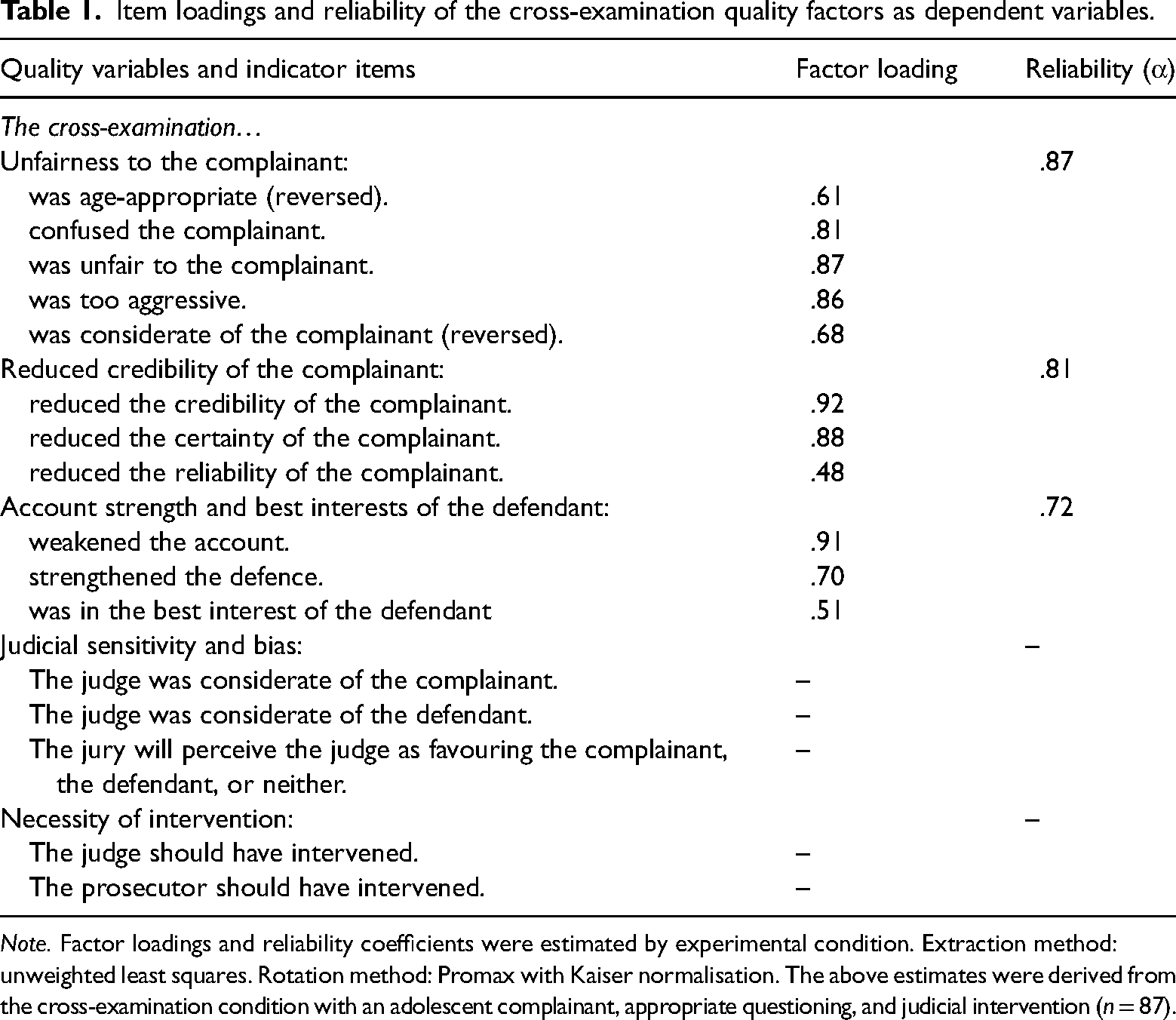
Note. Factor loadings and reliability coefficients were estimated by experimental condition. Extraction method: unweighted least squares. Rotation method: Promax with Kaiser normalisation. The above estimates were derived from the cross-examination condition with an adolescent complainant, appropriate questioning, and judicial intervention (n = 87).
A second group of variables was analysed separately, because they were multinomial variables with three response options measuring the perceived “impact” of the cross-examination quality: whether the presiding judge was considerate (4) of the complainant and (5) of the defendant, and (6) whether juries would perceive the judge as neutral, favouring the complainant, or the defendant.
The third index group of dependent measures were dichotomous variables with a “yes” or “no” response option. This psychometric characteristic required separate analysis from the other Likert-scale variables distinctively concerning the participants’ perceptions of the intervention factor. These items assessed whether (7) the judge and (8) prosecutor should have intervened in the cross-examination.
Analyses
Preliminary analyses
None of the five continuous variables was normally distributed according to Kolmogorov–Smirnov and Shapiro–Wilk tests. Due to this violation of normality in the data, bootstrapping was conducted with 1,000 random samples using SPSS 23 to test the effects of the three experiment factors. For the eight index variables of the quality of cross-examination, the effects of the three manipulated factors (complainant age, questioning type, and judicial intervention) were tested in the main mixed models with the vignette as a repeated within-participant factor. The practitioner group variable was included to control and investigate the effect of profession. For the two binary variables, the necessity of judicial intervention by the judge or prosecutor, generalised mixed modelling with a logistic log function was applied to examine the effects of the three experimental factors upon the participants’ judgements. The multinomial variable (inferred jury perceptions of the judge's neutrality), measured with three response options of favouritism towards the complainant, the defendant, or neither witness, was analysed with a multinomial link function in a mixed model.
Mixed model analysis
The effects of complainant age, questioning type, and judicial intervention as between-participant factors were examined in mixed models with professional group as the control factor and the cross-examination vignette as the repeated factor. Five continuous dependent variables to assess professionals’ perceptions of the quality of the cross-examination were analysed sequentially.
Results
Perceived impact of the cross-examination on the complainant and the accused
Perceived unfairness to the complainant
The main effects of complainant age [F(1, 657) = 17.65, p < .001,
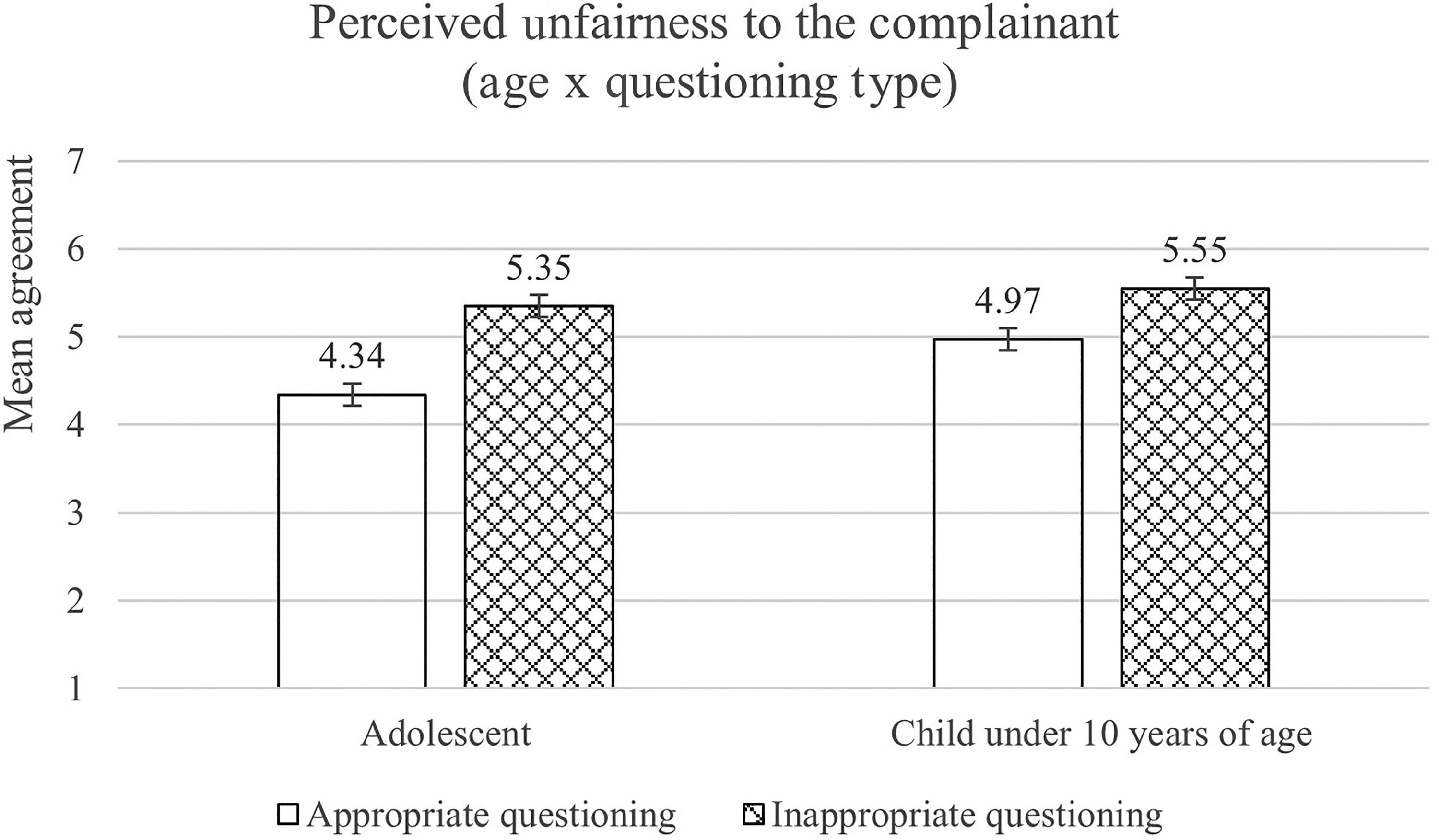
Interaction effect of complainant age and questioning type on the perceived unfairness of the cross-examination to the complainant. Error bars are standard errors.
The five professional groups differed significantly in their perceptions of the unfairness of the cross-examination to the complainant [F(4, 657) = 24.12, p < .001] such that defence lawyers were significantly less likely to agree than other practitioner groups that the cross-examination was unfair to the complainant. A total of 23.08% of the observed variance in perceived unfairness was explained by the model.
Reduced credibility and reliability of the complainant's testimony
In total, the model explained 16.86% of the variance in practitioners’ perceptions that the cross-examination impaired the credibility, reliability, and certainty of the complainant. Only two main effects on the dependent variable were significant, namely the complainant's age [F(1, 656) = 27.20, p < .001,
Account strength and best interests of the defendant
A total of 14.2% of the variance in the perceived impact of the cross-examination on the account strength and best interests of the defendant was explained by the model. Only two main effects were significant, namely complainant age [F(1, 654) = 14.80, p < .001,
Sensitivity of the presiding judge to the complainant
Regarding the practitioners’ perceptions of judicial sensitivity to the complainant, the model explained 34.06% of the variance. All three main effects were statistically significant: complainant age [F(1, 648) = 5.68, p = .017,
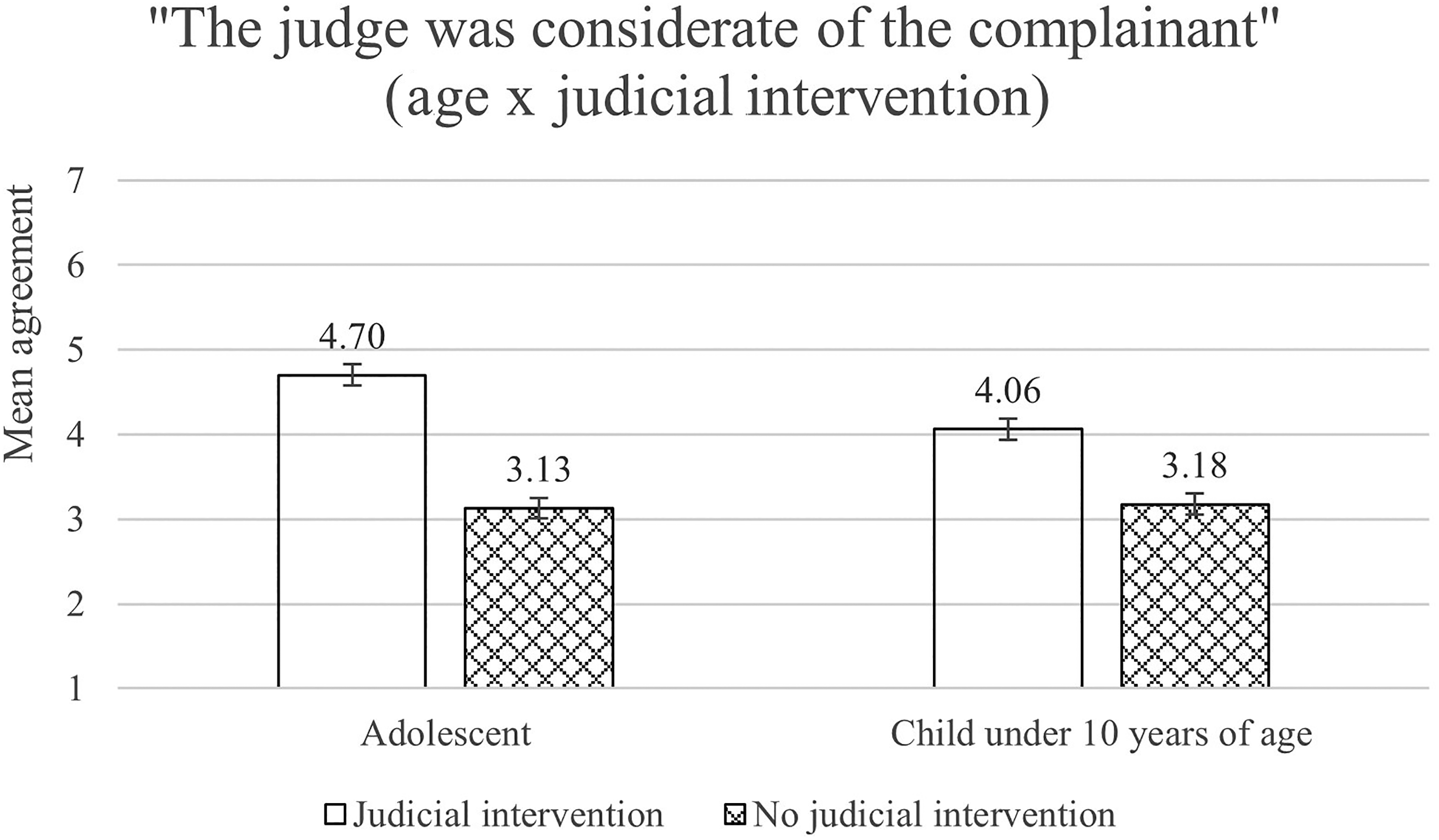
Interaction effect of complainant age and judicial intervention on the judge's considerateness of the complainant. Error bars are standard errors.
Sensitivity of the presiding judge to the defendant
Regarding the extent to which the presiding judge was perceived as sensitive to the defendant, 8.82% of the variance was explained by the model. Only one main effect of judicial intervention was statistically significant [F(1, 631) = 9.32, p = .002,
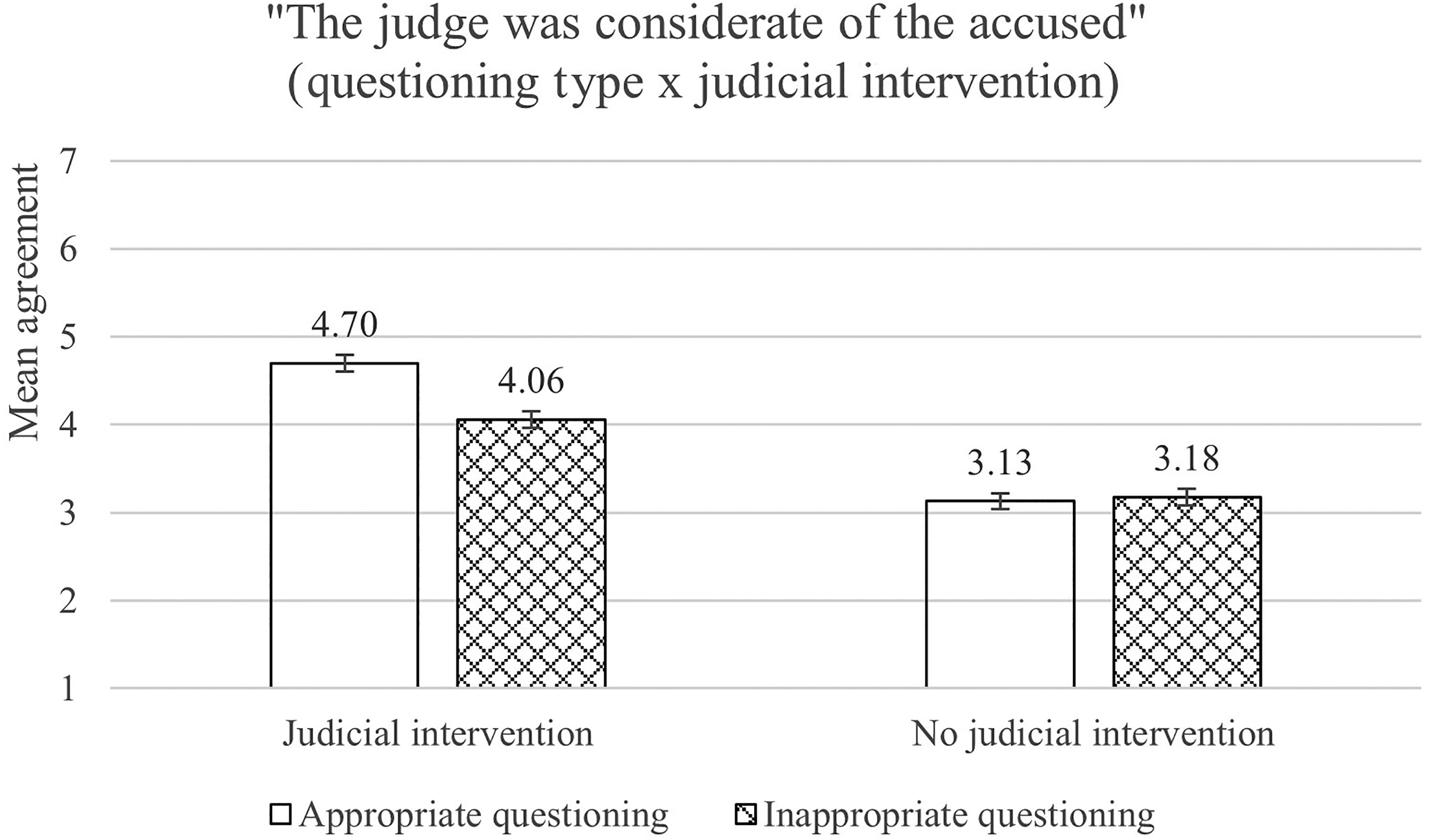
Interaction effect of questioning type and judicial intervention on the sensitivity of the judge to the defendant. Error bars are standard errors.
Perceived necessity of intervention during cross-examination
Logistic mixed models were tested with the two binary dependent variables of the practitioners’ judgements derived from yes or no responses to the questions asking whether the judge or prosecutor should have intervened in the cross-examination. Furthermore, a multinomial mixed model was tested for the three-level categorical variable, seeking the professionals’ judgement as to whether the jury would view the judge as neutral or biased in favour of the complainant or the defendant. For these three generalised linear mixed models, the effects of complainant age, questioning type, and judicial intervention were examined as between-subject factors with the repeated factor of vignette.
Should the judge have intervened in the cross-examination?
The generalised mixed linear model with the logistic link function fit the data for the practitioner’ views regarding the need for the judge to intervene in the cross-examination [F(8, 7) = 8.39, p = .006]. Two main effects of questioning type [F(1, 7) = 39.52, p < .001], and judicial intervention [F(1, 7) = 28.24, p = .001] were significant. However, these main effects were qualified by a significant interaction effect of questioning type and judicial intervention [F(1, 7) = 10.58, p = .013]. Figure 4 displays this interaction effect reflecting a stronger effect for the need for the judge's intervention when the cross-examination questioning was inappropriate. Criminal justice sector professionals were more likely to conclude that the presiding judge should have intervened in the cross-examination with inappropriate than appropriate questioning, even when the experimental simulation included a judicial intervention. The repeated vignette factor also showed a significant effect [F(1, 7) = 15.86, p = .005] such that the rate of the practitioners’ agreement that the judge should have intervened was higher when the vignette was read first [P(yes) = 0.84, SE = 0.02] than when it was read second [P(yes) = 0.73, SE = 0.02].
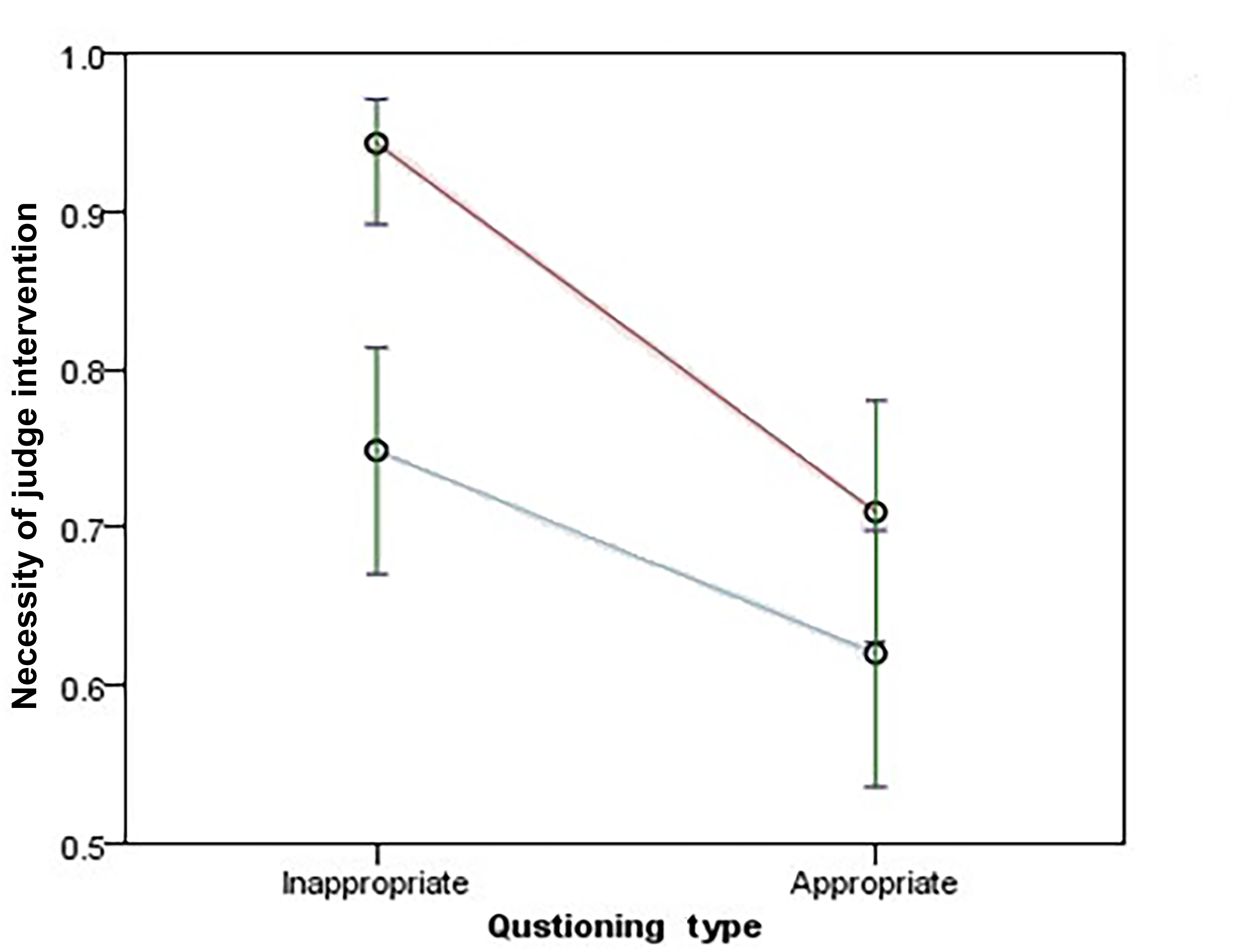
Interaction effect of complainant questioning type and judicial intervention: the probability of consensus that the judge should intervene in cross-examination. The upper line shows responses following exposure to a vignette in which the judge intervened in the experimental cross-examination; the lower line shows responses in the absence of any judicial intervention. Error bars are standard errors.
Should the prosecutor have intervened in the cross-examination?
The generalised mixed linear model with the logistic link function fit the data for the rate of agreement by criminal justice practitioners that the prosecutor should have intervened in the cross-examination [F(8, 7) = 20.41, p < .001]. All three main effects were significant: complainant age [F(1, 7) = 9.62, p = .017], questioning type [F(1, 7) = 104.64, p < .001], and judicial intervention [F(1, 7) = 22.45, p = .002]. However, the last two main effects were qualified by a significant interaction effect of questioning type and judicial intervention [F(1, 7) = 27.62, p = .001]. This interaction effect suggested a significant effect of judicial intervention upon the need for the prosecutor to intervene in the cross-examination, but only in response to inappropriate questioning. Contrastingly, no difference emerged in the rate of agreement that the prosecutor should intervene in the cross-examination with appropriate questioning, irrespective of whether the judge actually intervened in the simulated cross-examination. Further, the repeated vignette factor yielded a significant order effect [F(1, 7) = 51.64, p < .001] such that the probability of professional agreement with the proposition that the prosecutor should have intervened in the cross-examination was higher in response to whichever vignette was presented first [P(yes) = 0.80, SE = 0.01] than to the vignette presented second [P(yes) = 0.65, SE = 0.02].
Jury perceptions of judicial bias during the cross-examination of the complainant
With the multinomial link function, the generalised mixed linear model fit the data for the practitioners’ response as to the perceived jury views of judicial bias or neutrality during the cross-examination of the complainant [F(16, 656) = 2.24, p = .004]. Two main effects of questioning type [F(2, 656) = 3.28, p = .038] and judicial intervention [F(2, 656) = 10.31, p < .001] were significant, with no other significant effects. The complainant was rated 1.82 times less likely (SE = 0.80, p = .023) to be favoured by the judge when criminal justice practitioners estimated jury perceptions of judicial neutrality following exposure to the cross-examination with inappropriate than appropriate questioning. Similarly, the complainant was rated 4.25 times less likely (SE = 1.41, p = .003) to be favoured by the judge when practitioners estimated jury perceptions of judicial neutrality following exposure to the cross-examination without judicial intervention than with judicial intervention.
Summary of main findings
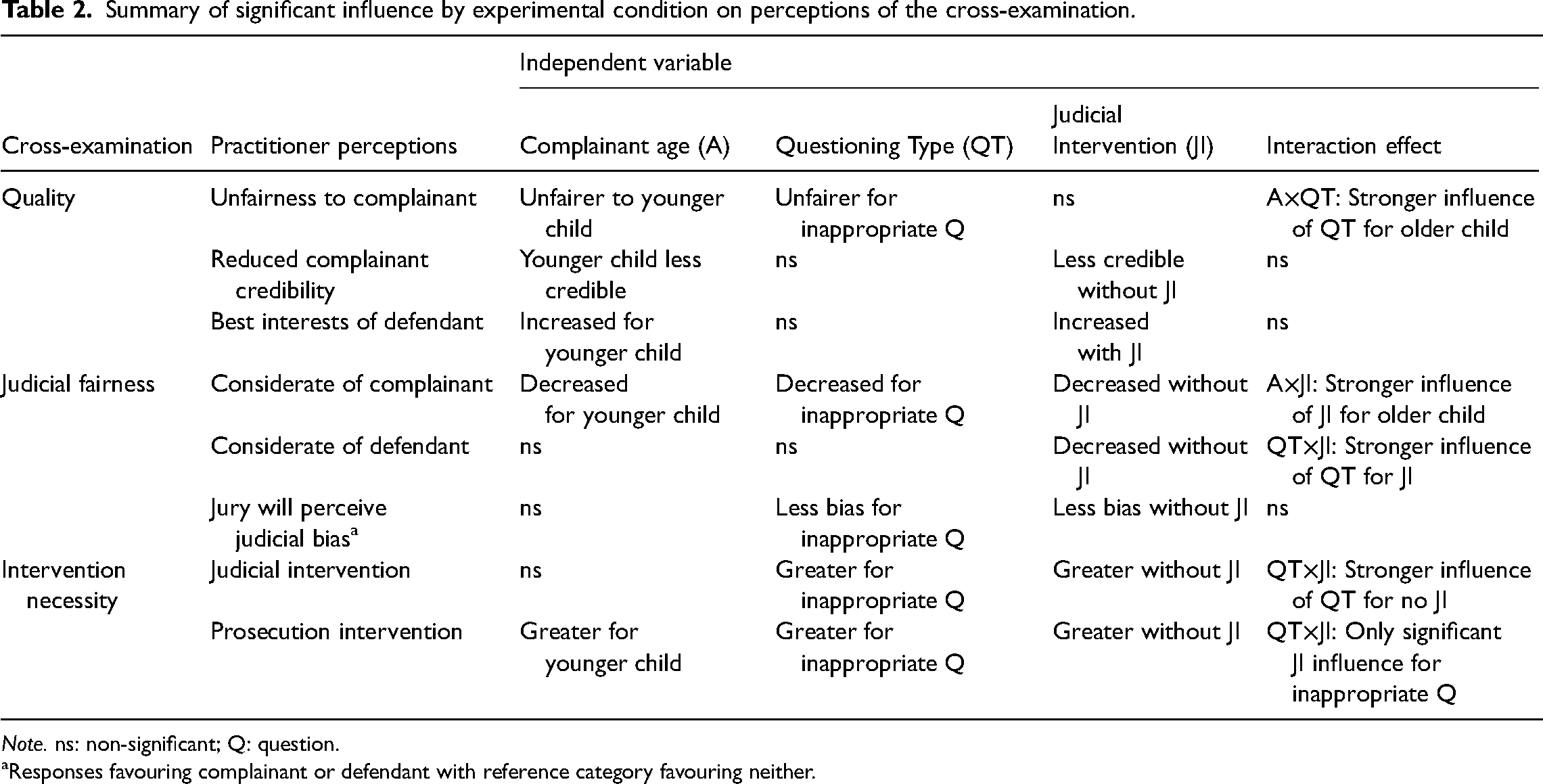
Table 2 summarises the results of the eight mixed models with continuous dependent variables and three generalised mixed models with categorical dependent variables. The factor of complainant age influenced perceptions of the fairness of the cross-examination to the complainant and to the defendant, of the complainant's credibility, and how considerate the judge was of the complainant. For a 10-year-old child complainant, compared to an adolescent, the simulated cross-examination was rated less fair to both the complainant and the defendant; it significantly reduced the complainant's credibility and the extent to which the presiding judge was seen as considerate of the complainant. Complainant age effects also interacted with questioning type in explaining the variance in perceived unfairness to the complainant, whereas the age effects interacted with judicial intervention in explaining the variance in perceived considerateness of the judge to the complainant.
Summary of significant influence by experimental condition on perceptions of the cross-examination.
Note. ns: non-significant; Q: question.
Responses favouring complainant or defendant with reference category favouring neither.
The effects of questioning type interacted with the age factor in the perceived fairness of the cross-examination to the complainant, as well as with the judicial intervention factor in explaining the variance in the judge's sensitivity to the defendant and the need for both the prosecutor and the judge to intervene in the cross-examination. These results highlighted the significant moderating role of judicial intervention, and that practitioners endorse interventions by both judges and prosecutors to improve the quality of a cross-examination when inappropriate questioning of child complainants occurs. The non-significant effects obtained for the four dependent variables are displayed in the last rows of Table 2. These reflected that appropriate questioning and judicial intervention can be perceived to influence the quality of the cross-examination for both 10-year-old child complainants and 16-year-old adolescents.
Discussion
The present study tested the effects of complainant age, questioning appropriateness, and the need for judicial intervention upon perceptions of fairness and the quality of cross-examination of a vulnerable witness in a child sexual abuse trial. The novel focus of the research was analysis of divergent perceptions of five groups of criminal justice practitioners whose day-to-day practice entails eliciting evidence from vulnerable complainants or observing legal proceedings where this occurs. Use of a repeated factor of the cross-examination vignette (the experimental stimulus) and mixed modelling facilitated understanding of the diversity observed in the perceived fairness of cross-examination of vulnerable witnesses. Similarly, generalised linear mixed modelling was used to analyse the perceived need for judicial intervention and to estimate juries’ perceptions of judicial bias. Results of these experimental data gathered from Australian stakeholders in the criminal justice sector are informative to academic theorists and researchers, and to practitioners working on cases of child sexual abuse.
Whether the complainant was a primary school-age child with a contemporary sexual abuse claim or an adolescent with an historical claim (abused 7 years before trial), exerted an influence on the perceptions of criminal justice sector practitioners regarding the fairness of cross-examination to the complainant, the credibility of the complainant, and whether the presiding judge was sensitive to the vulnerable complainant. With a younger complainant, the cross-examination was perceived as less fair, less sensitive and significantly reduced the credibility of the complainant. However, the perceived need for judicial intervention, estimates of jury perceptions of judicial bias and the fairness of the process to the defendant were unaffected by the complainant's age, suggesting that these aspects of cross-examination were endorsed without specific consideration of the complainant's age.
One of the age effects was moderated by question type when assessing the perceived unfairness to the complainant. This significant interaction effect suggested that the cross-examination of a 10-year-old child was perceived as systemically or inevitably unfair (the EM was 4.97, higher than the midpoint of the 7-point rating scale) even when appropriate questioning was depicted, and more so when inappropriate questioning of complainants aged both 10 and 16 years occurred. Another age effect was moderated by the judicial intervention on the perceived sensitivity to the complainant. A judge who did not intervene in the cross-examination was perceived as similarly insensitive to the complainant, irrespective of the age of the complainant. In contrast, a judge who intervened in the cross-examination was viewed as less considerate of the primary school-age child than the adolescent complainant. These results underscored the importance of judicial intervention to safeguard the reliability of the evidence of vulnerable witnesses in both age groups. The harsh nature of cross-examination is widely acknowledged to pose a challenge to judges who were perceived to lack adequate sensitivity to child complainants, and especially younger, pre-adolescent child complainants. Yet judges must balance their interventions to achieve a fair trial for both the defendant and complainant, without risking grounds for appeal (Blewer et al., 2023; Westera et al., 2019).
The manipulated factors of questioning type and judicial intervention interacted and mutually moderated each other's effects in explaining some of the participants’ perceptions of the quality of the cross-examination. When the questioning was inappropriate, the effects of a judicial intervention were stronger than when the questioning was appropriate, especially on the extent to which the judge was viewed as sensitive to the defendant. Further, following inappropriate questioning participants perceived a stronger need for an intervention by both the prosecutor and the judge. This implication is noteworthy, particularly in light of research findings that the evidence of child witnesses in sexual abuse trials is more reliable when they are asked appropriate questions, such as non-suggestive or non-leading questions (Klemfuss et al., 2014).
Regarding the extent to which the cross-examination was seen to reduce the credibility of the complainant and the fairness to, and best interests of, the defendant, only the main effects of complainant age and judicial intervention were significant. These results suggested that more care should be taken with younger than older child complainants to safeguard the credibility, reliability, and certainty of their evidence, as well as the best interests of the defendant. Likewise, the presiding judge and the prosecutor should be more pro-active in intervening to promote the elicitation of higher quality evidence from complainants and to increase the fairness of the cross-examination to the defendant. This is particularly important given that defence lawyers perceived significantly less unfairness to the complainant than did other professional groups (Lee et al., 2023), and therefore might not recognise that their questioning poses unfair difficulties to the child complainant. Notably, analyses of judges’ perceptions of the fairness of the cross-examination to the complainant revealed that they viewed the potential for confusion as more unfair than age-inappropriate questioning (Lee et al., 2023).
The significant differences across the five professional groups suggested the need for professional training and education. Defence lawyers showed less sensitivity to unfairness to the complainant than other professional groups, perhaps because of their lack of direct engagement with the complainant. In contrast, perhaps because of their direct engagement with the complainant, police officers and witness support staff perceived that cross-examination reduced the credibility of the complainant, the strength of the complainant's account, and the best interests of the defendant to a greater degree than the three legally trained professional groups. Sensitivity of the presiding judge to the complainant was more favourably perceived by judges than by defence counsel. Notably, sensitivity of the presiding judge to the defendant was perceived as lower by defence counsel but higher by police officers than other justice sector practitioners. These findings intuitively reflect each profession's positions and perspectives while suggesting that legal education (Ball, 2020) and ongoing professional training would assist in securing greater justice and fairness in the courtroom (Lively et al., 2020; Martschuk et al., in press), particularly for child and adolescent complainants in sexual abuse cases.
Limitations and future directions
A few limitations of the present study must be noted. First, some dependent variables were measured by means of a single item and lacked psychometric measurement reliability. Therefore, future studies should develop and use more reliable and valid measures, especially to assess perceptions of the practices and fairness of the presiding judge.
Second, because the volunteer sample was derived from three Australian jurisdictions (New South Wales, Victoria, and Western Australia), the findings are tentatively interpreted and applied. Responses from larger samples drawn from diverse jurisdictions and criminal justice systems will convey more extensive external validity and generalisability.
Third, the results of professional group differences emphasise the importance of legal education and professional training to address common adversarial system biases and limitations by profession (Appleby & Lynch, 2021; Simon et al., 2020; Stanovich, 2021). Despite the important findings, the last two series of statistical models did not allow the inclusion of the professional group variable due to their complexity and sample size limitations. Future studies should further refine examination of these effects.
Fourth, the study held complainant's age at the time of the abuse constant (9 years old, respectively) to test whether participants perceived any differences between a child and an adolescent complainant. This led to the complainant's age at the time of the trial (10 vs. 16 years old) being a confound with the length of the delayed disclosure (trial 1 year vs. 7 years after the alleged abuse), although this possible confound was not related to question form and the presence of judicial intervention. Therefore, age effects might be confounded by the delay in disclosure, and further research is required to explore the effect of complainant age versus delay in disclosure.
A fifth limitation is that the study did not include responses from jury-eligible citizens on the perceived credibility of the complainants in response to appropriate and inappropriate questions, with and without judicial interventions. Based on prior research, the likelihood is that their responses to the vignettes will be more similar to those of police officers and witness assistance officers than those of legal professionals. Given that juries are the ultimate fact finders in most criminal child sexual abuse cases, empirical testing of their perspective is an essential component to consider in developing effective cross-examination justice reforms.
Finally, this study was conducted before the July 2024 implementation statewide in New South Wales District Courts of The Child Sexual Offence Evidence Program employing witness intermediaries as neutral court-appointed officers to assess communication skills of vulnerable witnesses and advise criminal justice professionals on communication strategies to improve “children’s capacity to provide their best evidence, thereby bolstering the integrity of a justice system designed to protect the rights of both the witness and the accused” (Cashmore & Shackel, 2018, p. 59). Parallel intermediary schemes now exist in the Australian Capital Territory, Queensland, Tasmania, Victoria and Western Australia (Stein & Goodman-Delahunty, 2025). During a ground rules hearing attended by the parties and a witness intermediary, the judge makes orders regarding questioning recommendations to which the parties must adhere (Stein et al., in press). At trial, both the presiding judge and the witness intermediary can intervene during direct and cross-examination when a question violates the ground rules. A case study analysis of question types asked by legal counsel of a vulnerable witness following a ground rules hearing showed that over 71% were simple in form, whether open or closed-ended, that open questions were asked on cross-examination and that the judge was proactively intervening (Stein et al., in press). Future evaluations should systematically assess the impact on legal professionals of participation in a ground rules hearing and of interventions during trial on the type and appropriateness of cross-examination questions. In addition, as noted above, research is needed on the effects of these procedural innovations on jury assessments of the perceived credibility of child complainants under cross-examination.
Conclusions and practical implications
Institutional practitioners and policy makers seeking evidence-based legal policy and reforms may benefit from these empirical findings in a number of ways. Widespread support from criminal justice sector professionals emerged for active interventions in the cross-examination of sexual abuse complainants. These were deemed critical regardless of the age of the complainant. Accordingly, judges and prosecutors should be advised to be more proactive in intervening to safeguard the quality of the cross-examination and to elicit more accurate and reliable evidence from vulnerable witnesses. This recommendation is congruent with practices observed in real criminal trials. For example, a very limited number of judicial interventions occurred (M = 10.8 times, Mdn = 5) relative to the number of complex questions asked in the cross-examinations of 120 vulnerable complainants in trial transcripts in the same three Australian states as were sampled in the present study (Martschuk et al., 2021). The foregoing results imply that proactive judicial interventions may moderate the detrimental effects of inappropriate questioning until further education of legal counsel and prevailing court norms cause a change in cross-examination practices.
The addition of police officers and witness assistance officers was important in providing practical implications, given that they are the main liaison between a complainant (or their guardian) and the prosecution. They are often consulted about whether a child can withstand cross-examination and whether the matter should or should not proceed. Similarly, they advise the parents on the process. If police officers or witness assistance officers are insensitive to judicial intervention that assists a child at trial (which is the case in the inappropriate question group in the present study), their advice may be misleading or biased (against defence). The differences in the perceptions between the professional groups indicate that the prosecution should exert caution when making enquiries and considering police officers’ or witness assistance officers’ views as to whether to proceed.
Evidence-based practical suggestions from legal psychologists (Stolzenberg & Lyon, 2014) were that both prosecution and defence questioning need to improve to remove barriers imposed by uninformed, counterproductive questioning strategies on children's ability to provide accurate and reliable information at trial. Together, the prior research and present findings underscore the need for further professional training and education on the developmental needs and psychological processes of vulnerable child sexual abuse complainants when cross-examined in legal proceedings.
Footnotes
Acknowledgements
Programming of the online survey was accomplished under the supervision of Jane Goodman-Delahunty with assistance from Alexandra Lonergan, Natalie Martschuk, and Berenike Waubert de Puiseau. We thank Nina Westera for her contribution during the implementation of the study.
Availability of data and materials
The datasets used and analysed during the current study are available from the second author on reasonable request.
Declaration of conflicting interests
The authors declared no potential conflicts of interest with respect to the research, authorship, and/or publication of this article.
Ethical approval and consent to participate
All procedures performed in studies involving human participants were in accordance with the ethical standards of the national research committee (Deakin University: 2015-010; Charles Sturt University: HREC No. 2015/031) and with the 1964 Helsinki declaration and its later amendments or comparable ethical standards. All participants provided their consent prior to participation in the study.
Funding
The authors disclosed receipt of the following financial support for the research, authorship, and/or publication of this article: This research was supported by funding from the Royal Commission into Institutional Responses to Child Sexual Abuse. The views and findings expressed in this report are those of the authors and do not necessarily reflect those of the Royal Commission.
