




Abstract
During the pre-trial process, accused persons are held in custody or released into the community, often subject to conditions of release. Pre-trial interventions are justified as preventative and in the interests of public safety; however, they are also punitive, with criminal consequences for failing to comply. This study brings together insights from 642 bail appearances observed over 31 days in Ontario, Canada, with official case outcome data. Drawing on Kohler-Hausmann's the notion of marking, procedural hassle, and performance, I argue that the bail process is both the trial and the punishment. Arrest, rather than conviction, commences some or all the sanctioning, eroding the distinction between those who are presumed innocent and those who are found guilty. Without the burden of conviction, the pre-trial process initiates a period of monitoring, assessing the accused persons’ amenability to ascertain if further sanctioning is necessary. With case processing taking an average of 200 days, many accused persons have all the charges withdrawn or receive a sentence of time served, with no further custody imposed. The result is a criminal legal process that routinely punishes those presumed innocent rather than those who have been found guilty.
Introduction
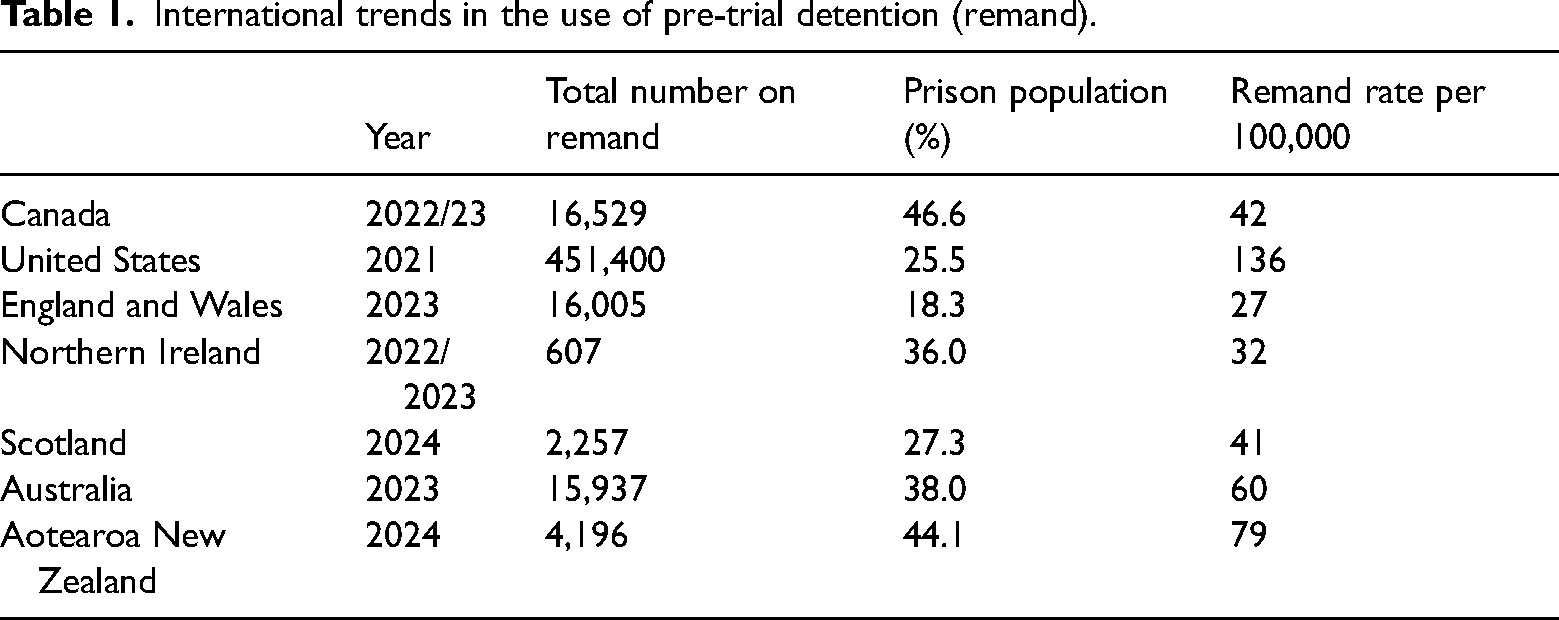
Imprisoning people at the front end of the criminal process before ascertaining guilt appears to be a growing international trend. Amongst comparable common law countries, Canada, however, has the highest proportion (46.6%) of its total prison population on remand (World Prison Brief, 2024). Critically, the use of pre-trial detention is not equally distributed across groups, with Indigenous Peoples, Black people and other racialised persons, as well as people who are experiencing poverty, use substances, and have mental health issues over-represented (Commission on Systemic Racism in Ontario Criminal Justice System, 1995; Kellough & Wortley, 2002; King et al., 2009; Mehler-Paperny, 2017; Winter & Clair, 2023).
Despite the common use of pre-trial detention, most people accused of an offence are released back into the community by the police or the court, pending the resolution of their charge(s). This release, however, generally involves numerous restrictive conditions enforced through the threat of further criminal consequences for failing to comply. While there is an appreciation of the severe liberty restrictions involved in pre-trial detention, release on bail is commonly conceptualised as lenient or benevolent, as preventative, not punishment and as less restrictive than custody. Release, however, is difficult for some accused, with conditions setting them up to fail, perpetuating a cycle of administration of justice offences (Berger et al., 2024; Deshman & Myers, 2014; Myers & Leblond, 2024; Yule et al., 2023). Focusing on the deprivations and harm of pre-trial detention does not properly encompass the more common experience of being controlled, monitored, and sanctioned in the community. To appreciate the expansive, variegated nature of pre-trial control, we need to consider the ways restrictions, positioned as less punitive alternatives to pre-trial detention, form some or all the punishment.
The shifting and expanding reach of the legal system has been explored in several court contexts. Specialised courts alter the relationship between criminal and therapeutic interventions, extending the state's capacity to monitor, control and sanction failures to self-govern and change problematic or criminogenic behaviour (Donohue & Moore, 2009; Hannah-Moffat & Maurutto, 2012; Quirouette et al., 2016). Similar to practices in specialised courts, the bail process shifts the state’s authority and jurisdiction to punish people convicted to those simply accused of an offence. In a space of “liminal guilt” (Winter & Clair, 2023, p. 907), accused persons are seen by court officials as neither factually innocent nor legally guilty. In misdemeanour justice, Kohler-Hausmann (2013, 2018) argues that individuals are dealt with by marking and procedural hassle rather than formal penal control. Refining Feeley's (1979) assertation “the process is the punishment”, Kohler-Hausmann (2018) specifies how the accused person performs when subjected to procedural hassles that influence the gradations of further social control interventions and the ultimate penal response. By augmenting and diversifying techniques of pre-trial control, the state intensifies its authority and governance capacities to restrict due process rights, mandate behavioural modification and criminally sanction non-compliance without needing to secure a conviction. With court officials assuming “common conditions of social marginality” play a role in accused people's contact with the legal system (Winter & Clair, 2023, p. 905), the pre-trial process provides the opportunity and the terrain to engage in both productive and repressive social control mechanisms over marginalised populations (Bosworth, 2007; Fitzgibbon et al., 2017; Myers & Leblond, 2024; Turnbull and Hannah-Moffat, 2009; Werth, 2012; Yule et al., 2023).
Adding to a growing international body of literature on bail and pre-trial detention practices this work maps the space between criminal allegations and conviction by exploring bail outcomes, the restrictions placed on accused persons released into the community, the criminal consequences of breaching a condition of release and case outcomes in Canada. Bringing together data from 642 bail court appearances observed over 31 days in three courts, with data from official sources, this paper offers a critique of bail release practices, arguing the state's intervention and regulation of accused persons’ lives in the community prior to adjudication are both the trial and part, and for many accused persons all, of the punishment.
International trends in the use of pre-trial detention
The use of pre-trial detention in Canada is consistent with an increasing trend in several common law jurisdictions, including Australia, Aotearoa New Zealand, the United Kingdom and the United States (World Prison Brief, 2024). Until recently, the United Kingdom had seen stability (Hucklesby, 2009), followed by a steady decline in both the rate and proportions of pre-trial detention. Table 1 presents the most recent comparative international data on the number of people on remand, the percentage of the prison population on remand and the remand rate per 100,000 people in the population. These numbers, while informative, must be interpreted with caution as they reflect data from different years and look at countries with different legal systems, custodial definitions and counting practices. Despite these limitations, it is noteworthy that Canada has the highest proportions on remand across the jurisdictions presented. The pre-trial detention rate of 42 per 100,000 is higher than rates in England and Wales, Northern Ireland, and Scotland. Given the widely recognised use of mass incarceration and significantly different bail practices in the United States, it is not the most relevant comparator with the available data. Nonetheless, while the remand rate is more than three times higher in the United States, the percentage on remand is lower than in Canada, suggesting a higher proportionate use of sentenced rather than pre-trial custody in the United States. The remand rate in Australia and Aotearoa New Zealand has risen dramatically in the last decade, eroding the presumption of innocence through an expansive punitive change, (Travers et al., 2020) with pre-trial detention “being used as a tool for punishment” promoting tough law and order policies (Booth & Townsley, 2009; King et al., 2008). Currently, both Australia and Aotearoa New Zealand maintain a higher remand rate than Canada and similar percentages of the prison population on remand (World Prison Brief, 2024).
International trends in the use of pre-trial detention (remand).
Literature
Pre-trial detention is acknowledged punishment
The uncertainty around if or when one will be released, as well as the outcome of the charge(s), contributes to experiences of punishment (Pelvin, 2017). Feelings of disruption and uncertainty are aggravated by conditions in maximum-security institutions and the transient nature, or the “churn” (Pelvin, 2017, p. 7), of the remand population with people continually entering and leaving the institution. Remand prisoners experience a wide range of extra-legal punishments and “…are likely to endure some of the most traumatic and visceral experiences of punishment in our justice system” (Pelvin, 2017, p. 230). In addition to the deprivation of liberty, pre-trial detention is a coercive power in criminal procedure. The difficult conditions in pre-trial detention pressure accused persons to agree to comply with any conditions of release or to plead guilty to resolve the charges and get out of remand (Friedland, 1965; Kellough & Wortley, 2002; Myers & Leblond, 2024).
There are significant social and legal implications of being held on remand, including difficulties in assisting counsel with a defence and an increased likelihood that accused persons will plead guilty (Heaton et al., 2017; Kellough & Wortley, 2002), be convicted, be sentenced to custody, and receive a longer custodial sentence (Friedland, 1965; Heaton et al., 2017; King et al., 2008; Koza & Doob, 1975; Williams, 2003). Inequitable bail outcomes contribute to inequitable case outcomes, compounding the accused person's disadvantage and marginalisation through the court process (Donnelly & MacDonald, 2018; Omori & Petersen, 2020).
The process is the punishment
Feeley (1979) concluded that the process is the punishment, noting that the pre-trial criminal court process justly forms some or all the punishment for people accused of an offence. It is the more informal aspects of court appearances and case processing including financial, social and legal costs that enact sufficient punishment with no further sanctioning warranted for many accused. Refining this critical work, Kohler-Hausmann (2013, 2018) argues the court process engages social control through marking, monitoring and procedural hassle. The way an accused person responds, performs and demonstrates their governability through regular court attendance and programme compliance influences the resolution of their cases and any sentence imposed. Consistent with Kohler-Hausmann (2013, 2018), Myers and Leblond (2024) argue bail is part of a broader criminal court process that differentiates and marks the accused who lack the requisite docility and discipline as risky, requiring more intensive conditioning and monitoring. Importantly, how accused people present themselves, how they interact with the legal counsel and the court, how they handle the hassles of the court process, (demonstrating deference and compliance, or resistance and withdrawal), vary across racial and class lines (Clair, 2020).
Predicting risk in a risk-averse organisational culture
Bail is a time of predicting risk and estimating the accused person's future behaviour based on often incomplete information. Our ability to accurately predict who is high-risk is deeply flawed (Ashworth & Zedner, 2014). Predictions of who is high-risk and the basis for these predictions are replete with difficulties, particularly for racialised people and other marginalised populations. A risk-averse organisational culture characterises the bail process, as court actors are reluctant to release accused persons from detention without supervisory requirements (sureties or bail programme supervision) and numerous restrictive conditions of release (Myers, 2017, 2019). Predicting and negotiating risk in a risk-averse climate often results in reluctant (delayed) decision-making with conservative outcomes (Myers, 2009). The “culture of adjournment” (Myers, 2015) and the resultant slowing of the bail process means accused persons spend more time in pre-trial detention. When accused persons are granted release from custody, the bail order is structured to provide some protection and assurance of control and surveillance in the community. Although due process rights to reasonable and timely bail may be stretched, the court is assured that there are some controls in place that are supposed to reduce risks to public safety.
The law on bail in Canada
There are three justifications for detaining an accused person or imposing conditions of release in the Criminal Code. Detention may be necessary to ensure an accused person's attendance in court to face the charges (s.515(10)(a)), for the protection or safety of the public due to a “substantial likelihood” an accused person will commit an offence or interfere with the administration of justice endangering “the protection or safety of the public” (s.515(10)(b)) or to “maintain confidence in the administration of justice, having regard to all the circumstances” (s.515(10)(c)). This analysis includes consideration of the apparent strength of the Crown prosecutor's case, the gravity of the offence, the circumstances surrounding the offence, the presence of a firearm, and the potential sentence if the accused person is found guilty. This assessment is not generally grounded in formalised actuarial risk assessment tools in Canada. 1 Instead, risk predictions are discretionary, based on the prosecutor's and presiding justice's assessment of the file.
The Supreme Court of Canada (SCC) in R v. Antic (2017) reiterated the fundamental principles that guide the bail decision, reaffirming that in most cases, there is a presumption of release on bail, and this release should be unconditional unless the Crown (prosecutor) can show cause for why a more restrictive form of release is necessary or the detention of the accused person is justified (s.515(1)). 2 The court stressed the presumption of release on the least onerous grounds, reiterating that a ladder approach is to be used to determine the appropriate form of release, meaning each form of release is to be considered and ruled out before considering a more restrictive form of release (at para 67(j); Trotter, 2017). Conditions, including the quantum of bail, supervision, and behavioural requirements, are to be imposed with restraint and restrict pre-trial liberty as minimally as possible. Conditions of release “may only be imposed to the extent necessary” and “must not be imposed to change an accused person's behaviour or to punish an accused person” (at para 67(j)). In 2019, Bill C-75 encoded these provisions legislating a principle of restraint, including using the least onerous form of release that is appropriate (Criminal Code s.515(2.01)), reiterating that sureties are only to be imposed when less onerous forms of release are inadequate (s.515(2.03)). Decision makers are directed to release the accused person at the earliest opportunity (s.493.1) and to pay particular attention to the circumstances of Indigenous persons (s.493.2(a)) and other “accused who belong to a vulnerable population that is overrepresented in the criminal justice system and that is disadvantaged in obtaining release” (s.493.2(b)). The Act also created “judicial referral hearings” to provide an alternative response to some administration of justice offences (s.523.1). 3
In a clear departure from legislative changes aiming to reduce the use of pre-trial detention and the extent of restraints placed on accused people on bail, Bill C-48 has a more punitive law and order orientation. Responding to intense political pressure from the police and provincial premiers, in 2023, the federal government created additional reverse onus provisions for people accused of certain violent and firearms offences. In reverse onus cases, the accused person bears the onus of demonstrating why they ought to be released rather than the Crown prosecutor bearing the onus of demonstrating why the accused person ought to be detained.
Pre-trial detention and conditional release in Canada
Canada has seen relative stability in the rate with which it uses incarceration. Although there have been some fluctuations, the adult incarceration rate of 104 per 100,000 adult residents in 2021/22 is not dramatically different from the rate of 131 per 100,000 in 1978/79 (Statistics Canada, 2023d). Despite this stability, the remand rate has more than doubled, growing from 18 per 100,000 in 1978/79 to 46 per 100,000 in 2021/22, and the number of people on remand has quadrupled in the last 40 years. Overall, 43.9% of the custodial population in Canada is on remand (2021/22); however, when we look at provincial/territorial custody, 4 70.5% (n = 14,415) of the population is in pre-trial detention awaiting trial/sentence or the determination of bail (Statistics Canada, 2023c). Twenty-five years ago (1996/97), these proportions were reversed with 29% of the provincial jail population in pre-trial detention and 71% in sentenced custody. The remand rate and population have increased despite a generally declining crime rate, a decline seen across crime categories since the early 1990s 5 and changes in the law. Given the clear direction by the Supreme Court of Canada and Bill C-75, a reduction in the use of pre-trial detention might have been expected, sustained changes in discretionary decision making, however, have not (yet) materialised.
Many accused persons make multiple appearances in bail court before a bail decision is made. Most accused persons who apply for bail are released (94.0% in 2023), 6 and most are released with the consent of the Crown (prosecutor) rather than after a contested “show cause” bail hearing (Deshman & Myers, 2014). While only 6.0% of accused persons who apply for bail are formally denied release, many accused persons do not apply for bail (44.2%), remaining in “limbo”— held in pre-trial detention until the resolution of the charge(s) without a bail decision. Taken together, a substantial proportion (50.2%) of accused persons in Ontario who start in bail court are formally or de-facto detained in pre-trial detention (Ontario Court of Justice, 2024). Accused persons released on bail are often required to be supervised in the community by a surety, (generally a family member or friend who agrees to supervise the accused person and promises money to the court should they commit an offence or fail to comply with their release order) or bail supervision programme (Berger et al., 2024; Schumann & Yule, 2022).
Sureties and bail programme supervisors have great power when enlisted to assist the state with the surveillance and control of the accused person. In agreeing to take on a supervisory role, the surety is responsible for the accused person's behaviour. Sureties are to call the police or return the accused person to court if they commit an offence or fail to comply with their conditions of release. Failure to report non-compliance may result in the surety losing the money they promised to secure the accused person's release. In this process, Myers (2019) argues, sureties are transformed from private citizens into “third-party police”, extending the state's surveillance capacity by providing ongoing monitoring in private spaces. The guardianship provided by sureties and bail supervision programmes enhances traditional policing practices, expanding the state's ability to observe, control and sanction the potentially risky.
In addition to supervisory requirements, conditions of release frequently include residential requirements, reporting to police or bail programme supervision, prohibiting the accused person from certain geographic areas, from contacting the victim or co-accused, from consuming alcohol or drugs and from possessing any weapons. Accused persons are also routinely required to abide by a curfew or house arrest, attend counselling or treatment, 7 keep the peace and be of good behaviour 8 and attend work or school (Berger et al., 2024; Deshman & Myers, 2014; Myers, 2017). Conditions of release often appear arbitrary, inappropriate, and challenging to comply with, especially for an extended period; Myers and Dhillon (2012) found that 40.7% of conditions had no apparent connection to the allegations or grounds for detention. The consequence is that many restrictions are designed to control the accused person, mandate behavioural modification, and facilitate surveillance rather than address the grounds for detention. It is unknown, however, how often the accused person commits a new substantive offence while on bail or if supervision or conditions of release reduce the likelihood of further offending. 9 The more conditions accused are subject to and the longer the accused are required to comply with conditions, however, the more likely it is they will be charged with failing to comply (Sprott & Myers, 2011). The volume of conditions imposed is not associated with an increased likelihood of court attendance or with a decreased likelihood of returning to court with a new criminal charge; however, it is related to an increased likelihood of accumulating new charges for failing to comply (Sprott & Sutherland, 2015).
Method
Three bail courts in Ontario, Canada's most populous province, were observed for 31 full court days in June 2022. One courthouse (City A) was in a large metropolitan area, 10 another in a medium-sized city (City B) that includes a more rural catchment area, and another in a northern area (City C) that services a smaller medium city with a large rural and remote surrounding geography. Each court day was observed from when the court opened until the court closed at the end of the day. Observers took notes on how each person was addressed by the court, including demographic information, the charges, the presence of a criminal record, the Crown prosecutor's position on bail, and the outcome of the appearance as presented in court on the record. When people were released, observers tracked the form of release, the quantum of bail, supervision requirements and the number and nature of conditions of release. A standardised data collection sheet was used to code the transcripts generated by observers. A total of 642 bail appearances were observed, with an average of 20.7 bail appearances observed each day. The court day rather than the case file is the unit of analysis, meaning, some accused persons are captured in the dataset more than once. Following the sample description in Table 2, the data are presented across court locations. 11
Sample.
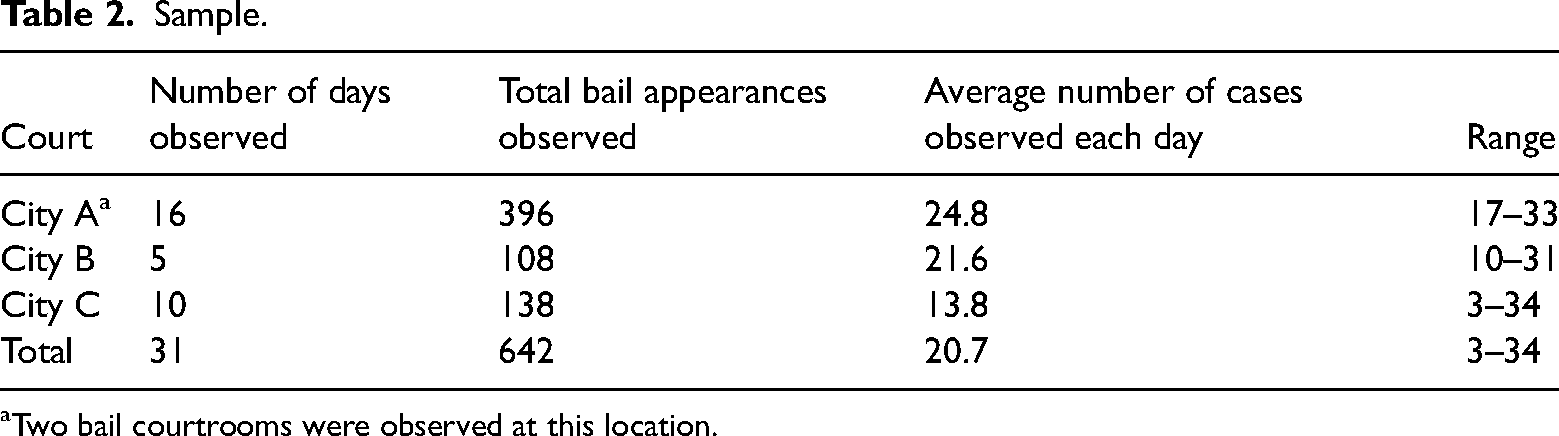
Two bail courtrooms were observed at this location.
Findings
Appearance outcomes
Table 3 shows the appearance outcomes. In 18.7% of cases, a bail decision (release or detention) was made on the day observed. Looking at the average daily outcome, 17.8% of the people appearing in bail court were released, and few (0.9%) were formally denied bail. On average, each day, 74.0% of accused persons were adjourned to another day, a proportion that has remained relatively consistent over time (Deshman & Myers, 2014; Myers, 2015, 2019). The substantial proportion of appearances adjourned to another day without a bail decision is concerning as each adjournment is a short detention order – the accused person must remain in detention until the next appearance, and there is no guarantee a bail decision will be made at their next appearance.
Observed bail appearance outcomes.
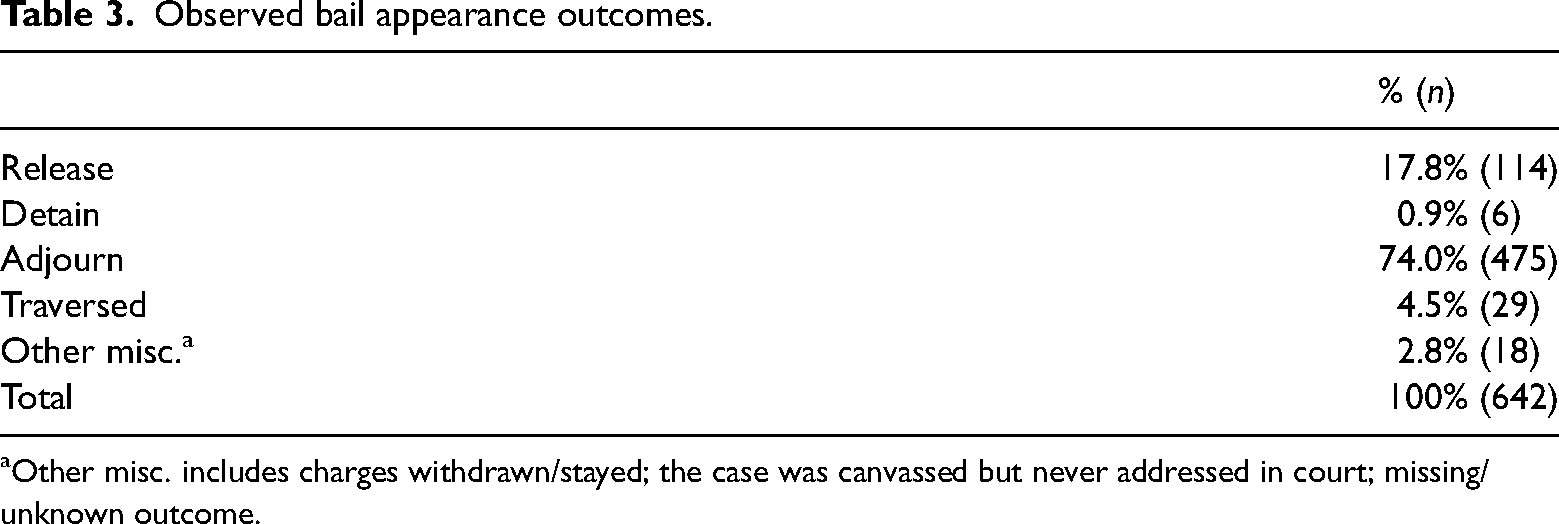
Other misc. includes charges withdrawn/stayed; the case was canvassed but never addressed in court; missing/unknown outcome.
Consistent with previous research, most (58.9%) requests for an adjournment came from the defence counsel or the accused person. In 2.3% of requests, the Crown asked for the adjournment, and 15.8% of requests came from the presiding justice. In 22.9% of adjournments, it was unclear who requested the adjournment, and most commonly, no reason was provided to the court for the adjournment request (24.4%). In 13.7% of adjournments, finding an appropriate surety was the reason provided, and a further 18.1% of requests were to develop the plan of release; 9.1% of appearances were adjourned when counsel was ready to proceed with a bail hearing, but the court was out of time to hear the matter.
Supervision and conditions of release
The most common form of release (see Table 4) was on the accused person's own recognisance 12 (36.8%), followed by release with a surety (28.9%) or a release subject to bail programme supervision (20.2%).
Forms of release.
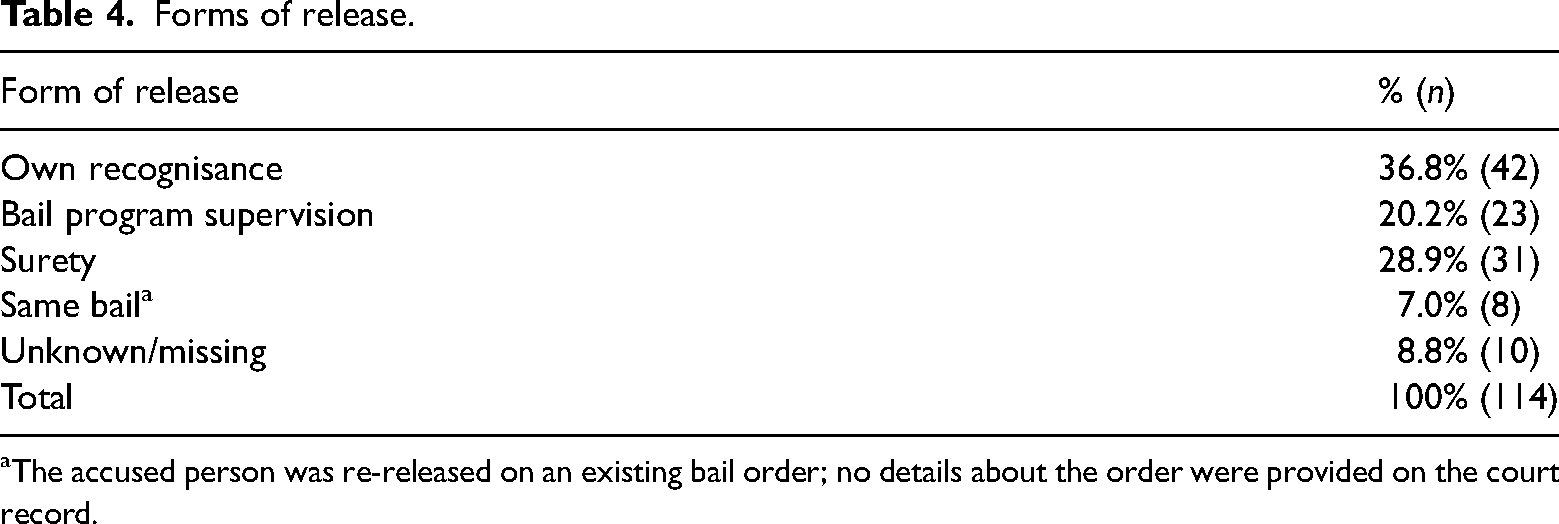
The accused person was re-released on an existing bail order; no details about the order were provided on the court record.
The forms of release in this sample suggest a shift in bail practices post- R. v. Antic (2017) , with more accused persons released on their own recognisance and fewer requiring a surety than seen in earlier studies (Deshman & Myers, 2014; Myers, 2017; Schumann & Yule, 2022). The apparent reduced reliance on sureties is encouraging; however, overall, 49% of released accused persons were released under some form of supervision.
Table 5 indicates the proportion of observed releases with the listed condition. Released people were required to follow an average of 5.7 (median 6.0, range 1–15) conditions. The most commonly imposed conditions include no contact with any victim/witness (69.8%), not enter a boundary (62.5%), not possess weapons (57.3%), not possess a FAC (Firearm Acquisition Certificate/gun licence) (40.6%), not being at a specific address (38.5%), residential requirements (36.8%), report their residential address (33.3%), report to bail programme (11.5%), abide by a curfew (10.4%), not consume drugs (6.3%), not consume alcohol (5.2%) and house arrest (3.1%). Unlike earlier studies (Deshman & Myers, 2014; Myers, 2017), no observed releases contained treatment conditions.
Conditions of release.a
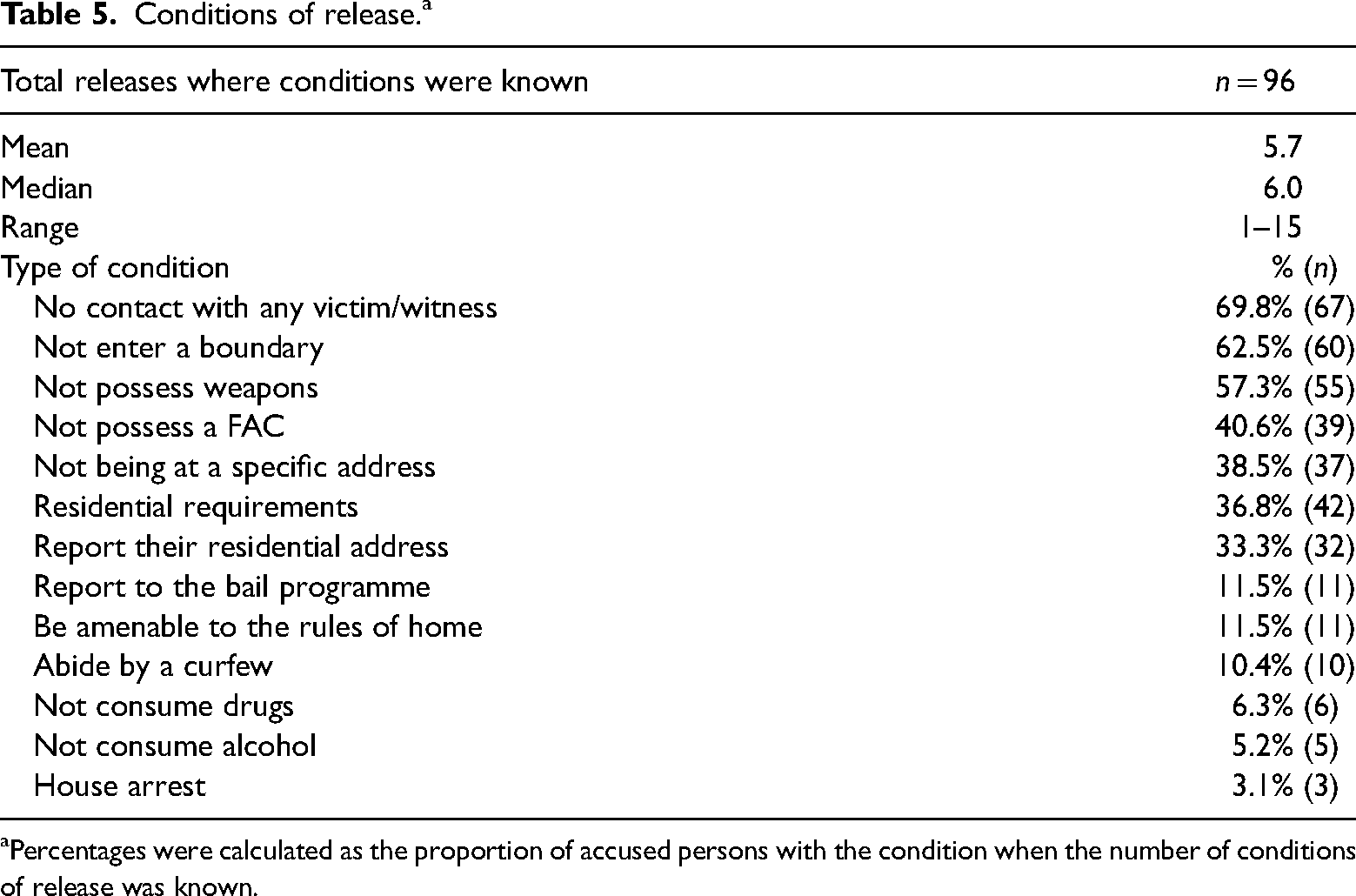
Percentages were calculated as the proportion of accused persons with the condition when the number of conditions of release was known.
To secure release on bail, the accused person must agree to comply with all the conditions imposed by the court, “voluntarily” accepting their responsibilities. Despite the coercive context in which accused persons give their consent, like clients in Quirouette et al. (2016), they are framed as experiencing choice by opting in. Accused persons, “dependants” (Ericson & Baranek, 1989) in the process, are in a vulnerable position with little space to contest the appropriateness of supervision requirements or conditions of release, as challenging conditions risk their continued detention.
Failing to comply is a criminal offence
Increased monitoring, numerous conditions, and lengthy case processing times make it common for people to fail to comply. In 2022, there were 132,442 incidents of failing to comply with an (bail) order. The incident rate for this offence, depicted in Figure 1, has almost doubled since 1998, growing from 181 incidents per 100,000 in the population to 340 per 100,000 in 2022 (Statistics Canada, 2023e). The incident rate of failing to appear in court has increased 59% since 1998, growing from 61 incidents per 100,000 to 97 per 100,000 in 2022 (Statistics Canada, 2023e), an increase that coincides with an increase in case processing times and the number of appearances people are required to make in court before the charge(s) are resolved (Statistics Canada, 2023ai).
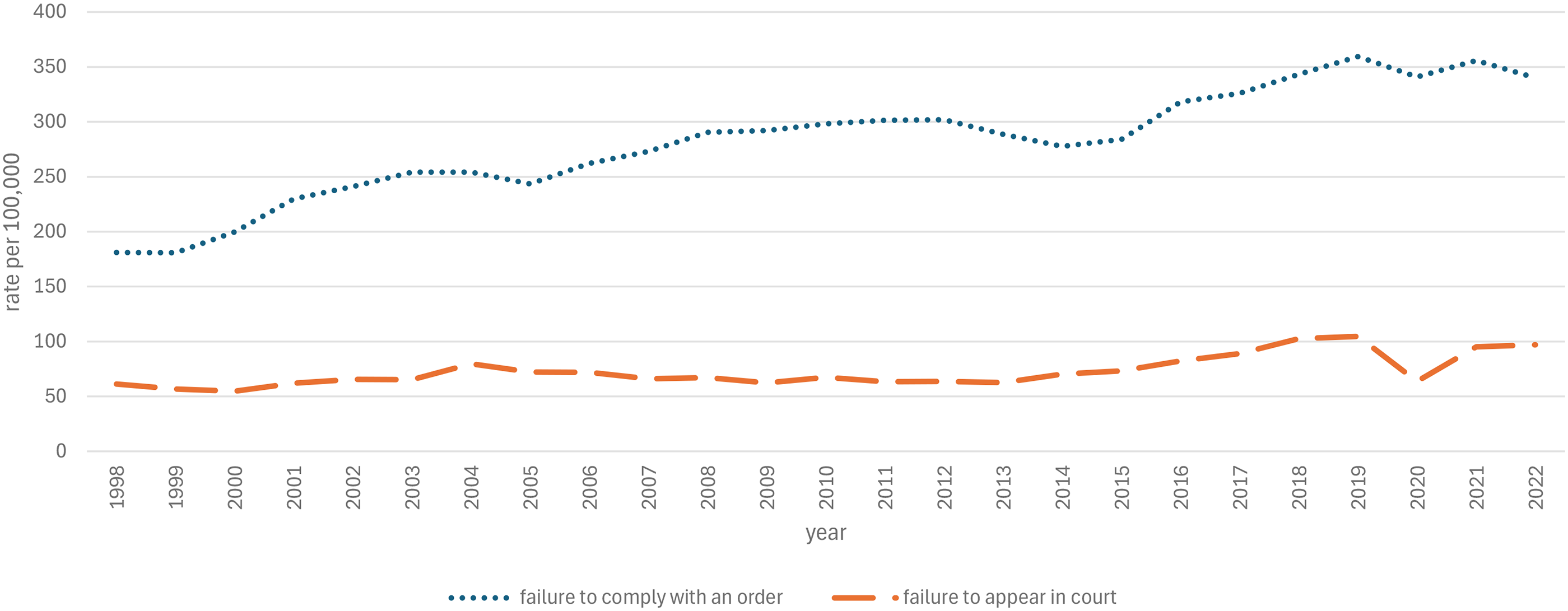
Incident rate per 100,000 of failing to comply with an order and failing to appear in court, Canada 1998 to 2022.
An allegation of failing to comply or failing to appear will generally result in re-arrest, additional charges, time in pre-trial detention, a reversal of the onus at the bail hearing, more difficulty securing release and, if released, more restrictive conditions. Charges of failing to comply are the most common offence for which accused persons are admitted to remand. 13 Failing to comply is interpreted as a disregard for the court's authority, lending the impression the accused person is not trustworthy or capable of complying. The accused person's “choice” to breach their conditions is seen as a “…failure at responsible self-governance” (Turnbull & Hannah-Moffat, 2009, p. 538). Rather than committing a new substantive offence, accused persons are most likely to be arrested and returned to remand for a technical violation of their release. The consequence is increased criminalisation, whereby the original substantive offence is the entry point into a system that will further criminalise accused persons before it ascertains guilt for the original substantive offence.
Case resolution – outcomes and sentences
In R. v. Jordan (2016), the Supreme Court of Canada established case processing limits and presumptive ceilings (18 months for most cases tried in provincial court and 30 months for cases in superior court), beyond which delay is considered unreasonable. In 2021/22, across Canada, it took an average of 200 days for cases to be resolved, a 67% increase since 2005/06 (120 days) (Statistics Canada, 2023ai). Figure 2 presents case outcomes in Canada. In 2021/22, of all the adult criminal charges (excluding traffic) with a decision, 70.0% of charges were stayed or withdrawn, and in 53.5% of cases, all charges in the case were withdrawn (Statistics Canada, 2023b). Charges may be stayed or withdrawn for several reasons, including there being no reasonable prospect of conviction, continued prosecution not being in the public interest, the accused person completing a diversionary programme, and the case taking too long to resolve. The high proportion of individual charges and cases without a guilty finding means many accused persons spend time in pre-trial detention and/or on conditional release in the community, making numerous court appearances over an extended period before all the charges against them are withdrawn.
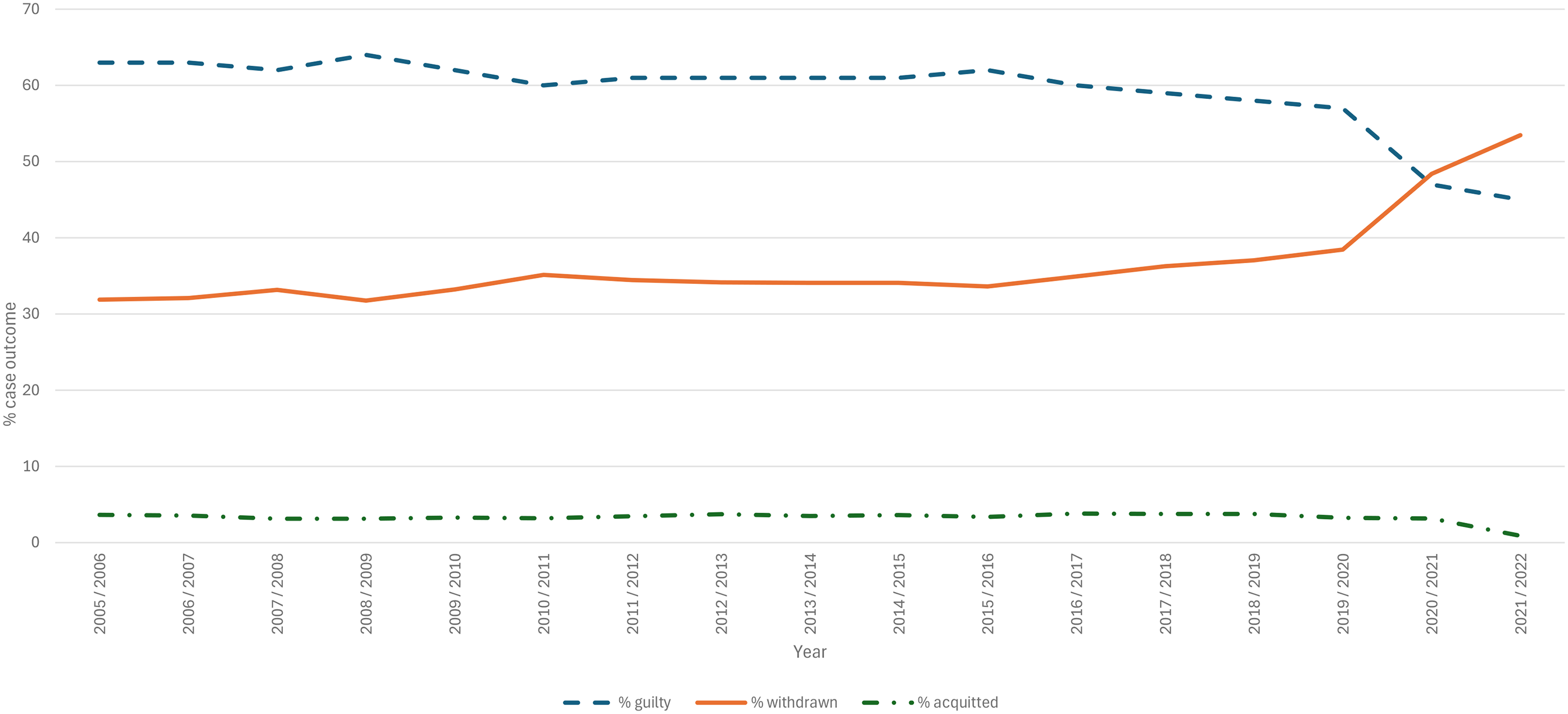
Case outcome, Canada 2005/06 to 2021/22.
Most people who are found guilty receive a community-based sentence. In 2021/22, custody was the most serious sentence imposed on 37.7% of criminal cases, with a finding of guilt (Statistics Canada, 2023a). Though the mean length of a custodial sentence was 131 days, the median was 30 days. One of the offences with the highest proportion of custodial sentences imposed is failing to comply with a (bail) order. In cases with a finding of guilt in 2021/22, 30.5% of violence, 42.6% of property, 41.3% of failing to comply with a (bail) order and 55.9% of breaching probation resulted in a custodial sentence (Statistics Canada, 2023a). In Bourgon and Gretch's (2011) sample of 994 cases from five jurisdictions in Canada, 41% were sentenced to “time-served” and 34.3% to a sentence of 2 days to 1 month in custody. Sentences of time-served mean the person has already spent enough time in custody pre-trial that no further time is necessary. It is difficult to predict how long any case will take, but sentences of time-served suggest some people are serving more time in custody pre-trial than they would have been sentenced to. Given how long it takes for cases to be resolved, credit given to time in pre-trial can have a substantial impact on the type of sentence imposed and its duration.
Discussion
Release on bail is not a demonstration of benevolence or leniency, it is the sentence
The “shadow carceral/penal state” refers to the less visible penal techniques used to monitor and control people (Beckett & Murakawa, 2012). Within this shadow, coercive practices are employed, but they are not referred to as punishment. Pre-trial restrictions parallel those of a sentence imposed post-conviction (Booth & Townsley, 2009; Freiberg & Morgan, 2004). The bail process blurs the boundaries between those presumed innocent and those found guilty, and between prevention and punishment. This blurring obfuscates the extent of state control, facilitating and justifying a punishing exercise in the name of prevention while diversifying sites of intervention and intensifying the disciplinary reach of the state. Released accused persons offer additional territory for regulation outside of detention, expanding into the community and private spaces previously inaccessible to the state (Myers, 2019). Through supervision requirements (sureties and bail supervision programme) and conditions of release, the state transforms private citizens into tools of state surveillance, into quasi-police and quasi-probation officers. The result is the appearance of pre-trial liberty while reconfiguring personal relationships and the community into spaces of enhanced monitoring.
The bail process instigates punishment shortly after an arrest and often long before the accused person is (ever) found guilty and a formal sentence imposed. For many people, the pre-trial stage is the totality of punishment. Whether the accused person is detained or released, the bail process marks the accused person for punitive intervention and enhanced monitoring. How the accused person performs during this pre-trial assessment period influences the case outcome and any sentence imposed. By the time accused persons are processed through the criminal court, many have served sufficient time in custody and receive a sentence of time-served or a community sentence. For people sentenced to further custody, time in pre-trial detention is generally credited towards the sentence, reducing the number of sentenced custodial days, where (theoretically) rehabilitative programming can be administered. For accused persons released on bail, their release functions as an informal probation, a time to monitor their community behaviour and determine if further sanctioning is required. And, for those who require further community behaviour modification and monitoring, the sentence order mirrors the conditions imposed on bail. The proportion of cases stayed or withdrawn is noteworthy, signalling both the magnitude of systemic delay in case processing and the common practice of holding the accused person accountable through pre-trial conditioning and the associated “procedural hassle” (Kohler-Hausmann, 2018). Having all the charges withdrawn suggests insufficient evidence to pursue prosecution; it may also suggest a satisfactory performance during the pre-trial assessment period with no further criminal markings or interventions warranted. Additional criminal charges for those who fail to comply during the community trial period support further extending sanctioning through a custodial sentence, community supervision, and a criminal record that marks them as non-compliant.
The consequences of the criminal court process are not experienced equally across groups of people. Indigenous peoples, racialised people, people experiencing poverty, people who use substances and those with mental health issues are subject to the most restrictive, intrusive, and consequential aspects of the bail system. The pre-trial bail process facilitates and maintains the over-representation of marginalised populations in the criminal justice system. People who are denied bail and remain in custody are at risk of losing access to education, employment, housing, child custody, medical, therapeutic, social and legal supports, removing supportive mechanisms that help protect public safety. People released into the community on bail experience “freedom within constraint” (Shammas, 2014), subject to bail supervision and conditions of release at risk of further criminalisation for an extended period without support navigating the process (Myers & McDermott, 2023). The criminal court process disproportionately marks certain accused people for monitoring and intervention, intensifying the disadvantage, without the burden of conviction.
Stemming the rising tide
Reducing the pre-trial detention population involves changing court culture and altering discretionary decision-making. The legislative, organisational and social contexts in which legal actors work influence discretionary decision-making patterns (King et al., 2009). Cultural change, however, is difficult (Hucklesby, 1997; Travers, 2017). Changing culture and increasing consistency require better data, enhanced communication and feedback about decision-making between decision makers (King et al., 2009). To disrupt risk-averse decision-making and the culture of adjournment (Myers, 2015), new bail legislation may be needed to reconceptualise the bail system as it was originally intended, as “a summary procedure which upholds and defends the presumption of innocence while ensuring – above all – the attendance of the accused in court” (Webster, 2015). Noting the success of the Youth Criminal Justice Act (YCJA) in reducing youth incarceration in Canada, Myers (2024) argues legislation needs to clearly outline the principles and objectives of the bail system, providing guidance to decision makers and establishing hurdles to custody, backed by extensive training.
Other avenues for change include: Supporting police in exercising their extensive powers of release to reduce the volume of cases coming into the bail system, allowing the courts to focus on more serious cases; improving information systems and communication between decision makers to ensure the bail decision is made as soon as possible, releasing the accused on the least restrictive form of release and closely tailoring any conditions; decriminalising charges of Failing To Appear (FTA) and Failing To Comply (FTC) and implementing an alternative system for responding to breach allegations (including the underutilised judicial referral hearings) together with a court appearance reminder system; developing more bail supervision and support programmes (Travers et al., 2020) that facilitate release and may provide more impartial community supervision than sureties (Myers & McDermott, 2023); improving access to justice by filling long-standing judicial vacancies and reducing the number of appearances and time to case resolution; increasing funding for Legal Aid who provide critical legal services to people who cannot afford private legal representation.
Limitations
While informative and consistent with other observational works, this study is limited by geography and a small sample of release orders. The findings are reflective of earlier work in Canada suggesting some generalisations to other courts is acceptable; however, caution must be exercised in generalising to other provinces, territories or countries on account of varying criminal court processes and local legal cultures. Situating the observational appearance data with official data reveals bail and case outcomes but is unable to link the bail decision with the case outcome or sentence imposed. One difficulty is there are no systematic data systems in place in Canada that capture racial identity, the form of release or the number and type of supervision and conditions of release overtime, meaning, we are unable to track accused persons through the court process or across phases of the legal system. Both limitations impede longitudinal analysis. Nonetheless, this study adds to existing work documenting bail decisions and highlights some problematic realities with bail decision making and criminal case processing patterns. Future research will follow accused persons through the court process to document their experiences, process, and outcomes.
Conclusion
Embedded in bail decision-making are organisational logics of risk management. The bail process marks people as risky and sanctionable, blurring the boundaries between prevention and punishment. With no clear line between the guilty and the presumed innocent, being accused of wrongdoing instigates and justifies intervention. The language of prevention, risk management and public safety obfuscates the collateral consequences of the pre-trial process, consequences that are most intensively experienced by marginalised groups. Sanctioning commences upon arrest with pre-trial detention, supervision requirements and conditions of release instigating a trial period that tests and assesses the accused person's amenability and compliance as they navigate multiple court appearances over an indeterminate period. More than Feeley's (1979) assertion that the process is the punishment, the bail process is emblematic of Kohler-Hausmann's (2018) notion of marking, procedural hassle, and performance. Through bail court adjournments, detention on remand, being held in limbo without a bail decision and release in the community subject to supervision and conditions of release, the state assesses the necessity of further sanctioning, with a non-trivial proportion of people serving their full punishment/sentence prior to or in the absence of conviction.
Risk-adverse pre-trial practices suggest a reorganising and reorientating of the criminal legal system to one that manages accused persons rather than the convicted. All the charges are (eventually) withdrawn for many accused persons, but only after they are subject to the restrictions and appearance requirements of the pre-trial process. Routine outcomes, including adjournments, cases in custody without a bail decision, all charges being stayed or withdrawn, reduced custodial sentences and sentences of time-served, are a byproduct of a slow, cumbersome, and chronically backlogged system. Many accused persons are held accountable during the case processing, demonstrating their amenability and tolerance for the procedural hassle. The result, however, is an inversion of the criminal legal process, where the most restrictive outcome for many accused persons is experienced when they are supposed to be presumed innocent. Despite principled pronouncements from the Supreme Court and a law on bail that explicitly articulate many of these principles, the size of the remand population, the use of restrictive conditions of release, the time to case resolution and the proportion of cases that are stayed or withdrawn, are substantial. Bail is supposed to ensure the accused person returns to court as required and does not commit further offences while awaiting case resolution. What the bail process initiates, however, serves another purpose, intensive social control and punishment of marginalised groups without the burden of conviction.
Footnotes
Declaration of conflicting interests
The author declared no potential conflicts of interest with respect to the research, authorship, and/or publication of this article.
Funding
The author disclosed receipt of the following financial support for the research, authorship, and/or publication of this article: This research was supported in part by The Canadian Bar Association Law for the Future Fund.
