




Abstract
Prison climate can have considerable impact on the behaviours of incarcerated individuals both in custody and on release. This study is the first study to use a mixed methods approach to explore the perceptions of prison climate among prisoners and staff at two small Australian prisons. The quantitative research component measured prisoner (n = 117) and staff (n = 117) ratings of prison climate using the Essen Climate Evaluation Schema (EssenCES) questionnaire. Results highlighted that, overall, prison staff rated prison climate as more supportive than prisoners did and that prisoners and staff in the lower security prison rated the prison climate as safer and more cohesive than prisoners and staff in the higher security prison. The qualitative research component consisted of semi-structured interviews with prisoners (n = 16) and a range of prison staff (n = 17). The qualitative analysis revealed a more detailed understanding of the perceived differences between the two prisons with most participants articulating agreed values and behaviours that are important to a more positive and supportive prison climate. Barriers to a positive prison climate were also identified. This research contributes a unique perspective on prison climate by using both qualitative and quantitative measure to examine the perceptions of those living and working in small prisons.
Globally there is increasing concern that rehabilitative efforts provided by prison employees including psychological intervention, behaviour change programs and drug and alcohol counselling are undermined by negative prison environments (Blagden et al., 2016; Harding, 2014). As such prison climate research is now receiving more attention. Recently, Auty and Liebling (2020) pointed to limitations in existing research approaches that fail to suitably differentiate prison climates in or between different types of prisons, over different time periods or post-prison regime change (Blagden & Wilson, 2019). One way to address these limitations and advance our knowledge in the field is to explore the prison climates of small prisons and to explore these differences by specifically incorporating a qualitative, lived experience aspect to the research. To date, prison climate research efforts have been largely concerned with results from quantitative data alone (e.g., Essen Climate Evaluation Schema [EssenCES]) where results are constrained by outcome measures and have been critiqued as limiting the findings (Blagden et al., 2016; Reading & Ross, 2020). As such a new and more comprehensive approach—that includes qualitative methods—is needed to further our understanding of the outcomes of prison climate research. The unique contribution of this study is to address the limitations stated by Auty and Liebling (2020) by measuring the prison climate of small prisons using a mixed-methods research approach.
One of the most widely adopted definitions of prison climate, and the one adopted in this study, is that of Ross et al. (2008), which reflects a synergy of previous definitions in referring to “the social, emotional, organisational and physical characteristics of a correctional institution as perceived by inmates and staff” (Ross et al., 2008, p. 447). A positive prison climate, as perceived by prisoners, may be one in which, among other things, prisoners regard staff as more compassionate and supportive of rehabilitation (Molleman & Leeuw, 2012) respectful, empathetic and trustful (Clarke et al., 2004; Rowe & Soppitt, 2014); and where prisoners believe staff are procedurally fair (Auty & Liebling, 2020).
The importance of staff-prisoner relationships is paramount in creating a positive prison climate. Hulley et al. (2012) found that prisoners appreciated respectful interpersonal interactions because they convey a non-judgmental approach and made them feel inherently valued. Other identified aspects of prisoner-staff relations that are salient to prison climate include respect (Liebling, 2004), support and staff who are competent and engage in legitimate use of authority (Auty & Liebling, 2020). Auty and Liebling (2020) findings suggest that when prisoners feel safe, are treated fairly, and have supportive relationships with staff they are more likely to respond positively to rehabilitation.
While previous research findings point to both prisoners and staff reporting greater support and safety in prison sites or units described as therapeutic (Schalast & Laan, 2017; Shefer, 2010), staff consistently appear to have more positive perceptions of the climate than prisoners (Schalast et al., 2008) across various settings including sexual offender prisons (Blagden et al., 2016) and therapeutic wings within mainstream prisons (Reading & Ross, 2020). It may be that measures are not fully capturing the quality of the relationships, or perhaps staff are engaging in confirmation bias; believing they are doing a better job than prisoners suggest. However, it may also be the result of unmet need; staff are supportive to their capacity, however, the unmet prisoner needs remain.
Qualitative studies exploring the prisoner lived experience of prison climates are sparse (Blagden et al., 2016) and using quantitative data (e.g., EssenCES) alone has been critiqued by others as a limitation, not enabling a full explanation of study findings (Gibson, 2021; Reading & Ross, 2020). A qualitative method was used by Bullock and Bunce (2020) who investigated how prisoners experience rehabilitation and prison climate in English prisons. They found perceptions of institutional failure, lack of interest amongst staff, lack of support and inconsistency and impersonal and sometimes antagonistic relationships between staff and prisoners as negative attributes of prison climate that serve to undermine rehabilitative efforts.
A further deficit is the dearth of research from small prisons. Johnsen et al. (2011) investigated differences in the quality of prison life in small, medium and large prisons in Norway and found that prison staff in small prisons (defined in their study as fewer than 50 prisoners) reported significantly more positive relationships with both prisoners and senior management than staff in the medium and large sized prisons. They also reported that prisoners in small prisons had a more positive perception of prison life than those housed in the medium and large prisons (defined in their study as more than 100 prisoners). Johnsen et al. (2011) suggest that findings may be due to the additional transparency and cooperation between staff and prisoners in smaller prisons as informal, close relationships are more easily fostered. It could also be due to increased likelihood of interactions between staff and prisoners compared to larger jurisdictions. Similarly, some of the successes of His Majesty’s Prison Warren Hill (a closed security male prison in the United Kingdom) in creating an “enabling environment” (environments designed to promote a sense of belonging through supportive and positive staff-prisoner relationships), is reportedly in part due to ways in which its smaller size (244 prisoners) allows for a better quality of relationship between staff and prisoners (Liebling et al., 2019).
In another key study investigating prison size, Madoc-Jones et al. (2016) examined prison inspector reports from His Majesty’s Inspectorate of Prisons for England and Wales, which detailed results of prisoner surveys and interviews with staff and prisoners. They found that smaller prisons were significantly more likely to achieve “good” scores on safety, respect and purposeful activity than larger prisons. Prisons with a population size of under 400 were nearly three times more likely to be within their top category of good in overall scores as assessed by the inspectors. They found that prison size predicted prison performance with larger prisons assessed as less safe, less respectful and less able to engage prisoners in purposeful activity. The absence of a qualitative measure in both the Johnsen et al. (2011) and the Madoc-Jones et al. (2016) studies limits a more in-depth explanation of the participants’ ratings. By using a mixed methods design our study is addressing this current limitation in the field.
To the authors’ knowledge there is only one published Australian study investigating prison climate, which focuses on two large Australian jurisdictions (Day et al., 2012). Day et al. (2012) acknowledged other factors that may impact perceptions of prison climate and recommends further research to examine these across different prison types. Whilst the Day et al. (2012) study itself compares a 700-bed mainstream prison with a 300-bed therapeutic prison, the authors did not specifically consider prison size within their recommendations for future research. However, prison size could be particularly useful in explaining differences in perceptions of prison climate and rehabilitative efforts across different prisons. Our study is an important contribution to this gap in the prison climate literature.
The lack of research from small prisons is likely due to challenges associated with small sample sizes (and the potential for low response rates due to the voluntary opt-in nature of the research). Nonetheless, prison size is an important consideration with regard to how prisons are experienced by those who live and work in them. It may be that smaller prisons—as a function of their size—are more easily able to provide living environments that support rehabilitative activity or that larger prisons have options open to them such as relocating prisoners between different units or sites, which may in turn reduce social cohesion and reduce opportunities for more positive and sustained staff-prisoner relations.
The current study contributes to prison climate research in a unique way by examining the impact of prison size on prison climate and incorporating a mixed methods approach to amplify the lived experience of both staff and prisoners in these small prisons. Understanding such experiences will add to the current body of knowledge by illuminating the type of prison climates that exist in small prisons offering a unique insight into how these environments are perceived.
In line with findings from Madoc-Jones et al. (2016) it was hypothesised that the prison climate in the site that provided more rehabilitation opportunities would be rated safer, more cohesive and more supportive by both prisoners and staff. In addition, in line with Blagden et al. (2016) and Reading and Ross (2020) it was hypothesised that staff in both prisons would rate the prison as more supportive than prisoners. These ratings would be measured by the EssenCES (Version for Prisons and Correctional Settings); a brief questionnaire to assess social climate adapted for use within prisons (Schalast & Tonkin, 2016).
Method
Participants
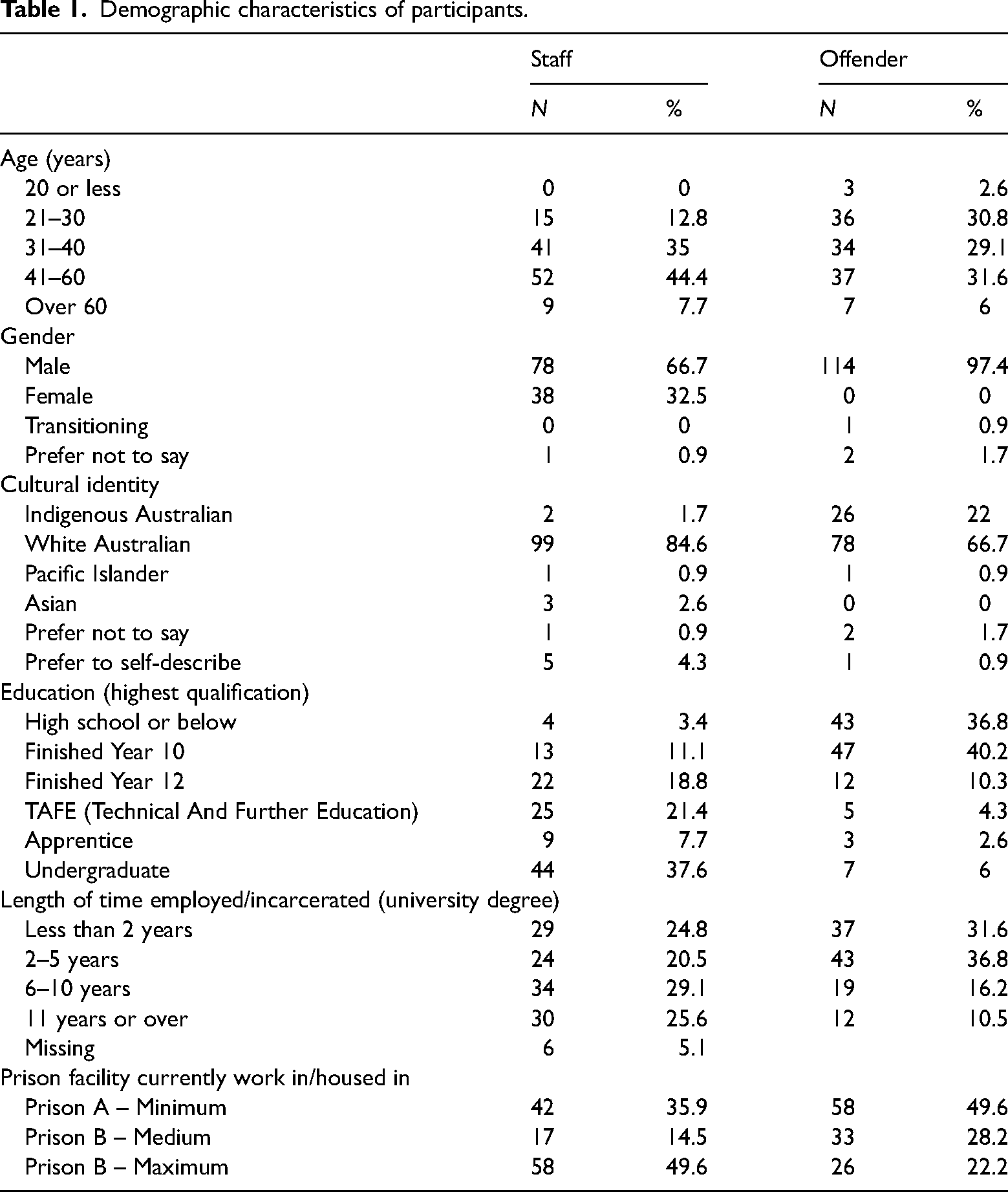
The sample comprised staff (n = 145) and prisoners (n = 117) in two different prisons that house only male prisoners within one small Australian jurisdiction. Both prisons house less than 500 prisoners and in keeping with the definition used by Madoc-Jones et al. (2016) are defined in this study as “small prisons”. Only staff and prisoners who had been in the relevant prison for 14 days or more were included in the analysis to ensure that they had experienced a reasonable length of time in which to assess the prison climate. A total of 145 staff completed the questionnaires; 28 responses were removed as they did not meet the study inclusion criteria. The final staff sample comprised 117 participants (Prison A, n = 42; Prison B, n = 75; see below description of each prison). The final prisoner sample comprised 117 participants (Prison A, n = 58; Prison B, n = 59; see Tables 1 and 2). Participants were incarcerated adult males housed in either prison A or prison B or staff (male or female) who were working at either prison A or prison B at the time of the research data collection.
Demographic characteristics of participants.
Demographic information regarding the prisoner sample only.
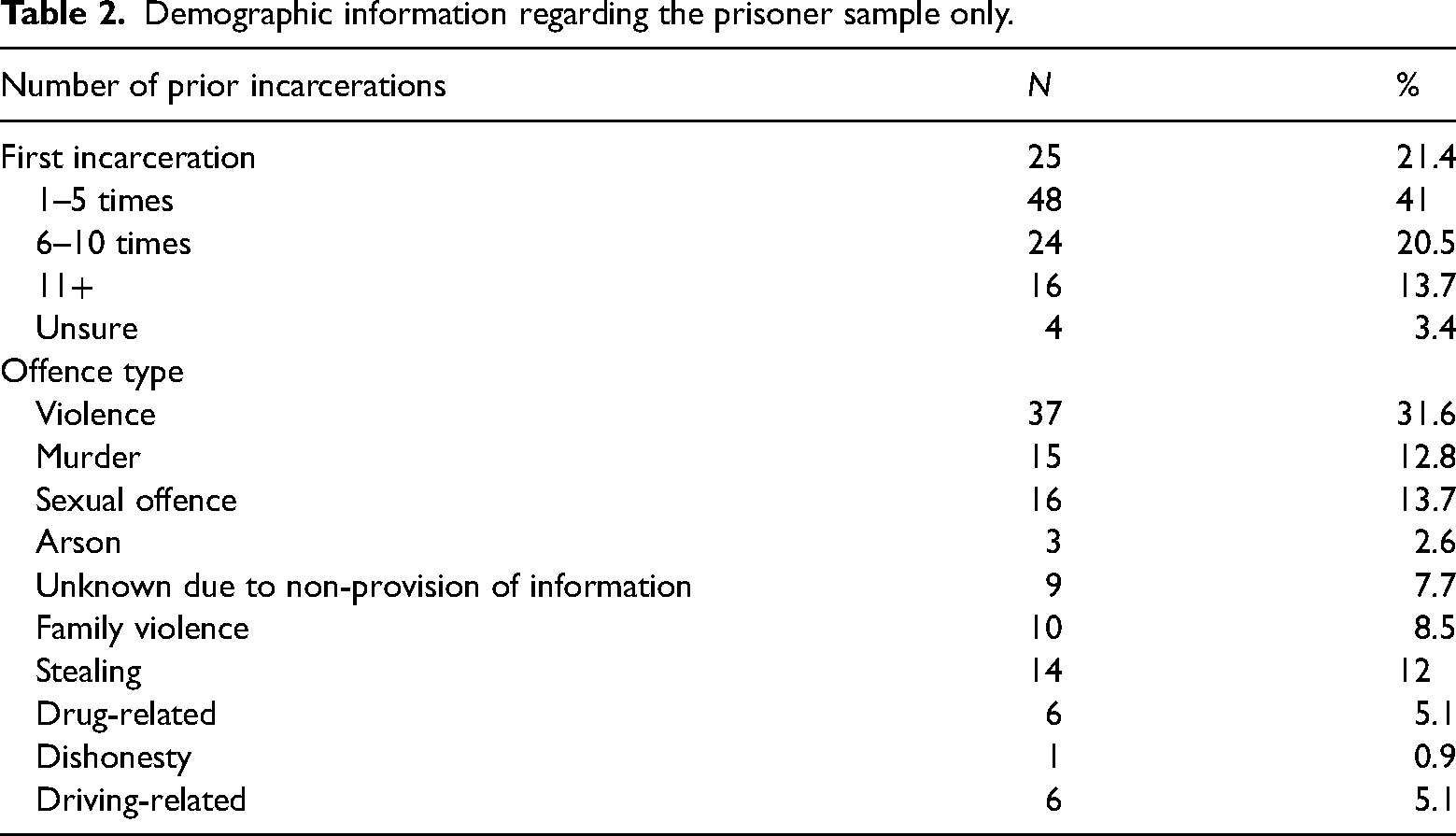
In the prisoner sample, 75.2% had convictions prior to the one they were currently serving a sentence for, 49.65% had a juvenile criminal history, 49% had spent time in a protection yard, 46% had completed a criminogenic (offence specific) treatment program whilst in prison during any sentence (i.e., lifetime exposure) and 14.5% were currently participating in a criminogenic treatment program. Approximately 67% were currently working in the prison and 34.2% had committed an internal prison offence resulting in disciplinary action in the last 12 months.
Prison A houses minimum-rated prisoners and offers drug and alcohol counselling and intensive rehabilitation programs (i.e., higher frequency of treatment with multiple sessions each week and greater total treatment hours) for prisoners including those who have committed violent, sexual and family violence offences. Prisoners have their own rooms but shared use of bathroom facilities in an open-plan living style. In addition, this accommodation area has a communal living space, a library with librarians, educational opportunities (e.g., literacy programs, technical and further education), regular and longer (compared to Prison B) visitation times, phone calls and employment opportunities (e.g. woodwork), therapy dogs and gym staff. Prisoners are unlocked from their cells for approximately 15.5 hours per day with opportunity for leisure activities, such as use of the gymnasium, library, music and computer rooms. At the time of the study Prison A housed approximately 200 prisoners and was not over capacity (operational capacity is between 290 and 300 beds).
Prison B houses medium and maximum-rated prisoners and has fewer opportunities for engagement in therapeutic programs and activities because of more frequent lockdown procedures in that facility. Visit times, phone calls and employment opportunities are less compared to Prison A. The accommodation areas are smaller than Prison A with single-cell accommodation units for maximum rated prisoners and pod style accommodation of six rooms and shared facilities for medium rated prisoners. At the time of the study Prison B housed approximately 300 prisoners and was not over capacity (operational capacity is between 290 and 300 beds).
Measures
The EssenCES (Version for Prisons and Correctional Settings) (Schalast et al., 2008; Schalast & Tonkin, 2016). The EssenCES is a 17-item questionnaire designed to assess the climate of prison and correctional settings. Participants complete a 5-point Likert scale ranging from 1 (not at all) to 5 (very much), with higher scores indicating a more positive social climate. It has three validated factors: inmate cohesion, experienced safety and hold and support. Experienced safety is defined as the level of perceived tension and threat of violence or hostility in a prison community, hold and support is defined as the extent to which the prison environment is perceived as supportive of therapy and therapeutic change and inmate cohesion is defined as the extent to which prisoners care for each other (Day et al., 2012). The Corrections Version of the EssenCES is well validated (Day et al., 2012; Tonkin et al., 2012) demonstrating moderately strong internal consistency (Schalast et al., 2008; Tonkin et al., 2012).
Qualitative data
Thirty-three qualitative interviews were conducted to further explore perceptions of prison climate across the domains measured by the EssenCES. Qualitative data was collected from 17 staff (seven uniformed; 10 non-uniformed) and 16 prisoners. The interview questions focused on: experience of living and working in a prison (experienced safety); rehabilitation and staff support for therapeutic change (hold and support); and prisoner interactions and relationships (inmate cohesion). All interviews were semi-structured and lasted approximately 60 min and were conducted by the lead researcher. Audio recordings were transcribed using Otter.ai and reviewed by the lead researcher for accuracy.
Procedure
The research was conducted with ethical approval from the correctional institution's research and ethics committee and the region's Human Research Ethics Committee. Participants from the prisoner sample were informed of the project via posters and flyers. Information sheets, consent forms and the questionnaires were made available in the prison library, staff office, individual therapy sessions and advertised information sessions. Prison staff members who were not participating or otherwise associated with the project were available to support participants with lower literacy levels to reduce potential selection bias towards participants who were fully literate. In these instances, staff read the forms out to prisoners and assisted them to indicate their answers.
Staff participants were informed of the research project via staff briefings by the lead researcher, posters and information in staff bulletins. An email invitation to participate was sent out to all staff with the research information sheet; consenting participants completed the questionnaires. Data was collected and managed using REDCap secure electronic data capture tools. All participants had the opportunity to go into a draw for one of eight AUD50 vouchers (staff) or one of twenty available AUD20 phone credits (prisoners). Research participation for both samples was voluntary, and participants were able to withdraw (prior to analysis of results) without consequence.
On completion of the questionnaire participants were asked to indicate if they would like to participate in an interview with the lead researcher. As resources for the study were limited and there was a high level of interest to participate in interviews (59) a random selection process was undertaken to determine the interview sample participants. Interviews were conducted on the prison site. Participants were given the option to read a transcript of the interview or listen to a playback after which they had two weeks to inform the researcher of any changes they wished to make or to revoke their participation.
Design and data analysis
This study used a mixed methods design to provide a rich and comprehensive understanding of the data that is difficult to obtain using a singular quantitative or qualitative approach (Blagden et al., 2016; Feilzer, 2009). Interview responses were inputted into a qualitative data analysis software program (NVivo). A deductive qualitative confirmatory analysis approach was undertaken to explore whether the qualitative themes of experienced safety and hold and support and inmate cohesion (Schalast et al., 2008) as noted within both the EssenCES and larger jurisdiction populations (Day et al., 2012) were identified in small jurisdiction prisons. Initial codes were created for each a-priori theme based on readings of the transcripts; these were then reviewed, and subthemes were generated by the first and second authors. In order to ascertain lived dimensions of the factors sub-themes were identified using an inductive Interpretative Phenomenological Analysis (IPA), which enables researchers to explore the subjective experiences of participants and how they interpreted their experiences. It allows participants to reflect their reality through conversation and via attempts to make meaning of their experience, in turn providing a deeper lens from which to understand the research questions than allowed for with the quantitative data alone (Braun & Clarke, 2006). Interview data were reviewed and discussed between the first and second authors to ensure objective and consistent coding. Final subtheme inclusion was reached through consensus of all study authors.
Results
Comparisons of staff and prisoner perceptions of prison social climate within each prison
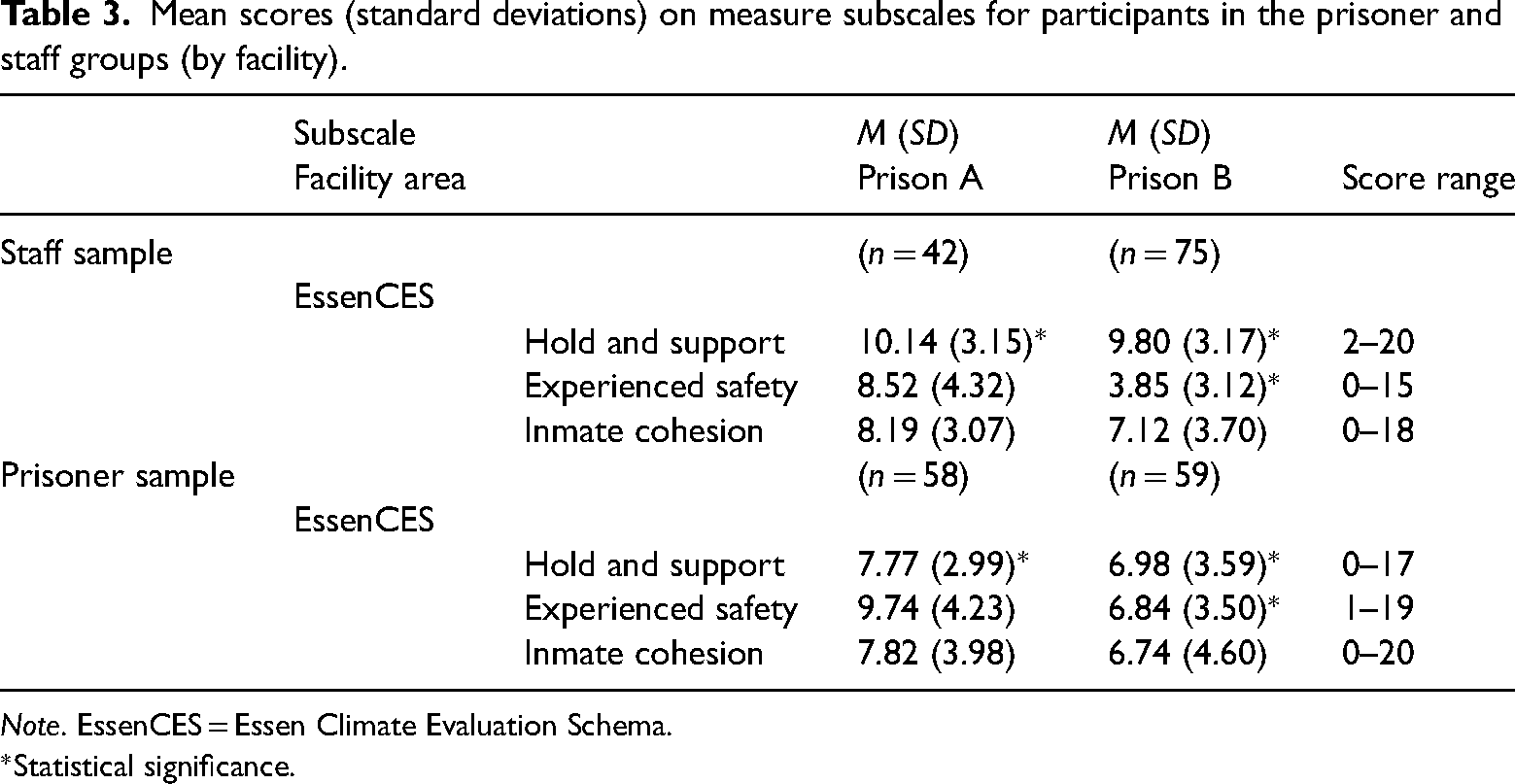
Data from this study were compared against existing research and norms. Scores on all three subscales as rated by prisoners and staff were rated in Quintiles 1 and 2 as “clearly below average” or “somewhat below average” compared to the combined norms for the EssenCES (Schalast & Tonkin, 2016) (see Table 3 for means and standard deviations).
Mean scores (standard deviations) on measure subscales for participants in the prisoner and staff groups (by facility).
Note. EssenCES = Essen Climate Evaluation Schema.
*Statistical significance.
Within Prison A, staff ratings were significantly higher than prisoner ratings on the EssenCES subscale hold and support with a moderate to large effect size, t(98) = 3.81, p < .001, 95% CI [1.13, 3.59]; d = 0.773. There was no statistically significant difference between staff and prisoners on the inmate cohesion or experience safety subscales.
Within Prison B, staff ratings were also significantly higher than prisoner ratings on the EssenCES subscale hold and support with a large effect size, t(132) = 4.81, p < .001, 95% CI [1.65, 3.97]; d = 0.838, indicating staff perceived the climate as more therapeutic than the prisoners did. However, on the EssenCES subscale experience safety staff ratings were significantly lower than prisoner ratings with a large effect size t(132) = −5.21, p < .001, 95% CI [−4.12, −1.85]; d = 0.908 indicating that staff felt less safe than prisoners in the prison environment. There was no statistically significant difference between staff and prisoners on the inmate cohesion subscale.
Comparisons of prison social climate between each prison
Overall, the social climate of Prison A was rated as significantly higher than Prison B on two of the EssenCES subscales, experienced safety (9.23 compared to 5.17; t(232) = 7.84, p < .001, 95% CI [3.03–5.07]; d = 1.03) and inmate cohesion (7.98 compared to 6.95; t(232) = 1.98, p < .049, 95% CI [0.006–2.04]; d = 0.26). Prison A was not rated as significantly more supportive of therapeutic change than Prison B.
Prisoners at Prison A rated the EssenCES subscale of experienced safety higher than prisoners at Prison B [t(115) = 4.03, p < .001, 95% CI [1.47, 4.31]; d = .745]. There were no other statistically significant differences between prisoner groups.
Staff ratings on the EssenCES subscale of experienced safety were significantly higher among staff in Prison A than staff in Prison B [t(65.35) = 6.15, p < .001, 95% CI [3.15, 6.18]; d = 1.29]. There were no statistically significant differences between staff sample on inmate cohesion or hold and support.
Qualitative results
The qualitative data was collapsed across Prison A and Prison B to ensure anonymity among participants given it was a small sample size within a small jurisdiction. Finalised analysis of the staff data derived 15 subthemes across the two themes of experienced safety and hold and support. The prisoner data contained 17 subthemes across three superordinate themes of experienced safety, inmate cohesion and hold and support.
Theme one: Experienced safety
The theme of experienced safety within the current sample comprised seven subthemes: facility dependent, prisoner safety, importance of physical space, looking tough, staff safety, experienced violence and staff competence.
Seven participants (three = prisoner sample) reported a difference in experienced safety depending on which prison they worked or resided in. Most (n = 5) reported more safety in Prison A describing it as less tense and combative and with more time out of cells. One staff member noted in reference to Prison B “they [prisoners] are always very tense, obviously that rubs off on staff in those areas as well”. One participant suggested that Prison B can be more interpersonally challenging as it often houses prisoners at the beginning of their sentence; “they just started their term and they’re a lot more combative and likely to be showing off or bullying—less of that up here [Prison A]”. Staff reflected that the observed benefits for prisoners in a minimum-security housing facility help to incentivise pro-social behaviour. In contrast, one participant reported feeling safer in Prison B than Prison A and specified the “special needs unit” in Prison B in which they resided as better meeting their mental health needs.
Six participants (five = prisoner sample) noted some prisoners feel safer in prison when compared with the non-criminal community, while 14 participants (11 = prisoner sample) reported an awareness of distress and fear among the prisoner population whilst incarcerated. Within this subtheme four prisoners referred to personal conflicts as the source of their fear, three prisoners referred to the drug culture as the basis of unsafe behaviour and six prisoners referred to the “prison code” (an informal set of rules about behaviour that is developed and maintained by prisoners; (Ricciardelli, 2014) as the primary reason for feeling unsafe. Eight participants (four = prisoner sample) referenced the physical space and building structure as impacting on the sense of safety. Some referred to the “ownership” of some spaces by different prisoner groups to wield control over others. Others spoke of large physical spaces creating opportunities to move away from conflict and the inverse increasing tension and conflict. Five participants (four = prisoners) described the need to look tough in prison to ensure one's safety and avoid being targeted. Three staff referenced feeling unsafe at work and six participants reported being physically attacked or assaulted (five = prisoners). Four staff participants suggested that they felt safer at work when they felt their colleagues were well-trained and experienced.
Theme two: Hold and support
Within the current study, this theme comprised seven subthemes: barriers to therapeutic support, empathy, importance of building rapport, mutual respect, inconsistent support, not supportive and supportive.
Numerous barriers were identified that impeded provision of therapeutic support. The prison code was identified (n = 7, three = prisoners) as a reason prisoners are reluctant to access support, citing concerns about negative perceptions from other prisoners. As one staff participant explained: It's hard to do case management, to pull somebody aside in Max [Prison B] and have a meaningful chat with them because they don’t want other inmates to see them having that chat with somebody in blue [in a correctional staff uniform].
One staff participant suggested the prison code limits staff interactions, “You can’t be seen to be thinking he's [prisoner] a nice bloke. It's part of the code”. One prisoner specifically pointed to a sense of powerlessness in resisting the prison code: If you stand out too much you get picked on, so you have to engage in the prison code, which is not how you want to be…you have to engage in the prison culture, the environment forces me to gravitate to this [combative] behaviour.
One participant articulated how this can then impact on attempts to learn pro-social behaviours: Prison doesn’t really provide any will to change really, at least not for the better anyway. I wouldn’t say it serves as a deterrent. It's not designed for rehabilitation. It's very difficult to learn good behaviours in prison.
One prisoner participant referred to prison lockdowns as making access to therapeutic support difficult. Among the staff cohort, some (n = 6) described the importance of being able to empathise and connect to promote rehabilitation. Similarly, participants (n = 15; seven = prisoners) acknowledged the importance of building rapport and building relationships as foundational for rehabilitative change. Eighteen participants (12 = prisoner sample) specifically referenced respect as a value that was critical to being able to build therapeutic relationships and trust. Participants (n = 17; 13 = prisoners) emphasised the differences between staff in levels of therapeutic support; “A lot of officers that I do know are willing to work with inmates around their community-based needs and that sort of stuff. But not everyone is like that”. This inadvertently encourages some prisoners to ask different officers until they find one who would help.
Whilst some participants (n = 18; 12 = prisoners) noted an environment that was not providing rehabilitative support, others (n = 21; 12 = prisoners) pointed to aspects of the prison culture that were supportive. One theme was the critical role the non-uniformed staff played in creating and shaping a positive rehabilitative prison culture. Many participants (n = 17; 13 = prisoners) placed importance on the impact of these non-uniformed staff: “I think it's important for the inmates to see people other than the people in blue (in a correctional staff uniform). Because it ties them back to life outside of prison”.
Theme three: Inmate cohesion
Within the current study, this theme consisted of the following subthemes: educational peer support, friendship support, disinterest in friendship, mutual respect, perception of others. Educational peer support was discussed by some (n = 3) as critical in their rehabilitation. Three prisoners specifically stated they were not in prison to make friends, whilst others (n = 9) acknowledged friendships as important in their lived experience of prison referring to the ways friendships helped them cope. Whether or not a prisoner sought support from other prisoners varied depending on how they perceived the other person (n = 7). Ten prisoner participants referred to the importance of feeling respected by other prisoners.
Discussion
This study aimed to explore prisoner and staff perceptions of prison climate at two small prisons in a small Australian jurisdiction. Whilst there is evidence to suggest that prison climate impacts prisoner rehabilitation efforts there is scant published research measuring the prison climate of Australian prisons, specifically in small prisons and small jurisdictional settings.
In contrast to findings from Madoc-Jones et al. (2016), that prison climate is a function of prison size, our results from two small prisons suggest that a positive prison climate may not be a function of prison size and that small prisons may not be perceived any differently by those who live and work in large prisons. It may also however suggest that there are other aspects of prisons, some which were highlighted in the qualitative component of this study, that are more salient to perceptions of climate such as age of the prison, security classifications, workplace climate, prison architecture or staff/prisoner ratios. This may suggest that prison size alone is insufficient to impact on prison climate and points to the importance of the qualitative component of the research in understanding more completely what those other impacts may be in any given prison. This study furthers our understanding around how prison climate may manifest in different prison contexts by specifically examining small prisons. It assists the field in establishing and providing some empirical evidence that whilst small prisons may have distinctive needs prison size alone is not sufficient to establish a positive prison climate.
There was partial support for the hypothesis that the prison that provided more rehabilitation opportunities would be rated by both staff and prisoners as safer, more supportive and with more mutual care between prisoners than the prison with less rehabilitation opportunities. Both staff and prisoners perceived Prison A as significantly safer and with higher levels of mutual care among prisoners; this was further reinforced by the qualitative accounts provided by both staff and prisoners. However, contrary to predictions both staff and prisoners did not perceive Prison A as significantly more supportive of therapeutic change than Prison B. The hypothesis that prison staff across both prisons would rate the prison climate as more supportive of therapeutic change than prisoners rated it was supported. This parallels a pattern in institutional social climate research of staff having more positive perceptions of climate than those living in the institution (Blagden et al., 2017; Day et al., 2012).
The qualitative data elucidated differences in experienced safety between the two prisons which may help identify potential barriers or opportunities to create changes to perceived prison climate. A substantial number of participants felt safer in Prison A, compared to Prison B. Staff in Prison B observed increased tension amongst prisoners, noting the subsequent impacts on staff. This is consistent with previous findings regarding the alignment between staff and prisoner perceptions of work and prison climate and the impact on well-being and may point to the need for policy and managerial focus on staff well-being to increase positive prisoner perceptions of prison climate (van Ginneken & Nieuwbeerta, 2020). Within Prison B, prisoners rated experienced safety significantly higher than staff, supporting previous findings (Blagden et al., 2016; Day et al., 2012; Gibson, 2021; Reading & Ross, 2020).
The finding that staff in Prison B felt significantly less safe than prisoners could be related to the high-security ratings of prisoners in Prison B. Individual staff working in higher security level prisons are more fearful of victimisation by prisoners and have lower levels of perceived safety (Baker et al., 2015). However, it could also be due to other aspects of the working environment. Palmen et al. (2022) suggest that work climate is a greater predictor of subjective safety among correctional officers than aspects of prison climate or the characteristics of prisoners in any prison unit. Workplace variables that are attributed to higher levels of perceived safety among officers in the extant literature are better co-worker relations (Steiner & Wooldredge, 2017) and higher levels of supervisor support (Gordon & Baker, 2017; Steiner & Wooldredge, 2017). Policy makers and prison management are therefore encouraged to consider workplace climate and related variables when considering the development and maintenance of a positive prison social climate.
Staff and prisoners both spoke of the importance of physical space in feeling safe. The physical layout of the prison seemed a key factor in perceptions of safety. Some participants identified the library as a safer place due to the related rehabilitative activities that take place there and the higher non-uniformed staff presence. Others identified the importance of having enough physical space to move away from conflict. A review of prison climate by Boone et al. (2016) identified physical characteristics of the infrastructure as important for establishing a positive climate. Some environments that limit social interaction, are excessively noisy or overcrowded or are unpredictable can reduce feelings of safety (Moran & Jewkes, 2015), whereas a prison with a therapeutic focus may consider landscapes, colours, building materials or vista murals (Mann et al., 2019). The level of staff training, experience and capacity registered high importance among the staff interviews in relation to feeling safe. Staff acknowledged the importance prisoners place on safety and order in a prison, protecting them from themselves and others. These findings echo those found by Crewe et al. (2011) who learned that prisoners felt less safe in environments where the rules were unclear. Many prisoner participants referred to the concept of the prison code. There was a sense that this increases the tension within the prison walls. A strong theme that related to prison code was prisoners identifying the need to look tough to survive; mirroring results in the literature (Ricciardelli, 2014). Whilst looking tough increases a prisoner's sense of safety it was also identified as a barrier to building therapeutic and supportive relationships with staff.
The nature of the relationship between prisoners and staff and the connection between this and how prisoners perceive they are treated and supported is unequivocal (Crewe et al., 2011; Liebling, 2011). Findings on the hold and support subscale support previous research; that staff perceive themselves as more supportive of rehabilitation than prisoners perceived them to be (Gibson, 2021; Reading & Ross, 2020). This contrast in perceptions could be ascribed to factors suggested in the wider research base, such as prison design characteristics (Beijersbergen et al., 2016) or difficulties among officers in successfully identifying the needs of prisoners (Stohr & Zupan, 1992). Beijersbergen et al. (2016) found that prison design characteristics including prison layout and unit size were significantly associated with officer-prisoner relations with prisoners more positive about the relationships in smaller units and small living areas. It could be the result of an unconscious self-serving bias resulting in over or under reporting; prison officers are more aware of the rehabilitative requirements of prisons and may be responding to a desire to promote those ideals. Dear (2008) suggests that it could be that staff are aware of how much they respond to prisoners needs whilst also being unaware of all the unmet prisoner needs that may exist. Nonetheless, it points to the need for increasing staff appreciation and understanding, through good support and supervision structures, of the various aspects of therapeutic engagement to actively manage exaggeratedly positive ratings. It suggests the need for increased collaboration with prisoner peer groups to further align perceptions.
Prison code was identified as creating a barrier to therapeutic engagement. There is a sense amongst prisoners of having no choice but to engage in the prison code; at times directly impacting on their capacity to engage with therapeutic support or participate in pro-social behaviours. This sentiment is echoed in Auty and Liebling (2020) study that refers to prisoners voicing their difficulties in staying out of trouble in more chaotic prisons.
The importance of building rapport to create a supportive and therapeutic climate points to the need to further enhance the relationships between staff and prisoners and increase the consistency in which support is provided. One relational aspect in building rapport that both staff and prisoner participants viewed as pivotal was a sense of mutual respect. Although rapport, mutual respect, empathy and relationship building were identified as important in creating a supportive environment, it was clear that participants felt that not all staff valued a supportive environment. Consistent with the findings of Bullock and Bunce (2020) staff were viewed as inconsistent in creating and maintaining a supportive, rehabilitative environment. Whilst some participants reported feeling supported, they also pointed to inconsistent levels of support, which in turn encourages prisoners to “officer shop” i.e., requesting different staff until they find someone who will support them. This in turn potentially places undue pressure on the staff who provide the desired level of support. This may explain the low scores on hold and support domain compared with the normative data, with Blagden et al. (2016) suggesting that some of the EssenCES items may not completely reflect the nature of prisoner/staff relationships. This inconsistency is also reflective of the inherent difficulties and challenges in developing positive trusting staff-prisoner relationships in a setting in which there are security considerations, coercive regimes and inherent unequal power relations (Crewe et al., 2011).
Clinical application
On an applied level these findings provide prison staff and management with detailed information about the perceptions of staff and prisoners in their prisons which can be used to target various structural or programmatic changes. These findings could provide the basis for joint conversations between staff and prisoners about ways to improve supportive relationships. In addition, the data can provide a benchmark from which to measure success following any proposed clinical, policy or operational changes. There is a substantial body of work that indicates both staff and prisoners react positively to affirming environments (Ross et al., 2011; Shefer, 2010). Discussions with staff teams around ways to develop a more affirming environment by using communication that is motivational, optimistic and that promotes self-efficacy could be useful. Developing key skills across the entire prison staffing cohort to increase confidence in promoting and modelling pro-social behaviours to prisoners would also be beneficial. All prison staff are essential in developing rehabilitative culture involving constructive working relationships and this should be reflected in the initial and ongoing training and recruitment of staff. Training that teaches all staff to use rehabilitative skills in all interactions is a way to increase support and reflective skills in the process of behaviour change and provides modelling opportunities. In addition, Mann et al. (2019) suggested a rehabilitative culture focuses on pro-social identities such as using prisoners first names to assist them in developing positive future relationships. Addressing the differences in the hold and support ratings amongst staff and prisoners needs to go hand in hand with addressing the low sense of safety amongst the staff. This would be an area of priority for improvement. Staff will likely only engage in more rehabilitative cultural change if they feel safe to do so, and it is rehabilitative prison climates in which staff report higher levels of safety. Future research should consider how to include a qualitative component to enable the contextualisation of results and to offer a detailed guide to recommendations and interventions.
Limitations
There are some limitations of this research. The study has some analytical challenges; comparing prison sites that are different in terms of size, security rating and physical environment (Day et al., 2012) may influence the findings. It may be that there are systematic differences between the prisoners and staff in one prison compared to the other and it is those differences themselves that have determined contrasts in prison climate ratings. Future research could benefit from investigating differences in other group variables such as wing size, staff experience or prison design. Secondly, the EssenCES does not provide a comprehensive insight into prison social climate (Tonkin, 2016). However, the addition of a qualitative measure in our study provides a buffer to this and assisted in identifying what aspects of a prison are important from the lived experience perspective that may otherwise be invisible to the researcher. A further limitation is the self-selected nature of the participants potentially creating a sampling bias. Those that chose not to participate may have had attributes that are not represented in the data. Conversely, perhaps those who chose to participate were motivated to share certain perspectives.
Conclusion
The findings of the current study highlight differences in comparisons of perceptions of prison climate in small prisons using both quantitative and qualitative measures. Our study was able to dissect the complexities behind prison climate ratings by including a qualitative strand in the voices of those with lived experience. Future research should aim to include a qualitative aspect as it is the inclusion of those voices that help researchers understand a complex area and may uncover other areas worthy of research. Findings shed light on what aspects of prison climate could be targeted differently to strive beyond a “survivable prison” to a robustly “rehabilitative prison” that is not only beneficial for prisoners in contributing to desistance from crime (Mann et al., 2019) but for staff as well, promoting lower levels of staff stress, self-harm and burnout (Ludlow et al., 2015).
Supplemental Material
sj-docx-1-anj-10.1177_26338076241277391 - Supplemental material for A tale of two prisons: Investigating the social climate of small prisons using a mixed methods design
Supplemental material, sj-docx-1-anj-10.1177_26338076241277391 for A tale of two prisons: Investigating the social climate of small prisons using a mixed methods design by Sarah J Peart, Leesa Van Niekerk and Kimberley Norris in Journal of Criminology
Supplemental Material
sj-docx-2-anj-10.1177_26338076241277391 - Supplemental material for A tale of two prisons: Investigating the social climate of small prisons using a mixed methods design
Supplemental material, sj-docx-2-anj-10.1177_26338076241277391 for A tale of two prisons: Investigating the social climate of small prisons using a mixed methods design by Sarah J Peart, Leesa Van Niekerk and Kimberley Norris in Journal of Criminology
Footnotes
Declaration of conflicting interests
The authors declared no potential conflicts of interest with respect to the research, authorship and/or publication of this article.
Funding
The authors received no financial support for the research, authorship and/or publication of this article.

Supplemental material
Supplemental material for this article is available online.
Correction (July 2025):
In Table 1, the offender percentage for Indigenous Australians in the last column was incorrect. It has now been corrected from 2.2% to 22% in the online version.
References
Supplementary Material
Please find the following supplemental material available below.
For Open Access articles published under a Creative Commons License, all supplemental material carries the same license as the article it is associated with.
For non-Open Access articles published, all supplemental material carries a non-exclusive license, and permission requests for re-use of supplemental material or any part of supplemental material shall be sent directly to the copyright owner as specified in the copyright notice associated with the article.
