




Abstract
The Australian bail system routinely permits most individuals accused of a crime to remain in the community while awaiting a court date under a range of conditions. However, statistics have indicated that a high number of bailees breach the orders placed on them, increasing police and court interactions, and resulting in additional charges. This project utilised the Drug Use Monitoring in Australia – Western Australia (DUMA-WA) collection to survey 230 police detainees about their orders and reasons for breaching recent orders. The results indicated that most understood their orders but disclosed a range of complexities which interfered with compliance. Qualitative responses revealed the themes of life complexities including homelessness and family responsibilities, and procedural challenges which served as barriers to adhering to order requirements. No significant differences were found based on Indigeneity; however, allowances for cultural obligations are essential to reduce breached conditions. General Strain Theory is used to examine the structural elements that arguably contribute to charge pile-ups and criminalisation for those on orders. While this paper utilised WA participants, given the similarities of detained persons in Australia, the issues identified provide suggestions to address the high levels of breaching conditions in other jurisdictions. There urgently needs to be a concerted effort to remove some of the procedural roadblocks to compliance which would reduce additional charges, reduce the workload of police and court staff, and assist with delays in the administration of justice.
Introduction
In Australia, and internationally, accused persons are innocent until proven guilty, so holding an accused person in detention pre-trial has important legal, human rights and practical implications for defendants, their families and society (Allan et al., 2005; Schumann & Yule, 2022). During this time, as outlined in Article 7 of the International Covenant on Civil and Political Rights, people charged with an offence and granted bail or similar are presumed innocent and cannot be considered as offenders with respect to those charges (United Nations Human Rights, 1966). Therefore, most accused persons are routinely released with a range of conditions to divert them from custody while awaiting trial (Willis, 2017; Yule et al., 2022). These orders are designed to prevent the accused from absconding from court attendance, reoffending, interfering with the administration of justice and protecting the reputation of the Criminal Justice System (CJS) (Schumann & Yule, 2022). While conditions are necessary to protect society and the system, some bail conditions can be arduous.
Researchers assert that orders, such as bail, also have the potential to criminalise accused persons who can accumulate more charges for failing to comply with conditions (Manikis & De Santi, 2019; Yule et al., 2022). This has been evidenced in Australia, where over half of the detainees in police watch houses have consistently been detained for breaching their bail conditions (AIC, 2022). At present, little information details the characteristics of these breaches and those accused of breaching them. A thorough literature search failed to provide empirical evidence on the reasons for breaching orders. By examining the “why” of breaches, the “how” of prevention can be better informed and be more successful.
Types of orders and conditions
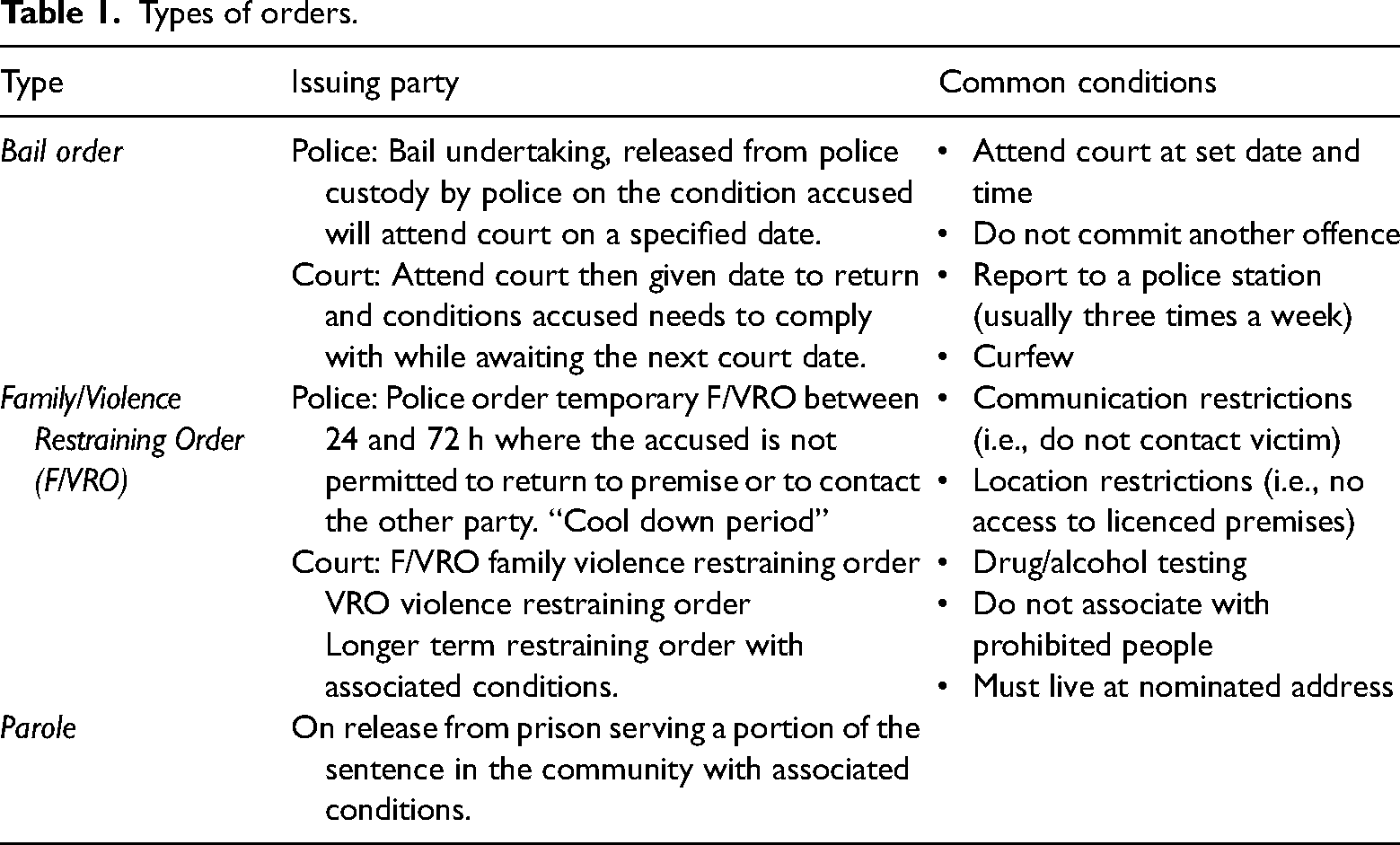
The Bail Act 1983 (WA) empowers authorities in Western Australia (WA) to impose various orders on an accused person. Each of these orders has conditions tailored to the accused and offence they are accused of. Breaches occur when an individual does not adhere to the conditions set out for them (see Table 1). The most common conditions involve staying at a particular address and regularly appearing in person at a designated reporting location. Different orders such as bail and restraining orders are administered by the issuing body (usually police or courts) and are treated similarly in that breaches of such orders are treated as criminal offences.
Types of orders.
Bail
Bail involves releasing a person into the community after their arrest but before the delivery of a verdict on the charges against them (Australian Law Reform Commission, 2010) and can be issued by police or the Courts (Willis, 2017). Bail may also be issued by the Courts when an individual is found guilty of an offence and is awaiting sentencing. People on bail are usually required to follow conditions to ensure they return to court and to keep victims and/or the wider community safe. Common conditions include living at an agreed address; not contacting victims or witnesses; agreeing to return to court for the criminal proceedings on a specified date; and not committing further offences (Willis, 2017). Bail can reduce prison populations, reduce psycho-social damage associated with incarceration and help maintain family relationships (Allan et al., 2005; Stubbs, 2010). Therefore, unless the accused is deemed a risk to the community or further offending, bail is a preferred option to allow a person to continue to live in the community until their court proceedings (Allan et al., 2005; Stubbs, 2010).
Restraining orders
A Violence Restraining Order (VRO) imposes restrictions on a person who has been deemed to have committed an act of violence or is a threat to another person (Restraining Orders Act 1997 [WA]). Family or domestic Violence Restraining Orders (FVRO) are where the protected person is a family member or has been in a romantic relationship with the accused (Bugeja et al., 2013). In most jurisdictions, an interim (or similar) restraining order is granted before a final (lasting up to 2 years) F/VRO is issued. A person issued with an F/VRO can be accused or charged with a related offence when it is issued. Common conditions include anything necessary to promote safety of the protected person(s) (Reeves, 2022; Ross & Aitken, 2022); for example, prohibiting the accused from contacting, or being near the protected person(s), including residing in the same home (Sentencing Advisory Council, 2022).
Police order
A police order in WA is generally issued where there is insufficient evidence for arrest of family violence offences. They are used as a temporary method of protecting a person from threats, intimidation or harassment (Reeves, 2022; Ross & Aitken, 2022). They are issued at the discretion of police officers for up to 72 h and act as a “cooling off” period where parties are separated, allowing the protected person time to pursue an interim restraining order, if required. The conditions set for a police order usually involve prohibiting access to an area or residence and prohibiting contact with the protected person. Breaching a police order has similar consequences to breaches of restraining orders (Western Australia Police, n.d.).
Rates of breaches
Bail
A key measure of effectiveness for orders imposed is when the accused returns to court. In 2014, in WA, roughly 50% of all accused persons were granted bail. Of these, 16% failed to appear in court, at an estimated cost of AUD $7.4 million (Office of the Auditor General, 2015). Not appearing creates delays in the court process and further burdens already strained resources. Drug Use Monitoring in Australia (DUMA) data also showed that breaches of bail or other orders as making up 16% of the most severe offence of police detainees (Voce & Sullivan, 2021). The data does not capture those in for a more severe offence in addition to a breach. In New South Wales (NSW) during 2016, there were 7,071 breaches of bail reported by the Court (Donnelly & Trimboli, 2018).
A breach of bail for further offending occurred most frequently with accused persons with an Apprehended Domestic Violence Order (ADVO) (46.5%; n = 1537). Results achieved statistical significance at p < .01 for Indigenous people in breaches of ADVO and non-domestic violence-related assaults. Despite official statistics documenting the numbers and types of breaches, there is little recorded about why a person fails to comply with their bail conditions even when understanding that non-compliance will negatively affect their court outcome.
Restraining orders
In an investigation of VROs in WA, the Ombudsman found that there had been 8,767 allegations of breaches of VROs, with 3,753 offenders, indicating many are repeat offenders (Ombudsman WA, 2015). In Victoria, the Sentencing Advisory Council (2022) reported that there was a fivefold increase in VRO breach reports between 2011 and 2020 from approximately 10,000 to 53,000 reports. These rates highlight the need to better understand why people breach to inform ways to reduce offence “pile ups” and ensure the safety of the protected person(s) so those on VRO's desist from breaking their orders.
Challenges for accused
The lives of offenders have been documented to be complicated, often marred by traumatic experiences, drug use, housing instability and antisocial peers (Barry & McIvor, 2008; Ellis, 2021; Gately et al., 2021). These complications can make it difficult for people to abide by conditions set out for them (Van Doorn, 2010; Willis, 2017; Yule et al., 2022). There has been little research that has focused solely on the experiences of accused or detained persons on orders and the explanations they give for their breaches. What has been conducted is usually part of a larger study without details on the reasons for breaches of orders.
Walsh and Rajan (2014) outlined the difficulties of people given conditions when homeless, by presenting the case of a homeless man who had multiple charges for breaches of police orders and breaches of bail, which were attributed to financial issues, alcoholism and confusion. Further, research has shown that perceptions of space and time are warped for those experiencing homelessness (Van Doorn, 2010), which can impact adherence to conditions. Explanations of young people's experiences with bail showed that breakdowns in relationships or previous living arrangements, ill caregivers and barriers to locating a suitable guardian often led to homelessness, with one-fifth of young people lacking accommodation. It was also reported that young people breached their conditions because they were unable to remember them (Bailey, 2009).
Women interviewed about Domestic Violence Orders (DVO) stated that their ex-partners would breach, and the lack of consequences rendered DVOs as ineffective deterrents (Douglas, 2018). The women also noted that if the perpetrator was in a state of increased agitation or anger, “nothing would stop them” (Douglas, 2018, p. 224). Interviews with FDV legal practitioners revealed that lingering emotional attachment can lead to breaches of contact (Reeves, 2020). When the contact becomes conflictual, it can be reported, resulting in a breach. There are also complications of housing, property and children that are likely to influence compliance with F/VRO conditions. While these studies demonstrate some of the issues surrounding VROs, defendants or detainees were not asked about their breaches, highlighting a gap in knowledge and the need for the current study.
One recent study of Canadian bailees found that relationships, employment, support and mental health issues all impacted on how severely bail conditions were experienced (Yule et al., 2022). Willis (2017) noted similar challenges faced by Australian bailees but included struggles with drug and alcohol use or addiction. Where orders with stringent and inflexible conditions are imposed, it can be argued that accused are often set up to fail. Manikis and De Santi (2019, p. 900) found in their study of administration of justice offences that conditions were often impractical and “impossible” to adhere to given the complex lives of the accused. This raises questions of the role of criminal justice processes in the compliance of orders which is examined in this paper. To date there has been no published research that asks the person who breached their conditions, why they had, leaving a gap in both the domestic and international literature that this project fills. Knowing why people breach is imperative to address CJS congestion, charge pile up and re-criminalisation.
General systems theory: complex lives create strain
General Strain Theory (GST) posits psychological strain is created through adverse situations or events, which in turn increases negative emotions and creates pressure to engage in corrective action (Agnew, 1992, 2001). The research on GST indicates that strain is caused by multiple situations or conditions pertaining to difficulties and disadvantage including any barriers to achieving goals such as financial difficulties, homelessness, severed social ties and/or familial ties (Agnew, 2013). As a result, strain creates negative emotions, notably frustration or anger, and the need to alleviate the emotion (Ganem, 2010). The model has been used to explain offending behaviour, theorising that strain-inducing conditions are more likely to lead to offending behaviour, impeding the ability to cope in a pro-social manner (Agnew, 2001). These are: when the strain is perceived as unjust, is high in magnitude, the individual has low social control and there is pressure to utilise criminal coping as a means of corrective action (Agnew, 2001). Strain is cumulative and strain leading to offending behaviour is more likely in those individuals who have experienced chronic stress, have limited coping skills and attitudes and beliefs conducive to offending (Agnew, 2013).
While the model has not been specifically applied to breaches of bail, Lui et al. (2020) recently applied the model to parolees. The researchers argued parolees’ sense of procedural justice upon release to the community would impact re-entry success. Procedural justice is a concept used to explain general compliance with laws and authority (Tyler, 2003). Whether or not individuals perceive rules and laws as fair influences their overall compliance (Tyler, 2003). Lui et al. (2020) suggested that perceived procedural injustice can be viewed as a strain and would impact parolee's success. Perceived injustice, including feeling as though they were not treated by parole officers fairly, and reported negative emotions were significantly associated with increased propensity for offending behaviour (Lui et al., 2020). The findings of the study were also in accordance with those of Scheuerman (2013), who investigated and reported a significant relationship between perceived injustice as a strain and criminal behaviour.
Similarly, Digard (2010) interviewed 20 sex offenders who had been returned to prison, not only did they question the fairness of the process, but eight participants further stated that they would not comply with future state sanctions because they viewed it as an injustice. As such, when considering the breaches of orders, where the accused perceives fairness in the setting and monitoring of conditions, compliance is more likely as the strain is not perceived as unjust. In instances where an accused person feels the conditions or a breach is unfair or unjust, further compliance issues or a “f*ck it” attitude may arise leading to a pile on of offences (Halsey et al., 2017; Manikis & De Santi, 2019).
Collectively, the results suggest that when offenders view reporting conditions as unjust, this is experienced as strain and is more likely to lead to breaches of those conditions. For the purposes of this paper, it is argued that the complexities of the lives of the offenders, including housing difficulties, mental health and substance misuse, represent cumulative strain. Their view of the justness or fairness of the conditions imposed upon them, therefore, can impact upon compliance. GST will be applied to compliance by an individual with orders set by CJSs (structural), challenging whether processes can be more flexible and supportive of individuals.
Research aim and questions
Over half of the detainees in the Perth Police Complex are accused of, or charged with breaching a condition of their order, with this number consistent across most Australian jurisdictions (Sullivan & Voce, 2022). This project provided an opportunity to explore the issues that led to their current detention (they were not required to admit guilt, only discuss what circumstances had led to their detention). The aim was to inform strategies to prevent recidivism, reduce policing and court resources, manage low-risk bailees and protect F/VRO victims. The project commenced with asking detainees at the Perth Police Watch House what breached orders they were being detained for, and whether they had understood those conditions. The research was guided by the research question: what explanations do detainees provide when asked about the reasons for breaching order conditions?
Methodology
Design
The DUMA program was established in 1999 by the Australian Institute of Criminology and is now run in WA by the Western Australian Office of Crime Statistics and Research (WACSAR) in collaboration with WA Police (see Makkai, 1999 for full details of DUMA). It consists of a core interviewer-administered survey where drug use, criminal justice history and demographic information are gathered; and additional addenda can be included to explore issues of current relevance. An addendum was developed by the authors to explore Perth detainees’ reasons for breaching orders. The surveys were conducted by independent data collectors from Edith Cowan University's Forensic Interview Team managed by two of the authors.
Participant demographics
Participants were all police detainees who agreed to being surveyed for the DUMA-WA Project. In total, 397 participants across two-quarters of 2022 data collection periods were surveyed. Of these, over half were detained for breaching an order in the last 12 months (57.9%; n = 230) and were subsequently questioned about their breach(es). It is the responses from this addendum that are utilised in this paper. Participants were aged between 18 and 62 years (M = 34.03; SD = 10.51), over three-quarters identified as male (79.1%, n = 182), single (never married) (59.6%; n = 137) and were currently living in someone else's house or apartment (51.3%; n = 118). Most participants were either unemployed or laid off and looking for work (34.8%; n = 80) or unemployed or laid off and not looking for work (26.6%; n = 61). Almost one-quarter of the sample worked full-time (22.2%; n = 51). The highest education attainment for most participants was completion of year 10 or less (43.5%; n = 100) followed by completion of year 11 or 12 (25.2%; n = 58) or a TAFE program (16.1%; n = 37). Over a third of the sample identified as Aboriginal and/or Torres Strait Islander (38.7%; n = 89).
Materials
The addendum explored the types of breaches, types of conditions, knowledge of those conditions and reasons detainees provided for their current breach. Participants were asked if they were being detained for breaching an order. If they were not, they were asked if they had breached an order in the previous 12 months. If they answered yes to either question, they continued with the addendum questions. Core survey questions relating to drug use and offending lasted 15 min on average with the addenda questions relating to breaches taking an additional 10 min. At the end of the addendum, participants were asked qualitative open-response questions to ascertain the reasons for breaching their orders, which were recorded verbatim.
Data analysis
The quantitative data was analysed using descriptive statistics. Survey data was exported from Qualtrics into IBM SPSS Statistics 28 for statistical analysis. Differences between groups were analysed utilising chi-square test.
Sex
Female participants were more likely to breach bail orders compared to male participants, χ2 (1, n = 229) = 4.765, p = .029. Female participants were also more likely to breach their order by failing to attend court compared to male participants, χ2 (1, n = 229) = 12.979, p < .00. Male participants were more likely to breach F/VROs compared to female participants, χ2 (1, n = 229) = 4.650, p = .031, and thus more likely to provide the reason of breaching their F/VRO as the cause of their breach, χ2 (1, n = 229) = 6.447, p = .011. Given that most detainees were male, and almost all VROs were issued to men, these findings were unsurprising. When breach F/VRO conditions were removed from analysis, there were no significant differences found in relation to gender. Therefore, the subsequent discussion does not separate male and female responses and explanations.
Indigenous status
Chi-square analyses were conducted to determine differences based on the Indigenous status of the participants. No significant differences were observed based on Indigeneity.
The qualitative survey questions were entered into a question-ordered matrix with participant responses organised to allow for ease of analysis. Analysis was conducted by three of the authors individually then cross-checked to triangulate the data through sharing and discussing individual findings. The process was recursive, with ongoing discussions as writing and reviews of responses continued. The responses were analysed using manifest content analysis to identify similarities in responses to develop codes (Kleinheksel et al., 2020). Initial codes included words and phrases like “access barriers”, which were derived from consistent comments from participants trying to communicate with police or courts to provide reasons for their absence at court or appointments. This particular finding was developed to “procedural challenges” during iterative processes of analysis.
Results
Detainees were asked the reasons they breached their order regardless of their legal status. Whilst the reasons for breaching could have been influenced by the order type, similarities of responses were observed in those on bail and police orders; therefore, they have been presented collectively to avoid repetition. Differences in explanations for breaching VROs were observed and are reported separately. Most participants were currently being detained for breaching their order (93.0%, n = 214), and the remaining 16 respondents reported they had breached an order within the previous 12-month period. The most breached order was bail (63.0%, n = 145), followed by FVROs (24.8%, n = 57) and police orders (5.2%, n = 12) as demonstrated in Table 2.
Breach type and breach reason.
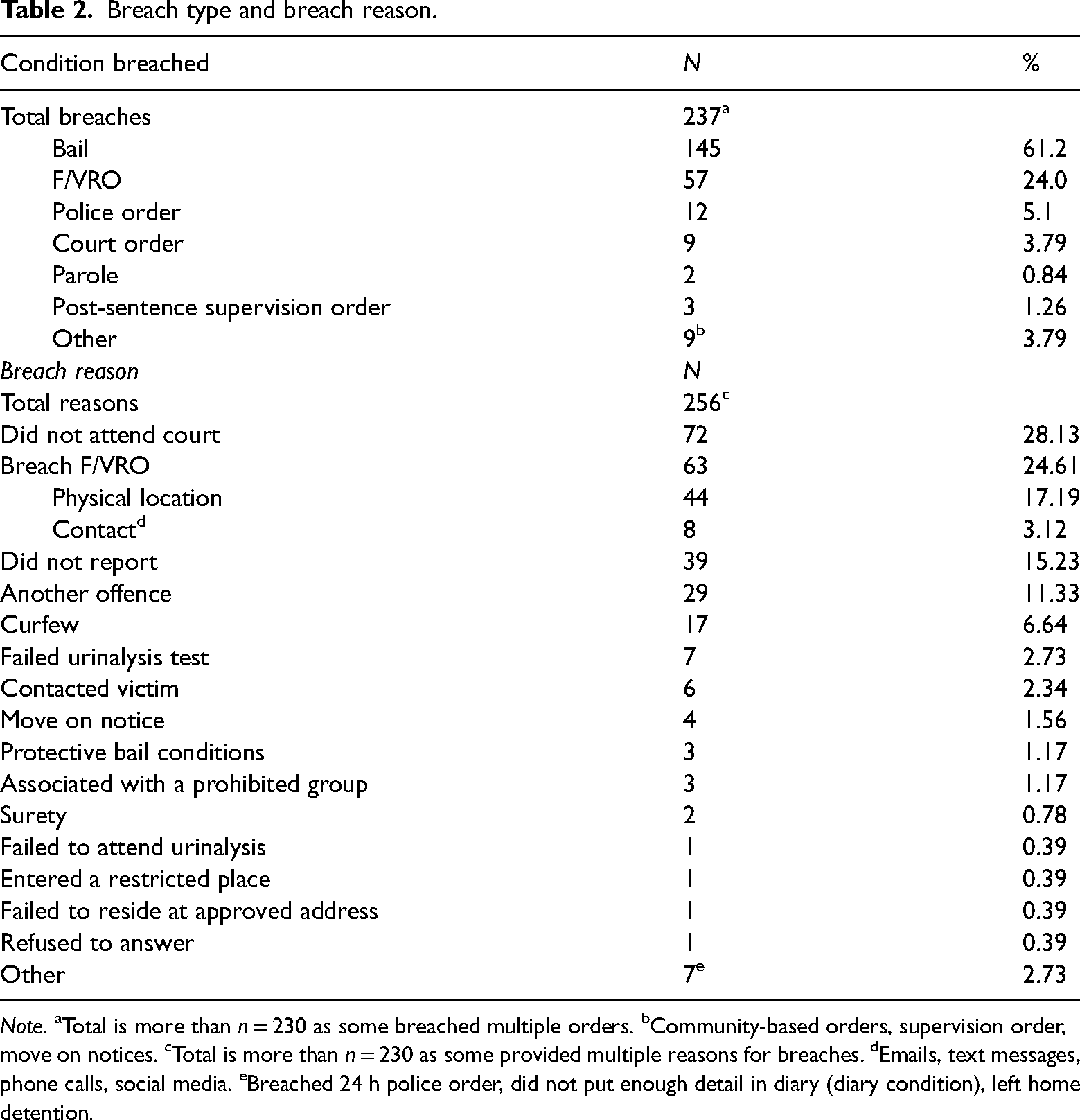
Note. aTotal is more than n = 230 as some breached multiple orders. bCommunity-based orders, supervision order, move on notices. cTotal is more than n = 230 as some provided multiple reasons for breaches. dEmails, text messages, phone calls, social media. eBreached 24 h police order, did not put enough detail in diary (diary condition), left home detention.
Understanding conditions
Most participants believed that they understood the conditions of their order (n = 197, 86.02%) and knew that they had breached their order (n = 150, 65.2%). The full range of responses is shown in Table 3.
Order conditions.
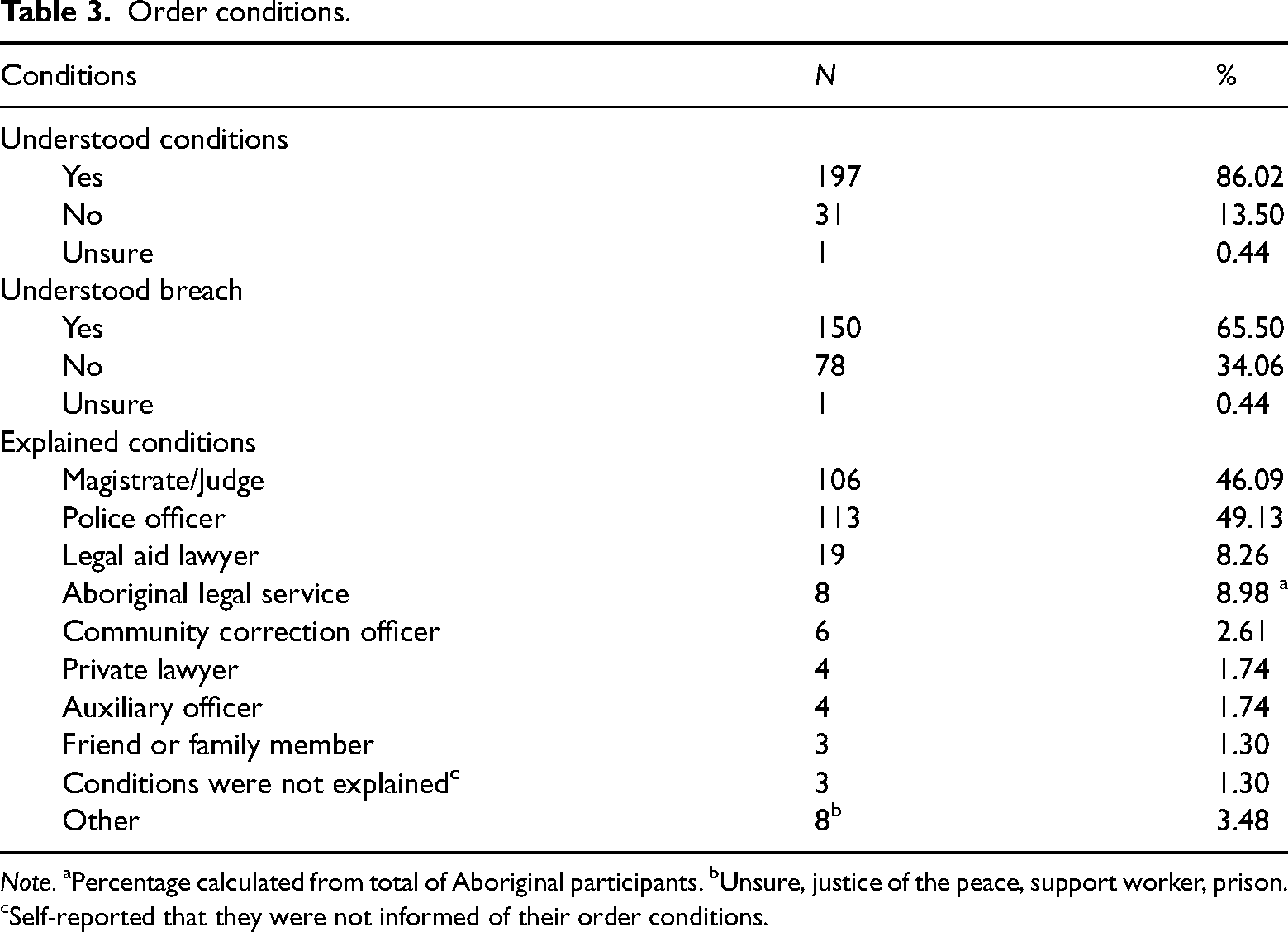
Note. aPercentage calculated from total of Aboriginal participants. bUnsure, justice of the peace, support worker, prison. cSelf-reported that they were not informed of their order conditions.
Those who claimed they did not understand the conditions often cited mental health issues or conditions that impacted on their ability to comprehend and follow the reporting conditions as demonstrated by the following explanations. I have ADHD and autism and pretty much the days blend in together for me. I knew when I agreed to the terms, I would probably forget one of the days because of how much days blend in for me. I did tell the Magistrate this and she told me it's either these conditions or go to prison. (P128; Did not report; Male) I was under so much stress and had so much anxiety. I’ve been put on medication for it. It's hard to report with so much going on. (P119; Did not report; Male) I have trouble remembering things and I think it was either me who did not understand or miscommunication on my bail conditions. (P204; Did not report; Male)
The other detainees indicated they understood the conditions and were asked “the reasons” that they had breached their order, responses were recorded verbatim. Two major themes were revealed during the analysis: the complexity of detainees’ lives, and procedural barriers. The complex lives theme included homelessness, family responsibilities, work commitments and issues with ex-partners. These issues are presented first to provide a background to the procedural barriers encountered. While the complexities of detainees’ lives could exacerbate the likelihood of breaching, inflexible conditions meant that considerations could not be made or reasons explained, resulting in breaches and charge pile ups.
Complex lives
Homelessness
Homelessness was sometimes a result of or contribution to detainees’ complex lives but also precipitated procedural barriers, exemplifying its far-reaching effects. It impacted participants’ ability to keep up with days and dates, and procedural requirements such as access to systems to check on court details, residence at registered accommodation and adherence to face-to-face reporting requirements. Breaches were often reported as mistakes and mix-ups within the stresses of their lives. It was an honest mistake and a mix-up of the days. I was homeless at the time I was meant to go to court and dealing with a lot. I didn't have access to emails to check the dates at the time. (P162; Did not attend court; Male) I’m homeless and I’ve got bigger issues than going to court. I’m living in a tent in the park at the moment with no job. (P143; Did not attend court; Male) Lost track of time. I was living on the street and woke up late on the day I was supposed to go to court. (P163; Did not attend court; Male)
Homelessness and/or unstable accommodation often resulted from strained family relationships linked to drug use, criminality and justice involvement. The following quotes demonstrate how detainees felt their current accommodation predicament had resulted from losing housing placements or having surety removed suddenly because of arguments or disagreements with family members: My mum and dad had a VRO on me but let me come home to help my Serepax addiction. When they realised I had come home from a night out drunk and high on Serepax, they didn't want to help me anymore and called the police on me to say I breached. (P197; Breach F/VRO [physical location]; Male) I had nowhere to go. All my possessions were there [location I was not allowed to attend]. My mum lets me go there sometimes and other times she doesn't want me there. She will just call the police when it suits her. I needed my stuff, so what else was I meant to do? (P228; Breach F/VRO [physical location]; Female) I’m meant to stay at my sister's house under my bail conditions, it's for my curfew. I have to be there at certain times and the police can come and check on me. She kicked me out because we had an argument. Now I’ve breached my conditions and had nowhere to go. (P298; Breached Curfew; Male)
Some participants blamed their plight on family members even though they acknowledged their behaviour had led to the argument (e.g., drug use or compliance with family rules). They displayed frustration of having little control over their accommodation issues thus subsequent breaches. Further, they felt they had no chances when they relapsed or there was family conflict.
Family responsibilities
Both female and male participants reported difficulty with attending court and/or reporting in-person while caring for loved ones, including relatives or children, especially those with additional needs. I’m [my nan's] carer and have been for the last two months. I needed to look after her and my brother wasn't there. I couldn't go to court or make it. I’m the one who washes her and does everything for her all the time. (P138; Did not attend court; Male) I knew I had to go to court, but I couldn't remember when I had to go. I have a lot going on at the moment, my son has intellectual disabilities and I’m his full-time carer. (P136; Did not attend court; Female)
Others described serious illnesses that warranted their attention and were deemed more important than fulfilling procedural obligations of attending court or reporting. My sister has got cancer in her face and in her jawbone. She is really suffering, and I’ve been with her all week this week, like family should. I didn't even think about going to the cops to report at all, but I went in this afternoon and told them I didn't report all week and they brought me here [detention] for not reporting. (P296; Did not report; Male) My mother has just got breast cancer so there was no way I could go to court, that was the last thing on my mind. (P109; Did not attend court; Male)
Some participants could not leave or find alternative carer options to allow them to report or attend court as needed. For others, their caring duties were so all consuming that they forgot the day/time for CJS contact. These issues were more pronounced for Aboriginal and/or Torres Strait Islander participants who presented with additional family responsibilities and requirements. They discussed the complexities of bail conditions on cultural requirements, in particular the requirement to report in person to a specific location that was a long distance from their location. I was in Bunbury for a family funeral I had to attend. I couldn't make it back to Perth to report so I called the police to let them know. There was nothing they could do and it was too late so I just had to cop it that I had not reported and would be arrested. There is nothing really I could have done, I couldn't miss it [funeral]. (P121; Did not report; Male) My nan passed away, so I had to travel down to Albany the same day I was meant to report. I tried to tell the police down there I needed to report, but they said I had to do it back in Perth. They said I could not report in their jurisdiction, and it had to be the one I was assigned to. (P89; Did not report; Male)
In all circumstances, cultural requirements such as attending a family funeral and the “sorry business” of cultural mourning took priority over CJS obligations. They described how this was not a “choice” between the two competing events, but that they had a responsibility to attend to cultural matters which took priority over reporting and/or attendance requirements. That said, attempts were made by participants to inform the police of their inability to report. They expressed concern over the inflexibility of reporting locations or court attendance to accommodate their cultural commitments.
Employment
While not cultural obligations, similar difficulties of adhering to in-person reporting or rigid court dates were experienced by detainees who had full-time working commitments. They described the balance of trying to maintain their employment and explained how their work commitments prevented or distracted them from reporting or attending court. I missed court because of work, once I realised I came here straight away. I just did the right thing and now they are going to charge me with everything, I’ve done a lot of bad shit in the past, but these charges are not for me. (P150. Did not attend court; Male) I have to report Monday, Wednesday and Friday but I’m a truck driver. I have no problems with coming in to report, but I could not make it because I was working. I told the judge I’m a truck driver, so I don't even know why he put those days down as my reporting days. When I went in this weekend to report, they arrested me…It effects my ability to work, I told the judge this. (P78; Did not attend court; Male)
These participants were keen to keep their employment and felt torn between trying to balance the procedural requirements of attendance while maintaining their working hours. Many participants felt that they had been set up to fail by a system that wanted them to behave pro-socially by engaging in employment, but then made it difficult to maintain it through inflexible reporting and attendance requirements.
A subset (over a third) explained that while they thought they understood the conditions, they breached because they did not fully understand what would constitute a breach. For example, one participant took medication to their child while on an order that restricted their access to the property the child lived in, not realising this would result in a breach charge. Another explanation was procedural changes to reporting days they were not aware of as the reasons for their current detention. My original bail conditions said I had to report Monday and Friday. I got put on new bail conditions last week. I thought they said I now have to report Monday to Friday, but it was Monday to Sunday. I reported Monday to Friday, but not on the weekend because I didn't think I needed to. I honestly thought I’d just get a warning as it was a misunderstanding and I reported every other day, but they brought me here today. (P265; Did not report; Female) I report every single Tuesday and I have done this for ages now. Every single Tuesday I go in to report. I went in today and the police were telling me I am now meant to report on a Wednesday, so I have now breached. (P361; Did not report; Female)
Modifications to reporting regimes confused participants as they believed they were complying and were penalised for not knowing or understanding the changes. Contacting or reorganising individuals with complicated lives adds strain to detainees, impacting on compliance. The findings highlight the importance of clear communication channels when conditions are issued and/or changed, and when being explained so they understand what would constitute a breach.
Romantic/ex-partnerships
Detainees who had been accused of breaching an F/VRO or police order responded differently than those on bail. They were more likely to attribute the cause of their breach to their ex-partners rather than systemic barriers. Participants outlined their versions of circumstances where they stated misunderstandings as the main reason for their breach: I lost my wallet a couple of months ago. I declared it stolen to the police; they got in contact with my ex. My ex then called me to tell me that the police will drop me my wallet. Because of the phone call and me waiting for them to drop it (at the location) I’ve got arrested now. (P325; Breach F/VRO [contact]; Male) I went back to the caravan park after 48 hours. I thought the order was for 48 hours but turns out it was for 72 hours. My wife called the police on me as soon as I went back. I didn't even know I’d breached when they came. I did tell them the situation, but they said there isn't anything they can do because I went back too early. (P87; Breach F/VRO [physical location]; Male)
Other participants had children with their (ex-)partner and justified their behaviour by describing communication issues about or with their children. Sometimes they did not believe it was part of the order, or that orders were used by “vengeful” exes. It must be noted that these are self-report responses from accused perpetrators and their FDV offending histories were not known: It was just a child handover. I was only returning my daughter back to her mum for the next week like I’m meant to and she called the police on me. She's very vindictive. (P22; Breach F/VRO [physical location]; Male) Asked my partner to go see my kids, she said yes and when I arrived the police were waiting for me to arrest me. (P112; Breach F/VRO [physical location]; Male) I knew I couldn't text or call her, but I thought I was allowed to go around [to ex-girlfriend's mother's house] for my son. I went to see if I could see my son for a bit, but she was there, and they called the police on me for breaching the VRO. (P140; Breach F/VRO [physical location]; Male)
The connection between former romantic partners remained because of shared caring responsibilities for children. Detainees reported feelings of unfairness where they felt they had a right to see their child, wanting to maintain relationships or caring responsibilities. However, they blamed their ex-partners for reporting them but did not seem to have any consideration for past behaviours that led to their ex-partner's feelings of safety, a topic that requires further investigation in future research.
Some FDV breach participants reported lingering romantic or emotional connections with their partner, leading to liaisons which when turned conflictual, resulted in police involvement, rearrest and the detainee apportioning blame for their breach to their (ex)partner: She wanted sex and I went there but she caught me like a fish. (P291; Breach F/VRO [physical location]; Male) My ex-partner allowed me to call and text her, but when it suited her and she found out she didn't like me anymore, she called the police on me. They knew we had been texting each other and she was texting back, but she turned it around on me and got me into trouble. (P76; Breach F/VRO [physical location & contact]; Male) My ex-partner stayed at my house. She sees me when it suits her, but we fight heaps so the second we have a fight she calls the cops on me and gets me in shit for breaching the VRO. We’ve been seeing each other behind the police's [sic] back for over a year now, but she’ll call them on me when it's convenient for her. (P83; Breach F/VRO [physical location]; Male)
Participants recognised the ongoing connection to their (ex-)partner who had the VRO against them as contributing to their breach. However, most went further by actively blaming their (ex-)partner for reporting them even when they knew their actions constituted a breach. Given the significance of FDV violations, this topic warrants further investigation.
Procedural barriers
The main findings of life complexities, stress and strain situated the participants in their personal reasons for non-compliance; however, they reported that the strict procedural requirements meant they could not even try to resolve any issues that arose even when they tried to avoid a breach. Many reported they had tried to notify the Court, police stations or lawyers of their situation either before, or as soon as they realised, they had missed an important appointment. They had tried to make phone calls to the Court, find online information and email addresses without success to notify the Court of issues. For some, even when contact was made, they were told that by not reporting or attending court they were breaching and a warrant for their arrest would be issued. They described barriers to reporting or attending that potentially could be addressed at an administration level to divert a breached condition and support busy court schedules. This was exemplified in the following participants account of their breach: So, I went to the police station here in Perth and told them that I’d been kicked out [of the nominated accommodation) and wasn't there and they locked me up here. I’ve got an extra charge now because I breached bail and probably won't get let back out tomorrow. It wasn't in my control. I was meant to be doing my medical to start work on the mines too tomorrow, so I won't be working there now. (P298; Breached Curfew; Male)
This participant's experience is just one of many where attempts to “do the right thing” either led to their punishment or did not mitigate it. Most participants complained about rigid conditions that, given their complicated life circumstances, they were unable to adhere to despite best efforts. While complex life situations may be difficult to address, many of the procedural difficulties can form the basis for policy and procedural changes.
Discussion
The quantitative results of this study indicated that bail was the most breached type of order, and not attending court or failing to report were the most cited reasons. Most detainees understood the conditions they had been placed under. The findings present an enmeshed picture of detainees’ lives complicated by homelessness or unstable or unsuitable housing, family responsibilities, work commitments (for some), strained romantic relationships and procedural inflexibility. The experiences of the detainees surveyed in this study highlight the difficulties of people in contact with the justice system that have already been well-established (Barry & McIvor, 2008; Ellis, 2021; Gately et al., 2021). Of more importance, however, is the detainees’ descriptions of how their complicated lives impact on their ability to adhere to conditions issued to them. Unique to this study is that those on orders are subject to monitoring and reporting conditions but are not supported in the community, as offenders who have been sentenced are. This was evident in the findings of the current study where their difficulties fed into increased justice administration offences and a recriminalisation of people on orders.
Homelessness was pervasive in this sample with family conflict or strained relationships (warranted or otherwise) often feeding into experiences of housing instability. While it was unclear from the data collected if homelessness led to offending or vice versa, participants appeared to be experiencing two major structural challenges: homelessness and criminal justice contact, which often worked against each other. Homeless people are less likely to have access to the means to avoid offending, therefore contact with the justice system is likely (McNeill & Weaver, 2010). In the context of breaches, homelessness serves as a “derailment” and “obstacle” to compliance (Halsey et al., 2017). The mental load of participants was high with meeting basic needs taking precedence over order compliance, leading to forgotten court dates or the inability to maintain a grip on days, dates or time. Perceptions of space and time become warped for homeless people, who often live day-to-day and are unable to think beyond that (van Doorn, 2010).
In accordance with GST, strain stemming from homelessness is associated with low social control (Agnew, 2001). Namely, lacking the appropriate supports and resources, the potential cost of breaching is low as there are primary needs that need to be met. As such, conditions become secondary to meeting primary needs. Recent work by Taylor and Bartels (2024) found support for an “app” to use text messages and push notifications to send reminders related to their bail or parole conditions. They further recommended a calendar feature and links to services to assist to help people comply with their conditions but cautioned that structural challenges including accommodation and access to transport cannot be addressed by the app (Taylor & Bartels, 2024). The stress related to housing instability needs to be considered for those on orders as it is a barrier to adhering to conditions. To address desistance from crime and a pile on of offences, there is a real need to address the housing conditions that are genuinely appropriate and attainable for individuals, while balancing risk mitigation. Given the current housing crisis in Australia, accommodation issues will remain a challenge for the CJS.
Other issues faced by detainees included family caring responsibilities. The caring component of detainees’ lives was presented as a reason they were unable to adhere to their conditions. While literature has advocated for balancing numerous factors while considering the personal circumstances of the offender when sentencing (Millar & Dandurand, 2017), little research has regarded how caregiving can impact order compliance. Many participants described situations where they simply could not leave family members or organise alternative care. When family commitments clashed with reporting requirements, it led to the f*ck it! moments described by Halsey et al. (2017), when the CJS is viewed to be stacked against them and they see no option but to breach. The importance of family bonds and responsibilities has been associated with distance from criminal behaviour (Allan et al., 2005; Stubbs, 2010), however, it was the strain created by caring responsibilities that prevented compliance, despite efforts by some to notify the police or courts. Technology used to monitor justice-involved individuals internationally since COVID-19 could assist with alleviating the need for in-person reporting (Taylor & Bartels, 2024). However, it was not reported as being used in this cohort but could be an effective alternative to face-to-face reporting and prevent further breaching or offence pile ups for those with caring responsibility.
The Aboriginal participants in this study reported difficulties when they had to adhere to sorry business whereby they are required culturally to attend funerals and mourn with family. Sorry business can last weeks or months and not participating can have negative social, cultural and health implications (Office of the Inspector of Custodial Services, 2013), thus attending a funeral will always take precedence over adhering to an order. Bail has been shown to interfere with Indigenous people’s ability to adhere to family obligations and events (Taylor & Bartels, 2024) that prevent them from reporting at a dedicated location. Conditional orders can also include curfews and/or exclusionary zones which can be breached when attending to family obligations. This was consistent with the findings of the Australian Law Reform Commission (2017) which suggested that Aboriginal and/or Torres Strait Islander people breached their orders due to inappropriate conditions and a lack of support. Prominent Australian commentators report the Australian CJS does not meet the needs of Aboriginal and/or Torres Strait Islander people (Cunneen & Porter, 2017; Day, 2003; Tubex et al., 2021) and there is recognition that more intensive work is required to devise real and ongoing solutions (Australian Human Rights Commission, 2021). The current study highlights that cultural obligations should be planned for and considered when issuing orders. Aboriginal and/or Torres Strait Islander Court Support officers are needed to liaise with people on orders to permit electronic reporting and/or reporting at other police stations closer to locations of family funerals or other cultural events. This strategy could allow for cultural responsibilities, reduce the stress for the individual, ensure databases are kept up to date and curb re-criminalisation through breaching orders due to cultural requirements.
The difficulties of bail supervision on employment have been well-documented (Durnescu, 2011; Hayes, 2015; McNeill, 2018). McNeill (2018) noted that repeatedly being monitoring imposes constraints on time, and Hayes (2015) noted the loss of autonomy. These findings were echoed in employed detainees’ explanations of their breaches, indicating the need for some flexibility in reporting and other conditions to ensure ongoing employment, which keeps detainees engaged in a pro-social activity. Maintaining employment is critically important for structural stability (affording accommodation) but having a stable job also deepens attachments and commitments and insulates against criminal activity (Chouhy et al. 2020). These findings support those of Lui et al. (2020) in that detainees viewed the perceived inflexibility as unjust and impacted upon their success on bail. Therefore, flexibility in reporting, including digital reporting using Global Positioning System (GPS) is another way to support those on orders to maintain employment and desist from further criminal activity.
The reasons for breaching VROs were often blamed rather than explained with those on FDV breaches more likely to report “misunderstandings” or vindictive behaviour, apportioning fault to their (ex)partners rather than on other barriers. Their comments and explanations support previous findings that DV offenders attribute greater blame to their partners than to themselves and minimise the severity of their offence (Henning et al., 2005). Ongoing emotional attachment can be a catalyst for or lead to what the participants viewed as consensual contact, which when turned conflictual led to formal reporting of the breach by the victim/survivor (Reeves, 2020). The detainees described turbulent relationships, often laying blame for the breach outside of their control, stating that their exes were “manipulative” or vengeful. It is important to note that these accounts were from the detainees’ view, without input from the partner being described. These instances of blame do not account for the reasons for the restraining orders being issued, the history of abuse or threats made to the victim. Given the distinction of this group, future research should concentrate on the reasons given for FDV breaches to develop plans that prevent breaching and maintain protection of the victims. These insights demonstrate the minimising of behaviours present in those who breach VROs and highlight the need for further investigation into FDV breach justifications in more detail than was possible in this study.
Overall, the participant's responses indicated complex lives, as discussed above, that were further complicated by procedural barriers. Many participants experienced a sense of procedural injustice and felt let down by the procedural challenges they faced while on orders. They felt the conditions were rigid, unjust barriers to compliance and thereby increasing strain. Furthermore, when they realised they would breach an order, or would miss an appointment, they could not contact the appropriate person for advice despite phoning, emailing or sending letters in advance. These experiences can lead to a lack of faith in the justice system because of feeling unfairly treated or that the system was stacked against them. McNeill and Weaver (2010) and Digard (2010) posited that unfair treatment can impact an individual's likelihood to adhere to future directions by the CJS. As such, procedural barriers to adhering to conditions set by criminal justice representatives, such as a lack of flexibility in reporting for genuine reasons, can impact belief in the justice system and, in turn, future offending behaviours (Halsey et al., 2017).
The current results are in accordance with Agnew's (2001) GST; detainees described stress and challenges, such as homeless and family commitments, associated with reporting conditions and contributing to strain. For those detainees experiencing homelessness, it would appear the strain created by attempts to meet primary needs, such as shelter, food and safety, resulted in breaches being considered low in magnitude. Essentially the “cost” of breaching was secondary, compared to competing demands. As previously stated, obtaining stable accommodation continues to be a challenge for the justice system. A sense of frustration when attempting to balance employment or familial commitment when they conflicted with reporting requirements was noted by detainees. In these cases, the strain experience was viewed as unjust due to the perceived rigidity and therefore was more likely to result in criminal coping, or in this case breaches of their conditions.
Recommendations
To address this, one recommendation is to have a dedicated and designated court outreach worker to help those on orders navigate and adhere to their conditions. This could include the most appropriate method to communicate court reminders. They could also be responsible for managing a formalised “extension tracker” consisting of a dedicated (rather than generic court) phone number for those on orders to contact when they are having troubles attending, to record the date, time and reason why an extension or alternative court date or reporting method is being sought. This data could be used to understand trends of individuals and cohorts to permit a review of the supports needed by people on orders. The information could inform how defendants granted bail are supported, or where the gaps in supports are required, as recommended by the Auditor General (2015). Furthermore, technological advances such as specialised reminder apps and/or GPS technology utilised for reporting during the COVID pandemic could be used for those appropriate on orders to report from home or their workplace as technology has been shown to assist the public, lawyers, experts and court staff since COVID (Sourdin et al., 2020). Technological advances could increase court attendance (Auditor General, 2015) and reduce backlogs (Sourdin et al., 2020; Susskind, 2019).
Limitations
This study provides a unique snapshot into the perspectives of those who have been apprehended for breaching conditions in WA, however, there are several limitations. The sample comprised police detainees brought to a metropolitan police watch house; some of whom were brought from regional, but not remote areas of WA. It is also important to note that not all detainees who entered the watch house engaged in the project. Detainees were brought to the research team based on the discretion of officers. Therefore, those who were intoxicated, violent or a security risk were not interviewed. Furthermore, it is important to acknowledge the reasons for breaching conditions were based on the detainees’ perspectives, who may have provided socially desirable responses. This self-reported methodological approach was utilised for its ability to provide an insight into the events that occurred, that are unique to the individual and place them on a trajectory to breach their conditions. Future projects could include length of orders, time to breach and behaviour histories while on orders to compile are even more detailed picture.
Conclusion
The advantages of Australia's justice system granting bail include adhering to human rights conventions; permitting the continuation of employment; maintaining familial obligations and relationships; and preventing an overload of the prison system. However, to be effective, conditional orders need to be achievable by the individuals they are placed on. Given statistics indicate a high number of people on orders breach them, it is evident that for many adhering to conditional orders is not possible. The result is an increase of interactions with the CJS resulting in additional criminal charges. Participants in this study did not appear to disregard their reporting requirements but described a range of life complexities that interfered with adherence to conditions. Homelessness and housing unsuitability/instability were an overarching challenge and were commonly cited as attributing to breaches. Procedural challenges were reported as barriers (i.e., inability to change reporting dates, times and locations), which could be changed to support accused persons on orders.
To the knowledge of the authors, GST has not previously been applied to breaches of conditions. This paper provides a unique perspective in understanding how strain created by complex lives may impact on detainees’ success with conditions. As such, it is recommended that the administrators of justice move from standardised to individualised orders to ensure conditions are achievable, with contingencies or alternatives to reporting when “life happens” events occur. By doing so, perceptions of fairness in the justice system are likely to be maintained or increased, lowering the likelihood of reoffending. Furthermore, Aboriginal and/or Torres Strait Islander People faced additional unique challenges due to cultural requirements, therefore planning for the cultural obligations faced by Australia's Indigenous population is essential to reduce breached conditions and overrepresentation in justice systems. Whilst this paper utilised WA participants, given the similarities of detained persons in Australia (Voce & Sullivan, 2021), the issues identified in this paper provide some avenues to address the high levels of breaching conditions in other jurisdictions. The recommendations provided can help assist those on orders to comply with their conditions, prevent breaches and re-criminalisation, reduce the workload on police and court staff, and prevent delays in the administration of justice.
Footnotes
Declaration of conflicting interests
The authors declared no potential conflicts of interest with respect to the research, authorship, and/or publication of this article.
Funding
The authors disclosed receipt of the following financial support for the research, authorship, and/or publication of this article: This work was supported by the Western Australian Office of Crime Statistics and Research (WACSAR).
