




Abstract
Court environments can be stressful and induce anxiety in victims, witnesses, and other court users. Taking heed from justice facilities in other jurisdictions, the Children's Court of Western Australia introduced Winston, a justice facility dog, at the Perth Children's Court facility to help reduce the stress and anxiety of victims, witnesses, and court users. This article presents survey (n = 55) and interview data (n = 17) from staff and stakeholders who reported positive changes in the court atmosphere, with limited negative impacts on the running of the court. Surveys were also conducted with child victims/survivors (n = 13), caregivers (n = 44), and other court users (including accused young people; n = 23). Children and caregivers’ results indicated significantly reduced stress and anxiety levels associated with attending the Children's Court after interacting with the facility dog. When analysed through a lens of therapeutic jurisprudence, the positive impacts on court-user well-being and limited impact on the court and legal processes solidified the therapeutic principles of the program. The findings of this study highlight that justice systems could implement similar positive therapeutic programs at other courts to reduce negative impacts on people attending and working at the facilities.
Keywords
Introduction
Court environments can be stressful and induce anxiety in victims, witnesses, and other court users (Gerkey, 2016; Katirai, 2020; Kelly, 2020; Quas et al., 2005; Roberts et al., 2015; Wexler, 1993; Wood et al., 2018). To address this, specially trained dogs, known as facility dogs, have been introduced in some justice facilities to distract and reduce the stress associated with court appearances. The success of facility dogs internationally (Spruin, Mozova, et al., 2020; Spruin et al., 2019), has resulted in their introduction into criminal justice systems in Australia and prompted consideration of their incorporation in the Children's Court of Western Australia (Department of Justice, 2021; Wood et al., 2018). The first of its kind in Western Australia, the Justice Facility Dog Program (JFDP) aimed to improve the court experiences of victims, witnesses and other court users. Winston, a 6-year-old Black Labrador Retriever, was specifically selected and trained by Guide Dogs WA, to attend the Perth Children's Court building four times a week with his trainer. The Labrador's interactions with people, such as laying by their feet, was expected to distract victims and witnesses to reduce their stress and anxiety (Department of Justice, 2021). This research article outlines current literature on justice facility dogs and Western Australia's current JFDP project before evaluating the program's success.
Court impact on user well-being
Courts have long been condemned as detrimental to the psychological well-being of their users (Gerkey, 2016; Wexler, 1993; Wood et al., 2018). Researchers have found that stress and anxiety affect victims and witnesses on a short- and long-term basis (Quas et al., 2005) while often also re-traumatising them (Katirai, 2020; Roberts et al., 2015). Researchers have found the long-term effects of testifying in court as a child abuse victim were greater for those who had a negative reaction to testifying and were more likely to have poor adjustment and negative views of the court system in adulthood (Quas et al., 2005). Moreover, women who testified against violent partners often suffered distress before, during and after being cross-examined in the presence of their abuser in court (Katirai, 2020; Roberts et al., 2015). The short-term psychological effects of stress and anxiety can affect the accuracy of people's recollections during cross-examination and result in issues that relate to their perceived credibility, which can ultimately hinder the justice process and result in non-convictions (Caruso & Cross, 2012). The involvement of victims and/or witnesses is essential to the justice process, so having interventions in place that can increase well-being is important both to individuals and the wider court process (Holder, 2013; Jones & Miller, 2021).
Facility dogs in courts
Internationally, facility dogs, also known as courthouse dogs, focus on improving the well-being of the people they interact with, although their training and duties may vary (Spruin & Mozova, 2018). Facility dogs are specifically selected for their subdued nature to provide support and comfort to victims and witnesses (Spruin & Mozova, 2018). Facility dogs (different from therapy or service dogs) are trained to detect the stress levels of people around them and to be resilient in high-stress environments, such as courts (Mariani, 2020). They respond to victim and witness stress by resting their head on the affected person's lap, lying at their feet, or nuzzling them (Jones & Miller, 2021). While the dogs mostly work with victims and witnesses, they have been increasingly introduced in speciality courts such as children's courts, drug courts, and veterans courts to provide support to these vulnerable groups (Bergal, 2017) but a holistic examination of the animals’ effectiveness has not been conducted.
Facility dog effects on stress and anxiety
Cortisol testing has been used to assess the effects of dogs on people's stress levels more generally. A study in Germany compared reactions to the presence of a dog, a friendly person or a toy dog during a stressful event (Beetz et al., 2011). Findings indicated lower rates of salivary cortisol in the boys who interacted with the real dog, compared with youngsters in the human and toy groups. Their findings support assertions that dog-based interventions reduce stress in children. Similar results from subjective reports of stress during a traumatic event were noted in a study with adult females (Lass-Hennemann et al., 2014). These results indicate the suitability of using a dog as a method of reducing anxiety and stress, although it was unknown whether the effects would carry over and be achieved in courts.
In North America, Holton (2015) compared children's disclosures of abuse where therapy dogs were present or absent and found disclosures were obtained in 81.8% of cases where a therapy dog was incorporated, compared to 33.7% when not (Holton, 2015). Facility dogs promote increased attendance at court for victims and witnesses (Holder, 2013; Kelly, 2020; Weems, 2013). Improved court experiences were also noted by Spruin, Dempster, et al. (2020) who surveyed North American legal professionals working with child witnesses to assess the impact of facility dogs. Results indicated that the facility dogs had a positive impact on the witnesses and their overall court experience, as demonstrated by quick rapport building and improvements in witness credibility. While earlier research has outlined the incorporation and impacts of facility dogs through a therapeutic jurisprudence lens, the research focused solely on child victims and witnesses (Gerkey, 2016). The current research goes further by examining the experiences of other children's court users (accused young people, caregivers) in addition to staff and stakeholders.
In the absence of peer-reviewed research, Australian-based in-house evaluations of support and facility dogs in courts have garnered positive feedback (Department of Justice, 2017; Office of the Department of Public Prosecutions, 2020). A short survey with 27 New South Wales individuals who were assisted by the dog support program showed that all interactions had reduced participants’ anxiety. Furthermore, participants and staff indicated the court felt calmer in general (Department of Justice, 2017). A more recent and larger scale evaluation used feedback forms to allow participants to share their thoughts on a similar program. Data from the South Australian study showed participants reported positive feedback (n = 137) about their interactions with the state's court facility dog. Qualitative responses in the forms supported the incorporation of the program, as interaction with the facility dog had reduced anxiety, sped up rapport building between witnesses and legal representatives, and improved overall experiences in the court (Office of the Department of Public Prosecutions, 2020). Results from this project add independent empirical evidence to in-house evaluations.
Assisting vulnerable people
Vulnerable victims, particularly child and adult sexual abuse survivors, have been identified as those who generally suffer the most during court proceedings (Quas et al., 2005; Roberts et al., 2015). A North American study examining the effects of a justice facility dog on children (n = 51; aged 4–16 years) found a significant decrease in biological stress markers in participants who interacted with a facility dog compared to those who did not (Krause-Parello et al., 2018). The use of biological markers adds validity to self-reported data common in facility dog research. Researchers undertaking a more recent qualitative study used research data triangulated through observations, interviews, and surveys to assess the impact of a facility dog on 13 sexual offence survivors during police interviews (Spruin et al., 2019). Findings revealed that participants felt the dog distracted from their focus on the stressfulness of the situation, allowing them to be engaged and calm during questioning. Legal professionals also reported less discomfort for victims when facility dogs were present (Howell et al., 2021). Researchers also found a facility dog improved staff morale, especially for justice staff members who can be negatively affected by the continual trauma they are exposed to (Curley et al., 2022; Levin et al., 2011; Schrever et al., 2019, 2022). While the impact of a facility dog on witnesses and victims has been overwhelmingly positive, concerns still exist because of the impact dogs can have on the running of courts.
Facility dogs’ impact on courts and justice
There is some contention around the incorporation of justice facility dogs in courts, due to concerns about the potential impact the animals could have on jurors and the administration of justice. Most condemnatory literature has come from the United States of America and has focused on constitutional rights and jurisdictional-specific law. Grimm (2013) purported that dogs in courts garner sympathy for victims or witnesses and can unduly influence the jury, particularly if the dog is incorrectly referred to as a therapy dog. People have argued this sympathy can encroach upon a defendant's right to a fair trial as the facility dog could make witnesses or victims appear more vulnerable (Bowers, 2013; Nascondiglio, 2016). These argument-makers were concerned and questioned when, and if, therapeutic approaches should take precedence over legal processes (King, 2008; Zetterberg et al., 2014). However, these arguments were made before empirical research had become available, with Burd and McQuiston (2019) finding more recently that facility dogs may not influence juror decision-making on verdicts and therefore not affect sentencing or verdict confidence.
Therapeutic jurisprudence
The way the law unfavourably affects individuals is an area of concern for lawmakers, the judiciary, and behavioural scientists (Thompson, 2011). An interdisciplinary movement, which seeks to assess the law's detrimental effects, is called therapeutic jurisprudence. Wexler describes the approach as the “study of the role of the law as a therapeutic agent” (1993, p. 279) and encourages the use of initiatives that improve the well-being of court users. Legal system reformers have proposed that the law can be used as a therapeutic instrument to improve court user well-being. By doing so, reformers argue the harm caused by the law and legal processes can be mitigated (Wexler et al., 2016) and can have positive effects on the process of justice (Burd & McQuiston, 2019). There are several court-based initiatives that are founded on therapeutic principles such as drug courts, family violence courts, children's courts, mental health courts and victim impact statements (King, 2008). While problem-solving speciality courts address some of the stress and anxiety experienced by victims and witnesses, it cannot be eradicated altogether, meaning the implementation of other initiatives, such as facility dog programs, needs to be considered.
Perth's Justice Facility Dog Pilot Program
The Perth Justice Facility Dog Pilot Program was the first of its kind in Western Australia and was based on the NSW Canine Court Companion Program. The program follows best practice principles established by the Courthouse Dogs Foundation (2015). Under this framework, the dog must:
enhance the functioning of the court and not be a distraction; be handled by someone in the legal profession (e.g., prosecutor, victim's advocate, etc.) to ensure the person understands court processes and is trauma-informed; and be a professionally trained facility dog and a graduate of a not-for-profit assistance dog school accredited by Assistance Dogs International. This ensures the dog has the temperament and specialised skills to work in a court environment.
In Western Australia, justice facility dog handlers stressed that despite the Perth court program's aim to support court attenders, justice dog Winston's welfare remained paramount throughout the program. Handlers are hyper-sensitive to any signs of distress in the animal, which, if detected, would result in him being removed from the court. Winston's time was prioritised for working directly with victims, witnesses, or other vulnerable people who wished to engage with him, either in public or the private waiting areas of the courthouse. People could pat, gently play with, and talk to Winston. He could also lie on the ground beside people or place his head or paws on their feet, providing a comforting body pressure. When Winston and his handler were not working directly with victims or witnesses, they moved around the public waiting areas of the court. Any court user could interact with Winston at these times if they chose to. The on-duty handler monitored all engagement to ensure it was safe and appropriate for Winston and could also politely disengage where necessary. The handler and Winston did not approach anyone without their consent.
Research questions
As part of its consultation process, the Government of Western Australia's Department of Justice engaged the authors to conduct an evaluation to measure the impacts of the JFDP pilot program at Perth Children's Court. The overarching research questions were:
Does the justice facility dog, Winston, reduce the stress and anxiety associated with the court experience for victims, witnesses, and other court users? What impact does the justice facility dog, Winston, have on the functioning of the court?
Methodology
Research setting
Perth's Children's Court is Western Australia's main court building for matters relating to young people. Judicial officers at the facility hear criminal court cases for accused people who were under the age of 18 at the time of their alleged offending, and protection and care matters in the court building (Clare et al., 2011). As part of these cases, accused young people, friends, parents, guardians, and sometimes victims, and witnesses, can be present in the public waiting areas. Social workers, lawyers and other support people are often in these areas too. There is a separate, private waiting area which victims and witnesses can use. It contains two waiting rooms and leads to video-link evidence rooms and the courtrooms so that victims and witnesses do not have to walk through the waiting area if they do not wish to. It was in these spaces that the researcher at Perth Children's Court approached children and young people and their caregivers to participate in the research.
Design
A mixed methods approach was taken to assess the experiences of JFDP service users to ascertain people's levels of stress and anxiety and the impact of the service on the running of the court. Different surveys were utilised for children, caregivers and court staff to gain their perceptions of the JFDP. Interviews were conducted with key staff and those that nominated to be interviewed on their survey.
Materials
All surveys were collected through Qualtrics Online Survey Software. These responses included a combination of quantitative and qualitative data. Children, young people and caregivers’ perceptions were measured quantitatively using a 10-point Likert scale (strongly disagree to strongly agree). The Likert scale had numerical increments ranging from zero to 10, with the top and bottom increments labelled to highlight both extremes and ensure the scale was prescriptive. The child and young person survey was short and used emojis and labels at three points to illustrate feelings ranging from very relaxed to anxious and worried (see Figure 1). A psychologist experienced in working with children advised researchers on the wording and presentation of the scale. The caregiver survey was similar but did not use emojis. It was used to understand a caregiver's view of their child's stress and anxiety before and after interacting with Winston, and their own levels of stress. Both the child and caregiver surveys ended with an open-response textbox requesting any additional feedback. The staff survey used 7-point Likert scales and asked about a staff member's experiences with the JFDP and their views on its impact on running of the court, such as the effects of Winston's presence in the waiting room. Two final questions sought qualitative responses from participants and allowed for open text comments.
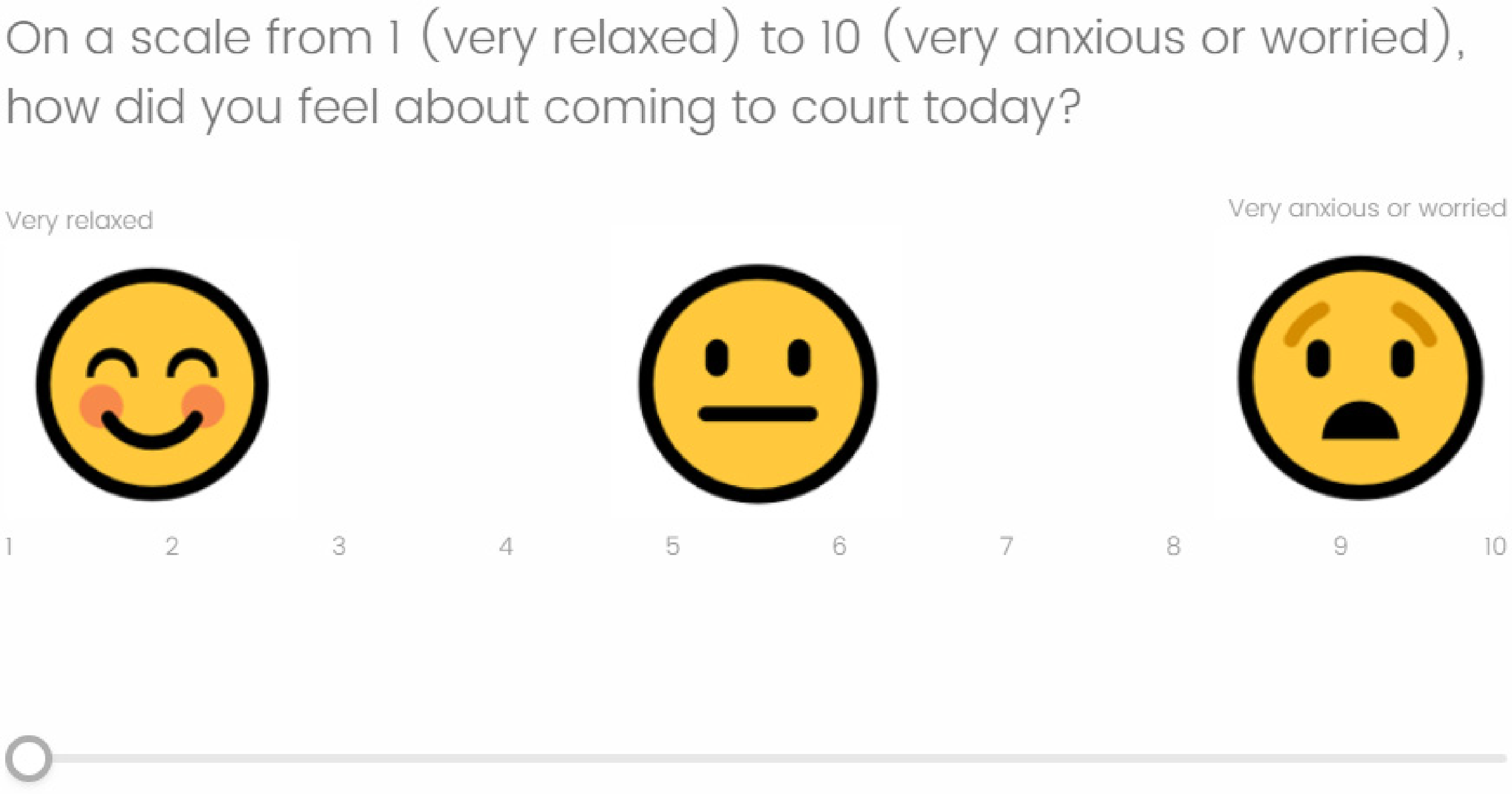
Excerpt from the child and young person survey.
Ethical considerations
Seeking participation from young people who may be nervous or stressed about an upcoming court appearance was a serious ethical consideration. To reduce researcher interference and allow the focus to remain on the interaction between Winston and the participant, the researcher waited until the interaction was underway before approaching and then encouraged further interaction with Winston after completing the surveys.
Procedures were put in place to protect participants’ identities and keep the information they provided confidential. If participants were under the legal age of consent, permission was obtained from the caregiver (consent) and the individual participant (assent). The justice department's Child Witness Service provides free emotional support and practical preparation for children under 18 years of age who give evidence in court in a criminal matter; victim or witness participants had access to these support staff members at court. For other participants, an information letter provided resources such as the Commissioner for Victims of Crime website, Lifeline, and Kids Helpline. It was also acknowledged that young people sharing their perspectives and experiences have found comfort in knowing that they have shared information which is important and considered valuable (Moore et al., 2011). After a thorough consideration of the ethical issues of this research project, the Edith Cowan Human Research Ethics Committee granted approval for the project 2021-02987-ELLIS.
Participants and collection
Children and young people survey
Participants were obtained using a targeted sampling method. The researcher approached those interacting with Winston to invite them to participate in the children and young people survey, with their caregiver's consent. Children and young people (total n = 36; victims and witnesses n = 13; 69.2% female; and other court users n = 23; 69.6% male). The participants’ ages ranged from 9 to 21 1 years old (n = 33; M = 14.9 years; three responses missing). Parents and/or caregivers (n = 44) were also surveyed separately to assess their child's and their own levels of stress before and after interacting with Winston. Demographic information was limited to keep surveys short. Furthermore, to comply with Western Australia's Department of Justice approval conditions, ethnicity information was not collected for any participants—with the lack of information being a recognised limitation of the research project.
Staff and stakeholder survey
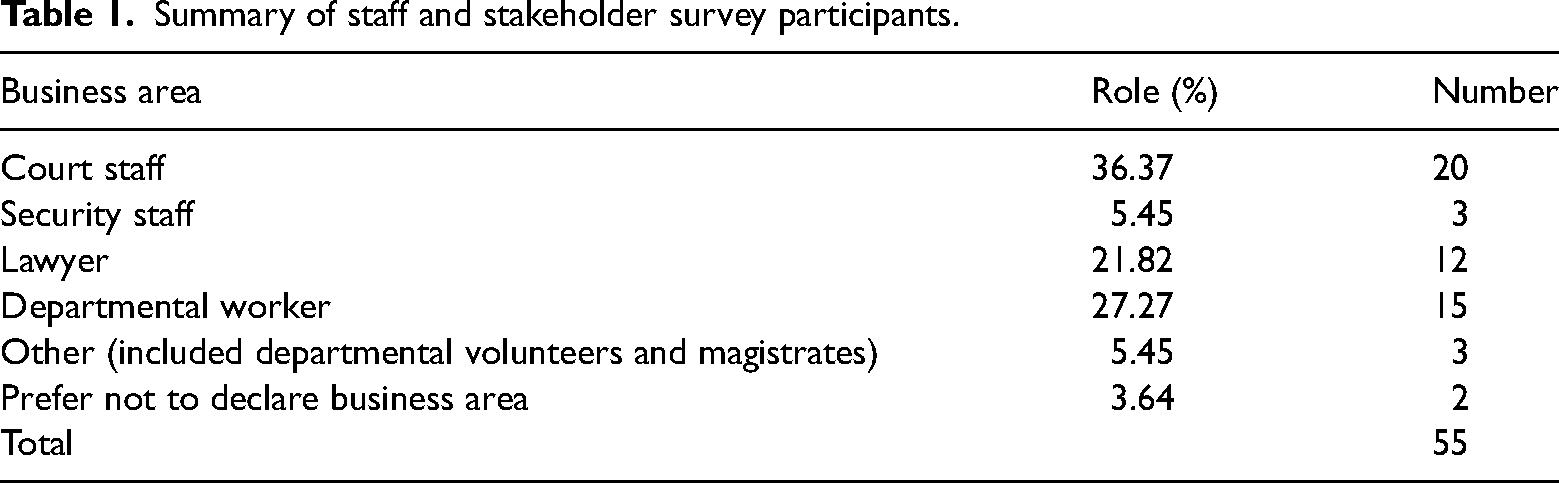
Responses were obtained from a targeted purposive sample as identified by the Department of Justice and through snowballing. Participants were contacted via email, with details provided by the justice department or through participants forwarding the survey to colleagues. Participants were asked to respond as representatives of the departments in their relevant organisations. To gain a wider indication of how the program was perceived and how it affected the functioning of the court, participants were sourced from the Children's Court personnel (n = 55; summarised in Table 1). Given the survey examined the service delivery of the JFDP initiative, demographic details were not requested.
Summary of staff and stakeholder survey participants.
Staff and stakeholder interviews
Initially, interviews were conducted with key stakeholders from Guide Dogs WA, the Children's Court, the Department of Justice and the Child Witness Service. In addition, survey respondents who indicated they wished to provide additional information were interviewed. Interviews were conducted in person and via Microsoft Teams. The interviews lasted about 15 min and were audio-recorded. Of the 17 interviews conducted, six participants were from business areas deemed important by the justice department, and the remaining 11 participants were survey participants who had requested a follow-up interview.
Analysis
Quantitative data
Survey data were exported from Qualtrics into IBM SPSS Statistics 28 for statistical analysis. Paired sample t-tests as a comparison tool to determine the effect of having an interaction with Winston on the self-reported anxiety and stress levels of children and caregivers in the court. For staff and stakeholder surveys, descriptive statistics provided an overview of collated responses which indicated the level of agreement among respondents.
Qualitative data
Interviews were transcribed using the automatic transcription feature of the Descript online audio–video editing system. Then researchers reviewed the transcripts to ensure response accuracy. A question-ordered matrix was used to organise the information in a methodical and coherent mode for ease of analysis (Patton, 2015). The common responses from the interviews and two qualitative survey question responses were then clustered. The resulting data fell within the two research questions. Manifest content analysis was conducted to identify common patterns in responses (Kleinheksel et al., 2020; Vaismoradi et al., 2013). This process was iterative and conducted over many rounds to ensure the accuracy and trustworthiness of the researcher-conducted analysis (Elo & Kyngäs, 2008). Two overarching categories were identified: benefits and improvements, as illustrated in Figure 2. Participants were allocated a participant number (i.e., “P1, P2, P3…”) to de-identify their transcripts and maintain anonymity where possible.
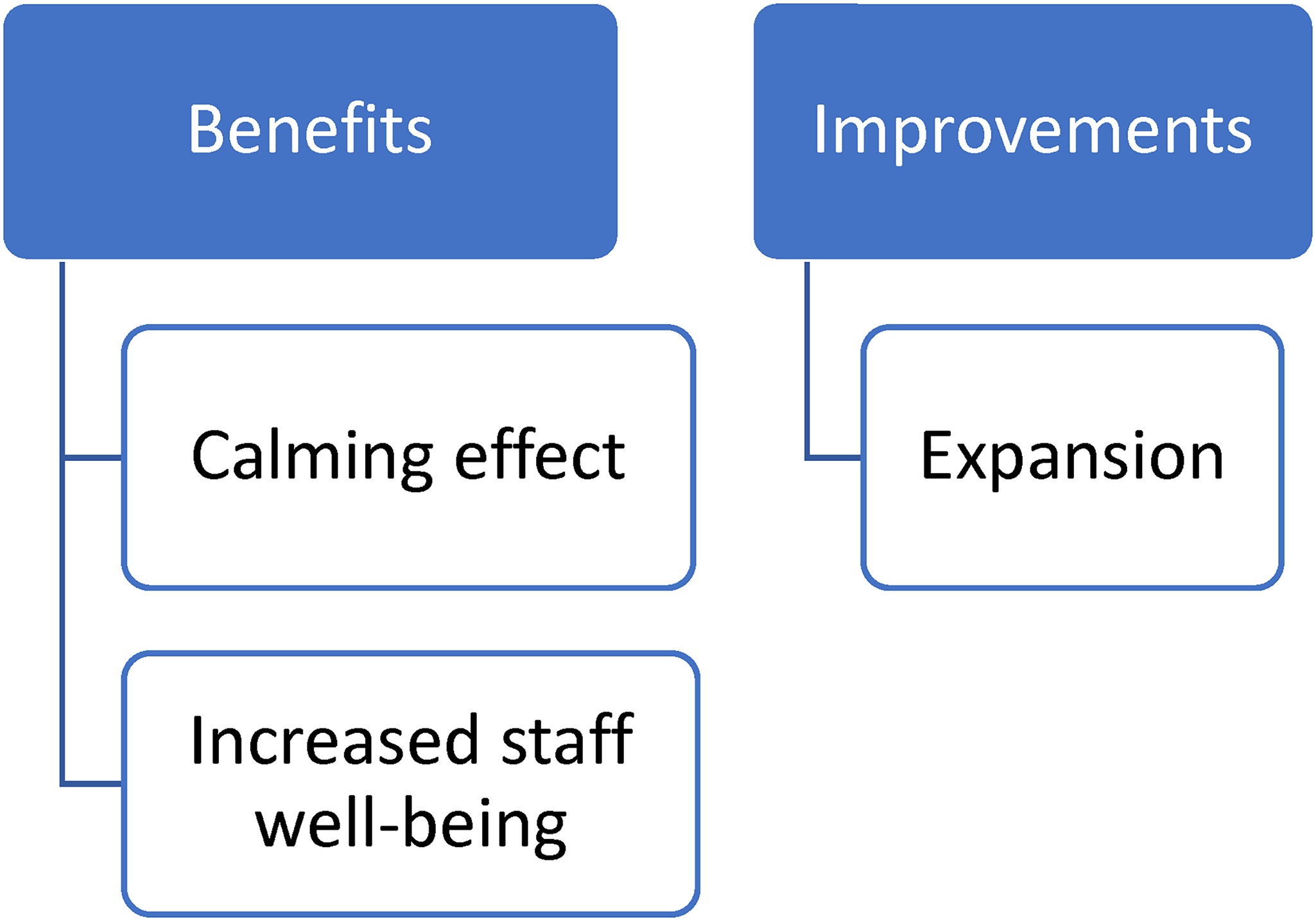
Categories from staff and stakeholder interviews and qualitative survey data.
Results
JFDP impact on anxiety and stress of children and young people
Overall, the child, young people, and caregiver surveys indicated that Winston the justice facility dog significantly reduced stress and anxiety for children in the court. Paired sample t-tests were conducted to determine the effect of having an interaction with Winston on the self-reported anxiety and stress levels of children in the court. The results indicated a significant difference between the anxiety scores before the interaction (M = 5.83, SD = 2.83) and anxiety after the interaction, M = 2.60, SD = 2.14; t(34) = 7.83, p = .000. In addition, the results indicated significantly higher stress scores before the interaction (M = 5.51, SD = 3.14) and lower stress scores after the interaction, M = 2.60, SD = 1.85; t(34) = 6.45, p = .000. Survey numbers were not sufficient to break them down any further into victim, witness and other court user categories for analysis.
Qualitative feedback from children and young people described how Winston helped them in court and reduced negative feelings: He helps with getting stuff off your mind. (Child Survey Participant [CSP] 1) Winston is a very good service dog, and he calmed me down and helped me… (CSP 19) He really helps you get not stressed. (CSP 15) Winston is a sick dude and good mate when I have to come here. (CSP 7) He made me feel comforted and helped a lot with the nerves. (CSP 2)
Children and young people's caregivers were also asked to rate their child's stress before coming to court that day. The caregivers were then asked to rate it again after they and their child had interacted with Winston at the court. Again, a paired sample t-test was conducted to determine the effect of having an interaction with Winston on caregiver reports of their child's stress. The results indicated a significant difference between the caregiver's rating of their child's stress scores before the interaction, M = 6.19, SD = 3.134, and after the interaction, M = 2.72, SD = 1.74; t(31) = 7.43, p = .000. Caregivers’ data indicated children and young people's stress was significantly reduced after interacting with Winston.
The qualitative component of the survey allowed participants to add further comments about Winston: Think it's a good idea and it seems to help the kids a lot. (Caregiver/Parent Survey Participant [CPSP] 43) He's a good distraction for the younger ones. He's a beautiful placid dog. (CSP 41) It's good that they have them for the kids. (CPSP 28) It's awesome, really cool and gives the kids a non-intense distraction before they go in (to court). (CPSP 22)
One participant summarised the consensus well in her experience with Winston and his handler: My daughter was so nervous to come today but when she heard about Winston, she got excited. He has been the best company for all of us. Having him here has changed the whole atmosphere of the wait. He is so gentle and lovely and the Guide Dogs lady has been so fab too. You have to keep this running!! We love Winston! (CPSP 12)
Caregivers
Caregivers were also asked to rate their own stress before coming to court and after they and their child had interacted with Winston. The paired samples t-test indicated significantly higher stress scores before the interaction, M = 5.45; SD = 3.00, and lower after, M = 2.45; SD = 1.76; t(37) = 7.73, p = .000. The results indicate that caregivers were also significantly less stressed after interacting with Winston.
The caregivers also noted the positive impact he had on their own nerves: I was caught up in my thoughts and he helped ground me and bring me back in. He is well trained. You forget the situation. (CPSP 32) It helps seeing Winston to take some of the stress away. It's my third time being here at court and it's stressful. (CPSP 8)
The caregivers’ comments also noted support for the program: I think this is a really wonderful program. It definitely assists with the emotions of families going through. (CPSP 4) I think it's a good idea, especially at Children's Court where there's a lot of stress being in a place like this especially for children. (CPSP 3) I think it's brilliant and a really valuable program for places like this. Dogs bring out the best in people and they have a calming effect, it's great. (CPSP 1)
Court staff and stakeholders
Participants interacting with the Children's Court of Western Australia, in different ways, reported that it can be stressful for them as they often hear about or witness traumatic events. They stated that they benefited from being able to interact with Winston at the Perth facility: Having a dog present in the court has a positive impact on myself. It reduces my stress and anxiety when required to attend court for work purposes and his presence alone lightens the mood. He has an extremely calming nature and I believe the pilot has been amazing and hope that it continues! (Survey participant; Departmental worker) It's wonderful. The staff love getting a pat and a snuggle … It has a benefit to court staff and other staff who work here, in that it provides a reason for a chat to them, that is not about our work, and this leads to better relationships with other staff—DCP (Department of Communities child protection) staff, duty lawyers, Youth Justice (Services), etc. it's a great service, I’d love there to be more Winstons in here. (Survey participant; Court staff) Winston is a happy dog and a major stress reliever for me as I tackle my day, processing large quantities of matters. (Survey participant; Court staff)
The JFDP handler also recognised the importance of staff contact with Winston, stating: The staff really benefit and I think deserve the interactions as well. They experience a lot. They, you know, cop … abuse from people and hear all these awful details of things and then have to just get up and go onto the next one … (they) carry this trauma that they’re taking on day after day after day. And I think that's a valuable time spent as well to spend time with them. (INV19; Guide Dogs WA)
JFDP impact on court functioning
The staff and stakeholders’ survey data indicated that the JFDP did not have a negative impact on the functioning of the court or on workloads (as summarised in Figure 3). The majority of staff and stakeholders indicated Winston did not increase their workload (85.5%; n = 47) or paperwork (92.7%; n = 51). Most did not perceive he impacted on the general function of the court (61.8%; n = 34). There was strong agreement that he reduced stress and anxiety in the waiting room (95%; n = 52) and for staff in their areas (95%; n = 52). There was agreement that the justice facility dog service was accessible to those who need it (89.1%; n = 49) and met its goals (96.4%; n = 43).
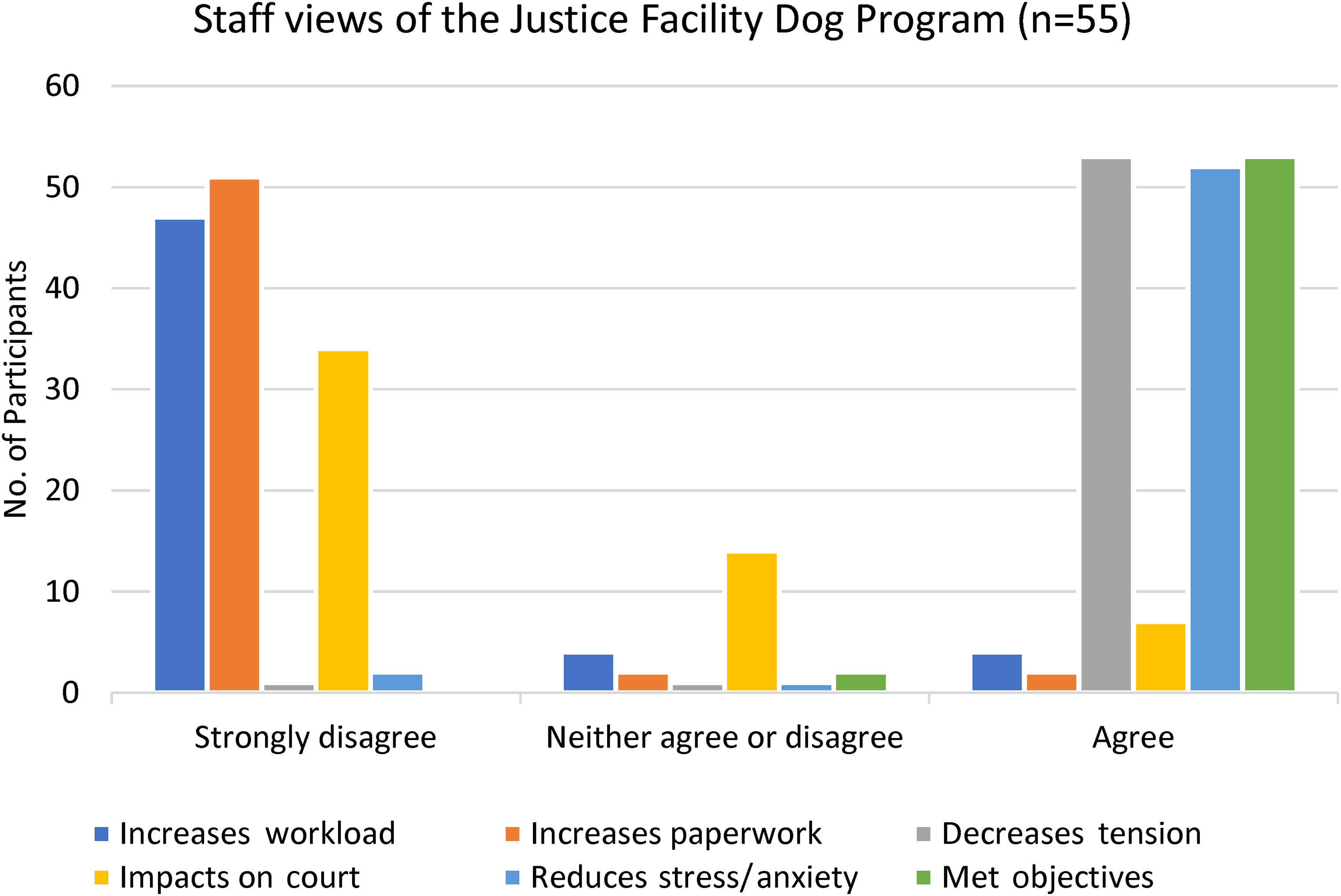
Summary of staff and stakeholder views of the JFDP.
The staff and stakeholder survey included a qualitative component so survey respondents could elaborate on the Children's Court’s impact. Almost a third of court staff and stakeholders (n = 17) elected to discuss their opinions of having a justice facility dog in their working environment. Interviewees indicated that the program did not negatively impact the functioning of the court, with a security representative outlining the positive aspects from their perspective: I think when there are young children here, it really does help because he kind of occupies them, right?… So I think, you know, from a positive note, it definitely does keep the kids calm. And yeah, kind of distracts them as well to sort of like the waiting time, because sometimes you have to wait, here (at Children's Court) for an extended period. (INT8; Security) The bringing (of) Winston to the court or into that waiting area, um, a year ago made an enormous difference … we haven’t had a single serious incident whilst Winston has been in the room. (INT9; Children’s Court)
The overarching theme from the data was of support for the JFDP initiative. All interviewees indicated a need for the JFDP to continue, with one person stating: I’d be unhappy if it didn’t continue! (INT9; Children's Court)
The interviewees were asked for feedback on any changes needed to improve the JFDP initiative; however, most indicated they were satisfied with the way the current program was functioning. Seven participants stated that increasing the amount of time Winston could be at the court would be beneficial: He needs to be here for longer … It would be great to have this as a daily program, having him here for a couple of hours, particularly in the morning when that's where the bulk of people are. But I think that if we had the ability to request that he attend in the afternoon, if we had something really serious, that would be a wonderful innovation. To have a bit of Winston on demand. (INT5; Children's Court) Having the backup and just having every day covered for the matters that we’re there would be great. (INT12; Child Witness Service)
Participants also noted the JFDP initiative could benefit other groups, courts, and the Department of Justice: It would be nice to see it extended to other areas of the Department of Justice … it's beneficial to people. (INT13, Children's Court) I think this a brilliant initiative and I wish that the same would happen at the Family Court. (Survey participant, Lawyer) I would strongly support a program like this being rolled out across courts. (Survey participant, Departmental worker) I wish that we had a facility dog across all jurisdictions given the positive impact that it has when working with young people. (Survey participant, Departmental worker)
Discussion
It has been widely acknowledged that courts are stressful environments, not just in courtrooms but the facilities’ waiting areas too (Spruin et al., 2019). Wait times are often long and can increase people's stress and anxiety. Winston was noted as having a positive effect on the Children's Court waiting room environment and was even cited as reducing the tension in the waiting room by security staff. Viewing these effects through a lens of therapeutic jurisprudence, it is evident that Western Australia's JFDP supported the well-being of court users. Furthermore, at the time of the research, there had been no altercations in the waiting room environment while Winston was present, as reported by security staff and the judiciary in interviews, demonstrating increased court user safety. Research has shown that negative experiences at courts can affect levels of stress and whether a person will attend court (Kelly, 2020). Thus, creating a less negative experience in the form of an interaction with a facility dog can reduce stress levels and make attending court less daunting for people, facilitating the process of justice.
For child victims, the findings of this study add to a growing body of literature that supports working with facility dogs. The current study results of a reduction in stress and anxiety scores align with findings from research demonstrating the positive effects of a therapy dog on adult witnesses and court staff (Spruin et al., 2019). A dog's presence can reduce stress in children during a stressful situation compared to a friendly person or dog toy (Beetz et al., 2011), with the current study's findings extending that impact to a forensic environment. Victim experiences at court in the current study included positive experiences, with participants citing Winston as comfort and distraction during often long wait times for court proceedings to start, and for the participants to be called to give evidence. The results from the current study and previous findings in adult and non-court studies highlight the consistent positive effects that trained dogs can have on adults and children.
Unique to the current study was the inclusion of other children's court users and their caregivers. Collectively, the results from the children and young people survey and caregiver survey were positive. Statistical analysis demonstrated significant decreases in stress and anxiety across all participant groups. Participants explained that the JFDP was a good distraction from the stress of attending court, allowing their minds to be taken off why they were there. When researching youth justice, parents and caregivers can often be an afterthought, but the caregivers’ perspectives and well-being are also important (Ellis, 2021). Valuing the caregivers’ well-being not only ensures their own psychological safety but can improve their ability to be present and support their child who is in court as a victim, witness or accused. Participants’ qualitative comments indicated that the facility dog program allowed their child to be put at ease, positively affecting caregivers too.
Researchers have documented stress and burnout among court staff and secondary trauma from contact people have with trauma-exposed clients (Levin et al., 2011; Schrever et al., 2019, 2022). The findings from this study support existing literature that court staff (Spruin et al., 2019) and other trauma-exposed workers (Curley et al., 2022) found relief from interactions with trained therapy or support dogs. This untended impact of the JFDP initiative highlights the far-reaching benefits of facility dogs in stressful justice work environments. Unique to this research was the consideration of the training needs of the dog program's handler, based on what they might see or hear in the court facilities. The consideration highlights the therapeutic mindedness of the Children's Court judiciary, particularly when considered alongside their determinedness for JFDP to run in the court. Wexler (2011) outlines that treatment and services should be provided by legal systems to support its users. The JFDP aligns with the needs of the witnesses, victims, children, caregivers, and staff members who attend or work at the Children's Court, providing a service to promote court user well-being. This research has demonstrated the program's ability to reduce the stress and anxiety of court users, aligning with principles of therapeutic jurisprudence.
Where issues arise is when the justice facility dog is not present or available for vulnerable court users, highlighting an area for service provision improvement. However, it is worth noting that innovative services such as those provided under the JFDP initiative are costly and subject to funding which is often limited for justice initiatives. The JFDP was at the time of writing only available in the Children's Court of Western Australia, in metropolitan Perth. With a land size of 2.6 million square metres, Western Australia has numerous court locations, many in remote and rural locations, which often miss out on therapeutic jurisprudence approaches due to a lack of funding, resources and expertise. Researchers have cited this “geographical (in)justice” in critiques of justice practices, labelled as an ongoing issue which is problematic to the fairness of procedural justice, particularly in solution-based courts (Bartels, 2009; Blagg, 2008). That said, the positive effects of initiatives such as the JFDP benefit vulnerable people at Children's Court. The expansion of the JFDP to a full-time service would promote equity in the service provided. Initially a pilot program at Perth Children's Court, there were limitations on the extent of the program. Given the reported benefits of the program for the well-being of the justice facility's court users and staff alike, an expansion of the JFDP in the Children's Court should be explored. Concerns raised in the literature around jury influence and sentence confidence (Bowers, 2013; Grimm, 2013; Nascondiglio, 2016) are not present in a children's court where juries are not used. Therefore, expansion into other specialised courts where juries are not used could also be feasible and beneficial therapeutically. However, further research in Australian courts would need to assess whether having a justice facility dog present in a courtroom would affect jury decision-making or affect the running of the court and legal processes, given limited empirical literature in the area (Burd & McQuiston, 2019).
An important consideration when introducing an initiative to a court is the impact it will have on the running of the court. Therapeutic jurisprudence, while promoting the importance and consideration of court actor well-being, notes that this must not come at the expense of the legal process (Wexler, 1993). It was found in this research project that the JFDP did not impact negatively on the running of the Children's Court and was even reported in some instances to enhance the running of the court. This was noted in participants’ qualitative reports of Winston being integral to supporting victims and witnesses testifying at Perth Children's Court, by reducing tension in the court waiting room and through interactions with court staff and stakeholders, which helped increase staff morale.
Limitations and future directions
Scales measuring stress and anxiety were rudimentary and not clinically validated. However, it was important to keep the scales brief and not to deter interaction with the justice facility dog Winston and undo the positive impacts of that meeting. Furthermore, the surveys evaluated were only drawn from the group of people who had interacted with the facility dog, meaning there was therefore no control group or corresponding information from people who did not interact with Winston. Given the evaluation was to determine the impact of people interacting with Winston, an experimental design for the research was unnecessary. Ongoing evaluations, however, would assist JFDP designers with refining the program such as dog rostering times, program procedures or legislation changes. The sample size was not large enough to conduct separate analyses for victims, witnesses, and other Children's Court users. Ethnic status, gender and age variables were not recorded for all participants; therefore, the data have been presented as a homogeneous sample. Future research could tease out differences, if necessary. However, overall, participants’ responses were very similar, so it could be assumed that the positive effect could be present for all who requested interaction with Winston, as they consented and assented to the contact.
Conclusion
The findings of this evaluation provide a positive picture of Western Australia's JFDP. The findings highlight the JFDP significantly reduces stress and anxiety in children and young people. Caregivers’ self-reports also highlight a significant reduction in stress levels after they and their child interact with Winston at Perth Children's Court. Observing the findings through a therapeutic jurisprudence lens indicates that the well-being of court users is enhanced by the JFDP. Furthermore, the research's incidental findings revealed the positive effect the justice facility dog Winston had on the staff at Perth Children's Court. Despite the positive findings of court users, it was important to examine the impact of the program on the running of the Children's Court of Western Australia facility. This evaluation found no reported negative impact on the functioning of Perth Children's Court from the perspectives of the court staff (security, administration, the judiciary, and the President of the Children's Court). Other Perth court users such as children's lawyers and the Child Witness Service also praised the program, observing the introduction of the justice facility dog had contributed to increased well-being and the smooth running of witness and victim testimony. All participants called for the continuation and expansion of the program in the Children's Court and other jurisdictions.
Footnotes
Acknowledgements
This research was supported by Western Australia's State Office of the Commissioner for the Victims of Crime, the Department of Justice, and Guide Dogs WA and would not have been possible without the generous accommodation of the Children's Court of Western Australia. However, this article cannot be considered as either endorsed by the Department of Justice or an expression of the policies or views of the Department. All opinions are those of the authors and do not necessarily reflect the views of the Department. Any errors of omission or commission in this article are the responsibility of the authors.
Declaration of conflicting interests
The authors declared the following potential conflicts of interest with respect to the research, authorship, and/or publication of this article: The authors are independent of the Children’s Court of Western Australia and while one researcher is an avid dog lover, the other researcher was present to remove bias to ensure their results were reflective of the participants’ views.
Funding
The authors disclosed receipt of the following financial support for the research, authorship, and/or publication of this article: A grant to undertake the research was provided by the Criminal Justice Research Fund administered by the Western Australian Office of Crime Statistics and Research Criminal Justice Research Fund (Grant No. RG0142122).
