




Abstract
Reporting indicators of child sexual abuse is critical to intervention and prevention. However, guardianship and its mechanisms in educational settings have been empirically neglected. We address this gap by analysing a unique administrative dataset from an Australian jurisdiction that captures alleged improper sexual conduct by school employees against adolescents aged 13–17 years inclusive. We analysed 638 cases reported to an external oversight body in accordance with the New South Wales “reportable conduct” scheme between 2015 and 2019. These cases detailed information about the sources of allegations, including how allegations arose and who brought them forward. Results established school personnel and families as the key reporters and supported young people's potential as capable guardians. Guardianship was highly context-dependent and differed according to event, victim, and perpetrator characteristics. Recommendations for strengthening guardianship in schools are presented, including enabling reporting pathways for students, building contextual awareness through policy dissemination and training, and heeding indirect sources of information like rumours.
Keywords
Introduction
Institutional child sexual abuse (CSA) has received global public attention in recent years. Landmark government inquiries in Australia (Royal Commission into Institutional Responses to Child Sexual Abuse [Royal Commission], 2017a) and England and Wales (Independent Inquiry into Child Sexual Abuse, 2018), for instance, highlighted the nature, extent, and impact of the problem. Though such inquiries typically examine cases in historical contexts, the risk of sexual victimisation in educational settings remains (Bromfield et al., 2017; Jeglic et al., 2023), thereby warranting attention and preventative efforts.
While recognising that peer-to-peer CSA in educational contexts is common (Bromfield et al., 2017), we focus exclusively on adult-perpetrated CSA. A notable pattern in adult-perpetrated CSA in these settings is that others often held concerns but did not inform institutional leaders (Royal Commission, 2017b). Such failures to report enabled CSA. These cases underscore the importance of guardians (i.e., third parties) in not only detecting but reporting problematic conduct. Their reports bring concerns to the attention of school authorities and create the opportunity to instigate formal control processes to disrupt an escalation or continuation of the conduct.
Guardianship is a key tenet within environmental criminology, relevant to crime commission (Cohen & Felson, 1979), and consequently, to prevention (Cornish & Clarke, 2003). It is especially pertinent in educational settings given their highly regulated and structured spaces and activities (Smallbone & McKillop, 2016). Moreover, there are high numbers of available staff entrusted with a duty of care who can—theoretically—act in a protective role. Guardians’ failures to effectively intervene in CSA cases have been documented (Lockitch et al., 2022; Royal Commission, 2017b), but little empirical attention has been given to capable guardianship intervention when it occurs, nor the factors that influence it. We address that gap by examining the patterns and characteristics of reported sexual allegations in educational settings. Namely, we explore how allegation information arises, who reports it, and what contextual factors interact with these processes.
Guardianship
Cohen and Felson (1979) posited that crime occurs when a motivated offender, a suitable target, and the absence of a capable guardian converge in place and time. Guardians are people capable of protecting a target—a person or property—from victimisation and violations. Their absence is theorised as contributing to crime occurrence, and their presence to crime prevention, because it increases the chances of detection and disruption thereby rendering crime a riskier undertaking (Cornish & Clarke, 2003). Guardians can be formal, such as authorities with a professional responsibility to maintain public safety (e.g., police), and informal, including ordinary people (third-party bystanders) engaging in their routine activities (Felson, 2017).
Eck (2003) extended this work by applying the notion of a guardian to each of the three necessary elements for crime (offender, target, and place), thereby increasing the potential for third-party crime prevention. Eck proposed three types of crime “controllers”: a guardian to protect the target, a handler to control the offender, and a place manager to regulate conduct at site locations. One person can fulfil these three roles depending on the context of the crime (Eck & Madensen, 2015).
Early empirical support for informal guardianship typically centred around residential property crime but the evidence base has since broadened to encompass interpersonal crimes including sexual offending. Though the CSA studies do not exclusively examine institutional environments and include large proportions of familial offenders in domestic settings, the findings corroborate the general potential of guardianship in preventing and disrupting CSA. For instance, Leclerc et al. (2022) analysed 78 noncompleted CSA events and found that those featuring a person nearby were 2.76 times more likely to be prevented than those without a close bystander. Another study examining 194 CSA cases found that bystander presence was effective in lowering the duration and severity of CSA incidents after their onset (Leclerc et al., 2015). Nonetheless, a potential guardian was nearby in 61.3% of the events, suggesting that presence alone is insufficient in deterring all types of CSA events.
Reynald (2009, 2010) advanced guardianship scholarship by arguing that effective informal guardianship extends beyond mere presence to incorporate the capability to guard actively. The impact of an available third-party bystander is maximised as guardianship “intensity” increases, and they actually (a) supervise and monitor, and (b) intervene. Intervention can be direct (e.g., verbal or physical interference during the event) or indirect (e.g., calling the police; Reynald, 2010). For instance, the likelihood of disrupting women's sexual victimisation in various locations significantly increases with higher guardianship intensity (intervention vs. nearby presence) (Cook et al., 2021). In analysing 138 cases, a similar number of disrupted and completed offences featured a nearby bystander. However, approximately one-quarter of disrupted offences involved guardian intervention (verbal, physical, indirect, or a combination), compared to none of the completed offences.
Reynald (2010) built upon this further by interviewing 255 residents about their residential guardianship decision-making to elucidate the underlying mechanisms influencing intensity. She concluded there were three essential dimensions to capable guardianship: (a) willingness to supervise (because not all available people in the proximal environment want to undertake supervision); (b) ability to detect wrongdoing and potential offenders (informed by contextual awareness of their environment); and (c) willingness to intervene when necessary. Of 174 participants who reported they would actively intervene, about half (51.72%; n = 90) indicated a preference for indirect action, with 19.54% (n = 34) preferring a direct method and 28.74% (n = 50) preferring either depending on the crime.
Guardianship in educational settings
Guardianship is recognised as an imperative safeguarding measure against institutional CSA irrespective of institution type (Wortley & Smallbone, 2006; Wurtele et al., 2019). In the case of schools, their everyday operations create an opportunity for CSA by bringing potential (adult) offenders into regular and extended contact with many children in the same place. This can occur in an unsupervised, one-on-one capacity (Smallbone et al., 2008; Wurtele, 2012) meaning there is no capable guardian to protect potential victims. Extending guardianship to minimise one-on-one interactions and increase the number of third parties available to detect concerns is therefore considered essential to the prevention and disruption of institutional CSA (Smallbone & McKillop, 2016).
Schools are places characterised by formal rules, structure, and a hierarchy. For instance, as place managers (Eck, 2003), principals regulate employee–student interactions and staff reporting obligations through the widespread method of written protocols like a code of conduct (Royal Commission, 2017b). Guidelines, rules, and expectations about behavioural expectations not only contribute to the regulation of one's own conduct, but also set a minimum standard against which potential guardians can detect and report others’ transgressions (Wurtele et al., 2019). Effective guardianship in educational settings is not confined to interrupting overtly sexual incidents that might constitute offences but encompasses the detection and disruption of problematic precursor and cumulative patterns of overly familiar relating (Canadian Centre for Child Protection Inc. [CCCP], 2019; Christensen & Darling, 2020; Jaffe et al., 2013; Steely & Ten Bensel, 2020). Protocols therefore need to prohibit the types of professional boundary crossings that can escalate to sexual violations over time like “special attention”, excessive and unnecessary time spent together, one-on-one transportation, social media contact, and socialising outside of school. In turn, these rules build potential guardians’ contextual knowledge and awareness of their environment to inform their active guardianship (Reynald, 2010).
Schools are relatively contained places with many activities confined to their premises. However, staff and students do go off-site for legitimate purposes including extracurricular activities (e.g., sports, art performances, etc.), camps, and excursions. Though principals are the ultimate place managers (Eck, 2003) in school contexts, all employees are, in practice, tasked with some supervisory responsibility at school events and activities on a day-to-day basis (e.g., teachers rostered on for lunchtime supervision duties). Moreover, the parameters of school life are no longer clearly delineated. The advent of technology, for instance, has blurred the boundaries by ushering in a new landscape of employee–student communications to manage and oversee, including email, and instantaneous access via mobile telephones and social media (Jaffe et al., 2013). These virtual spaces are more difficult to supervise than conventional school activities.
Many instances of CSA within educational settings occur off-site and often in places unrelated to direct institutional operations. Two Canadian studies have established that about half of cases involve an abusive incident on school grounds or in places associated with its operations (e.g., excursions and extracurricular activities; CCCP, 2019; Jaffe et al., 2013). The remainder involves incidents occurring in external places such as the perpetrator or victim's car or residence, virtual spaces, and community-based locations (e.g., parks, and hotels). Female educators seem particularly likely to offend at external locations (Christensen & Darling, 2020). Taken together, this body of research establishes that a sizeable number of cases occur in settings more resemblant to private domestic places than typically communal institutional environments (Smallbone & McKillop, 2016). Private residential spaces are inherently more difficult to guard given their lack of oversight, scrutiny, and control by anyone outside the place. This has obvious implications for who can guard the different types of reported places.
The most obvious potential guardians in school settings are the employees, including, but not limited to, educators, coaches, and administrative staff. Expectations of educational personnel are especially high in this protective role given their work-related duty of care and mandatory reporting obligations. Guardianship is therefore part of their job responsibility (Felson, 1995). Ordinary employees are powerful guardians contributing to a robust safeguarding climate as they can fulfil the role of all crime controllers as described by Eck (2003). They can—theoretically—guard students during school-related activities; handle and guide their colleagues in the workplace to prevent their wrongdoing; and manage the school site by maintaining a watchful eye for suspicious activity (e.g., trespassers).
Besides ordinary employees, others can also function in a guardianship capacity in educational environments. Students do not have the same moral, legal, and contractual responsibilities for supervision and reporting as the adults in their environments, but they are nonetheless present and key members of school communities. Indeed, unusual or inappropriate conduct may seem especially extraordinary to them given the rules and clear behavioural expectations that typically characterise schools. There is some debate about whether children should be considered capable guardians—especially in sexual crimes—for developmental reasons (McKillop et al., 2021). Some sexual offending literature has established adults as more capable guardians than children (Cook et al., 2021), but the opposite has been found in domestic settings specifically (Chiu et al., 2021). These mixed results allow for the possibility that students could act as effective guardians in school settings, constituting one source of knowledge reporting to institutions. Lastly, parents/caregivers are the ultimate protectors of children (Wortley & Smallbone, 2006) and are therefore also potential guardians. They might be especially likely to act as reporters in external places relating to daily life routines. For instance, they may be best placed to observe and enquire about increased or excessive communications or unusual patterns of socialising.
Guardianship in action: Pathways and reporters
Though an ephemeral focus in studies about school-based CSA, some researchers have reported details about how cases became known. Two distinct elements are apparent, which inform our study. The first is a pathway to awareness: the way allegation information arises or the basis for reports. Of 253 cases with recorded information about their emergence in Canadian schools, 53% involved a victim disclosure and 47% discovery by a third party (CCCP, 2019). Of the victims who disclosed, most were female (75% of 133 cases). In an American study, none of the 35 cases emerged through victim disclosure (Steely & Ten Bensel, 2020). Their sample of victims may have been less likely to disclose given most (94%) were males. Overall, guardians’ reports could be based on a victim's direct disclosure to them, or the formulation of their own concerns that developed without information from the victim. For example, witnessing an overly familiar employee–student interaction (e.g., “flirting”) or knowledge of circulating rumour.
The second element gleaned from the studies relates to reporter type. That is, who specifically acts as guardians by reporting allegation information or concerns to schools or external authorities. Of the 133 Canadian cases arising from victim disclosure, the recipients of disclosures differed depending on the victim’s gender (CCCP, 2019). Girls most often reported to school personnel whereas boys most often disclosed to friends; parents were the next most common disclosure recipient for both girls and boys. The key third parties who discovered cases without a victim disclosure included parents, school employees, friends/other students, and others (e.g., community members; CCCP, 2019). The CCCP (2019) sample included sexual misconduct that potentially fell below a criminal threshold. In contrast, Steely and Ten Bensel's (2020) study sampled criminal cases—and thus the most serious incidents—and none of their 35 cases emerged from employee reports. Without further quantification, they reported that “most” incidents were exposed through rumours and reported to school or external authorities by the perpetrator's partner, the victim's parents, or their peers. Guardians besides staff may be better placed to detect the most serious criminal cases because it may involve interactions occurring in places external to the school premises where they routinely supervise.
The lack of reporting by staff in Steely and Ten Bensel's (2020) female-only sample may also be attributable to the perpetrator’s gender. Ratliff and Watson's findings (2014) support this postulation. They analysed 431 cases of school educators charged with sexual misconduct offences and found differences in how offenders were apprehended. Male-perpetrated cases more likely emerged from victim disclosure, discovery by school administration, or a police operation whereas female-perpetrated cases more likely arose through reports by other students or parents/caregivers.
Overall, studies demonstrate that there are numerous ways in which educational institutions might become aware of employee-perpetrated CSA and diverse actors fulfilling active guardianship roles in this setting. Moreover, multiple contextual factors likely affect effective guardianship and its manifestation in school environments (e.g., incident characteristics such as type, severity, and location). Accordingly, our exploratory study seeks to answer the following research questions in the Australian context:
What are the pathways to awareness (e.g., victim disclosure, third-party observation, rumour, etc.)? Who are the reporters acting as key guardians (e.g., school employees, students, family, etc.)? What contextual factors interact with these processes? Here, event, victim, and perpetrator characteristics will be examined to elucidate if and how they determine differences in awareness pathways and reporters.
Methods
Our analyses are based on an administrative dataset derived from an Australian jurisdiction's “reportable conduct” scheme, a noncriminal employment-related child protection oversight initiative (explained further below). Our data therefore include a broad range of potentially problematic behaviours that do not all meet the definitional threshold of “crime”. Furthermore, our data are based on reports originating from critical indirect but active intervention behaviour by guardians that bring incidents to the attention of schools, thereby triggering a process of formal social control, including reporting to the scheme.
Data source and sample 1
Data were derived from the New South Wales (NSW) reportable conduct scheme (hereafter “the Scheme”), a statutory framework for monitoring how organisations respond to allegations of certain conduct towards children defined as under 18 years. It mandates a range of child-serving organisations to notify an external oversight body and investigate particular allegations about current employees’ conduct towards children. “Employee” is defined broadly, including volunteers and contractors working with children at the time of allegation receipt. The types of alleged conduct to report are of a high threshold as defined by the respective legislation but their general nature can be demarcated as sexual and non-sexual (e.g., physical assault, neglect, ill-treatment). Organisations required to comply with the Scheme are varied and include, for example, government and non-government schools, out-of-home care and residential care service providers, and government agencies providing services related to statutory child protection, health, and juvenile corrections. The Scheme applies irrespective of when the conduct allegedly occurred and the form of the allegation information (e.g., anonymous phone call or rumour). It is an allegations-based system to ensure that organisational decision-making is transparent and subject to scrutiny. 2
The Office of the NSW Ombudsman (NSWO) administered the Scheme from its inception in 1999 until March 2020 (Ombudsman Act, 1974, Part 3A). 3 An electronic database was maintained to record a range of characteristics routinely extracted from notification forms and investigation files provided by reporting organisations. The initial form captured information like demographic details of the employee and child/ren, characteristics of the alleged incident/s, the investigative procedure, and initial risk management. The final form accompanying a copy of the entire investigation file recorded information like the outcome of the investigation, elements of the investigative procedure, and any final actions undertaken. A “case” in the database meant a notification about one employee and could therefore include multiple allegations. The most serious allegation was recorded as the primary allegation in the database, while all other and less severe allegations were recorded as secondary allegations. NSWO closed (finalised) a case when they provided feedback about the handling of the allegation and its investigation to reporting organisations at the conclusion of their investigations. No further information was subsequently recorded against the case.
The following criteria were used to extract a de-identified quantitative dataset from the NSWO database 4 : (a) educational institutions included government and non-government (Catholic and independent) schools and providers of Technical and Further Education (TAFEs) 5 ; (b) adolescent alleged victims aged 13–17 years inclusive 6 ; (c) sexual-related notifications with a primary allegation of “sexual offence” or “sexual misconduct” (defined below at “Incident severity” section) about an employee over the age of 18 years engaging in the work-related alleged conduct. “Work-related alleged conduct” involves an alleged victim who is either a student or a child the employee had access to through their employment with the reporting organisation (in this case, a school or TAFE). Therefore, conduct unrelated to the employee's role (e.g., intrafamilial CSA) and sexual offences involving the online accessing or downloading of child abuse material were excluded; (d) inclusionary period where the notification was received and closed (finalised) by the NSWO between 1 January 2015 and 31 December 2019.
The dataset provided included 809 cases (the total base population) with the following information: (a) event characteristics (e.g., whether the allegation related to “sexual offence” or “sexual misconduct”); (b) site location characteristics (e.g., on school premises or social media); (c) victim characteristics (e.g., gender and age); (d) perpetrator characteristics (e.g., gender, age, and role); (e) sources of allegations (the manner in which the allegation information become known to the reporting organisation); and (f) initial and final action (risk management and disciplinary measures implemented by the reporting organisation).
All variables in the dataset were categorical, including for both alleged victim and perpetrator age (i.e., age groups rather than a continuous variable). The dataset was bound by privacy and confidentiality constraints that resulted in the availability of only highly aggregated information for some variables, and complete unavailability for others. For instance, the specific types of behaviours constituting the overarching categories of sexual misconduct and sexual offence were not released. Thus, the particulars of specific behaviours were unknown, and the authors had to rely on the institution's classification (see details and comments in the Incident severity section). Furthermore, the type of reporting organisation (i.e., government or non-government school or TAFE) was not released, though the data custodian advised that limited cases related to TAFEs.
Variables
Using Reynald's (2010) terminology, our sample only includes guardians willing to supervise and indirectly intervene by providing concerning information to school authorities. The NSWO used 22 distinct and defined categories (excluding “unknown”) to record the source of allegation data (see Appendix for full list). Those categories captured two separate matters: the awareness pathway or way in which concerning information arose and allegation information became known to the reporting organisation; and, where that pathway involved a person notifying the school of the allegation information, reporter type describing who that person was. Of the 809 cases in the provided dataset, 44 (5.4%) recorded the source of allegation as unknown and no entry was recorded for 127 (15.7%). Thus, 638 of 809 cases have available and known data on the source of the allegation, which form the basis of the current analysis. This information was accordingly coded in two ways:
Awareness pathway
This variable was coded as victim disclosure to a third party (including school personnel, family/carer, friend, and counsellor who then informed the school); alleged victim or perpetrator directly reporting to an investigative agency (including the school, police, and others such as the NSWO); direct observation by a third party like school personnel, family/carer, and friend (who then informed the school); and “other” indirect avenues (e.g., rumours, social media posts, institutional review of archived records, and third-hand receipt of information). Of the 638 cases recording the source of allegation data, those with anonymous reporters (n = 28; 3.5%) were excluded from the awareness pathway because that information is of relevance to who reported (i.e., reporter type). Thus, 610 cases remained for awareness pathway analysis.
Reporter type
Reporters were coded as school personnel (including teachers and other employees who self-reported); victims who self-report directly to an investigative agency; other professionals (including counsellors, caseworkers, and legal representatives); family/carers (including foster carers and babysitters); friends of victims (including classmates); and other (e.g., anonymous, employee's partner, or community members). Of the 638 cases, those with other pathways to awareness such as rumours and social media posts (n = 35; 4.3%) were excluded from the reporter-type reclassification because it did not describe information about who acted upon that type of information. Therefore, 603 cases remained for reporter-type analysis.
Contextual information was grouped according to event (incident severity and location), victim, and perpetrator characteristics.
Incident severity
The NSWO's two sexual-related categories of alleged conduct were coded as sexual offence and sexual misconduct. Sexual offence included criminal offences involving a sexual element that was “committed against, with or in the presence of a child”. This category could include behaviours such as indecent assault/sexual touching, sexual assault, or acts of indecency/sexual acts. Sexual misconduct included: (a) crossing professional boundaries; (b) sexually explicit comments and other overtly sexual behaviour; or (c) grooming behaviour committed against, with or in the presence of a child. The NSWO defined “crossing professional boundaries” as “behaviour that can reasonably be construed as involving an inappropriate and overly personal or intimate relationship with, conduct towards, or focus on a child or young person, or group of children or young persons”. Given this definition, the sexual misconduct category may have captured alleged conduct that was not explicitly sexual. Sexual offence allegations were deemed more serious than sexual misconduct and therefore recorded as the primary allegation if both categories were reported.
The guardians notifying the reporting organisations of concerning information may not necessarily know the formal classification of the alleged conduct, only that it is concerning and potentially in breach of school expectations, for instance. It is the responsibility of the reporting organisation that received the allegation information to assess it and assign the category. It is possible that they erroneously assessed sexual offence matters as sexual misconduct if the matter did not proceed through the criminal justice system. Therefore sexual misconduct cases in this sample may encompass more serious sexual behaviour. Nonetheless, the variable is a useful index in distinguishing more serious, high-level sexual behaviours from lower-level behaviours that may be precursors to sexual activity.
Incident location
The original dataset included 11 location sites (excluding unknown); see the Appendix for the full list. These were coded into six dichotomous variables including school premises (e.g., classrooms, toilets, ovals, improper use of school email account); extracurricular school activities (e.g., sports, camps, excursions); social media platforms; public places (e.g., cinemas, cafes); private/semi-private places (e.g., transport, residences, hotels, secluded beaches or parks, improper use of private telephones); and a combination of social media and private/semi-private places to capture related “intimate” places (both virtual and non-virtual) occurring out of view of others.
Victim characteristics
Gender was coded as female and male. Age was retained as in the original dataset in two groups: 13–15 and 16–18. 7
Perpetrator characteristics
Gender was coded as female, male, and transgender. 8 Age was coded into three groups: 18–30 inclusive, 31–50 inclusive, and 51+. The original dataset described role (i.e., professional duties) in 14 ways (see Appendix for full list). We regrouped these according to core role, nature of engagement with students, and professional status, resulting in four categories: (a) teachers or teacher's aides; (b) executive staff (including principals and deputy principals); (c) other professionals (including clergy, youth workers, coaches, wellbeing practitioners, and administrative staff); and (d) ancillary staff (such as drivers, maintenance staff, IT workers, and volunteers).
There are some noteworthy qualifications about these variables. Notably, the data only capture reported alleged incidents. Beyond this common limitation, the nature of the Scheme and the resulting data suggest several specific qualifications. The circumstances of guardianship in unreported cases and the process preceding willing guardians’ eventual reporting (e.g., its timeliness) cannot be assessed with these data. The data included report by alleged victims. Victim self-protective action is conceptualised as distinct from guardianship undertaken by other people (Reynald et al., 2018). However, victim reports represent an important pathway to awareness for educational institutions. Furthermore, they may signal an absence of capable guardianship in the surrounding environment, which is an important consideration given the private nature of CSA.
Only the primary, most serious alleged incident is recorded in the dataset, and all secondary less serious incidents are excluded. The data custodian could not provide information on the distribution of primary and secondary incidents. Accordingly, the proportion of cases with more than one allegation in this dataset is unknown. As the source of allegation variable only referred to the primary, most serious allegations, the reported associations with awareness pathways and reporter types might therefore be slightly biased towards more serious events in cases with multiple allegations.
NSWO recording practices meant that some categories were broad and unspecific. For instance, the location of “school premises” could refer to emails, toilets, classrooms, etc. Finally, given this information is derived from an administrative dataset, there are incomplete data for some variables. This may be due to reporting or data entry practices or agencies genuinely not knowing the information (e.g., when reporting anonymous allegations lacking particulars like event location).
The cleaned and prepared Excel file was imported into SPSS (Version 26) for analysis. All variables are categorical, so a series of chi-square analyses were undertaken. A significance level of .05 was applied, including all multiple comparisons. Where the assumption about expected frequencies was violated (more than 20% of cells had less than five), Fisher's Exact Test was reported as the test of significance. Interpretations of results only relate to groups (cells) whose variance contributes to significance as indicated by adjusted standardised residuals exceeding ±2 (Pallant, 2020). Table A1 (see Appendix) presents descriptive statistics for the study's variables.
Results
Of 636 cases with valid data about the timeframe of alleged conduct, 82.4% involved incidents occurring in the 12 months preceding the report. This dataset therefore predominantly captures relatively contemporary incidents transpiring between 2014 and 2019. Table A1 shows that sexual misconduct typified most cases, and the most commonly implicated places were school premises, private locations, social media (both exclusively and when combined), and extracurricular school activities. Reported victims were typically female and were almost equally divided between the two age cohorts. Reported perpetrators were typically male and aged older than 30; most were teachers/aides, followed by other professionals (e.g., counsellors, clergy, and youth workers).
Awareness pathways
Table A1 shows that almost half of the 610 cases emerged via victim disclosure to a third party (e.g., teacher, parent) who then notified the organisation. Another one-third of cases originated from a third party's direct observation of something that prompted notifying the organisation (e.g., staff observing overly familiar interactions). Combined, four-fifths of reported cases were therefore dependent upon third parties assuming responsibility for the information before them, whether based on a victim's disclosure or their own observation. Only one-fifth of cases materialised from victims directly reporting to investigative agencies or other indirect sources (e.g., social media posts, rumours).
As Table 1 demonstrates, serious sexual offence allegations were significantly more likely than lower-level sexual misconduct to emerge via other pathways (e.g., rumours) and victims or perpetrators (i.e., self-report) directly reporting to investigative agencies (including schools). Indirect sources like rumours, therefore, pertain to serious allegation information in educational environments. Sexual misconduct allegations more often depended on a third party's direct observation—and subsequent reporting—than alleged sexual offences. Such lower-level boundary crossings can occur in routine, visible situations, whereas sexual offences typically require a level of privacy to the exclusion of others, precluding their direct observation. There was no substantive difference in the severity of incidents that victims disclosed to third parties.
Awareness pathway and incident severity.
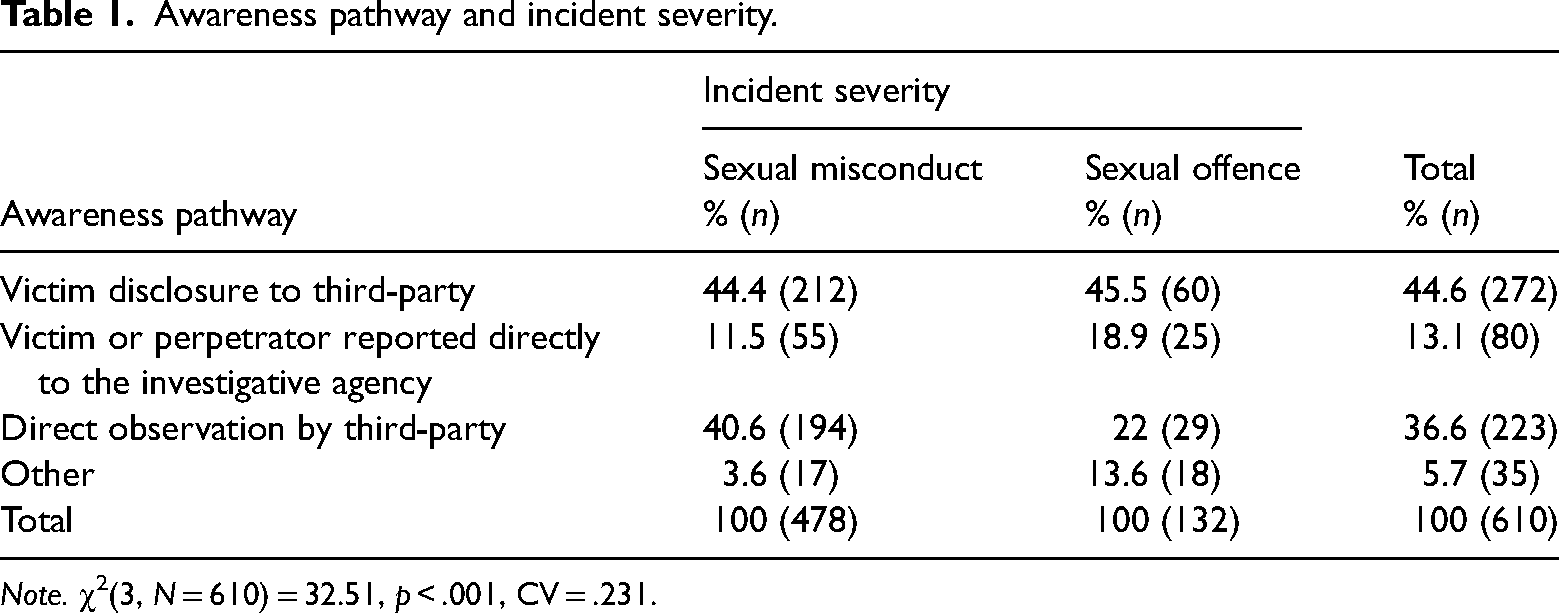
Note. χ2(3, N = 610) = 32.51, p < .001, CV = .231.
Table 2 illustrates that pathways to awareness significantly differed by location. Conduct occurring on school premises emerged more often through victim disclosure to another and less so via other pathways like rumours. Third-party direct observation was more likely about conduct in public places whereas victim disclosure about this place was less likely. Similarly, cases at private/semi-private places more often emerged via direct third-party observation and other pathways and less so via victim disclosure. This pattern was replicated when combining the location with social media. What a willing guardian can observe depends upon an event's location, but it may also inform their assessment of seriousness thereby triggering a report (e.g., socialising in a public or private place external to the school might be especially concerning for parents). There were no substantive differences in how alleged conduct on social media or during extracurricular school activities emerged.
Awareness pathway and locations (N = 579).
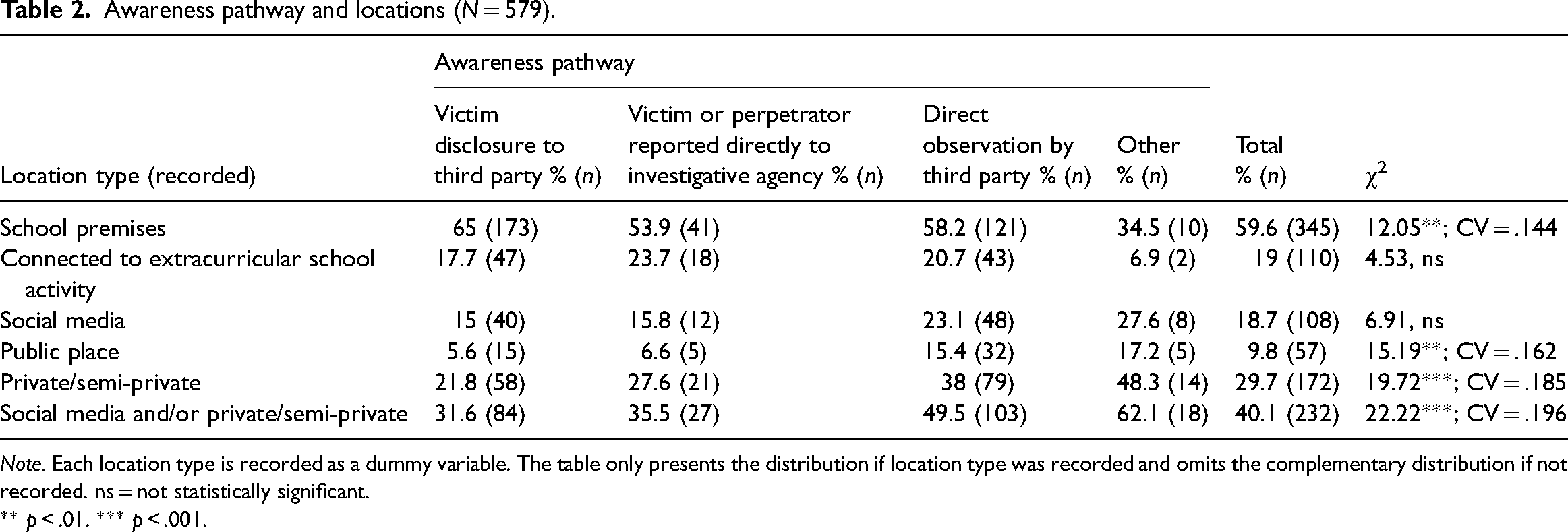
Note. Each location type is recorded as a dummy variable. The table only presents the distribution if location type was recorded and omits the complementary distribution if not recorded. ns = not statistically significant.
** p < .01. *** p < .001.
Regarding victim characteristics, only victim age and not gender influenced how allegation information emerged (p = .01, CV = .151). Younger victims were significantly more likely to disclose to a third party than their older peers (53% vs. 40.1%), whereas direct third-party observations disproportionately characterised cases involving older rather than younger victims (42.7% vs. 29.9%). Owing to sexual development and maturity, younger victims might deem inappropriate employee conduct more objectionable than older peers, thus prompting their disclosure, and third parties might be particularly concerned about the risk of questionable employee–student interactions involving older (16–18 years old) pupils.
Perpetrator age (p = .003, CV = .129) and gender (p < .001, CV = .229) influenced the allegation information's emergence, but their role did not. Victim disclosures to others were significantly more likely among the eldest perpetrators aged above 51 (51.6%) rather than the youngest under 30 (35%). In contrast, third-party observations were significantly more often about the youngest (47.9%) rather than the eldest (25.5%) perpetrators. Victims may deem attention from the eldest employees as especially repugnant and consequently seek more support from others in disrupting their behaviour. Conversely, the risk posed by younger, inexperienced employees closer in age to students may concern third parties more than older, long-standing, and reputable colleagues.
As illustrated in Table 3, victims were significantly more likely to disclose to others about men whereas reports based on third-party observations were more likely about women. When controlling for incident severity and victim and perpetrator age, the difference in reporting pathways for men and women was only observed for sexual misconduct allegations (p < .001, CV = .259) and not sexual offences, younger and older victim cohorts (13–15; p < .001, CV = .288; 16–18; p = .003, CV = .246), and the two youngest groups of employees (≤30; p = .01, CV = .263; 31–50; p = .005, CV = .224). Third-party guardians are thus crucial in detecting and reporting sexual misconduct by women under 50 years.
Awareness pathway and perpetrator gender.
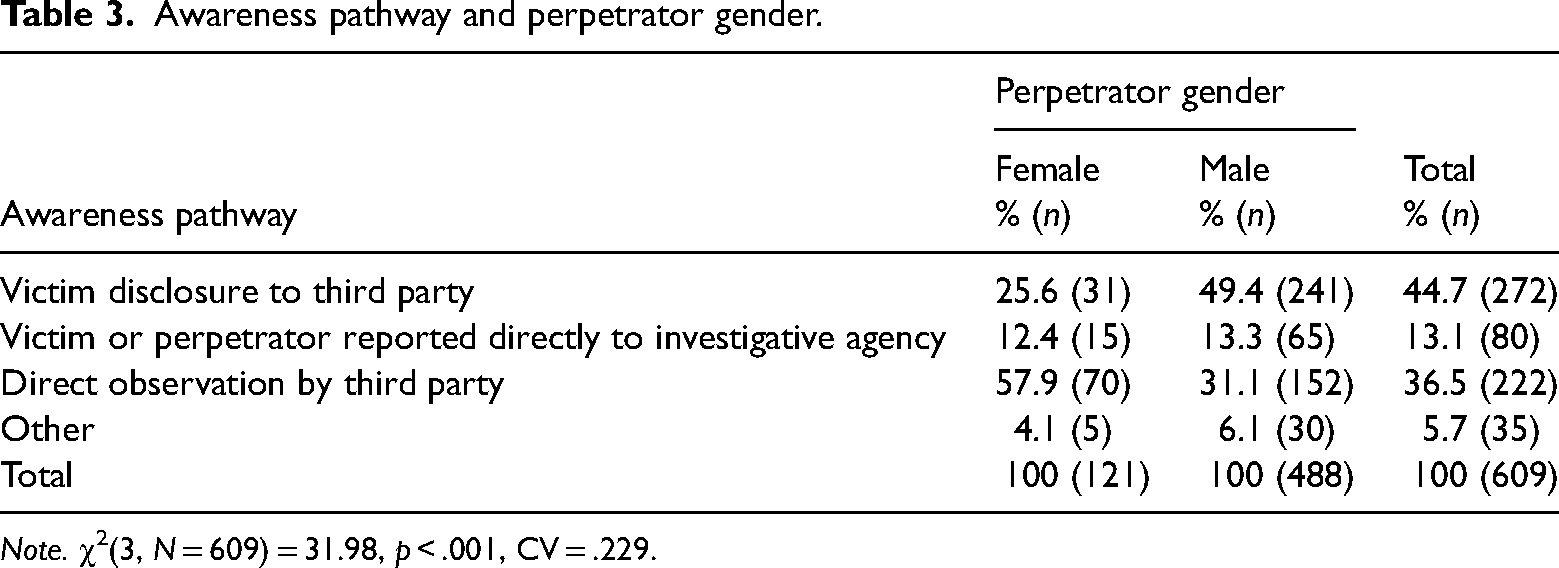
Note. χ2(3, N = 609) = 31.98, p < .001, CV = .229.
Reporter types
Staff spearheaded the reporting of concerns to school authorities (including the alleged perpetrator’s self-report) followed by victims’ families/carers (Table A1). Reports derived from victims directly notifying investigative agencies, their friends, and external professionals (e.g., counsellors and caseworkers) were all below 10% and roughly similar. Others (e.g., anonymous reporters) reported more frequently than the three previous individual reporter types but little is known about their specific identities.
Table 4 shows that external professionals and victims’ friends reported sexual offences significantly more than sexual misconduct allegations. In contrast, school staff more often reported sexual misconduct than sexual offence allegations. Victims may assess serious and overtly sexual conduct and disclose it to confidantes like counsellors and friends. Conversely, lower-threshold boundary crossings often typifying sexual misconduct may be easier to recognise for the adult guardians most familiar with the behavioural expectations in respective settings (i.e., staff).
Reporter type and incident severity.
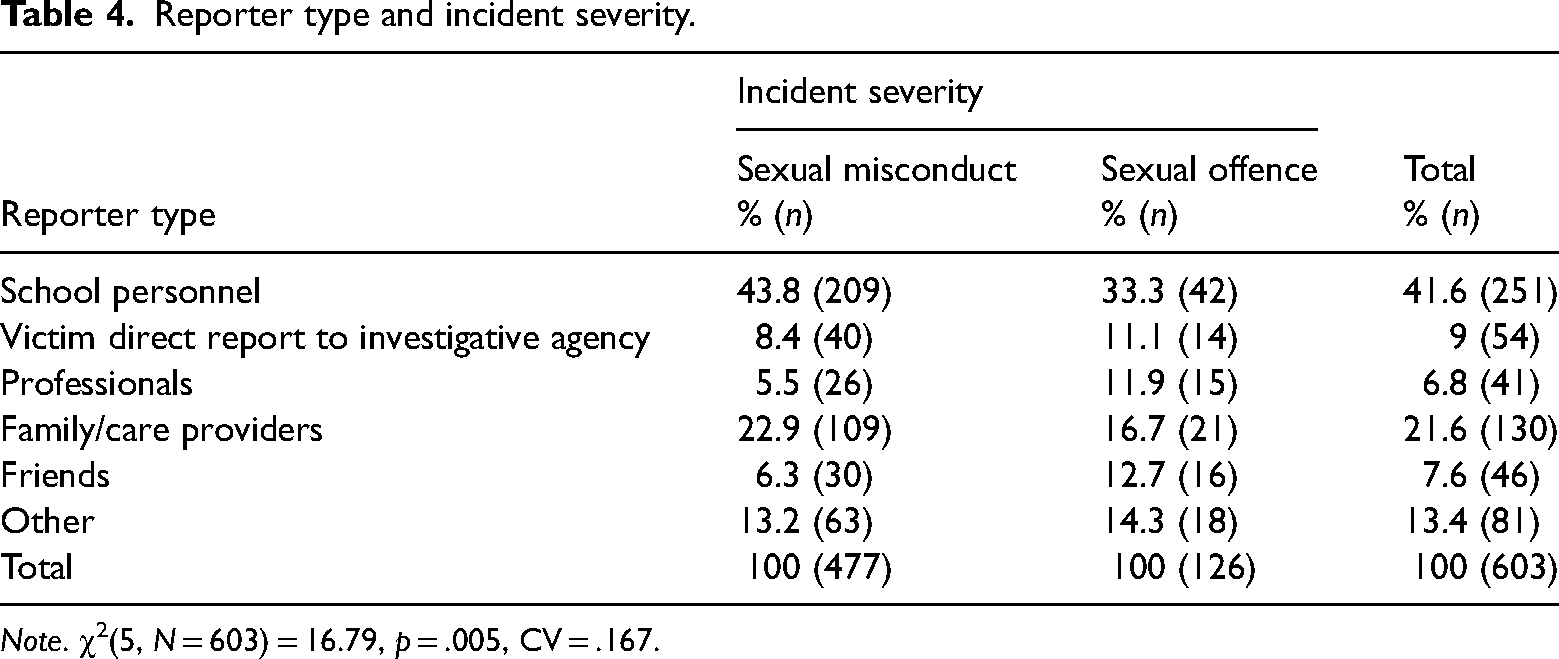
Note. χ2(5, N = 603) = 16.79, p = .005, CV = .167.
Table 5 demonstrates that the location of events was crucial in activating reporters. Staff reported school-based incidents significantly more often than others and family. The dominance of school employees could reflect two things: (a) their intrinsically high level of oversight in this space and (b) that they frequently receive victim disclosures about incidents occurring on school premises (see Table 2). Contrasting with staff, family and friends of victims were most active in spaces external to the school. Specifically, the family were crucial to reporting conduct on social media and friends to reporting of private places. It makes intuitive sense then that family and friends significantly more often reported allegations at these virtual and non-virtual places when combined. There was also a tendency for others (e.g., anonymous reporters) to more often report conduct connected to public places outside of the schooling environment (p = .051, CV = .14). Reporter types did not differ for reports related to extracurricular school activities.
Reporter type and locations (N = 565).
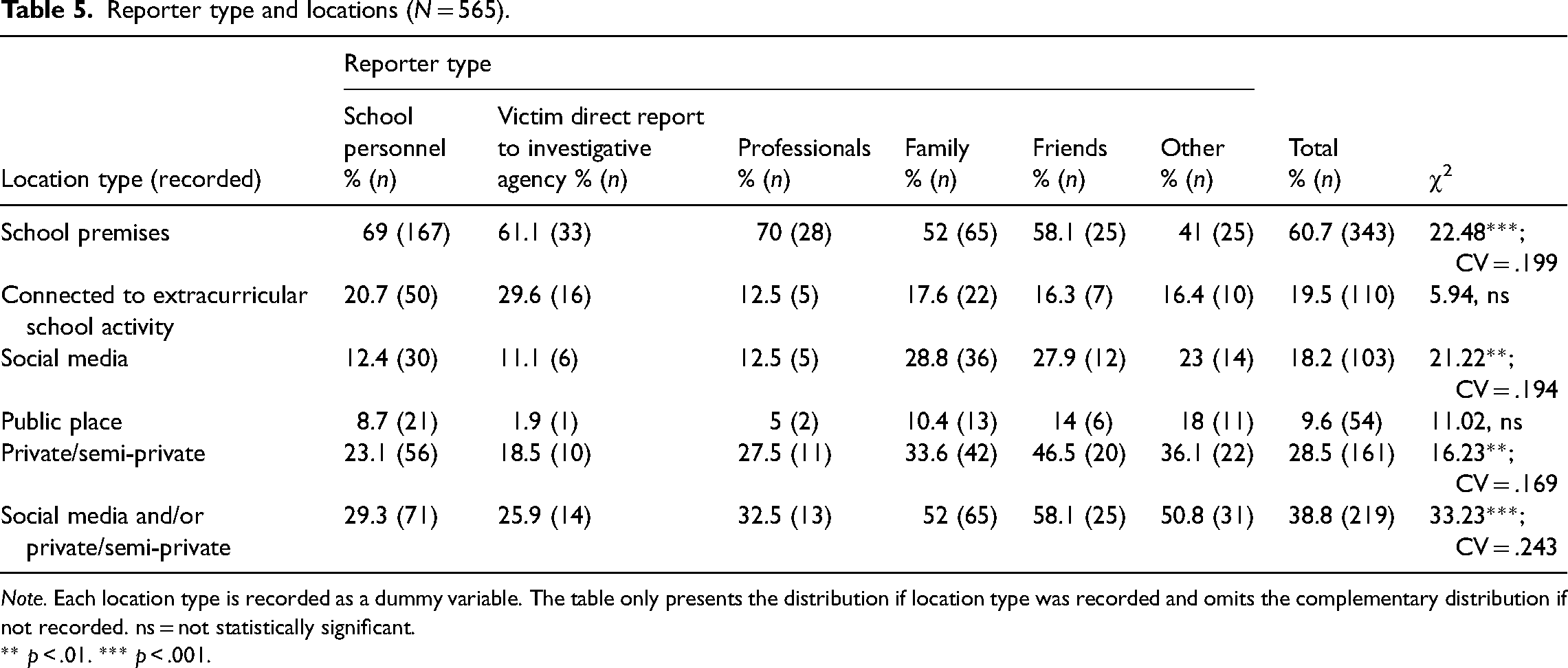
Note. Each location type is recorded as a dummy variable. The table only presents the distribution if location type was recorded and omits the complementary distribution if not recorded. ns = not statistically significant.
** p < .01. *** p < .001.
Victim gender, but not age, was related to who reported an incident (p = .014, CV = .164), contrasting with awareness pathways where victim gender did not have a role. Girl victims were significantly more likely than boys to feature in reports by their friends (10.1% vs. 3.1%) and directly report to investigative agencies (without third-party assistance; 10.6% vs. 4.9%). Girls might be more confident than boys in accessing a range of supports regarding sexual concerns. Otherwise, most adult guardians (including the largely undefined group of others) did not selectively report according to the victim’s gender.
Like the awareness pathway, perpetrator age (p < .001, CV = .162) and gender (p < .001, CV = .192) influenced who reported, but perpetrator role did not. Victims’ friends significantly more often reported those under 30 (15.4%) and less so for those aged 31–50 (4.7%). Victim reports to investigative agencies were more often about alleged perpetrators over 50 (13.5%) and less so for those under 30 (4.9%). Incident severity (sexual offence vs. misconduct) did not account for this variation. Besides victims potentially finding sexual advances from the eldest alleged perpetrators most repugnant, those perpetrators may also hold leadership positions that incentivise victims to report directly to investigative agencies.
As Table 6 illustrates, the largely undefined group of others (e.g., anonymous reporters) more often reported women whereas victim reports to investigative agencies were more likely about men. However, this gender difference was only apparent under certain conditions, mirroring results for awareness pathways. The difference in reporters of men and women only applied to perpetrators aged 31–50 (p < .001, CV = .303). Moreover, the difference only emerged when others reported alleged sexual misconduct (p = .004, CV = .192), but not the more serious criminal incidents and only when male victims were involved (p = .01, CV = .306; Fisher's exact rest). This reveals others as the key third-party guardian reporting women's lower-level boundary crossings (Table 3).
Reporter type and perpetrator gender.
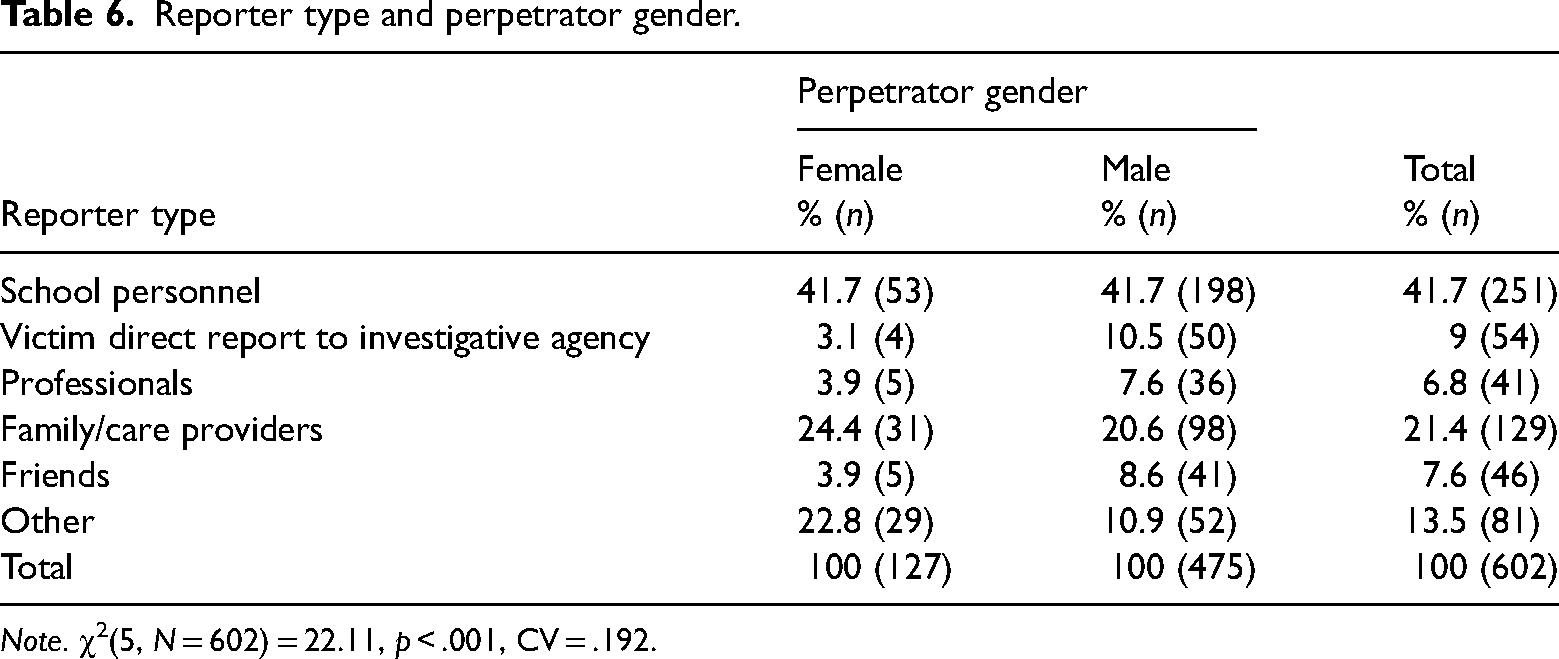
Note. χ2(5, N = 602) = 22.11, p < .001, CV = .192.
Discussion
We were the first to examine the mechanisms of indirect guardianship intervention in educational settings by analysing details about the sources of sexual-related allegations against school employees notified to an external oversight body. The dimensions of guardianship—awareness pathway and reporter types—and their interaction with contextual factors in school environments were elucidated. In doing so, we established unequivocally the importance of guardianship in educational settings. Results showed that the majority of cases originated from a third-party conduit acting upon either a victim disclosure or their own observation.
Our study provides empirical evidence about the identity of the capable guardians willing to supervise and successfully indirectly intervene by notifying schools of their information. Further key results reveal the different conditions under which guardianship is mobilised. Event attributes—incident severity and locations—were essential in defining patterns of guardianship. The various guardians are attuned to different types of behaviours and information in their environments, and they are active in distinct places. However, perpetrator characteristics (gender and age) seemingly informed guardians’ assessments of the seriousness of the conduct. Victim characteristics were the least influential. Thus, results establish that guardianship is context-dependent, corroborating the role of contextual awareness proposed by Reynald (2010). Who observes what is done, where, and by whom encapsulates a core premise of our findings.
Though our study examined guardianship in schools, we found that effectively guarding against CSA transcends institutional boundaries and its personnel, relating to the broader school community and locality it is embedded. Schools operate within their communities and features both internal and external to school environments shape guardianship patterns. Indeed, the adage “it takes a village to raise a child” applies here: a collective of various potential guardians encompassing young people, employees, family, and other community members function to maintain the protection of pupils.
Reporter identity
Third parties are pivotal in bringing allegation information to the fore and act decisively in the protection of children. The people most commonly fulfilling the crucial guardianship role were school personnel followed by family/carers. These findings parallel previous research on behaviours broader than those that reach the threshold of criminality (CCCP, 2019). Considering their proximity to, and substantial involvement in, educational contexts, it could perhaps be anticipated that staff would constitute the most frequent reporters. It is nonetheless an encouraging result and suggests they take their reporting duties seriously. This is especially welcome considering Australia's Royal Commission (2017b) heard countless cases featuring unreported concerns in schools. A heightened sense of responsibility likely motivates (Reynald, 2010) both these reporter types. For staff, professional duty of care obligations are highly pertinent; for family/carers, close bonds, attachment, and loyalty are salient.
Similar-aged peers (i.e., friends of victims) composed less than 10% of reporters in 603 cases. They therefore cannot be considered the most influential guardians matching the likes of staff and family. Nonetheless, their contribution to guarding against CSA is not insignificant. That they can and do act as active guardians is a noteworthy finding. Their guardianship is particularly important given it was more often enacted in problematic external places like private residences for instance. Peers may be spurred to intervene indirectly by a sense of responsibility (Reynald, 2010) to uphold their friends’ safety and wellbeing. In school environments then, children should not be entirely disregarded as capable third-party guardians for developmental reasons as McKillop et al. (2021) argued in their application to residential settings. We therefore support their calls for closer examination of the age at that youth can be considered as capable guardians for inclusion in prevention efforts. However, such enquiries should account for context in the form of different settings (e.g., domestic, institutional, public, etc.) rather than developmental factors (e.g., age, abilities, etc.) alone.
Reporting context
Guardians are differentially related to incident severity. Adult third parties such as staff were particularly attuned to detecting and reporting sexual misconduct cases without victim disclosures. Adolescents (victims or their friends) can seemingly discern serious, overtly sexual conduct for themselves without necessarily relying on third parties. Their confidence in identifying and indirectly intervening in more serious cases renders them capable guardians (Reynald, 2010). Sexual misconduct, on the other hand, often involves an accumulation of lower-level boundary crossings indicative of an overly familiar pattern of relating (Wurtele, 2012) that might constitute a precursor to eventual abuse. This can emerge in everyday practice but is typically—at least initially—sexually implicit. It might thus be too ambiguous for children to interpret—thus lowering their confidence and capability to identify and intervene—but is clearer to adult guardians. Of all potential adult guardians, employees are arguably the most familiar with individual school settings and their respective rules, routines, and behavioural expectations. They therefore possess the most contextual awareness of their environments, thereby bolstering their confidence and ability to recognise lower-level precursor behaviour and intervene accordingly (Reynald, 2010).
Importantly, the various guardians operated in different spaces. Staff were especially active within school premises. Given their proximity to these places and their contextual awareness of the institutional rules, routines, and behavioural expectations (Reynald, 2010), it is unsurprising that they would be most responsive to conduct occurring there. Conversely, cases occurring in private spaces outside of the school premises attracted the attention of parents and friends, as well as emerging via other pathways (e.g., rumours and social media). Family and friends’ knowledge and reporting of conduct at these locations align with their familiarity with a child's usual daily routines and demeanour outside of the proximal school environment. Thus, subtle behaviours such as communication patterns, socialising, and transportation might stand out as unusual and capture their attention. Their ability to identify problematic behaviours thus revolves around a distinct—but complementary—contextual awareness (Reynald, 2010). Though external to the school environment, intimate knowledge about the children involved, combined with knowledge of school rules, informs their capability to recognise anomalies and intervene.
In our study, guardians deemed more serious, sexually explicit conduct as worthy of reporting irrespective of the perpetrator’s gender. This contrasts with Ratliff and Watson's (2014) finding that the detection of educators’ sexual offences differed depending on their gender. Instead, we found that perpetrator gender was a relevant factor in the reporting of lower-level sexual misconduct cases. Namely, victims more often disclosed male-perpetrated sexual misconduct allegations. Owing to powerful gender stereotypes (Denov, 2003; Russell & Gruys, 2022), children might be more accustomed to interpreting men's ambiguous behaviour as innately inappropriate and risky. This promotes their confidence in detecting the problematic behaviour and subsequently disclosing or reporting it (Reynald, 2010). The mostly undefined reporting group of others (e.g., community members, anonymous, co-residents, and partners of perpetrators) were essential in detecting female-perpetrated sexual misconduct against boys. It is difficult to infer why this group of people may be especially responsive to female perpetration without having further particulars of their identities and routine activities.
Guardians also related differentially to perpetrator age. For instance, victims were most attuned to the eldest perpetrators (older than 51 years) whereas friends were more responsive to the youngest (aged under 30). Victims may deem attention from older employees as more objectionable and consequently disclose. There may also be relevant specifics of the conduct and its locations that the data did not capture. For example, the youngest alleged perpetrators might more openly engage in inappropriate conduct in the presence of victims’ friends who are able to discern the wrongdoing. Victims might also more readily disclose information about these perpetrators to their friends given the reduced stigma associated with a lesser age disparity.
Implications for intervention
In highlighting the importance of guardians and their differential patterns based on location, our results support the utility of applying an environmental criminological lens to understanding and preventing CSA in educational settings (Robertson et al., 2023). Given guardians responding to victim disclosure was the most frequent reporting pathway, establishing safe and trusting relationships with pupils to enable disclosure is vital. This is especially so for early secondary students aged 13–15 who were more likely to divulge. Moreover, to facilitate and encourage reporting, schools should ensure there are clearly stipulated organisational reporting pathways for students—in their capacity as victims or friends—to follow and that students are aware of them.
To aid guardians in recognising lower-level concerns preceding abuse, organisational policies should clearly identify the boundaries of acceptable and unacceptable conduct within and outside of school environments. Leadership needs to ensure these policies are up-to-date and evidence-based as well as easily accessible for staff, family, and community members (Robertson et al., 2023). Training sessions based on these policy documents can further enhance key stakeholders’ understanding and application of rules and expectations. Age-appropriate versions of these policies can also be provided to students. Conducting brief information sessions with pupils about the code of conduct, and who to report to if they have concerns about employee behaviour—irrespective of their gender—is also recommended (Robertson et al., 2023). Together, these initiatives will contribute to building the contextual awareness and guardianship capability of the collective by instilling confidence in their ability to recognise and report unusual behaviour (Reynald, 2010).
Conduct in private places like residences and cars is (a) potentially indicative of an escalation to contact abuse and (b) subject to less oversight and scrutiny by school leadership compared to institutional premises (McKillop et al., 2021). Given the difficulty in guarding such spaces, agencies should not disregard allegation information derived from the indirect channels associated with these places such as rumours and social media posts. Indeed, they should explicitly articulate the need for—and encourage—their reporting.
Limitations and future research directions
Our cases did not elucidate the decision-making process undertaken prior to guardians’ reports such as any delays or hesitance. This would allow further understanding of contextual awareness and guardians’ ability to detect wrongdoing and willingness to intervene (Reynald, 2010) in a timely manner prior to escalation or continuation of abuse. Qualitative case analysis may be a useful method to further explore this (see Lockitch et al., 2022). Additionally, interviewing this collective of guardians—like Reynald (2010) did with residential guardians—about what informs guardianship decisions would offer valuable insights. What helped reporters reach the threshold of informing schools? A single incident or a cumulative pattern? What factors increased their confidence in reporting? For the group of others, who are they and what was their motivation for intervening?
Our research has the greatest applicability to indirect intervention in adult perpetration in secondary school settings where most adolescents are enrolled. Nonetheless, it has offered useful directions for further research examining (a) primary schools and (b) peer-on-peer abuse in schools. For instance, in the conceptualisation of guardianship in educational settings and the types of contextual factors to consider in patterns of guardianship.
Effective indirect guardianship intervention is fundamental to a school's safeguarding agenda. Guardians’ information about improper or concerning behaviours can instigate a process of formal organisational enquiry and action that disrupts the conduct. Ultimately, schools’ efforts to prevent or disrupt abuse will be maximised in two ways: (a) by leveraging the features of their institutional environments that facilitate regulation and oversight and (b) by emboldening and drawing upon a village of capable guardians beyond their own confines.
Footnotes
Acknowledgements
We sincerely thank the NSW Office of the Children's Guardian (OCG) representatives who provided us with their support. The views expressed are those of the authors and do not represent those of the NSW OCG. We are also grateful to the anonymous reviewers for their valuable feedback.
Declaration of conflicting interests
The authors declared no potential conflicts of interest with respect to the research, authorship, and/or publication of this article.
Funding
The authors received no financial support for the research, authorship, and/or publication of this article.
