




Abstract
This article analyses how the criminalisation and imprisonment of Aboriginal people operated as tools of colonisation in Western Australia (WA) in the nineteenth century, and how this shaped the postcolonial criminal justice system. The racialised double standard embedded in the colonial foundations of state institutions, including the criminal justice system, rippled across generations of Aboriginal people: a reiterative and disruptive process that we dub the ‘postcolonial churn’. This term, adapted from the ‘carceral churn’, describes the destabilising mobilisations embedded in carceral and settler-colonial logics over the long term. It uses data from archival prison registers (Rottnest Island 1838–1931 and Roebourne Prison 1908–1961), as well as historic court, police and newspaper data to map the use of the criminal code in protecting and expanding colonial property rights in the original waves of settler-colonisation. WA is an outlier among the Australian colonies: it was the largest in terms of size (2,642,753 km2), the last colony to receive European convicts (1850–1868), and the last to be awarded self-government (1890). This created a situation where the British government dictated policy for legal forms of subjugation of Aboriginal people at the frontier (first for resisting pastoral industry, later as workers in it) which butted up against localised extra-legal violence by police and settlers. We can trace this dichotomy between policy and practice in the development of surveillance and policing of Aboriginal populations across time and settler-colonial space due to the protracted pace of frontier ‘development’. Revealing the mediated historical aspects of structural racism is crucial to analysing the persistence of racialised policing in postcolonial settings and understanding why, despite repeated inquiries into mistreatment of Aboriginal people, institutional inertia remains.
Keywords
In 1879, police-constable Edward McCormick was sentenced to 3 months' hard labour for the manslaughter of Toby, a ‘Native Police Assistant’ 30 miles north of Perth (Inquirer and Commercial News, 9 July 1879). The Supreme Court heard that McCormick had led a group who beat their victim to death with the butt of a revolver. Rather than serving his time in prison with other convicted Europeans, McCormick was sent to Rottnest (Wadjemup), 1 an island reserved primarily for the punishment of convicted Aboriginal men. There he oversaw a judicial hanging (Hope to Jackson, 7 July 1879, in State Records Office of Western Australia [SROWA], acc. 37, vol. 1). 2 Tampin, an Aboriginal man, had been sentenced to death for the murder of his abusive white employer in the same court in the same week as McCormick had appeared (Fremantle Herald, 12 July 1879, p. 3). The Western Australian Times (18 July 1879, p. 2) reported that the ‘civilised white… was present to witness the majesty of the law vindicated in the execution of the uncivilised black’ (Nettelbeck, 2013). Even whilst under punishment himself for the most extreme form of violence, McCormick was given state-sanctioned power of execution over an Aboriginal man by the Governor. 3 It is not just the racialised double standard of punishment, which is stark in this case, but the extent of police power over Aboriginal people embedded within the foundation of colonial governance and laid bare in contemporary newspapers and official files.
The racialised double standard embedded in colonial foundations of state institutions, including the criminal justice system, rippled across generations of Aboriginal people, a reiterative and disruptive process that we dub the ‘postcolonial churn’. It is a term adapted from ‘carceral churn’ (Russell et al., 2020) which describes the circulation of prisoners through state apparatus (lock-ups, courts and prisons) but with a particular focus on how these destabilising mobilisations occurred across time. Historical records can be used to understand how colonial logic underpinned power relations in postcolonial criminal justice (Blagg, 2016; Gilbert, 1978, pp. 2–3; Tubex et al., 2018, pp. 271–272). In this article, we analyse data in prison registers (Rottnest Island 1838–1931, and Roebourne Prison 1908–1961) together with historic court, police and newspaper data, to explore how the criminalisation and imprisonment of Aboriginal people operated as a tool of colonisation in Western Australia (WA), which then filtered down into post-Federation statecraft (see also Midford, 1988). 4 The article maps the use of the criminal code in protecting and expanding colonial property rights in early waves of settler-colonisation, and shows how it is still used to reinforce unequal power relationships in a postcolonial Australia in which Aboriginal people are notionally equal, but remain subject to disproportionate policing, sentencing and excessive use of violence by the state. Revealing the mediated historical aspects of structural racism and the role that the criminal justice system continues to play in reproducing historically embedded inequalities in postcolonial settings demonstrates why, despite repeated inquiries into mistreatment of Aboriginal people, institutional inertia remains and the over-imprisonment of Aboriginal people persists.
The use of the criminal law and imprisonment in colonial expansion
After the colonisation of southwest WA in 1829, Noongar people and settlers came into conflict over resources. Noongar people were denied access to traditional hunting grounds, water sources and culturally important sites. Settlers mistook firestick farming for aggression as it threatened their crops and homes (Green, 1984, pp. 71–75). It was conflict over property that resulted in a major outbreak of violence between Noongar people and Europeans in 1832. Yagan led an attack killing farmer Archibald Butler, in retribution for Butler having killed his family member while raiding the settler's potato patch. Yagan and his father Midgegooroo were sentenced to death for the crime until settler Robert Lyon intervened. Lyon argued that they should be treated as prisoners of war defending their lands from invasion. The governor commuted their capital sentences to exile on Carnac Island (Ngoorloormayup). They quickly escaped from the island which had no carceral infrastructure, becoming outlaws (Green, 1984, pp. 80–84). In 1835, Governor Stirling stressed in a letter to the Secretary of State for the Colonies in London that unless a ‘sufficient establishment … be maintained for protecting, controlling, managing and gradually civilizing the aboriginal race… a fearful struggle between the invaders and the invaded’ would occur which would ‘not cease until the extermination of the latter be accomplished to the discredit of the British name’ (Stirling to Earl of Aberdeen, 15 October 1835, BPP 1837–1838). 5
The ‘discredit of the British name' Stirling referred to, evoked the ‘indelible stain’ left by the genocide of Aboriginal Tasmanians during the ‘Black War’ in Van Diemen's Land (1828–1832). London was eager to avoid a repeat, instituting an empire-wide Commission of Inquiry into Aboriginal people (1836) to investigate the decline of Indigenous populations across several British colonies (BPP 1836; Elbourne, 2003; Laidlaw, 2012). 6 Stirling himself had led the Pinjarra massacre in 1834, where at least 15 Binjareb Noongar people were killed by soldiers, police and settlers, and which the Commission singled out as a cause for concern (BPP, 1836, p. 139; 7 Green, 1984, pp. 84–85; Owen, 2016, pp. 72–75). Though the Tasmanian case represented a failure of colonial governance, it also offered a potential solution. The Colonial Office lauded George Augustus Robinson for establishing island ‘reserves’ for Aboriginal survivors of the Tasmanian War, later awarding him a role as ‘Chief Protector of Aborigines’ at Port Phillip (Victoria). Stirling's successor in WA, Governor John Hutt, suggested ‘protectionism’ could be enacted to disperse Aboriginal people to an island institute to avoid, rather than dealing with consequences, of a frontier war (Finnane & McGuire, 2001; Nettelbeck, 2012). Hutt proposed extending the sentencing power of magistrates over Aboriginal people, intended not as ‘an act of coercion’ but to ‘extend…the protecting hand of government’, by preventing settlers from resorting to vigilante justice (Hutt to Glenelg, 3 May 1839 in BPP 1844, p. 364). 8 He put forward two pieces of legislation, enabling Aboriginal people to testify in court as witnesses and establishing Rottnest as a prison primarily for Aboriginal men. 9 The colonial government aimed to instil dread of being sent to the island to deter Aboriginal criminality, with Hutt reporting in 1841 that ‘there is nothing which alarms them more than the threat of sending them to Rottnest’ (Hutt to Russell, 15 May 1841; BPP 1844).
This extension of summary powers coincided with and was reinforced by a reconceptualisation of WA's legal status as colonised, rather than conquered, territory. In the landmark case, Regina v. We-War (1842), Judge Mackie ruled that colonisation by occupancy was legally no different from colonisation by treaty or conquest. Therefore, Aboriginal people were subjects of the Crown and must adhere to all aspects of British law (Hunter, 2006, pp. 261–262). Settler colonialism differed from other forms of colonialism by its reliance on imported European populations to inhabit and transform space (Veracini, 2010). This had attendant effects on how colonial law developed. It was a people process: law ‘arrived’ with the magistrates and police officers who followed settlers to frontiers, and criminalised Aboriginal communities there (see Ford, 2010 on similar developments in New South Wales and Georgia). WA had its criminal justice system profoundly shaped by changing global discourses on legal practice which deemphasised the role of military force in favour of the authority of the local state to enforce colonial power over Aboriginal people. Over the following decades of the 1800s, summary powers would be repeatedly extended to make it easier to imprison Aboriginal people for between 6 months and 3 years, on the authority of just two justices of the peace or one resident magistrate. 10
Criminal law and the frontiers
Despite being established as a free colony, the Swan River Colony turned to convict labour in 1850, after several failed experiments to introduce indentured, immigrant and Aboriginal convict labour in the 1830s and 1840s (Moss, 2020). Instead, WA shipped in nearly 10,000 British convicts between 1850 and 1868 who spent part of their sentence building infrastructure whilst being housed in Convict Hiring Stations. The boundaries of colonial expansion to the north and east were marked by the location of these depots, where European convicts had moved out from Fremantle. The place of conviction of Aboriginal prisoners arriving at Rottnest marked this boundary in the other direction (Green & Moon, 1997, p. 8). Despite allegations of institutional brutality (including unauthorised whippings) by superintendent Henry Vincent on Rottnest, Aboriginal prisoners remained under his supervision when they were briefly moved back to the mainland from 1850 to 1855 to construct the road from Albany to Perth alongside gangs of British convicts (Roscoe, 2020). The reiterative logic of colonial capitalism meant that incarceration functioned both to protect European property at the frontier, and to build economic and infrastructural capacity for further colonisation and urbanisation using convicted Aboriginal and European labour.
New infrastructures enabled colonisation which proceeded at an uneven pace. The rich land of the Pilbara region was only explored in 1861; 2 years later eight million acres had been pastoralised across the northwest (Colbatch, 1929, p. 273). From 1864, convicts were forbidden from working north of the 26th parallel, encouraging colonial expansion by free settlers. The growth of farming and the pastoral economy, followed by the discovery of gold in the mid-1880s at Coolgardie, rapidly accelerated colonisation of the northern districts, bringing more than 150 million acres under cultivation by the end of the nineteenth century (Colbatch, 1929, p. 273). Colonisation was therefore a protracted process in WA with uneven effects across settler-colonial space, but all claimed at the expense of Aboriginal sovereignty. Far from the inexorable momentum of a single linear frontier, settler-colonisation coalesced around areas ‘valuable’ for European settlement, these became occupied, then urbanised, creating additional zones of exclusion and surveillance over Aboriginal people across more than 100 years (Banivanua & Edmonds, 2010).
Between 1838 and 1880, when expansion from the original site of conquest was incremental and limited, the bulk of prosecutions originated less than 300 miles from Perth (Albany 144 miles, Champion Bay 100 miles, Gascoyne 331 miles, Geraldton 122 miles, Murchison 210 miles, and Victoria Plains 244 miles, see Figure 1). When the far northwest began to be colonised in the 1880s, the distances from Perth where offences took place increased markedly. Between 1886 and 1900, approximately half (343 of the 773 prosecutions) took place over 500 miles from Perth, with approximately 100 offences committed over 1000 miles away in the Pilbara, the far northwest and the Kimberley (Figure 2).
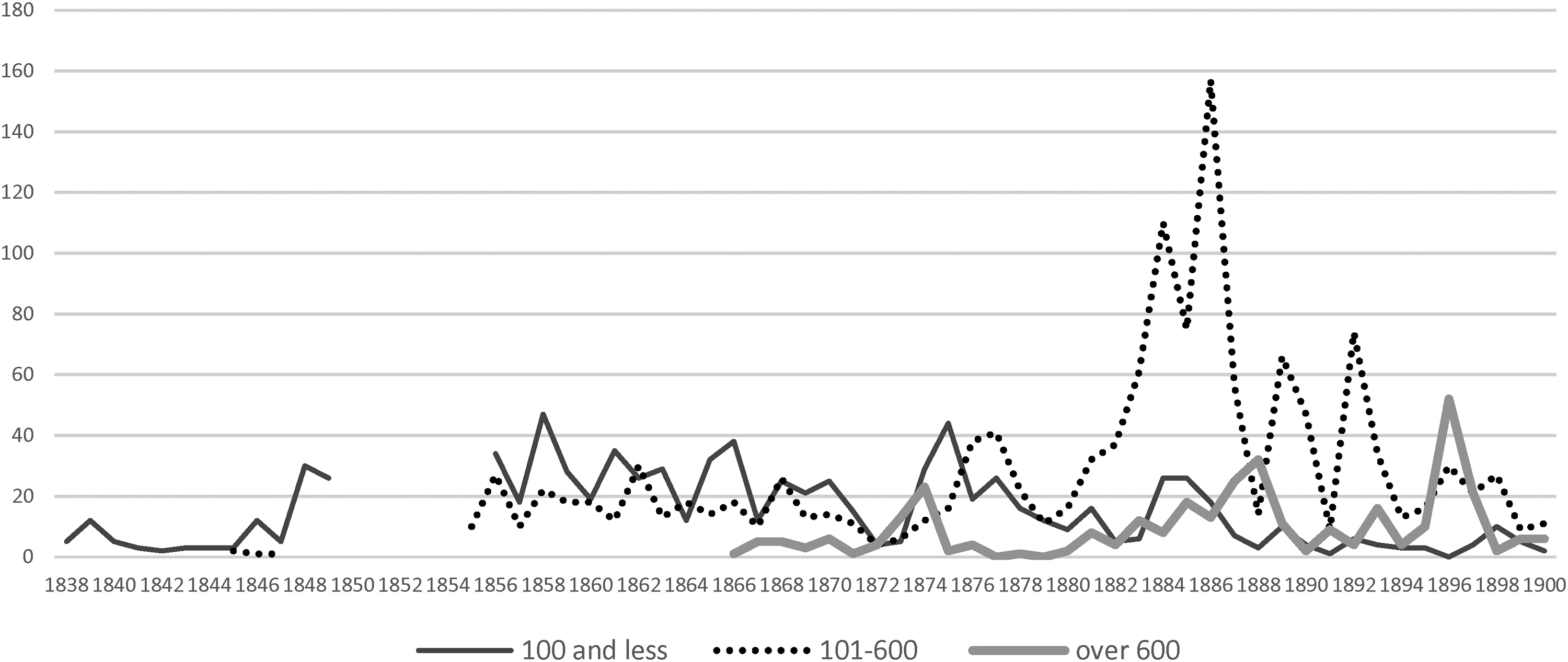
Distances from Perth of offences committed by prisoners gaoled at Rottnest, 1838–1900 (figures extrapolated from Green & Moon, 1997).
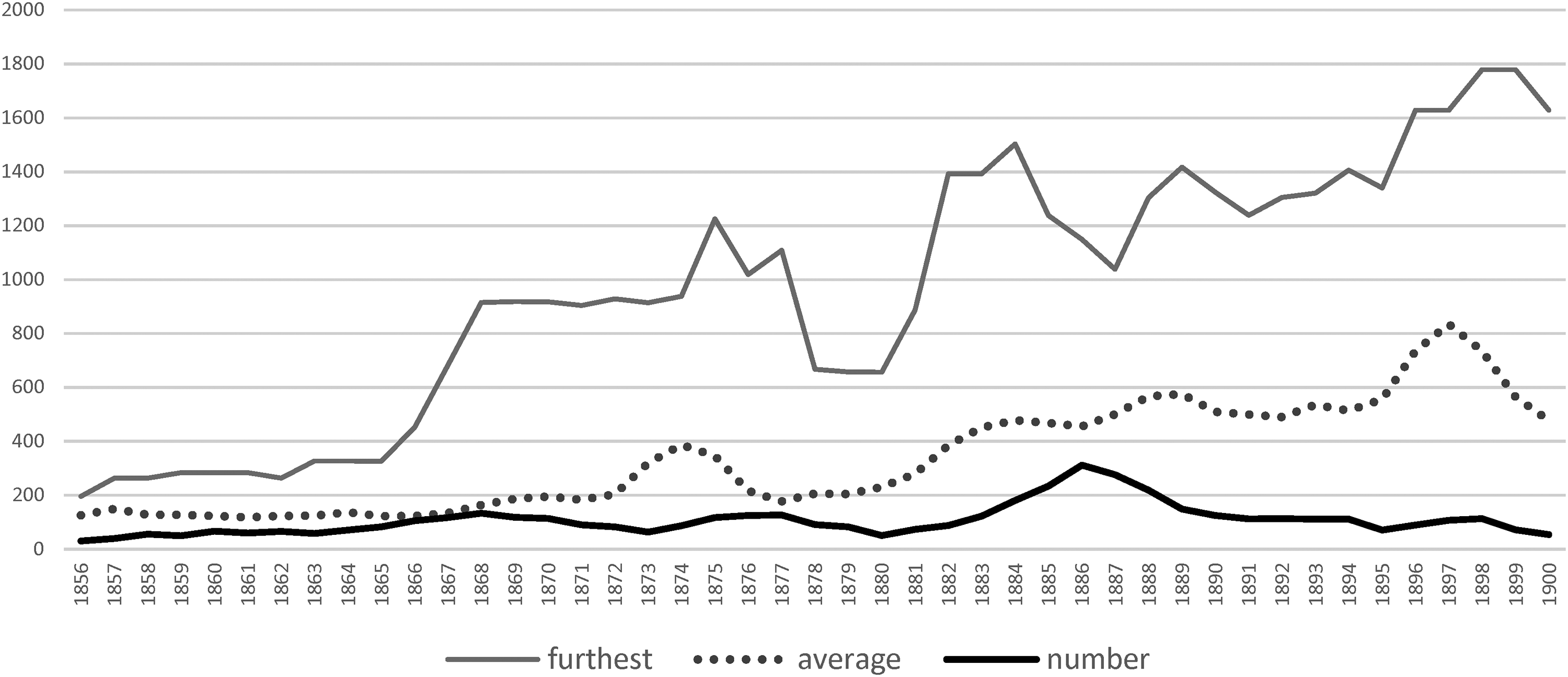
Furthest and average distances from Perth of offences committed by prisoners gaoled at Rottnest, 1856–1900 (figures extrapolated from Green & Moon, 1997).
Following conviction in regional courthouses, the journey to the place of imprisonment was considerable. Indeed, the journey of thousands of miles to Rottnest must have been as significant for Aboriginal prisoners as was the sea-voyage south for transported British convicts: entailing as it did, a displacement from home that was often permanent (again similarly to most British convicts), with limited state support to return home via hostile territory. Benjamin, a Mirning man convicted of sheep-spearing and sent to Rottnest, talked movingly about having ‘walked from Eyre Sand Patch to Albany’ – a distance of over 700 miles – naked, with a chain chafing at his neck. Whenever he fell over, he was beaten by one of the escorting policemen (Forrest, 1884, p. 13).
The rapid ‘territorialisation’ of settlers’ pastoral and grazing lands in the northern districts created a vicious cycle of criminalisation. Livestock eroded the soil and riverbanks, depleting food and water sources on which Aboriginal people relied (Gammage, 2011, pp. 103–104). Meanwhile, livestock was rarely fenced in, roaming over large distances ahead of the settler frontier, guarded by a small number of (usually Aboriginal) stock-keepers (Cameron, 1981; Reynolds, 1981/1995). The colonial administration viewed the problem of livestock theft and stealing rations from shepherds’ huts as driven primarily by opportunism and hunger. Rottnest inmate, Brandy, explained he was on the island because ‘I saw the sheep had strayed, and my woman said to me “kill it”, and I did so’. To settlers, those spearing livestock were not just failing to respect property rights, but refusing to uphold their role as a subservient race and obedient labour force. The means of attack, spearing, also carried, in settlers’ minds, the threat of violence against settlers themselves. At times, reprisals for theft of livestock and other ‘outrages’ took the form of mass murders and massacres by settlers (Ryan et al., 2017). More often, settlers leveraged the powerful colonial tool – the criminal law – to sweep up Aboriginal people who challenged European expansion or simply fell foul of laws they did not know about, understand, or disputed. Aboriginal men were therefore objectified as both a murderous threat and a criminal justice problem. Richard Pilmer from the WA police force (1892–1919) recounted a gang of ‘outlaw natives’ who killed sheep being led by ‘bad boy’, Niabidi, who ‘refused to be tamed to stock work, though he was fond enough of mutton, and to the sheep owners and the civilised camps he was a shiny example of criminality’ (Haydon, 1911, p. 325; Pilmer, 1998, p. 30).
Rottnest prison records show that almost half of the prison (48%) were convicted of property offences (mainly sheep or cattle stealing or spearing), a quarter for violence (26%), 13% for absconding from their work, and only 4% for public order offences. The length of time they would serve at Rottnest depended on the offence, but also the context of the offending. This flexed in two directions. Sentences for animal stealing or killing were disproportionately harsh as magistrates wished to send out a didactic message to local Aboriginal communities (the average sentence for stealing or killing a sheep or cow was over 2 years). The message was implicitly (and sometimes explicitly) reinforced that any offence committed against a settler would always be treated more harshly than an offence committed against an Aboriginal person, and that a sentence passed for the same offence would always be more severe for an Aboriginal defendant and less harsh for a convicted European settler (Supreme Court Registers, 1861–1901; Finnane, 2011). As can be seen in Figure 3, it was Aboriginal defendants who could expect to receive either lifetime imprisonment or a death sentence for murdering a settler, especially after 1880 when colonial expansion accelerated into the northwest. 11
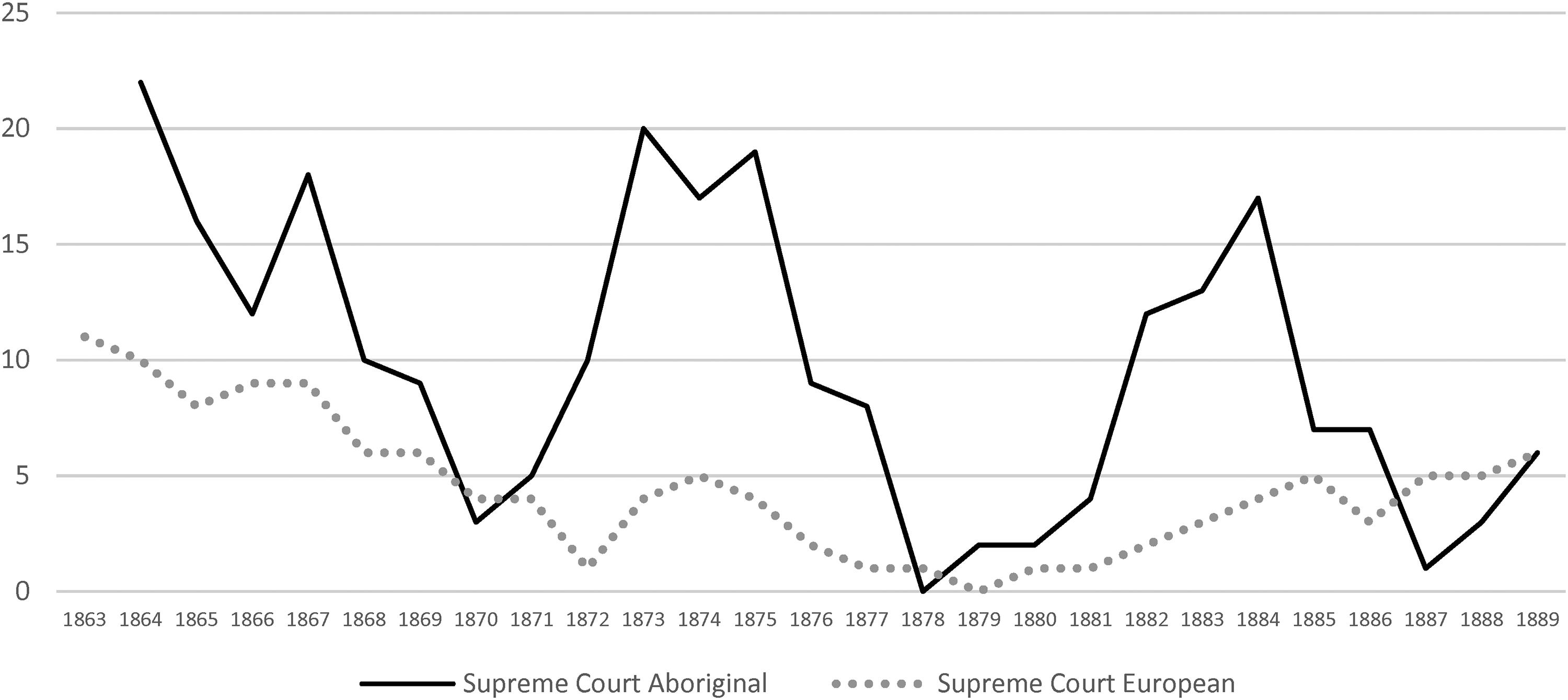
Numbers of Aboriginal Australians and Europeans sentenced to either penal servitude for life or to a death sentence, 1863–1891 (3-year average; extrapolated from Supreme Court Registers, 1861–1901, https://archive.sro.wa.gov.au/index.php/registers-criminal-record-books-s49).
As early as 1838, a precedent was set for punishing Aboriginal people for crimes committed against those in their own community, even if this was in line with customary law. At Perth Quarter Sessions, Noongar elder, Helia, was convicted for the murder of ‘a black woman’. His death sentence was commuted to transportation for life to Rottnest (Perth Gazette and WA Journal, 7 July 1838). In general, murders which were considered to be ‘tribal’ in context received lesser punishment (usually around two years' imprisonment) as Aboriginal customary law continued to operate, including retributive beatings or spearings. The state rarely intervened in these inter-se cases, unless the Aboriginal person involved was an employee of a settler, or the crime took place at a station encampment or urban space, thus disturbing settler peace. The state mostly prosecuted only extreme cases of domestic abuse by Aboriginal men against women, though even this level of paternalistic intervention failed to extend to the prolific sexual violence Aboriginal women faced at the frontier from settlers (Edmonds, 2010, p. 47).
After the discovery of gold in Halls Creek in 1886, migrants from eastern Australia flooded in, tripling the colony's population over the course of the decade (Owen, 2016, p. 401). Investment bolstered the pastoral industry, with the number of cattle almost doubling between 1902 and 1905 (Owen 2016, p. 429). More cattle meant greater territorial expansion, which in turn brought more Aboriginal people from the Kimberley into the criminal justice system. From 1890, when WA gained power of self-governance, policing of Aboriginal people at the frontier became increasingly violent, militaristic and indiscriminate (Gill, 1977, p. 17; Haydon, 1911, p. 329; Owen, 2016, pp. 7–8). In order to ‘clear’ land for European settlers, police-led ‘punitive expeditions’ massacred more Aboriginal people in the Kimberley in the 1890s than had been killed during the previous 60 years (Green, 1998, p. 459). The remoteness of pastoralists and police from the colonial government, hundreds of kilometres away in Perth, encouraged police to brutally ‘put down’ Aboriginal resistance beyond legal limits (amendments to the Police Ordinance Act in 1861 and 1892 reaffirmed their powers as civil, rather than military). 12 These failures to control extra-legal excesses at the northwest frontier led to the imposition of wider police structures which were less susceptible to local manipulation (see Edwards, 2001; Reynolds, 1981/1995). 13 This reduced but failed to stop reprisals for animal stealing, episodic massacres by police and settlers, and racist murders which continued into the 1920s and beyond (Knightley, 2000, p. 110).
Policing was a mechanism of control not just over Aboriginal people who overly resisted or threatened frontier expansion, but also to impose a layer of control over those who participated in pastoral industries as farmhands, stock-keepers and shepherds. White unionist labour was unwilling to work at sheep and cattle stations in the northwest, partly due to the conditions, and partly due to low wages, so pastoralists relied on Aboriginal and Chinese workers (Kingston, 1988, p. 9). Depletion of traditional food sources, coupled with introduced systems regulating ownership of land and food stock, caused Aboriginal communities to increasingly rely on cattle stations for rations in return for labour (Statham, 2003, pp. 78−80). This placed them in a vulnerable position. Robert Fairbairn, Resident Magistrate in the southerly Busselton, was sent by Governor Robinson to investigate allegations of what amounted to slavery of Aboriginal people in WA's north (Curthoys, 2016, p. 20). Fairbairn condemned working conditions among Yamatji farm workers in the Gascoyne and highlighted widespread practices of exploiting child labour, ‘concubines’ being taken by pastoralists, and men being ‘blackbirded’ (kidnapped) by the police for the pearling industry. Aboriginal workers often signed contracts which committed them to provide an undefined and unlimited period of service (Bosworth, 1991, pp. 17, 21). Though Aboriginal people had been included in Master and Servant Legislation in WA since 1842, 14 in the Kimberley police powers exceeded their legal limits, routinely rounding up and punishing those who left employment (contracted or otherwise), including for cultural business like ‘pinkeye’ (equivalent to Walkabout; Owen, 2016, p. 123). At Rottnest 13% of prisoners were there for absconding from work, at Roebourne it was 12%. Many Aboriginal employees did not understand the terms of their contract or the laws that imprisoned them for not keeping to them (Bosworth, 1991, p. 17). In 1886, four years after the Fairburn report, the Aborigines Protection Act was passed which introduced more standardised (but usually unenforceable) employment contracts, stipulating that food, clothing and blankets would be supplied by employers. 15 It did nothing to punish employers and left dangerously problematic local police cultures and structures unreformed.
Rather than improve the situation, the major impact was to engender an even more exaggerated and disproportionate sense of resentment amongst pastoralists against government interference and to increase nervousness about the loss of control over their Aboriginal workers. More formal systems of procedural justice which were designed to address official collusion in racist violence only replaced informal police and settler violence with far more systematic carceral control. Incarceration was a kind of reform. It replaced informal extreme violence with (less physical, more ordered, more widespread and more calibrated) institutionalised violence. The inter-relationship between imprisonment and colonisation can be seen in the historical record (as Gilbert suggested in 1978; see also, Green, 2011). Rottnest prison registers reveal the settler frontier that moved through WA by providing geographical details of where prosecutions took place.
In the 1880s, Rottnest prison suffered from overcrowding due to large numbers of convicted Aboriginal people arriving from the northwest frontier. Higher numbers coupled with a lack of basic amenities and medical treatment caused an outbreak of influenza which killed almost a third of Rottnest's prisoners (Green & Moon, 1997, p. 63). The resulting Commission of Inquiry (1884) concluded that although the costs and logistics of transporting prisoners over long distances were becoming increasingly untenable, working Aboriginal prisoners locally in the northern districts was morally unpalatable (Forrest, 1884). Rottnest began ‘lending’ its prisoners to different government departments on the mainland, including the telegraph, surveying, postal and police service. Aboriginal navigation, bushcraft and linguistic abilities became useful tools in the northward colonisation, which both generated ‘prisoners’– as new groups of Aboriginal people were brought under colonial law – and recouped their labour to support further colonial expansion. From the 1890s, the WA government viewed Rottnest as an increasingly ineffective deterrent. Prisoners simply ‘disappeared’ from Aboriginal communities, when they could be imprisoned and made to labour locally, which would be more visible and cheaper (Thomas & Stewart 1978, p. 150). This change in mindset coincided with responsible government from Britain in 1890 (who had been sceptical of WA's ability to adequately care for Aboriginal people) and settlers’ demands to open Rottnest as a ‘place of summer resort and recreation’ in 1894. The prison was finally closed in 1903 and opened to the public (though a small number of trusted prisoners remained on the island until 1931).
Even before Rottnest closed in 1903, the penal system started to become more decentralised with new prisons in major towns, Geraldton (1859), Roebourne (1884) and Cossack (1898) (Thomas & Stewart, 1978, pp. 141–145). Roebourne Gaol became the largest in the northwest and the second largest in WA (after Fremantle) after it was extended in 1896 (Bosworth, 1991, p. 17). One large cell was added with iron rings built into the walls to which Aboriginal prisoners from across the Kimberley were chained at night (Harman & Grant, 2014, pp. 157, 178). Prisoners from lock-ups and small prisons in Broome and Derby were transferred to Roebourne. Roebourne was not designed as a prison for Aboriginal people in the same way that Rottnest was, but that was the reality (see Figure 4).
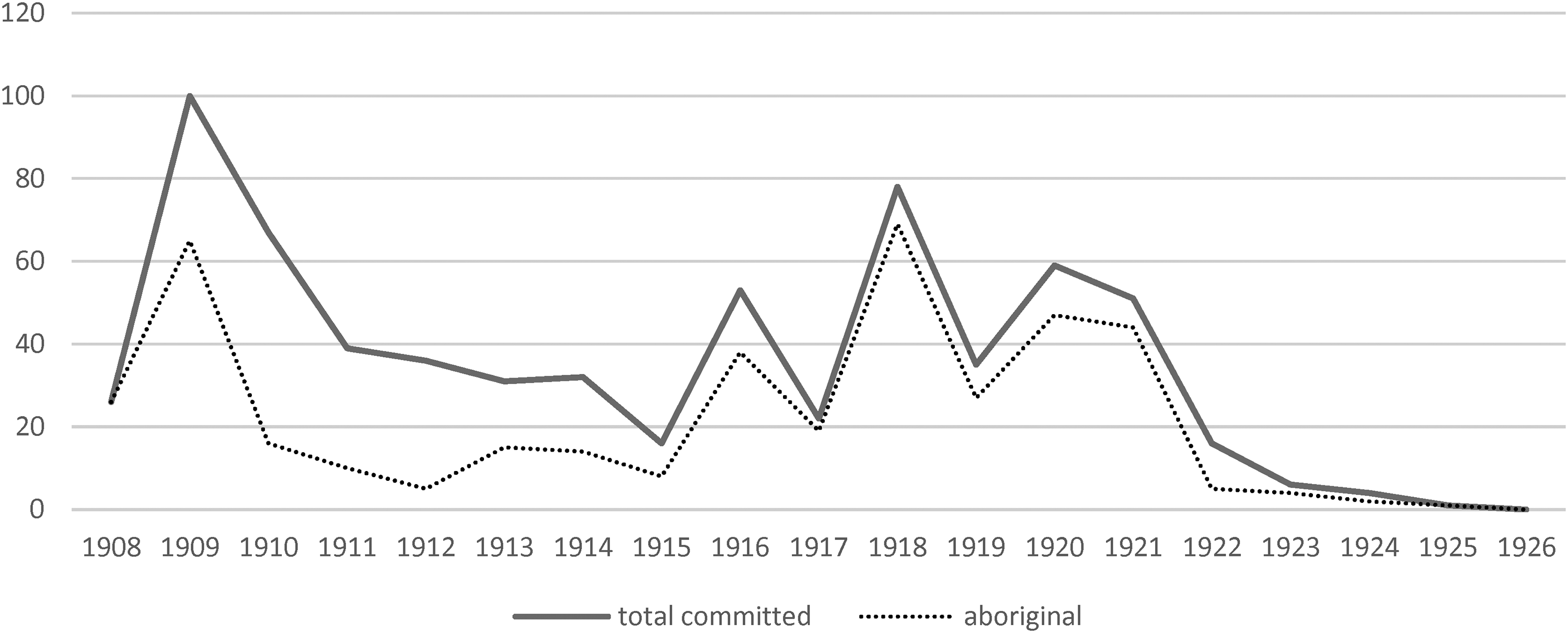
Aboriginal and total number of prisoners annually committed to Roebourne Prison 1908–1926 (extrapolated from Roebourne Prison Registers, State Records Office of Western Australia [SROWA], A768, S1925).
As at Rottnest, the prison authorities at Roebourne made a detailed bureaucratic record of each inmate: offence place and date of conviction, term of imprisonment, birthplace, age, putative racial category, religion and occupation. Together this provides a demographic of Roebourne's inmate population, and it also reveals clear epistemological biases – for example, age-heaping, (which is evidence of an oral culture of recording dates of birth rather than a formal bureaucratic record) means that only rough approximations of age were entered for Aboriginal prisoners (Figure 5) (Midford, 1988, p. 175).
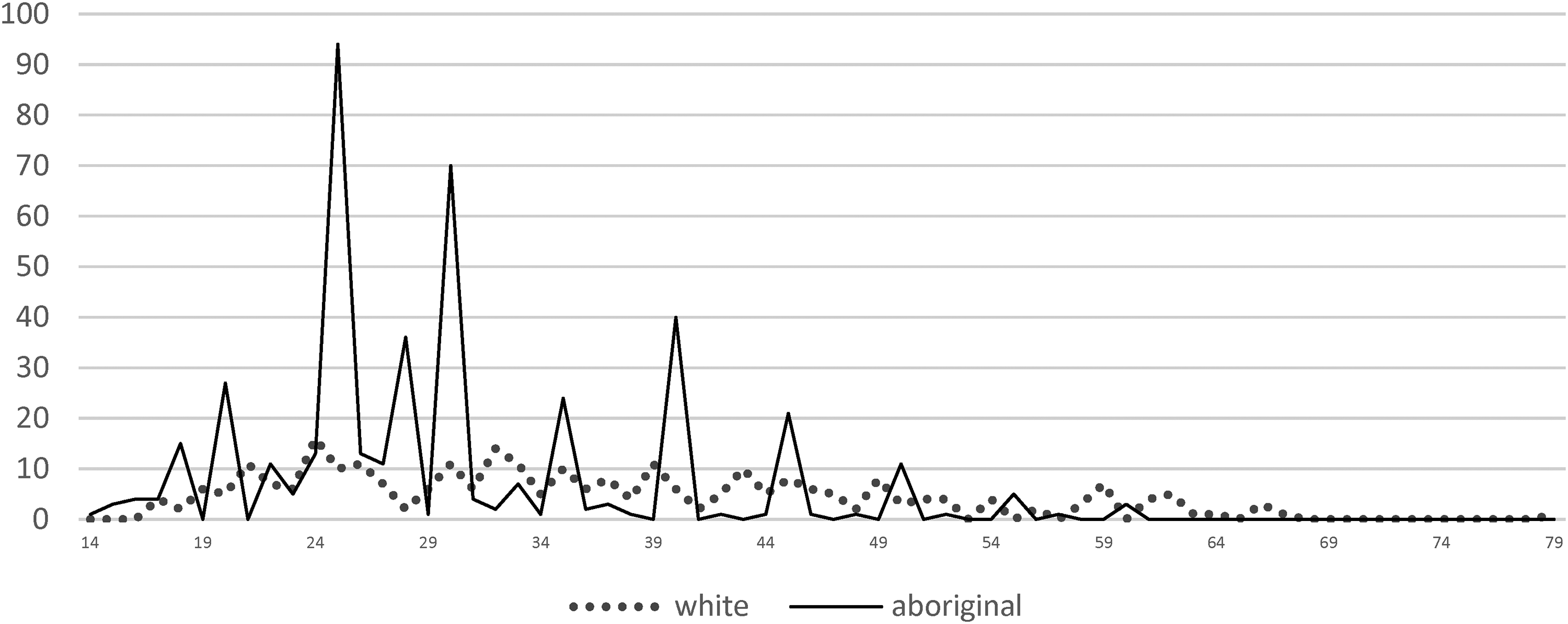
Age of Roebourne prisoners, 1908–1926 (extrapolated from Roebourne Prison Registers, State Records Office of Western Australia [SROWA], A768, S1925).
Similarly, the occupation of 83% of Aboriginal prisoners was entered in the register as ‘none’ or not recorded at all, reflecting contemporary European views about what constituted a recognised frontier occupation. It is unlikely that much attention was paid by the authorities to gaining accurate information about Aboriginal prisoners. Yet, the majority of prisoners were young Aboriginal men, usually in their 20s: the peak age for criminal convictions generally, but also a time in which men were likely to be sought after as labourers. These occupations brought them into close contact with Europeans, alcohol and other Aboriginal men and women in encampments which resulted in prosecutions for drunkenness and fighting.
Aboriginal women were only criminalised in small numbers (usually for drunkenness or petty theft). Just one woman was sent to Rottnest, and in Kimberley, the district Roebourne Gaol served, the arrest of Aboriginal women was forbidden by order of senior police. Nonetheless, Aboriginal women were still subjected to carceral apparatus, being transported over vast distances in chains and coerced into appearing as witnesses for the prosecution in court (Owen, 2016, p. 3). The expanded powers of surveillance under the guise of welfare enabled by the Aboriginal Protection Act (1886) paved the way for the removal of Aboriginal children by welfare services (‘Stolen Generation’) in the twentieth century; this, rather than criminal prosecution, was the means through which Aboriginal women and children were controlled by the state (Baldry & Cunneen, 2014; Carter, 1996).
Half of the population of Rottnest was made up of people convicted of manslaughter or murder, often resulting from resistance to colonisation in the 1830s and 1840s. However, later in the century, only 35 prisoners (4%) in Roebourne had been convicted of homicide (Douglas & Finnane, 2012). A quarter of the prison was filled with public order offenders (drunkenness in the main). Nearly three-quarters were property offenders (a third of whom were Aboriginal men convicted of killing or stealing animals). The average sentence for killing or stealing cattle was 3 years, reflecting the same intent to deter crimes against settlers and their property as can be seen in the analysis of both Rottnest and Supreme Court data. Only 3% of the 431 European convicts imprisoned between 1908 and 1961 received a sentence of over 6 months (as opposed to 56% of Aboriginal prisoners) and those that did were convicted of supplying alcohol on the Aboriginal reserves in contravention of the law. The Aboriginal people who consumed alcohol could expect a much longer sentence than those who had illegally sold it to them.
Figure 6 shows that the same patterns of movement and displacement found at Rottnest were evident in Roebourne. Most of the Aboriginal prisoners had been born hundreds of miles away from the place in which they were convicted. The courts at Derby (over 600 miles from Roebourne) and Wyndham (over a thousand miles) contributed to the majority of defendants subsequently imprisoned at Roebourne; most of the defendants originated in the Kimberley and West Kimberley (these areas colonised very heavily in the 1890s and 1900s following the 1886 Halls Creek gold rush show as the sharp spikes in Figure 6).
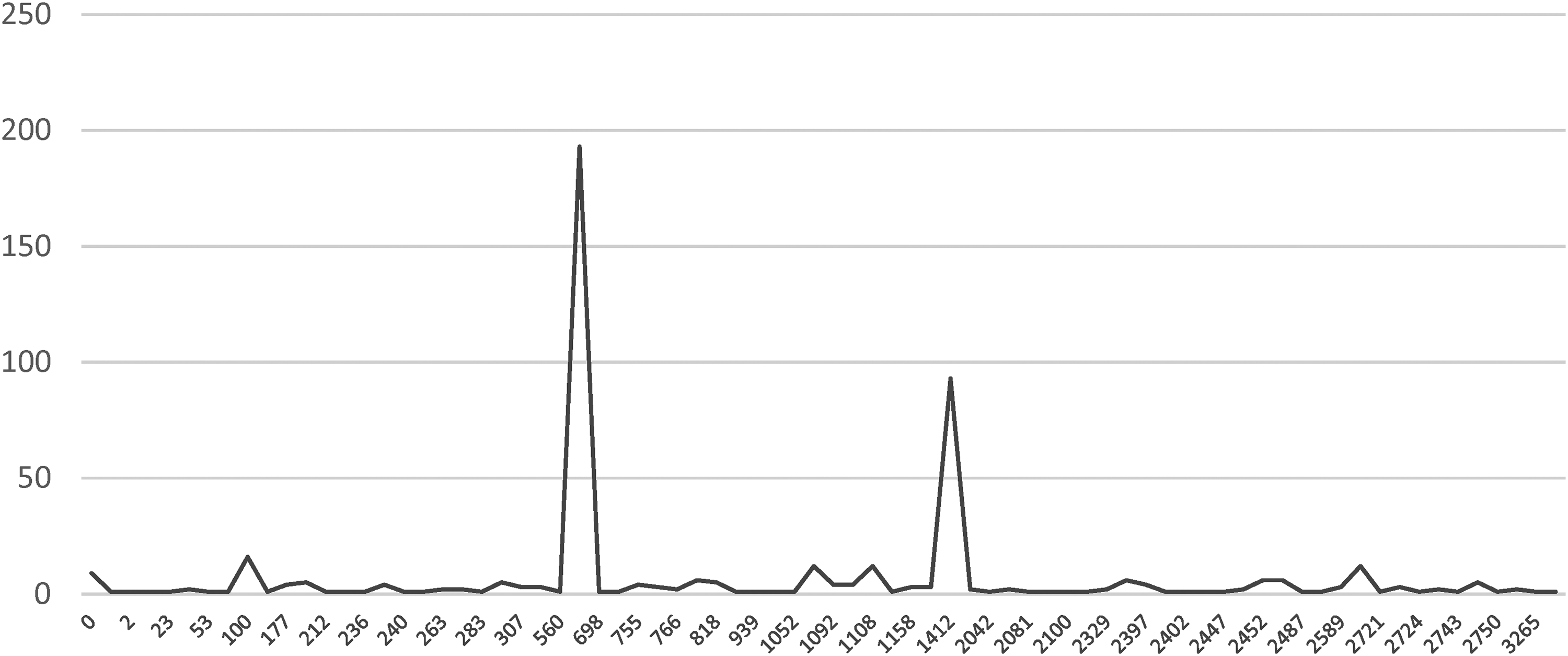
Distance between birthplace and place of sentencing (in miles), 1908–1926 (extrapolated from Roebourne Prison Registers, State Records Office of Western Australia [SROWA], A768, S1925).
Figure 7 reveals that the courts that had imposed custodial sentences were usually hundreds of miles from Roebourne, where the sentences were served. The exceptions to this were the 109 Aboriginal people who had been convicted in Roebourne. People in this group had been born in nearly 30 different places mostly outside of Roebourne. When released, they faced either a long journey back to their traditional homeland (which may well have been colonised since they had been locked up) or they could resettle in Roebourne. Those who could not face the journey home, or had nowhere to go, were then reconvicted for offences committed in Roebourne. The carceral churn caused displacement, disorientation, isolation, and dependency felt by thousands of Aboriginal people in WA which reverberates across space and through time.
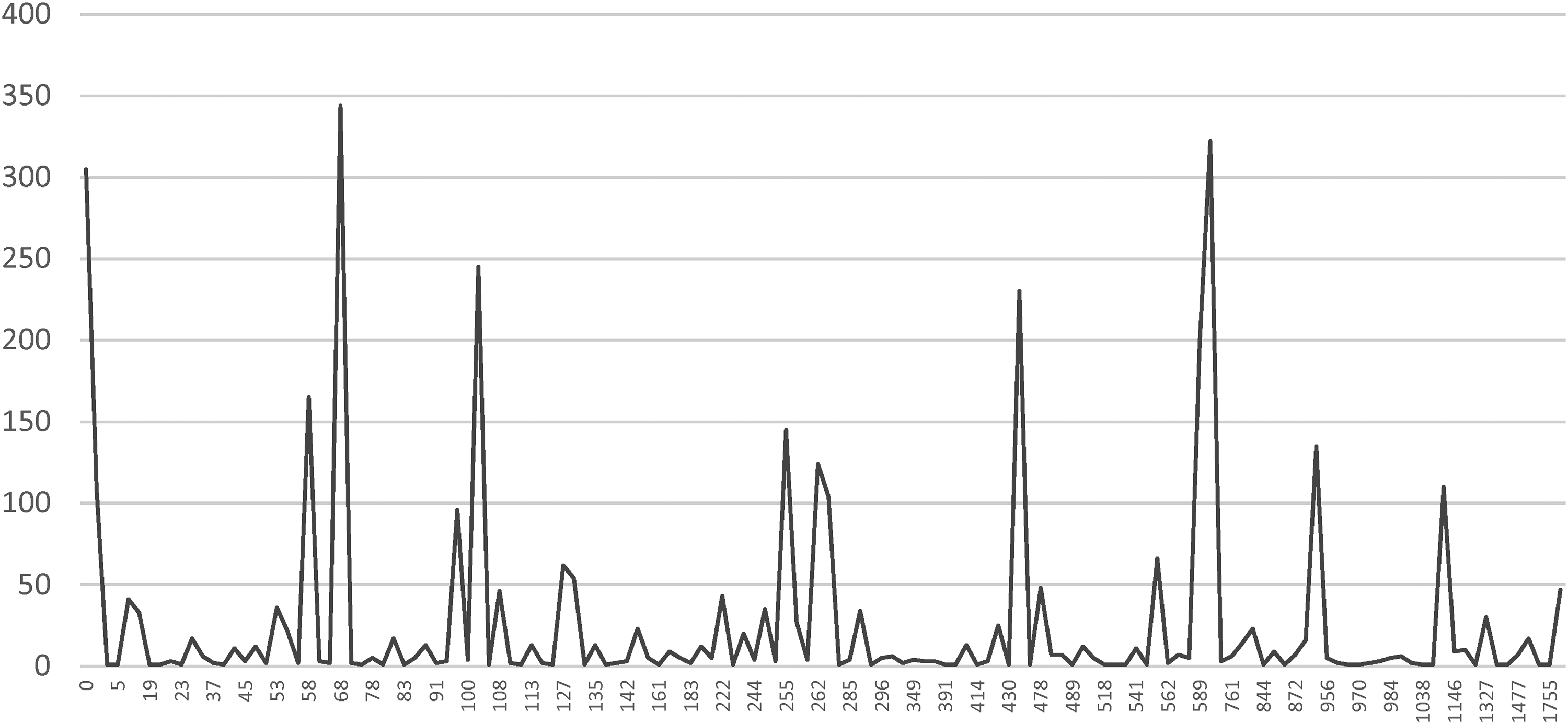
Distance between the place of sentencing and Roebourne prison (miles) 1908–1926 (extrapolated from Roebourne Prison Registers, State Records Office of Western Australia [SROWA], A768, S1925).
Colonial legacies and the reproduction of colonial power
In the second half of the twentieth century, pushing Aboriginal people to the boundaries of unproductive land was replaced by processes of internal exclusion. As shown earlier, waves of colonisation dispossessed Aboriginal people from their land and pushed them into the criminal justice system, and continued to do so long after WA was said to have been ‘settled’. Shortly after Federation in 1901, a new state government launched a Royal Commission led by Dr Walter Roth to investigate, amongst other matters, problems of police and judicial malpractice. It was evident to Roth that these problems stemmed from the WA government's collusion in the violent subjugation of Aboriginal people in the far northwest (Roth, 1905). Perversely, however, the Aborigines Act (1905) which was passed due to Commissioner Roth's report (later amended in 1936) did little to address these issues and problems. Instead, it regulated Aboriginal people's freedom more than any other piece of legislation that had hitherto been passed in WA. The 1905 Act made it an offence for Aboriginal people to leave their home station to move south of the 26th parallel (south of Carnarvon) without a permit; and it established Aboriginal reserves modelled on existing systems in the USA and Canada (Bates, 1939; Owen, 2016, pp. 411, 432; Smith, 2000, p. 78). This is the same parallel which European convicts were forbidden from working north of (i.e., where free settlement had failed) where Aboriginal people were gazetted within.
Even after the reserves were opened up and the exclusion areas were discontinued in the 1950s, segregation and exclusion continued. Housing policy and issues around poverty and disadvantage in the 1960s and 1970s corralled Aboriginal people and provided intangible boundaries between different parts of urban areas. These boundaries delineated policing areas (Cunneen, 2001, pp. 75−76, 229, see Bird, 1987; Jennett, 2001). Aboriginal bodies ‘out of place’ in areas of white residency were informally and formally subject to police surveillance (Dowson, 2003, p. 139; Edmunds, 1989, pp. 104–105; Goodall, 1996, p. 117; Gregory, 2003, p. 162; Haebich, 1985, pp. 493−494, 503−504; Smith, 2000, p. 84). The reintroduction of Aboriginal people into ‘white’ spaces seemed to provoke control responses around public space and disorderliness (Cunneen, 1994, pp. 146–147). 16 Young Aboriginal juveniles in particular were recast as ‘trouble-makers’ in a shift away from assimilation towards more criminal justice-orientated strategies (Gregory, 2003, p. 303).
Seven new prisons were opened between 1960 and 1971 with Aboriginal people making up a quarter of the prison population in 1965, and almost a third in 1971. In 1972, the government found it necessary to appoint a Royal Commission to investigate the mistreatment of and discrimination against Aboriginal prisoners (Jones, 1973). However, the resultant report refused to give credence to the testimony of Aboriginal prisoners, and hence the report was as ineffective as Roth's 1905 report and was widely viewed to be a predictable validation of the actions and policies of government officials (Harris, 1996, p. 195). It certainly did little to address the worsening conditions in prisons that were exacerbated by overcrowding.
Roebourne Prison, reopened in 1975, was unable to cope with significant levels of prisoners brought in by the frequent police campaigns against Aboriginal public drinking (Bosworth, 1991, p. 22). Protests about prison conditions and over-policing turned into riots. The tense situation in Roebourne came to a head in September 1983 with the death of a young Aboriginal man who was in custody at Roebourne Police Lockup. This led to an inquest into his death, followed by the closure of the old prison and the opening of the new Roebourne Regional Prison in 1984, a Royal Commission into Aboriginal Deaths in Custody in 1989, and a National Inquiry into Racist Violence in 1991. These inquiries identified everyday racist police violence and made several important recommendations about reforms to the prison system (Broome, 1982/2001, p. 220). These recommendations were never operationalised. Before Fremantle Prison was decommissioned in 1991, following riots (McGivern, 1988),
17
oral history interviews revealed that, in some ways, conditions inside Roebourne prison were similar to those that Aboriginal prisoners experienced in Rottnest a hundred years earlier: I do not like Rottnest because it is a bad place… I am very cold in winter. I have not enough clothes. At night it is very cold. My blanket is old and thin. The food is not good, there is something wrong with it…I would rather be away, even in chains, than here. (Sambo, from Forrest, 1884, p. 13)
Seven days bread and water, seven days half rations. Then come out. We had mattresses about half an inch thick with that coconut fibre in it, made of canvas so you couldn't get warm anyway. You weren't allowed to have blankets. You weren't allowed anything in there that you might use to hang yourself … in the morning you’d come out to empty your toilet buckets and you’d have to run the gauntlet, run between a dozen officers with batons… every day you’d get three or four, maybe five hidings. (Oral Interview, Aboriginal Prisoner, Fremantle Prison, State Library of Western Australia, from Reid, 1991)
Aboriginal adolescents continued to bear the brunt of the carceral wave, making up 73% of the young people in prison in the 1990s (Cunneen, 1990, pp. 15–16, 1994, pp. 134, 2001, p. 9). In 2012, Aboriginal women made up 34.2% of female inmates in Australia, despite representing only 2% of the country's female population (Baldry & Cunneen, 2014, p. 279). Almost 40% of prisoners in WA in 2020 were Aboriginal despite only making up 3% of the state's total population (Australian Bureau of Statistics, 2016, 2020).
Conclusion
Following the forceful appropriation of land and the dispossession of traditional owners in 1829, the imposition of British law enabled subjugation, exclusion and segregation. Hirst is right to state that every settlement’s history is a story of violence (Hirst, 2006, p. 83). In WA, the police played a prominent role in reinforcing colonisation by clearing land using direct force, protecting settlers from reprisal attacks by traditional owners of the land they appropriated. and targeting Aboriginal leaders to incapacitate resistance. As the colonial frontier spread out from the original site of British settlement, overlapping reiterative processes supported by the criminal justice system enabled labour exploitation, assimilation, internal segregation, and high levels of incarceration of Aboriginal people. In the twentieth century, the criminal justice system was still seen as integral to protecting and preserving property rights and public order just at a point when street crime, alcohol misuse and vagrancy became firmly identified with ‘urban’ Aboriginal residents. The criminalisation of Aboriginal people for alcohol-related offences and their subsequent incarceration began with the introduction of protection legislation in 1905 (Haebich, 1985, p. 110) and continues today in police interference in the everyday lives of Aboriginal residents (Cunneen, 2001, pp. 93–97; Edmunds, 1989, p. 95). The state and settlers’ identification of Aboriginal people as a problematic population due to their resistance to the normalisation of white-dominated power structures enabled forms of postcolonial policing to persist within general policing models. Those models target young Aboriginal and non-Aboriginal working-class men, but statistics reveal that the same policing methods, approaches and attitudes continue to reproduce historically embedded inequalities – Aboriginal people still feature in vastly disproportionately proportions in both police and prison data. Data presented here have shown that the colonial process relied and continues to rely on the criminal law in order to operationalise its supremacy, both in terms of ideology and the use of force. This process started in WA in 1829 and has not ended. It may not be a process that ends in WA or in any part of Australia any time soon.
Footnotes
Acknowledgements
The authors are grateful for the comments of Mark Finnane, Ruth Lamont, Hamish Maxwell-Stewart, Pablo Ciocchini and Joe Greener on earlier drafts of this article. Our thanks also to David Whiteford at the State Records Office of Western Australia (SROWA) for his assistance. We thank Leverhulme Early Career Fellowship grant for enabling this research.
Declaration of conflicting interests
The authors declared no potential conflicts of interest with respect to the research, authorship, and/or publication of this article.
Funding
The authors disclosed receipt of the following financial support for the research, authorship, and/or publication of this article: This work was supported by the Leverhulme Trust (grant number Early Career Fellowship).
