




Abstract
Despite widespread community concern about the incidence of lethal violence against women in Australia, the numbers and rates of women murdered each year have been falling for almost 30 years. The risk of homicide victimisation among Australian women is now the lowest it has ever been since federation. Few studies have explored these patterns or sought to explain their development. One plausible explanation, anticipated by feminist theories of violence, is that homicide has declined as the status of women and gender equality have increased. In this paper, I analyse changes in the annual female homicide victimisation rate in Australia from 1962 to 2016. Using unobserved components models, I investigate the extent to which increases in either the status of women or gender equality can account for the decline in female homicide victimisation since the late 1980s. Despite absolute and relative advances in women's educational access and achievement, labour force participation, and earnings, those changes had little discernible impact on the aggregate-level risk of lethal violence against women. Instead, other social and economic conditions, such as falling unemployment, the shrinking of the young male population and ongoing urbanisation, seem better able to explain recent improvements in women's safety.
Keywords
Introduction
Several high-profile murder cases in recent years have elevated community alarm over the incidence of lethal violence against women in Australia (Mao, 2019; Zielinski, 2013). Nearly three-quarters of Australians believe that violence against women is common, an increase from the two-thirds of respondents surveyed in 2013 (Webster et al., 2018). These views reflect the sentiments of anti-violence campaigners and their frequent citation of statistics such as ‘one woman is killed every week’ (Our Watch, 2022; White Ribbon Australia, 2020). They also match the depiction of violence by Australian media, which disproportionately covers homicides involving female victims (Waters et al., 2017) and repeatedly publishes claims of an ‘epidemic’ of lethal and non-lethal violence against women in response to incidents of murder (Morton, 2013; Seidler, 2020).
Despite these concerns, the risk of homicide among women in Australia has been falling steadily for almost 30 years (Bricknell, 2020). The female homicide victimisation rate, as measured by the National Homicide Monitoring Program (NHMP), fell by 71% from 1.71 deaths per 100,000 during1990–1991 to 0.49 per 100,000 during 2017–2018 – the lowest level recorded since the series began (Bricknell, 2020). These changes resulted from a pronounced decline in the numbers of women killed each year, even though the female population grew by more than two-fifths. During 2017–18, murder claimed the lives of half as many women as in 1990–1991 – a decline of three violent deaths on average each year. National mortality statistics confirm these patterns and highlight their historical significance, as shown in Figure 1. From 1910–1930, the risk of female homicide victimisation fluctuated around an annual mean of 1.5 deaths per 100,000, falling throughout the 1930s to an historic low of 0.6 deaths per 100,000 on the eve of World War II. The rate then climbed for over 50 years, reaching a peak of 1.8 per 100,000 in the late 1980s. From there, it fell to its most recent level of 0.5 per 100,000 in 2017 – the lowest rate recorded in the history of the federation (AIHW, 2020). To put these statistics in the terms favoured by anti-violence campaigners and journalists, the numbers of women killed in an average week fell from almost three in the early 1990s (2.84 in 1990–1991) to just over one in the most recent year of the NHMP (1.19 in 2017–2018).
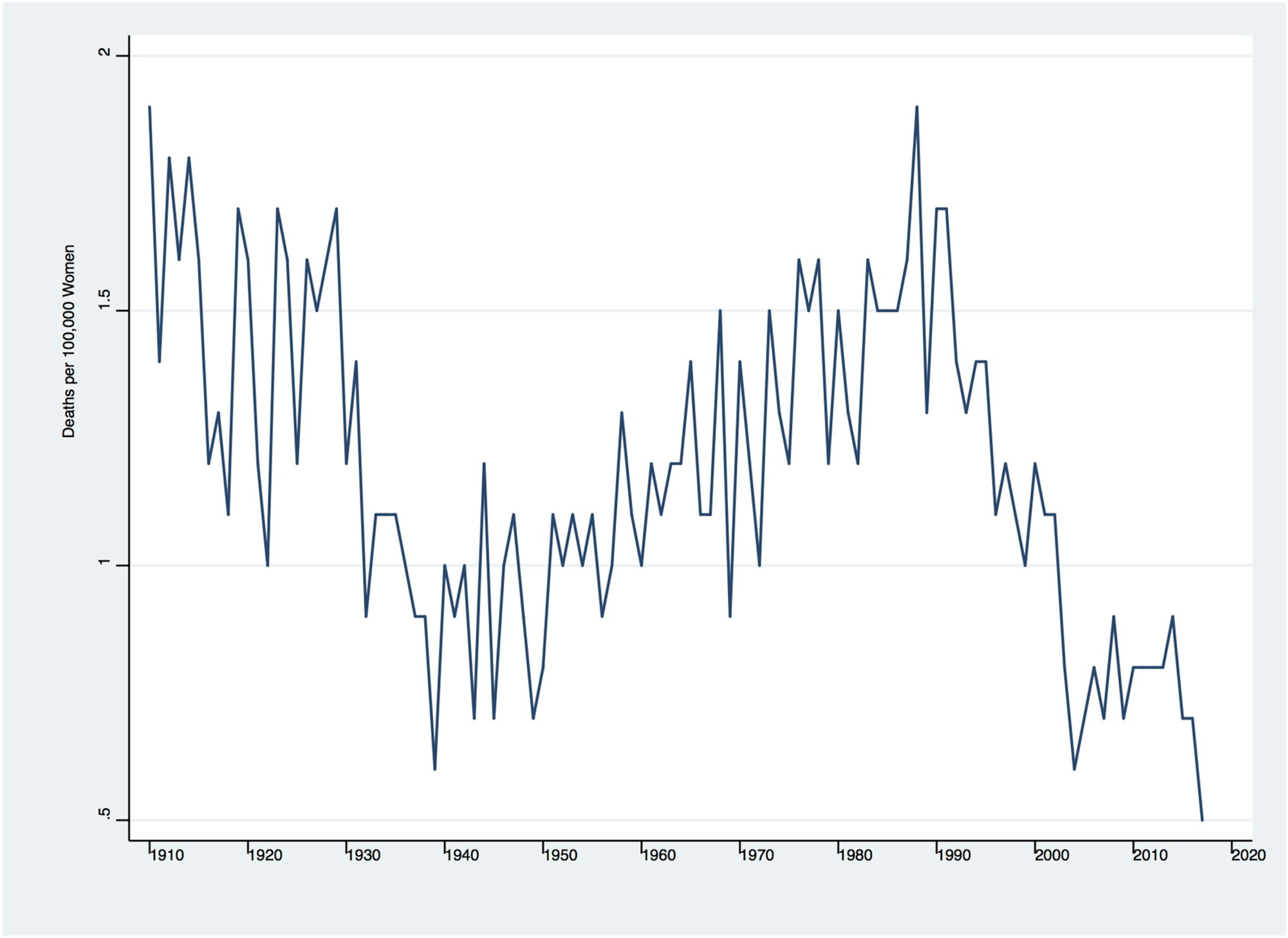
Female homicide victimisation rate, Australia 1910–2017. Source: General Record of Incidence of Mortality (AIHW, 2020).
These declines in female homicide victimisation echo changes in the male homicide rate, which has also fallen steadily in recent decades from 2.53 per 100,000 in 1989–1990 to 1.27 per 100,000 in 2016-2017 (Bricknell, 2020). The drop in female homicide victimisation, however, has attracted little attention from Australian researchers. Only a handful of Australian studies have sought to explain trends in female homicide victimisation in any era (Lester, 1992; McPhedran, 2018; Ramstedt, 2011), and none of them sought to explain the recent declines in lethal violence against women. This means that criminologists are unable to explain one of the most significant changes in national-level crime rates in the history of the Commonwealth. It means also that Australian policymakers lack insight into how to ensure these improvements in community safety continue. Given heightened community anxiety about violence against women and the stated commitments of federal and state governments to eliminate it (Council of Australian Governments, 2014), the development of a stronger evidence-base regarding the drivers of changes in the most serious form of violence against women should be a major research priority.
One plausible (and hitherto unexplored) explanation for the drop in homicide concerns the state of gender equality and the status of women. Feminist theories of violence contend that a combination of factors that enable male domination and the subordination of women are the leading causes of women's violent victimisation (Hunnicutt, 2009; Taylor & Jasinski, 2011). While early feminist accounts emphasised the ideological bases of male violence against women, depicting it as the result of and the means by which men maintain patriarchy (Brownmiller, 1975; Firestone, 1972; Millet, 1970; Russell, 1975), many other feminist scholars have emphasised the structural sources of gender inequality, including limits on women's access to education, the labour market and income, as enabling violence and undermining the capacity of women to avoid it (Avakame, 1999; Bailey & Peterson, 1995; Brewer & Smith, 1995; Haynie & Armstrong, 2006; Titterington, 2006; Vieraitis & Williams, 2002; Whaley, 2001; Whaley & Messner, 2002). From this perspective, increases in women's empowerment and reductions in gender inequality should lead to significant long-term reductions in their risks of violent victimisation, — the so-called ameliorative hypothesis (Whaley, 2001; Whaley & Messner, 2002). It is possible, therefore, that some of the decline in women's homicide victimisation. In Australia could be due to recent advances in their status and the diminution, if not disappearance, of gender inequality.
The conviction that increasing the status of women and gender equality reduces violence underpins the major policy responses to violence against women in Australia, as state and federal governments have centred their violence prevention strategies around tackling gender inequality (Council of Australian Governments, 2014). For example, the Victorian Government states that ‘Gender inequality creates the necessary social environment that enables violence against women to occur’ and that ‘gender inequality … must be addressed if we are going to succeed in preventing violence against women’ (Victorian Government, 2017, p. 12). In similar respects, the National Plan to Reduce Violence against Women and Children 2010–2022 states that ‘gender inequalities have a profound influence on violence against women and their children’ and that ‘policy initiatives that address gender inequality and improve the status of women are critical to reducing violence against women’ (Council of Australian Governments, 2014, p. 15).
Given the popularity of the ameliorative hypothesis, investigating the influence of changes in gender equality and the status of women seems critical to developing a more complete understanding of the sources of homicide in Australia and the reasons for its declining incidence. To that end, in this study, I analyse changes in the rate of homicide victimisation among Australian women over a period spanning more than 50 years (1962–2016). Specifically, I investigate the extent to which absolute and relative gains in the status of women, in terms of access to education, the labour market and weekly earnings, correlate with changes in their rates of homicide victimisation. This is one of the few studies to examine temporal changes in female homicide victimisation in Australia, the first to evaluate competing explanations for them, and one of only a handful of studies of long-term trends in female homicide outside Europe or North America.
My focus on female homicide victimisation reflects the public's disproportionate concern over the risk of violence to women relative to men and the significant policy investment that Australian Governments have made in its prevention (Australian Government, 2020). It also reflects the fact that male and female homicide trends do not always move in tandem – since 1989–1990, the male homicide rate has fluctuated between 1.39 and 2.30 times the female Rate – and the possibility that the two series may have distinct underlying causes (Smith & Brewer, 1992; Stamatel, 2014; but see Batton, 2004; Marvell & Moody, 1999). I concentrate on the status of women and gender equality as explanatory factors because they relate to one the most influential explanations of violence against women (Bailey & Peterson, 1995; DeWees & Parker, 2003; Gartner et al., 1990; Titterington, 2006; Vieraitis & Williams, 2002; Whaley & Messner, 2002). While that research has focused on a variety of crimes, including rape and intimate partner violence, a substantial international literature has specifically investigated the effects of either gender equality or the status of women on homicide (Avakame, 1999; Bailey & Peterson, 1995; Brewer & Smith, 1995; DeWees & Parker, 2003; Dugan et al., 1999, 2003; Gartner, 1990; Gartner et al., 1990; Gauthier & Bankston, 1997; Haynie & Armstrong, 2006; Narvey et al., 2021; Smith & Brewer, 1995; Stout, 1992; Titterington, 2006; Vieraitis & Williams, 2002; Vieraitis et al., 2007, 2008, 2015; Whaley & Messner, 2002). None of that research, however, has been undertaken in Australia.
Women's status, gender equality, and homicide
Feminist theories of violence consider the subordination of women to men the key determinant of male violence against women (Brownmiller, 1975). 1 From this perspective, men who kill women do so because they do not value or respect them, because they desire to control them, and because they consider violence an acceptable way to achieve their aims. Community attitudes that condone violence against women, or exclude it from the purview of legal authorities, may also help perpetuate violence by undermining opportunities to intervene and hold perpetrators to account. Nonetheless, empirical studies of feminist theories of violence often concentrate on the role of structural inequality between the sexes (Hunnicutt, 2009). In part, this is because limits on women's access to education, employment and independent sources of income are likely to perpetuate their social and economic dependence on men, often forcing them into unequal relationships that enable men to control women and undermine their ability to escape violence (Anderson, 1997; Dugan et al., 2003; Gauthier & Bankston, 2004).
Raising the status of women in tangible ways that increase their autonomy from men, therefore, could lead to substantial reductions in the risks of violent victimisation for women. More than 20 international studies have sought to evaluate that prediction, known as the ameliorative hypothesis, analysing the relationships between rates of different forms of violence against women and the status of women and gender equality in education, labour force participation, employment, occupational status and income (Hunnicutt, 2009). Most aggregate-level tests of the ameliorative hypothesis have focused on homicide (Vieraitis et al., 2015). Their results are mixed, but several report the risk of murder is lower for women in jurisdictions in which they have greater access to education (Bailey & Peterson, 1995; Dugan et al., 2003; Titterington, 2006), employment (Bailey & Peterson, 1995; Stout, 1992) and income (Bailey & Peterson, 1995; Titterington, 2006). These include at least one longitudinal study that found that intimate partner homicide rates, a key contributor to the overall risk of homicide victimisation among women, fell in response to increases in women's access to education (Dugan et al., 2003).
At the same time, some feminist scholars anticipate that some men may resist improvements in the status of women should those changes challenge their dominance (Faludi, 1991; French, 1992). Such resistance may involve violence, especially if men try to use it to intimidate and coerce women into submission. It may also lead to expressive forms of violence, in which some men target acquaintances and strangers in retaliation against the generalised threats they perceive from the emancipation and empowerment of women. In either case, the expectation is that increases in gender equality will most likely lead to initial increases in violence against women, as men seek to reinstate their control, and restore their status, or otherwise strike back against the movement towards equality between the sexes (Russell, 1975). Consistent with this prediction, known as the backlash hypothesis, some studies indicate that women who are more educated, work in higher status jobs and earn more than their male partners face higher risks of violent victimisation (Anderson, 1997; Gauthier & Bankston, 2004; Kaukinen, 2004). With respect to homicide, specifically, many aggregate-level studies report women are murdered in greater numbers in places and at times in which they have enjoyed higher status (Bailey & Peterson, 1995; DeWees & Parker, 2003; Dugan et al., 1999; Gartner, 1990; Gartner et al., 1990; Gauthier & Bankston, 1997; Stout, 1992; Vieraitis & Williams, 2002; Whaley & Messner, 2002).
Although the ameliorative and backlash hypotheses appear to contradict one another, their inconsistencies could reflect temporal differences in the impact of changes in status of women (Vieraitis et al., 2008; Whaley, 2001; Whaley & Messner, 2002). From this perspective, early gains in gender equality may lead to increases in violence against women as some men try to resist the loss of their relative status and the trend towards social egalitarianism. Over time, however, those men may capitulate in the face of the inexorable movement towards equality; alternatively, their relative numbers may decline due to generational change (Whaley, 2001; Whaley & Messner, 2002). In either case, the theory anticipates the impact of gender equality on violence will change over time in response to its own success: although initial gains in gender equality may result in short-term increases in violence, the continued push for equality should reduce homicide in the long-term.
These expectations lead to the following testable hypotheses:
Hypothesis 1: As the status of women and gender equality increase, the female homicide victimisation rate will decrease (i.e. the ameliorative hypothesis). Hypothesis 2.1: As gender equality increases, the female homicide victimisation rate will increase (i.e. the backlash hypothesis). Hypothesis 2.2: Initially, as gender equality increases, the female homicide victimisation rate will increase. As gender equality continues to increase, however, the female homicide victimisation rate will begin to decrease (i.e. the backlash-to-ameliorative hypothesis).
In the last 70 years, the numbers of Australian women completing high school, entering and graduating from university and working for pay have increased significantly, as have their average weekly earnings (ABS, 2019b). In many cases, these increases outpaced the gains made by men and resulted in substantial declines in gender inequality. Thus, women in Australia complete as many years of school as men (mean = 12.6 years), comprise the majority of university students (58.7%), and account for close to half of all paid employees (47.4%) (Department of Education, Skills and Employment, 2020; UNDP, 2020). Notwithstanding recent fluctuation in the gender pay gap (i.e. from 2004–2014), the ratio of female to male earnings has also risen steadily over the long term (ABS 2019b; RBA, 2020). Given these improvements in the social and economic status of Australian women since World War II, therefore, either the ameliorative or backlash-to-ameliorative hypotheses might account for the drop in female homicide in Australia.
Data and method
To evaluate these hypotheses and their capacities to explain the decline in lethal violence, I analysed temporal changes in the female homicide victimisation rate for Australia from 1962 to 2016. The dependent variable, the female homicide victimisation rate, equals the total number of female deaths due to assault (i.e. ICD10 codes X85–Y09) recorded each year for every 100,000 women in the population. These data are available from the General Record of Incidence of Mortality (GRIM), which records sex-specific counts and rates of deaths for all causes of death. These data are similar to those used to measure homicide trends in other Australian studies (Chapman et al., 2006; Gilmour et al., 2018; Kapuscinski et al., 1998; Ramstedt, 2011).
The GRIM is published by the Australian Institute of Health and Welfare (AIHW) and is based on mortality statistics collated by the Australian Bureau of Statistics (ABS). They derive from a national system of compulsory death registration and standardised recording that has been in place for more than 100 years (AIHW, 2005). Details of every known death, including the cause of death, are recorded on a death certificate following categories outlined in the International Classification of Disease. In most cases, the cause of death information is certified by a medical practitioner. In select circumstances, however, a coroner must investigate and determine the cause of death following a coronial inquest, autopsy or investigation by a pathologist (AIHW, 2005). This applies to all cases of unnatural, suspicious or violent death, and to all cases in which the deceased was in care, custody or died as the result of police operations. Coroners may also investigate (suspected) deaths of missing persons. Thus, in almost all cases of homicide, the cause of death is likely to have been certified following a coronial investigation.
While causes of death can be misclassified, such cases likely affect only a minority of homicides. Cause of death records certified by coroners and government medical officers – applicable to all cases of unnatural, suspicious or violent death in Australia – are much more complete than those reported by medical practitioners (McKenzie et al., 2009). There is also a very high degree of correspondence (i.e. roughly 95%) between the final determination of the cause of death following coronial inquest and the initial determination (Studdert & Cordner, 2010). Even in the minority of cases that involve difficult or ambiguous causes, international studies report agreement in the determination of cause of death between 75% and 95% of the time (Barraclough & Harris, 2002; Robertson & Crawley, 2009). Consideration of the factors contributing to inconsistencies in the determination of cause of death also implies that homicide deaths are more accurately recorded than many other causes. For example, the risk of misclassification of cause of death may be higher in cases involving deaths of children or the elderly (Jobes et al., 1991; Sorenson et al., 1997a, 1997b), yet fewer than 21% of homicide victims in Australia are under 10 or above 65 years of age (Bricknell & Doherty, 2021).
Due to the difficulties of concealing deaths and their causes, homicide statistics are also widely regarded as the most accurate measures of violent crime (Monkkonen, 2001). 2 Homicide counts and rates based on the GRIM also correspond closely to the two alternative sources of Australian homicide statistics – the NHMP and the ABS Recorded Crime - Victims (RCV) collections. The correlation between the total homicide rates recorded in the GRIM and the homicide and murder rates reported in the NHMP and the RCV are 0.86 and 0.87, respectively. The mean homicide rates and standard deviations of the GRIM (mean = 1.38, SD = 0.31), NHMP (mean = 1.50, SD = 0.34), and RCV (mean = 1.38, SD = 0.28) are also comparable. Finally, the three series follow similar trajectories as shown in Figure 2, which plots the total homicide rate (including male and female deaths) as measured by the three series in the years for which they are all available (1993–2016). Aside from the obvious divergence of the NHMP and GRIM rates in 2002 and 2004, the three series differ only slightly in level and not in the direction or extent of change over time. Despite their methodological differences, therefore, ‘the differences in homicide counts derived from the various homicide data sources [are] minimal … [and] have little impact on the overall quantification of homicide in Australia’ (Mouzos, 2003, p. 4) or its trend. 3
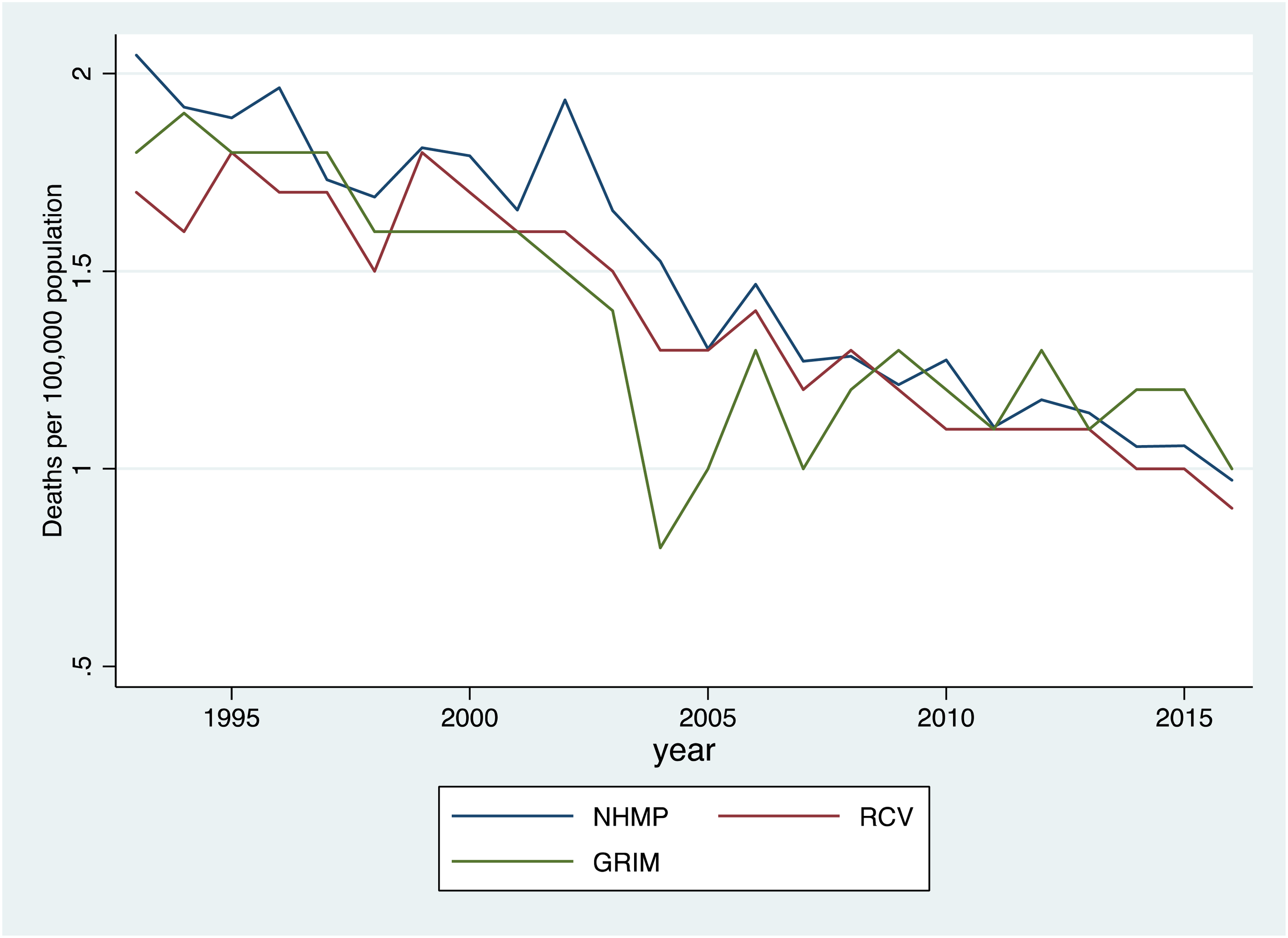
Homicide victimisation rate by data source, Australia 1993–2017. Sources: General Record of Incidence of Mortality (AIHW, 2020), National Homicide Monitoring Program (Bricknell & Doherty, 2021) and Recorded Crime – Victims (ABS, 2020).
The key advantage of the GRIM over these alternative data sources is the length of its time-series. GRIM records of deaths from assault are available for all years from 1921 to 2017, whereas the NHMP and the RCV have only been available since 1989–1990 and 1993, respectively. Although I confine the analyses to the years for which measures of the status of women and gender equality are also accessible (i.e. 1962–2016), using the GRIM doubles the number of observations available and enables the analysis of homicide trends over more than half a century. This long-term perspective is critical to identifying the sources of the homicide drop because it permits observation of homicide trends in the years in which murders increased, not just when they fell. At the same time, limiting the analyses to the years since 1962 minimises the impact of changes in death registration and recording practices on the estimates of homicide and its relationship to its correlates.
The chief limitation of using the GRIM to study temporal changes in homicide concerns the potential impact of changes to reporting practices. These include changes to the way the ABS registered deaths, which likely contributed to the discrepancies between the GRIM, NHMP and RCV data series during 2002–2004 (Henley & Harrison, 2009). They also include changes to the International Classification of Disease, which has undergone three revisions in the period covered by my analyses (i.e. 1962–2016). Such changes may have altered the comparability of homicide counts over time by expanding the number of categories and causes of death. That said, the comparability ratios for the measurement of assault across the most recent revisions of the ICD (i.e. from ICD-9 to ICD-10) are close to 1.0 (Anderson et al., 2001) and the evidence that such changes affected the accurate measurement of violence seems to be confined to recorded rates of hospitalisations, not mortality (Sebastião et al., 2021; Slavova et al., 2018). 4
Independent variables
The key independent variables measure the status of women and gender equality in terms of education, labour force participation and income. While these three domains are necessarily selective and may not take account of other spheres of life (e.g. occupational status or political influence), they are consistent with prior research on the ameliorative and backlash hypotheses, which also measured the status of women in terms of educational achievement (Bailey & Peterson, 1995; Dugan et al., 2003; Titterington, 2006), employment outcomes (Bailey & Peterson, 1995; Stout, 1992) and income levels (Bailey & Peterson, 1995; Titterington, 2006). Indicators of the status of women record the status of women in absolute terms, whereas measures of gender equality express each indicator (of the status of women) as a percentage of the equivalent statistic for men. In cases in which these and other measures were missing valid observations, such as when a series was only available in census years, I used cubic spline interpolation to fill in missing values.
Years of schooling estimates the average years of schooling for women aged 25 and over as recorded in the Barro-Lee Educational Attainment Data (Barro & Lee, 2013) in five-yearly intervals from 1950–2010 and by the United Nations Development Program (UNDP, 2020) annually from 2010–2018. Female University Participation measures the total numbers of female domestic students – those enrolled in Universities and Colleges of Advanced Education (1965 to 1989), government and non-government Teachers Colleges (from 1973 and 1974 respectively) and nursing students trained in hospitals (1985–1993) – as a percentage of the total female population aged 15 and above. These data are from the Department of Education (Department of Education, Skills and Employment, 2020; Department of Education, Training and Youth Affairs, 2001). Female Labour Force Participation estimates the number of women in the labour force in 1961, 1966, 1971, 1976 and from 1979–2019, as a percentage of women aged 15 and above. These reflect national estimates as reported by The World Bank (2020).
Average Weekly Earnings averages four sex-specific indicators of average weekly wages from the ABS (2019b) and RBA (2020), such that the score assigned to each year reflects the mean of the indicators available in that year. From 1962 to 1972, it includes average weekly earnings for full-time, adult female private sector employees (i.e. aged 21 and over) in managerial and non-managerial roles, respectively (Cronbach's alpha = 0.998). From 1972 to 1994, it averages those two items together with indicators of average total weekly earnings for full-time and part-time female adult employees (i.e. aged 21 and over) and those of working age (i.e. aged 15 and over) (Cronbach's alpha = 0.999). From 1994 to 2018, it included average total weekly earnings for adult and working-age employees only (Cronbach's alpha = 0.999). The measures estimate total wages before tax and any other deductions based on payroll tax returns (1962–1981) and surveys of employers (1981–2018). Data prior to 1994 come from the Reserve Bank of Australia (RBA), which compiled them from historical ABS publications, whereas the 1994–2018 data come from the ABS (2019b).
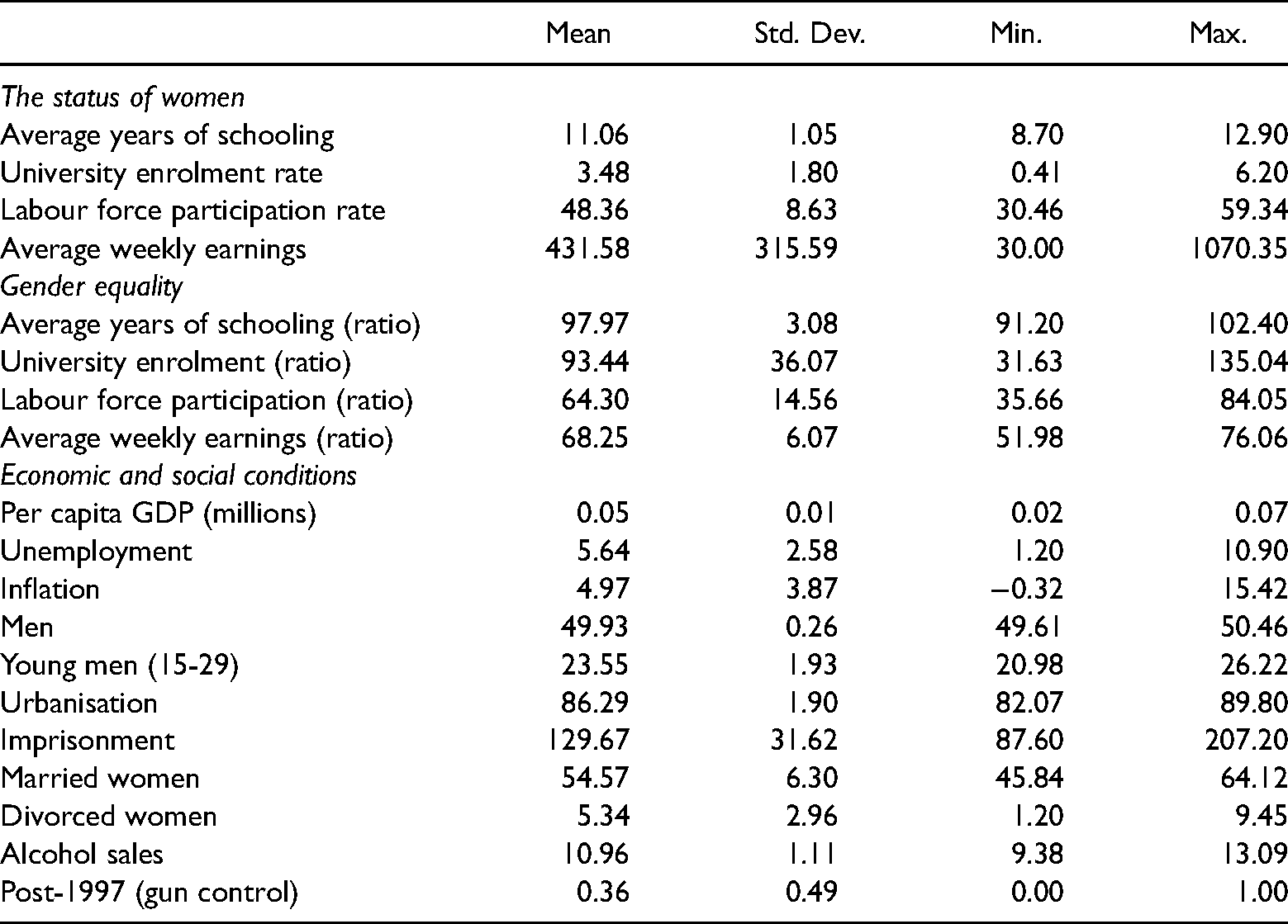
To adjust for other influences on female homicide victimisation, I included several common correlates of homicide as control variables. Per Capita GDP divides Gross Domestic Product in millions of Australian dollars (at 2015–2016 values) by the total population, whereas unemployment measures the official unemployment rate. These economic indicators come from the historical economic time-series of the Department of Foreign Affairs and Trade (DFAT, 2020). Inflation records the annual percentage change in the Consumer Price Index (CPI), which I calculated after first averaging the quarterly CPI for each calendar year as reported by the RBA (2020). Men equals the total number of males as a percentage of the population. To control for the number of young men in the population, I calculated the number of men aged 15–29 as a percentage of the total male population. Both series are reported in the GRIM (AIHW, 2020) and are based on estimates from the Australian Bureau of Statistics. Urbanisation records the percentage of the total population living in urban areas at the time of each census (ABS, 2019a). Married women and divorced women record the number of married women and divorced women who had not remarried at the time of each census ABS (1969, 1972, 1979, 1982, 1987, 2003, 2017), which I expressed as percentages of the total female population using ABS population figures. Imprisonment equals the number of prisoners as a percentage of the total population, as reported by Leigh (2020). Per capita alcohol sales records the total volume of alcohol sold each year in Australia as reported by the ABS divided by the total population. These data, which combine total beer, wine, and spirit sales, are available from 1961 onwards (ABS, 2019c). To adjust for potential changes in homicide following the introduction of stricter gun control legislation in 1997, I included a dummy indicator of the years for which that legislation has been in effect (i.e. 1997–2016 = 1; 1961–1996 = 0). Table 1 presents the descriptive statistics for all variables.
Descriptive statistics, 1962–2016 (N = 55).
Analytical method
I used unobserved components models (UCMs), also known as structural time-series models, to analyse these data. These are regression-based models that decompose a given time-series into trend, seasonal, cyclical and idiosyncratic components, while also accommodating the inclusion of time-varying exogenous covariates (Harvey, 1989; Durbin & Koopman, 2012). Formally, the model comprises the following:


Although they rarely appear in criminological studies, UCMs are common in economics and have been used in several studies of crime trends (e.g. Nunley et al., 2016; Vujić et al., 2012). They have three critical advantages over other time-series methods. First, as they are designed for non-stationary time-series, UCMs avoid the need for stationarity tests, which may be compromised by multiple structural breaks – unexpected changes in the time-series and the parameters of the time-series model. They also eliminate the need for differencing – subtracting the previous observation from the current observation in order to model the change from one year to the next – which may remove the trend in need of explanation. Second, these models can control for the impact of unobserved factors through their unobserved trend components, rather than through the time-specific error term. These include factors that, though difficult to measure, might contribute to declines in the homicide rate such as access to emergency housing or changes in policing (Dugan et al., 2003; Levitt, 2004), as well as sources of measurement error (such as changes in the accuracy of measuring homicide). Thus, the model minimises omitted variable bias and reduces the likelihood of misattributing changes in homicide to spurious influences (Nunley et al., 2016). Third, the unobserved components distinguish between random (ηt and εt) and systematic (βxt and µt−1) changes in the time-series. This is an important advantage in studying homicide: whereas random fluctuations in the numbers of homicides could exaggerate shifts in the homicide rate due the relatively small number of homicides in a given year, the UCM captures those changes through its time-specific error terms (ηt and εt), leaving systematic sources of variation in the homicide rate to the trend and regression parameters (µt−1 and β).
I conducted the analyses in three stages. In Stage 1, I began by estimating a series of univariate time-series models based on alternative specifications of the unobserved components. Each model aims to account for fluctuations in the dependent variable without covariates, based only on the unobserved components (e.g. the trend and error terms). I then selected the best fitting model using Akaike Information Criterion (AIC) and the Bayesian Information Criterion (BIC) – standard indicators of model fit statistics. In Stage 2, I then added each of the eight measures of the status of women and gender equality to the best fitting model in a series of bivariate models. These models evaluate the ameliorative and backlash hypotheses without adjusting for other correlates of homicide (e.g. the age distribution of the male population). To test the backlash-to-ameliorative hypothesis, I simply added quadratic terms for the indicators of the status of women and gender equality. Finally, in Stage 3, I adjusted for the influence of social and economic conditions by including the other independent variables in a series of multivariate models.
Results
Table 2 presents the results of the univariate analyses of the female homicide victimisation rate based on alternative specifications of the unobserved components. Comparison of the model fit statistics indicate the local level model described the time-series most accurately. The local level model had the equal highest explained variance (R2 = 0.63), along with the local level deterministic trend, the local linear and smooth trend models. Thus, these models account for almost two-thirds of the annual variation in the female homicide victimisation rate even without covariates included. Relative to those models, however, the local level model had the lowest AIC (−17.86) and BIC (−13.85) statistics – an indicator of superior model fit. Finally, the variances of the error terms were significant, justifying their inclusion as well as the absence of linear or deterministic trends.
Univariate models results by specification of the unobserved components (n = 55).
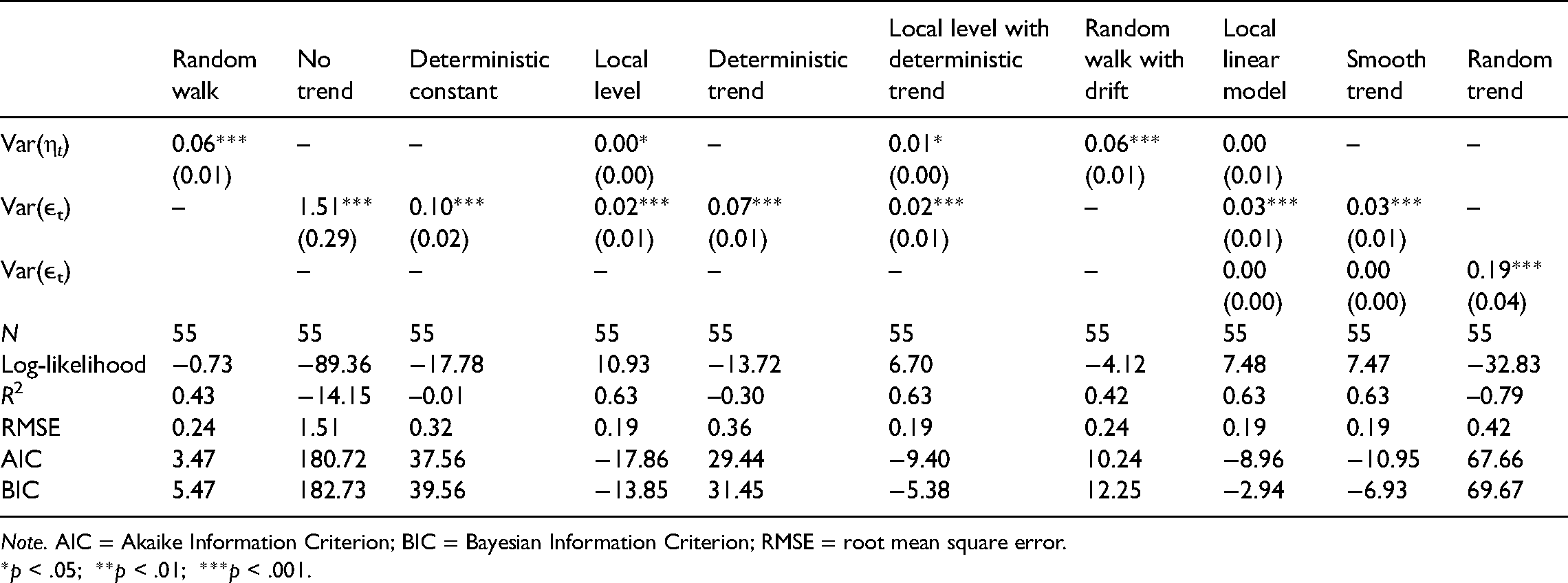
Note. AIC = Akaike Information Criterion; BIC = Bayesian Information Criterion; RMSE = root mean square error.
*p < .05; **p < .01; ***p < .001.
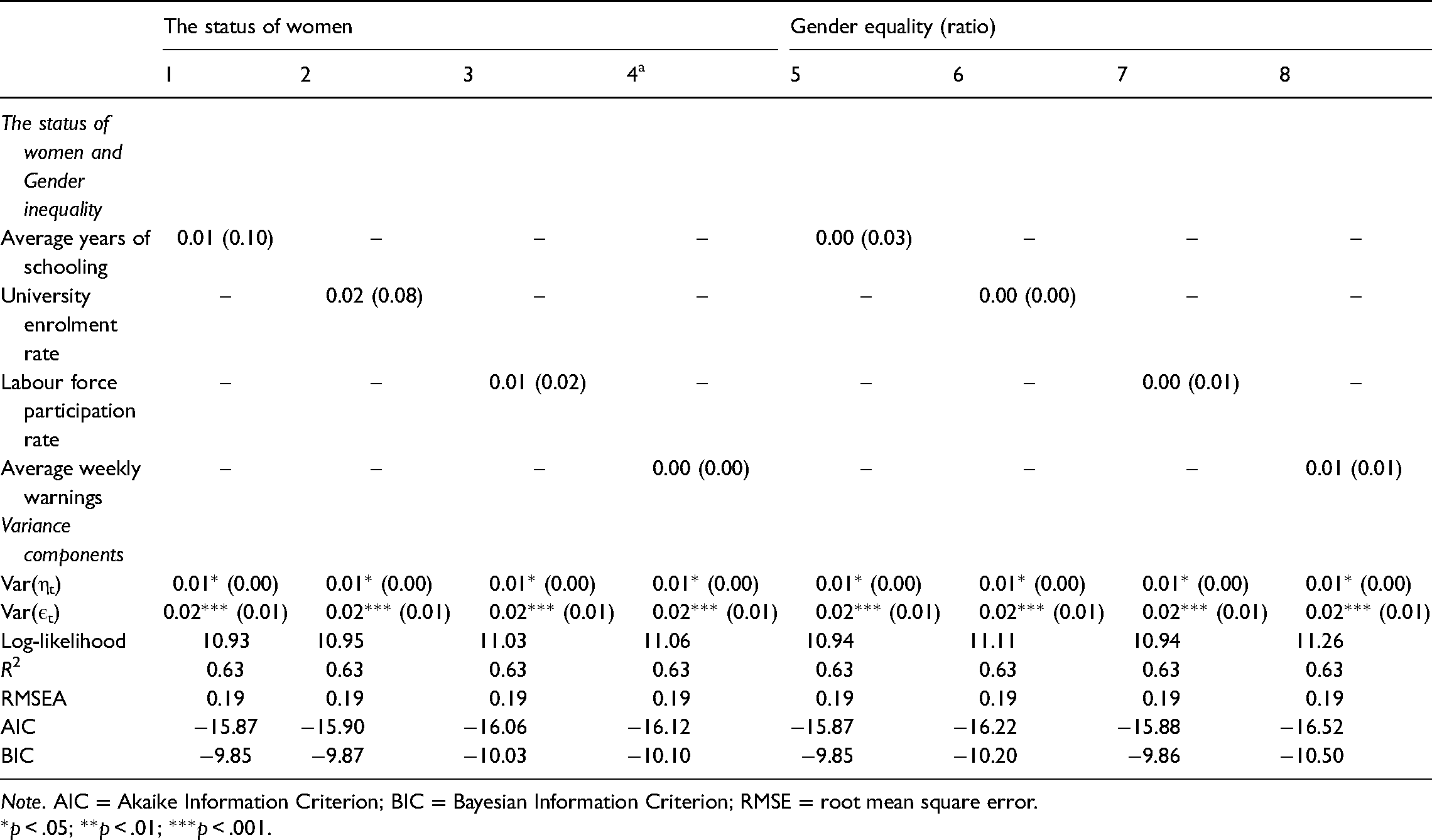
Table 3 presents the results of the bivariate models, in which I added the indicators of the status of women and gender equality to the univariate local level model of female homicide victimisation. Neither increases in the status of women nor improvements in gender equality were associated with tangible declines in the female homicide victimisation rate. Moreover, none of the models explained any more of the annual variation in the female homicide victimisation rate than the univariate model without covariates. Including indicators of the status of women and gender equality also left the variance components unchanged; hence, none of those variables seem to account for either the trend or fluctuations in the homicide rate (i.e. ηt and εt).
Unadjusted analyses of female homicide victimisation, 1962–2016 (N = 55).
Note. AIC = Akaike Information Criterion; BIC = Bayesian Information Criterion; RMSE = root mean square error.
*p < .05; **p < .01; ***p < .001.
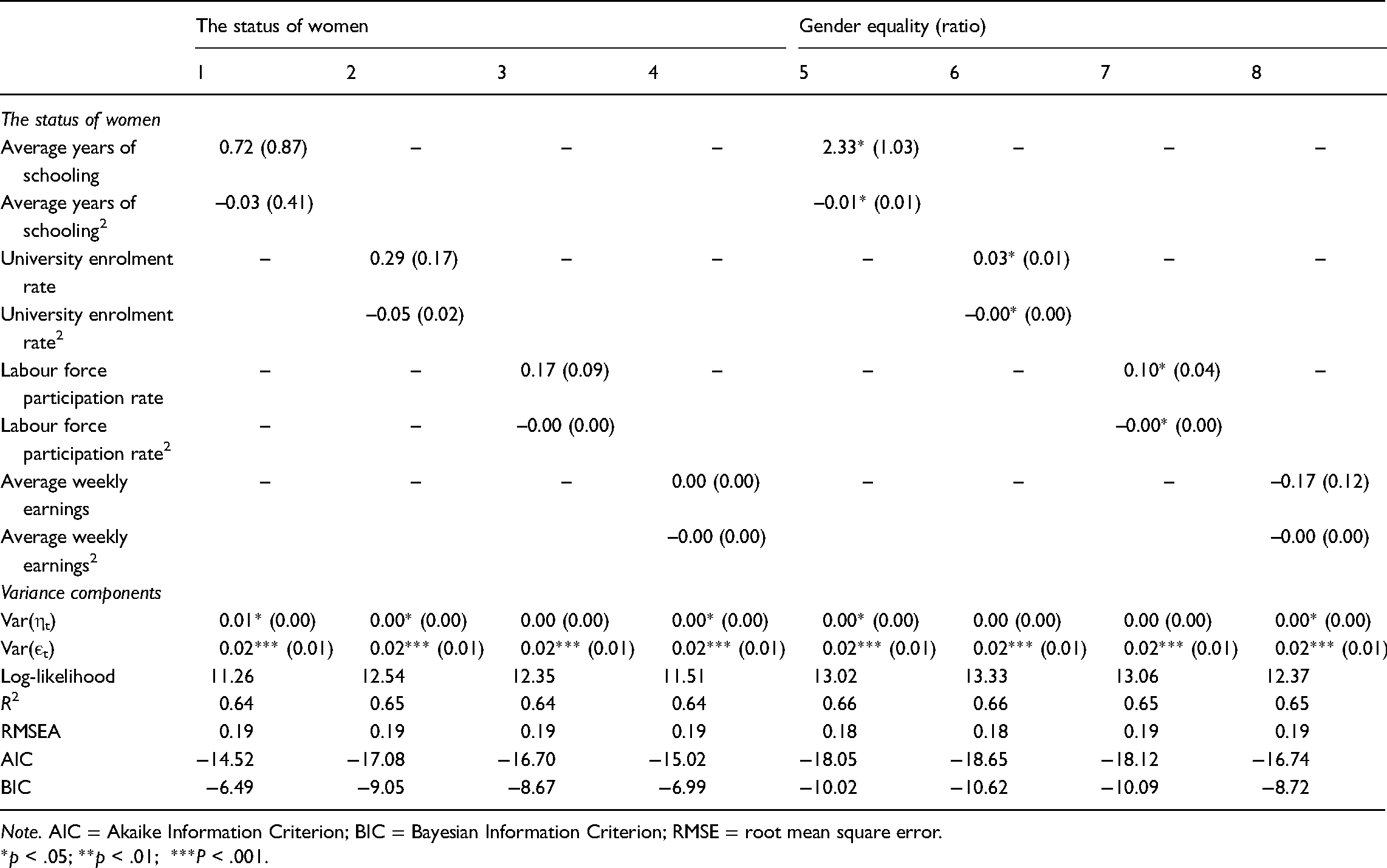
Table 4 adds quadratic terms for each indicator of the status of women and gender equality. These models test for the hypothesised non-linear effects of advances in the status of women and gender equality – the possibility that their effects on homicide reverse as equality increases – as anticipated by the backlash-to-ameliorative hypothesis (Whaley, 2001; Whaley & Messner, 2002). None of the indicators of the status of women was associated with the homicide rate at the conventional level of significance. However, three indicators of gender equality were positively associated with homicide victimisation in these models and, in each instance, their apparent effects on homicide declined as gender equality increased. Specifically, female homicide victimisation increased with the ratios of female to male years of schooling (β = 2.33, p = 0.02), access to university (β = 0.03, p = 0.01) and labour force participation (β = 0.10, p = 0.02). Those increases declined with further gains in gender equality, however, as shown by the small, negative coefficient estimates for schooling (β = –0.01, p = 0.02), enrolment in higher education (β = –0.00, p = 0.01) and labour force participation squared (β = –0.00, p = 0.01).
Unadjusted analyses of female homicide victimisation (non-linear effects), 1962–2016 (N = 55).
Note. AIC = Akaike Information Criterion; BIC = Bayesian Information Criterion; RMSE = root mean square error.
*p < .05; **p < .01; ***P < .001.
These results are broadly consistent with the backlash hypothesis, but they fail to explain the decline in female homicide victimisation since the late 1980s. First, none of these indicators explain much of the temporal variation in female homicide victimisation. At most, changes in gender inequality account for less than 3% of the annual variation in homicide – the difference between explained variance in any of these models (R2 = 0.66) and that of the univariate local level model reported in Table 2 (R2 = 0.63). Second, if anything, the results imply that homicide may have increased in response to improvements in gender equality. Even if the effect of such increases diminished in response to further gains in gender equality, changes in its impact were small and insufficient to reverse direction (as indicated by the coefficients of the quadratic terms).
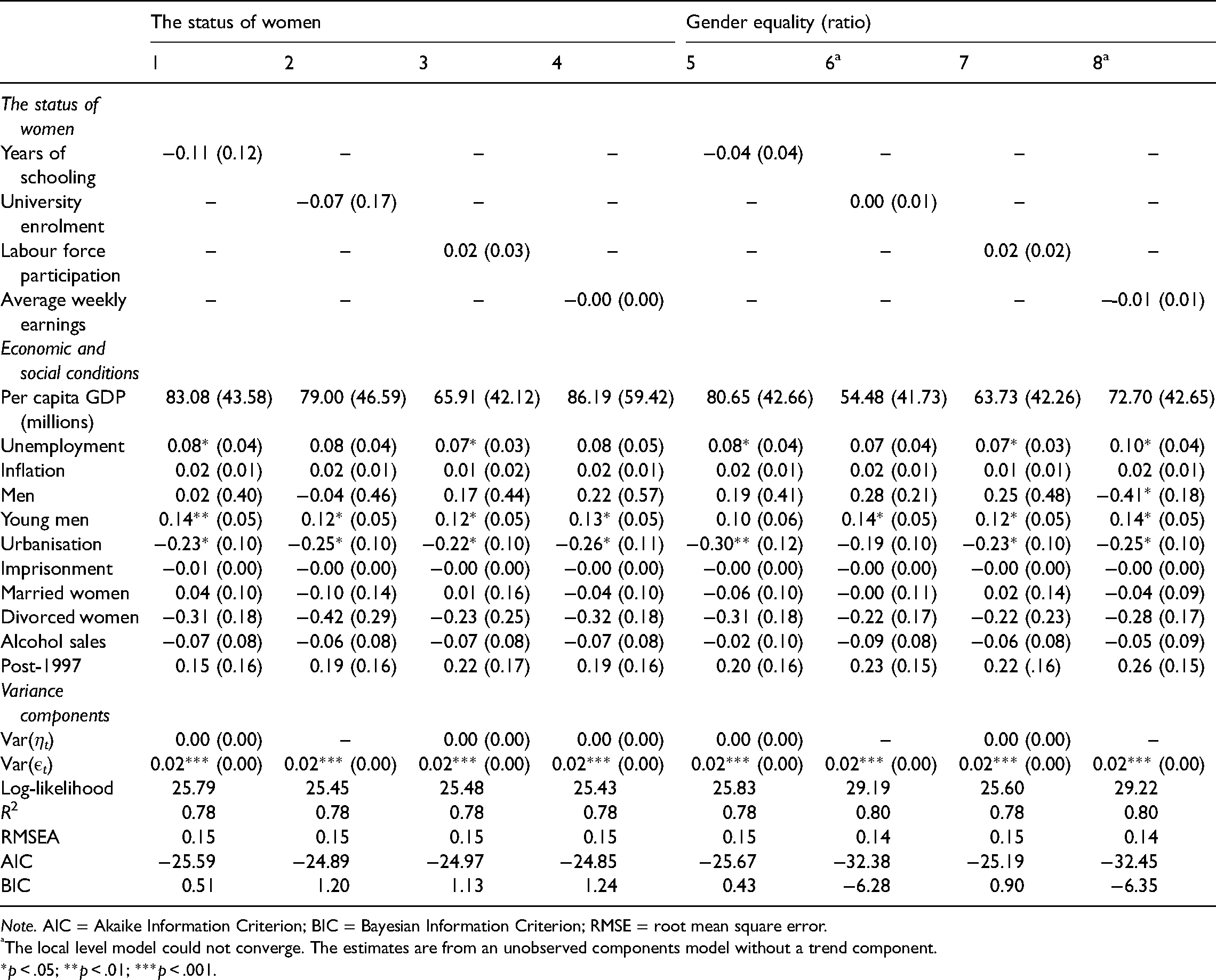
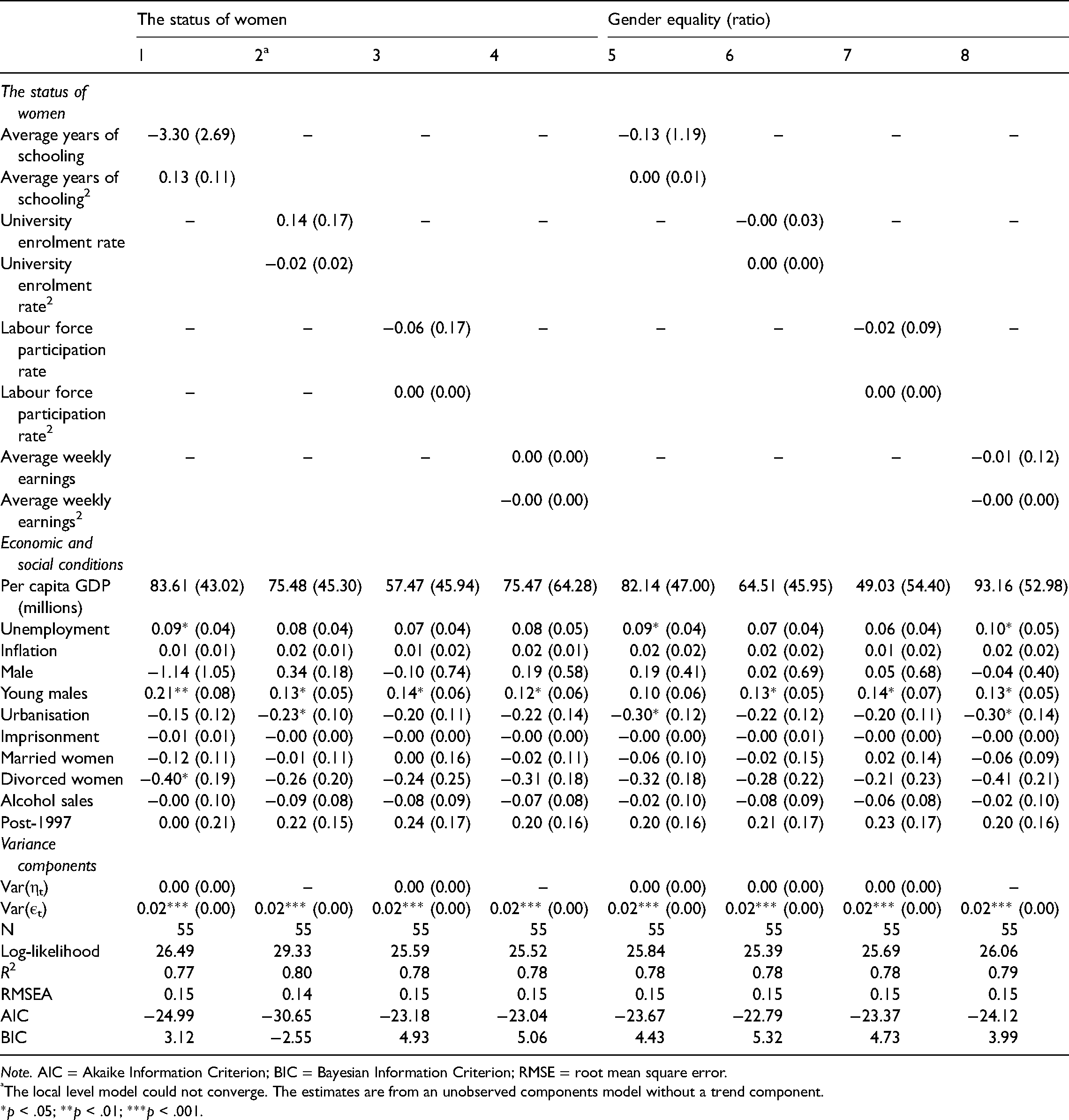
More importantly, none of the associations between gender equality and female homicide victimisation survived controls for the impact of other correlates of homicide. In Table 5, I report the multivariate analyses of the linear relationships between the status of women, gender equality, and homicide controlling for social and economic factors. None of the indicators of the status of women predicted changes in the female homicide victimisation rate. Even allowing for non-linearity in the effects of the status of women and gender equality on homicide, by including both linear and quadratic terms for those variables, failed to support either of the three hypotheses, as shown in Table 6. Controlling for other correlates of homicide, the apparent non-linear links between homicide and gender equality were not significant. Thus, the results shown in Table 6 fail to support the hypothesis that advances in the status of women and gender equality contribute to initial increases in homicide followed by declines. Together, these results imply neither absolute nor relative gains in women's social and economic position had any impact on the drop in homicide.
Adjusted analyses of female homicide victimisation, 1962–2016 (N = 55).
Note. AIC = Akaike Information Criterion; BIC = Bayesian Information Criterion; RMSE = root mean square error.
The local level model could not converge. The estimates are from an unobserved components model without a trend component.
*p < .05; **p < .01; ***p < .001.
Adjusted analyses of female homicide victimisation (non-linear effects), 1962–2016.
Note. AIC = Akaike Information Criterion; BIC = Bayesian Information Criterion; RMSE = root mean square error.
The local level model could not converge. The estimates are from an unobserved components model without a trend component.
*p < .05; **p < .01; ***p < .001.
Instead, the risk of lethal violence against women seems more closely related to shifts in economic conditions and the composition of the Australian population, although the effects of those factors were not consistent across all models. Urbanisation was negatively associated with the homicide rate in more than one model. A single percentage point increase in the share of the population living in urban areas coincided with an estimated drop in female homicide victimisation of between –0.24 to –0.30 deaths per 100,000. Unemployment and the size of the young male population, on the other hand, were positively associated with the risk of murder in several models, with coefficient estimates ranging between 0.09 and 0.10 and between 0.12 and 0.21, respectively. Thus, a percentage point decrease in the share of the male population aged 15–29 would have likely lowered the female homicide victimisation rate by at least 0.12 deaths per 100,000. Finally, in at least one model, homicide was also correlated with per capita GDP, the size of the male population and the percentage of women who were divorced.
High collinearity among the independent variables could explain the poor showing of the status of women and gender equality in these models, but examination of the model fit statistics suggests otherwise. The addition of the status of women and gender equality variables adds little to the accuracy of the univariate local level model. The R2 in all models in Table 3 is comparable to that of the univariate local level model shown in Table 2 (R2 = 0.63) and only marginally improved by the inclusion of the linear and quadratic terms in Table 4 (0.64 < R2 < 0.66). Other measures of model fit also favour the more parsimonious model (AIC = –17.86; BIC = –13.85 RMSE = 0.19), in which homicide is explained by unobserved components without reference to changes in the status of women or gender equality. By contrast, the addition of social and economic correlates of homicide reduces the unexplained variance in homicide by circa 14% (0.78 < R2 < 0.80). Even without measures of the status of women or gender equality, those variables seem to account for as much variance as the best fitting models in Tables 5 and 6 (R2 = 0.78). 6
Conclusions
Lethal violence against Australian women has been falling since the late 1980s and early 1990s, yet few studies have paid much attention to the decline or sought to explain it. Feminist theories offer a plausible explanation for these changes because of their insistence that inequality between men and women is the key underlying cause of male violence against women. Specifically, proponents of the highly influential ameliorative and backlash hypotheses contend that sustained increases in gender equality and the status of women will lead to long-term reductions in rates of violence against women. Given the social and economic status of women has improved steadily since the World War II, these improvements might account for the recent drop in female homicide victimisation. To that end, I evaluated the links between changes in the status of women and gender equality with respect to education, employment and income and changes in the rate of female homicide victimisation in Australia over a 50-year period.
The current study fails to support either the ameliorative or backlash hypotheses as explanations for changes in rates of lethal violence against women or the hypothesis that improvements in the status of women and gender equality have contributed to the homicide drop. Contrary to the ameliorative hypothesis, gains in school achievement, access to higher education, participation in the labour market, and earnings among women have had little impact on their risks of homicide. Rising gender equality in Australia has also not matched the fall in the female murder rate. The only evidence of an association between homicide and either the status of women or gender equality seemed more consistent with the backlash hypothesis and showed that homicide increased in the years in which women eclipsed men in terms of their educational and came close to matching their labour force participation. That increase in homicide levelled off with further advances in gender equality, as the backlash-to-ameliorative hypothesis predicts; nonetheless, the results failed to reveal any negative effect of gender equality on homicide. Furthermore, the effects of gender equality and the status of women on homicide were only discernible in bivariate models that did not adjust for other correlates; indeed, they disappeared after controlling for other factors.
The steady gains in the status of women and gender equality in recent decades therefore, cannot explain the substantial drop in female homicide victimisation. Instead, it seems more likely that rates of lethal violence against women have fallen in response to broader social and economic changes taking place in Australian society. Fluctuations in the female homicide victimisation rate mirrored changes in the percentage of people living in cities, the size of the young male population, and the unemployment rate across a variety of models. Thus, the risk of murder was highest for women in years in which more people were out of work, in which adolescents and young adults comprised a larger percentage of the male population, and when more people were living in remote and regional areas. Each of these factors could account for at least some of the decline in female homicide victimisation in so far as unemployment halved (1993–2006), the male youth population fell by close to one-fifth (1979–2005) and the percentage of people living in urban areas increased by roughly 5% since the early 1990s. In contrast to the negligible effect of the status of women and gender equality, changes in these and other social and economic factors could account for 12%–15% of the annual variation in female homicide victimisation from 1962 to 2016.
These findings are consistent with several international studies that also failed to find evidence of the effects of either the status of women or gender equality on female homicide victimisation (Brewer & Smith, 1995; Chon, 2016; Dugan et al., 1999; Smith & Brewer, 1995; Vieraitis et al., 2015). Even though the significance of each of those factors varied across models, They also accord with research that links key social and economic conditions, such as youth bulges, high unemployment and a larger rural population, to high rates of homicide, (Chiricos, 1987; Cohen & Land, 1987; Eisner, 2001, 2003; Rennó Santos et al., 2019). To that end, the results downplay the significance of gender inequality as the cause of fluctuations in the murder rate in Australia and seem to align more closely with general explanations for changes in the risk of homicide. For example, declines in the numbers of young men – the group most involved in violent crime – may have helped reduce lethal violence against women by helping reduce the pool of potential offenders, while low unemployment might have enabled those men to establish stronger ties to conventional society (Hirschi & Gottfredson, 1983; Laub & Sampson, 2003). In acknowledging the potential relevance of these other factors, it is important to note these results were not consistent across models. While the results rule out advances in the status of women and gender equality as an explanation for the homicide drop, they do not necessarily provide definitive evidence for these alternative explanations.
The study has other limitations to consider. The results reflect contemporaneous correlations between aggregate-level measures, not estimates of causal impact. While the UCM helps correct for omitted variable bias, the associations between homicide and unemployment, urbanisation, and the size of young male population could reflect the influence of other factors. A related concern is the threat of multicollinearity, which might have obscured the effects of some of the other control variables on homicide or exaggerated the relevance of those already mentioned. Of course, multicollinearity cannot explain the failure of the status of women and gender equality to predict declines in homicide victimisation in the bivariate models, nor does it explain their poor showing in the model fit statistics of the bivariate and multivariate analyses.
The study is also based on analyses of long-term trends in homicide victimisation derived from a single source. It is possible that some homicides escape detection or may be misclassified and that such errors contributed to temporal fluctuations in the homicide victimisation rate. Readers should exercise some caution, therefore, in interpreting the results of the analyses just as they would for any other study of crime statistics. That said, mortality-based statistics are widely used in international and national homicide research and correspond closely to measures of homicide obtained from other sources, such as the NHMP and RCV. Given the UCMs can distinguish the effects of random fluctuations in homicide from systematic changes, random measurement errors are unlikely to explain the null effects of either gender equality or changes in the status of women.
The results of the current study also describes changes to the national rate of homicide victimisation and its correlates. It is possible that rates of lethal violence against women have not declined uniformly throughout the country or that advances in the status of women moved more rapidly in some places than others. The results also reflect changes in homicide victimisation and its correlates over half a century. Taking an even longer-term view or examining other eras, such as the period preceding WWII, might yield different results regarding the sources of homicide victimisation. Future studies could address these limitations by examining changes in murder rates across states or local government areas and over an even longer time-series.
Future studies could also contribute to our understanding of the homicide drop by taking better account of the circumstances surrounding those crimes. Researchers could investigate the trends in female homicide victimisation disaggregated by victim–offender relationship. Even though feminist theories of violence generally make similar predictions about the underlying causes of different types of violence against women, some general criminological theories point to the potentially divergent influences on homicides perpetrated by strangers and acquaintances. For example, routine activities theory predicts that increased employment among women should increase the risk of violence outside the home (Cohen & Felson, 1979) at the same time as it may also provide the financial independence to escape domestic and family violence (Dugan et al., 1999). From that perspective, therefore, the steady rise of female labour force participation may have helped reduced the rate of homicide by intimate partners, if not violence by others.
The current study also describes changes in the risk of lethal violence. It is not intended to explain recent trends in all forms of violence against women nor in specific types of violence such as sexual assault or intimate partner violence. The ameliorative and backlash hypotheses offer little reason to anticipate differences in the effects of the status of women and gender equality on distinct manifestations of male violence against women and both have also been applied successfully to explain a variety of crimes other than homicide (Bailey, 1999; Baron & Straus, 1987; Jewkes, 2002; Peterson & Bailey, 1992; Whaley, 2001). Nonetheless, it is possible that the incidence of homicide is less affected by a range of other factors and that changes in gender equality and the status of women might be more closely linked to changes in other indicators of violence against women. I leave it to others to extend this line of research by exploring the connections between the progress of gender equality and changes in sexual assault, domestic and family violence, and other offences committed by men against women.
These caveats aside, the results of the current study are important. Feminist perspectives have dominated the national debate and policy response to violence against women in Australia (Kuskoff & Parsell, 2020). Reports by both state and federal governments frequently reference the ameliorative hypothesis and its contention that advancements in gender equality will reduce violence. At the same time, their policies have shifted the focus of prevention away from traditional criminal justice approaches, such as incapacitating chronic offenders or supporting victims to protect themselves, towards a broad array of strategies that aim to combat gender inequality. These include the use of public information and education campaigns to challenge sexism and gender stereotypes and promote respectful interpersonal relationships between men and women (Council of Australian Governments, 2014). Meanwhile, some critics have argued that even these strategies do not go far enough because they fail to challenge the structural inequalities that they believe cause violence against women (Kuskoff & Parsell, 2020; Salter, 2016).
While the current study cannot comment on whether advances in gender equality or the status of women might alter the risk of experiencing sexual violence or assault, it offers little support for that idea that further efforts to eliminate gender inequality will reduce homicide. Australian women may not enjoy full equality with men, but their social and economic position has improved considerably over the last half century. Throughout that period, the female homicide rate has both gone up (from 1962–1989) and down (1990–2016), moving independently of the progress towards equality. Further advances in the status of women may make Australia a fairer and more equitable society, but such changes seem unlikely to affect the number of women murdered each year. The risk of homicide among Australian women, which has been declining steadily for close to three decades and is now the lowest on record, may respond more to demographic shifts and improvements in general economic conditions thought to shape trends in other types of crime.
Supplemental Material
sj-docx-1-anj-10.1177_26338076221110251 - Supplemental material for The drop in female homicide victimisation in Australia
Supplemental material, sj-docx-1-anj-10.1177_26338076221110251 for The drop in female homicide victimisation in Australia by Walter Forrest in Journal of Criminology
Supplemental Material
sj-docx-2-anj-10.1177_26338076221110251 - Supplemental material for The drop in female homicide victimisation in Australia
Supplemental material, sj-docx-2-anj-10.1177_26338076221110251 for The drop in female homicide victimisation in Australia by Walter Forrest in Journal of Criminology
Footnotes
Declaration of conflicting interests
The author declared no potential conflicts of interest with respect to the research, authorship and/or publication of this article.
Funding
The author received no financial support for the research, authorship and/or publication of this article.

Supplemental material
Supplemental material for this article is available online.
Notes
References
Supplementary Material
Please find the following supplemental material available below.
For Open Access articles published under a Creative Commons License, all supplemental material carries the same license as the article it is associated with.
For non-Open Access articles published, all supplemental material carries a non-exclusive license, and permission requests for re-use of supplemental material or any part of supplemental material shall be sent directly to the copyright owner as specified in the copyright notice associated with the article.
