




Abstract
This article studies intergenerational occupational persistence using three recent rounds of a nationally representative sample survey from India. More than 60% of Indians are employed in the industry where their fathers are also employed. We find that individuals from Scheduled Tribes (ST) and Hindus have higher occupational persistence than those from the General Class (GEN) and Muslims, respectively. Persistence in general is higher in rural areas. We find considerable interstate and intrastate variations in the incidence across General Category States (GCSs) and Special Category States (SCSs). It has remained almost unchanged among GCSs on average, whereas it has decreased gradually for SCSs. Large inter-regional disparity exists within states between rural and urban areas and between capital and non-capital districts. Such disparity is found to be higher among GCSs. Bihar, Madhya Pradesh, Chhattisgarh and Jharkhand are the GCSs with large and increasing occupational persistence. Nagaland, Arunachal Pradesh, Meghalaya and Mizoram are the SCSs with persistence of above 70%. Using a probit estimation analysis, we find family background (father’s education in rural area and ownership of productive assets) to have a significant and consistent influence on intergenerational persistence compared to own education. Results in general indicate that background factors play a stronger role than education does in the choice of occupation among Indians.
Introduction
India has experienced a high rate of economic growth in the last two decades or so. This has helped the country to lift a significant proportion of people from below the poverty line. However, inequality has remained a persistent concern throughout the entire phase of economic growth. A particular concern is that the benefit of economic growth has not percolated to all sections of the population. The debate on ‘jobless growth’ versus ‘inclusive growth’ has gained importance in popular media, as well as in academic and policy communities.
Inequality in labour market outcomes often results from inequality of opportunities. One way to examine the extent to which the labour market provides equal opportunities to all participants is to look at outcomes from an intergenerational perspective—correlation between outcomes across generations (Black & Devereux, 2010; Bowles & Gintis, 2002). This strand of literature emphasizes the role of inequality of opportunities which is primarily caused by intergenerational transmission of socio-economic status. This is often the case for countries with immensely unequal socio-economic conditions for its population. In the presence of strong intergenerational linkages, the labour market may not appear a level playing field to all its participants, and gains from growth naturally fail to trickle down properly to the whole population. Emran and Shilpi (2011) stressed that genetic endowment is the fundamental source of intergenerational linkage. Apart from the genetic link, parents can directly influence the levels of initial capital stock through investing in offspring’s education and transferring physical and financial capital. Despite the renewed interest in literature in exploring observed differences in the economic outcome from an intergenerational perspective, occupational mobility in the context of developing countries is less interrogated and empirical evidence almost non-existent.
In this article, we analyse intergenerational persistence of occupation in India. Our objective in this article is to quantify the occupational persistence in recent times, the period when India has experienced a relatively high level of economic growth. Previous work in the Indian context includes Hnatkovska et al. (2012) and Nandi (2016). Our article is close to the analysis presented in Nandi (2016). We extend his analysis by using three recent rounds of a nationally representative sample survey to analyse the interstate variations in persistence. By persistence here, we refer to the phenomenon of individuals being in the same industries as their fathers. Using data from the three latest rounds of the Employment–Unemployment Survey of the National Sample Survey Office (NSSO), we find that such persistence has been very high, more than 60%, in recent years. We present descriptions of the intergenerational occupational persistence based on caste, religious groups and area of residence. Individuals from Schedule Tribes (STs) have higher persistence than those from the General Caste (GEN), and Hindus have higher persistence than Muslims. Occupational persistence is higher in rural areas than in urban areas. In the descriptive analysis, we observe that education is consistently negatively associated with persistence. Among the General Category States (GCSs), persistence has remained almost unchanged on average, while it has decreased gradually for Special Category States (SCSs) and Union Territories (UTs). We find that GCSs like Madhya Pradesh, Chhattisgarh, Orissa and Bihar have a very high level of intergenerational persistence. Goa, Kerala and Tamil Nadu have a relatively low level of persistence. We observe persistence to fall considerably below the national average among the SCSs. However, Nagaland, Arunachal Pradesh, Meghalaya and Mizoram are the SCSs with persistence still above 70%. Jammu and Kashmir, Himachal Pradesh, Uttarakhand and Tripura are the states identified with very low levels of intergenerational persistence under this category. There exists large inter-regional disparity within a state (between rural and urban areas and between capital and non-capital districts). Comparing occupational persistence across rural/urban and capital/non-capital regions within states, we find that there is considerable disparity among these regions in terms of economic opportunities, resulting in differences in persistence within states. Persistence in general is low among the UTs. We use a probit model to identify the determinants of persistence. The estimation results show that the association between education and persistence is weak, more so in urban areas. Rather, father’s education, in rural areas, and ownership of productive assets, in both urban and rural areas, have significant effects on intergenerational occupational persistence. The results, in general, indicate that family background plays a stronger role than education in the choice of occupation among Indians. There is an indication that differences across castes and religions have been declining in recent years. The rest of the article is organized as follows. The following section provides a description of the data used in the article. The third section presents intergenerational occupational mobility in the form of a transition matrix and a comparison of Indian states and regions within states. The second-last section presents the estimation results of the probit model. The last section concludes the article.
Data and Descriptive Statistics
We use data from the Employment–Unemployment Surveys in India, carried out by the NSSO, to analyse the issue of intergenerational persistence of occupation in the context of 17 GCSs, 11 SCSs and 7 UTs in India. NSSO is the primary source of data on various labour market indicators from a nationally representative sample of households. The organization has been collecting data since 1972–1973 and provides a vast amount of detailed socio-economic and demographic information on each individual of the households selected in the sample across all the states of India. Data used in this article come from 2004–2005 (61st round), 2009–2010 (66th round) and 2011–2012 (68th round)—the three latest rounds of the Employment–Unemployment Survey in India. For employed individuals, the industries are recorded in the three rounds using the respective five-digit National Industrial Classification (NIC) codes of 1998, 2004 and 2008.
Intergenerational persistence of occupation is conceptualized as a situation wherein the father and son are employed in the same industry. Before presenting a detailed analysis of the incidence, we present a brief description of how the samples are selected for the analysis. We select employed male individuals provided their fathers are alive and information on their employment is also available. We also restrict the sample to sons who are 15–40 years old and whose age gap with their father is at least 18 years. This helps to avoid very uncommon cases, like one wherein the son is 50 years old and the father 75 years old and still working and a case wherein the father–son age difference is too low and indicative of misreporting. Hence, we have employment information on a subset of the working-age group.
Table 1 provides the basic information about the samples. There are 35,935 observations in 2004–2005, 25,428 in 2009–2010 and 24,068 in 2011–2012. It is important to note that each observation stands for a father–son pair in our analysis. Table 1 shows that the average age of a son and his father in the sample from 2004–2005 is 24 and 53, respectively. The average age of the son remains so in 2009–2010 and increases marginally in 2011–2012. Looking at the different educational levels, in all the rounds, we have more than 20% sons with no formal education, though the percentage is much lower in recent years compared to 2004–2005. We find that in 2004–2005 nearly 40% of these employed sons are with secondary education. This is followed by those with ‘No formal education’ (28%) and then those with ‘Primary education’ (19%). Less than 10% of these employed sons are with an educational level beyond Higher Secondary (HS). In other words, we find that most of the sons (whose fathers are also in the family) are employed with an education below the HS level. Only 8% of these employed sons have a degree or college-level qualification. This pattern remains unchanged for 2009–2010 and 2011–2012. One observation in this regard worth mentioning for the 2 years is that the percentage of employed sons with secondary and college-level education increases. However, the percentage of employed males of age 15–40 years with higher education (HS and above) still remains below 30%. Hence, we cannot rule out the possibility of restricted job market choices among this group, because of the lower levels of education.
Description of the Sample
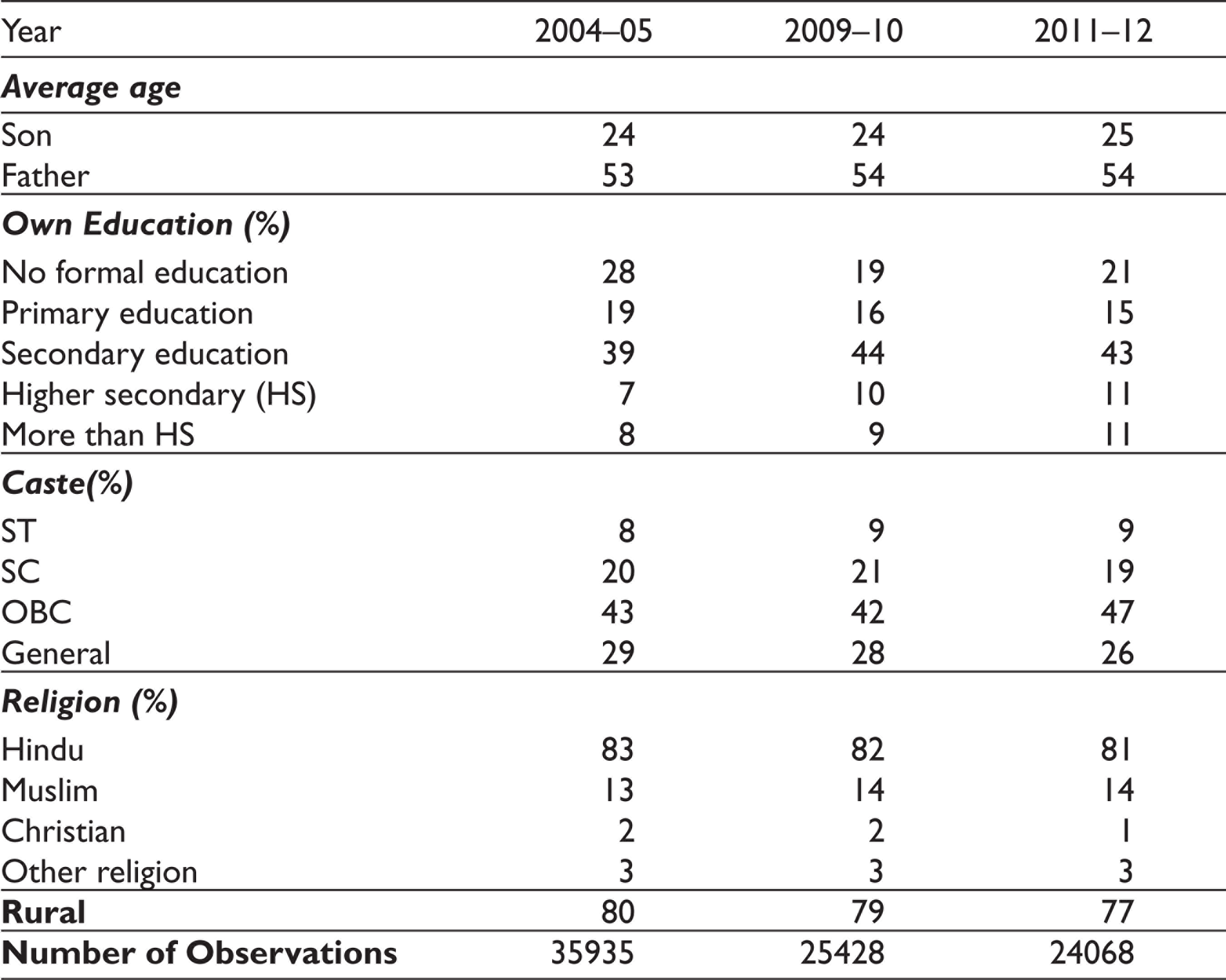
Most of these employed male individuals in the 2004–2005 sample are from the Other Backward Class (OBC) (43%), followed by GEN (29%), Schedule Caste (SC) (20%) and ST (8%). We find a similar distribution among the caste categories in the following two rounds, with a slight fall in the percentage of individuals from SC and GEN and an increase in the percentage of those belonging to OBC. Looking at the religion-wise distribution, we find that these employed male individuals are mostly from Hindu households (more than 80%). Our sample comprises 80 per cent observations from rural areas for 2004–2005, which marginally falls to 77% for 2011–2012.
Table 2 reports the intergenerational occupational persistence across caste and religious groups. It also provides data on persistence for different age groups, educational levels and places of residence (urban/rural) for all the social and religious categories. Intergenerational persistence is defined as a phenomenon in which a father–son pair is observed to be employed in the same industry (identified by the five-digit NIC), while intergenerational mobility is manifested when they are employed in different industries. The numbers in the first column of Table 2 present the intergenerational persistence for the full sample in a survey round. The first number, 62, in the table indicates that during 2004–2005, 62% of the employed sons of age 15–40 were working in the same industry as their father. It is important to note that we use sample weights in our analysis, so the numbers represent population figures. We find that the persistence increases to 65% for 2009–2010, and in 2011–2012, the percentage again falls down to 62%. Looking at persistence among different age groups, we find that the percentage increases with age, except for sons belonging to the 25–29 age group. In other words, the percentage of sons employed in the same industry as their fathers is considerably lower among those sons aged 25–29 years. This pattern prevails for all the different social and religious groups except for Muslims. This interesting pattern suggests that for most individuals, age 25–29 might be a period to explore new employment options, after which they are more likely to fall back on their father’s occupation.
Intergenerational Occupational Persistence, 2004–2005, 2009–2010 and 2011–2012
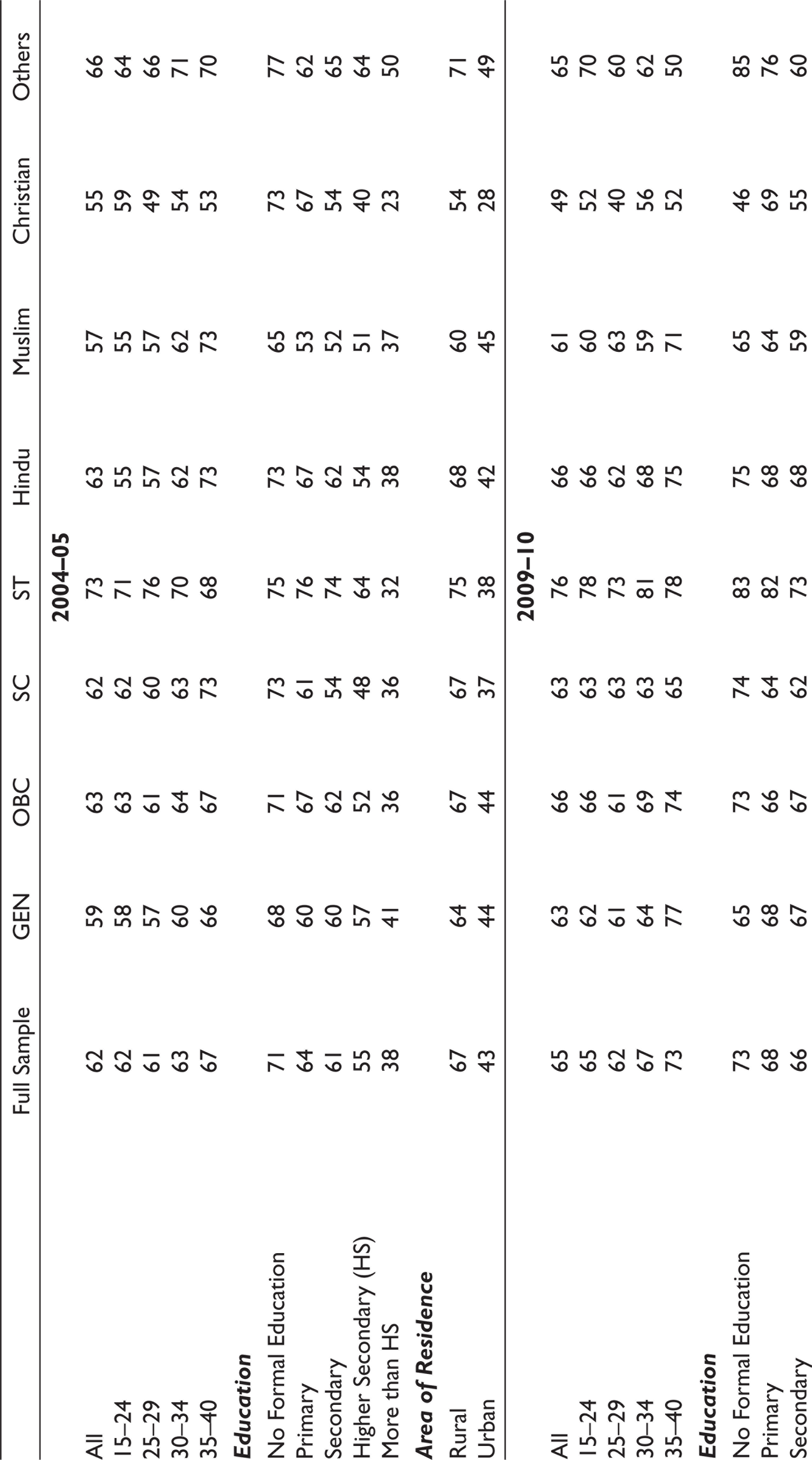
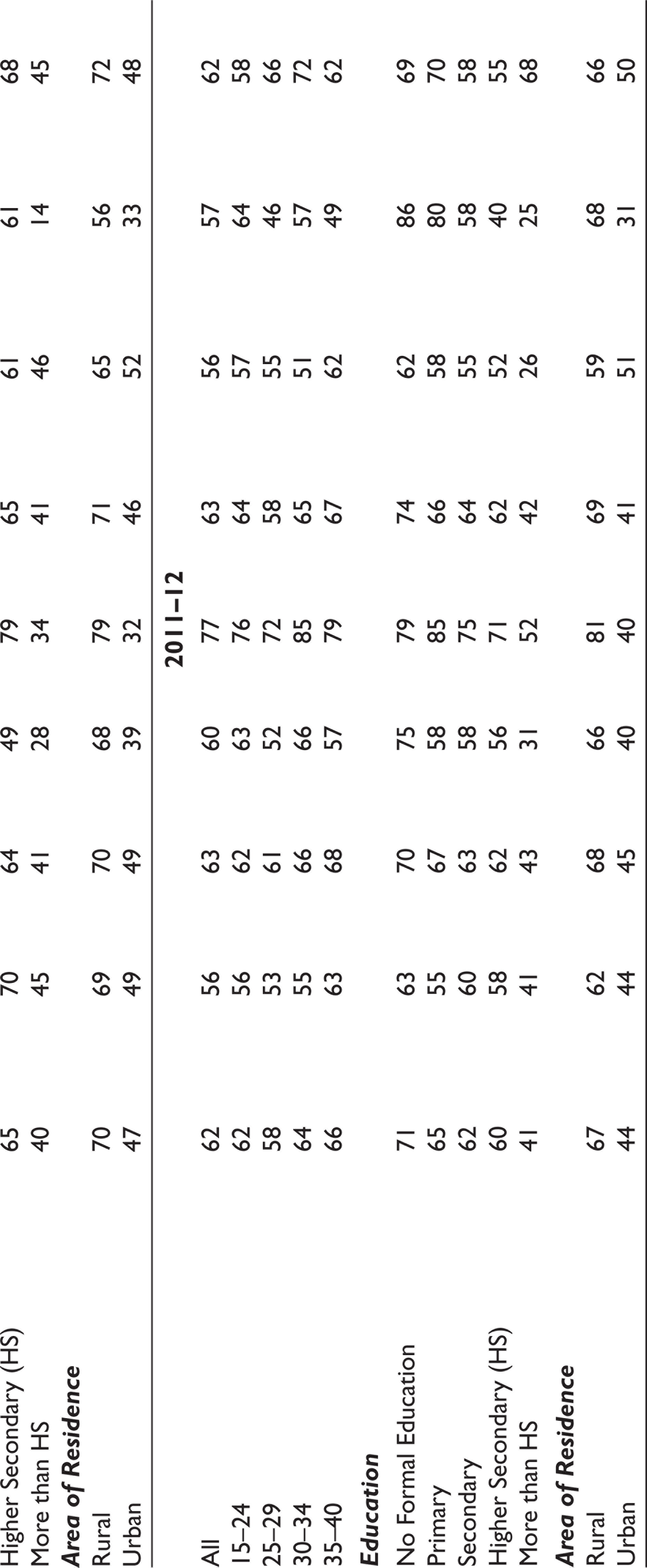
We also find that higher levels of education are consistently associated with lower likelihood that a son and his father will be in the same industry. Comparing the persistence for different levels of education, we observe that with a movement from no education to college or university-level education (more than HS), persistence goes down by more than 30 percentage points for 2004–2005, 2009–2010 and 2011–2012. Consecutive levels of higher education are associated with a decline in the persistence; however, there is variation in the magnitude of decrease across the time periods. The fall in persistence with higher education has two noticeable phases, the first with a movement from no education to primary education and the other with a movement from the HS level to above the HS level.
We observe that the sons with at least primary education are considerably less likely to be in their father’s industry compared to the sons without any formal education, almost by 7, 5 and 6 percentage points for 2004–2005, 2009–2010 and 2011–2012, respectively. A second leap is observed with a movement from ‘HS’ to ‘More than HS’, reducing the persistence level by 17, 25 and 19 percentage points for the three respective time periods.
Across all the social (except the STs) and religious groups, such a pattern is observable. The likelihood of a father–son duo being in the same industry remains nearly unaltered with a movement from no formal education to primary education if the son is from an ST household, for 2004–2005 and 2009–2010. The fall in persistence with a movement from ‘HS’ to ‘more than HS’ is higher among STs for 2004–2005, followed by GENs, OBCs and SCs. However, the pattern changes for 2011–2012, where ‘more than HS’ is found to be most effective in lowering the persistence in the case of SCs, followed by OBCs, STs and GENs. Here, we may conclude that higher education was most effective in lowering the persistence among the STs in the first two phases (2004–2005 and 2009–2010). However, such association is considerably weak in 2011–2012.
We also find that intergenerational persistence is the highest among the STs, followed by OBCs, SCs and GENs, for 2004–2005. This holds well for the full sample and for all the age groups except for the older age group (35–40 years). We find the persistence among SC male individuals for this age group (35–40) to be the highest. Persistence is lowest among the GEN individuals for this age group. However, we do not find any such pattern for the following two periods. For both 2009–2010 and 2011–2012, the sons from ST households are most likely to be in their father's industry, and those from SC households are least likely. This pattern also remains the same for all the age groups.
Persistence is noticeably higher among the rural individuals. It increases for 2009–2010 in both rural and urban areas. However, it seems that the persistence in both the areas comes down during 2011–2012. In both rural and urban areas, the STs have the highest persistence. Individuals from GEN and SC have the lowest persistence in rural and urban areas, respectively. Furthermore, it appears that the persistence among STs increased in rural areas by 6 percentage points, from 75% to 81%, between 2004–2005 and 2011–2012. Looking at the percentage for different religions, we find persistence is lower among ‘Other’ religions, followed by Hindus, Muslims and Christians. However, for sons in the 35–40 age group, the likelihood to be in the same industry as the father is highest among the Muslims and lowest among the Christians. In rural (urban) areas, Hindus have higher (lower) persistence than Muslims in all years. The Hindu–Muslim difference in persistence in rural areas increased between 2004–2005 and 2011–2012 (from 8 to 10 percentage points).
From Table 2, we conclude that the incidence of persistence is lowest among the sons in the 25–29 age group and highest among the sons in the 35–40 years age group. The inverse association between the education and intergenerational persistence in general is strong for all the castes except STs (especially with a movement from ‘HS’ to ‘more than HS’ for 2004–2005 and 2011–2012).
Transition Matrix and Comparison Across and Within Indian States
In this section, we present an analysis of the transition across industries from one generation to the next and a comparison of different Indian states. We also provide a comparison of intergenerational persistence within a state across capital and non-capital regions.
Transition Matrix
Table 3 presents a transition matrix—cross tabulation of industries of a son against that of his father. A row in a transition matrix gives the distribution of the sons’ industries, given the employment of the father in a particular industry. A transition matrix is widely used to present the movement from one industry to another across the generations (see Beller & Hout, 2006; Hnatkovska et al., 2012; Kumar et al., 2002; Louw et al., 2006; Majumder, 2010).
Based on the percentage concentration of fathers and sons in 21 main industries, we have grouped them into six broad industry categories for the transition matrix. The six categories are: agriculture and allied industries (Agri), manufacturing (Manu), construction (Const), wholesale and retail trade (W&R), transport (Trans) and other industries (Other). The upper and lower panels of Table 3 present the distribution of sons’ employment in different industries (son’s industry), given their father’s industry, for rural and urban areas, respectively. The diagonal elements of the matrix give the measure of persistence, and the off-diagonal elements show mobility across generations.
Transition Matrix: Occupation of Father–son Pairs
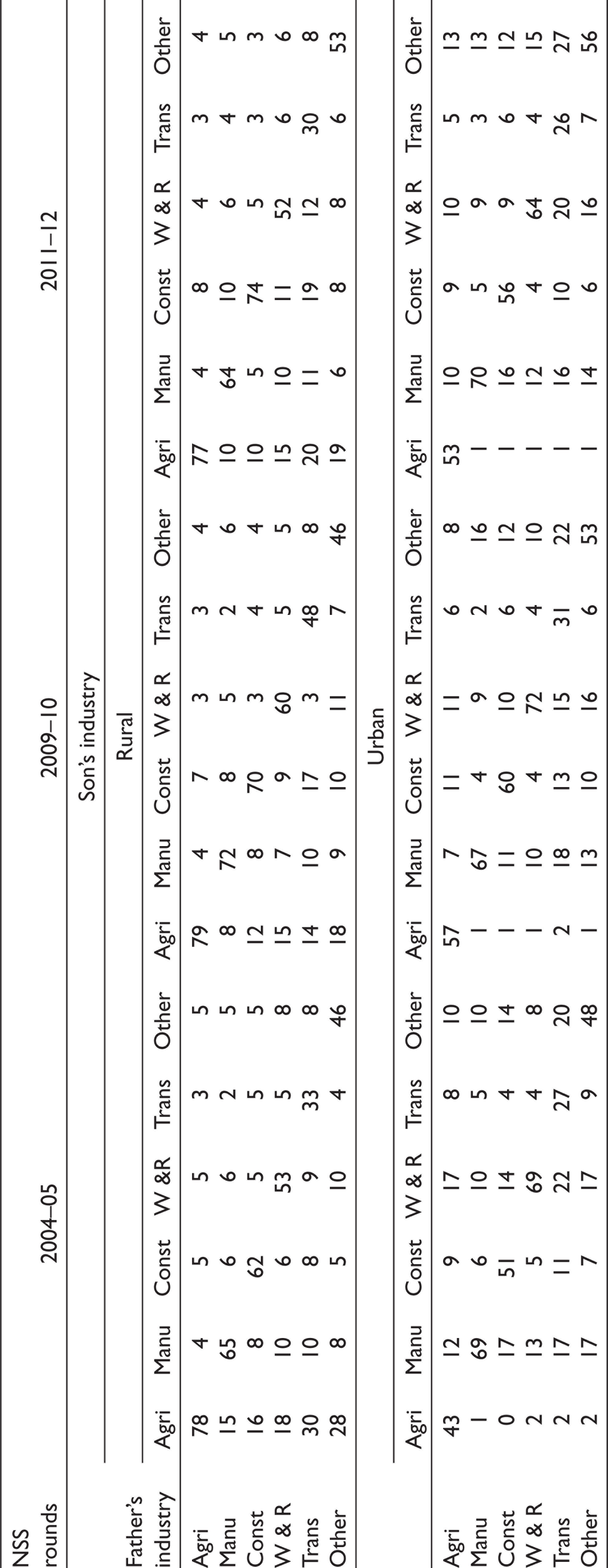
In rural areas, intergenerational persistence is highest in the agriculture and allied sectors, with nearly 78% of the sons of agricultural workers working in the same sector. This is followed by manufacturing, construction and wholesale and retail trade for 2004–2005, in all of which persistence is higher than 50%. For 2009–2010, persistence in most of the industries is higher than the 2004–2005 levels. The degree of persistence marginally falls in 2011–2012 in agriculture, manufacture and wholesale and retail trade. One observation worth mentioning is that the percentage of sons working in the construction industry if their father is also working in the same increased considerably from 2004–2005 to 2011–2012, almost by 12 percentage points (from 62% to 74%). It has become the second largest industry in terms of persistence in rural areas after agriculture and allied sectors. Persistence in the manufacturing industry remains unchanged between the two periods. Persistence is found to be least in the transport industry.
In urban areas, persistence is the highest in manufacturing and wholesale and retail trade, with almost 69% of sons being likely to work there given their father is employed in these industries. In the following period (2009–2010), persistence remains the highest in the wholesale and retail sector (72%). The manufacturing industry ranks second in terms of persistence, with 67% of sons working in the same. In the last phase (from 2004–2005 to 2011–2012), the persistence has decreased and increased in wholesale & retail and manufacturing by 8 and 3 percentage points respectively. Persistence has also increased in the construction during 2004–2005 to 2011–2012 by 5 percentage points. The incidence is least in the case of the transport industry, like in the case of rural areas. We also observe a pattern, similar to that in rural areas, of an increase in persistence in 2009–2010 and a slight fall in 2011–2012.
To sum up, we find that persistence in the rural area remains highest in agriculture but it has noticeably increased in the construction sector. For the periods 2004–2005 and 2009–2010, persistence is considerably high in the wholesale and retail and manufacturing industries in urban areas. For 2011–2012, persistence is the highest in the manufacturing industry, followed by the wholesale and retail and construction industries. The construction sector has seen a noticeable rise in the incidence of persistence. However, the extent of rise in the persistence is found to be much higher in rural areas (almost by 12 percentage points) than in urban areas. In both rural and urban areas for 2011–2012, for fathers employed in the service sector, the likeliness of their son being in the same industry has increased.
Persistence in Different Indian States
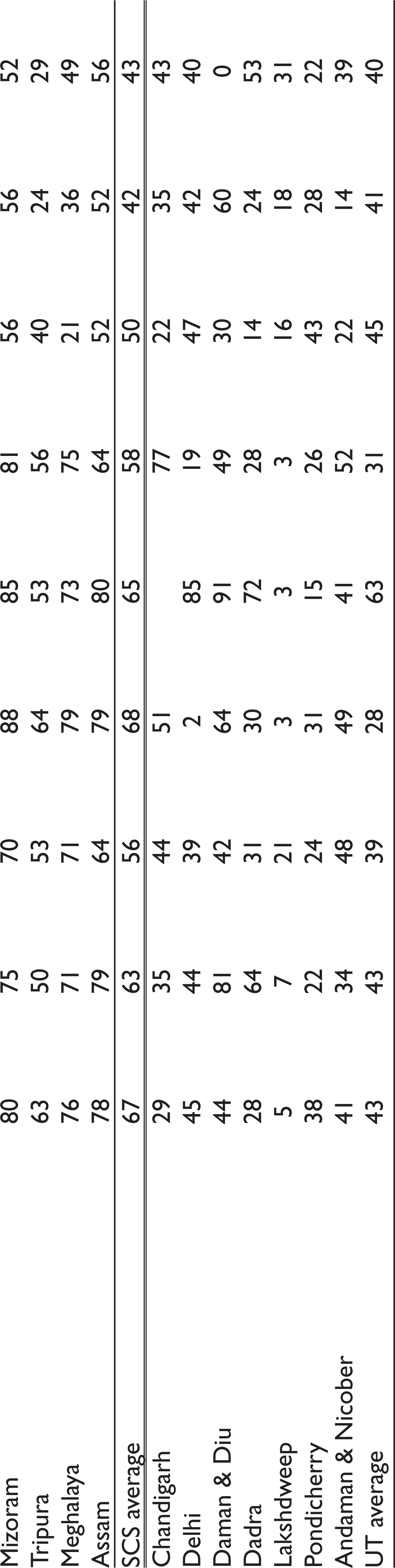
Table 4, probably the most unique part of this descriptive analysis, shows the prevailing interstate disparity across the 17 major states, often called GCSs, 11 SCS and 7 UTs in terms of persistence of occupation across generations. It also presents the incidence of persistence across rural and urban areas within states as well. We find the level of persistence to be higher in rural areas compared to urban areas, on average. This is indicative of the fact that people in urban areas are supposed to have greater access to information, skills, technology and diversified job opportunities compared to their rural counterparts. In general, we find the difference in rural and urban persistence to increase among GCSs, from 24 to 26 percentage points, between 2004–2005 and 2011–2012. However, such disparity has decreased among SCSs, on average from 18 to 15 percentage points. Observing the average levels of persistence, we find them to be higher among the SCSs compared to the GCSs for 2004–2005. However, between 2004–2005 and 2011–2012, we find the GCS average to remain at the national level (62%) while we see the SCS average gradually decline and fall below the national average (56%).
Intergenerational Occupational Persistence in Different States
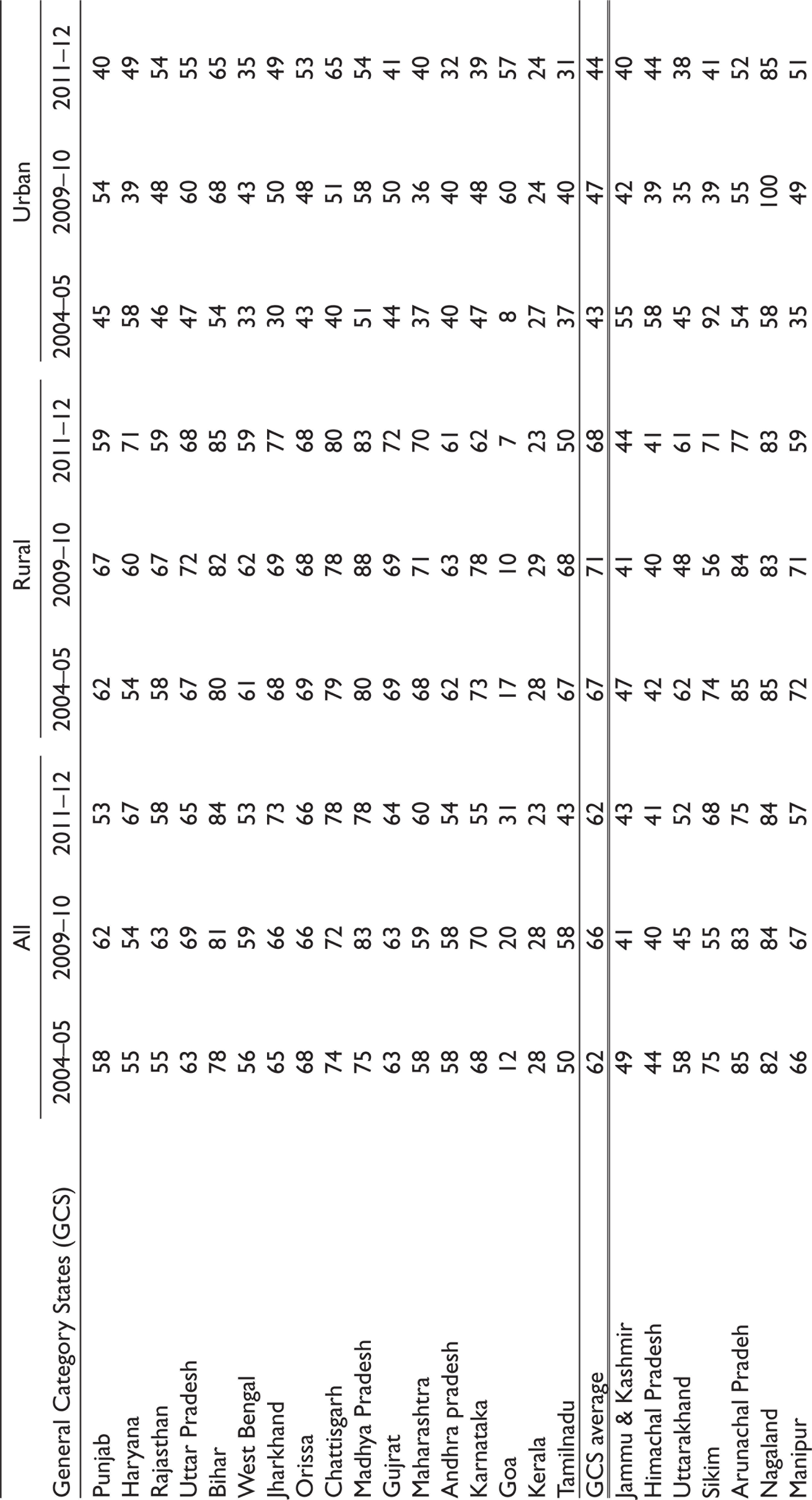
There are GCSs like Bihar, Madhya Pradesh, Chhattisgarh and Jharkhand where the probability of a son working in his father’s industry remains well above the GCS average for 2004–2005 (with 78%, 75%, 74% and 65% persistence in the respective states) and continue to be so in the following two periods, with a noticeable rise in the level of persistence (84%, 78%, 78% and 73% for 2011–2012, respectively). The same pattern is found for rural and urban areas. Another observation worth mentioning in this regard is that in Karnataka (both in rural and urban areas), also the likelihood of persistence was very high during 2004–2005 and 2009–2010 but fell considerably below the national average during 2011–2012. Goa is identified to have the lowest overall and rural persistence. However, it is also the state where the incidence is found to be considerably higher in the urban areas post the 2004–2005 period. Besides, the likelihood of a father–son duo being in the same industry in urban Goa increased spectacularly from 7% to 57% between 2004–2005 and 2011–2012. Goa is followed by Kerala, Tamil Nadu, Andhra Pradesh, West Bengal and Punjab, where persistence is not only lower than the national averages in both urban and rural areas but also has gone down between 2004–2005 and 2011–2012. Haryana and Rajasthan are the two states with a persistence level just below and above the GCS average for rural and urban areas, respectively. Persistence in these states has increased between 2004–2005 to 2011–2012.
In Uttar Pradesh and Gujarat, the persistence is almost the same as the GCS average. It has marginally increased from 63% in 2004–2005 for either state to 65% for Uttar Pradesh and 64% for Gujarat in 2011–2012. The pattern remains the same for rural and urban areas. Therefore, we can broadly classify the states into the following categories: ‘persistence above all state average and increasing’, ‘persistence above average and decreasing’, ‘persistence below average and increasing’, ‘persistence below average and decreasing’ and ‘persistence at average and marginally increased’. We conclude with the observation that irrespective of the level, persistence is increasing in Haryana, Rajasthan, Uttar Pradesh, Bihar, Jharkhand, Chhattisgarh, Madhya Pradesh, Gujarat, Maharashtra and Goa. For the rest of the states, it is decreasing.
Persistence is well above the SCS average in Arunachal Pradesh, with 85% of the sons working in the same industry as their father. This is followed by Nagaland, Mizoram, Assam, Meghalaya and Sikkim, with persistence levels of 82%, 80%, 78%, 76% and 75%, respectively. One of the observed features of the SCSs is that persistence has considerably decreased in all the states except Nagaland for the following two periods. We find a similar pattern to prevail in the rural areas of these states as well. With exception in Jammu and Kashmir, Himachal Pradesh, Uttarakhand and Sikkim, we find persistence to be higher in rural areas compared to their urban counterparts. Among the former three states, persistence is found to remain below the SCS average throughout the periods under consideration. However, persistence in the rural areas of these three states is found to be higher than the SCS rural average in 2004–2005. In the following two periods, persistence falls considerably below the average in both the rural and urban areas. Tripura and Manipur are the states where persistence is at the SCS average.
Persistence in general is very low in the UTs compared to the GCSs and SCSs. However, the pattern of persistence is quite different in the UTs. From this perspective, the UTs may not appear comparable with the SCSs and GCSs. Persistence is lowest in Lakshadweep, followed by Pondicherry. Persistence in Delhi and Daman and Diu was considerably higher than the UT average, followed by Andaman and Nicobar for 2004–2005, and it remained so in the following two periods. One observation in this regard worth mentioning is that persistence has increased spectacularly in Daman and Diu between 2004–2005 and 2009–2010. Then, it has came down in 2011–2012, but Daman and Diu still continued to be the UT with a persistence level higher than the UT average. For 2011–2012, persistence is found to be the highest in Andaman and Nicobar, and in Delhi, it has come down to the average level.
In rural areas, persistence is the highest in Daman and Diu, followed by Chandigarh and Andaman and Nicobar. In Dadra and Pondicherry, the persistence is in line with the rural average. Though this pattern is not typically followed in the following two periods, Chandigarh is found to be the UT with the highest rural persistence, with almost 77% of the sons aged 15–40 working in the same industry as their father. Persistence in Daman and Diu and Andaman and Nicobar has considerably decreased, but the level is well above the rural average. Persistence was the lowest in Delhi, followed by Pondicherry and Dadra, in 2011–2012. The level is quite below the average.
In urban areas, persistence is the lowest in Dadra, followed by Lakshadweep, Andaman and Nicobar and Chandigarh with almost 14%,16% and 22% of the sons working in the same industry as their father in 2004–2005, respectively. The level is well below the urban average. However, the pattern is strikingly different for 2011–2012. For this year, persistence in all these UTs has increased and gone almost above the average. In urban areas, persistence is found to be at average in Delhi and Lakshadweep, with almost 40% and 39% of the sons found to be employed in their father’s industry, respectively. We find persistence to disappear in Daman and Diu in 2011–2012 in the urban areas after a rise from 30% to 60% between 2004–2005 and 2009–2010.
Persistence Within States
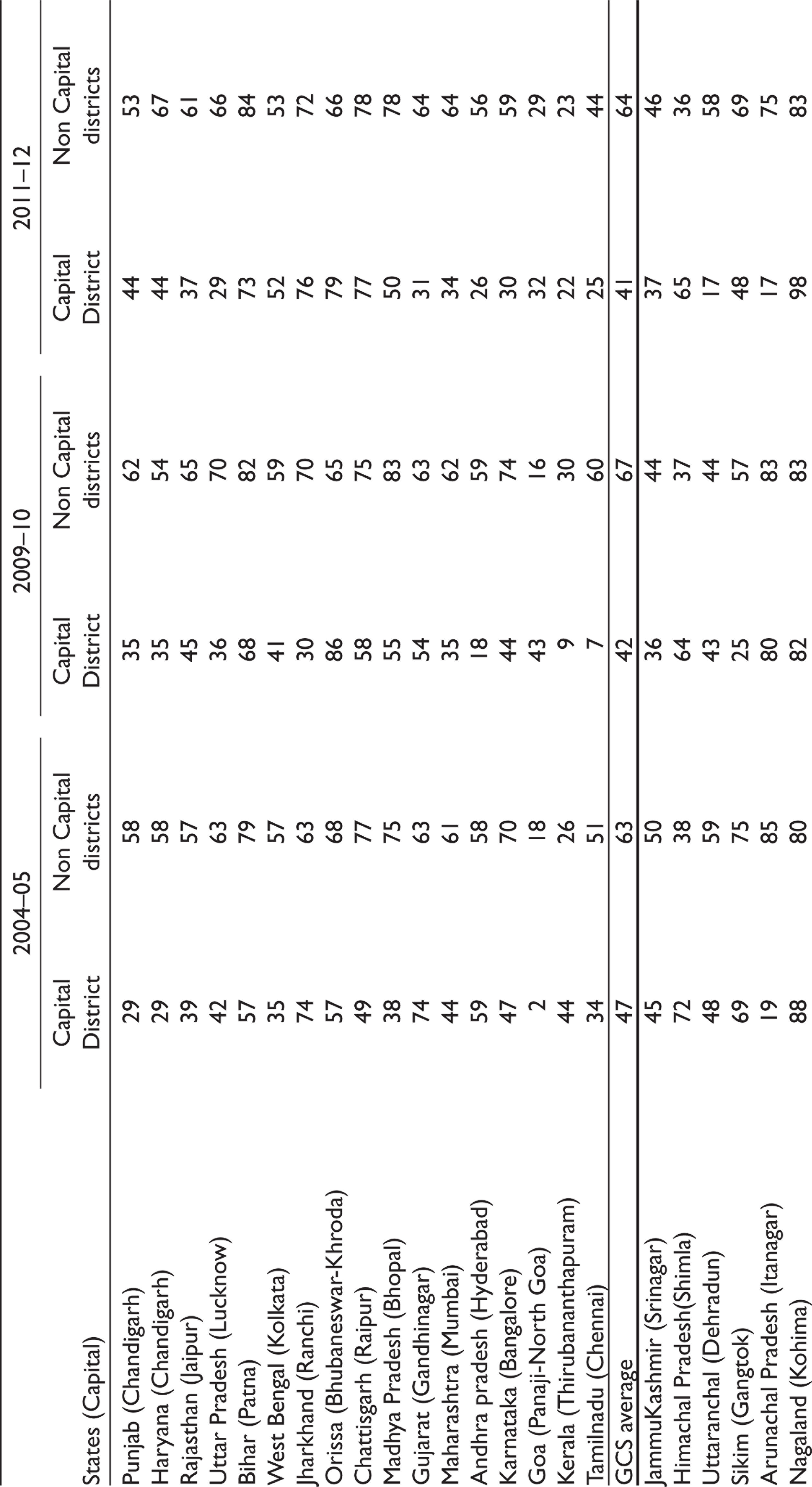
Table 5 provides a comparison of intergenerational occupational persistence across regions within a state. For the simplicity of presentation, we have divided each state in two types of regions—state capital and non-capital regions—and reported the information for GCS and SCS. 1 They are considered separately at the time of showing the inter-regional disparity, because they share some characteristics that are distinctly different from each other.2 For capital, we have taken the district where the capital is located. The underlying hypothesis is that unequal economic opportunities or disparity in economic growth within a state has profound implications for job choice and is reflected in intergenerational occupational persistence. Often, the state capital is better endowed in terms of information, educational, financial and employment opportunities. Hence, we can expect the persistence to be comparatively higher in the non-capital districts of a state compared to the capital districts. The column of capital district in Table 5 reports the percentage of sons working in the same industry as their father in the capital of the corresponding state, whereas the column of non-capital district reports the average persistence level in the rest of the districts of the state. We observe that persistence is considerably lower in the capital districts compared to the non-capital districts for the three periods for both GCSs and SCSs. Besides, we also find the overall persistence to consistently decline in the capital districts, whereas in the rest of the districts the incidence is found to increase considerably. This resulted in the capital district–non-capital districts disparity increasing from 16 to 23 percentage points and from 17 to 20 percentage points among GCSs and SCSs between 2004–2005 and 2011–2012, respectively. Though increasing, such disparity is found to be comparatively lower among the SCSs compared to the GCSs, on average. However, we find large variations in this disparity among the individual states. We observe that in some of the states, the persistence in the capital district is even higher than that in the rest of the states. There are states showing a decline in the persistence in the capital district only, thereby resulting in increasing disparity between the capital and non-capital regions.
Occupation Persistence in Capital and Non-capital Regions of Indian States

Bhubaneswar is in Khorda District.
Mumbai is the Summer capital district and Nagpur is the Winter capital district of state of Maharashtra.
Bihar, Madhya Pradesh and Chhattisgarh, the states with high and increasing persistence, show a noticeable rise in the incidence in the capital districts compared to the non-capital districts, by nearly 16, 28 and 12 percentage points, respectively, between 2004–2005 and 2011–2012. The situation implicates that along with those in the non-capital districts, the job market opportunities in the capital of these states, over time, are becoming highly unequal.
Persistence is found to be considerably higher in the capital of Gujarat, Andhra Pradesh, Kerala and Jharkhand. However, one noteworthy observation is that persistence in the capital districts of these states has consistently declined and fallen below the average persistence level of the capitals of the rest of the states (41%), except in the case of Jharkhand. The persistence in the other districts of Gujarat, Andhra Pradesh and Kerala remains almost in line with the overall average of the states. However, we also notice that within-state disparity in terms of persistence in Gujarat and Andhra Pradesh remains very high. Persistence is found to be nearly 30 percentage points higher in the non-capital districts compared to the capital districts of these states for 2011–2012.
Persistence in the capital district (Ranchi) of Jharkhand is not only very high but also has increased between 2004–2005 and 2011–2012. In the non-capital districts too, the overall persistence remained high, increasing considerably from 63% to 72%.
Among the other states, persistence is found to have increased consistently in the capital of Punjab, Haryana, West Bengal and Orissa. Unlike in Haryana, Punjab and West Bengal, persistence has gone down in the non-capital districts of the rest of the states between 2004–2005 and 2011–2012.
Uttar Pradesh and Karnataka are the states with the percentage of persistence at and above the GCS average. The capital district–non-capital districts disparity in persistence is spectacularly increasing in these two states. It went up by 35 and 29 percentage points, respectively, in these states in 2011–2012. This gap is accompanied by fall in persistence in capital district along with almost no change in persistence in the non-capital districts. Apart from these two states, Rajasthan and Maharashtra are the two states worth mentioning with a growing within-state disparity in persistence. In their case, however, the growing difference in persistence is mostly because of the continuous increase of persistence in the non-capital districts and fall of persistence in the capital districts.
One can classify the entire phenomenon of intra-state variations in persistence into the following two categories: states with growing inter-regional disparity (Rajasthan, Gujarat, Maharashtra, Uttar Pradesh, Andhra Pradesh and Tamil Nadu) and states with falling inter-regional disparity (Punjab, Haryana, West Bengal and Kerala). However, falling inter-regional disparity is not always accompanied by a fall in the persistence level in both the capital and non-capital regions. In some states, we observe an increase in the persistence of the capital district (Punjab and West Bengal). Kerala is an exception in this case, where the fall in the disparity is accompanied by a fall in the persistence level in both groups of districts. Tamil Nadu is a state that is also experiencing a considerable fall in the persistence level in both the groups but with an increase in intra-state disparity.
On an average persistence has considerably decreased in SCS from 2004–2005 to 2011–2012 in both capital and non-capital districts. Except in Himachal Pradesh, Nagaland and Assam, persistence in general is lower in the capital districts of the SCSs for 2004–2005. Inter-regional disparity is found to be the highest in Arunachal Pradesh (67 percentage points), followed by Mizoram (35 percentage points), Himachal Pradesh (33 percentage points) and Meghalaya (31 percentage points), for 2004–2005. With exception to Himachal Pradesh and Nagaland, we find persistence to fall in the capital district by a considerably larger extent compared to that in the non-capital districts, resulting in an increase in inter-regional disparity among the SCSs. We sum up our findings from Table 4 and Table 5 in the following way. The SCSs are witnessing a fall in the incidence of intergenerational persistence on average along with a fall in the rural–urban disparity. However, the states are also experiencing higher inter-regional disparity resulting from the much slower pace of the fall in persistence in the non-capital districts compared to that in the capital districts. On the other hand, the GCSs, where the average persistence remains almost unchanged at the national average of 62%, are experiencing rise in rural–urban disparity. The inter-regional disparity is found to fall (between 2004–2005 and 2011–2012) in most of the states, such as Punjab, Haryana, Bihar, West Bengal, Chhattisgarh, Madhya Pradesh, Goa and Kerala. However, this situation in most of these states has been accompanied by an increase in the level of persistence in the capital districts (except in Kerala). The situation is not only alarming but also implicates the fact that employment opportunities are becoming scarce in the capital districts of the GCSs. The situation of the SCSs, on average, may appear to be ushering in development, but the employment opportunities do not seem to percolate to all the regions equally.
Estimation Results
We use a simple probit estimation to assess the role of own education, parental education and household assets in influencing the probability of intergenerational persistence of occupation. Our dependent variable takes the value 1 if the son and father work in the same industry, and 0 otherwise. Within the category of individual determinants, we include age, education and other background variables, such as caste, religion, parental education and household assets. We examine the effect of educational attainment with the underlying hypothesis that better-educated individuals always have better employment opportunities and more ease to opt for employment in a number of industries. This, in turn, is expected to reduce the probability of persistence. Parental education as proxy for household income also is expected to be positively associated with the probability of intergenerational mobility. Father’s self-employment in an urban area and land ownership in a rural area are used as the indicators for household ownership of assets. Lambert et al. (2011) find a significant importance of inheritance (productive household asset) and parental traits for intergenerational occupational mobility in Senegal. However, the term ‘asset’ may not address the entire dynamics of the existence of land and enterprise of a household influencing the probability of its father–son duo being in the same industry. These ownerships may impact the probability in the following two opposite ways. One, these ‘assets’ may encourage the son to overcome financial constraints and enable him to acquire a higher level of education and opt for an occupation of his choice, not necessarily in the industry where his father is employed. Two, we cannot ignore the possibility that the father’s occupation often serves as one of the vital sources of the son’s network of job-related information. This information often provides for greater ease of entry in the same industry where the father works (the job hierarchy may differ depending on the occupation), enabling his offspring to avoid uncertainty arising from job market competition. In either of the above cases, ownerships can be acknowledged as an asset having a negative and positive impact on the possibility of persistence. In this context, we must not rule out the possibility of these ownerships leading to intergenerational persistence being the consequence of financial destitution. That is, the size of the enterprise or landholding may be too meagre to overcome the poor financial conditions. This ultimately results in the formation of an insufficient level of employable skills, leaving an individual with no options but to join the family enterprise. Therefore, the existence of these assets may encourage or discourage a son to work in the industry same as his father. Thus, instead of having such ownership, the individual from the poor family continues to be trapped by the inequality in opportunities. In order to assess all these issues, we construct necessary variables and incorporate them in the analysis.
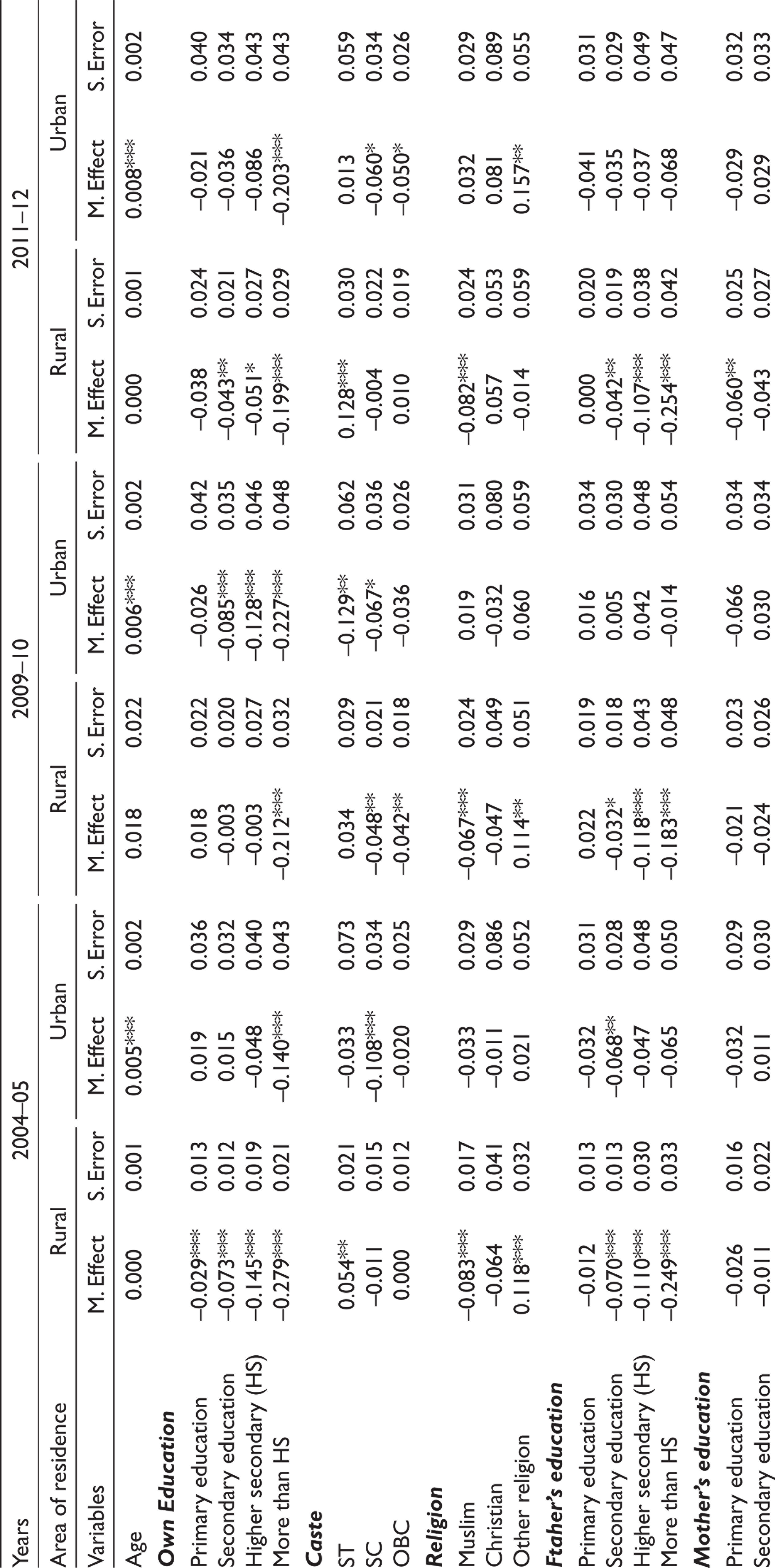
We also incorporate district fixed effects in order to account for district-specific aggregate factors that may affect the employment conditions in different industries. Table 6 reports the marginal effects and standard errors from the probit estimation with all the variables we have mentioned so far, separately for urban and rural areas for the three rounds of the survey.
The estimation results (Table 6) show that age does not have any significant association with the probability that sons work in the same industry as their father in rural areas. In urban areas, however, the older sons are significantly less likely to be in the industry where their father is employed.
We observe education to play a significant and varying role in increasing occupational mobility among the sons in rural and urban area respectively. In other words, the negative marginal effects of the consecutive levels of education suggest that sons become less likely to work in the same industry as their father if their education level is high. Not only are the marginal effects of education negative, but their magnitude also increases with the level of education. Therefore, own education appears to be one of the major determinants of occupational mobility. This also gains support from the descriptive analysis. However, in 2004–2005 such an effect is observable for all the consecutive levels of education only in rural area. For the following rounds, we find the significance of the lower levels of education to disappear, and only higher (college and university) education remains significant in exerting a negative impact on the probability of persistence. We also find the magnitude of the marginal effect of higher education to decline over time. In urban areas, we find almost a similar pattern, with only college-level education having a significant negative impact on the probability of persistence for 2004–2005 and 2011–2012. The year 2009–2010 in this context seems to be exceptional, with negative and significant marginal effects for all educational levels.
A general observation in this regard is that in both rural and urban areas sons with a qualification beyond the HS level are only able to get a job outside the industry where their fathers work. Therefore, until the sons acquire college degree or equivalent level of education, they are not significantly likely to opt a job in the industry different from their father.
We find that the significance of caste in determining the probability of persistence has almost disappeared in recent years in rural areas. Sons are found to be more likely to be in their father’s industry if they belong to an ST household in a rural area for 2004–2005 and 2011–2012. For 2009–2010, persistence is found to have significantly declined among the SCs in rural and urban areas. The estimation results show that only Muslim sons are significantly less likely to work in their father’s industry than Hindus in rural areas for all the study years. In the context of urban areas, we do not find a similar pattern for 2009–2010. However, we do not find any such significant Hindu–Muslim difference in intergenerational persistence in urban areas for 2011–2012.
Probit Estimation Results of Intergenerational Occupational Persistence

*, **, *** stand for 10%, 5%, and 1% significance respectively.
We also incorporate parental education in our model, which serves as a proxy for the permanent income of a household and innate ability. Although we find considerable variations in the marginal effects across the areas of residence and periods of survey, there is an indication that the father’s education is negatively associated with the probability of the son being employed in the same industry, especially in rural areas. We observe that sons with more educated fathers are less likely to be employed in the same industry as their father. Besides, such probability decreases at an increasing rate with the level of the father’s education. To be more precise, if the father has a college or university education, the probability that his son will work in a different industry is more than in the case of a son whose father has an HS education. For 2009–2010 and 2011–2012 too, we find a similar pattern to prevail in rural areas, though the magnitude of the marginal effects decreased between 2004–2005 and 2011–2012. However, we do not find any such association between father’s education and persistence in 2009 –2010. In 2011–2012 this particular factor in urban area exhibited an expected sign (discussed at the outset of the estimation analysis) but has not appeared significant. To sum up, we say that the father’s education has a strong impact on intergenerational persistence. Being one of the crucial indicators of the family income and innate ability, the father’s higher education indicates the possibility of sound financial health of the family and reach of the father’s network. Coark and Heisz (1999) find a strong effect of the father’s network on the hiring process of their offspring. A higher permanent income of the household enables the son to find a better job or at least a job of the same quality in an industry other than where his father is employed, with greater ease.
Unlike the father’s education, the mother’s education is hardly found to have any significant consistent association with the probability of persistence for 2004–2005 in rural areas. A noteworthy observation in this context is that in urban areas, intergenerational persistence of industry is found to be significantly higher among those sons whose mother had a tertiary-level (college or university) qualification, for 2011–2012. During 2009–2010 in rural area sons with higher secondary educated mothers are significantly less likely to be in the father’s occupation. However, no such association is observed during 2011–2012.
Ownership of productive assets can influence a household’s decision to invest in a son’s employable-skills formation. This in turn may have a favourable influence on the incentive of the son to search for employment opportunities elsewhere. Variables for the household productive assets are represented by the household enterprise (proxied by father’s self-employment) and landownership (in hectares) in urban and rural areas, respectively. The results suggest that the probability of persistence increases with landownership and that the relative strength of this factor in explaining the incidence of persistence has increased over time. Comparing the three periods of survey, we find that though the positive marginal strength of landownership decreased between 2004–2005 and 2009–2010, it increased between 2009–2010 and 2011–2012. In urban areas, however, the magnitude of the marginal effect of family enterprise has decreased over time.
With a rise in landownership, the likelihood of a father–son duo being in the same industry increases. This may happen at lower levels, as well as at higher levels, of landownership. Couple of explanations behind our empirical results have been discussed below. It may happen that the size of family enterprise and land ownership are too small to ensure a sound financial status. Therefore, the sons with subsistence land ownership and family enterprise driven out of financial constraints are more likely to join family enterprise and father's occupation. Besides, we cannot rule out the possibility that the family enterprise and landownerships may be large and that the household-head’s-bequest motive increases the probability that the son remains in the same occupation. That is with an increase in landownership, there is an incentive for the sons of a household to remain in their father’s industry, perhaps in agriculture, avoiding the uncertain outcome originating from competition in the job market. The probable explanations discussed above indicate that family background (household wealth, family enterprise) may have disincentive in effective job search practices and results in unfair inequality persisting in the job market. This restricts the labour market from being a level playing field for all its participants. Poor farmers’ sons with small landownerships continue to be farmers in the absence of a well-functioning capital market where they can borrow and invest in the skills and education of their sons. The occupation of a rich and well-established father is also transmitted easily to his son, lowering the son’s incentive to actively search for a job.
Conclusion
Intergenerational occupational persistence, an outcome, as well as a source, of labour market inequality, is found to be alarming in Indian, with nearly 62% of Indians working in the same industry as their fathers in 2011–2012. We find that persistence is much higher in rural areas than in urban areas, indicating lower job opportunities in rural India. The analysis allows us to identify the age, social and religious groups that tend to show higher occupational persistence. The analysis of the occupational transitional matrix shows how intergenerational occupational persistence has varied across the industries during the last three rounds of the NSSO Employment Unemployment Survey. In rural areas, persistence is the highest (more than 75%) if the father is in agriculture. In urban areas, manufacture and wholesale and retail show very high levels of intergenerational persistence.
The analysis shows that education is one of the keys in breaking the vicious cycle of this inequality in the job market. In other words, only with higher education the son of a poor worker will be able to look for jobs in a large number of industries and have an occupation different from his father. The study also extensively focuses on the issue from interstate and intrastate perspectives. We consider all the states and UTs and find that persistence among the SCSs has gradually decreased and fallen below the GCS average (56% for the SCSs and 62% for the GCSs). The inter-regional analysis within states shows that persistence is relatively low and increasing in the capital regions of the GCSs such as Punjab, Haryana, Bihar, West Bengal, Chhattisgarh, Madhya Pradesh and Goa (with a few exceptions). The situation is not only alarming but also implies that employment opportunities are becoming scarce in the capital districts of the GCSs. The situation of the SCSs, with the fall in the persistence levels, on average, may appear to be ushering in development. However, the increase in inter-regional disparity among most of the GCSs and SCSs is indicative of unequal economic opportunities resulting from regional disparity in economic growth. The results also indicate that in recent times, only education beyond the HS level significantly facilitates mobility across industries.
Considering their poor financial status and the inefficient financial markets, obtaining tertiary education is a difficult task for most rural households (as the sample is mostly dominated by rural-area observations). In the presence of the strong influence of family background in the form of family wealth and parental education, it is even more challenging to ensure equal opportunities in the job market. Against this backdrop, our entire analysis has great policy implications and is in favour of the promotion of higher education and equitable regional economic development in order to ensure equality of opportunities in the labour market.
Footnotes
Declaration of Conflicting Interests
The authors declared no potential conflicts of interest with respect to the research, authorship and/or publication of this article.
Funding
The authors received no financial support for the research, authorship and/or publication of this article.