



Abstract
This study analyses the determinants of community resilience to violent conflict in north central Nigeria. It adopts mixed research methodology through multistage sampling technique. This involved the purposive selection of Benue and Plateau states. The study is anchored on social capital as a valuable theoretical framework to understand community resilience. It raises a pertinent research question. What are the factors influencing community resilience to violent conflict in Nigeria’s north central? Primary data were obtained through household data collection in Jos, Barkin Ladi, Makurdi, and Gbajimba where respondents were chosen for questionnaire administration. Through multiple regression, the study identified social solidarity, group identity, collective efficacy, number of household member(s) in active employment, and trust as determinants of community resilience to violent conflict. These findings yield insight for theories, policies, and practices. The study concludes that it is important to account for social solidarity, collective efficacy, and trust in strengthening community resilience.
Introduction
Violence in Nigeria has gone full circle in recent years, due to the nationwide emergence and domination of various non-state armed groups. With differing rationales, objectives, and modus operandi, these actors include violent extremists, criminal gangs, separatist groups, communal militias, and criminal herdsmen. More recently, the country’s most pressing form of violence has been described as “banditry”—a composite criminality including armed robbery, kidnapping, murder, rape, and illegal possession of firearms. More importantly, the country has also experienced episodes of ethnoreligious conflict in northern states such as Kaduna, Plateau, Benue, Taraba, Kano, and Bauchi among others (Krause, 2011; Ojewale, 2021). In Benue and Plateau states in particular, the dynamics of violence by non-state armed groups has assumed different trajectories. On one hand is the religious conflict that is perpetually pitting the Christians against Muslims. This has become a perennial experience in Plateau state especially. On the other hand, both Benue and Plateau states have become epicenter of conflicts between farmers and herders for over a decade.
Plateau state is regarded as a melting pot because of its geographic positioning and ethnic composition. It is largely heterogeneous and inhabited by over 60 ethnic groups. Since 1994, Plateau has experienced recurrent waves of violent conflict, generally along religious and ethnic lines. The years 2001, 2004, 2008, 2010, and 2011 were all characterized with widespread violence, generally pitting communities of Hausa-Fulani extraction (mostly Muslim) against the indigenous and mainly Christian Berom, Afizere, and Anaguta (Kwaja, 2014). Second, and as a corollary to the above, other aggrieved groups, such as pastoralists are mostly of Islamic religion and have remained in perpetual conflict with locals who are mostly Christians in places where they have been experiencing natural resource conflict and climate change. The impact of changing weather on security has been increasingly visible in deadly land resource disputes between farmers and herders across the country’s middle belt, which has recently taken on dangerous religious dimension. Most of the herders are from the traditionally nomadic and Muslim Fulani who make up about 90% of Nigeria’s pastoralists, while most of the farmers are Christians of various ethnicities in parts of Benue and Plateau states (Ajala, 2020; Ojo, 2020; Olumba, 2022; Ojewale, 2022).
In such fragile context, the scale of violent conflict in both the rural and urban areas could take on a monumental proportion despite the availability of both modern and traditional mechanisms of conflict management. These dichotomies often demonstrate the variation in forms and patterns of violent conflict and reflect the variety of social and political contexts and consequences that give rise to it in any geographical space (Fearon and David, 2003; Fearon and Laitin, 2011; Buhaug and Rød, 2006; Raleigh and Hegre, 2009; Raleigh, 2012; Dyrstad and Hillesund, 2020; Polo, 2020). Violent conflict in Nigeria has claimed many lives and rendered many homeless (Sayne, 2012; Jegede and Ajibade, 2013; Bonkat, 2014). The socioeconomic consequences of these strands of violent conflict in the different communities of central Nigeria remain alarming. For instance, a study by Mercy Corps (2016) quantified the vital role that peace building and security initiatives can play in improving households and community welfare. It established that Nigeria can gain up to US $13.7 billion annually in total macroeconomic progress in a situation of peaceful co-existence between farmers and pastoralists in Benue, Kaduna, Nasarawa, and Plateau states. Over the years, the state has devised several measures to meet the challenges of violent conflict in north central Nigeria. These include military deployment for peace keeping operations and establishment of commissions of inquiry. However, notable studies argue that the complementary and viable solution to preventing or managing violent conflict lies in understanding and supporting community resilience (World Bank, 2011; World Development Report, 2011; Mercy Corps, 2016). The concept of resilience draws from a wide range of research fields. These include: physics, geography, environmental science, risk management, engineering, agriculture, and security governance among others (Luthar et al., 2000; Frankenberger et al., 2013; Madsen and O’Mullan, 2016; Ryan et al., 2018).
According to Forsell et al. (2018), resilience is conceptualized as the capacity of a group or an individual to understand, assess, manage, and monitor their resources, risks, and behavior, especially as they apply within the stress and shock cycle of preparedness, response, recovery, and mitigation in the context of violent conflict. Some definitions of community resilience embrace the view that it is the sustained ability of a group of people to utilize available resources to prevent, withstand, respond to, and recover from adverse situations that can seriously disrupt their peaceful co–coexistence, (Ahmed, et al., 2004). Furthermore, the term “community resilience,” here, would be broadly constructed as the collective capabilities to prepare and plan for, absorb, recover from, and more successfully adapt to adverse events and buffer a group of people from or support effective responses to disaster. Thus, a significant characteristic of community resilience noted in the literature, as well as in implementation, is multidimensional (Beccari, 2016; Cutter, 2016).
Community resilience in the context of violent conflict is evident when key population groups (women, youths, and community leaders) drawn from different religious, ethnic, and social boundaries within a geographical space, identify and engage institutionalized and frequent multi-stakeholder initiatives. Community resilience is designed to identify community risks associated with violent conflict; map indicators of social discontent; promote dialogue and peaceful resolution of conflicts; engaging with each other and with official security institutions; build social coherence; and ensure peaceful out-letting of grievances through individual and collective approach. It is against this background that this study seeks to examine community resilience to violent conflict in north central Nigeria, as the incidents of violent conflicts continue to rise within the region.
An array of studies have been carried out on community resilience, violent conflict in cities, towns, and rural settlements particularly in the countries of the global south (Wisner et al., 2003; Osaghae and Suberu, 2005; World Development Report, 2006; Osamba, 2001; Winthrop and Matsui, 2013). However, most studies on community resilience concentrate on disaster risk management, health, and climate change (Davis et al., 2005; Satterley, 2017). While several studies have investigated the economic, social, political, and behavioral drivers of violent conflict; others provided geo-spatial analysis of violent conflict in countries with different socioeconomic and political contexts (Aghedo and Osumah, 2012; Akinola, 2015; Renau and Lozano, 2015; Commercio, 2017; Luckham, 2017; Lind and Luckham, 2017; Ojewale, 2021). Quite a number of studies have investigated the factors influencing community resilience in the developed and developing nations (Miceli et al., 2008; Reese et al., 2011; Devoe, 2013; Hilleboe and Hagens, 2014; Mohammad-Pajooh and Aziz, 2014; Najafi et al., 2015; Cooke, 2015; Banda, 2015; Olojo, 2017; Atallah et al., 2018; Lar, 2019; Eshel et al., 2019). Drawing from Sokoto and Borno in Nigeria, Olojo (2017) highlights the influential role of clerics in communal mobilization and resistance against Boko Haram. State ineptitude to cope with insecurity in Nigeria’s north west has also propelled the chieftaincy and traditional institutions in the communities to make attempts to respond to violent conflict. A key manifestation of this mobilization is the organization of vigilante groups at the forefront of community self-defense and security efforts. Such examples provide a better understanding of how local actors cope with and, collectively, create a measure of order and security by adjusting to a complex and fluid landscape of violence (Lar, 2019). Other studies examine the demographic determinants of community resilience to environmental disaster amongst the residents of Kuala Lumpur and Tehran. The studies posit that the level of income, education, age, residential district (location), and occupation are factors that influence community resilience to environmental disaster, while socioeconomic factors such as gender, and household size were found to be insignificant (Mohammad-Pajooh and Aziz, 2014; Najafi et al., 2015). Therefore, this study is pivotal as it attempts to analyze the socioeconomic determinants of community resilience to violent conflict in central Nigeria.
Theoretical frameworks: Social capital, self, and collective efficacy
The social capital theory has received increasing attention in sociology, economics, and political science over the years (Guo et al., 2018). Such inquiries extend to the domain of urban studies (Schiller and Çağlar, 2009; Pendakur and Mata, 2012). According to Bourdieu (1986), social capital is a potential or actual resource composed of a network of durable relationships. A subsequent study by Putnam (1993) argues that networks, norms, and trust are the features of social organization and that these types of social capital can facilitate coordinated action and enhance society’s efficiency. The concept of social capital enunciated by Bourdieu (1986) and Putnam (1993) focuses on the benefits accruing to individuals by virtue of their participation in groups. Social capital inheres in the structure of social relationship networks (Coleman, 1988) and brings benefits to both individuals and the collective (Jones, 2005; Lin, 2001; Li et al., 2014; Portes, 1998). Many studies explore the importance of social capital in community development, urban, and environmental studies (Perkins et al., 2002; Tintswalo, 2014; Jordan, 2015; Hightree et al., 2017; Cafer et al., 2019).
According to Guo et al., (2018), there are three main types of relationships through which individuals build social capital, namely, bonding, linking, and bridging social capital (Szreter and Woolcock, 2004). Bonding social capital describes the internal ties and strong bonds between people who are emotionally close, such as family members and relatives (Aldrich and Meyer, 2015; Ruiu et al., 2017; Sanyal and Routray, 2016). These tight relationships offer social support and immediate assistance when any form of disaster strikes. Arguably, this includes violent conflict in any given community. Bridging social capital refers to loose and weak external ties among heterogeneous individuals, such as friends, communities, neighborhoods, and other stakeholders (Guo et al., 2018). These open and inclusive ties are based on common interest and are critical for gathering information and external assistance (Agnitsch et al., 2006; Sanyal and Routray, 2016). Linking social capital involves connections with traditional institutions and community structures, such as community-based groups, and local authorities. Linking social capital is a vertical relationship network that reflects relationships of trust in authority and is good for mobilizing resources and power (Poortinga, 2012).
Social capital provides a valuable theoretical lens for investigating the factor and mechanism of community resilience in violent conflict. Guo et al., (2018) argue that post-disaster recovery and reconstruction should not only address the important role of physical infrastructure but also address the necessity of social capital for strengthening community resilience. Social capital is the main factor through which a community adapts to changes (Manu and Walker, 2006). A well-connected relationship network facilitates cohesion, connectedness, support, and collaboration in the face of external change (Calgaro et al., 2014). Hwang and Stewart (2017) reveal that a good relationship between people and community leaders can enhance collective action that could support the people’s resilience to any form of stress. McGehee et al., (2010) opine that social capital is a cornerstone for cultivating public action and cooperation in addressing any form of stress confronting a given community or social system. Sanyal and Routray (2016) note that a community’s only resource for responding to and recovering from a stress is social capital. Bonding, linking, and bridging social capital represent various types of social relationships. Many studies argue that these three types of social capital should have different roles in building community resilience (Agnitsch et al., 2006; Larsen et al., 2004; Marın et al., 2015; McGehee et al., 2010). However, empirical studies linking social capital as a building block to community resilience to violent conflict in Nigeria remain scarce. Furthermore, this study seeks to explore the influence of self and collective efficacy evident in community resilience to violent conflict in the study area.
Ohmer et al. (2016) posit that the self-efficacy theory helps to explain why residents participate in their communities and how citizen participation can affect residents’ self-judgment, behavior, and sense of personal empowerment and control. Bandura (1982), credited with the enunciation of the theory, describes self-efficacy as an individual’s self-judgment about his or her capabilities to organize and execute the actions necessary to achieve desired goals. Thus, the self-efficacy theory is premised on the assertion that individuals who perceive themselves as inefficacious may see their difficulties as insurmountable and may avoid problem-solving activities, even though they may possess the skills necessary to address challenges (Pecukonis and Wenocur, 1994). Furthermore, Bandura (1989) argues that individuals who view themselves as efficacious may take action even though they perceive significant obstacles. This finds practicable expression in community systems and can be well situated in urban studies as the theory of self-efficacy suggests that residents who have strong beliefs in their capabilities will approach stress (such as violent conflict) with the assurance that they can exercise some control over them, including the problems often found in disadvantaged neighborhoods. Thus, residents who see themselves as efficacious may be more likely to get involved in efforts to improve conditions in their neighborhoods (Bandura, 1989; Ohmer et al., 2016; Frimpong et al., 2018).
According to Ohmer et al., (2016), collective efficacy consists of two main concepts: social cohesion and informal social control, which are informed and driven by neighborhood characteristics such as concentrated poverty and residential instability, the density of social ties and social capital, and the presence of an organizational infrastructure supporting and regulating the behavior of the residents (Sampson, 2008). Collective efficacy leads to lower levels of community violence by reducing the level of crime and violence in the neighborhood (Frimpong et al., 2018). Collective efficacy also influences the welfare and interests of residents both directly and indirectly by reducing community violence. The first component of collective efficacy is social cohesion, defined as trusting relationships among neighbors and a shared sense of values or norms about intervening in neighborhood problems (Sampson, 1997). Although social cohesion includes social ties or relationships that neighbors have with one another (e.g., friendship networks and civic participation), they form essential building blocks of community resilience to any form of stress (Browning et al., 2004). Studies also argue that some types of social ties and networks, including with neighbors who are perpetrating violence, may inhibit residents to intervene because they know the offender (Browning, 2002; Warner, 2014).
For collective efficacy to work, trusting relationships and mutual interests and values must not only exist among residents but also between them and those external to the community. Social capital includes relationships of mutual trust found between neighbors (bonding social capital) and connections between residents and external resources (bridging social capital) (Putnam, 2000). It is not enough to establish bonds among residents for the prevention of crime and violence; strong “bridges” between low-income residents, external resources, and the broader social fabric help to sustain violence prevention efforts (Sabol et al., 2004). Neighborhoods also need strong institutional capacity to achieve their goals and foster stability and control (Sampson and Graif, 2009), including established neighborhood organizations with strong connections to residents and institutions like the police, public officials, and other government agencies. This aligns closely with the theory of social solidarity. Developed systematically by Durkheim (1933), social solidarity is a significant sociological idea that is also strongly related to community resilience. Durkheim theorized how the people in a given society are able to live cohesively, despite the increasingly individualistic nature of the society (Gofman, 2014). In a related study, Hawdon and Ryan (2011) posited that the display of solidarity offers emotional support for survivors. Thus, affirming that the group remains integral and inspires collective action that support existing social networks.
The other major components of collective efficacy are group identity and bonding. Group identity provides a strong connection to resilience because it constitutes a foundation for a variety of social effects, from the capacity of humans to feel, act, and think as constituents of a social group, to intergroup behaviors, such as confrontation, cooperation, and discrimination (David and Bar-Tal, 2009). Consideration of identity is important for applications of community resilience because it plays a large role in place-based improvements and planning (Manzo and Perkins, 2006). Tobin (1999) posits that it is uncertain that successful community resilience planning can be accomplished without suitable consideration of the contextual issues of group identity and bonding. Bonding is theoretically constructed as supportive relationship between members of a community who see themselves as being similar in terms of their shared social identity. Strong bonds with family, community, and society are fundamental to building community resilience to disaster (Hirschi, 1969; Hellis and Abdi, 2017). Bonding is also closely linked to the informal social control which occurs when neighbors know each other and share norms and values, which makes it more likely that they will intervene in neighborhood problems, including violent conflict (Sampson, 1997). There are two forms of informal social control, indirect and direct intervention. Indirect intervention includes informal surveillance, for example, keeping an eye on a certain demographic cohort of the society which exhibits certain tendencies and traits which could bring stress to the community (Greenberg et al., 1982). Direct intervention refers to residents actually interceding to confront behaviors that do not fit neighborhood social norms or values (Greenberg et al., 1982). For example, direct intervention can include residents inquiring about suspicious activities they witness and reprimanding people for behavior that falls outside the neighborhood norms (Greenberg et al., 1982). Informal social control is centered on residents’ ability to directly intervene in neighborhood problems in respectful and non-punitive ways and on their strategies for engaging in positive relationships with the police and external resources (Sampson, 1997). This concept emerged from prior work by Shaw and McKay (1942), who developed the Chicago Area Projects (CAPS), which aimed to prevent youth delinquency. CAPS focused on strengthening community norms and developing residents’ efficacy to solve problems from within (Ohmer et al., 2016). Such concepts are also well situated in the spatial theory of violent conflict.
Study area
Jos is the administrative capital of Plateau state and is located on longitude 8°53′ 0.30′ E–8°57′ 0.30′ E and latitude 9°45′ 0.00′ N–9°59′ 0.00′ N. For many years, the dynamics of conflict and violence in Jos has evolved into incessant clashes between rural farmers in the peri-urban areas of the city and suspected herdsmen. Occasionally, this also engenders fears and triggers tension among the residents within the city of Jos. Barkin Ladi is a Local Government Area in Plateau state, Nigeria. Its headquarters are in the town of Barkin Ladi and located on longitude 8°53′ 0.00′ E–8°54′ 0.30′ E and latitude 9°31′ 0.30′ N–9°34′ 0.00′ N. It has an area of 1032 km2, and the local economy operates on primary activities such as tin mining and agricultural production. This has given rise to communal clashes among different groups competing over rights and accessibility to landed resources in the area. The political crisis about “indigene” rights and political representation in Jos has evolved into a lingering communal conflict affecting largely all parts of the state. The existence of well-organized armed groups in rural areas, the proliferation of weapons, and the spiky rise in gun fatalities all indicate a real risk of potential large-scale violence in adjoining communities of Jos such as: Ryom, Bassa, Mangu, Bokkos, and Barkin Ladi communities (Krause, 2011; Duke et al., 2017).
Makurdi is the capital of Benue state. The city is located on longitude 8°27′ 0.30′ E–8°37′ 0.30′ E and latitude 7°39′ 0.00′ N–7°48′ 0.00′ N. It is situated in the Benue valley in the north central zone of Nigeria. Like most cities in the zone, Makurdi has had its fair share of violent conflict and tensions often resulting in displacement of residents, the wanton destruction of lives and property, human rights abuses, and a climate of insecurity and mutual distrust between different communities. Each episode of the violent conflict is unique in its origin and character, but underlying denominators are manifested in contention for land space and boundary squabbles, indigene versus settler dispute, chieftaincy tussles and disputed jurisdictions, competition for access to political power and economic resources, among others. The town of Gbajimba lies on the geographical coordinates of longitude 8°50′ 0.00′ E –8°52′ 0.30′ E and latitude 7°48′ 0.30′ N–7°50′ 0.30′ N. It is situated on the north eastern part of Benue state. Gbajimba community has remained a hot bed of violent conflict ranging from inter and intra-ethnic clashes which bordered on access to political power and control over land resources particularly between sedentary farmers and nomadic herdsmen (International Crisis Group, 2018). In Gbajimba and its adjoining towns and villages, one other cause of conflict between the Tiv farmers and the Fulani herdsmen is the deep-rooted conflict between the farmers and cattle breeders (Women Environmental Programme, 2012). However, the dynamics of violent conflict has assumed an alarming proportion in Gbajimba community as recent reports detailed incessant attacks by herdsmen over the grazing rights.
Reported incidents and fatality report on violent conflict in north central Nigeria
Incidents of violent conflict in the north central states (2008–2017).
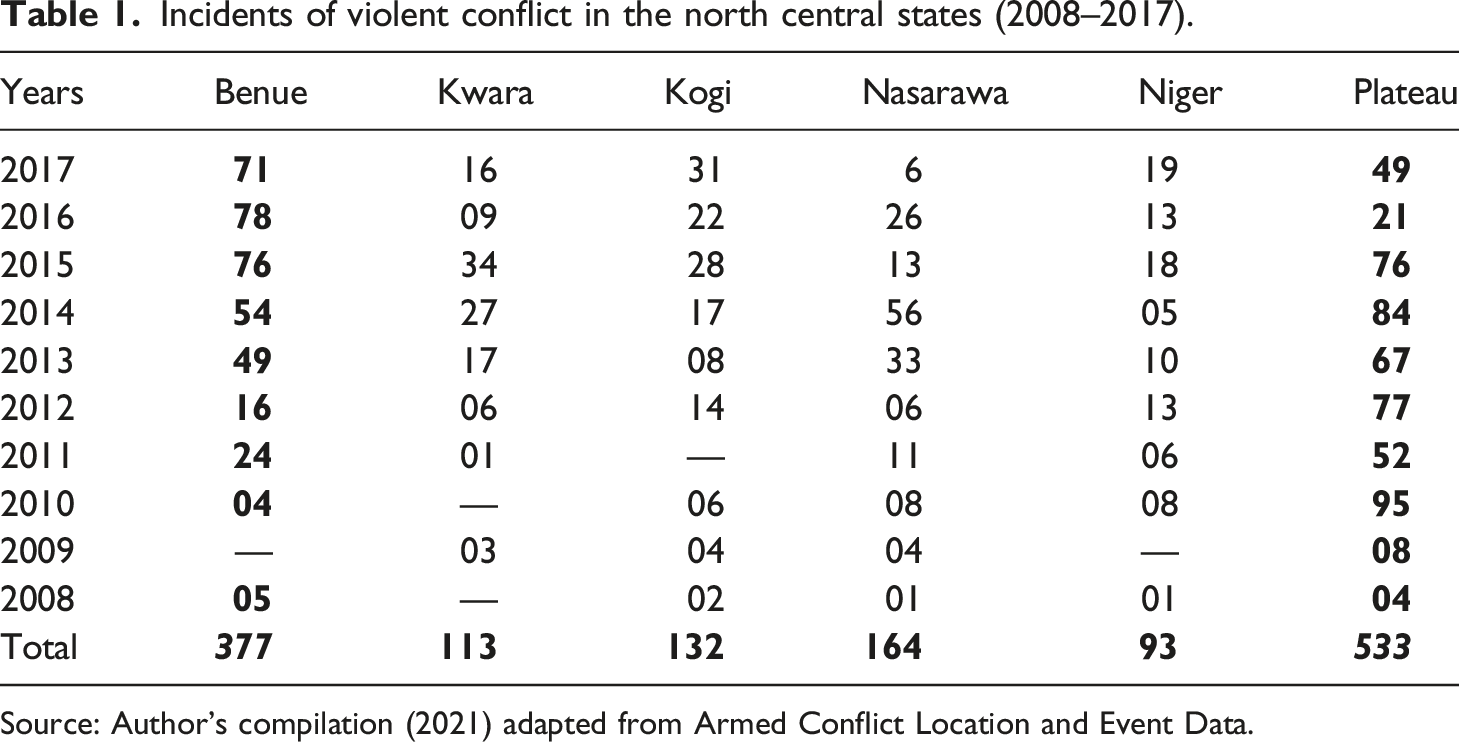
Source: Author’s compilation (2021) adapted from Armed Conflict Location and Event Data.
Fatalities from violent conflict in the north central states (2008–2017).
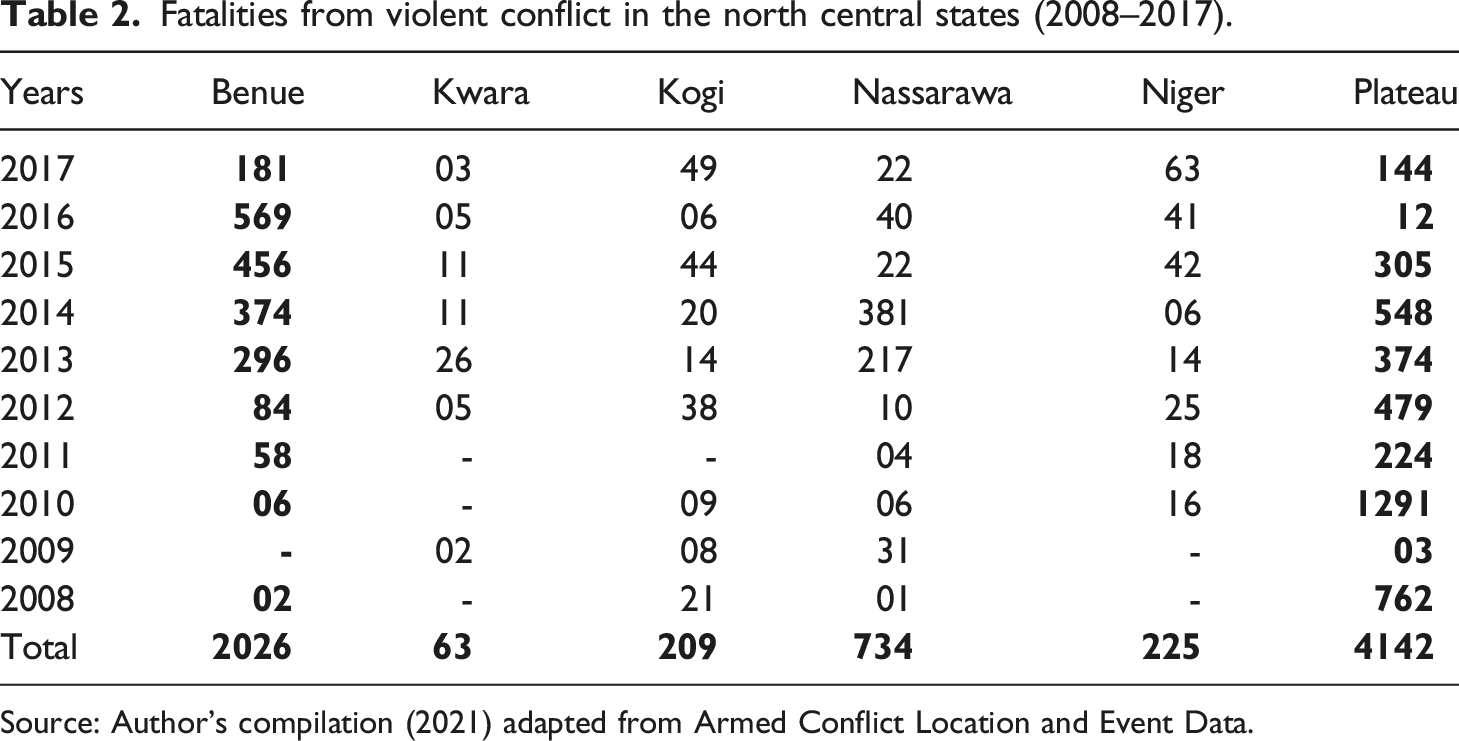
Source: Author’s compilation (2021) adapted from Armed Conflict Location and Event Data.
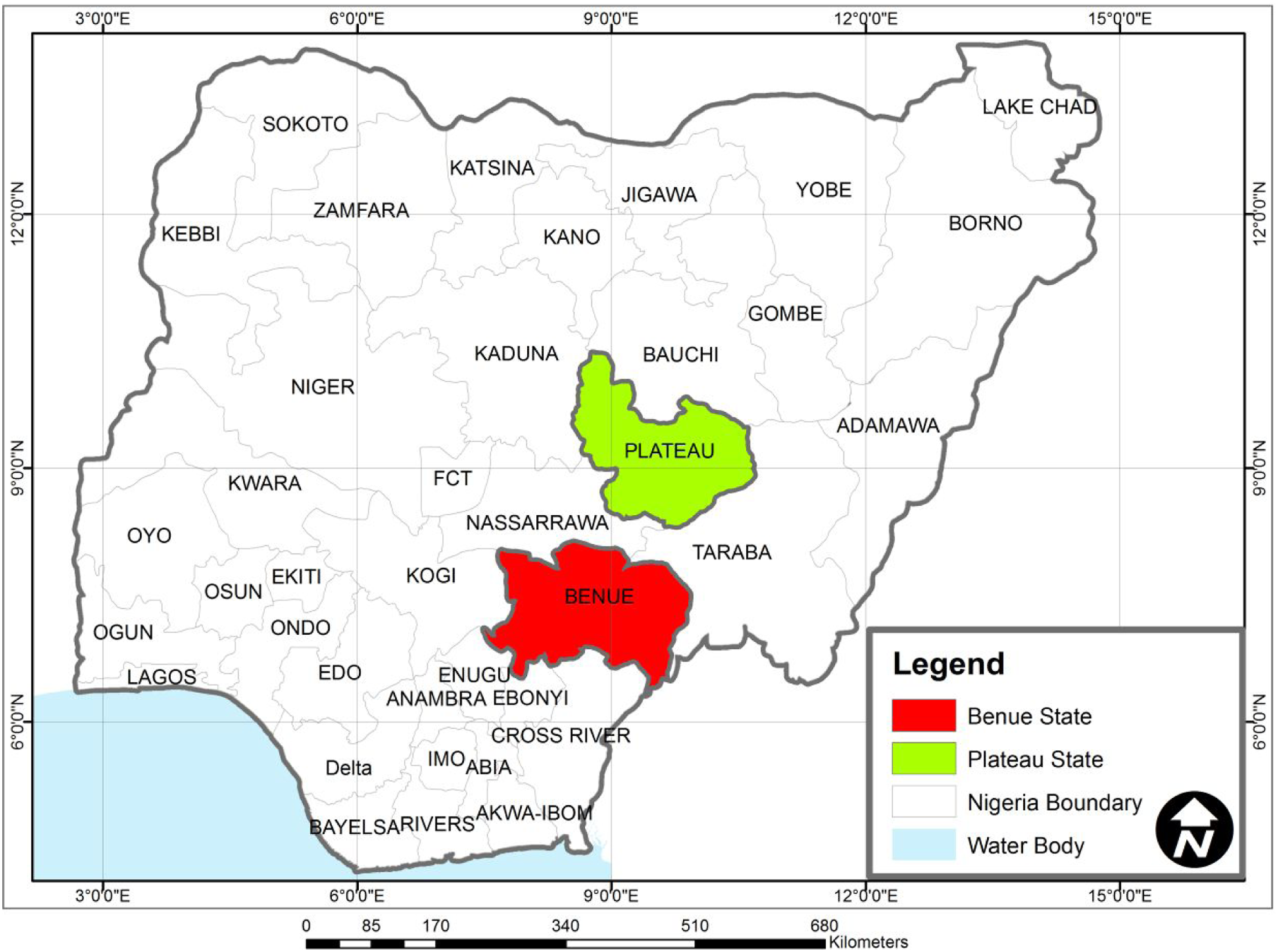
Map of Nigeria showing Benue and Plateau States. Source: National Airspace Research and Development Agency (2018).
Data and methods
This study combines the Geographic Information System (GIS) approach and household data collection. The traditional sample design for direct surveys rests on the assumptions that current census data are available and reliable for large and small geographical locations, and that an updated record of all persons or households in the country exists, to construct a frame with minimal cost. These assumptions do not hold for Nigeria where census data are not regular. Thus, the GIS approach offers the opportunity to combine several sampling approaches for direct household surveys that can help to deal with problems occasioned by the lack of census data (Eckman et al., 2018). Thus, the combination of household data collection and GIS approach presents a two-stage cluster sampling method. The approach utilizes gridded population data and GIS in selecting clusters in the first sampling stage and Google Earth imagery and sampling grids for the selection of households. In order to select the sample size, automated grids/points intersections at 200 x 200 m for urban areas (Jos and Makurdi) and 50 x 50 m for the rural areas (Barkin Ladi and Gbajimba) were generated. The grids covering the built-up areas of Jos, Barkin Ladi, Makurdi, and Gbajimba are generated through GIS software. This is based on procedure guiding settlement classification using high resolution satellite imagery. Through this procedure, 5663 points were identified and these would constitute the sample frame for this study. The geographic coordinates of the points and grids (longitude and latitude) generated are shown on Plates 1, 2, 3, and 4 in Figures 2–5, respectively. The geographic coordinates are meant to direct the interviewers to the locations where information would be elicited from the identified households with the aid of data capturing devices. Grids of residential buildings in Jos. Source: Google Earth (2017). Grids of residential buildings in Barkin Ladi. Source: Google Earth (2017). Grids of residential buildings in Makurdi. Source: Google Earth (2017). Grids of residential buildings in Gbajimba. Source: Google Earth (2017).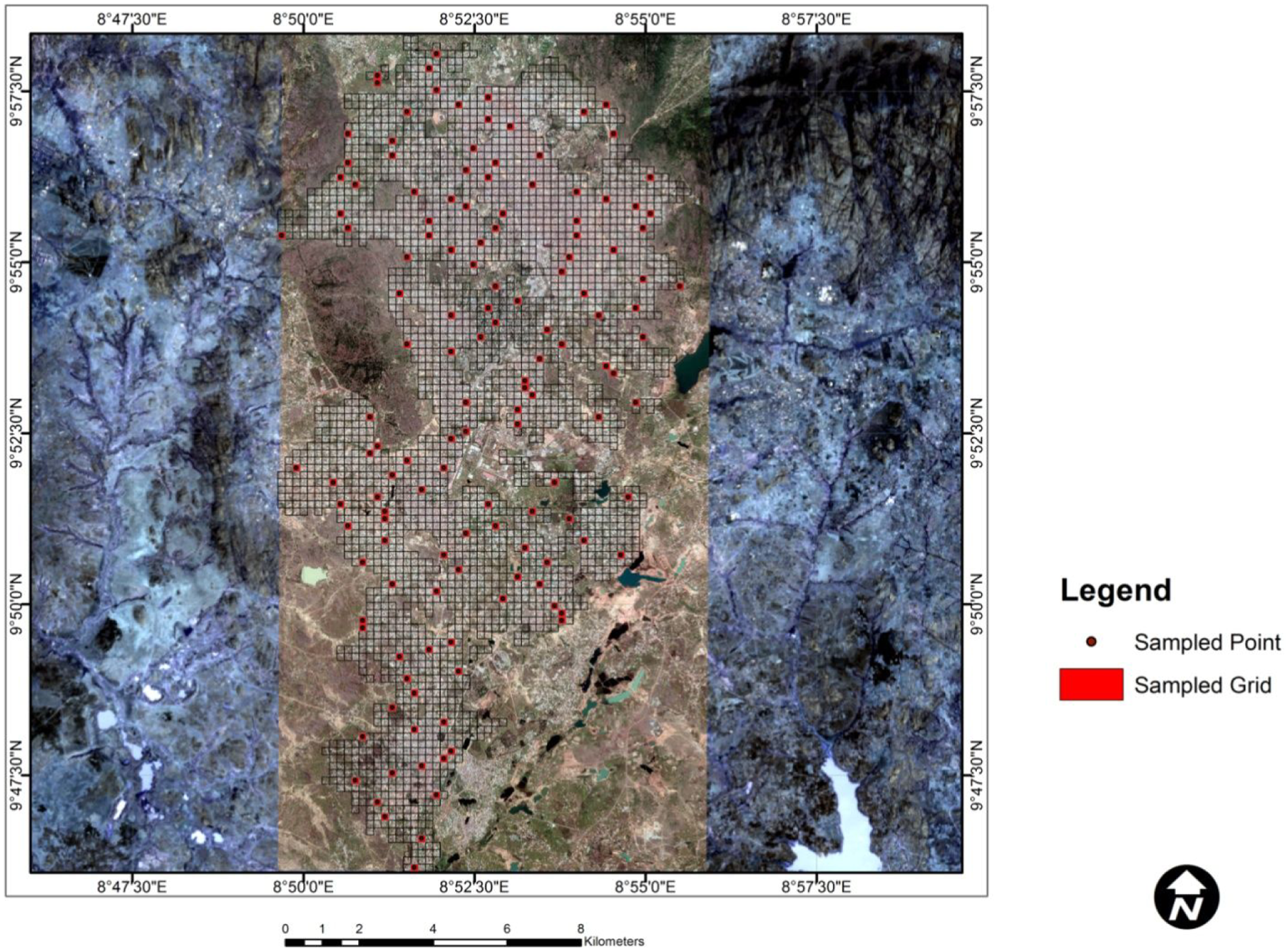
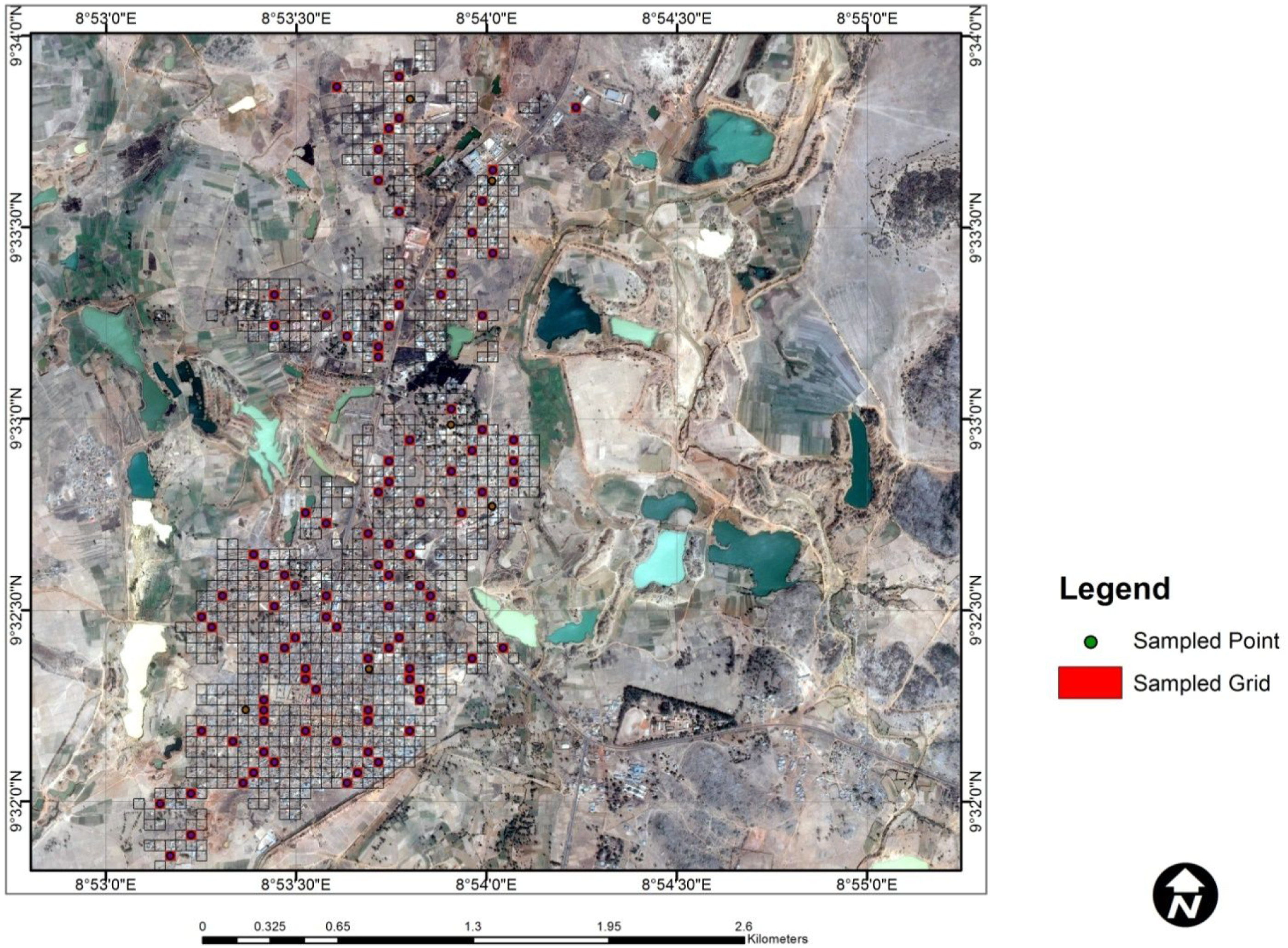
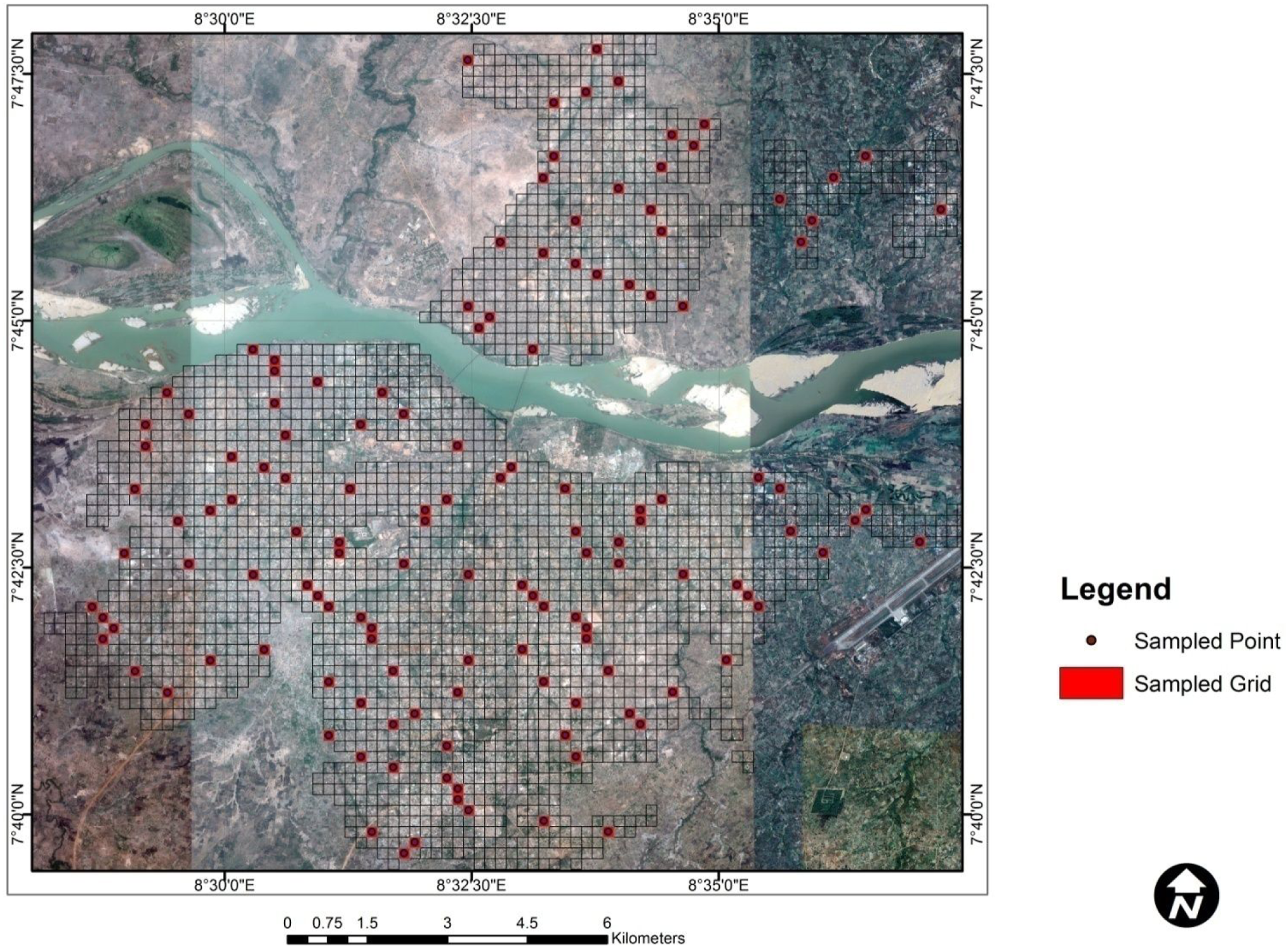
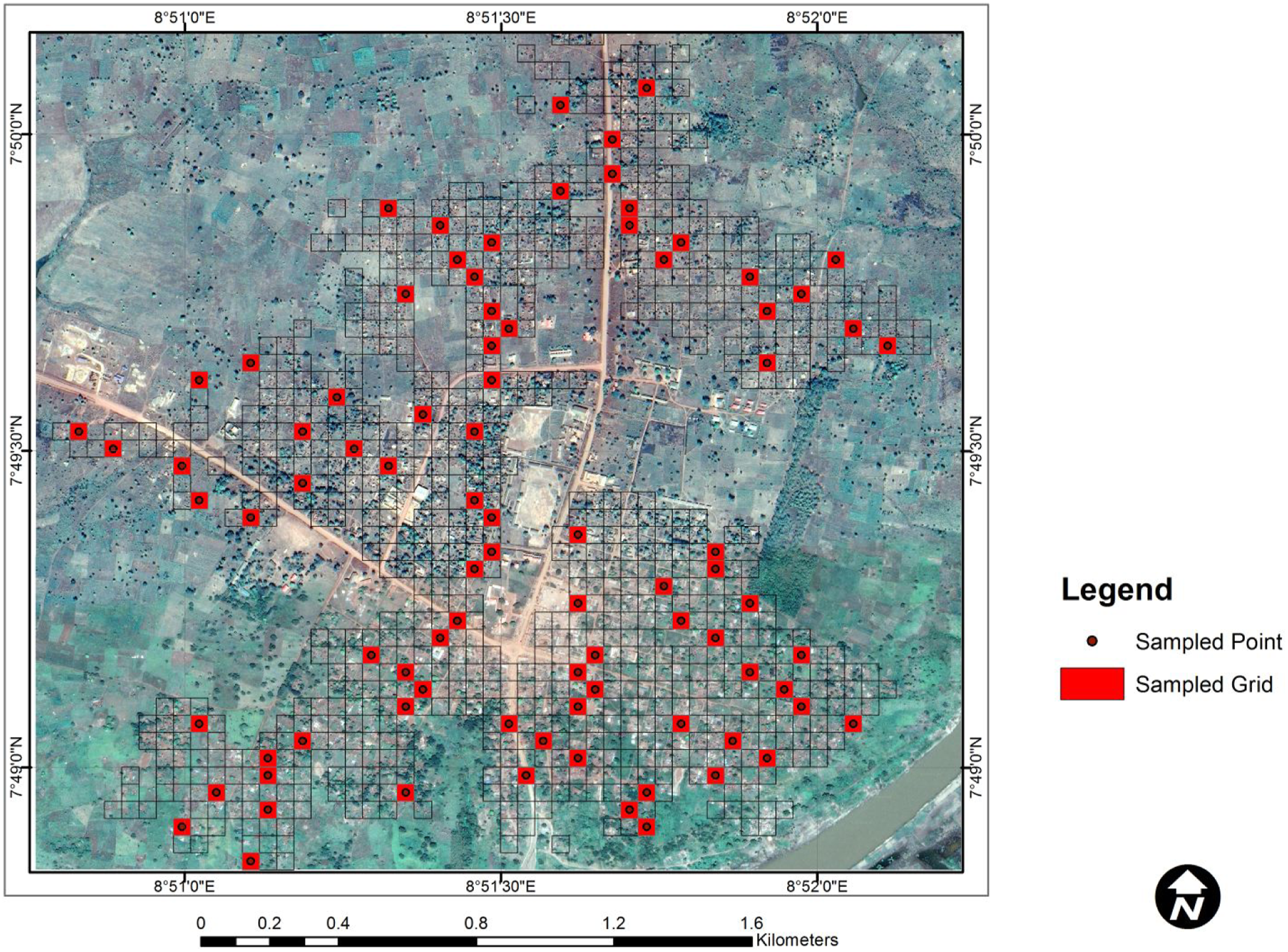
This approach led to the identification of 2772, 117, 2668, and 106 grids in Jos, Barkin Ladi, Makurdi, and Gbajimba, respectively. In Jos and Makurdi, 10% of the grids were sampled. While in Barkin Ladi and Gbajimba, 20% of the grids were sampled. The number of residential buildings identified in Jos and Makurdi were 9552 and 8842, respectively. On the other hand, 912 and 884 buildings were identified in Barkin Ladi and Gbajimba. These proportions constituted the clusters where households were chosen for questionnaire administration. The study is based on the assumption that all respondents must have spent sufficient years in the community to possess the required environmental awareness regarding the dynamics of violent conflict in the study areas. Therefore, questionnaire was administered to an individual whose age is not below the age of 23 years, and would have resided in the community for at least a period of 5 years at the time of the interview. The 5 years threshold above the suffrage age (18 years) in Nigeria was set to ensure that such a respondent would possess adequate knowledge and experiences about the history of violent conflicts in the study area.
Measurement of dependent and independent variables
Community resilience
The resilience of a community encompasses all of the resources and assets available in the community. Many parameters are aggregated to indicate and measure community resilience. These parameters can be categorized under social, economic, institutional, infrastructure, community capital, and environment domains. This study evaluated ways to measure community resilience over time to determine if a community is becoming more resilient to violent conflict. To achieve this, the study identified components of community resilience that adequately reflect changes or improvements in resilience over time, and that could inform local decision-making for resilience among the residents. Therefore, respondents were asked to rate the effectiveness of five parameters identified as the critical building blocks of resilience in five domains. These are: informal violence prevention and conflict management methods, economic and social development, political development and governance, justice and security, communication and education. These are further divided into 37 subjective indicators through which resilience has been measured over the years in past studies (Marshall et al., 2010; Nguyen and James, 2013). These were measured on a five-point Likert scale ranging from 1 = very ineffective, 2 = ineffective, 3 = neutral, 4 = effective, and 5 = very effective. For ease of operationalization, the data was transformed from Likert scale into categorical predictor. The community resilience indicators were transformed by grouping into categories and values to generate a mean (Σ) for each of the cases. Thus, the ordinal data was transformed into continuous variable. In Statistical Package for the Social Sciences (SPSS), this type of transformation is called recoding. Fundamental reasons for variable transformation include reducing skewness, equal spreads, linear, and additive relationships (Emerson and Stoto, 1983). For the purpose of this study, the 37 variables constituting community resilience were recoded into a single variable with Cronbach’s alpha test to determine their reliability. This step yielded .934 and satisfied the normality of their distributions test. Thus, to satisfy the assumption for multiple regression, the dependent variable was collapsed to binary variables based on a subjective assessment of the most appropriate dichotomization: yes or no. Yes is 1 and no is 0. Responses such as effective and very effective were collapsed to 1, while very ineffective, ineffective, and neutral were set to 0. The inclusion of the neutral option as a dummy value is based on the redundancy of the value, since it mostly yielded “no response.”
Age
The age of respondent is a critical predictor of resilience and awareness about issues relating to violent conflict. The data for the measurement of age of respondents was captured through open-ended questions. Respondents were given the opportunity to reflect on the time they have lived and state it accordingly.
Education
This variable is taken to capture the number of years the respondent spent in formal school system. The data for the measurement of educational status of respondents was taken through open-ended questions. Respondents were given the opportunity to reflect on the time they have spent in pursuit of formal education over the years and state it accordingly.
Income
Income of respondents is another important variable in the explanation of community resilience to violent conflict in any given area. This variable is a measure of wealth and is a determinant of community or household resilience to violent conflicts. That is, respondents were given the opportunity to reflect on how much they earn monthly and state it accordingly.
Length of stay
This refers to the number of year(s) a household has lived in an area. Bastaminia et al. (2017) observed that increased length of stay in a neighborhood could increase the overall resilience level of the households in a community. The underlying assumption is that a person that has stayed in an environment for a longer period would have a more detailed experience of the environment than a new resident. Respondents were given the opportunity to reflect on the time they have lived in their communities over the years and state it accordingly.
Household size
Household size is measured by the number of family members living together under one roof and maintaining a unique eating arrangement (National Bureau of Statistics, 2009). Respondents were given the opportunity to reflect the number of persons in their families and state it accordingly.
Number of household members in active employment
This variable was captured to determine the influence of the contribution of other economically active household members on community resilience to violent conflict by focusing on their role in household income generation. The underlying assumption on this note is that other economically active household members could expand the pool of income earners in the household.
Collective efficacy
This is defined as a group’s shared belief in its conjoint capabilities to organize and execute the courses of action required to reach certain achievements (Bandura, 1997). Within a community, “perceived collective efficacy represents the beliefs of group members concerning the performance capability of a social system as a whole” (Bandura, 1997). In this study, collective efficacy was assessed using a five-point Likert scale.
Social capital
This refers to anything that facilitates individual or collective action. Civic engagement is an observable result of social capital, which is defined as the sum of individual and collective actions designed to identify and address issues of public concern. More broadly, civic engagement refers to a set of actions and efforts, a feeling of belonging, in local communities. For the measurement of social capital, the study employed a 5-point Likert scale to provide a greater variation of responses (1 = strongly disagree; 2 = disagree; 3 = neither agree nor disagree, 4 = agree; 5 = strongly agree).
Trust
Trust is a major structure that supports community resilience in any society. This can be broadly categorized into two parts: trust in the people and trust in local institutions. Levels of general and specific trust in others in the community can foster collective efficacy (Fukuyama, 1995). On a scale of 1 to 5, where 1 means to a very small extent, 2 = to a small extent, 3 = neither small nor great extent, 4 = to a great extent, and 5 means a very great extent, respondents were asked how much do you trust the people from your ethnic group, people from other ethnic groups, and the police?
Group identity
Group identity provides a strong connection to resilience because it constitutes a foundation for a variety of social effects, from humans’ ability to feel, act, and think as members of a social group to intergroup behaviors, such as discrimination, confrontation, and cooperation (David and Bar-Tal, 2009). On a scale of 5 to 1, where 5 = strongly agree, 4 = somewhat agree, 3 = neither agree nor disagree, 2 = disagree, and 1 = strongly disagree, respondents were asked how frequently have people worked with others for the benefit of the community based on the following: people in this community feel like they belong to the community, people in this community are committed to the well-being of the community, people in this community help each other, and this community treats people fairly no matter what their background is?
Social solidarity
Social solidarity, which was developed systematically by Durkheim (1933), is an important sociological concept that is also closely related to community resilience. In this study, respondents were asked to rate the likelihood that community members would get together to help one another in the face of violent conflict on a 5-point Likert scale (1 = very unlikely; 2 = somewhat likely; 3 = neither likely or unlikely, 4 = somewhat likely; and 5 = very likely).
Bonding
Bonding is theoretically constructed as co-operative relations between members of a community who see themselves as being similar in terms of their shared social identity. Respondents were asked to rate how strong is the feeling of togetherness or closeness in their community particularly in the wake of violent conflict. This was measured on a 5-point Likert scale to provide a greater variation of responses (1 = very distant; 2 = somewhat distant; 3 = neither distant nor close, 4 = somewhat close; and 5 = very close).
Data analysis
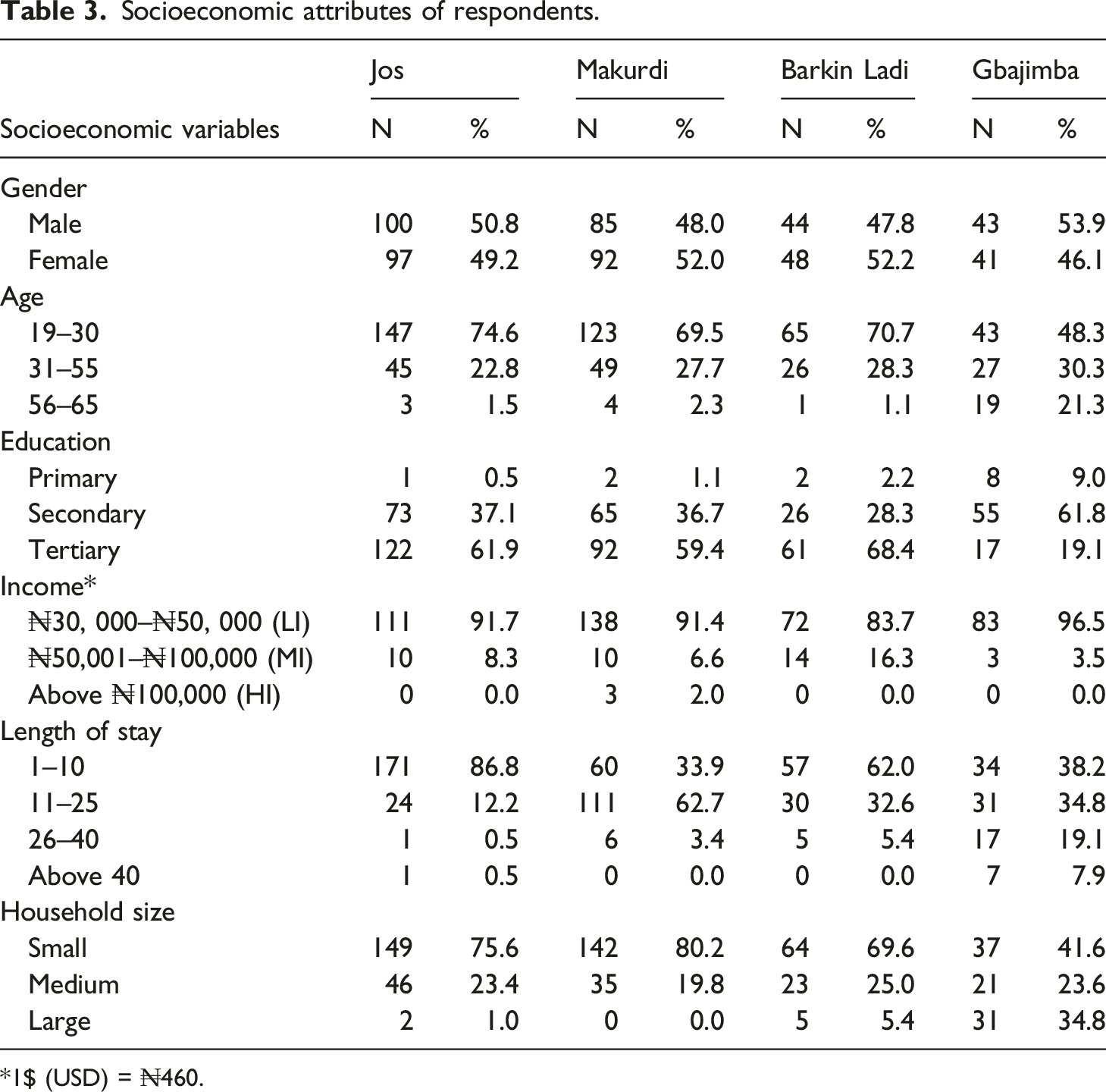
Socioeconomic attributes of respondents.
*1$ (USD) =
The information obtained on the house heads, indicated that in Jos, 37% and 61.9% of the respondents had obtained secondary and tertiary qualifications respectively, in Makurdi, these accounted for 36.7% and 59.4%. In Barkin Ladi and Gbajimba, only 26% and 61.8% of the residents have obtained secondary school qualifications. Furthermore, the income classification for the household heads was derived from Ojewale (2014), benchmarked according to the Federal Government Civil Service minimum wage. Therefore, household heads who earned
The number of years a respondent has been living in the study area was categorized into four. That is, 1–10 years, 11–25 years, 26–40 years, and above 40 years. As shown in Table 3, it is evident that 86.8% and 33.9% of the residents had, respectively, lived in Jos and Makurdi between 1 and 10 years. The proportions of respondents that had lived for 11–25 years in Jos, Makurdi, Barkin Ladi, and Gbajimba were 12.2%, 62.7%, 32.6%, and 34.8%, respectively. According to the National Bureau of Statistics (2009), the national average of household size in Nigeria is 6. Household sizes were grouped into three: small (1–6 persons), medium (7–10 persons), and large (above 10 persons) (Ojewale, 2014). Findings showed that the study area is significantly dominated by household with small sized family status. These accounted for 75.6%, 80.2%, 69.6%, and 41.6% in Jos, Makurdi, Barkin Ladi, and Gbajimba, respectively.
Predictors of community resilience to violent conflict
Correlation coefficient of the pattern of association between socioeconomic factors and community resilience.
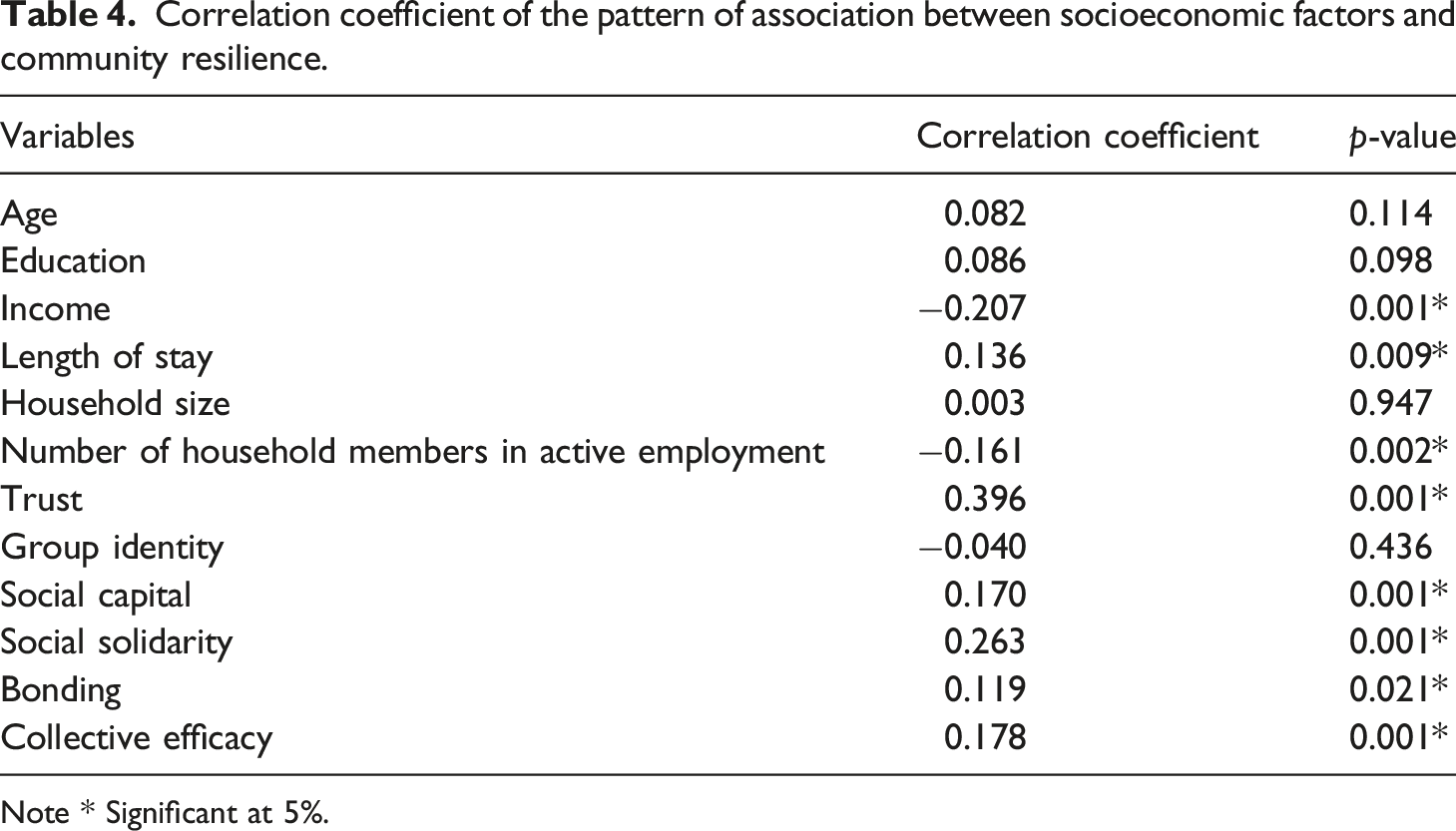
Note * Significant at 5%.
Model summary.
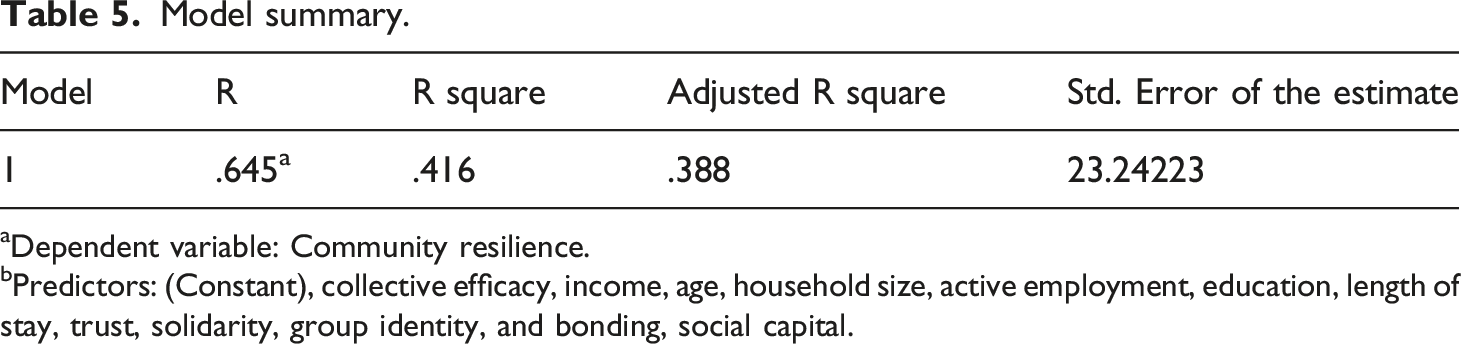
aDependent variable: Community resilience.
bPredictors: (Constant), collective efficacy, income, age, household size, active employment, education, length of stay, trust, solidarity, group identity, and bonding, social capital.
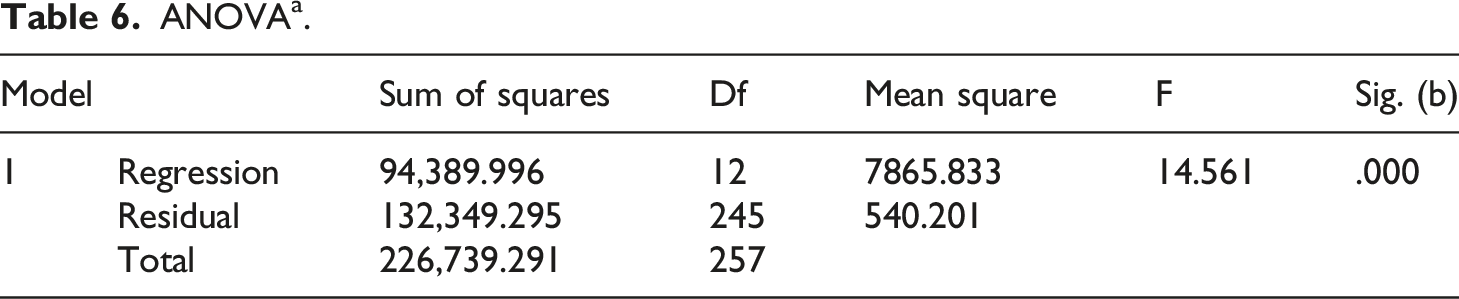
ANOVAa.
Discussions
Regression of coefficients of factors influencing community resilience to violent conflict.
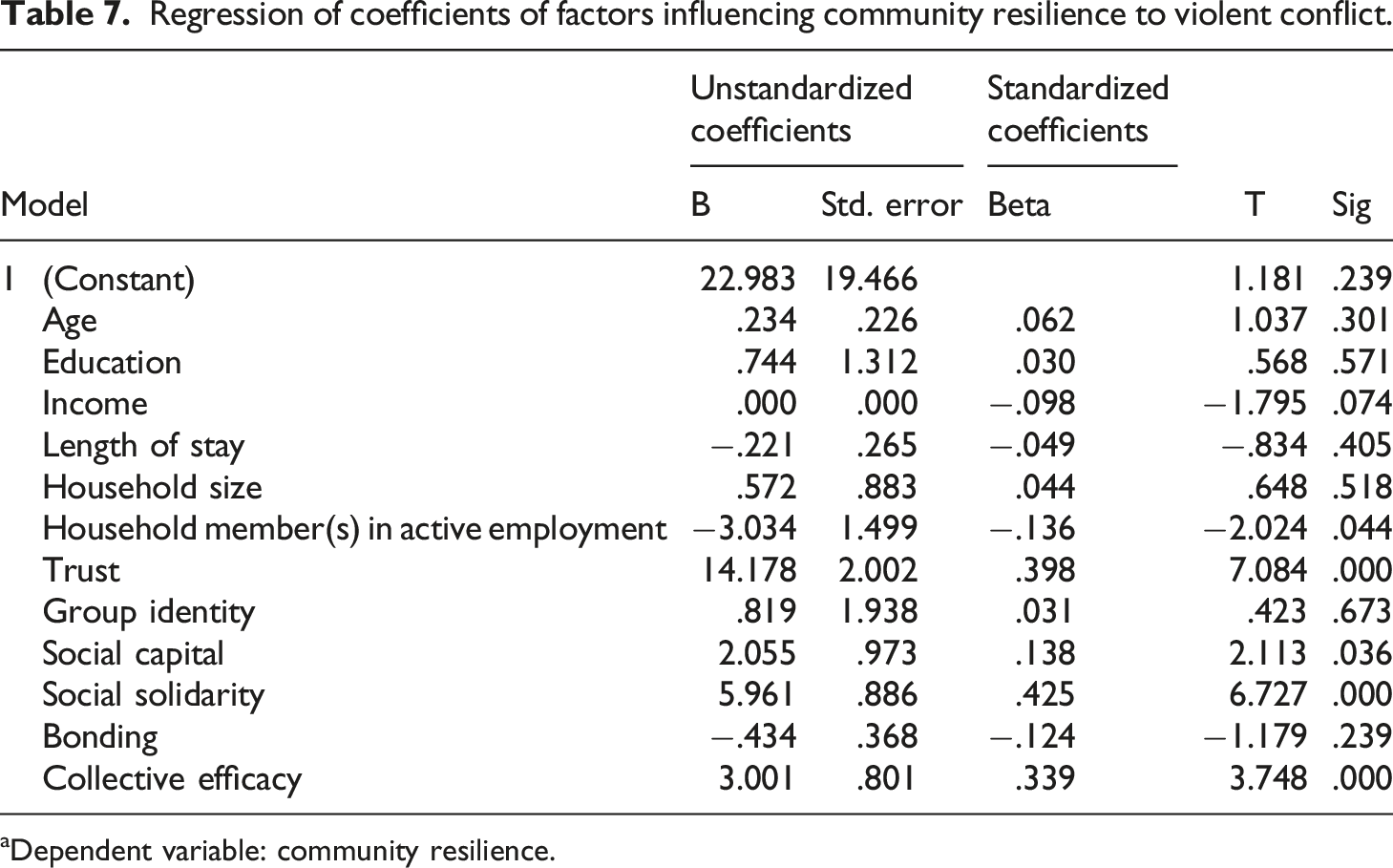
aDependent variable: community resilience.
The final model which emerged from the stepwise regression contained three predictor variables: social solidarity, group identity, and collective efficacy. These factors were further interrogated and discussed. They are closely linked to resilience because they constitute the foundation for a variety of social effects, from the capacity of residents to feel, act, and think as constituents of a social group and cooperate to address violent conflict in the study area. The emergence and consideration of social identity variable is important for the application of community resilience because it has been shown to play a large role in place-based improvements and planning (Manzo and Perkins, 2006). In Benue and Plateau States, in spite of the historical experiences of violent conflict, residents have established and maintained mechanisms to promote peace, tolerance, solidarity, and respect for each another. For instance, communities partnered with state-based civil society organizations. These partnerships and social solidarity led to the establishment of an accountability forum for fostering dialogue among pastoralists and farmers. At the core of the indigenous conflicts management methods were: mediation, support through dispute resolution, community truth and reconciliation groups, inter-religious dialogue; and at the helm of this structure were traditional institutions of justice. These were supported by chiefdoms, lesser chieftaincies, and district heads across the towns, cities, and peri-urban neighborhoods.
In Jos, which is at the center of the Middle Belt, disparate indigenous communities were well organized and enjoyed high levels of solidarity among themselves. These included inter-religious dialogue where conflicts had been identified and resolved amicably. It was clear that people disagreed with one another, but the community had managed to ensure that minimal conflict arose in the city in the past 5 years. By identifying indigenous leaders and strengthening traditional justice systems, communities were able to build bridges between diverse warring groups. One example was the community resilience forum in Benue State. Another was the youth and peaceful co-existence in community initiative in Plateau State. At the core of the indigenous conflict management methods are: mediation, support through indigenous dispute resolution, community truth and reconciliation groups, inter-religious dialogue, non-violent campaigns by respected community leaders, iterated capacity building on conflict monitoring and resolution, and cultural exchanges. Traditional leaders also address certain conflict at their frozen state before they turn violent in Jos. For instance, in 2013, five communities comprised of Afizere, Anaguta, Berom, Fulani, and Hausa reached widely respected agreements, negotiated by the Humanitarian Dialogue Centre. The agreement lists the issues that need to be discussed, the different opinions on each of these issues by each ethnic group, the relevant stakeholders to be included on each issue, and a comprehensive time frame for addressing it (as well as activities to be conducted by the Humanitarian Dialogue Centre to assist efforts). There were 30 issues covering governance, crime, transitional justice, access, the indigeneship issue, demarcation of boundaries, employment, the market, cultural heritage, and sanctions among others (Centre for Humanitarian Dialogue, 2013). These initiatives provided community leaders, women, and young people the opportunity to peacefully express grievances with the aim of healing.
Communities also worked with various actors. These included state actors like the Nigeria police, civil society organizations, and international nongovernmental organizations. The partnership between the state and non-state actors also supported community policing. This approach ensured the security needs of all segments of the population were taken into account. It encompassed activities aimed at: preventing the outbreak, escalation, and recurrence of violent attacks and assisting parties to end—or resist—impending attacks from criminal aggressors. It also involved addressing root causes such as the state’s inability to protect most citizens against violent crime and the proliferation of small arms and light weapons. The study established that people felt that the forum helped prevent conflicts in the communities. It fosters cooperation between the people, vigilante groups, and the formal policing system. Some communities also took on civic education. This involved using media campaigns about training residents in conflict management and peace building. There were also concerted efforts to include peace education in schools, religious institutions, and through public dialogue. Furthermore, civic education has become a stabilizing factor in most communities. Drawing from the array of interrelated activities and programs being facilitated by the state and non-state actors in Makurdi towards building community resilience to violent conflicts, the study notes that civic education provides a positive framework for collective identity. It has become a stabilizing factor in the city considering the protracted negative impacts of violent conflict in the peri-urban settlements of Makurdi.
Conclusions
The study identified social solidarity, group identity, collective efficacy, number of household member(s) in active employment, and trust as the significant determinants of community resilience to violent conflict. The implications of the research findings could influence theories, policies, and practices. For theoretical implication, this result suggests that we can better understand how social and economic factors influence community resilience to violent conflict by considering how social solidarity coupled with group identities influence how individuals and communities can successfully cooperate to mitigate the impact of violent conflict. When working with rural and urban communities, it will be especially important to account for social solidarity, collective efficacy, and trust in strengthening community resilience to violent conflict.
In policy and practice, the findings demonstrate that although numerous programs and activities by nongovernmental agencies provide support for specific efforts geared towards building community resilience, a political and social environment truly supportive of the development of community-based, sustainable, and resilience-focused collaboration would be pivotal. The absence of/or inadequate support from government would leave a community to determine independently what works and is sustainable. Therefore, government collaboration with communities towards enhancing resilience to violent conflict would be very effective when community-level programs are tied with specific government agencies for additional support and technical expertise.
Social solidarity emerged in this study as a major factor influencing community resilience in central Nigeria. Therefore, for the purpose of further study and with the increasing operations of national and international development partners in the conflict setting, there is a need to explore the role of nongovernmental organizations in building community resilience to violent conflict as the cementing force that binds individuals and facilitates collective action in Nigeria’s north central.
Footnotes
Declaration of conflicting interests
The author(s) declared no potential conflicts of interest with respect to the research, authorship, and/or publication of this article.
Funding
The author(s) received no financial support for the research, authorship, and/or publication of this article.
