




Abstract

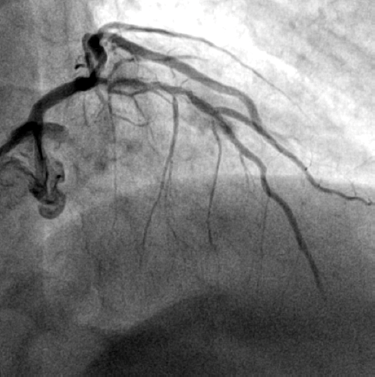
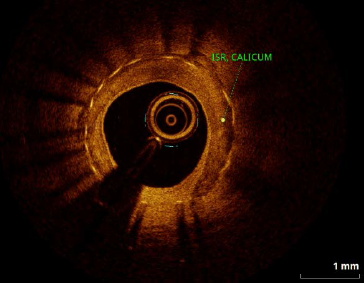
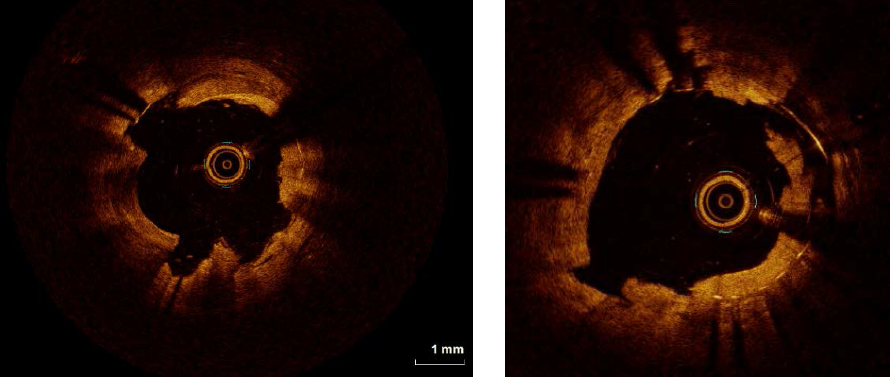
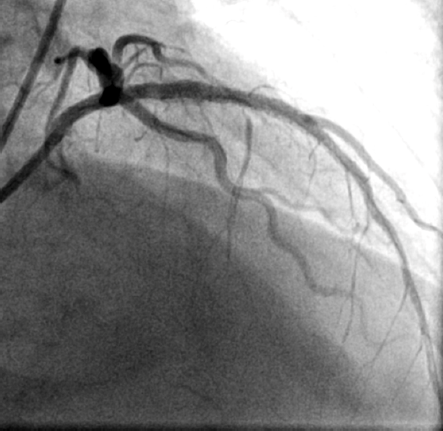
Concentric calcific neo atherosclerosis is a rare cause of in-stent restenosis, which is more common in bare metal stents (BMS). It is a cause of undilatable lesions during the intervention and needs additional lesion preparation. 1 We report the use and effectiveness of ultra-high pressure balloons in this setting with intravascular imaging. A 68-year-old man with a history of percutaneous coronary intervention (PCI) to the left anterior descending artery (LAD) in 2008 with a bare-metal stent now presented with unstable angina. Coronary angiography showed severe restenosis of the LAD stent with slow flow (Figure 1A). The first optical coherence tomography (OCT) run showed intimal hyperplasia with severe concentric calcific neoatherosclerosis in the proximal stent with calcium extending more than 180 degrees in circumference (Figure 1B). Predilation with noncompliant balloons resulted in dog-boning and nonyielding of the lesion. After inflations with OPN NC (SIS Medical AG) of sizes 2.5 × 10 mm and 3 × 10 mm balloons at 40 ATM, a repeat OCT run showed multiple fractures of the calcium with deep fissures suggestive of adequate preparation (Figure 1C, D). The LAD was stented with 2.5 × 12 mm and 3 × 38 mm everolimus-eluting stents (EES) and optimized with an OPN NC balloon (Figure 1E). The final OCT run showed good stent apposition and expansion with a small distal dissection, stented with 2.25 × 14 mm EES. Traditionally, these lesions are managed with cutting balloons or rotational atherectomy. 2 Unlike them, ultra-high-pressure balloons have a better profile, minimal learning curve, and low risk of complications. 3
Left Coronary Angiogram in the Right Anterior Oblique (RAO) Cranial View Showing Significant In-stent Restenosis in the Left Anterior Descending Artery.
Optical Coherence Tomography (OCT) Demonstrating Severe Concentric Calcific Stenosis of the Stent.
OCT Images Showing Disruption of the Calcium with Fissures (Arrows).
Coronary Angiography RAO Cranial View Showing No Residual Stenosis With Good Flow in the LAD.
Footnotes
Declaration of Conflicting Interests
The authors declared no potential conflicts of interest with respect to the research, authorship, and/or publication of this article.
Funding
The authors received no financial support for the research, authorship, and/or publication of this article.
