




Abstract
Background:
Cultural silence around death and dying due to fear, anxiety, norms, taboos, and beliefs has led to social initiatives that are more ‘death-positive’. This silence has had a disproportionate impact on young adults. ‘Death literacy’ has emerged to support greater community awareness and understanding of end-of-life care options through education and dialogue. Arts-based approaches may be particularly relevant for young adults, yet research remains limited.
Objectives:
This knowledge translation project explored arts-based approaches for translating palliative care narrative data into creative forms, examining the feasibility of converting research narratives into accessible art forms that could facilitate engagement with death-related topics.
Design:
This project employed an arts-based knowledge translation approach, co-designing a course for undergraduate artists with researchers, artists and faculty to translate palliative care narratives.
Methods:
The course utilized anonymized text from ethnographic research (K.S. PhD data) examining families and healthcare providers navigating paediatric transplant and palliative care, drawing from 145 journal entries by 18 healthcare providers who documented experiences of empathy, illness, suffering and death. Four undergraduate artists created diverse art forms including collages, sketches, digital drawings, storyboards and journey maps.
Results:
Over 25 artistic works illustrating death and dying experiences were created. The collaborative translation process revealed that undergraduate artists could effectively interpret and visualize complex palliative care narratives through diverse artistic approaches. Course evaluations and informal feedback indicated that artists found the experience meaningful and challenging, and expressed interest in further exploration of death-related topics.
Conclusion:
The translation process produced accessible visual interpretations of complex illness narratives and, based on course feedback, appeared to facilitate openness to death-related discussions. These findings suggest arts-based translation approaches warrant further exploration as potential tools for enhancing death literacy, with future research needed to systematically evaluate their impact on young adults’ comfort and competence with end-of-life topics.
Plain language summary
Cultural silence around death and dying due to fear, anxiety, norms, taboos and beliefs has led to social initiatives that are more ‘death-positive’. This silence has had a disproportionate impact on young adults. ‘Death literacy’ has emerged to support greater community awareness and understanding of end-of-life care options through education and dialogue. Arts-based approaches may be particularly relevant for young adults, yet research remains limited. This knowledge translation project explored arts-based approaches for translating palliative care narrative data into creative forms, examining the feasibility of converting research narratives into accessible art forms that could facilitate engagement with death-related topics. This project employed an arts-based knowledge translation approach, co-designing a course for undergraduate artists with researchers, artists and faculty to translate palliative care narratives examining families and healthcare providers navigating paediatric transplant and palliative care, drawing from 145 journal entries by 18 healthcare providers who documented experiences of empathy, illness, suffering and death. Four undergraduate artists created diverse art forms including collages, sketches, digital drawings, storyboards and journey maps. The collaborative translation process, creating over 25 artistic works, revealed that undergraduate artists could effectively interpret and visualize complex palliative care narratives through diverse artistic approaches. The translation process produced accessible visual interpretations of complex illness narratives and, based on course feedback, appeared to facilitate openness to and interest in death-related discussions. Arts-based translation approaches warrant further exploration as potential tools for enhancing death literacy, with future research needed to systematically evaluate their impact on young adults’ comfort and competence with end-of-life topics.
Keywords
Background
The phenomenon of death denial and the cultural silence around death and dying, acknowledged as major social problems in Western societies,1–5 can contribute to significant levels of fear and anxiety, as well as uncertainty about appropriate end-of-life care.6,7 People of all ages are often unprepared, uncertain and uncomfortable with conversations about their own or a loved one’s illness and possible suffering, which can leave patients as well as friends and family feeling alone or suffering and can result in the loss of relationships.1,7 Death anxiety – conceptualized as the fear of the dying process, of being dead and uncertainty about the future after death – is one of the leading forms of existential suffering, and has been shown to cause panic, dread, angst and anxiety disorder. 8 The phenomenon of death denial can function to disempower people and diminish individual agency while creating systemic barriers to discussing death and dying openly, 6 thereby reinforcing and perpetuating death-related fears.
The historical trajectory of death-related attitudes reveals a significant shift since the 1940s, characterized by a change from death as an accepted, open, often celebrated experience to a privatized, hidden, taboo and even shamed phenomenon.1,2,6,9,10 Before the 20th century, children had greater exposure to death and dying processes, while death rituals remained visible parts of community life.2,11,12 While advances in public health and modern medicine have increased life expectancies, they have simultaneously limited exposure to death and contributed to a death-denying culture in North America.3,4 Death and dying in Western societies have shifted from being considered a ‘natural part of life’ to something from which children need protection.2,11,13–16 As a result, young adults have experienced the greatest death anxiety, concerns about mortality and death denial in comparison to other age groups.5,17,18 Further, many parents, healthcare providers and school educators express discomfort with discussing death and dying with children and young adults. Parents of children with life-threatening illnesses express immense discomfort about discussing loss, dying and illness processes with their children, largely due to inexperience themselves,7,19 yet there is evidence that involving children and young adults in conversations about their health and illness is in fact beneficial for families20–23 and becoming a standard of care in clinical practice. 14
Research has demonstrated that cultivating courage and an open awareness of dying can be effective in overcoming death anxiety. 8 The field of death literacy as a research and clinical focus has rapidly grown in the past decade as part of the larger death education movement in Western society, with the goal of promoting awareness, understanding and dialogue about death and dying. The need to build capacity for death literacy amongst young adults has been identified in the literature as an important priority.16,19,24 Efforts to enhance death literacy across community, healthcare, research and educational settings encompass strategies that develop knowledge bases, experiential understanding, practical skills and support systems that provide access to resources that empower individuals to make informed decisions and choices that align with their values and beliefs. Such initiatives aim to support a readiness to engage in choosing end-of-life options, and typically involve a process of learning about death and dying, exploring feelings and attitudes about discussing death and dying with others and having conversations about this topic.16,19,24 By enhancing death literacy, people can become empowered in the ways in which they plan and respond to dying, death, grief, loss, palliative care and other related concepts and experiences. Animation and film can serve as powerful communication vehicles that cultivate empathy and self-reflection while promoting education and literacy around complex, sensitive health topics for young adults. More broadly, arts-based approaches may be particularly relevant to the needs of young adults.
Arts-based methods
Creative, arts-based approaches offer considerable promise in addressing the knowledge and awareness gap in death literacy described above, given their foundational grounding in storytelling and their novel medium for learning about illness and other sensitive topics. Arts-based research methods encompass any form(s) of art used within the research process for the purpose of creating, understanding and/or communicating and expressing knowledge. 25 These methods are increasingly being utilized within healthcare and academia/education to foster interdisciplinary understanding and collaboration and to promote emotional engagement with complex health topics.26,27 Visual forms such as video and animation, drawings and photography, along with literary approaches including poetry and fictional narratives, as well as performative methods like dance, have all been used to illuminate illness experiences.27,28 There are increasing numbers of scientific publications demonstrating the application of arts-based methods in developing and informing health policy, clinical practice and educating the broader health and public communities on the experience of illness. 26 The Imagining Knowledge Mobilization initiative, launched by the Social Sciences and Humanities Research Council 29 – one of Canada’s three federal research funding agencies – highlights the growing recognition of arts-based approaches for knowledge creation, translation and mobilization internationally. Building on this foundation, exhibitions featuring arts-based research findings have proven to be effective tools for disseminating results to broader audiences, while participatory videos and photos, spoken word and illustrations have advanced storytelling and emotionality in the expression of research.29,30
Within this broader field, arts-based knowledge translation (ABKT) has emerged as a distinct methodological approach specifically focused on translating research findings into accessible creative forms.26,31 ABKT involves researchers systematically identifying key themes and narratives from qualitative data, which artists then interpret and transform into creative formats through collaborative, iterative processes.26,32,33 The methodology typically involves a multi-stage process with researchers first systematically identifying key themes and narratives from qualitative data, which artists then interpret and transform into creative formats through a collaborative, iterative process. Previous studies have demonstrated that ABKT can effectively convert narratives about difficult health topics into diverse art forms, including poetry, visual art, theatre, and animation, making them more accessible to lay audiences while maintaining their emotional authenticity and educational value.33,34 The collaborative nature of ABKT is central to its effectiveness, as it can bring together researchers and artists, and often community members or knowledge users, to jointly create representations through iterative dialogue that honour both the rigour of research data and the interpretive power of artistic expression. 35 This ongoing dialogue throughout the creative process ensures artistic representations remain faithful to the research while effectively communicating its essence through creative expression.26,33 ABKT has proven particularly valuable for translating complex, emotionally laden topics such as illness, suffering and end-of-life experiences into formats that can engage diverse audiences, including young adults, in ways that transcend traditional academic dissemination.
Animated films exemplify the translational potential of arts-based approaches. Through their capacity to transcend traditional representational boundaries, animation can enhance empathy, self-reflection, education and understanding and literacy of complex, sensitive topics such as the experiences of refugees, mental health conditions and end-of-life care.34,36,37 Further, examples of animated conversations about death and dying can be found in Disney and Pixar films portraying end-of-life situations which have promoted engagement in difficult conversations. 37 Animation offers unique advantages for engaging young adults, in that by removing real-life visual aspects and telling stories through animated forms, difficult topics can be conveyed in more intimate, softer and open ways that can facilitate dialogue and shifts in perspectives.36,34 These approaches can facilitate emotional connection and empower viewers to become advocates for social change by widely sharing content over the Internet, enhancing dialogue on sensitive topics and mobilizing action. 34 Moreover, animated content can be rapidly disseminated online and through social media, providing broad access to research-based narratives that might otherwise remain confined to academic audiences.
In this article, we describe a pilot knowledge translation (KT) project involving collaboration between healthcare scientists, undergraduate animation students (hereby referred to as artists) and academic faculty to translate existing palliative care narrative data into diverse art forms using an ABKT approach. We describe the design and implementation of a structured course that guided artists through translating healthcare provider journals into visual narratives, present examples of the artists’ outputs and reflect on what we learned about the feasibility and process of arts-based translation for engaging with death-related topics. First, we discuss our pilot course objectives and design. Second, we present our five collaborative activities with artists and their resulting artwork. Third, we share reflections from course evaluations regarding artists’ experiences with the translation process. Finally, we discuss pedagogical learnings, potential applications and directions for future research.
Design and method
This KT project emerged from a collaboration between qualitative researchers (S.L. and K.S.) and senior faculty (P.B.) at the Ontario College of Art and Design University (OCAD U) to pilot a course exploring arts-based approaches to understanding narrative palliative care data with undergraduate artists. The team later expanded to include K.S., whose expertise in palliative care, community-based research and clinical practice strengthened efforts to explore creative approaches to death literacy. The aim of this collaboration was to contribute, conceptually and practically, to the types of resources that could be available to families, healthcare providers and researchers regarding different ways of understanding and communicating about complex, sensitive phenomena. We also aimed to explore and enhance the diversity of narratives available about illness, suffering, death, waiting in uncertainty, grief and empathy, and a range of other related concepts. This KT project focused on developing visual storytelling and KT approaches towards creating an animated film through a creative process that engaged scientists, artists and faculty in transforming research-based data and developing plans for broader application in clinical and educational settings. The project offered comprehensive training opportunities for undergraduate OCAD U artists in two key areas: developing qualitative research skills to discern and capture key narrative moments from research data; and adapting their artistic styles to meet collaborative project requirements while translating selected health-related concepts, moments and stories into visual narratives. All artists gave permission to include their artwork and real names for this publication.
For her PhD research, K.S. investigated the experiences of families waiting for an organ or bone marrow transplant for their child, and those receiving palliative care, as well as the experiences of their healthcare providers. K.S. worked with four families, including parents, siblings, child waiting for/have received a transplant and 18 healthcare providers, including nurses, doctors, music and play therapists who worked in paediatric transplant and/or palliative care, six of whom were caring for the four participating families through home care. K.S. was interested in how people wait in periods of uncertainty and how suffering could be relationally distributed between people involved in the transplant and palliative processes. K.S.’s study employed narrative ethnography 38 to explore the ‘doing’ of waiting, examining how stories, bodies, contexts, discourses and symbols are studied in local and specific contexts – understanding what storytelling conditions are present, how stories emerge and how they interact with each other through peoples’ lived experiences. K.S. conducted fieldwork over the course of 17 months, which involved multiple methods including home, hospital and hospice visits (one to two times per month with each family), interviews with six parents from four families, and researcher fieldnotes and observations in both inpatient and outpatient settings. By participating physically, socially, sensorially, cognitively, emotionally and empathically in home and hospital life with families, and adopting an observer-as-participant role, 39 K.S. developed detailed understanding of day-to-day waiting experiences. Research participants were recruited through purposive sampling from a homecare agency and paediatric hospice in Southern Ontario, Canada.
As part of her PhD research, K.S. collected journals kept by healthcare providers where they recorded their reflections and perspectives on everyday experiences working with children and families, including relationship dynamics, communication about illness and caretaking, inter-professional communication, waiting for outcomes and how they were feeling. K.S. collected written journals from the 18 healthcare providers over one to several months, resulting in about 145 journal entries (50–100 pages in total) covering topics such as waiting (e.g. physical, psychological, emotional and relational experience of waiting to receive a transplant), (relational) suffering, relationships, communication, feeling/emotional states, the illness process and the clinical process. The PhD study was completed within 1 year of this KT project taking place. The pilot course was conducted during the Winter 2023 semester at OCAD U.
K.S. and P.B., OCAD U Director of Animation, co-designed and taught the pilot course as a credit-bearing Experiential Learning program placement course for undergraduate artists, aiming to bridge academic research with creative outputs. The course was graded on a pass/fail basis, which was consistent with OCAD U standards. S.L. attended the course as a resource to support this collaboration. K.S., with feedback from P.B. and guided by previous studies employing ABKT, selected text around specific themes (empathy, illness, suffering and death) with emotional depth and thematic diversity 26 from the 145 anonymized, de-identified journal entries of healthcare providers for use in the pilot course. The themes emerged from the primary narrative analysis of K.S.’s larger PhD study. K.S. reviewed all entries to re-immerse herself in the narratives’ thematic range, then selected entries based on several considerations. First, she focused on emotional complexity and range, selecting entries that directly acknowledged emotions such as grief and joy alongside those hinting at emotions through stories. Second, she deliberately chose entries representative of the range of healthcare provider observations and experiences, including stories about siblings and partners as well as individual patient narratives. Third, she selected entries offering variety in abstraction level – some abstract and conceptual, others concrete and specific with detailed observations. Fourth, entries with compelling, vivid descriptions informed by feelings or evocative language were prioritized. Fifth, the selection aimed to provide thematic diversity so artists could translate diverse experiences and journal entry styles into various arts-based forms.
All classes, check-ins and initial meetings prior to the course start date took place online except for the final in-person class at OCAD U. In advance of the course start date and before any artists registered for the course, K.S. and P.B. met with interested artists for 90 min as a group to discuss what the course was about and answer any questions. Four artists attended this introductory session and all four subsequently enrolled in the course. During this meeting, we shared that they would be dealing with topics of death and dying and explained that journal entries may be challenging to read through. We outlined how they would be supported throughout the process and described the bi-weekly meetings that would be held to discuss work done, learnings and support. During these preliminary discussions, artists openly shared diverse personal backgrounds, with some having limited exposure to illness experiences and others having encountered personal loss. We also explained that they would learn research skills including reading and analysing research results and developing qualitative research capacities, and that they would be provided with in-depth feedback on their work throughout the semester.
The four undergraduate artists (third- and fourth-year students, typically aged 20–22) were tasked with transforming selected text from the healthcare provider journals into different arts-based forms (e.g. collages/moodboards, sketches, digital drawings, sequential narratives/storyboards, storybook illustration, short graphic novels and patient journey mapping; these art forms will be described in the next section) as building blocks for a future animation development. Within the course, K.S. and P.B. guided artists to select moments, emotions and feeling states from selected journals to reflect those moments and/or emotions in their artwork. In collaboration with artists, K.S. and P.B. explored styles, modes and formats to represent the emotional and experiential dimensions within the journals. They intentionally left artistic styles open for many activities and, working with the artists, explored different approaches to examine how style impacts representations of death and dying and which styles might translate best – both emotionally and digitally – to representing sensitive health topics in animation. K.S. and P.B. had bi-weekly meetings throughout the semester to discuss the creative process, emerging artistic creations and the personal impact of engaging with what could be considered sensitive material. Recognizing the potentially challenging nature of working with themes of illness and death, K.S. and P.B. provided artists with a comprehensive list of support services and had regular individual check-ins with artists during scheduled meetings and outside of regular meetings to facilitate their wellbeing throughout the course.
K.S. and P.B. conducted 10 classes consisting of 5 sessions with new activities, 4 check-ins and progress review sessions, and 1 final presentation and wrap-up session. As part of university requirements for placement courses, artists completed anonymized formal course evaluations after the course ended. These standard course evaluations provided feedback on course delivery and insights into how artists experienced the process of translating narrative data into visual art forms. During the final in-person class session, we also held an informal group discussion where artists shared their reflections on the course experience, what they learned from the translation process and recommendations for future iterations. The check-ins provided assignment clarification and feedback on artists’ creative work. Bi-weekly classes were structured with a roundtable check-in with artists, overview of the plan for that meeting, a review of the previous week’s activity and a discussion of the upcoming activity. During classes, the artists received feedback from the course leaders as well as from their peers, from creative, technical and research perspectives, including how the creative works were reflecting larger concepts within the journals. Class discussions explored not only technical and artistic dimensions but also the emotional content of the narratives, artists’ responses to the death-related material and emerging themes across their creative interpretations. Feedback from peers offered experience with peer mentorship, and sessions aimed to develop capacity with respect to qualitative research, further developing their critical thinking skills, and gaining experience receiving and incorporating interdisciplinary feedback on their work (e.g. adaptability). Artists were asked to reflect on their own work and explain their creative outputs/assigned work, what key messages, moments, emotions they focused upon, what narratives they expressed, why they chose to create their work the way they did and their process of translating health-related data or text into visual art pieces. The course instructors fostered a warm, open and kind space to share and reflect on artists’ processes. A thorough overview of each activity and resulting artwork will be discussed and shown in the next section.
Results
The following describes the five activities and presents examples of visual art outputs as completed for the course. We share 20 images (of the over 25 pieces) of artwork produced from the course, all depicting the creative diversity of the artists’ reflections on death and dying through art. Artists have requested that their real names, not a pseudonym, be provided in this paper and with their artwork. All other names from the original research as recorded in the journal entries and entry summaries have been changed, and all places, dates and other identifying information have been changed to maintain confidentiality. A summary of the journal entries selected for each activity are provided throughout the results section to offer context for artists’ creative works.
Activity 1: Provider observations and collages or moodboards
For the first activity, artists were invited to create collages or ‘moodboards’ from the reflections of Monique, a nurse working at a paediatric hospice. A moodboard is a collage of imagery, usually found materials from books or online sources, suggesting a range of visual styles, textures, artistic techniques or visual/historical references, to serve as visual brainstorming in the early stages of an animation production process, sometimes to get stakeholder approval for a creative direction. In her journal entry, Monique details what she describes as families living ‘in this between time’ that pushes families to develop new rhythms and patterns while caring for their babies approaching end of life. She describes how babies near end of life have fewer caregiving needs that typically structure a parent’s day such as feeding and diaper changes and rather they sleep abundantly. Within this shift, she observes that families often have extra time on their hands. Monique describes the patterns she has observed in families and the new rhythms they must adjust to while caring for a baby with months to live. She notes how this abundance of time can draw parents into cycles of ‘what if’ thinking – those persistent questions about pregnancy decisions, the sushi, the wine, that hot tub. Her reflection moves towards an appreciation of how hospice amenities like kitchens can become spaces where families create meaningful routines and gentle distractions during a profoundly difficult journey.
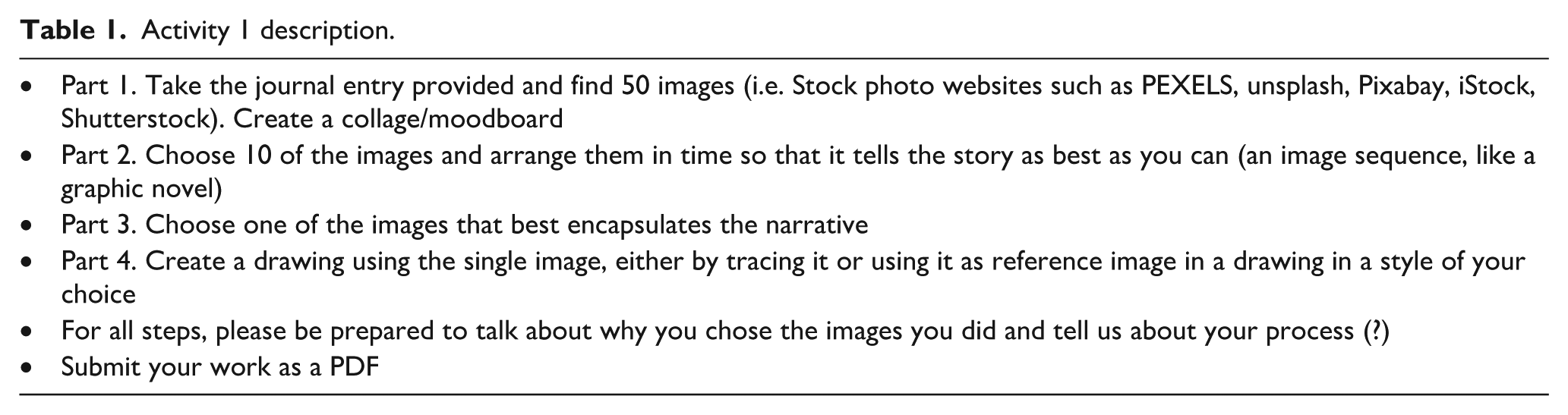
We present six creative works from artists including collages/moodboards, an image sequence, and drawings that depict a single image moment from their collages/moodboards (Table 1; Figures 1–6).
Activity 1 description.

Collage/moodboard by Sasha Rodneva (Activity Part 1).

Collage/moodboard by Skylar Kim (Activity Part 1).

Narrative image sequence by Robin Smith (Activity Part 2).

Drawing in style of choice by Sasha Rodneva (Activity Part 4).

Drawing in style of choice by Sasha Rodneva (Activity Part 4).
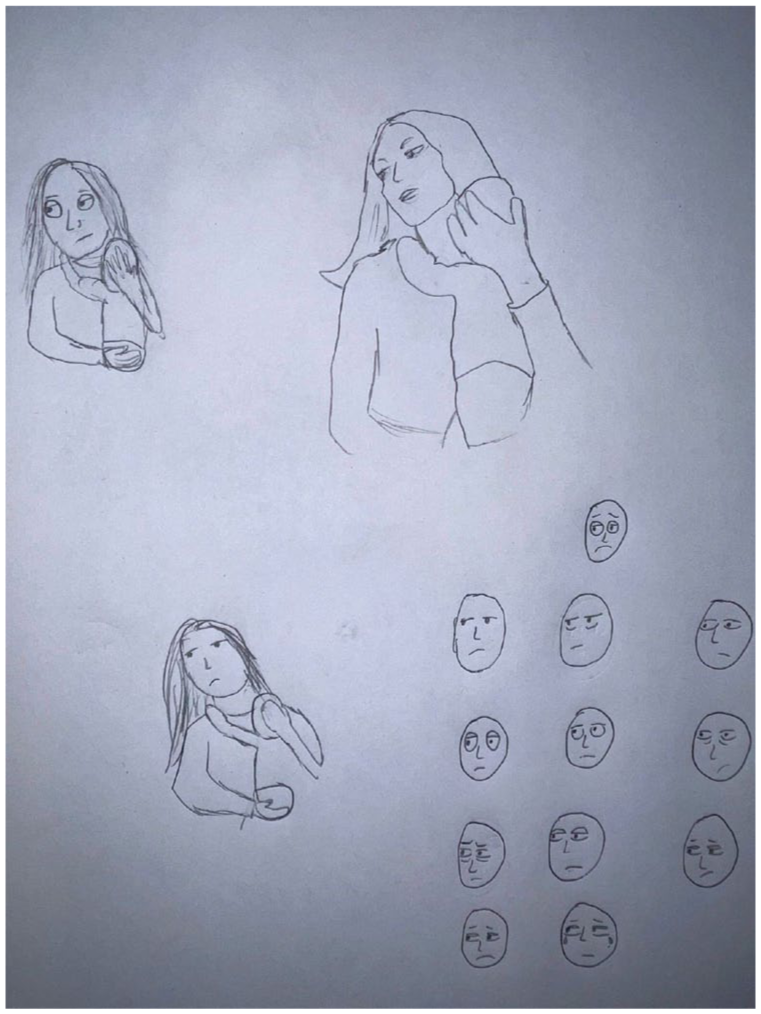
Drawing in style of choice by Brandon Po (Activity Part 4).
The first collage/moodboard by Sasha (Figure 1) brings into focus the concepts of grief, connection, the rhythms of waiting and caring and the burden of having ‘extra time’ on parents’ hands. Collage/moodboards can reflect a wide range of experiences in a single frame, and in this exercise were helpful to understand how emotions are depicted, or not, by mainstream media. Sasha has selected a white feather as a metaphor to reflect the sense of time moving slowly while waiting with a child with a life-limiting condition (middle left row). She also captures a mother’s desire to hold and cuddle her baby, even as day-to-day life continues, shown through her image of a mother holding her baby while working on her laptop (bottom row).
Similar to Sasha, Skylar chose moments of mothers holding and bonding with their babies, metaphors to represent time and images displaying a range of emotions (e.g. anger, anxiety, sadness, emptiness, hope). Her collage/moodboard (Figure 2) also captures feelings of time’s passage through symbols like the water droplets, changing seasons, a broken hourglass and a marathon, while also incorporating fathers’ experiences (Figure 3).
For the final component of this activity, artists selected a single image from their collage/moodboard that best captured the narrative represented in the journal entry. All four artists chose to draw an image depicting a parent holding their child. Sasha’s drawing (Figure 4) captures a mother’s overwhelming desire to remain close to her baby while feeling time pulling her baby away from her. Working digitally, but emulating charcoal’s textural qualities, Sasha evokes the fleeting or unstable nature of the baby’s life. Black and white, with a range of subtle greys, also evokes nostalgia, memory or sadness.
Sasha created a second drawing (Figure 5) and portrays a mother grappling with thoughts about whether she did something during her pregnancy that contributed to her baby’s illness.
In the next drawing, Brandon shared an earlier sketch to show his progression and process for depicting grief through facial expression (Figure 6).
Activity 2: Key narrative moments and digital drawing
The second activity invited artists to engage with a journal entry from Michelle, a nurse working at a paediatric hospice. Michelle tells the story of her connection with a child with a brain tumour and her experience witnessing his physical decline, describing the child as looking ‘so wasted’. She described the parents as devoted ‘keeping [the child’s] spirits up, praying for miracles, focusing on happy moments amongst the horror’. Michelle recounted a pivotal moment when she clinically recognized her young patient was near death and woke the child’s mother so she could hold her child when he died: I ran straight to his room and woke his sleeping mother, telling her it was time to get into bed with him. [child] died in his mother’s arms, it was profoundly sad and yet beautiful. . .I knew that without my actions, his mother would have been sleeping when he died, instead she was caressing him, loving him, whispering words of peace and love to him.
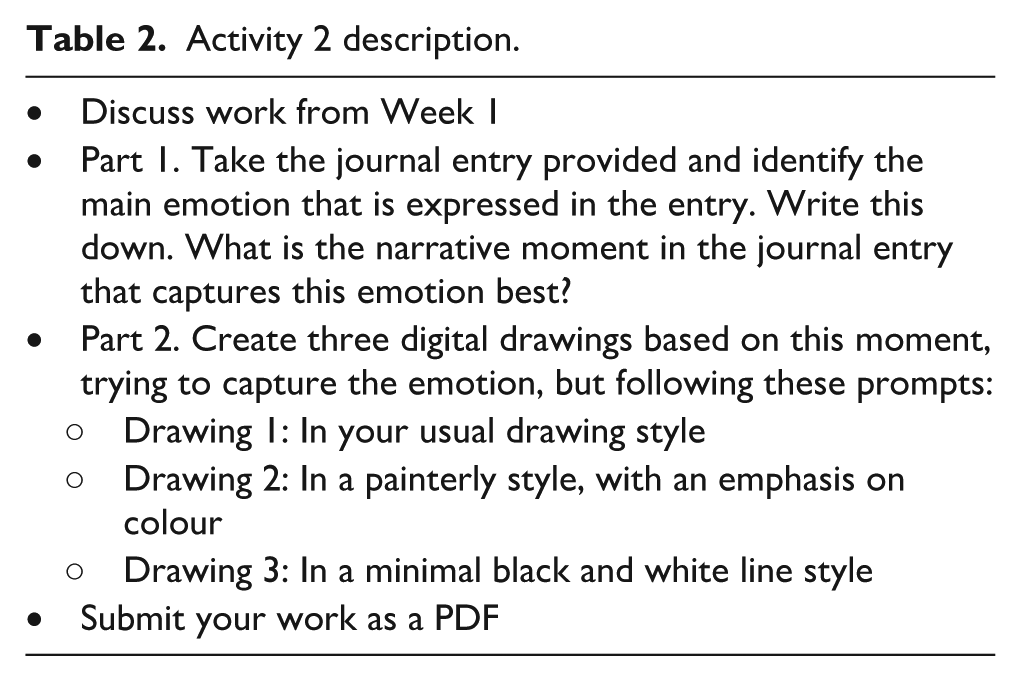
Each artist chose to depict this tender moment in their digital drawings. The four works presented here, rendered in three distinct styles, reflects each artists’ interpretation of what they identified as the key narrative moment and central emotion this entry (Table 2; Figures 7 and 8).
Activity 2 description.

Painterly style, with an emphasis on colour digital drawing by Sasha Rodneva.
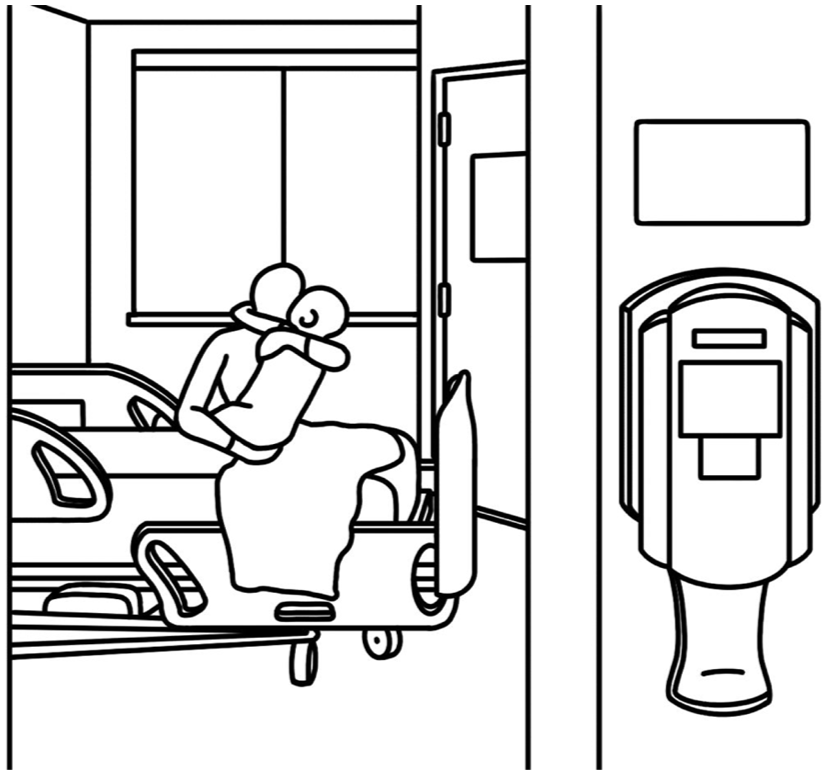
Minimal black and white line style digital drawing by Skylar Kim.
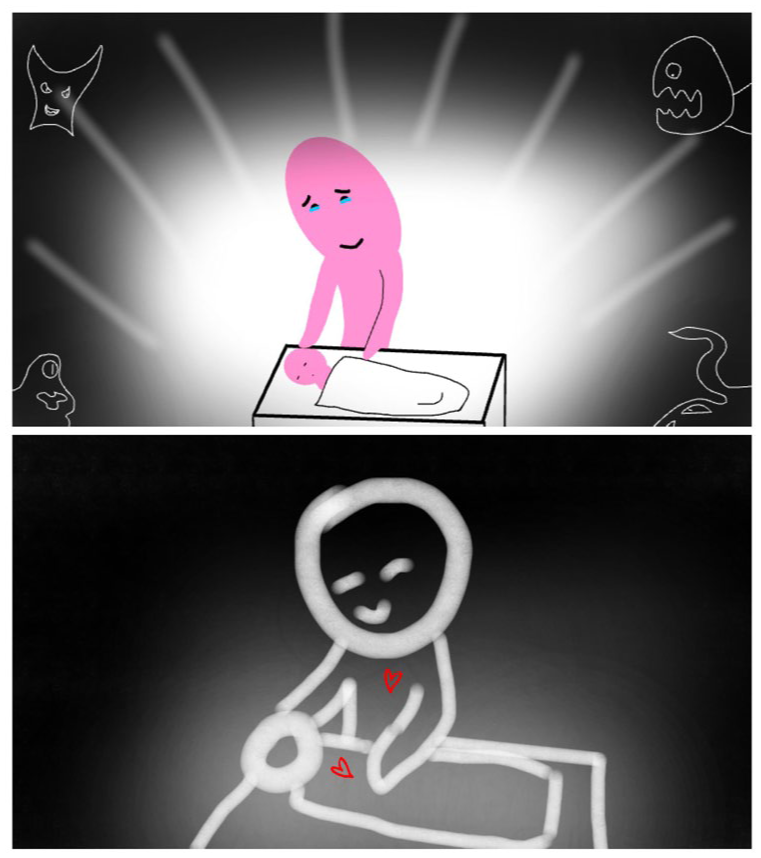
Each artist brought their own distinctive drawing style to the course, which became more apparent in the second activity. Throughout the course, we explored various styles, formats, colours and modes of representing moments and emotions to determine which approaches would best translate into animation while communicating sensitive health information. For example, Robin’s work reflected a fantasy-inspired style (Figure 9) while Brandon’s showed a more cartoon-like style (Figure 10).

Digital drawing in style of own choosing by Robin Smith.
Digital drawing in style of own choosing by Brandon Po.
Robin’s work (Figure 9) captures the emotion of grief and highlights a moment of connection – themes reflected across all four artists’ digital drawings. However, Robin also chose to include the nurse’s perspective, depicting her facial expressions and emotional reactions as she witnesses this moment of both loss and beauty. In Brandon’s digital drawing (Figure 10), he portrayed love and fear as the central emotions, showing the moment of connection and loss as a parent remains with their child at death, similar to the other three artists. Without prompting, all artists highlighted that the dying process was full of ‘this and that’ and not either/or in that it was full of love and fear as well as grief and connection. These contradictions were a major theme in K.S.’ dissertation work7,40–42 and appeared consistently throughout the artists’ work.
Activity 3: ‘Connection’ and digital drawing
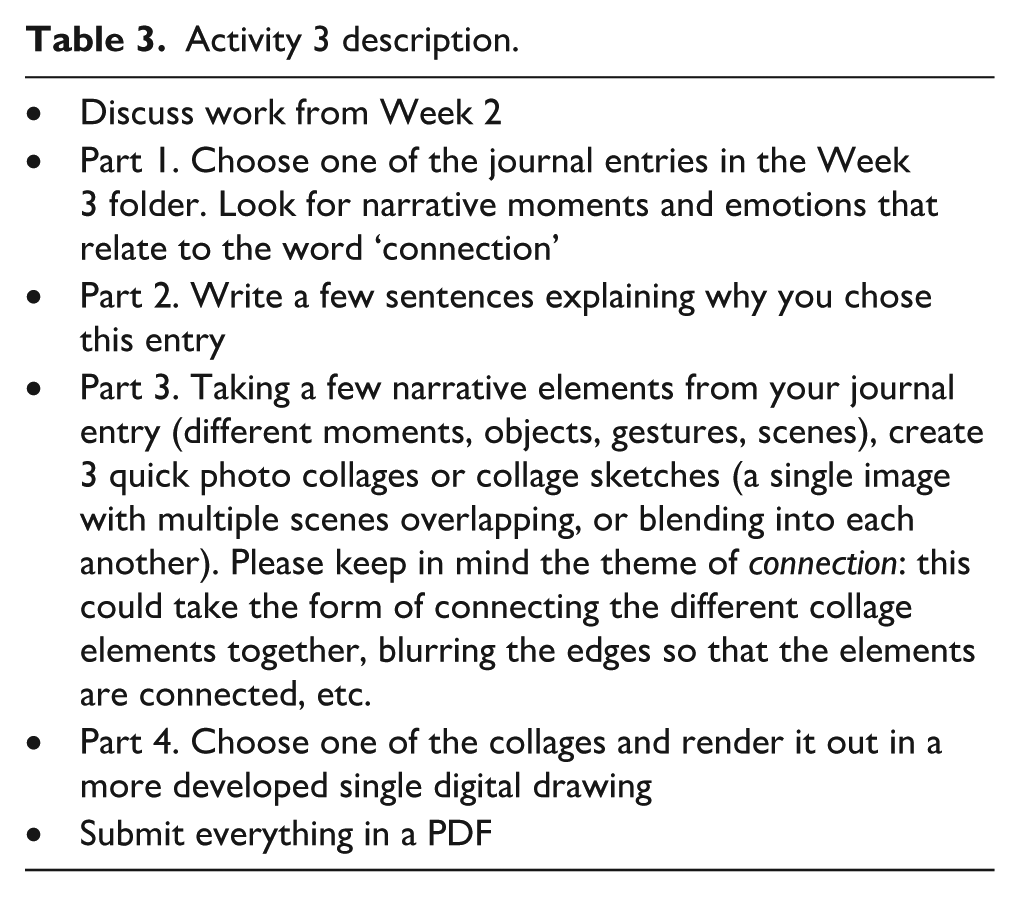
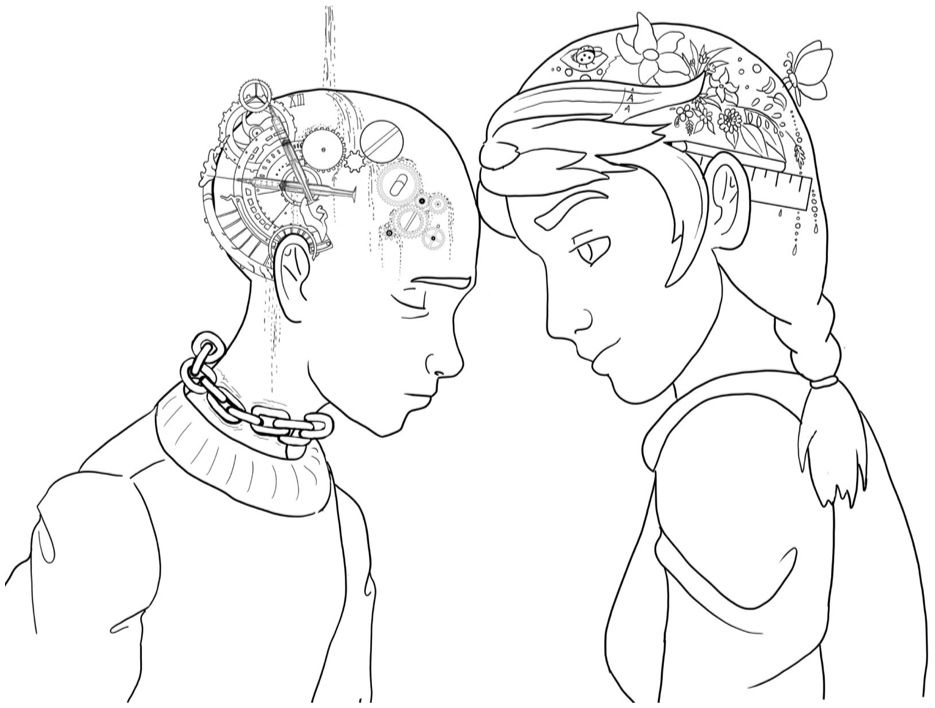
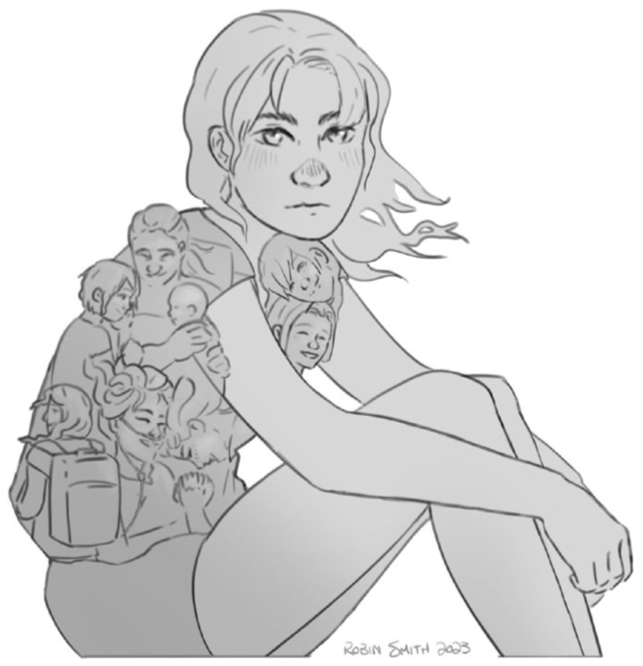
For the third activity, artists were tasked with highlighting ‘connection’ from one of the three entries provided. PB put together a folder of several examples of photo collages and collage sketches to act as a guide for artists, and we further discussed these examples in class before they began the activity for week three. The three journal entries written by nurses working at a paediatric hospice or with a homecare agency depicted narratives of both connection and disconnection between siblings and, at times, how parents were left navigating how to support a child with a life-threatening illness and another child without a life-threatening illness. We show four digital drawings developed from photo collages or collage sketches below, one drawing from each artist (Table 3; Figures 11–14).
Activity 3 description.

Digital drawing by Brandon Po.
Digital drawing by Sasha Rodneva.

Digital drawing by Skylar Kim.
Digital drawing by Robin Smith.
All artists chose the same journal entry to focus on for this activity. However, each artist selected different aspects of the entry. Brandon chose to represent the disconnection between siblings and between a sibling without a life-limiting illness and the entire family (parents, other children; Figure 11). He depicted the loneliness, fear and exclusion that siblings could feel as described in the healthcare providers’ entries, as well as the envy and jealousy they may experience when observing their sibling with illness receive what feels like more attention. These complex emotions experienced by siblings of children with life-limiting illnesses are well documented, resulting from the disruption that illness brings to siblings’ narratives. This includes parents’ divided time (one at home and one at the hospital), diverted attention and energy that prevents them from fully attending to their other children in the ways they need and want, watching their sibling decline and living with uncertainty and unfamiliarity.7,43–46 In his artwork, Brandon displays these complex emotions through movement – showing the sibling walking away from the family while longingly looking back – and through facial expression, particularly the heavy, emotion-filled eyes. Conveying intense emotion (such as grief) through eyes was something Brandon had been developing throughout the semester.
Sasha depicted (Figure 12) both the strong bond that can exist between siblings as well as the limitations of their shared life experiences – one navigating the world of illness directly, and the other navigating illness through their sibling’s condition while simultaneously living a life of play, school and other, often expected, everyday childhood experiences. In her submitted reflection about her artwork, she described that this entry was unique in telling the story of warmer moments and love between siblings, finding it meaningful to see that happiness remained possible for siblings navigating illness together. Robin stated that she chose this entry because she found the theme of connection most visually concrete and appreciated how it highlighted the complexity of human bonds and multiple types of connections (Figure 14). In class discussions and reflective entries, the artists expressed deep empathy and compassion for how difficult these situations must be for siblings to navigate, both individually and together.
Activity 4: Good days and bad days and storyboards
For the fourth activity, K.S. and P.B. created two parts comprising three journals per part written by hospice and homecare nurses as well as music and play therapists (Table 4). Out of the six journals provided, artists were asked to choose one journal from each part (two total) with the ‘spaces’ being the theme of part 1 and ‘good and bad days’ being the theme for part 2. Spaces (part 1) were made up of entries describing the types of physical spaces that take up the central narrative in people’s stories such as the bedside and kitchen in a hospice, and what people do in these spaces. This included being in families’ homes for shift care nursing during intimate end-of-life moments, and exploring what happens in/to relationships when people exist in in-between physical, emotional and social spaces for extended periods (up to 1 year). K.S. showed that children and families can exist between living, non-living (a life limited by waiting), and dying when a child has a life-limiting illness; they can be living in liminality. 7 Liminality is a blurry, uncertain and unknown temporal and spatial dimension between two known boundaries or categories. 7 Anthropologist Arnold van Gennep first introduced liminality through his concept of rites de passage – transitions involving changes in place, state, age and social position. 47 Victor Turner further developed this concept by studying social ritual processes including birth, death, initiation and healing. 48
Activity 4 description.

Good and bad days (part 2) demonstrated the inherent contradictions of waiting,7,40–42 showing how children, their families and the healthcare providers caring for them learn to live with multiple possibilities while grieving and navigating end-of-life care. Healthcare providers experienced, and observed in families, love, joy and hope alongside grief – often within the same moment. As Charmaz found with qualitative research with people who have chronic illnesses, there are good days and bad days. 49 This paradox was reflected within the three journal entries: a nurse spending 10 months caring for a child in hospice who lived longer than expected, experiencing love through simple acts of reading stories together and observing them holding hands with his parents while witnessing their prolonged suffering; celebrating a baby boy’s birthday with songs and faith-filled conversations about God that inspired hope, only to experience his death 12 hours after admission to hospice; learning to honour children’s death while maintaining hope for future patients. These narratives illustrate how healthcare providers navigate the simultaneous presence of love and loss, finding meaning in both celebration and sorrow. Here, we show two creative works illustrating how artists interpreted and reflected moments of living in in-between spaces such as waiting rooms and hospices, which can act as liminal environments infused with meanings and relations, as well as good and bad days of waiting with a life-limited illness.
All artists chose to draw kitchen-type spaces, usually reflecting both dark and light elements that highlight the contradictions in waiting. However, some kitchens reflected a more sterile, clinical feel and others, like Robin’s (Figure 15), reflected more warmth and hope. The visual style here is reminiscent of ‘ligne claire’ comics, a mid-20th century European drawing style prioritizing clean lines and an ‘objective’ point of view. The use of contrasting tones and a warm ray of sunlight creates a hopeful mood, yet one that is marked by absence or emptiness.

Single digital drawing in colour by Robin Smith (part 1).
Artists were tasked with creating a 6-drawing sequential narrative to build towards creating an animation. These storyboards included building a script from selected texts from the journal entries. Sequential drawing, such as storyboarding, is essential in visual storytelling as it asks artists to edit or select key moments in a narrative, and to compose them with a clear intent. What is left out (what is between the frames) is often as important as the frames themselves. Sasha’s storyboard (Figure 16) above highlighted the ‘and/both’ of waiting with a child at end of life in that it was both connection and suffering and a celebration of little moments as well as grieving the life that parents were losing.

6-drawing sequential narrative storyboard with open visual style by Sasha Rodneva (part 2).
Activity 5: Narratives and journey mapping
For the final activity, artists were asked to choose a past journal entry and translate it into one of four visual narrative formats as groundwork for animation development. The artists were unfamiliar with patient journey mapping and were curious to explore this type of visual representation. K.S. and P.B. compiled examples of patient journey mapping and discussed this approach in class. Patient journey mapping is a collaborative healthcare exercise that creates a visual representation of patients’ care journeys to identify system strengths and improvement opportunities. 50 Three artists selected patient journey mapping and one chose sequential storybook illustration, and we show three of these creative works below (Table 5; Figures 17 and 18).
Activity 5 description.


Patient journey map by Skylar Kim.

Patient journey map by Brandon Po.
Robin highlights the tensions between families balancing wanting to just be with their baby with months to live and the everyday rhythms of life as observed and reflected upon by a nurse (Figure 19). Figure 20 shows how Robin captures the pain of time, showing how there can be more time available for parents with babies with life-limiting illnesses because they may not need to do diaper changes and feeds. She explored what it is like to wait and the emotions experienced by a nurse watching families go through this time.

Images 5 and 6/13 of sequential narrative series by Robin Smith.

Images 9 and 10/13 of sequential narrative series by Robin Smith.
Course feedback and artist reflections
The course evaluations were highly positive. Artists described the experience as inspiring, challenging and important work. They valued the collaborative nature of the course, particularly receiving feedback from both instructors and peers, noting how exposure to different perspectives and approaches enriched their understanding of how to interpret and visualize the narratives. Artists appreciated learning from each other’s creative visions and interpretations of the material.
Artists noted being taken out of their comfort zones in meaningful ways. They described gaining deeper self-understanding and recognizing their strengths as both artists and individuals through the translation process. The diversity of materials and ideas presented throughout the course was valued, with artists finding the variety of journal entries and creative approaches enhanced the learning experience.
In their feedback, artists expressed curiosity to learn more about death and dying topics and emphasised the importance of empathic engagement in this work. Artists felt they were contributing to something important and greater than themselves. The collaborative environment fostered strong connections, with artists expressing they would welcome future opportunities to work together. A common request across all four artists was for more time to explore these ideas, noting the semester felt short given the depth of material and creative possibilities. These reflections suggest that the translation process created meaningful engagement opportunities and collaborative learning experiences for these artists.
Discussion: Learnings from collaborative translation with artists
This pilot KT project translated palliative care narrative data into over 25 diverse artistic works through structured collaboration between healthcare researchers, animation faculty and undergraduate artists. Central to our exploration was understanding how art could play a key role in expressing death-related emotions and facilitating reflection on death and dying. The resulting creative works demonstrate diverse ways in which research-based narratives about illness, suffering and end-of-life care can be transformed into visual formats that open spaces for dialogue about these topics. Through implementing this collaborative translation process, we observed that arts-based approaches engaged these young adult artists in discussions about sensitive health topics while fostering embodied learning experiences that transcended traditional educational approaches. This experience contributes to growing conversations about how innovative approaches to death literacy might help shift fear-based conversations into empowering dialogues about end-of-life care. In this discussion, we reflect on what we learned about implementing this arts-based translation approach, including pedagogical considerations, the collaborative process itself, and connections to broader literature on expressive arts and death literacy. We then discuss potential applications and directions for future research.
Pedagogical learnings
From a pedagogical perspective, K.S. and P.B. strategically varied the intensity of journal content from week to week, providing artists with necessary breaks from what could be emotionally intensive material. Artists appreciated this approach, noting that the journal readings could be overwhelming without these intentional pauses. Through exploring the journals and expressing the emotions and moments captured within them, combined with class discussions about their creative processes and emerging themes, artists engaged in conversations about death and dying that they described as meaningful and perspective-shifting.
In implementing this pedagogical approach, we observed that these artists demonstrated openness to discussing concepts of death and dying and expressed interest in engaging further with sensitive health topics. Artists’ reflections suggested that the embodied (learning-knowing through your body)51–53 experience of developing artworks collaboratively on death-related topics shaped their engagement with and understanding of the material. The creative translation process appeared to become a vehicle for comprehension and meaning-making that extended beyond verbal discussion alone.
This observation of embodied learning through art speaks to a fundamental challenge in palliative care education, which is that understanding experiences of dying, suffering and illness is often constrained by what we can verbally articulate and/or have personally experienced/felt/embodied. However, embodied research methods can help us get closer to others’ experiences7,40 and arts-based methods may similarly support this process of understanding and storytelling. Arts-based research methods, increasingly used within healthcare as a way to ‘see’ the lived experience of illness, 26 offer powerful means to engage audiences and can serve as profound emotional and educational interventions. 27 In our experience implementing this course, the collaborative creative translation process appeared to offer artists pathways for engaging with palliative care narratives that transcended traditional verbal and text-based learning.
Our observations about embodied learning through artistic translation align with findings from expressive-arts interventions designed to help individuals process grief, loss and death-related emotions. Research on art therapy and creative interventions for bereaved individuals has demonstrated that artistic expression provides pathways for engaging with complex emotions that may be difficult to articulate verbally.54,55 Studies examining visual arts, creative writing and other expressive modalities with grieving populations have shown that the creative process itself and the physical acts of making – not just the final product – can foster empathy, and facilitate meaning-making and emotional processing around death and loss.55,56 Art therapy interventions have also been found to reduce death anxiety among individuals working in end-of-life care contexts, 57 suggesting that artistic engagement with death-related content can help individuals develop greater comfort with mortality. A recent qualitative study with children using arts-based existential interventions – combining art activities with philosophical inquiry about death – found that such approaches can cultivate emotional resilience towards mortality, providing supportive spaces for young people to express thoughts and emotions about death that might otherwise remain unexplored. 58 Similarly, while our project focused on KT rather than therapeutic intervention, we observed that the act of translating death-related narratives into visual forms appeared to offer artists embodied ways of engaging with end-of-life topics that extended beyond cognitive understanding alone. Animation has been specifically identified as a methodology for understanding and making meaning of loss in the context of disability, 59 demonstrating how visual storytelling can facilitate emotional engagement with difficult topics. This suggests that arts-based translation approaches may share some mechanisms with expressive-arts interventions, potentially offering young adults creative pathways for developing comfort and competence with death-related topics through active artistic engagement rather than cognitive learning alone.
Socio-cultural implications and potential value
Our experiences with this KT project align with broader calls for cultural shifts in how society approaches conversations about death and dying. As noted in the Framework on Palliative Care in Canada, ‘a cultural shift in how we talk about death and dying is required to facilitate acceptance and understanding of what palliative care is and how it can positively impact people’s lives’ (p. 15). 60 In a recent report of the Lancet Commission on the Value of Death, everyday experiences and stories of people dying are recommended as one way in which to facilitate radical social change around and enhanced understandings of what happens at end of life. 1 Sallnow et al. envision widespread conversations about death and dying across media and film, schools and communities, along with death awareness movements and digital representations of cultural knowledge about death and dying. 1 Researchers are already responding to the call, for example, a recent Australian-based study exploring the use of online death education courses shows how this approach can influence death competence in the general community. 61 This envisioned possibility of an evolved death system – and uplevelled ways in which information is distributed, more inclusively, amongst people globally are key examples of change to transform the culture of death and dying and rediscover its value in life.
Within this broader cultural context, our KT project addresses a specific dimension: how research-based narratives about death and dying can be translated through arts-based methods into visual formats. Our experience suggests that the products of arts-based translation – animations, illustrations and visual narratives – may serve as vehicles for expressing death-related emotions and facilitating reflection on death and dying. Creative outputs such as animation offer potential to help address current cultural trends of death denial by increasing and expanding public discourse about death and dying through arts-based approaches. Animation serves as a tool through which young adults can be empowered both as producers (as in our course) and as users, supporting and promoting dialogue about death and dying.37,59 Moreover, animation can be rapidly disseminated online and through social media, providing access to novel forms of research evidence and materials that may facilitate conversations about death and dying – ideally with less fear and anxiety and from a place of empowerment.
In response to calls for cultural transformation around death and dying, our KT project explored whether translating research narratives into art forms could create engagement opportunities for young adults around these sensitive topics and contribute to the diversity of resources available for understanding and communicating about death, dying and related phenomena. Based on our pilot experience and course feedback, this approach appears feasible and promising as a KT method. The collaborative arts-based process fostered meaningful engagement and artistic growth among the participating artists, while also developing their qualitative research capacities to discern and capture key narrative moments and translate them into visual forms. This project demonstrated one pathway for translating complex palliative care research into accessible visual narratives that could have a broader application in clinical and educational settings. The resulting creative works expand the range of narratives available about illness, suffering, death, waiting in uncertainty, grief and empathy – offering visual storytelling approaches that may be valuable resources for families, healthcare providers and researchers. Future research employing systematic evaluation is needed to assess whether such approaches effectively enhance death literacy or shift attitudes towards death-related conversations in broader populations of young adults.
Future research
Moving forward, we recommend deeper exploration of arts-based approaches and other creative ways of emotionally engaging young adults in effective communication about dying, death and sensitive health topics. Such exploration requires additional research to better understand young adults’ specific needs and preferences for open conversations about death and dying. Finally, and equally important is future work examining how creative products can be effectively translated into clinical and educational settings to support patients, families, healthcare providers and broader communities.
Limitations
We recognize several limitations in this KT project. The four participating artists volunteered for the course after an introductory session where the death and dying content was explained, which could mean that their willingness to engage with these topics was a self-selecting factor that may not reflect the general population of undergraduate artists. While this small number of participating artists (n = 4) was appropriate for this exploratory arts-based project, a larger and more diverse group of artists would provide broader insights into how arts-based translation approaches work across different contexts and populations. As an unfunded initiative relying on in-kind contributions from authors and the art institution, resource constraints may have limited the scope and type of activities that could be offered. Additionally, the online format of all course components, except for the final class, may have affected the depth of interpersonal interactions and collaborative processes that can be central to arts-based learning experiences. Finally, while course evaluations and informal feedback provided valuable insights into artists’ experiences with the translation process, this pilot project was not designed to systematically evaluate the impact of arts-based translation on death literacy, attitudes towards death, or comfort with end-of-life conversations. Future research employing pre-post assessment measures, qualitative interviews exploring attitude changes or longitudinal follow-up could be conducted to determine whether and how arts-based translation approaches impact young adults’ comfort, knowledge and competence regarding death and dying.
Conclusion
This pilot KT project demonstrated the feasibility of translating complex palliative care narratives into accessible art forms through structured collaboration between researchers and undergraduate artists. The translation process successfully produced diverse visual interpretations of healthcare provider experiences with death, dying, suffering and empathy. Based on formal and informal course feedback, this approach appeared to create meaningful engagement opportunities for young adults around death-related topics and facilitated openness to discussing end-of-life experiences. Building on evidence that cultivating greater openness and awareness around dying can reduce death anxiety, arts-based translation approaches may offer young adults intimate, emotional, creative pathways for engaging with end-of-life topics, though formal evaluation is needed to assess this potential. By using arts-based forms to make visible the lived experience of death and dying captured in research narratives, we hope this work contributes to interdisciplinary dialogue about innovative KT approaches that facilitate new ways of understanding, educating about and communicating about death and dying with young adults as well as families and healthcare providers. Our pilot project suggests that arts-based translation initiatives can help to bridge the gap between lived experience and clinical understanding, may offer a mechanism for engaging young adults with end-of-life topics, and could foster more compassionate and informed approaches to educational efforts in palliative care. However, deeper exploration through systematic research is essential to evaluate whether arts-based translation approaches effectively enhance death literacy in young adults and to identify optimal design features for such initiatives.
Supplemental Material
sj-docx-1-pcr-10.1177_26323524261423586 – Supplemental material for Translating palliative care narratives into art: An arts-based knowledge translation pilot with young adult artists
Supplemental material, sj-docx-1-pcr-10.1177_26323524261423586 for Translating palliative care narratives into art: An arts-based knowledge translation pilot with young adult artists by Kristina A. Smith, Philippe Blanchard, Susan Law and Kelli Stajduhar in Palliative Care and Social Practice
Footnotes
Acknowledgements
We are deeply grateful to the artists who participated in the practicum course, sharing their creativity, imagination, talent and skill as well as for their openness to engage with these sensitive topics. Thank you for showing up with curiosity, compassion, empathy and presence throughout the entire course. It was an honour working with all of you and we truly value our collaboration. We also extend our heartfelt gratitude to OCAD U for their enthusiastic support and commitment to facilitating this course.

Ethical considerations
Research Ethics Board approval (00036380) was obtained from the University of Toronto where the study was conducted, and all participants provided informed written consent.
Consent to participate
NA.
Consent for publication
Written permission to publish the artistic works included in this manuscript was obtained directly from each contributing artist.
Author contributions
Funding
The authors disclosed receipt of the following financial support for the research, authorship, and/or publication of this article: The first author has received funding from the Michael Smith Health Research BC Trainee Award.
Declaration of conflicting interests
The authors declared no potential conflicts of interest with respect to the research, authorship and/or publication of this article.
Supplemental material
Supplemental material for this article is available online.
References
Supplementary Material
Please find the following supplemental material available below.
For Open Access articles published under a Creative Commons License, all supplemental material carries the same license as the article it is associated with.
For non-Open Access articles published, all supplemental material carries a non-exclusive license, and permission requests for re-use of supplemental material or any part of supplemental material shall be sent directly to the copyright owner as specified in the copyright notice associated with the article.
