




Abstract
Background:
Studies have indicated that mothers are essential primary informants for adolescent girls regarding menstruation. Their knowledge and comfort levels regarding this subject considerably influence the information that their daughters receive. In addition to influencing the daughters’ initial experiences of menarche, maternal attitudes towards menstruation also affects their broader perceptions of menstruation throughout adolescence. This study aims to investigate mothers’ attitudes regarding menstruation, focusing on mother-daughter conversations and their influence on girls’ menstrual health education and experiences.
Method:
A phenomenological research design using the focus group discussion technique was employed to procure data. Fifty-three participants were recruited using organisational and advertisement techniques of purposive sampling. Six focus group discussions were conducted with participants’ spoken language. The audio recording was translated and transcribed verbatim into the English language. Using Atlas.ti software, a qualitative research analyst performed thematic analysis on verbatim transcripts from discussions in six focus groups.
Outcome:
The results of the study have unveiled thoughts and feelings of mothers anticipating their daughter’s onset of menstruation. It highlights that mothers’ perceptions are largely shaped by their personal feelings, especially surrounding issues of safety, protection, and the daughters’ ability to understand and manage their menstrual health. The findings offer a detailed insight into the mothers’ challenges, their support systems, and their psychological and emotional states as they navigate this significant transition for their daughter’s approaching puberty.
Recommendations:
A comprehensive instrument is necessary to assess attitudes around menstruation, enabling the identification of ways to provide mothers, women, and girls with vital information and assistance, thereby fostering positive body acceptance.
Keywords
Introduction
Sociological and psychological investigations often portray daughters as extensions of their mothers. ‘Every mother contains her daughter within herself, and every daughter is her mother’. 1 Mothers and daughters are also linked through common female sexuality and events like menarche, conception, birth, and menopause, providing a universal experiential link among women. 2
The reverence of menstruation is rooted in a bond between a mother and her daughter; in particular, menarche, the first period. 3 The first period of a daughter is a significant milestone for the mother, evoking her own emotions and memories related to her mother. In a qualitative study, many mothers shared vivid memories of their own first menstruation and their mothers’ responses to it. Notably, some mothers recalled these earlier experiences more clearly than their memories of their daughters’ first periods, despite the fact that their own first menstruation occurred much earlier in time. 3
At the beginning of a girl’s first menstrual cycle, the mother is almost always the primary and most important caretaker for the girl. A meta-analysis was carried out in India to assess the mother’s preferred and existing role in educating her daughter about puberty, considering the importance of a safe transition during adolescence. According to the study, which examined the perspectives of adolescent females, the mother was the preferred source of information about menstruation in 56% of the investigations. 4
Health care providers underlined the significance of mothers as the most reliable sources of information for adolescent girls. 5 Numerous studies conducted throughout Indian states, covering both rural and urban districts, have revealed mothers as the key informants of menstruation. However, studies suggest that mothers, who are presumably the primary sources of information for adolescent girls regarding menstruation, exhibit a deficiency in knowledge and awareness about menstruation. 4
The mother’s role as a primary informant and respondent is a difficult one to fulfil. In light of the fact that their daughters were entering the adult sexual world, the mothers were required to address the matter. It is possible that her own childhood experiences, inhibitions, fears, and difficulties will inhibit the way she interacts with her daughter when she reaches menarche. 6 Menarche is often overlooked in relation to fertility and childbirth due to fear of young women becoming sexually aware, which also contributes to mothers’ reluctance to discuss menstruation with their daughters. 7 Mothers have said that they find it difficult to talk to their daughters about menstruation,8,9 frequently because their own mothers did not engage in conversation with them, and as a result, they do not have a model for how to have a good conversation, or they believe that they do not have the knowledge to answer the questions that their daughters might ask. 10 Mothers may not be prepared to teach their daughters, even if they possess adequate knowledge. Embarrassment, social taboos, social bans, and mothers’ undesirable attitudes about discussing menstruation are major contributing factors. An unhealthy mother-daughter relationship can also prevent or restrict an adolescent girl’s access to the most trustworthy information sources. This can result in incomplete and erroneous information from outside sources and, eventually, lead to problems with the adolescent’s health and wellness. 4
Mothers play a crucial role as primary informants for adolescent girls about menstruation, and their own knowledge and comfort regarding this topic significantly affect the information these daughters receive. Maternal attitudes toward menstruation not only influence the daughters’ initial experiences of menarche—their first period—but also shape their broader perceptions of menstruation throughout adolescence. This study aims to explore and document mothers’ attitudes towards menstruation, thereby shedding light on the dynamics of mother-daughter conversations and the potential impact on girls’ menstrual health education and experiences.
Method
Research Design
The study employs a phenomenology research design to investigate the attitudes of mothers with pre-menarche daughters regarding menstruation. The objective of the research was to gain an in-depth, nuanced understanding of the perspectives of mothers on menstruation and its influence on the menstrual education and experiences of their daughters.
Setting and Participants
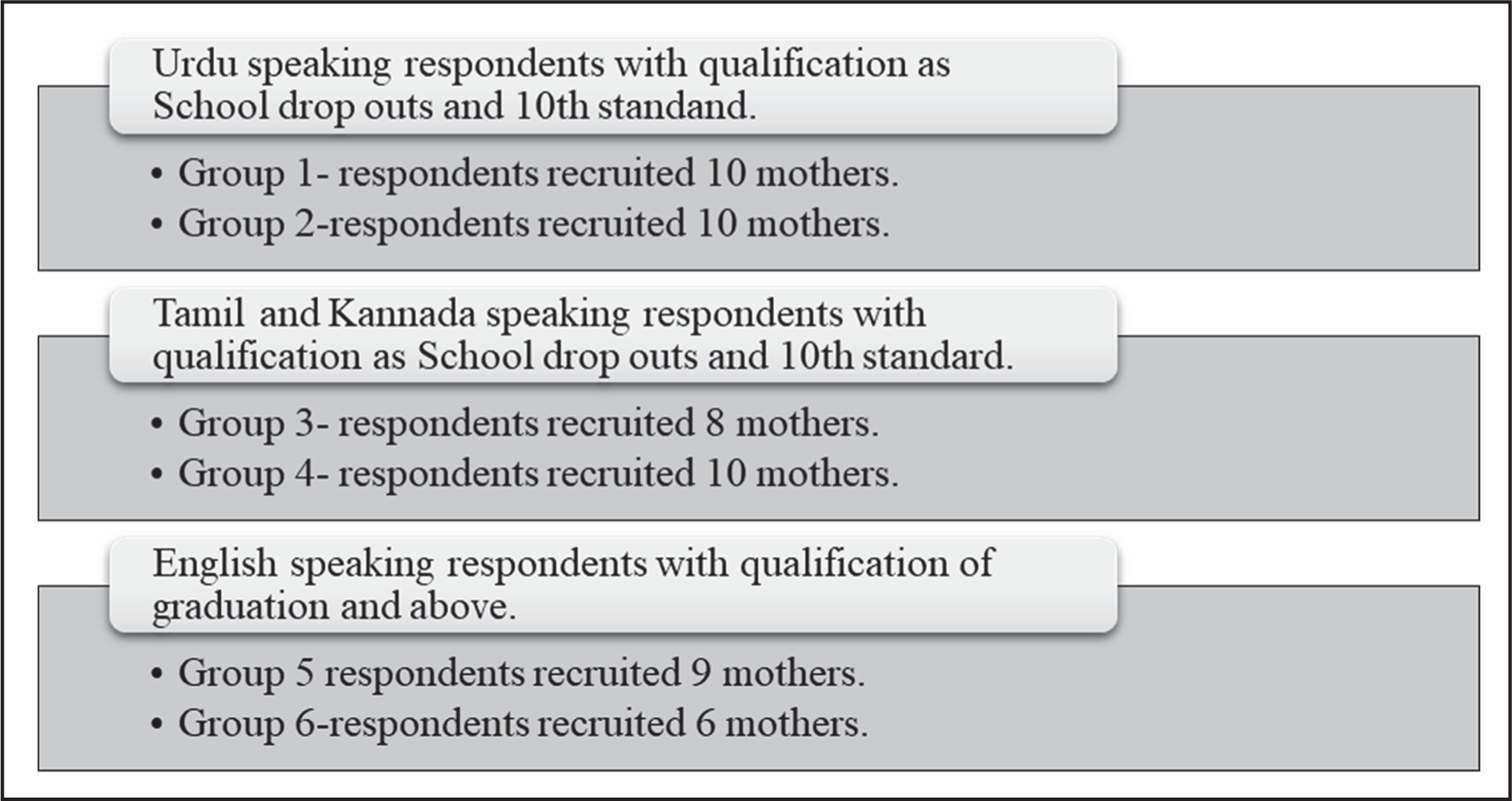
A purposeful sampling strategy was used to recruit participants for this qualitative study involving mothers with daughters who have not yet reached menarche, specifically from the Bengaluru urban district. A total of 53 mothers participated in six focus group discussions, with each group consisting of 6–10 mothers. Five groups used organisational recruitment methods, while one group utilised advertisements. The linguistic diversity of the groups included Urdu speakers in the first two groups, Kannada speakers in the third, Tamil speakers in the fourth, and English speakers in the last two groups. Additionally, the study considered the educational profiles of the participants, with the first four groups including mothers who had dropped out after completing their 10th grade, while the last two groups included mothers with graduation or higher qualifications (Figure 1).
Educational Levels and Spoken Languages of the Respondents.
Tools of Assessment
Semi-structured interviews, which served as the questioning route for the focus group discussions, were developed by adhering to guidelines.11,12 The questioning route created by the researcher was sent for expert evaluation, and suggestions and feedback were duly incorporated. A pilot study 13 was conducted, and modifications were incorporated into the questioning route based on the responses received from the participants.
The questioning route was created in English by the researcher and then orally translated into Kannada and Tamil by two native speakers proficient in their respective languages, working as educators. A social worker provided oral translations of the content into colloquial spoken Urdu. The content was translated into oral format due to the fact that the participants consisted of those who had dropped out of school education and those who had completed up to 10th standard education. The research study did not include the task of translating the content into a textual format.
Procedure for Data Collection
The researcher introduced herself and outlined the research’s aim and purpose. She verbally reviewed the consent form, clarified ethical rights, benefits, and risks of participation, and answered questions before collecting informed consent signatures. Given that many participants were working mothers and homemakers, the scheduling of consecutive sessions was carefully considered. Interviews for focus group discussions were conducted in the respective languages of the six groups.
Procedure for Data Analysis
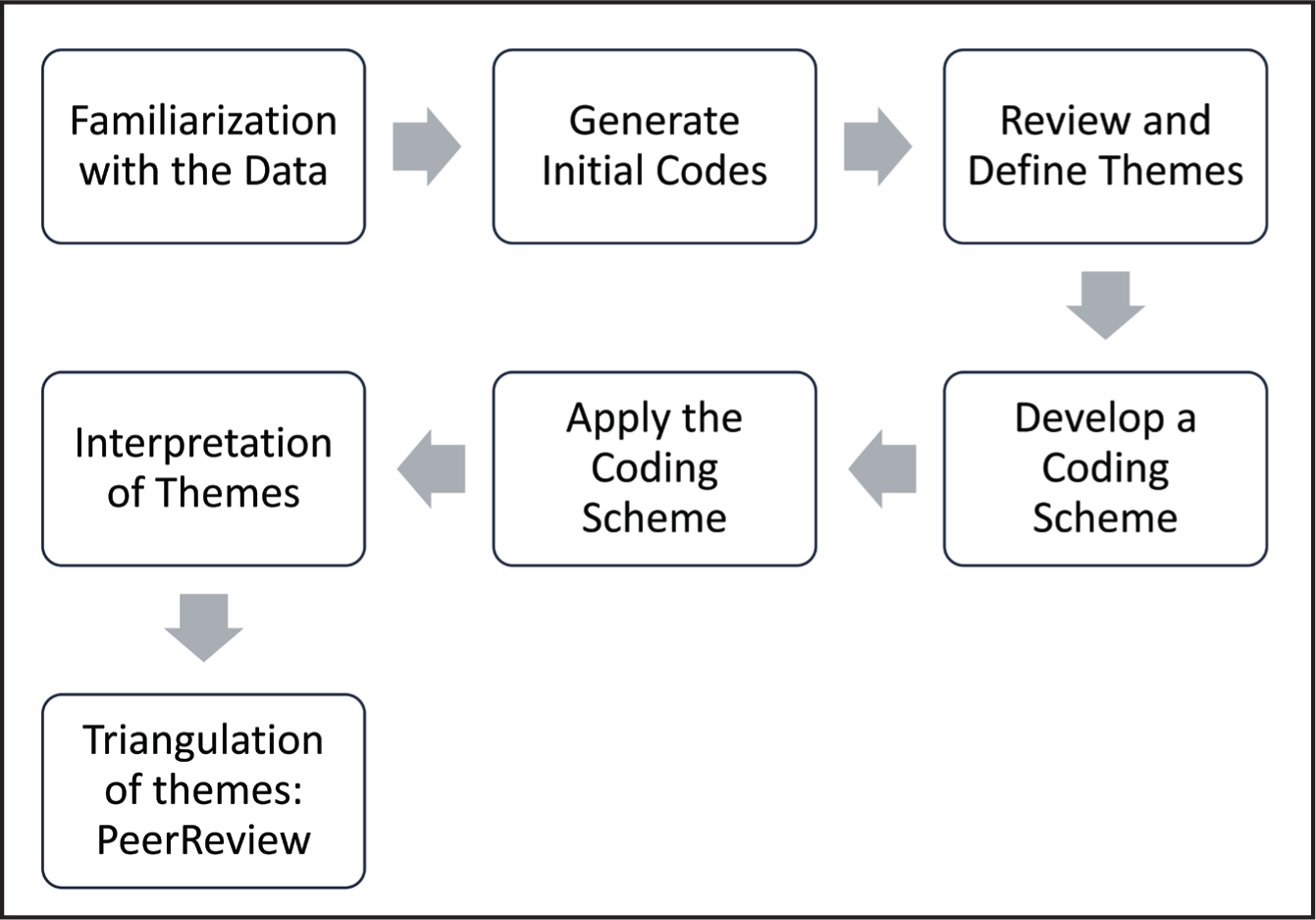
The researcher recorded the focus group discussions on an audio recorder and then transcribed the recordings verbatim. The researcher translated the conversations held in different languages, including Urdu, Kannada, and Tamil, into English. A qualitative research analyst performed thematic analysis (Figure 2) on the verbatim transcripts taken from the discussions that took place across the six focus groups using Atlas ti software.14,15
The Process of Thematic Analysis.
Validity and Reliability of Data
Investigator triangulation was implemented during the data collection and analysis processes, involving two field investigators who contributed to both gathering and validating the data. The analysis of verbatim transcripts was conducted by an external research analyst using Atlas ti software. The data was examined by an external research analyst and evaluated by two additional research supervisors. Consequently, minimising researcher bias and enhancing the credibility and validity of the findings.
Ethical Consideration
In the present study, the following ethical practices were taken into account.
Informed consent was achieved through the study’s clear communication of its objectives, purpose, and aims, which enabled participants to make informed decisions about their voluntary participation.
Verbal consent was acquired to record the focus group discussions, with participants informed of the recording’s intent. Their names and personal identifiable information were assured confidentiality, with code names and numbers assigned in all study documentation.
The current study ensured ethical reporting of quotations by maintaining the anonymity of study participants. Codes were employed to represent the respondents in the study.
Results
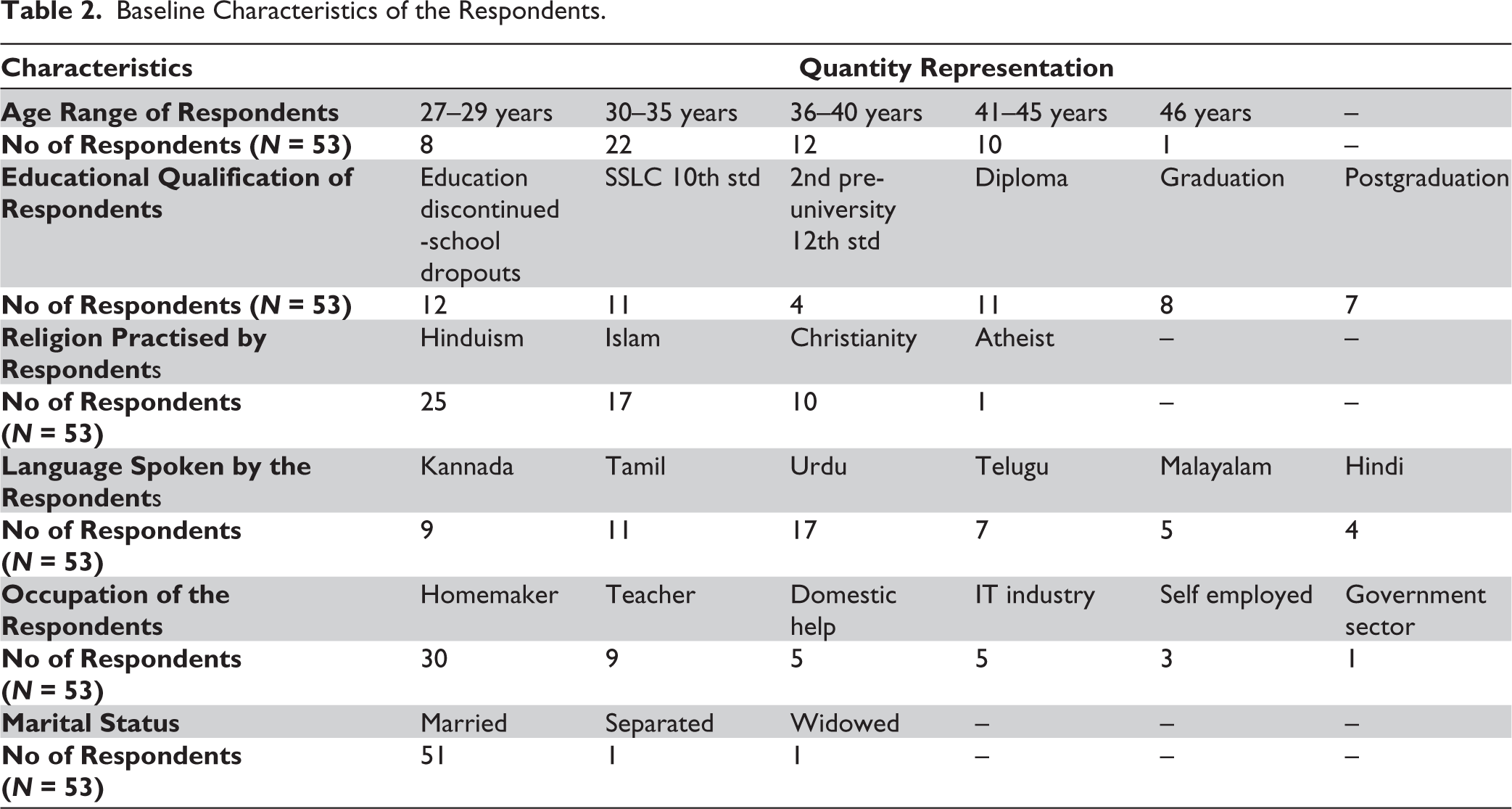
Demographic details: In the present research, six groups were met, and the number of respondents in each group ranged from 6 to 10, with a total number of 53 respondents (Tables 1 and 2).
Number of Participants in Each Focus Group.

Baseline Characteristics of the Respondents.
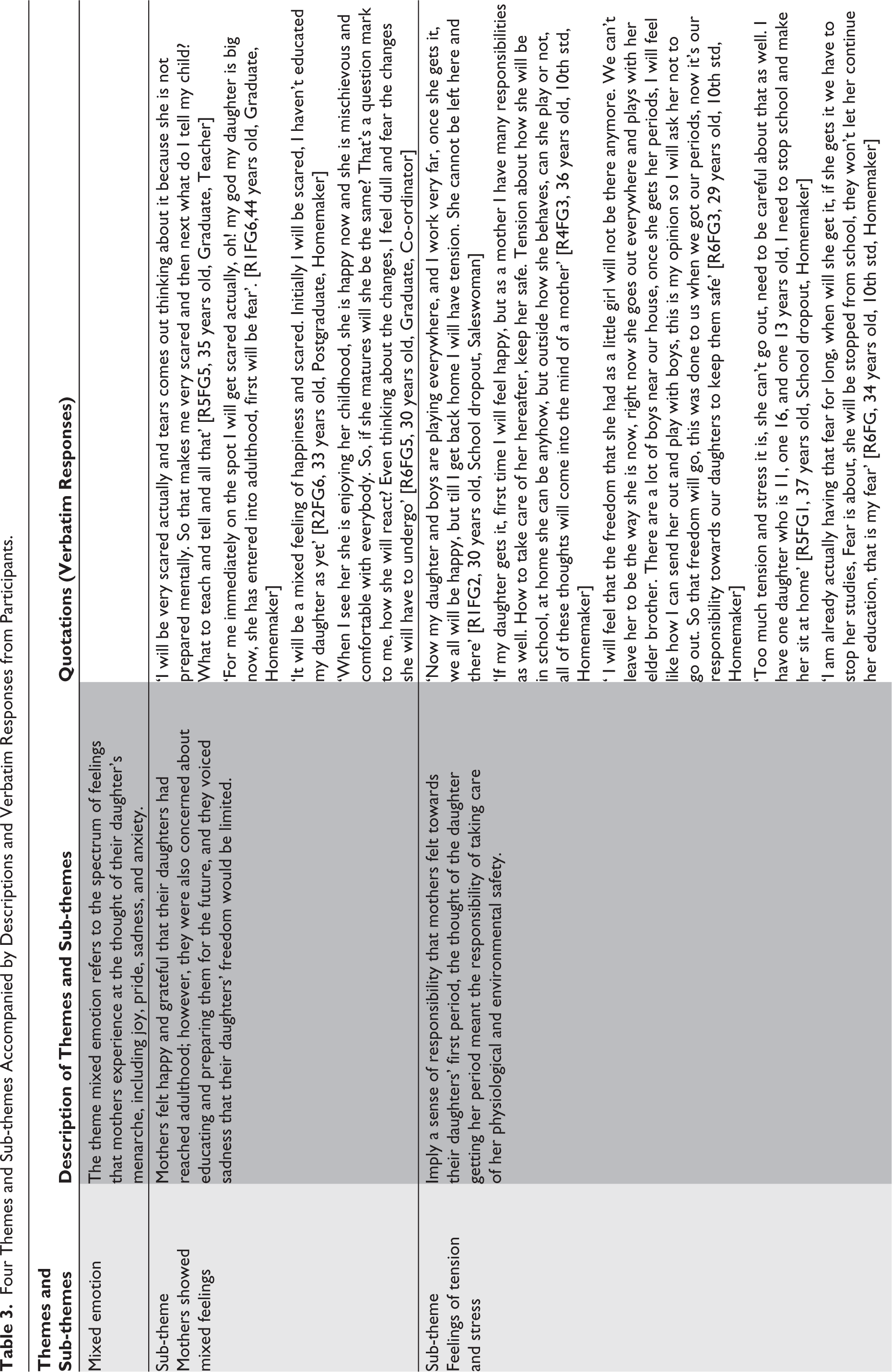
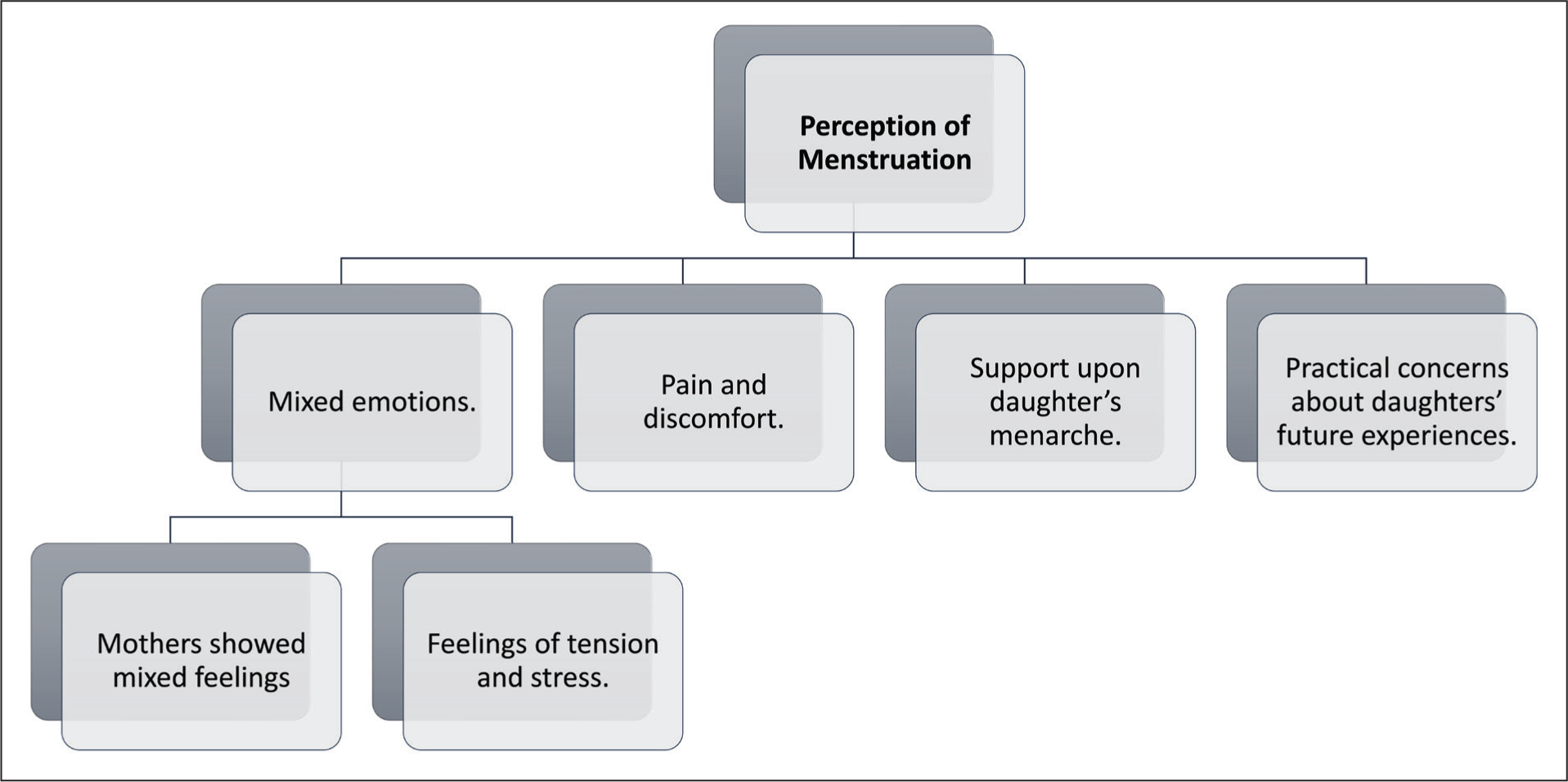
The current study presents the results of a thematic analysis, (Figure 3) from focus group discussions aimed at evaluating the needs of mothers and exploring various aspects of their attitudes toward menstruation. The themes and sub-themes of the current study have been delineated below (Table 3).
Themes and Sub-themes.
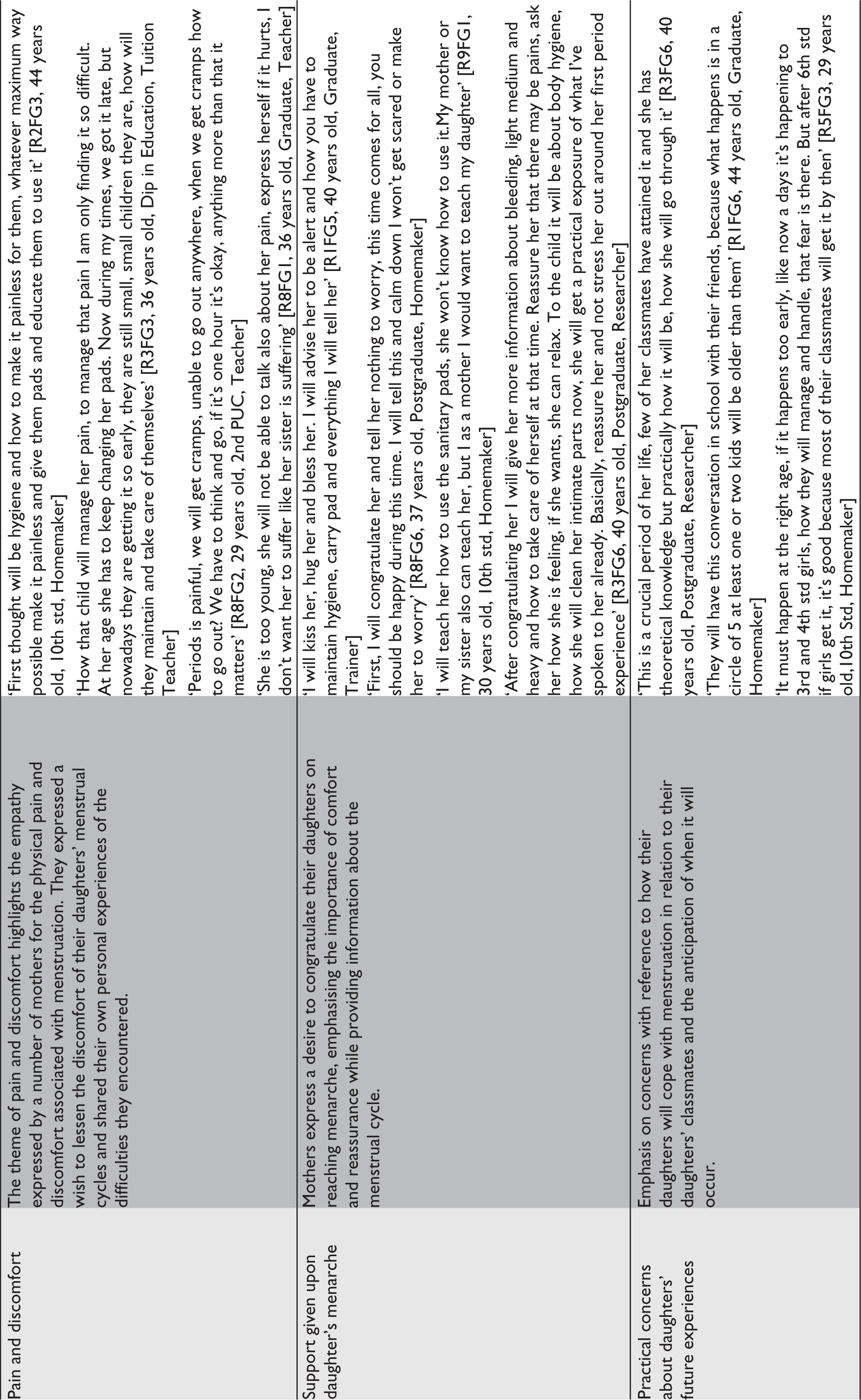
Four Themes and Sub-themes Accompanied by Descriptions and Verbatim Responses from Participants.
Discussion
Four main themes and their respective sub-themes identified through a thematic analysis are elaborated on in the following sections.
Mixed Emotions
Mothers experience ‘mixed emotion’ during their daughters’ menarche, encompassing a range of feelings such as joy, pride, sadness, and anxiety simultaneously. They express happiness and gratitude as their daughters reach adulthood, but also voice concerns about the necessity of educating and preparing them for the future, alongside sadness regarding the limitations on their daughters’ freedom. Two sub-themes have been identified within this category discussed below.
Mothers Showed Mixed Feelings
Mothers’ emotions stem from concerns about not adequately preparing their daughters for menarche. Research has shown that girls who are not ready for their first menstrual period may have adverse emotional responses to the event.16,17 The intense emotions related to her daughter’s journey into adolescence, and the numerous changes she will undergo. Many mothers additionally contemplate their daughters’ reactions and thoughts regarding menarche.16,17 The current study reveals that mothers express various emotions regarding their daughters’ attainment of menarche, highlighting their thoughts and perspectives on this significant milestone in their daughters’ development.
Feelings of Tension and Stress
Mothers exhibit happiness when their daughters attain menarche, but also have concerns about teaching them self-care, hygiene, and socially appropriate behaviour. Mothers believe that as girls biologically develop and reach sexual maturity, they are no longer children and are vulnerable to safety concerns. Mothers believe that their daughters’ freedom to explore the world and interact with the opposite gender will be restricted, and they will face prohibitions on associating with boys. Respondent mothers from various religious backgrounds reported experiencing this sensation. They shared a common trait of having lower levels of education. Some mothers from two Islamic focus groups expressed worry and concern about their daughters’ ability to pursue further education. Given that their husbands and other family members typically control such decisions, mothers may lack the authority to endorse their daughters’ aspirations for further education.
Women’s perspectives and convictions surrounding menstruation are influenced by both their immediate family upbringing and the broader cultural or societal context in which they are brought up. 18 Menstruation is a natural occurrence that is often accompanied by cultural taboos and limitations, which can affect various aspects of life, such as work, sexual activity, dietary choices, and personal hygiene practices. 7 Several studies conducted in Karnataka,6,19 have shown evidence indicating that girls were denied the opportunity to participate in playing games during their periods and playing with the opposite gender. Research has shown that mothers perceive menarche as a signal to instruct girls about gender norms, religious duties, and hygiene practices during menstruation. At that juncture, they strengthen the beliefs that have been passed down from their mothers and grandmothers, which are referred to as maternal scripts. 20
The current study’s findings concur with those of previously conducted research. However, the current study delved deeper into conversations with women, extracting more nuanced information regarding their fears and concerns about their role within their own households. Some mothers reported that they do not have the power to advocate for their daughter’s education and will be required to comply with the decisions made by their spouse and other family members.
Pain and discomfort, mothers connect menstruation with physical pain, body cramps and hold a negative perception of it. Menstruation is considered a form of suffering due to its association with menstrual cramps. They also focus on managing menstrual hygiene, particularly in terms of preventing leakage in public. A study 20 showed that women endure physical, mental, and emotional discomfort during menstruation, affecting their daily lives due to issues such as pain, heavy bleeding, managing menstruation in public, humiliation, and a lack of understanding from men.
Mothers showed strong empathy towards their daughters, particularly about period pains and physical distress. The mothers expressed a strong desire to reduce the agony of menstrual pain for their daughters and emphasised their commitment to ensuring the experience of menstruation is as painless as possible.
Support Given Upon Daughter’s Menarche
Mothers would initially congratulate their daughters, embrace them, and offer their blessings. They will instruct her on the proper use and disposal of sanitary pads, ensure she carries additional pads to school, and address the importance of hygiene. Some mothers stated that they will attentively listen to their daughter’s sentiments and thoughts, encourage her to ask questions, and provide answers to those inquiries. Help her relax and ensure her comfort. Mothers expressed their intention to remain calm and composed, ensuring that their own worries have no impact on their daughters. A study 21 found that mothers showed minimal optimism during their daughters’ menarche, with some kissing their daughters and others offering congratulations. Few mothers expressed regret that their daughters had reached menarche. Mothers were more inclined to offer guidance to their daughters during this period and less likely to express satisfaction when their daughters’ menarche approached.
The present research study revealed that mothers with a graduate level of education stated they would not project their menstrual anguish onto their children but instead provide a sense of security and comfort. The results of this study differ among respondents with graduate-level education, whereas mothers with lesser levels of education, school dropouts, exhibit reactions similar to those reported by the above study. 21
Practical concerns about their daughters’ future experiences suggest that the mothers were aware that their daughters would shortly go through menarche, as they had some knowledge about it from their daughters’ peers who had already gone through menarche, leading to discussions on the topic. Mothers believed that menarche should occur at an appropriate age, typically around sixth grade, when a student is approximately 12 years old. Anything earlier, as is common today, could pose challenges for girls in terms of hygiene, public leakage, and self-care. At roughly 12 years old, peers would have also reached this stage, making it simpler for their girls to understand and learn from each other through conversation.
A study 10 discovered that early maturing females often describe their first menstrual period as ‘scary’. This fear can stem from being unprepared for menstruation or surprised by its early arrival. It is likely that individuals who mature later have had sufficient time to acquire knowledge about menstruation from common sources such as mothers, healthcare providers, and the experiences of their peers. Consequently, the study reported that adolescents who experience puberty later found menstrual hygiene simpler rather than more complex, and menstruation more pleasant than anxiety-inducing. This is because they effortlessly identified themselves as adolescents and have observed their classmates successfully adjust to their postmenarcheal state. 10
The current study indicated that mothers hoped and genuinely desired that their daughters should reach menarche at the right age, as this would allow their daughters to adjust more effectively by acquiring knowledge from their peers.
Strengths of the Study
The study highlights the essential function of communication in a mixed community, especially one characterised by indigenous customs. Effective communication is crucial for promoting understanding and cooperation across distinct cultural groups, demonstrating the need for knowledge and sensitivity to various cultural origins and customs.
Limitations of the Study
The unequal representation of various religions among respondents is a significant limitation of this study. The overall findings and interpretations of the research may be influenced by this discrepancy, as the diversity of religious perspectives is necessary for a comprehensive analysis of the subject matter.
Conclusion
Mothers in the research expressed a spectrum of feelings over their daughters’ journey into maturity, characterised by menarche, experiencing joy and gratitude alongside sadness and fear. They recognised this moment as pivotal, involving responsibilities for both their daughters’ physical health and emotional support while preparing them for adult life. Conversations revealed nuanced concerns about their roles, particularly among those with lower educational backgrounds who felt powerless to influence decisions about their daughters’ education post-menarche. Despite their own experiences of menstrual difficulties, mothers expressed a desire to alleviate their daughters’ discomfort and emphasised the importance of creating a supportive and celebratory environment. They deliberately choose not to transmit their own menstrual distress, aiming to provide comfort and informative guidance during this transitional phase. Additionally, mothers hoped for their daughters to experience menarche at an appropriate age, believing that it aids in their daughters’ adaptation by allowing them to learn from peers, fostering a positive attitude towards this significant milestone.
Future recommendations: Creating an attitude scale for menstruation aimed at Indian women poses considerable difficulties owing to the nation’s many religions, regions, and customs. A fundamental requirement is for a comprehensive instrument that can evaluate attitudes toward menstruation on a broad scope. This measure would enable the discovery of strategies to provide mothers, women, and girls with essential information, knowledge, and support, therefore promoting a positive acceptance of their bodies.
The aforementioned study is a component of a larger investigation including several issues, and the present study specifically provides information on mothers’ attitudes towards menstruation.
Footnotes
Data Availability Statement
The data that support the findings of this study are openly available in Mendeley Data, V2, doi:
Declaration of Conflicting Interests
The authors declared no potential conflicts of interest with respect to the research, authorship and/or publication of this article.
Ethical Approval and Informed Consent
The study was approved by the University Research Ethics Committee of Martin Luther Christian University on 11 August 2021. All participants provided written informed consent to participate prior to enrolment in the study. Reporting of the study to the community was done as per ethical compliance on 01/10/2024.
Funding
The authors received no financial support for the research, authorship and/or publication of this article.