




Abstract
Menopause is a natural biological transition for female teachers, but it significantly impacts their lives in many ways, physically, emotionally, and professionally. Despite it being viewed as one of the three Ms, mensuration, maternity, and menopause, which each female undergoes, menopause remains a taboo and unaddressed issue in Indian workplaces, particularly in educational institutions. This study explores the impact of menopausal symptoms on the work performance and well-being of female college teachers in Tamil Nadu, particularly in the Chennai district. The study assesses the level of institutional awareness and support that is being provided by educational institutions for female teachers. Using a mixed-methods approach, data have been collected from 66 college teachers (n = 66), and focus group discussions with 10 teachers were conducted. The outcome shows that Menopause-Inclusive Framework for Tamil Nadu Colleges (MI-TN) is required, and other recommendations point out the need for leadership support and better infrastructure that is menopause-inclusive for female teachers.
Introduction
There are over four lakh women working as teachers and professors in higher educational institutions, and a major proportion of them are working in the extensive collegiate network of Tamil Nadu. When these women navigate through their menopausal age (between 35 and 55), they face many health issues such as hot flashes, sleep disturbances, anxiety, fatigue, and other physical and cognitive difficulties. These symptoms associated with menopause often impair their concentration levels, and they face difficulties in managing their class, research output levels, and achieving efficiency in administrative roles.
Menopause continues to be seen as a stigmatized topic in many workplaces, particularly in India, where the academic environment is still seen as a conservative workplace for women. Even talking about menopause and its symptoms is seen as a cultural taboo. With no formal policies, a lack of awareness programs, or a lack of institutional support and accommodation for these women, women of menopausal age often face burnout and exit their academic careers.
Tamil Nadu has a vast network of colleges that employ mostly women, providing a rich context to study this issue. There are also differences in college types, government, aided, and self-financing colleges, and the institutional support for menopause might vary between these types. Though the state is witnessing progressive initiatives in both health and educational sectors, menopause is not seen as an issue that affects faculty welfare. 1 This research is positioned as both a health issue and an human resources (HR) challenge in educational institutions that affects productivity, gender equity, and retention of women faculty in such institutions. This study tries to address the critical gap by examining how menopause impacts the productivity of college teachers and how far the educational institutions support these women faculty during these critical years. As menopause is an under-researched issue in the context of both India and Tamil Nadu in specific, this study will bring to light menopause as a workplace health concern in educational institutions and provide recommendations to improve institutional support and make room for an inclusive and empathetic workplace that understands the plight of women during their menopausal years.
Literature Review
With menopause being viewed as a critical occupational health issue where the intersection of age and gender causes many hurdles for women who work in academic institutions, it is important to look into its organizational impact and how this issue leads to decreased work engagement and turnover intentions among women who face a lack of empathy in their work environments.
Hot flashes and/or brain fog among women are not just inconveniences that they face, but they are stressors that affect their performance at work, particularly in professional roles. 2 They tend to have a negative influence on work productivity, which is aggravated by workplace factors such as work burden and perceptions about their autonomy. Employers need to conduct risk assessments among these women to make suitable adjustments in the psychosocial and physical work environment, provide them with suitable support mechanisms and training for the administrative staff. 2
Western countries have focused on studying the intersection of menopause and the workplace environment and how they impact organizational productivity. Menopause is not only a biological issue for women, but it is also considered an important occupational health issue, particularly in professions such as university and organizational roles.3,4 These studies reveal the fact that vasomotor symptoms such as hot flashes, fatigue, cognitive difficulties, and mood disturbances affect the concentration of women, thereby reducing their work performance and also resulting in increased absenteeism. 5 Often, menopause is considered to evoke stigma and bias when it comes to work judgments and leadership skills due to the unfavorable stereotypes that these women face in workplaces, hindering their career advancements. 6
Another study on menopause among women teachers in the university work environment in the UK points out the fact that rigid work schedules and public lectures provided by women professors exacerbate their discomfort during menopause years. The study also notes that women often had to hide their symptoms of menopause to avoid being named a less competent than men in the academic culture. 7 Vasomotor symptoms and psychological symptoms have a different impact on employment rates. While vasomotor symptoms do not have a lowering impact on employment rates, psychological problems associated with menopause reduce full-time employment rates by 1–2% points when these psychological problems are reported. 8 Study on the impact of menopausal symptoms on the work ability index among university staff shows that the severity of menopausal symptoms affects the work ability among menopausal women, resulting in increased absenteeism and reduced employee productivity.9,10
A study conducted in North America points out the fact that menopause is considered to be one of the taboo topics among the 3 M’s (menstruation, maternity, and menopause). This study points out that organizations should implement policies that are menopause-friendly, such as having flexible breaks and temperature control, so that it results in organizational commitment among the working women. 11
Among the middle-aged women in rural India facing menopausal symptoms, they had both physical and mental exhaustion, sleep problems, anxiety, and irritability issues. The recommendation of this study is to take a holistic approach to bring about lifestyle changes and behavioral modifications through institutional support. 12
The symptoms of perimenopause, menopause, post menopause are somewhat similar but vary in their severity. 9 These symptoms are either physical and/or psychological. Physical symptoms include lack of energy, fatigue, hot flashes, joint pain, muscular pain, and insomnia. Psychological symptoms include anxiety, mood swings, irritability, depression, lack of concentration, and other cognitive issues. Both these symptoms have adverse effects on job performance.9,13–15
There are several challenges faced by teachers and professors in their menopausal period, including stress and a lack of institutional support. Many professors do not reach out for healthcare support, even if they experience these symptoms often, due to the stigma associated with talking about menopause. 16 They also lack awareness or access to health care support. There is also a lack of institutional support in the form of wellness programs, policies, and HR support, which are often missing or not available in many educational institutions. In many of these institutions, peers and other higher officials, such as heads of departments, do not provide support to their junior staff, which often exacerbates the symptoms that these menopausal women face in the workplace environment.14,15,17,18 In the study about menopausal symptoms among college teachers in Kerala, it has been found that brain fog and fatigue are found to be major menopausal symptoms that adversely impact teaching efficiency. 17
The job demands-resources (JD-R) that was developed by Bakker and Demerouti 19 provides a useful resource framework for understanding how menopause issues affect professors and educators in the collegiate networks. In educational institutions, the demands for cognitive and emotional aspects of educators are high, and with menopause being a high demand by itself, this depletes the personal resources of educators, making it hard for them to cope with professional demands in their classes. 20 In this regard, the JD-R framework suggests that college job recruiters’ physical or psychological effort from the teachers meeting includes a high workload, managing the students who have various behavioral issues, and long teaching hours, which requires them to stand or move around the class. Similarly, there are also job resources such as the institutional support provided by the colleges that help achieve their work goals, and these resources include supervisor support, scheduling flexible hours, and the provision of autonomy for these teachers in colleges. Hence, menopause is considered a tax on the capacity of the educators/teachers to manage the various demands that their job requires, with the amount of resources they are provided with by the educational institutions. 21
More specifically, brain fog and other symptoms such as fatigue and anxiety that happen due to menopausal issues make the standard tasks, which are required in colleges, such as lesson planning, lecturing, and grading of assignments and answer sheets, more difficult for these teachers, and they feel that the job is more demanding. This leads to absenteeism and early quitting from their jobs, particularly when they are not provided with additional resources from the management of the educational institutions. Their personal resources, such as energy and resilience, which they inherently have as teachers, get depleted due to insomnia and/or night sweats, and this leads to a health impairment process and occupational burnout. When the job resources provided by the colleges, such as climate or temperature control, and support from peers and superiors are lacking, this results in a negative impact leading to deterioration of their performance in the classrooms. Hence, it is found out by many studies that if the educational institutions do not provide the menopause specific resources, then educators report lower work engagement and their intentions to leave the profession are very high.14,21
Using this model, there are some studies about menopause and its impact on the efficiency of teachers in Indian colleges where the workload is very high, and the support systems are very weak. In fact, many teachers and professors in the educational institutions conceal their experiences and deal with menopausal symptoms silently since menopause is often viewed as a discreditable identity that diminishes their competency and professional credibility. Despite these insights from various International Studies and a few Indian studies, there is little empirical evidence about how menopause is dealt with by college teachers in Tamil Nadu. The identified research gaps include the fact that there are no focused studies on menopause in the context of Indian higher educational institutions and there is lack of region specific (Tamil Nadu) human resources management (HRM) research focused on menopause and how it is being dealt with may the support system in educational institutions and there is absence of policy level recommendations for higher education in the context of menopause. This research tries to fill those gaps by integrating the JD-R model for understanding how the current institutional frameworks and policies in educational institutions favor the experiences of midlife women educators. Whether the current institutional frameworks at educational institutions and colleges provide the necessary support that is required for women educators is dealt with by this research.
Research Methodology
This research adopts a mixed-methods approach using a correlational study to explain the menopause issues and how they are addressed using the JD-R framework in the colleges of Tamil Nadu, particularly in and around Chennai, for urban, semi-urban, and rural areas, for different types of colleges, namely government colleges, aided, and self-financing ones. This research is grounded in organizational behavior, human resources management, and workplace well-being and focuses mainly on institutional support systems available for women (gender inclusivity), given the fact that the majority of the college teachers are women. In this regard, the research questions that are addressed using the mixed-methods approach include the following:
How do menopausal symptoms affect the teaching, research, and job satisfaction of female college teachers? What formal or informal support mechanisms exist in colleges? What cultural and organizational barriers hinder open discussion on menopause? What policy and structural changes are needed to create a menopause-inclusive academic environment?
The research has used two-phases in mixed-methods approach. The quantitative phase involved collecting responses from female college teachers in the age group of 35 and above who face various issues about peri menopause, menopause, and post menopause. Using the JD-R framework, the survey interview consisted of questions about demographic details of these teachers, impact of menopausal symptoms on their work performance, institutional awareness, and support provided for these teachers, cultural and organizational barriers (to understand the stigma and taboo associated with menopause issues); job demands in colleges and universities for women teachers and job resources provided at colleges and universities for women teachers.
The study includes teachers’ perceptions about menopause and institutional support in various arts and sciences colleges in the four zones of Chennai in Tamil Nadu, and this covers the urban, semi-urban, and rural regions of Chennai. A total of six institutions were selected to ensure the diversity of colleges (government, aided, and self-financing colleges). A clustered random sampling method was used to select these colleges, and 80 teachers were selected for the survey, but the responses for the survey came from 66 teachers only. Primary data from these teachers were collected over two months, and the survey was administered online using Google Forms. The second phase of the research was focus group discussions, where 10 teachers from these six institutions were called for an focus group discussion (FGD) to discuss the open-ended questions, and the interviews conducted were recorded, transcribed, and coded for further qualitative analysis.
Quantitative Analysis
Demographic details about age show that research respondents (female college teachers) belonged to various age groups. Fourteen percent of them belonged to 36–40 years category experiencing perimenopause symptoms, 29% of them belonging to 41–45 years category experiencing perimenopause and menopause symptoms, 26% of them belonging to 46–50 years age category experiencing menopause symptoms, 23% of them belonging to 51–55 years age category experiencing menopause symptoms and 9% of them belonging to above 56 years category experiencing post menopause symptoms.
Demographic details about the type of college show that 25.8 of the respondents work in aided colleges, 16.7% of them work in government colleges, and 54.5% work in self-financing colleges. And about the region of college, as the survey was conducted in colleges in and around Chennai, 74.2% of the respondents belong to urban areas, 18.2% belong to semi-urban areas, and 4.5% belong to rural areas outside of Chennai. Current professional roles of these respondents show that 50% of the respondents are working as assistant professors, 16% of them are associate professors, and 13% of them are working as professors and heads of department.
Regarding their menopause status 21.2% of these respondents are not sure whether they are experiencing any menopause symptoms, 24.2% of them are experiencing perimenopause symptoms (irregular periods, excessive bleeding), 25.8% of them are experiencing pre-menopause symptoms (experiencing symptoms, still having periods) and 28.8% of them are experiencing post-menopause symptoms (no period for 12 consecutive months or more).
Menopausal symptoms and work performance: Data on menopausal symptoms and work performance show that 33.3% of them are sometimes, 10.6% of them are often, and 6.1% of them are very often facing difficulties maintaining focus/concentration during lectures or research (cognitive symptom). When it comes to fatigue due to menopause, 37.9% sometimes have fatigue and low energy, 18.2% often face fatigue, and 10.6% of them very often have fatigue and low energy (physical symptom) affecting their stamina for completing their full day’s work at college. When it comes to sleep disturbances as a menopausal symptom, 36.4% of them sometimes have sleep disturbances, 19.7% often have sleep disturbances, and 4.5% of them very often have sleep disturbances, which leads to tiredness at work (physical/emotional symptom). Seeing hot flashes and sweating as a menopause symptom, 51.5% of them sometimes have hot flashes, 10.6% of them often have hot flashes, and 3% of them very often have hot flashes, causing discomfort during class hours (physical). Increased anxiety and mood swings are sometimes faced by 35.4% of the respondents, 13.8% of the respondents often face these symptoms, and 4.6% of them very often face increased anxiety and mood swings (emotional symptoms), which affect their interactions with students and peers at college.
Due to these menopausal symptoms, 27.3% of the respondents sometimes and 24.2% of them often face difficulties managing administrative tasks or deadlines. The respondents (39.4% of them sometimes and 10.6% of them often) need to take unscheduled breaks or modify their teaching style due to these symptoms. Their job satisfaction is related to managing these symptoms, and 44.6% of them sometimes (9.2% of them often and 6.2% of them very often) feel that their overall job satisfaction is reduced due to these symptoms.
Institutional awareness and support: When the educational institutions are aware of the menopausal symptoms and impact, and provide support is also captured by the survey questions (Part C). Of all the respondents, 25.8% of them are neutral that their institution openly discusses health issues related to menopause (awareness), while 31.8% felt that their institution agrees that it discusses them, and 9.1% strongly agree that their institution very often discusses these issues. Regarding leadership support, 15.2% of the respondents neutral (36.4% of them agree, and 13.6% of them strongly agree that they are comfortable discussing menopausal symptoms with their immediate supervisors. About the physical work environment, 24.2% of the respondents are neutral about their comfort level with the ventilation and temperature, while 45.5% agree and 16.7% strongly agree that the physical work environment is comfortable for them.
Only about 25.8% agree, and 6.1% strongly agree, that their institution offers formal policies with regard to workload adjustments and flexible working hours. Regarding specific wellness programs related to menopause, only 30.3% of the respondents agree, and 4.5% of them strongly agree that their college offers specific wellness programs with regard to midlife issues of women. As far as the provision of reasonable adjustments is concerned, only 34.4% agree, and 14.1% strongly agree, that their colleges would make reasonable adjustments for them if they requested them due to menopausal symptoms. Only 42.4% of the respondents agree, and 12.1% of them strongly agree, that their peers are supportive and understanding of midlife health changes. When it comes to whether the institutional policies promote gender equity and faculty well-being, only 34.8% agree, and 12.1% strongly agree that their institutions promote gender equity and faculty well-being.
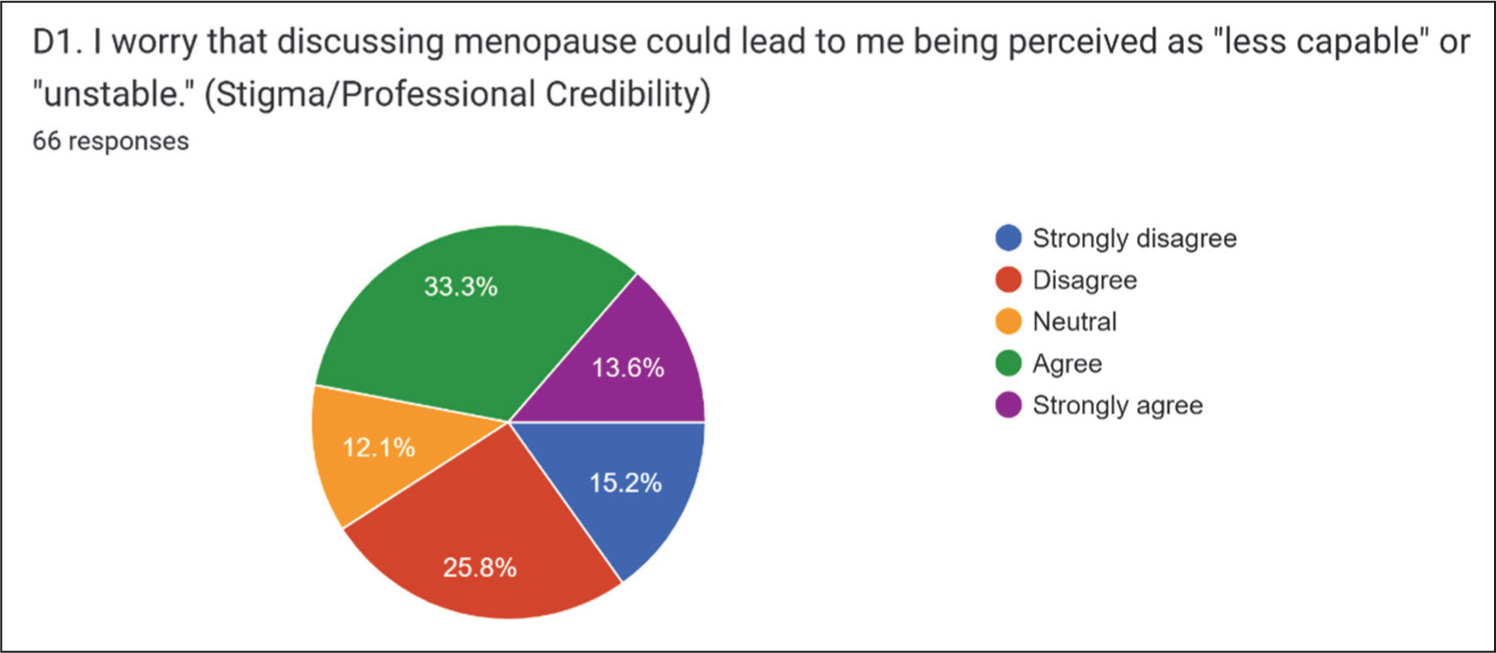
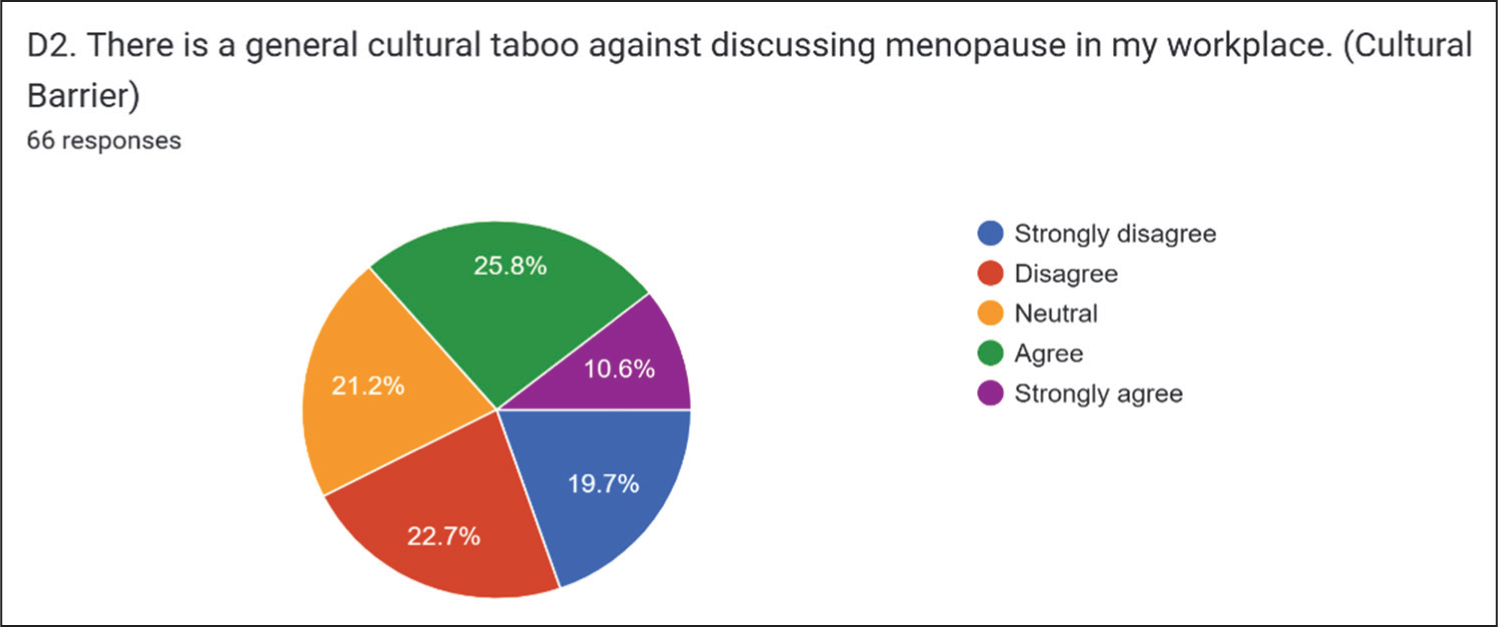
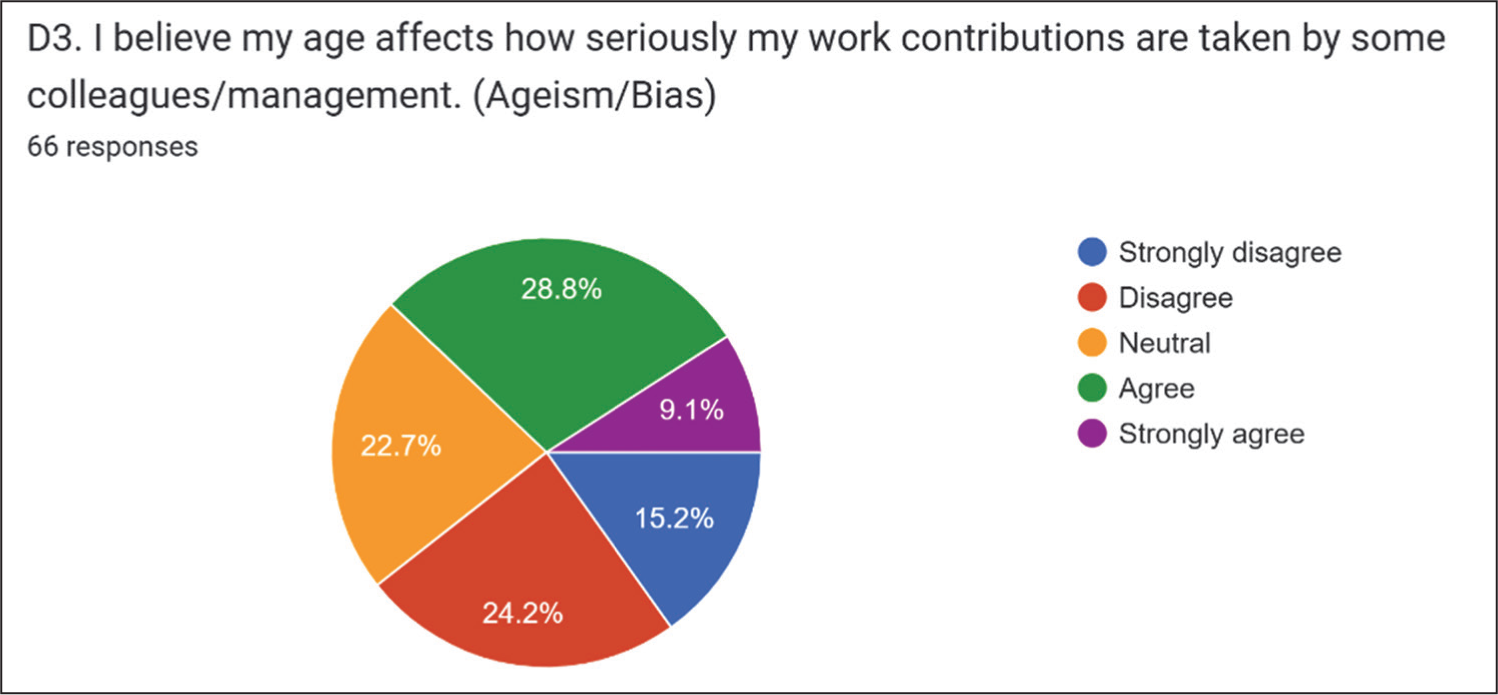
Stigma and taboo association with menopause: About 33.3% of the respondents agree, and 13.6% of them strongly agree, that discussing menopause would lead them to be perceived as less capable or incompetent, as depicted in Figure 1. It can also be seen that 25.8% of them agree and 10.6% of them strongly agree that there is a general cultural taboo against discussing menopause in the workplace (Figure 2). About 28.8% of the respondents agree, and 9.1% of them strongly agree, that their age affects the degree of seriousness with which their work contributions are taken by their peers and college management (Figure 3).
Stigma Associated with Menopause.
Cultural Barriers.
Ageism/Bias.
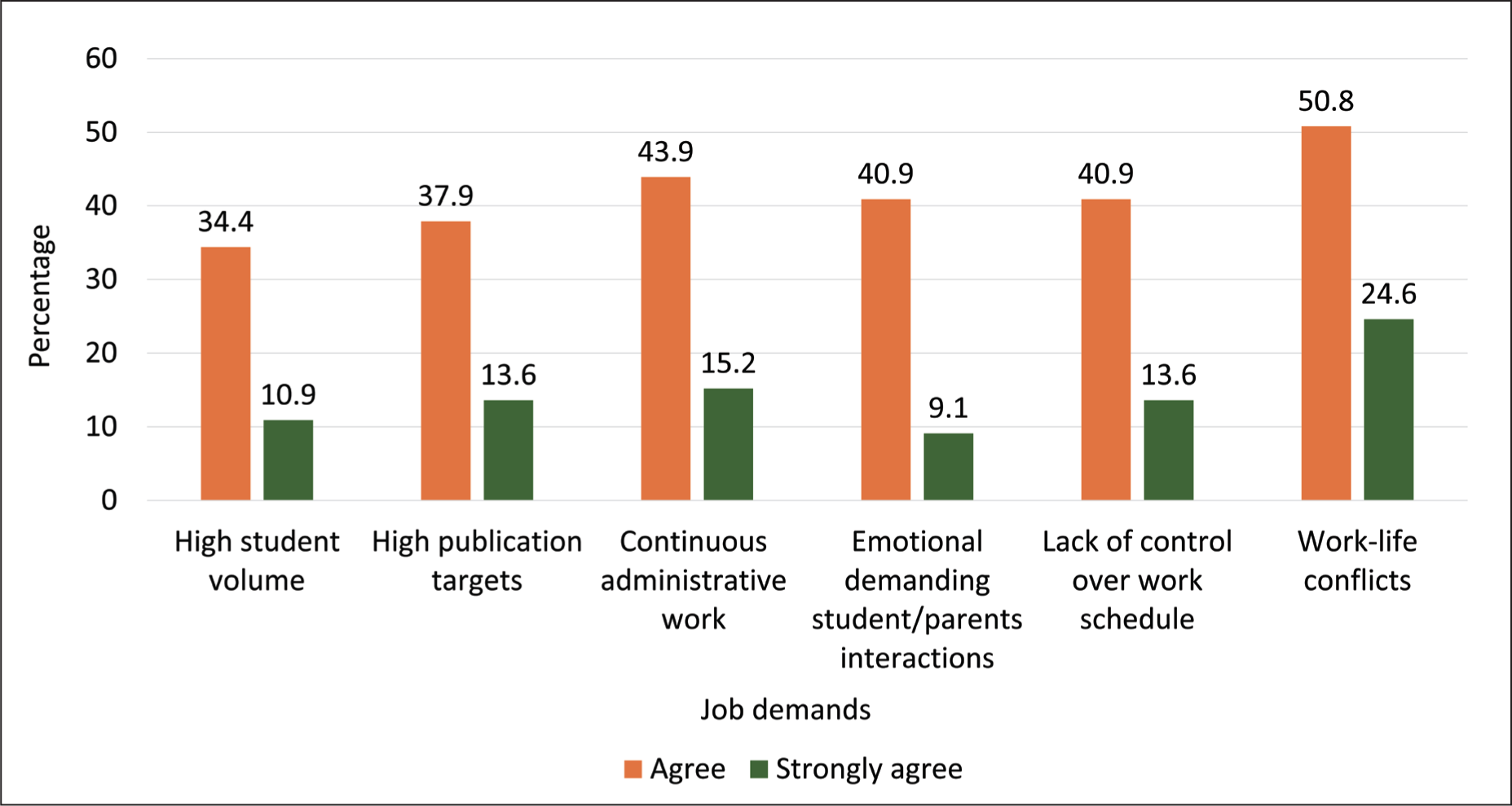
Job demands: Figure 4 below shows that 34.4% of the respondents agree and 10.9% of them strongly agree that they have high student volume (large class sizes), which increases their workload. About 37.9% of the respondents agree, and 13.6% of them strongly agree, that they face high pressure to meet research publication targets (which poses high cognitive demand). Nearly 43.9% of the respondents agree, and 15.2% of the respondents strongly agree, that they had constant administrative work and meetings outside of teaching, which also increases their workload. Apart from the above, 40.9% of respondents agree, and 9.1% of them strongly agree, that they have to deal with emotionally demanding student/parent interactions. These respondents also face a lack of control over their work schedule (where 40.9% of them agree and 13.6% of them strongly agree that they face fixed, long hours of work, and there is no flexibility in these work hours). About work-life balance, 50.8% of the respondents agree, and 24.6% of them strongly agree that they face difficulties in managing work expectations while at the same time handling their family/home duties.
Job Demands.
The job resources provided by the educational institutions are another side of the JD-R framework that is used in analyzing the menopause issues in these colleges and universities. Regarding the supervisor support, 41.5% of the respondents agree, and 15.4% of them strongly agree that their Head of Department (HOD)/supervisor provides clear, helpful feedback and support. About job autonomy, 40% of the respondents agree, and 23.1% of the respondents strongly agree that they have enough control over how they organize their teaching work in classrooms. With regard to peer support, 45.5% of the respondents agree, and 19.7% of them strongly agree that their colleagues offer practical help and emotional support when faced with menopause symptoms and issues. Regarding skill development, 50.8% of the respondents agree, and 10.8% strongly agree, that they have access to training and professional development opportunities that boost their confidence at work. When it comes to task resources, only 25.8% of the respondents agree, and 10.6% strongly agree that their college offers the required resources that would reduce their administrative burden. This is an area to be improved by educational institutions. Again, when looking at the rewards and recognition provided to the respondents, only 48.5% of them agree, and 10.6% of them strongly agree that they are being recognized and valued for their efforts in their educational institutions (refer to Figure 5 on job resources).
Job Resources.
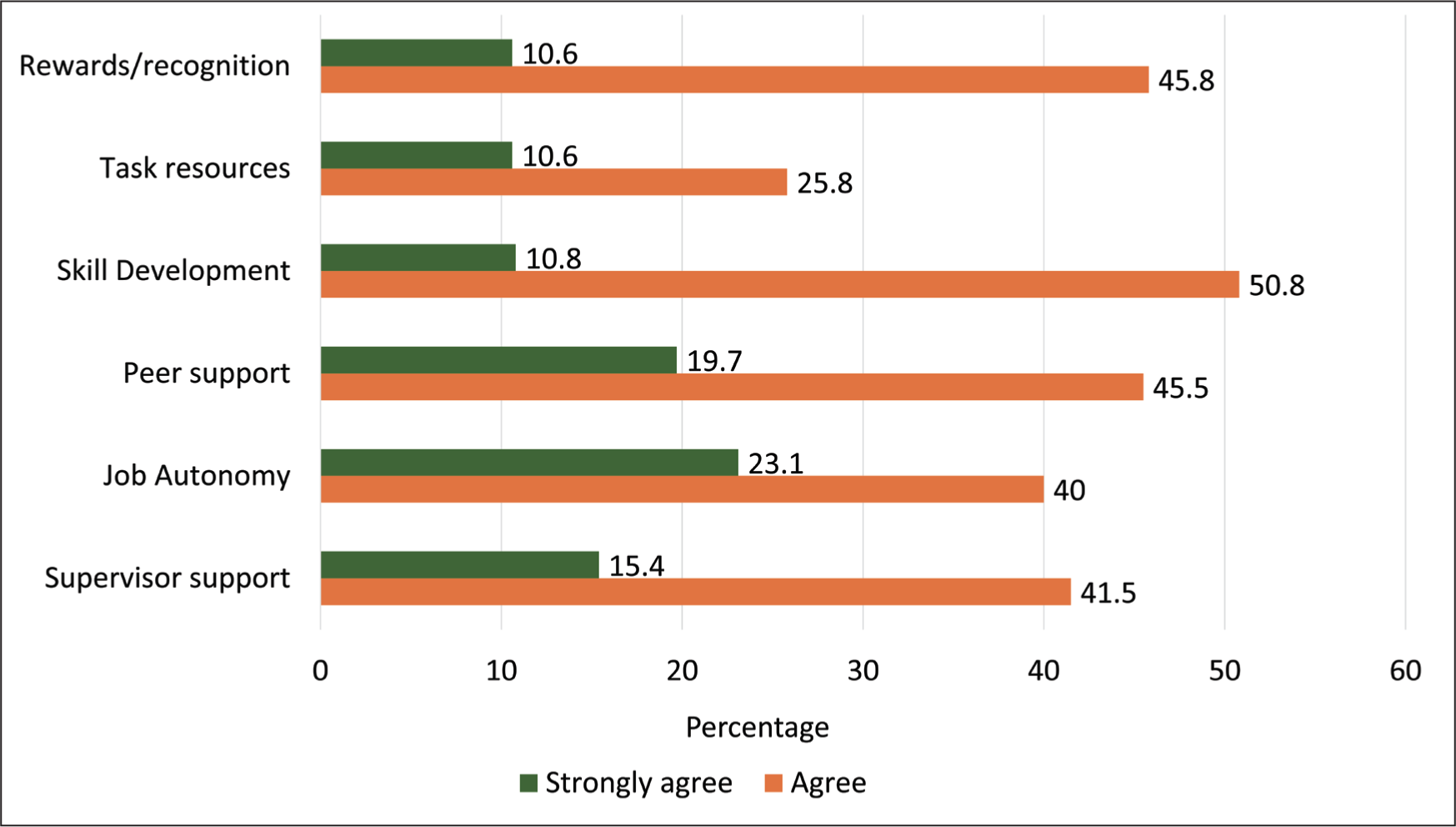
The descriptive statistics above show that respondents are not strongly confident about the job resources that they are being provided with in their educational institutions. They are either neutral or just agree about the job resources being provided. Similarly, the stigma/taboo related to menopause symptoms is also very high.
Correlation Analysis
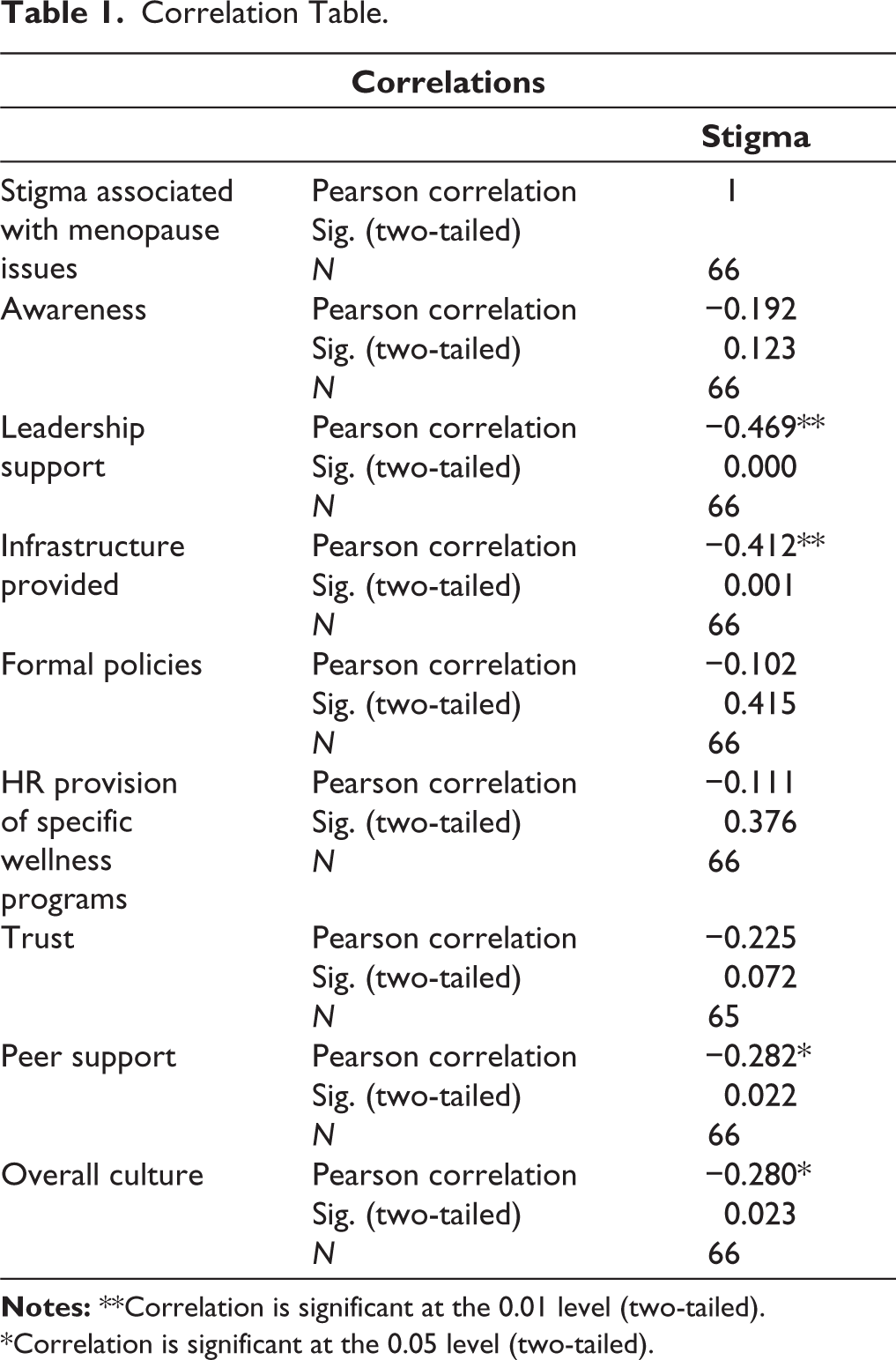
Bivariate correlation analysis between stigma associated with menopause symptoms (which is a summation of stigma/professional credibility, cultural barriers, and ageism/bias) and specific aspects of institutional awareness and support is shown in Table 1 below. It can be seen that leadership support is negatively and moderately correlated with stigma associated with menopausal issues, as the correlation coefficient is at −0.469, which is statistically significant at the 0.01 level.
Correlation Table.
*Correlation is significant at the 0.05 level (two-tailed).
Similarly, one can see from Table 1 that the infrastructure being provided for female teachers is negatively and moderately correlated with the stigma associated with menopause symptoms, as the correlation coefficient is −0.412 (significant at the 0.01 level). Also, that peer support, which has a negative correlation of −0.282, and overall culture, which has a negative correlation of −0.280 with stigma, are statistically significant at the 0.05 level.
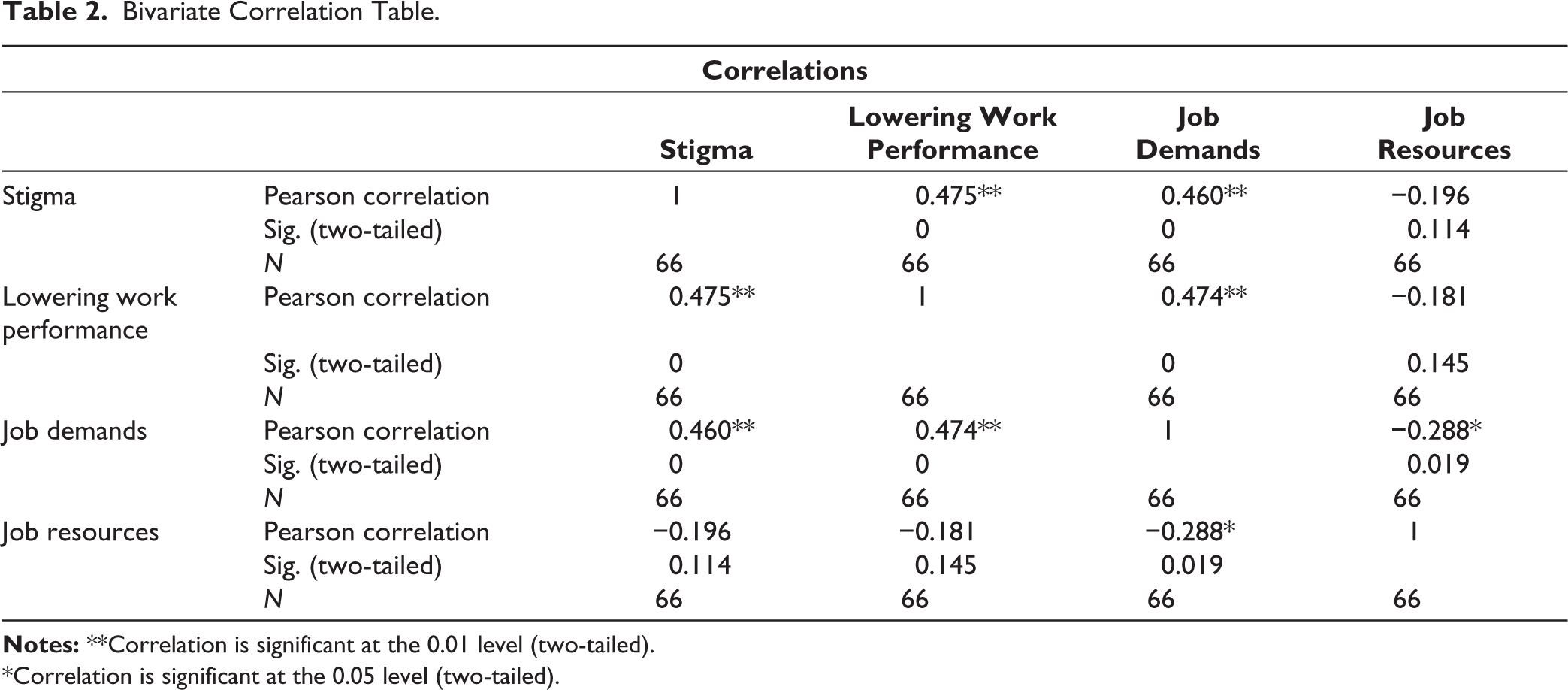
A bivariate correlation table among stigma, lowering work performance due to menopause issues, job demands, and job resources is shown in Table 2 below.
Bivariate Correlation Table.
*Correlation is significant at the 0.05 level (two-tailed).
It can be seen from Table 2 above that stigma associated with menopause issues is moderately and positively correlated with a lowering of work performance, with a correlation coefficient of 0.475, which is statistically significant at the 0.01 level. Similarly, job demands are also moderately and positively correlated with a lowering of work performance, as the correlation between the two is at 0.474 (significant at the 0.01 level).
Discussion of the Results
The link between social and professional stigma associated with menopause and productivity is evident from the results, as it is seen that the higher the stigma, there is a significant the decline in work performance. This supports the statement of the research problem that cultural taboos about menopause result in reduced productivity and absenteeism. Similarly, the positive link between job demand and social stigma also shows that in an environment where the social stigma about menopause is high, female teachers might perceive their job roles to be highly demanding and burdensome which makes it difficult for them to manage along with their menopause symptoms.
Correlation results above also provide particular insights about the Menopause-Inclusive Framework for Tamil Nadu Colleges (MI-TN), where one can see that when the leadership support is positive, the stigma surrounding the menopause issues in educational institutions significantly drops. It highlights the fact that change should start from top management in colleges and educational institutions. Similarly, there is also evidence that the higher the infrastructure provided for female staff in the form of proper ventilation and temperature control, restrooms, this will reduce the stigma associated with menopausal issues and the hidden nature of the female struggle in educational institutions.
Qualitative Analysis
Based on the open-ended questions and focus group discussions conducted, there are many themes that have emerged with regard to menopausal symptoms and how they are being handled at educational institutions. About the physical and cognitive barriers that female teachers faced in their classrooms, many of the respondents in the focus group described the fact that they faced unbearable fatigue and hot flashes that were not controllable during lecture hours, which made it difficult for them to stand for longer hours. This led to physical exhaustion for the female teachers at colleges. They also faced cognitive struggles as they experienced temporary memory lapses and brain fog, particularly when they are lecturing in their classrooms, and this is a source of professional anxiety faced by them in their work environment. They also experienced mood swings suddenly, and this increased their anxiety levels, making it difficult for them to manage their classes effectively, and also made it difficult for them to interact with students and parents smoothly.
Again, when it comes to the professionals, stigma, and the culture of silence, the themes that emerged from open-ended questions highlight a major HR challenge where menopause is often stated and treated as a shame rather than being considered a reality. Many of the teachers were being forced to mask their symptoms so as not to be perceived as less capable or incompetent by their colleagues and students. As they were hesitant to discuss these issues with their peers and/or HODs, they merely tried to cope with being physically present but mentally struggling, which is often referred to as presenteeism.
The qualitative data about the infrastructural gap suggest that poorly ventilated classrooms and a lack of rest areas for female teachers, as well as a lack of clean and accessible washroom facilities, show severe environmental constraints in these educational institutions. In fact, these teachers mentioned that there is a lack of micro flexibility where they were unable to shift their first hour classes in the case they were being disturbed by insomnia or night sweats due to menopausal symptoms. This was a major stress issue cited by many female teachers.
Qualitative suggestions provided by teachers also indicate that they require awareness workshops for all teachers so that the topic of menopause can be desensitized. They also requested a flexible leave policy and support groups within the college so that they do not feel isolated.
The qualitative analysis validates the quantitative findings in that the brain fog and the fatigue mentioned by the female teachers validate the lowering of work performance when they face menopause symptoms. The hiding of symptoms and the shame associated with the discussion of menopause symptoms explain the high stigma scores found in the quantitative analysis. The call for empathetic supervisors and heads of departments matches the negative correlation found between leadership support and the high stigma associated with menopause issues.
Recommendations
Based on the above analysis, it can be recommended for the Tamil Nadu Higher Education Department that it should institutionalize the MI-TN framework, where the menopause support should be integrated into the internal complaints committee, and there should be a faculty wellness cell in every college. Since it has been found that leadership support is a major factor in reducing stigma around menopause issues, Tamil Nadu State Council for Higher Education should include menopause awareness programs as a mandatory module in leadership development programs that are being conducted for heads of departments in colleges. There should be designated wellness rooms or rest zones for female teachers, and it should be ensured that classrooms are well ventilated and that the washrooms have proper equipment for disposal of napkins and a constant water supply. Creation of faculty circles and peer-led support groups can help the teachers with coping strategies in times of need.
Footnotes
Declaration of Conflicting Interests
The authors declared no potential conflicts of interest with respect to the research, authorship, and/or publication of this article.
Ethical Approval
NA.
Funding
The authors disclosed receipt of the following financial support for the research, authorship, and/or publication of this article: Authors did receive support from the Center for Faculty Development and Research, MCJ Research Publication Grant Consortium, Madras School of Social Work, Egmore, Chennai.
Informed Consent
NA.
Patient Consent
NA.