



Abstract
The social tapestry being woven primarily with cisgender or binaries of gender ignores and is repulsive toward the non-confirming transition in the gender identity of transgenders. This study investigates how discrimination in one of the parameters, either social, legal, or economic, reinforces the other, thereby leading to a long-term and never-ending pattern of discrimination. The study is premised upon doctrinal as well as empirical methodologies to elucidate the hurdles and disparities faced by transgenders, more specifically in education, employment, and the health sector. The article also delves into the attitude of the various stakeholders of nation-building in proliferating or diluting the discrimination faced by transgenders. Several existing works of literature as well as studies concerning transgenders have been taken into consideration in the article to trace the gap and pump the same with the recent trends of discrimination. The article ponders upon analyzing the existing literature on transgender inclusivity & discrimination to trace the impact of the same in dealing with the discrimination directed toward transgenders. It highlights the pivotal role played by social acceptance, inclusivity, and legal protection of transgenders in fostering their basic rights and dignity. The research sample consists of transgender individuals from diverse backgrounds, encompassing different ages, gender identities, and sexual orientations. By centering on the voices and narratives of participants, the study aims to provide a nuanced understanding of how discrimination, stigma, and societal norms impact the daily lives and well-being of transgender individuals.
Introduction
Often, a woman’s pregnancy is assumed to result in the successful parturition of a child with male or female gender identity. The heteronormative society then decides what toys and which clothes the child must prefer. However, the heteronormative division of society ignores the third category of gender that depicts incongruence in biological sex and gender, known as the third gender. 1 Often, these persons/groups are seen to be disguised in female attire, even showcasing the female attributes, generally dancing and singing in male-sounding voices with unusual clapping. These people are also known as Hijra, Khusra, Eunuchs, and Aravanis and are sub-grouped under the Western term transgender (TG) and have been victimized and discriminated against because of their being underprivileged and deprived of basic rights and thus marginalized. Giving birth to a transgender person is considered a curse, as the societal tapestry being woven with notions of gender binaries is repulsive toward them. 2 They were subjected to abusive language, torture, inhuman behavior, sexual assault, physical assault, and unequal treatment. The National Crime Records Bureau, in its 2022 report, has highlighted the offenses directed against transgenders where the police have registered cases upon their complaint. As per the report, only one reported offense of kidnapping and abduction, and 64 reported offenses of missing (National Crime Records Bureau). 3 The prevalence of heteronormativity in society, along with transphobia, encircles discrimination of transgenders in their socioeconomic and legal spheres of life. 4 The identity of transgenders persons but also paved the way for the lawmakers for the enactment of transgenders (Protection of Rights) Act, 2019. The law tends to protect transgenders from being discriminated against in various spheres of their lives, including but not limited to education, employment, and the health sector. The presence of a heteronormative mindset in society and the repulsiveness toward individuals with queer and non-binary identities remains the epicenter of issues in the lives of transgenders. 5 Thus, the present article purports to trace the nature, extent and impact of discrimination faced by transgenders in each level of their lives. The present study tends to examine the discrimination and violence faced by transgenders concerning their family setup, education, employment, health, and law enforcement aspects.
Genesis Behind Transgenderism
Scholarly discussions pertaining to gender diversity provide that the modern conceptualizations delving into gender and sexuality stem from ancient civilizations. Several historical records reveal the presence of gender variance in socio-cultural contexts. The oldest record in the history of gender diversity was traced from Ancient Egypt, where the female-bodied ruler Hatshepsut assumed the role of a king from 1478 to 1458 BCE. 6 The historical account challenged the rigid restrictions of gender roles within the folds of biological sex. Similarly, the historical discourse of Rome provided an overview of the ruler Elagabalus (218-222 CE), thereby highlighting the deviating behavior of the ruler that is beyond the binaries of gender through the use of feminine attire and cosmetics that contradicted the prevailing notions of gender binary in Roman society. 7 Such instances highlight the presence of gender fluidity across diverse civilizations and cultural contexts. Members of indigenous communities have always considered the notion of gender diversity falling beyond the binary of gender. Studies delving into the indigenous traditions elaborated the discussion on gender fluidity among the indigenous communities who are being identified as two spirits through an indigenous term, namely nadleehi or ago we. 8 The indigenous terminologies embraced by many indigenous communities explain the presence of certain socially accepted identities that moved beyond the traditional definition of gender. The gender plurality has also been explained within the folds of religious and philosophical scripts pertaining to South Asian countries. The interpretations encapsulated within the Hindu philosophical contexts categorize human beings, premising upon their nature, or Prakriti, into three essential categories, namely, pumps-prakriti or male, stri-prakriti or female, and tritiya-prakriti or napumsaka or third gender. 9 Gender diversity has been well recognized within the traditional tenets of Hindu thought. Furthermore, philosophical interpretations of the Rig-Veda affixed the existence of transgender through a statement, that is, Vikriti Evam Prakriti or What appears unnatural is also natural. 10 The scholarly underpinnings also traced the presence of non-binary individuals in medieval India. During the Mughal era, individuals identifying themselves as eunuchs or gender non-binaries were often considered to be an integral part of the royal and imperial courts. Their presence was divine and was given high regard during the Mughal era. 11 However, the invasion of colonial rulers during the colonial period evidenced a significant transition in the perception toward gender diverse communities. The Criminal Tribes Act of 1871 considered hijras or eunuchs to be suspects of offenses like sodomy, castration, and kidnapping. 12 Conclusively, the historical records highlight the existence of gender diversity from time immemorial. The existence of transgender individuals has been there with the existence of human beings on the earth; however, the connotation of their identity has evolved over time.
Exclusionary Practices Encircling Discrimination of Transgenders in India
Despite the historical presence and recognition of gender diversity, contemporary scholarship discusses the continuous discrimination faced by gender non-binaries in the modern era. The exclusionary practice in India operates across multiple facets that include society, family structures, educational setups, workplaces, healthcare systems, and law enforcement agencies. Empirical research premised upon a mixed-method study involving transgender respondents from Chennai City reveals widespread experiences of transphobic violence and discrimination faced by transgender individuals at schools, workplaces, healthcare facilities and public places. 13 These outcomes highlight the presence of systemic prejudice and transphobic behavior create significant impediments in the path of social inclusion and economic participation. The victimization and stigmatization of transgender individuals in the health sector create social and hospital phobias among them. The reluctance on the part of transgenders to avail medical services has been substantially attributed upon the discrimination and victimization of them at the hospital. 14 The marginalization faced by transgenders gets multiplied through their interaction with law enforcement agencies. Empirical findings suggest that transwomen across various states of India shared extensive experiences of high verbal as well as physical victimization by the police in comparison to others, and the victimization has enhanced their sexual risk toward HIV. 15 Economic Marginalization forms another essential dimension of exclusions and prejudices. Cross-sectional studies involving transgender participants from several Indian states indicated that a significant proportion of the participants engage in sex work for their survival. The presence of structural barriers in the path of formal employment, reinforced with social stigma, limits their alternative livelihood options. 16 Regional studies pertaining to the state of Odisha traced the reasons behind the identity and recognition issues faced by transgender individuals. The study highlighted the insufficiency in the government policies, and the heteronormative mindset of the society acts as a hurdle in the path of the recognition of the identity and rights of transwomen in the state of Odisha. 17 The existing body of literature about the genesis of transgenderism, the exclusionary practices and discrimination in India, after being reviewed, highlights that the journey of transgenders dwindles within recognition and discrimination. From the very inception, their rights were protected, and liberties were recognized; however, over time, they have been stigmatized, victimized, and marginalized by society as well as its stakeholders. During the modern era, the judicial discourse and legislative enactments have garnered a safety net for transgenders, but the same fails to cater to the needs of transgenders, as several untouched pages in the protective norms are not discussed, which has marginalized them. The inclusivity of transgenders in society, the educational sector, the employment setup, and the health infrastructure remains an unanswered question. The prevalence of heteronormativity in society acts as an impediment to the realization of justice by transgenders, thereby leading to the proliferation of injustice.
Methodology
The study is premised upon mixed methods of research where the researcher has taken into consideration both doctrinal and empirical recourses to substantiate the objectives as well as purposes of research.
Participant Selection Technique
The absence of social mapping of members of the transgender community and the variation in the gender spectrum often keep these individuals in an isolated state from being the participants of the research study. To trace transgenders for the study, the researchers have taken the Snowballing sampling technique.
Participants
A total of three to four participants (n = 34) from the state of Odisha were taken into consideration for the study that was conducted in the month of August 2024. These participants belong to rural, suburban, and urban areas of the state of Odisha. The participants were shared with a “Google Form” link, whereby they shared their answers in response to the previously structured questionnaire. One of the essential conditions premising upon which the information was shared by the participants is concerning the anonymity of their identity.
Tools & Techniques
The responses received from the participants were analyzed through “International Business Machines Statistical Package for the Social Sciences (IBM SPSS).” The research tool catered to the needs of the research as the majority of the data are quantitative, thus making it a viable tool for analysis.
Results & Discussion
Descriptive analyses were taken into consideration for the study to analyze frequencies concerning the responses received. The data are being systematically filtered and coded to align the same with the objectives of the study. The outcomes of the study have been examined by three essential parameters, namely demographics of participants, discrimination & exclusion of transgenders, & violence & offenses against transgenders.
Demographics
Among the total number of participants taken for the study (n = 34), most were aged 18–30 (41.20%), with the least representation from the age group 51–60 (5.90%). None of the samples belongs to the age group of under 18 or above 60. Most of the younger participants were inclined toward sharing their experience along with their gender identity. The sample reflects the predominant presence of transwomen (97.10%), highlighting greater visibility in comparison to that of transmen. The majority of participants identify themselves as homosexual (67.60%), followed by bisexual (26.50%) and asexual (5.90%), evidencing homosexuality to be the dominant sexual orientation within the members of transgender community. Education holds a pivotal position in the enhancement of the socio-economic viability of an individual, thereby diminishing marginality. The attainment of education is largely limited to matriculation (29.40%), with minimal presence in higher education (8.80%) and a minuscule proportion devoid of having education (8.80%). This infers toward considerable educational exclusion, thereby restricting socio-economic viability. Respondents are engaging in works of different natures, and the same have a nexus with their education as well as their employment status. Part-time employment is not only restricted to formal employment setup, that is, private jobs (n = 10, 29.40%); some of them have considered dance as well as drama as part-time employment (n = 10, 29.40%). Begging (n = 9, 26.50%) is the second-highest nature of work done by the participants, followed by prostitution (n = 4, 11.80%). A substantial number of participants are engaged in informal work such as begging, prostitution, dancing, and drama. Many of them hesitate to disclose their actual work because of the fear of stigmatization and victimization associated with their true workplace roles.
Discrimination & Exclusion Faced by Transgenders
Transgenders being marginalized by society are susceptible toward discrimination & exclusions. However, prominent discriminations and exclusions that push transgenders into the darkness of vulnerability toward violence & offenses can be seen in educational institutions, workplaces, healthcare sectors and law enforcement institutions. 18
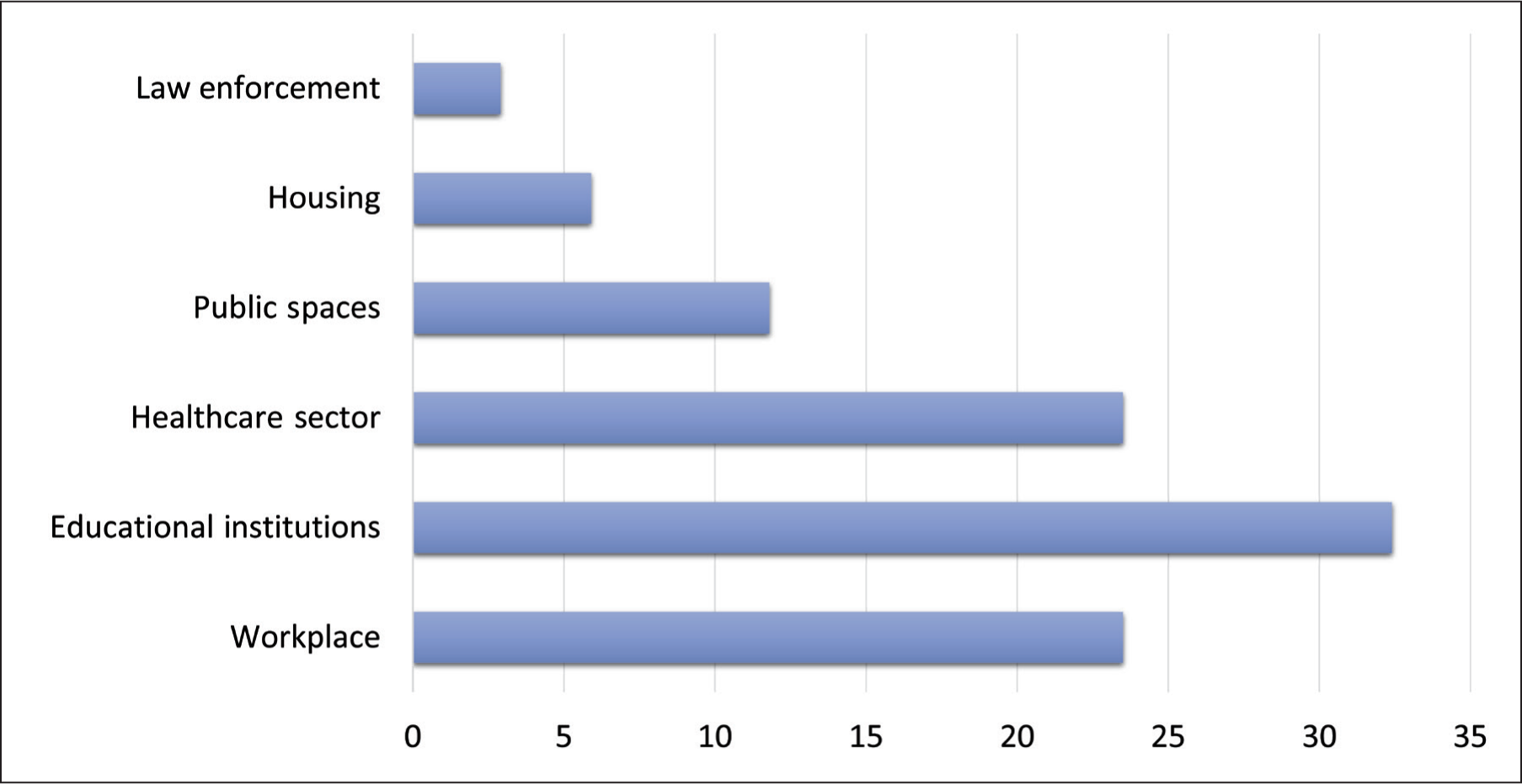
Figure 1 highlights that highest number of participants faced substantial discrimination at the educational institutions (n = 11, 32.40%), followed by workplace (n = 8, 23.50%) & health care sectors, that is, (n = 8, 23.50%), whereas a few participants faced substantial discrimination at public places (n = 4, 11.80%) & with family (n = 2, 5.90%). Only one of the participants (n = 1, 2.90%) has highlighted the law enforcement agency as one of the places where she had faced a substantial amount of discrimination.
Experiences of Discrimination by the Respondents.
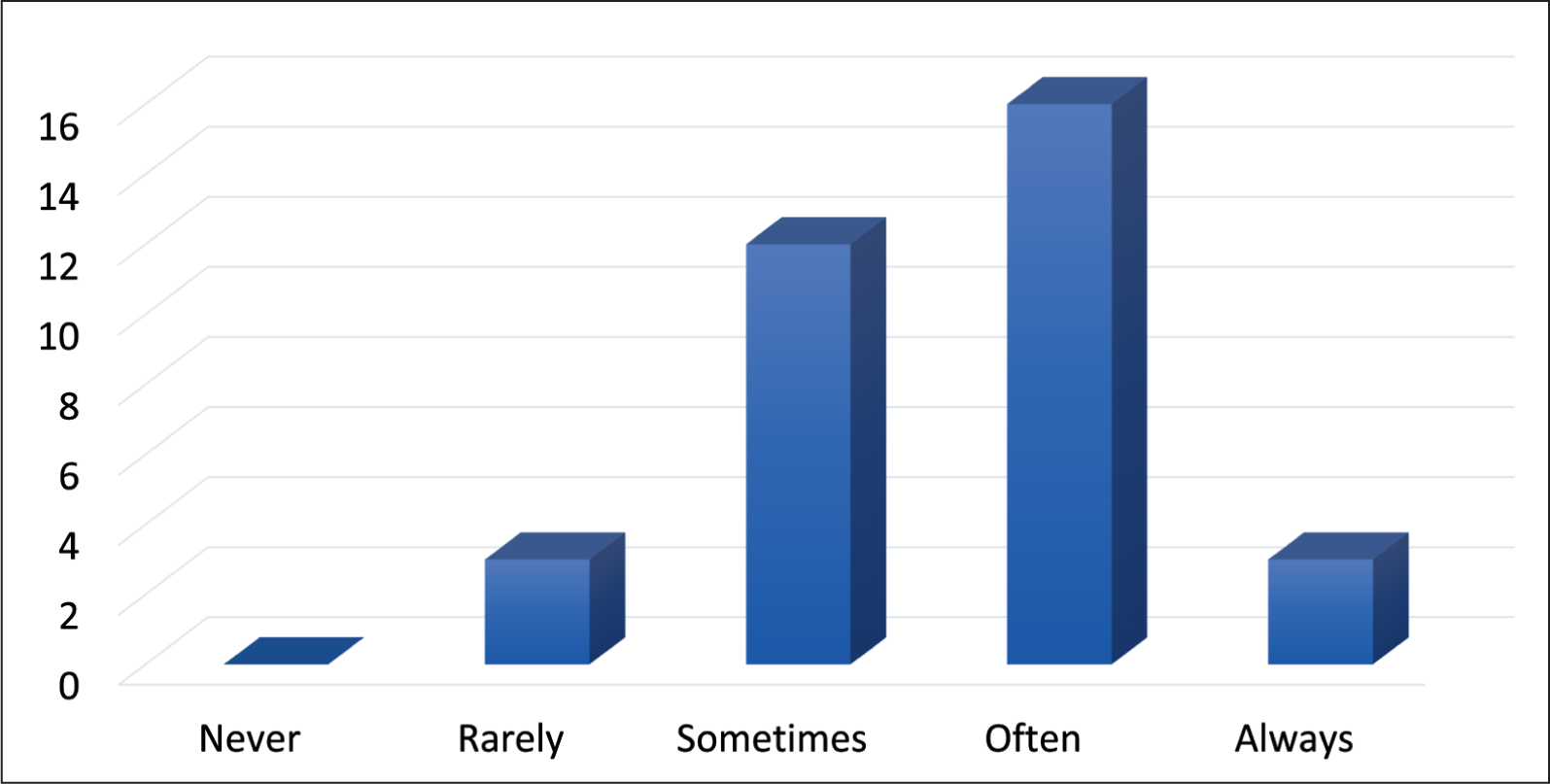
Most of the participants (n = 12, 35.30%) in general have highlighted that they have often faced discrimination in the past year, premising upon their non-confirming gender identity as depicted in Figure 2. None of them has denied the factum of discrimination in their life during the past year; however, some of them cited that sometimes (n = 11, 32.40%) they have faced it. This clearly construes that although there is a variation in the frequency, discrimination has been an integral part of the lives of transgenders in some way or another. The discriminations are scattered in different levels in education, employment, health, and law enforcement setups. In the educational sector, the highest number of participants (n = 14, 41.20%) have stated that sometimes they have faced discrimination in the educational institution, but not in a routine manner.
Frequency of Discrimination Faced by Respondents.
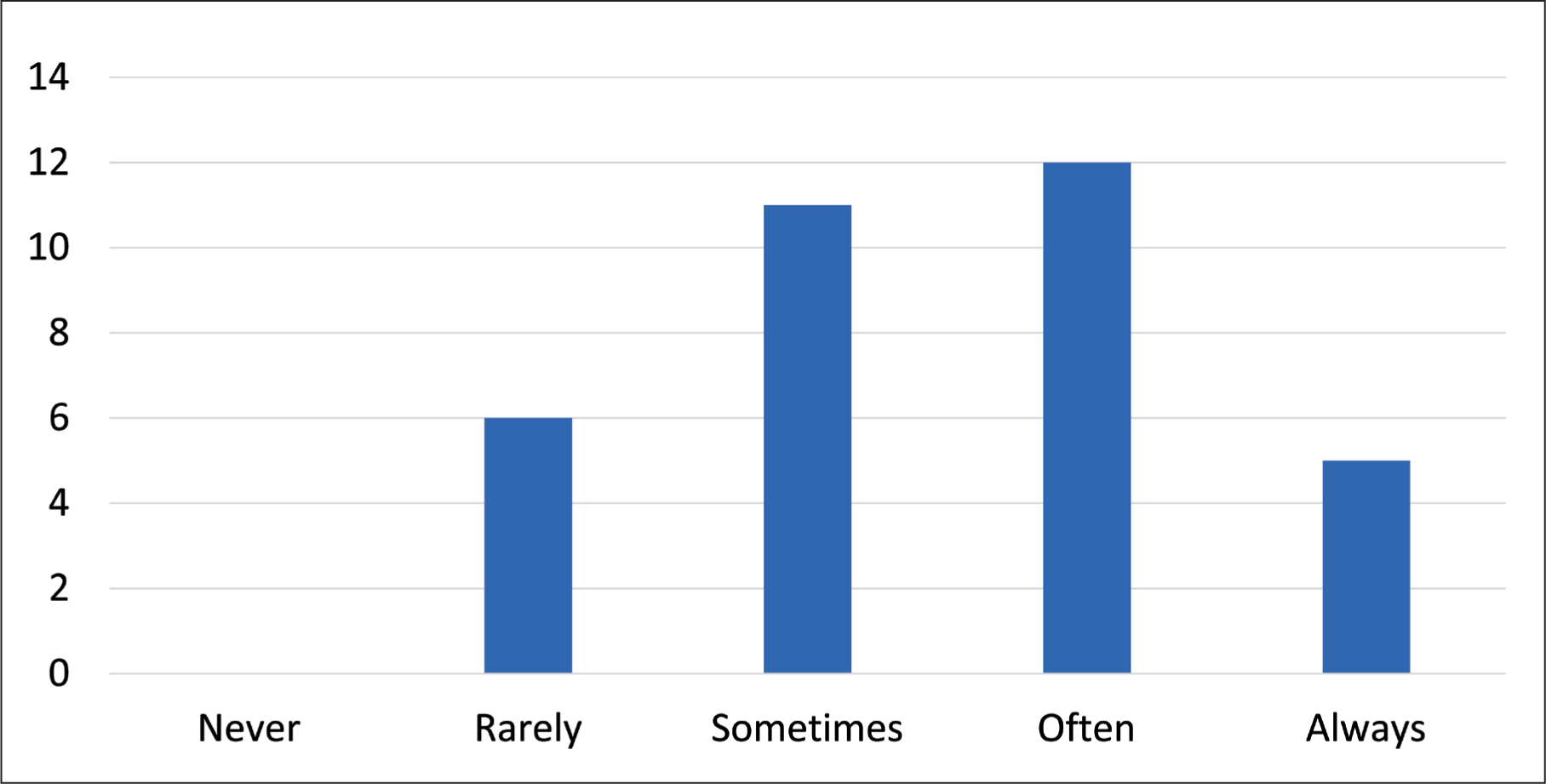
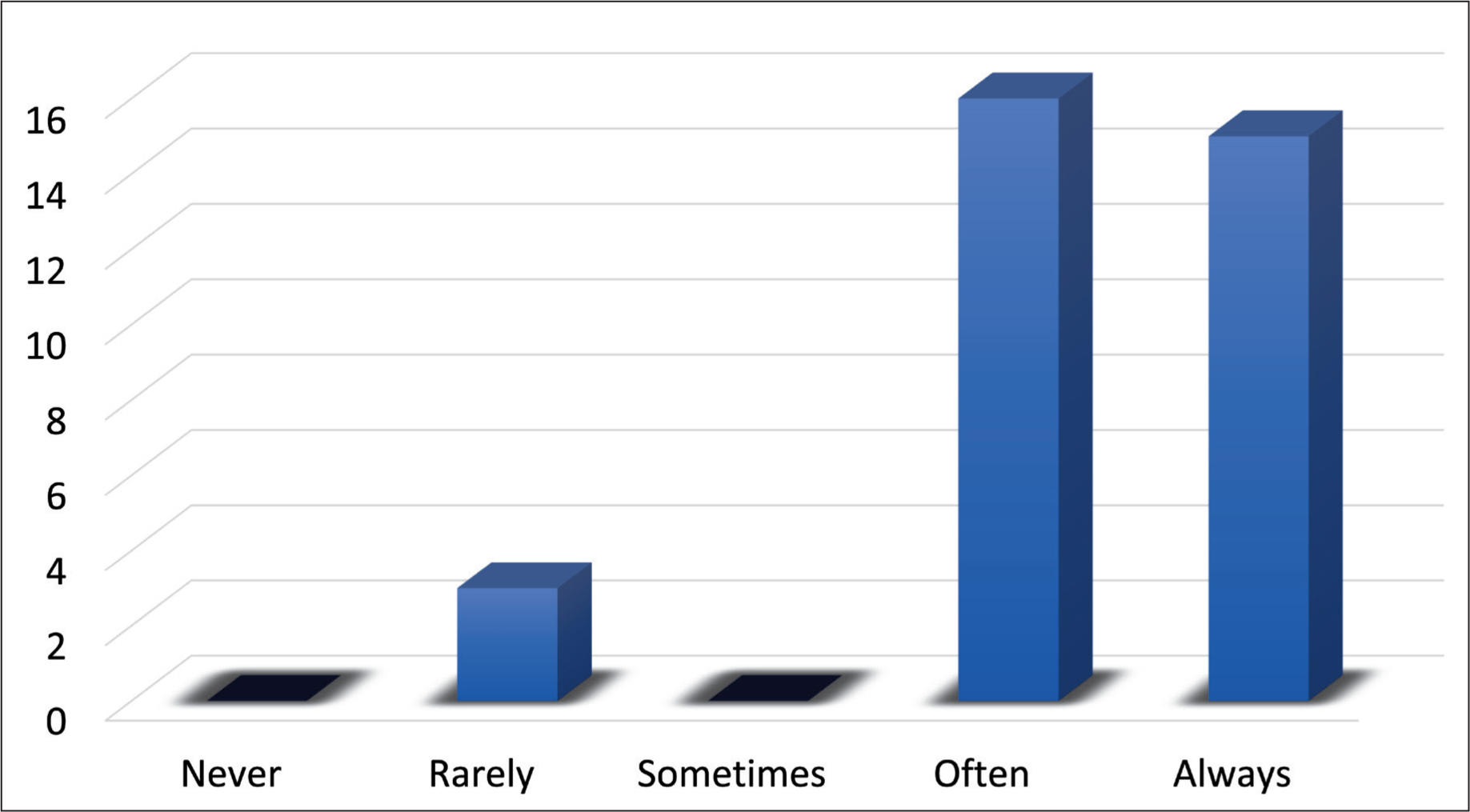
Figure 3 depicts that in the employment sector, most of the participants (n = 16, 47.10%) have highlighted that they have often faced discrimination, and the same has been supported by a substantial number of participants (n = 15, 44.10%) who have always faced discrimination in the employment setup. None of the participants of the study highlighted that they had ever faced any discrimination in the employment sector or the workplace environment. Discrimination has been a pervasive issue in the journey of transgenders in relation to their employment.
Frequency of Discrimination in the Employment Sector.
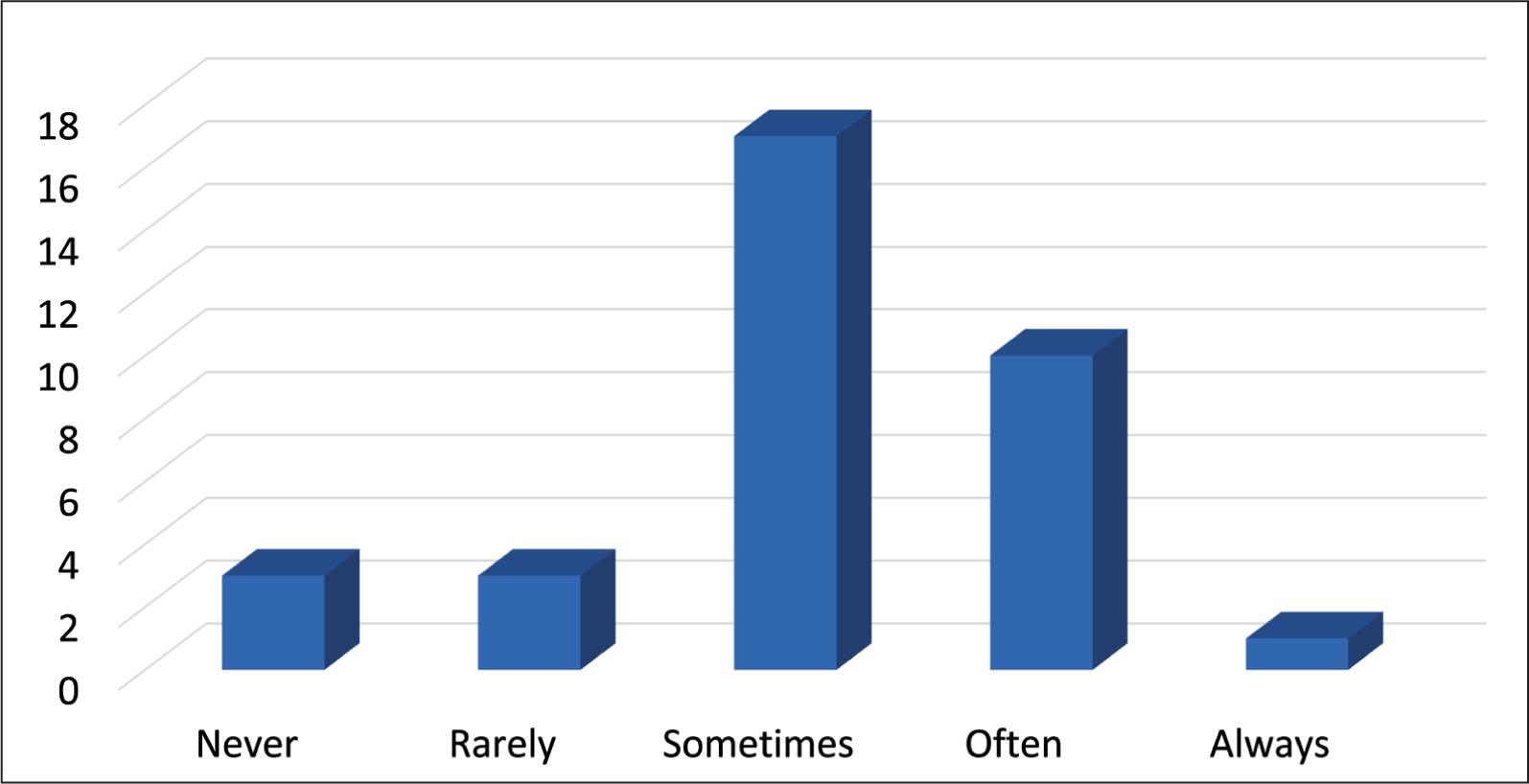
The health sector forms an essential facet of the life of every individual, including transgenders. In response to discrimination in the health sector, most of the participants (n = 17, 50.00%) have faced discrimination sometimes, that is, not in a routine manner as reflected in Figure 4. However, the second highest number of participants (n = 10, 29.40%) have mentioned that often they have faced discrimination in the health sector, premising upon their non-confirming gender identity.
Frequency of Discrimination in the Health Sector.
The law enforcement agency, that is, the police, plays a pivotal role in safeguarding and protecting transgenders from violence and offenses; however, there are responses received from the participants evidencing discrimination from the police officers’ side. Figure 5 depicts that highest number of participants (n = 16, 47.10%) have often faced discrimination from the end of police officers, and none of them (n = 0, 0.00%) have mentioned that they have not faced any discrimination from the end of police officers.
Frequency of Discrimination Against Police.
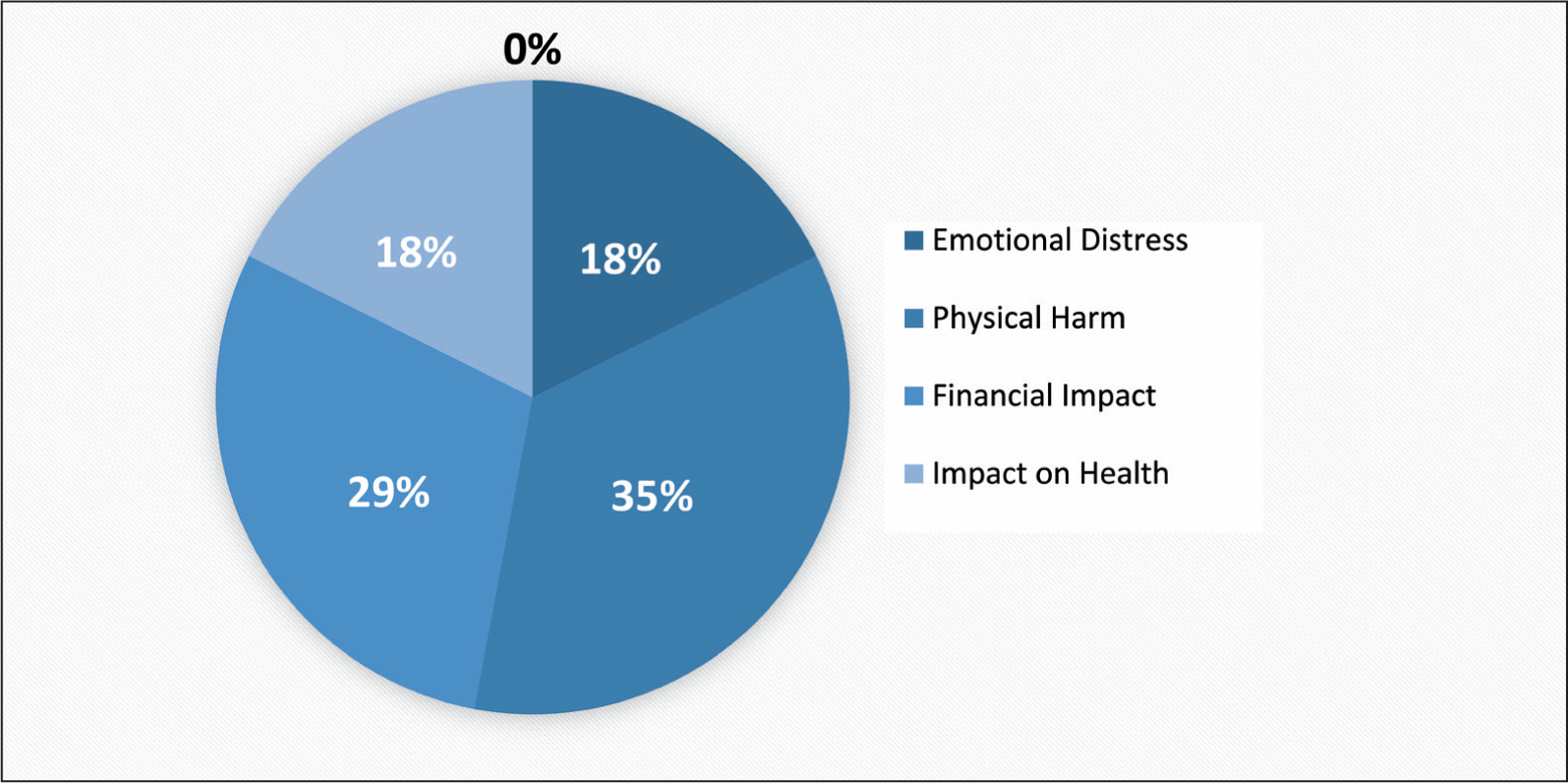
The effect of discrimination hurts the lives of transgenders by causing emotional distress, physical harm, financial impact, impact on health & change in behavior or routines of transgenders. 19 Figure 6 reveals that maximum number of participants (n = 12, 35.30%) enumerated that discrimination leads to physical harm, followed by financial impact (n = 10, 29.40%). Six participants (n = 6, 17.60%) have equally considered emotional distress as well as the impact on health as effects of discrimination. Discrimination in matters of cis-gender persons often gets reported to the concerned authorities for redressal; however, it does not remain the same for transgenders. Most participants (n = 25, 73.50%) have reported the discrimination, whereas a few participants (n = 9, 26.50%) have not reported the same. The non-reporting of the discrimination is reasoned with violence and atrocities that are directed toward them after reporting the discrimination. 20 The fear of violence, the non-considerate nature and lack of faith in the reporting authorities constrain transgenders from reporting the discrimination.
Effects of Discrimination.
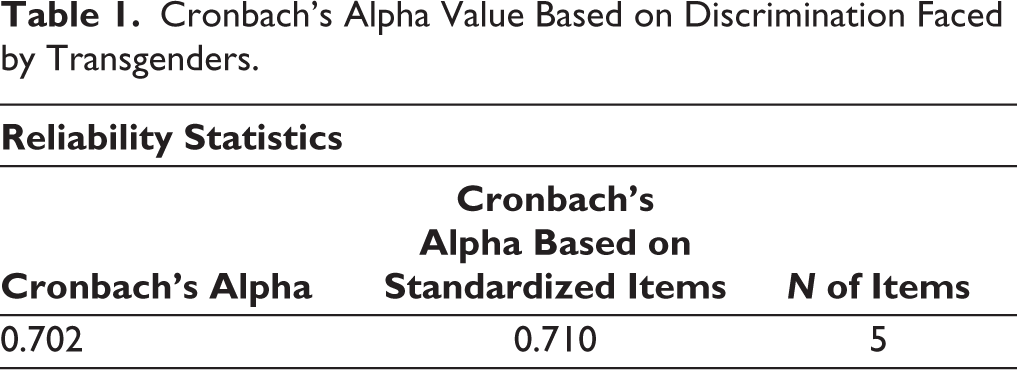
As highlighted in Table 1, the Cronbach’s Alpha score on the reliability of the scale concerning discrimination faced by the transgender person is 0.702. The same supports the reliability of information collected from the participants.
Cronbach’s Alpha Value Based on Discrimination Faced by Transgenders.
Violence & Offenses Against Transgenders
Transgenders are deviating themselves from the dyadic characteristic of gender expression, and binaries of gender identity are often victims of transphobic violence. They face offenses like physical abuse, verbal abuse, and sexual harassment in their lives, mostly in education, employment, health, & law enforcement sectors, and the study traces the extent of violence or offenses faced by them in their day-to-day lives. Education forms the backbone for the socio-economic upliftment of transgenders. Education is the solution toward such marginalization, discrimination, stigmatization, and victimization faced by transgenders in their lives, which plays a substantial role in their upliftment by converting them into human resources. However, the presence of violence and offense in the education sector acts as an impediment in the path of their conversion process toward human capital. 21 The study reveals that a maximum number of participants (n = 13, 38.20%) have rarely faced physical violence in their education section, whereas the maximum number of them (n = 13, 38.20%) have often faced verbal abuse in the education institutions. A maximum number of participants (n = 15) have revealed that they have never faced sexual harassment in educational institutions. Thus, the outcome received from the participants conclusively states that verbal abuse is comparatively higher than physical violence and sexual harassment in the educational sector. Employment is essential for survival, which is the means of income and forms an essential facet in one’s life for satisfying his and his family’s basic needs. For transgenders, often getting employed is a distant dream, premised upon discrimination and non-inclusivity of the employment setup in relation to gender identities. Even after getting employment opportunities, transgenders often face violence and offenses as a consequence of which they remain silent over the issue for their livelihood or leave the workplace. 22 Furthermore, it compels them to do immoral and odd works like begging and prostitution. Out of the total number of participants employed (n = 12), excluding the unemployed (n = 22) who have opted for the not-applicable option, a maximum of them (n = 6, 17.60%) have rarely faced physical violence in the workplace in comparison to verbal abuse (n = 5, 14.70%) which they often face in the workplace. So far as sexual harassment is concerned, most of them (n = 4, 11.80%) have never faced it in their workplace. Thus, verbal abuse has been commonly faced by the participants in comparison to physical violence and sexual abuse.
Health is considered an individual’s wealth, which is essentially required to be taken care of through health care facilities. The health care system not only saves the life of an individual but also aids an individual in living a healthy life. The harassment and violence faced by transgenders in the health setup compel them to find self-remedies, thereby pushing them toward death. 23 Most of the participants (n = 23, 67.60%) have cited that sometimes they have faced verbal abuse in their life, whereas a maximum of the participants (n = 19, 55.90%) have cited that they have rarely been subjected to physical violence in the health sector. Verbal abuse faced by the participants is comparatively more than that of physical violence. However, it is important to mention that the extent of both verbal abuses as well as physical violence is comparatively lower than that of other sectors. The transgenders after being subjected to violence and offenses, report the same in the police station. Often, police officers show a callous attitude toward registering the complaints received from transgenders. 24 In certain situations, transgenders unwillingly forbid themselves from reporting the offense with a fear of violence and harassment in the police station by a police officer. Most of the participants have highlighted that they have sometimes faced verbal abuse (n = 21, 61.80%) and rarely faced physical violence (n = 19, 55.90%) from the ends of police officers. The extent of physical violence is less than verbal abuse in the police station. 25
Limitations
The presented study is narrowed by a small sample with geographical restrictions that dilute the generalizability of the outcomes. The prevalence of the transwomen population in the study and reliance upon the self-reported as well as cross-sectional data may lead to uncertainty in results. Moreover, limited intervention into intersectional factors and the absence of a comparative study impede an extensive outlook of discrimination against transgenders.
Conclusion
The heteronormative society was found to be repulsive toward the transgenders. The prevalence of repulsiveness and growing tendencies of the transphobic attitude of society are the epicenters of discrimination, stigmatization, and victimization of transgenders. Various levels of discrimination directed against them can be seen through the journey of their lives. The initiation of the discrimination remains within the family in which they were born, and it further slowly proliferates in the education, employment, and health sectors. The discrimination at one level reinforces the discrimination at the next level, thereby leading to a never-ending pattern of discrimination encircling their lives. Many times, these discriminations get overshadowed by the heteronormative society, ignoring the existence of transgenders and facilitating the negation of their basic rights and liberties. The prevalence of discrimination, stigmatization and victimization of transgenders are not only prejudice to their interests and rights but also reflects injustice toward them. Despite recognition of their gender identity, the presence of legislative regimes and government policies toward the inclusivity of transgender, they are susceptible to injustices prevailing in society. The present study calls for the need for future research to trace the reason behind the vulnerability of transgenders toward injustices in the heteronormative society despite judicial and legislative recognitions.
Footnotes
Declaration of Conflicting Interests
The authors declared no potential conflicts of interest with respect to the research, authorship, and/or publication of this article.
Ethical Approval
Not applicable.
Funding
The authors received no financial support for the research, authorship, and/or publication of this article.
Informed Consent
Not applicable.