




Abstract
Female genital cosmetic surgery (FGCS) has become increasingly sought after for achieving idealized genital appearances. Prototypical vulvar expectations driven by cultural norms significantly impact women’s body image and motivations for undergoing FGCS. This study explored how visual characteristics of vulvas, such as labia size and pubic hair, influence perceptions of attractiveness, sexual behavior, and personality traits based on zero-acquaintance assessments. Participants evaluated images of vulvas varying in visible anatomical features. The researchers investigated the associations between perceived genital prototypicality, personality attributes, and sexual perceptions. Prototypical vulvas, aligning with cultural aesthetics, were rated as more attractive and linked to positive personality traits. Visible anatomical variations, such as longer labia minora or untrimmed pubic hair, led to more negative perceptions and associations with increased sexual openness. The findings demonstrated how societal standards shape perceptions of female genitalia, exacerbating body image issues, and influencing decisions to undergo FGCS. The need for broader cultural acceptance of natural anatomical diversity is necessary to reduce the stigma and psychological impact associated with non-conforming genital appearances.
Keywords
Prototypes are cognitive representations of categories that encapsulate the typical attributes, characteristics, and traits associated with those categories. 1 They emphasize similarities within groups and differences between groups, creating a mental framework for categorization and social judgment. 2 Prototypes are not static; they are socially constructed and shared within a community, influencing how individuals perceive and evaluate members of different groups. For instance, prototypes often inform societal expectations, such as assuming that a “leader” is authoritative and confident, or that a “caregiver” is nurturing and empathetic. These mental constructs shape judgments by providing a baseline comparison against which non-normative groups or individuals are evaluated. 2 The present study aimed to explore how women’s prototypes of female genital appearance influence interpersonal judgments on personality attributes and perceived sexual behaviors.
Prototypical Vulvas
In the context of vulvar anatomy, a prototype is culturally dependent and shaped by media and societal norms. The “ideal” prototype for vulvar appearance often reflects minimal, symmetrical, and hairless genitalia, a standard largely propagated through modified images in pornography and cosmetic surgery advertisements.3-5 Such representations reinforce narrow, unrealistic standards, positioning natural anatomical diversity as deviant or “abnormal.”5,6,12 The internalization of this prototype creates dissatisfaction among women who feel pressured to align with these ideals, often driving them to seek female genital cosmetic surgery (FGCS).
FGCS is an increasingly popular means of pursuing body modification. In many instances, FGCS serves as a step to achieve the idealized prototypical genital appearance often portrayed in the media and reinforced by Western beauty standards.7-9 Types of FGCS include vaginal tightening (often referred to as “rejuvenation”), labia majora augmentation, labia minora reduction, pubic liposuction (targeting the mons pubis and labia majora), clitoral hood reduction, hymen reconstruction, perineal rejuvenation, and G-spot amplification. 7 Physicians have reported that FGCS is commonly requested due to both cosmetic and functional motivations.10,11 Many studies have looked at the pre-conceptualized “normal” appearance of female genitalia (i.e., vulva, labia minora, labia majora, clitoris, and vagina) and have found significant variation in idealized genital dimensions that challenges the expectation of a single prototypical standard.6,12 In reality, there is a broad range of labial sizes and shapes, illustrating that natural diversity exists and is often unrelated to factors such as age or childbirth history.13,14 Other studies suggest that consumption of media might promote acceptance of vulva appearance; however, it also introduces the cultural standards that drive consideration for surgery in the first place.3,4,6,12,15
Sexual Script Theory
Gagnon and Simon developed sexual script theory to analyze human sexual behavior through a structured model that considers cultural, interpersonal, and intrapsychic influences. 16 While prototypes represent the typical attributes of a category, scripts outline the expected sequence of behaviors or events within a specific context. Cultural scripts provide guidelines on acceptable sexual behaviors derived from various societal sources such as schools, religions, and the media, including magazines, movies, and television.17-19 Interpersonal scripts are personalized adaptations of these cultural norms that individuals use to guide their sexual interactions in different contexts. For example, the reasons individuals engage in sexual activities during a one-night stand may differ from those with a long-term partner. 20 Intrapsychic scripts involve an individual’s self-conceptualization of their own sexuality, reflecting their personal understanding and interpretation of their sexual behaviors and identity. 21 This theory can be applied to analyze behaviors such as FGCS and evaluations of vulval appearance, which are influenced by societal norms, relationship dynamics, and individual perceptions of genitalia.
Motivations for FGCS encompass various factors, including aesthetic preferences shaped by societal beauty standards, functional discomfort, and the pursuit of enhanced self-esteem and sexual satisfaction. Research by Crouch and colleagues, along with Dogan and Yassa, indicated that a primary motivation for many women is dissatisfaction with the aesthetic appearance of their genitalia, which is shaped by media portrayals and societal expectations of a “normal” genital appearance.22,23 Research by Braun discussed how the marketing of FGCS procedures as solutions to body image concerns may amplify women’s insecurities by suggesting natural anatomical diversity as problematic. 7 FGCS motivations are also linked to functional concerns, with some women seeking surgery to reduce perceived discomfort during everyday movements, exercise, or sexual activity. 14 Interpersonal motivations play a significant role, with women often expressing a desire to undergo FGCS to enhance self-esteem, confidence, and sexual satisfaction. 24
“Because They Expect it”
The first level of sexual script theory identifies the cultural motivations for FGCS, which are influenced by popular culture and societal beauty standards. Media and pornography often depict unrealistic ideals of genital appearance, expecting smooth, symmetrical, and minimally visible labial structures as the norm, which can lead women to perceive their own anatomy as inadequate or abnormal.5,6 The media influence is heightened by cosmetic surgery advertisements and online content that promote FGCS as a means to achieve “desirable” genital aesthetics. 25 Women may feel pressure to conform to societal standards of beauty that extend to intimate body areas, which reinforces the idea that natural variations in genital appearance are something to be corrected. 26 The desire for an “ideal” genital appearance is further fueled by the normalization of cosmetic modifications, where body alterations are increasingly accepted as a way to boost confidence and appease cultural beauty standards. 23 As a result, FGCS is often pursued not just for personal reasons but as a response to external cultural influences.
The traditional Western expectations of women’s sexuality and personality are heavily influenced by cultural norms that often impose restrictive standards on behavior and self-expression. Expectations of modesty, a “low body count,” and sexual conservatism are culturally driven ideals, particularly in more traditional and conservative settings, where a woman’s value and influence are often tied to her perceived sexual purity.8,9 Many women desire to balance their personal sexual agency and independence with the societal expectations imposed on their behavior. These standards create psychological pressure on women to appear sexually reserved and conform to notions of being “respectable” or “worthy,” which can result in internal conflicts. Research into cosmetic surgeries, such as hymen “reconstruction” or genital “rejuvenation,” illustrates the extent to which these pressures manifest physically, with some women pursuing such procedures to align their bodies with cultural ideals of purity and to manage or preserve their image.7,15
Girl “Friends”
The second level of sexual script theory identifies the interpersonal motivations for seeking out FGCS. The social pressure driven by girlfriends and other female acquaintances influences decisions around undergoing FGCS. Moran and Lee explored young Australian women’s perceptions of dissatisfaction with genital appearance through thematic discourse analysis of responses from 94 participants. 12 Two key themes emerged: The normalization of genital modification to align with aesthetic standards, and the difficulty of resisting cultural pressures that stigmatize natural vulval anatomy. Women often play a significant role in reinforcing social expectations and pressuring other women to conform to certain beauty standards, which include ideals related to genital appearance. This can occur through shared beauty norms and conversations that discuss perceived imperfections or desirable traits, which can contribute to body image insecurities. Studies have shown that women’s body dissatisfaction is frequently exacerbated by social comparisons, which are particularly prevalent in settings such as online forums, beauty communities, and even casual discussions where cosmetic procedures are normalized or promoted.12,18,26 Social reinforcement driven by other women can lead to feelings of obligation to meet certain aesthetic ideals, even in intimate or private aspects of appearance, to align with shared standards within their social circles. Societal expectations about “ideal” femininity, often defined by narrow Westernized beauty standards, are frequently perpetuated among women themselves, reinforcing conformity and decreasing acceptance of natural anatomical diversity.5,23
“Because I Say So”
The third level of sexual script theory identifies the intrapsychic role of motivation for FGCS, which is closely tied to issues of self-confidence and personal comfort. Many women choose FGCS to address insecurities related to the appearance of their genitalia, which is often shaped by societal ideals of beauty and “normalcy” reinforced by cultural and social standards. 23 Studies indicate that women frequently report feeling self-conscious about visible labial tissue or asymmetry, which can lead to discomfort in intimate settings and, in some cases, avoidance of sexual activity. 27 By undergoing FGCS, women often seek not only physical alteration but also a psychological boost in confidence and satisfaction with their appearance, with the belief that it will translate into greater sexual comfort and relationship gratification. 28 However, research by Braun questions whether these psychological benefits are long-lasting, as there is limited evidence that FGCS significantly enhances body image or reduces insecurity over time. 7 Many professionals advocate for pre-surgical counseling focused on body acceptance and understanding natural anatomical diversity to help manage expectations and support a healthier body image before considering surgical interventions. 29
Personality expectations play a role in shaping women’s self-concept and behavior, often through traits emphasized by societal standards, such as being demure, agreeable, and conscientious.9,26 These qualities are often reinforced from a young age, and traits such as kindness, compliance, and attentiveness are more desirable than assertiveness or dominance. 8 Moran and Lee assessed how exposure to images of surgically modified versus non-modified vulvas affects women’s perceptions of what is “normal” and “ideal” genital appearance. 6 The study found that those exposed to images of modified vulvas rated these as more “normal” and closer to “society’s ideal” than non-modified images. Results also revealed that certain features, such as visible clitorises, longer labia, and untrimmed pubic hair, were associated with more negative perceptions of personality and attractiveness. Schick explored the link between female genital aesthetic perceptions and attitudes toward gynecological care, focusing on how cultural ideals and media representations impact women’s comfort with their own bodies and influence healthcare decisions driven by the desire to conform to perceived standards of genital appearance. 27 These interpersonal expectations may contribute to women’s decisions to undergo FGCS, because they may feel an implicit obligation to conform to ideals of “femininity” by adhering to socially expected beauty standards. 26 Social conditioning impacts women’s perceptions of themselves and their bodies, and they may feel obligated to align their appearance and attitudes with conservative ideals of womanhood. The pressure to align with these traits can lead to decisions rooted in self-consciousness and conformity rather than personal autonomy. The psychological expectations, coupled with unrealistic societal standards of sexuality and personality, highlight the importance of addressing interpersonal influences through education on body diversity and promoting a broader understanding of individuality in women’s sexuality and personality.12,28
Pubic Hair Preferences
Pubic hair styles are influenced by cultural and temporal trends, affecting preferences for grooming in both men and women.30,31 Currently, a neatly trimmed pubic hair style is preferred in places such as the United States, the United Kingdom, and Australia. 32 Maintaining groomed pubic hair can be seen as adherence to social grooming norms and may be considered an indicator of conscientiousness. 33 Brooks and Reysen found that their participants rated penises with trimmed pubic hair as more conscientious and socially desirable compared to those with untrimmed or no pubic hair, which suggests that grooming practices impact perceived personality traits. 34 Certain grooming practices, particularly pubic hair styling, play a significant role in how masculinity and attractiveness are perceived. Current Western trends often lean toward well-trimmed pubic hair, reflecting broader grooming habits and expectations. These choices are not merely aesthetic but can also signal qualities such as conscientiousness and awareness of social norms, influencing impressions in social and intimate contexts.30,31,33 This reflects a broader cultural shift where maintaining grooming standards is associated with positive personality traits and social approval. 32 These findings also align with theories of digital impression formation, where limited visual cues, such as genital appearance, contribute to implicit personality assessments that reflect societal expectations about physical norms and attractiveness.
Research Questions and Hypotheses
The growing popularity of labiaplasty and other cosmetic procedures aimed at enhancing vulvar aesthetics reflects a broader cultural preoccupation with meeting idealized genital appearances.7,23-26 Past research has indicated that women are often motivated to seek FGCS due to internalized societal expectations, perceptions of sexual desirability, and functional concerns related to sustained comfort.8,35 Additionally, social influences play a significant role, as women may feel pressure from peers to conform to narrow beauty standards.
9
Building on prior studies, particularly by Brooks and Reysen, which revealed how pubic hair grooming significantly affects perceptions of personality traits and desirability, this study sought to examine how women evaluate genital appearance across a variety of anatomical features, including clitoral visibility, labial length, and pubic hair style.12,34 The present study aimed to explore whether these visual features influence zero-acquaintance personality judgments and attractiveness ratings, particularly in terms of how prototypical or non-prototypical genital appearances are perceived. Specifically, this study investigated whether deviations from prototypical vulvar standards would elicit more negative evaluations, with a focus on understanding if these perceptions vary based on different genital features. The following hypotheses were tested:
H1: Vulvas perceived as more prototypical will be rated higher in attractiveness and associated with more positive personality traits. H2: Vulvas with more visible clitorises will be rated lower on the prototypicality scale, lower on the attractiveness scale, and less positive personality traits scale compared to vulvas with non-visible clitorises. H3: Vulvas with more visible long labia will be rated lower on the prototypicality scale, lower on the attractiveness scale, and less positive personality traits scale compared to vulvas with visible short labia or non-visible labia. H4: Vulvas with more natural (untrimmed) pubic hair will be rated lower on the prototypicality scale, lower on the attractiveness scale, and less positive personality traits scale compared to vulvas with trimmed or shaved pubic hair. H5: Non-prototypical features (e.g., visible clitorises, long labia, and natural pubic hair) may be evaluated more positively by participants with specific ages, cultural backgrounds, and sexual preferences.
Method
Participants and Design
Participants (N = 85; 100% women; Mage = 21.75; SD = 5.56) received partial course credit toward their psychology course requirement at Texas A&M University-Commerce. Participants indicated their age and ethnic/racial category as African American (44.7%), White (24.7%), Hispanic/Latina (21.2%), multiracial (7.1%), Indigenous (1.2%), or Central Asian/Indian/Pakistani (1.2%). Additionally, participants indicated their sexual orientation as heterosexual (87.1%), bisexual (8.2%), lesbian (2.4%), and other (2.4%). The study deployed an identical design to past research on personality perceptions of penises. 34
After affirming to the informed consent, participants completed a within-subjects zero-acquaintance perception task for 24 pictures of vulvas categorized by clitoral visibility, labial length, and pubic hair maintenance. Participants responded to items on a seven-point, Likert-type scale, ranging from 1 = strongly agree to 7 = strongly disagree. At the conclusion of the study, participants were thanked and debriefed. The present study was reviewed and approved by the East Texas A&M University Institutional Review Board.
Materials
Stimuli
The stimuli of vulva images were collected via online message boards (e.g., Reddit) used for people publicly share pictures of their genitals, and resulted in 24 unique images of genitals for participants to rate. Similar to Brooks and Reysen, the pictures were sorted into three superordinate categories (i.e., clitoral visibility, labia minora length, and levels of pubic hair maintenance). 34 Within the clitoral visibility category, three pictures were subcategorized into non-visible clitoris, and three pictures were subcategorized into visible clitoris. For labia minora length, three pictures were subcategorized into non-visible labia, short labia, and long labia. Last, for pubic hair, three images were subcategorized into shaved, trimmed, and natural. While all of the vulvas were Caucasian, the pubic hair color ranged. All stimuli were randomized to control for ordering effects.
Personality
Participants rated the perceived personality of the vulvas with an altered Big Five personality assessment utilizing only the affirmative statements for openness (α = .93), conscientiousness (α = .91), extraversion (α = .93), agreeableness (α = .93), and neuroticism (α = .90). 42
Sexual Perceptions
Participants also rated items derived from past research regarding the sexual perceptions of each vulva. 34 Items included: Prototypicality (α = .96), attractiveness (α = .93), sexual activity (α = .90), sexual performance (α = .93), perception of being a pleaser in bed (α = .81), and how many sexual partners they had in the past (α = .91).
Results
Prototypicality and Positive Perceptions
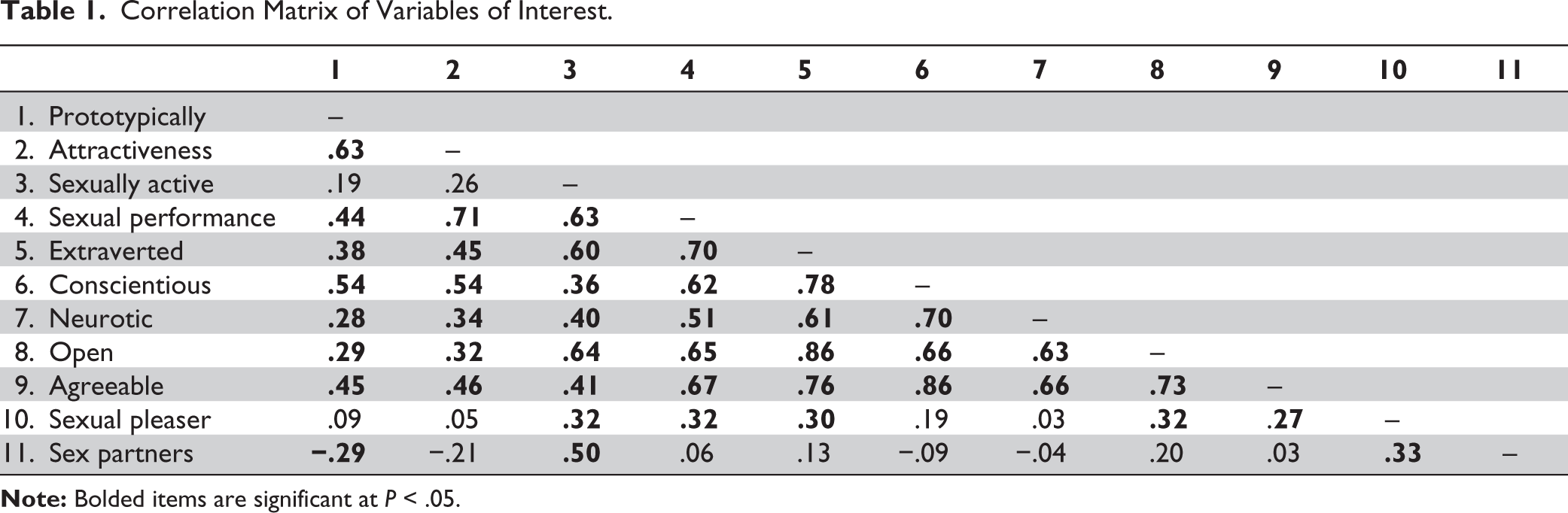
First, a correlation analysis was conducted with all of the variables of interest across vulva categories (Table 1). It was determined that prototypicality was positively associated with attractiveness, all of personality measures, and the perception of being good in bed. Prototypicality was also negatively associated with the number of sexual partners, and unassociated with sexual activity and being a pleaser in bed. The results confirmed the hypothesis that vulvas that were perceived to be prototypical would also be considered more attractive and be associated with positive sexual perceptions.
Correlation Matrix of Variables of Interest.
Clitoral Size
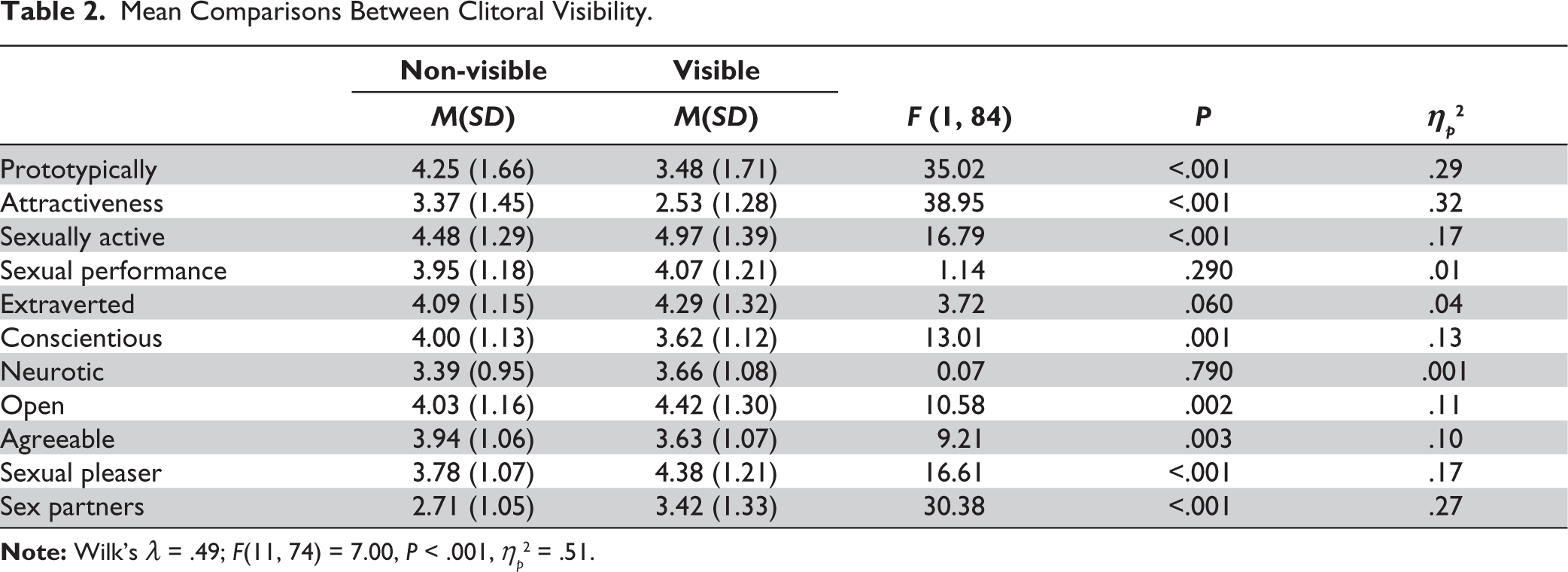
To test the second hypothesis, that visible clitorises would be perceived more negatively, we conducted a one-way repeated measures multivariate analysis of variance (MANOVA) utilizing the personality and sexual perceptions. The model was significant, and the results “indicated that differences in clitoral visibility accounted for significant differences across the majority of variables preferring vulvas with non-visible clitorises, thus supporting the hypothesis (Table 2). Vulvas with a visible clitoris were perceived to be less prototypical, attractive, conscientious, and agreeable. Additionally, they were perceived to have higher levels of openness, be more sexually active, be more of a pleaser, and have more sexual partners. No differences were observed regarding levels of extraversion, neuroticism, or their sexual performance.
Mean Comparisons Between Clitoral Visibility.
Labia
Regarding labia appearance, we tested the hypothesis that long, visible labia would result in lower perceptions of positive attributes. We conducted a one-way repeated measures MANOVA, which resulted in a significant model whereby the majority of sexual and personality attributes were significantly different between categories (Table 3). There were no significant differences observed across labia categories for perceptions of openness, sexual activity, or whether the person was a sexual pleaser. To assess specific attributions, a Bonferroni post-hoc analysis was conducted, which indicated that overall, vulvas with long labia were viewed as far less positive than alternatives.
Mean Comparisons Between Labial Length.
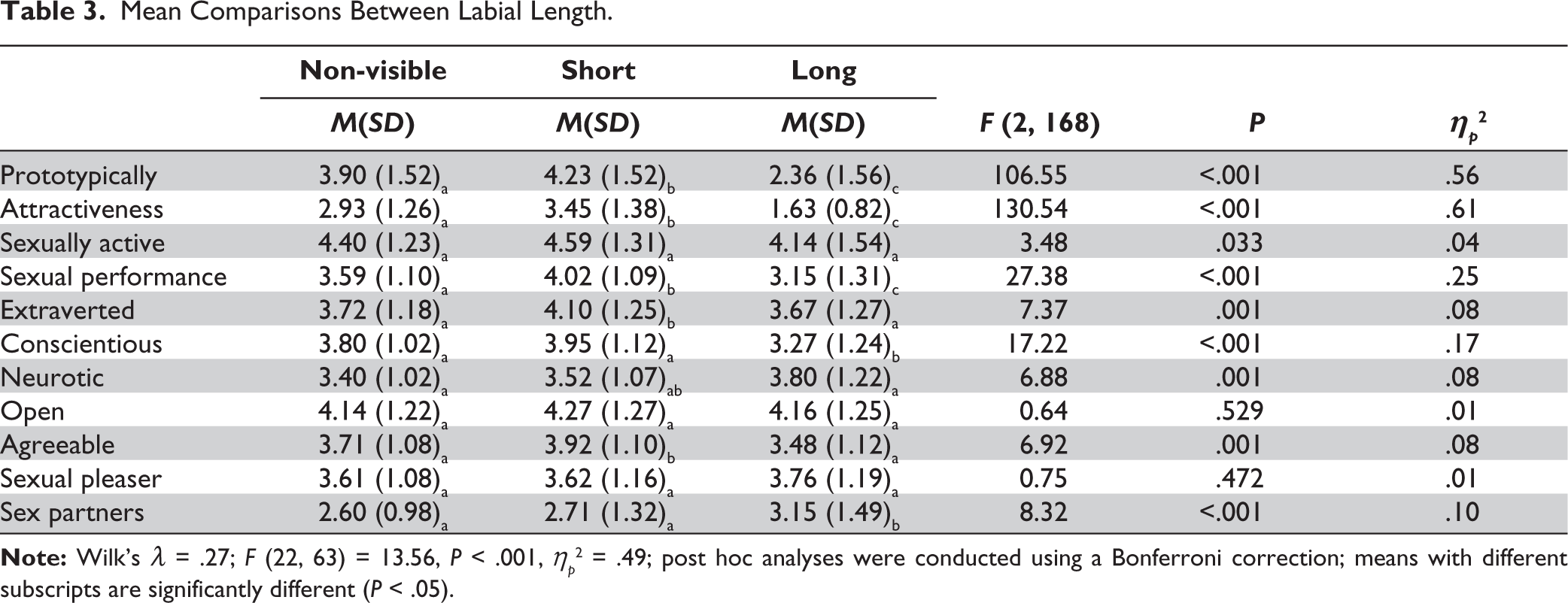
For example, as compared to vulvas with short labia, vulvas with long labia were perceived to be less prototypical, attractive, extraverted, conscientious, and agreeable. Further, they were also viewed as performing worse in bed, but still having more sexual partners. Additionally, when compared to vulvas with nonvisible labia, vulvas with long labia were perceived to be less prototypical, attractive, and conscientious; as well as more neurotic, performing worse sexually, and having more sexual partners. From these findings, it was clear that vulvas with long labia were significantly more likely to receive negative evaluations regarding their personality and sexuality.
The results also pointed to the elevation of vulvas with short labia, as they were also perceived to be more positive than non-visible labia. For example, non-visible labia were considered to be less prototypical, attractive, extraverted, and agreeable; as well as performing worse sexually. Thus, it seemed that labial length facilitates a distinct set of assumptions about women in a way that clitoral visibility does not.
Pubic Hair
Last, we assessed the hypothesis that natural pubic hair would be associated with lower positive personality traits. Utilizing a one-way repeated measures MANOVA, which resulted in a significant model whereby the majority of variables were significantly different between categories (Table 4). There were no significant differences observed for neuroticism, agreeableness, or perceived number of sexual partners based on pubic hair length. To assess specific attributions, a Bonferroni post-hoc analysis was conducted, which indicated that overall, vulvas with natural pubic hair were viewed as far less positive than alternatives, while completely shaved vulvas were perceived as more positive.
Mean Comparisons Between Pubic Hair Length.
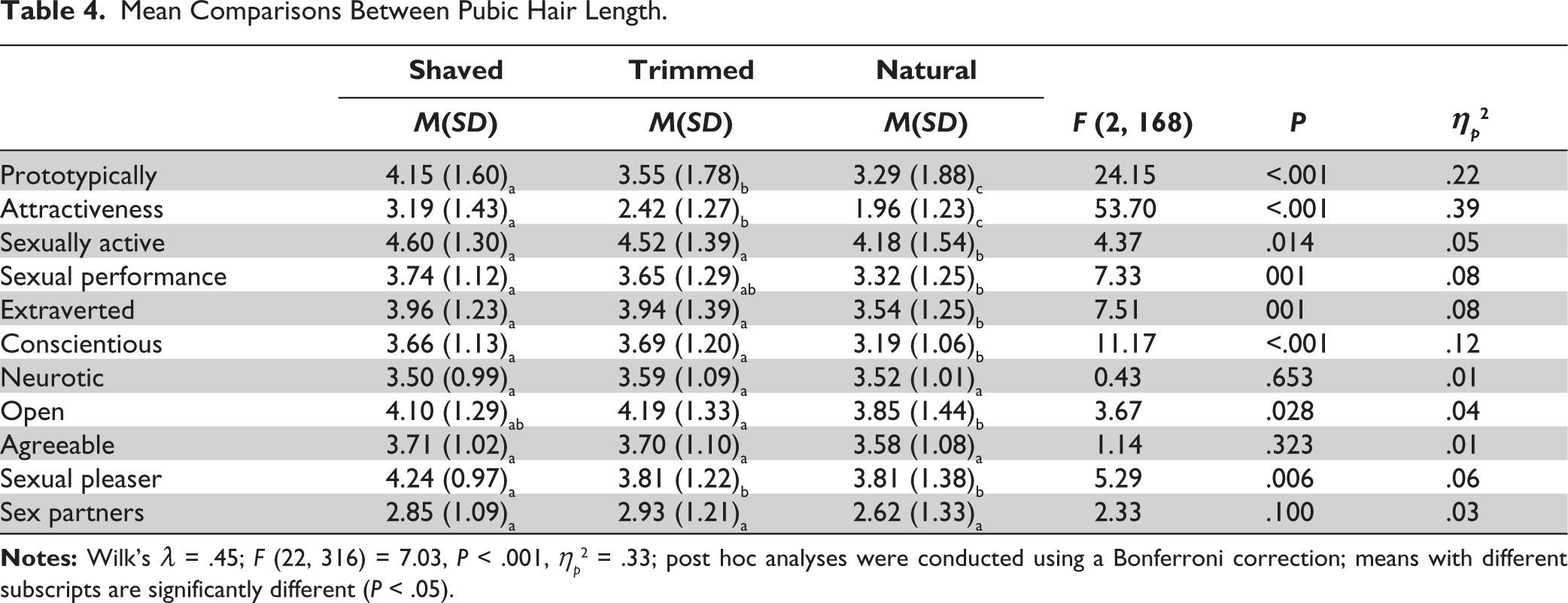
When compared to vulvas with vulvas with shaved pubic hair, natural vulvas were perceived to be less prototypical, attractive, extraverted, and conscientious. Additionally, natural vulvas were also assessed to be less sexually active, perform worse in bed, and be less of a pleaser. Interestingly, trimmed pubic hair was also perceived to be less prototypical and attractive, and was perceived to be less of a pleaser in bed when compared to vulvas with shaved pubic hair. However, vulvas with trimmed pubic hair were perceived to be more attractive, extraverted, conscientious, and open than vulvas with natural pubic hair.
The results overall demonstrated that shaved pubic hair was the ideal for participants in the study, while natural pubic hair (and trimmed pubic hair) was perceived to be more negative. However, it should be noted that shaved pubic hair, while it was perceived to be more prototypical, attractive, and have a more positive personality evaluation, was also perceived to be the most sexually active of the three, which was not the case for the past two categories (e.g., visible clitoris and labia).
Discussion
The present study assessed women’s personality and sexuality perceptions of vulval appearance based on clitoral visibility, labial length, and pubic hair maintenance to understand the socially shared meanings derived from vulval dimensionality. First, the hypothesis that prototypicality would be positively associated with attractiveness and positive personality and sexuality dimensions was supported. This finding suggests that women may desire a more “prototypical” genital appearance due to the socially shared virtues associated with conforming to the average vulva. To assess this, the study also found support for the hypotheses that vulvas with visible clitorises, long, visible labia, and natural pubic hair were not only perceived to be less attractive and prototypical, but also more negatively in terms of personality and sexuality. Results showed that “prototypical” vulvas, which align more closely with cultural aesthetic norms, were rated as more attractive and associated with positive personality traits. The prototypical rating was based on participants’ subjective evaluations rather than predefined cultural standards imposed by the researchers. The prototypical vulvas were also rated to be more modest in their sexual history and current sexual behaviors. The exploratory hypothesis suggests that non-prototypical features such as visible clitorises, long labia, and natural pubic hair may be perceived more positively by certain subgroups, depending on their cultural background, age, or sexual preferences. The study results indicated variability in the evaluations based on these demographic factors. For instance, participants from diverse ethnic backgrounds rated natural pubic hair and other non-prototypical traits more positively compared to the predominantly Western preference for shaved pubic hair. In the context of the growing demand and interest in FGCS, these findings may provide a useful framework for understanding the motivation behind these surgeries.
This study explored perceptions of female genital appearance, specifically focusing on the personality and sexual assumptions made about women by other women based only on images of vulvas with various anatomical features. In the context of the growing demand and interest in a prototypical vulvar anatomy through the utilization of FGCS, sexual script theory provides a useful framework for understanding the motivation behind these surgeries. Sexual script theory divides the understanding of sexual behavior into three scripts: Cultural, interpersonal, and intrapsychic.
First, at the cultural script level, shape general societal attitudes toward sexuality, often exposed to individuals through media, which depict and reinforce idealized body images and standards.7,27 Results from the current study confirm that vulvas aligning with prototypical standards of appearance were rated more attractive and associated with positive personality traits, such as conscientiousness and agreeableness. While deviations from prototypical vulvar appearance, such as visible clitorises, long labia minora, and natural pubic hair, were perceived negatively. These findings indicate that cultural norms and biases based on appearance extend to perceptions of genitalia, which reinforces culturally influenced pressures for women to conform to specific standards of vaginal aesthetics.
Further, the interpersonal script level involves how these cultural norms are personally interpreted and acted upon in intimate relationships. Women’s perceptions and evaluations of genital appearance are shaped not only by cultural norms but also by social interactions, such as conversations with peers and exposure to shared beauty standards. Results from the current study suggest women might opt for FGCS to enhance their intimate relationships and personal desirability.22,24,27 This study emphasizes the role of interpersonal scripts in perpetuating these ideals, as social comparisons and peer discourse often amplify the pressure to conform to prototypical standards. By aligning their bodies with the dominant cultural scripts of desirability, women not only seek to improve their sexual and interpersonal relationships but also to gain social acceptance and personal satisfaction. This alignment, however, may reinforce the cycle of dependence on societal validation for self-worth, emphasizing the need for critical reflections on the impact of societal standards on individual body image and choices.
Final, at the intrapsychic script level, women internalize cultural and social standards, shaping their self-concept and personal motivations. Results from the current study show that prototypical vulvas were associated with modest sexual histories and positive sexual attributes, suggesting that women internalize these associations as desirable traits. Results also demonstrate how these scripts can be further complicated by others’ perceptions; women may internalize societal judgments, which correlate certain vulvar features with negative personality traits and heightened sexual activity, potentially exacerbating personal insecurities. 36 FGCS can thus be seen as a method to reconcile internal conflicts over self-esteem and sexual identity, influenced heavily by the broader cultural and interpersonal narratives. 26 The internalization of narrow beauty ideals can lead to body dissatisfaction and decreased self-esteem.27,37 Consuming idealized images can distort perceptions of normality, making women view their own bodies as abnormal or undesirable.3,6,38 This can result in psychological distress and impact sexual satisfaction and confidence. 27
These dimensions of sexual script theory collectively explain why women might choose FGCS, highlighting the significant role of societal norms in shaping perceptions of genitalia. This study provides insight into the motivations for women pursuing FGCS by showing that negative perceptions of natural anatomical variations can contribute to internal pressures, leading some women to consider surgical modification to align with socially reinforced aesthetic standards.14,22 This dissatisfaction can drive the increasing demand for FGCS, as women strive to meet these standards.6,35 The results highlight how women’s perceptions of other women’s genitals contribute to a self-reinforcing cycle of bias in society, which points to the importance of broadening the narrative around female genital appearance to include a diverse range of normal anatomical variations. This could potentially empower women to make informed decisions about FGCS, based less on societal pressures and more on personal well-being and autonomy.
The idea that people infer personality traits from physical appearances, including genital representations, points to the significant role of zero-acquaintance personality assessment in shaping social perceptions. Brooks and Reysen show how visual cues dominate in digital impression formation, particularly in online settings where only sparse information is available. 34 Other research indicates that although strangers may agree considerably when rating personality from facial cues, these assessments do not always align with how people view themselves or how close acquaintances view them, pointing to the socially constructed nature of such assessments.39,40 This discrepancy suggests that zero-acquaintance assessments may not accurately reflect an individual’s true personality, but they do provide insight into the prototypical expectations of genital anatomy. 41 While prototypicality is not a fixed concept but one that is dynamically shaped by cultural and social influences, recognizing the potential for variability in participants’ interpretations. This understanding is crucial for recognizing potential biases and the impact of physical appearances on social perceptions in various cultural contexts.
Limitations and Future Directions
Although there were valuable insights resulting from this study, there are some limitations that should be acknowledged. First, the sample size was relatively small, which may limit the generalizability of the findings. A larger sample would enhance statistical power and allow for more robust conclusions. Second, the participants were all students from a rural, southern university in the United States, which may not represent the broader population’s diversity of cultural, socioeconomic, and educational backgrounds. Also, this study focused exclusively on women’s perceptions, which does not account for how men or non-binary individuals might perceive (non-Caucasian) genital appearance and associated personality traits.
While we highlighted how perceptions of vulvar appearance are shaped by these scripts, we did not delve into the lasting psychological effects, such as self-esteem, anxiety, or dissatisfaction with one’s own body, that may result from exposure to idealized standards. Cultural beauty norms, particularly those related to vulvar appearance, likely influence self-perception and body image. Future research could explore how women’s internalized cultural expectations shape psychological outcomes, such as body dissatisfaction or self-esteem, and how deviations from these norms may contribute to anxiety or resilience. Including measures of mental health outcomes in relation to script adherence could provide deeper insights into the psychological effects of societal standards, enriching the study’s findings. Additionally, future research should aim to address limitations by recruiting larger and more diverse samples, including participants from various geographic regions, cultural backgrounds, and age groups. Including non-student populations would enhance the generalizability of the findings.
Future research on prototypical vulvas could address several notable findings from this study to gain a broader understanding of societal perceptions. The higher ratings of openness associated with visible clitorises suggest a potential link to masculine or penis-like traits, which could be explored further in the context of gendered perceptions of anatomy. The finding that long labia were perceived as both less skilled sexually (“worse in bed”) and associated with having more sexual partners highlights a contradictory stereotype that merits further examination. Additionally, the association of shaved pubic hair with higher ratings of prototypicality, sexual activity, and pleasing behavior, despite prototypical vulvas generally not being linked to sexual openness, suggests that grooming practices, such as shaving, may influence perceptions by balancing cultural expectations of modesty and sexual experience. Future studies could also include qualitative methods to gain a deeper understanding of the subjective experiences and thought processes behind the influence of social media, pornography, and platforms such as OnlyFans on shaping societal norms and individual perceptions. Last, it would be of interest to investigate if negative perceptions of personality and sexuality based on others’ vulval appearance predict one’s willingness to pursue FGCS.
Conclusion
This study found that prototypical vulvas, aligning with cultural norms, were rated more positively, while natural variations were associated with less favorable perceptions, reflecting the impact of societal standards on genital evaluations. Results emphasized the role of interpersonal scripts in sexual script theory, focusing on how women’s perceptions of genital appearance shape their judgments about other women’s personality traits and attractiveness. While investigating the assumptions women make about each other based on visual genital characteristics, our findings allow for a deeper understanding of interpersonal influences on body image and self-esteem, rooted in the visual assessment of physical traits made by women. These insights reveal the urgency of promoting a broader acceptance of natural anatomical diversity, which could mitigate some of the pressures that drive women to undergo genital cosmetic surgeries. It is crucial for healthcare providers, educators, and advertisers to challenge harmful beauty standards and support initiatives that promote a more inclusive understanding of body image, which also promotes healthier societal attitudes and personal well-being.
Footnotes
Authors’ Contribution
All authors contributed to the study conception and design. Material preparation, data collection, and analysis were performed by Thomas R. Brooks and Stephen Reysen. The first draft of the manuscript was written by Alyssa Allen, and all authors commented on previous versions of the manuscript. All authors read and approved the final manuscript.
Consent to Participate
Written informed consent was obtained from participants with their signature and date.
Consent for Publication
Not applicable.
Data Availability
The datasets generated during and/or analyzed during the current study are available from the corresponding author on reasonable request.
Declaration of Conflicting Interests
The authors declared no potential conflicts of interest with respect to the research, authorship, and/or publication of this article.
Ethical Approval
This study received ethical approval from the East Texas A&M University Institutional Review Board (IRB; approval no. 1337) on February 14, 2017.
Funding
The authors received no financial support for the research, authorship, and/or publication of this article.
Informed Consent
Not applicable.