




Abstract
Violence and rape against women are severe and persistent issues in India, revealing deep-rooted social and cultural challenges. Despite existing legal frameworks and societal efforts, these forms of violence continue to be widespread and inadequately addressed. This article investigates how religious teachings, particularly those from Hinduism and Islam, can offer viable solutions to these problems. By analysing religious texts, the study explores how religious principles can be employed to combat domestic violence and sexual assault, emphasising teachings that advocate for respect, dignity and justice for women. The article provides practical recommendations for integrating faith-based approaches into legal and social strategies, suggesting that incorporating religious values into public discourse and policy can enhance responses to violence and contribute to a more just and safe society. In this context, the article employs a qualitative and textual analysis approach to explore the potential of religious teachings in addressing violence and rape against women in India. Additionally, the study incorporates a quantitative research methodology involving collecting and analysing numerical data to identify patterns, trends and relationships. This combined methodology enables a comprehensive examination of how religious teachings can be utilised to offer ethical and culturally resonant solutions to the critical issues of violence and rape against women in India.
Keywords
Introduction
India is a nation marked by profound diversity, encompassing a multitude of ethnicities, religions and languages. Geographically, she stands as the seventh-largest country in the world and, demographically, the second most populous country. According to the 2011 Census, India’s population was recorded at approximately 1.21 billion (121 crores). 1 However, more recent estimates suggest that by April 2023, India’s population had reached approximately 1.42 billion, surpassing China to become the most populous country in the world. 2 To regulate such a vast population, it is essential to have a robust legal system that enforces stringent punishments for heinous crimes. The harsh penalties serve as strong deterrents to maintain social order and ensure justice for victims. However, the legal system alone may not be sufficient to address the complex and multifaceted nature of crime. Therefore, it is equally important to supplement legal measures with faith-based teachings and moral guidance. By integrating legal enforcement with ethical and spiritual principles, society can address crimes of a heinous nature from multiple angles. This combined approach not only ensures that justice is served but also fosters a more profound sense of accountability and moral responsibility among individuals, ultimately contributing to the reduction of crime and the promotion of social harmony.
The Tragic Reality of Rape in India: Insights from the NCRB Report
The most prevalent crime nowadays in the Indian society is the crime of rape. It is one of the most heinous and deeply troubling crimes that contemporary India faces. It not only inflicts severe physical and psychological harm on the victims but also leaves a lasting scar on the social fabric. 3 However, unfortunately, India is severely gripped by this crime, with the 31-year-old doctor at Kolkata’s RG Kar Medical College as the latest victim, sparking public outrage. 4 The 2022 report by the National Crime Records Bureau (NCRB) reveals the alarming prevalence of crimes against women in India. Notably, rape cases alone constituted 86 incidents per day, equating to 3.5 cases every hour, with a total of 31,516 reported incidents throughout the year 2022. 5 (p. 228) Some of the statistics of the NCRB report are given below:
State-wise Crime Against Women in 2022
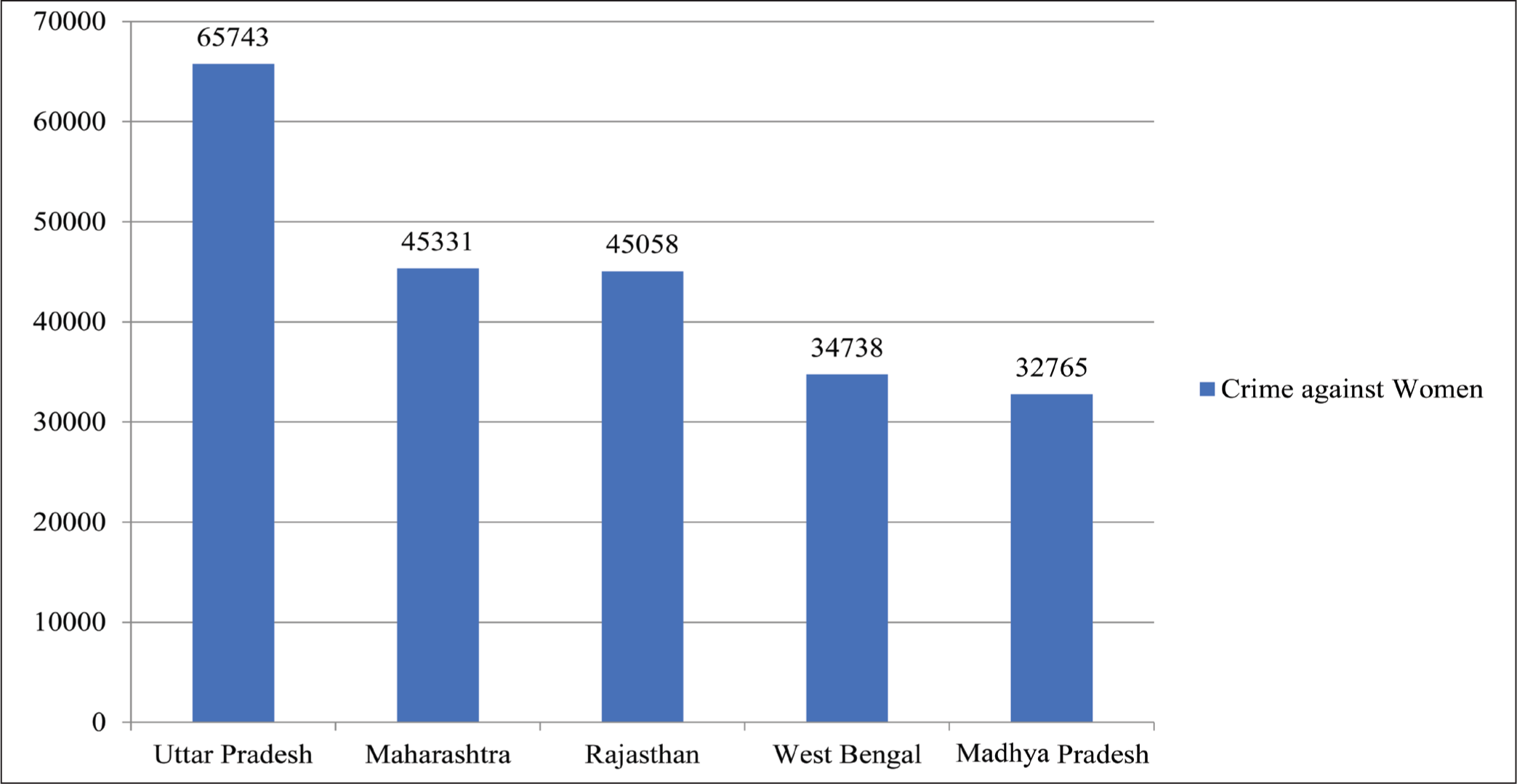
The data reveals a grim picture of women’s safety in India, with these five states alone reporting over 220,000 cases of crimes against women in 2022. It underscores the magnitude of the problem and the urgent need for both state and national-level interventions. The data indicates that crimes against women remain a pervasive issue across India, with significant variations between states. While Uttar Pradesh tops the list with the highest number of reported cases, other states like Maharashtra, Rajasthan, West Bengal and Madhya Pradesh also show alarming figures (Figure 1). 5 (p. 211)
Crime Against Women.
State-wise Murder with Rape/Gang Rape 2022
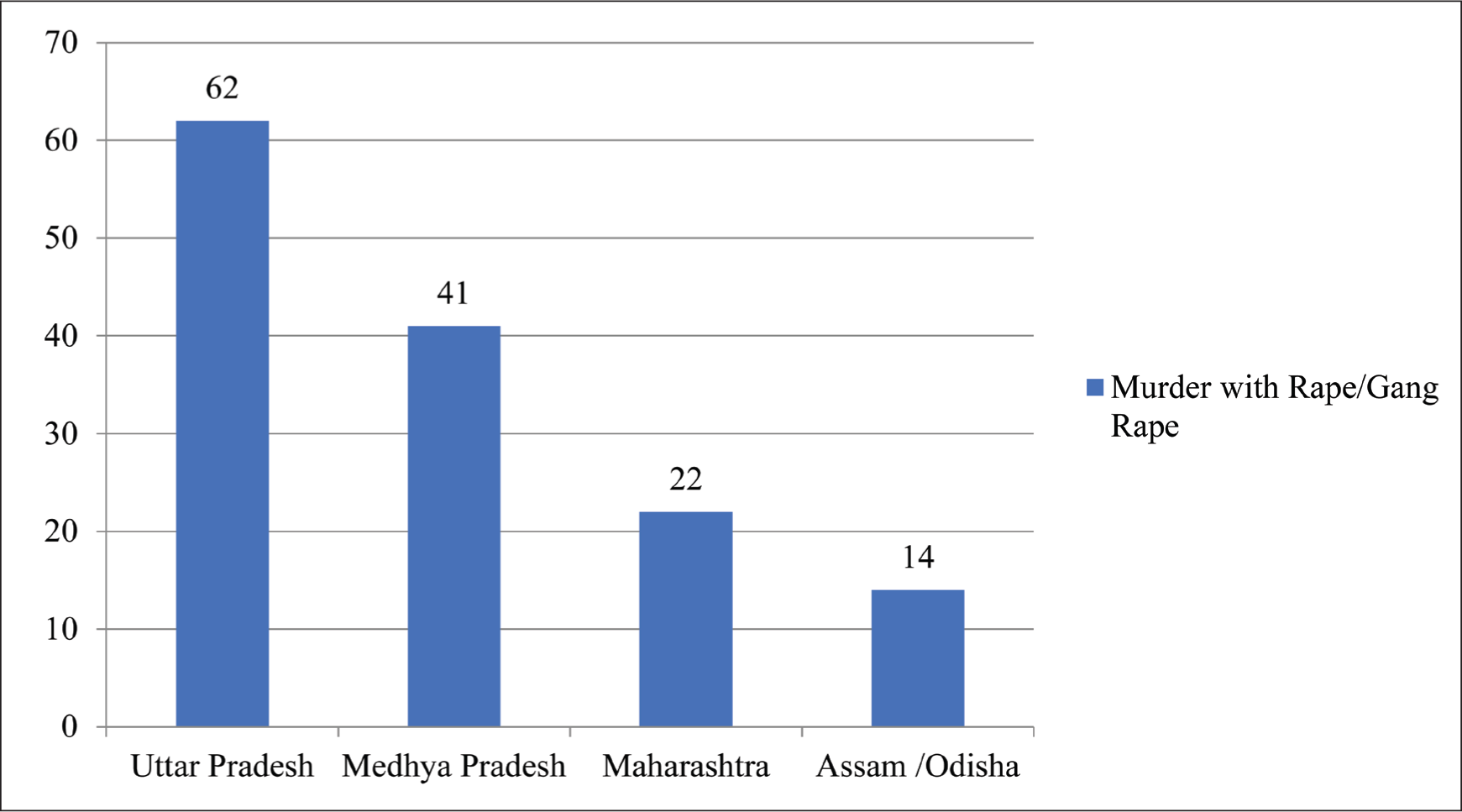
The data reveals that the crime of murder combined with rape or gang rape is a serious issue across these states, with Uttar Pradesh and Madhya Pradesh leading in the number of cases. This type of crime not only reflects the brutality against women but also indicates deeper societal issues, including the failure of existing protection mechanisms. The data on murder in conjunction with rape or gang rape in 2022 presents a disturbing picture of violence against women in India, highlighting the urgent need for more effective interventions at both the state and national levels (Figure 2). 5 (p. 212)
Murder With Rape/Gang Rape.
Women and Girl Victims of Rape in 2022
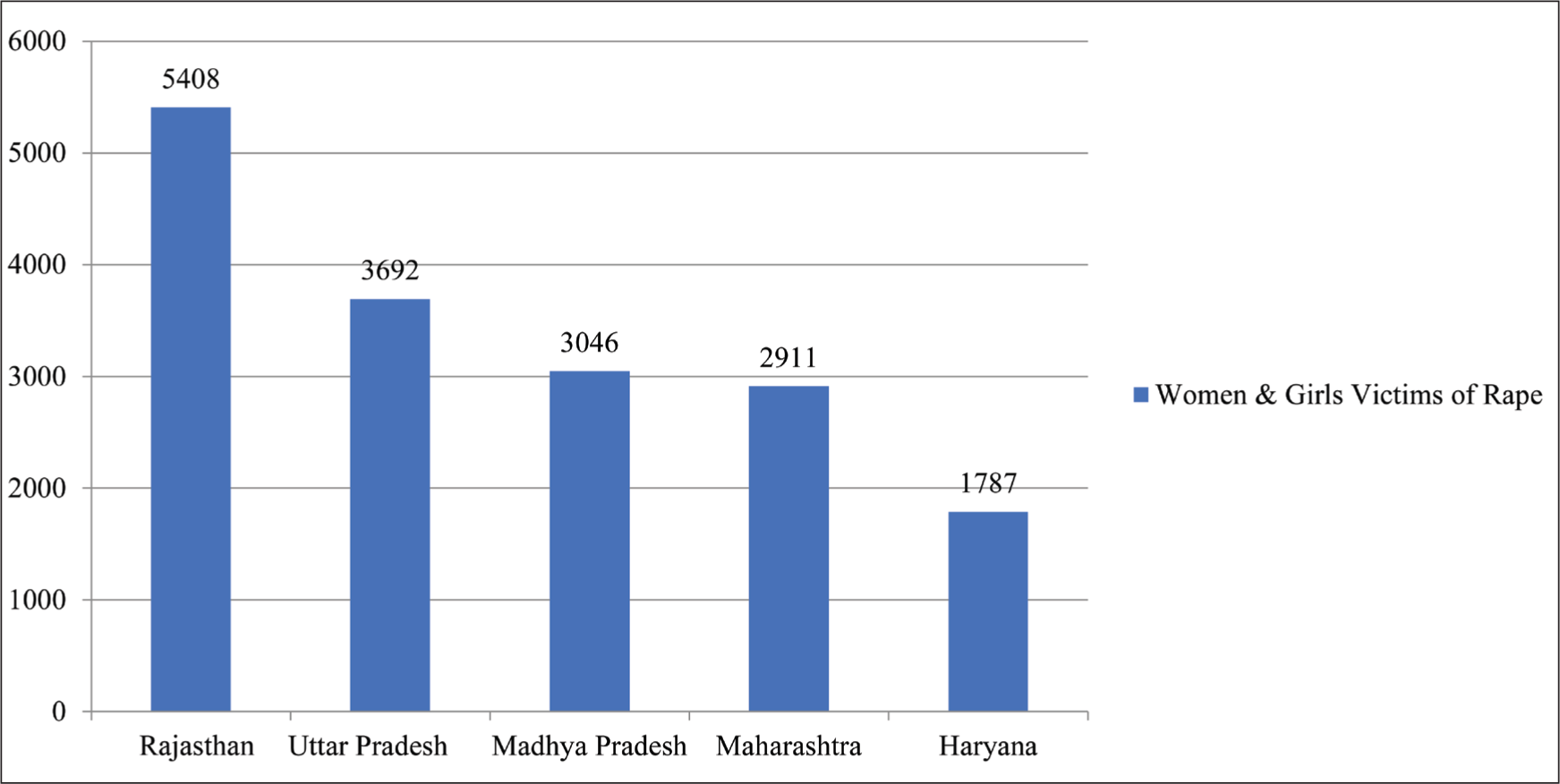
The data reveals that rape continues to be a widespread and severe issue across these states, with thousands of women and girls affected. Rajasthan, Uttar Pradesh and Madhya Pradesh, in particular, show alarmingly high numbers, reflecting deep-rooted issues of gender inequality and inadequate protection mechanisms. The data from 2022 regarding women and girls who were victims of rape in these five states paints a distressing picture of gender-based violence in India. With Rajasthan leading in the number of cases, followed by Uttar Pradesh, Madhya Pradesh, Maharashtra and Haryana, it is clear that sexual violence remains a critical issue that needs urgent and sustained attention (Figure 3). 5 (p. 228)
Women and Girls Victims of Rape.
Causes of High Rate of Crime Against Women
The states, Uttar Pradesh, Maharashtra, Rajasthan, West Bengal and Madhya Pradesh are reporting alarmingly high cases of crimes against women as per the NCRB data of 2022. 5 (p. 211) The fact that these states are governed by different political parties—BJP in Uttar Pradesh, Maharashtra and Madhya Pradesh; TMC in West Bengal; and Congress in Rajasthan—suggests that the prevalence of such crimes transcends political boundaries and points towards deeper socio-economic, cultural and institutional issues.
One of the significant contributing factors is socio-economic disparity. States with high population density and widespread poverty, like Uttar Pradesh and Madhya Pradesh, often witness increased crime rates due to economic frustration, unemployment and lack of opportunities. 6 Rapid urbanisation in Maharashtra, especially in cities like Mumbai, has led to overcrowded slums, social disintegration and anonymity, which can create environments conducive to crime. Additionally, educational backwardness, particularly concerning gender sensitivity and awareness of legal rights, exacerbates the problem. Low female literacy rates directly correlate with higher vulnerability to gender-based violence. 7
Cultural and patriarchal norms play a critical role in perpetuating sexual violence. In states like Rajasthan and Uttar Pradesh, deep-rooted patriarchy fosters male dominance and female subjugation, where women are often seen as property tied to family honour. This mindset not only normalises violence against women but also discourages victims from reporting such crimes due to fear of social stigma. 8 In tribal regions, traditional practices and gender roles further marginalise women, limiting their autonomy and access to justice. Even in relatively progressive states like West Bengal, political violence and social unrest often overshadow gender issues, leading to neglect in addressing crimes against women. 6
Institutional weaknesses significantly contribute to the persistence of rape cases. 9 Despite the presence of different political parties in power, states struggle with common issues such as inadequate policing, a lack of gender-sensitive law enforcement and slow judicial processes. Police often show reluctance to register First Information Reports (FIRs), especially in cases involving politically influential individuals, which leads to underreporting. Moreover, judicial delays discourage victims from pursuing justice, while poor forensic infrastructure hampers effective investigation. 4 In many cases, political interference undermines the credibility of legal institutions, allowing perpetrators to act with impunity. 10
Another critical factor is the variation in reporting patterns across states. Higher reported cases may partially reflect better awareness, active media and stronger civil society engagement, encouraging more victims to come forward. Conversely, underreporting remains a significant issue in rural and conservative areas, where social stigma, fear of retaliation and distrust in the legal system prevent many cases from being documented. This disparity suggests that crime statistics do not always provide a complete picture of the ground realities. 6
Combating Gender-based Violence in India: Challenges and Solutions
Strengthening Legal and Social Mechanisms
Despite existing legal frameworks to punish offenders, the widespread occurrence of rape in India underscores the difficulties in effectively combating such violence. A comprehensive approach is needed, combining strict legal measures with efforts to change the societal attitudes that perpetuate gender-based violence. It requires not only legal deterrents but also educational programs, community involvement and the promotion of ethical values by religious teachings that emphasise respect and equality for women. The persistence of these crimes highlights significant shortcomings in law enforcement, judicial processes and societal norms that must be addressed to ensure the safety and dignity of women. Challenges like inconsistent enforcement, societal issues such as misogyny and victim-blaming, and a slow judicial process hamper the justice being delivered to the victim. While laws have been strengthened, the fear-based deterrence intended by these punishments is often undermined by deep-rooted cultural and systemic problems.
Party-wise Sitting MPs/MLAs with Cases Related to Crimes Against Women
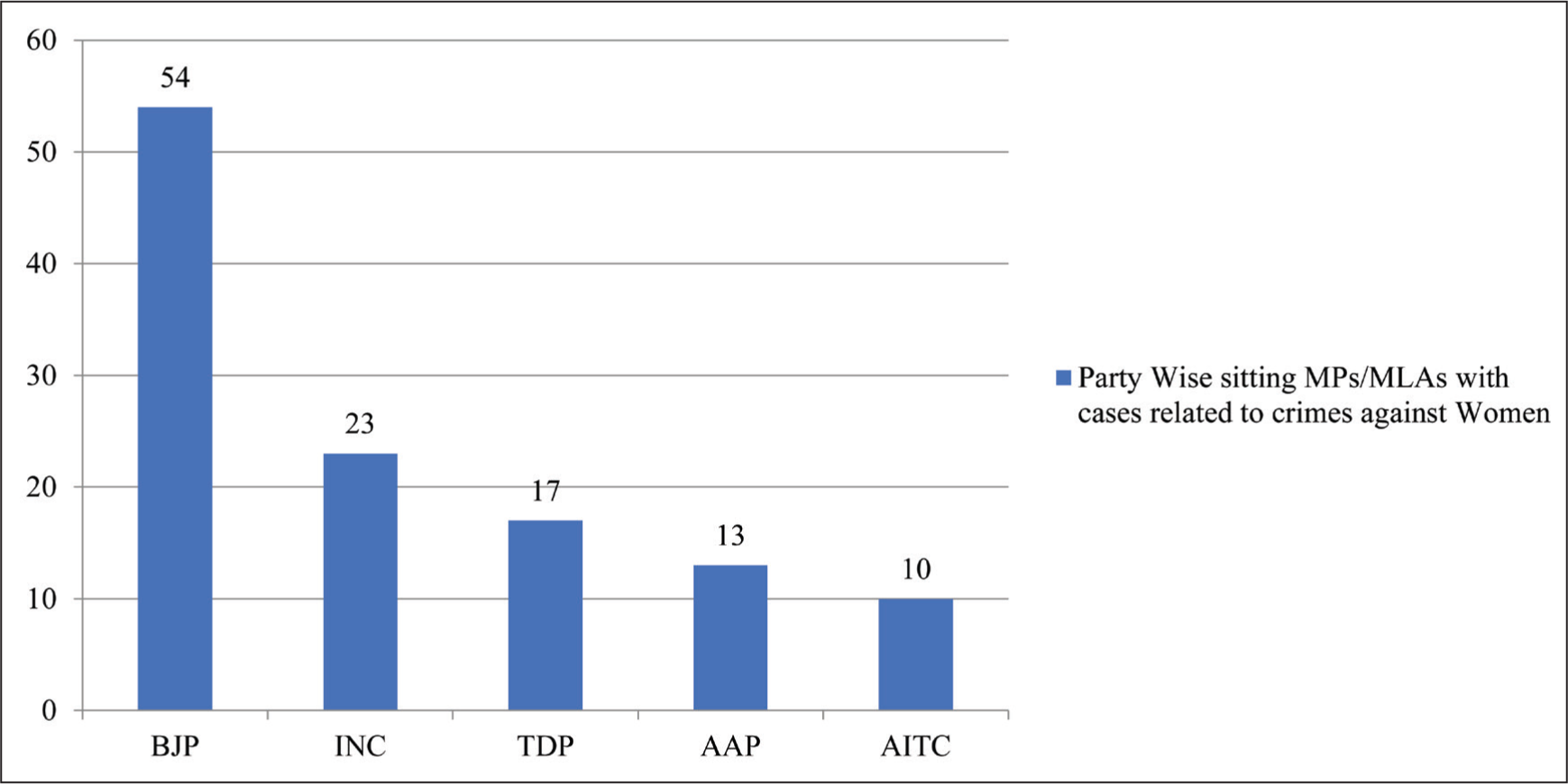
The biggest challenge acting as a hindrance to women’s safety is the presence of criminals in parliament and assemblies across political parties and states. The data given by the Association of Democratic Reforms highlights troubling trends in India’s political landscape, with Bharatiya Janata Party (BJP) having the highest number of sitting MPs/MLAs with cases related to crimes against women, followed by Indian National Congress (INC) and Telugu Desam Party (TDP) (Figure 4). 11 The figures point to systemic issues in political accountability and ethical standards, emphasising the need for reforms to prevent individuals with criminal cases from holding power. The involvement of elected officials in such crimes undermines public trust and hampers efforts to enforce laws aimed at protecting women, underscoring the urgent need for stricter candidate vetting and political accountability. The individuals responsible for formulating regulations to protect women are, in some instances, implicated in the very crimes these regulations are meant to address. The situation raises a significant ethical dilemma: how can those who are involved in such misconduct are expected to enact and enforce effective measures against it? The inherent conflict of interest calls into question the integrity and efficacy of the legislative process in safeguarding women’s rights.
Party Wise Sitting MPs/MLAs with Cases Related to Crimes Against Women.
Underutilisation of Nirbhaya Fund
Nirbhaya Fund, being a non-lapsable fund, does not expire at the end of the fiscal year and can be carried over if unused. However, more than 10 years since its creation, the fund has been underutilised. Out of the total ₹7,213 crore allocated up to the financial year 2023-2024, only ₹5,119 crore, or about 70%, had been used by 8 December 2023. It means that nearly one-third of the funds meant for women’s safety remains unspent despite the high rate of gender-based crimes in the country. 4
Delay in Compensation of Victims (Rape and Acid Attacks)
The data from 2022 to 2023 reveals a significant gap in the processing of compensation applications. Out of nearly 30,000 applications received, decisions were made on only 20,900 of them. It indicates that around 9,100 applications, or approximately 30% of the total, were left unresolved. 4
Need for Multi-pronged Approach
In order to address the issue of rape and violence against women in India effectively, a comprehensive approach is essential, involving legal reforms, enhanced law enforcement and robust support systems for victims. Additionally, widespread education and community engagement are crucial for challenging societal norms and promoting gender equality. Economic empowerment of women and quicker judicial processes also play a pivotal role in ensuring the safety and dignity of women and girls across the country. Furthermore, the regulatory framework should be reinforced by incorporating moral and ethical teachings derived from religious scriptures. Religious teachings across various traditions elevate women, emphasising their dignity, respect and essential societal roles. In Islam, women are granted numerous rights, and the Quran affirms their equality before God. Similarly, Hinduism venerates goddesses, symbolising strength and wisdom, highlighting the high regard for women in both spiritual and social spheres. Overall, these teachings advocate for the protection, empowerment and respect of women, recognising their vital contributions to family and community. The potential role of spiritual teachings in addressing the crime of rape and violence against women in India is briefly examined below:
Islam and the Sanctity of Women
In Islam, women are accorded a status of dignity, respect and equality, with numerous rights and responsibilities enshrined in both the Quran and the Sunnah (the teachings and practices of the Prophet Muhammad [PBUH]. Islamic teachings emphasise the importance of justice, compassion and equity, principles that extend to the treatment and rights of women. Islam affirms the spiritual equality of men and women and emphasises that the value of a person is determined not by gender but by righteousness and holiness.
12
The Quran provides women with inheritance rights, which were revolutionary for their time.
12
(4:7) The Quran instructs men to treat their wives with kindness and respect.
12
(4:19) The commentary of Syed Hussain Nasr, a prominent Islamic scholar on this (Quran, 4:19) verse, is very valuable and adds some interesting aspects:
Men are urged to consort with their wives in a kind and honorable way—that is, to treat them with kindness and familiarity. The Prophet’s tender relations with his wives is cited as an example, to fulfill the rights they are owed, and to make themselves pleasing to their wives, as they would want their wives to make themselves pleasing to them. It may be that you dislike a thing in which God has placed much good.
13
Prophet Muhammad PBUH also said, The best of you are those who are best to their wives.
14
Islamic teachings advocate for the protection and respectful treatment of women. Prophet Muhammad PBUH instructed his followers to be gentle and kind towards women, saying, Fear God regarding women, for you have taken them as a trust from God.
15
A number of references from the Quran
12
(4:1, 33:35, 16:97) and Prophetic Traditions illustrate that Islam fundamentally views men and women as equals in their spiritual essence, responsibilities and potential to attain righteousness and reward from God. The Prophetic Traditions emphasise that women and men are equivalent in their humanity, rights and obligations in the eyes of Islam.
12
(49:13, 4:1) The measure of a person’s character is reflected in how well he treats his wife, underscoring the importance of respect and kindness towards women.
15
(3895) These Prophetic Traditions serve as a reminder to treat women with care and consideration, warning against any form of mistreatment or injustice towards them. About the status of a mother, a Prophetic Tradition reads,
A man once asked the Prophet Muhammad [PBUH], Who is most deserving of my good company? The Prophet replied, your mother. The man asked, Then who? The Prophet [PBUH] said, your mother. The man further asked, Then who? The Prophet [PBUH] said, your mother. The man asked again, Then who? The Prophet [PBUH] replied, then your father.
16
This Prophetic Tradition serves as a profound lesson in ethics, emphasising the unparalleled respect and good treatment that should be afforded to mothers. It acknowledges the sacrifices mothers make, underscores their central role in a person’s life, and highlights the importance of upholding solid and respectful relationships within the family. Doing so contributes to the moral and spiritual development of individuals, guiding them towards a life of gratitude, respect and righteousness.
The Quran commands men to live with their wives in kindness, clearly indicating that any form of mistreatment, including violence, is unacceptable. The phrase ‘live with them in kindness’ emphasises gentle and respectful treatment.
12
(4:19) The Quran also prohibits harming women and highlights that any intention to harm or cause distress to women is wrong and unjust.
12
(2:231) Prophet Muhammad PBUH said, Do not strike the female servants of Allah.
17
This direct statement from the Prophet explicitly forbids striking or using violence against women. In his Farewell Sermon, Prophet Muhammad PBUH emphasised:
O People, it is true that you have certain rights with regard to your women, but they also have rights over you. So, beware of transgressing the limits of God in this regard. If they abide by your right, then to them belongs the right to be fed and clothed in kindness. Do treat your women well and be kind to them, for they are your partners and committed helpers.
14
(1851)
This sermon emphasises mutual rights and responsibilities, urging men to treat women with kindness and explicitly warning against violating their rights, which would include violence. These teachings of Islam underscore the importance of respecting and honouring women, recognising their rights, and advocating for their fair and compassionate treatment in all aspects of life. Elevating the status of women, mainly 1,400 years ago, represents a remarkable and progressive development in the context of historical norms. During that period, women were often regarded as property, chattels and slaves, with little to no rights or social standing. In contrast, Islamic teachings introduced profound reforms that significantly enhanced the status and rights of women, ensuring their dignity and autonomy. In the event of crimes against women, such as rape, Islam prescribes severe punitive measures. These harsh penalties are designed not only to deliver justice to the victim but also to serve as a deterrent to potential offenders. The severity of the punishment aims to prevent such crimes by instilling a strong sense of accountability and thereby safeguarding the rights and security of women within society. In Islam, rape is considered a grave and heinous crime. The punishment for rape is severe, reflecting the seriousness of the offence and the harm it causes to the victim. The exact punishment for rape is derived from the Quran, Prophetic Traditions and Islamic jurisprudence. Here’s an overview:
In cases where the crime of rape meets the strict criteria of proof (such as the testimony of witnesses), it falls under the category of unlawful sexual intercourse, which is a crime in Islamic law. The punishments for such crimes are as follows:
If the criteria for the first situation are not met, Islamic courts can impose discretionary punishments, which can be severe, depending on the circumstances. These may include imprisonment, flogging, exile, monetary compensation to the victim, and the death penalty (in some cases). 18
Hinduism and the Sanctity of Women
The Vedic period, approximately from 600
The verse from the Manusmriti, which states that Women must be honoured and adorned by their fathers, brothers, husbands, and brothers-in-law, who desire their welfare, reflects a foundational principle of respect and protection for women within the family unit in ancient Hindu society. This prescription can be interpreted as an effort to ensure that women are treated with dignity and their well-being is seen as integral to the welfare of the entire household. The emphasis on ‘honouring’ women suggest a recognition of their intrinsic value and importance within the social and familial structure. The text implicitly invokes a moral obligation, encouraging men to act in ways that uphold the dignity and honour of women. By linking the treatment of women to the ethical conduct of men, the verse attempts to integrate the security of women into the moral fabric of society. The concept of ‘adorning’ women can be seen as a symbolic representation of honouring their role in society. The idea that women must be respected and protected is consistent with broader cultural traditions that revere the feminine as sacred, as seen in the worship of goddesses like Lakshmi, Saraswati and Durga. 20
Manusmriti emphasises the protection and honour of women as a central duty of male family members, linking the well-being of women to the overall prosperity and moral standing of the family. This approach fosters an environment where women are treated with respect, which, in turn, is positioned as essential for the welfare of the community. 20 (5:48) The central theme of the verse, Where women are honoured, there the gods are pleased; but where they are not honoured, no sacred rite yields rewards, underscores the profound connection between the treatment of women and the efficacy of religious practices. It posits that the respect and honour accorded to women are directly linked to divine favour. When women are treated with dignity, it attracts the blessings, thereby ensuring the success of sacred rituals. Conversely, the disrespect or dishonour of women negates the positive outcomes of religious ceremonies, rendering them futile. 20 (3:56)
When women are unhappy, the family is at risk of decline, but when they are treated well and are content, the family thrives. 20 (3:57) Disrespecting women in a household can lead to its downfall, as if cursed. 20 (3:58) Mutual contentment between a husband and wife ensures lasting happiness within the family. 20 (3:60) At another place, Manusmriti underscores the importance of prioritising the provision of food and care for vulnerable individuals. It advises giving precedence to newly married women, infants, the sick and pregnant women, even before attending to guests. Furthermore, it highlights the need to extend particular care to barren women, those without sons, women whose families have perished, faithful wives and widows and women afflicted by illness. 20 (3:114, 8:28)
The earliest Vedic texts, such as the Rigveda, provide glimpses of women enjoying considerable freedom and respect. Women like Gargi and Maitreyi are often cited as examples of learned women who engaged in philosophical debates and discussions with male sages. Gargi, in particular, challenged the sage Yajnavalkya in a debate at the court of King Janaka, highlighting the intellectual freedom women could enjoy. 21 The Ramayana portrays multiple dimensions of womanhood through characters like Sita, Kaikeyi and Mandodari. Sita is often depicted as the epitome of virtue, loyalty and devotion, symbolising the ideal wife. However, her trials and tribulations also reflect the societal expectations and challenges women faced. Kaikeyi, another central character, demonstrates political agency and influence, albeit controversially, as she exercises her boons to send Rama into exile. 22 While not extensively focusing on women, the Bhagavad Gita emphasises the equality of all beings in the eyes of the divine, suggesting that women, along with men of all castes and backgrounds, can attain spiritual liberation. 23
The Puranas, particularly the Devi Bhagavata Purana, celebrate the divine feminine and the power of goddesses like Durga, Lakshmi and Saraswati. These texts emphasise the Shakti (power) aspect of femininity, portraying women not only as nurturing figures but also as embodiments of strength and wisdom. This Purana, dedicated to the worship of the goddess (Devi), emphasises the supreme power of the feminine divine. It describes the goddess Durga’s battles against demons and her manifestations as Mahishasura Mardini, showcasing her as a powerful force. The text exalts Devi as the ultimate reality and source of all creation. Devi Bhagavata Purana describes women as where the glory of Devi, as the mother of the universe, is highlighted. 24 The Markandeya Purana contains the Durga Saptashati (also known as the Chandi Patha), which is a crucial text for the worship of goddess Durga. It describes the goddess’s victory over various demons, including Mahishasura, and emphasises her role as the protector and nurturer of the universe. 25 While primarily focused on the God Vishnu, the Vishnu Purana also highlights the importance of Lakshmi, the goddess of wealth, and her inseparable association with Vishnu. The text emphasises the balance of divine masculine and feminine principles. 26
Punishment for Crime Against Women
Punishment for Theft
Severe punishments, including corporal or capital punishment, are mandated for those who steal from noble families, especially women or valuable gems. It underscores the importance placed on protecting individuals of high status and valuable assets. 20 (8:323)
Justifiable Violence
Killing is considered morally acceptable and not sinful when done in defence of women, Brahmans (priests), or in disputes over priestly fees, provided it is done for the cause of righteousness. This principle permits defensive violence under specific circumstances, emphasising the protection of significant societal roles and individuals. 20 (8:349)
Punishment for Rape
Manusmriti emphasises the sentence in the following verses:
Those who abduct women should be given a death sentence.
20
(8:323) Those who kill women, children or scholarly virtuous people should be given strictest punishment.
20
(9:232) Those who rape or molest women or incite them into adultery should be given harshest punishment that creates fear among others to even think of such a crime.
20
(8:352)
The above verses emphasise severe punishments for crimes against women, including death for abduction and the harshest penalties for rape, molestation and murder, aiming to create a strong deterrent effect. Patrick Olivelle’s comments on the issue of the emphasis given by Manusmriti on the abduction and rape of women are very important. He argues that:
The redactorial revision evident in verse (11:191), which prohibits cohabitation with individuals responsible for the killing of children, women, or those seeking protection, aligns with certain teachings in the Manusmriti regarding violence against women. The Manusmriti, while often critiqued for its hierarchical and patriarchal structure, contains injunctions that emphasize the protection of women. For instance, Manusmriti (3:55) asserts that households where women are dishonored face ruin, whereas those where they are respected prosper. Similarly, Manusmriti (8:275–8:277) prescribes legal consequences for those who inflict harm upon women, indicating an ethical framework that seeks to deter such violence. However, the Manusmriti also contains provisions that reinforce patriarchal authority, limiting women’s autonomy. Nevertheless, the overarching principle of dharma, which upholds justice and social order, is consistent with the moral stance reflected in verse (11:191). The assertion that legal purification alone is insufficient to absolve individuals of grave moral transgressions resonates with the Manusmriti’s broader ethical discourse on karma and justice, wherein violations of dharma, particularly those involving harm to the vulnerable, are believed to disrupt social stability and lead to societal decay.
27
Legal Deterrence and Moral Discipline: A Comprehensive Strategy Against Rape
Rape is not just a legal issue; it is also a social, psychological and moral problem. 28 While laws punish offenders, they do not necessarily prevent the formation of criminal tendencies. Faith-based teachings target the root causes of such behaviour—moral decay, lack of empathy and disrespect for human dignity—which legal frameworks alone may not address. The legal system in nature is formal, codified and state-enforced, while faith-based teachings are informal, moral and community or spiritually driven. The former is reactive and deterrent as it punishes the offenders and deters crime through fear of legal consequences, while the latter is proactive & preventive as it shapes individual behaviour and community values through moral guidance. While the legal system focuses on criminal acts and legal accountability, faith-based teachings focus on ethical values, character building and personal responsibility. On the one hand legal system is short-term deterrence through punishment; on the other hand, faith-based teachings are long-term cultural and moral transformations over generations. The former has a limited rehabilitation role that primarily focuses more on punishment than reform, while the latter has a strong potential for offender rehabilitation through spiritual reflection and repentance. The legal system serves as an immediate deterrent against crimes like rape through the threat of punishment, ensuring justice for victims and maintaining social order. However, its effectiveness is limited as crimes still occur despite strict penalties because it does not address the root causes, such as moral decay, toxic masculinity or lack of empathy. In contrast, faith-based teachings influence thought patterns, attitudes and behaviours at a deeper level by fostering moral discipline, respect for human dignity, and personal accountability, thereby creating individuals less likely to engage in such crimes. 29
Neither the legal system nor faith-based teachings alone are sufficient to prevent crimes like rape; however, their effectiveness significantly increases when combined. While the legal system may seem more effective in the short term due to its immediate deterrent effect, faith-based teachings offer sustainable, long-term change by deeply influencing societal norms and individual behaviour, thereby fostering environments where such crimes are less likely to occur. So, combining both approaches can offer a more comprehensive strategy, where the legal system enforces external compliance while faith-based teachings cultivate internal moral restraint. While the legal system enforces external compliance through the threat of punishment, faith-based teachings encourage internal moral discipline. Combining the legal system and faith-based teachings creates a stronger approach—the law protects like a shield, and faith guides like a compass. While it is true that religions like Islam and Hinduism have existed for centuries, their long-standing presence has significantly shaped the ethical and moral foundations of societies across the world. The core teachings of these faiths—emphasising values like respect for human dignity, compassion, self-restraint and justice—have historically influenced personal behaviour, family structures, community norms and even legal systems. However, the persistence of crimes like rape despite these teachings does not indicate their ineffectiveness but rather highlights the complex nature of human behaviour, societal evolution and the gaps in applying these moral principles consistently in contemporary contexts. The challenge is not the absence of ethical guidance but the dilution of these values in the face of modern issues such as the erosion of community structures, weakening family bonds, and increasing exposure to content that normalises violence and objectification. Therefore, the suggestion is not to rely solely on religious teachings but to reinvigorate their moral influence as a complementary force alongside legal frameworks.
The implementation of faith-based teachings as a supplementary tool to the legal system in combating crimes like rape can be achieved through a multi-faceted approach. One key method is through education and awareness, where universal ethical values derived from faith-based teachings are integrated into school curricula. This integration is not intended as religious instruction but as moral education that emphasises respect, empathy and human dignity. Additionally, community engagement plays a crucial role, with platforms such as mosques, temples and local gatherings serving as spaces for discussions on gender respect and ethical behaviour. These discussions can be led by religious scholars, community leaders and social activists to ensure their relevance and effectiveness. Media campaigns further strengthen this approach by collaborating with various media outlets to produce content that highlights moral lessons, creating widespread awareness that complements legal education with ethical teachings. 20 (8:352)
The responsibility for implementing these strategies rests on a diverse group of stakeholders to ensure a comprehensive and balanced impact. A multi-stakeholder approach involving educators, religious leaders, legal professionals, non-governmental organisations (NGOs), and government agencies can facilitate effective collaboration, ensuring that the message is inclusive and reflective of both legal standards and moral values. Additionally, individuals play a pivotal role in this process. Parents, teachers and community members are instrumental in reinforcing these values within families, schools and peer groups, shaping attitudes and behaviours from the grassroots level. This collective effort helps create an environment where ethical conduct is deeply ingrained, complementing the deterrent effect of legal frameworks.
Conclusion
The discussed religious teachings clearly emphasise that violence against women is not acceptable. In Islam, women are granted dignity, respect and equality, with strict guidelines ensuring their protection and well-being. The Quran and Prophetic Traditions advocate for the just and compassionate treatment of women, explicitly forbidding any form of violence. Similarly, Hinduism, as reflected in the Manusmriti and other ancient texts, underscores the importance of honouring and protecting women, linking their well-being to the overall prosperity of the family and society. Both traditions prescribe severe punishments for crimes against women, aiming to deter such acts and uphold justice. The consistent message across these religious frameworks is that violence against women is fundamentally incompatible with their teachings, which prioritise respect, protection and equality.
Men must not desecrate the elevated status of women as prescribed by religious teachings under any circumstances. These teachings, which were revolutionary in their time, granted women rights, dignity and protection, positioning them as equals in the spiritual and social fabric of society. When men fail to uphold these teachings by engaging in violence, disrespect or mistreatment of women, they not only violate the rights of women but also betray the core values of their faiths. This desecration of the elevated status that religion affords women undermines the principles of justice, compassion and equality that these teachings advocate. Therefore, it is the responsibility of men to honour and protect the status of women, ensuring that their actions reflect the respect and dignity that religious teachings demand. In doing so, they contribute to a just and equitable society where the rights of all individuals, especially women, are upheld. So, in order to combat the menace of rape, legal system is to be supplemented by faith-based teachings, awareness, education and cooperation from civil society.
Footnotes
Declaration of Conflicting Interests
The authors declared no potential conflicts of interest with respect to the research, authorship and/or publication of this article.
Ethical Approval
The article has no objections from the affiliated institution and as such there is nothing which needs any ethical approval in this manuscript.
Funding
The authors received no financial support for the research, authorship and/or publication of this article.
Informed Consent
Not applicable.