




Abstract
Large language model (LLM) chatbots have demonstrated significant capability in patient education by offering accessible, consistent, and personalized information. Their ability to interact in real-time and adapt responses based on user input makes them valuable tools in enhancing patient knowledge and engagement. Sexual education in developing countries faces substantial challenges. Sociocultural barriers, limited access to comprehensive educational resources, and stigmatization surrounding sexual health contribute to inadequate sexual education. Traditional methods often fail to reach remote or underserved populations, and there is a general shortage of qualified educators and resources. Chatbots present a promising solution to these challenges. They can offer anonymous, culturally sensitive information on sexual health, overcoming barriers related to stigma and privacy. While LLM chatbots hold significant potential to improve sexual education in developing countries, their implementation must be carefully managed to address challenges such as ensuring information accuracy and cultural sensitivity. There is dearth of research on LLM in sexual education. Hence, there is unmet need of research on the accuracy and reliability of the information, maintaining cultural sensitivity, assessing user engagement, capability of integration with traditional education methods, and exploring the long-term impact on improving knowledge.
Keywords
Introduction
Sexual education is a critical component of comprehensive health education. It is essential for equipping young people with the knowledge and skills needed to make informed decisions about their sexual health. 1 Traditional methods of delivering sexual education, often through classroom-based instruction and printed materials, face numerous challenges. Sociocultural norms and taboos often hinder open discussions about sexual health, leading to widespread misinformation and stigma. 2 In many areas, there is a lack of comprehensive and age-appropriate educational resources, compounded by limited access to trained educators. Traditional educational systems may also neglect or inadequately address sexual health topics. Additionally, economic constraints and infrastructural limitations can further impede the implementation of effective sexual education programs. 3
In recent years, the advent of generative artificial intelligence like large language model (LLM) is being integrated to the healthcare systems.4,5 LLMs are artificial intelligence systems trained on vast amounts of data to understand and generate human-like language. They use deep learning, particularly transformer architectures, to predict and generate text based on patterns in data. When a user submits a query, the model analyzes the input, identifies relevant context, and generates a response by predicting the most appropriate words based on its training. These models can provide answers, summarize information, and assist in various language-based tasks.6,7 LLM chatbots are increasingly utilized in medicine and patient education due to their ability to provide real-time, personalized, and accessible information. These chatbots can answer medical queries, offer guidance on treatment options, and deliver educational content tailored to individual needs. They interact with users in a conversational manner, making complex medical information more understandable.8,9
In this article, we discuss the potential of LLM chatbots in sexual education and examining how these digital tools can address the gaps in traditional education methods and provide valuable support in the dissemination of sexual health information.
Barriers to Sexual Education
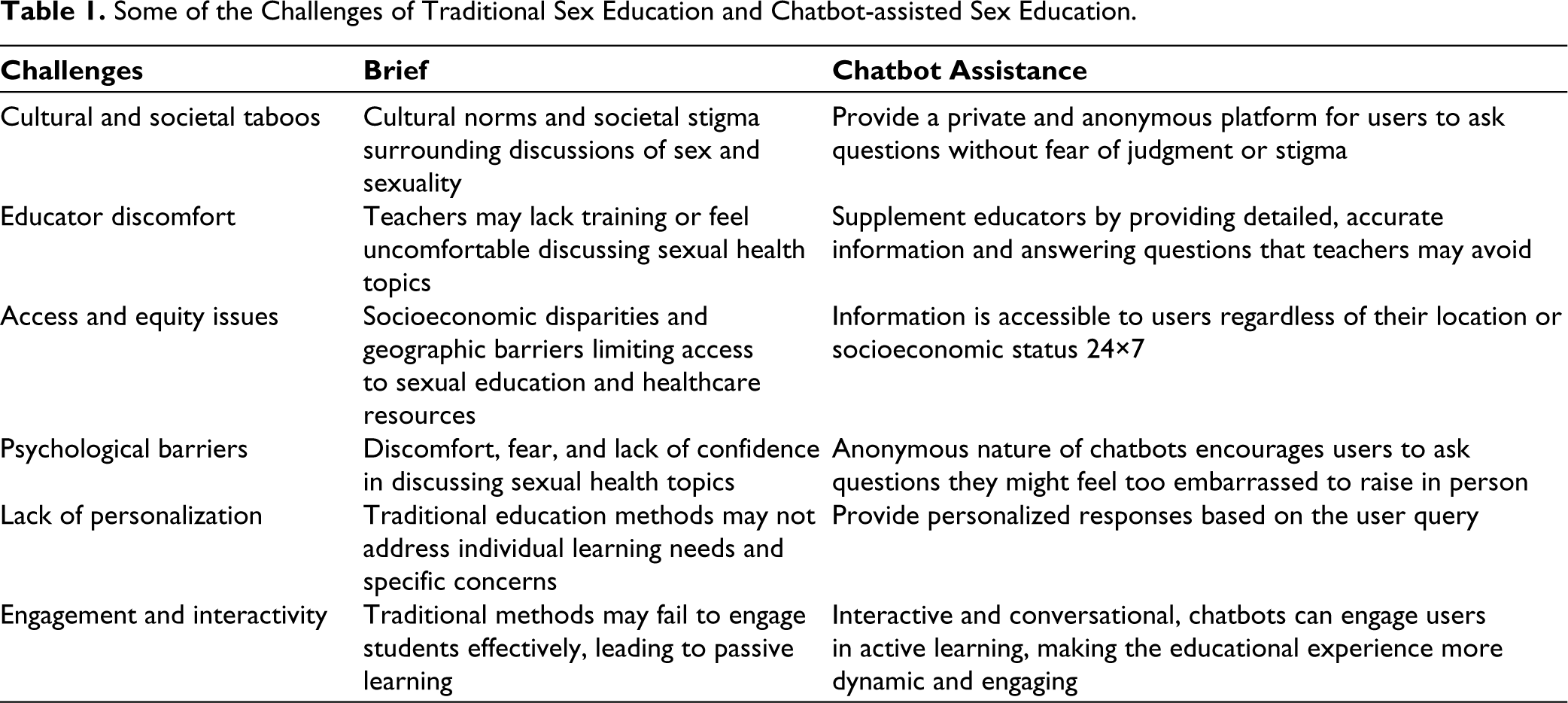
Various barriers often hinder the effective delivery of sexual education, particularly in developing countries. Sociocultural norms, stigmatization, and a lack of comprehensive resources contribute to widespread gaps in education. In many societies, discussions about sexual health are considered taboo, leading to misinformation and inadequate understanding. Additionally, infrastructural and economic constraints can limit the availability of educational programs and trained professionals.10-12 Some of the common challenges are listed in Table 1. Understanding these barriers is essential for developing strategies to improve sexual education and address the pressing needs of diverse populations.
Some of the Challenges of Traditional Sex Education and Chatbot-assisted Sex Education.
Large Language Model
LLMs can provide tailored responses to custom questions by leveraging their deep learning algorithms to understand and generate human-like text based on context. 13 Unlike traditional Internet search engines, which primarily return a list of links or documents based on keyword matching, LLMs offer direct, conversational answers that address the specific nuances of a user’s query. 14 This capability allows LLMs to provide more relevant and contextually appropriate information. As a result, users receive more precise and personalized assistance, making LLMs particularly effective for complex queries and nuanced topics where traditional search engines may fall short. 15 Currently, there are several chatbots that offer free services to any users. Gemini, Copilot, ChatGPT, Claude, and MetaAI are some of the examples of chatbots that have the capability to answer users’ query. Table 1 summarizes the challenges of sexual education and potential solution by LLM chatbot.
LLM Chatbots in Sexual Education
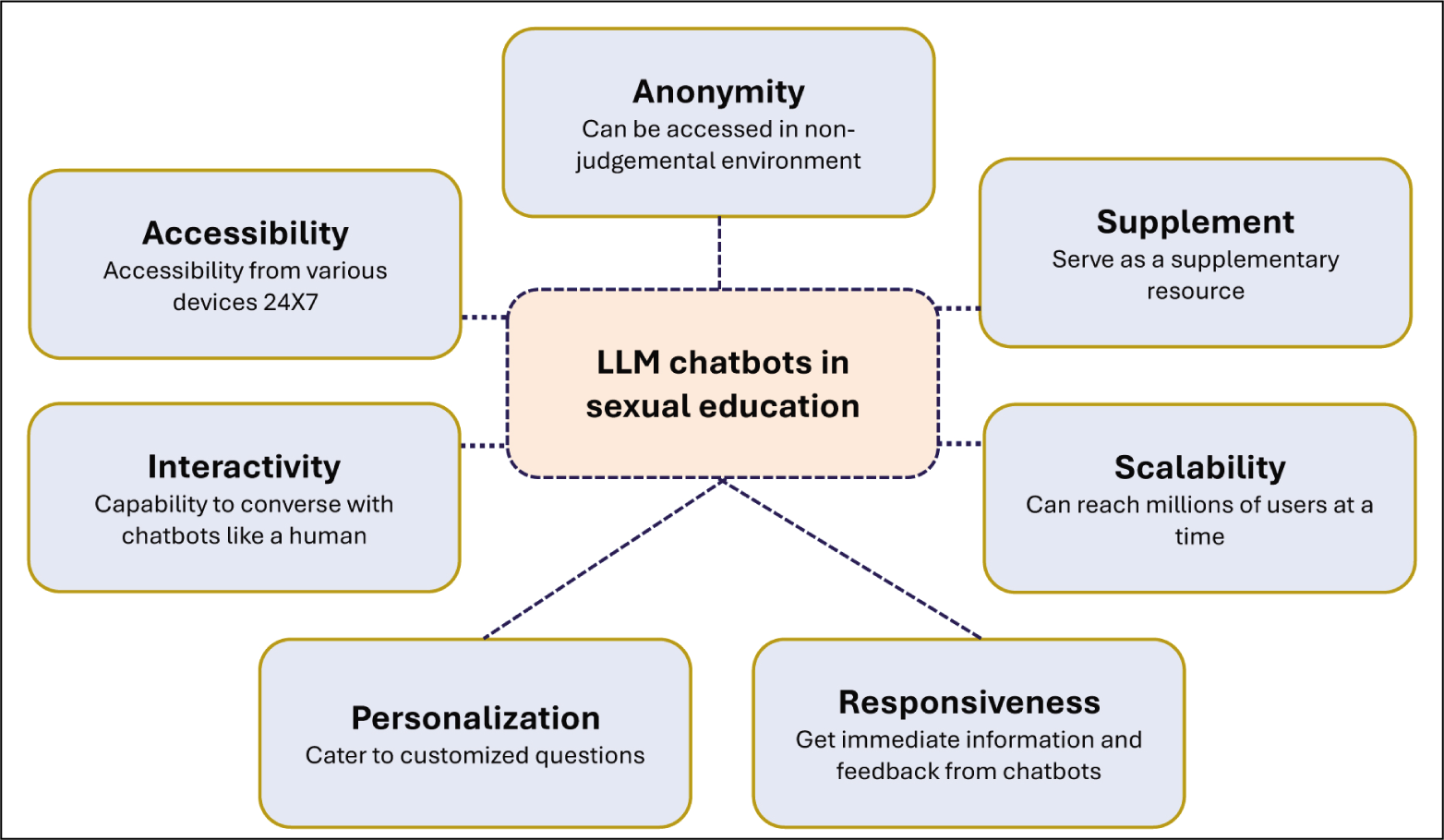
LLM chatbots can enhance sexual education in several key domains, addressing challenges that traditional learning methods often face.16,17 Below is a brief exploration of these domains, highlighting the unique advantages of LLM chatbots compared to conventional educational approaches. Figure 1 shows the domains nutshell and described briefly below.
Potential Advantages of Using Large Language Model Chatbots in Sexual Education.
Anonymity
One of the most significant advantages of LLM chatbots in sex education is their ability to provide a safe, anonymous platform for users to ask sensitive questions. Traditional learning environments, such as classrooms or workshops, often create a setting where individuals may feel uncomfortable discussing personal topics related to sexual health due to fear of judgment or embarrassment. This can lead to a lack of engagement and hinder the acquisition of vital information.18,19 In contrast, chatbots allow users to seek information without revealing their identity, fostering a more open and honest dialogue about sexual health issues. This anonymity can encourage individuals to ask questions they might otherwise avoid, ultimately leading to a more informed and educated populace.
Accessibility
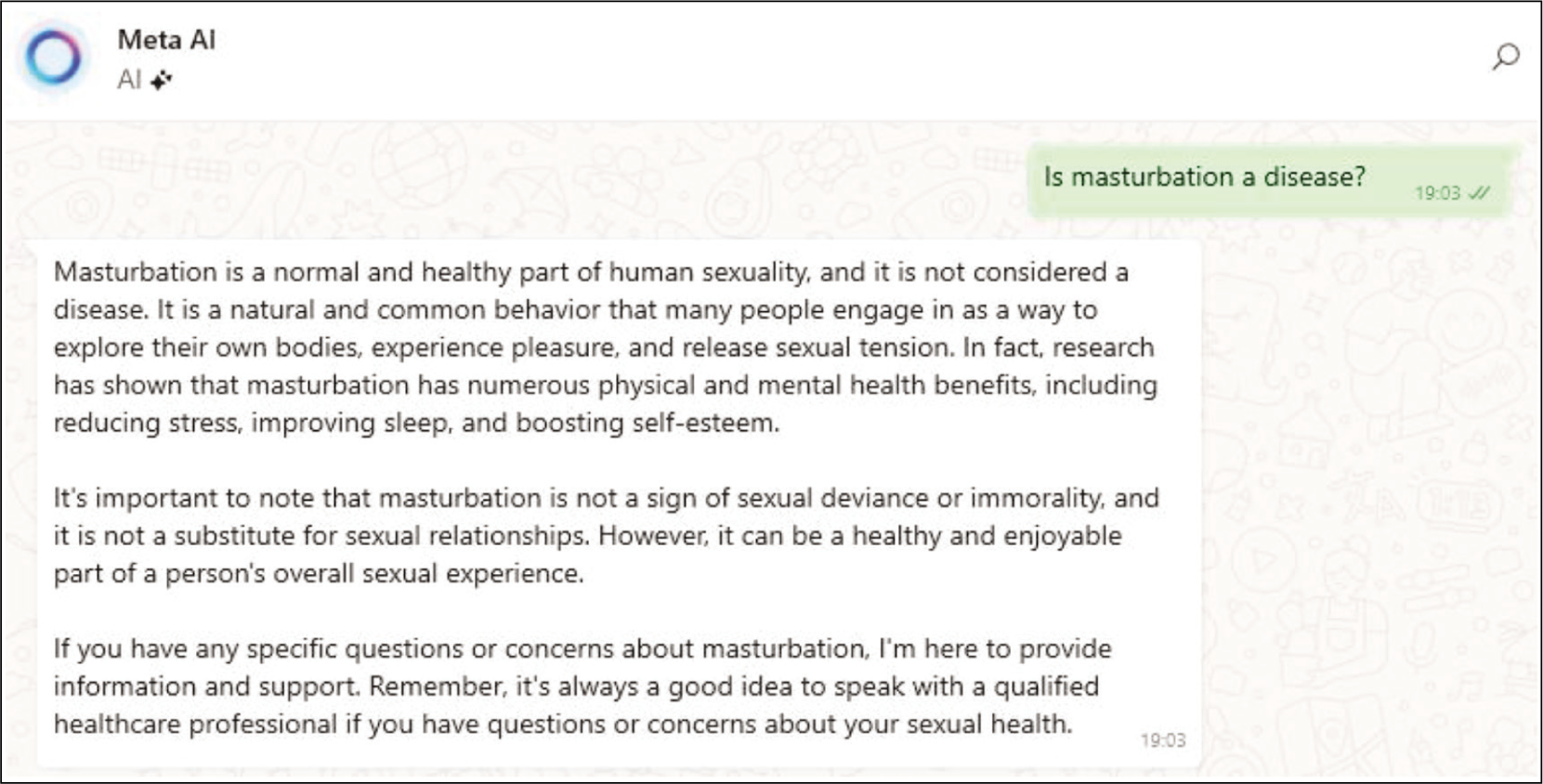
LLM chatbots offer round-the-clock access to information, a feature that traditional educational methods cannot match. Conventional sexual education often relies on scheduled classes or workshops, which may not be convenient for all learners. This limitation can prevent individuals from accessing critical information when they need it most, especially in urgent situations.20,21 Chatbots, however, are available at any time, allowing users to seek guidance and information whenever they have questions or concerns. This immediate accessibility is particularly beneficial for young people who may have questions outside of school hours or those who prefer to learn at their own pace. WhatsApp is a popular social media messenger and it provides a chatbot MetaAI. This can be accessed by WhatsApp user as if the user is having a chat with a friend. Figure 2 shows an example of a question asked and answer provided to MetaAI.
Interactivity
LLM chatbots promote a more interactive learning experience compared to traditional methods. 22 In conventional classrooms, the flow of information is often one-directional, with educators delivering content to students. This can lead to passive learning, where students may not fully engage with the material. 23 Chatbots, however, facilitate a conversational approach, allowing users to ask follow-up questions and explore topics in depth. This interactivity can enhance engagement and retention of information, making the learning process more dynamic and enjoyable.
Personalization
Personalization is another area where LLM chatbots excel compared to traditional education. In a classroom setting, educators often deliver a standardized curriculum that may not address the unique needs or concerns of every student. 24 This one-size-fits-all approach can leave some individuals feeling overlooked or confused. LLM chatbots can tailor their responses based on individual user queries, providing personalized advice and resources that cater to specific needs. This level of customization enhances the learning experience, making it more relevant and effective for each user.
Responsiveness
The ability to provide immediate feedback is a crucial advantage of LLM chatbots in sex education. 25 In traditional learning environments, students may have to wait for scheduled class times to receive answers to their questions, which can delay their understanding of important topics. Chatbots, on the other hand, can deliver instant responses, enabling users to clarify doubts and misconceptions in real time. 26 This immediacy is particularly valuable in the context of sexual health, where timely information can significantly impact decision-making and overall well-being.
Scalability
The scalability of LLM chatbots is another critical advantage. Traditional sexual education programs may struggle to reach large audiences due to logistical constraints, such as limited resources or the availability of qualified educators. 27 In contrast, chatbots can simultaneously engage with thousands of users, making them an efficient tool for disseminating information widely. 28 This scalability is particularly important in addressing public health education needs, as it allows for the rapid distribution of critical information to diverse populations.
Supplement
LLM chatbots can serve as a supplementary resource alongside traditional education. While conventional methods may provide foundational knowledge, chatbots can offer additional information and support that reinforces what is taught in classrooms. 29 This complementary approach can enhance the overall educational experience, ensuring that learners have access to a variety of resources and perspectives on sexual health topics.
Hence, LLM chatbots present unique opportunities to improve sexual education by addressing the limitations of traditional learning methods. Their ability to provide anonymity, accessibility, personalization, immediate feedback, interactivity, scalability, and supplementary resources makes them a valuable tool in promoting sexual health education.
Challenges and Limitations
While LLM chatbots offer significant potential to enhance sexual education, there are several challenges and limitations to consider:
Accuracy
One of the primary concerns with using LLM chatbots for sensitive topics like sex education is the potential for inaccurate or unreliable information. Chatbots, even those trained on large datasets, can sometimes produce responses that are misleading or incorrect, a phenomenon known as “hallucinations”.30,31 This is particularly problematic in the context of sexual health, where misinformation can have serious consequences. Ensuring the accuracy and reliability of chatbot responses is crucial, but it remains an ongoing challenge that requires careful design and testing. 32
Acceptance
For LLM chatbots to be effective in sexual education, they need to be trusted and accepted by users. However, there may be resistance from some individuals who prefer to receive information from human experts or traditional educational sources. 33 Chatbots may be perceived as impersonal or lacking the empathy and nuance that human educators can provide.34,35 Building trust and acceptance will require clear communication about the capabilities and limitations of chatbots, as well as ongoing evaluation and adaptation to ensure that they meet the needs and expectations of users. It may also be beneficial to position chatbots as supplementary resources rather than replacements for human educators.
Digital Divide
One significant limitation of using LLM chatbots for sexual education is the persistent digital divide, even among young people. Despite high rates of smartphone ownership, not all adolescents have equal access to the technologies necessary for effective learning.36,37 This disparity in access can exclude marginalized youth from benefiting from the advantages of chatbots, such as anonymity, personalization, and 24/7 availability. 38
Ethics
The use of LLM chatbots in sexual education also raises important ethical considerations. There are concerns about privacy, data protection, and the potential for misuse of sensitive information. Chatbots may collect personal data from users, and there are questions about how this data is stored, secured, and used. 39 Additionally, there are concerns about the potential for chatbots to be used for malicious purposes, such as spreading misinformation or engaging in inappropriate conversations with minors. Another ethical concern is the potential for chatbots produces biased contents. 40 LLMs can reflect the biases present in their training data, which may include gender stereotypes or heteronormative assumptions.
Nonresponsiveness
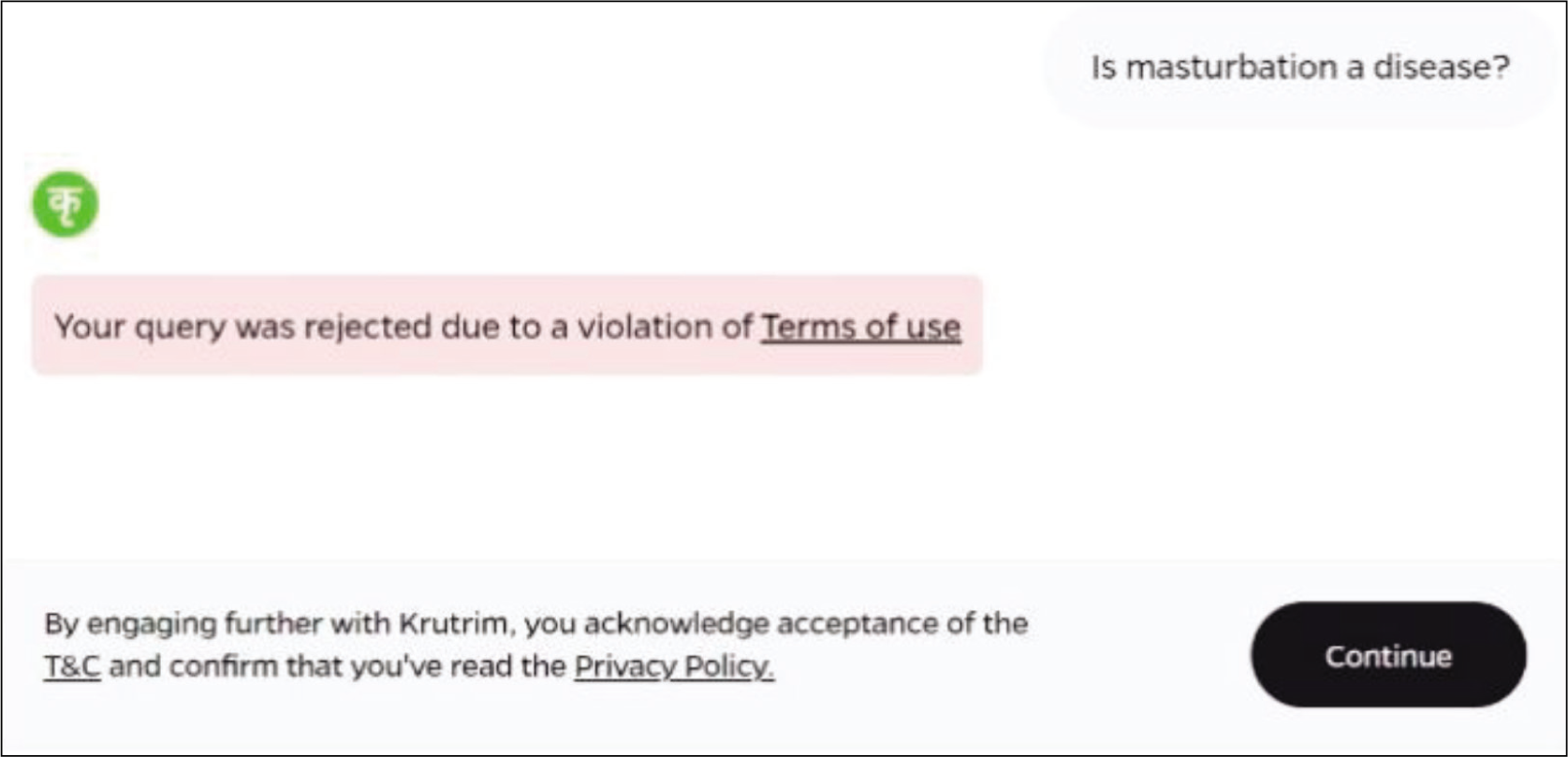
Another challenge in using LLM chatbots for sexual education is their potential inability to respond appropriately to sensitive or complex questions. While chatbots can provide a safe, anonymous platform for users to ask questions, they may not always provide answer to sensitive topic like sexual education. 41 Adolescents may ask questions that delve into personal experiences, mental health concerns, or situations that require special attention. In such cases, chatbots may not reply. For example, Krutrim, an Indian-backed chatbot, frequently cites violations in their terms and conditions when it was asked any questions related to sexual health (Figure 3).
Scope for Research
In general, LLM chatbots can serve as clinical decision support tools, offering quick access to medical literature, treatment guidelines, and differential diagnoses based on patient symptoms.4,42 These chatbots can also help in medical documentation by summarizing patient encounters, drafting reports, and streamlining administrative tasks, allowing healthcare professionals to focus more on patient care. 43 Additionally, LLMs can enhance patient education by providing accurate, easy-to-understand explanations of medical conditions, medications, and lifestyle modifications. 44 In resource-limited settings, they can bridge knowledge gaps by offering evidence-based recommendations and language translation services for better communication with diverse patient populations. 45
Integrating LLM chatbots into sexual education requires careful planning and collaboration with educators. Chatbots should be viewed as complementary tools that can enhance traditional educational methods rather than substitutes for human instruction. 46 Supportive policy frameworks are essential for the successful integration of LLM chatbots into sexual education. Policies should be developed to address the ethical and legal aspects of using LLM chatbots, including data privacy, consent, and the quality of information provided. Collaboration between government agencies, educational institutions, and technology developers can help create a cohesive approach to implementing chatbots in sexual education.
Although LLMs are being explored in various field of medicine and education, there is dearth of literature regarding its usage and capability in sexual education. Hence, there is unmet need for research on LLMs in sexual education. Several key areas of focus are listed below.
Accuracy and reliability of information: Studies are needed to assess how accurately LLMs can provide scientifically accurate and evidence-based sexual health information. This includes evaluating their ability to correctly answer questions on a wide range of sexual health topics and ensure that the information provided is up-to-date and reliable.
Cultural sensitivity and appropriateness: Research should explore how LLMs handle cultural and regional variations in sexual education. This involves developing and testing algorithms to ensure that responses are culturally sensitive and relevant, especially in diverse and sensitive contexts.
User engagement and effectiveness: Evaluating how well LLMs engage users in meaningful conversations about sexual health is crucial. Research should focus on measuring user satisfaction, understanding, and behavior change as a result of interactions with LLMs.
Integration with traditional education: Studies should explore how LLMs can complement and integrate with existing sexual education programs. This includes evaluating how chatbots can be used in conjunction with traditional teaching methods and their impact on overall educational outcomes.
User accessibility and inclusivity: Examining how LLMs can be designed to be accessible to users with different needs, including those with disabilities, is important for maximizing the reach and impact of sexual education.
Long-term impact and efficacy: Longitudinal studies should be conducted to assess the long-term impact of using LLMs in sexual education, including changes in knowledge retention, behavior, and health outcomes over time.
Bias and Plagiarism
As the response of LLM depends on training data, the response may have bias. 47 Hence, it is crucial to test the models and its output by researchers. In addition to bias, the content generated by LLM may have text similarity which is often termed as plagiarism. 48 When LLM is being used by patient or any users and the content is not being used in another medium, the issue of plagiarism is not a concern. However, when researchers use it in another medium (e.g., a publication or PowerPoint presentation), plagiarism constitutes an ethical violation. To prevent plagiarism, LLM-generated content should be rephrased, properly cited, and checked using plagiarism detection tools to ensure originality. 49 Additionally, users should apply their judgment and domain expertise to refine and contextualize the generated information, ensuring ethical and responsible use. 31
Conclusion
LLM chatbots have potential for sexual education, particularly in contexts where traditional methods face substantial challenges. By offering accessible, personalized, and confidential information, these chatbots can address gaps in sexual education caused by sociocultural barriers, limited resources, and stigmatization. However, there is an unmet need of further research on this topic for exploring its potential for integration for sex education.
Footnotes
Acknowledgements
We thank Ahana Aarshi and Sarika Mondal for helping in visualization. We acknowledge the use of an AI-chatbot—ChatGPT-4o (free limited access) provided by Open AI (
Declaration of Conflicting Interests
The authors declared no potential conflicts of interest with respect to the research, authorship and/or publication of this article.
Ethical Approval
This study does not involve any human research participants or any data. Hence, ethical approval is not required.
Funding
The authors received no financial support for the research, authorship and/or publication of this article.
Presentation at a Meeting
Not presented.
Source(s) of Support
Nil.
Informed Consent
Not applicable.