




Abstract
Despite the effectiveness and widespread availability of condoms in recent times, their usage has remained inconsistent among the youth population, thereby contributing to the increased spread of sexually transmitted diseases (STDs). This study therefore identifies and examines the factors that militate against the utilization of male condoms in the prevention of STDs, providing relevant recommendations for enhancing the prevention efforts of STDs among youth. Our research found that despite adequate knowledge about the range of benefits of condom use among youth, the presence of societal and cultural norm stigmas against its use, psychological factors such as perceived reduced sexual pleasure or discomfort during its use, and accessibility constraints such as cost and unavailability in some communities are some of the prominent factors militating against the utilization of male condom. In order to further enhance the utilization of male condom among youth, this research therefore delivers a context-specific analysis that comprehensively integrates socio-cultural, educational, and psychological barriers, offering a nuanced understanding in under-researched rural contexts. Finally, our study suggests the need for targeted interventions, emphasizing on challenging global social norms, comprehensive sexual education, safe sexual practice, and improving condom accessibility in rural communities, as these strategies are essential for reducing STD transmission in youth population.
Introduction
Condom has been proven to be one of the most popular forms of mechanical barriers during sexual intercourse, as it provides protection for the genital tract against several forms of STDs, 1 also preventing the occurrence of unwanted pregnancies by acting as a barrier stopping semen from swimming through the vagina. 2 The use of condoms dates back to the fifteenth century, as it was invented in response to the syphilis epidemic in Europe at the time, and since its introduction, its texture has evolved from materials such as leather and animal gut to the present-day improved quality latex rubber material introduced in the eighteenth century because of its strength and elasticity, as a consequence of technological advancement.
During the usage of condom, its efficacy in preventing the occurrence of pregnancy or STDs depends on the user, as previous studies have shown a minimal ratio of about 2% annual pregnancy rate and reduced risk of STDs, such as herpes and human papilloma virus, among appropriate condom users, while presenting a higher risk of pregnancy intake and about 80%-95% of HIV transmission and other STDs when used inappropriately. 3 Most of the studies conducted on condom practices have been targeted on adult women attending family planning clinics or homosexual males, while only recently has there been interest in the factors influencing adolescents’ condom usage behaviors. Early data have suggested that the factors associated with the use of condom may differ for males and females, 4 while the use of condoms associated with STD avoidance is hypothesized to be influenced by an individual’s perception, fueled by factors such as the threat of contraction of STDs and benefits of altering behavior to prevent STDs, as these factors are in turn influenced by the subject’s attitudes and beliefs peculiar to STDs, as well as a set of modifying and enabling variables.
In lower-middle income countries, especially Nigeria, the issue of condom usage as a measure to prevent STDs has gained significant momentum in recent years; therefore, creating awareness on the part of youths in tertiary institutions is very essential to curb the incidence of sexually transmitted diseases. However, there are various factors that could hinder the utilization of condoms such as culture, religion, stigmatization, non-availability, accessibility, and the ignorance of its benefits, among others. In a situation where sexually related matters are treated on a system of double standards in some communities and population, condom usage is therefore generally influenced by a complex interplay. The health belief model perspective stipulates that when individuals perceive that they are at risk of an infection, they will be driven to take positive actions toward its prevention and safeguarding their health; however, this has been employed in several studies to explore different health behaviors among different populations. It is against this backdrop that this study sought to examine the factors militating against the utilization of male condom in the prevention of STDs among youths, taking the Calabar Municipality of Cross River State Nigeria as a case study, with the main objective of examining and accessing the knowledge and benefit of male condom utilization among youths, attitude of youths toward the utilization of male condom, identifying the effect of culture and religion on utilization of male condom, and finally examining the factors that poses barriers to the adequate and proper utilization of male condoms, as this research will improve the existing literature on this topic and act as a guild for further research in the area.
Literature Review
Generally, condom is a sort of a barrier or a preventive device commonly used during sexual intercourse to limit the probability of pregnancy and transmission of sexually transmitted diseases. Beksinska et al 5 studied the importance of male and female condoms in relation to the above-stated function, emphasizing on the usage appropriacy for efficacy. Muchiri et al 6 studied the importance of the consistency in the use of condom by adolescents and young adults in urban south Africa, while Bruna et al 7 evaluated the factors associated with the inconsistent use of condom in the population of men who have sex with men in Brazil, where they found that 50.8% of the sample had not consistently used condoms with casual partners in the previous six months of their research period, which was associated with low educational level. According to Erin et al, 8 male and female condoms are the only most available multipurpose prevention technology products; they also examined the global distribution of selected sexual and reproductive health issues, in order to determine the greatest geographical overlap. Reynolds et al 9 used data from four south African countries, Namibia, Tanzania, Swaziland, and Zambia, to compare measures of condom use among people with more than one partner, reporting the highest usage among people having two or more partners in the last one year of their study period. Anny et al 10 investigated the unprecedented marginalization of the female condom in the international response to HIV and AIDS, arguing its significant role in the design of new health technologies in poor countries. A study conducted by Susie et al 11 also attributed the perceived expensiveness and inaccessibility of the female condom to its limited usage in many resource-poor settings. Finally, in the usage of male and female condoms, early research suggested the offering of condoms to males and females after counselling, as this act will boost the usage by both genders. 12
Gervase 13 studied the various treatment methods of STDs, particularly salvarsan, a treatment especially for syphilis, which is a common early STD. But with the discovery of antibiotics, combined with effective public health campaigns against STDs, a large number of STDs became easily curable. Oriol et al 14 examined the challenges of STDs in Europe, from the perspective of limited progress in drug discovery, focusing primarily on gonorrhea, syphilis, and Mycoplasma genitalium infections, exploring the emerging STDs in the region and the constantly evolving transmission routes of waterborne and food diseases into sexual transmission. According to Magnus et al, 15 Chlamydia remains the mostly diagnosed bacterial STD in high-income regions despite widespread testing recommendations, while Oriol et al 16 have given a comprehensive review of the current epidemiology, challenges, and emerging issues of bacteria-related STDs in the European region. From the viewpoint of the World Health Organization, 17 STDs pose a major public health burden, causing premature mortality despite some achieved success in the targets outlined in previous actions for health sector response to HIV. Aaloke et al 18 have pointed out the uncertain thresholds hindering the success of the innovations for the treatment of HIV. Nyuma et al 19 examined Zambia’s recently achieved UNAIDS 90-90-90 treatment guideline targets for HIV control, following outpatient settings, including opportunistic infection prophylaxis, screening, and treatment, while Yang et al 20 studied STDs from a worldwide perspective, assessing their global burden and trends from 1990 to 2019.
Factors That Militate Against Condom Utilization Among Youth
According to Beksinska et al. 5 and health education helps to inform youths about the importance of the use of condom in the prevention of STDs and unwanted pregnancy, as sex education was initially not regarded necessary for youth, due the fear of them indulging in indiscriminate sexual behaviors. However, many youths gain knowledge of condom utilization through magazines, books, peers, product dealers, and mass media, having been assured of some level of confidentiality; these sources maintain that youths need to be protected from the above precarious situations through adequate knowledge of condom use. Also, one of the reasons for the gap between positive attitude toward the use of condom and low acceptance rate is that most people, particularly youths who are not well-informed, regard it as unnatural and stigmatize it as an act related to prostitution. Young females asking for help in locating and/or purchasing condoms encountered resistance or condemnation from clerks 27% of the times, compared to 10% for male youths. Merrill 21 stressed the fact that social, cultural, and economic factors affect the use of condom in STD prevention; the ultimate barrier to condom use is poverty, not because of its cost implications, but also due to the broader culture of education, risk-taking, and self-preservation.
Effects of Culture and Religion of the People on Condom Utilization
Cultural sensitivity is a major factor in young people’s poor knowledge and use of condom. This is visible in societies where few programs provide sexual education to youths or enable youths to ask questions and correct misconceptions about condom utilization, leading to large numbers of young males and females lacking information about safe sex and the skill necessary to negotiate and adopt safe sex practice. Cultural sensitivities about sexuality make it difficult for parents to communicate contraceptive behavior for safe sex including use of condom to youths for fear of going against cultural norms, whereas in a culture where contraceptive, like condom, use is widespread, youths may find it easier to act on condoms/preventive measures for STDs. Gender norms also play an important role in shaping youth’s knowledge and views of preventive practices. However, in recent times, the emerging culture of safer sex has begun to infiltrate into various cultures, and barriers that existed in the past are beginning to crumble, making condom use now a freely discussed topic, which has also influenced the knowledge and attitude of youths toward its utilization.
Data Collection
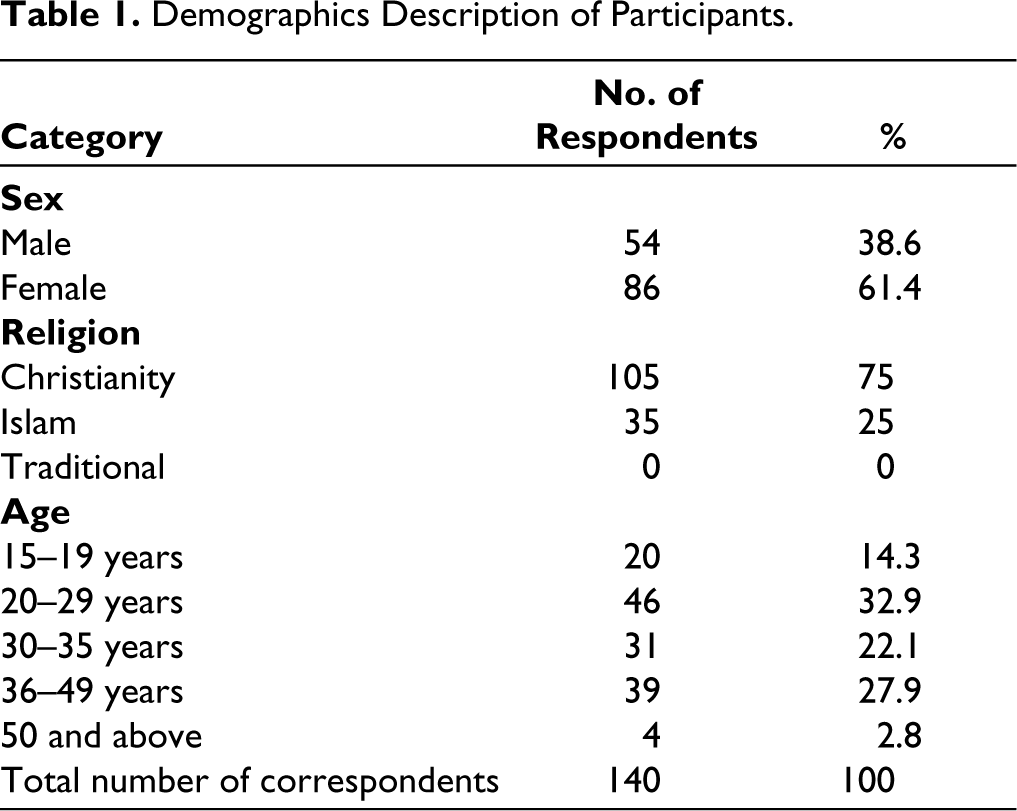
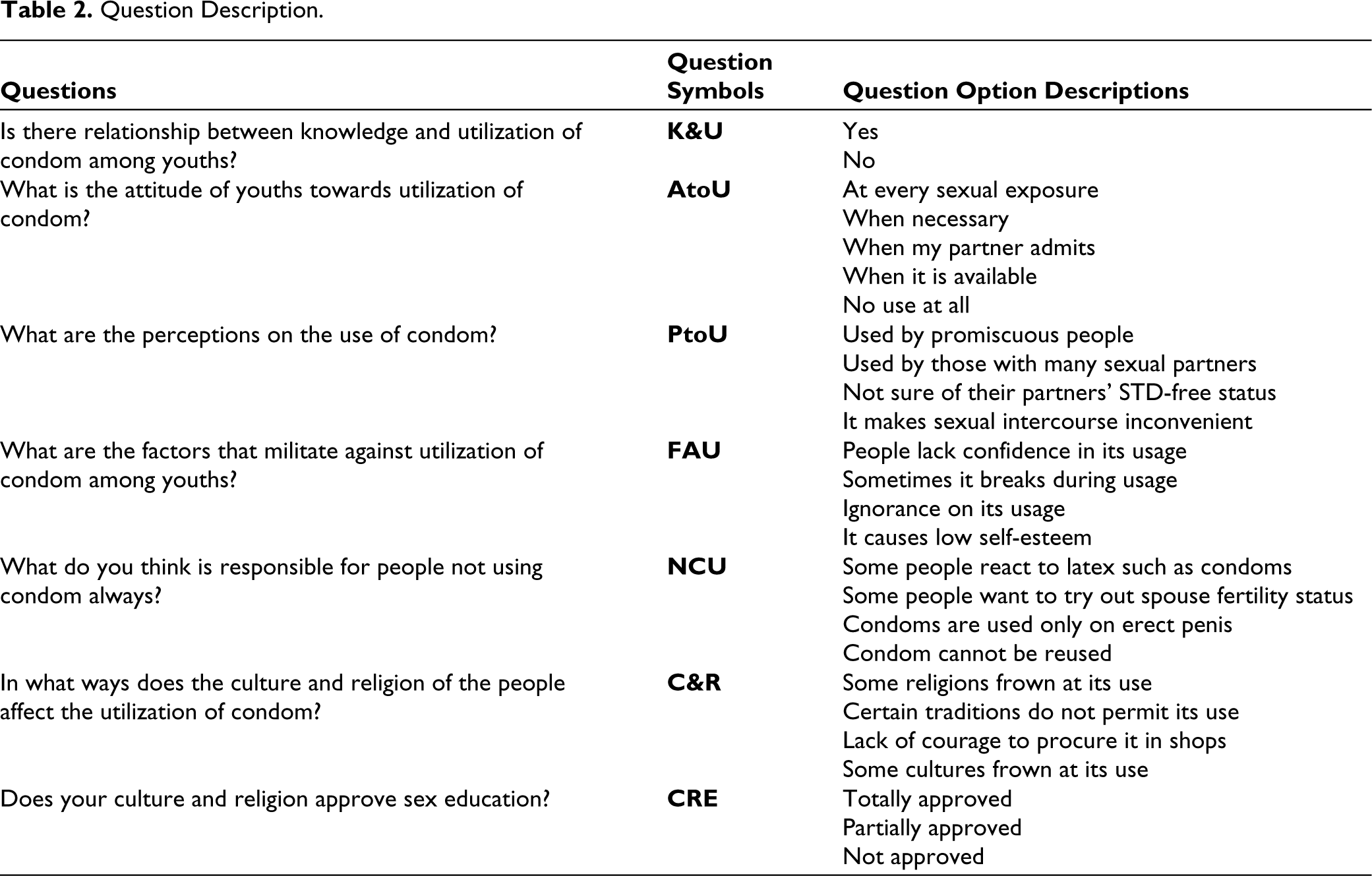
With the permission of the respondents in the study area, a quantitative survey study, with questionnaires prepared by the researcher, was conducted; there were 152 closed-ended questionnaires with descriptive questions indicating YES or NO, and some limited response was administered by the research team to the participants after they had completed and signed the consent form in a hard copy format. The questionnaire had seven sections: the first section required data about the proportion of those who are aware of condom, the second section required information about attitude toward the use of condom, the third section required information about the correspondent’s perceptions on the use of condom, the fourth section aimed at data on the reasons for poor utilization of condom, the fifth section focused on the information on causes of total avoidance of the use of condom, the sixth section sought information about the effects of culture and religion on the utilization of condom, while the final section aimed at obtaining data on the effects of culture and religion on sex education (Tables 1 and 2).
The questionnaires allowed the respondents a sense of anonymity, which made it possible for them to answer questions about their sexuality in a more liberal way. 140 questionnaires were returned, and the responses arising from the interviews were carefully recorded. The data collected was later edited, analyzed, and presented in tables in accordance with the questions and responses as elicited from the respondents with the use of simple percentage. The targeted groups for this study were youths of three tertiary institutions in the Calabar Municipality of Cross River State, Nigeria, from the College of Health Technology, with a population of 82; NICO Catering School, with the population of 40; and the School of Psychiatric Nursing, Calabar, with a population of 121 students, given a total population of 243. The Taro Yamane Formula, formulated by the American–Japanese economist in 1967. is a statistically used formula in determining a sample size from a heterogeneous population, given as follows:

Where:
n =the sample size, N = the finite population
e = level of significance (or limit of tolerable error) at 0.05 significance value
1 = unit (constant value)
Therefore,
Population size (N): 243
Margin of error (e): 0.05
Step 1: Calculating for e 2 :
e 2 = 0.052 = 0.002500
Step 2: Calculating the denominator (1 + N × e 2 ):
1 + N × e 2 = 1 + 243 × 0.002500 = 1.6075
Step 3: Calculating for n = N/(1 + N × e 2 ):
n = 243/1.6075 = 151.1664
Step 4: Round up to the nearest whole number:
Final sample size (n) = 152
Methodology
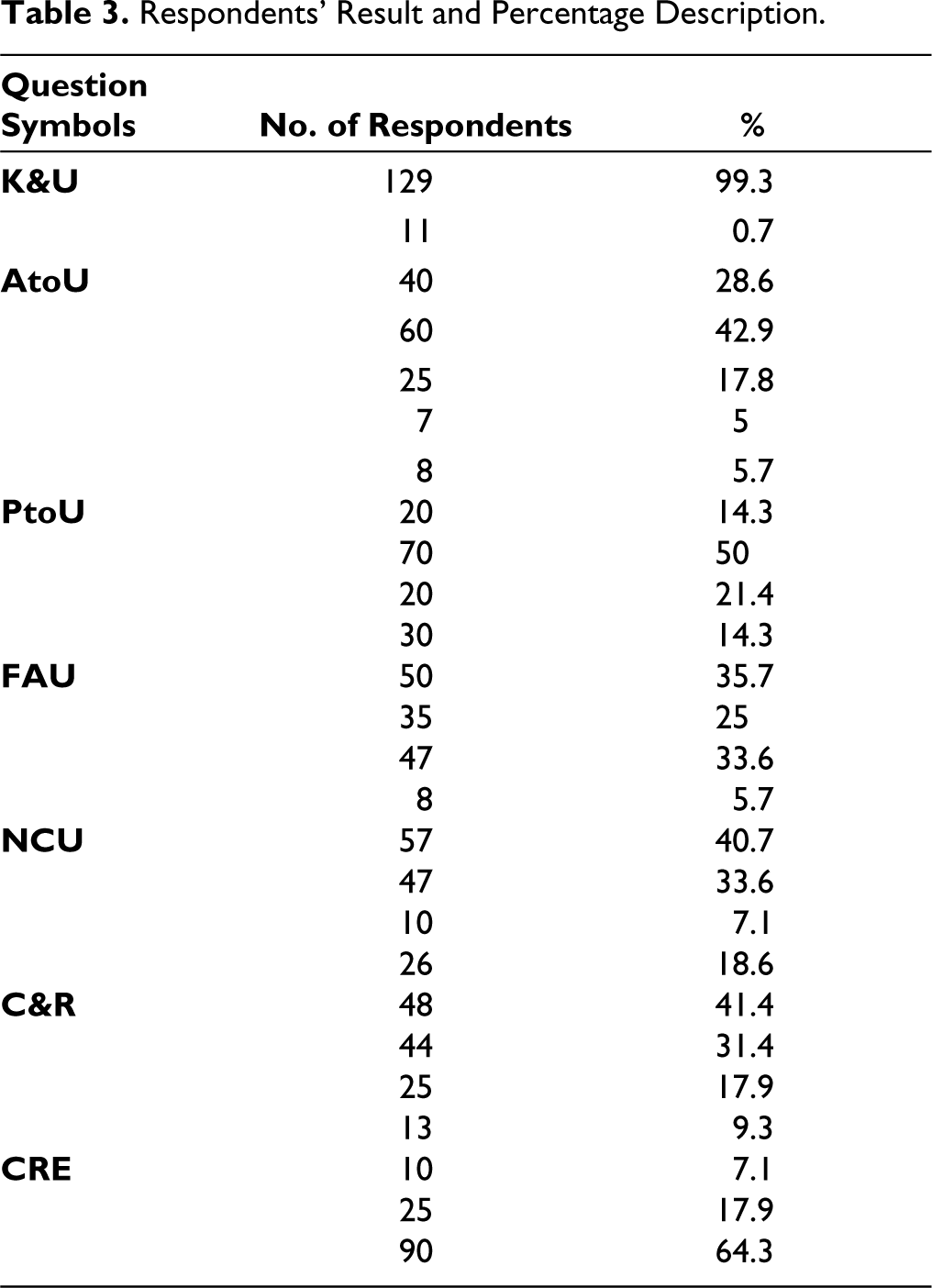
The study employed a closed-ended questionnaire method in order to determine the opinion of the sampled population. This method was considered relevant because of the non-experimental nature of the study, and the respondents were not subjected to laboratory and control experiment. The data collected was edited, analyzed, and presented in tables in accordance with the questions and responses as elicited from the respondents with the use of simple percentage (Table 3).
Result and Analysis of Research Question
Demographics Description of Participants.
Question Description.
Respondents’ Result and Percentage Description.
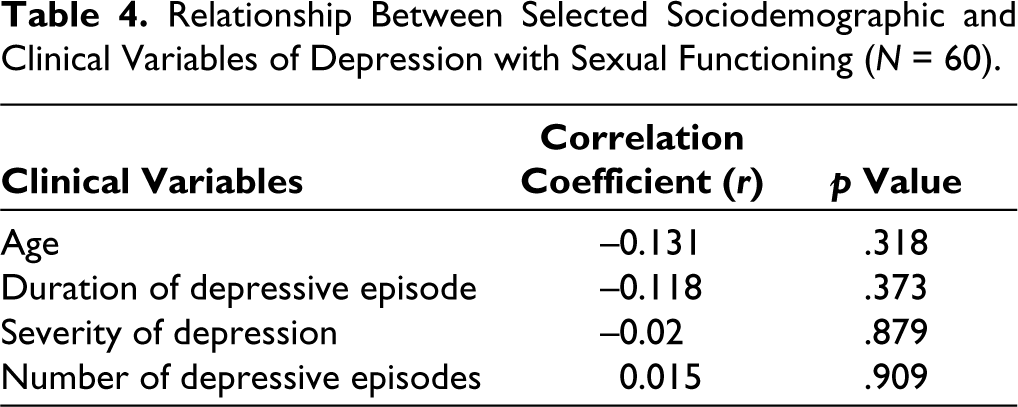
Relationship Between Selected Sociodemographic and Clinical Variables of Depression with Sexual Functioning (N = 60).
Discussion
From question K&U, the 89% mark indicates that youths are aware of condom utilization, which translates to their awareness about STDs and that they have been sensitized several times on STDs prevention. This result corresponds with the findings of Boitumelo et al, 22 which showed 69.1% condom use among the youths in South Africa, thereby supporting the increased awareness of the campaign on the consistent use of condom. The attitude of youths toward utilization of male condom can be derived from the response from question AtoU, which showed that 60% utilize condom when necessary; this corresponds with Kalolo and Kibusi’s 23 study on the attitude of tertiary students in Tanzania, where their research found that many youths have a positive attitude toward the use of condom; however, they do so in private where sexual acts such as the use of condom are negotiated and executed, and in a study by 24 in Nigeria, similar result was obtained. 70% of respondents from question PtoU showed that condom is used by those who are not sure of their partner’s safe health status, thereby indicating degree of skepticism on their partner’s sexual hygiene and fidelity. Tewodros and Tadesse, 25 with a sample size of 453, examined the attitude of the Tanzanian young population toward the use of condom, showing 66.1% used condoms in their last sexual intercourse, with the proportion of 53.4% positive attitude toward the use of condom, and the mean attitude score of 28.6 in the range of 10–50. Also, 14.3% in this section ignore the use of condom because it prevents them from getting the maximum pleasure they want. This assertion also corresponds with Randolph et al, 26 who conducted a survey to determine the pleasure ratings for protected and unprotected sexual intercourse as it relates to the use of condom. And with a sample size of 80 females and 35 males, with a mean age of 22.29 college participants, engaging in an unprotected intercourse in the past three months, participants rated unprotected intercourse as more pleasurable than protected intercourse.
Results from question FAU indicated 35.7% of the respondents agreed that there was lack of confidence in the usage of condom. This result also agrees with the study by Obembe et al 27 on the confidence level of undergraduate students from selected tertiary institutions in southwestern Nigeria, with only 10.8% having significant confidence level in the use of condoms, whereas 33.6% and 25% respondents, respectively, complained of ignorance in the use of condom and condom breakage during sex as a major factor inhibiting their interest in condom utilization. Other reasons that could pose obstacles to condom utilization are that some people want to try out their spouse’s fertility status, with the intention of childbearing, which is indicated by 33.5% of respondents in the NCU question section. This result relates with Finocchario-Kessler, 28 who conducted a survey on HIV-positive adolescent women intending to have children, who usually object to the use of condom, although they are advised to be on a close correlation with a health provider to safely plan such pregnancy. Also, 18.6% of respondents are of the view that condom can only be used once, because of the fear of bacterial contamination upon reuse, which translates to high expenditure if it should be regularly used during each sexual intercourse, leading to non-compliance to condom utilization. In question C&R, 41.4% of respondents agreed that some religions frown at condom utilization, while 31.4% admitted that certain traditions do not permit the use of condom. Finally, in question CRE, 64.3% of the respondents indicated that sex education is not approved in their culture, with only 7.1% of respondents indicating the approval of sex education in their culture and religion. This result agrees with the study of Liddell et al, 29 conducted on young South Africans, where participants expressed strong endorsement of indigenous beliefs about illness related to STDs and ancestral protection, with little or no endorsement of AIDS myths and related STDs, thereby viewing condoms as less important, with lower intention to use it.
Conclusion
From our study, some benefits of male condom utilization such as prevention against STDs and exposure to some health risks were discovered. We therefore emphasize on youths indulging in safe sexual practices, as such practices are crucial for preventing the transmission of STDs including HIV, by reducing the exchange of bodily fluids through consistent use of protective materials such as condoms, while also promoting holistic communication about sexual health between partners. Finally, we believe that if youths are given proper information and health education on their reproductive health and sexuality, we can eliminate religious and cultural myths about the use of condoms, and there will be a positive attitude change toward the use of male condom among the population within the age bracket.
Recommendations
Regulatory bodies such as the WHO should intensify their global campaign in the tertiary institutions in order to provide youths with information on the proper utilization of male condom and safe sexual practices.
The religion and culture of the people should permit sex education and accord youths of all ethnicity and regions the opportunities to learn about their reproductive health.
Youths should be taught the consequences of unsafe sex by organizing global seminars/workshops on campuses including film shows that treat the subject on a global scale.
Reproductive health/safe sex should be introduced in the educational system curriculum, where information can be given in a more formal way, and teachers who serve as role models should stop indiscriminate sexual relationships with female students, knowing that they are being emulated by the youths.
Limitations of the Study
Information provided by the researcher may not hold true for all businesses or organizations but is restricted to the selected organization used as a case study in this research especially in the locality where this study was conducted. Finally, the researchers are restricted only to the evidence provided by the participants in the research and, therefore, cannot determine the reliability and accuracy of the information as provided.
Footnotes
Declaration of Conflicting Interests
The authors declared no potential conflicts of interest with respect to the research, authorship, and/or publication of this article.
Ethical Approval
Not applicable.
Funding
The authors received no financial support for the research, authorship, and/or publication of this article.
Informed Consent
The participant has consented to the submission of the article to the journal.