




Abstract
Background:
Early sexual initiation among adolescents increases the risk of STDs, unwanted pregnancies, unsafe abortions, and despair.
Aims:
This study explored first sexual initiation experiences among early adolescents (11–15years) in Koforidua Municipality, Ghana.
Methods:
The study adopted a convergent parallel mixed method anchored on a cross-sectional and phenomenological design. A custom-designed questionnaire and interview guide, developed through a comprehensive review of literature were used for the data collection. The questionnaire constituted 20 items: 14 measured sexual debut experience and 6 assessed delayed sexual debuts at the categorical level. A total of 373 early adolescents responded to the questionnaire while 10 participants were interviewed. The quantitative data was analyzed using binary logistic regression with p-value <0.05 considered statistically significant and fitted into the model. The qualitative data was analyzed using thematic approach.
Results:
The prevalence of sexual debut among early adolescents was 23.9%, with the mean age of sexual debut being 11.7 years. Almost 34 (38.2%) of the sexual debutants felt good, while 47(52.9%) had no regret after initiating first sex. Nearly 30 (30.7%) of the sexual debutants have had sex with multiple partners. In a multilevel analysis, the adjusted odds ratio (AOR) revealed that early adolescents who were dating [(AOR = 5.564 (95.0% CI: 2.512–12.324), P = .000] are five times more likely to initiate first sex compared to those who were not dating. Early adolescents who are residing in Srodae [(AOR = 5.144 (95.0% CI: 1.052–5.098), p = .037] are significantly more likely to initiate first sex compared to those residing in Betom and Zongo community.
Conclusion:
Providing culturally relevant age-appropriate and comprehensive sexuality education programs in schools and out-of-school early adolescents remains an effective strategy for addressing the sexual needs of early adolescents.
Introduction
Early sexual debut is a global public health concern, exposing adolescents to harmful psychosocial and sexual health outcomes such as multiple partners, unprotected sex, unplanned pregnancy, STIs, depression, low self-esteem, and undesirable sexual outcomes like orgasm and sexual arousal.1-3 The World Health Organization defines early sexual debut as intercourse before 15 years old, indicating a risky behavior. 4 Africa has a high rate of early sexual debut, ranging from 26.8% in Nigeria to 55% in Ghana,5,6 with the earliest sexual relation often within marriage context. 7 Studies show that factors such as gender, education, substance use, pornography, physical fights, lack of parental support, maternal education, place of residence, family influence, media use, and poor hygiene are predictors of sexual debut. These outcomes increase vulnerability to poor sexual decision, resulting in pregnancy or HIV/AIDS.8-11
Adolescents in Sub-Saharan Africa face a high risk of developing sexually transmitted diseases due to frequent risky sexual practices, which vary across socio-cultural contexts and are often associated with taboos and cultural norms.12-14 Adolescents’ risk of STIs varies based on the sexual activity they engage in, including oral-genital, vaginal, anal, and group sex, with common practices including pornography and premarital sex. 15 According to Banerjee and Rao, safe sexual practices are essential for maintaining individual and public health, as they reduce infection transmission, enhance mental stability, and promote responsible sexual behavior. 16
In Ghana, debate around the sexual maturity and first sexual initiation among early adolescents continues to dominate national discourse and is always viewed with divergent lenses.17,18 Adolescents aged 12–18 exhibit high risky sexual behavior with over 50% experiencing sexual experience before turning 19 years.18,19 As reported by Awusabo-Asare et al, 20 9% and 12% of adolescent boys and girls in Ghana had had their first sex before age 15, respectively. Adolescent girls’ early sexual debut is highest in Brong Ahafo (21%), followed by Northern (8%), and Greater Accra (5%), despite social stigma. 21 Previous studies in Ghana show that 73.3% of sexually active young people start having sex after turning 15.22,23
In Ghana, sexual debut studies primarily focus on late adolescents (15–19 years), neglecting early adolescents. The early adolescent population is often overlooked in sexual and reproductive health (SRH) research 24 , with many studies relying on secondary data. 11 The experience of adolescents with sex remains poorly understood and explored. Addressing the reproductive health needs of early adolescents requires accurate data for policymakers and stakeholders to make informed decisions. This will address the peculiar needs of early adolescents who remain the window of hope for the future. This study examines first sex initiation and experiences among early adolescents in the Koforidua municipality and the significant predictors of same from an integrative lens (qualitaive and quantitative approaches).
Materials and Methods
Study Setting
The study was conducted in the Koforidua Municipality, headquarters of the Eastern region, Ghana. The municipality has a population of 2,917,039, with 30.8 percent of residents under 15 years. 25 This setting was selected because of the increase in sexual activities among adolescents in the municipality. There is a 40% increase in child prostitution in the municipality. 26
Study Approach and Design
This study employed a mixed-method approach, specifically the convergent parallel mixed method design. The quantitative arm of the study was grounded on a cross-sectional survey of all persons between 11 and 15 years. This design provided the researcher an excellent control over the measurement process. The qualitative arm of the study was anchored on a descriptive phenomenological design. This design allowed the researcher to explore the lived experiences of early adolescents in relation to sexual debut.
Study Population and Sampling
The study population consist of early adolescents (11–15 years) in the Koforidua Municipality. The study unit consists of early adolescents in the selected public schools in the three selected communities, namely, Srodae, Betom, Zongo, and out of the schools adolescents were sampled for the study. Informed by the Yamane 27 sample size formula, a total of 376 early adolescents (N = 6225, n = 376) were enrolled in this study. However, the questionnaire was distributed to only 373 respondents due to the decision of some respondents to withdraw from the study. A multistage cluster sampling technique was adopted for the sampling of early adolescents for the study. Stage 1: The communities were considered as clusters and a simple random sampling was used to select three out of the ten communities in Koforidua. Stage 2: A spatially stratified sampling technique was employed to select two public schools from each of the three chosen communities. Stage 3: Each selected public school had four different streams labeled A to D. A simple random sampling method was employed to select two sections out of the four sections. Respondents were then sampled from the selected sections. Stage 4: A systematic numbering process was initiated, instructing respondents to assign themselves numbers from 1 to 10. Early adolescents who mentioned even numbers were identified and subsequently selected as participants for the study.
The study utilized purposive and snowballing sampling techniques to select 10 early adolescents for interviews, guided by data saturation. The eligibility criteria include: early adolescents residing in the three selected study sites and attending the selected schools whose authority consented to allow their students’ participation in the study and adolescents between the ages of 11 and 15 years and early adolescents who consented to participate in the study
Data Collection and Measurement
A researcher-developed questionnaire designed from an extensive review of literature was used to explore the experiences and first sex initiation among early adolescents. The questionnaire constituted 20 constructs: 14 measured sexual debut experiences and 6 assessed issues related to delayed sexual debut. The questionnaire constituted closed-ended questions and was pretested in a setting with similar characteristic as the study setting to ensure that issues with question clarity, wording, and response options were addressed before data collection began. In order to make sure that the questions adequately represented the constructs being measured, domain expert opinions and feedback were solicited. A total of 373 early adolescents responded to the questionnaire. The outcome variable was sexual debut and was measured at the categorical level with a “Yes” and “No” responses. The independent variables were informed by an extensive review of literature, 8 ’ 23 which included gender, age, educational level and relationship status.
Face to face in-depth semi-structured interview were conducted among 10 early adolescents from different socio-cultural backgrounds. A semi-structured interview guide was developed, consisting of open-ended questions that enabled participants to share their experience with first sex. Pseudonyms were assigned to all participants to ensure anonymity. 28
Data Analysis
The quantitative data was processed using SPSS version 25 (IBM Corp., 2011, NY). Results are presented using tables with frequencies and percentages. A step-wise binary logistic regression model was fitted to identify the predictors of early sexual debut. The statistical significance of the analysis was set at P < .05. The qualitative data was analyzed using Braun and Clarks’ six-step thematic content analysis. 29 The researcher thoroughly examined the data by listening to the audio, reading the transcript, and taking notes while reading or listening to the audio, before methodically coding the results. Coding was done manually using keywords and phrases derived from the data.
The codes were subsequently arranged into higher level headings. The analysis began to take shape when the researcher transitioned from codes to themes. The researcher then classified the data thematically, grouping comparable materials with similar topic. At this level, the researcher used creative and analytical reasoning to identify categories of meaning. A recursive procedure in which the evolving themes were evaluated in respect to the coded data and the overall dataset was used. Furthermore, the researcher clearly specified what is unique and distinctive about each of the topics he outlined. The produced themes were utilized for a write-up.
Results
Socio-Demographic Characteristics of Early Adolescents
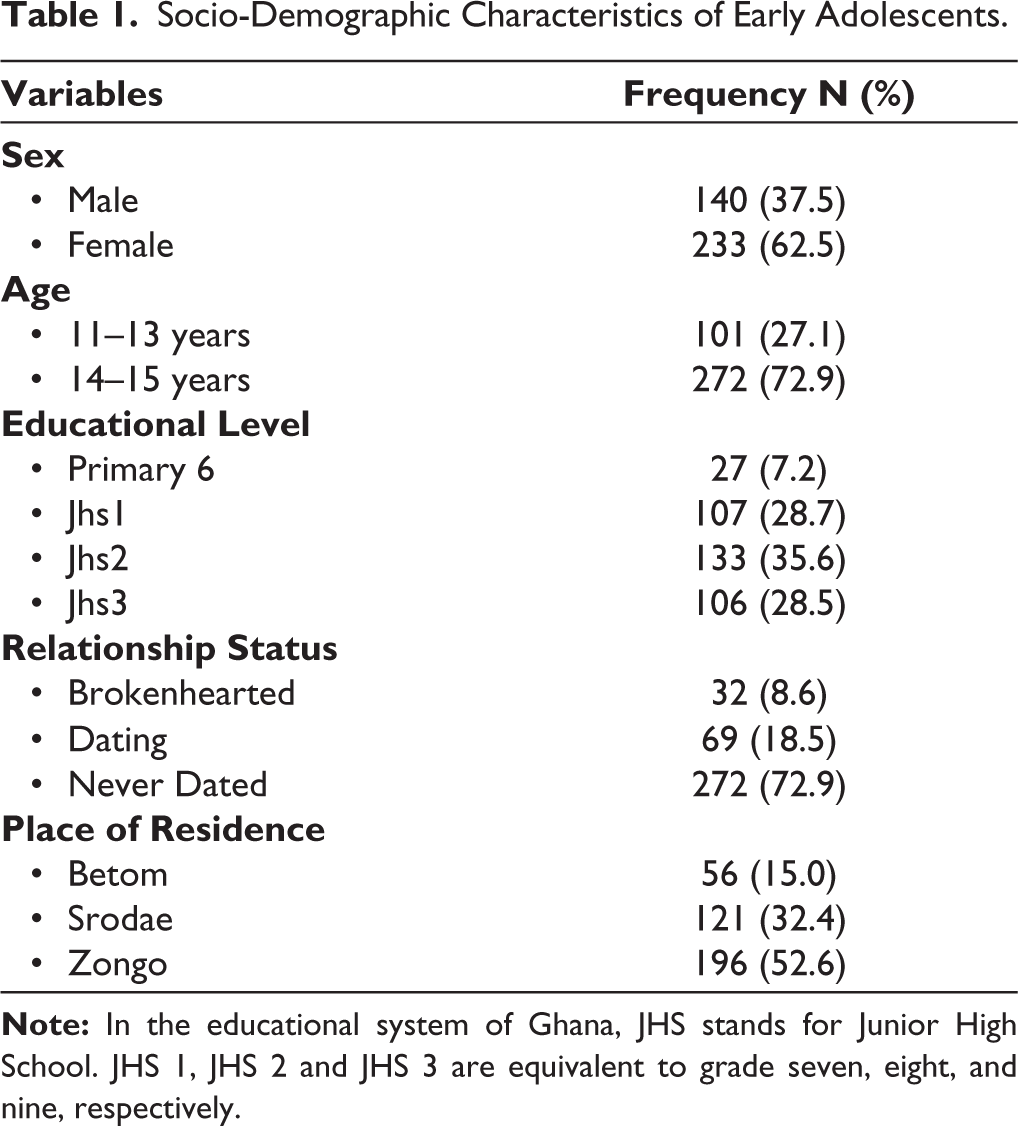
Table 1 presents the socio-demographic characteristics of early adolescents in this study. Out of the 373 respondents, more than half of the respondents were females 233 (62.5%). Adolescents aged 14–15 years formed the majority of respondents 272 (72.9%) with a mean age of 14.0 years. The majority of early adolescents belonged to the Akan 136 (36.5%) ethnic group. The highest level of education early adolescents had attained was Junior High School 3 (JHS 3), with the majority in Junior High School 2 (JHS 2) 133 (35.6%). Seven out of every ten early adolescents had never been in any amorous relationship 272 (72.9%), while a minority 32 (8.6%) had a broken heart experience. A little over half of early adolescents lived with both parents 189 (50.7%), while those who were residents of Zongo community numbered 196 (52.2%).
Socio-Demographic Characteristics of Early Adolescents.
First Sexual Initiation Experience with Early Adolescents
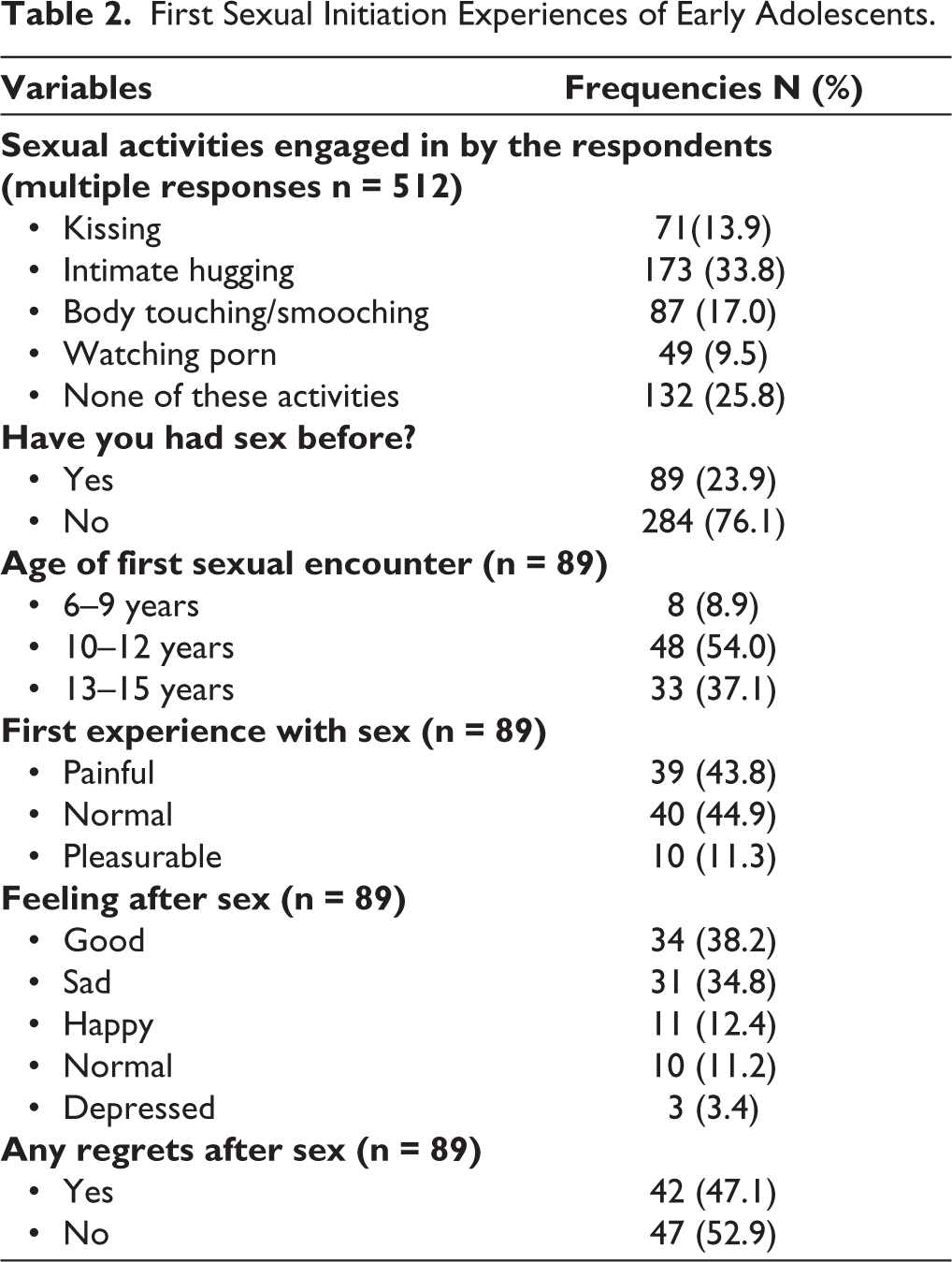
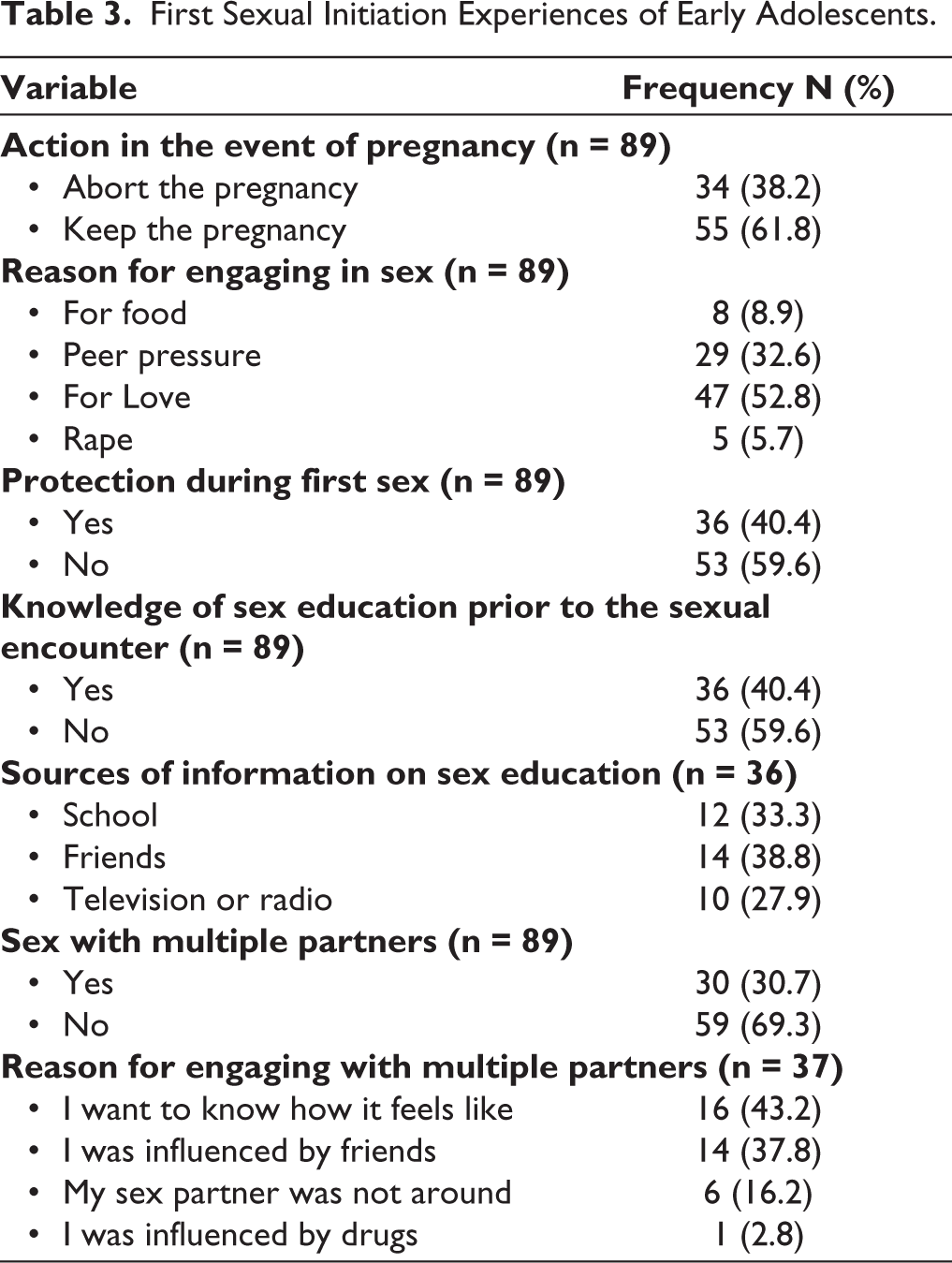
The results presented in (Tables 2–4) describe the sexual debut and experiences of early adolescents. In relation to sexual debut, 89 (23.9%) of the early adolescents have had sex before. Among the 89 (23.9%) sexual debutants, the majority had their first sex between ages 10–12 years (54.0%), with a mean age of sexual debut reported at 11.7 years. A third of early adolescents were often engaged in intimate hugging with the opposite sex (33.8%). Watching pornography (9.5%) was the least sexual activity engaged in by early adolescents. Nearly half of early adolescents 40 (44.9%) described their experience as normal, with only minority 10 (11.3%) of early adolescents having pleasurable sexual experiences. Post sexual debut experience: 34 (38.2%) of the sexual debutants felt good after sex, 47 (52.9%) said they had no regret after sex.
First Sexual Initiation Experiences of Early Adolescents.
First Sexual Initiation Experiences of Early Adolescents.
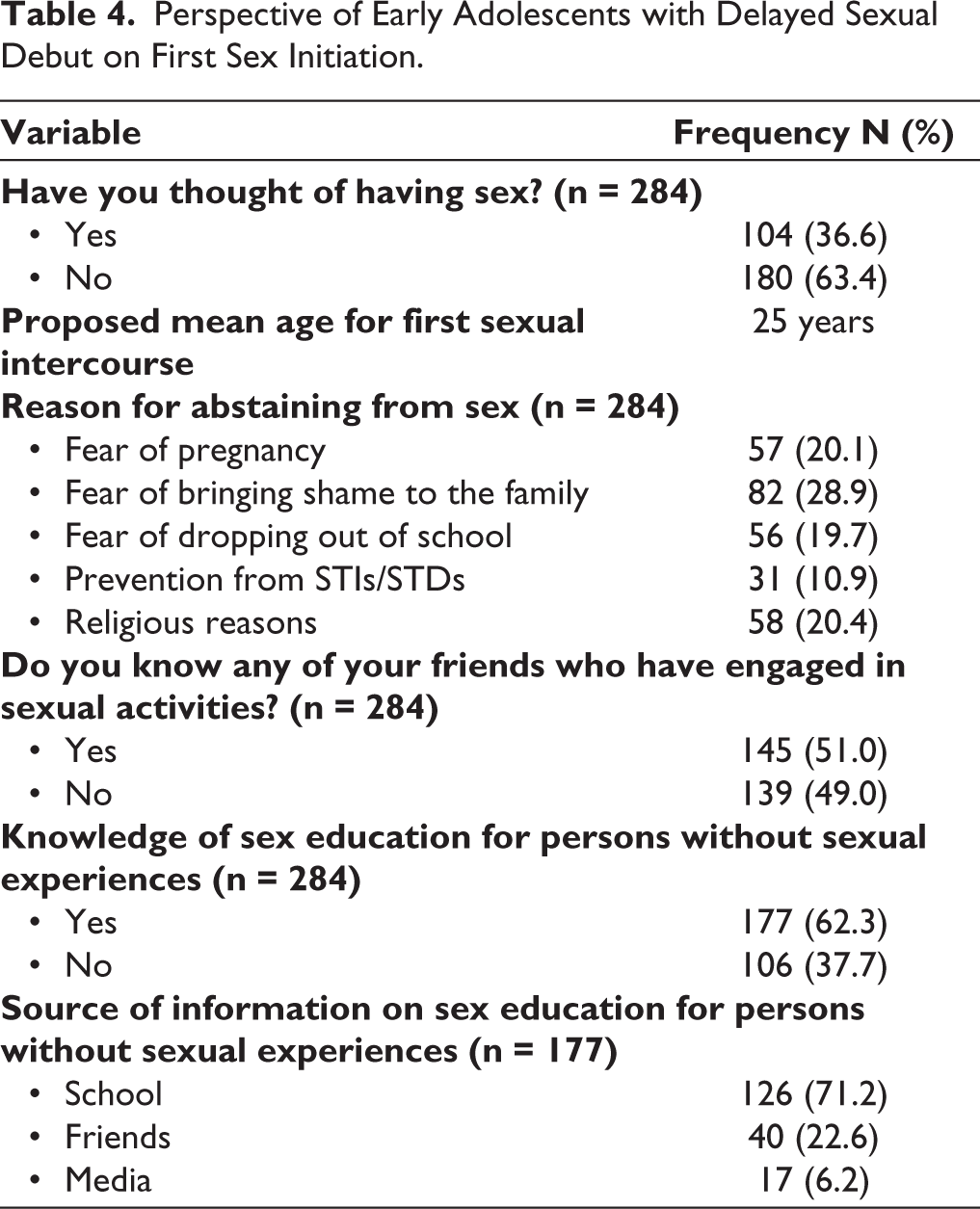
Perspective of Early Adolescents with Delayed Sexual Debut on First Sex Initiation.
Majority of sexual debutants 55 (61.8%) had the intention of keeping the pregnancy if they were ever to get pregnant. Engaging in sex because of love 47 (52.8%) and due to rape (5.7%) were the most cited and least cited reasons for early adolescents’ sexual debut. Most adolescents who had sex failed to protect themselves during intercourse 53 (59.6%) and had no prior knowledge of sex education before their first sexual encounter. Four in ten 36 (40.4%) early adolescents who had knowledge of sex education indicated that the major source of knowledge was their friends 14 (38.0%). Of the (23.9%) early adolescents who had had sex before, 30 (30.7%) of the early adolescents indicated having sex with multiple partners with the quest for exploration 16 (43.2%) being the primary reason. Nearly six out of every 10 adolescents had unprotected sex 53 (59.6).
Among persons without sexual experiences, thoughts of having sex were reported among a third 104 (36.6%), with the major reason for sexual abstinence being fear of bringing shame to family 82 (28.9%). The proposed mean age to initiate sex as suggested by the early adolescent without sexual experience is 25 years. More than half of the early adolescents 177 (62.3%) had knowledge about sex education, while 145 (51.0%) had a friend who had engaged in sexual activity. The major source of knowledge on sex education was the school (71.2%).
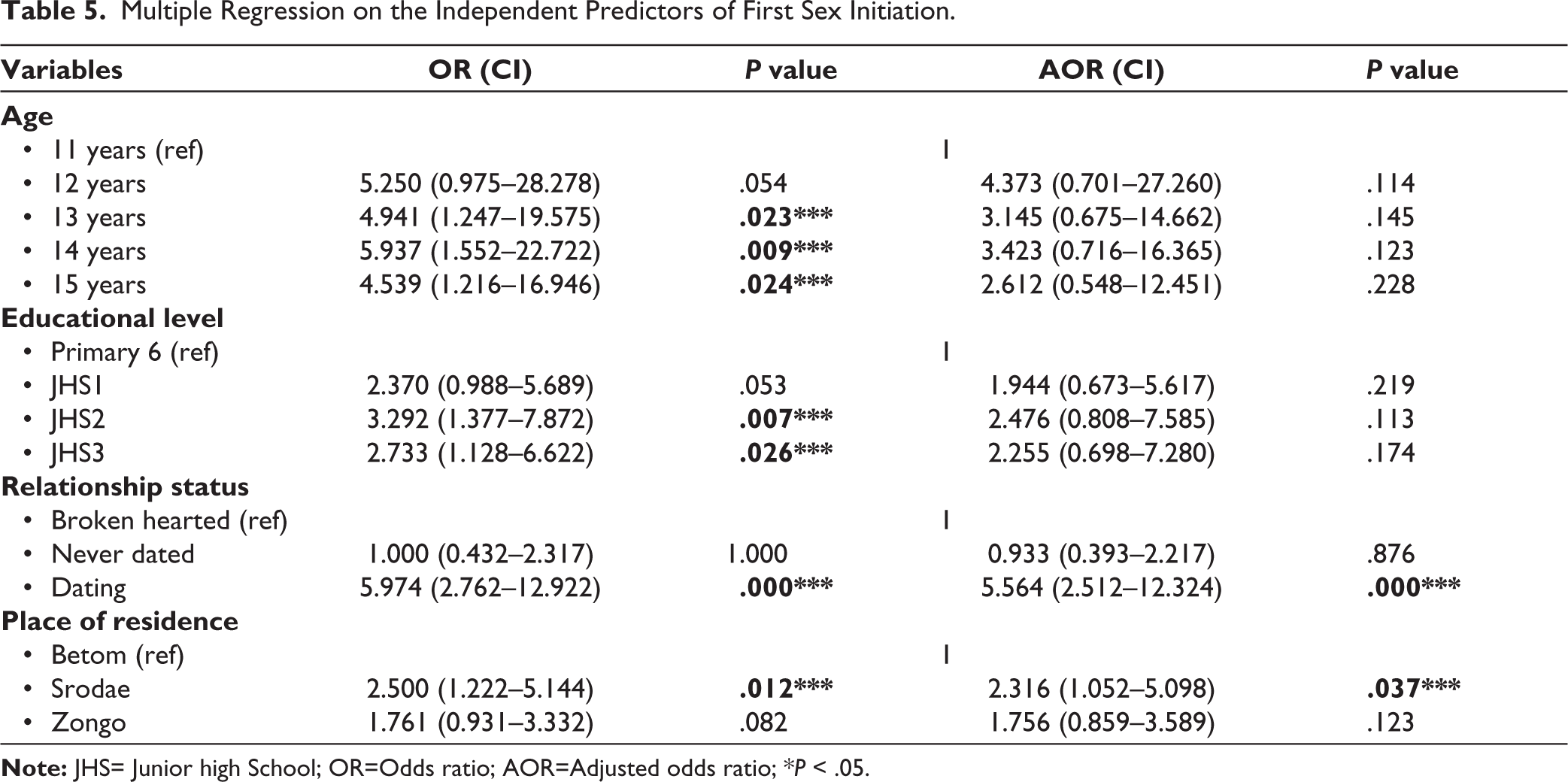
Multiple Regression on the Independent Predictors of First Sex Initiation.
Predictors of First Sex Initiation Among Early Adolescents
The independent predictors of first sex initiation were explored using binary logistic regression and presented in (Table 5). In the unadjusted crude model, age of early adolescents is a significant predictor of sexual debut. Adolescents aged 13 years [OR 4.941 (95.0% CI: 1.552–19.575), P = .023], 14 years [OR 5.937 (95.0% CI: 1.247–22.722) P = .009], or 15 years [OR 4.539 (95.0% CI: 1.216–16.946), P = .024] have significantly higher odds of engaging in sexual debut compared to those aged 11. The educational level had a significant association with sexual debut. Early adolescents at JHS 2 [OR 3.292 (95.0% CI: 1.377–7.872), P = .007], and JHS 3 [OR 2.733 (95.0% CI: 1.128–6.622), P = .026] are significantly more likely to have sex early compared to those in primary sixth grade. In relation to relationship status, the model revealed that early adolescents who are dating are five times more likely to engage in sexual intercourse as compared to those not dating [OR 5.974 (95.0% CI: 2.762–12.922), P = .000]. The decision to initiate sex is significantly associated with the place of residence, with early adolescent’s residing in Srodae community [OR 5.144 (95.0% CI: 1.222–5.144), P = .012] were more likely to initiate sex at the early adolescent stage compared to those residing in Zongo and Betom community.
When adjusted for confounders, in the multilevel regression model, only relationship status [Dating (AOR= 5.564 (95.0% CI: 2.512–12.324), P = .000] and place of residence [Srodae community (AOR= 5.144 (95.0% CI: 1.052–5.098), P = .037] were found to be significant predictors of early adolescent sexual debut.
The qualitative narratives are presented to provide an in-depth appraisal of the subject matter. They do a deep dive to provide comprehension and clarity on the whys and hows for the responses provided quantitatively by the early adolescents. The themes as reflected include first sexual experience, feelings after sex, reason for engaging, etc. The themes reveal complementary and reinforcing statements while also highlighting unique contextual matters that influence early adolescent behavior in first sex, knowledge of sexual education before first sex, and sexual protection.
Early Adolescent’s First Sexual Experiences
The experience of first sex varied from place to place, between individuals, and was influenced by a variety of circumstances. The findings provide a perspective on what early adolescents make of their first sexual experience and constant pain and pleasure.
Constant Pain
Early adolescents sometimes do not enjoy their first sexual encounter. Some of the early adolescents described their first sexual experience as painful, emphasizing the excruciating pain they felt during the process. One of the early adolescents shared her experience:
“Frankly speaking… giggles… it was a little bit weird. Well, if you should ask me there was nothing like sexual pleasure, no. My first experience was painful, very painful, yeah. Like my legs became weak and my body as well yeah”
Similarly, another early adolescent shared the same thoughts. She puts it like this:
“What I can say is, I was bleeding, I couldn’t stand or sit properly. I felt pains. It didn’t last for long”
Pleasurable Sex
Whiles some early adolescent described their experience as painful, others claimed they experienced both pain and pleasure. One participant asserted that she enjoyed their first sexual experience:
“It happened when I was in my JHS level, form 2 and it lasted for about 15 to 20 minutes. So, it was fun but I didn’t want to, it’s like we were in the room romancing and it just happened so it was fun. Like we played and we romanced. I would say it was fun, I didn’t like it but it was fun. I didn’t like it because I was scared of doing it but it happened.”
Another participant also had this to say about her sexual experience:
“Hmmm…my first time… it was nice and painful at the same. If you haven’t done it before, and you have intercourse with a guy, it is painful for the first time. For the first time as your partner is penetrating it becomes painful but once he has fully penetrated you won’t feel pain … (laughs)’’.
Feelings After First Sex
This theme emerged in response to how early adolescents felt just after initiating sex. Two main subthemes emerged including sadness, and regret. These subthemes provide insights into the various emotional experiences early adolescent had after their first sexual encounter.
Sadness
Early sex initiation had negative implication on early adolescents as they were emotionally disoriented after the encounter. Many early adolescents in this study were not happy after their first sexual experience and were emotionally disturbed. This is what an early adolescent had to say:
“I wasn’t happy because it was as if I forcibly did it. I didn’t feel like doing something like that. I was sad within and not happy. For the first time, it was very painful because I was feeling pain”.
Another participant expressed a similar view:
“Hmm…okay… for me in my mind it was like I was hurt that this is something I hadn’t done before and didn’t know how to and it happened”
Guilt and Regrets
Some early adolescents reported being remorseful and wished they never initiated sex at this stage. This is what one of the early adolescents had to say:
“I wasn’t sad and I wasn’t happy… giggles… okay but after it I was like ermm… I don’t know if I should use regret as I already said it wasn’t something I had wanted to do, so after everything. I was like ‘Ah what have I done?’, but it has already happened
Reason for Engaging in First Sex
Participants gave varied reasons for engaging in their first and early sex. The subthemes that accounted for early adolescent engagement in their first sex were love, peer pressure, and neglect/loneliness.
Peer Pressure
Peer influence pushed some adolescents to experience early sex, emulating their lifestyle and taking their advice, and this can influence their decision to engage in sexual intercourse. According to one participant, the intention to engage in sex was as a result of the advice and encouragement given by her peers. She puts her thoughts like this:
“The group of friends I walks with are into that stuff, so when they told me to go on ahead and have sex with the guy, I went and did it”. “A friend introduced me to the guy. I introduced the guy to my mum and she told us to take care of ourselves. We dated for a year before I got pregnant”.
Love
On the theme of love, some early adolescents initiated sex because of love for their partners. One participant engaged in sex with her boyfriend as proof of her love for him. This is how she expressed her thought:
“The reasons are that I like him and I trust him. He was caring and he likes me, he does everything I want and I decided to give it a try but yes… that was why I allowed him to do it. So, I would say it was because of love…laughs.”
Neglect/Loneliness
The quest for acceptance and a sense of belonging makes some early adolescents victims in the hands of individuals who chance on their vulnerabilities to initiate sex at an early stage as they build a wrong attachment with the opposite sex. This is what a participant said:
“I lost attention, at home. Like my dad, everyone around me, like the people I call my own everyone was busy with their own things and I felt I was left all alone. I’ve been left all by myself so after getting attention from outside…yeah…it wasn’t because I loved it.”
Early Adolescent Knowledge of Sexual Education or Guidance before the First Sexual Encounter
The dominant theme indicates that a few early adolescents had some knowledge about sexual education prior to their first sexual experience. Only two participants had some form of knowledge about sex education before engaging in sex. This is how a participant puts it:
“Yeah, for school, you will be told that if you engage in such an act you would have to protect yourself. Our teachers normally educated us on what sex could do. At first, they used to tell us when you are 20 years of age you can have sex.”
Another participant expressed her thought this way:
“Giggles… erm yeah in school, way back in school I was taught and I learnt something, it’s like a little thing about that but, maybe having someone one on one to tell you do this, don’t do that… no…giggle”.
Protection During Sexual Intercourse
First sexual encounter among early adolescents is not usually protected as sexual encounters are normally not planned. Only one participant indicated that her partner used a condom during their first sexual encounter:
“Yes, we used the condom the first time. We planned about it but my mind wasn’t set on doing it but I just allowed him yeah because he really felt for it so… and I liked him.”
Discussion
The study explored the sexual debut and experiences of early adolescents in Koforidua municipality. The prevalence of early sexual debut was 23.9% with a mean sexual debut age of 11.7 years. Early adolescents exhibit a high rate of first sex initiation, with nearly one in four having previously experienced sex. The quest for acceptance from peers may explain why early adolescents initiate sex early at the tender age of 11–15 years. The percentage of early adolescents with sexual experience is higher than those from other studies conducted in Nigeria (11%), the United States (17%), and Spain (9%-22%), respectively.5,30,31 However, in the study in Uganda, there was a higher prevalence of early sexual debut (37.4%) among early adolescents. 32 This explains the unique contextual variables that shapes sexual experiences. These variables may navigate between and among religious taboos to specific promiscuity promoted events as is the case in Koforidua, where annual promiscuous celebration may predispose early adolescents to open sexual activities, alcohol intoxication, and transactional sex.
In the quantitative results, the majority of the early adolescents described their first sexual experience as normal. This finding contradicts the qualitative finding where most the participants described their first sexual experience as unpleasant and painful. The plausible reason being that most of the early adolescents interviewed were females. Pertaining to the feelings after sex, the quantitative results showed that the majority of respondents felt good after sex. However, the qualitative data speaks otherwise, as a great number of participants felt sad after engaging in sexual intercourse. The contrast in results may be due to personal beliefs and values related to sex, potentially leading to feelings of post-sexual guilt or satisfaction.
Both the quantitative and qualitative data revealed that the majority of early adolescents who have experienced sex before failed to protect themselves during intercourse and had no prior knowledge of sex education before the first sexual encounter. This observation is consistent with a study in the US where girls who start having sex at 14 or younger were less likely to have used a method at first sex and take longer to start using contraception than girls who start having sex at 15 and use contraception at rates similar to their older counterparts. 33 Similarly, in a study in Burkina Faso, Malawi, and Uganda, Lara and Abdo indicate that girls who have their first sex at 14 or younger are less likely to use contraception and wait longer before using it in subsequent sexual relationships. 2
The search for love establishes the cardinal reason for early sexual debut. Corroborated by the qualitative data, some early adolescents explained that they initiated sex because they love their partners, an observation that has been made in Nigeria, where pleasure and love among others was found to predict sexual activity. 34 In confirming Taye and Asmare’s 35 result, falling in love has been identified as the primary cause of initiation for adolescents who had engaged in premarital sex. These findings are not supported by earlier studies.36-38 In research conducted in Burkina Faso, Malawi, and Uganda to investigate the link between age at first sexual intercourse and several markers of sexual behavior among adolescents aged 14 to 19 years, starting sexual activity before the age of 14 years was related to having a casual sex partner. 38
Among sexual debutants, the fear of bringing shame to the family was the reason for the delayed sexual debut. This corroborates the findings of Ankomah et al, 36 who stated that religious injunction against premarital sex, disease prevention, fear of pregnancy, and for females, the fear of bringing shame to the family, which could lead to their inability to get a “good” husband in future were reasons for delayed sexual debut. However, in a previous study, religiosity was reported as the primary predictor of delayed sexual debut among adolescents in Côte d’Ivoire and Burkina Faso, and other factors were peripherals. 39
In the multilevel analysis, early adolescents who are dating are five times more likely to initiate sex early than those who are not dating. This is because early adolescents who are in romantic relationships might feel pressure from others or from themselves to have sex in order to show their love or commitment. This finding is corroborated by as study in Ethiopia where having a boyfriend or girlfriend was a significant predictor of early sexual debut. 10
Early adolescents residing in Srodae community were more likely to initiate sex early compared to those residing in Betom community. This is because early adolescents are exposed to sex-related activities at street carnivals, potentially influencing their decision to initiate sex early. The result was supported by previous studies in Africa.11,35 Our findings contradict those of previous studies.5,8,10 It is worth noting that early exposure may have normalized the practice of sexual activities in an early age, hence the observed findings.
Limitation and Recommendation
The study focused on school-enrolled early adolescents, leaving non-schooling adolescents unexplored. Future research should investigate their experiences with sexual debut.
Conclusion
Sexual intercourse is a reserved for married couples and highly prohibited among early adolescents in Ghana, but elevated versions occur among early adolescents as recorded in Koforidua municipality. Strengthening of comprehensive sex education programs in schools and communities is cardinal in addressing this issue. These programs should provide age- appropriate information about sexual health and the potential risks of early sexual activity.
Footnotes
Data Availability Statement
The datasets analyzed during the current work are accessible from the corresponding author upon reasonable request.
Declaration of Conflict of Interest
The authors declared no potential conflicts of interest with respect to the research, authorship and/or publication of this article.
Ethical Approval
The study was conducted in accordance with the Declaration of Helsinki, and approved by the Ethics Committee of Kwame Nkrumah University of Science and Technology (HuSSREC/AP/102/VOL.1, 6th April, 2023) and Ghana health service (GHS-ERC 037/05/23).
Funding
The authors received no financial support for the research, authorship and/or publication of this article.
Informed Consent
We obtained written informed consent from the head teachers of the selected schools as they were considered legal guides for the student in the school setting. This was necessary as early adolescents have limited decision-making abilities and may not fully understand the implications of their decisions with regard to the study. In addition to the parental or guidance assent, we obtained verbal consent from all participants to ensure their willingness to participate in the study. Due to the interviewer-administered approach adopted, the expressed verbal consent was ticked on the questionnaire and displayed to the adolescents as their approved response before the interviews commenced. Participants were informed of their right to withdraw from the study without any consequences. We assured and ensured participants’ confidentiality and explained to them how their responses would be protected. The lead author explained the study and questions in a manner suitable for this age category. The interview recordings were all kept on password-protected, encrypted servers with limited access. Additionally, the completed survey was kept in a locked cabinet in a secured office. Only authorized members of the research team had access to the completed surveys and the interview audio.