




Abstract
Cruelty against men is a widely neglected narrative in the discourse of gender-based violence. Despite the widespread recognition of the existence of violence against women, violence against men often goes unnoticed and unacknowledged. The issue has become a topic of discussion in recent years, with scholars and activists highlighting the prevalence and impacts of violence against men. Violence against women has been at the forefront of discussions on gender violence for a long time, but it cannot be said for violence against men. The focus of discussion and research has primarily been on women as victims of violence, while the experiences of men have been marginalized. The aim is to explore the issue of cruelty against men, including its causes, types, impacts and challenges in addressing it, and to focus on exploring the experiences of men who have suffered cruelty, including physical, emotional and sexual abuse to examine the reasons why these experiences have been ignored. It highlights the need for more research on cruelty against men and the development of policies to address the affair. This article seeks to highlight the issue of cruelty against men, the forms of violence they face and the impact it has on their lives.
Introduction
According to a report by the World Health Organization, 1 in 3 men globally has experienced some form of violence in their lifetime. 1 Crime against men is an overlooked topic, despite the growing body of research that shows men also face abuse, violence and discrimination. Men experience various forms of cruelty, including physical, emotional and sexual abuse, but societal norms and gender stereotypes make it difficult for them to report such incidents. Little research exists on the prevalence and impact of cruelty against men, the barriers they face in seeking help and the need for greater awareness and support for male victims. 2
This matter has long been ignored or dismissed as insignificant, in contrast to the attention and support given to female victims of abuse and violence. The lack of recognition of male victimization stems from societal expectations and gender stereotypes that assume men are always strong and in control and that women are the only victims of abuse. 3 These stereotypes make it difficult for men to come forward and seek help, leading to underreporting and a lack of support for male victims. The societal norms and stereotypes that perpetuate the belief that men are supposed to be strong, dominant and unemotional often prevent them from coming forward and reporting abuse. 4 As a result, the issue of cruelty against men remains largely invisible and under-researched. We explore the various forms of cruelty that men experience, the factors that contribute to their vulnerability and the consequences of their victimization. Men who experience abuse or cruelty may feel isolated, ashamed and unable to seek help. 5 Men are often reluctant to report violence and when they do, their experiences are often minimized or dismissed. This issue has become a growing concern in recent years and researchers have begun to examine the extent and impact of cruelty against men. The following sections aim to provide a comprehensive review of the literature on cruelty against men, including prevalence rates, risk factors and consequences of abuse. 6
Types of Cruelty Against Men and Support Centres
Crime against men can take various forms, including physical, emotional, sexual and financial abuse. Physical abuse includes acts such as hitting, punching or pushing, while emotional abuse can take the form of verbal assaults, belittlement and isolation. Sexual abuse may involve rape, coercion and forced sexual acts, while financial abuse involves controlling or withholding financial resources. 7 Although women are more likely to experience domestic violence, men are not immune to these experiences. A study conducted by the Centre for Disease Control and Prevention 8 found that 1 in 7 men in the United States has experienced severe physical violence from an intimate partner at some point in their lifetime. 9
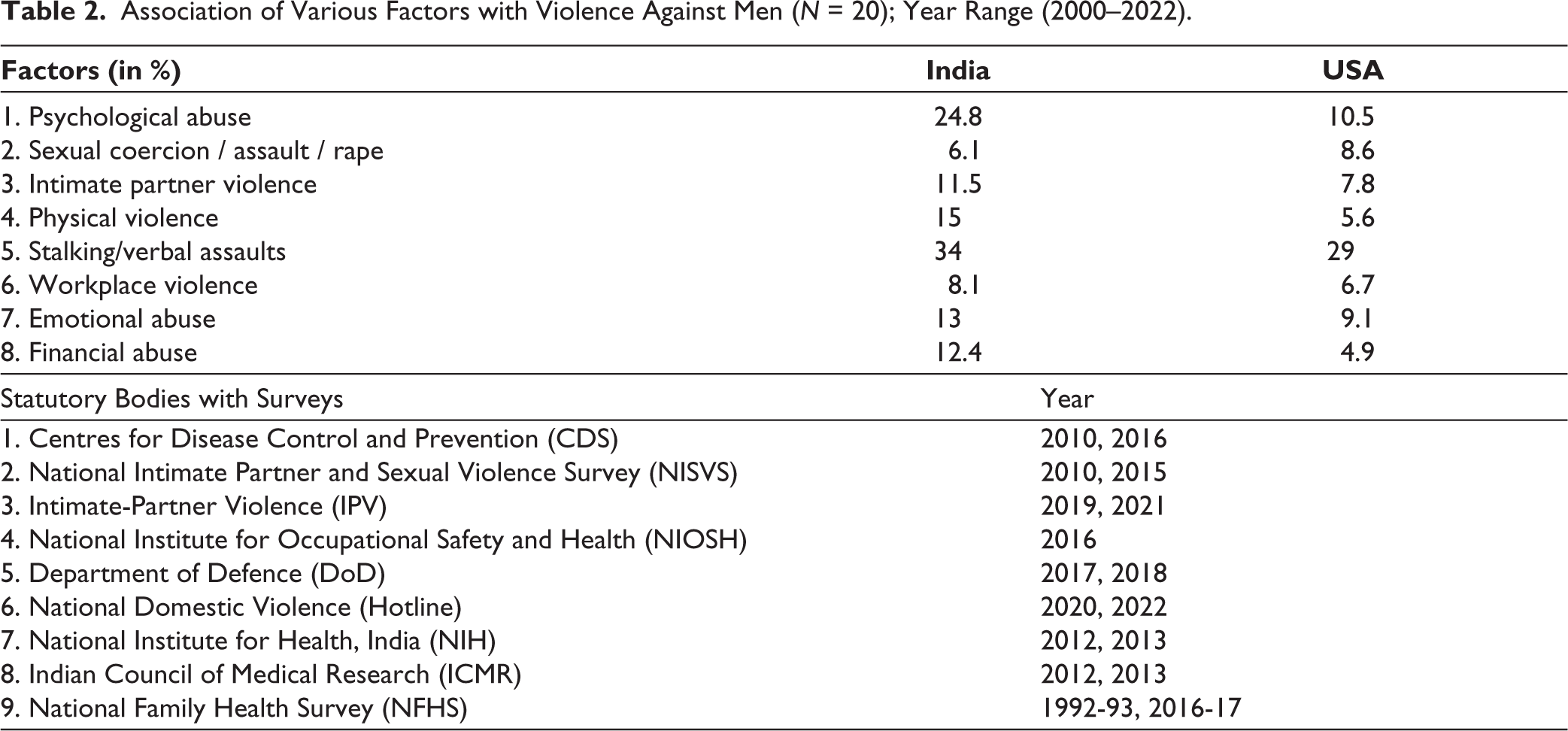
Men experience various forms of cruelty and rates that are comparable to those experienced by women. 10 The National Intimate Partner and Sexual Violence Survey (NISVS) conducted in the United States in 2010 found that 1 in 7 men (14.0%) have experienced severe physical violence by an intimate partner in their lifetime, while 1 in 18 men (5.6%) have experienced rape, attempted rape or sexual coercion by an intimate partner. 11 In addition, 1 in 10 men (10.5%) have experienced psychological aggression by an intimate partner. Furthermore, the Centres for Disease Control and Prevention (CDC) 12 states that 1 in 4 men (24.8%) have experienced some form of intimate partner violence in their lifetime, including physical violence, sexual violence, stalking and psychological aggression. 13 Men are also at risk of violence and abuse in other settings, including the workplace, schools and the military. The National Institute for Occupational Safety and Health suggests that men are more likely to experience workplace violence than women, with a majority of the perpetrators being male. 14 Male military personnel are at risk of sexual assault and harassment, with a study by the Department of Defence reporting that 6.1% of men in the military have experienced unwanted sexual contact. 15 Crime against men is a pervasive problem that affects men of all ages, races and socioeconomic backgrounds. National Domestic Violence Hotline states that 1 in 4 men has experienced physical violence, sexual violence or stalking by an intimate partner in their lifetime. 16 This figure may be underestimated because men are less likely to report violence, and the data on violence against men are limited. Furthermore, men are less likely to seek help for their experiences of violence due to social stigmas and societal expectations of masculinity. 17
Community Support Centres for Men
Community-based support centres should be established specifically tailored for men at risk of violence and abuse by providing counselling, legal assistance and resources to help men navigate the complexities of abusive situations. 18 The setting could be inclusive and welcoming, aiming to break down societal stigmas and encourage men to seek help.
Workplace Wellness Programmes
Support mechanisms should be integrated within workplace wellness programmes to address violence and abuse against men in professional settings by providing confidential counselling services and workshops on recognizing signs of abuse and creating a culture that fosters open communication. 19 This setting recognizes that the workplace is not immune to issues of abuse and violence and seeks to address them proactively.
School-based Education Programmes
Comprehensive education programmes should be introduced in schools aimed at raising awareness about violence and abuse against boys by introducing age-appropriate discussions, workshops and resources for students, teachers and parents. By addressing the issue early on, this setting aims to create a supportive environment that rejects violence and promotes healthy relationships among young boys.
Military Support Services
Specialized support services should be established within the military environment to address violence and abuse against male personnel by recognizing the unique challenges faced by men in the military, including power dynamics and hierarchical structures. 20 Confidential counselling, peer support groups and educational initiatives should be provided to empower men to report abuse and seek assistance without fear of repercussions.
Online Support Platforms
Online platforms and virtual communities should be developed where men at risk of violence and abuse can seek support anonymously; these platforms can offer chat services, forums and resources to help men connect with others facing similar challenges. 21 This setting acknowledges the digital age and provides an alternative for those who may be uncomfortable seeking help in traditional settings.
Recreational and Sports Clubs
Safe spaces within recreational and sports clubs where men can engage in activities while also accessing support services should be created; this will recognize that shared interests and hobbies can provide a supportive backdrop for men to open up about their experiences and seek assistance. 22
Religious Institutions’ Support Programmes
Collaboration with religious institutions should take place to establish support programmes that address violence against men by utilizing existing community structures within religious settings to provide counselling and educational resources and foster open dialogue about abuse as the influence of religious institutions 23 has leveraged their reach to support men in need.
Mental Health Clinics with a Focus on Men’s Issues
Mental health clinics that specifically focus on men’s issues, including violence and abuse should be established; these clinics can provide specialized services, therapy and support groups tailored to address the unique challenges faced by men. 24 This will be primarily to de-stigmatize mental health support for men and create a space where they feel comfortable seeking assistance.
Transitional Housing Programmes
Transitional housing programmes should be developed for men who are survivors of violence and abuse by recognizing the importance of providing a safe and supportive environment for men as they rebuild their lives after leaving abusive situations.
Crisis Helplines and Text Services
Enhance and promote crisis helplines and text services specifically designed for men experiencing violence by acknowledging the need for accessible and immediate support for men who may be in crisis. 25 Each of these settings aims to address the unique circumstances and challenges faced by men at risk of violence and abuse, offering tailored support to empower them to seek help and break free from abusive situations.
Intervention Programmes and Support Groups
Organizations such as the ‘Save Indian Family Foundation’ and ‘Men’s Rights Association’ in India focus on advocating for men’s rights, including addressing issues related to cruelty and abuse as they often provide legal aid, counselling services and support groups for men facing domestic violence. 26
MARD (Men Against Rape and Discrimination)
MARD is a social initiative in India that works towards sensitizing society about issues faced by men, including abuse and violence. They conduct awareness campaigns, 27 workshops and provide resources for men in distress.
MensXP
Online platforms like MensXP have sections dedicated to men’s mental health and well-being by providing articles, expert advice and resources to help men cope with various challenges, including abuse.
Varta (Men’s Helpline)
Varta is a helpline for men in distress in India, providing emotional support, counselling and legal guidance as they aim to create awareness about men’s rights and address issues related to domestic violence. 28
Legal Aid for Men
Legal aid organizations such as the ‘All India Men’s Welfare Association’ work towards providing legal assistance to men facing false accusations, abuse and discrimination; 29 these organizations aim to ensure that men have access to justice and fair legal representation.
Mann Deshi Foundation
The Mann Deshi Foundation, while not exclusively focused on men, addresses issues related to gender-based violence and provides support to individuals in distress; 30 their programmes include counselling and community initiatives to raise awareness about abuse.
Connect Counselling Services
Connect Counselling Services offers online and offline counselling services for men facing various challenges, including abuse, by providing a safe space for men to discuss their concerns and seek professional guidance.
SIF (Save Indian Family) Helpline
SIF operates a helpline offering assistance to men dealing with false cases, harassment and abuse, 31 as they provide a platform for men to share their experiences, seek advice and access legal resources.
Hridaya-Nest of Family Harmony
Hridaya focuses on promoting family harmony and addressing issues related to domestic violence, including violence against men 32 by offering counselling services and support groups to help individuals cope with familial conflicts.
Men Against Violence and Abuse
(MAVA) in Mumbai, India, is aimed at transforming gender relations and norms. While the programme has had some success in changing participants’ mindsets and exploring male college students’ experiences in a one-year programme by the non-governmental organization, the main visible impact is on interpersonal skills, fostering awareness of gender-based issues, confidence and communication skills.
Helplines and Online Forums
Various helplines and online forums, such as the ‘MensHelpline’ and ‘MensRightsIndia’, offer a platform for men to share their experiences, seek advice and connect with others facing similar challenges. These intervention programmes and support groups in India are actively working to address the neglected narrative of cruelty against men, they provide a range of services, including legal aid, counselling and community support, to empower men to overcome the challenges they face and seek justice and well-being. Incorporating information about these initiatives in a review article would contribute to raising awareness about the available resources for men experiencing cruelty in India.
Causes of Cruelty Against Men
Cruelty against men can be attributed to various factors, including societal norms, gender roles and power dynamics. 33 Men are often expected to conform to rigid gender roles that emphasize dominance, control and emotional restraint. These expectations can lead to men experiencing stigma and shame when they are victimized or express vulnerability. The perpetuation of gender stereotypes also contributes to the normalization of violence against men, with male victims often being seen as weak or emasculated. 34 Another factor that contributes to cruelty against men is power dynamics. Men who are victims of domestic violence may feel that they have fewer resources and support systems available to them than women. Societal attitudes towards men’s victimization can lead to underreporting and denial of the issue. 35 Men may fear that they will not be taken seriously or that their masculinity will be questioned if they come forward as victims of violence.
Consequences of Abuse
The consequences of cruelty against men can be severe and long-lasting. Men who experience abuse may suffer from physical injuries, mental health issues such as depression and anxiety and an increased risk of suicide. 36 Additionally, men who experience abuse may have difficulty forming and maintaining healthy relationships in the future. Men who experienced abuse reported feeling isolated and unable to trust others, which affects their ability to form meaningful relationships. 37
Methodology
To achieve the objectives outlined above, a systematic review methodology was employed and a comprehensive search of academic databases, including PubMed, SAGE, Elsevier and Google Scholar, was conducted using keywords such as ‘cruelty against men’, ‘male victimization’ and ‘gender-based violence in India’. The inclusion criteria encompassed peer-reviewed articles, books and reports published between 2000 and 2023, ensuring the incorporation of recent developments in the field.
Psychological Abuse
Research indicates that men frequently experience psychological abuse, including emotional manipulation, verbal degradation and control tactics. Societal expectations of masculinity often discourage men from reporting such abuse, contributing to its underestimation. Despite prevalent stereotypes, men are not immune to physical violence yet, the review uncovers instances of domestic violence, assault and other physical abuses against men, 38 challenging the prevailing narrative that exclusively associates physical violence with female victims.
Sexual Abuse
The review explores the underreported issue of sexual abuse against men, highlighting the stigma and shame that often silence male victims. It analyses the societal factors perpetuating the myth that men cannot be sexually assaulted and calls for a more inclusive understanding of sexual violence.
Toxic Masculinity
To comprehend the underreporting of cruelty against men, the impact of toxic masculinity on male victims and the societal expectation that men should be stoic and invulnerable contribute to their reluctance to acknowledge and report abuse.
Stereotypes About Male Strength
Stereotypes surrounding male strength and invincibility hinder the recognition of men as victims and how these stereotypes contribute to the dismissal and trivialization of male victimization. The underreporting of cruelty against men is a complex phenomenon influenced by societal norms, stereotypes and systemic biases which challenges faced by male victims in reporting abuse, including fear of emasculation, disbelief and lack of support systems.
Revealing the Novelties
Synthesizing the findings will reveal the novelties in the neglected narrative of cruelty against men as it emphasizes the need for a gender-inclusive approach in research, policy and support services to address the multifaceted nature of gender-based violence. Discussing the implications of the findings for future research and policy development, it calls for a paradigm shift in the understanding of gender-based violence, urging researchers and policymakers to adopt a more inclusive approach that considers the experiences of both men and women. 25 This systematic review contributes to the evolving discourse on gender-based violence by spotlighting the neglected narrative of cruelty against men in India. By revealing the novelties in this often-overlooked aspect, the review advocates for a more comprehensive and inclusive approach to address gender-based violence and support victims, irrespective of gender.
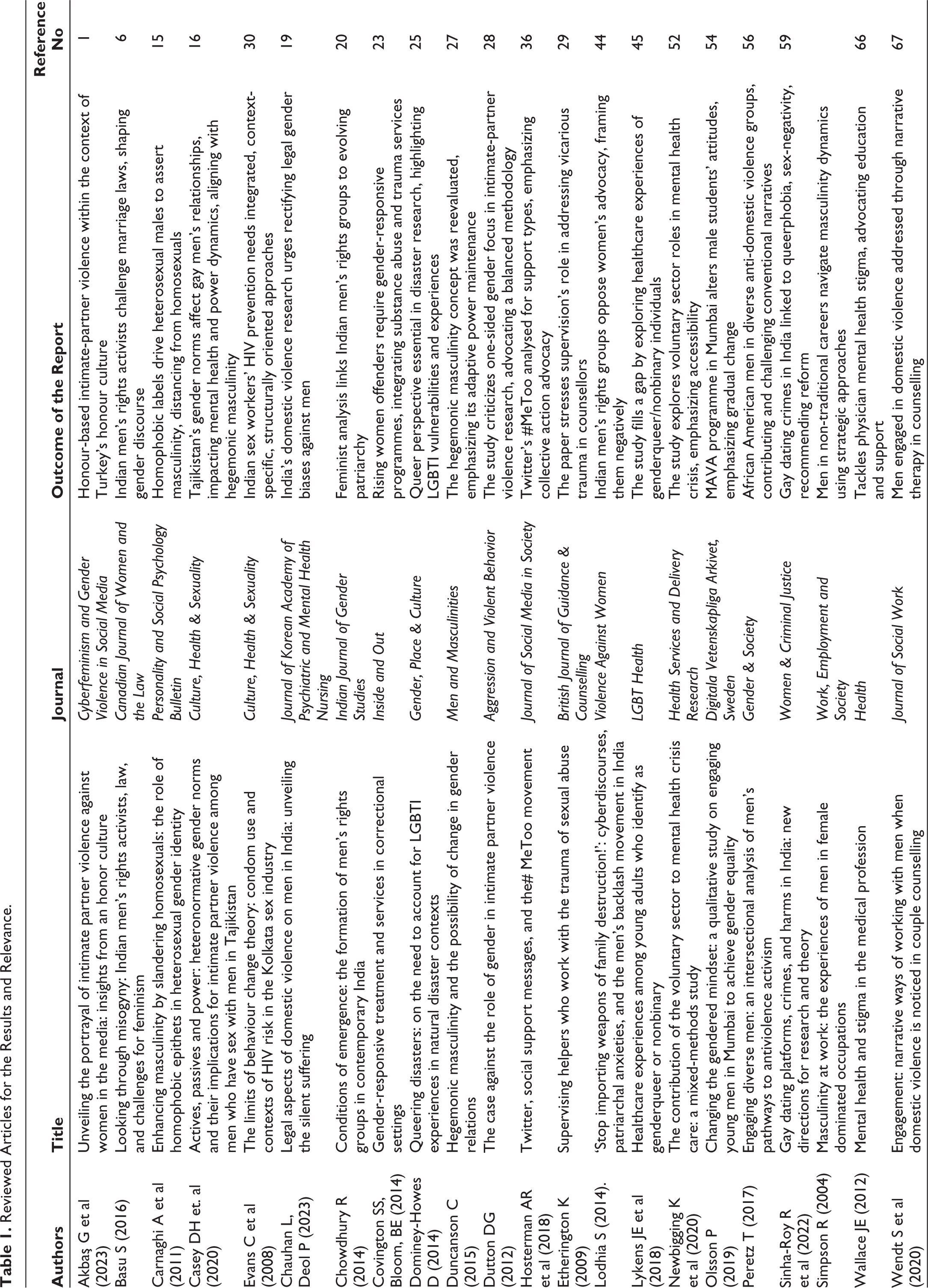
Reviewed Articles for the Results and Relevance.
Factors Contributing to the Neglect of Cruelty Against Men
The socio-occupational repercussions of violence and substance abuse as experienced by men, with the complex interplay among violence, substance abuse and their cascading consequences, aim to uncover novelties in understanding the multifaceted challenges faced by male victims. Through a synthesis of existing literature, the review highlights the impact of abuse on various aspects of men’s lives, including mental health, occupational well-being and social dynamics. The findings underscore the urgent need for comprehensive support systems and policy interventions to address the often-overlooked consequences of cruelty against men. The prevailing discourse on gender-based violence and narrative review explores the socio-occupational dimensions of cruelty against men, 39 emphasizing the interconnectedness of violence and substance abuse in shaping the aftermath. The primary objectives of this narrative review are (a) to investigate the socio-occupational impact of violence against men in the Indian context, (b) to explore the role of substance abuse as a coping mechanism and its implications for the socio- occupational well-being of male victims and (c) to reveal the novelties in understanding the consequences of cruelty against men through an integrated examination of violence and substance abuse.
Socio-occupational Impact of Violence
Research indicates a strong correlation between exposure to violence and mental health issues among male victims and the psychological toll of abuse, including post-traumatic stress disorder (PTSD), depression, anxiety and its subsequent impact on socio-occupational functioning. Occupational disruption often leads to disruptions in their occupational lives. These challenges faced by male victims in maintaining employment, advancing in their careers and sustaining professional relationships in the aftermath of abuse. 40 Social stigma and isolation lead to the social repercussions of violence against men. Male victims often face societal scepticism and disbelief, further complicating their ability to seek support and maintain healthy social connections. 41
Substance Abuse as a Coping Mechanism
Male victims of cruelty often turn to substance abuse as a coping mechanism to alleviate the psychological distress caused by violence and substance abuse becomes a means of escapism for men facing the aftermath of abuse. Substance abuse and socio-occupational functioning not only exacerbate mental health issues but also contribute to occupational instability, creating a cyclical pattern of challenges for male victims. 42 By synthesizing the findings, the novelties in understanding the interconnected consequences of violence and substance abuse on men’s socio-occupational well-being emphasize the need for a holistic approach that acknowledges the complex factors. The potential interventions aimed at breaking the cycle of violence, substance abuse and socio- occupational challenges include the development of targeted support services, mental health initiatives and policy reforms that address the unique needs of male victims.
Support Systems and Policy
The narrative review and the implications of the findings for the development of support systems and policies advocate for a gender-inclusive approach that recognizes and addresses the socio-occupational impact of violence against men, emphasizing the importance of comprehensive and accessible resources. This understanding of the consequences of cruelty against men in India highlights the socio-occupational impact of violence and its complex relationship with substance abuse, whereas it underscores the urgency of adopting an integrated approach to support male victims, addressing their mental health, occupational challenges and broader social dynamics. 43 Recognizing and dismantling the existing barriers to support are essential for fostering a more inclusive and effective response to the neglected narrative of cruelty against men. Cruelty against men is often neglected and underreported due to various factors, and these factors include societal norms that perpetuate the idea that men should be strong and resilient and that men cannot be victims of abuse. 44 Additionally, men may fear being stigmatized or not believed if they come forward with their experiences of cruelty. Men may also fear retribution from their abusers. Several risk factors have been identified as increasing the likelihood of cruelty against men; these include socioeconomic factors, substance abuse, mental health issues and childhood experiences of abuse. For example, men who come from families with a history of violence are more likely to experience cruelty as adults. 45 Men who experience mental health issues such as depression or anxiety may also be at increased risk, 46 and the traditional gender roles prescribe that men should be strong, aggressive and dominant, while women should be submissive and passive. 47 These roles create a dynamics in which men are expected to have control over their partners and any perceived loss of control can lead to violence. Societal expectations of masculinity often discourage men from seeking help or reporting violence, which preserves a culture of silence around violence against men.
Factors Contributing to Men’s Vulnerability
Several factors contribute to men’s vulnerability. The first is societal norms and stereotypes that promote the idea that men should be strong, unemotional and self-reliant. 48 This can prevent men from seeking help or support when they experience abuse because they fear being seen as weak or vulnerable. The second factor is the lack of awareness and understanding of cruelty against men, which can lead to a lack of resources and services to support male victims. 49 Third, male victims of cruelty may feel ashamed or embarrassed to come forward, especially if the perpetrator is female. Finally, men who belong to marginalized groups, such as men of colour, gays or men with disabilities, may be at a higher risk of victimization due to the intersection of multiple forms of discrimination. 50 The narrative review is an often-overlooked connection between effeminacy in men and violence, offering a unique perspective on the neglected narrative of cruelty against men in India. Through an exploration of existing literature, we shall seek to unravel the societal expectations surrounding masculinity, the stigma associated with effeminacy and the resultant violence faced by men who deviate from traditional gender norms. 51 By revealing the novelties in this narrative, the review underscores the urgent need for a more inclusive understanding of masculinity and comprehensive interventions to address the multifaceted challenges experienced by effeminate men. The societal construct of masculinity often imposes rigid norms that stigmatize men perceived as effeminate, leading to various forms of violence which aim to unpack the link between effeminacy in men and the cruelty they face, offering insights into the neglected narrative of violence against men in India. 52 Objectives of this narrative review are: (a) to examine societal expectations surrounding masculinity and the consequent stigmatization of effeminacy in men, (b) to explore the various forms of violence faced by effeminate men, including physical, verbal and psychological abuse and (c) to reveal novelties in understanding the connections between effeminacy and violence, emphasizing the need for a more inclusive perspective.
Association of Various Factors with Violence Against Men (N = 20); Year Range (2000–2022).
Traditional Notions of Masculinity
Societal expectations surrounding masculinity often centre on traits such as strength, assertiveness and stoicism, and these traditional notions contribute to the marginalization of men perceived as effeminate. Effeminate men often face societal stigma, discrimination and derogatory labels 53 wherein the psychological impact of effeminacy-related stigma, emphasizes the link between societal attitudes and the perpetuation of violence. Men are at an increased risk of physical violence due to societal perceptions that associate physical strength with masculinity with the instances of physical abuse, ranging from bullying to more severe forms of assault as they often endure verbal and psychological abuse, including derogatory remarks, taunts and emotional manipulation. Subsequently, the emotional toll of such abuse emphasizes the need to recognize the diverse forms of violence faced by these individuals. To understand the intersectionality of identity, we highlight how factors such as race, sexual orientation and socioeconomic status intersect with effeminacy and exacerbate the experiences of violence faced by men. Effeminacy challenges stereotypical notions of masculinity and contributes to breaking free from these stereotypes to a more inclusive and accepting society, reducing the prevalence of violence against effeminate men by advocating a more inclusive and accepting societal framework that respects diverse expressions of masculinity and condemns violence based on gender identity and expression.
The sample size was calculated by taking the prevalence (p) of any type of domestic violence in males of age group 21-48 years to be 21%, design effect (z) 1.5 and relative precision (rp) 11% at the 67% confidence level. By applying the formula, n = 1.5* (z)2 p (1 – p)/rp2, the sample size was calculated to be 38. The final sample size considered for the study was 120.
Extent of Cruelty Against Men
Cruelty against men is a widespread problem, but it is often not recognized as such. It is most likely to be underestimated, as many men may not report the abuse they have suffered due to the stigma attached to being a male victim of violence. 54 With respect to physical violence, men also experience emotional and psychological abuse, such as belittling, insults and threats. A study by the NISVS states that 25% of men had experienced psychological aggression by an intimate partner in their lifetime. 55 Men are also victims of sexual violence, although this is less commonly reported. Men are more likely to experience sexual harassment in the workplace than women and experience psychological aggression in relationships. 56 On the contrary, women are more likely to experience physical aggression in relationships. Men are not immune to cruelty, and it can have a severe impact on their mental and physical health. Cruelty can have a severe impact on men’s mental and physical health. 57 Studies suggest that men who experience cruelty are more likely to suffer from depression, anxiety and PTSD. 58 Men who experience cruelty are more likely to suffer from chronic illnesses such as heart disease and diabetes. In addition, men who experience cruelty are more likely to engage in risky behaviours such as substance abuse and self-harm. 59 Men who experience physical abuse are more likely to suffer from physical injuries, including broken bones and head injuries. 60
Forms of Cruelty Against Men
Crime against men takes multiple folds in circles, hitting, punching, kicking physical violence, sexual abuse, emotional abuse and financial exploitation. Physical violence is often the most visible form of abuse, but it is not the only one. Sexual abuse can take the form of forced sexual activity, sexual coercion or unwanted sexual advances. Emotional abuse can include verbal abuse, threats, intimidation, manipulation, humiliation, gaslighting and isolation. 61 Financial exploitation can involve the misuse of money, property or resources for personal gain, denying the victim access to money or controlling their finances. These various forms of abuse can have a profound impact on men’s overall health, as well as their ability to function in society. Men can experience cruelty from partners, family members, peers and strangers. Cruelty against men can have severe physical and psychological effects on the victims. The physical effects can include injuries, disabilities and even death. The psychological effects can include anxiety, depression, PTSD and suicidal ideation. 33
Physical violence
Physical violence against men can occur in various contexts, including domestic violence, workplace violence and hate crimes. Men who experience physical violence may suffer from physical injuries, trauma and long-term health consequences. 62
Sexual violence
Men can also be victims of sexual violence, including rape, sexual assault and harassment. Sexual violence can have severe psychological effects on men, including depression, anxiety and PTSD. 63
Psychological violence
Psychological violence is a form of violence that includes emotional abuse, threats and intimidation. Men who experience psychological violence may suffer from low self-esteem, anxiety and depression. 64
Economic violence
Economic violence involves the use of financial resources to control or manipulate men. Economic abuse can occur in various contexts, including intimate partner relationships and the workplace. 65
Bullying and hazing
Men can also experience bullying and hazing in different contexts, such as schools, colleges and the workplace. Bullying and hazing can cause psychological trauma and long-term mental health consequences. 66
Impacts of Cruelty Against Men
Cruelty against men can have significant impacts on their overall health. Victims may experience physical injuries, including bruises, broken bones and head injuries as well as long-term health consequences such as chronic pain and disability. It aggravates the impact on victims, cruelty against men can also have broader societal consequences, including increased healthcare costs, lost productivity and the prolongation of violence within communities. They may also experience physical health problems, such as chronic pain, gastrointestinal problems and sexual dysfunction. 63 Cruelty against men can also impact their social and professional lives, leading to social isolation, job loss and financial instability. They are also more likely to engage in risky behaviours such as substance abuse and self-harm. Additionally, the effects of violence can be long-lasting and men may continue to experience trauma even after the violence has stopped.
Gender-based violence has long been a focus of academic research, activism and policy development; however, the majority of attention has been directed towards understanding and addressing violence against women, leaving the experiences of men in the shadows. This review aims to shed light on the often-neglected narrative of cruelty against men in the Indian context. Through a systematic examination of existing literature, this article explores the various dimensions of violence against men, including psychological, physical and sexual abuse. It also discusses the societal norms and stereotypes that contribute to the underreporting and misunderstanding of male victimization. By revealing the novelties in this neglected narrative, the review contributes to a more comprehensive understanding of gender-based violence and advocates for a gender-inclusive approach to support and intervention. Traditionally, discussions surrounding gender-based violence have primarily focused on the victimization of women. While this focus has been crucial in highlighting the prevalence and severity of violence against women, it has inadvertently contributed to the neglect of a significant aspect of the issue—violence against men. 67 This review aims to rectify this imbalance by exploring the often-overlooked narrative of cruelty against men in the Indian context. The primary objectives of this review are (a) to systematically analyse the existing literature on cruelty against men in India, (b) to identify the various forms of violence experienced by men, including psychological, physical and sexual abuse, (c) to examine societal norms and stereotypes contributing to underreporting and misunderstanding of male victimization and (d) to reveal the novelties in the neglected narrative of cruelty against men.
Prevalence of Cruelty and Support for Male Victims
Male victims of violence need support and resources to recover from their experiences. This support can include counselling, legal assistance and medical attention. It is essential to create awareness about the issue of cruelty against men and to provide resources to support male victims. The prevalence of cruelty against men is difficult to determine, primarily because it is often underreported. 71 Many men are reluctant to report abuse as they fear being stigmatized or not being believed. However, research suggests that the prevalence of cruelty against men is higher than commonly believed. Studies suggest that the prevalence of cruelty against men is significant. The NISVS conducted by the CDC found that 26% of men experienced some form of violence by an intimate partner during their lifetime. 68 Another study found that 29% of men reported experiencing psychological aggression by an intimate partner. 39 NISVS found that 1.6% of men had experienced attempted or completed rape in their lifetime. 7 A study in the United Kingdom found that 12.7% of men reported experiencing sexual violence since the age of 16. 70
Reasons for Neglecting the Experiences of Men
The neglect of the experiences of men who have suffered cruelty can be attributed to several factors. First, the idea that men are inherently strong and resilient means that society often does not recognize them as victims. This stereotype makes it difficult for men to acknowledge and seek help for the abuse they have suffered. Furthermore, the myth that men cannot be victims of abuse is conserved by popular culture, which often depicts men as aggressors and women as victims. Second, the focus on women as victims of violence has resulted in a lack of attention and funding for research on cruelty against men. Women have traditionally been seen as the primary victims of gender-based violence and this has led to the development of policies and programmes that primarily focus on women’s experiences. 69 Third, the fear of being stigmatized and ridiculed by society for being a victim of abuse often prevents men from coming forward and seeking help. Men who report abuse may be seen as weak or emasculated, and this fear can prevent them from seeking the help they need.
Research and Prudent Policies
The experiences of men who have suffered cruelty must be acknowledged, and more research is needed to understand the extent and nature of the problem and examine the impact of gender stereotypes and social norms on men’s experiences of violence. There is a need for the development of policies and programmes that address cruelty against men. The current focus on women’s experiences of violence should not be diminished but rather expanded to include the experiences of men. 70 Policies and programmes should be developed that are gender-inclusive and take into account the unique experiences of men who have suffered cruelty.
Challenges in Addressing Cruelty Against Men: Results
Despite the significant impacts of cruelty against men, there are several challenges in addressing this issue. One major challenge is the lack of recognition and awareness of the issue. Men who experience violence may be less likely to seek help or report the abuse due to stigma and shame.1,1 Furthermore, service providers and law enforcement officials may lack the training and resources necessary to effectively respond to male victims of violence. While many organizations and initiatives focus on ending violence against women, there is a lack of comparable resources for men. This lack of support can make it difficult for men to access the help and resources they need to recover from the impacts of violence. Addressing cruelty against men requires raising awareness about the issue and providing support and resources for victims. Men should be encouraged to come forward with their experiences of cruelty and receive adequate support and protection. 71 Mental health services should also be made accessible to men who have experienced cruelty. Additionally, laws and policies should be in place to protect men from abuse and to hold abusers accountable for their actions.
Conclusion
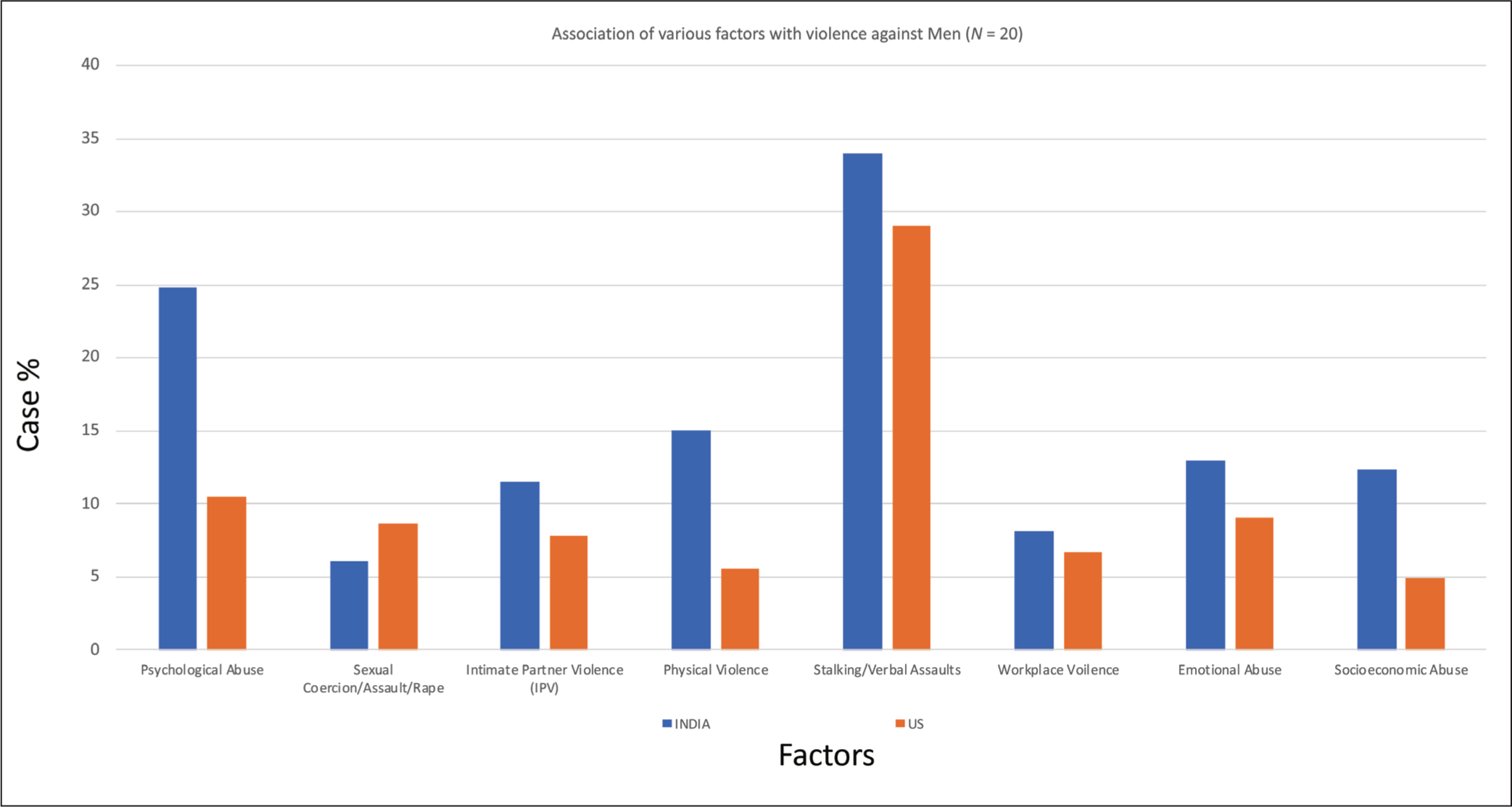
Cruelty against men is a significant issue that has long been neglected in the discourse of gender-based violence. Despite the prevalence and impacts of violence against men, societal attitudes and the lack of resources and support make it challenging to address this issue effectively. Addressing cruelty against men requires a shift in societal attitudes towards cruelty against men, a significant problem that has been largely neglected in the discourse of gender-based violence. The experiences of men who have suffered cruelty must be acknowledged and more research is needed to understand the extent and nature of the problem. Cruelty against men is a neglected narrative that requires attention. Despite the societal perception that men are not supposed to be victims of violence, studies show that they are vulnerable to violence. By understanding the prevalence, risk factors and consequences of cruelty against men, we can begin to develop effective interventions and support services for male victims of abuse. It is essential to recognize that cruelty against men is a significant issue that cannot be overlooked or dismissed and greater attention must be paid to addressing this issue. In recent studies, various aspects of gender, masculinity and intimate partner violence have been explored, highlighting the complexities and regional variations of these issues (see Table 1). The prevalence of violence against men and its various forms has been documented across different countries, revealing significant differences in the types and frequencies of abuse experienced (refer to Table 2). A comparative analysis of violence against men between India and the US from 2000 to 2022 illustrates the varying impact of psychological, physical and other forms of abuse (see Figure 1).
Various Factors.
Footnotes
Acknowledgements
The authors would like to express their gratitude to the specialists and linguists for their unfailing patience and guidance throughout the journey to the final draft of this article. The authors would also like to convey their appreciation to the faculty members of Amity University, Patna (Bihar), India, for sharing their words of wisdom with us during the course of this article. The authors are grateful to all of those with whom we have had the pleasure to work during this and other related ideas. The authors are also grateful for the insightful comments and suggestions offered by the anonymous peer reviewers, the generosity and expertise of one and all have improved this article in numerous ways and mitigated the errors, that remain inevitably and entirely our own responsibility. The authors would also like to express deep gratitude to the academic enthusiasts for their patient guidance, enthusiastic encouragement and useful critiques for this research work.
Competing Interests
The authors are directly related to the work submitted for publication.
Declaration of Conflicting Interests
The authors declare that they have no conflict of interest.
Ethical Approval
Not applicable.
Funding
The authors did not receive support from any organization or outside source for the submitted work.
Informed Consent
Not applicable.