




Abstract
Background:
The word ‘sex’ in India is taboo and is not discussed openly. Sex attitude refers to one’s attitude towards sexuality or different sexual behaviours. Poor sex knowledge causes many problems. A liberal attitude without adequate knowledge is harmful.
Aim:
To explore and study sexual knowledge, attitudes, behaviours and the sources of influence and to examine the relationship between sexual knowledge, attitude and behaviours in undergraduate medical students.
Material and Methods:
A cross-sectional study was carried out to assess sex knowledge and attitude among 506 medical undergraduate students. A Google document in the form of a structured questionnaire containing three important parts was used for the assessment: (a) demographic details of students; (b) sex knowledge and attitude questionnaire II (SKAQ II); and (c) Sexual Behaviour and Sources of Influence (SBSI) scale. Data was interpreted using mean, unpaired ‘t’ test and chi-square test.
Results:
Overall, participants showed a conservative attitude towards sex. As the academic year of participants progressed, sex knowledge increased. A statistically significant positive correlation was observed between sex knowledge and attitude scores. Sexual behaviours through media and with self or others were found to be low. The Internet was found to be the major source for gathering information and was considered the most reliable source.
Conclusion:
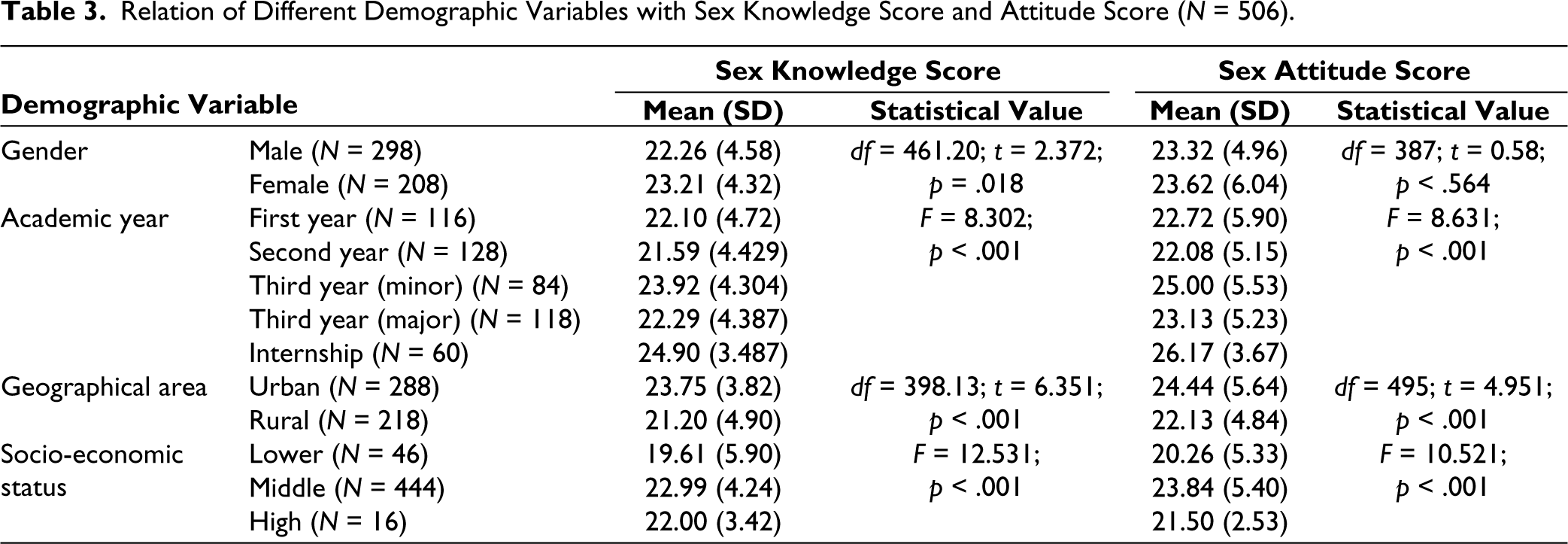
Participants were deficient in sex knowledge and had a conservative attitude in certain areas. Females, higher education levels and urban area participants had higher sex knowledge and liberal attitudes. There are areas of sex knowledge and attitude that need improvement by proper sex education.
Introduction
Sexuality is a fundamental part of human life and well-being. Sexual health is linked to personal satisfaction and quality of life. Therefore, sexual health promotion is a priority in public health. 1 However, in India, sexuality is a taboo subject that is often avoided or silenced. Sexuality has a personal dimension, besides its biological, physiological, biochemical and psychological aspects, that makes it private and confidential. Many myths and misconceptions surround sexuality, such as the idea that masturbation is harmful or unnatural. 2
Sexual knowledge, attitude and behaviour are shaped by various factors, such as social, cultural, environmental, and physical factors. 3 Some factors, such as poverty, gender inequality and lack of education or opportunities, increase the vulnerability and risk-taking behaviours of young people and affect their sexual and reproductive health. 4 The education level of the family head and religiosity also influence the acquisition of sexual knowledge and the development of a positive sexual attitude.5,6 A liberal attitude towards sex without adequate knowledge can have negative consequences, such as engaging in premarital or extramarital sex or contracting sexually transmitted infections (STIs).7,8
Sexual knowledge and a positive sexual attitude are essential for doctors and medical students to provide accurate and supportive information to patients and to have a respectful and non-judgemental approach to sexual issues. As future healthcare providers, medical interns have a key role in improving knowledge and attitudes in this neglected and stigmatized area. Medical students should base their discussions on evidence-based medicine.9,10 To foster a positive and non-judgemental attitude towards sexual matters, it is necessary to offer proper sexual education to doctors and medical students.11,12
Sexual knowledge and attitude among medical students in India is a topic that has received limited attention in the existing literature, unlike in other countries where several studies have been conducted, such as Hong et al, 13 Lankamo et al, 14 Wong et al 15 and Layte et al. 16 Most of the previous research in India has focused on sexual knowledge in relation to HIV/AIDS, 17 rather than on the broader aspects of sexual behaviour and attitudes. This is a gap that needs to be addressed, especially in the context of rapid urbanization and easy access to sexual material, which may increase the risk of engaging in unsafe or unhealthy sexual practices. The present study aimed to explore the current sexual attitudes, knowledge and behaviours among medical students and their sources of influence, as well as the relationship between these variables. The study also examined the role of media as a potential source of sexual information and influence.
Participants and Methods
Sexual health is an important aspect of young adults’ well-being, but there is a lack of comprehensive and reliable data on their sexual knowledge, attitudes and behaviours. This study aimed to fill this gap by surveying 700 undergraduate medical students, who met the inclusion criteria of being able to understand English, being over 18 years old and consenting to participate. Out of the 700 students, 506 completed the questionnaire (male = 298, female = 208). The study obtained ethical clearance from the Institutional Ethics Committee of DUPMCH, Jalgaon. The questionnaire assessed the students’ sexual knowledge, attitudes and behaviours, as well as their sources of influence, such as media, peers, family and education. The study also explored the relationship between these variables and the factors that affect them.
Description of Tools
A Google document comprising four sections was used for the survey:
A consent form to agree to take part in the research Personal information (age, gender, religion, academic year, marital status, socioeconomic status and geographical area) ‘Sex Knowledge and Attitude Questionnaire II’ (SKAQ II)
18
—This questionnaire measured sexual knowledge and attitudes. It had 35 questions about sexual knowledge, with yes or no answers. The highest possible score was 35. It also had 20 questions about sexual attitudes, with three choices for each question (0–2). The highest possible score was 40. Higher scores meant more knowledge and more open-minded attitudes. The questionnaire was reliable and consistent. Most studies on sexual knowledge and attitudes only look at HIV/AIDS.
17
There is not much research on how young people behave sexually in a changing society with more exposure to sexual material. Sexual needs are important, but there is also a lot of secrecy and ignorance about sex. There is a risk of engaging in unsafe behaviours. There is not much evidence on what influences young people’s sexual knowledge, attitudes and behaviour. Media is one possible factor that has not been studied much. The purpose of this study was to find out how medical students think, know and act about sex and what influences them. It also looked at how these variables are related to each other. Sexual Behaviour and Sources of Influence (SBSI) scale—SBSI (Appendix 1) was developed by the researcher for the present study. The scale was divided into two sections: one for assessing sexual behaviour and the other for assessing sources of influence and scored on a five-point Likert scale. The sexual behaviour section was further divided into three subsections: (a) sexual behaviours through various sources of media; (b) sexual behaviour with self and others; and (c) lack of interest in sexual activity. The assignment of ‘low’, ‘moderate’, ‘high’ and ‘very high’ for the subsection ‘sexual behaviours through media’ was 6–12, 13–18, 19–24 and 25–30, respectively; for the subsection sexual behaviours with self or others, it was 15–30, 31–45, 46–60 and 61–75, respectively.
Statistical Analysis
Data analysis involved descriptive statistics such as mean, standard deviation, frequency, percentage, and correlation. The tools for data collection and interpretation were MS Excel and Minitab software. The data presentation included frequency distribution tables and graphs. The association between different sociodemographic variables was examined using unpaired t test, chi-square test, and ANOVA test. The tests were performed at a 5% significance level.
Results
The study included more male participants (n =298, 59%) than females (n = 208, 41%). Participants were 21.6 years old on average. They came from different academic years: 116 from first year, 128 from second year, 84 from third minor, 118 from third major and 60 from internship. Most of them (88%) had a middle socioeconomic status. Out of the 506 students, 288 lived in urban areas and 218 in rural areas.
Sexual Knowledge and Sexual Attitude
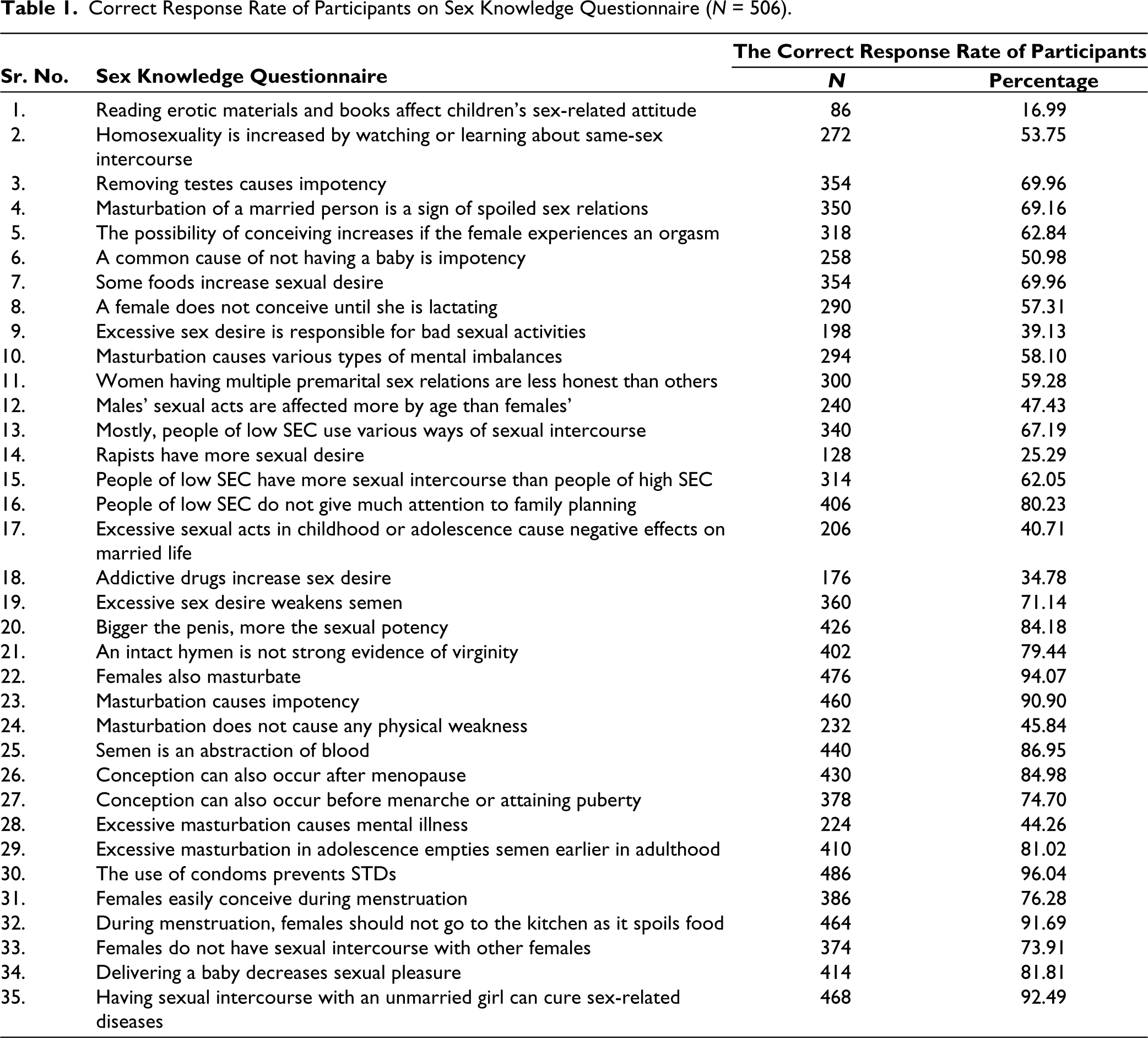
The participants in this study showed a low level of sexual knowledge, with an average score of 22.65 (±4.49). They had gaps in their understanding of some aspects of sexuality, such as how sexual education affects children’s views, what motivates rapists, how premarital sex influences marital quality and the facts about masturbation, homosexuality and drug use. However, they had moderate to good knowledge in other areas, shown in Table 1.
Correct Response Rate of Participants on Sex Knowledge Questionnaire (N = 506).
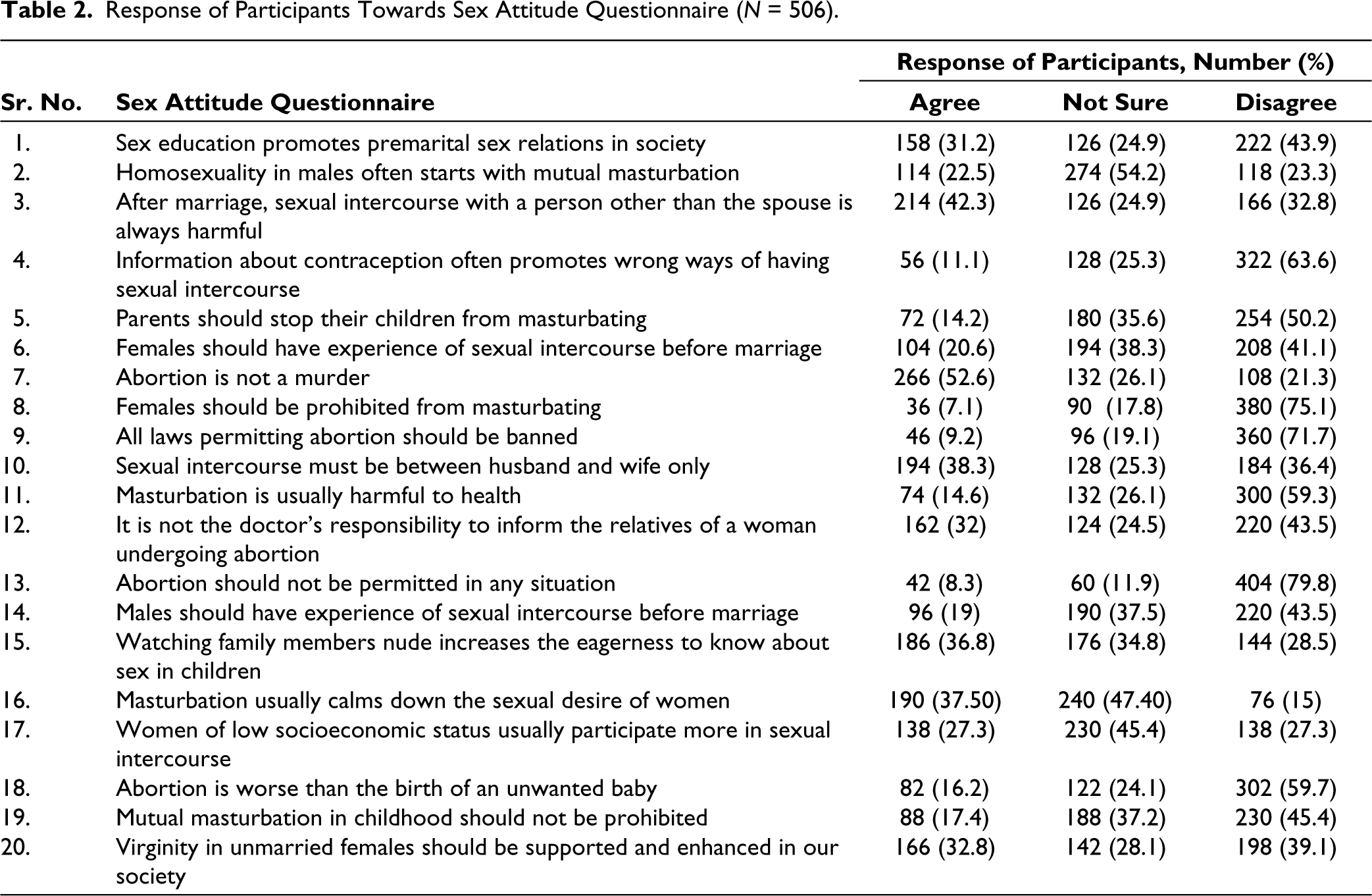
The average score for sexual attitude was 23.44 (±5.42), which reflects a generally conservative view on sexuality among the participants. According to the item analysis, 36% of them disapproved of extramarital sex, 8% opposed abortion, 39% did not support virginity in our society and 21% considered abortion a crime. Moreover, 41% students had a negative attitude towards premarital intercourse. The sexual attitude was more liberal in students from urban areas, middle class and interns than in students from rural areas, lower class and first- and second-year students, as shown in Table 2.
Response of Participants Towards Sex Attitude Questionnaire (N = 506).
The positive correlation between sexual knowledge and sexual attitude, suggesting that the more knowledgeable one is about sexuality, the more open-minded is their attitude towards sexuality, is shown in Table 3.
Relation of Different Demographic Variables with Sex Knowledge Score and Attitude Score (N = 506).
Sources of Influence
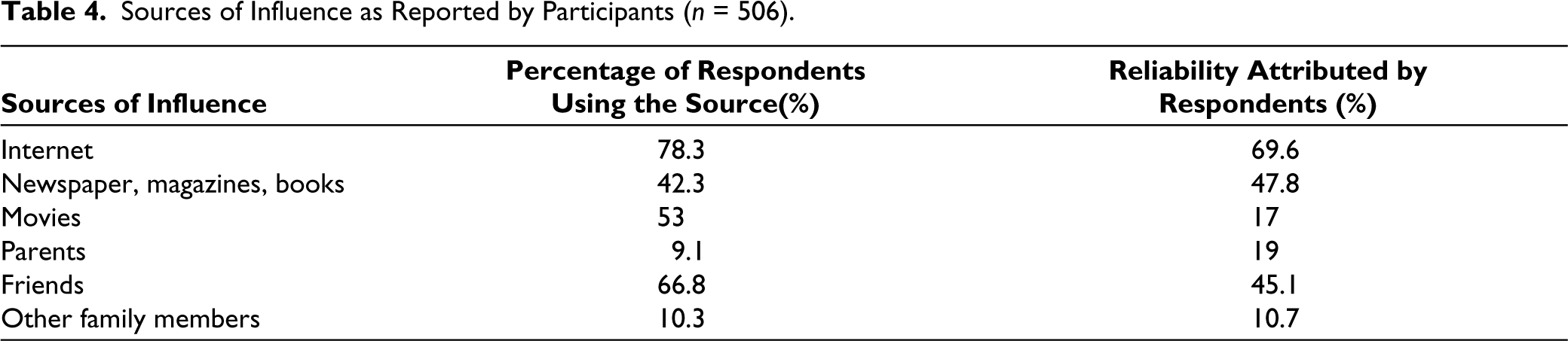
The Internet, friends, movies, newspapers, magazines and books were the main sources of information on sexuality for the youth, while parents and family members played a minor role. When they had doubts, they mostly consulted their friends, and rarely their parents. They considered the Internet as the most trustworthy source of information, followed by friends and printed material, among other sources, as shown in Table 4.
Sources of Influence as Reported by Participants (n = 506).
Sexual Behaviours of the Youth
The mean for sexual behaviours through media was 9.74 (±4.07), indicating a low level of indulgence in sexual behaviours using media. The mean for sexual behaviours with self and others was 23.58 (±12.43), indicating a low level of indulgence. The mean for not interested in sexual behaviours was 5.13 (±2.6), indicating a low level of aversion to sexuality.
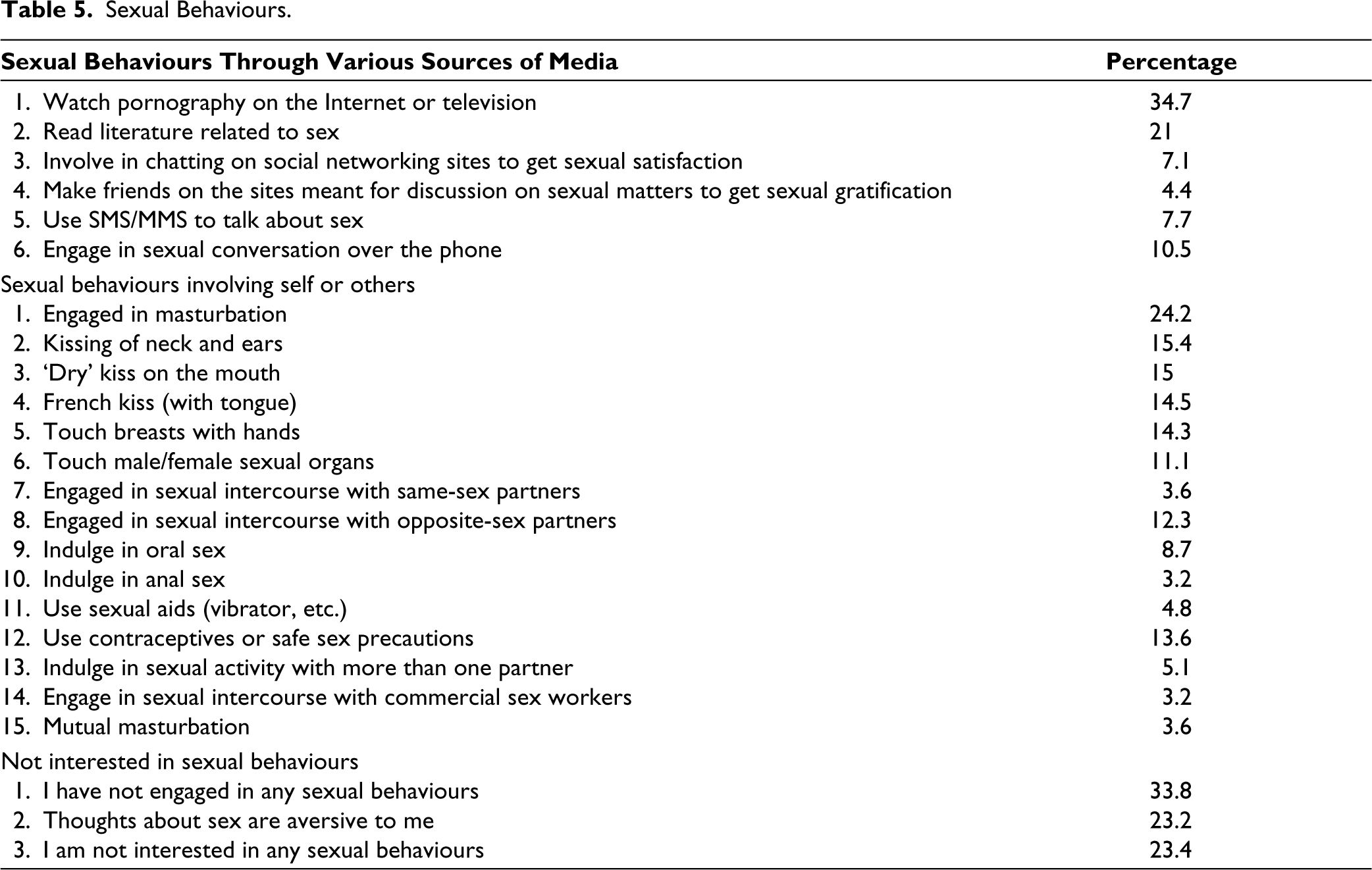
The majority of them used the Internet, television (34.3%) and reading material (21%) to fulfil their sexual desires. About 6%–8% indicated that they were involved in chatting on social networking sites, making friends on websites meant for discussion on sexual matters and using SMS/MMS to get sexual satisfaction. Further analysis of each behaviour showed that students are involved in various sexual behaviours including masturbation (24.2%) and sexual behaviours with same-sex (3.6%) and opposite-sex (12.3%) partners. It was also found that less than 3%–6% of them indulge in unsafe sexual practices such as indulging in sexual activity with more than one partner (5.1%) and engaging in sexual intercourse with commercial sex workers (3.2%). Also, around 32% of the involved students disclosed that they indulge in safe sex practices, such as using contraceptives or other safe sex precautions, as shown in Table 5.
Sexual Behaviours.
Discussion
The study revealed that the participants lacked adequate sexual knowledge on topics such as female and child sexuality, the consequences of premarital sex on marital life, the facts about masturbation and homosexuality, the link between drug abuse and sexual drive and the effects of increased sexual activity. This contrasts with the study by Choi and Ha, 19 which reported that college students had low sexual knowledge overall, but high knowledge on specific areas such as masturbation, abortion and contraception. The item analysis showed that they had good knowledge on STDs and condom use for STD prevention (Table 1). This finding differed from that of a study by Bloom et al, 20 which examined the reproductive health knowledge among males, and a study by Kumar and Tiwari, 21 which found that only 17% of college students were aware of safe sex practices, STDs and maternal health. The possible explanation for the better knowledge of the current sample could be that they had higher education or more access to information on safe sex practices. It could also be attributed to the fact that they were tech savvy and used the Internet and social media to obtain information without hesitation and stigma.
The participants were open minded about sexuality, maybe because they had a high level of education 22 and a medical background. They probably learned about these topics from the many sex education programmes in their institution and curriculum. However, they were not in favour of sex before or outside marriage, maybe because of their culture and family values that have strong views on these issues. 23 They were okay with using contraceptives and abortion. This might be because of the big campaign to prevent AIDS lately, which promotes using contraceptives. The campaign is mostly on the media, which everyone is exposed to. 24 They did not have strong opinions about homosexuality and female sexual practices, maybe because they were more tolerant and accepting of homosexuality. There was a positive link between sex knowledge and attitude, which matches previous studies. This means that more knowledge leads to better attitude.
The Internet was the main source of information on sexual matters for most of the participants, possibly because it offers easy access to a variety of information. This finding is consistent with that of M’Imaita, 25 who reported that adolescents obtained media information on topics such as pornography, fashion, sex styles and contraception. The Internet also exposes young people to both sexual education and pornography, which is hard to control. 26
Another common source of information for the youth in the study was friends. This might be because talking about sex openly is a cultural taboo and parents or family members often avoid or ignore it, so youth prefer to talk about it with friends. 27 This is supported by the fact that only a small percentage of them received information from parents and family members. Moreover, half of the participants learned about sexual matters from movies. Movies can be an important source of information, 28 but they can also create misunderstandings, as they may present distorted views on romance, adolescent sexuality, sexual performance and gender stereotypes. 29 Likewise, less than half of the participants learned from newspapers, magazines and books. However, Joshi 3 found that peers, books and magazines were the most common source of sex information. With the availability of various forms of electronic media, the Internet is replacing print media as a source of information.
With regard to sources for clarifying doubts or experiences regarding sexuality, participants were more comfortable discussing or clarifying among friends. This could be because the youth might feel that their peers might also have had similar doubts/experiences since they are also of the same age and also that they tend to spend a lot of time together; thus, they may be comfortable discussing personal issues. 27 A lower percentage of them were comfortable discussing sexual matters with doctors or medical professionals. This hesitation could be because professionals often find it uncomfortable and prefer not to ask about these issues. 30 A very small percentage of them discussed these matters with parents, teachers and other family members, which may be because of the taboo associated with talking about sexual matters in our country. 31 Some of them indicated that they feel comfortable discussing with siblings, which may again be because of the same age range. The sources that the youth considered reliable to provide information about sexuality were the Internet, followed by friends, newspapers, magazines and books, movies, parents and family members.
The findings on the sexual behaviour of the youth show that indulgence in sexual behaviours was low. However, the percentages on various kinds of indulgence show that most of them used the Internet, television and reading material to fulfil their sexual desires. About 7%–8% indicated that they are involved in chatting on social networking sites, making friends on websites meant for discussion on sexual matters and using SMS/MMS to get sexual satisfaction. Although the percentage is not high, it indicates the trend towards using more electronic media to obtain sexual gratification. The findings suggest the need to regulate the information in these media to facilitate healthy attitudes, objective knowledge and healthy behaviours.
The participants reported a low level of indulgence in sexual behaviours with self or others. A closer look at each behaviour reveals that various sexual activities, such as masturbation and same-sex or opposite-sex intercourse, were practiced by more than 20% of them. This is consistent with a previous study by Smith et al 32 that found a similar rate of homosexual experience among Australians (8.6% of women and 5.9% of men). The results suggest that homosexual attraction and orientation may not vary much across cultures. However, the percentages were higher than those reported by Kumar and Tiwari, 21 who found that only 13%–23% of the youth slum dwellers in Delhi and Lucknow had engaged in premarital sex.
The participants also reported a low frequency of unsafe sexual practices, such as having multiple partners or sex with commercial sex workers, which was less than 6%. On the other hand, around 13%–14% of them said that they used contraceptives or other safe sex precautions. Previous studies have shown that sexual behaviour can range from nonpenetrative activities, such as kissing and touching, to intercourse. For instance, a study of low-income college students in Mumbai found that while 26% of young men and 3% of young women had penetrative sex, 49% and 13%, respectively, had other forms of physical intimacy such as kissing and touching. This implies that there may be a period of nonpenetrative experience before penetrative sexual activity, which could be an opportunity for counselling and safe sex education. 33 Regarding interest in sexual matters, more than half of the participants indicated that they were sexually active, that they did not find sex repulsive or boring and that they were interested in sexual behaviours.
The study used the sexual behaviour scale to collect comprehensive data on the youth’s sexual activities and influences. It also examined the relationship between sexual knowledge, attitude and behaviours. However, the study had some limitations. First, it only included urban youth, which may not reflect the experiences of rural youth who may face different challenges and influences due to their settings and sociocultural background. Second, the group administration of the questionnaires may have compromised the validity of the responses, as the participants may have felt hesitant to answer honestly or influenced by their peers’ answers, despite the assurance of confidentiality and anonymity. Third, the social desirability bias may have led to the underreporting of certain behaviours or practices. Lastly, the tool used in the study only had content validity and internal consistency established, which may limit its generalizability and reliability.
Conclusion
The study reveals that the participants lack adequate sex knowledge and have conservative views on some aspects of sexuality. Sex knowledge and liberal views are higher among females, urban residents and those with higher education levels. There is a positive correlation between sex knowledge and liberal attitude towards sex. The study suggests that sex education should be improved and integrated into the curriculum, as young people face difficulties in communicating their sexual issues with their family members. The study also shows that media exposure to sexual content is associated with increased sexual behaviours with self and others, implying the influence of media on sexual behaviours. Enhancing sex knowledge and promoting positive attitudes towards sex will benefit medical students and the society at large.
Limitations
The survey’s anonymity allows for honest answers, but the self-reported data may have biases in both directions, such as exaggerating or minimizing. Normal sexuality and attitude towards it are not clearly defined, and they depend on a complex mix of personal and cultural factors that can vary over time.
Footnotes
Declaration of Conflicting Interests
The authors declared no potential conflicts of interest with respect to the research, authorship and/or publication of this article.
Ethical Approval
This study was approved by the Institutional Ethics Committee of DUPMCH, Jalgaon (Approval letter no. IEC/DUPMCH/2023/04). The study protocol followed the guidelines for epidemiological studies in accordance with the Declaration of Helsinki.
Funding
The authors received no financial support for the research, authorship and/or publication of this article.
Informed Consent
The participants had consented to the submission of the article to the journal.