




Abstract
Objective:
This study examined the prevalence and existing predictors of depression in international postgraduate public health students at a university in England.
Material and Methods:
It was carried out as a descriptive cross-sectional survey. A total of 153 students enrolled in MSc in public health and community well-being and MPH in global public health courses were recruited using a convenience sampling technique. The Centre for Epidemiological Studies Depression 10-Item Scale (CES-D-10) and Chi-squared tests were utilized to assess the prevalence of depression and the association of encountered challenges with depressive symptoms, respectively.
Outcomes:
The prevalence of depression was 34.6% in this study. A link was found between depressive symptoms and several socio-demographic factors such as ethnicity, source of funding, and accommodation status in the United Kingdom. There was also a significant association between depression and all general problems faced by international students except housing. Finally, of all the challenges faced at the university, communicating with lecturers was the only one associated with this disorder.
Conclusion:
This study highlighted the important predictors of depression among international public health students, which reflect the need for a more collaborative strategy pursued by all teams within the university to compact this crisis.
Background
International students move to another country to obtain further education. 1 The proportion of international enrolment in higher education correlates positively with the level of tertiary programmes. They account for almost 14% of the overall enrolment in master’s or equivalent courses in the Organization for Economic Co-operation and Development (OECD) countries in 2020, which is at least twice as much as that of bachelor’s programmes (5%). Moreover, the United Kingdom has been among the top five student destinations, comprising 551,000 international students, with roughly 38.5% being taught master’s programmes in 2020/21.1,2 Overseas students in the United Kingdom are apt to undergo numerous challenges, some of which are usually outside the scope of those experienced by home students. Apart from educational concerns, they must deal with various issues, such as language barriers, homesickness, cultural differences, and financial difficulties, which can adversely affect their mental well-being. 3
Depression, a common mental illness worldwide, has substantially contributed to global health burdens. It can be recurrent or long-lasting, disrupting a person’s routine in various aspects, including personal, social, academic, and family life. 4 According to the Institute of Health Metrics and Evaluation, 5 nearly 3.8% of the world’s population is affected by depression, which includes 5% of adults. Depressive symptoms are usually characterised by persistent sadness and a loss of interest in everyday life, including sleeplessness, a lack of appetite, low self-esteem, weight loss, and suicidal thoughts. 4 The COVID-19 pandemic, as a population shock, has dramatically affected the global prevalence of depression and anxiety, posing a challenge to several countries. Severe depressive disorder cases have risen by 27.6% worldwide, and there have been 49.4 million disability-adjusted life years (DALYs) due to the COVID-19 pandemic. 6
Based on a survey in England, 37% of undergraduate students were experiencing major depressive symptoms in 2021, which was greater than the rate of adults (16%). 7 Another study in 26 countries stated that postgraduate students are generally six times more likely to suffer from depressive disorders than the general population, with academic challenges playing an important role. 8 Additionally, the transition to postgraduate levels per se can give rise to mental issues due to an ambiguous course structure and a lack of opportunities for social participation. 9 Those showing less resilience to hard times tend to find it more challenging to adapt to a new environment. That is to say, and they might separate themselves from the host country as a coping mechanism, making it harder for them to adjust to a new culture, which could result in the sense of loneliness. 10 Consequently, the mental health status of international students is likely to be affected by these inevitable challenges in their daily lives, which emphasises the need for more research into this subject since it can significantly impair the quality of their lives. 11
Previous studies have rarely focused on the burden of this disorder among public health students in the United Kingdom, who come from various medical, cultural, and social backgrounds. Public health graduates tend to occupy essential roles in multiple areas, from healthcare to policy development, highlighting the necessity of research into the everyday stressors that might endanger their mental well-being. This information could also shed light on the usefulness of current counselling services offered at the university, reflecting the possible need for improving the accessibility of support for international students.
This study examines the prevalence and existing predictors of depression in international postgraduate public health students.
Material and Methods
Research Design
In this primary research, we aimed to analyse the prevalence and predictors of depression among international master’s students studying public health at a U.K. university in 2022. Hence, it was carried out as a descriptive cross-sectional survey.
Research Setting
The study sample was chosen from international students enrolled in MSc in public health and community well-being and MPH in global public health courses at a large university in England who could represent the burden of depression in a larger community of students in this area of health. They were mainly from various countries in Asia, Africa, and the Middle East; however, they were settled in the United Kingdom at the time of the study.
Sampling and Data Collection
The final sample size was 153, who were recruited according to the following criteria:
MPH in Global Public Health or MSc in Public Health and Community Well-Being students. who was on a student visa and did not hold U.K. citizenship.
The researcher adopted a convenience sampling technique to recruit respondents. Afterwards, a link was sent to individuals during the second semester through a gatekeeper, providing them with an informed consent form, a participant information sheet, and the survey questionnaire. This was circulated once more due to a low participation rate to ensure the required number of responses. Data collection lasted for the whole month of June 2022, and nearly half of the students from each group took part in the study. Since the start of the course, they had submitted and received feedback on three assignments and had sat one written test.
Questionnaire
The self-assessment questionnaire was developed based on similar studies in Bangladesh,3,12 consisting of four sections: demographic information, general challenges, academic challenges, and the Centre for Epidemiological Studies Depression 10-Item Scale (CES-D-10) to assess the prevalence of depression.13,14 The socio-demographic form required age, gender, religion, marital status, employment status, academic background, source of funding, and the type of living arrangement in the United Kingdom. The second section included numerous issues with accommodation, transportation, homesickness, financial distress, health problems, and adapting to local food. Challenges faced at the university, as provided in the third section, were regarding communication, the overall performance of the students, and the quality of the teaching and assessment techniques.
Finally, the CES-D-10 questionnaire was given to respondents, containing three items on depressed affect, three on physical symptoms, and two more regarding positive affect. Each item had the same scored responses, ranging from “rarely or none of the time” to “all of the time”; however, positive items five and eight were reversely scored. The sum of the scores can vary between 0 and 30, with a cut-off point of ten and above representing depressive symptoms. 15 The Cronbach alpha of this population was estimated to be 0.787 at the end.
In this study, the prevalence of depression was estimated, as were the descriptive statistics, for example, frequency and percentage of demographic characteristics and specific challenges encountered by students. The association between general challenges, academic problems, and sociodemographic factors with depression was also investigated through bivariate analysis, such as Chi-squared tests. Every hypothesis was tested, with a p-value of less than 0.05 considered statistically significant. IBM SPSS Statistics version 28 was used for data analysis and interpretation.
The ethical approval for this research was issued by the School Research Ethics Panel (SREP) of the faculty. Participants voluntarily took part in the survey once they had filled out an informed consent form. All the data collected was pseudo-anonymised and confidentiality was ensured.
Result
The total number of international students who participated was 154; however, one was excluded due to an incomplete survey response. Therefore, the final sample size was 153.
The age of the students ranged from 23 to 45, with the mean being around 28.16 ± 4.11 years of age. Many participants (75.2%) fell into the age group of 23−29 years old. As seen from Table 1, only 33.3% of the students were male, whereas females comprised two-thirds of the subjects. Of all the religions, Christianity was the most common response, constituting 42.5%. Less than 40% of the religious participants had experienced depression, while half of the non-religious group reported depressive symptoms. The number of MPH students (100) was double that of the MSc group (53). Almost 30% of the population were already holders of a postgraduate degree, while the rest (69.9%) had a bachelor’s degree. Most of them (61.4%) were also employed. The vast majority of them were either married (39.9%) or single (42.5%), while a few others were divorced (2.6%) or in a relationship (15%).
The Association Between Socio-demographic Factors and Depression.
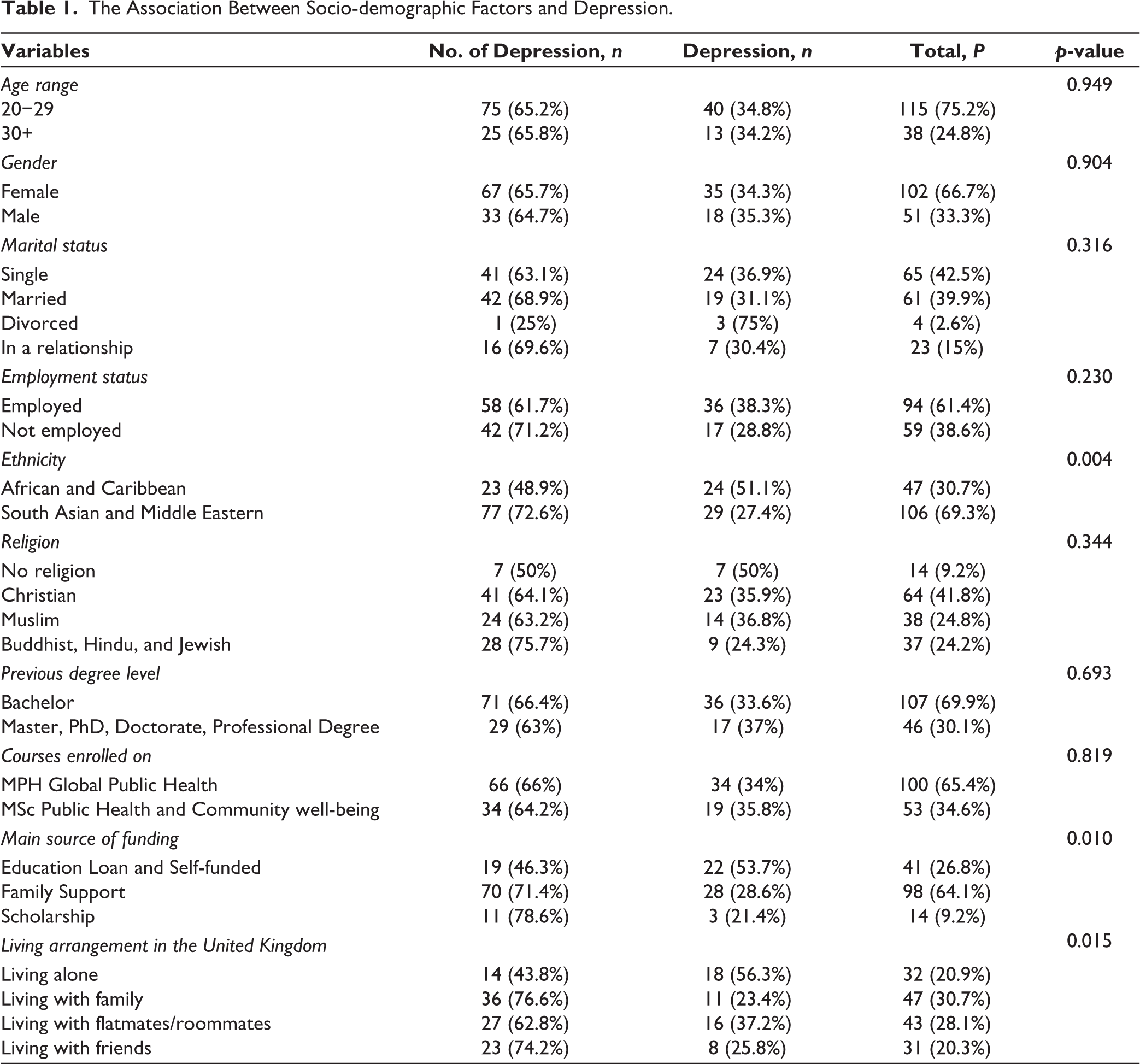
The prevalence of depression after calculating the CESD score was 34.6%. The mean score was calculated to be 10.57 ± 5.22. Upon hypothesis testing, a link was found between depressive symptoms and several socio-demographic factors such as ethnicity, source of funding, and accommodation status in the United Kingdom (Table 2).
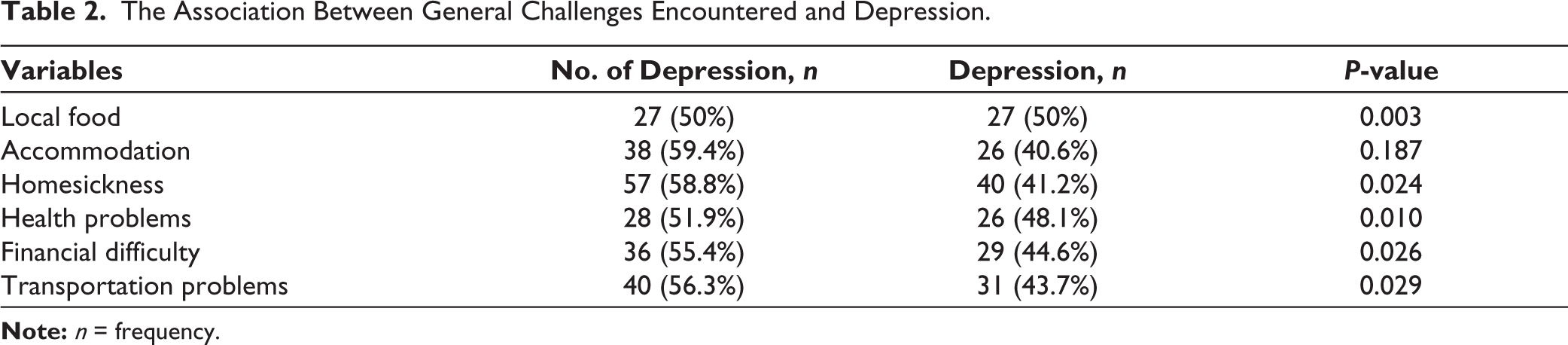
The Association Between General Challenges Encountered and Depression.
There was a considerable difference between South Asian and Middle Eastern groups in terms of experiencing depression. 72.6% of them reported no depression, while only 27.4% were seen to have moderate to high depression. On the contrary, there was almost no gap between these levels in the African and Caribbean groups, meaning roughly half of them (51.1%) had experienced depressive symptoms. Regarding the source of finance, 64.1% of the students were supported by their families, and the rest were either self-funded (26.8%) or scholars (9.2%). The percentage of those receiving family support and scholarships who reported moderate/high depression was 28.6% and 21.4%, respectively. However, those who had to pay their tuition fee or had taken a loan to cover their costs showed a higher percentage of depression (53.7%). As for the type of living arrangement, living with family members was the most stated answer, making up 30.7% of the responses, followed by living with flatmates (28.1%) and living alone (20.9%). Over half of the students (56.3%) who lived independently suffered from depressive symptoms, while those living with family and friends reported a rate of 23.4% and 25.8%, respectively. Moreover, those living with flatmates also had a lower rate of depression than those living alone, at 37.2% (Table 3).
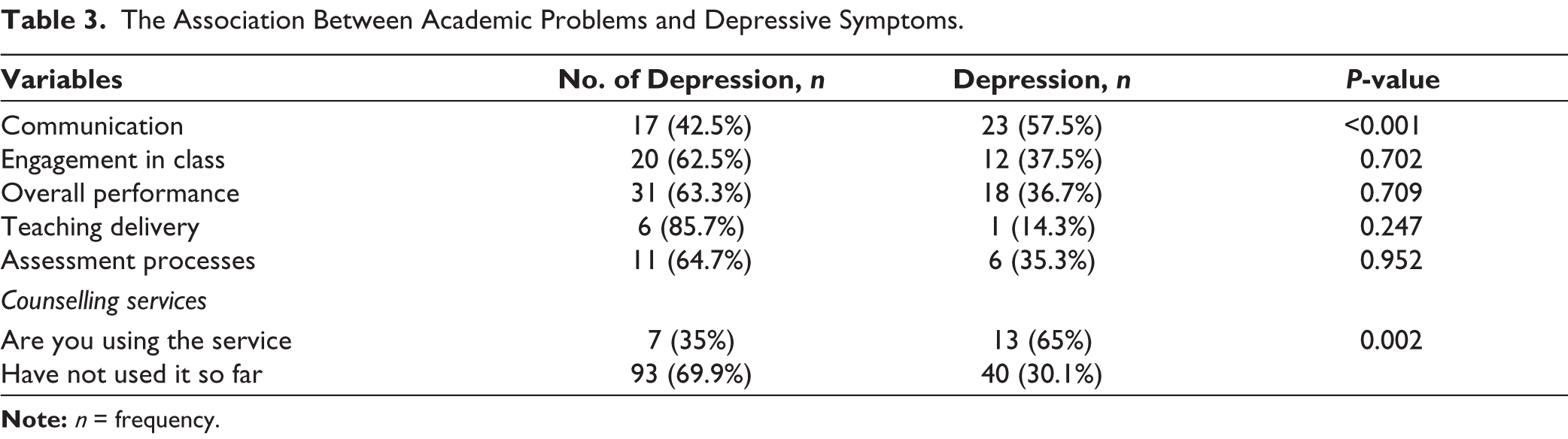
The Association Between Academic Problems and Depressive Symptoms.
There was a significant association between depression and all general problems faced by international students in the United Kingdom except for housing. The range of participants dealing with these issues who were also screened positive for depression varied from 40% to 50%. Of those who had encountered difficulty adapting to local food since the start of their course, 50% reported experiencing depressive symptoms. About 63.4% of the participants felt homesick, making it the most frequently faced challenge. Two-fifths of the students in this category were found to have depression. In contrast, only 23.2% of those who did not experience homesickness reported depression. Nearly half of the students (48.1%) with health problems also stated that they had felt depressed.
Regarding transportation challenges in the United Kingdom, 46.4% responded that they had issues, which was the second most encountered challenge. 43.7% also experienced depression, much more than those who did not have transportation problems (26.8%). People in financial distress suffering from depression made up 44.6% of the population, while the percentage of students who did not run into this challenge was 27.3%. According to our analysis, no significant association existed between accommodation challenges and depression.
Of all the challenges faced at the university, communicating with lecturers was the only one associated with depressive symptoms. 57.5% of the people dealing with this issue reported having depression. Engaging in class activities was considered another challenge by the majority of the students (79.1%), representing a low level of participation. Teaching delivery and assessment processes were perceived to be of good quality by 95.4% and 88.9% of the respondents, respectively, meaning they were not troubling students. Finally, 68% of the students claimed their overall performance since the beginning of the course was high, encompassing any score above 60%, which did not show any association with depression. Students were also asked about the counselling and well-being services offered at their university, which were associated with depression. Only 13.1% responded that they were using the service. Among them, 65% reported being depressed, whereas of those who did not receive the service, 30.1% were feeling depressed.
Discussion
In the current study, we investigated the burden of depressive disorder and its prevalent contributors, from everyday challenges to academic problems, among international postgraduate students in the field of public health at a U.K. university. A prevalence of 34.6% was reported for depression in MPH global public health and MSc public health and community well-being groups using the self-administered CES-D-10 questionnaire to assess their mental health states. Unlike most common assumptions, the transition to taught postgraduate programs can be difficult for university students, especially those new to a particular institution. In addition to academic issues with shifting to an ambiguously defined educational environment, postgraduate students might encounter emotional challenges such as a feeling of exclusion due to few opportunities to meet and socialise outside the university.9,16
In a research study where university staff and international students were asked to reflect on their MSc public health course experience, students stated that they had an overall positive perception of the academic system in the United Kingdom, despite feeling anxious initially as they had experienced a different educational system in their home countries. This was almost in agreement with staff awareness of the situation. In contrast, the staff’s perception of social and personal challenges faced by international students did not entirely align with what students declared, which might represent a lack of understanding of their role in providing support for their students’ needs.17,18
Studies across the world have implemented various techniques to detect the level of depression among students, and most of them have demonstrated that it is a common issue.12,19–21 In a study on international students in health-related fields, 36% were found to have symptoms of depression, and 52.63% were screened positive for anxiety, implementing the Hospital Anxiety and Depressive Scale (HADS). 22 Results from another study reported a higher rate of depression among international students (37.81%) as opposed to domestic students (29.85%), following the completion of the 9-item version of the Patient Health Questionnaire (PHQ). 20 These outcomes were in line with the findings of a survey deployed by Acharya, Jin, and Collins. 23 to compare the varieties of stressors and depression across genders and international/home student categories. They utilised the CES-D questionnaire for this purpose and estimated a prevalence of 46.94%, with international students and females representing a significantly higher rate of the disorder. Furthermore, academic problems, such as getting a lower score than expected, were the only stressor associated with depression in international students.
Although several studies demonstrate that women are usually at a higher risk of developing depressive disorder,11,23,24 there was almost no difference in the proportion of depression between the male and female groups of this study, comprising 35.3% and 34.3%, respectively. This was similar to the work by Kabir et al., 12 where they found only a 3.4% variation in these participants. We also found an association between ethnic backgrounds and depression status, with more cases being claimed among the African/Caribbean (51.1%) community than the South Asian/Middle Eastern (27.4%). The reason for this could be the fact that African students are apt to come under more pressure from social and cultural norms when leaving their home countries compared to other western or overseas students, making their adjustment to the host country more challenging. 25
Most participants received financial support from their families (64.1%), which was connected to displaying a lower rate (28.6%) of the symptoms. On the contrary, almost half (53.7%) of those who had to spend their savings or had taken out a student loan reported depression, which might imply that these students are under more pressure given that their funds are limited or that they would have to pay off a significant amount of money upon graduation. 26 There was also a relationship between living conditions and mental health, revealing that living alone could be a stressor leading to depression, as opposed to living with others (family and friends). Living away from one’s motherland and usual social support can be distressing for overseas students, so not having any company in a new environment could also result in a sense of isolation.10,27
In our study, there was a notable association between general challenges encountered, excluding housing problems, and depressive disorder. Based on previous literature, adjustment to new cultural norms and a reduced chance of building a close rapport with others in a foreign country can trigger homesickness, the most prevalent issue in our research. 28 Findings of a study by Moeini et al. 29 conducted in Iran revealed that depression is positively correlated with homesickness, which can harm students’ happiness. Additionally, those of minority ethnic origin tend to face more difficulties finding their local comfort foods as a coping strategy, which could provoke more distress. 28 Another challenge linked to this mental issue is medical complications. Stress and new, unknown conditions can lead to health problems, 3 as 35.3% of our respondents stated.
International students are often required to pay a higher tuition fee in addition to allocating money to high living costs in the United Kingdom, which might place a tremendous strain on them. 30 Although most of the participants were being funded by their parents, nearly two-fifths (42.5%) claimed they were going through the financial crisis. Difficulties regarding transportation made up the second most experienced issue by our participants (46.4%), considerably affecting their mental health. According to a report in England, around one-third of commuters (cyclists, those who walked, or those who used public transport) had faced at least one type of transport challenge. Most of the respondents complained in agreement about the poor quality of the services. At the same time, expensive fares were of more significant concern among the 21−29 age group, which also constituted most of the participants in our research. 31
Regarding academic difficulties faced by students, only communication barriers showed a statistically significant association with depression. Results of a meta-analysis study on English-speaking countries (the United Kingdom, the United States, and Australia) demonstrate a high rate of general student satisfaction concerning their experience at the universities in these countries. 32 However, communication breakdowns with lecturers, which could be due to students’ inadequate English skills or a lack of feedback from their tutors, impacted their mental health in our study. Studies indicate that the ability to hold a conversation fluently in the official language of the host country is linked to fewer depressive symptoms as it helps reduce the pressure of an independent learning system.33,34 Another notable finding is that even though there were counselling and mental health support services for students at the university, only 13.1% of the participants reported utilising these services. Previous studies have also highlighted that students tend not to seek help and pursue psychological support as much as they seem to need. It might be based on conventional assumptions about the inconvenience, inaccessibility, or inadequacy of these well-being sessions; however, it needs to be further investigated through a more qualitative approach. 35
To our knowledge, typical stressors in the lives of international public health students and the severity of depression in this population have rarely been researched in the past. Our findings shed light on the common predictors of this mental disorder, such as homesickness, health complications, financial distress, transportation difficulties, and communication barriers with university tutors. Based on an analysis done by Jenkins and his colleagues, 11 the severity of the symptoms of depressive disorder is linked with the degree to which someone’s health-associated lifestyle quality is affected. Overall, these findings can be concerning because they not only suggest this is a common issue among non-native students but also indicate a severe impairing effect on the quality of their lives.
Strength and Limitations
Despite valuable insights into the subject, this study has some limitations that must be considered. Data collection was done at only one university in the United Kingdom, which means our sample might not be representative of the entire population of international students in this region. Our respondents were limited in terms of ethnic backgrounds (basically South Asian and African), which means a more heterogeneous sample should be selected in future studies to increase our confidence in the generalisability of the findings. The convenience sampling method was used for ease of accessibility, which might hinder the replicability of our results. Another limitation could be measuring the depressive disorder through self-report techniques, while clinical screening methods might provide a more accurate spectrum of the symptoms. Future researchers could use a clinical approach such as one-on-one clinical interviews and a self-administered questionnaire to ensure a more reliable assessment.
The role of factors such as family background and personal history of the disease was not investigated in this research, which could have been crucial contributing components. A longitudinal study in the future could better assess the relevant conditions of international students by surveying them before their departure, during their studies in the host country, and after graduation. Although respondents were informed that their information would be pseudo-anonymised, some might have chosen an answer that would sound better than their natural response, causing a social desirability bias. Moreover, the conditions in which the students filled out the questionnaires were not identical, meaning we had no control over the environmental impacts on responses.
Using the CES-D questionnaire, a validated and widely used tool to measure depression, could be one of the strengths of this research. This allows for comparison across previous studies, which have utilised the same method to gain a better understanding of the issue globally. This study also gives an important insight into the uptake of counselling sessions provided at the university, which calls for a more extensive investigation into the efficiency of these services.
Conclusion
Mental health problems among university students have been a cause for concern in the U.K. International masters’ students, who seem to be more susceptible to depressive disorders than native students.36,37 In this study, we examined the frequent challenges specific to international students, which could be associated with higher rates of depressive symptoms. Homesickness, Health-related problems, unfamiliar food, transportation difficulties, financial distress, and communication barriers with tutors were among the reported predictors affecting students’ mental well-being.
The way forward could be for the relevant educat-ional authorities to better assess this population’s specific (social and academic) needs and adopt a more collaborative strategy in which academic tutors, the well-being team, the international office, and finance team members work closely together to address these demands. They should also review students’ feedback regularly to make necessary changes to the available support system so that it can be tailored to their personal needs. University lecturers can educate newcomers during lectures or group sessions on the various support services they can access at their university. They should also make sure students can get their academic queries answered within a reasonable time via emails or drop-in sessions. Medical support should be made accessible for longer hours and improved to reduce appointment wait times.
Social events should be held regularly outside the university for students to participate and meet up with their peers, helping those who are introverted and might have difficulty blending in with their new surroundings. Financial services should assist students with more flexible installment plans, maintenance, and educational loans for low-income households. Career and employability advisors can also play a part in reducing the pressure of future job hunting for students by developing an extensive network with companies willing to recruit fresh public health graduates regardless of their experience. There should also be a broader range of affordable accommodation options provided by the university in the same city so that students do not have to commute long distances to attend classes. Finally, future researchers should investigate this issue from a global perspective, comparing current policies and support systems in universities worldwide to find out the most effective approaches to this growing mental health crisis.
Footnotes
Declaration of Conflicting Interests
We undersign, certificate that we do not have any financial or personal relationships that might bias the content of this work.
Ethical Approval
Ethical committee approval was taken from Institute ethics committee.
Funding
The authors received no financial support for the research, authorship, and/or publication of this article.
Informed Consent
The participant has consented to the submission of the article to the journal.