




Abstract
Background:
According to World Health Organization, proportion of women experiencing either physical or sexual violence ranges between 15% and 17%. In India, one-third of women population in 15 to 49 age group experiences sexual assault at least once in their life, predisposing them to develop psychiatric disorders.
Aims and Objectives:
To assess prevalence of psychiatry disorders among victims of assault attending tertiary care center.
Methodology:
It is a retrospective, record-based study which was conducted among 216 victims of assault attending one-stop center. Study was started after obtaining Institutional Ethical Committee clearance and permissions from concerned authorities and confidentiality was maintained throughout the study. Data was analyzed by frequency, proportion, and chi-square tests using SPSS version 16.
Results:
Out of 216 victims, 50% were physically assaulted and 50% were sexually assaulted. Among 108 sexual assault cases, 81.5% victims were raped, 2.7% were sexually harassed, 1.9% was sexually abused, and 13.9% children were sexually abused. A total of 30.1% had adjustment disorder, 11.6% had dysthymia, 8.3% had mild depression, 5.6% had moderate depression, 0.5% had obsessive-compulsive disorder, 0.5% had psychosis, and 43.5% did not have any psychiatry disorder.
Conclusion:
Majority of the sexually assaulted victims belonged to age group 16 to 20 years and had adjustment disorder, whereas physically assaulted victims belonged to age group above 36 years and had dysthymia and depression. Special services like medical care, counseling, legal aid, and so on should be provided to victims free of charge. Awareness and sensitization programs should be done through active community participation for the welfare of children and women.
Introduction
Assault in the form of physical, emotional, or sexual, affects millions of people throughout the world. The most affected are the vulnerable groups consisting of women and children. The problem is not limited by national boundaries, but its prevalence is also extensive, making it a typical and accepted behavior. Women and children from all kinds of backgrounds are affected by violence every day.
According to World Health Organization (WHO), domestic violence is defined as “Any act of gender-based violence that results in physical, sexual or mental harm or suffering to women, including threats of such acts, coercion or arbitrary deprivation of liberty, whether occurring in private or in public life.” 1 The proportion of women, who had ever experienced physical or sexual violence or both by an intimate partner ranged from 15% to 71%, with the majority between 29% and 62% as reported by WHO. 1 It is estimated that, worldwide, 1 in 5 women will become victim of rape or attempted rape in her lifetime and up to one-third of the adolescent girls report that their first sexual experience was against their will and was forced.2,3 According to the NFHS-3 data, one-third of women in age group 15 to 49 years have experienced physical violence and about 1 in 10 have experienced sexual violence in India. 4 In total, 35% have experienced physical or sexual violence. It translates into millions of women who have suffered, and continue to suffer at the hands of their spouses and other family members. 4 The under reporting of cases of sexual assault is mainly due to social stigma, prejudice with regard to the chances of marriage, being considered promiscuous and responsible for incident, attendant humiliation and shame, embarrassment caused by appearance and cross examination in court, publicity in press, risk of losing the love and respect of society, friends and that of her husband, if married. 5 Information about the incidence and prevalence of sexual offence in different parts of the world and India show an increasing trend. 6 An Indian study involving 26 women, who faced sexual violence, found an increased risk of mental illnesses like anxiety, sleeping disorder, obsession, acute stress disorder, and also revealed that its role varied as it predisposed some women to develop mental illness or maintained illness in women who were already having mental illness. 7 A meta-analysis reported that mental disorders can act as a moderator for sexual assault and thereby exposing these vulnerable women to develop severe forms of mental illness. 8
A study on the psychiatry disorders and sociodemographic profile of victims of assault may lead us to determine the risk factors and psychiatry disorders associated with assault, which in turn may enable us to initiate preventive measures as early as possible to safeguard the interest of the victims and society at large. In most countries, there has been little research conducted on the above problem and there is not much information on the sociodemographic profile and psychiatry problems of victim of assault.
Aims and Objectives
To assess the psychiatry disorders of the victims of assault attending the tertiary care center.
To assess the sociodemographic profile of the victims of assault attending the tertiary care center.
To assess the different types of assault among the victims of assault attending the tertiary care center.
To determine the association between types of assault and psychiatry disorders among the victims of assault attending the tertiary care center.
Methodology
A retrospective, record-based study was conducted among the victims of assault attending the one-stop center (OSC) of tertiary care center during the study period (November 2014-October 2019). OSC is centrally sponsored scheme under National Mission for Empowerment of Women program popularly known as “SAKHI” and was implemented from 2014. These centers have been established across the country to provide integrated support and assistance under one roof. When women and children present with history of assault, OSC staff will escort the victim for medical and physical examination and appropriate treatment will be provided. Meanwhile, legal aid will be provided by the government-appointed legal team of OSC. All the victims will be interviewed by the psychiatrist and if found to have psychiatric disorders, appropriate intervention will be initiated. 9 Informed consent from the adult victims, assent from victims below 18 years of age, and informed consent from their legal guardians will be obtained throughout the procedure. Sexual offenses like rape, sexual harassment, and child sexual abuse in the present study were defined according to WHO. 10 According to the records maintained, 216 victims of assault attended OSC of tertiary care center of Gadag district during the 5-year period (November 2014-October 2019). Universal sampling was used to select the study subjects. Names of the victims were coded and nowhere their identification was revealed throughout the study, analysis, and manuscript writing. Institutional Ethical Committee clearance and permissions from the concerned authorities were obtained. Confidentiality of the data was maintained throughout the study. A standardized predetermined and prestructured questionnaire was used to collect data from the records consisting of age, resident area of the victim, marital status, education, occupation, socioeconomic status, place of incident, types of assault, and psychiatry disorders.
Statistical Analysis
Data was coded and entered in Excel Sheet and analyzed by frequency, proportions, and chi square test and it was calculated using SPSS statistical software (version 16). Two-sided “P” value of <.05 was considered as statistically significant.
Results and Discussion
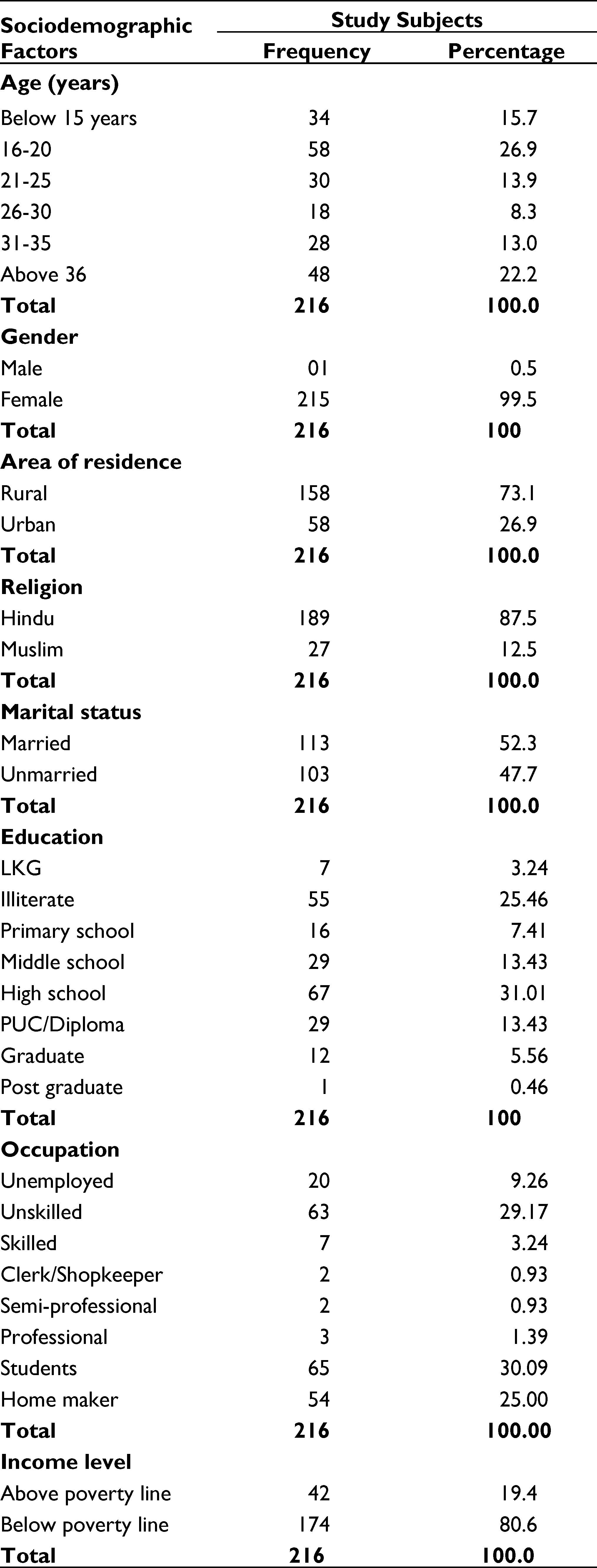
Majority of study subjects 99.5% (215) were females, 26.9% (58) belonged to age group 16 to 20 years, 73.1% (158) were from rural area, 52.3%(113) were married, 31.01% (67) had completed high school education, 30.58% (63) were unskilled workers, 80.6% (174) belonged to below poverty line, and 46.8% (101) were from Gadag and the victims age range from a 2-year-old child to 65-year-old woman compared to study done by Sarkar 11 in which (68.9 %) majority of the victims belong to age group of 11 to 20 years and victims age ranged from a 4-year-old child to 60-year-old woman (Table 1).
Distribution of the Study Subjects According to Sociodemographic Factors
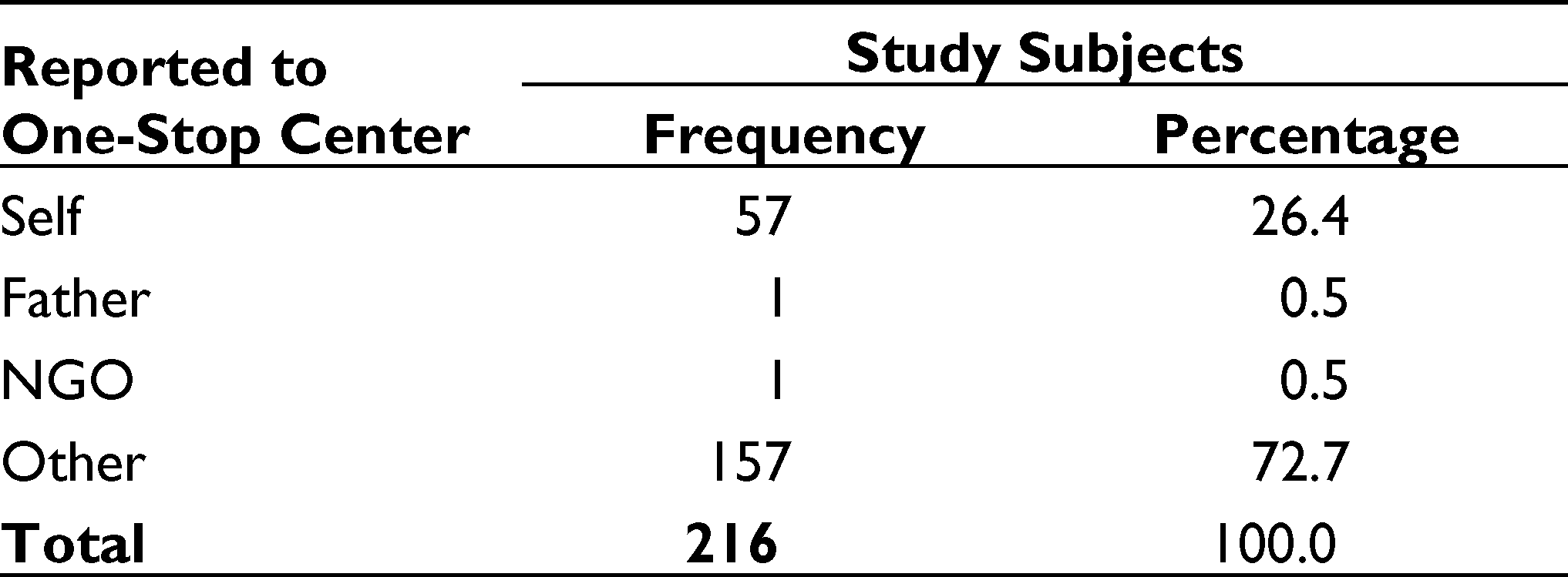
Majority of victims that reported to one-stop center 72.7% (157) from other sources were relatives, neighbors, Asha, Anganwadi teacher, bus driver, school teacher, and so on followed by 26.4% (57) reported by the victim, 0.5% (1) by the father, and 0.5% (1) by the nongovernmental organization (Table 2).
Distribution of the Study Subjects According to the Person Reported to OSC
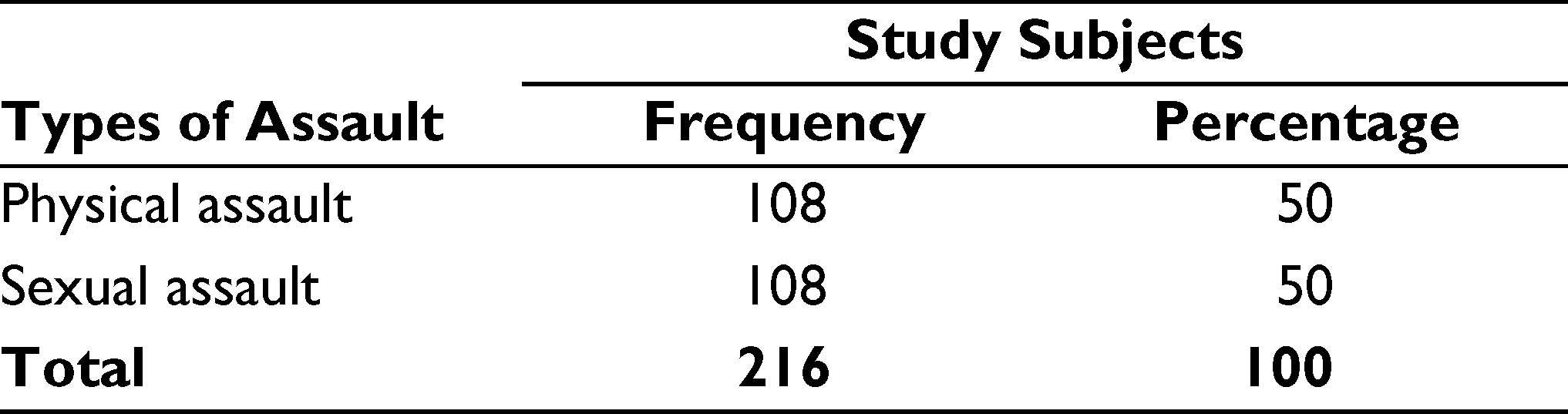
Out of 216 victims, 50% (108) were physically assaulted and 50% (108) were sexually assaulted which was more than that found in the study done by Jawarkar et al 12 in which 40.25% study subjects reported physical, emotional, or sexual violence in their lifetime or in recent past and prevalence of domestic violence (37.2%) as reported in NFHS-3 (2006), and is less than the prevalence (68%) reported in the study conducted by Khapre et al 13 in rural area Sawangi in Wardha district (Table 3). 4
Distribution of Study Subjects According to the Types of Assault
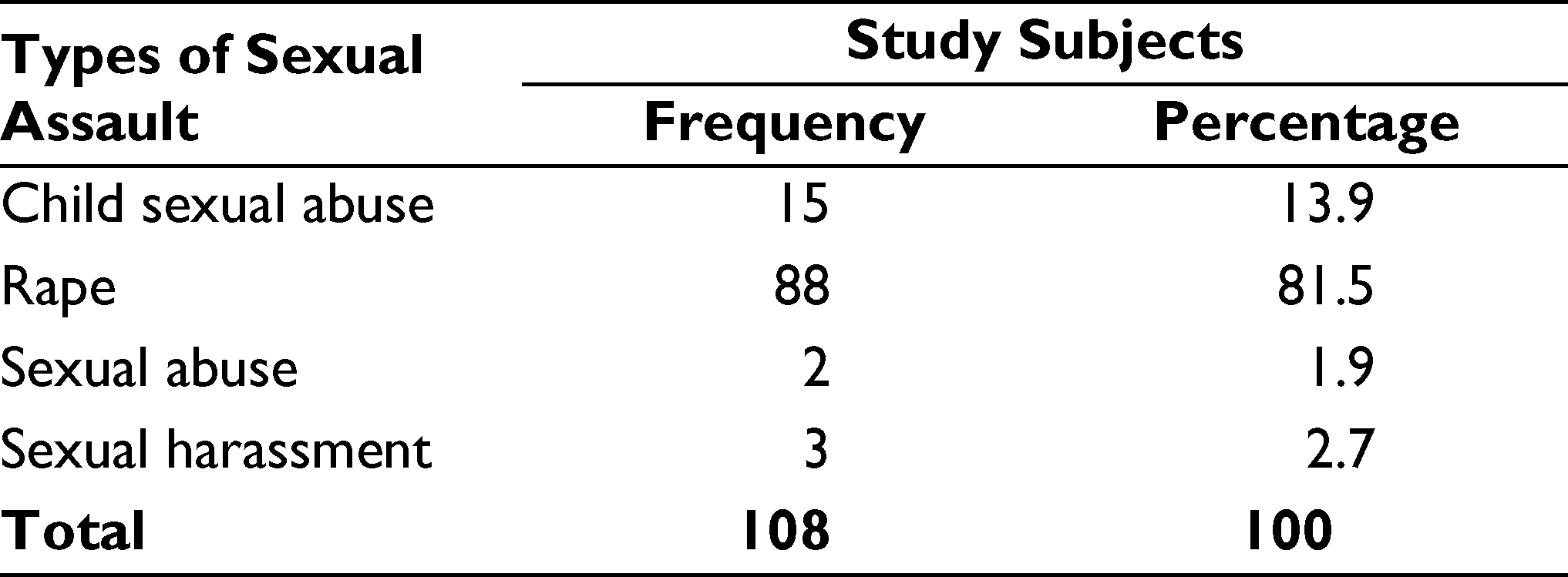
Among 108 sexual assault cases, 81.5% (88) victims were raped, 2.7% (03) were sexually harassed, 1.9% (03) were sexually abused, and 13.9% (15) children were sexually abused. Where as in the United States, child abuse is reported 25% to 35% of women and 10% to 20% of men describe being sexually abused as children (Table 4). 5
Distribution of Study Subjects According to the Types of Sexual Offence (n = 108)
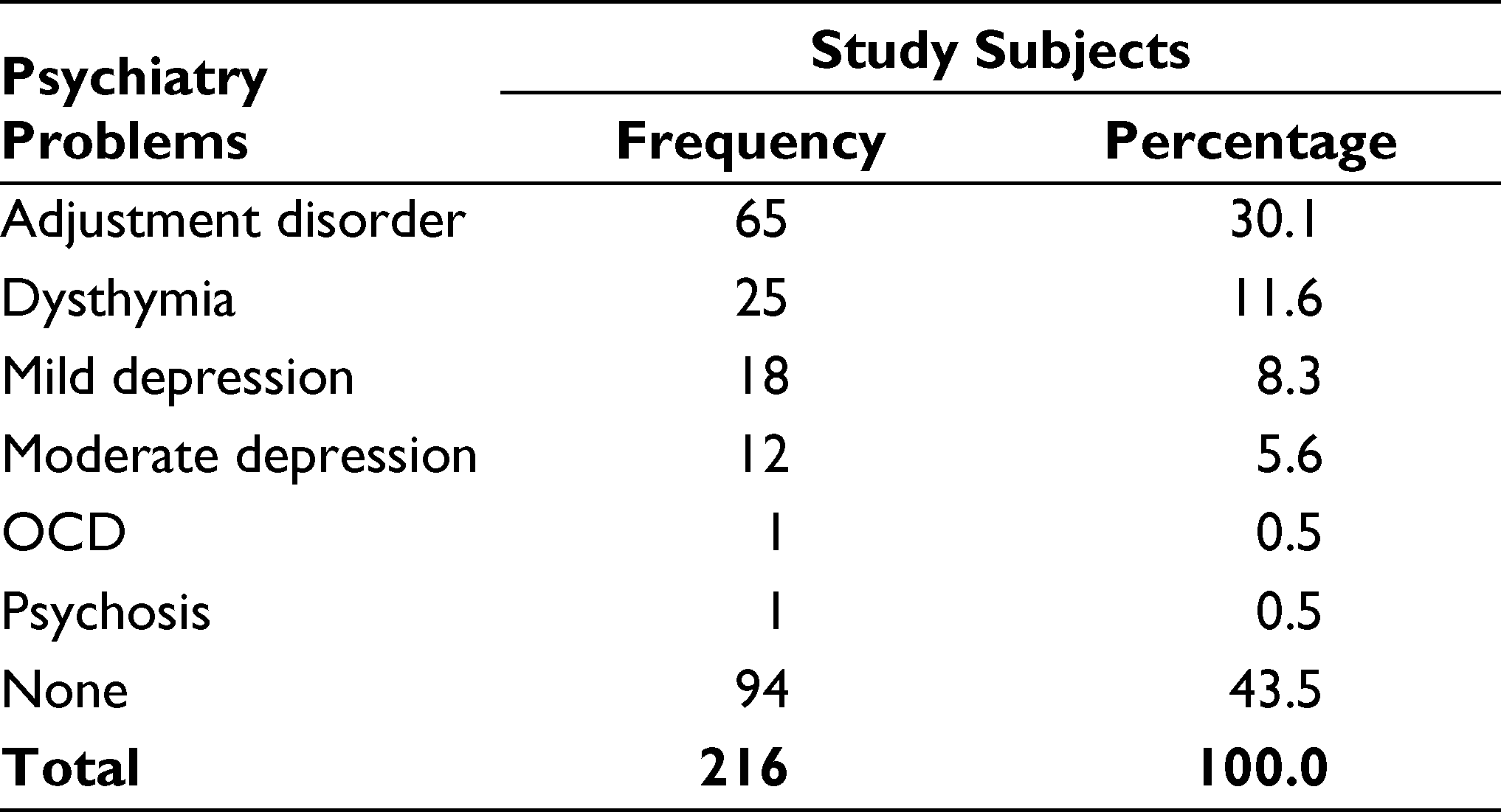
Among 216 study subjects, 30.1% (65) had adjustment disorder, 11.6% (25) had dysthymia, 8.3% (18) had mild depression, 5.6% (12) had moderate depression, 0.5% (1) had obsessive-compulsive disorder, 0.5% (1) had psychosis, and 43.5% (94) did not had any psychiatry problems (Table 5).
Distribution of the Study Subjects According to their Psychiatry Problems (n = 216)
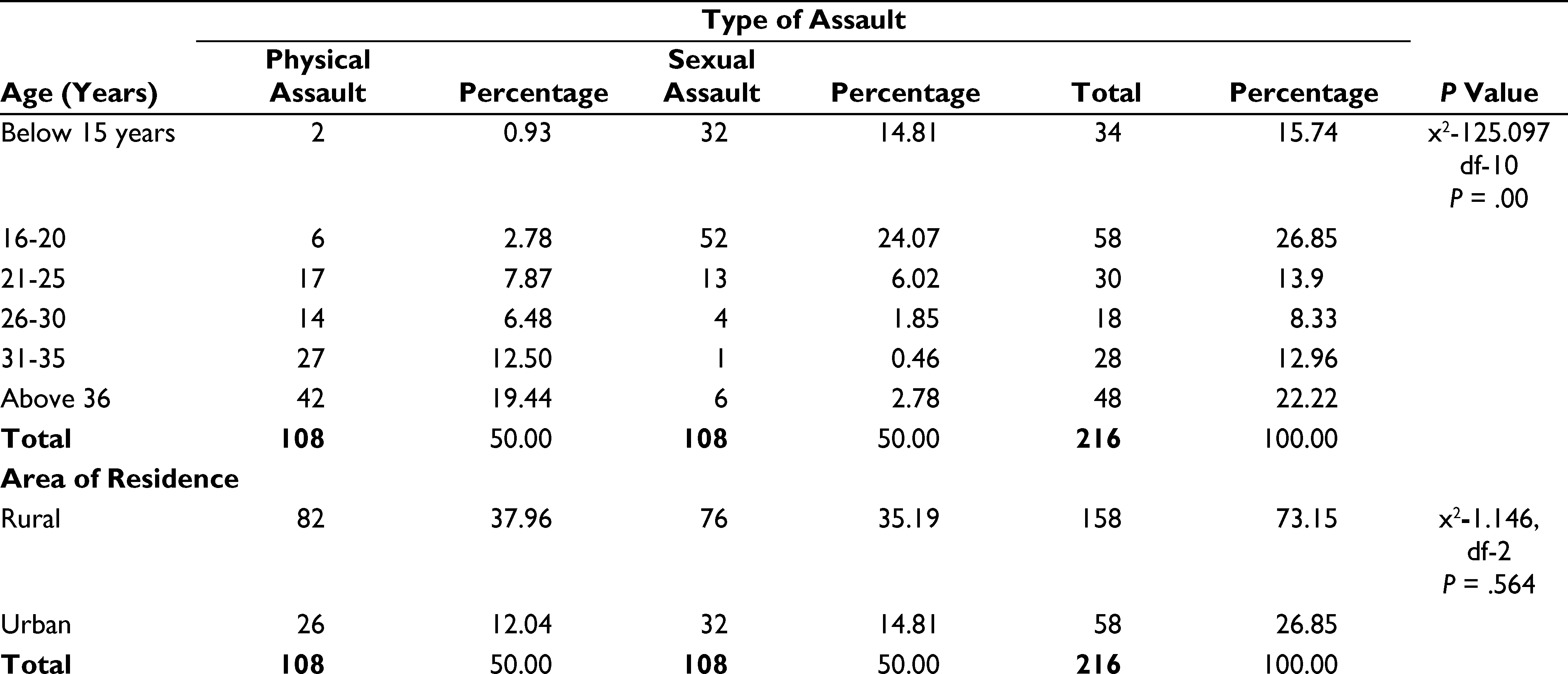
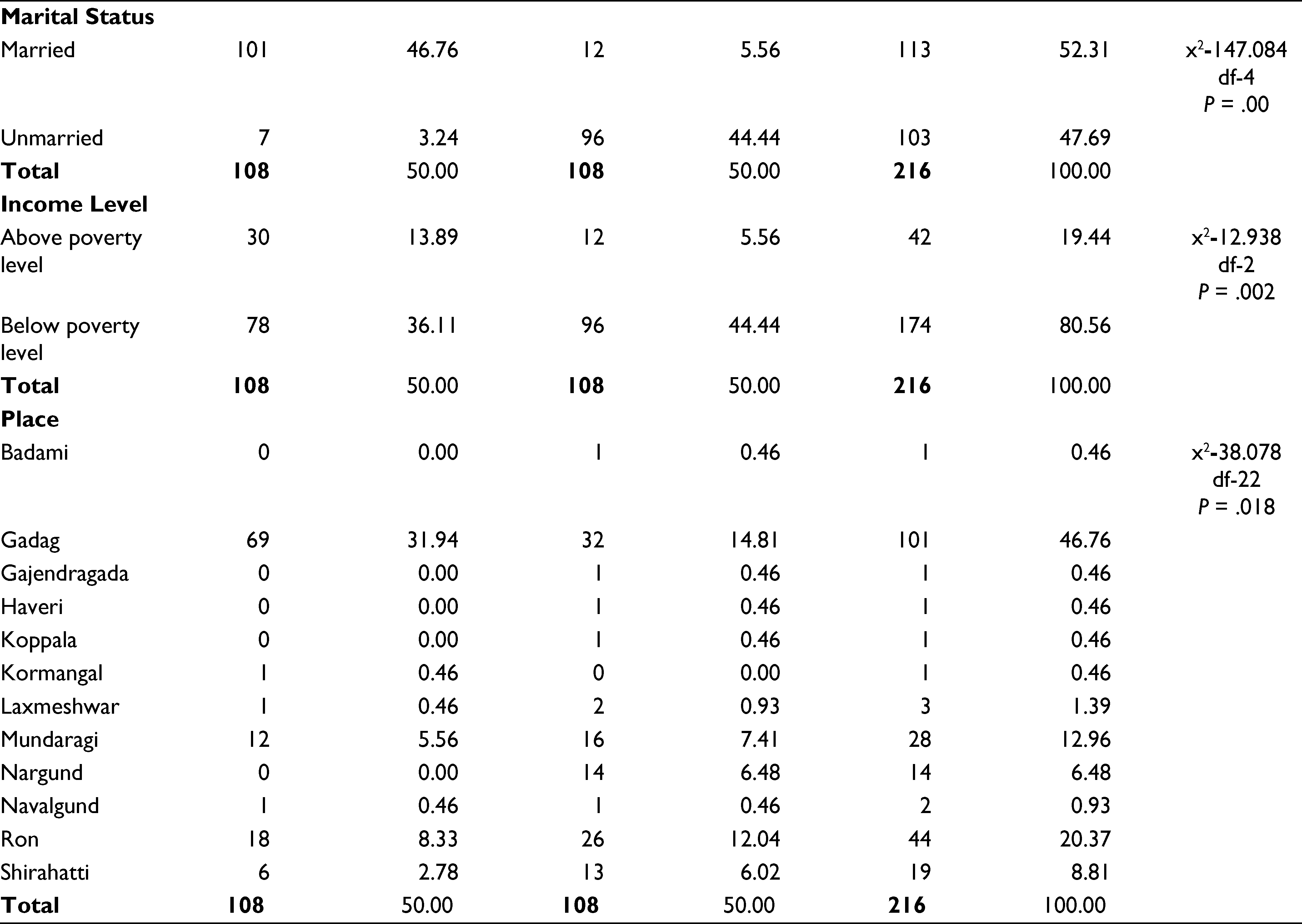
Majority of study subjects 24.07% (52) belonging to age group 16 to 20 years were sexually assaulted whereas 19.44% (42) study subjects belonging to age group above 36 years were physically assaulted which was statistically significant (P < .001). A total of 46.76% (101) married victims were physically assaulted whereas 44.44% (96) unmarried victims were sexually assaulted which was statistically significant (P < .001) compared to the study done by Jawarkar et al in which majority of victims of domestic violence 44.9% were above 40 years of age were, (65.1%) illiterate females, (46.69%) resided in nuclear families, and more common among laborers (48.07%) followed by housewives (38.2%). A total of 36.11% (78) study subjects belonging to below poverty line were physically assaulted and 44.44% (96) were sexually assaulted which was statistically significant (P < .05) which was less than the prevalence of spousal physical or sexual violence among women in the poorest households (49%) than among women in the wealthier households (18%) according to the NFHS 3. 4 Majority of study subjects 46.76% (101) resided in Gadag, among whom 31.94% (69) were physically assaulted and 14.81% (32) were sexually assaulted which was statistically significant (P < .05) (Table 6). 12
Distribution of Study Subjects According to the Association Between Sociodemographic Details and Type of Assault
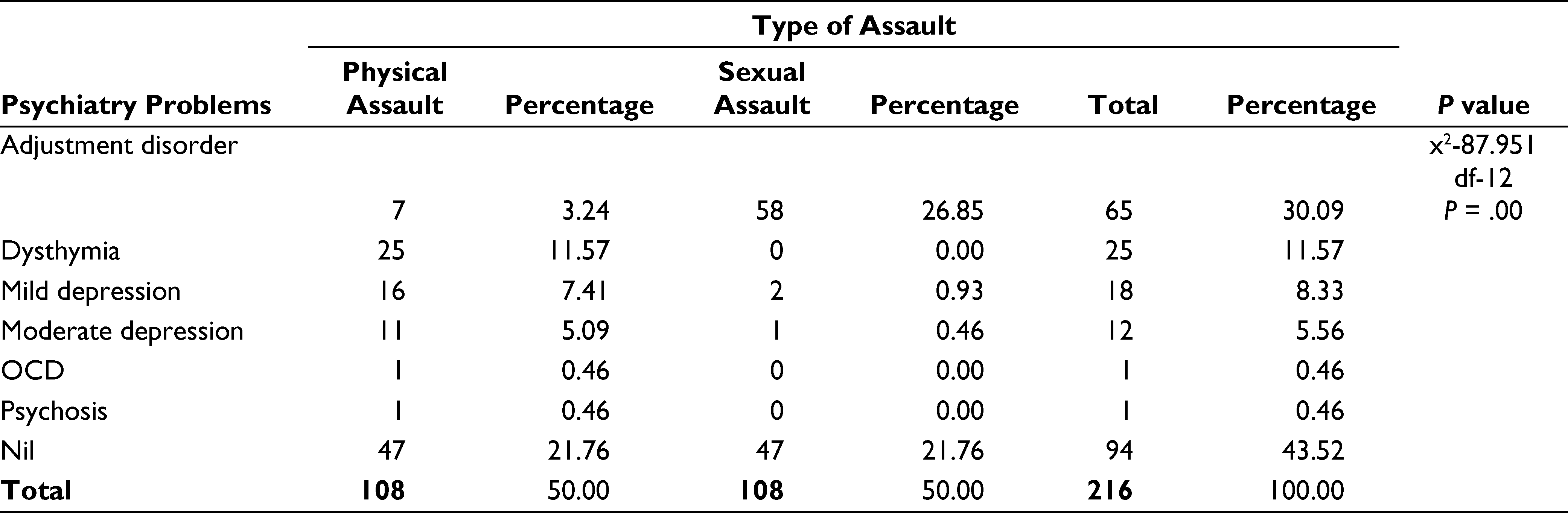
Among 30.09% (65) study subjects suffering from adjustment disorder, 26.85% (58) were sexually assaulted and 3.24% (07) were physically assaulted. All 11.57% (25) study subjects suffering from dysthymia were physically assaulted. A total of 16 (7.41%) study subjects suffering from mild depression and 5.09% (11) suffering from moderate depression were physically assaulted which were statistically significant (P < .001) whereas Choudhary et al 14 reported that 44% of the respondents had mental depression as a consequence of domestic violence (Table 7).
Distribution of Study Subjects According to the Association Between Psychiatry Problems and Type of Assault
Major strength of the study is that it has attempted to highlight the issues regarding violence against children and women and associated psychiatry problems to identify the high-risk population at earliest so that stringent legislative measures should be taken properly to safeguard the interest of the victims and society at large. However, study is not devoid of limitations like record-based nature of the study. It assesses psychiatric disorders among victims of assault who attended OSC only and cannot be generalized to community as there is possibility of underestimation due to various reasons. Many victims of assault do not report to OSC due to stigma and fear of legal proceedings that may affect their future.
Conclusion and Recommendation
In the present study, prevalence of psychiatry disorders among victims attending OSC is higher compared to general population. Majority of the sexually assaulted victims belonged to age group 16 to 20 years and had adjustment disorder whereas physically assaulted victims belonged to age group above 36 years and had dysthymia and depression. Recommendations like special services like medical care, counseling, legal aid, and so on should be provided to victims free of charge. Steps should be taken to recognize violence against children and women as a major public health issue. Longitudinal studies need to be conducted to assess the impact of assault and psychiatry disorders among the victims of assault. Awareness and sensitization programs should be done through active community participation for the welfare of children and women.
Footnotes
Author Contributions
Fakirappa B. Ganiger: Involved in data collection, drafting and analysis; Jannatbi Iti: Involved in acquisition, analysis, interpretation of data, and write up of the article; Dr Jitendra Mugali: Involved in analysis and critical evaluation of the article; Somashekhar Bijjal: Involved in conception, design, and academic applicability of the article; Dr Raju G. Mahadevappa: Involved in evaluation of the article.
Declaration of Conflicting Interests
The authors declared no potential conflicts of interest with respect to the research, authorship, and/or publication of this article.
Funding
The authors received no financial support for the research, authorship, and/or publication of this article.