




Abstract
Sexual health-care seeking behavior and practices have been affected during COVID-19 pandemic. The impact of COVID-19 on this subspecialty is far reaching. This study aimed to assess the impact of COVID-19 on health-care seeking practice pertaining to sexual health in men in our tertiary care center and review the relevant literature regarding impact of COVID-19 on sexual health seeking practice and challenges faced. Outpatient data was analyzed from January 2019 to April 2021. Patients awaiting surgical procedures due to COVID were documented. A narrative synthesis of literature based on systematic search using the keywords sexual health, sexual health seeking, sexual health practice, andrology, and COVID with operators “AND” and “OR” was carried out in three search engines PubMed, Scopus, and Embase. The study outcomes were obtained by comparing data of outpatient attendance and compiling the reviewed literature. The mean attendance fell significantly from 95.11±11.17 to 17.25±13.70 persons (P <.0001) per outpatient clinic, March 2020 being the reference point. Teleconsultation has taken over physical consultation. In 98/949 cases, teleconsult could not be provided despite registration. Over 25 patients were waiting for surgical procedures pertaining to andrology due to shut down of elective services. Similar trends have been reported from other countries. Number of patients seeking consultation for sexual health problems has dramatically decreased during COVID-19 era. Establishment of data safe teleconsultation facility and its widespread advertisement is needed to encourage patients to seek consult.
Background
The COVID-19 disease was declared a Public Health Emergency of International Concern on the January 30, 2020, and was declared pandemic by March 11, 2020. 1 The epidemic of acute respiratory syndrome caused by the new coronavirus, SARS-CoV-2, which started on December 12, 2019, in Wuhan, China has wreaked havoc ever since. Coronaviruses are generally thought to be spread by respiratory droplets and recent evidence has favored aerosol as well as fomite transmission of the virus. 2 For the purpose of breaking the chain of transmission, various preventive strategies have been advocated including social distancing and hand hygiene. 3 Risk of transmission of the virus, in crowded areas, compounded by various phasic lockdown measures has reduced the footfall of patients in the hospital. Further to it, economic slowdown and restriction of interstate movement has led to restrictive patterns of health-seeking behavior in patients especially in the field of sexual medicine.4,5 In order to avoid nonessential direct physical interaction, telecommunication and social networking has come to the forefront.3,4 Despite its widespread use and promotion, telecommunication or telemedicine has been underutilized in our part of the world particularly in the field of sexual medicine. In this study, we describe the change in pattern of health-seeking behavior in the field of sexual medicine by men, at our tertiary center. A systematic literature review was also undertaken to see the reported change in practice of sexual medicine world over and is being discussed.
Our Research Findings
Methodology
A nationwide lockdown had been imposed in India from March 25, 2020. Consequently, the outpatient departments (OPDs) (except flu clinic, obstetrics, and cancer clinics) had been completely suspended till April 2020 at our tertiary care center located in North India. A switch from physical consultation to teleconsultation had been adopted since May 2020. The Men’s Health Clinic was merged with general urology OPD for the initial two weeks at our center. From June 2020 onward, dedicated day and time was reassigned for the teleconsultations addressing men’s sexual and reproductive health. Outpatient attendance of teleconsultations of Men’s Health Clinic from January 2019 to April 2021 was seen and analyzed. The distribution of cases was seen and further limitations of tele-management were recorded.
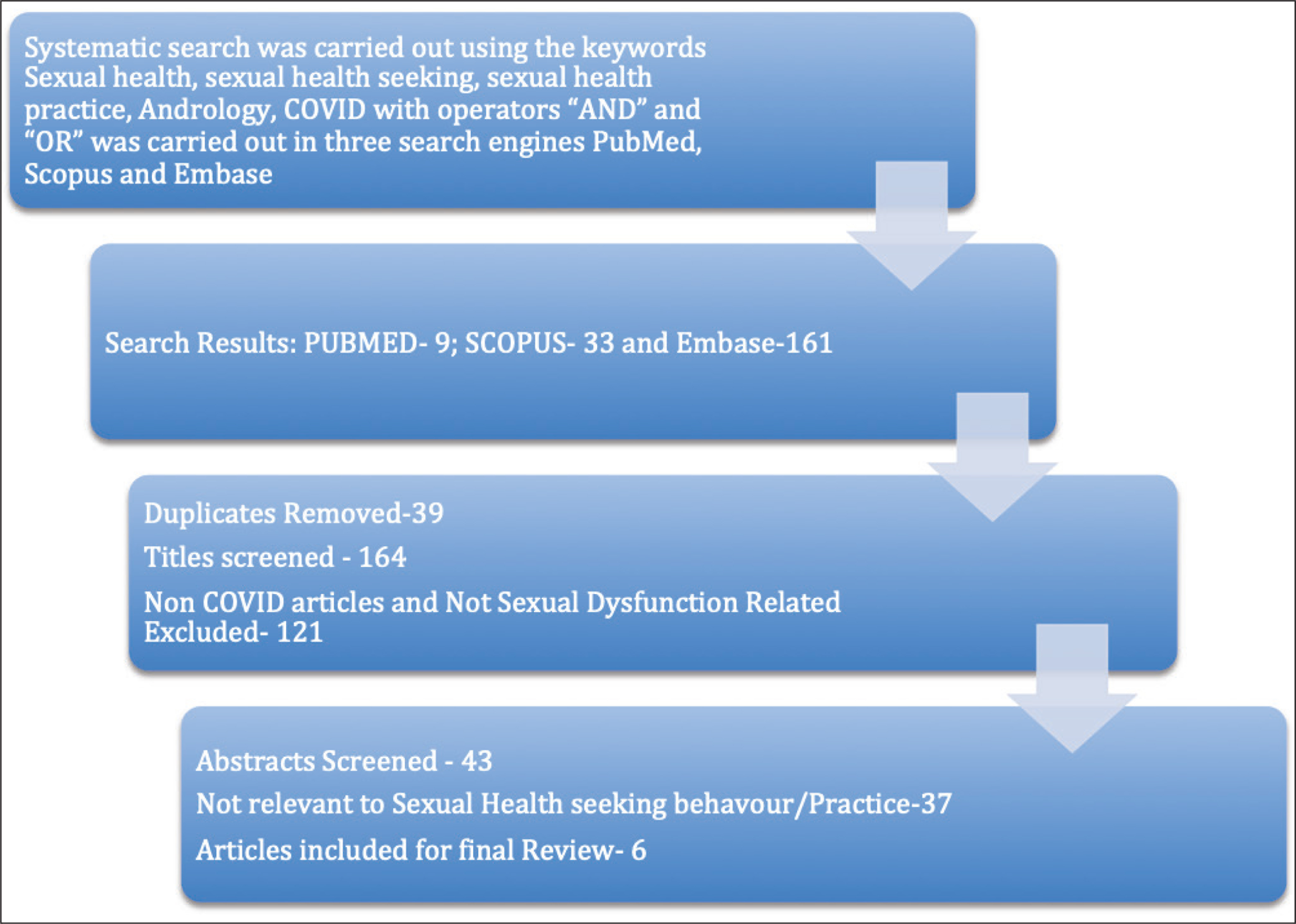
A literature search was carried out using the keywords sexual health, sexual health seeking, sexual health practice, andrology, and COVID with operators “AND” and “OR” was carried out in three search engines PubMed, Scopus, and Embase. Literature search was restricted to original articles, reviews, editorials, and commentaries. The articles were filtered for English language. A narrative synthesis was carried out using the included articles. The detailed search strategy is outlined in Figure 1.
Search Strategy for the Review on Health-Seeking Practices During COVID-19 Pandemic
Results
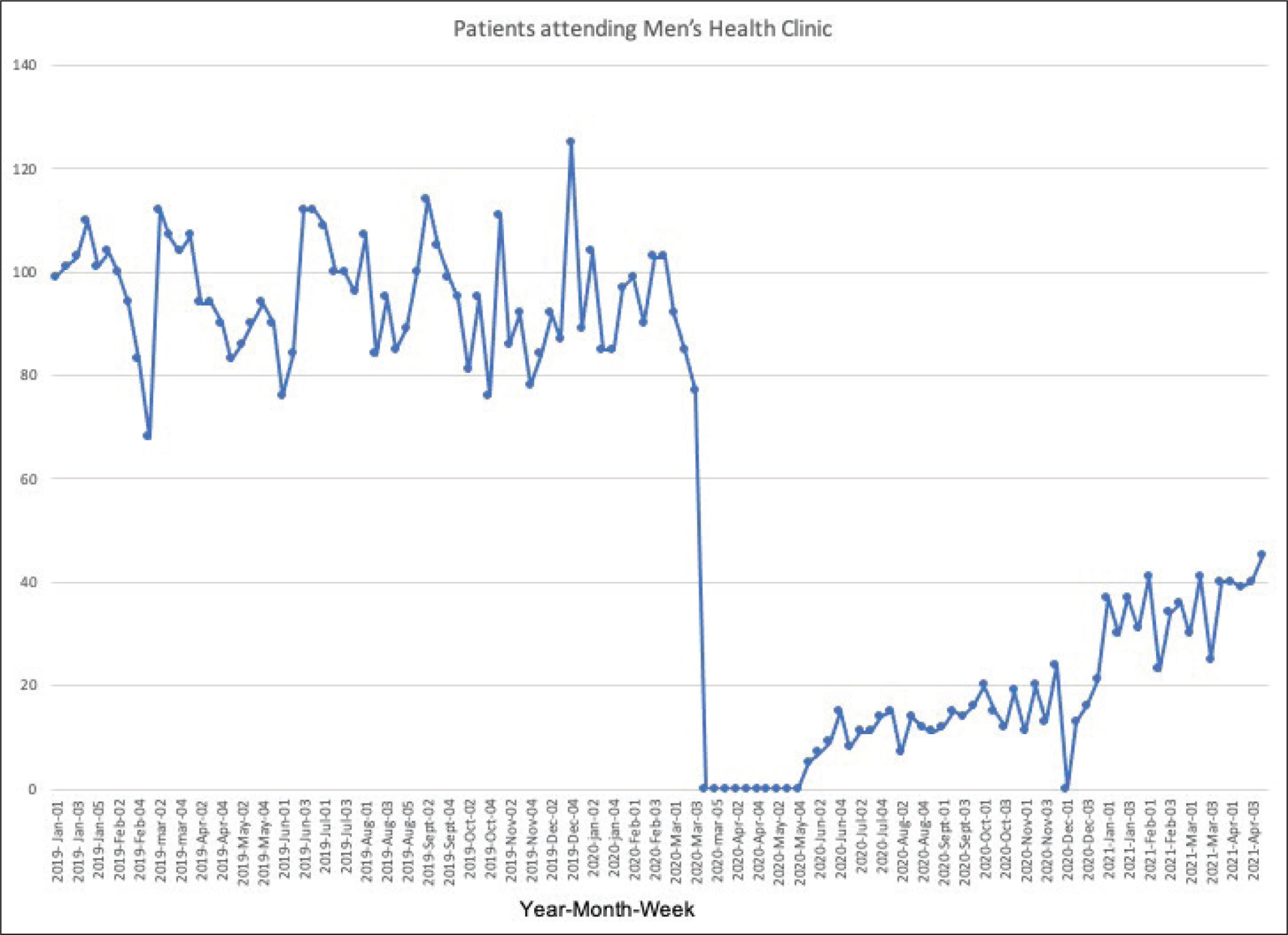
At our center, the Men’s Health Clinic is conducted on Monday every week. The weekly attendance from January 2019 to April 2021 is provided in Figure 2. There is a stark difference between Before COVID (BC) era and After COVID (AC) era as seen from Figure 2. There is the switch from in-person to tele-consultation using WhatsApp platform from June 2020. The mean attendance fell significantly from 95.11±11.17 to 17.25±13.70 persons (P < .0001) per outpatient clinic, March 2020 being the reference point. This reduction of almost 1/8th was not reflective in the general OPD attendance, which reduced to the tune of half to one-third of its previous strength. The attendance has picked up now from January 2021 onward after the second wave of COVID. It is notable that there was 98/949 (10.3%) patients who could not receive consult due to non-picking of phone call or wrong number being provided or phone being out of network coverage area/switched off. Patients needing surgical procedures who were on the waiting list such as penile prosthesis insertion (3), transurethral resection of ejaculatory duct (3), vasoepididymal anastomosis (7), microsurgical varicocele ligation (8), vasectomy reversal (2), or reconstruction for Peyronie’s disease (3) could not be offered the procedure due to restriction over elective operation theatre (OT) services, in view of diversion of health-care workers to COVID management facilities and OT facilities being restricted for emergency surgical procedures. Patients requiring assisted reproduction were also put on complete hold due to suspension of Assisted Reproductive Technology (ART) services at the institute.
Weekly Attendance of Men’s Health Clinic from January 2019 to April 2021
Discussion With a Narrative Synthesis of the Available Evidence
There is considerable change in clinical practice of each and every specialty due to COVID-19. Men’s Health Clinic or andrology services haven’t remained untouched. With the advent and approval of teleconsultation as the modality of choice for outpatient consultation, newer avenues were explored. 6 Ours being a tertiary care center catering to a large population was called upon to tackle the COVID-19 situation. A dedicated 200-bedded facility with intensive care unit, ward, and surgical care was earmarked in a special newly constructed extension block. All the physical consultation clinics were stopped with immediate effect and only teleconsultation was allowed. Elective surgeries were curtailed to include only emergency surgeries and oncological surgeries initially and only emergency surgeries at a later stage.
The teleconsultation facility was widely promoted using mass media, newspapers, and website. Despite this, the attendance for Men’s Health Clinic decreased to almost 1/8th of original. This could be attributed to a number of reasons such as decrease in overall health seeking behavior for sexual health, less reach of teleconsultation to population at large, deferment of plans for pregnancy during COVID-19 pandemic, unpopularity of teleconsultation due to lack of physical eye-to-eye contact, and lack of privacy in the household to discuss sexual matters, especially as it is considered a taboo in our country. 5 These trends are similar to those observed in other countries as well. In a country like ours, lack of smartphones, illiteracy, and poverty also limit the number of persons who can access telehealth.
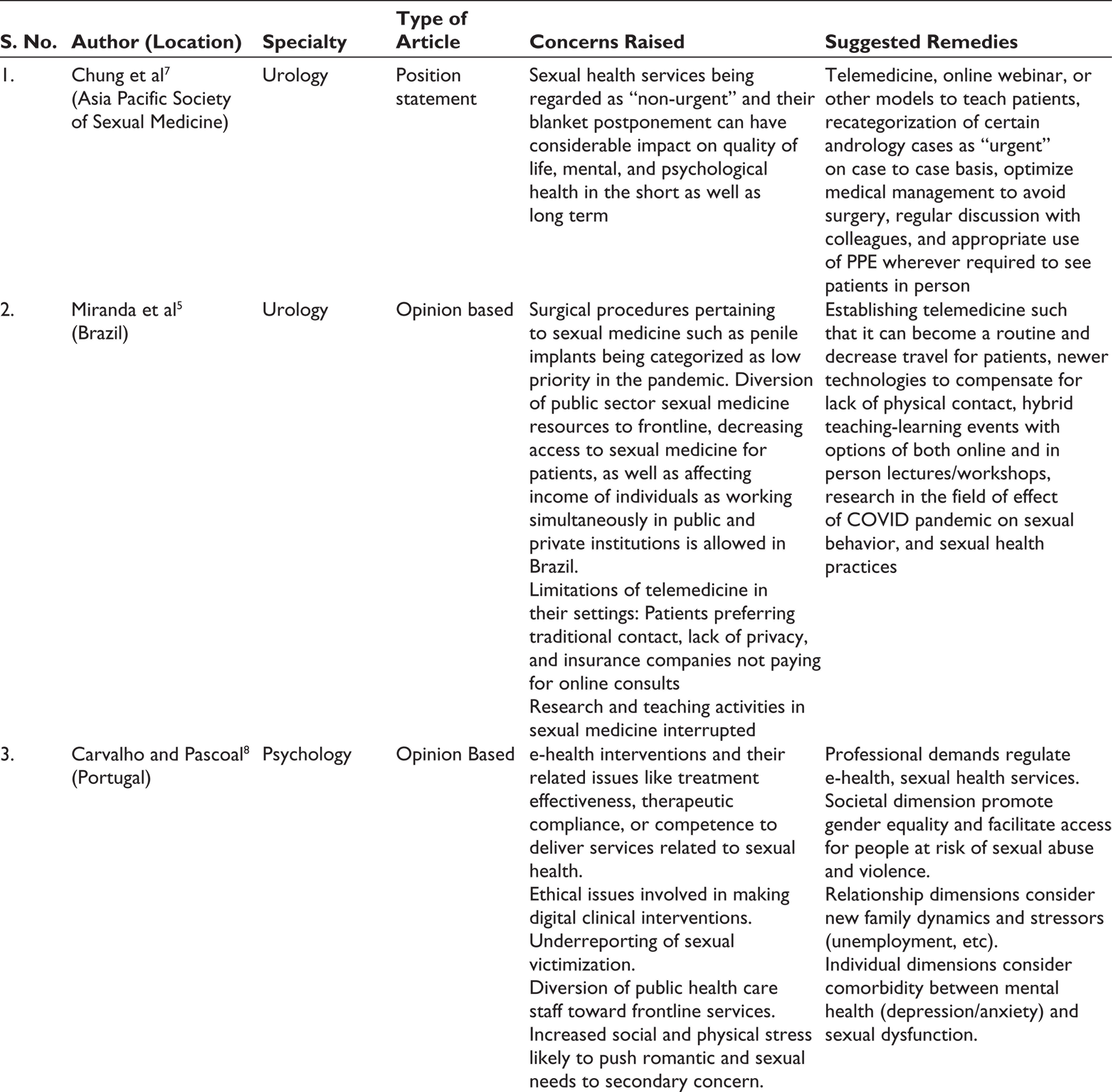
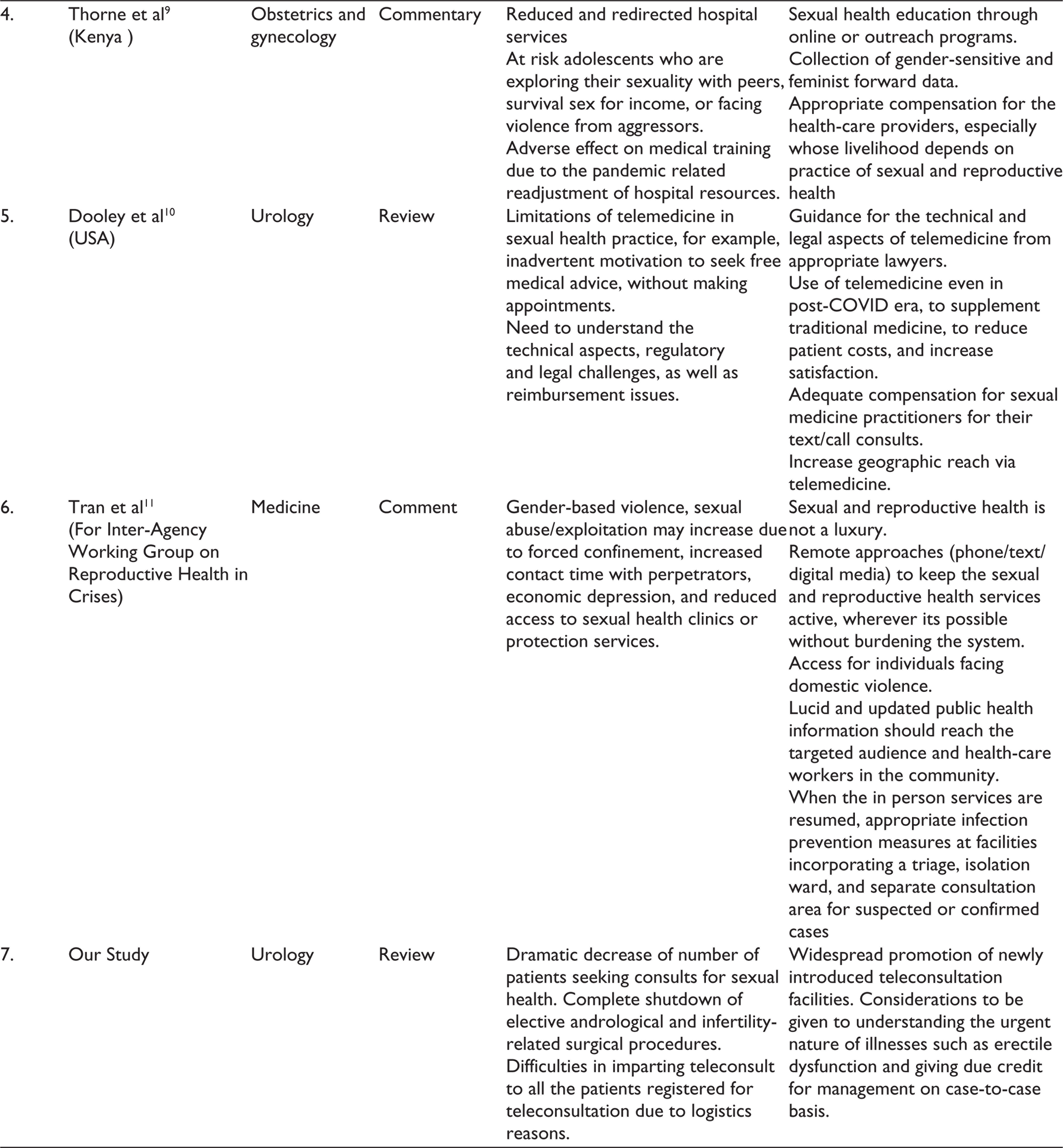
The systematic search results have been summarized in Table 1.5,7–11 The published literature from various countries echoed similar findings regarding sexual medicine. Most of the papers are opinion-based articles or narrative reviews (Figure 1). None of them provided actual data regarding the decrease in number of patients seeking teleconsultation. Most articles claimed to have resorted to similar strategies to mitigate the damage by COVID-19 and recognized the limited number of patients seeking health consultations as a pattern.5,7–11 The varied subspecialties (urology, obstetrics, gynecology, clinical psychology, medicine) that deal with sexual medicine also reflect the heterogeneity of sexual health-care providers and thus the stakeholders affected by this decrease in consultations.5,7–11 Andrological procedures such as surgery for Peyronie’s disease and penile implant have been categorized as low priority in most countries.5,7–8 There has been channelization of resources including the health-care personnel to COVID-19 duties.8,9 This has led to shunting of the personnel from sexual medicine services to cater to COVID-19 patients. The same phenomenon is happening at our center with residents, faculty, nursing officers, and allied staff being shunted to COVID hospital. Faculty and residents from all subspecialties including urology and gynecology have been posted to the COVID hospital.
Compilation of Literature Addressing Sexual Medicine Health Seeking Practices Across Countries
The problem with delayed sexual health care for patients can have serious psychological impacts. Li et al 12 have reported that both the sexual activity and sexual satisfaction of young men and women have decreased. 12 The probable reasons cited were low sexual desire and unsatisfying partner relationship. Although due to strict physical restrictions and social distancing norms, the high-risk sexual activities were also found to be decreased, the participants in this survey indicated to engage with more sexual partners or risky sexual behaviors post lockdown. These facts portend a future surge of sexually transmitted infection and psychological sexual dysfunction.
The restriction of mass movement, state-wise restriction, and local restriction imposed by hospital administration have also led to marked decrease in footfall in the hospital. The phenomenon of COVID fatigue was observed in populations across the world. 13 This led to letting down the guard and violations of restrictions such as universal masking and social distancing. A second peak of COVID-19 swamped the country with a variant virus leading to higher mortality than the first wave. Many countries went into relockdown. 14 In India, the things were no different. With relockdowns, the footfall has remained lower than usual throughout this period. The number of patients seeking teleconsultation has gone up in the latter part of the pandemic (shown in Figure 2), which might be a reflection of better awareness of telemedicine services and also the realization that telemedicine is here to stay. At the same time, hospitals must also be cautious and should gear up for tackling a rebound surge in outpatient and inpatient care for noncovid patients, while simultaneously strengthening the infrastructure for tackling a possible third wave predicted in approximately 3 months’ time. Sexual health problems remain no different from these ramifications and the health-care providers should be wary of these facts and prepare for catering to a number of patients with untreated or self-treated inflictions.
Conclusion
There is a reduction in the number of patients seeking sexual health consultations since COVID-19 pandemic, in our hospital and worldwide. A shift to telemedicine has been adopted, which is gradually finding favor among seekers of sexual health care. Few of the challenges of sexual medicine and health care during pandemic, especially via teleconsultations, are inadequate access to sexual healthcare services, lack of privacy, and deferment of pregnancy planning. In view of the long-lasting deleterious consequences of poor sexual health and inadequately treated sexual disorders, we recommend establishment of data-safe teleconsultation facilities and their widespread advertisement, to encourage patients to seek consultation.
Future Direction
Action is required to mitigate the collateral damage due to COVID-19 in terms of care for non-COVID patients in all subspecialties. We advocate widespread promotion of teleconsultation facilities as first and foremost. As a wide subset of the population is deprived of smartphone facility, there should be provisions for physical consultation laid for such patients, with strict protocols in place for maintaining social distancing, for example, the token system. Further, it is advocated that recategorization of certain specific cases in andrology as “urgent” may be useful, for example, a person having severe depression or psychological disturbance due to vasculogenic erectile dysfunction and awaiting a penile prosthesis insertion. Another important point of consideration as stressed by Julie Thorne et al 9 is compensation for health care providers whose livelihood solely depends upon the practice of sexual health and dysfunction. 9 With a definitive impact on the economy and individual income due to drastic decrease in cases seeking health care, this becomes an important point of consideration. Whether the COVID-19 is going to have a waxing and waning course or will it end abruptly is still to be determined. This shall shape the future course to be taken eventually; however, for now we should stay abreast for the third wave as predicted and develop a system for sustained quality health care for patients of all subspecialities.
Footnotes
Declaration of Conflicting Interests
The authors declared no potential conflicts of interest with respect to the research, authorship, and/or publication of this article.
Funding
The authors received no financial support for the research, authorship, and/or publication of this article.