




Abstract
Introduction:
Not many studies have been reported from Portugal or Brazil to date, regarding the psychosocial impacts of COVID-19 on lesbian, gay, and bisexual (LGB) people, especially from a qualitative perspective.
Materials and Methods:
A convenience sample of 65 self-identified LGB individuals from Portugal and Brazil participated in this study. Thirty-two participants were from Portugal and 33 from Brazil. The average age was 34.48 years (standard deviation = 11.66), ranging from 19 to 67. We used an online interview approach in an asynchronous format. All study respondents completed a structured inquiry consisting of a short section of sociodemographic questions and a single open-ended question: “As a lesbian, gay, bisexual (or other) self-identified person, please elaborate on how the COVID-19 pandemic has impacted your life.”
Results:
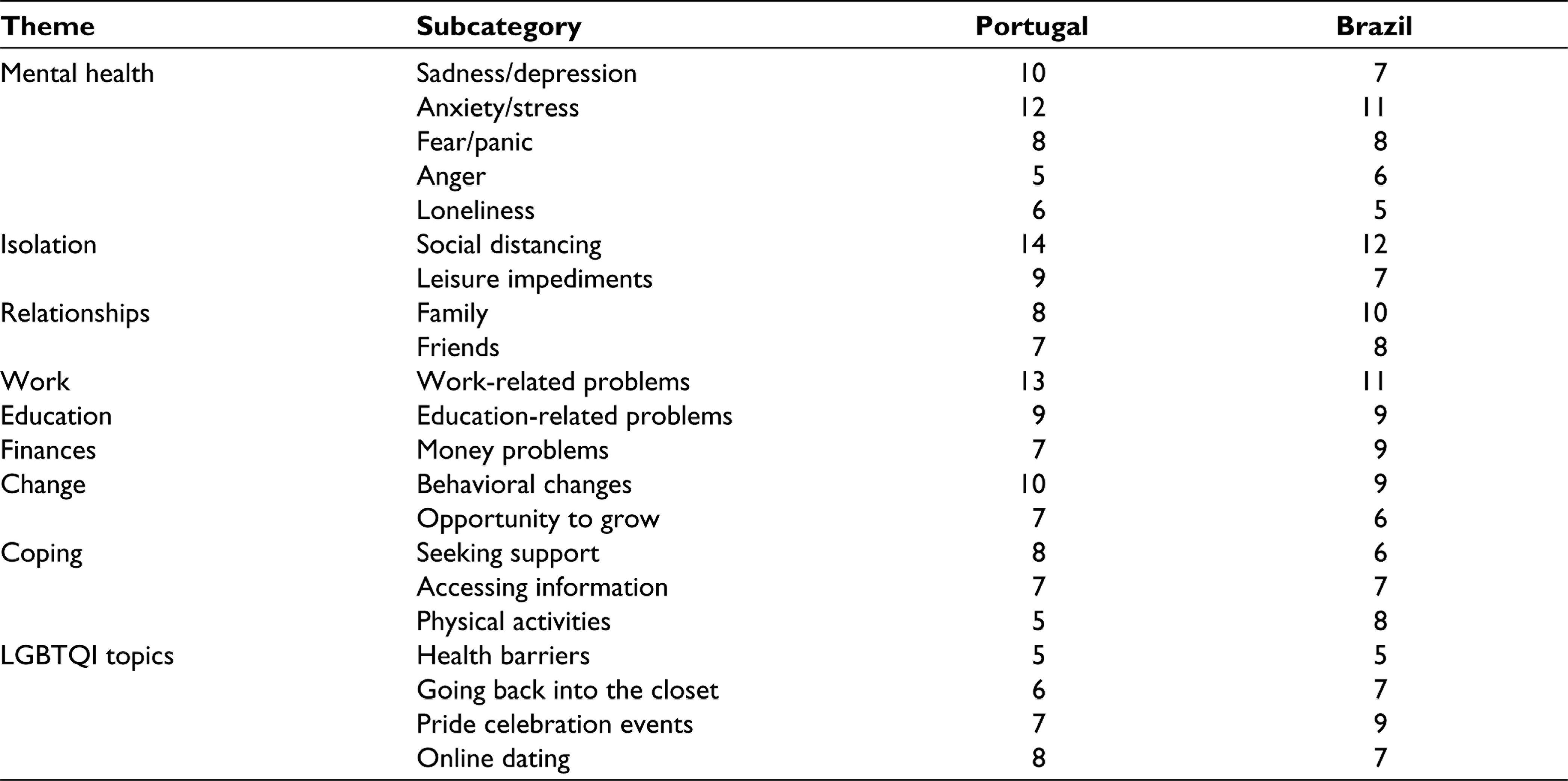
The thematic analysis of participants’ responses revealed 9 recurring themes, encompassing 18 subcategories to occur: mental health (depression, anxiety, fear, anger, and loneliness), isolation (social distancing and leisure impediments), relationships (family and friends), work-related problems, education-related problems, financial problems, changes (behavioral changes and opportunity to grow), coping (seeking support, accessing information and physical activities), and LGBTQI (lesbian, gay, bisexual, transgender, queer and intersex) topics (health barriers, going back into the closet, pride celebration events, and online dating).
Conclusions:
Our results provide voice to LGB Portuguese and Brazilian people during the COVID-19 pandemic demonstrating specific challenges exacerbated by stigma and sexual discrimination amplified by preexistent social inequalities.
Introduction
The COVID-19 outbreak started in December 2019 in China, 1 and its rapid spread around the globe 2 made it recognized by the World Health Organization as a worldwide pandemic. 3 In Portugal, the first cases emerged in March 2020 4 and, in the same month, a state of emergency was declared as a way to contain the spread of the virus, with lockdown measures put in place. 5 In Brazil, the first cases appeared in February 2020, 6 and like in other countries, measures of social distancing, travel restrictions, and quarantine were adopted, 7 impacting on social and financial structures of the country. 8
As a worldwide public health concern, the COVID-19 pandemic had several impacts in the most different domains and areas of society.9-11 Lockdown measures and the duty to stay at home increased isolation and the need to create changes and adjustments to the general population’s daily life and routines 12 which contributed to the compromise of mental health. 13 This adverse circumstance may have impacted more on the lives of previously more vulnerable populations, such as LGBTQI (lesbian, gay, bisexual, transgender, queer and intersex) individuals.
The literature constantly identifies significant discrepancies between heterosexual and LGBTQI individuals concerning mental health and well-being, sexual minorities scoring lower.14,15 Additionally, sexual minorities also show higher prevalence for having mood disorders such as anxiety, experiencing suicidal ideation and behavior, misusing illicit substances,16-18 and experiencing difficulties accessing health, employment, and other socioeconomic resources. 19
The minority stress model may explain how COVID-19 had a more significant impact on LGBTQI individuals than heterosexual people 14 because it causes reduced well-being and greater levels of mental health impairment related to exacerbating and intensifying of preexistent vulnerabilities and inequalities in society.14,15 Lockdown measures forced many LGBTQI individuals to cease having access to social and community groups that are essential sources of support, thus increasing the psychosocial impairment during the pandemic, including anxiety and depressive symptoms11,16-20 as well as limited access to mental health services despite the increase of electronic interventions. 21 Therefore, the need for social and mental health support for LGBTQI individuals becomes evident. 22
Concerning the Portuguese sociopolitical context, the progressive acceptance of sexual minorities in Western countries, as is the case in Portugal, does not invalidate the occurrence of experiences associated with stigma and discrimination. 23 Although the country has undergone sociopolitical and legislative advances, such as same-sex marriage, and same-sex couples adoption, 24 it did not stop Portuguese LGBTQI individuals from facing sexual prejudice.25,26
The Brazilian sociopolitical context is guided by a conservative mentality, which is reflected in the fact that Brazil is one of the countries with the highest rate of crimes for homophobia. 27 Thus, sexual minorities in Brazil are more likely to experience insecurity, hostility, and violence since laws and measures aimed at criminalizing hate attitudes against sexual minorities have not yet been adopted, 28 and consequently, laws that protect the rights of the lesbian, gay, and bisexual (LGB) community 29 are still ineffective in Brazil.
Portugal-Brazil relations have spanned over 5 centuries. In addition to a commonality of language and religion, both countries are members of the Lusophone world. As common cultural values favor the development of similar social norms, not many studies have been reported from Portugal or Brazil to date, reading the psychosocial impact of COVID-19 on LGBTQI individuals, especially from a qualitative perspective. Articulating these issues and giving voice to Portuguese and Brazilian LGBTQI individuals is our study’s primary goal. We correspondingly adopted a qualitative approach to present our research results on the COVID-19-related psychosocial experiences and perceptions of LGB participants to weave lessons for a more inclusive psychosocial intervention during the pandemic and future adverse circumstances.
Materials and Methods
Participants
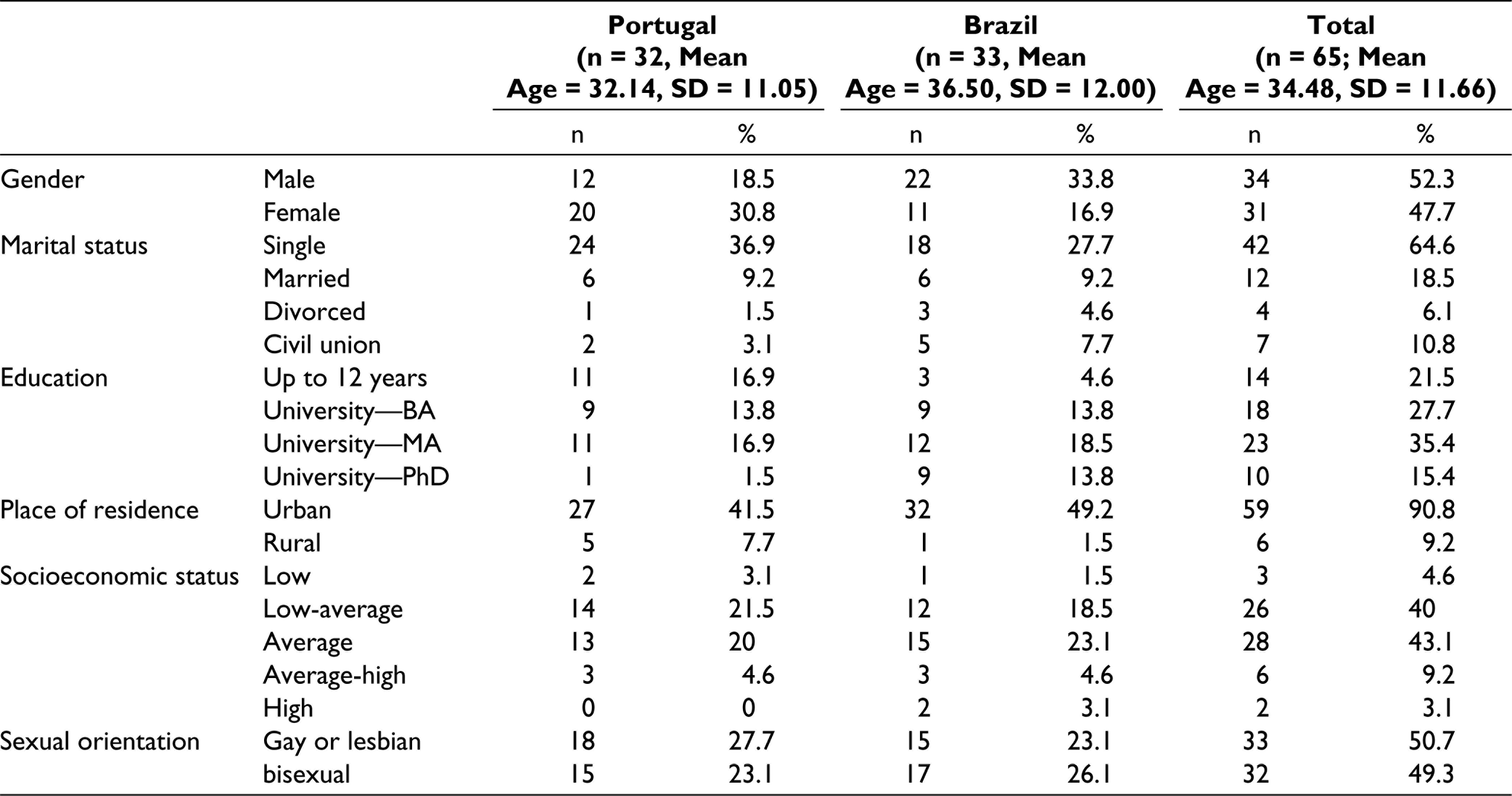
A convenience sample of 65 self-identified LGB individuals from Portugal and Brazil participated in this study. Thirty-two participants were from Portugal and 33 from Brazil. The average age was 34.48 years (standard deviation = 11.66), ranging from 19 to 67. Half (50.7%) of participants identified as gay or lesbian, and the other half as bisexual. In Table 1, we describe in greater detail sociodemographic information. Both samples were highly educated; most participants were single and from urban origin. The sample size was determined by thematic saturation and we collected data from those LGBTQI individuals to which we had most convenient access.
Sociodemographic Characteristics of the Participants
Measures
We used the online interview approach in an asynchronous format, adhering to the guidelines of O’Connor and Madge 30 and Hamilton and Bowers. 31 Online interviewing was conducted in non-real-time or asynchronously facilitated via email, with the advantage of online recruitment possibilities, which constitute an enhanced opportunity to discuss sensitive topics with greater openness and readiness. All study respondents were invited to complete a structured inquiry consisting of a short section of sociodemographic questions, such as age, gender identity (male, female, or other), sexual orientation (gay/lesbian, bisexual, or other), nationality, education, socioeconomic status, marital status (single, married, divorced, civil union, or other), and place of residence, and a single open-ended and fundamental question: “As a lesbian, gay, bisexual (or other) self-identified person, please elaborate on how the COVID-19 pandemic has impacted on your life.” The inquiry was expected to take around 10 min. Participants responded to this outreach online through 1 website created for this purpose, in Portuguese language (standardized for both European and Brazilian Portuguese). The first page of the questionnaire explained the study’s objectives, informed participants about how to complete the survey, their freedom to withdraw from the study, and how to contact the authors for further information if needed.
Procedures
Participants were recruited online and were invited to fill out an interview script between October 2020 and November 2020 during pandemic times. Recruitment targeted specifically self-identified sexual minority individuals, and involved Internet notifications (emails and electronic messages) sent to LGB organizations in Portugal and Brazil, social networks such as Facebook, and mailing lists. Accessible online information concerning the study presented its goals and procedures and included all of the principles of traditional research ethics: confidentiality and anonymity, and informed consent. Participation in the study was formalized after acknowledging the guidelines of informed consent. The interview script’s design phase (question format, content, order, number, and question delivery) led to a script with a single central open-ended question. This was a deliberate choice by the researchers, designed to meet the requirements indicated by Hsieh and Shannon 32 for subsequent data content analysis. Confidentiality was assured by using codes on data documents, encrypting identifiable data, assigning security codes to computerized records, and limiting access to identifiable information (IP address). The Ethical Committee of the University of Beira Interior (Portugal, CEUBI-Pj-2020-088) approved this study.
Analyses
The transcripts from all interviews were entered in NVivo (version 12), which is a software program used for qualitative methods research to process a rich dataset of unstructured information (like interviews). The software automates manual tasks, like classifying or organizing information. Specifically, it analyzes the unstructured text, namely, qualitative content analysis, to identify concepts that emerge from the text, subsequently linked together. 33 We adopted a conventional conceptual content analysis approach (the analysis involved quantifying and counting the presence explicit and implicit terms in order to examine the occurrence of selected terms in the data) that enabled us to gain direct information from participants without imposing preconceived categories and names for the categories derived from the data. 32 The following steps for conducting the conceptual content analysis were taken: (a) we decided the level of analysis: word, word sense, phrase, sentence, themes; (b) we decided how many concepts to code for allowing flexibility to add categories through the coding process; (c) we decided to code for existence or frequency of a concept in the text; (d) we created coding rules so that similar word segments were transparently categorized in a logical fashion to provide clear distinction among concepts; (e) we developed rules for coding of the texts, to promote validity; (f) we ignored irrelevant information; (g) we coded the text using NVivo, inputting categories and having coding done automatically; and (h) we finally analyzed our results, quantifying general trends and patterns.
Trustworthiness/rigor of our study was ensured by conducting all research tasks in a precise, consistent, and exhaustive manner to enable credibility, transferability, dependability, and confirmability. COREQ compliance for this study was checked for each of the 32 criteria (rated yes/no) by the researchers. Discrepancies in study inclusion or item ratings were resolved with the inclusion of two experts who examined all transcripts independently, thus identifying broader principal themes that emerged from the interview. These two experts then followed a “negotiated agreement” approach 34 to assess intercoder reliability, compare coding, and discuss disagreement to reconcile and reach a final version. Based on this conjoint analytic procedure, the final broader themes were organized, assessed, analyzed, and presented. The illustrative quotations used came from the online interviews and indicated each participant’s age, nationality, gender, and sexual orientation.
Results
The thematic analysis of the participants’ responses revealed 9 recurring themes, encompassing 18 subcategories to occur, as shown in Table 2. Subcategories that were mentioned less than 5 times were excluded from this analysis. The results are presented comparatively between Portugal and Brazil.
Key Themes Identified
The illustrative quotations used come directly from the online interviews and indicate the first name (a fictitious name assigned by the study’s authors), sexual orientation, and gender identity, age, and country of origin of each participant.
Mental Health
LGBTQI individuals traditionally present poorer mental health indicators than heterosexual people due to the effect of sexual stigma and discrimination, as suggested by the minority stress theory.35-37 In the scenario of COVID-19, the pandemic significantly affected our participants’ mental health by creating discourses of sadness and depression, anxiety and stress, fear and panic, anger, and loneliness. These negative emotional manifestations were increased by the pandemic circumstances, given that, in some cases, self-assessment of mental health was already poor and was worsened by the impediment of maintaining social and family support contacts, by the need to adapt to behavioral changes and permanent immersion in a threatening, dangerous environment. The uncertainty about the future, the fear of catching the disease, the fear of losing their jobs, and the anger at the criticism of the way governments managed the pandemic have created intense feelings of anxiety, yet more accentuated by loneliness.
COVID-19 has had a very negative impact on my life because my mental health was already fragile before the pandemic; the problem is that now, due to knowing that I cannot be with my friends or family, I get much sadder. I need the touch, the kisses, and the hugs to be happier.
—António, bisexual man, 19 years old, Portugal.
As I belong to the risk group and have family members with whom I live daily who also do, I feel sad and hopeless when I see people not wearing a mask, and where I live, the elderly who walk around without a mask predominate. It really affects my life.
—Thiago, gay man, 54 years old, Brazil.
It made me postpone or suspend opportunities that were about to happen, suspending my life. This creates a lot of anxiety and insecurity about the future.
—Pedro, bisexual man, 37 years old, Portugal.
The new job requests happen in a virtual environment, which is not at all welcoming. Besides, it creates much anxiety because I want to adapt and participate, but it is not easy. However, it is not only anxiety about the present, but also about the future, the reorganization of society and its mechanisms, an aggravated situation where one is in a condition of vulnerability.
—Rodrigo, bisexual man, 34 years old, Brazil.
Physical symptoms of anxiety arose, but I had a hard time noticing them and asking for medical help. Only later was it confirmed that I had anxiety, I started taking medication and took up psychotherapy.
—Mariana, lesbian woman, 22 years old, Portugal.
Working in healthcare, I was very overwhelmed. My grandmother had cancer, and I was afraid to visit her because of the pandemic, and she eventually passed away without my being able to live with her at the end of her life. Before the pandemic, I bought a property, and this burden has repercussions on my financial life. It has been a tough year. Lots of stress.
—Paulo, bisexual man, 29 years old, Brazil.
The socio-labor transformations imposed by the pandemic have created several fears, especially those of infecting the most vulnerable people around them, such as parents or grandparents, fear of becoming infected with COVID-19, fear of losing their jobs, and fear of being around people and socializing. Thus, the discourses of our participants demonstrate the greater vulnerability resulting from belonging to a sexual minority, namely, the feeling unprotected and without social support, which, in turn, generated feelings of anger.
I am very affected by COVID-19 because I live with my elderly parents, and I am afraid they are contracting it.
—Ricardo, gay man, 41 years old, Brazil.
I had a drastic salary reduction that will go until December 2021 by collective agreement (for the non-dismissal of all employees). I had COVID-19 and stayed away from everything and everyone during quarantine, and I still (even after three months) have some symptoms (sequelae). I’m afraid (despite all the care) that my parents would get the disease.
—Fábio, gay man, 42 years old, Brazil.
I am afraid of socializing and panicked every time I was around people.
—Cristina, bisexual woman, 33 years, Portugal.
The pandemic has changed my whole life routine and that of my family. The fact that my country’s authorities do not take proper action to control de disease makes me angry and constantly stressed.
—Rodrigo, bisexual man, 34 years old, Brazil.
I feel loneliness, many difficulties in relating to people, and much stress because I have little work and many difficulties in paying the bills.
—Luís, gay man, 36 years old, Portugal.
Isolation
LGBTQI individuals, especially the most vulnerable, such as young or older LGBTQI individuals, are more likely to feel socially isolated due to the circumstances of marginalization and anticipation of rejection by family and friends, especially when access to available community support structures is not possible. Given that one of the prophylactic measures to contain the pandemic involves precisely the prescription of isolation and social distancing, this has had a significant impact on our participants’ lives, especially on mental health, being intrinsically linked to feelings of anxiety, depression, and even suicide.
Social isolation made life quite complicated.
—Lara, lesbian woman, 37 years old, Brazil.
Social isolation has considerably worsened my mental health.
—Cristina, bisexual woman, 33 years old, Portugal.
The existence of the disease (COVID-19) itself did not affect me much. What affected me a lot was the need for indefinite isolation at a time of drastic and important changes (going to university), uncertainties, and a lack of sharing experiences with other first-year students. It affected me a lot at the mental level.
—João, bisexual man, 20 years old, Portugal.
The impact of the pandemic on physical health is real and visible. The emotional impact is also real but invisible, at least in the short term, and it worries me. I am worried about people’s emotional isolation. At a time when we need to feel close and supported by our own, it is when we are required to stay far away.
—Beatriz, bisexual woman, 30 years old, Portugal.
The pandemic had a very negative impact on me, especially at the time of the state of emergency and now that I am at home in isolation. Being closed at home and having too much free time makes me think about many things, even suicide, something that has not happened in a long time.
—José, gay man, 32 years old, Portugal.
Several participants reported that isolation harmed previously commonplace leisure activities. Given that many of these activities were associated with maintaining physical and mental health, namely to mediate stress, the negative impact of not having these activities causes in their lives is notorious.
My work has been entirely at a distance since the end of March 2020, and this often leaves me exhausted because I work more than I should, and I cannot distinguish between work and leisure time. This lack of boundaries makes me constantly concerned about work and personal life at all times.
—Joana, bisexual woman, 24 years old, Brazil.
The pandemic prevented leisure activities that, for me, were fundamental to be able to de-stress.
—Manoel, gay man, 59 years old, Brazil.
As a hairdresser, I was not able to work and, at the same time, without being able to do the leisure activities that gave me pleasure.
—Bruno, gay man, 43 years old, Portugal.
As I live in a more rural area and with a specific work with poor contact with the public, the pandemic has only changed the way I do leisure activities. Since the beginning of the pandemic, I have been avoiding cities, shopping malls, cinema, etc.
—Francisco, gay man, 37 years old, Portugal.
Relationships
Most participants mentioned significant relationships, especially family and friends, as areas significantly affected by the COVID-19 pandemic. The circumstances of isolation activated feelings of responsibility, fear of contagion, and maintenance of preestablished dynamics, namely maintaining physical and emotional balance.
For me, the main impact of this pandemic was the distancing of my family.
—Vinicius, gay man, 25 years old, Brazil.
I do not care about myself. I care about my family. I do not mind dying, but I do not want my family members to die.
—Helena, bisexual woman, 37 years old, Brazil.
COVID-19 shook all structures, social, labor and economical, but the worst was at the time the lockdown was enacted, I was isolated from all my family and friends, and this brought many negative impacts to my physical and emotional health.
—Gilberto, gay man, 36 years old, Brazil.
On the other hand, especially for younger participants, it was clear the pandemic’s negative impact on maintaining friendship relationships, which were one of the primary sources of social support that LGB youth are more likely to feel. 38 The lack of maintenance of friendship relationships activated feelings of vulnerability and low self-esteem associated with others’ anticipation of rejection.
I feel like I walked away from my friends during the pandemic, and somehow I was responsible for it.
—Berta, bisexual woman, 23 years old, Brazil.
The biggest impact I felt was at an emotional level because I stopped having the routine of going to college, not being able to see many of my friends, interact with them, and not being able to do the things I like most with them… this has been quite complicated.
—Rita, bisexual woman, 23 years old, Portugal.
Work and Finances
Workplaces can be, for most LGBTQI individuals, contexts that are not open to visibility. For this reason, many people choose to stay in the closet, hiding their sexual orientation for fear of harassment, discrimination, or oppression. The COVID-19 pandemic, coupled with wage and labor restrictions, has activated many of these fears in our participants.
I am afraid I will be out of work. I depend on my work to survive, and the fact that I work in the primary sector as a bi-man does not help. What would be worse than being discriminated against for being bisexual? Being discriminated against for being bisexual and unemployed.
—Júlio, bisexual man, 35 years old, Brazil.
I had to accept the company’s conditions on downsizing and laying-off because at this moment, and there is no alternative. This leaves me in a very precarious situation.
—Fábio, gay man, 42 years old, Brazil.
Education
The impact of COVID-19 on our participants’ education stems mainly from the pandemic changes in the nature and quality of teaching-learning activities. More or less promptly, governments have determined measures to stop the school/university activities or continue them in an online format.
The lack of government actions to return to academic activities will leave permanent marks of delay in my professional curriculum.
—Vítor, bisexual man, 25 years old, Brazil.
My doctoral program course and all classes have moved to the online format. My field project for doctoral research has been completely modified. I had COVID-19 and stayed away from everything and everyone and lost track of things.
—Fábio, gay man, 42 years old, Brazil.
Study activities have changed dramatically, I have had constant requests for online events and to publish articles, and to be bombarded with “interesting” lives, as well as invited to attend communications, and I have the willingness to participate in everything even if it is humanly impossible.
—Rodrigo, bisexual man, 34 years old, Brazil.
Behavioral Changes
The pandemic’s behavioral changes, namely the adoption of new hygiene habits and prophylaxis of virus infection, were not easy to implement because they were not generated from intrinsic motivations but rather externally imposed by health authorities to prevent the occurrence of contagions. These circumstances have forced many of our participants to review their core value systems, although some may have been in a phase of contemplation and distanced from tangible threats.
I was forced to review several behaviors in particular and in general, due to the severity of the problem, as well as its consequences, often unknown.
—Hugo, bisexual man, 67 years old, Brazil.
I had to change the way I perceive having control in life because plans change daily or are only made for the short term.
—Fábio, gay man, 42 years old, Brazil.
Personal Growth
For many of our participants, the COVID-19 pandemic constituted an opportunity for personal growth. From a new world organization, unfamiliar and uncertain, unpredictable and uncontrollable, many managed to take advantage of adversity to solve chronic problems, improve health habits, or start new achievements. These participants were able to interpret and respond to the crisis with a positive attitude, relativizing and looking at difficulty, and embracing adversity, generating positive emotions integrated into their purpose of human growth.
It all turned out to be OK because I am in telework, and it physically took me away from what disturbs me in professional terms, bad people and the bad environment in the workplace. This allowed me to feel better about myself and my abilities.
—Luísa, lesbian woman, 30 years old, Portugal.
I had no negative impact. On the contrary, during the pandemic, I improved my eating habits, approached some important people, started exercising regularly, and some situations (such as seeing the struggle of doctors and nurses, for example) renewed my hopes in humanity, in a way.
—Vanessa, bisexual woman, 27 years old, Brazil.
It forced me to change the way I relate to others. I started a new relationship in the middle of the pandemic, which has survived until now, and is now solidified, which is the best I could ask for.
—Fernando, gay man, 28 years old, Portugal.
Coping Mechanisms
Several participants mentioned the importance of seeking support to address the specific need to deal with the pandemic’s negative consequences, namely the search for physical and mental health care. Other participants mentioned the importance of keeping physical activity a fundamental strategy for maintaining physical sanity and meditation to maintain mental sanity. Limited access to COVID-19-related information was also mentioned as a valuable and effective way to mediate the pandemic’s negative impact.
I started to have physical and psychological symptoms. At first, I was afraid to seek medical services due to hospitals’ barriers and fear of catching COVID-19. However, then I was able to make an appointment and started taking medications and doing psychotherapy, which has helped a lot to deal with various issues.
—Nuno, gay man, 22 years old, Portugal.
I live in a house, and I practice slackline on the outside. Therefore, physical activities were not impacted, and this has helped me feel good. I value contact with nature, plants, and trees. Although there is social isolation, I have plenty of space to walk around. Nature calms me down. Besides, I practice meditation, and this also contributes to being relaxed in the face of difficulties. I watch little and selected news, and this selectivity of information helps me feel good. I try to focus on the solutions, avoiding putting the problem bigger than is necessary.
—Roberto, gay man, 27 years old, Brazil.
LGBTQI Topics
Participants mentioned specific aspects of the impact of COVID-19 on their lives as sexual minority people due to social inequalities that they face, which may harm their well-being, as it is likely that people most marginalized by society due to their minority sexual status will have more difficulties in adapting to new circumstances. This reflects fewer resources, fewer traditional sources of social support, and constant exposure to adverse social circumstances characterized by discrimination and social exclusion. Some participants mentioned the difficulties in accessing health care, not only because they were afraid of the COVID-19 infection that could occur when going to the hospital/health center but also because they had some specific pathology, for example, HIV, which involved greater visibility of their sexual orientation, thus anticipating increased stress. Other participants expressed their frustration at the cancellation of LGB pride celebration events and activities. These are moments of affirmation of minority sexual identities that lack constant visibility. The fact that they could not be carried out for epidemiological reasons has also generated some fear about the strengthening of invisibility and hate discourses toward LGBTQI individuals.
On the other hand, it was mentioned by some participants that, in this pandemic circumstance, they were forced to return to the closet, either explicitly or implicitly, for example, when they had to return to live at their parents, and the topic of sexual identity was found to be a taboo. Job hunting as an LGB person also created fears about being discriminated against at the workplace. Finally, some participants reported specific difficulties in the search for sexual or meaningful relationships. Although it was easy to establish contacts through online dating sites or apps, the pandemic imposed physical barriers that were not easy to manage and put in standby many loving expectations.
Being HIV positive and therefore with immunity problems, I was afraid that getting COVID-19 would be a death sentence for me. So, I did not leave the house and even let the antiretroviral medication run out. Fortunately, it was possible to have it delivered to my house, which prevented me from going out.
—Cláudio, gay man, 31 years old, Portugal.
I was very sorry that all LGB pride celebration events had to be canceled. These are significant moments for LGB activism, a time of celebration and joy, and the affirmation and strengthening of minority identities that cannot be forgotten and deserve to be dignified. I hope that soon everything will be able to return to normal.
—Inês, lesbian woman, 26 years old, Portugal.
Unfortunately, I lost my job and ran out of money to pay for rent and had to go back to my parents’ house, who never accepted my being gay. We live in a tense environment where nobody talks. I had to go back into the closet, and I feel like I am 16 again. Backsliding like this is very bad.
—Guilherme, gay man, 38 years old, Brazil.
It is a paradox, nowadays, social networks bring us closer, but with the pandemic, you cannot do much with it. I have made some contacts, I would like to get a girlfriend, but then it was so challenging, if not impossible, to have a date. The fears that the pandemic brings are very frustrating.
—Jéssica, lesbian woman, 26 years old, Brazil.
Discussion
This study aimed to understand the psychosocial impacts of the COVID-19 pandemic on Portuguese and Brazilian LGBTQI individuals. General results show different themes emerged: mental health, isolation, relationships, work, education, finances, changes, coping, and LGBTQI topics. These results corroborate with others, in which LGBTQI individuals are also suffering from more significant psychosocial stressors during the pandemic.17,39-41 Understanding these results is especially important since these stressors can further increase physical and mental health disparities in an already vulnerable population due to oppression from a discriminatory social environment.25,35,36,42
Mental Health
The LGB population is one of the groups most affected by COVID-19. 17 These individuals were already at a social disadvantage due to sexual stigma, prejudice, and society’s discrimination against their sexual orientation, 43 which negatively impacts their mental health.35,36 Moreover, LGBTQI individuals have a higher prevalence of problems related to mental health functioning, 25 including higher levels of depression, anxiety, and suicidal ideation,44,45 compared to their heterosexual peers. 46 Thus, our study results are in line with the existing literature that shows that the emergence of the COVID-19 pandemic and the adoption of lockdown measures to contain it has aggravated LGBTQI individuals’ mental health. 14
Some participants still mentioned the difficulties in accessing health care, mainly by those who had some pathology, such as HIV. According to the OutRight Action 47 report, sexual minority people without antiretroviral treatment are at risk of contracting the most severe cases of COVID-19. Fear and concerns about how they would be treated, anticipated stigma, discrimination, and isolation were also associated with the delay in seeking health care, 47 which contributed to the negative impact on their physical health as well. 48
Isolation
The adoption of COVID-19 lockdown measures led to a reduction in contact with family and friends by the participants in this study. The fear that their family and friends would be infected with the new coronavirus 49 may have affected these relationships’ maintenance. Moreover, adopted measures resulted in feelings of loneliness and rejection in the sample, which led to depressive and anxiogenic symptoms. 50 Since the pandemic caused many LGB individuals to have to stay at home longer or move in with family members, 51 some participants pointed to their need to return to the closet and deal with family stress. This was because many sexual minority people tend to suffer from prejudice and rejection from their own families, 52 with increased conflictual dynamics. 51 During the pandemic, a hostile family climate was associated with higher levels of depression and anxiety. 53
Relationships
Additionally, LGB individuals had less contact with LGB community systems 54 and the cancellation of pride events seems to have negatively affected some of our participants. This is of particular relevance, insofar as pride celebration events have been proved to be an essential resource for resilience, connection, and support for sexual minority people, 42 being associated with higher levels of overall well-being.36,55 The search for sexual or significant relationships was also affected, which, according to Sanchez et al, 39 is a concern since intimate relations are generally considered protective for mental and physical health and relationships.56,57 Finally, lockdown also prevented our participants from taking part in leisure activities, such as going to the cinema, traveling, or going to the gym, which harmed their lives since these activities promote the overall quality of life. 58
Work and Education
The LGB population is subject to a stressful social environment created from sexual stigma, prejudice, and discrimination, often exhibiting feelings of internalized shame about their sexual identity, 59 which can also occur at the workplace. 51 In a study by Pereira and Costa, 25 24% of the sample participants stated that they felt the need to hide their sexual orientation in the workplace to avoid discrimination experiences. According to the literature,60,61 financial problems severely affect the LGB community, especially in Brazil. For example, in a Brazilian study of about 10,000 LGBTQI individuals, 1 in 5 participants reported not having any income due to the pandemic, with 4 out of 10 being unable to survive without a salary for more than 1 month. 62 This seems to reflect how the heteronormativity model imposed by society 43 may have harmed the participants in this study. 63
The COVID-19 pandemic led governments to shut down several educational establishments and continue teaching activities in an online format. However, distance learning tends to exacerbate existing inequalities since not all students have the necessary and quality equipment to take classes online. 64 Also, many teachers and professors felt overwhelmed and needed to learn, in a short time, how to use digital platforms, 65 which may have negatively influenced the learning outcomes of those of our participants who were students. 66
Change and Coping
Despite the difficulties and stigma experienced by LGBTQI individuals in this study, the pandemic’s behavioral changes led many participants to reflect on their life values, manage to respond to the crisis positively, embrace adversity, and focus on their personal growth. Many have adopted strategies such as seeking physical and mental health care, exercising, meditating, and maintaining limited access to information related to COVID-19 to lessen the negative impact of the pandemic and maintain good physical and mental health levels.
This positive outlook may be linked to the participants’ sense of belonging in their minority category and resilience, 67 which helped identify a certain level of positive marginality. 68 Coherence with their marginal status helped build a sense of authenticity and well-being, enabling the pandemic crisis to create higher resilience levels. 69
LGBTIQ (Lesbian, Gay, Bisexual, Transgender, Intersex and Queer) Topics
Our results suggest that the COVID-19 pandemic has impacted LGBTQI individuals in very unique ways due to the presence of negative emotional concerns among Portuguese and Brazilian participants that led them to perceive barriers when accessing health services, to be forced to go back into the closet, to not be able to attend pride celebration events, and dealing with limitations when dating online. These psychosocial circumstances may have increased the existing vulnerabilities of this population. Our study confirms previous data from Portugal and Brazil70,71 concerning the impact of COVID-19 among LGBTIQ population on mental health and work-related quality of life, and this may have conditioned the access to health care services, through the anticipation of rejection and fear of the disease. On the other hand, the fact that many families do not accept their LGBTIQ family members, led many of our participants to go back into the closet, and this is not without relevant psychosocial consequences, such as LGBTIQ identity erasure on the existing heteronormative culture and exposure to sexual stigma. 72 Also, the cancelling of all LGBTIQ pride celebration events negatively affected our participants significantly, because these events constitute a single opportunity to promote visibility, empowerment, and community support. 73 Finally, being forced to stay at home made LGBTIQ individuals to be more exposed to the risk of social isolation and lack of dating interaction, with a drastic decrease of regular sexual and relational activities and an increased risk of sexual and relational activities under the effect of illicit substances, 74 and sexual and intimate partner violence. 75 Therefore, the COVID-19 pandemic led to a long-lasting exposure to adverse circumstances among LGBTQI individuals in Portugal and Brazil.
Limitations and Future Directions
This study is not without limitations. The first one refers to the transversal nature of the study. As the pandemic’s future is still uncertain and people are usually influenced by their environment, 76 individuals’ perceptions can be altered according to their success. In this sense, it would be helpful to investigate psychosocial impacts’ perception over time in a longitudinal study that could contribute to the long-term understanding of issues sensitive to the LGBTQI community during and after the COVID-19 pandemic, as well as its psychosexual health consequences. The pandemic’s effect on psychosexual health and deprivation of “social touch” remains unknown among LGBTQI individuals but is critically detrimental to well-being. 77 As COVID-19 is a highly contagious infection, this has led to doubts relating to how sexual relationships, sexual health, and sexual well-being can be affected.
Given the qualitative nature of this research, we decided not to separate the results by sexual orientation or nationality, considering that, in general, all participants represent a sexual minority subject to discrimination and social stigma.35,36 However, in future studies, it would be intriguing to compare the specificities of each of the sexual minority’s categories, as in the case of bisexuals, who, because of the double stigma effect, may suffer more from significant psychosocial stressors, which affect their physical and mental health. 78 Or, in the case of Brazil’s society being so violent toward sexual minority people, in future studies, it would be helpful to examine these exacerbated influences in the psychosocial well-being of LGBTQI individuals.
Compared to the traditional qualitative studies which use a semistructured interview guide, we have used a single open-ended question with the lack of a person-guided interview. Also, as it was purely online, there were no chances of probes or memos which could have further elaborated the rich contextual information. Finally, the study was composed of single, middle-class participants with university training and from urban environments, thus not being representative of all LGBTQI individuals in Portugal and Brazil. Despite this, the sample size and the rigor of analysis reinforce our intention to put the voice of this minority group on the social agenda so that their perceptions on the psychosocial impact of COVID-19 in their lives are heard. In future studies, it would be convenient to add larger and more representative samples, which would contribute to the adoption of relevant policies to promote the fundamental rights of sexual minorities in times of COVID-19 pandemic.
Conclusions and Implications
This study provides an important contribution to current knowledge of the psychosocial factors resulting from the pandemic that impacted LGB individuals in Portugal and Brazil. The COVID-19 pandemic poses specific challenges exacerbated by stigma and sexual discrimination and amplifies social inequalities.47,79 LGBTQI individuals are at increased emotional and social risks during the ongoing pandemic, and their voices are mostly unheard. Hence, there is a need for policy implementation and community awareness about their social welfare and this is vital to improving their health and well-being.80,81 Despite this, several participants proved to be positive, resilient, and determined to their personal growth, which is an essential factor in strengthening the LGBTQI community.
Given that the consequences of COVID-19 may extend over time, it is necessary to place this population in the center of pandemic strategies, maintain organizations that represent LGB rights, physical, mental, and specific, educational health services, as well as other social support networks (food, safe shelter, etc.) available during the pandemic.47,82 It is also important to reach both inside and outside the LGBTIQ communities to increase efforts to mitigate the negative impact already existing and enhanced by the pandemic.
Portugal has transitioned from repressive and exclusive environments for LGBTIQ individuals to more accepting and inclusive ones and is among a handful of countries in the world that have enshrined in their constitutions the prohibition of discrimination on the grounds of sexual orientation. Nonetheless, Portuguese society is still restricted by negative societal attitudes toward LGBTIQ individuals, and our results are consistent with accumulating data indicating that psychosocial quality of life can be diminished due to exposure to social discrimination, 83 and policymakers in Portugal need to be particularly aware of LGBTIQ people’s needs in their social inclusion decisions, currently scarce in both Portugal and Brazil.
With a rich religious history of Catholicism juxtaposed with a sexually liberal public, Brazil interacts with its LGBTIQ community in a very distinct and often conflicting manner. Being the worst transgressor of LGBTIQ rights in the world, Brazil has operated in a paradoxical situation where it is also a world leader in the campaign for LGBTIQ rights. 84 Therefore, our results can be seen a catalyst for the Brazilian LGBTIQ human rights discourse and raise awareness to the necessity of more effective measures to end anti-LGBTIQ violence.
To begin addressing this omission, this study documented the psychosocial impacts of COVID-19 pandemic on LGB people living in Portugal and Brazil, but more research is needed, namely, the inclusion of transgender, intersexed, and queer individuals to address psychosocial disparities among these groups. In addition, quantitative research is needed to address the needs of LGBTIQ individuals that could translate into more inclusive policy measures, namely, innovation when implementing local and global actions to protect LGBTIQ individuals and facilitating the improvement of their overall levels of quality of life and psychosexual health during and after the COVID-19 pandemic.
Still, these data add to the international discourse on stigma among sexual minority persons during the COVID-19 pandemic. Furthermore, our results facilitated dialogue, questioning sources of oppression, and promoting of values which among Portuguese and Brazilian cultures are committed to social change for this group of people, ensuring the implementation of prejudiced-free practice guidelines in these 2 countries and others.
Informed Consent Statement
All subjects gave their informed consent for inclusion before they participated in the study.
Research Involving Human Participants’ Statement
This research was approved by the Ethical Committee of the University of Beira Interior (Portugal, CEUBI-Pj-2020-088), and it was conducted in accordance with the ethical standards laid down in the 1964 Declaration of Helsinki and its later amendments regarding research involving human participants.
Footnotes
Declaration of Conflicting Interests
The authors declared no potential conflicts of interest with respect to the research, authorship, and/or publication of this article.
Funding
The authors received no financial support for the research, authorship, and/or publication of this article.