




Abstract
Background:
Though DSM no longer considers homosexuality as a clinical condition, it still remains a contentious issue across social, legal, and religious paradigms. Collectivistic and traditional societies (eg, India) are more reticent in accepting the multifaceted nature of sexuality. This study thereby tries to arrive at a collective understanding about homosexuality.
Methods:
The study was conducted in the following 3 parts:
Focus group discussion (FDG) to unravel the collective understanding of homosexuality in heterosexual young adults. In-depth personal interviews with 3 homosexual persons. In-depth personal interview with 3 heterosexual peers of homosexual persons.
Results:
Qualitative analysis of the FGDs revealed that the participants share a collective opinion that “lack of acceptance and negative stereotyping of homosexuality” to be a predominant social phenomenon in India. Interpretative phenomenological analysis (IPA) of the personal interviews of the homosexual persons revealed experience of social ostracization and unique personal journey toward self-acceptance and adaptation. IPA of the personal interviews of the heterosexual peers disseminate that these people have the agonizing vicarious experience of seeing their friends being discriminated against and also personal experiences of social rejection on account of having a homosexual friend.
Conclusion:
This study is unique in that it tried to recognize homosexuality from multiple perspectives. Findings suggest that heteronormative hegemony operates insidiously and pervades the boundary of the self-generating “self-doubt.” Understanding these dimensions might help address their unmet needs and identities as well as mitigate stigma surrounding the same.
Introduction
Conventional biodeterminism takes it for granted that there is a linear relationship between biological sex, gender, and sexual desire. Such an understanding of sexuality helps to sustain the hegemony of a patriarchal society. 1 Though the depathologizing of homosexuality began in the 1970s with the gay liberation movements, the reticence of the medical/scientific community to accept homosexuality as normal was apparent in the repeated conceptual modifications that homosexuality underwent in the Diagnostic and Statistical Manuals since 1968 2 :
In spite of being removed from American Psychiatric Association nomenclature, homosexuality has been surrounded by myth, stigma, and ostracization till date. In cultures where traditionalism and collectivism are predominant, for example in India, it has been far more difficult to accept that sexuality is a multidimensional construct and that there is a divergence between sex, behavior, desire, and identity. Though the Indian Penal Code has recently witnessed a massive overhaul in terms of decriminalization of homosexuality,
6
stigma related to homosexuality and ambivalence related to sexuality is still predominant in the Indian culture.
7
Previous research has clearly established that emotional and psychosocial well-being is a function of the dynamic relationship between people’s self-construal and their social, political, and cultural surroundings.8,9 Hence, in a sociopolitically constraining environment, it is also difficult for nonheteronormative individuals to explore and internalize their non-normative inclinations. Also, more often than not, people who are relatively more accepting of homosexuality find it difficult to express their opinion freely for the fear of being repudiated by the society. Similar circumstances stand in the way of adequate and systemic research focus on issues related to homosexuality. When on one hand, the scientific community as well as the human-rights advocacy groups are fighting in favor of homosexual persons, the general population have remained disinterested and indifferent toward the sociolegal and personal tribulations faced by this condemned group. Open discussion forums are not only useful in generating information about marginalized populations, they are also deterministic in modifying existing stereotypes and broadening truncated perspectives. In this context, this research is an endeavor to assimilate the construal of homosexuality in urban, educated young adults of a metropolitan city (Kolkata) across 3 different subjective frames of reference:
Collective understanding of homosexuality among heteronormative people Lived experience of being a homosexual in a heteronormative world Lived experience of being a heteronormative close friend of a homosexual
The study was approved and cleared by the Institutional Ethics Board. Written informed consent was obtained from all the study participants.
Methods
The study was conducted in 3 phases:
Phase 1. In total, 3 focus group discussions (FGDs) were conducted to explore the collective understanding of homosexuality among young adults who are heteronormative. Phase 2. In total, 3 personal interviews were conducted with 3 young adult individuals who identify themselves as homosexuals. Phase 3. In total, 3 personal interviews were conducted with 3 young adult individuals who are heteronormative and are close friends of the previously interviewed homosexual individuals.
Participants
Phase 1. In total, 18 young adults (9 males and 9 females) within the age range 21 years to 26 years were allotted to 3 focus groups consisting of 6 participants in each group.
Phase 2. In-depth personal interview was conducted with 1 cis female homosexual of the age 22 years, 2 cis male homosexual individuals of the age 25 years and 23 years.
Phase 3. In-depth personal interview was conducted with 2 females aged around 22 years and 1 male aged around 26 years who were heteronormative and belonged to the peer group of aforementioned homosexual individuals.
All the participants were either pursuing postgraduation in science and allied disciplines or were research scholars of science and allied disciplines in the University College of Science Technology and Agriculture, Calcutta.
All the participants hailed from urban, middle class Bengali families. Only 1 participant had a Bengali mother and a Bihari father. All participants were Hindus. Only 1 participant was Christian. The duration of friendship/association between the homosexual individuals and their respective heteronormative peers were between 5 years and 8 years. These individuals had more than one friend/associate who is homosexual; the strength of bonding being one of the strongest for their homosexual peers who had volunteered for this study. All the participants have been reared up in a conventional family setup, characteristics of urban, middle-class Indians, specifically residents of urban Kolkata.
Selection process of participants. The predominant social structure in Kolkata is heteronormative in nature. Hence, people with alternative gender preference often find it difficult to express their choices overtly. As a result, snowball sampling is the only viable method to come in contact with these persons.
After identifying the individuals who have nonheteronormative sexual preferences, the researchers explained to them the nature and purpose of the research in which they may participate. Individuals who were willing to participate were recruited in the sample.
The friends/peers of the homosexual participants were also identified through snowball sampling and finally incorporated in the study sample after seeking informed consent from them.
The heteronormative persons, who are not acquainted with the homosexual participants, were recruited through purposive sampling. Informed consent was also sought from them.
Procedure
Phase 1. In this phase 3 sets of FGD were carried out. In each FGD, there were 18 participants (9 males and 9 females). Each FGD was conducted for a period of 45 minutes to 1 hour or till saturation, whichever was earlier. The FGD was audio-recorded with prior permission from the participants. Taking into consideration the participants’ comfort and easy access to the venue, the FGDs were carried out in the premises of the University College of Science Technology and Agriculture (UCSTA). The moderator and assistant moderator made prior sitting arrangements (seats being positioned in a circular fashion so that each participant has a clear view of the other). In keeping with the methodology of conducting focus groups, the moderator initiated the discussion but without actively participating in the discussion or influencing the flow of communication between the participants.
Phase 2. The personal interviews were conducted individually for a period of 45 minutes to 1 hour or till saturation, whichever was earlier. The personal preference of the interviewees was taken into consideration with regard to the venue of interview. Though a basic interview guide was prepared, the interviews were open-ended and emphasized on spontaneous narration of subjective experiences. The interviewer was mostly an active listener, who would occasionally facilitate the impetuous expressions of personal anecdotes. Few nonintrusive questions were asked and the questions were “funneled,” ie, the initial questions were more general aimed at building rapport and making the interviewee comfortable, the questions gently becoming more specific/relevant to the research question (understanding lived experience of being a homosexual). The interviewees chose the location for giving the interview. In total, 2 interviews were conducted inside the University campus and 1 in the residence of the interviewee.
Phase 3. A methodology similar to that of Phase 2 was followed. In total, 2 interviews were conducted in the premises of UCSTA and 1 in the residence of one of the participants as per their choice of venue.
Analysis
The data gathered on the basis of FGDs and personal interviews were transcribed.
Analysis of focus group discussion. The transcribed data were converted into the following:
Open codes. Most elementary psychologically meaningful portion of the data, identified on the basis of frequency of occurrence, emotional salience, salience in terms of uniqueness of thought expressed. Focus codes. Clustering of open codes on the basis of conceptual similarity of content.
Analysis of interviews. The interviews were analyzed using IPA,
10
which tries to understand the “lived experiences” of persons in relation to a specific phenomenon (in this case lived experience of being a homosexual in a heteronormative world). In accordance with the distinctive feature of IPA, ie, “double hermeneutics,”
11
the analysis of data tried to unravel 2 layers of interpretation imbued in the data in terms of the participants’
life worlds, experience of a particular phenomenon, how they made sense of these experiences, and the meanings they attach to them.
The 2 levels of interpretation were
the first is the participant’s meaning-making (interpreting their own experience), the second is the researcher’s sense-making (interpreting the participant’s account).
The interpretation/analysis involved an inevitable circular process of questioning, uncovering meaning and further questioning also known as the “hermeneutic circle.”12,13
Determination of trustworthiness of data. The data were simultaneously interpreted by 3 researchers (Triangulation). Those parts of the interpretation that were derived on the basis of mutual consensus between the researchers were incorporated in the final data set.
Ethical considerations. The research protocol was sanctioned by the Department Research Committee. All the participants were explained in detail about the (a) nature and purpose of the research, (b) the probable outcome of the research, (c) absence of any incentive for participation, (d) assurance of confidentiality, and (e) right to refuse participation at any point in the research process without any adverse consequences. As has been already stated, sexual minorities in India experience epidemic proportions of social stigma and discrimination. Hence, the researchers ensured that the participants, more specifically the homosexual participants and their friends experience an atmosphere of safety and self-respect in the research context. Prior to the initiation of interaction with the prospective participants, the researchers (who were heteronormative) formally discussed and agreed upon a professional and gender sensitive way of approaching the prospective participants for consent. Throughout the research, ie, while conducting FGD and interviews, the researchers maintained utmost caution in the use of words and phrases that might inadvertently agonize the participants who are sexual minorities.
Results and Analysis
Discussion
Analysis of Focus Group Discussion
The predominant issues that cropped up during the discussion can be categorized under 3 broad areas (Tables 1, 2 and 3):
Adversities experienced by the homosexual individuals Lack of awareness related to homosexuality and stereotypes related to homosexuality Trend of acceptance of homosexuality among the educated urban young adults
Analysis of Focus Group Discussion 1 (Female Group)
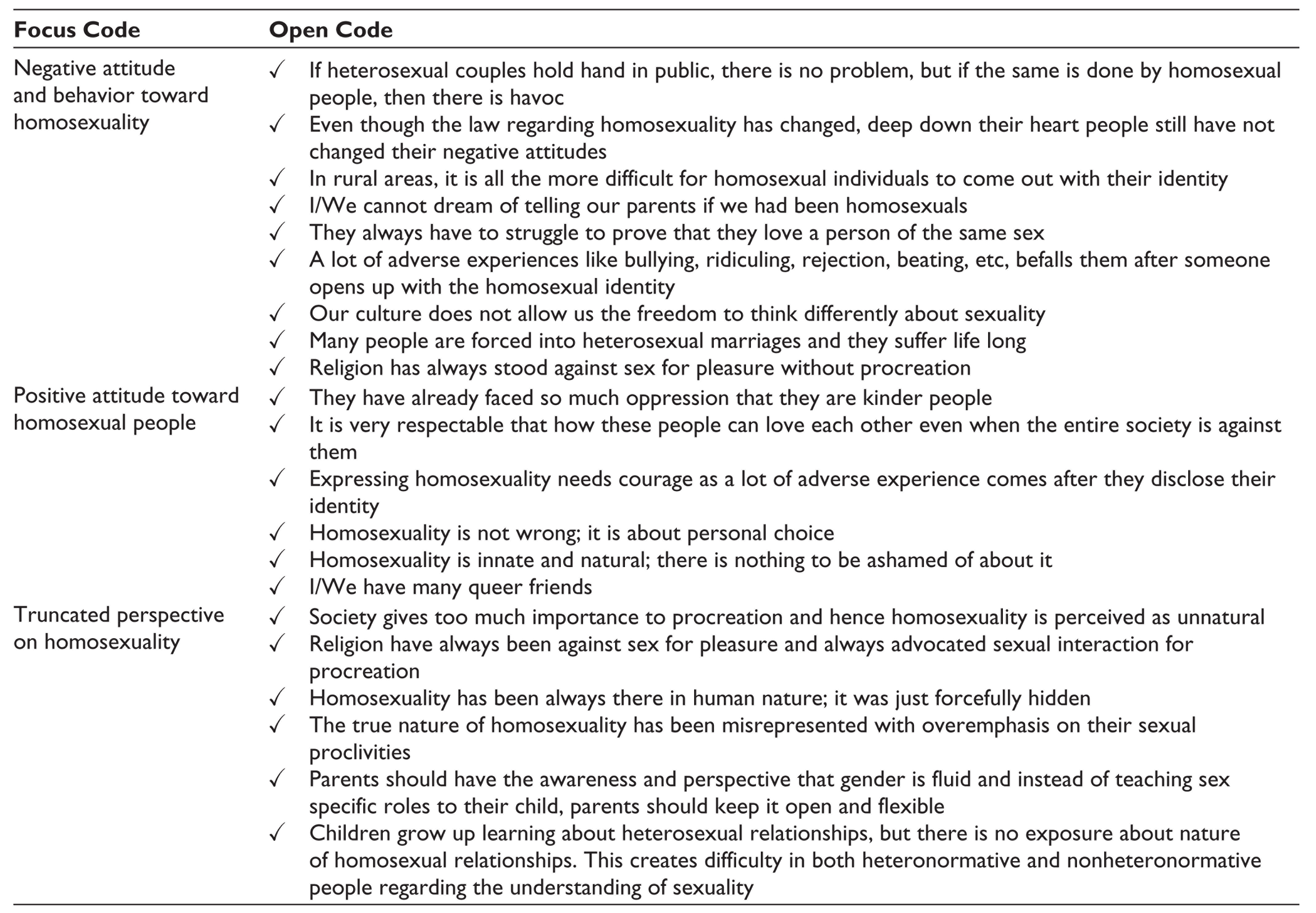
Analysis of Focus Group Discussion 2 (Male Group)
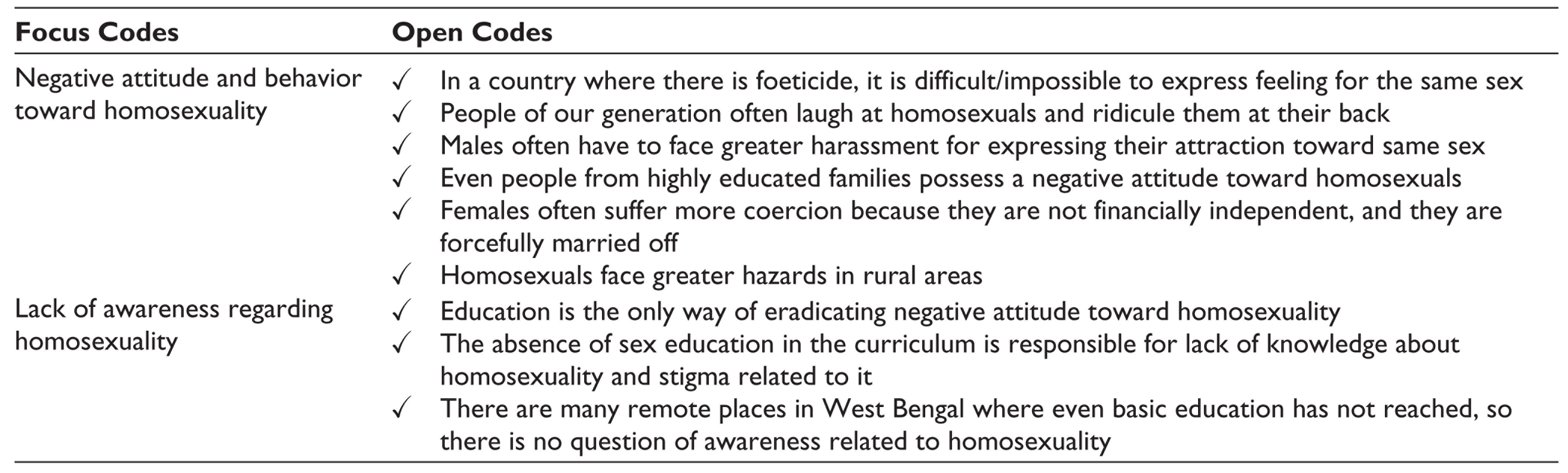
Analysis of Focus Group Discussion 3 (Mixed Sex Group)
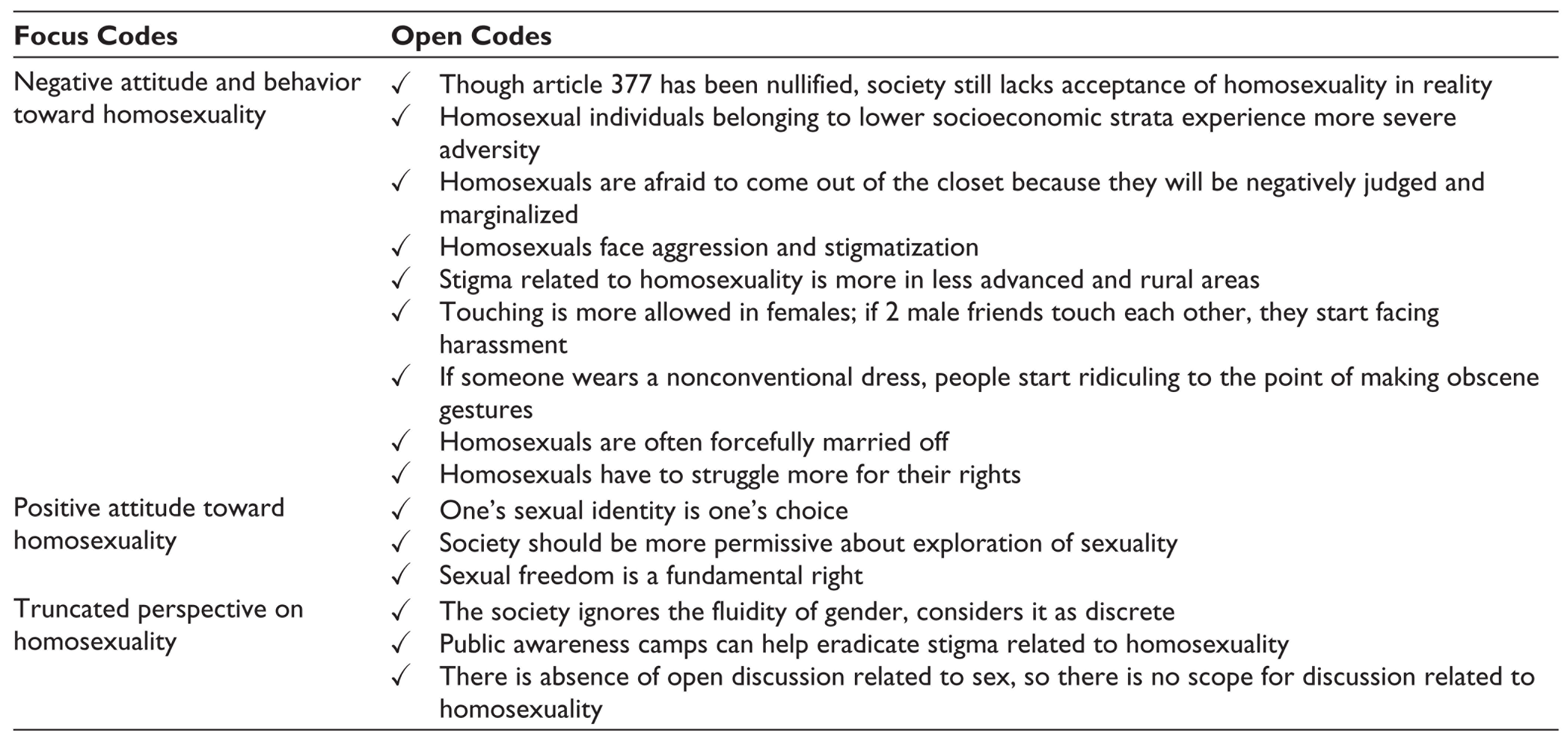
There has been a general trend of increase in positive perception of homosexuality since it has been normalized by the medical community. Nevertheless, homophobia and negative stereotypes surrounding homosexuality are still present in large sections of the society across the world. In the World Values Survey and National Statistics for 35 countries, Inglehart et al 14 and Anderson 15 have documented that despite an improvement in the attitude toward homosexuality, adverse attitudes are also strongly prevalent. Homosexuality is considered/perceived as a threat to the maintenance of natural family lineage as homosexual unions do not inevitably lead to procreation. These kinds of perceptions are more prevalent in collectivistic societies like India where the traditional value system stresses that the foremost adult duty is continuity of family lineage and have very strongly laid down standards of masculinity and femininity. In general, incorporation of knowledge about sex and sexuality in formal education has been found to be predictive of more positive attitude toward sexual minorities.16,17 But societies with predominance of conventional value systems are diffident in talking about issues related to sex. However, it is evident from research that even in very traditional Muslim societies, sex education tends to induce positive attitude in students toward sex, female sexuality, and reduce homophobia. 18
Analysis of Interviews of Homosexual Persons
The primary themes that emerged from the analysis centers on (Table 4):
the journey taken up by the person in self-understanding and the experience of adverse reactions from the society.
Analysis of Personal Interview of Homosexual Individuals
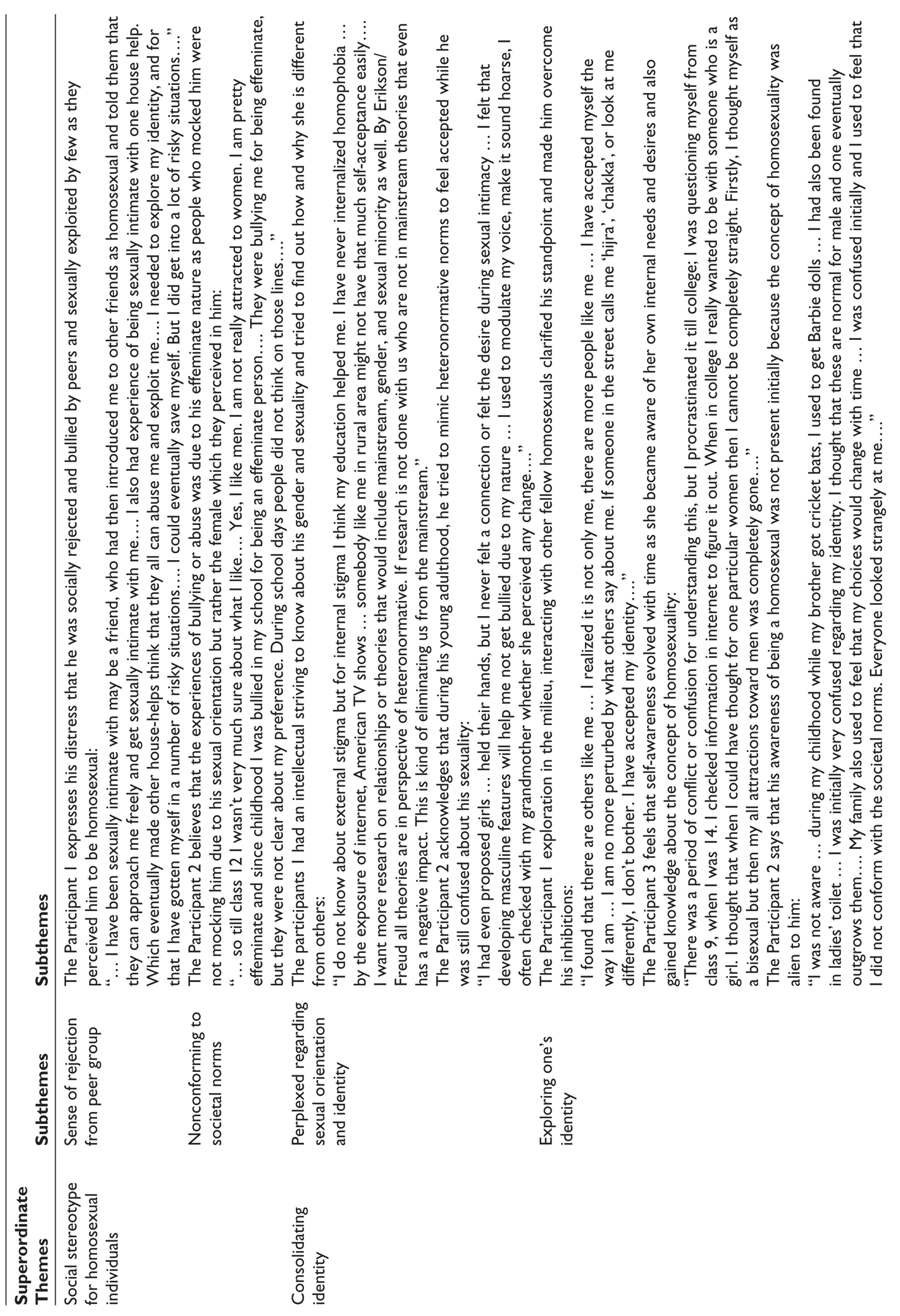
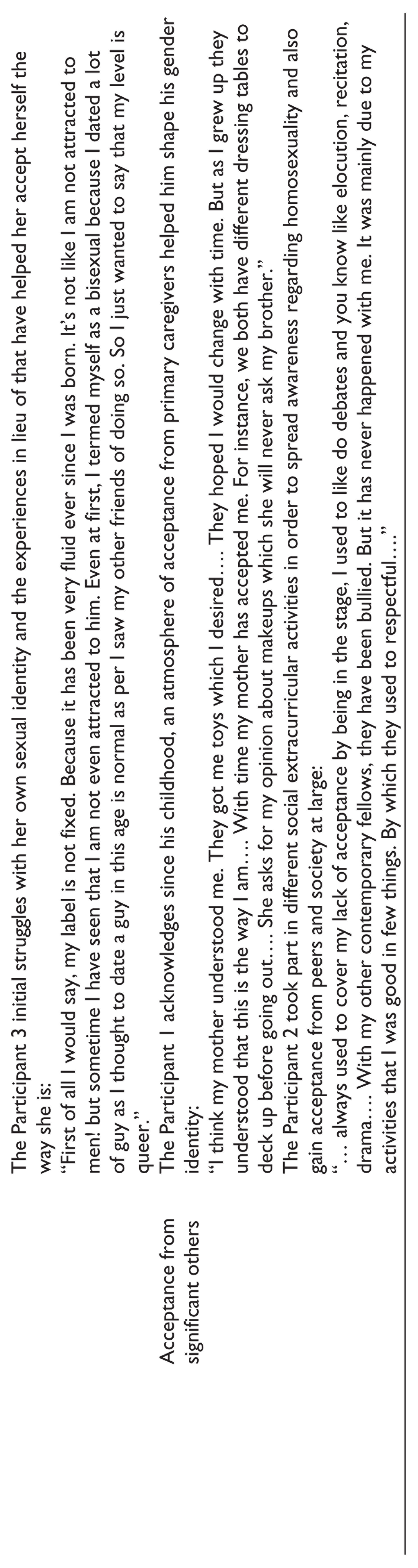
The research literature is abundant with examples of atrocities experienced by persons who are attracted to the same sex.19-21 The narrations of the participants about personal experience of adversities related to stigma toward their sexual orientation substantiate previous research findings.
According to Yang, 22 in a relational society, self-construal is made up of perception of oneself in a relational context. Cultures that are socially oriented automatically enshrine in people a desire to be concerned about the opinion of others and behave in a socially conforming manner. 23 For example, in 2 recent studies by Chan 24 and Ren and Yuan, 25 it has been reported that homosexual individuals in China experience guilt and shame related to their sexual orientation as they are preoccupied of how they are being evaluated by the society and the family. Congruent with the findings of this study, Ren et al 26 had also found out that homosexual individuals under the influence of implicit social coercion try to mimic heteronormative social roles (eg, trying to date with a girlfriend).
In the context of social rejection and discrimination, adolescents and youth belonging to sexual minority face unique challenges related to identity formation and identity integration. Villicana et al 27 state that at initial phases gay and lesbian individuals experience confusion and denial about their same sex desires. This happens because identity consolidation and transition to adulthood is typically construed in terms of heteronormative indicators. Hence, accepting and internalizing of one’s alternative sexual identity takes time.
Repeated and systemic rejection and hostility from family and society 28 often interferes with the mental health and well-being of individuals with alternative sexual identities. 29 Meyers 30 has explained the vulnerability of homosexual and transgender persons to mental illness in terms of “minority stress theory”; the additional burden of stress because of their subordinate and unequal social status.
Discussion of Analysis of Interviews of Heterosexual Friends of Homosexual Persons
The major themes that came out of the analysis are the following (Table 5):
Experience of discrimination for having a homosexual friend Positive appraisal of the friend with homosexuality
Analysis of Personal Interview of Heterosexual Friends of Homosexual Individuals
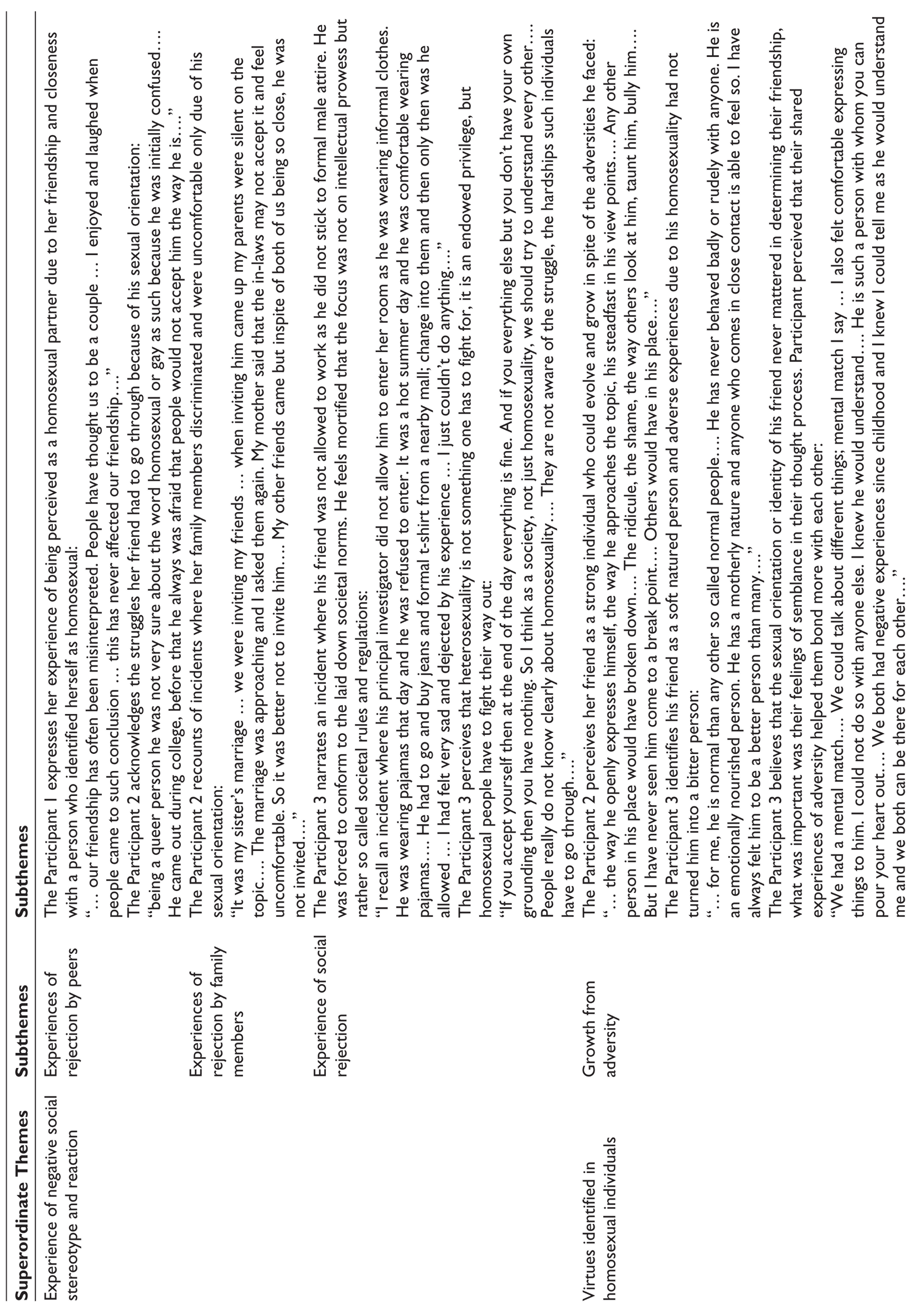
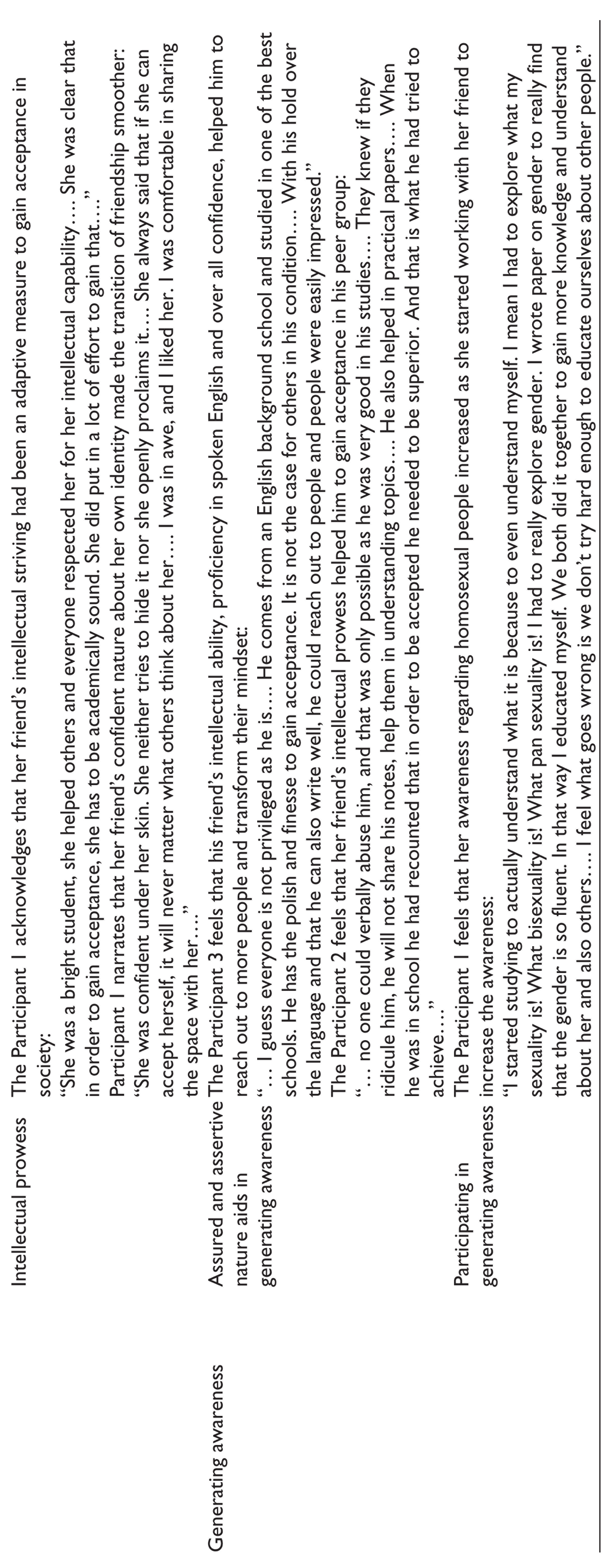
Research highlights that negative attitude toward homosexuality is reduced if there is previous contact with a homosexual person. 31 This is consistent with the fact that the heterosexual acquaintances of the homosexual participants displayed a significant positive attitude toward their friends and deference toward their struggle against discrimination. The association of contact experience with positivity of appraisal of sexual minority can be explained in terms of the “contact hypothesis,” 32 which states that minority prejudice is minimized if there is contact between majority and minority groups of equivalent social status and common social pursuits.
Though it is evident from previous studies that persistent prejudice and misinformation concerning homosexuality is a ubiquitous phenomenon, there is less information available about the prejudice and discrimination encountered by heterosexual friends of homosexual persons. The participants of the study who were heterosexuals yet close acquaintances with person with attraction toward same sex had to face ridicule and discrimination for their proximity with the homosexual individuals. According to Werner, 33 “stigma by association” can be defined as discrimination experienced due to having a connection with an individual who is stigmatized. Goffman had referred to this phenomena as “courtesy stigma.” 34 Hence, individuals, associated with already stigmatized persons, are often subjected to negative perceptions of others characterized by negative evaluation, avoidance, etc, due to their acquaintance with a so called “unusual person.”35,36
Contextualizing the Perspectives
Though it has been almost 5 decades since the first attempts at normalization of homosexuality started, the society is still scarred by significant prejudice and discrimination against the sexual minorities. It is true that the severity of discriminatory behavior toward homosexual people (eg, punishment by death or imprisonment, hate crimes, such as violence against a person or his/her property solely on the basis of his/her sexual orientation, etc) have reduced and in many modern societies, overt discriminatory practices are impermissible and prejudice is not approved. However, in modern societies, stigma and prejudice against homosexuality persist in a subtler and dissimulated form. Such transformation in the nature of prejudice toward nonheterosexual individuals may be considered conceptually analogous to “aversive racism,” 37 “modern racism,” 38 and “ambivalent sexism,” 39 where in derogatory beliefs toward a particular ethnic group or gender is not expressed overtly, but there is a subtle and covert form of aversion, emotional distancing, and condescension. This is evident from the narratives of the homosexual participants who while describing their ordeals speak about the lack of sensitivity and tactfulness of the teachers in dealing with homophobic bullying in school (once a teacher asked girl students to answer a question; boys in my class teased me to answer; the teacher smiled….).
Research has also consistently demonstrated that sex of a heterosexual person is strongly correlated with the extent of negativity that he/she possesses toward a nonheterosexual person. To be more precise, more intense forms of homophobia have been noted in men in comparison to women. 40 However, the findings from the FGDs in this study do not reflect such a trend.
It has been a pressing concern for school educationists regarding the academic underachievement of LGBTQ students, often explained in terms of demoralization and disengagement from school after being bullied by heterosexual peers. 41 An interesting finding from the present study is that all the homosexual participants were above average in terms of their academic performance. However, as pointed out by Russell et al, 42 for some adolescent and young adults, a way of coping with harassment in school is robust academic focus and consequent enhancement in academic grades. Academic achievement for these homosexual adolescents probably serves not only to distract themselves from the stress of being marginalized but also to improve their self-esteem. This is also important in the context that estrangement from family and school makes the sexual minorities more vulnerable to mental health problems, like substance abuse, depression, suicide, etc.43-45 But these 3 young homosexual individuals were able to overcome their predicament and start advocacy in favor of nonheteronormative sexuality from a very young age. This has had a positive impact on their heterosexual acquaintances as well.
A desirable finding from this study is that urban, educated youth are more inclined to view homosexuality in a positive light and embrace a sensitive viewpoint toward their plight. In their study, Herek and Glunt 46 had found strong evidence in favor of association between positive attitude toward homosexuality and interpersonal contact, higher education, and youth. The youth participants (homosexuals as well as heterosexuals) have opined that lack of education, more specifically sex education, and a sexually repressive culture is responsible for negative stereotypes of homosexuality. Previous studies in other parts of the world have also demonstrated that prejudice is related to a general lack of education and exposure to knowledge regarding sexuality.47,48 Often teachers themselves possess a truncated perspective on alternative sexuality, influenced by lack of knowledge as well as socioreligious beliefs. 49 This brings us back to the harsh reality in rural and semiurban India where there is a profound lack of exposure to knowledge about sexual diversity and consequent marginalization and victimization of the sexually nonheteronormative.
A very unique finding of this research is the negative experiences encountered by heterosexual peers of homosexual persons. There is dearth of research literature on the adversities experienced by heteronormative acquaintances of homosexual people. The society equates heterosexuality with “normalcy.” Hence, any violation of norm is looked down upon. As a result, overt expressions of sympathizing with people who breach the norm generates hostility and forsaking of these heterosexual individuals.
Conclusion
The distinctive feature of this study is that it tried to understand homosexuality from multiple perspectives. Research on homosexuality is scarce in India as it is a tabooed topic. In spite of legislative measures in favor of homosexual minorities in the recent past, homosexuality is still condemned by families and societies because of stringent and regressive cultural norms. This kind of a social context is unpropitious for the evolution of a stable sense of identity. The nonheterosexual participants have recounted that their pathway toward identity consolidation was full of hurdles. It is apparent from the narratives of the participants that heteronormative hegemony operates insidiously and pervades the boundary of the self-generating self-doubt. Adolescence and emerging adulthood are a crucial period for identity exploration and synthesis. Being raised by heterosexual parents and surrounded by heterosexual peers, most of whom are nonsupportive and dismissive, it becomes very difficult for the homosexual adolescent and youth to internalize and accept one’s homoerotic tendencies. Thus, the journey toward identity consolidation is tedious and agonizing.
Acceptance of homosexuality does not simply mean reduction of physical violence or harsh legal measures against them. It has a lot to do with psychological abuse like ridiculing in public, social rejection, generating feelings of inferiority and alienation. It is evident from the information generated from heterosexuals (in FGD) as well as the personal accounts of the homosexual individuals that until and unless the issue of homosexuality is incorporated in school curricula, there is very less scope for the general population to embrace alternative sexuality gracefully. Unfortunately, sex education, even if it is included in school curricula, it focuses on heterosexual topics of contraception and reproduction, conversation on homosexuality being restricted to HIV/AIDS. 50 Hence, it is necessary to incorporate an all-inclusive, nonheterocentric sex education in schools for sensitizing both students and teachers, eradication of over-sexualization of homosexuality and other myths. According to Kalra, 51 to reiterate that homosexuality is a normal variation of human sexuality, dialog and research on the diversity of human sexuality should also be a part of medical training to sensitize the fraternity on how to deal with physical and psychosocial problems of sexually stigmatized people.
Research suggests that a cardinal indication that identity integration has taken place is when lesbian and gay individuals are comfortable in disclosing their identity. 52 In this sense, the homosexual persons who participated in this study have achieved a stable sense of identity with respect to their sexual orientation. Research also indicates that verbal disclosure improves the self-esteem and overall well-being of same-sex oriented people. 53 Thus, it can be expected that the present study provided an opportunity for catharsis and self-exploration to these homosexual persons. The FGD also gave a platform for open discussion of sexuality and other so-called prohibited topics among heterosexuals. More such investigations are necessary in the Indian context to stimulate dialog on issues that are otherwise an element of public anathema.
Footnotes
Acknowledgements
The authors acknowledge all the participants of the study.
Author’s Contributions
All the authors conceptualized and designed the study. SS, PD, SD were involved in data collection and curation. The focus group discussions were conducted by the first four authors. All the authors were involved in the qualitative analysis. The first three authors prepared the first draft of the manuscript, whereas SuD, DB, DR were involved in editing, revising, and preparing the final draft. The last three authors were also involved in supervision and guidance of the entire study. The final version of the manuscript was read and approved by all the authors.
Declaration of Conflicting Interests
The authors declared no potential conflicts of interest with respect to the research, authorship, and/or publication of this article.
Funding
The authors received no financial support for the research, authorship, and/or publication of this article.